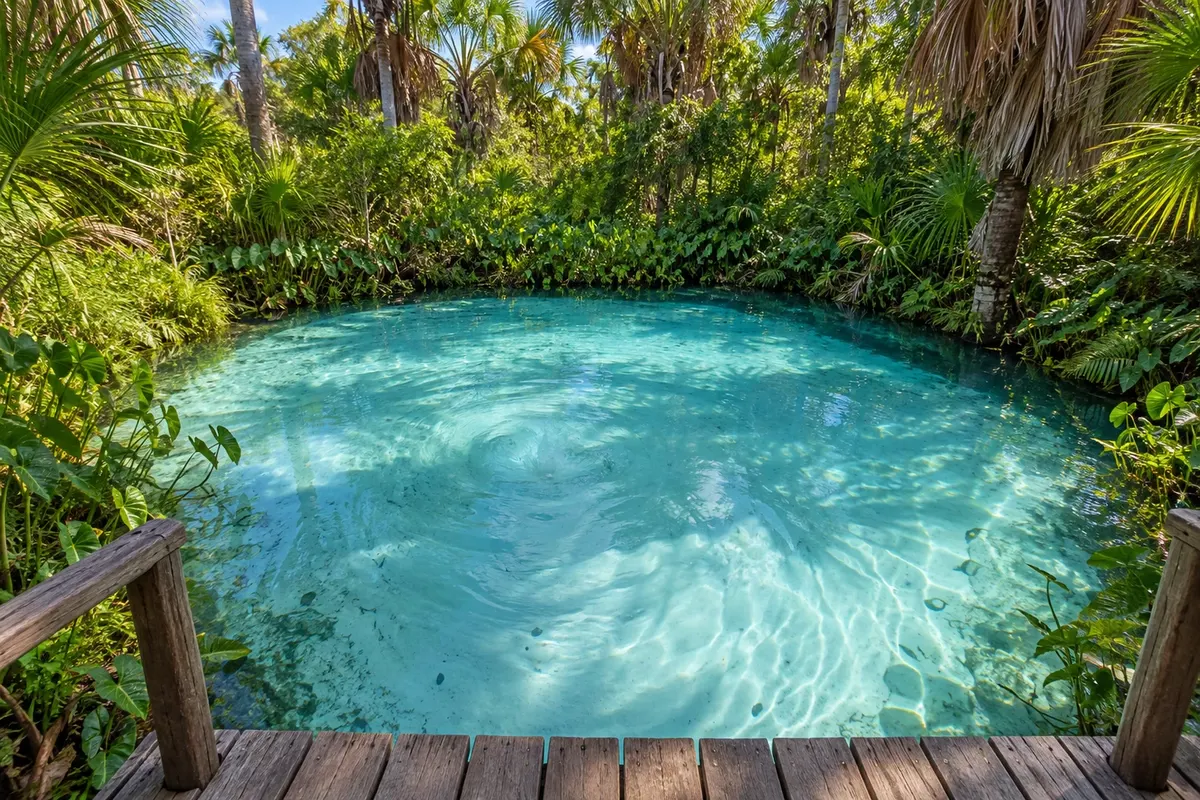
spring
Fervedouro do Ceiça
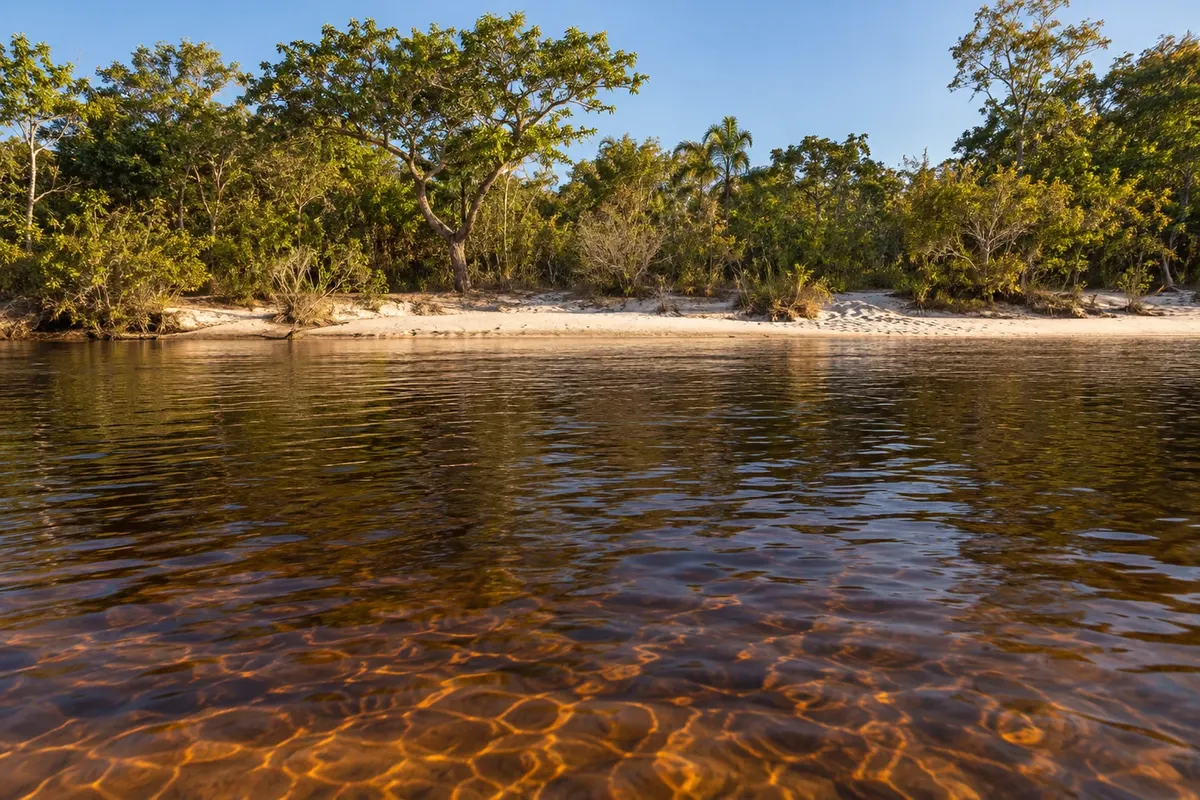
A sandy spring with a jet of water so strong that it pushes your body up and keeps you from sinking. Surrounded by buriti palms, it is the most fun postcard spot in Jalapão.

 Išči
Brazilija
 Antarktika
 Argentina
 Bolivija
 Čile
 Kolumbija
 Ekvator
 Gvajana
 Francoska Gvajana
 Falklandski otoki (Malvini)
 Paragvaj
 Peru
 Surinam
 Urugvaj
 Venezuela
 Nemčija
 Avstrija
 Belgija
 Hrvaška
 Danska
 Slovaška
 Slovenija
 Španija
 Finska
 Francija
 Grčija
 Nizozemska
 Madžarska
 Irska
 Islandija
 Italija
 Luksemburg
 Norveška
 Poljska
 Portugalska
 Združeno kraljestvo
 Češka
 Švedska
 Švica
 Turčija
 Bermudi
 Kanada
 Združene države Amerike
 Grenlandija
 Mehika
 Sveta Peter in Mihael
 Dominikanska republika
 JaponskaTurčija
 Južnoafriška republika
 Egipt
 Avstralija
 Fidži
 Nova Zelandija
 Papua Nova Gvineja
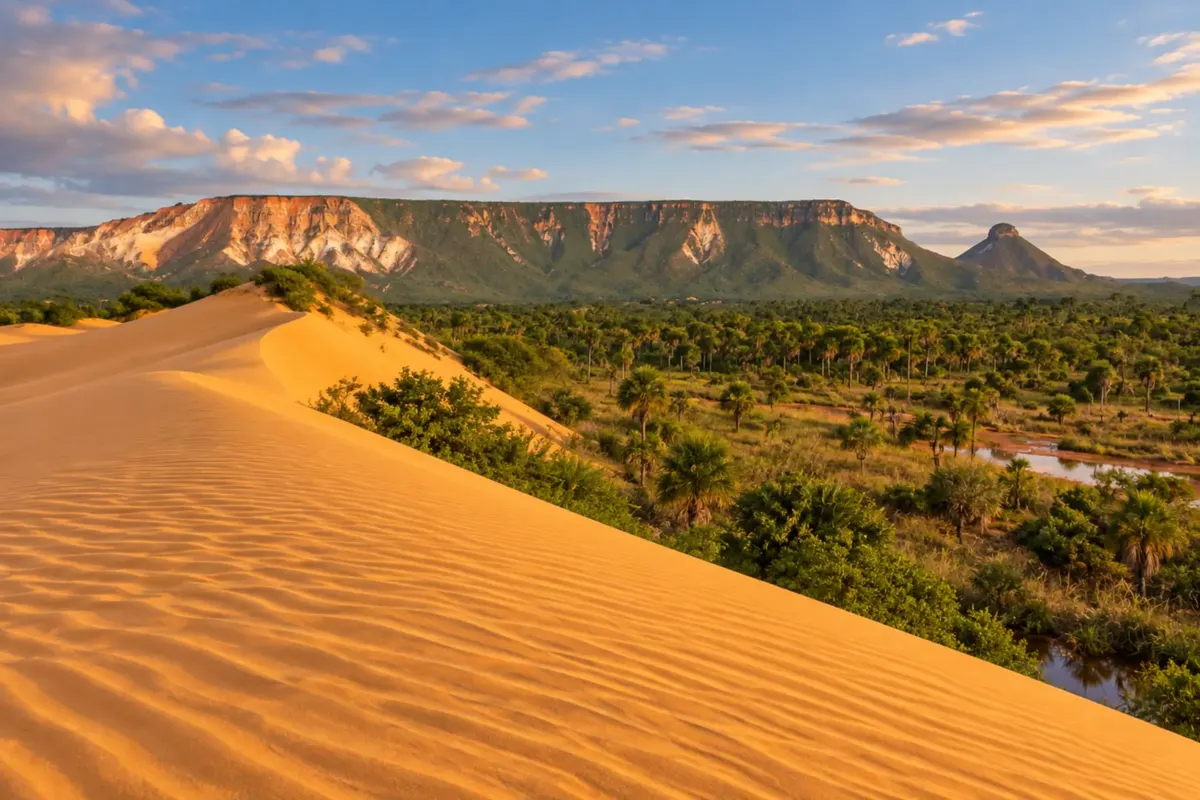
Tocantins · Brazilija
Destinacija: Jalapão.
Illustrative images. The pictures in this guide are illustrations based on the real place, not photographs, and may differ from it.
Mesto
Mateiros brings together dunes, veredas (palm-lined wetlands) and springs in the heart of Jalapão. The Serra do Espírito Santo and the golden grass crafts of the local communities reveal the town's natural and cultural diversity.
Mateiros is the gateway town to the Jalapão State Park, in eastern Tocantins, about 300 km from Palmas and near the borders with Maranhão, Piauí and Bahia. It has about 3,000 inhabitants, sits at 521 meters altitude and is only reached by dirt and sandy roads. The municipality contains the Dunas do Jalapão, the Serra do Espírito Santo, Cachoeira da Formiga, Cachoeira da Velha, several fervedouros and the Povoado Mumbuca, where the capim dourado handicraft originated.
The town itself is small and simple: inns, restaurants, a fuel station and the park’s tourist information center. People do not come for the town; they come to sleep near the attractions, which are scattered across the cerrado, tens of kilometers apart. Every tour starts with a 4x4 stretch.
Attractions are divided into two groups. Public ones, inside the state park, such as the dunes, the serra and Cachoeira da Velha, only receive visitors accompanied by an accredited tour guide or driver, and the dunes and the serra require booking. Private ones, such as Cachoeira da Formiga and the fervedouros, are on private properties where owners charge entry and control the number of people in the water.
Fervedouros are springs where water rises from the bottom with such pressure that it supports the body: those who enter float and cannot sink. In the municipality they are mainly along TO-110, the road to São Félix do Tocantins, and on the banks of the Rio Formiga.
The year has two well-defined seasons. From May to September it hardly rains, skies are clear, roads are firmer and river and fervedouro water becomes more transparent; nights are cool, with lows between 13 °C and 20 °C from May to August. From October to April it rains, more heavily from December to March: the cerrado turns green and waterfalls gain volume, but water can become turbid and transfers take longer. July is the busiest month.
In September, Povoado Mumbuca holds the Capim Dourado Harvest Festival, just before the period when harvesting is allowed. The capim, a thin, golden-stemmed grass, is worked with buriti straw and becomes necklaces, bracelets, bags and decorative pieces sold at the community’s shop.
Two nights in Mateiros cover the dunes, a group of fervedouros and Cachoeira da Formiga. With three nights you can add the Serra do Espírito Santo at sunrise, Mumbuca and Cachoeira da Velha. São Félix do Tocantins, via TO-110, and Ponte Alta do Tocantins, about 160 km via TO-255, are the other bases of the circuit.

Za opazovanje Lune in zvezd potrebujete jasno nebo.

Za opazovanje potrebujete jasno nebo brez polne lune. Vidnost ni zagotovljena.

Za opazovanje potrebujete jasno nebo brez močne mesečine. Vidnost ni zagotovljena.
Mateiros – število nastanitev: 40.
Mateiros – nazivi in posebnosti
Doživite kraj
A sandy spring with a jet of water so strong that it pushes your body up and keeps you from sinking. Surrounded by buriti palms, it is the most fun postcard spot in Jalapão.
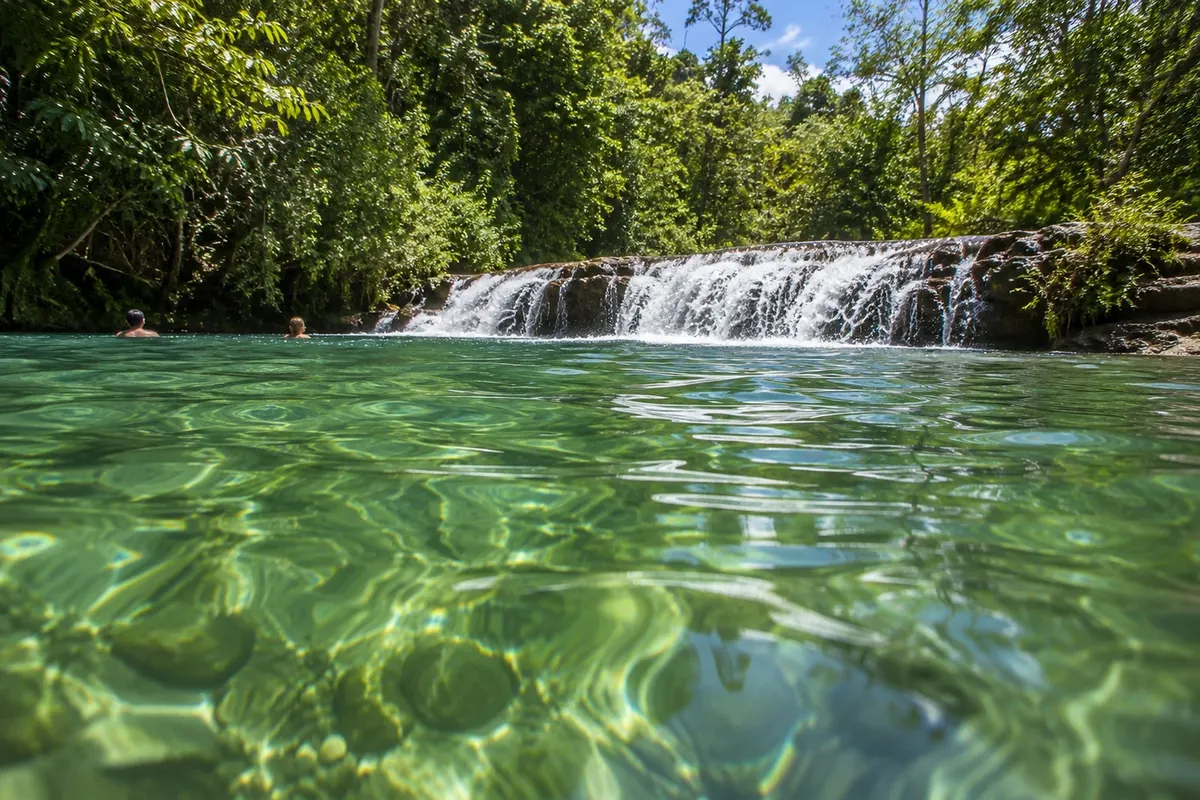
A low waterfall that empties into a natural pool of an almost unreal emerald green. It is one of the most popular attractions in Jalapão.
Raziščite Cachoeira da Formiga
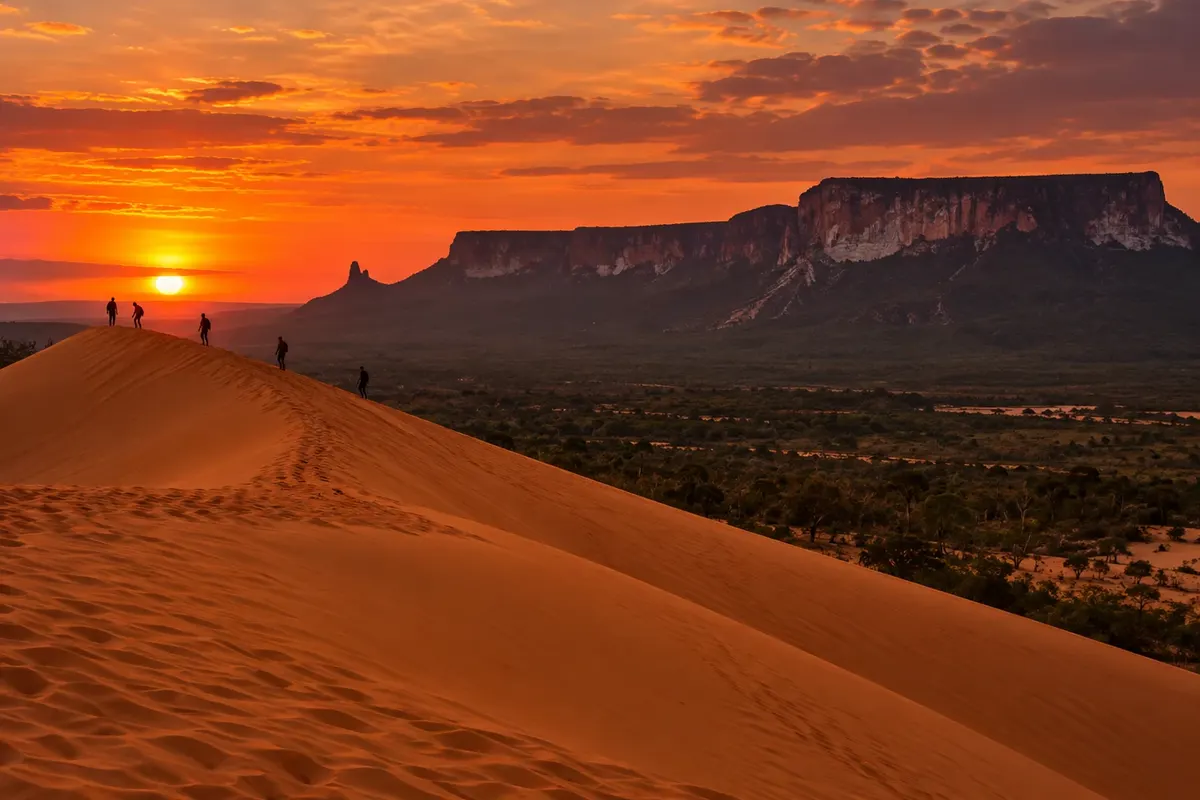
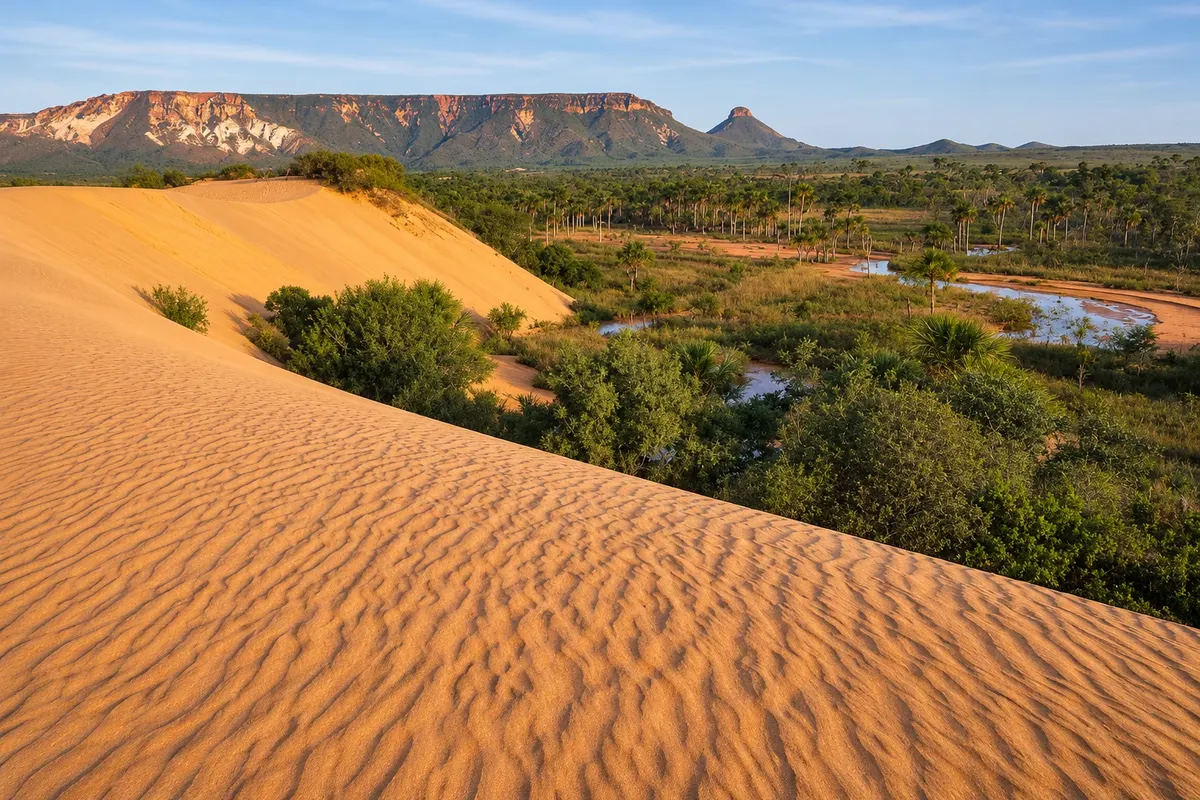
A wind-formed mountain of orange sand up to 40 meters tall at the foot of the Serra do Espírito Santo. It is where everyone waits for the sunset in Jalapão.
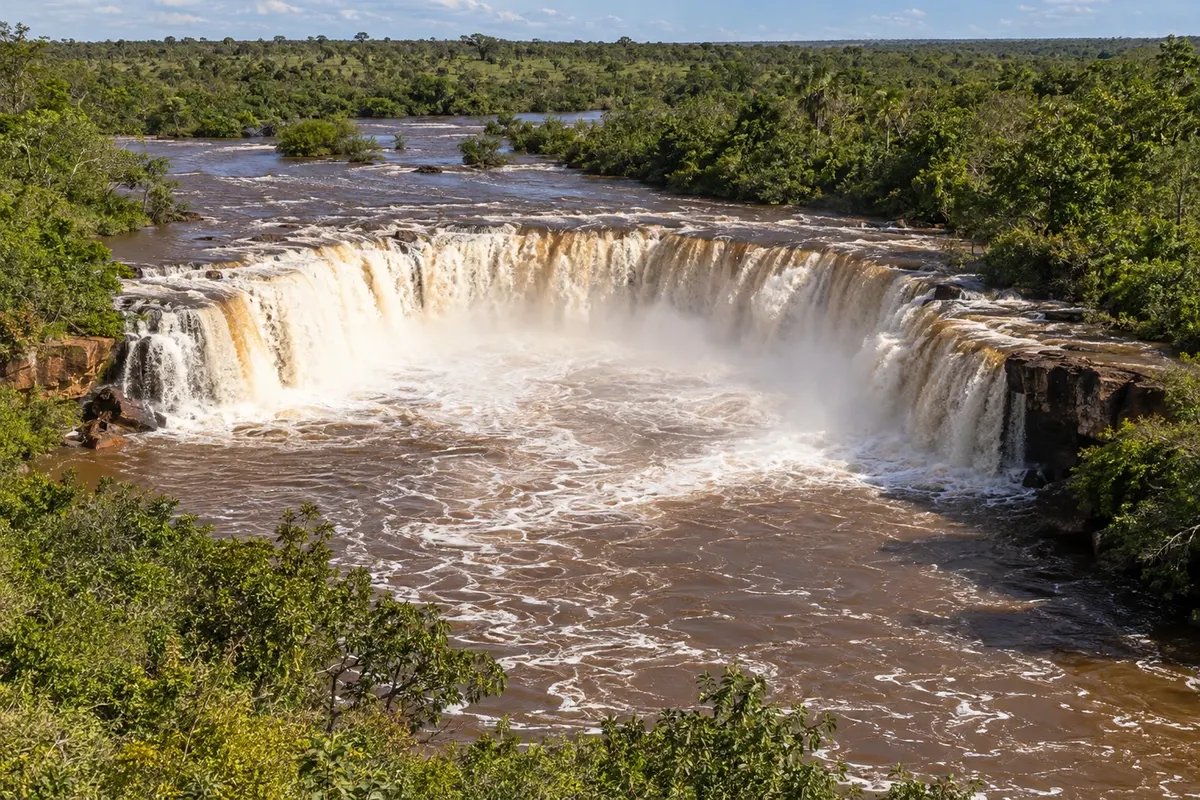
The largest waterfall in the region, about 100 meters wide and horseshoe-shaped, on the Rio Novo. You can hear the roar of the falls well before you reach the viewpoint.
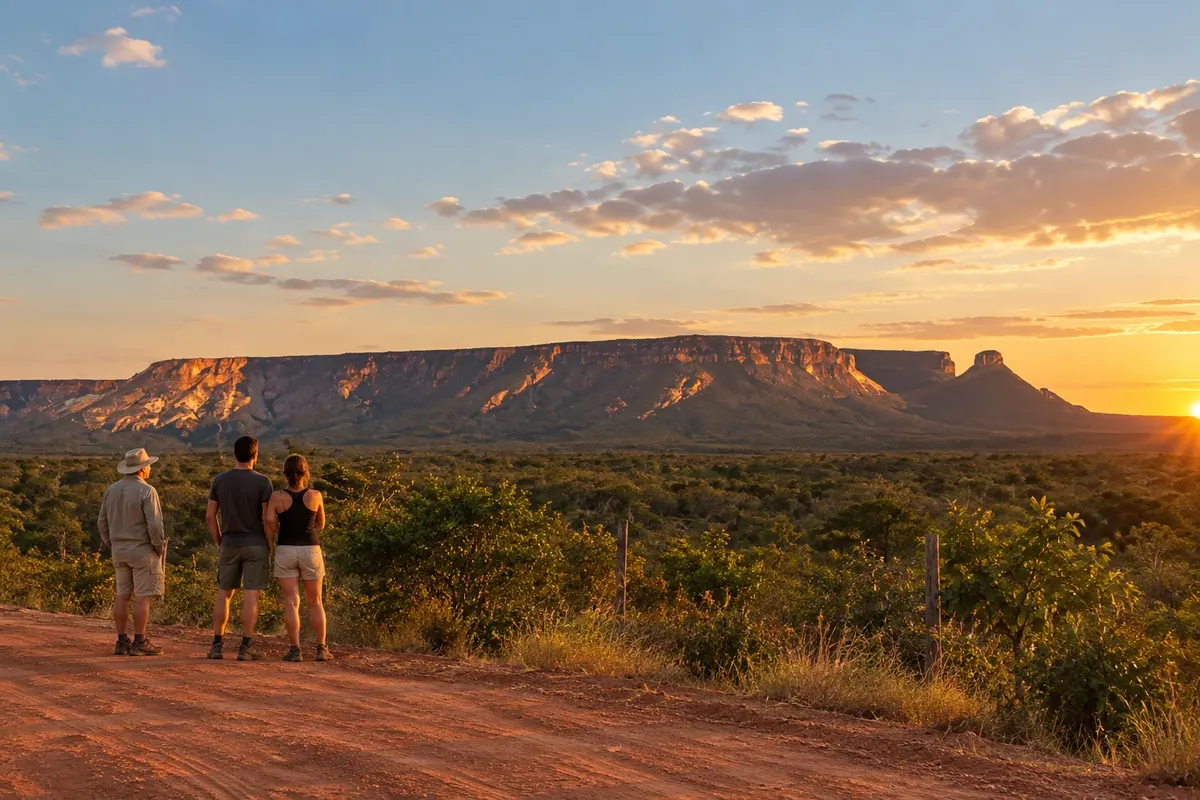
An uphill trail that ends at the top of the mountain, with an open view of the dunes and the cerrado all the way to the horizon. It is the best panoramic view in all of Jalapão.
Raziščite Serra do Espírito Santo
A stretch of white sand on the banks of the Rio Novo, with calm, shallow water perfect for swimming. It becomes a camping and resting spot between one attraction and the next.
Quilombola settlement of Mateiros, in Jalapão, where the capim-dourado handicraft was born, with the artisans’ association shop and the Capim Dourado Harvest Festival in September.
Raziščite Mumbuca Quilombola Community
The largest state park in Tocantins, created in 2001 in Mateiros, which protects the Jalapão cerrado and includes the dunes, the Serra do Espírito Santo, Cachoeira da Velha and the Prainha do Rio Novo.
Kaj izbrati pred odhodom
Izhodišče, trajanje, potek, vključene storitve in okvirna cena vsakega izleta.
The dunes are about 35 km from Mateiros via the TO-255, at the foot of the Serra do Espírito Santo. The classic plan for those staying in town is to leave in the mid-afternoon, arrive at the park reception with time to spare and hike up to watch the sun set from the top. The sand is fine and orange, and the dunes reach up to 40 meters high. It comes from the nearby ridge: wind and rain erode the sandstone on the slopes, and the grains accumulate on the plain. From the parking area, a walk of about 20 minutes across the sand leads to the top of the main dune, always following the side trail; climbing or descending the face is prohibited so the formation isn’t damaged. From the top you can see the stream that skirts the dunes, the buriti palms, the cerrado and the ridge in the background. Visits are only allowed with a licensed tour guide or environmental driver, by prior booking and with a daily visitor limit. If you’re with an agency you don’t need to worry about this; if you travel independently you hire the driver in Mateiros, and they handle the booking. At the dunes and in the parking area you may not eat, smoke, bring alcoholic beverages, light fires, use sound equipment, bring domestic animals or stay after dark. Near the reception there is a bar where groups usually stop on the return. There is also morning access, with fewer people and stronger sun.
Kraji na poti: Jalapão Dunes, Jalapão State Park, Serra do Espírito Santo.
Vključuje: In an agency package, the 4x4 and the guide are usually included. If you go independently, the licensed driver is paid separately. Check the park’s current visiting schedule and ask whether Mateiros’s municipal tourism fee is being charged.
Nasvet: Book the driver before you arrive in town, especially from June to August. Bring water, a hat and lightweight footwear or a sturdy sandal for the soft sand. Arrive with enough time to pick a spot on the ridge before sunset.
Najboljši čas za obisk: From May to September, with clear skies. During the rainy season, the sunset depends on the day’s clouds.
Serra do Espírito Santo is the flat-topped sandstone escarpment that appears on the horizon of almost every Mateiros tour. Climbing to the top before dawn is the town’s most popular hike. You leave town while it is still dark, in a 4x4, to the base of the serra on the TO-255. The initial section is the toughest: a short, steep ascent over rock blocks, with rock steps, loose stones, stretches with rope and stakes, and benches for rest. From the first viewpoint you can watch the sun rise over the veredas and the flat cerrado. Those who continue walk another 3 km along the plateau top, on flat terrain, to the second viewpoint at the edge where you can see the Jalapão Dunes and the eroded slopes that supply the sand. There and back, the complete route is about 7 km. The descent requires care because of loose stones. The trail is inside the state park and is only done with a licensed tour guide or accredited local driver, with booking and a daily people limit. It requires reasonable physical fitness and is not recommended for those with mobility difficulties. It’s common to combine the serra at dawn with a fervedouro in the late morning and leave the afternoon to rest or visit the dunes.
Kraji na poti: Serra do Espírito Santo, Serra do Espírito Santo Viewpoint, Dunes Viewpoint, Jalapão State Park.
Vključuje: In an agency package, transport and the guide are usually included, sometimes as an optional paid extra. If going independently, the accredited driver is paid separately. Check the park’s current visitation schedule.
Nasvet: Bring a headlamp, plenty of water, snacks, a hat and a light jacket for the wind at the top. Wear sneakers or boots with good grip. If you have knee or heart problems, assess the effort and consider staying at the first viewpoint.
Najboljši čas za obisk: From May to September, with clear skies at dawn and a dry trail. After rain, the rocks become slippery.
Cachoeira da Formiga is about 33 km from Mateiros, on private land, along the dirt road toward São Félix do Tocantins. The fall is just over 1 meter high; what attracts visitors is the pool, with water ranging from emerald-green to blue, so clear you can see the pale sandy bottom. From the entrance to the water the walk is short. Just below the fall the pool is deep and non-wading; beside it the water flows into a second pool, shallower and calmer, good for children and for those who are not strong swimmers. Upstream, you can sit in the current of the Rio Formiga. The temperature is pleasant, without the chill found at some other waterfalls. The property has a bar with food, restrooms and a camping area. It’s one of the most visited places in Jalapão and fills up on holidays and during the July school break, when there may be a line at the entrance. In the same area, also on the banks of the Rio Formiga, is Fervedouro Buritizinho, the smallest fervedouro open for visits, with strongly blue water, surrounded by buriti palms. Six people enter at a time, for about 20 minutes. The spring is deeper than in others, and the floating sensation is less pronounced. The property has a calm stretch of river for swimming, a swing, tubing, and a restaurant, which makes it a common stop for lunch.
Kraji na poti: Cachoeira da Formiga, Rio Formiga, Fervedouro Buritizinho.
Vključuje: Each property charges its own entry fee per person, payable on site; in an agency package it is usually included. Lunch, drinks, tubing and camping are paid separately. The price indicated is for the entrance to Cachoeira da Formiga.
Nasvet: Arrive early, before groups, or in the mid-afternoon. Avoid long holiday weekends. Bring cash, because card machines can fail, and a snorkeling mask to see the bottom of the pool. At the fervedouro, enter without sunscreen or insect repellent on your skin.
Najboljši čas za obisk: From May to September, when water is more transparent. After heavy rain, the color changes and the shore may become muddy.
R$ 75 · per person, entrance to Cachoeira da FormigaThe TO-110, a dirt and sand road that links Mateiros to São Félix do Tocantins, passes by several fervedouros in the municipality. Each one is on private land, with its own entrance, rules and fee, and it’s common to visit two or three in the same day. Fervedouro do Ceiça is considered the first fervedouro in Jalapão opened to visitors. It sits by the road, hidden in a grove with banana trees, a short walk from the parking area. The pool is round, with transparent water, and at the center you can see the sand moving where the spring issues most strongly. Ten people enter at a time; when there is a queue, the stay is about ten minutes. Fervedouro dos Buritis is about 20 km from Mateiros. It has a large buriti palm next to the entrance deck and, seen from above, has a heart-like shape with water between blue and green. It receives up to ten people at a time, for 20 minutes, and has restrooms and a restaurant. Macaúbas is mentioned by visitors as one of the strongest spring fervedouros: no matter how you try, the body returns to the surface. It has restrooms and a snack bar. Rio Sono is small and has a restaurant serving lunch, restrooms and a hammock area for resting. There is also Encontro das Águas. In all of them, the rule is the same: small groups, timed visits, and no sunscreen, insect repellent or creams on the skin, to avoid contaminating the spring.
Kraji na poti: Fervedouro do Ceiça, Fervedouro dos Buritis, Fervedouro das Macaúbas, Fervedouro Rio Sono, Fervedouro Encontro das Águas.
Vključuje: Each fervedouro charges an entrance fee per person, paid on site; in an agency package it is usually included, together with transport and the guide. Lunch and drinks are paid separately. Check the current rate list for each property.
Nasvet: Start early with the most popular spot of the day and leave the youngest for around lunchtime, when groups stop to eat. Bring cash, wear your swimsuit under your clothes and bring a dry change of clothes. Tie long hair back and leave jewelry and glasses in the car.
Najboljši čas za obisk: From May to September, when the water is clearer. From December to March, after heavy rain, some may become turbid.
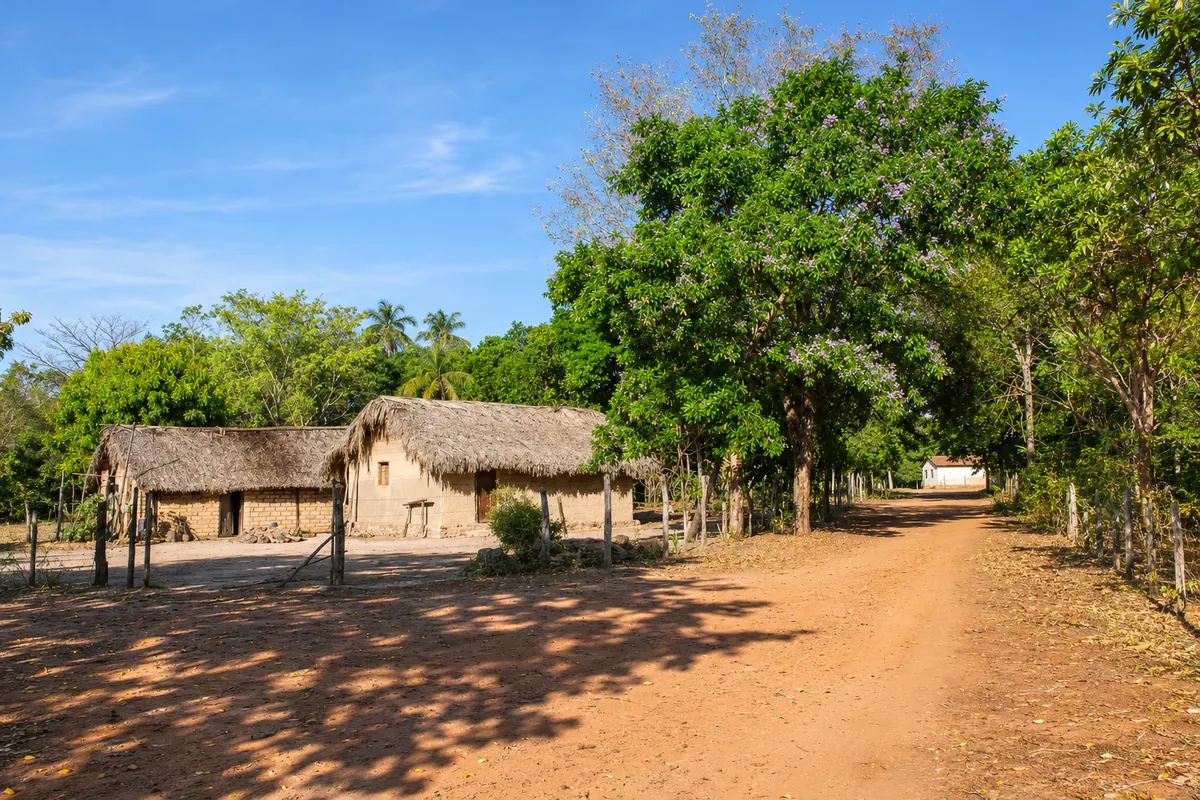
Mumbuca is a quilombola community in the rural area of Mateiros, about 35 km from town, and it’s where capim dourado handicraft began—today a symbol of Jalapão. Capim dourado is the thin, shiny stem of a cerrado plant. The artisans work it together with buriti fiber to make necklaces, bracelets, bags and decorative pieces. Harvesting has a defined season: stem collection begins in September, and the community festival marks the opening. The visit includes the community store, the most complete in the region, where pieces are sold by their makers. The community practices community-based tourism and, with prior arrangement, offers craft workshops, meals, trails and viola de vereda performances. In mid-September, the artisans’ association holds the Capim Dourado Harvest Festival, with religious celebrations and cultural performances. The date changes every year. The village lies in the same direction as some fervedouros, and itineraries often combine both in the same morning or afternoon. It is a residential place: ask permission before photographing people and houses.
Kraji na poti: Mumbuca village, Community store selling handicrafts made from golden grass.
Vključuje: There is no entrance fee to the shop. Items, meals and workshops are paid separately. In an agency package, transport and the guide are usually included. Check prices with the community or the agency.
Nasvet: Give advance notice if you want lunch or a workshop. Bring cash for purchases, in small bills. Capim dourado items must not be wetted or folded: carry them in your hand luggage.
Najboljši čas za obisk: From May to September, when roads are firm. The Harvest Festival usually takes place around mid-September.
Cachoeira da Velha is the largest waterfall in Jalapão by water volume: the Rio Novo plunges over a roughly 100-meter-wide, 15-meter-high horseshoe-shaped front, split into two by a rock wall topped by a tree. It’s far from everything, on a turnoff from the TO-255, on the route between Mateiros and Ponte Alta do Tocantins. the circuits that tour Jalapão usually stop here on the day they change base towns. For those based in Mateiros it’s a full-day round trip, almost entirely on sandy roads. The visit is for contemplation. A short, flat wooden boardwalk leads to a lookout very close to the fall, amid mist and noise. From there you can see one of the two falls; the other is hidden behind the rock wall. Bathing in the waterfall is prohibited because of the water’s force. Bathing is possible at Prainha do Rio Novo, a few minutes’ walk away: a strip of white sand with shade, where the water is cold, transparent and shallow near the shore. Toward the middle the current strengthens, and you should not try to cross. It’s the place for a snack and rest. Those who want to see the second fall can hire rafting on the Rio Novo, which runs the rapids down to the base of the waterfall and ends at the prainha. It is paid separately and requires reservation. The area follows the state environmental agency’s rules, and visits are conducted with a registered guide or driver, during daytime.
Kraji na poti: Cachoeira da Velha, Prainha do Rio Novo, Rio Novo.
Vključuje: In an agency package, transport and guide are often included. Independently, the driver is paid separately. Rafting is optional, paid separately, with advance reservation. Check the current visitation rates.
Nasvet: Leave early and bring lunch or a hearty snack, water, swimwear and a towel. Fill up in Mateiros before you go. Pack out all your trash.
Najboljši čas za obisk: May to September, when the sandy road is firmer. In the rainy season the river rises and the journey takes longer.
Cene so okvirne. Pri lokalnih organizatorjih smo jih preverili v obdobju november 2026. Odvisne so od sezone in vrste izleta. Pred rezervacijo preverite ceno pri organizatorju.
Po dnevih
Predlogi za načrtovanje poti. Vrstni red dni prilagodite vremenu in razpoložljivosti izletov.
Leave early for Cachoeira da Formiga, about 33 km from town, and arrive before the larger groups. Stay to bathe in the two pools. Late morning, visit one or two fervedouros on TO-110, such as Ceiça and Buritis, and have lunch at the restaurant on one of the properties. Return to Mateiros to rest during the hottest hours. Mid-afternoon, go with the licensed driver via TO-255 to the Jalapão Dunes, about 35 km away, climb the side trail and wait for the sunset at the top. Dinner in town. The dunes require scheduling: book the driver before you arrive.
Morning at Cachoeira da Formiga. Afterward, Fervedouro Buritizinho, on the edge of the same river, with lunch on the property and time for a swim in the calm stretch of Rio Formiga. Mid-afternoon, Jalapão Dunes for the sunset, with a licensed driver. Sleep early, because the next day starts at dawn.
Leave while it's still dark for the Serra do Espírito Santo trail and watch the sunrise from the first viewpoint; those with stamina continue along the ridge to the dune viewpoint. Return for breakfast. Late morning, visit the fervedouros on TO-110: Ceiça, Buritis or Macaúbas, depending on the day's lines. In the afternoon, visit Povoado Mumbuca and the capim dourado shop. Those who prefer not to do the pre-dawn trail can swap the ridge for another fervedouro and start the day later.
Cachoeira da Formiga very early, Fervedouro Buritizinho and lunch on the banks of Rio Formiga. Rest in town and, mid-afternoon, Jalapão Dunes for the sunset, with a licensed driver.
Pre-dawn at Serra do Espírito Santo to watch the sunrise. After breakfast, visit the natural springs on the TO-110 and have lunch at one of the properties. In the afternoon, visit the village of Mumbuca, its community shop and, if arranged in advance, a golden grass workshop or a viola de vereda performance.
Full day along the TO-255. Bring snacks and water and depart early. Walk the boardwalk and viewpoint at Cachoeira da Velha, swim and rest at Prainha do Rio Novo and, for those who booked, go rafting on the Rio Novo. Those continuing on to Ponte Alta do Tocantins do this tour with their luggage in the car and sleep there, about 160 km from Mateiros. Those heading to São Félix do Tocantins return to town and depart the next day via the TO-110.
Najboljši čas za obisk
The seasons shown are the most usual ones; nature doesn't always follow the calendar.
Wettest month · Green cerrado
This is the wettest month in Mateiros, with about 225 mm, usually in quick downpours near the end of the day. The cerrado is green and the waterfalls are full, but the water in the natural springs and at Cachoeira da Formiga can become turbid after heavy rain. Sand and dirt roads take longer to drive. Outside year-end festivities, there is little traffic.
Heavy rain · Carnival
Still in the peak rainy period, with heat and short showers. Rivers and waterfalls are full and muddier. Leave early, when rain is less likely, and allow extra time between activities. Sunset on the dunes depends on cloud cover. Visitor numbers are low except during Carnival.
Frequent rain · Wet trails
It still rains a lot, with temperatures between 21 °C and 29 °C. Springs and waterfalls are running, and the cerrado remains green. The ascent of Serra do Espírito Santo becomes slippery when wet: confirm with your guide the day before. Bring footwear suitable for wet trails and a rain jacket.
End of the rains · Water clearing
Showers become less frequent and the water starts to clear, though waterfalls remain full and vegetation stays green. sandy roads are drying. This month has moderate visitor numbers—good if you want springs with shorter lines and can accept some rain.
Start of the dry season · Cool nights
The dry season begins, with little or no rain. Days are warm and nights cool, with lows between 13 °C and 20 °C from May to August: bring a light jacket for the mountain dawns and for dinner. Springs and rivers become clear. Visitor numbers are still moderate.
Clear skies · Transparent water
Clear skies and virtually no rain. Vegetation still retains some green, roads are firm, and Cachoeira da Formiga and the fervedouros show the cleanest water color of the year. Good month for sunrise in Serra do Espírito Santo. Visitor numbers increase but are still lower than in July.
High season · Blooming ipês
It’s the driest month, with near-zero rainfall, ipês blooming in the cerrado, and the year’s highest demand because of Brazilian school holidays. The best-known fervedouros and Cachoeira da Formiga may have lines. Book lodging, a driver, and dune reservations well in advance and start tours early.
Very dry air · Clear sunset
No rain, blue skies, hot days, cool nights, and increasingly dry air. The water remains transparent, and sunsets on the dunes usually have good visibility. Traffic is high at the start of the month and falls after the holidays. Drink plenty of water and wear a hat.
Capim Dourado Harvest Festival (Mumbuca) · Very hot
Very hot and the driest air of the year; there may be a few brief rainy days, the so-called cashew rain. Around mid-month, the village of Mumbuca holds the Capim Dourado Harvest Festival, which opens the stem extraction period. Waterfalls have lower flow, and the water remains clear. There may be smoke from cerrado burnings.
First showers · Fewer people
Transition month: the heat remains strong and the first showers arrive, usually in the afternoon or evening. Often the natural springs are still clear, and there are far fewer people than in July. Wet sand can delay movements: leave buffer time in your itinerary and check the forecast before dune sunset.
Rains return · Cerrado greens up
Rains return strongly, with about 180 mm in the month and temperatures between 22 °C and 31 °C. The air becomes humid and sultry, the cerrado greens up and the waterfalls regain volume. There are few visitors. Tours continue, organized according to the weather: depart early and avoid the road during rain.
Heavy rain · Year-end festivities
Hot, humid days with brief, heavy downpours. River and spring waters may become turbid, and sand and dirt sections take longer to traverse. Waterfalls are full. The last week of the year is busy with travelers: book lodging, transport, and a guide in advance.
Načrtujte pot
Mateiros has no airport. The closest is Palmas (PMW), the capital of Tocantins, about 300 km away. Palmas receives direct flights from some Brazilian state capitals; from other cities and from abroad you connect. Schedules change with the season: confirm with the airline before buying.
The stretch from Palmas to Mateiros is all by road and takes most of a day. For that reason, travelers who land in the afternoon or evening usually sleep in Palmas and leave the next morning. On the return, leave your flight for late in the day or for the following day, allowing time for road delays.
Leave the airport with ground transport arranged: agency transfer or circuit, or a 4x4 rented in advance.
There are two routes from Palmas, and many travelers go by one and return by the other.
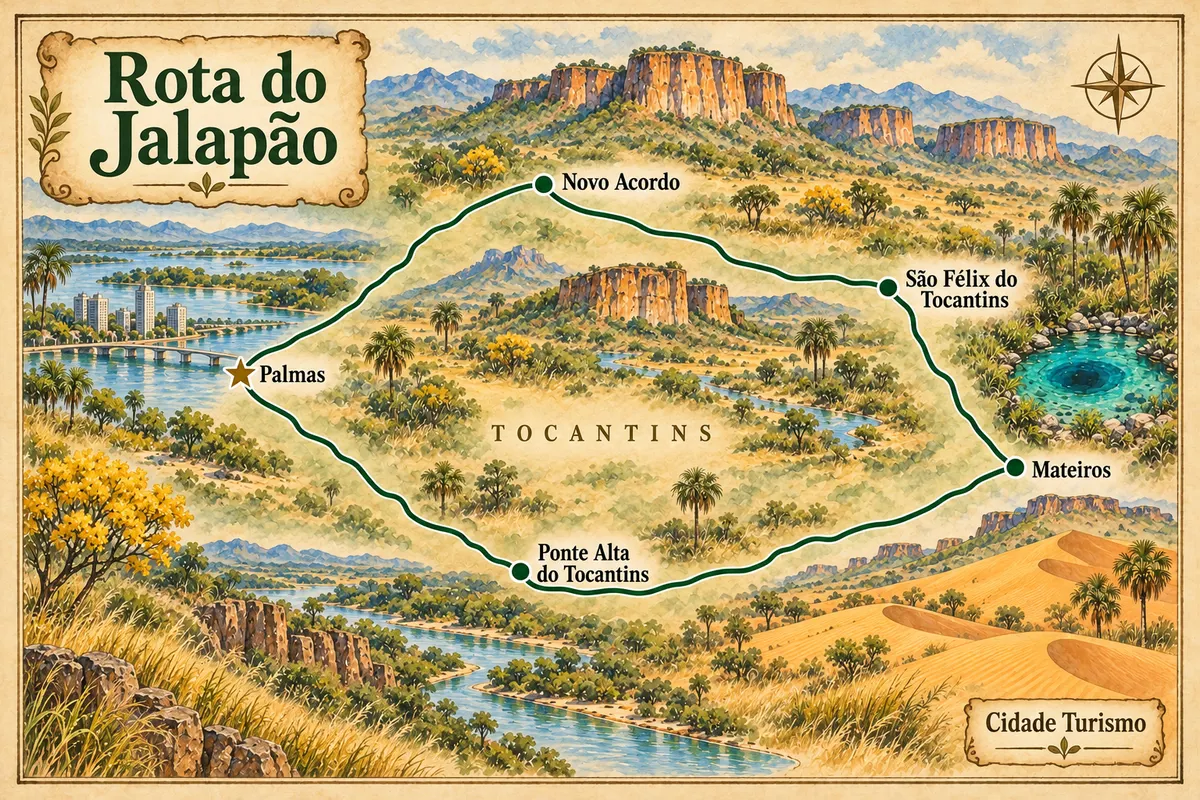
Via the south: paved road from Palmas to Ponte Alta do Tocantins, via TO-030 and TO-130, or via TO-050 and TO-255, passing Porto Nacional. After Ponte Alta the pavement ends: about 160 km of dirt and sand along TO-255 to Mateiros, taking roughly 4 hours. Along the way are the entrance to Cachoeira da Velha, Serra do Espírito Santo and the dunes.
Via the north: from Palmas to São Félix do Tocantins, passing Novo Acordo, and from São Félix to Mateiros by TO-110, over dirt and sand, passing the fervedouros.
From Palmas to Mateiros allow 5.5 to 8 hours, depending on the route, road conditions and stops.
The vehicle needs four-wheel drive: there are long stretches of soft sand. Bring a good spare tire, shovel, tow strap, extra fuel and downloaded maps on your phone, because signal disappears outside towns and there are many junctions. There are gas stations in Ponte Alta, Mateiros and São Félix; refuel whenever you pass one. In the rainy season some sections can become impassable. If you have never driven on sand, it's more comfortable to hire a local driver.
There is scheduled transport between Palmas and Mateiros using buses, minibuses or vans, departing Palmas bus terminal on fixed days of the week. Depending on the day, the route goes via Ponte Alta do Tocantins or via São Félix do Tocantins, and there are return departures from Mateiros.
Days and departures change: confirm with the company before planning your trip and check the current fare.
Arriving by bus only solves the trip to town. The attractions are tens of kilometers apart, with no public transport between them, and park attractions require a driver. Travelers arriving by scheduled transport must hire in Mateiros a driver with a 4x4 vehicle or a local agency for tours, preferably booked in advance.
This is the most common way to reach Mateiros. Agencies depart from Palmas in 4x4 vehicles with a guide and run circuits of three to seven days, sleeping in Ponte Alta do Tocantins, Mateiros, and São Félix do Tocantins. Mateiros usually has one or two nights allocated for the dunes, Cachoeira da Formiga, the fervedouros, and Mumbuca.
Packages typically include transport, guide, lodging, attraction entrance fees, and some meals. Rafting, the Serra do Espírito Santo trail, and other optional activities may be paid separately. Ask how many nights the itinerary stays in Mateiros, which fervedouros are included, and whether the municipal tourism tax is covered.
Baggage is usually limited to one backpack or soft bag per person; no hard suitcases.
The town center is small and walkable. Outside it, everything depends on a 4x4 vehicle: the dunes are about 35 km away, Cachoeira da Formiga 33 km, and Mumbuca 35 km, on sandy and dirt roads without regular signage and without cell signal.
At public state-park attractions, such as the dunes, Serra do Espírito Santo, and Cachoeira da Velha, entry is only allowed with a licensed tour guide or accredited environmental driver; each guide takes a maximum of ten people. Dunes and the serra require booking and a voucher. The list of accredited drivers is at the Parque Estadual do Jalapão Tourist Service Center in town.
At the private fervedouros and Cachoeira da Formiga, a guide is not required, but going with someone who knows the roads saves time and reduces the risk of getting stuck.
Bring cash: many attractions do not have card service.
The municipality has instituted a tourism fee charged to visitors to Mateiros and the attractions of Parque Estadual do Jalapão. Under the published rule, payment is made once per visitor and is valid for up to eight consecutive days, with exemptions for residents, children up to 10 years old, people over 65 and people with disabilities. Payment is by electronic transfer or at points authorized by the city hall, and the receipt, with a QR code, may be requested at attractions together with a photo ID.
The charge was challenged in court, and a provisional decision once suspended it. Because the situation can change, confirm with Mateiros city hall or with your agency, before traveling, whether the fee is in force, how much it costs and how to pay.
Odgovori na vaša vprašanja
Two nights is the minimum to see the Jalapão Dunes, Formiga Waterfall and two or three fervedouros. With three nights you can add the Serra do Espírito Santo trail at sunrise, the Mumbuca Village and, for those who want, a day at Cachoeira da Velha. Keep in mind that the trip from Palmas takes up a good part of a day each way.
Both towns complement each other. Mateiros is closer to the state park: dunes, Serra do Espírito Santo, Formiga Waterfall and Mumbuca. São Félix do Tocantins is closer to other fervedouros, Serra da Catedral and the return route to Palmas via Novo Acordo. The most common option is to sleep in both, connected by the TO-110.
Yes, with a 4x4 vehicle and preparation. For attractions inside the state park, such as the dunes, Serra do Espírito Santo and Cachoeira da Velha, a licensed guide or driver is mandatory even for visitors with their own car, and dunes and the Serra require prior scheduling. For Formiga Waterfall and the fervedouros, which are private, you only need to pay the entrance fee. Without experience on soft sand, hire a driver with a vehicle in Mateiros.
The list of licensed guides and drivers is at the Tourist Service Center of the Jalapão State Park in town. Pousadas also recommend drivers. Because the dunes have a daily visitor limit and require scheduling, arrange it before arriving, especially from June to August and on holidays.
Yes. There are morning and afternoon entry periods. Late afternoon is the most popular time because of the sand color and the sunset; mornings have fewer people but stronger sun. It is not allowed to stay on the dunes at night.
Yes, about 33 km from town, on private land that charges an entrance fee and has a bar, restrooms and camping. The waterfall is low; the attraction is the clear green-blue pool. A guide is not required to enter, but the access road is dirt and sand, suitable for 4x4 vehicles.
Among the most visited in the municipality are Ceiça, Buritis, Macaúbas, Rio Sono, Buritizinho and Encontro das Águas. Bela Vista and Alecrim are in São Félix do Tocantins. All are private, with paid entry, few swimmers at a time and limited time in the water.
At the community shop in Mumbuca Village, about 35 km from the town center, where pieces are sold by the community itself. You’ll find necklaces, bracelets, bags and decorative items. Bring cash and carry the pieces without folding or getting them wet.
It usually takes place in mid-September in Mumbuca Village and marks the start of the harvesting season for the grass. In 2025 it was held from September 12 to 14. The date changes each year: confirm with the community association, the city hall or your agency.
Days are warm year-round. From May to August, the dry season, nights and early mornings cool down, with lows between 13 °C and 20 °C. A light jacket is enough for dinner and for the early-morning departure to Serra do Espírito Santo.
Cash, swimsuit, towel, a dry change of clothes, hat, plenty of water, closed shoes for the trail and sturdy sandals for the sand. For the serra, bring a headlamp and warm layer. In the fervedouros you must not enter with sunscreen or insect repellent on your skin; wear a protective shirt and apply those products after bathing.
In town there are a few simple restaurants. During tours you eat at the restaurants on the properties themselves, such as those at some fervedouros and the bar at Cachoeira da Formiga, or in communities that host visitors by reservation. On long days, like the trip to Cachoeira da Velha, bring a packed snack.
By the TO-110, a dirt-and-sand road that passes several fervedouros. The route is done in a 4x4 and usually takes a full day of touring, with stops for bathing along the way. On some days of the week there is scheduled transport between the two towns; check with the company.
Brazilske poti
A circuit starting from Palmas through dunes, fervedouros, rivers and Jalapão communities.
Več kot vodnik