Barra Grande beach and the village on foot
Odhod: Barra Grande town center on foot from 3 hours up to a full day morning, afternoon, or full day easy
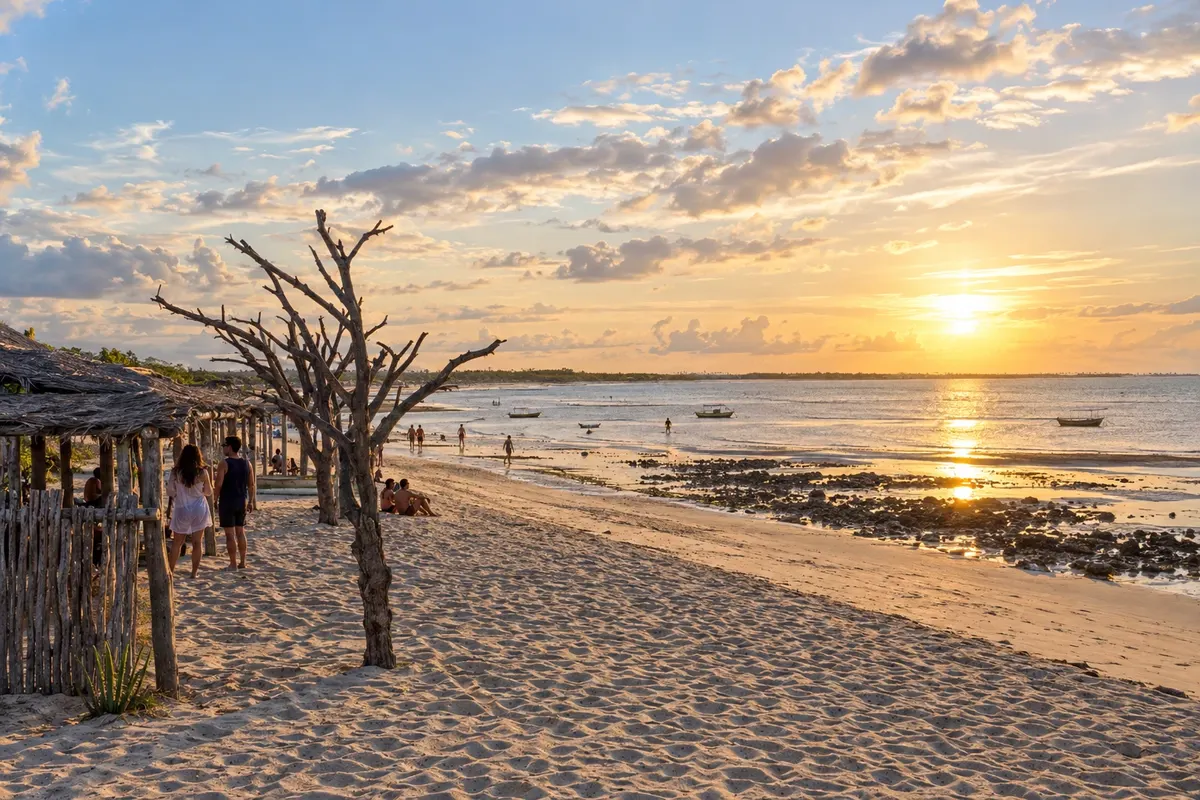
Barra Grande fits within a walk. The town center has few streets, much of it is sand, located between the access road and the sea, and can be crossed in about ten minutes. Rua Pontal da Barra, the one closest to the beach, concentrates restaurants, bars and shops that stay open at night; the square by the Church of Nossa Senhora da Conceição is the other village landmark.
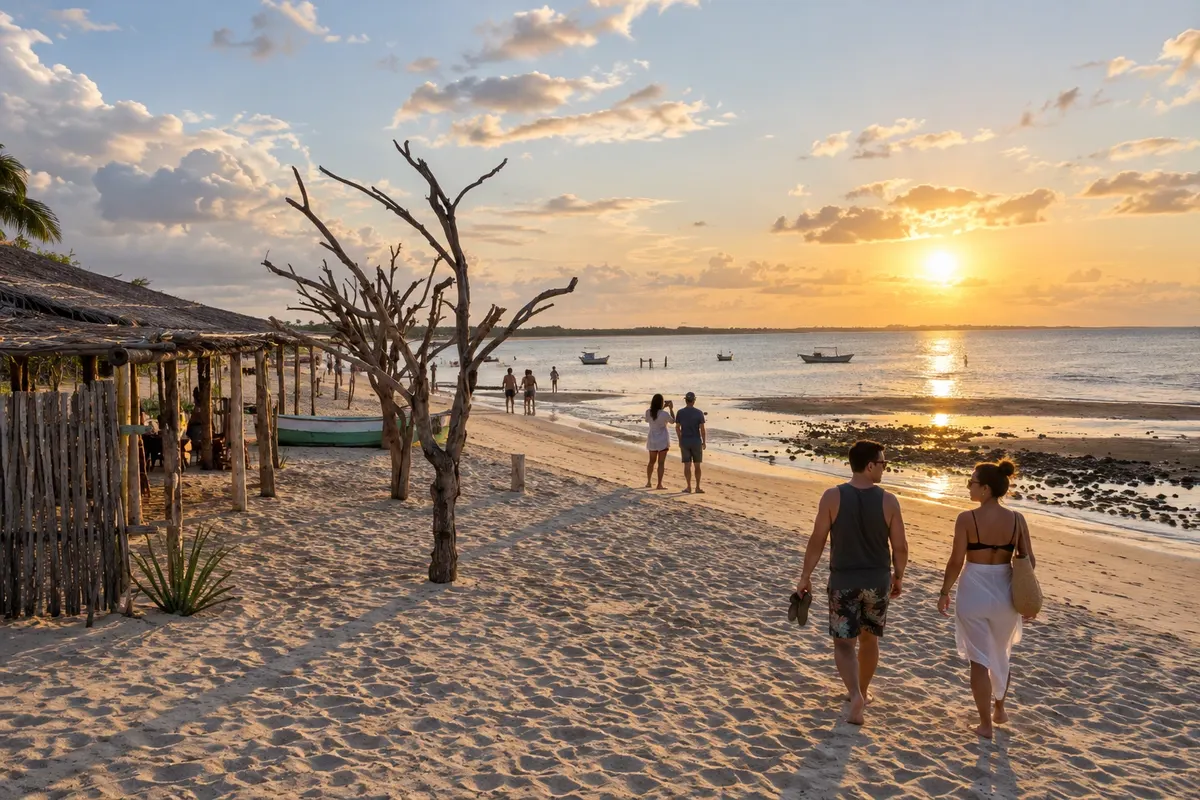
The beach is a cove of almost 5 km, with no cars on the sand. In front of the town center are the oldest stalls, run by fishermen and locals. To the left and right are the areas used for kitesurfing, and on the right side as you face the sea are the beach bars connected to the pousadas.
Swimming depends on the tide. At low tide, the sea recedes a lot, there are hardly any waves and shallow, warm pools form: you must walk a good distance before the water reaches waist depth. At high tide, the water comes close to the stalls and becomes deep quickly. Outside the sailing areas, swimming is calm; inside them, boards pass at speed and it’s wise to keep your distance.
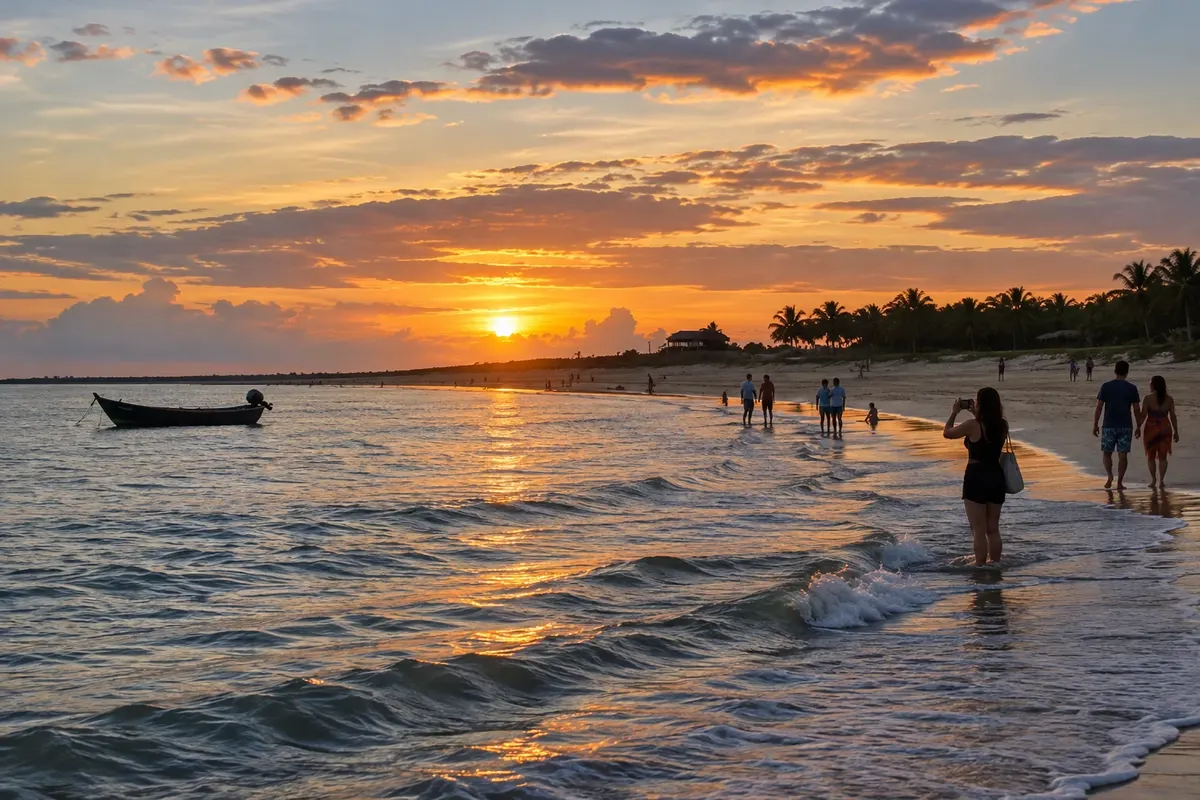
In the second half of the year, the wind raises sand in the afternoon and fills the sky with colorful kites. Evenings usually gather locals and visitors on the sand to watch the sun set over the cove.
Kraji na poti: Barra Grande Beach, Rua Pontal da Barra, Square by the Church of Nossa Senhora da Conceição.
Vključuje: Self-guided visit. Purchases at kiosks and beach bars are paid separately; some establishments require a minimum spend on weekends and holidays. Check each place’s current price list.
Nasvet: Check the tide table at your pousada before choosing the time for the beach. Bring sunscreen and a hat: there is little natural shade on the sand. At night, some streets away from the center have limited lighting; a flashlight helps.
Najboljši čas za obisk: From June to December, the months with little rain. From August to December it is windier.
Kitesurfing in Barra Grande: lessons and wind season
Odhod: Barra Grande beach lesson with a local school or your own equipment lessons of a few hours; course of 3 to 5 days morning or afternoon, depending on the wind moderate
Brazil’s northern coast receives steady trade winds, and Barra Grande sits in the middle of that corridor. Combined with shallow water and no big waves, this made the village one of the country’s best-known kitesurfing spots: the wind is predictable and the water is waist-deep across much of the riding area. The sport transformed the former fishing settlement into a destination for travelers from many countries, who often stay for one or two weeks.
There are several schools in the village offering lessons for those who have never stood on a board. The basic course usually takes 3 to 5 days until the student sails alone, and equipment is provided by the school. Travelers with their own gear will find storage, repair shops and water rescue services. Pousadas often recommend instructors.
On the beach, the kite areas are to the left and right of the village center. The Barrinha, 2 to 3 km away, also attracts kiters. Local operators also organize downwind runs between Barra Grande and the beaches of Luís Correia, the neighboring municipality; these are for sailors who are already competent.
Non-practitioners can watch from the sand or the beach bars. Sources vary slightly on the months: the season starts between July and August and runs until December, possibly into January.
Kraji na poti: Barra Grande beach, Barrinha beach.
Vključuje: For lessons, equipment is usually provided by the school. Lessons, rental, storage and downwind runs are paid separately; check the current price list with the provider.
Nasvet: Book accommodation and lessons in advance for the windy season: the village has few rooms and demand from abroad comes early. Ask the school which tide it uses for beginners.
Najboljši čas za obisk: Wind season: August to December, possibly starting in July and extending to January.
Seahorses on the Camurupim River, by carriage and canoe
Odhod: Barra Grande horse-drawn carriage or walk and canoe 2 to 3 hours morning or afternoon, depending on the tide easy
This is Cajueiro da Praia’s most traditional outing and also draws visitors from Parnaíba and Luís Correia. It starts in the village with a horse-drawn carriage that follows the beach to the Camurupim River bank. If you prefer, you can walk: it’s more than thirty minutes under the sun.
On the river, the group boards a canoe piloted by local residents and enters the mangrove. The area has four kinds of mangrove (red, white, button and black), and along the way you’ll see crabs, herons and other birds. In the area where the seahorses live, the guides locate the animals and show them for a few moments in a glass container with river water, before returning them to the same spot. Some operators only observe without removing the animals from the water; if this matters to you, ask how it’s done before booking.
At low tide, some departures end with a floating segment following the current, with a life jacket.
The schedule changes every day because the canoe only goes into the mangrove when the water level is right. Guides usually announce the departure time the day before. The seahorses live free in the river and don’t always let themselves be seen up close.
Kraji na poti: Barra Grande, Camurupim River, Camurupim Mangrove.
Vključuje: Usually includes the carriage, the canoe, the life jacket and the local operator. Food, drinks and transfer for those not staying in Barra Grande are paid separately; check the current price list of operators.
Nasvet: Confirm the schedule the day before. Bring a hat, sunscreen, water and a waterproof bag for your phone; wear swimwear and footwear that can get wet.
Najboljši čas za obisk: All year; times are defined by the day’s tide.
Cajueiro Rei and the town center of Cajueiro da Praia
Odhod: Barra Grande or Cajueiro da Praia town center car, taxi, or organized tour 2 to 3 hours morning or late afternoon easy
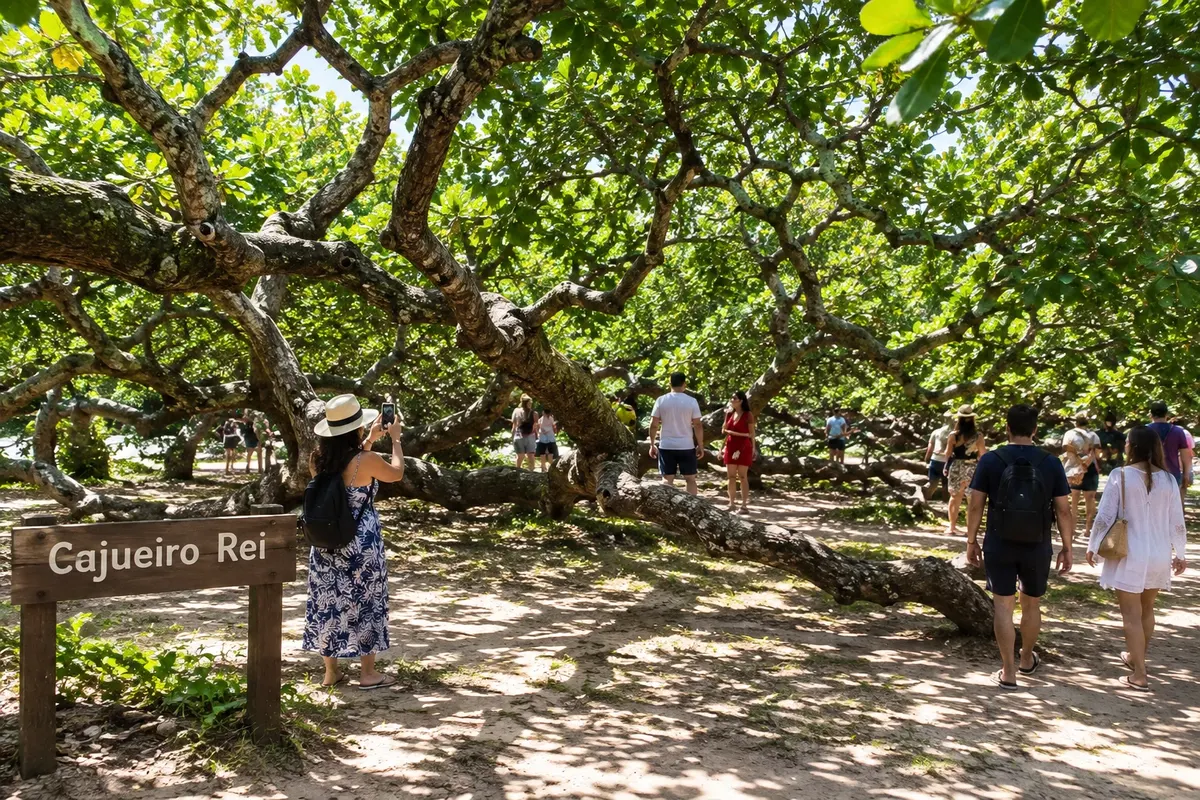
Cajueiro Rei is about 1 km from the center of Cajueiro da Praia and 8–9 km from Barra Grande. It is a single tree: the branches grow horizontally, reach the ground, form roots and become new trunks, all connected to the original. A 2016 study by the State University of Piauí confirmed the same genetic sequence throughout its extent and measured a 8,832 m² canopy; other measurements report about 8,800 m², which is expected for a tree that keeps growing. The Cajueiro of Pirangi, in Rio Grande do Norte, remains listed in the record books, and the two trees vie for the title of largest cashew tree in the world.
The visit takes around an hour and is done on foot, in the shade of the canopy. Locals who work as guides point out the original trunk and the branches that are taking root. Recent publications differ about the facilities: some describe a boardwalk and a lookout to view the canopy from above, others mention a simple visit in a rural setting. Ask locally what is open that day. Near the tree, artisans sell baskets and bags made from carnaúba straw.
Take the trip as an opportunity to see the municipal seat. The Igreja Matriz do Sagrado Coração de Jesus, from 1934, is a simple building facing the square. At the entrance roundabout are the city name sign and a statue of the Sagrado Coração de Jesus. Praia do Cajueiro, in front of the center, has calm water, a wide sand strip and fishing boats, with much less activity than Barra Grande.
Kraji na poti: Cajueiro Rei, Igreja Matriz do Sagrado Coração de Jesus, Praia do Cajueiro.
Vključuje: Travel on your own or as part of an organized tour, paid separately. Sources consulted do not record an entrance fee at Cajueiro Rei; hiring a local guide is arranged on site. Check before you go.
Nasvet: Go early morning or late afternoon: at midday the heat is strong. Do not climb the branches or lean objects on the tree. You can combine this visit with the seahorse tour on the same day, depending on the tide.
Najboljši čas za obisk: All year; little rain from June to December.
East beaches: Barrinha, Ponta do Sardim and Morro Branco
Odhod: Barra Grande car or organized tour 3 to 4 hours morning or afternoon easy
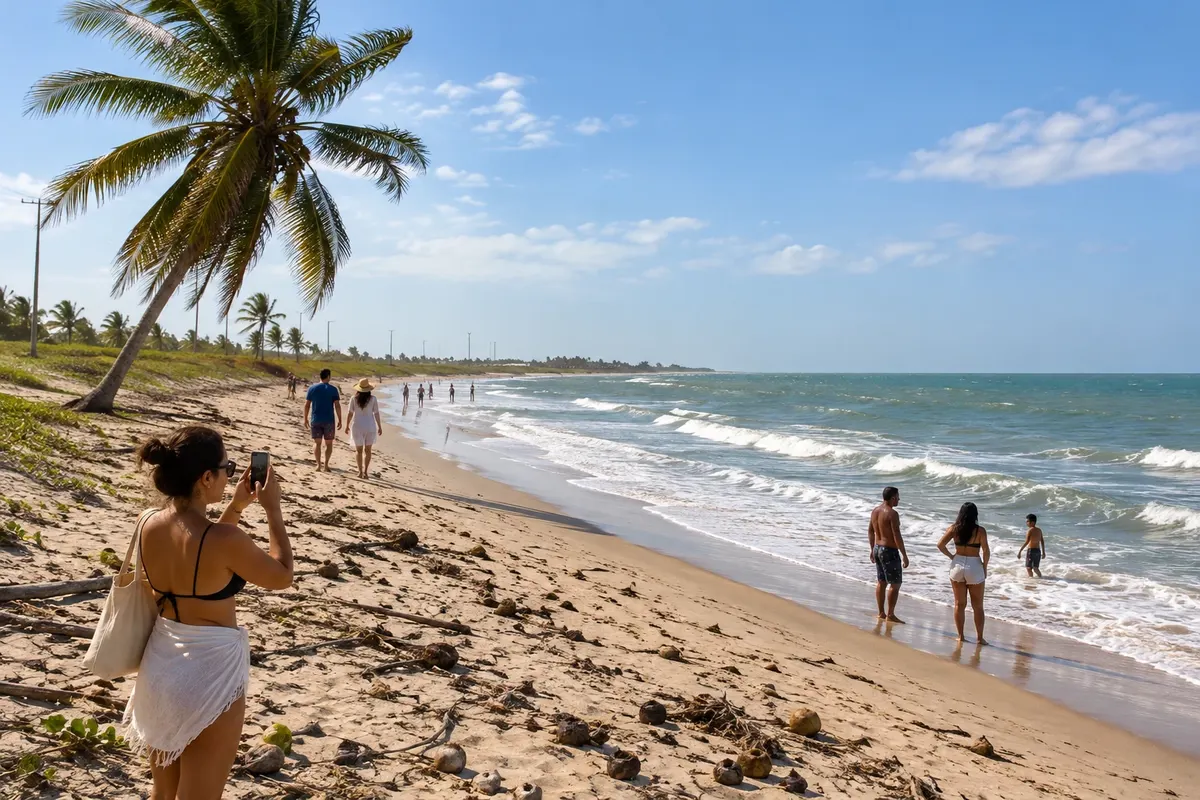
To the east of Barra Grande, the Cajueiro da Praia coastline becomes increasingly empty. The first stop is Barrinha, 2 to 3 km away: a fishing village with coconut palms, simple houses, a wide sand strip and calm sea. It has little beach infrastructure and is also used by kitesurfers.
Next come Ponta do Sardim and Praia do Sardim, with coconut trees and fishing boats, almost without visitors, and Morro Branco, with light dunes and native vegetation. None of these beaches have regular tourist facilities: the plan is to walk, look at the scenery and swim where the tide allows.
At the far eastern end of the municipality, already at the mouth of the Timonha and Ubatuba rivers and on the border with Ceará, lies Praia de Itam, without stalls or restaurants, with mangrove right up to the sea. Access is more difficult and requires local information about the route and the tide.
Local operators run this itinerary by car in about three hours from Barra Grande, a scenic tour that passes Barrinha and Sardim and ends at Cajueiro Rei. If you go on your own, ask your pousada about the condition of access roads, which can include dirt and sand sections.
Kraji na poti: Praia da Barrinha, Ponta do Sardim, Praia do Sardim, Praia de Morro Branco.
Vključuje: On organized tours, a vehicle with a driver is provided. Food and drinks are paid separately, and the price differs between shared and private departures; check the current rate table with the operator offering the tour.
Nasvet: Bring water, a snack, and sun protection: after Barrinha there are almost no places to buy supplies. Arrange the return time in advance if you’ll be taking a taxi.
Najboljši čas za obisk: From June to December, when rainfall is low; check the tide for swimming.
Parnaíba Delta and red ibis (guarás) flocking departing from Barra Grande
Odhod: Barra Grande; boarding at Porto dos Tatus, on Ilha Grande car or transfer and launch about 6 hours, including the transfer afternoon, returning at night easy
The Parnaíba Delta is not in Cajueiro da Praia: boats leave from Porto dos Tatus, in the municipality of Ilha Grande, on the other side of Parnaíba. From Barra Grande it’s about 80 to 90 km to the port, a little under 1h30 of road each way. Still, it’s the excursion outside the municipality most often done from the village.
The most sought-after version is the guarás flocking. The group leaves Barra Grande after lunch, boards a fast speedboat and navigates the delta channels to Baía do Caju, with a stop to walk on the dunes and bathe in the river. At dusk, the boat positions at a distance from the islet where the guarás, red-plumaged birds, usually arrive in flocks to roost. The return to the port is in the dark, and arrival back to the village is at night.
There are also full-day tours on a large boat, with lunch, and speedboat circuits to islands and waterways. Anyone planning to do more than one delta tour saves time by sleeping one or two nights in Parnaíba, before or after Barra Grande, instead of repeating the road.
The tour is offered shared or private, with or without transport from Barra Grande.
Kraji na poti: Porto dos Tatus, Baía do Caju, Ilha dos Guarás.
Vključuje: According to the operator: speedboat and driver, with or without round-trip transfer from Barra Grande. Food, drinks and the boarding fee, when charged, are paid separately; check the current price list from whoever sells the tour.
Nasvet: Book the tour and the transfer together and confirm the departure time, which follows the tide and the sunset. Bring insect repellent, sunscreen and a change of dry clothes for the return.
Najboljši čas za obisk: From June to December, with less rain; in the rainy months the birds spread out more.


 Antarktika
 Argentina
 Bolivija
 Čile
 Kolumbija
 Ekvator
 Gvajana
 Francoska Gvajana
 Falklandski otoki (Malvini)
 Paragvaj
 Peru
 Surinam
 Urugvaj
 Venezuela
 Nemčija
 Avstrija
 Belgija
 Hrvaška
 Danska
 Slovaška
 Slovenija
 Španija
 Finska
 Francija
 Grčija
 Nizozemska
 Madžarska
 Irska
 Islandija
 Italija
 Luksemburg
 Norveška
 Poljska
 Portugalska
 Združeno kraljestvo
 Češka
 Švedska
 Švica
 Turčija
 Bermudi
 Kanada
 Združene države Amerike
 Grenlandija
 Mehika
 Sveta Peter in Mihael
 Dominikanska republika
 Japonska
 Južnoafriška republika
 Egipt
 Avstralija
 Fidži
 Nova Zelandija
 Papua Nova Gvineja