Poços de Caldas

Minas Gerais · Brazilija

Poços de Caldas

Destinacija: Caminhos Gerais.

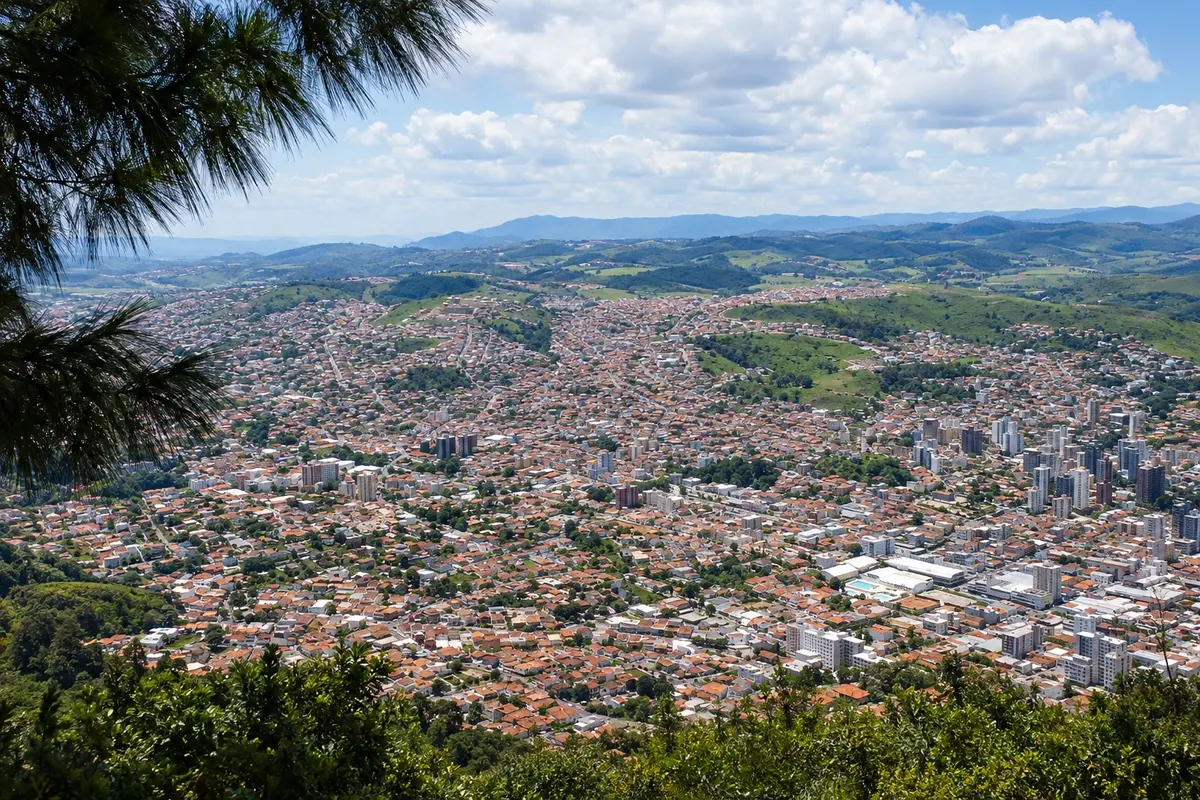
Na fotografiji: Poços de Caldas seen from the Serra de São Domingos

Illustrative images. The pictures in this guide are illustrations based on the real place, not photographs, and may differ from it.

Na voljo v trgovini Google Play Pošljite svoje fotografije

Mesto

Kaj lahko pričakujete – Poços de Caldas.

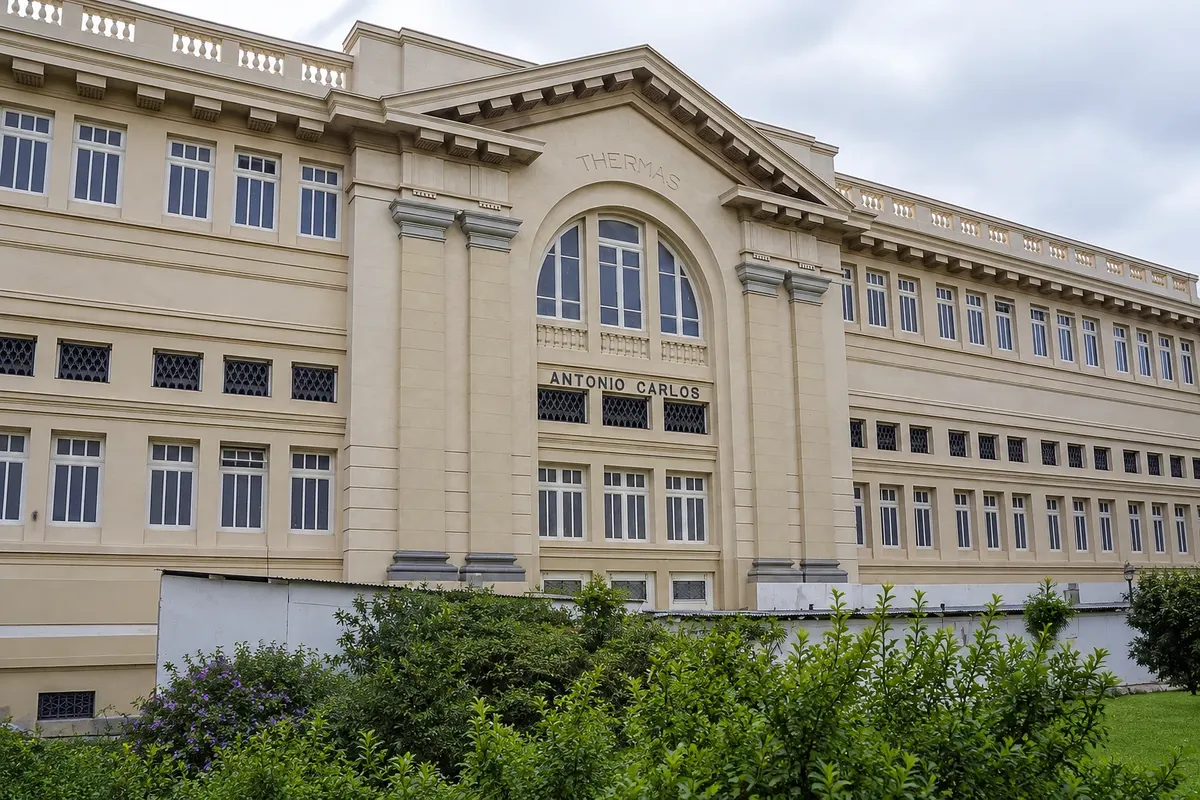
Poços de Caldas lies inside an ancient volcanic caldera, at about 1,200 meters elevation, in southern Minas Gerais near the border with São Paulo. The town grew around the sulfurous waters and has the Thermas Antônio Carlos (1931) in the center, part of a historic complex with a park and gardens. From the top of the Serra de São Domingos, reached by cable car, the Cristo Redentor dominates the city view.

Poços de Caldas sits on a plateau surrounded by mountains in southern Minas Gerais, near the border with São Paulo state. The town was born from the hot, sulfurous waters that spring at the bottom of the valley. In 1819 the French naturalist Auguste de Saint-Hilaire described the springs; in 1865 the first spa opened beside the Fonte Pedro Botelho; in 1886 Emperor Dom Pedro II inaugurated the Mogiana railway branch, which brought summer visitors. The official founding date is November 6, 1872.

The central area you visit today was laid out between 1928 and 1931, when the Minas Gerais government built the Thermas Antônio Carlos, the Palace Casino, the neighboring hotel and Parque José Affonso Junqueira at once. The complex is arranged around Praça Pedro Sanches and is walked on foot, on flat ground: European-style gardens, a bandstand, the Fonte Luminosa, the Floral Calendar and the Fonte do Leãozinho, which supplies water to the Thermas. Gambling was outlawed in Brazil in 1946 and the casinos closed, but the buildings remained. The Palace Casino hosts events, and the former Cassino da Urca became a cultural space.

The water is the reason many people come. It reaches the surface at 45 °C and is used in tubs at 37 °C, both at the Thermas Antônio Carlos and at the Balneário Mário Mourão on Praça Dom Pedro II. Around the town there are also public cold mineral water fountains in fountains and squares.

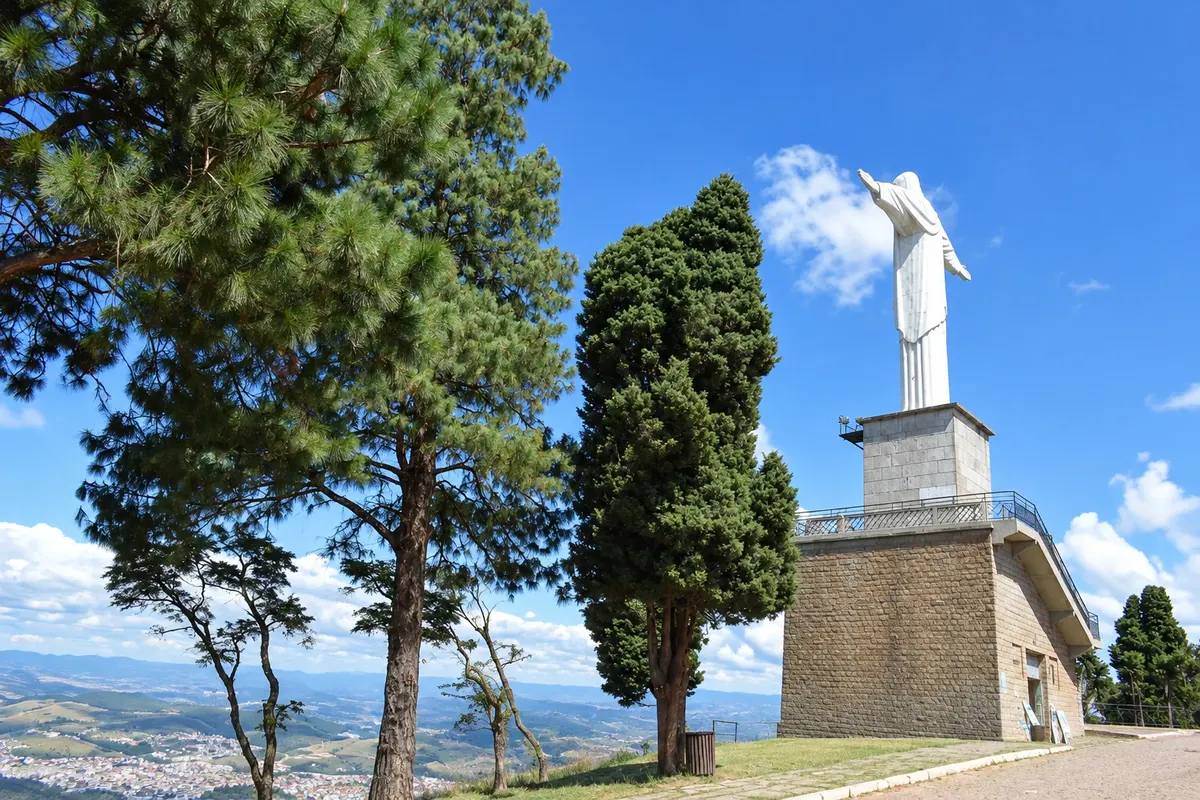
The second area to visit is the Serra de São Domingos, which borders the town to the north. At the top, 1,686 meters above sea level, stands the Cristo Redentor, a 30-meter monument from 1958. You can reach it by cable car from the central park, by car or via the trail that starts at the Fonte dos Amores. Up there are the hang-gliding ramp and the Pedra Balão; at the foot of the mountain is the Recanto Japonês.

The third area is the Ribeirão das Antas in the west, on the road to São Paulo: the Represa Bortolan, with boat rides and pedal boats, the Cachoeira Véu das Noivas and, downstream, the Cascata das Antas, with the ruins of a hydroelectric plant from 1898.

The climate is highland. From October to March it rains a lot, usually in late-afternoon showers, and the average temperature stays near 21 °C. From April to September the weather is dry, the average falls to about 15 °C, early mornings in June and July drop below 10 °C and there can be frost. July is the busiest month because of the winter festival; long holiday weekends also fill the town.

Two days are enough for the thermal center, one bath at the Thermas and the climb to the Cristo. With three days you can add the waterfalls, the reservoir, the museums and the weekend fairs. A practical note: several of the most sought-after attractions, including the cable car and the Fonte dos Amores, are run by a concessionaire and have separate admission fees. The central gardens, squares and fountains remain open without charge.

Delite: WhatsApp

Kje prenočiti

Poços de Caldas – število nastanitev: 69.

Kje jesti

Poços de Caldas – število lokalov: 21.

Poços de Caldas – nazivi in posebnosti

Mineral spa town

Doživite kraj

Poços de Caldas: kaj si ogledati

Slap

Bridal Veil Waterfall

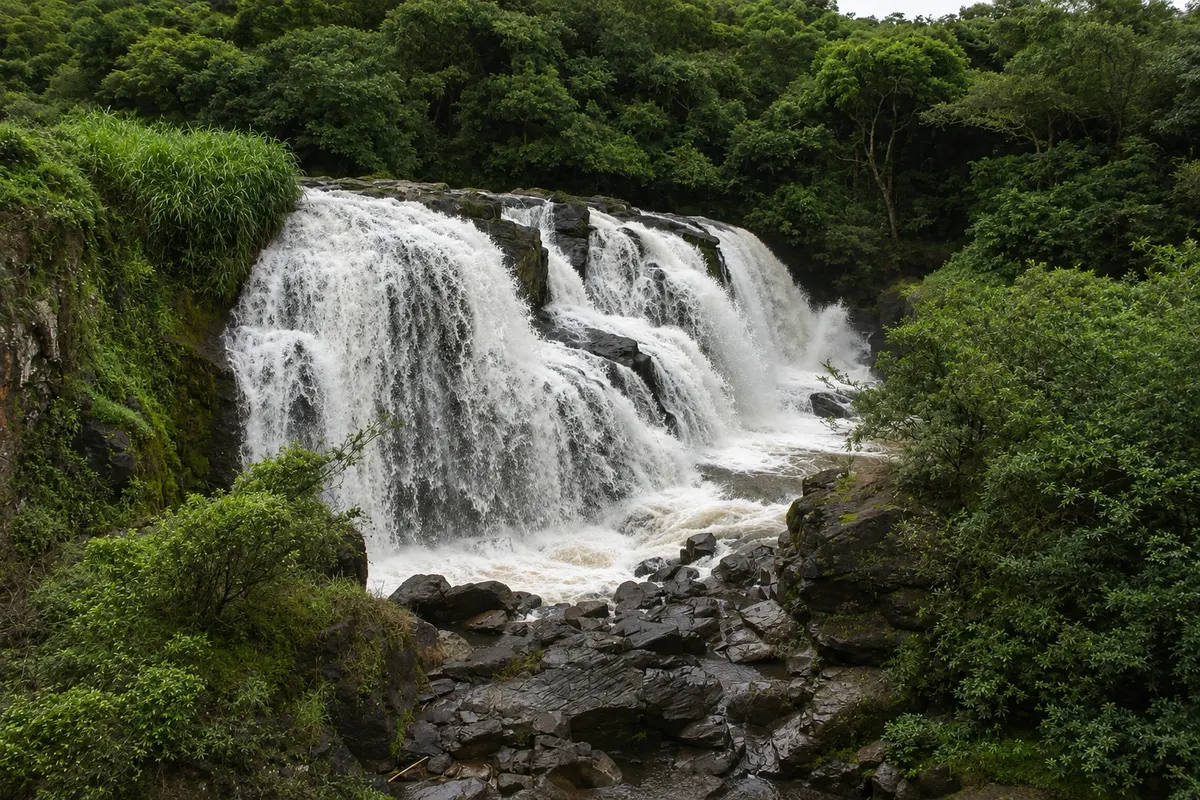
A set of three drops on the Ribeirão das Antas in the west side of Poços de Caldas, surrounded by forest with viewpoints beside the road. The tourist complex around it has parking, a leisure area and a little tourist train.

Raziščite Bridal Veil Waterfall

See 3 more places in Poços de Caldas
Cerkev

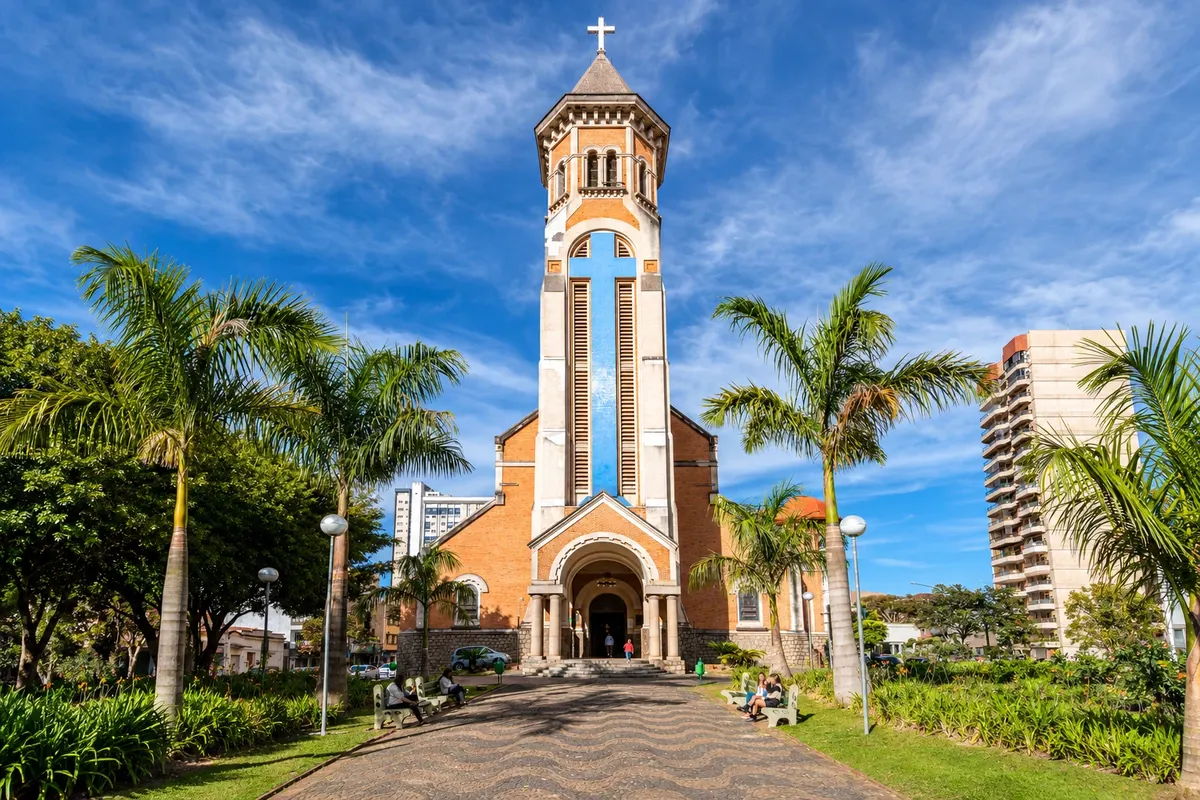
Basilica of Our Lady of Health

The main church of Poços de Caldas, dedicated to the city’s patron saint, located at Praça Monsenhor Faria de Castro in the city center. The brick-and-stone building, laid out in the shape of a cross, mixes Romanesque and Gothic features and has stained glass in the side altars.

Raziščite Basilica of Our Lady of Health

Historic building

Palace Casino

Former casino of the spa resort, built between 1928 and 1930 in the thermal area in downtown Poços de Caldas. The listed building is part of the complex with the Palace Hotel and the Thermas Antônio Carlos and houses a theatre and event halls.

Raziščite Palace Casino

Kaj izbrati pred odhodom

Izleti – Poços de Caldas

Izhodišče, trajanje, potek, vključene storitve in okvirna cena vsakega izleta.

Thermal center on foot: Praça Pedro Sanches, Parque José Affonso Junqueira and the fountains

Odhod: Praça Pedro Sanches, town center on foot 2 to 3 hours morning or late afternoon easy, flat terrain

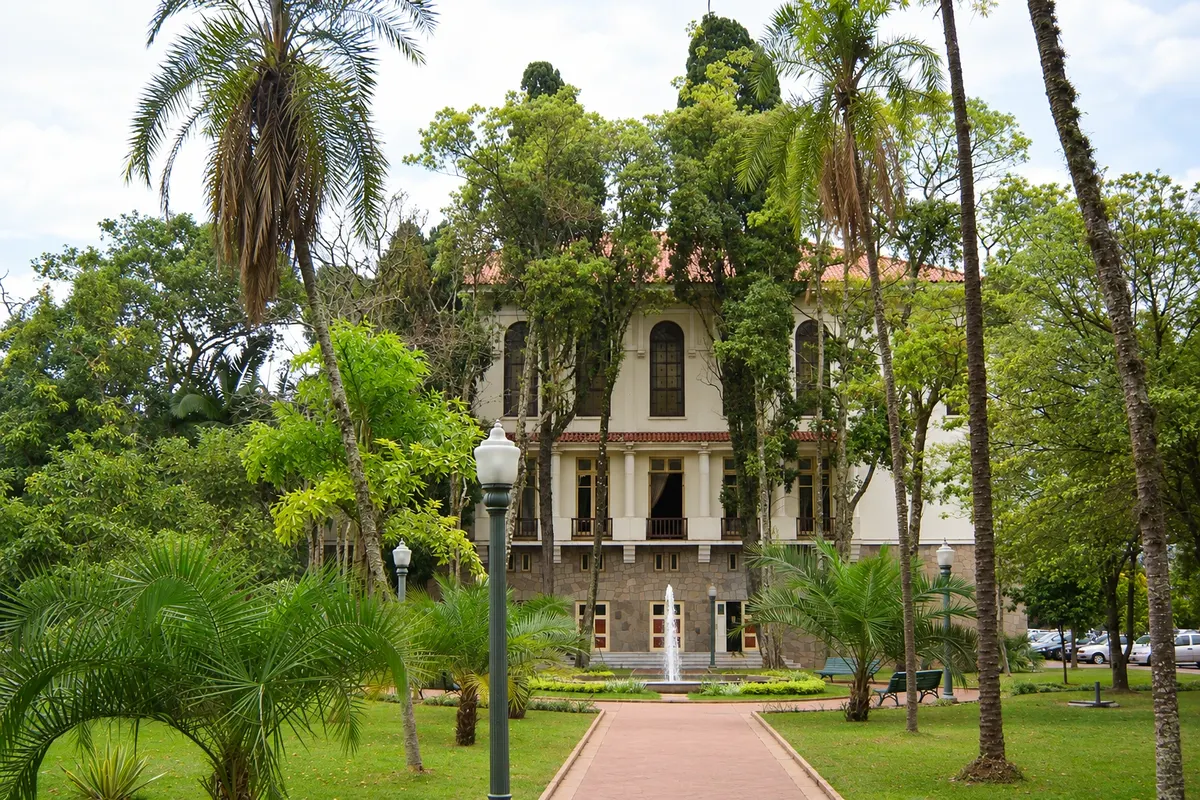
Praça Pedro Sanches is the natural starting point. It was opened in the 1930s, together with the resort buildings, and preserves the bandstand, where music is performed, and the Monument Minas ao Brasil, a stone obelisk with a bronze figure with outstretched arms, moved there in 1948. Facing the square are the Thermas Antônio Carlos. The 1931 building, by architect Eduardo Pederneiras, has large arches, a staircase and a hexagonal plan, dominated by neoclassical elements. Even if you don’t bathe, it’s worth going inside to see the lobby and the Museum of Thermalism, which occupies one of the rooms with old treatment apparatus. Next to the building, in Praça Elisiário Junqueira, is the Fonte Pedro Botelho, which supplies the sulfurous water of the Thermas. Locals call it Fonte do Leãozinho because of the marble fountain shaped like a lion. Nearby is the Calendário Floral, a flower bed with pebbles that marks the date and season and is remade every day. On the other side of the square begins Parque José Affonso Junqueira, in a European style, with century-old trees, a pergola and the Fonte Luminosa, built in the 1930s, which combines water jets, light and sound. The park’s main building is the listed Palace Casino, with arcaded halls and gilded details; it functions as an events center and only receives visitors by appointment. In front of it is the cable car station. To finish, follow Rua Junqueiras to Praça dos Imigrantes, which has monuments to the colonies that settled in the town and a stretch of the old railway line.

Kraji na poti: Praça Pedro Sanches, Monument Minas ao Brasil, Thermas Antônio Carlos, Fonte Pedro Botelho (Fonte do Leãozinho), Calendário Floral, Parque José Affonso Junqueira, Palace Casino, Fonte Luminosa, Praça dos Imigrantes.

Vključuje: Self-guided walk. There is no charge to enter the squares, the park and the fountains. Services at the Thermas and visits inside the Palace Casino are handled separately.

Nasvet: Return to the park after dark to see the Fonte Luminosa lit; check on the day whether it’s operating. On Saturdays and Sundays artists and artisans set up the Expo Arte de Rua around the Thermas.

Najboljši čas za obisk: All year. From October to March, prefer the morning: rain tends to come in the afternoon.

Sulfurous water baths: Thermas Antônio Carlos and Balneário Mário Mourão

Odhod: Praça Pedro Sanches or Praça Dom Pedro II, downtown on foot through the center 1 to 2 hours morning or afternoon easy

The immersion bath is the experience that gave rise to the town, and there are two public places to do it. The Thermas Antônio Carlos, opened in 1931, were the country’s first modern thermal establishment. The building has four levels, with bathing wings, showers, saunas, a pool, ofuros, inhalation rooms and a mechanotherapy room with equipment brought from Germany in the 1920s. The sulfurous water reaches the surface at 45 °C and is used in tubs at 37 °C. Individual tub baths last 20 minutes. Before buying a ticket, visitors go to the nursing station for a brief health assessment. For baths, saunas and showers you do not need to book: you buy a ticket and wait your turn, in order of arrival. Wait times are usually 10 to 15 minutes outside peak season and 30 to 40 minutes during vacations and holidays. Massages, facial treatments, foot soaks and ofuros require scheduled times and advance payment. The Balneário Mário Mourão is on Praça Dom Pedro II, also downtown. Founded in 1896, it is one of the country’s oldest baths, housed in a 1975 building. It offers immersion baths with the same water, about 37 °C, and usually does not open on Mondays. On the same square there are two public sulfurous water fountains. Old spa literature attributes therapeutic effects to these waters. Anyone with a health condition should talk with their own doctor before bathing.

Kraji na poti: Thermas Antônio Carlos, Museum of Thermalism, Balneário Mário Mourão, Praça Dom Pedro II.

Vključuje: Each service is paid separately, according to the Thermas’ and spa’s own price lists: check the current rates. At the Thermas, tickets are sold at the box office and online.

Nasvet: Bring swimwear and flip-flops for the pool, sauna and ofuro. In July and on holiday weekends, go right at opening to wait less. Confirm each facility’s opening days in advance.

Najboljši čas za obisk: All year. From May to August, when it’s cold, demand is higher.

Cable car and Cristo Park, on the Serra de São Domingos

Odhod: Cable car station, in José Affonso Junqueira Park cable car; you can also drive up 2 to 3 hours morning or afternoon easy

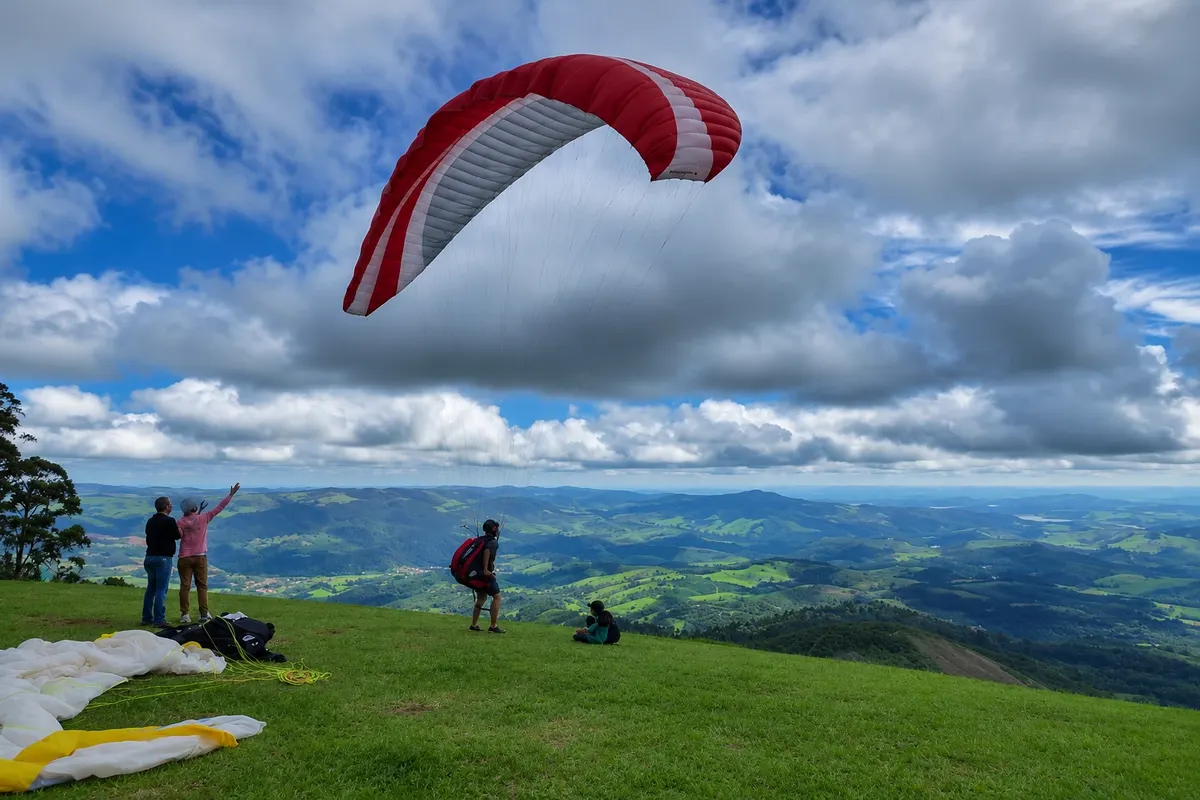
The cable car departs from the center, in front of the Palace Casino, and climbs Serra de São Domingos to Cristo Park. The system, of German origin, has operated since 1974. There are about 1,500 meters of cable, with cabins for up to four people, one of them accessible for people with disabilities. During the ascent you can see the city and the mountain’s forest. At the top stands the Cristo Redentor of Poços de Caldas, from 1958. The monument is 30 meters tall, totaling 14 meters of pedestal and 16 meters of statue, and sits at 1,686 meters altitude. From the viewpoint you can see the entire urban area inside the ring of plateau ridges. The surrounding park has a café, shops and paid adventure activities such as zipline and canopy courses. Nearby is the free-flight ramp used by paragliders and hang gliders. If you don’t fly you can watch the takeoffs; instructors offer tandem flights, which depend on the wind and visibility that day. Also on the ridge, near the Cristo, is Pedra Balão, a set of large stacked rocks about 10 meters high, with its own entrance. By car you can drive up the paved Pedra Balão road, about 4 km from the center. This is the option for days when the cable car is not operating.

Kraji na poti: Poços de Caldas Cable Car, Cristo Park, Cristo Redentor, Serra de São Domingos Free-Flight Ramp, Pedra Balão.

Vključuje: Cable car ticket. Entrance to Cristo Park and access to the monument are free for those who walk up or drive; parking, adventure activities, tandem flights and the Pedra Balão have separate fees.

Nasvet: The cable car is usually closed on Tuesdays for maintenance, except on holidays and school breaks, and the ticket office closes before the last departure: check before you go. Bring a jacket: it’s windy at the top and colder than downtown.

Najboljši čas za obisk: From April to September, when the sky is usually clear. In summer, go up in the morning.

R$ 78 · per person, full cable car fare· uradna cena

Fonte dos Amores and the trail to the Cristo

Odhod: Fonte dos Amores, Rua Piauí, at the foot of Serra de São Domingos on foot about 1 hour to climb, plus the visit to the fountain morning moderate, continuous climb

Fonte dos Amores is at the foot of Serra de São Domingos, where the town meets the forest. It was created in 1929: water flows in a thin veil over stone steps, in the middle of a grove, and beside it stands a white marble sculpture of two young people embracing, by the Italian Giulio Starace. The site was renovated by the concessionaire that manages it and has a carp pond, a café, and a shop. From there departs the main trail of the serra, which connects the center to the Cristo Redentor. The walk takes on average one hour, always uphill, through the forest. At the top you emerge into Parque do Cristo, with the monument, the viewpoint, and a café. The most common combination is to climb on foot and descend by cable car to Parque José Affonso Junqueira, or the reverse for those who prefer to spare their knees on the ascent. Those who only want to see the spring visit it in under an hour.

Kraji na poti: Fonte dos Amores, Trilha do Cristo, Parque do Cristo, Cristo Redentor.

Vključuje: Entry to Fonte dos Amores. The cable car, if used on the return, is paid separately.

Nasvet: Start early, with water, closed shoes and warm clothing for the upper area. After rain the ground becomes slippery. Check at the fountain entrance whether the trail is open that day and until what time you can begin the ascent.

Najboljši čas za obisk: From April to September, in the dry season. From October to March, only on clear mornings.

R$ 30 · per person, full admission to Fonte dos Amores· uradna cena

Japanese Garden

Odhod: Japanese Garden, Amapá Street, Jardim dos Estados car or taxi from downtown about 1 hour morning or afternoon easy

The Japanese Garden is a replica of a Japanese garden, set in a stretch of native forest of the São Domingos Ridge, in the Jardim dos Estados neighborhood. The path passes ponds, bridges, small waterfalls and beds of ornamental plants. The main structure is the Azumaya, a pergola that reproduces a pavilion that once stood in the gardens of the Japanese imperial palace. The complex also includes the Senshintei, the purification gate, and the Fountain of the Three Wishes. The site has a tea house and a café. It is a short, peaceful visit that pairs well with the Fountain of Loves, also at the foot of the ridge, or with the Instituto Moreira Salles cultural center in the same neighborhood, which has exhibitions and film screenings in a modern pavilion next to a century-old chalet.

Kraji na poti: Japanese Nook, Tea House, Fountain of Three Wishes.

Vključuje: Entrance to the Japanese Garden. Consumption at the tea house and café is charged separately.

Nasvet: Go in the morning on weekends and holidays, when the garden fills. The Instituto Moreira Salles usually closes on Mondays.

Najboljši čas za obisk: All year round.

R$ 40 · per person, full admission· uradna cena

West zone: Bortolan Reservoir and Véu das Noivas Waterfall

Odhod: Avenida João Pinheiro, on the road toward São Paulo car, taxi or city bus half day morning or afternoon easy

The Ribeirão das Antas is the river that drains the plateau. It enters the municipality from the Andradas side, is dammed at the Bortolan Reservoir, forms the Véu das Noivas and continues toward the cascades on the other side of town. The first two sights are on Avenida João Pinheiro, the route for those arriving from São Paulo. The Cachoeira Véu das Noivas has three drops, one of them 10 meters, and fast rapids between rocks and riparian forest. The complex is run by a concessionaire, with viewpoints, short trails, craft shops and places to eat. The Bortolan Reservoir is the calling card at the city entrance. There are boat and launch rides, pedal boats and sport fishing, and the shoreline has bars and restaurants. Along the same axis is Parque Municipal Antônio Molinari, a green area for residents, with a lake, walking track, wooden playground and sports courts. It’s a convenient stop if you’re traveling with children.

Kraji na poti: Cachoeira Véu das Noivas, Represa Bortolan, Parque Municipal Antônio Molinari.

Vključuje: Entrance to the Véu das Noivas complex. Boat tours and pedal boats on the reservoir are arranged on site and paid separately.

Nasvet: After several days of rain the stream becomes muddy and stronger; at the end of the dry season the waterfall has less water. Check with the boatmen whether trips are running that day.

Najboljši čas za obisk: From November to April the waterfall usually has more water; from May to September the weather is more stable for the reservoir.

R$ 15 · per person, admission to Véu das Noivas· uradna cena

Prikaži dodatne izlete (3)

Cascata das Antas and the ruins of the 1898 plant

Odhod: Cascata das Antas Natural Park, in the Vale das Antas car or taxi from downtown 1 to 2 hours morning or afternoon easy

After crossing the town and receiving the Ribeirão de Caldas, the Antas River plunges into the Vale das Antas. Cascata das Antas has more than 50 meters of drop, amid dense vegetation and rock walls; about 200 meters downstream the water forms another fall, Cascata das Andorinhas. The place also has historical value. On September 1, 1898 the town's first hydroelectric plant was inaugurated there, which lit 150 street lamps and illuminated the 332 houses that existed then. The plant’s ruins are part of the visit. The area functions as a natural park, with woods, viewpoints facing the fall and short trails. It is less frequented than Véu das Noivas, and visits are usually more peaceful.

Kraji na poti: Cascata das Antas Natural Park, Cascata das Antas, Ruins of the 1898 hydroelectric plant.

Vključuje: Park entrance.

Nasvet: Wear closed shoes: paths are wet near the fall. Combine with Véu das Noivas and Represa Bortolan on the same day by car.

Najboljši čas za obisk: From November to April the fall usually has more volume; from May to September the paths are drier.

R$ 30 · per person, full admission· uradna cena

Museums and casinos: Vila Junqueira, Espaço Cultural da Urca and the Mogiana station

Odhod: Historical and Geographical Museum, Padre Henry Mothon Street, downtown on foot 2 to 3 hours afternoon easy

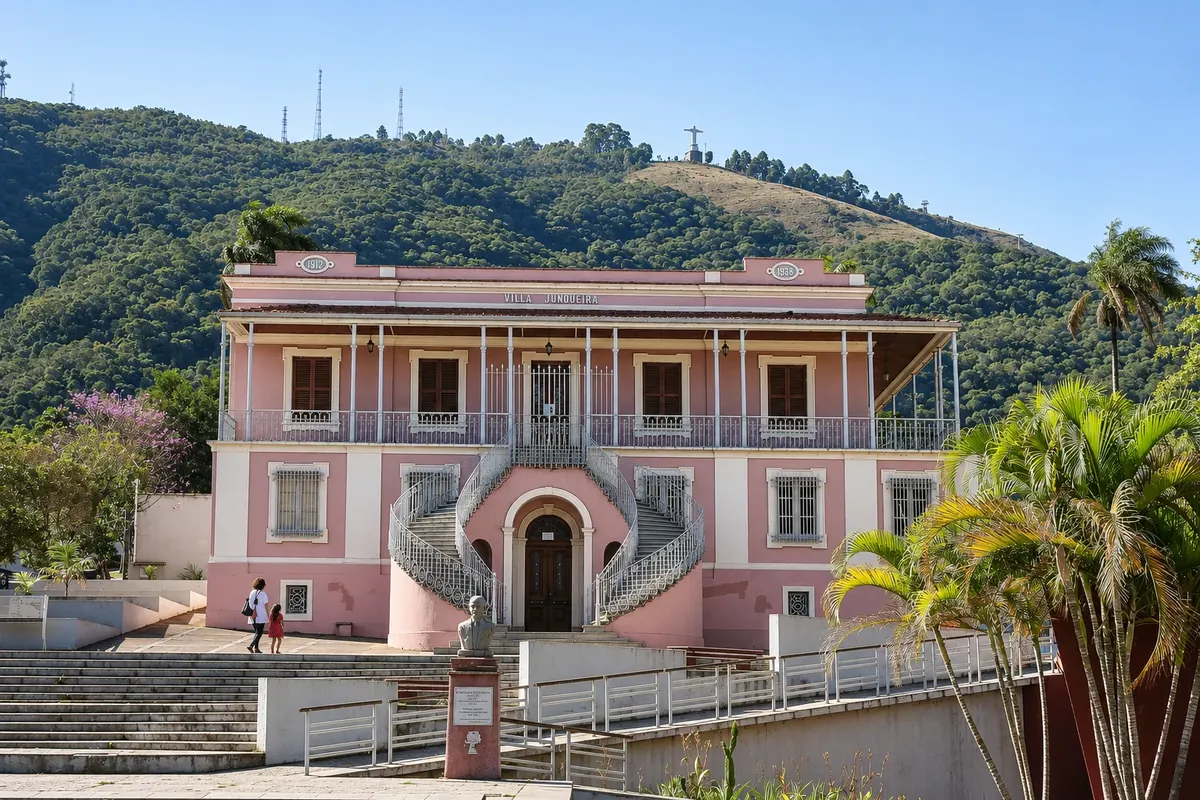
This route tells the history of the spa town outside the Thermas complex. The Historical and Geographical Museum occupies a late 19th-century mansion built as the residence of Martinico Prado Júnior and later used as a guesthouse and school. The collection includes oil paintings and watercolors, English and French porcelain from the early 20th century, old photographs of the town and a newspaper archive. Also downtown is the Basilica of Our Lady of Health, the cathedral, erected in 1937 on the site of the original church, designed by Otávio Lotufo in a neo-Romanesque style inspired by a church in Dieppe, France. At Getúlio Vargas Square is the Espaço Cultural da Urca. The building was the Urca Casino, opened in 1942 and one of the country's best-known gambling houses in the few years it operated. The halls host exhibitions and events, and the Benigno Gaiga Municipal Theater is located there. On the same square, the Floral Clock, from 1972, has beds designed by Austrian landscape architect Elisabeth Canta, trained in Kyoto. The Old Railway Station, at Paul Harris Square, recalls the arrival of the Mogiana Railway branch, inaugurated by Dom Pedro II in 1886. The listed building houses the tourism office and the tourist information center.

Kraji na poti: Historical and Geographical Museum of Poços de Caldas, Basilica of Our Lady of Health, Espaço Cultural da Urca, Getúlio Vargas Square, Floral Clock, Old Mogiana Railway Station.

Vključuje: Self-guided walk. Check at each site whether there is an entrance fee that day.

Nasvet: The museum usually closes on Mondays and opens on reduced hours on weekends. The station information center is open Monday to Friday. Check the Urca theater program.

Najboljši čas za obisk: All year. It's a plan for rainy afternoons, from October to March.

Public springs, Municipal Market and handicraft fairs

Odhod: Praça Dom Pedro II, downtown on foot 2 to 3 hours morning easy

Praça Dom Pedro II gathers Balneário Mário Mourão, two public sulfurous springs—the city’s most visited—and Ponte da Amizade, from 1912. On Sundays and holidays, from the morning, the square hosts Fearpo, the arts and crafts fair, with hundreds of exhibitors: knitwear, crochet, embroidery, straw baskets, soaps, leather goods, sweets and savory snacks. The Municipal Market, on Rua Pernambuco, has operated since 1969 and has 193 indoor stalls and 54 outdoor stalls. It’s where you buy cheeses, sweets, jams, beverages, spices and seasonal fruits. It’s open every day, with reduced hours on Sundays. Other springs are scattered through the center, each with different water composition. Fonte Martinico do Prado, beside the Palace Casino, springs at 17 °C and is a local favorite. The Fontanário Antônio Rubbo, in the center, includes three springs: Sinhazinha, Dona Amélia and José de Jacob, the latter with ordinary mineral water. These springs are much frequented by residents. The town is also known for crystal. The factories were founded by descendants of glassmakers from the island of Murano, near Venice, and maintain shops in the central area; some show the production of the pieces.

Kraji na poti: Praça Dom Pedro II, Ponte da Amizade, Feira de Arte e Artesanato de Poços de Caldas (Fearpo), Mercado Municipal, Fontanário Antônio Rubbo, Fonte Martinico do Prado.

Vključuje: Self-guided outing. There is no charge to drink at the public springs or to enter the market and fairs.

Nasvet: Do this route on a Sunday morning to catch the Fearpo and the market open. Bring a bottle to sample the waters; the sulfurous one has a strong smell and taste. The signs at each spring indicate the type of water.

Najboljši čas za obisk: All year; on Sundays and holidays because of the fair.

Po dnevih

Poços de Caldas – načrt poti. Število dni: 1, 2in3

Predlogi za načrtovanje poti. Vrstni red dni prilagodite vremenu in razpoložljivosti izletov.

1 dni · Poços de Caldas in 1 day: thermal center and Christ statue

Zapeople passing through or coming from a neighboring town · Izhodišče:Poços de Caldas downtown
  1. Dan 1 · Thermas, park and Serra de São Domingos

    Start at Praça Pedro Sanches. See the bandstand and the Minas ao Brasil Monument, enter Thermas Antônio Carlos to see the lobby and the Museum of Thermalism and, if you want the immersion bath, take it early in the morning when waits are shorter. Next door are the Fonte do Leãozinho and the Floral Clock. Cross Parque José Affonso Junqueira to the Palace Casino and have lunch downtown. In the afternoon, take the cable car up to Parque do Cristo. Stay at the Cristo Redentor viewpoint and walk to the hang-gliding ramp. If the cable car isn’t operating, go by taxi or car via the Pedra Balão road. Back downtown, stop at Praça Dom Pedro II to taste the sulfureous water from the public fountain and finish in the park, with the Fonte Luminosa lit up.

2 dni · Poços de Caldas in 2 days: waters, mountains and waterfalls
Zaweekend and first visit · Izhodišče:Poços de Caldas downtown
  1. Dan 1 · Thermal center and bath at the Thermas

    Morning on foot in the thermal center: Praça Pedro Sanches, Thermas Antônio Carlos, Fonte do Leãozinho, the Floral Clock and Parque José Affonso Junqueira. Allow an hour for the sulfur bath, either at the Thermas or at Balneário Mário Mourão. After lunch, follow the museum route: the Historical and Geographical Museum, the Basilica of Our Lady of Health and the Urca Cultural Space at Praça Getúlio Vargas, with the Floral Clock. At late afternoon, go to the Municipal Market for cheeses and sweets. In the evening, return to the park to see the Fonte Luminosa.

  2. Dan 2 · Fonte dos Amores, Cristo and Véu das Noivas

    Start early at Fonte dos Amores. If you like to hike, follow the trail up to Cristo Redentor in about an hour and return to town by cable car. If you prefer not to walk, visit the spring, go to Recanto Japonês, and take the cable car up. In the afternoon, drive or take a taxi to the west side: Cachoeira Véu das Noivas and Represa Bortolan, where you can take a boat ride. If the second day is a Sunday, reverse the order: first stop by Fearpo, the craft fair at Praça Dom Pedro II, which starts in the morning.

3 dni · Poços de Caldas in 3 days: with Cascata das Antas and the springs
Zathose who want to see the city unhurried · Izhodišče:Poços de Caldas downtown
  1. Dan 1 · Thermal center, Thermas and museums

    Morning at Praça Pedro Sanches, Thermas Antônio Carlos and Parque José Affonso Junqueira, with time for an immersion bath. In the afternoon, the Historical and Geographical Museum, the Basilica of Our Lady of Health, the Urca Cultural Space and the Old Mogiana Station, which houses the tourist information center. At night, Fonte Luminosa.

  2. Dan 2 · Serra de São Domingos

    A day dedicated to the mountains. In the morning, Fonte dos Amores and the ascent to Cristo Redentor, either by trail or by cable car. At the top, see the monument, the hang-gliding ramp and Pedra Balão. If you want to tandem paraglide with an instructor, arrange the tandem flight at the ramp depending on the day’s wind. Descend for lunch and in the afternoon visit Recanto Japonês. If you have time left, Instituto Moreira Salles in the same neighborhood has exhibitions and a cinema.

  3. Dan 3 · Ribeirão das Antas, springs and market

    By car, drive along Ribeirão das Antas: Represa Bortolan and Cachoeira Véu das Noivas on the road out to São Paulo, and then Cascata das Antas, with the ruins of the 1898 plant. Return to downtown for the springs route: Praça Dom Pedro II, Fontanário Antônio Rubbo and Fonte Martinico do Prado. Finish at the Municipal Market and the crystal shops. With a fourth day, Andradas, about 40 km away, has wineries and Pico do Gavião.

Najboljši čas za obisk

Kdaj se odpraviti:Poços de Caldas po mesecih

The seasons shown are the most usual ones; nature doesn't always follow the calendar.

januar Veliko padavin

Summer rain · Música nas Montanhas festival · Volta ao Cristo · School holidays

This is the rainiest month, with heavy showers almost every afternoon. Highs near 25 °C and lows near 16 °C. Take the cable car and do the mountain activities in the morning, and leave Thermas, museums and the market for the afternoon. January usually hosts the Música nas Montanhas festival, with concerts at several city venues, and the Volta ao Cristo, a 16 km race that crosses Serra de São Domingos. Because it’s vacation month, downtown gets crowded.

februar Veliko padavin

Carnival, in February or March · Rain showers

It remains warm by the city’s standards and rainy, with highs near 25 °C and lows near 16 °C. Carnival, in February or March depending on the year, features street blocks, marchinhas and shows in the central squares. Outside the holiday the crowds drop. The waterfalls usually have high flow; the Cristo trail is best tackled early in the morning.

marec Veliko padavin

End of the rainy season

Rain begins to ease, but still falls as afternoon showers. Highs near 25 °C and lows near 15 °C. A good month for Thermas without queues and to see Véu das Noivas and Cascata das Antas with good flow.

april Zmerne padavine

Flipoços, between April and May · More stable weather

Rains become less frequent and mornings turn cool, with highs near 23 °C and lows near 13 °C. The sky clears and the view from Cristo improves. At the end of the month Flipoços usually takes place, a literary festival with author panels and a book fair.

maj Malo padavin

Festa de São Benedito, May 1–13 · Start of the cold season

Dry weather and cool nights: highs around 21 °C and lows around 9 °C. From May 1 to 13, the square by the Church of São Benedito hosts the saint’s festival, the city’s most traditional, with religious celebrations, folk performances and stands serving Minas cuisine. It’s a good month for the hike from Fonte dos Amores to the Christ statue.

junij Malo padavin

Arraiá in the Square · Cold nights

Hardly any rain. Days are sunny, with highs near 20 °C, and nights drop to around 7 °C, with frost some years. José Affonso Junqueira Park usually hosts the Arraiá in the Square, a three-day June festival with quadrilha dancing and typical food. Bring a jacket for the evening and for the highlands.

julij Malo padavin

Julhofest, the winter festival · School holidays · Coldest month

Coldest and busiest month. Highs around 20 °C and lows around 6 °C. Julhofest fills the month with concerts, theater, film and a rural crafts fair, and often includes a blues and jazz festival. Book accommodation in advance and go early to the cable car and the Thermas, which have lines at this time.

avgust Malo padavin

National Orchid Exhibition · Dry season

The month with the least rain. Afternoons warm up, with highs near 24 °C, while nights remain cold, around 8 °C. The air becomes dry. The Urca Cultural Space often hosts the National Orchid Exhibition. After the school holidays the town quiets down and tours are peaceful; waterfalls have less water.

september Malo padavin

End of the dry season · Independence Day parade

Still dry, with the first rains at the end of the month. Highs around 24 °C and lows around 10 °C. The September 7 holiday has a parade in Praça Pedro Sanches and brings visitors. A good month for the serra, paragliding and hikes, with mild temperatures.

oktober Zmerne padavine

Return of the rains

Late-afternoon showers return and the landscape turns green again. Highs near 25 °C and lows near 13 °C. Plan the mountain and waterfall visits for the morning.

november Veliko padavin

City anniversary on November 6

A rainy month, with highs near 25 °C and lows near 14 °C. November 6 is a local holiday for the city’s anniversary, and the schedule of exhibitions, performances and sports competitions extends through the month. At the end of November the center usually gains its Christmas decorations.

december Veliko padavin

Poços de Caldas Christmas · Summer rain · School holidays

It rains a lot, almost always in the afternoon, with highs near 25 °C and lows near 16 °C. The Christmas festival typically brings decorations, music and theatre to the downtown squares throughout the month. Between Christmas and New Year’s the city fills up: book ahead and use mornings for outdoor excursions.

Načrtujte pot

Kako do tja:Poços de Caldas

By plane: via Campinas or São Paulo

Poços de Caldas has a small airport, Embaixador Walther Moreira Salles, about 10 km from downtown, mainly serving general aviation. Don’t count on regular commercial flights to the city without confirming with the airlines first.

In practice you fly to Campinas, about 160 km away, where Viracopos International Airport is located, or to São Paulo, about 270 km away, via Guarulhos or Congonhas airports. The final leg is by road: by car or bus from Campinas bus station or São Paulo’s Terminal Tietê.

Belo Horizonte is about 450 km and Rio de Janeiro about 500 km: from either city, the overland trip is long.

Confirm routes and connections before buying, and in July and on holidays reserve a car in advance.

By bus: from São Paulo, Campinas and Belo Horizonte

Poços de Caldas’ bus station is in the urban area, 4 km from downtown, in front of a shopping mall. Eight or nine companies link the city to around 80 destinations.

The most used connection is with São Paulo: buses leave from Terminal Rodoviário do Tietê and take on average 4h30. From Campinas it’s about 3h20. From Belo Horizonte the trip is long, around 10 hours. There are also lines to cities in southern Minas and the interior of São Paulo state.

For nearby towns there are regional buses: Andradas is about 1 hour away.

From the bus station to downtown take a taxi or a city bus. In July and on long holidays tickets sell out early: buy in advance and check schedules and companies for your travel date.

By car: distances and highways

The city lies on the Minas Gerais–São Paulo border, and the most used approaches come from the São Paulo side.

From São Paulo it’s about 270 km. The city hall lists two routes of almost equal distance: via São João da Boa Vista or via Andradas, both arriving by BR-146. A third, longer route of about 307 km goes via Pouso Alegre and BR-459. From Campinas it’s about 160 km and from Ribeirão Preto about 257 km.

From Belo Horizonte it’s about 450 km, via Rodovia Fernão Dias and BR-267. From Rio de Janeiro it’s about 500 km, via Via Dutra and BR-459, passing Pouso Alegre, which is 105 km from Poços.

In the region, Caldas is about 25 km away and Andradas about 40 km.

The access roads are paved, with mountain stretches and single carriageway. In summer expect heavy afternoon rain. In town, the Thermas area and the central parks are walkable.

Group coach tours

Poços de Caldas receives many coach tour groups, mainly from São Paulo state, in weekend or holiday packages that include transport, accommodation and a city tour. Each operator defines what’s included; paid attractions and baths at the Thermas are usually extra.

The city hall controls entry of tourist buses and vans and keeps a registration for excursions. Group organizers must complete this registration before the trip.

If you travel with a tour operator, check how much free time you’ll have in the center: a bath at the Thermas and the cable car ride require at least half a day.

How to get around Poços de Caldas

The thermal center is flat and compact. Praça Pedro Sanches, the Thermas, José Affonso Junqueira Park, the cable car station, Praça Dom Pedro II, the Municipal Market and the museums are all within walking distance.

There are three ways up to the top of Serra de São Domingos: the cable car, which departs from the park in town; the paved Pedra Balão road, about 4 km; and the hiking trail from Fonte dos Amores, which takes about an hour.

Fonte dos Amores and the Recanto Japonês are at the foot of the serra, a short taxi or car ride from downtown. Véu das Noivas and Represa Bortolan are in the west zone, on Avenida João Pinheiro, and Cascata das Antas is in Vale das Antas: to see those three in one day, a car is the most practical option.

City buses serve all neighborhoods and stop at the bus station, which is 4 km from the center. There are taxi stands in the main squares.

Several attractions are run by the same concessionaire, which also sells a single pass valid for a few days. It’s worth it if you plan to visit most of them; check the terms before buying.

Odgovori na vaša vprašanja

Frequently asked questions about Poços de Caldas

Is Poços de Caldas inside a volcano?

The town lies inside an ancient volcanic caldera, a large circular depression formed tens of millions of years ago. The surrounding ranges, such as the Serra de São Domingos, are the rim of that caldera. There is no volcanic activity; the heat of the waters comes from deep layers of the ground.

How to climb/ reach the Cristo Redentor of Poços de Caldas?

By cable car, which departs from the center and ascends the Serra de São Domingos; by car via the paved road; or on foot via the trail that starts at Fonte dos Amores.

Is the water at the Thermas de Poços de Caldas hot?

Yes. The town's sulfurous springs emerge hot, around 45 °C, and in the bath tubs at Thermas Antônio Carlos the water is about 37 °C.

How many days should I stay in Poços de Caldas?

Two days for the historic center, the Thermas and the Serra de São Domingos. With three days you can include the waterfalls and viewpoints in the surroundings.

What is the best time to visit Poços de Caldas?

From April to September there is little rain, the skies are usually clear and the view from the top of the mountain is wider. Nights are cold, with minimums below 10 °C in June and July, which pairs well with thermal baths. July is the busiest month because of the winter festival and school holidays. From October to March it rains a lot, almost always in the afternoon: you can still visit, leaving the mountain and the waterfalls for the morning.

Does the Poços de Caldas cable car operate every day?

No. It usually stops on Tuesdays for preventive maintenance, except on holidays and school breaks. The ticket office closes before the last ascent time. The ride is paid, with half-price tickets for children, students, people aged 60 or over and other groups: check the current price table and that it is operating on the day before you go.

Do I need to book the bath at Thermas Antônio Carlos?

For immersion baths, saunas and showers, no: you buy the ticket on site and service is on a first-come, first-served basis. Wait times are usually 10 to 15 minutes outside high season and 30 to 40 minutes during school holidays and public holidays. The bathtub bath lasts 20 minutes. Massages, facial treatments, foot soaks and ofuros require an appointment with prepayment.

Is the trail from Fonte dos Amores to the Christ statue difficult?

It’s a continuous uphill walk through the forest, about one hour, without technical sections. It requires stamina, closed shoes and water. After rain the ground becomes slippery. Many people hike up and descend by cable car. Since the trail starts inside the paid area of Fonte dos Amores, check at the gate whether access is open that day.

Is it cold in Poços de Caldas?

Yes, by Brazilian standards. The city is at about 1,200 meters altitude and the annual average temperature is 17 °C. From May to August early mornings range between 6 °C and 9 °C and frost can occur; sunny afternoons reach close to 20 °C. In summer highs are around 25 °C. Bring warm clothing at any time of year, especially for the top of Serra de São Domingos.

Does Poços de Caldas have an airport?

There is a small airport about 10 km from the center, mainly used by general aviation. Check with airlines whether there is a commercial flight on your travel date. The most common option is to fly to Campinas, about 160 km away, or São Paulo, about 270 km, and continue by road, by car or bus.

Can you get around Poços de Caldas without a car?

Yes. The thermal center is flat and walkable, and the cable car departs from the central park and takes you to Cristo Redentor. Fonte dos Amores and the Recanto Japonês are a short taxi ride away. For Véu das Noivas, Represa Bortolan and Cascata das Antas use a taxi or the city bus. The bus station is 4 km from the center.

What to do in Poços de Caldas when it rains?

Thermas Antônio Carlos and Balneário Mário Mourão operate in any weather. The Historical and Geographic Museum, Espaço Cultural da Urca, Instituto Moreira Salles and the Municipal Market are covered. The crystal shops downtown display pieces made by families of glassworkers of Italian origin. In summer the rain usually comes in the afternoon, so mornings remain for the mountain.

Which Poços de Caldas attractions charge admission?

The cable car, Fonte dos Amores, Recanto Japonês, Véu das Noivas and Cascata das Antas require tickets, sold by the concessionaire that operates them, which also offers a single passport for several attractions. Baths and services at the Thermas and Balneário Mário Mourão are charged according to their own price lists. There is no charge to enter the squares, Parque José Affonso Junqueira, the public fountains, the Municipal Market and the fairs.

Can you drink the water from Poços de Caldas’ springs?

The public springs in the center are used daily by locals who fill bottles at the spouts. Each spring has water of a different type: the one at Praça Dom Pedro II is sulphurous and warm, with a strong smell and taste; Martinico do Prado and the Fontanário Antônio Rubbo springs are cold. Read the sign at each spring and, if you have any health restriction, consult your doctor beforehand.

What to buy in Poços de Caldas?

Crystal from local factories, founded by descendants of glassmakers from Murano, Italy; cheeses, sweets and jams from the Municipal Market; and knitwear, hand-knit items, embroidery and leather goods from Fearpo, the craft fair that occupies Praça Dom Pedro II on Sundays and holidays. On Saturdays and Sundays there is also the Expo Arte de Rua around the Thermas.

Can you visit Andradas from Poços de Caldas?

Yes. Andradas is about 40 km away, roughly a 40-minute drive or a 1-hour bus ride, and is known for its wineries and for Pico do Gavião. Visits to the wineries usually require booking and are concentrated from Friday to Sunday. It’s a full-day outing, so plan an extra day for the trip.

Delite svoja popotniška doživetja s fotografijami Pošljite fotografije vsakega kraja, ki ste ga obiskali. Največje število fotografij na kraj: 5.
Ogled destinacije Caminhos Gerais Poiščite drugo mesto

Več kot vodnik