grotto
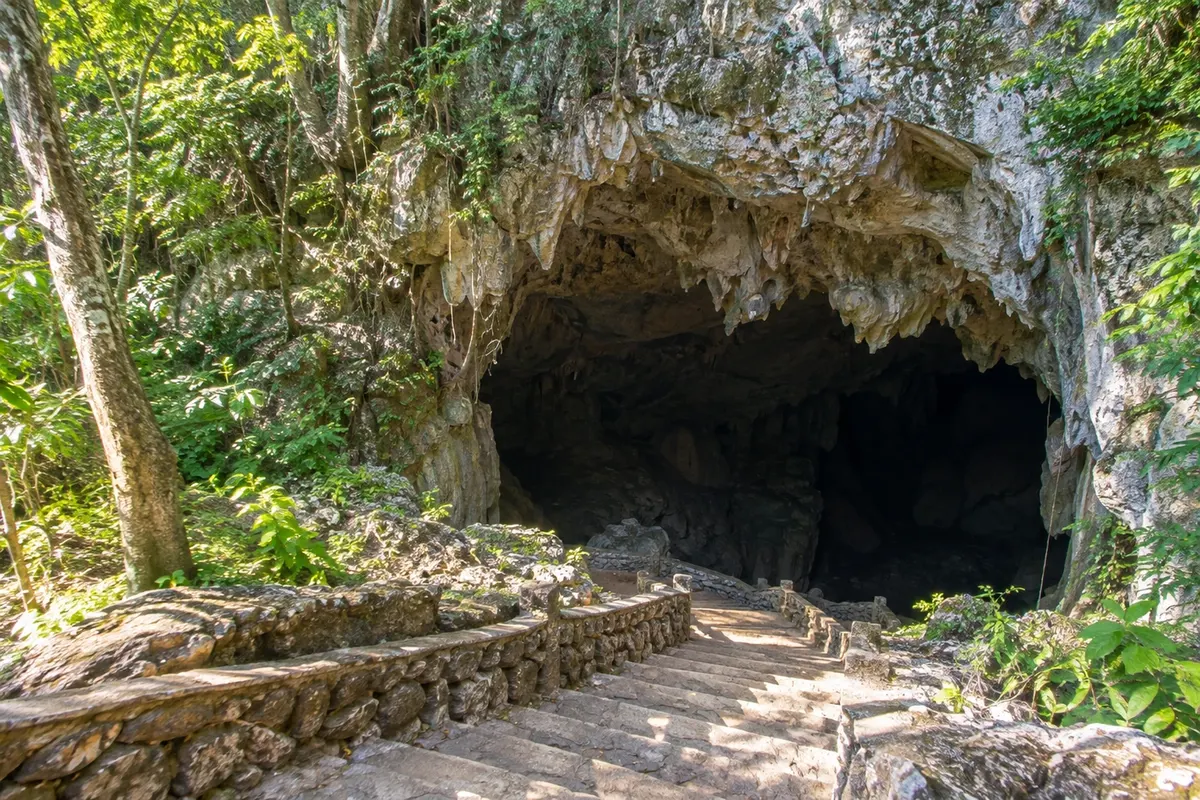
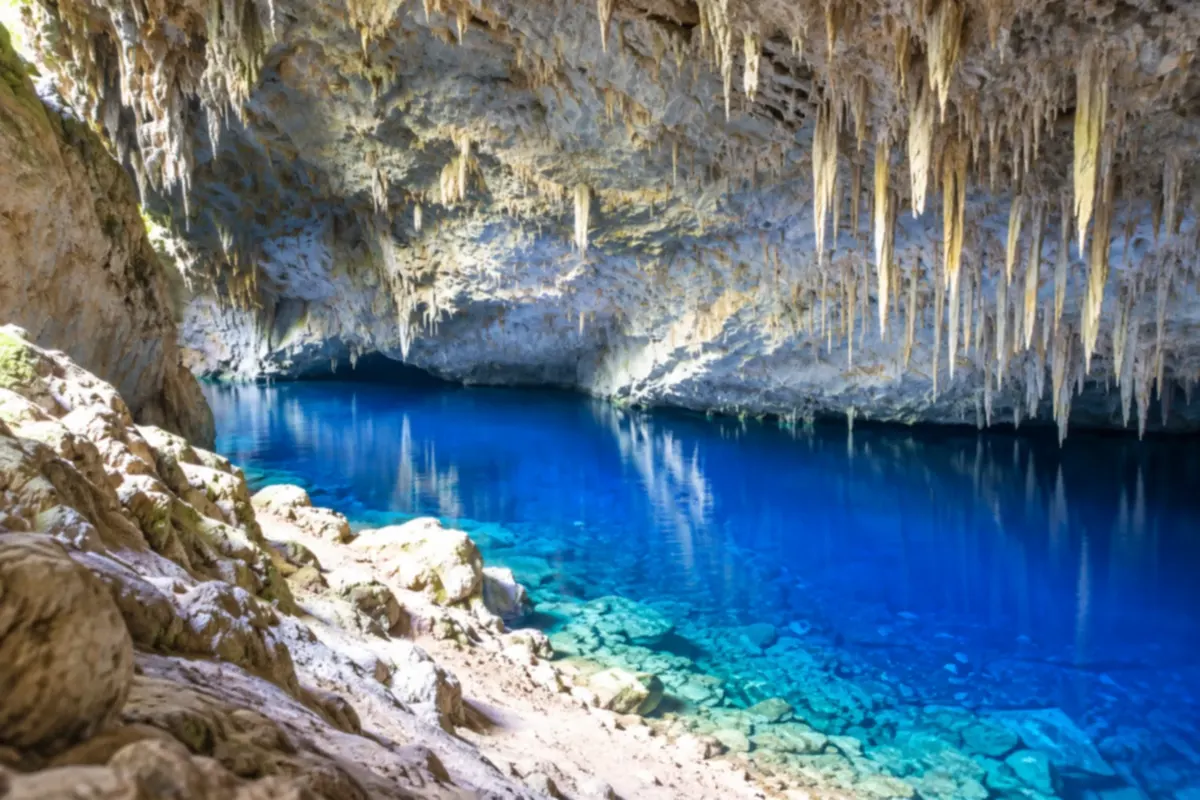
Gruta do Lago Azul
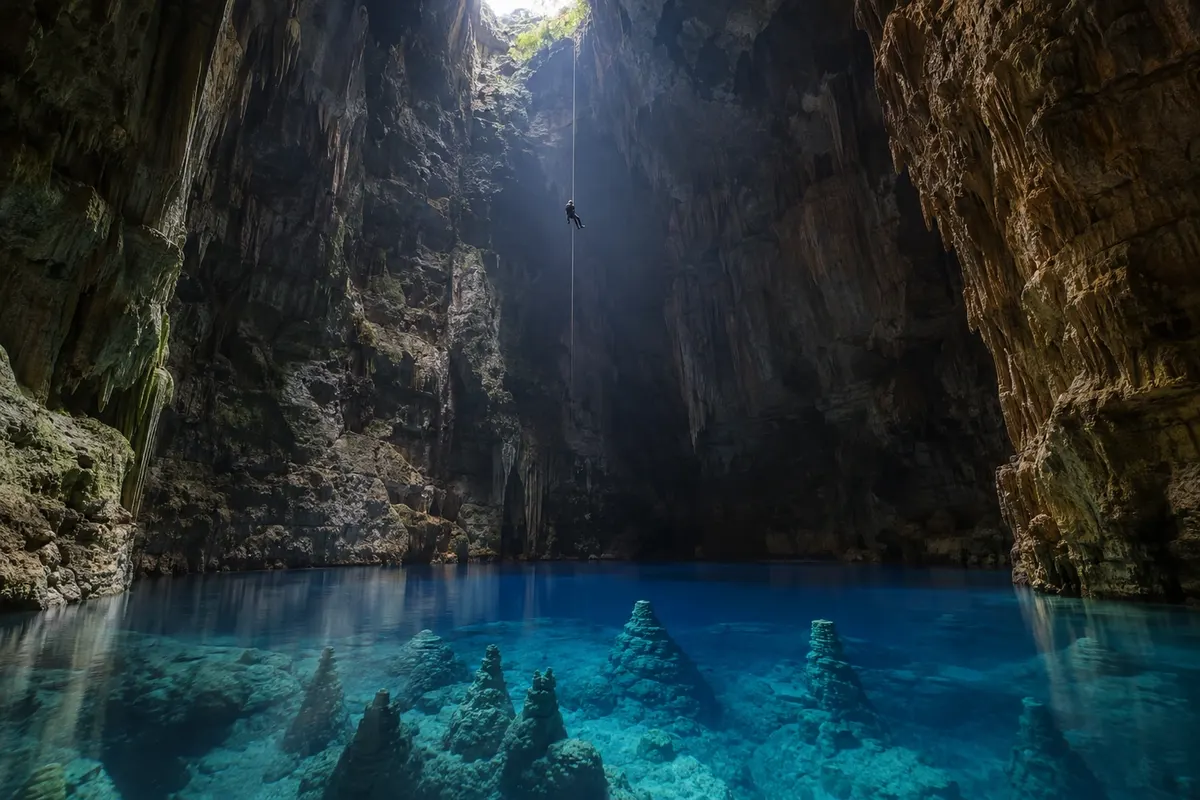
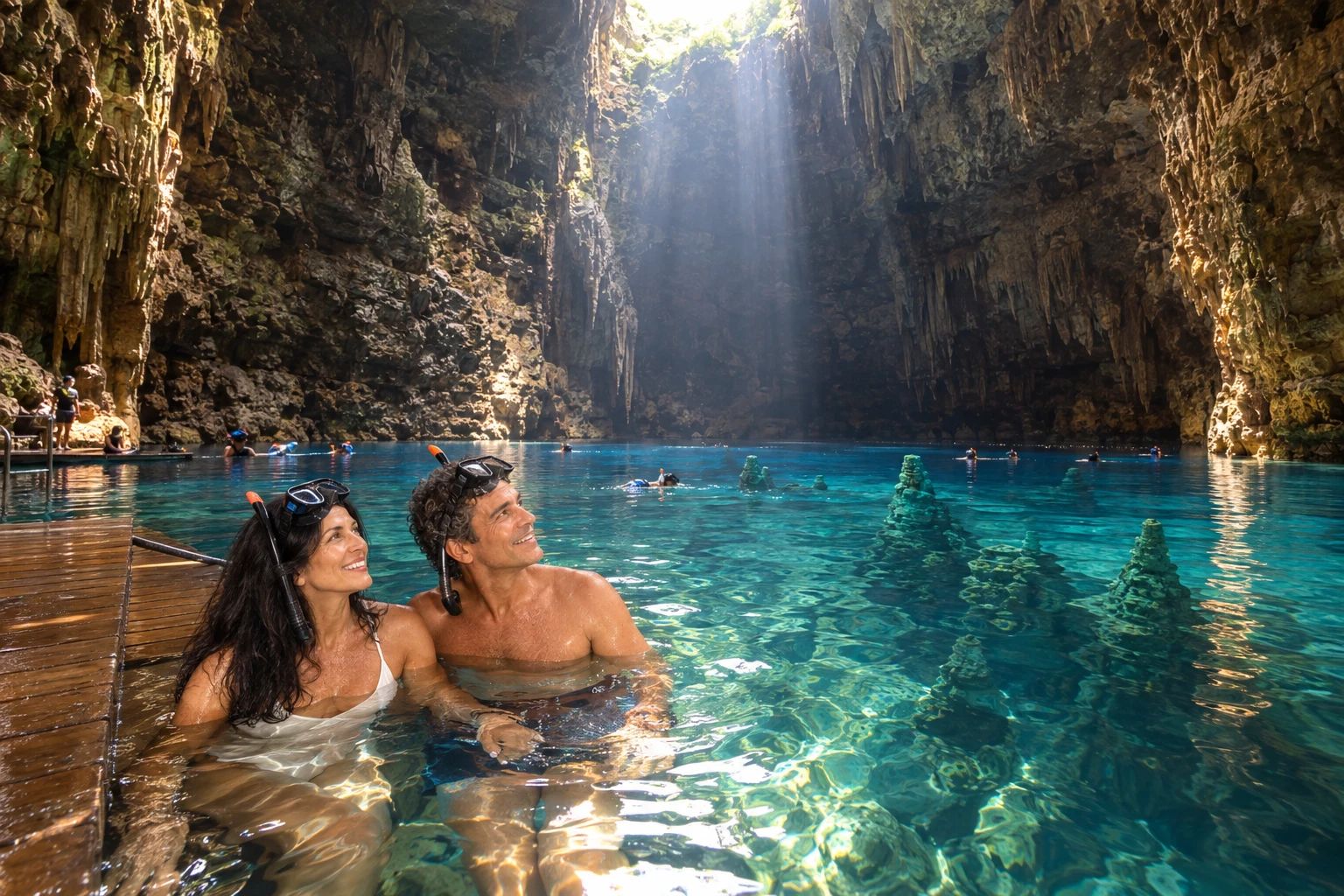
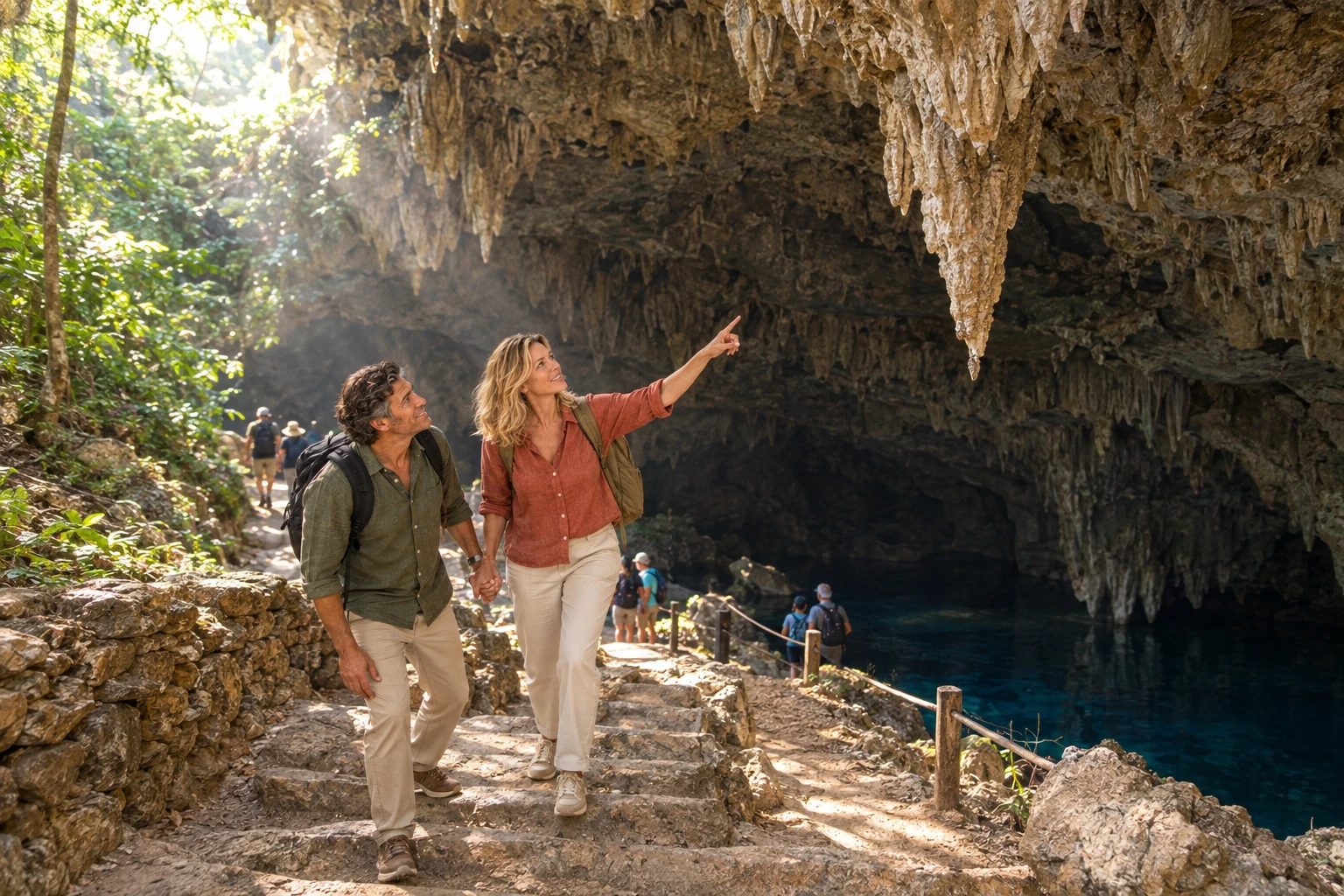
A monumental cave holding a deep-blue lake at the bottom, lit by sunlight entering through the cave mouth. The descent on stone steps passes huge stalactites.

 Išči
Brazilija
 Antarktika
 Argentina
 Bolivija
 Čile
 Kolumbija
 Ekvator
 Gvajana
 Francoska Gvajana
 Falklandski otoki (Malvini)
 Paragvaj
 Peru
 Surinam
 Urugvaj
 Venezuela
 Nemčija
 Avstrija
 Belgija
 Hrvaška
 Danska
 Slovaška
 Slovenija
 Španija
 Finska
 Francija
 Grčija
 Nizozemska
 Madžarska
 Irska
 Islandija
 Italija
 Luksemburg
 Norveška
 Poljska
 Portugalska
 Združeno kraljestvo
 Češka
 Švedska
 Švica
 Turčija
 Bermudi
 Kanada
 Združene države Amerike
 Grenlandija
 Mehika
 Sveta Peter in Mihael
 Dominikanska republika
 JaponskaTurčija
 Južnoafriška republika
 Egipt
 Avstralija
 Fidži
 Nova Zelandija
 Papua Nova Gvineja
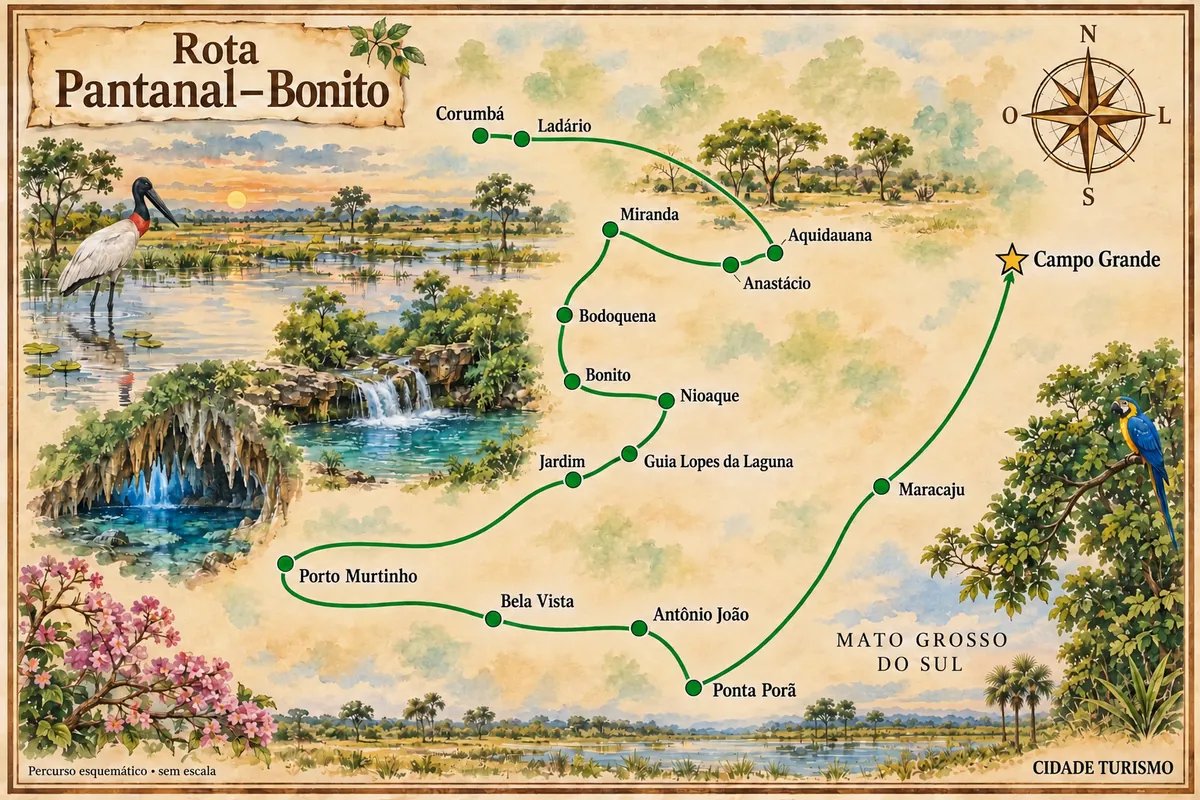
Mato Grosso do Sul · Brazilija
Destinacija: Bonito and Serra da Bodoquena.
Illustrative images. The pictures in this guide are illustrations based on the real place, not photographs, and may differ from it.
Mesto
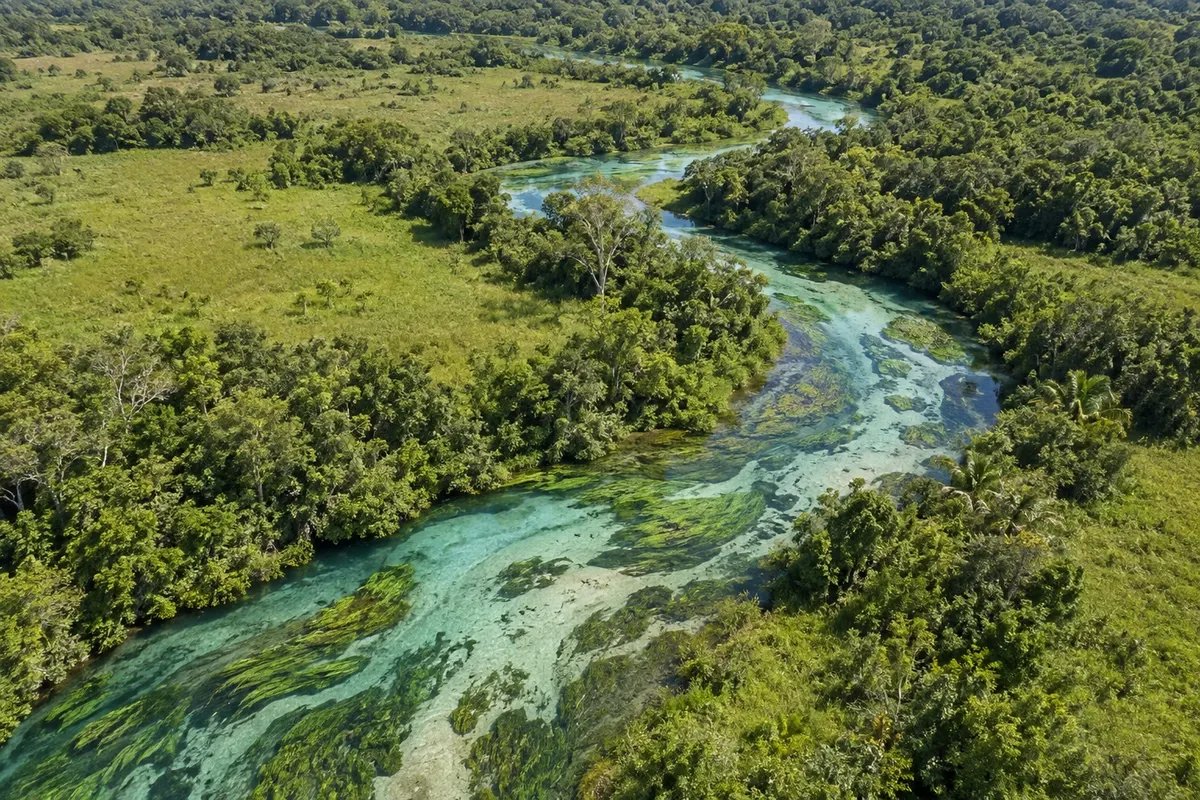
Bonito brings together clear rivers, caves and forest landscapes in the Serra da Bodoquena. The Gruta do Lago Azul and the aquatic environments reveal the link between the water and the region's limestone formations.
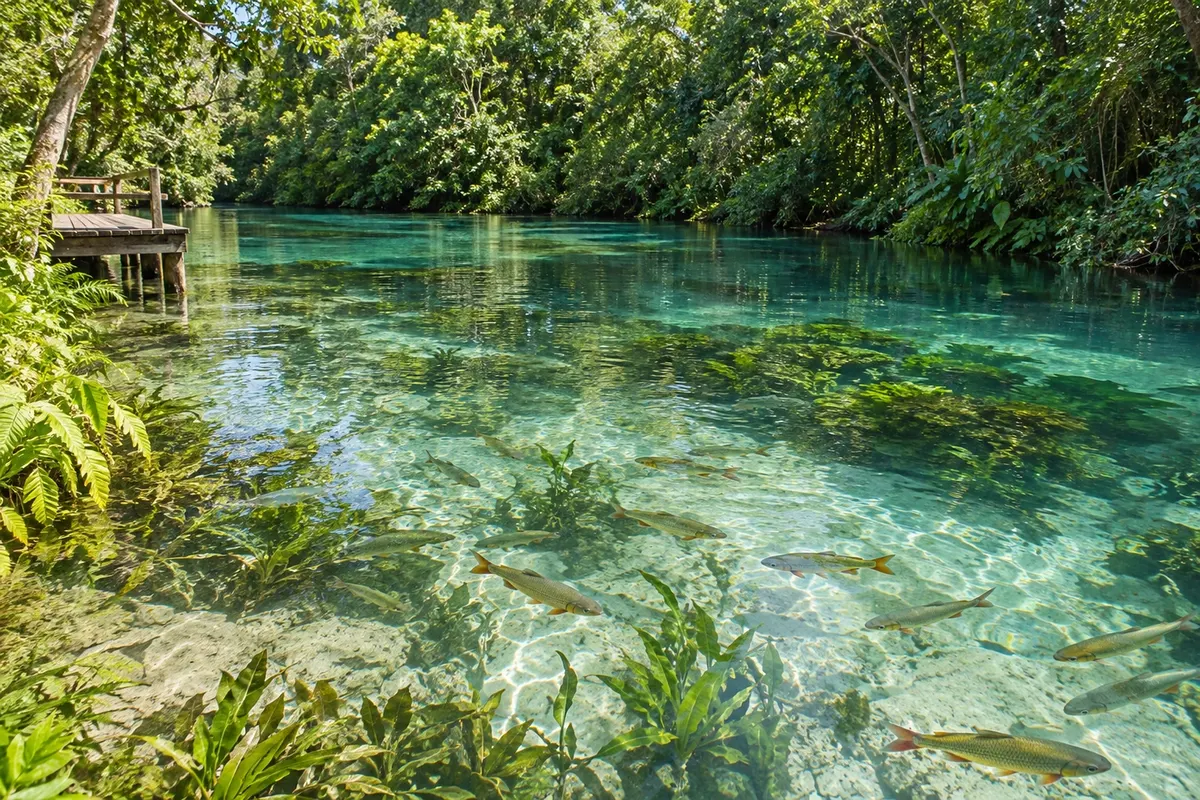
Bonito is in the southwest of Mato Grosso do Sul, in the Serra da Bodoquena, about 300 km from Campo Grande. It’s a small town of about 25,000 inhabitants, surrounded by farms where transparent rivers begin. The explanation is the limestone of the range, which makes the water so clear you can see the fish and plants on the bottom as if in an aquarium.
The town grew from the lands of Fazenda Rincão Bonito, bought in 1869 by Captain Luiz da Costa Leite Falcão, and that is where the name comes from. It became a municipality on October 2, 1948, the date it celebrates its anniversary. Tourism began to grow in the 1980s with Gruta do Lago Azul and the Municipal Balneário, and today it is the town’s main activity.
Visitors find two Bonitos. The first is the small downtown, walkable on foot: Rua Coronel Pilad Rebuá, the main street, houses the tour agencies, craft shops, bars and restaurants, and runs past Praça da Liberdade, where a fountain with sculptures of piraputangas, the town’s emblem fish, is lit at night. That is where visitors meet after tours, and evenings are for dinner, live music and conversation on the sidewalk, with no big nightlife.
The second is the rural area, where the attractions are. None of them are in downtown. The closest are the Rio Formoso bathing areas, about 6.5 km away, and the Aquário Natural float trip, about 8 km; the caves Gruta do Lago Azul and São Miguel, Rio Sucuri and Abismo Anhumas are around 20 km. Other well‑known trips, such as Rio da Prata and Buraco das Araras, are in the neighboring municipality of Jardim, about 50 km away, and Boca da Onça is in Bodoquena, about 60 km.
You don’t arrive at an attraction and buy the entrance at the gate. Each tour has a daily visitor limit, is guided and requires a voucher issued by the town’s agencies with a scheduled date and time. Prices are fixed and the same across agencies. So the trip is planned in advance: you choose tours, reserve, and the routine is to leave the hotel early, return in the mid‑afternoon and go to town at night.
The year is divided into two seasons. From April to September there is little rain and the rivers are clearer; from June to August cold fronts can lower temperatures for a few days, and the water, around 20 °C, feels cooler. From October to March it’s hot, with highs near 30 °C or more, rain is frequent and waterfalls gain volume, but a storm can cloud the rivers for a few days. The town fills during Brazil’s school vacations in July and from mid‑December to January, on long holiday weekends and at the Winter Festival, which in recent years has taken place in the second half of August.
Three days are enough for the caves, one float trip and a river day near town. With five or more days, trips to Jardim and Bodoquena can be included.
Bonito – število nastanitev: 85.
Bonito – število lokalov: 22.
Bonito – nazivi in posebnosti
Doživite kraj
A monumental cave holding a deep-blue lake at the bottom, lit by sunlight entering through the cave mouth. The descent on stone steps passes huge stalactites.
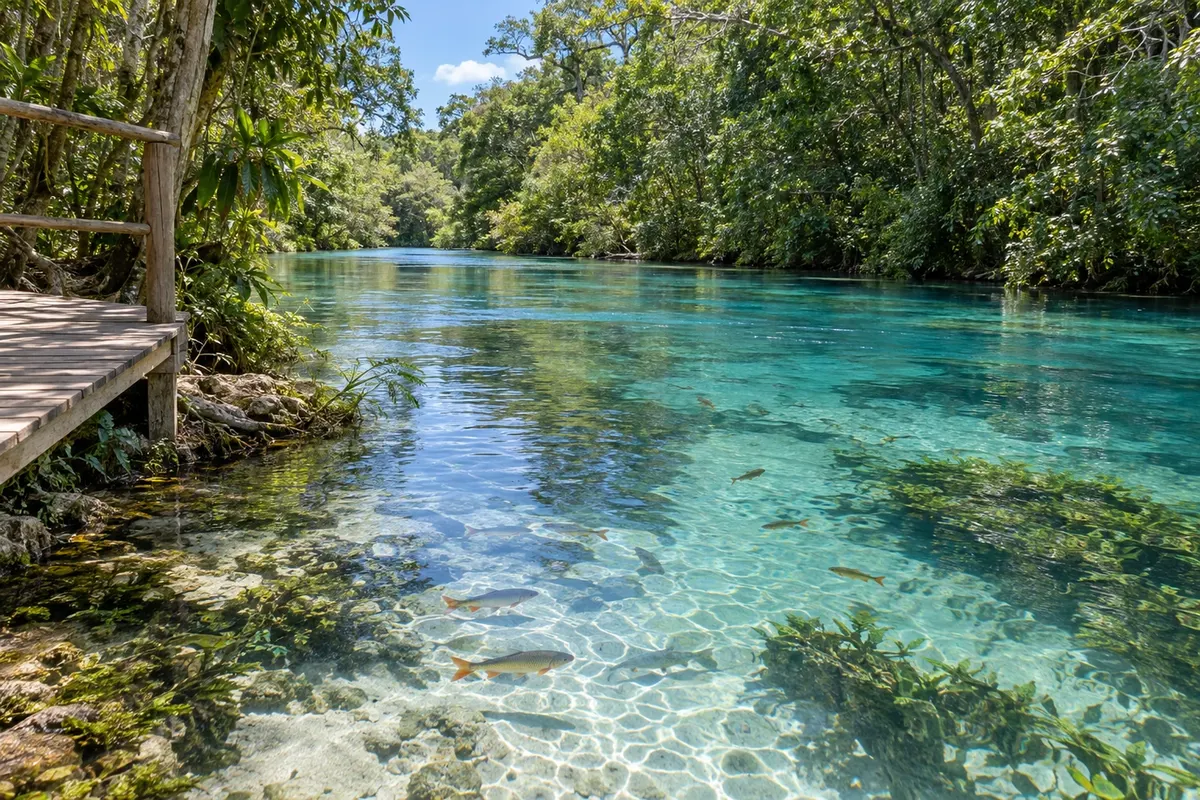
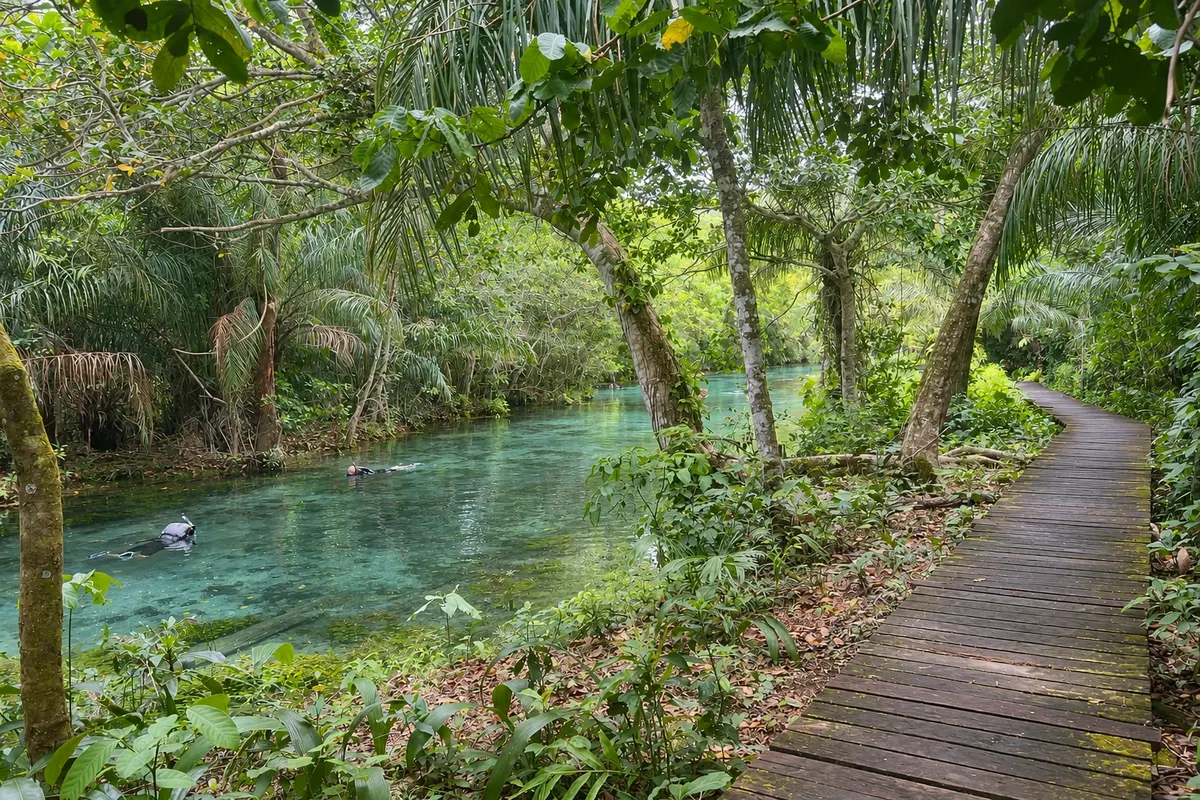
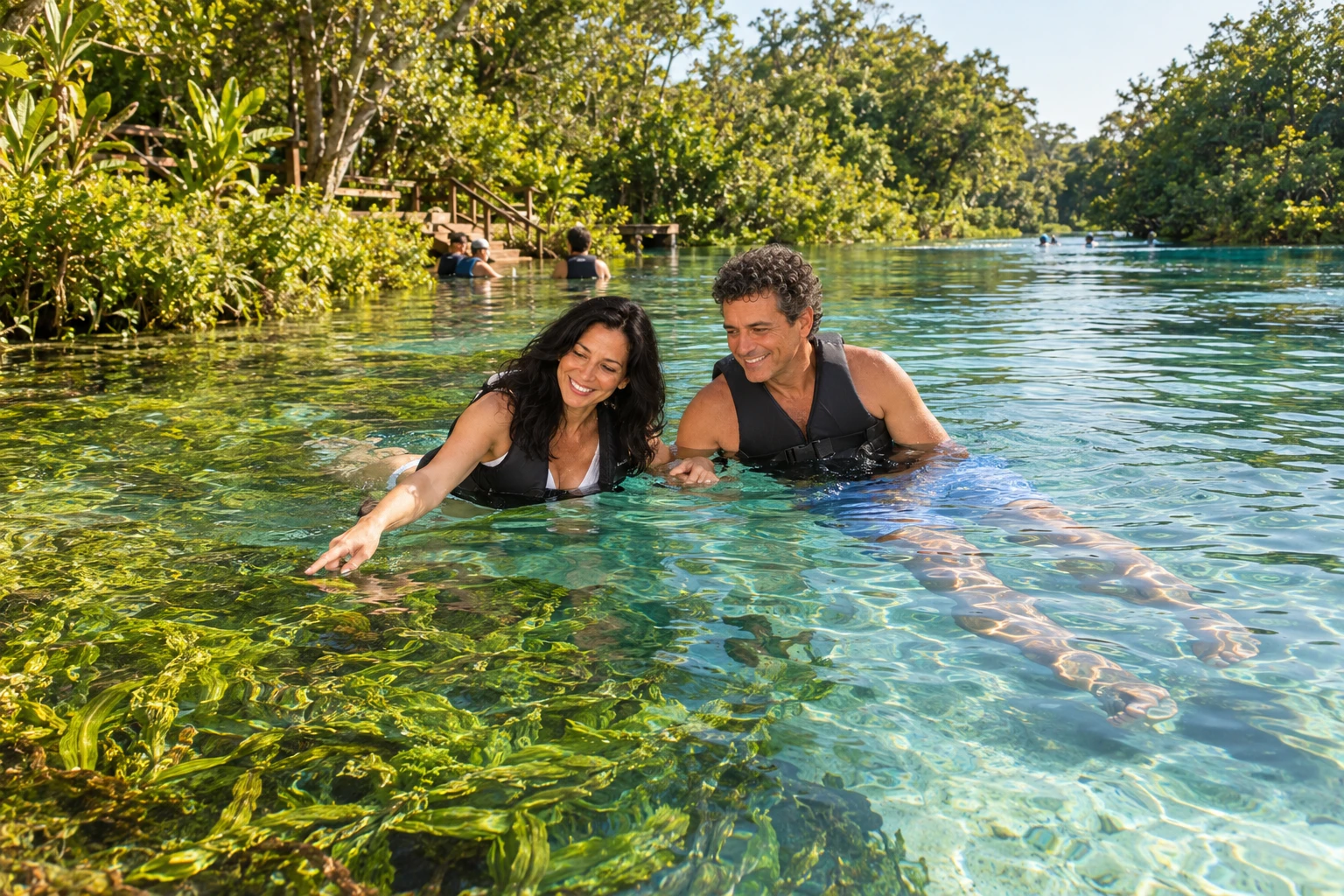
Considered one of the clearest rivers in the world, it rises in a natural pool and flows calmly among aquatic plants. The float is relaxed, ideal if you have never snorkeled.
You enter by a 72-meter rappel down to an underground lake surrounded by limestone cones. Down below you can snorkel or scuba dive among the formations.
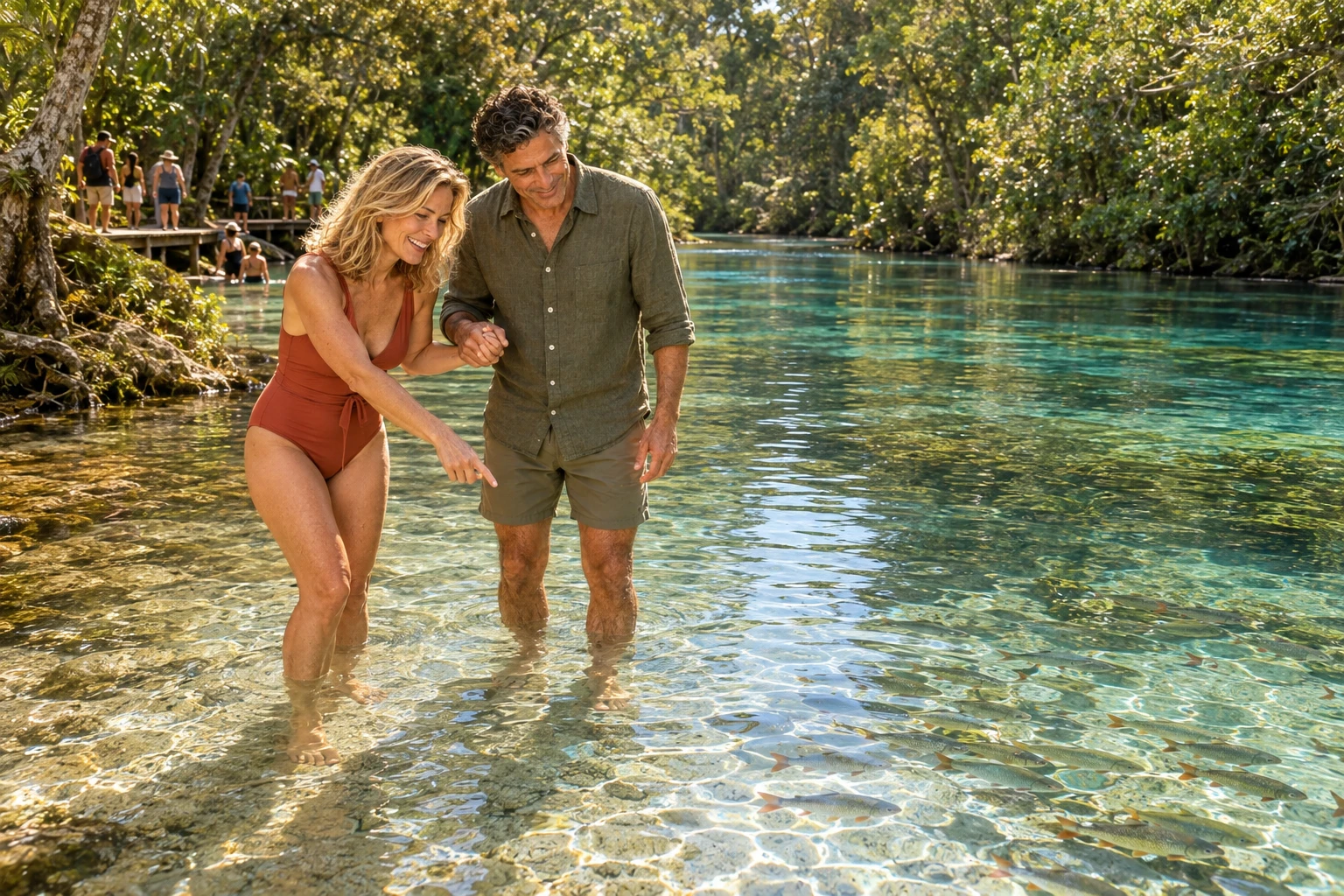
A public leisure area run by the city on the banks of the Rio Formoso, about 6.5 km from downtown. The clear water lets you see schools of fish up close, with shallow stretches for children and deeper areas for swimming.
The float starts at the spring itself, inside a protected area where fish swim right up to you. It is the best tour for families with children.
Raziščite Aquário Natural Baía Bonita
A complex in Bonito’s rural area with a short, calm snorkeling float in a spring of crystal-clear water that wells up from a crack in the limestone. There is also a riverside bathing area with pools, a zip line and scuba diving.
An old farm in the Serra da Bodoquena, about 25 km from Bonito, with a guided trail of roughly 2.5 km through the Mimoso River forest, passing a series of waterfalls with swimming holes. There are also horseback rides and birdwatching.
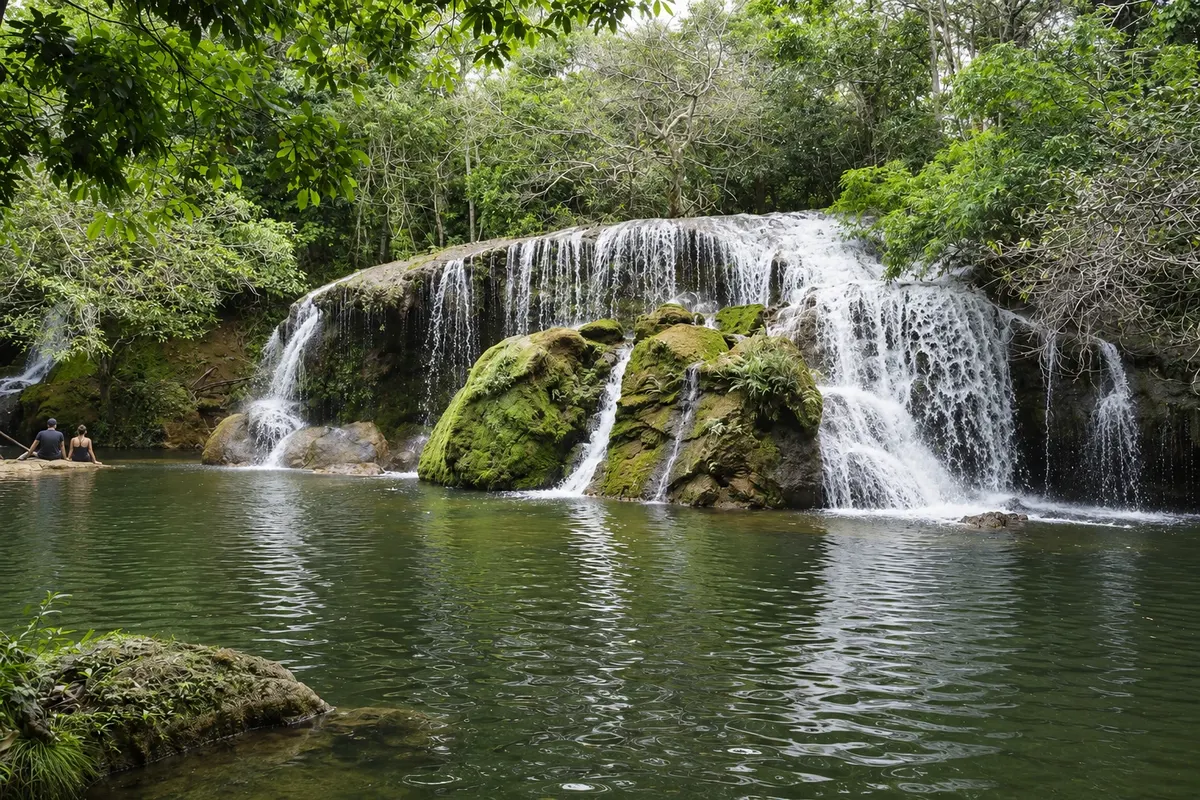
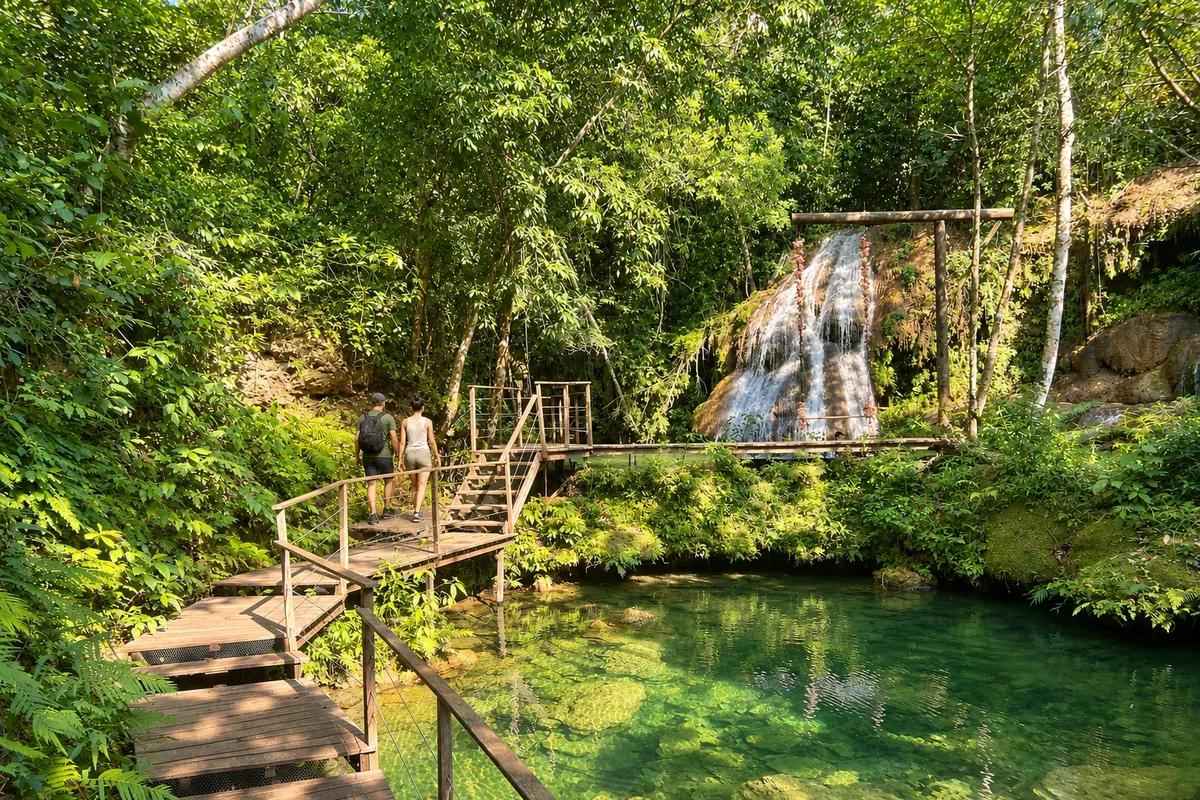
Rural area near Bonito with a guided 1.7 km trail along the Rio Mimoso, passing seven waterfalls and a spring, with swimming holes, a jumping platform and decks by the water.
Raziščite Parque das Cachoeiras de Bonito
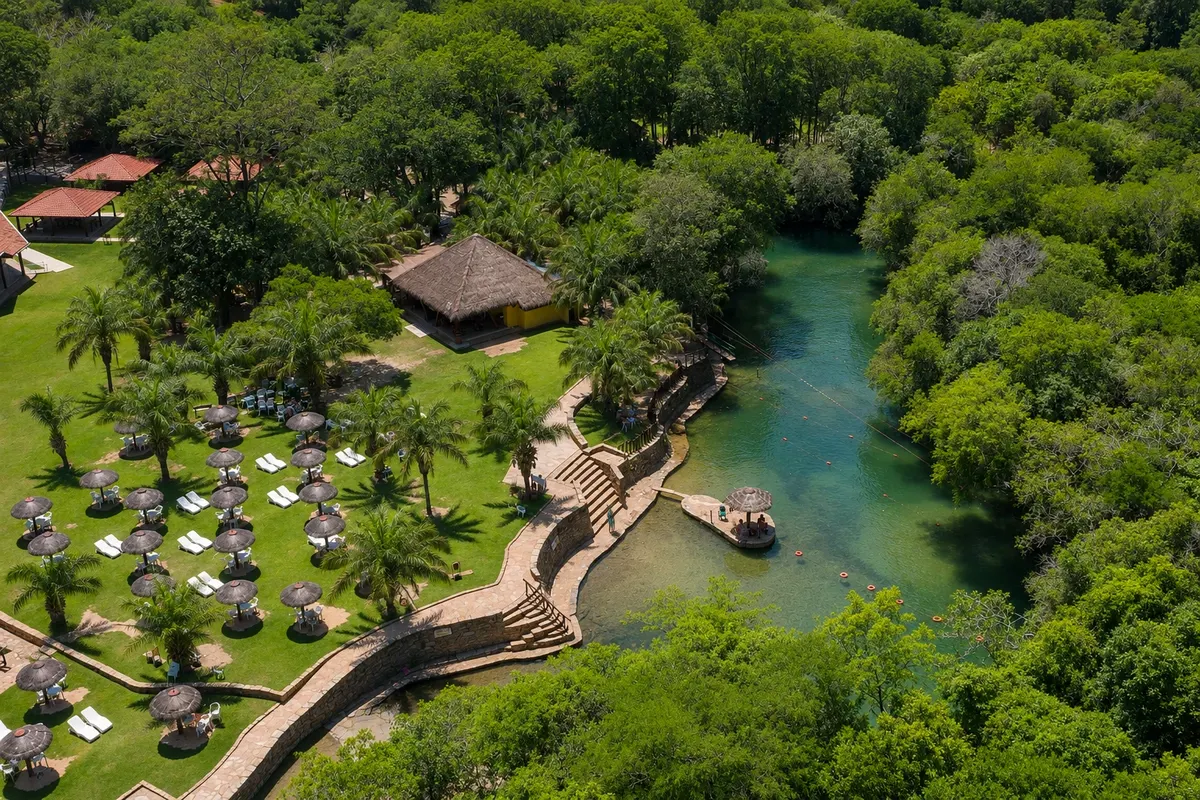
A bathing spot on the banks of the Formoso River, about 11 km from downtown Bonito, with clear water full of piraputangas, a small waterfall, a zip line and a diving platform over the river, lifeguards and a leisure area for a day visit.
Kaj izbrati pred odhodom
Izhodišče, trajanje, potek, vključene storitve in okvirna cena vsakega izleta.
Bonito’s center is small and, for visitors, boils down to a street and a square. Because the tours take up the day and end in the mid-afternoon, the area comes alive in the evening. Praça da Liberdade feels like a small-town square, with snack trailers around it. In the center stands the Monument of the Piraputangas, a fountain with large sculptures of the fish you see in the region’s rivers. At night the fountain is switched on and the sculptures are lit. A plaque in the square tells the town’s history. Rua Coronel Pilad Rebuá runs by the square and is the main street. Here you’ll find tour agencies where you pick up vouchers and get answers about the next day’s tours, craft shops, souvenir and clothing stores, bars and restaurants. Some shops only open at dusk. Among the curiosities are cachaças made with fruit and plants from the Cerrado, like guavira, which can be tasted before buying, and crocodile meat pastéis. At night, several bars put tables on the sidewalk and have live music. There are no nightclubs: Bonito’s nightlife is about dinner and conversation, and it ends early because the next day’s tours leave in the morning. There are also bank branches in the center.
Kraji na poti: Praça da Liberdade, Monument of the Piraputangas, Rua Coronel Pilad Rebuá.
Vključuje: There is no charge to walk around the square and the street. Purchases and meals are at your own expense.
Nasvet: Take advantage of going to town to stop by the agency and check the voucher times for the next day. If you’re staying near Praça da Liberdade you can do everything on foot at night.
Najboljši čas za obisk: All year. During the Winter Festival, which in recent years has taken place in August, the square hosts stages, a craft fair and many more people.
The Jiboia Project is Bonito’s best-known night program and one of the few attractions inside town: it’s in the urban area, less than 2 km from Praça da Liberdade. It runs only at night. The visit has two parts. First, visitors pass through the serpentarium, where, behind glass, you can see species such as the jiboia, the python and the corn snake. Second, everyone sits in an auditorium for a talk about snakes: how they live, what they eat, how they behave and why the nonvenomous species are not the threat many people imagine. The presentation is delivered with good humor and with the snakes in view, often on the speaker’s lap, and usually appeals to both children and adults, including those who arrive afraid. At the end, anyone who wants can take a photo holding a jiboia. No one is obliged to. It’s a program that fits any day of your itinerary, because it takes place after the daytime tours and before dinner, and it saves the evening on a rainy day.
Kraji na poti: Jiboia Project.
Vključuje: Admission includes access to the serpentarium and the talk. Check the current price list.
Nasvet: Arrive a little early to secure a spot. Confirm the start time with the agency or the hotel.
Najboljši čas za obisk: All year round.
The Formoso River is Bonito’s main river and runs a few kilometers from the center. It’s where the town goes to bathe, and the Municipal Riverside Park is the nearest spot: about 6.5 km away on a paved road, on the way to the airport. The park is maintained by the city. The swimming stretch is about 200 meters of river, with a shallow area good for children, decks and a deeper area surrounded by forest. The water is clear and schools of piraputangas swim among bathers; capuchin monkeys move through the trees branch to branch. There is a restaurant, snack bar, changing rooms, courts and kiosks with grills. Capacity is limited to 1,500 people per day, and Bonito residents do not pay, which fills the place on hot weekends. Nearby are the boia-cross departure points, including the Rio Formoso Ecological Park, about 7 km from the center. Each person rides in an inner tube, in a group and with guides, for just over 1 km of river, passing small rapids and drops. It’s a short, gentle ride that fits into the middle of the afternoon. The park also offers stand up paddle. Together, the two programs make for a day without an early wake-up—good for arrival day or to rest between two long tours.
Kraji na poti: Municipal Riverside Park, Formoso River, Rio Formoso Ecological Park.
Vključuje: The riverside park and the boia-cross are sold separately, with an agency voucher. Transport and meals are paid separately; check the current price list.
Nasvet: Do not enter with glass bottles and keep snacks put away: capuchin monkeys come close. For the boia-cross, wear swimwear and water shoes or sandals, no watch or jewelry. After heavy rain the river rises and the riverside park may close.
Najboljši čas za obisk: All year round. In the hot months, from October to March, the water feels cooler; after a storm the river can stay turbid for a few days.
Beyond the Municipal Bathing Area, the Formoso River has a series of private bathing areas located between 8 and 19 km from town. All operate the same way: you pay an entrance fee to spend the day, with river swimming, decks and places to eat. What differs is the size, the crowd and what each offers beyond the water. Bosque das Águas, about 8 km away, is the closest after the Municipal area, with decks along the river and kiosks with grills. Balneário do Sol and Ilha Bonita are about 12 km away: the first has natural flowing-water pools, a zip line and a diving platform; the second has small waterfalls, trails, zip lines and diving platforms, with shallow areas for children. Praia da Figueira, 14 km away, is different from the others: instead of the river, swimming is in a lake fed by the Formoso, with a sand strip, kayak rental and a zip line. Refúgio da Barra, 17 km away, receives fewer visitors and has about 200 meters of bathing area with decks. Estrela do Formoso, 19 km away, has larger decks and a view of the Bodoquena Range. For families with small children, those with shallow areas and playgrounds work better; if you seek peace and quiet, prefer the less crowded sites and go on a weekday.
Kraji na poti: Bosque das Águas Bathing Area, Balneário do Sol, Ilha Bonita Bathing Area, Praia da Figueira, Refúgio da Barra, Estrela do Formoso.
Vključuje: Entry is valid for the day. Activities like zip line and kayak, food, and transport may be charged separately depending on the swimming area; check the current price list and what each ticket includes.
Nasvet: Ask the agency which swimming areas allow food and drinks: rules vary. Weekends and holidays get crowded; book in advance.
Najboljši čas za obisk: All year round, preferably on warm days. After heavy rain the river can become turbid.
The two most visited caves in Bonito are on the same road, the MS-382, close to each other, which allows visiting both on the same outing: Gruta de São Miguel is about 18 km from town center and Gruta do Lago Azul about 20 km. Order matters. Gruta do Lago Azul only receives visits in the morning, when more light enters, so it should be visited first. Groups of up to 15 people, always with a guide, walk about 300 meters from the reception to the cave entrance and descend a staircase of roughly 300 steps, wet in the final stretch, down to the edge of the blue lake. There is only observation there: nobody enters the water. Gruta de São Miguel is a dry cave, without a lake, and the visit is lighter. You reach it by a suspension bridge over the forest with a view of the valley, and inside the guide shows the stalactites, stalagmites and columns with flashlights. The return is along a trail through the forest. Each cave has its own voucher with a scheduled time; when booking, ask the agency for times that allow enough time to travel between the two. With the morning taken care of, the afternoon is free for a flutuação (floating/snorkel) near town or for a riverside bathing spot.
Kraji na poti: Gruta do Lago Azul, Gruta de São Miguel.
Vključuje: Each visit includes entrance fee and guide. Transportation is paid separately; check the current price list.
Nasvet: Wear closed shoes with non-slip soles. Bring water for the climb up the steps to Lago Azul. Heavy rain can cancel the Lago Azul visit.
Najboljši čas za obisk: All year. From late November to January, on sunny days, a beam of light often reaches the lake in Gruta do Lago Azul in the early morning.
Flutuação (floating with snorkel) is the activity that made Bonito famous: wearing a mask, snorkel, neoprene suit and vest, you let the current carry you along a transparent river, face in the water, watching the fish and plants on the bottom. Two of the best-known sites are within the municipality and close to town. Aquário Natural is the closest, about 8 km from town center. After a pool training session and a short walk through the forest to the spring of Rio Baía Bonita, the group floats about 900 meters, with a support boat nearby. It’s the most suitable for first-time snorkelers and for families with children, and because it’s close it can fit into the afternoon of arrival day. Rio Sucuri is about 19 km away. Visitors cross the farm, walk to the spring and float down about 1.8 km of river, around 45 minutes in the water, over a bottom covered with aquatic plants. It’s longer and quieter. Those who don’t want to enter the water can do the route by boat. There is also Barra do Sucuri, 17 km away, where the Sucuri meets the Formoso: you go up the river by boat and float down about 1.3 km. If time is short, pick one. Travelers with more days usually do one early in the trip to get the hang of it and leave another for the end.
Kraji na poti: Aquário Natural Baía Bonita, Rio Baía Bonita, Rio Sucuri, Barra do Sucuri, Rio Formoso.
Vključuje: Each tour includes equipment (neoprene suit, vest, mask and snorkel) and a guide. Transport and lunch are paid separately; check the current price list.
Nasvet: After the reception shower do not apply sunscreen or insect repellent. Do not step on the river bottom, to avoid stirring up sediment. Arrive at the voucher time: the group does not wait.
Najboljši čas za obisk: From May to September, when it rains less and the water tends to be clearer. In summer, a storm can make the rivers turbid for a few days.
Abismo Anhumas is Bonito’s most sought-after tour, and the only one that starts a day earlier. It’s about 23 km from the center, but the first step takes place in town. On the eve, late afternoon, all participants must go to the attraction’s office in downtown Bonito to present the voucher, sign the waivers, receive instructions, and learn the descent time for the following day. You cannot descend without completing this step. The office is closed on Sundays, which you must consider if you plan to descend on a Monday. On the day, entry is through a fissure in the ground. The 72-meter descent is done on a seated electric rappel system, two people at a time, down to a transparent-water lake inside the cave. Down there the group rides a boat among limestone formations and, depending on the option you booked, floats with a snorkel or dives with a cylinder over submerged cones. The ascent uses the same system. Groups are small and spots fill quickly: it’s the first tour to book, even before finalizing dates for others. Since it takes only the morning, the afternoon is free for the Municipal Swimming Area or the town center.
Kraji na poti: Abismo Anhumas, Abismo Anhumas office in town.
Vključuje: Descent and ascent, boat, equipment, and guide, according to the chosen option. Transport may be charged separately; check the current price list.
Nasvet: Plan the itinerary so the night before ends early and close to town. Cell phones and hand-held cameras are not allowed to go down; only cameras attached to the helmet are permitted.
Najboljši čas za obisk: All year round.
Po dnevih
Predlogi za načrtovanje poti. Vrstni red dni prilagodite vremenu in razpoložljivosti izletov.
With only one day, stay on the tours closest to town that don’t require a long drive. Leave early for Gruta do Lago Azul, about 20 km from downtown; it only accepts visitors in the morning. On the way back, if time allows, stop at Gruta de São Miguel, on the same road. Have lunch in town and head to Aquário Natural, about 8 km away, for the float on Rio Baía Bonita. It’s the shortest and nearest one, and it ends in the mid-afternoon. At night, walk to the town center: stroll along Rua Coronel Pilad Rebuá, see the Monumento das Piraputangas lit up at Praça da Liberdade, and dine nearby. If you have the energy, attend the Projeto Jiboia talk before dinner. Book the three vouchers in advance and ask the agency for compatible times.
Start with Gruta do Lago Azul at the earliest available time, and follow with Gruta de São Miguel on the same road. After lunch, do the float on Rio Sucuri, about 19 km from downtown: it’s roughly 45 minutes in the water, descending the river from its spring. Travelers with small children or who have never used a snorkel can swap this for Aquário Natural, which is shorter and closer. In the early evening, attend the Projeto Jiboia talk and then dine in the center.
River day, unhurried. Spend the morning at Balneário Municipal, about 6.5 km from downtown, swimming among the piraputangas in Rio Formoso. Have lunch there. In the mid-afternoon, do the boia-cross, which departs nearby and goes down a little more than 1 km of mild rapids. If you prefer paddling, swap it for the boat trip on the same river, which departs from a park about 13 km from downtown. Return to town in time to see the shops on Rua Coronel Pilad Rebuá open and say goodbye at Praça da Liberdade.
Use the first day to get your bearings. Stop by the agency in town to pick up vouchers and check schedules. In the afternoon, do the Aquário Natural float, about 8 km away: because it’s the shortest and includes pool training, it works as preparation for the others. At night, walk along Rua Coronel Pilad Rebuá and Praça da Liberdade and have dinner in the center. If you plan to descend Abismo Anhumas the next day, stop by the attraction’s office in the late afternoon; it’s also in town.
The morning is for caves. The most common choice is the pair Gruta do Lago Azul and Gruta de São Miguel, on the same road, about 20 km from downtown. Those who booked Abismo Anhumas, about 23 km away, swap the caverns for the 72-meter descent and save Lago Azul for the morning of the third day. After lunch, rest at Balneário Municipal or another riverside bathing area on Rio Formoso. With children, prefer those with shallow sections. In the early evening, the Projeto Jiboia talk closes the day.
Reserve the morning for the Rio Sucuri float, about 19 km from downtown, the longest of the nearby floats. Another option is Barra do Sucuri, where you go upstream by boat and float downstream. In the afternoon, the boia-cross on Rio Formoso is an easy way to end the trip. If your flight or bus departs late in the day, swap it for one last stroll in town to buy handicrafts. With more days, consider adding Rio da Prata and Buraco das Araras in Jardim, about 50 km away, or the waterfalls at Boca da Onça in Bodoquena, about 60 km away. They are included in the Bonito and Serra da Bodoquena regional guide.
Najboljši čas za obisk
The seasons shown are the most usual ones; nature doesn't always follow the calendar.
School holidays in Brazil · Waterfalls with higher flows · Rivers can become turbid after heavy rain
Warm month, with highs near 30 °C, and frequent rain. The town is crowded, downtown restaurants fill up at night, and the Rio Formoso bathing areas receive many visitors on weekends. A heavy storm can make the rivers turbid for several days or close the bathing area when the Formoso rises. Book tours and accommodation well in advance.
Carnival · Lower activity the rest of the month
Still hot and rainy. Outside Carnival, the town empties and tours return to low-season prices. Showers usually fall in the afternoon: schedule snorkeling and caves for the morning and leave the center and Projeto Jiboia for the evening.
End of summer · Low season
Still sultry and rainy. It’s a quiet month, with greater ease in getting slots for caves and snorkeling near town. Waterfalls have plenty of water. Holy Week, when it falls in March, fills the town for a few days.
Clearer rivers · Holy Week in some years
Rains decrease and rivers begin to clear. Nights become pleasant for walking around the center. Outside Holy Week and holidays, it’s low season. A good month to combine snorkeling and a swimming area on the same day.
Start of the dry period · Low season
Little rain, rivers with good visibility and water around 20 °C. Nights are cooler: bring a light jacket for the center. It’s one of the quietest months, with availability on almost all tours.
Dry period · Corpus Christi holiday in some years
One of the driest months. Cold fronts can lower temperatures for a few days, and getting out of the water requires having a jacket on hand. Clear rivers and low visitor numbers outside the holiday. Swimming areas are emptier, and caves and snorkeling are the best options.
School holidays in Brazil · Bonito CineSur at month’s end
The driest month, with lows near 15 °C and very clear rivers. Holidays fill tours and the town: book early. At the end of July, the South American film festival Bonito CineSur offers public screenings at the Convention Center and Praça da Liberdade.
Bonito Winter Festival · Dry period
Dry, with cold days when a cold front arrives. In recent years, the Bonito Winter Festival took place in the second half of the month for five days, with concerts, theatre and a craft fair on stages set up at Praça da Liberdade and other parts of town, with no entrance fee. During those days the town fills up like high season; the rest of the month is calm.
Clear rivers · Return of the rains at the end of the month
Heat returns and the first rains arrive at the end of the month. On most days the rivers remain clear. The Brazilian holiday on September 7 brings more movement; outside that date, it’s low season. A good month for the swimming spots, already warm and still not crowded.
Bonito's anniversary on October 2 · Heat and rain showers
The town celebrates its anniversary on October 2, with events in the center. It’s hot and rain showers return; after a heavy storm rivers can become turbid. Low visitor numbers outside the October 12 holiday.
Heat · Light beam season begins in Gruta do Lago Azul
Heat above 30 °C and frequent rain. Vegetation turns green and the swimming areas fill up again on weekends. At the end of the month, on sunny mornings, a beam of light often reaches the lake in Gruta do Lago Azul.
Year-end holidays · Wettest month
The wettest month of the year, with heat. Until mid-month the town is calm; then, with the holidays and parties, it fills up. Storms can cancel tours or make rivers turbid: leave a free day in your itinerary and consider the town center and the swimming areas as alternatives.
Načrtujte pot
Bonito has its own airport, Bonito Regional Airport (BYO), about 14 km from the center. It receives regular flights on some days of the week from the São Paulo region; travelers coming from other cities or from another country connect there.
The alternative is Campo Grande International Airport (CGR), the state capital, with more flights and schedules. From there to Bonito it’s about 300 km by road, in 4 to 5 hours.
It’s worth comparing the two options: the direct flight to Bonito saves the road trip, but it does not always offer the best schedule or price. Confirm flight availability before buying, because routes change with the season.
Bonito airport is small and about 14 km from the center, roughly 20 minutes by car. Options are taxi, transfer hired with an agency or with the hotel, and rental car.
Those renting a car should reserve before traveling: availability at the airport is limited, rental offices are located in town and the car is delivered to the airport for those who reserved.
For those who do not rent, the simplest option is to request the transfer together with the tours, at the same agency, providing your flight number.
From Campo Grande to Bonito it’s about 300 km, in 4 to 5 hours. There are regular buses leaving from Campo Grande bus station and vans and buses that depart from the capital’s airport, sold by agencies as transfers.
Travelers who land in Campo Grande by plane usually prefer to depart from the airport itself, to avoid crossing the city to the bus station. Those arriving at night should stay overnight in Campo Grande and travel in the morning.
Arrange the final leg to the hotel with your agency. Check the current timetable.
From Campo Grande, the most used route is along BR-060, passing Sidrolândia, Nioaque and Guia Lopes da Laguna, and then via MS-382 to Bonito: about 297 km, on a two-lane road and without tolls. Another option is via Aquidauana on BR-262, about 330 km.
Avoid driving at night because of animals on the road.
In town, a car gives you the freedom to combine tours in the same day and to arrive early at the caves. The road to Balneário Municipal is paved, but several attractions have an unpaved final stretch that becomes more difficult after rain.
The center is explored on foot: Rua Coronel Pilad Rebuá and Praça da Liberdade concentrate agencies, shops, bars and restaurants. Travelers without a car should stay in this area, which is also the best served by transfers.
No attractions are inside the city center. The closest are 6.5 km away (Balneário Municipal) and about 8 km (Aquário Natural); the caves and the Rio Sucuri are about 20 km away. There are three ways to reach them.
Agency transport, shared or private, picks you up at the hotel at the scheduled time and is paid per person. On shared transfers, the van stops at several hotels and there may be waiting.
Taxis have fixed stands in town and set fares by destination, round trip. In a group of three or four people they are often worth it.
A rental car is the most practical option for those who want to do two tours in the same day. With it you pick up the voucher at the agency and go on your own, respecting the schedule.
Don’t count on ride-hailing apps: the service is not regularly offered in the town.
Odgovori na vaša vprašanja
No. Tourists need a voucher bought from an agency in town. There is a daily visitor limit, and when it fills up the gate closes.
It is a daily environmental conservation fee, mandatory for tourists since December 2025, paid on the official Turista por Natureza website. Young children and residents are exempt.
Usually one long tour or two short ones. The ranches are up to an hour and a half's drive away, and the time of each tour is set on the voucher.
Yes. The day before, everyone does a rappel training session at the attraction's office in downtown Bonito. Spots are few: book in advance.
Bonito’s nightlife happens in the town center, on Rua Coronel Pilad Rebuá and at Praça da Liberdade, with restaurants, bars with sidewalk tables and live music, craft shops and the illuminated piraputanga fountain. The best-known nighttime activity is the snake lecture by Projeto Jiboia, less than 2 km from the square. Agencies also sell night horseback rides. There are no nightclubs, and the town sleeps early.
Not as a regular service: don’t count on ride‑hail apps for getting around. In the center you can walk everywhere. For attractions you use agency transport (which picks you up at the hotel), taxis (which have fixed stands and set fares), or a rental car.
Without a car, stay downtown near Praça da Liberdade and Rua Coronel Pilad Rebuá: you can walk to restaurants and agencies, and this area is best served by tour transfers. With a car, lodgings in the rural zone or on the banks of the Rio Formoso offer more green space and facilities, at the cost of traveling to the center at night. Because it’s warm much of the year, a pool is an important factor in the choice.
Balneário Municipal is about 6.5 km away, the boia-cross on the Rio Formoso about 7 km, and the flutuation at Aquário Natural about 8 km. Other Formoso bathing areas are between 8 and 19 km. Gruta de São Miguel, Gruta do Lago Azul and Rio Sucuri are about 20 km away, and Abismo Anhumas about 23 km. Projeto Jiboia is inside town.
No. Both are in the neighboring municipality of Jardim, about 50 km from Bonito’s center, and Lagoa Misteriosa is in the same direction. Boca da Onça is in Bodoquena, about 60 km away. All are sold by Bonito agencies and done as half‑day or full‑day tours departing from the town.
It depends on the time. If you arrive by early afternoon you can do Balneário Municipal or the flutuação at Aquário Natural—both under 10 km from the center—provided you have the voucher reserved. If you arrive late afternoon, stop by an agency to check tour times, walk Praça da Liberdade and Rua Coronel Pilad Rebuá and, if you like, attend Projeto Jiboia’s lecture.
Light rain doesn’t cancel the flutuação, and the river water stays the same temperature. A storm is another matter: rivers can become turbid for several days, Balneário Municipal closes when the Formoso rises, and the visit to Gruta do Lago Azul can be canceled. On those days you have the town center with its shops and cachaçarias, and Projeto Jiboia at night. It’s worth leaving a free day in your itinerary, especially from December to March.
In recent years it has been in the second half of August for five days; in older editions it took place at the end of July. The program includes concerts, theater, dance, literature and an arts-and-crafts fair on stages set up at Praça da Liberdade and other points in town, with no admission fee. Bonito gets very busy then: book lodging and tours in advance and check the exact dates for the year’s edition.
The name comes from Fazenda Rincão Bonito, bought in 1869 by Captain Luiz da Costa Leite Falcão; the town grew on those lands. The settlement became a district and, on October 2, 1948, a municipality with the shortened name Bonito.
The airport is about 14 km from the center, roughly a 20‑minute drive. You can take a taxi, a transfer arranged with an agency or with your hotel, or a rental car—reserve the rental in advance so it can be delivered on arrival.
It can. Entrance is limited to 1,500 people per day and town residents don’t pay, so hot weekends, school holidays and public holidays fill the place. Visitors need an agency voucher. On weekdays outside school holidays there is usually plenty of space.
Fotografije popotnikov
Brazilske poti
A trip through the landscapes of the Pantanal, the Bonito region and the cities in the south of Mato Grosso do Sul.
Več kot vodnik