One day at Thermas dos Laranjais
Odhod: Avenida do Folclore, Jardim Santa Efigênia taxi, local app or car to the entrance; on foot inside the park 7 to 8 hours all day easy
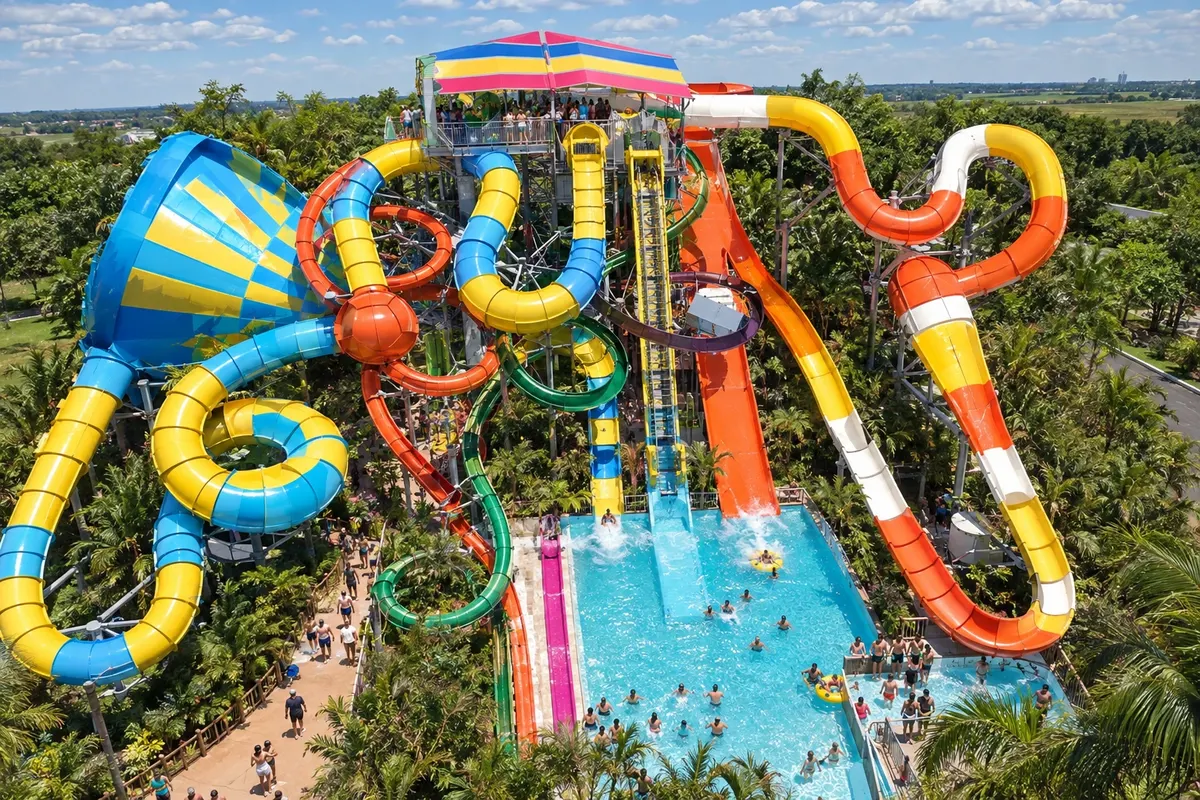
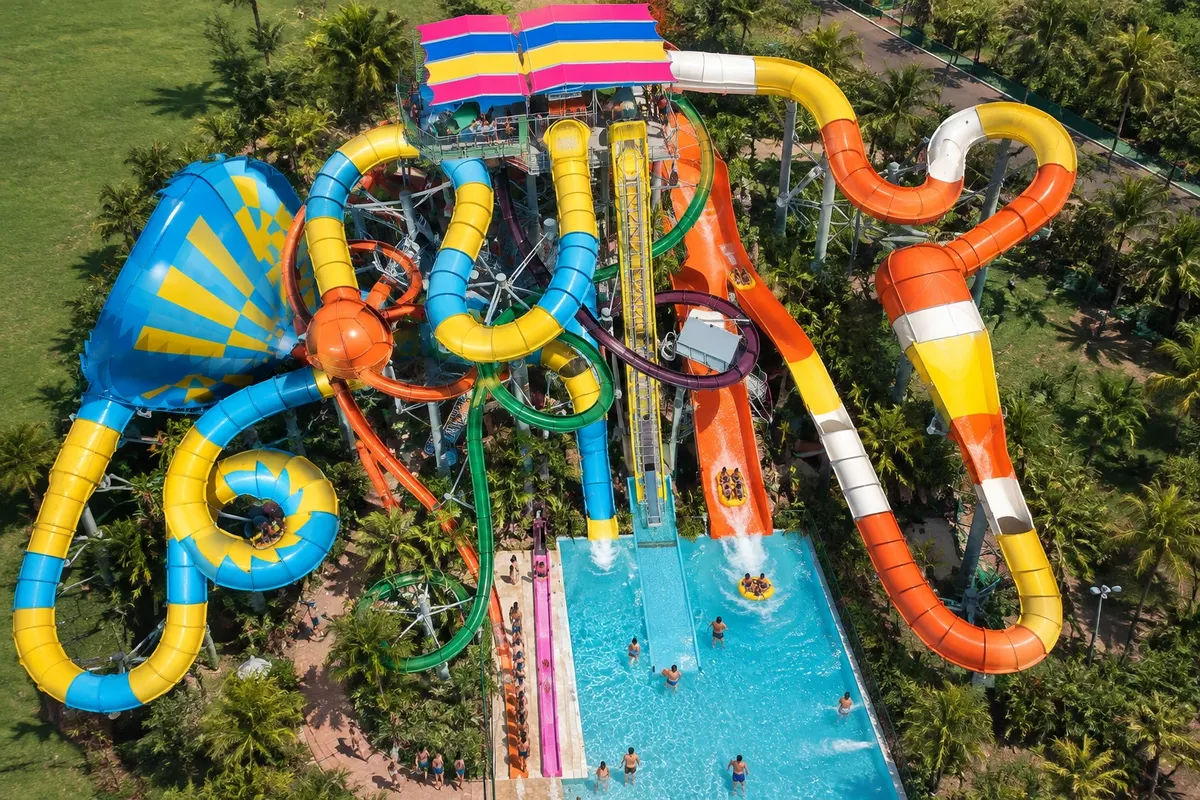
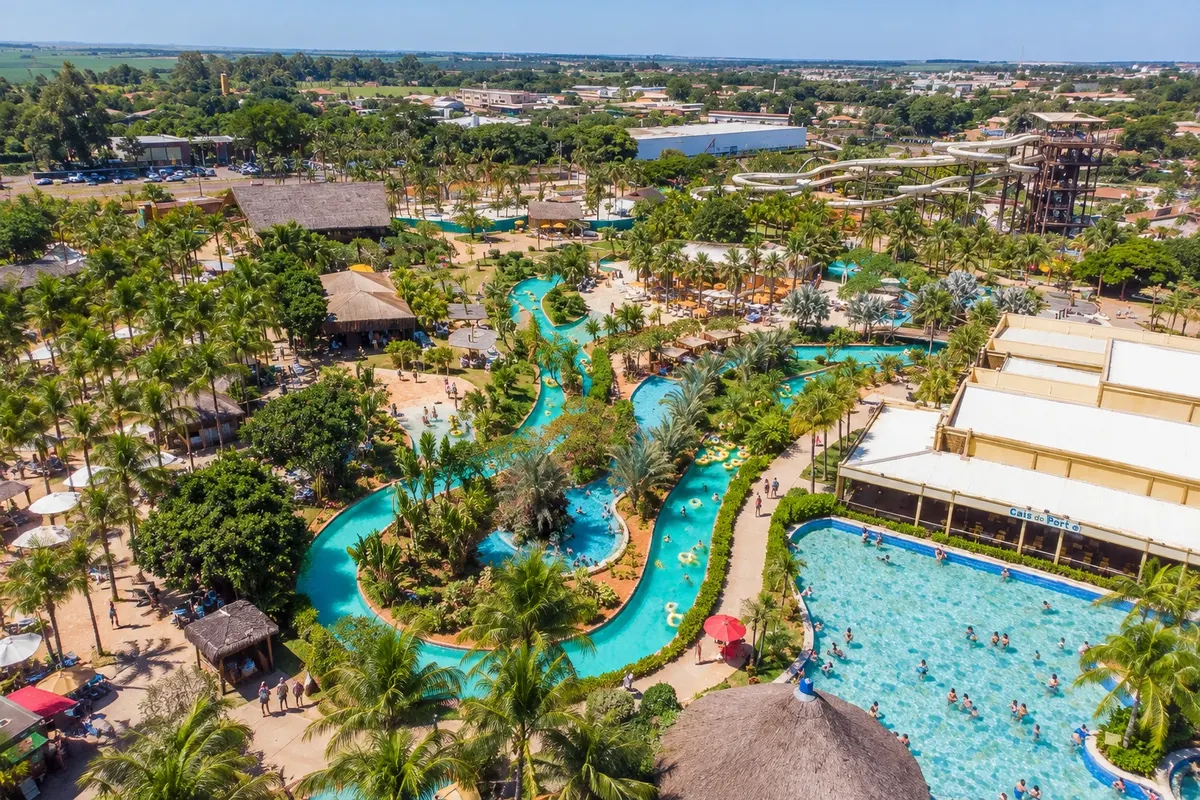
Thermas dos Laranjais is the park that made Olímpia a travel destination. It has more than 50 attractions, and most pools use circulating warm water, between 26 °C and 38 °C. The park is open every day, from morning until late afternoon.
The day is fuller when it's divided. Those who like water slides go first to the more extreme attractions while lines are shorter: Lendário has five lanes, two for rafts and three capsule slides where the floor opens at 28 meters high, and there is also a water roller coaster and a surf pool. For these attractions the minimum height is 1.20 meters. After lunch, the pace usually slows toward the wave beaches, the lazy river and the warmer pools.
There are dedicated children’s areas; until age 6 a float or life jacket is mandatory. The park also maintains a zoo and a petting farm, which close a little earlier than the pools, with enclosures for macaws and waterfowl open only part of the morning and afternoon.
Some rules prevent surprises at the entrance. Only swimwear made of appropriate fabric is allowed, such as one-piece swimsuits, bikinis, speedos and lycra, nylon or tactel shorts. The park operates in rain as long as there is no risk to visitors, and it does not refund tickets because of the weather. Consumption is paid with the park card, and lockers, without keys, are rented separately. Those who only accompany their family pay the same entrance fee.
Kraji na poti: Thermas dos Laranjais, Wave pool, Surf pool, Lazy river, Lendário water slide, Water roller coaster, Zoo and Petting Farm.
Vključuje: One-day ticket with access to the attractions, the zoo and the petting farm. Food, lockers and transport are paid separately. Children 1 to 6 years old have a special price; half-price applies to children 7 to 12, students, people over 60 and other cases provided by law, with ID.
Nasvet: Buy the ticket through the park's online shop: the price is lower than at the box office. Bring ID for everyone and proof for half-price tickets. Weekdays outside school holidays have shorter lines.
Najboljši čas za obisk: All year. From May to August the days are dry and the warm water offsets cool mornings; July, December and January are the busiest months.
R$ 189 do R$ 199 · per person, full price, one-day ticket (lower price in the online shop, higher at the box office)· uradna cena
Hot Beach and the evening in Vila Guarani
Odhod: Avenida Governador Adhemar Pereira de Barros taxi, local ride‑hailing app or car; on foot between the park and Vila Guarani 7 to 8 hours in the park, plus 2 hours in the village full day and evening easy
Hot Beach is Olímpia’s second water park and is located in a different part of town, away from Thermas dos Laranjais. It is smaller, with more than 20 attractions, and has a different layout: the center of the park is made up of artificial sandy beaches, like Praia Ibiza, with waves and surrounded by bars. The water is also warm.
For those seeking thrills, Irado features four drops from a tall tower, Hot Pipe is a U-shaped slide, and there is a four-lane parallel track for group races. Small children have an area with giant buckets and water play equipment. A zip line called Tirô do Parafuso runs over the park, 280 meters long with a launch 30 meters high; it is not included in the park admission.
The park is open every day, including holidays, from morning until late afternoon. Tickets are single-day and valid for the date purchased; pricing is separated into child, half-price, and full-price categories, and rates vary by day.
When the park closes, activities continue next door at Vila Guarani, a cluster of shops and restaurants among the complex’s hotels that is also open to non-guests. It operates in the evening with a beer house, pizzeria, ice cream shop, craft store, children’s attractions including a suspended course and a carousel, and a stage with shows and performances. Rides and attractions there are paid separately.
Kraji na poti: Hot Beach Olímpia, Praia Ibiza, Irado, Hot Pipe, Tirô do Parafuso, Vila Guarani.
Vključuje: Single‑day ticket with access to the water park attractions. Zipline, food, locker and the rides in Vila Guarani are paid separately; check the current price list.
Nasvet: Buy the ticket for the specific date: it is not valid for another day. Arrange your return with a taxi or the ride‑hailing app before leaving Vila Guarani, especially on holiday evenings.
Najboljši čas za obisk: All year. Heavy showers are more common in the afternoon from November to March.
Downtown on foot: Ruy Ohtake bandstand, Main Church, and Casa da Cultura
Odhod: Rui Barbosa Square, Downtown on foot 2 to 3 hours morning or late afternoon easy, on flat ground
The downtown is the part of Olímpia that existed before the parks, and it fits into a short walk. Start at Rui Barbosa Square. The bandstand with curved lines is a design by Ruy Ohtake, one of Brazil’s best-known architects, and shares the square with a sculpture of two joined circles. At number 54 stands the neoclassical building of the Mayor’s Office, a former bank that still preserves the original vault in the lobby.
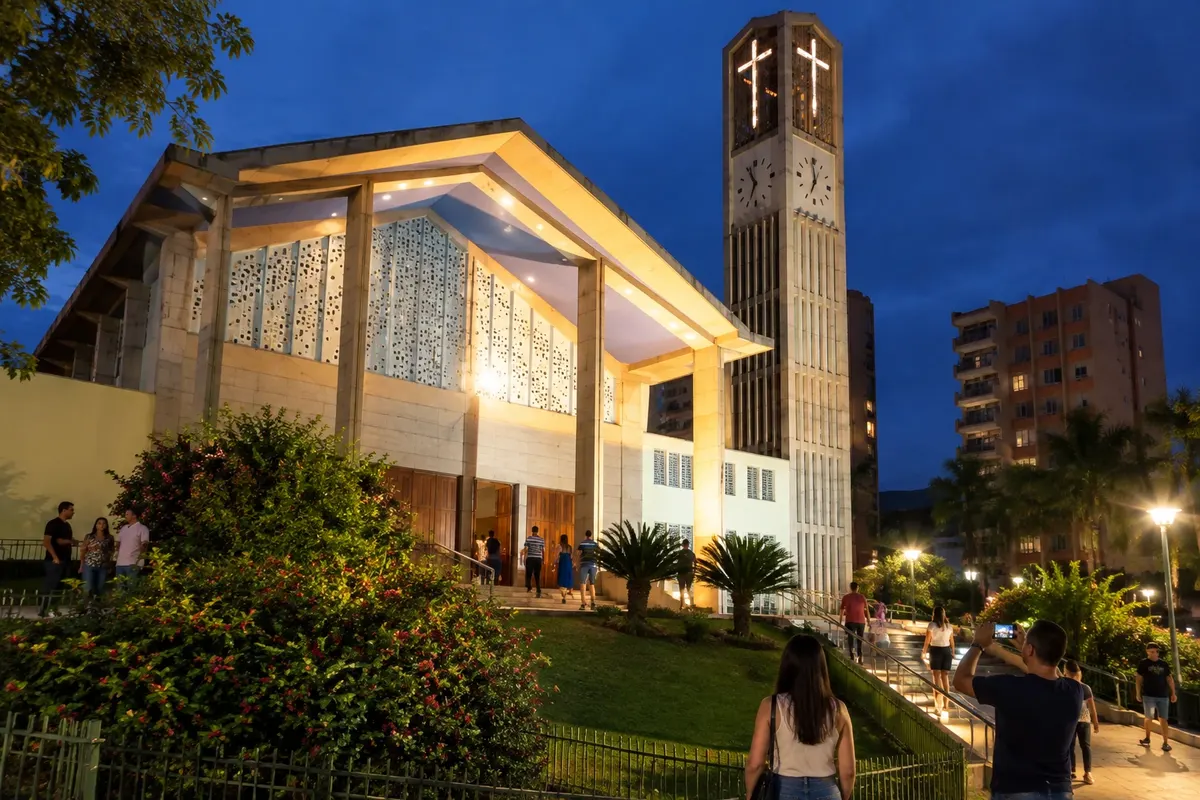
The Main Church of Saint John the Baptist, the city’s patron saint, is one of the largest in the state: it seats about 2,000 people. Inside, notable features include the resurrected Christ 7.80 meters above the altar, the suspended crown of thorns, and the images carved in mahogany by the Spanish sculptor Luiz Noguer; the large wall panels are by José Perez. The church is open during the day, outside mass times. Nearby, the Tourist Information Center distributes maps and often hosts an exhibition with items from the city’s folklore collection.
On a weekday, continue to Casa da Cultura on São João Street, in the building that was the Municipal Market in the 1940s. It houses the Maria Olímpia Museum of History and Archaeology, with ceramics, funerary urns and utensils of the indigenous peoples found in archaeological sites in the municipality and dated to more than a thousand years, and the Professor Ivo de Souza Municipal Art Gallery, with works by local artists.
In the same neighborhood is Altino Arantes Square, commonly called Praça da Fonte: jets of water form a canopy over a walkway that you cross on foot. Next to it stands the complex of the old Beneficência Portuguesa from the 1920s, to be viewed from the outside.
Kraji na poti: Rui Barbosa Square, Ruy Ohtake bandstand, Main Church of Saint John the Baptist, Tourist Information Center, Casa da Cultura, Maria Olímpia Museum of History and Archaeology, Praça da Fonte Luminosa.
Vključuje: Self-guided walk. There is no entrance fee for the church, the museum, the art gallery or the exhibition at the Tourist Information Center.
Nasvet: The History Museum and the Pinacoteca are open on weekdays during business hours. On other days, do the square, the Matriz and the fountain, and leave the museum visit for late afternoon when the heat eases.
Najboljši čas za obisk: All year; afternoons are dry and milder for walking from May to August.
Cultural Station, sacred art and Olímpia’s coffee heritage
Odhod: Rua Coronel José Medeiros, Patrimônio de São João Batista on foot about 2 hours afternoon or evening easy
This short circuit shows what coffee and the railway left behind in Olímpia, and has the advantage of also working at night, after the parks.
ECO, Olímpia’s Cultural Station, occupies the complex of the old railway station from the 1910s, listed by the municipality. Trains ran until 1968; after restoration, the building became a cultural center with exhibitions, a steam locomotive and the memory of the line. Behind it is the Memorial do Bombeiro square. On the same street, see the Pensão do Batata from the outside, pointed out as the town’s first lodging because it stands in front of the station, and the Casa do Coronel, from 1922, built by Geremia Lunardelli, a farmer who once owned 18 million coffee trees and became known as one of Brazil’s coffee kings.
Continuing along Rua 9 de Julho you reach the Iron Bridge. It came from England in 1914 for the railway that ran to Nova Granada, served trains crossing the Rio Cachoeirinha and, restored, was reassembled on Avenida dos Olimpienses, where cars now pass.
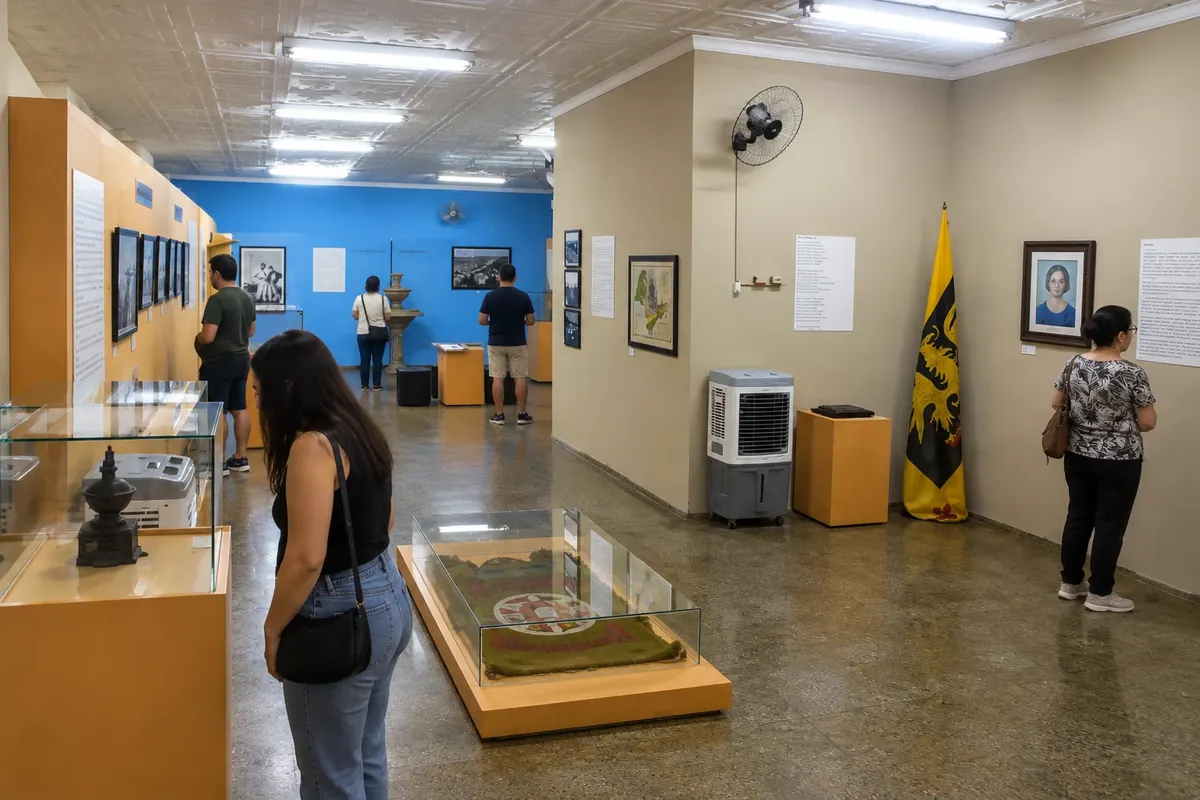
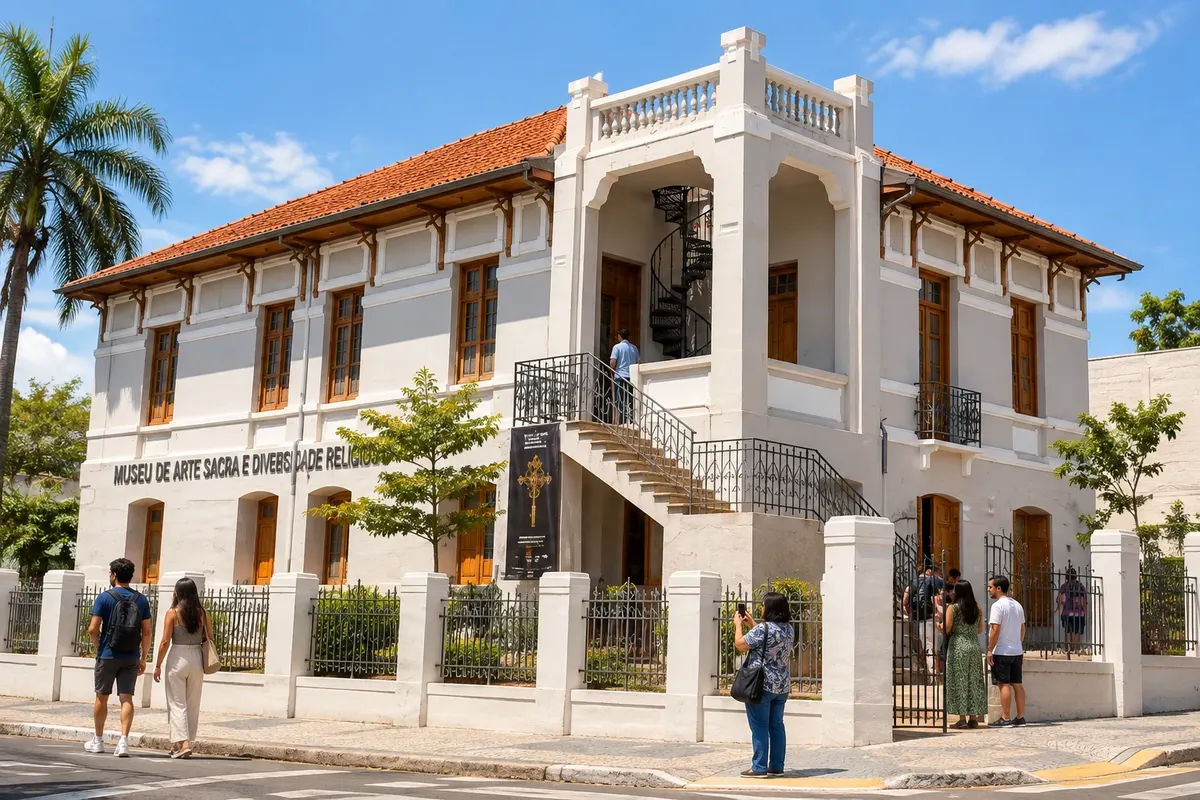
On Rua David de Oliveira, the Museum of Sacred Art and Religious Diversity occupies the Giosué Tonanni mansion, from 1910, also listed. Exhibitions are temporary, many in partnership with the Sacred Art Museum of São Paulo. There is the aroeira cross that marks the town’s founding, planted at the edge of the Ribeirão Olhos D'Água.
Finish at the Sanctuary of Our Lady of Aparecida, built where the village’s first cemetery stood and decorated with mural paintings, and at the tile panel on the façade of Santo Seno school, in Praça Mário Garcez Novais, a work by Max Urban that depicts Father José de Anchieta among indigenous people.
Kraji na poti: ECO Estação Cultural de Olímpia, Casa do Coronel Geremia Lunardelli, Ponte de Ferro, Museu de Arte Sacra e Diversidade Religiosa, Santuário de Nossa Senhora Aparecida, Painel de azulejos da escola Santo Seno.
Vključuje: Self-guided walk. There is no admission fee for the Cultural Station or the Sacred Art Museum. Historic houses are viewed from the façade only.
Nasvet: The Cultural Station and the Sacred Art Museum usually open every day, from morning to evening; check before you go. At the sanctuary, avoid mass times for your visit.
Najboljši čas za obisk: All year. It’s an option for rainy afternoons, from November to March.
Recinto do Folclore and the Festival do Folclore de Olímpia
Odhod: Avenida Menina Moça, Vila Hípica taxi, local ride‑hail app, or car 1 hour outside the festival; a full evening during the event morning or afternoon; night at the festival easy
The Folklore Grounds is the home of the festival that gave Olímpia the title of National Folklore Capital. Its full name is Recinto de Exposições e Praça de Atividades Folclóricas e Turísticas Professor José Sant'anna, in honor of the teacher who created the event. It covers about 96,800 square meters, of which 6,500 are built, and it is the city's largest event space.
The history explains the place. The festival began at Praça da Matriz in the 1960s, based on the research and exhibitions Sant'anna held with his students. It grew so much that it no longer fit in the square and, in 1986, gained its own venue, built in just over four months.
The Folklore Festival takes place in August, on a movable date, and lasts about nine days. Folkloric and parafolkloric groups from several states across the country, from the North to the South, take turns on stage and in parades with dances, music and folk plays, such as bumba meu boi. There is also a violeros pavilion, typical food and handicrafts. There is no entry fee. The city maintains more than a dozen of its own folkloric groups throughout the year.
Outside the festival, the grounds host other fairs and events and can be visited during the day, except on setup days. What you see then is the empty structure: useful for those curious about the scale of the festival or already in Vila Hípica, the neighborhood of Orquidário Aguapey.
Kraji na poti: Folklore Grounds, Praça de Atividades Folclóricas Professor José Sant'anna.
Vključuje: There is no entrance fee to the grounds or to the festival. Food, drinks, and crafts are sold separately.
Nasvet: For the festival, book accommodation in advance and check the year’s program, which changes each edition. Main performances take place at night; arrive early to secure a spot near the stage.
Najboljši čas za obisk: August, during the Festival do Folclore. At other times of year, a quick visit is possible in any month.
Night on Avenida Aurora Forti Neves
Odhod: Avenida Aurora Forti Neves on foot along the avenue, or by rented bicycle or scooter 2 to 4 hours late afternoon and evening easy
Water parks close in the late afternoon, and that’s when Avenida Aurora Forti Neves fills up. The avenue connects the city center to Thermas dos Laranjais and concentrates the city’s indoor attractions, almost all open into the evening. You don’t need a car: you can walk from one to another on the sidewalk.
Coming from the Center, the first are Dreamland Wax Museum, with about 70 figures of personalities from film, music, sport and history in more than 30 scenes, and next door Dreams Ice Bar, a bar built of ice with subzero temperatures, visited in 40-minute sessions with coats and gloves provided. A little further on, Pit Stop da Neve lets children play with real snow.
Further along are Orionverso, a virtual reality park with about 20 experiences that usually closes on Mondays, and Radical Play Park, an amusement park that opens only in the late afternoon: there is no entry fee, and each ride is charged separately. On the same avenue you’ll find bowling, an arcade, trampolines and, opposite Thermas, a mall with a food court.
The “I Love Olímpia” totem on the Miguel Said Aidar bridge is the photo spot. If you prefer to move around, you can rent a bicycle, electric scooter or tricycle at a shop on the avenue and follow the bike lanes.
Pick one or two attractions per night. Each has its own ticket, and there are passes that group attractions from the same set, such as the wax museum, the ice bar and the Vale dos Dinossauros.
Kraji na poti: Avenida Aurora Forti Neves, Dreamland Wax Museum, Dreams Ice Bar, Orionverso, Radical Play Park, Pit Stop da Neve, “I Love Olímpia” totem.
Vključuje: Self-guided visit. Each attraction charges a separate entrance fee; check the current price list and combined passes.
Nasvet: For the ice bar, wear long pants and closed shoes. During school holidays, buy timed tickets before leaving the hotel. The taxi stand at the bus station is on the avenue itself.
Najboljši čas za obisk: All year. During the July and December–January holidays the avenue gets busier and some venues extend their hours.


 Antarktika
 Argentina
 Bolivija
 Čile
 Kolumbija
 Ekvator
 Gvajana
 Francoska Gvajana
 Falklandski otoki (Malvini)
 Paragvaj
 Peru
 Surinam
 Urugvaj
 Venezuela
 Nemčija
 Avstrija
 Belgija
 Hrvaška
 Danska
 Slovaška
 Slovenija
 Španija
 Finska
 Francija
 Grčija
 Nizozemska
 Madžarska
 Irska
 Islandija
 Italija
 Luksemburg
 Norveška
 Poljska
 Portugalska
 Združeno kraljestvo
 Češka
 Švedska
 Švica
 Turčija
 Bermudi
 Kanada
 Združene države Amerike
 Grenlandija
 Mehika
 Sveta Peter in Mihael
 Dominikanska republika
 Japonska
 Južnoafriška republika
 Egipt
 Avstralija
 Fidži
 Nova Zelandija
 Papua Nova Gvineja