

Trdnjava
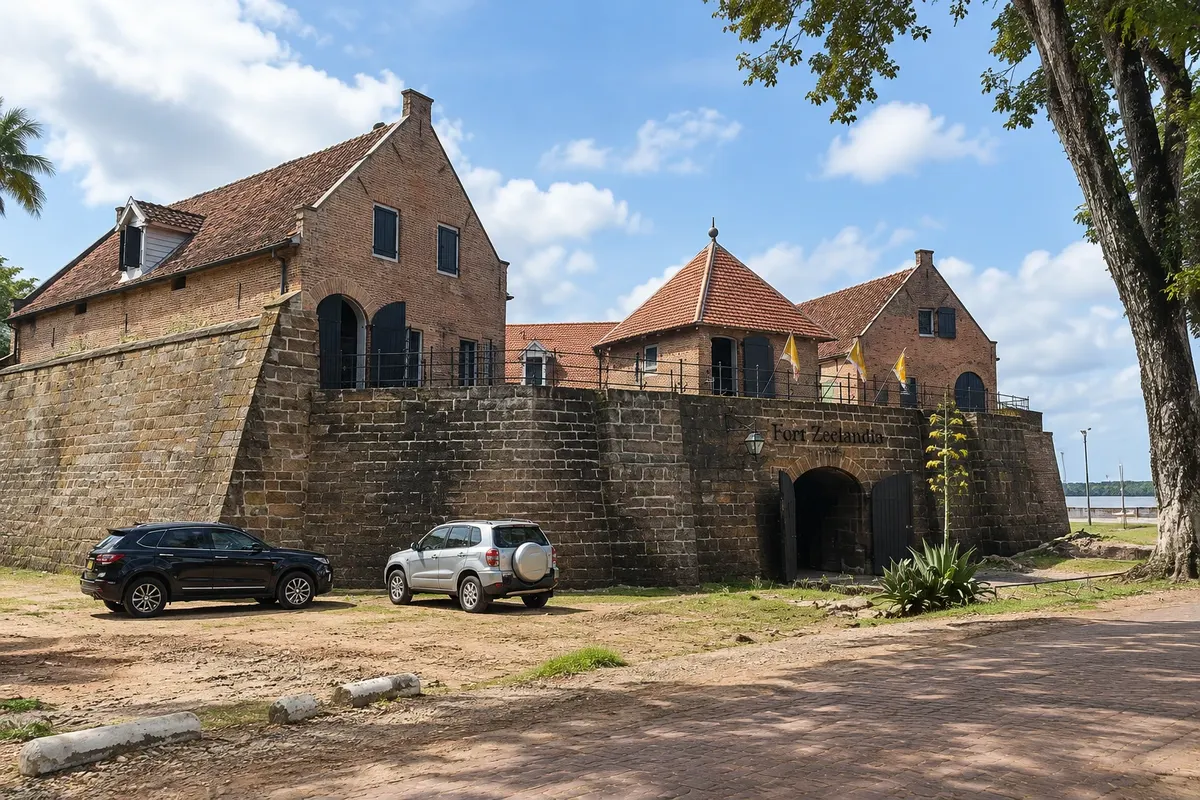
Fort Zeelandia
A star-shaped fort on the banks of the Suriname River, built of wood by the French, rebuilt by the English and taken by the Dutch in 1667. It houses the Museu do Suriname.

 Išči
 Brazilija
 Antarktika
 Argentina
 Bolivija
 Čile
 Kolumbija
 Ekvator
 Gvajana
 Francoska Gvajana
 Falklandski otoki (Malvini)
 Paragvaj
 PeruSurinam
 Urugvaj
 Venezuela
 Nemčija
 Avstrija
 Belgija
 Hrvaška
 Danska
 Slovaška
 Slovenija
 Španija
 Finska
 Francija
 Grčija
 Nizozemska
 Madžarska
 Irska
 Islandija
 Italija
 Luksemburg
 Norveška
 Poljska
 Portugalska
 Združeno kraljestvo
 Češka
 Švedska
 Švica
 Turčija
 Bermudi
 Kanada
 Združene države Amerike
 Grenlandija
 Mehika
 Sveta Peter in Mihael
 Dominikanska republika
 JaponskaTurčija
 Južnoafriška republika
 Egipt
 Avstralija
 Fidži
 Nova Zelandija
 Papua Nova Gvineja
Paramaribo · Surinam Capital
Destinacija: Paramaribo and the Suriname River.
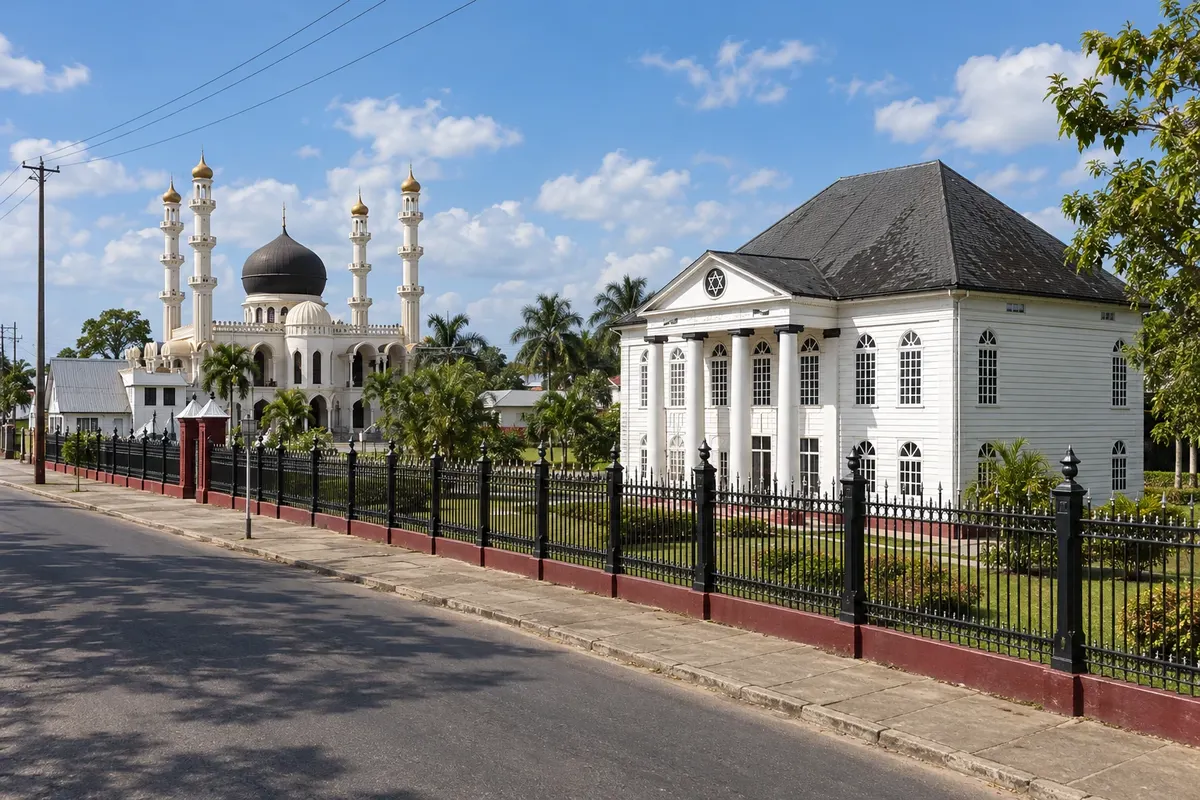
Na fotografiji: Mesquita Keizerstraat and Sinagoga Neveh Shalom
Illustrative images. The pictures in this guide are illustrations based on the real place, not photographs, and may differ from it.
Mesto
Paramaribo is the capital of Suriname, on the banks of the Suriname River. The historic centre, a UNESCO World Heritage Site, has white wooden Dutch-period houses, Forte Zeelandia, the Palmentuin, the wooden cathedral and the mosque and synagogue side by side on Keizerstraat. Across the river are the plantations and the fort of Commewijne. The cuisine blends Indian, Javanese, Chinese and Creole influences.
V vodniku še ni nastanitev – Paramaribo.
kako do tja · koliko dni · načrt poti · vprašanja
Doživite kraj
A star-shaped fort on the banks of the Suriname River, built of wood by the French, rebuilt by the English and taken by the Dutch in 1667. It houses the Museu do Suriname.
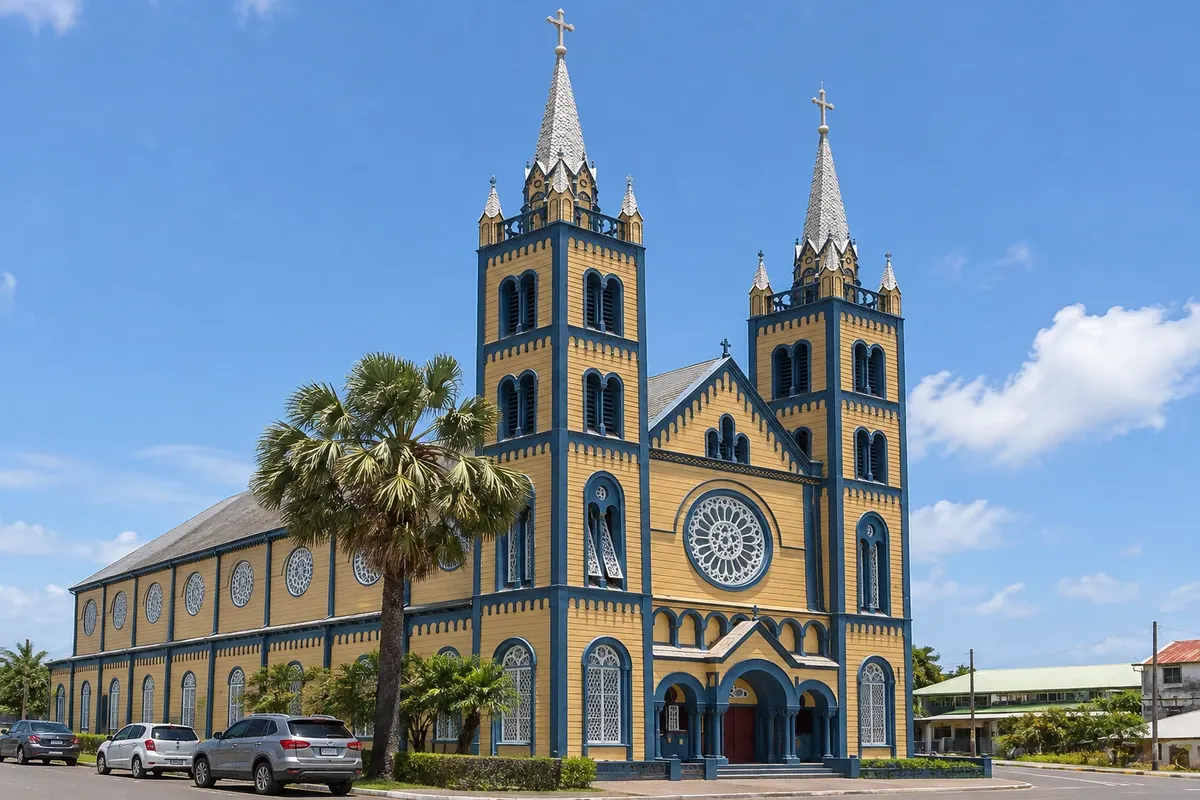
Wooden Catholic cathedral on Gravenstraat, with two towers and 44 metres in height to the cross, built between 1883 and 1901. The interior is entirely Surinamese cedar without paint.
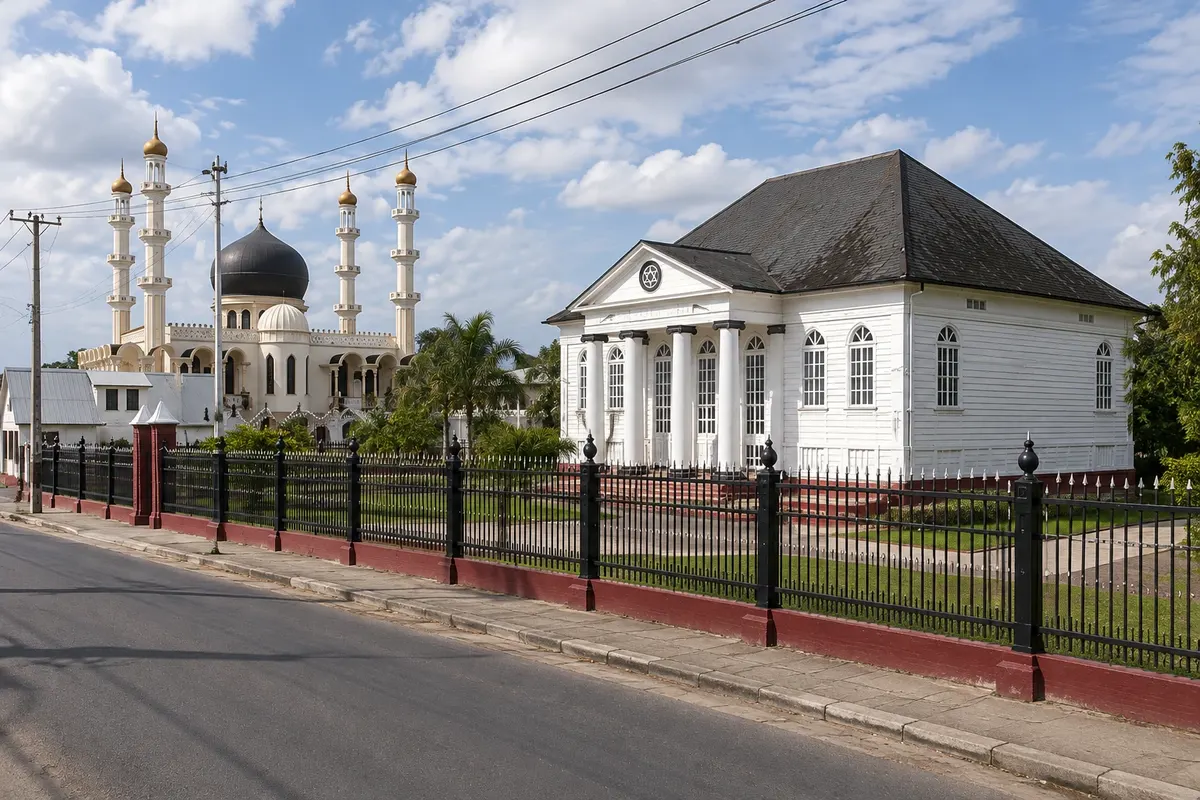
The mosque on Keizerstraat, with a dome and two minarets, is wall‑adjacent to the Sinagoga Neve Shalom. The two side by side have become a symbol of Paramaribo's religious coexistence.
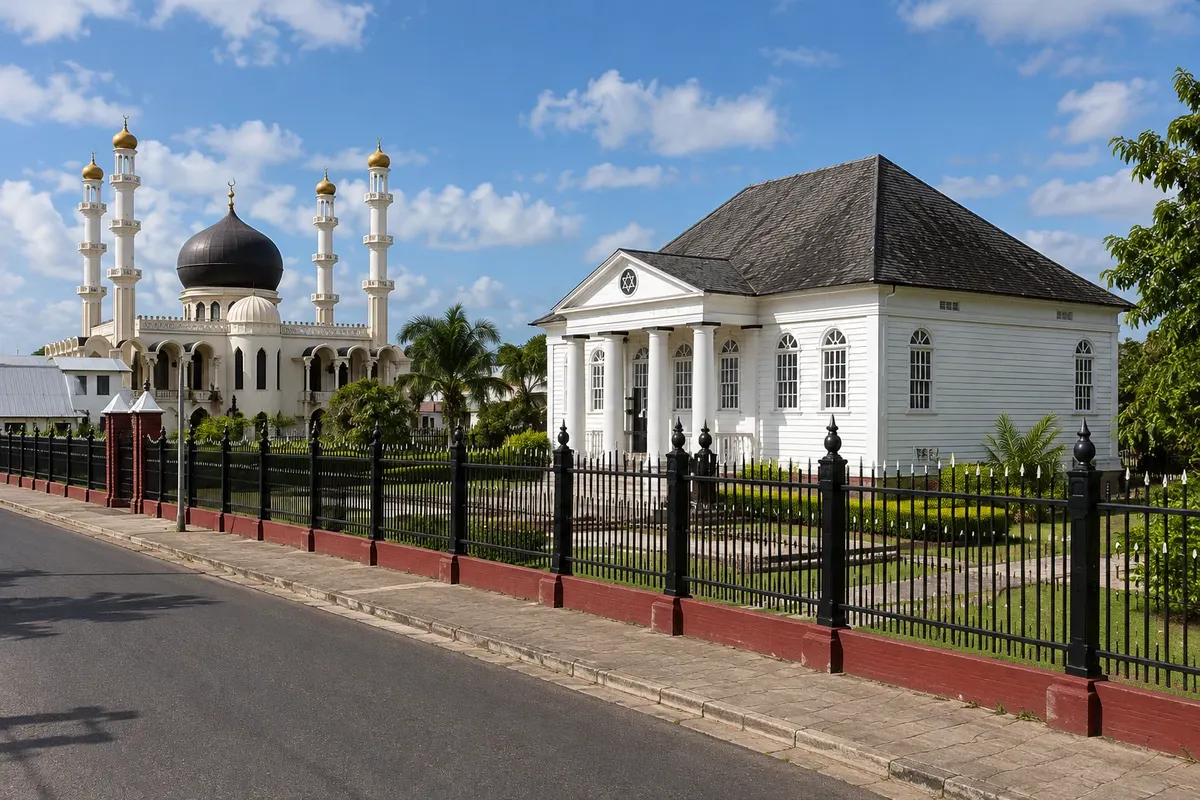
Neoclassical synagogue built between 1835 and 1842 on Keizerstraat, neighboring the Mesquita da Keizerstraat. It houses a small museum about the history of Jews in Suriname.
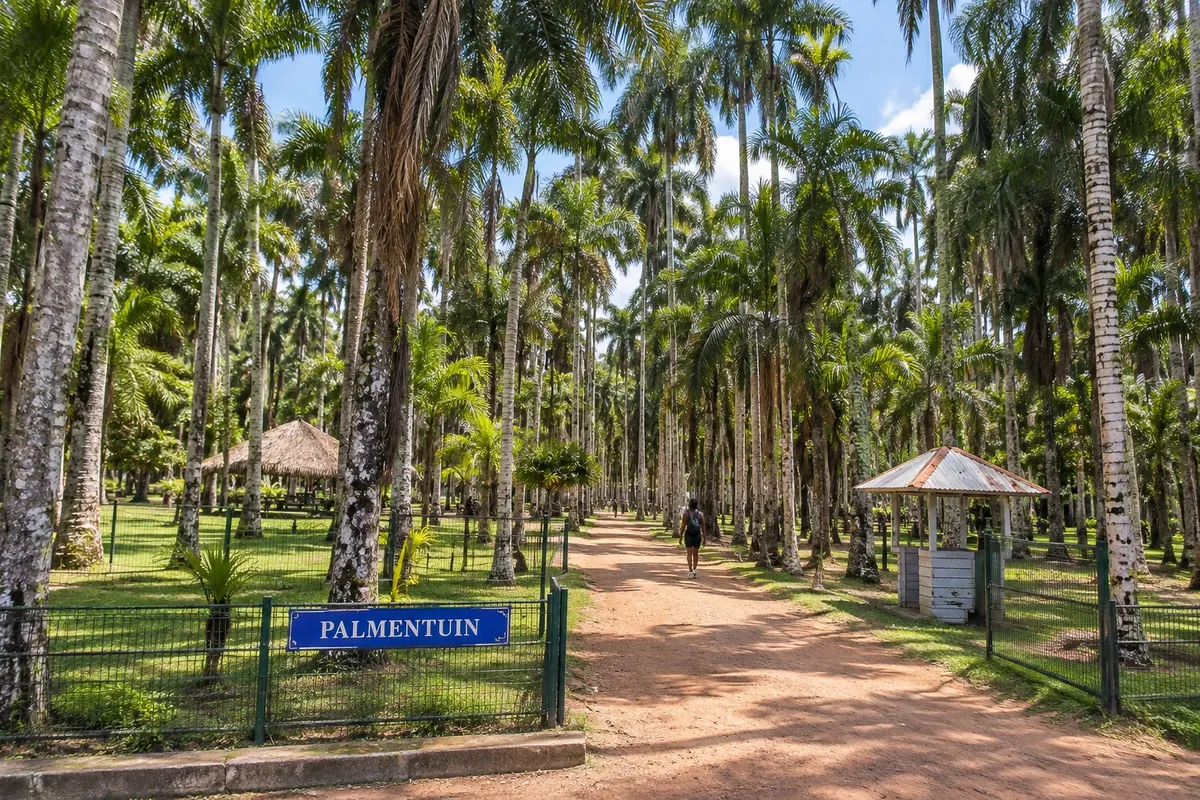
A garden of royal palms behind the presidential palace, opened to the public in 1685, with capuchin monkeys in the crowns, birds and shaded benches, next to the praça da Independência.
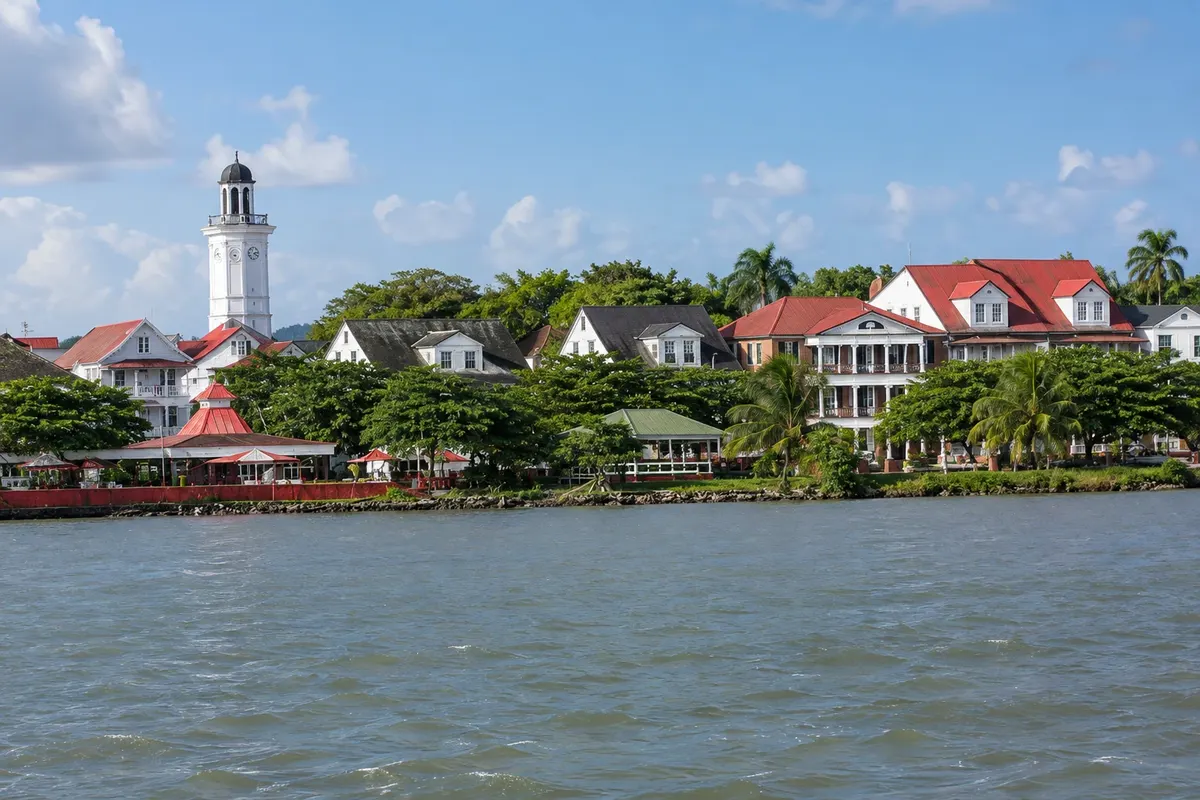
The riverside street with merchants' wooden townhouses, and the two‑storey Mercado Central: on the ground floor, fruit, fish and spices; above, clothing and household goods.
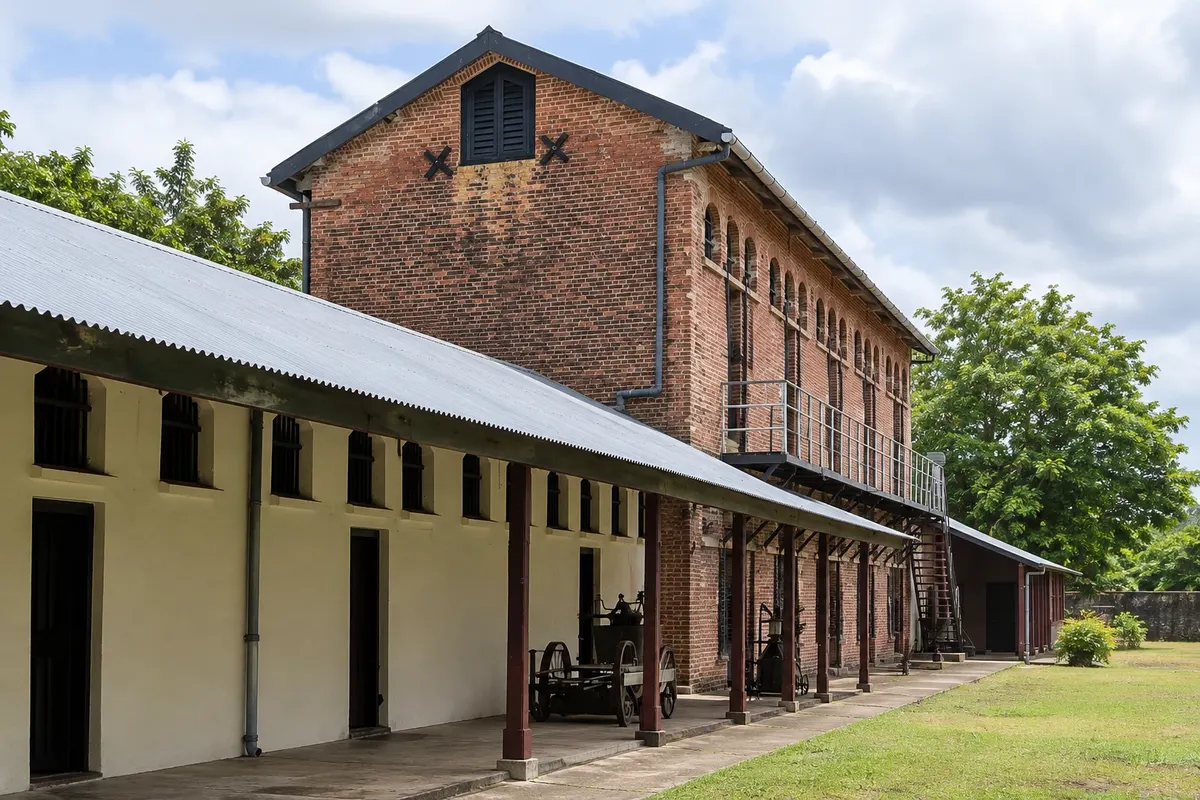
Dutch fort from 1747 at the meeting point of the Suriname and Commewijne rivers, today an open-air museum with ramparts, cannons, magazines and views of the river where gray dolphins often appear.
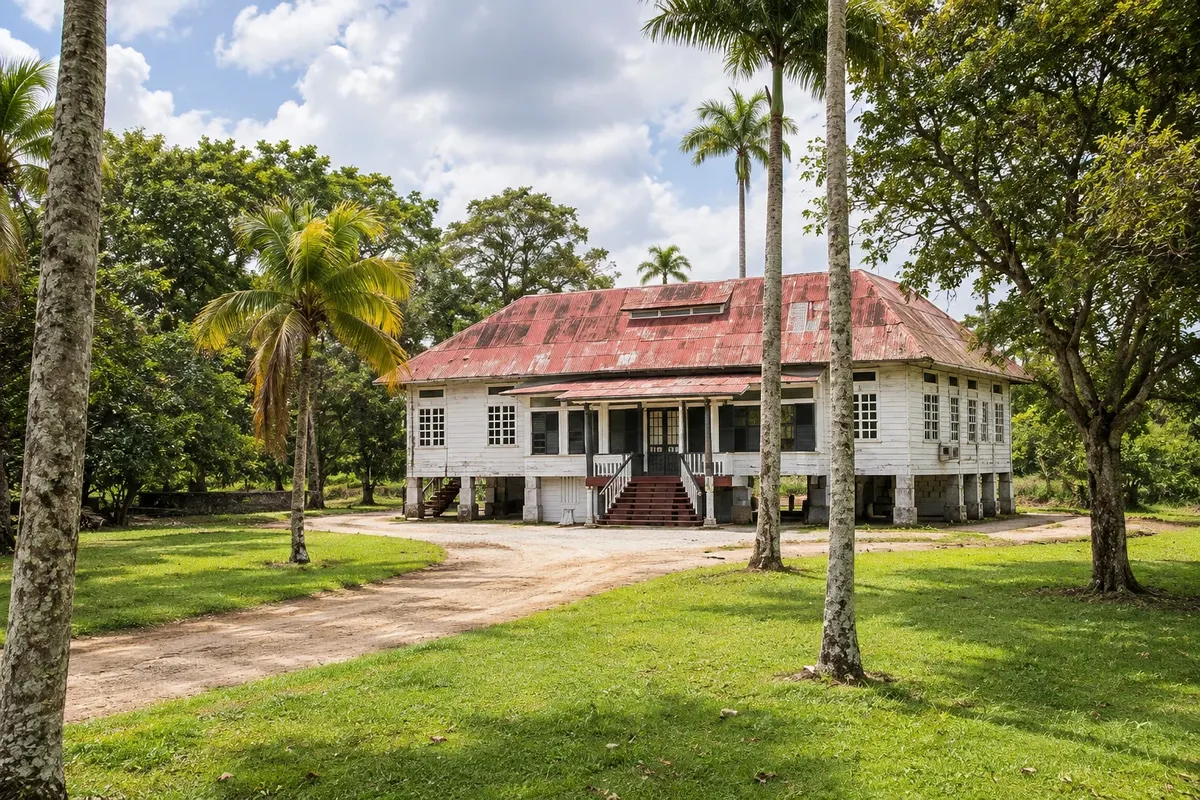
Former plantation and sugar mill in Commewijne, with the chimney, iron sheds and stationary locomotives. It was there that, in 1890, the first contracted Javanese workers arrived.
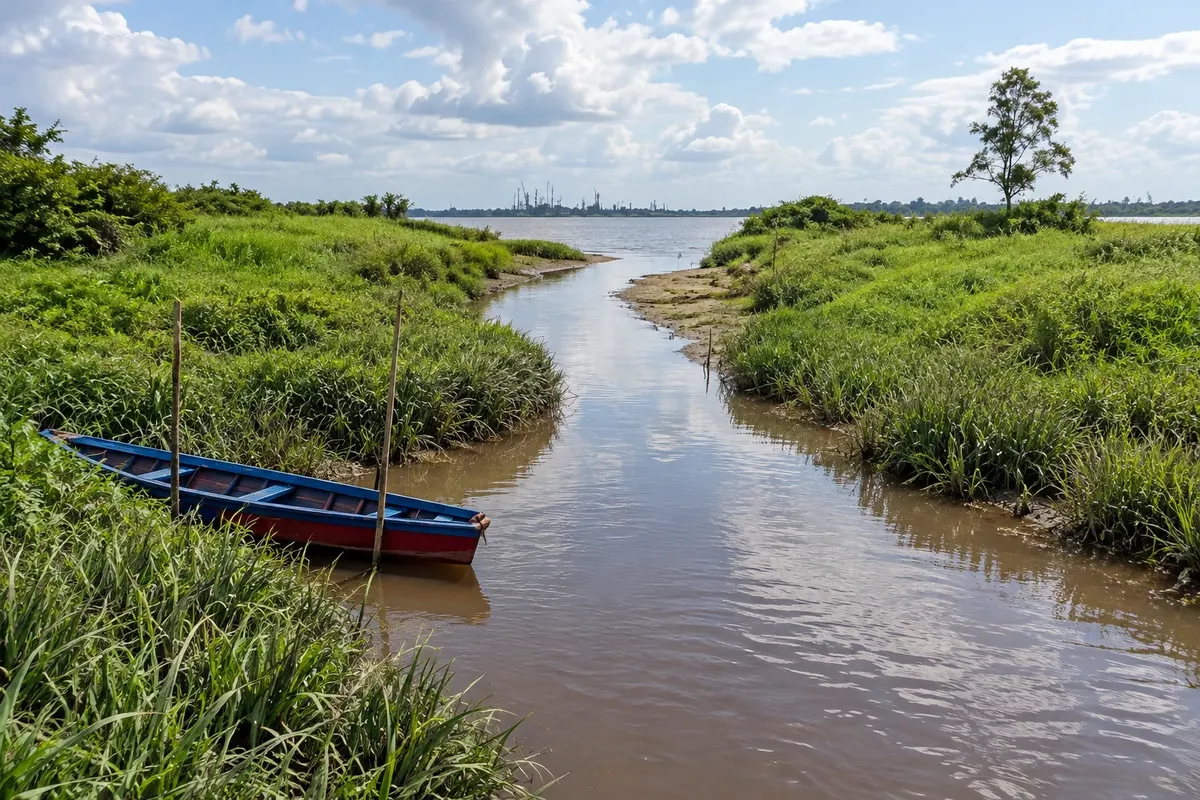
Former coffee plantation south of Meerzorg, which produced from the late 17th century until 1998 and became a 700-hectare nature park, with forest trails, birds and the plantation buildings.
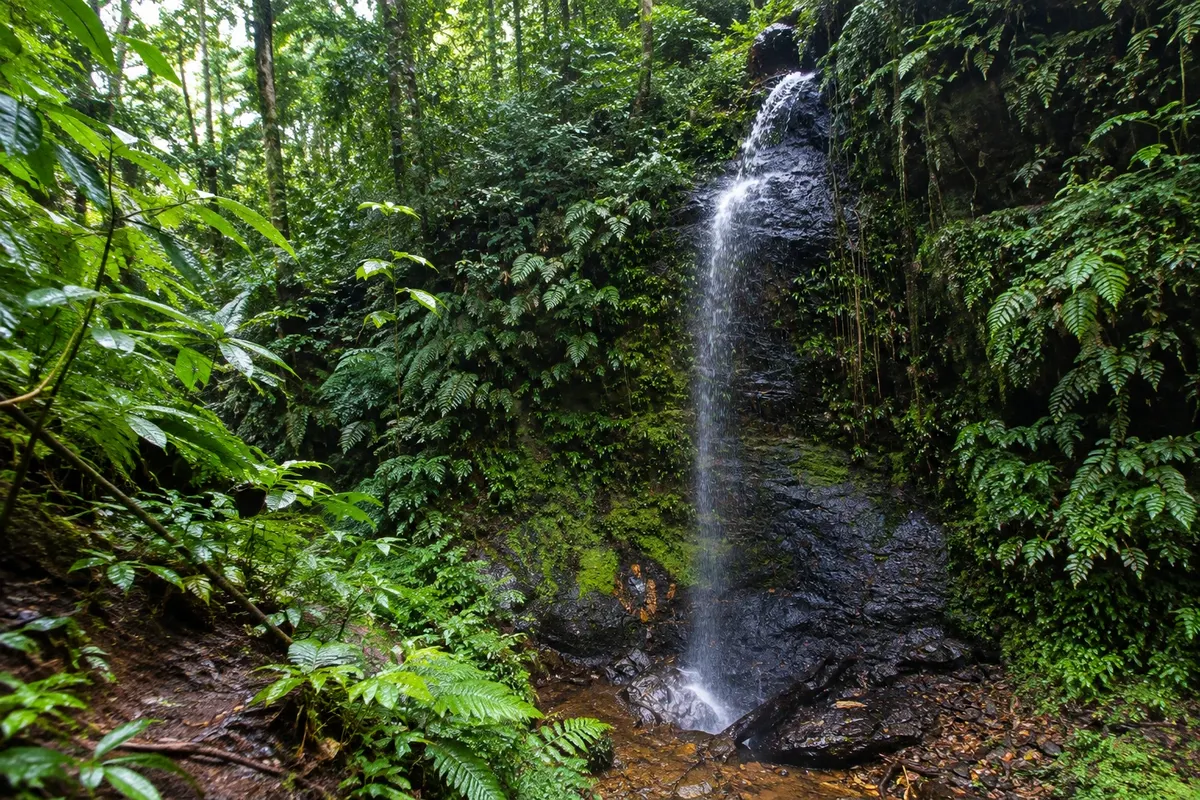
Nature park on a forest plateau about 500 meters above sea level, overlooking the Brokopondo lake, with trails to waterfalls, monkeys and birds. It is about 130 km from Paramaribo by road.
Pred odhodom
Paramaribo – Paramaribo Capital
Razdalje so približne. Pred potovanjem preverite lete in vozne rede avtobusov, vlakov ali ladij.
Confirm before booking. Johan Adolf Pengel International Airport is in Zanderij, about 45 km south of the centre; the journey is made by taxi or transfer. Zorg en Hoop Airport, within the city, serves domestic flights to the interior. By land, from Amapá the route goes through French Guiana to the Maroni River crossing at Albina.
Two days for the historic centre, Forte Zeelandia, Keizerstraat, the cathedral and the Central Market. A third day for Commewijne, with Forte Nieuw Amsterdam, Mariënburg, Peperpot and the dolphin-spotting boat trip. Brownsberg requires an extra day, preferably with an overnight stay.
The heat is constant, around 30 °C during the day. From September to November is usually the driest period. The heaviest rains usually fall from April to July, and there is another rainy phase between December and January. Showers are heavy and pass quickly.
The seasons shown are the most usual ones; nature doesn't always follow the calendar.
For the centre, no: everything is within walking distance. For Commewijne, the usual options are taxi, bicycle, boat or organized tour. For Brownsberg, a traction vehicle or an organized trip. In Suriname you drive on the left.
Predlog poti
Pot povezuje znamenitosti na tej strani. Za oglede boste imeli dovolj časa.
Start at Forte Zeelandia and the Suriname Museum, head to Independence Square and rest in the shade of the palms at the Palmentuin.
Visit the wooden cathedral on Gravenstraat and walk to Keizerstraat to see the mosque and the synagogue side by side.
Go down to the Waterkant and walk along the riverfront to the Mercado Central, with the wooden houses on one side and the boats on the other.
Have roti, bami, or pom at a downtown restaurant or at the Javanese restaurants in Blauwgrond.
Dan 1
Start early at the Mercado Central and follow the Waterkant to Forte Zeelandia.
Palmentuin, the praça da Independência and the wooden cathedral.
Mosque and Sinagoga Neve Shalom, with the small synagogue museum.
Dinner in the Kleine Waterstraat area, with bars and restaurants.
Dan 2
Cross the river early for the trails and the birds of Peperpot.
Follow Commewijne to the old Mariënburg mill and Fort Nieuw Amsterdam.
Boat trip at the confluence of the rivers, where the gray dolphins (botos) often appear, returning to the Waterkant.
Farewell dinner in Paramaribo or an overnight stay at a plantation guesthouse in Commewijne.
Check before you go. Opening hours and days change, and places may close for renovations, holidays or events. This itinerary is a suggestion from Cidade Turismo, not a commitment: plan yours by checking directly with each place you intend to visit.
Pred odhodom
Johan Adolf Pengel Airport is in Zanderij, about 45 km away. You can take a taxi or a shuttle arranged with your hotel; agree the fare beforehand.
Roti with curry, of Indian heritage; bami and nasi, of Javanese and Chinese heritage; saoto, a Javanese soup; and pom, a Creole roast of taioba root with chicken.
Yes. The historic center is flat and compact, and the fort, Palmentuin, the cathedral, Keizerstraat and the Waterkant are just a few minutes from each other.
Via the Jules Wijdenbosch bridge by car, taxi or bicycle, or by boat from the Waterkant to Meerzorg.
The country's currency is the Surinamese dollar. Hotels and tours sometimes accept other currencies; check beforehand and bring some local cash for the market.
Več kot vodnik


