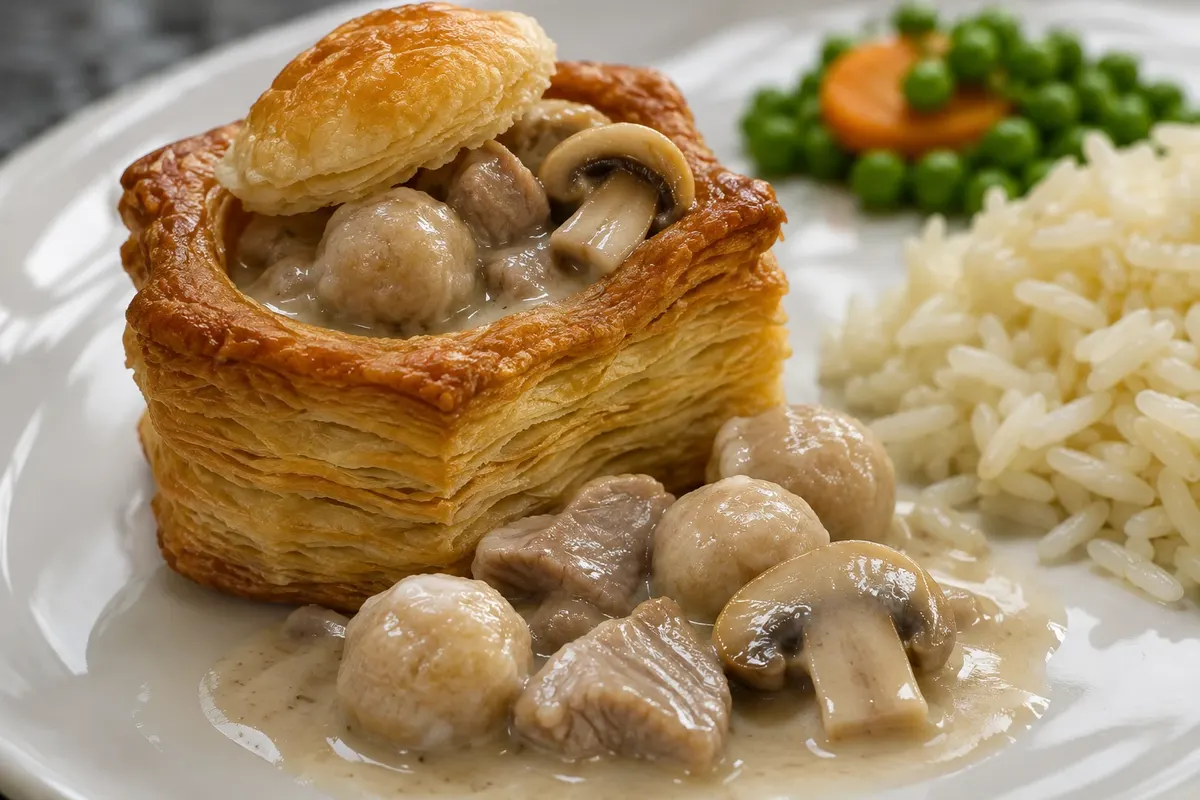
Luzerner Chügelipastete
Puff-pastry dome filled with veal, meatballs, mushrooms and raisins in a creamy sauce. It’s named for the city and canton of Lucerne and is also called Fritschipastete, after the local carnival figure.
Antarktika
Lucerne · Švica Capital
Destinacija: Lucerne and the mountains.
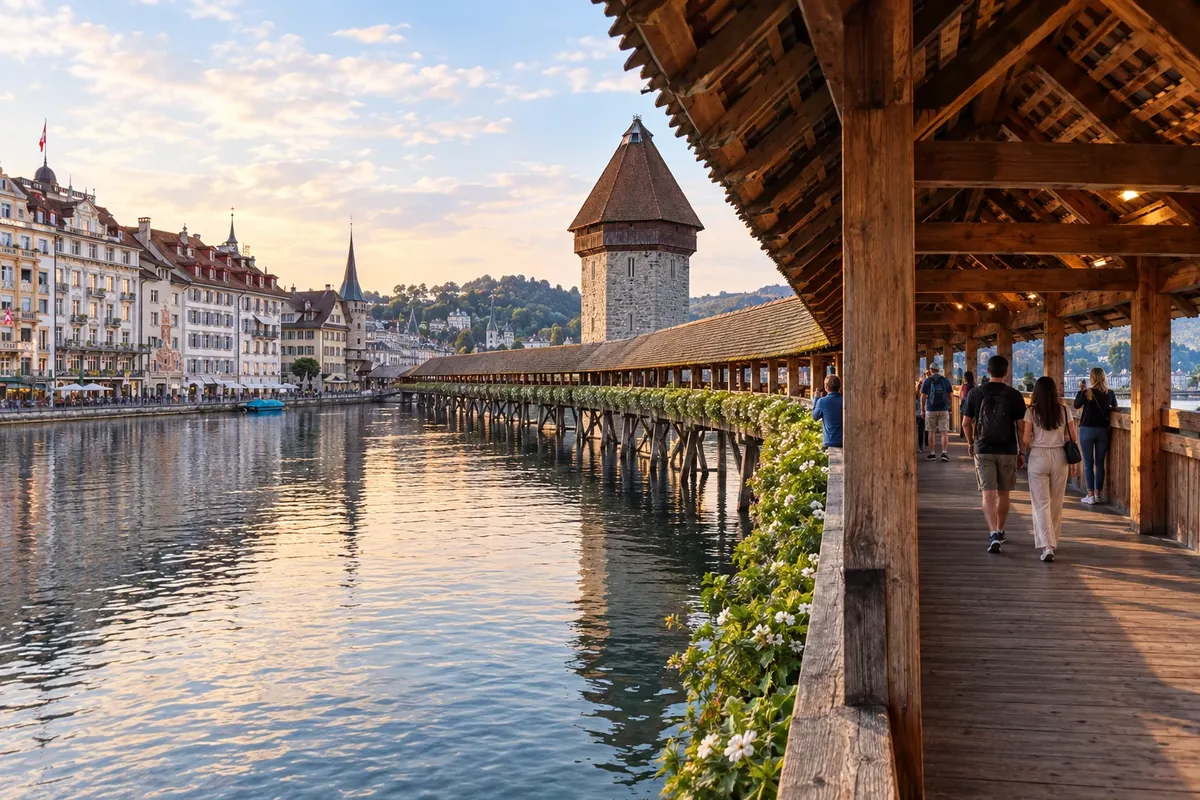
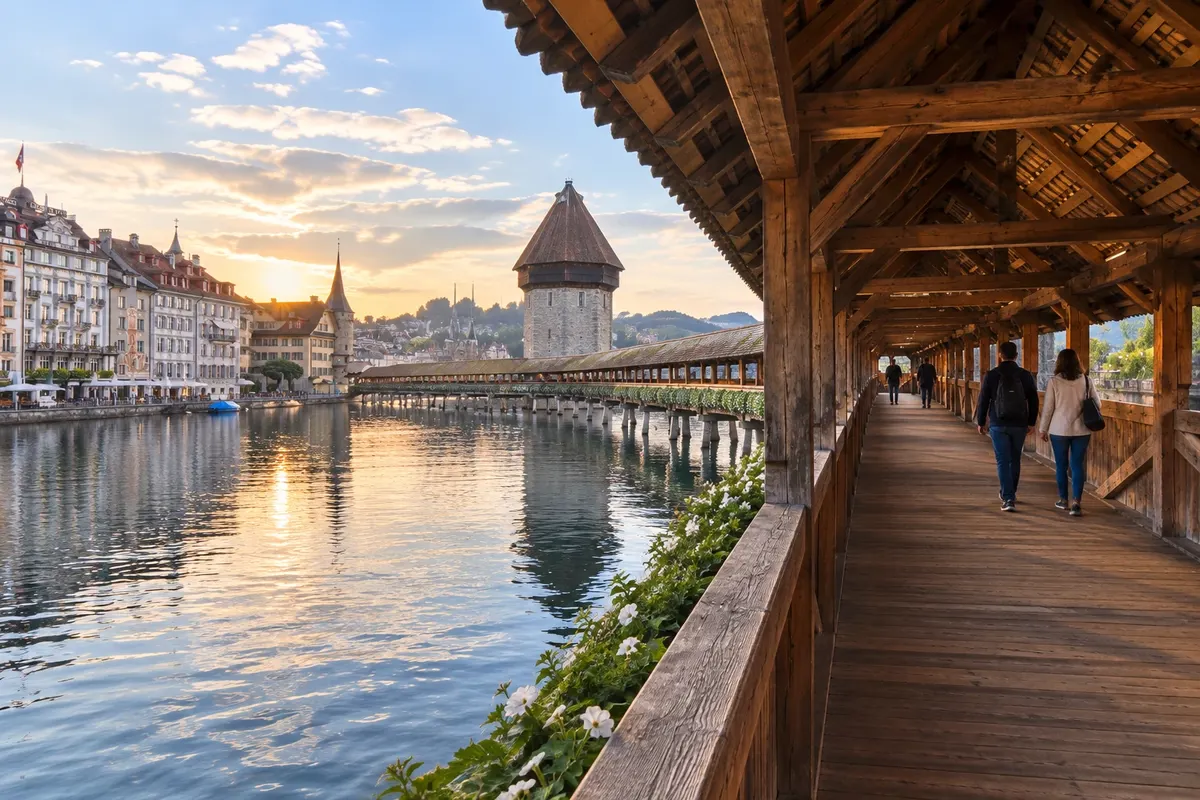
Na fotografiji: Kapellbrücke and River Reuss, Lucerne
Illustrative images. The pictures in this guide are illustrations based on the real place, not photographs, and may differ from it.
Mesto
Capital of the canton of Lucerne, at the point where the river Reuss leaves the Lake of the Four Cantons. It has the Kapellbrücke and the Spreuerbrücke, covered wooden bridges, the Altstadt with painted facades, the Museggmauer wall, the Löwendenkmal, the KKL by Jean Nouvel and the Swiss Museum of Transport. It is the base for ascending Pilatus, Rigi, Stanserhorn and Bürgenstock.
V vodniku še ni nastanitev – Lucerne.
kako do tja · koliko dni · načrt poti · vprašanja
Lokalni okusi – of Švica
Doživite kraj
Covered wooden bridge over the river Reuss, built around 1365, with 17th-century paintings on the ceiling and the octagonal Wasserturm tower beside it.
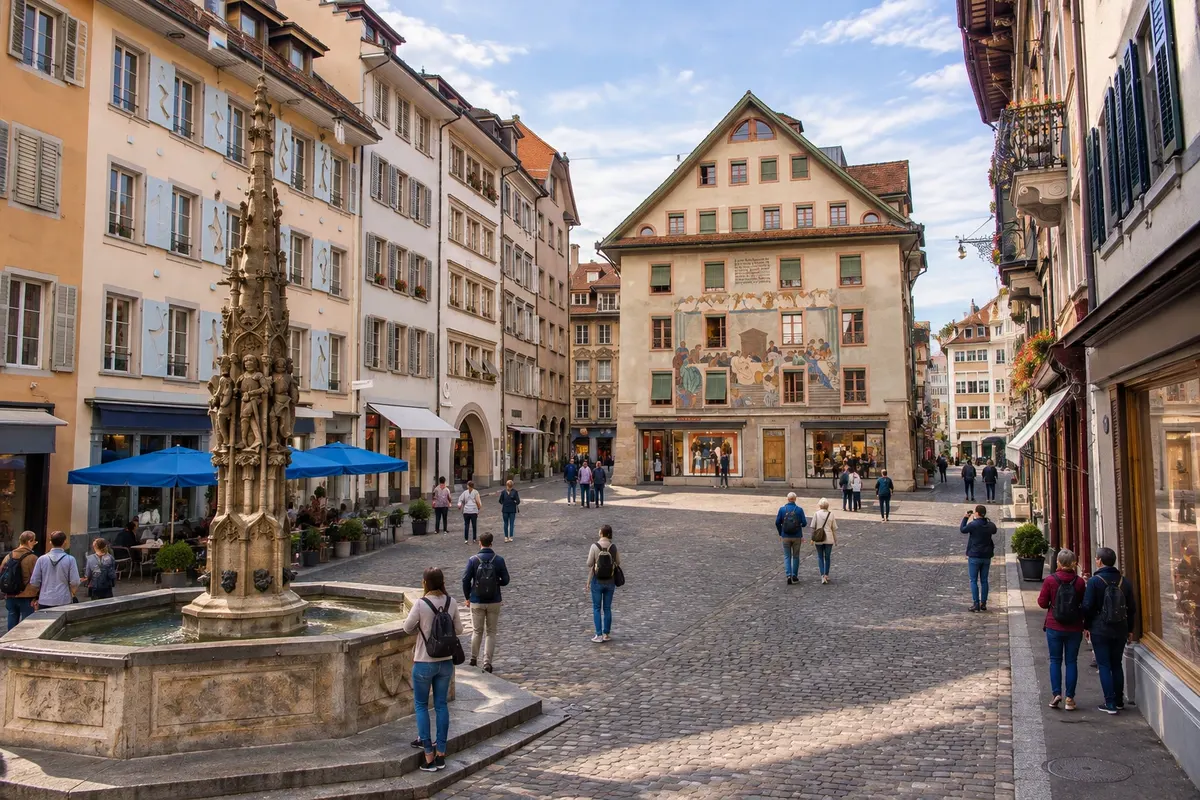
The medieval centre on the right bank of the Reuss, with the Kornmarkt and the old Rathaus, the Weinmarkt and its 1481 fountain, the Hirschenplatz and streets of painted façades.
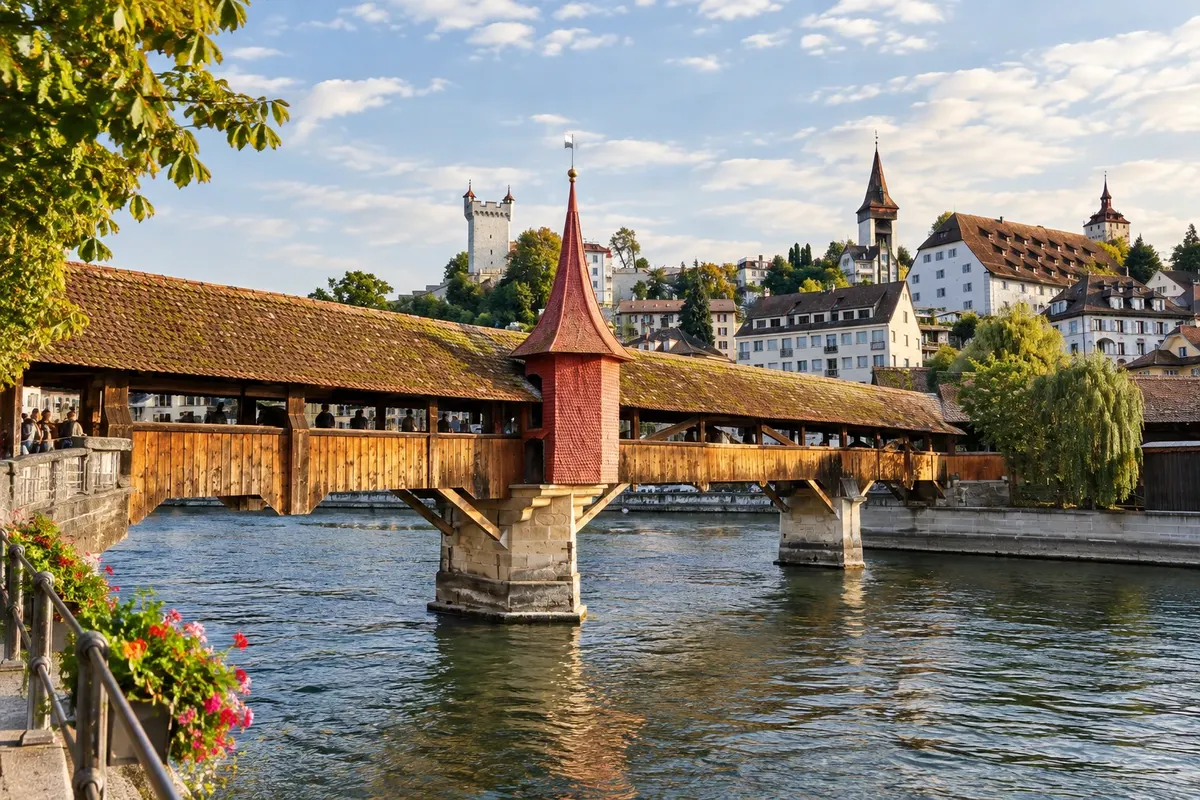
Lucerne’s second covered bridge, 81 m long, with the Totentanz (Dance of Death) painting series made in the 17th century by Kaspar Meglinger and a small chapel in the middle.
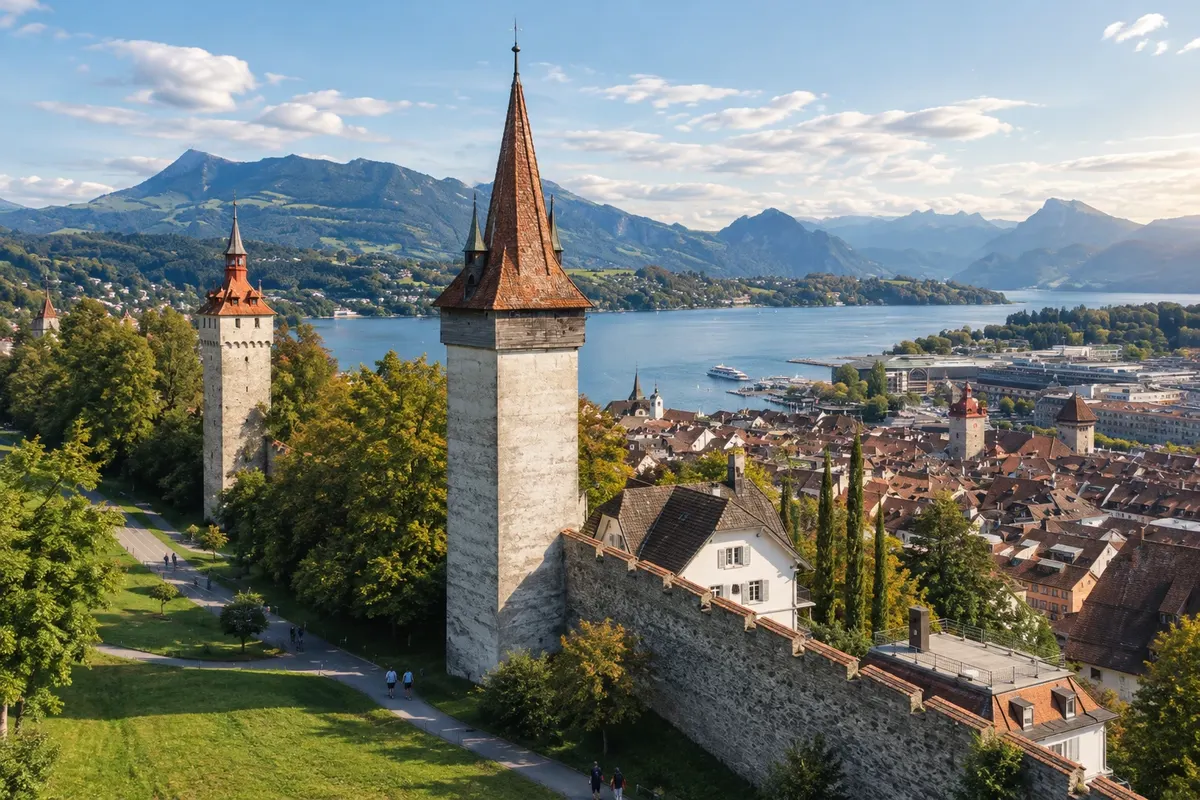
Section of Lucerne's old city wall, about 870 m long with nine towers, four of them open from April to October, offering views over the roofs, the lake and the Alps.
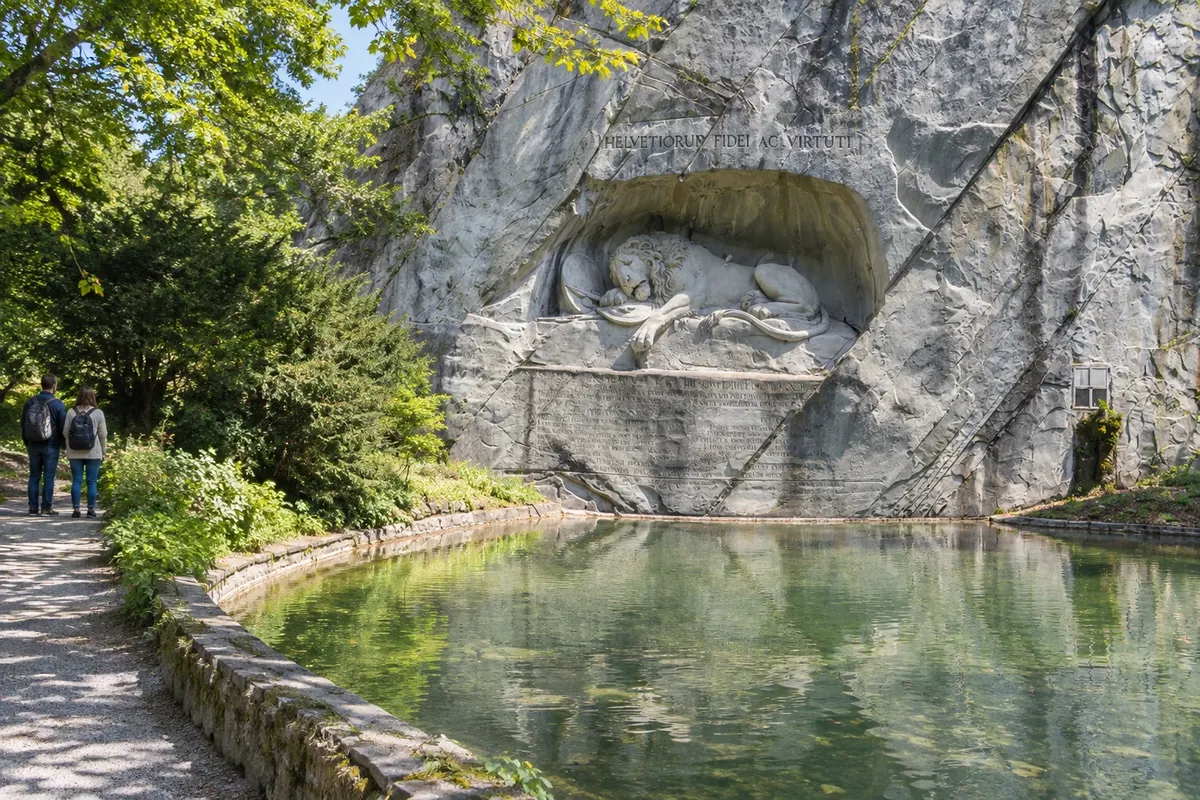
Wounded lion carved in 1820 and 1821 into a rock wall, 10 m long, in memory of the Swiss Guards killed at the Palácio das Tulherias in Paris in 1792.
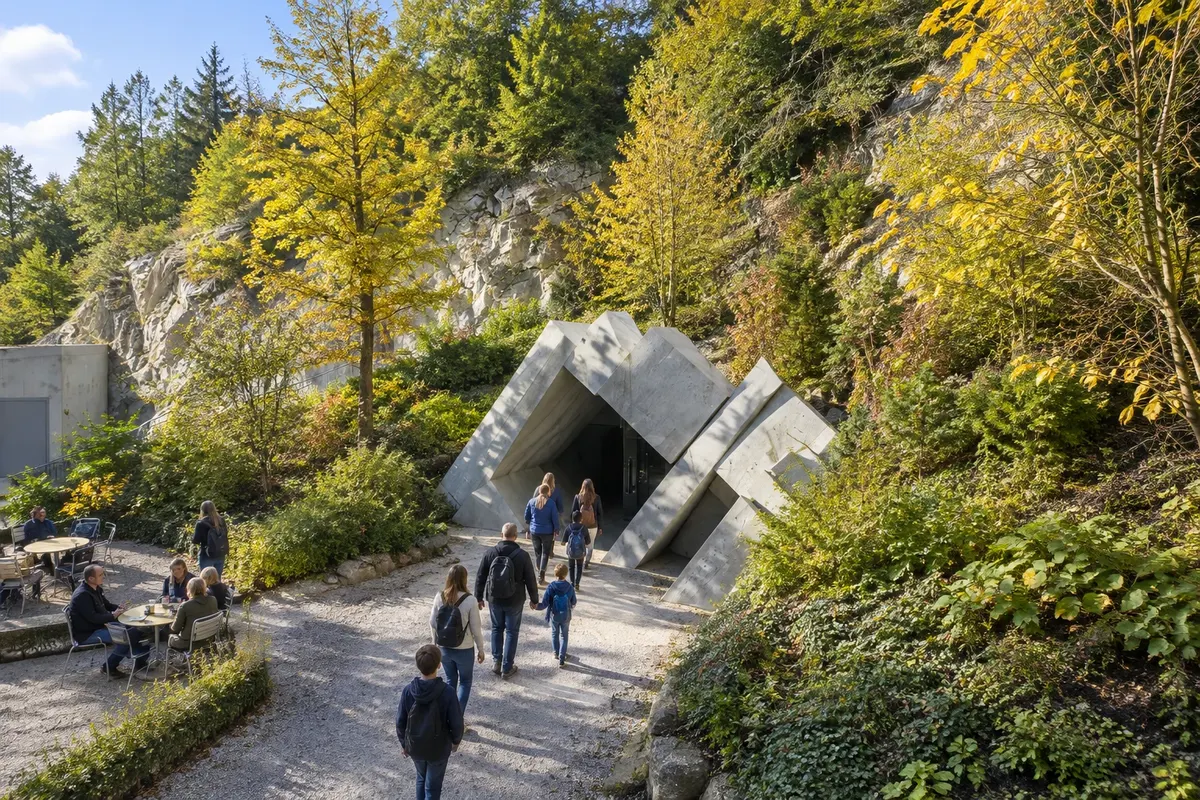
Stone kettles carved by a glacier about 20,000 years ago, discovered in 1872, with a museum, a mirror maze, rock galleries and an observation tower.
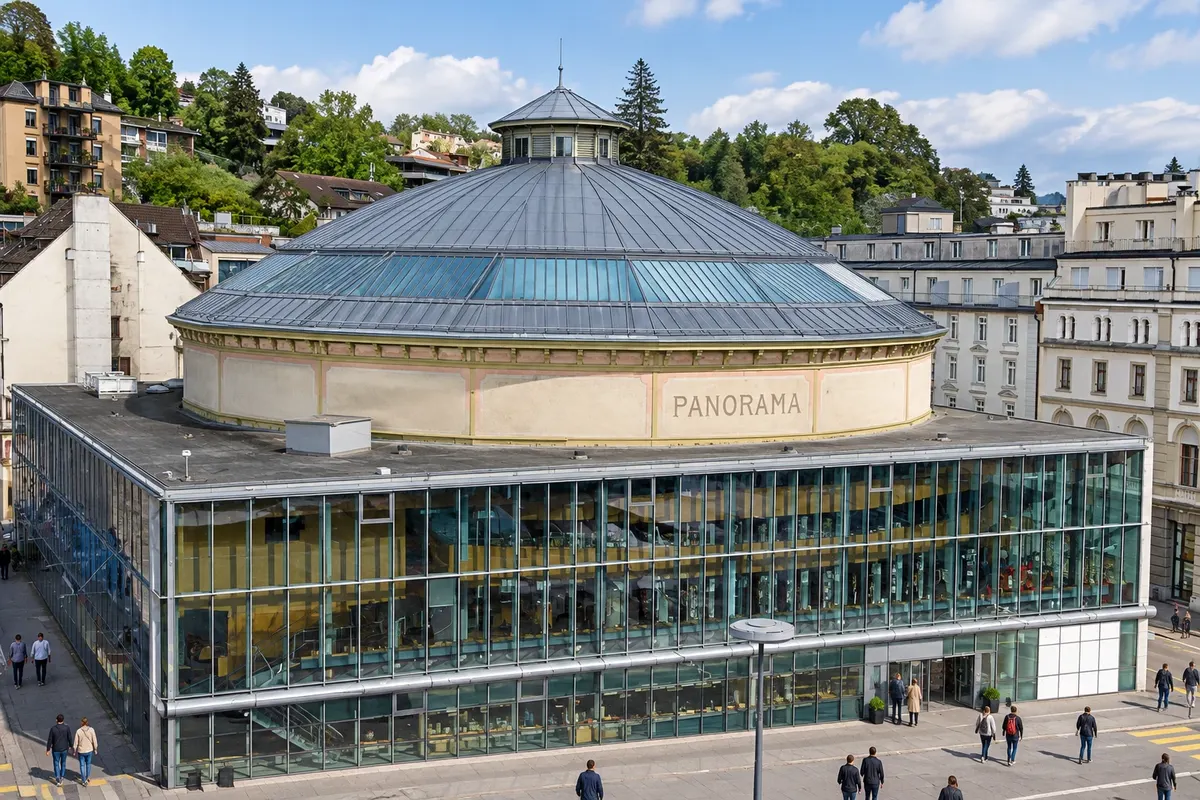
A 112 m circular painting by Édouard Castres from 1881, showing the arrival in Suíça of General Bourbaki's French army in 1871, in a round building near the Leão.
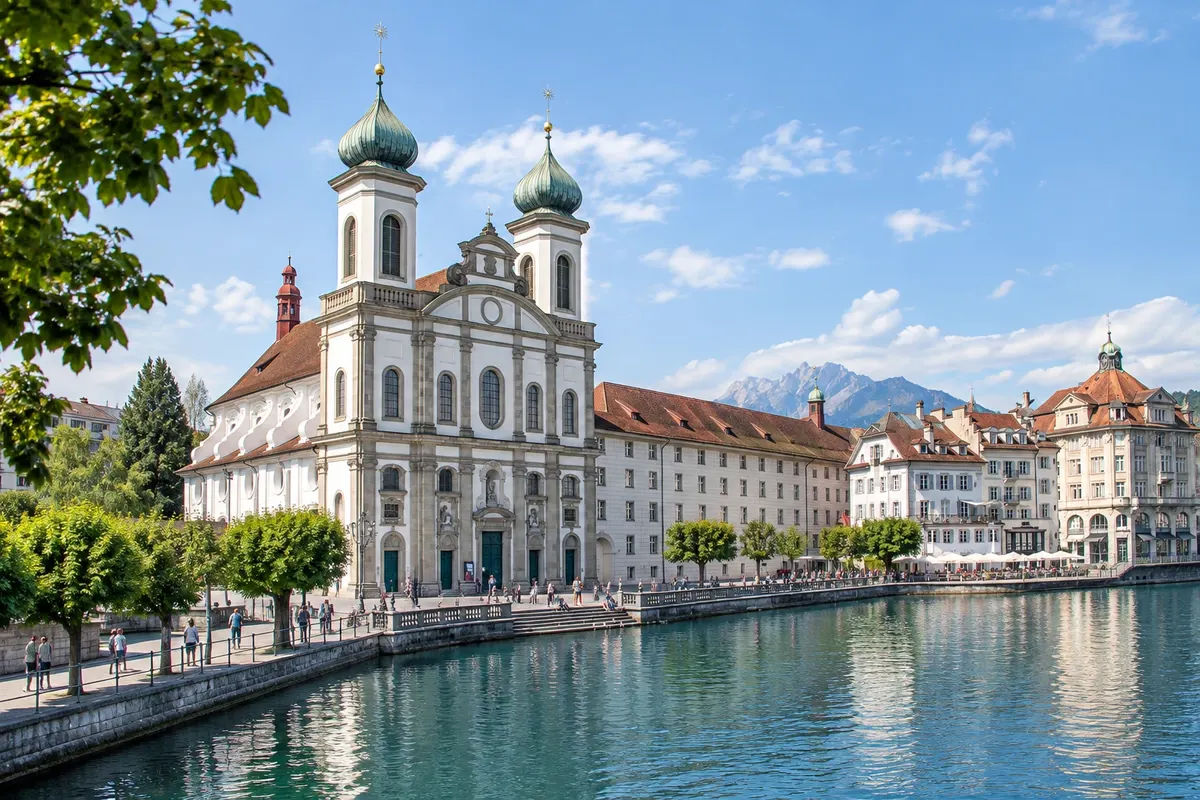
Jesuit church built from 1666 to 1677 on the left bank of the Reuss, the first large Baroque church in Suíça, with a white and gold interior and two domed towers.
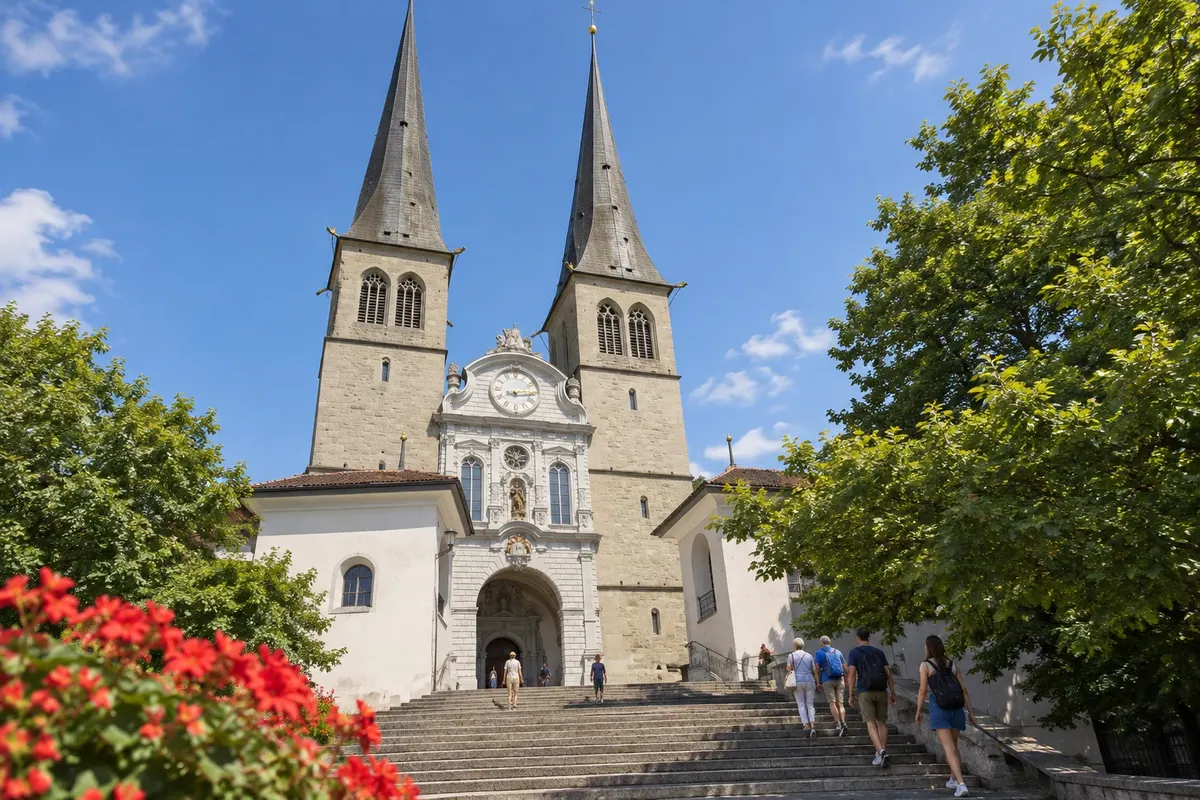
Church of São Leodegário, rebuilt from 1633 to 1639 in Renaissance style after a fire, with medieval towers of 69 m, an arcaded cemetery and a large 17th‑century organ.
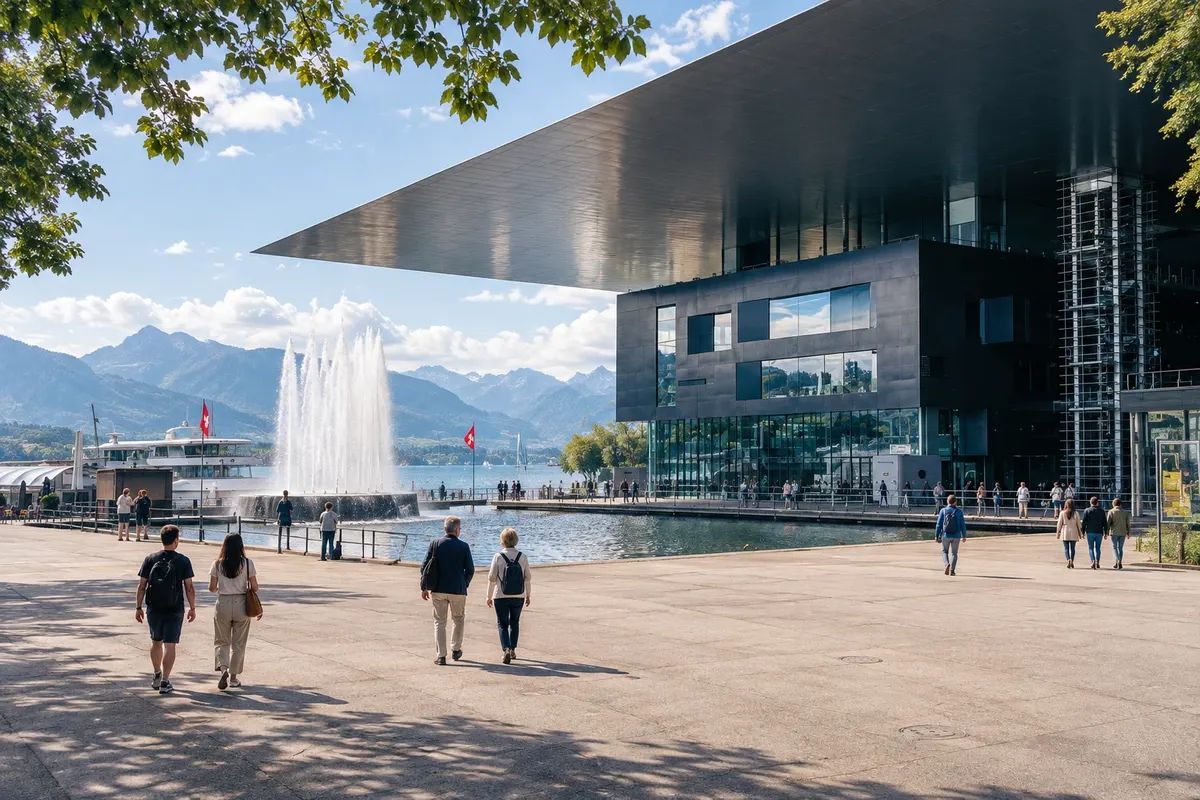
Culture and congress center designed by Jean Nouvel, on the lakeside, with a 45 m cantilevered roof, a concert hall with acoustics by Russell Johnson and the Kunstmuseum Luzern.
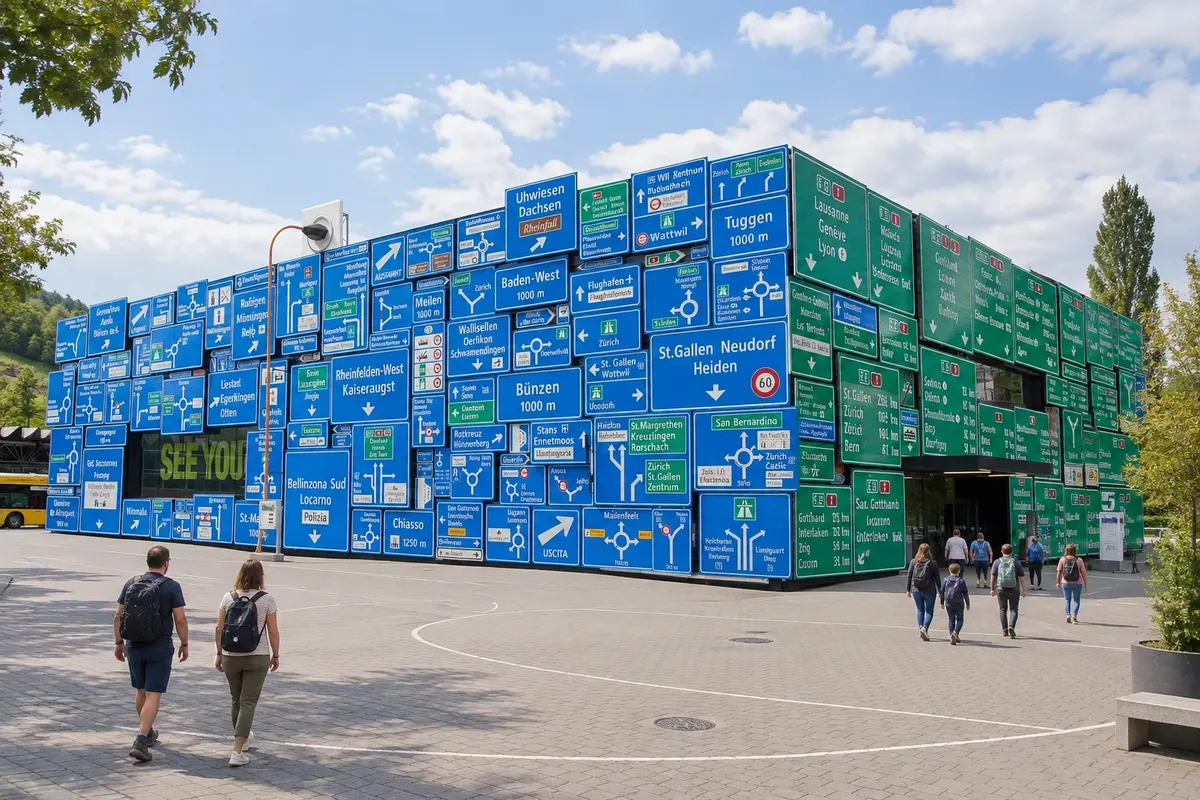
Museu Suíço dos Transportes, opened in 1959 on the lakefront, with trains, cars, airplanes, boats and cable cars, a planetarium, a large-screen cinema and an exhibition about chocolate.
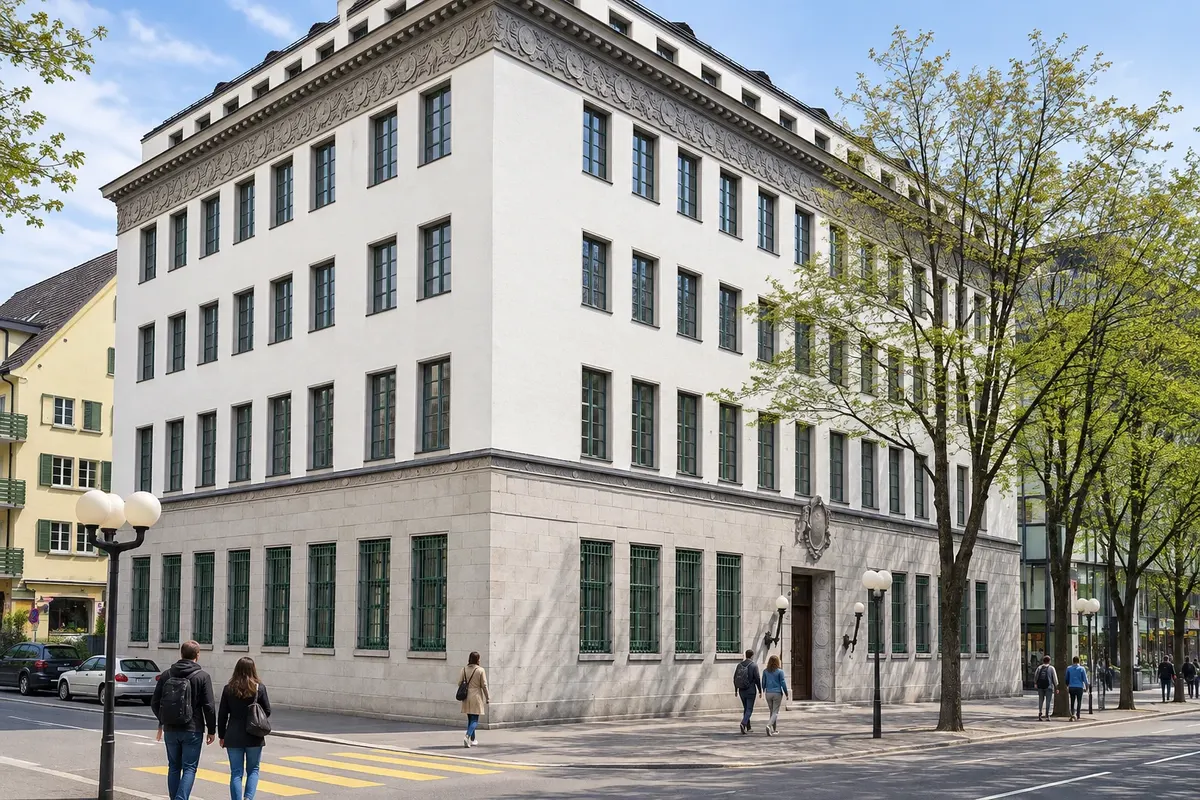
Modern art museum in a former 1922 bank, with around 180 works by Picasso and 125 by Paul Klee, as well as Monet, Pissarro, Seurat and others, gathered by Siegfried and Angela Rosengart.
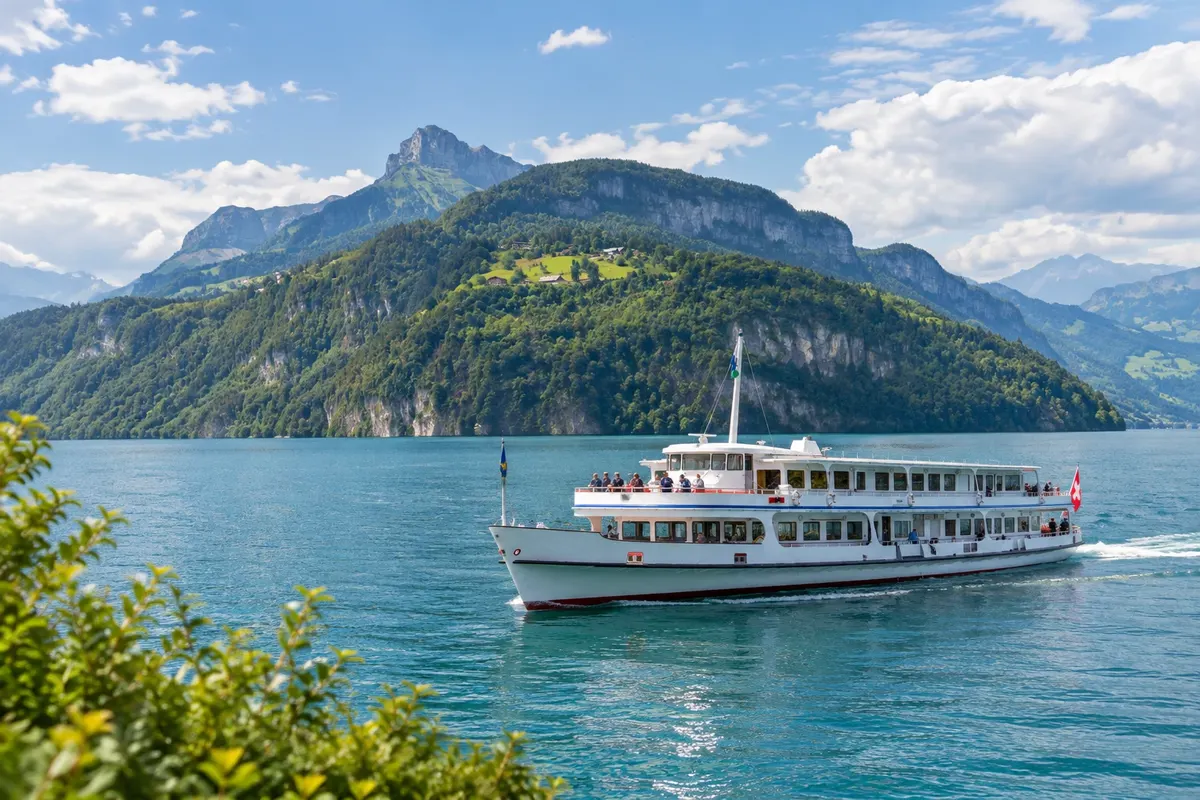
The Lake of the Four Cantons, with indented shores among mountains, is navigated by SGV boats, including five paddle steamers built between 1901 and 1928.
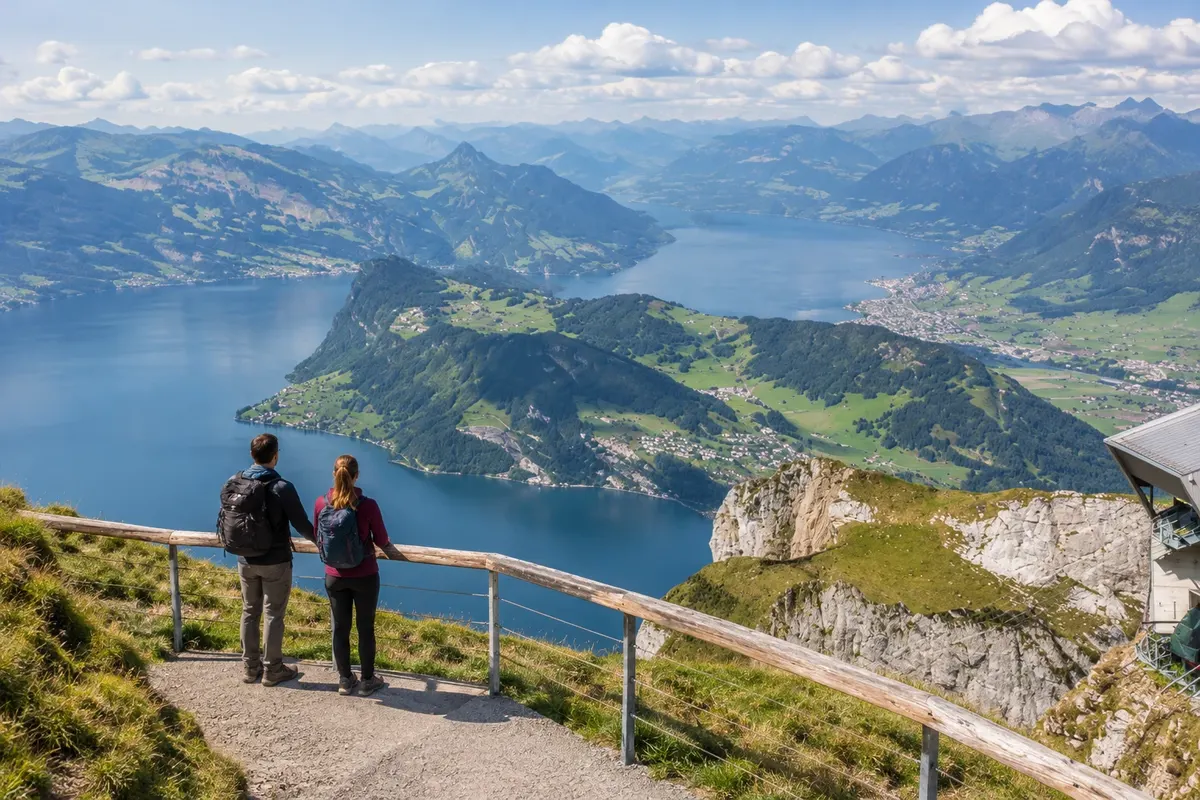
Mountain south of Lucerna, with a cogwheel railway dating from 1889 and gradients up to 48%, the Dragon Ride cable car and a gondola to Kriens; at the top, viewpoints and trails above 2,000 m.
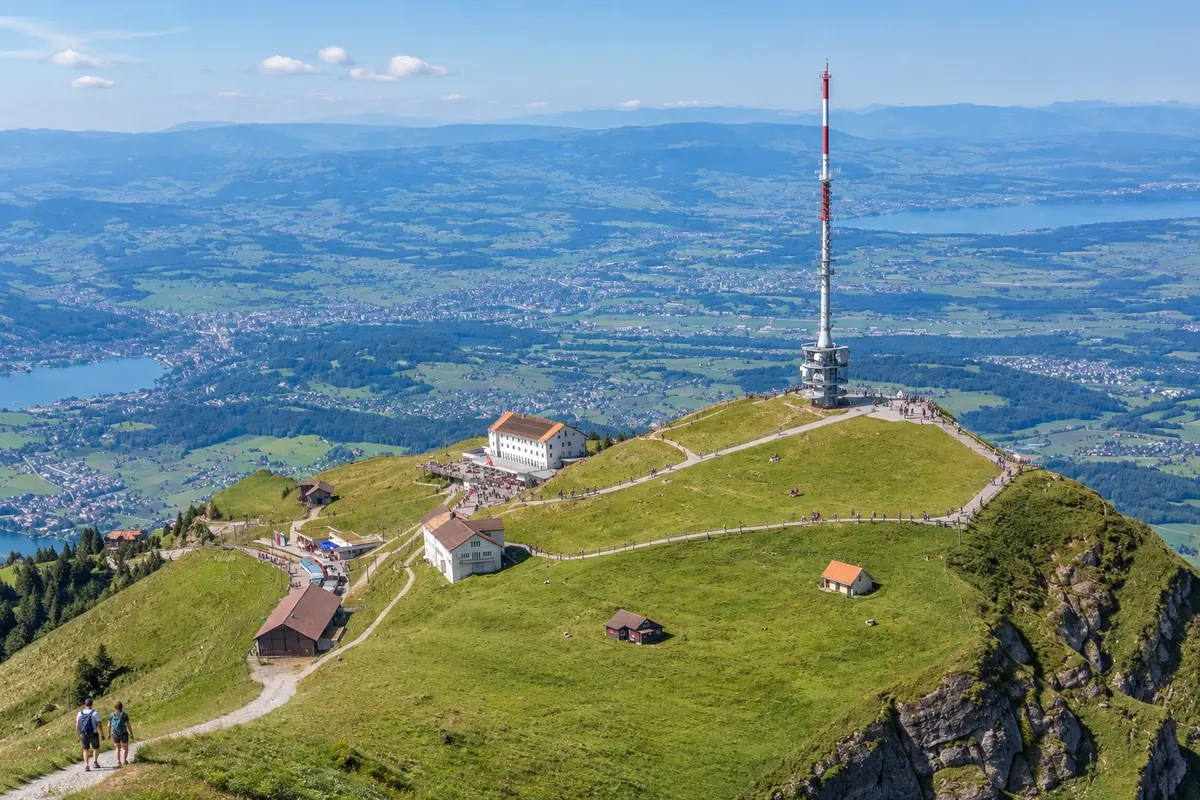
Massif between the lakes of Lucerne, Zug and Lauerz, with its summit at Rigi Kulm, 1,797 m, served by the first mountain railway in Europe, opened in 1871.
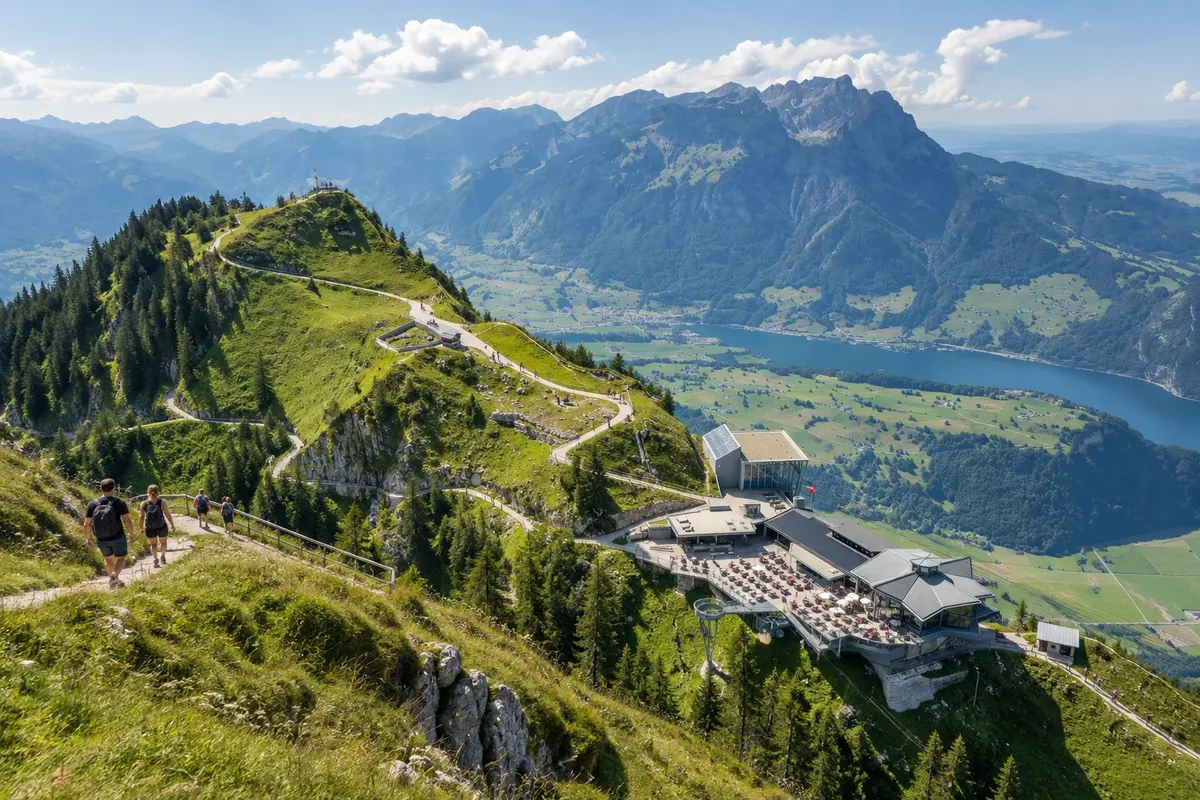
Mountain of 1,898 m above Stans, with a wooden-wagon funicular from 1893 and the CabriO cable car, two-storey with an open top, that reaches the summit where a rotating restaurant is located.
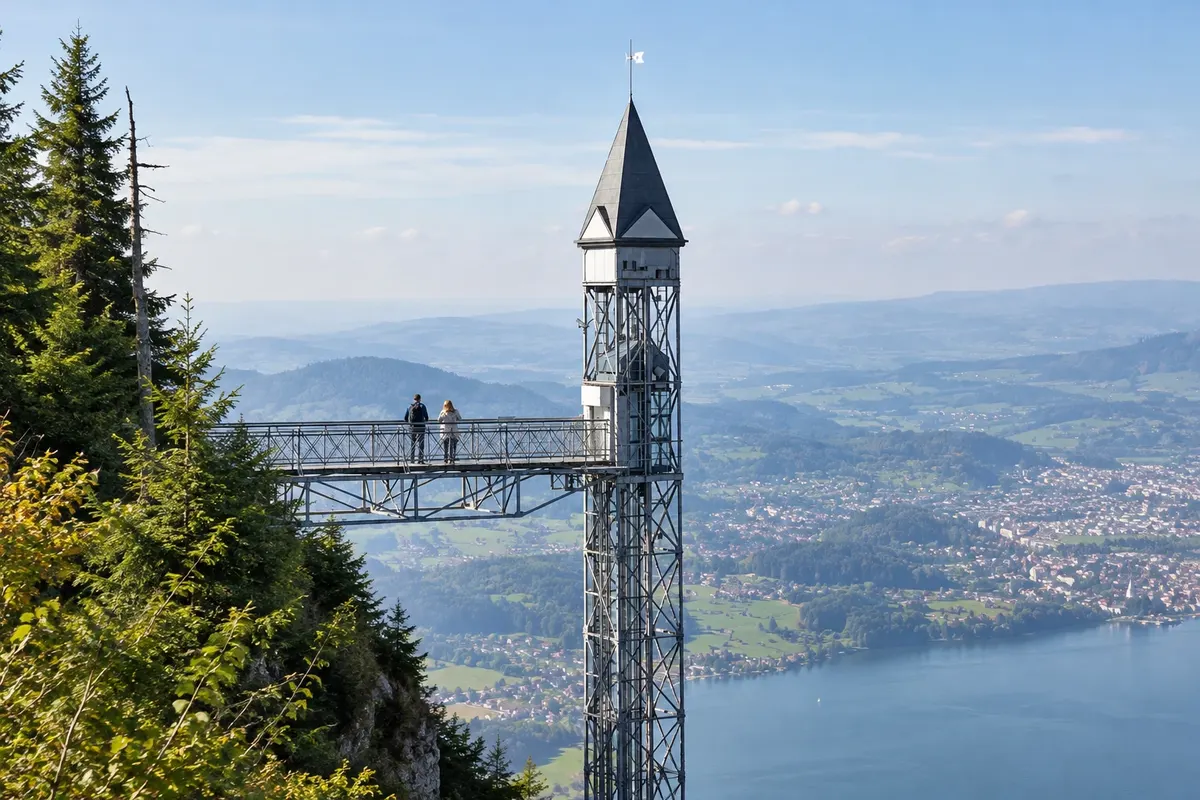
Promontory over the lake, reached by boat and an 1888 funicular, with the Felsenweg path on the slope and the Hammetschwand elevator, which rises 153 m outdoors to 1,132 m.
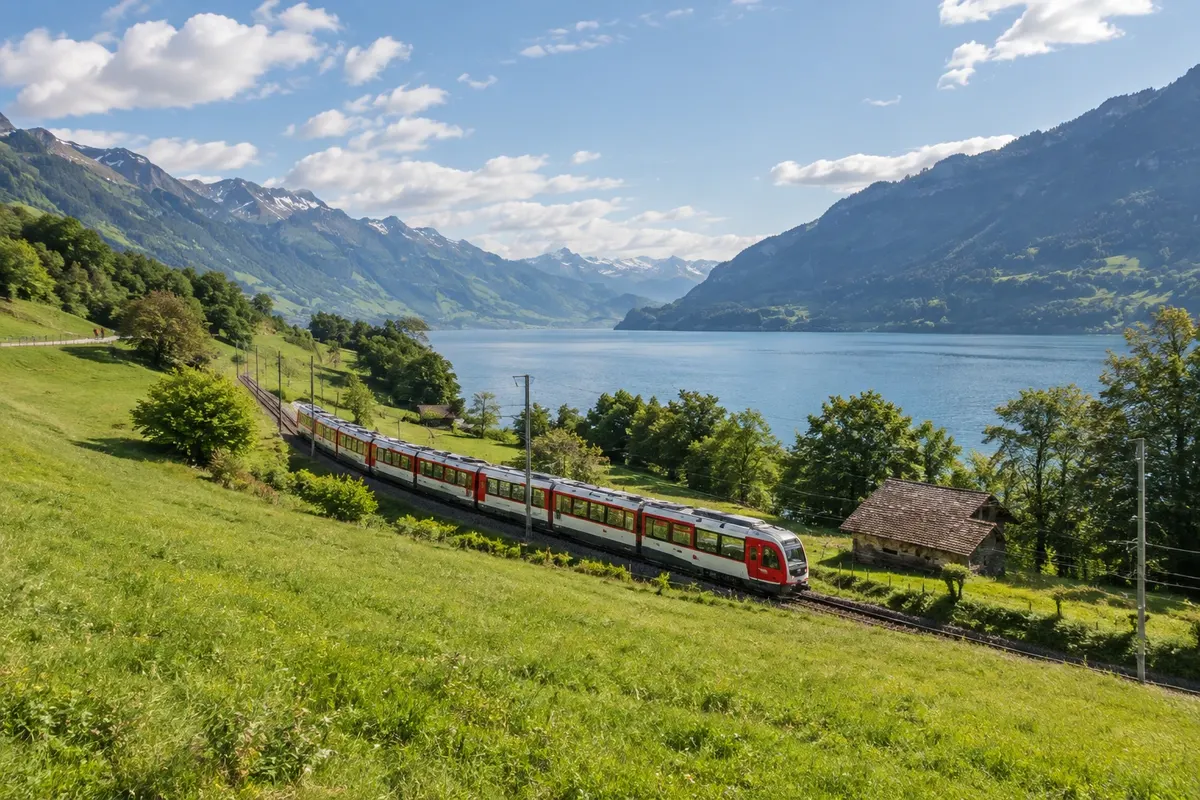
Zentralbahn train that links Lucerne to Interlaken in about 1 hour 50 minutes, climbing the Brünig Pass at 1,008 m and passing Lakes Sarnen, Lungern and Brienz.
Pred odhodom
Lucerne – Lucerne Destinacija Lucerne and the mountains Capital
Razdalje so približne. Pred potovanjem preverite lete in vozne rede avtobusov, vlakov ali ladij.
Zurich Airport (ZRH) is about 70 km away; by train the trip takes about an hour, usually with a change in Zurich. Confirm before booking. From Zurich the train takes about 45 minutes; from Bern, about an hour; from Interlaken, about 1 hour 50 minutes via the Brünig Pass.
One day is enough for the historic centre, the bridges and the Lion. With two days, include Pilatus or Rigi. Three days allow for two mountains, the museums and a boat trip.
From June to September the days are long, boats have more departures and most mountain lifts tend to operate. April, May and October are quieter. In the European winter, from December to February, it is cold, days are short and mist over the lake is common.
The seasons shown are the most usual ones; nature doesn't always follow the calendar.
No. The centre is explored on foot, and trains, boats and buses reach the surrounding mountains. Parking in the centre is difficult, and much of the Altstadt is closed to cars.
Predlog poti
Pot povezuje znamenitosti na tej strani. Za oglede boste imeli dovolj časa.
Cross the Kapellbrücke, look at the Wasserturm and stroll through the Kornmarkt, the Weinmarkt and Hirschenplatz. Continue to the Spreuerbrücke.
Visit the Löwendenkmal and the Gletschergarten. If you go from April to October, climb the towers of the Museggmauer.
Take a short boat trip around the bay from the Bahnhofquai and pass by the KKL on the return.
Dine in the squares of the Altstadt and return via the illuminated Kapellbrücke.
Dan 1
Kapellbrücke, Jesuitenkirche, Altstadt and Spreuerbrücke.
Towers of the Museggmauer (April to October), Löwendenkmal, Gletschergarten and Bourbaki Panorama.
Visit the Hofkirche and walk along the Schweizerhofquai to the KKL.
Attend a concert at the KKL, if there is one, or dine in the Altstadt.
Dan 2
Take the boat to Alpnachstad and ride the cogwheel railway up (May to November).
Hike to the Esel, have lunch at the top and descend via the Dragon Ride and the gondola to Kriens.
Back in Lucerne, visit the Sammlung Rosengart, near the station.
Dine on the riverbank, near the Jesuitenkirche.
Dan 1
Kapellbrücke, Altstadt, Weinmarkt and Spreuerbrücke.
Towers of the Museggmauer, Löwendenkmal, Gletschergarten and Bourbaki Panorama.
Hofkirche and a walk along the lakefront to the KKL.
Dinner in the Altstadt.
Dan 2
Boat to Alpnachstad and cogwheel train to Pilatus.
Dragon Ride and gondola to Kriens; bus back to Lucerne.
Sammlung Rosengart or Kunstmuseum, at the KKL.
Dine near the lake, on the station side.
Dan 3
Boat to Vitznau and cogwheel train to Rigi Kulm.
Hike to Rigi Staffel or Kaltbad and descend via Arth-Goldau or by the Weggis cable car.
If time allows, stop at the Verkehrshaus, on the lakeside, on the way back.
Walk along the quay and the Seebrücke at night.
Check before you go. Opening hours and days change, and places may close for renovations, holidays or events. This itinerary is a suggestion from Cidade Turismo, not a commitment: plan yours by checking directly with each place you intend to visit.
Pred odhodom
They are different cities. Lucerne is smaller, has the medieval centre by the lake and mountains less than an hour away; Zurich is larger, with more museums and urban life. Many travellers stay in Lucerne and do a day trip to Zurich.
Yes. From the station, the bridges, the Altstadt, the Lion and the Museggmauer are less than 20 minutes on foot. For the Verkehrshaus, take a bus, train or boat.
Pilatus has the 48% cogwheel railway and the boat and cable-car circuit; Rigi has views over the lakes and gentle trails. Stanserhorn has the open CabriO cable car, and Titlis, in Engelberg, has a glacier.
Verkehrshaus, Sammlung Rosengart, Gletschergarten, Bourbaki Panorama and a covered boat trip on the lake.
The Luzerner Chügelipastete, a puff pastry filled with meat and mushrooms, and Swiss cheese dishes like fondue and raclette, as well as lake fish.
Rotas entre países
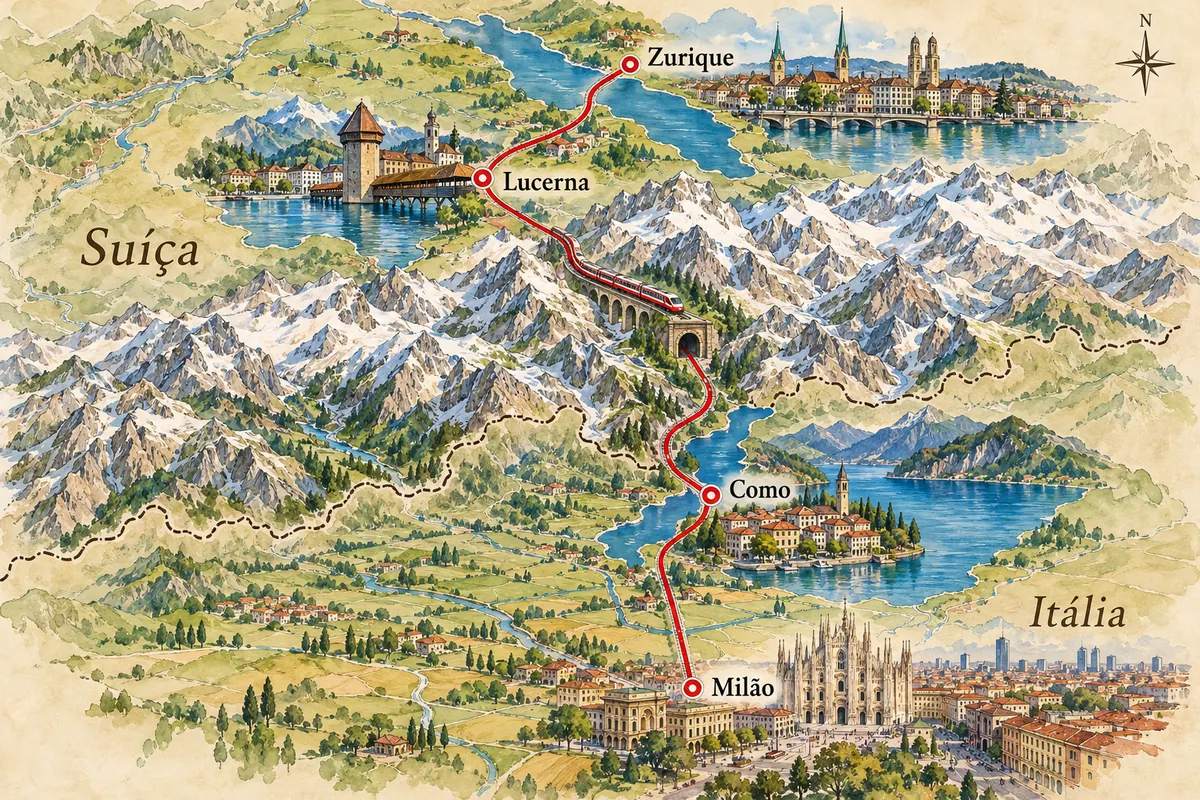
By train from Switzerland to Italy through the Alps: from Zurich to Milan via the Gotthard base tunnel, with Lucerne, Lake Como and, if you have time, the old panoramic mountain line.
Več kot vodnik