Uppsala Cathedral (Uppsala domkyrka)
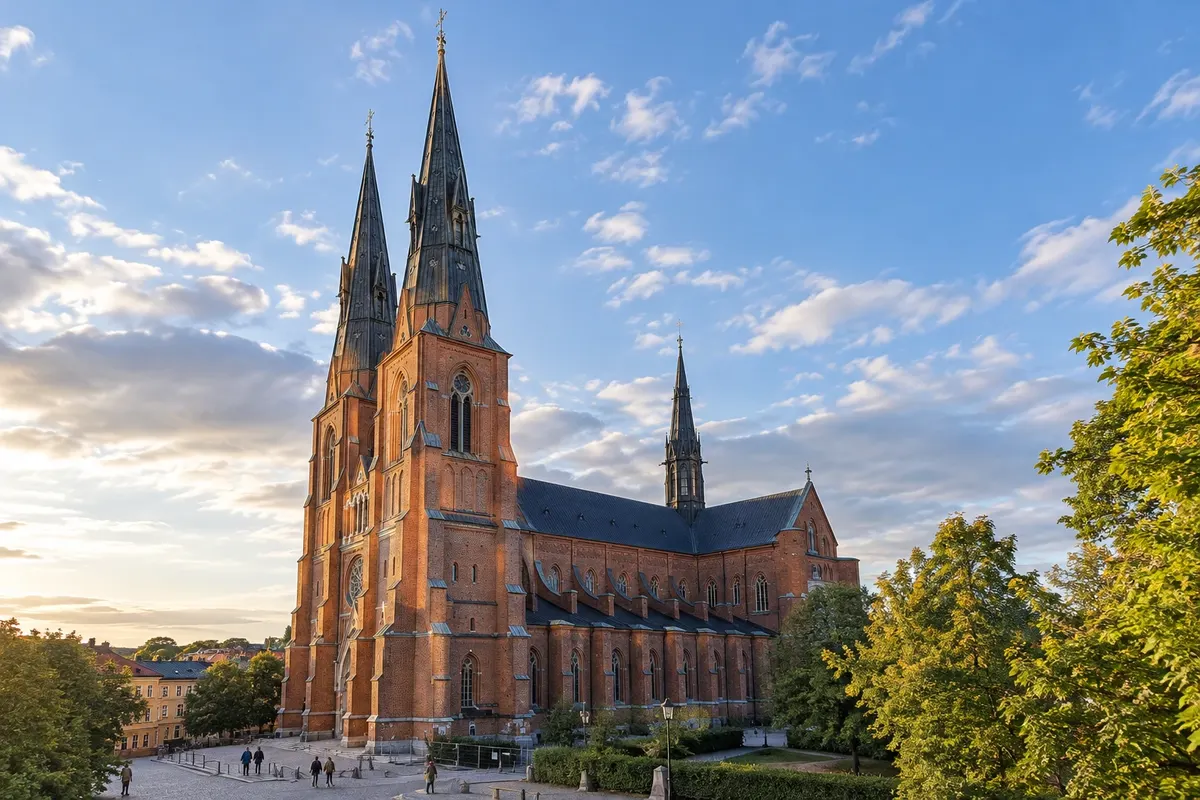
Uppsala's Gothic cathedral, the largest church in Scandinavia, with towers of 118.7 metres: the tombs of King Gustavo Vasa and Lineu, the reliquary of Santo Érico and a treasury museum.
Antarktika
Uppsala · Švedska
The oldest university city in the Nordic countries, 40 minutes by train from Stockholm: the Gothic cathedral, the pink castle, the Gustavianum, the Jardim de Lineu and the royal tombs of Gamla Uppsala.
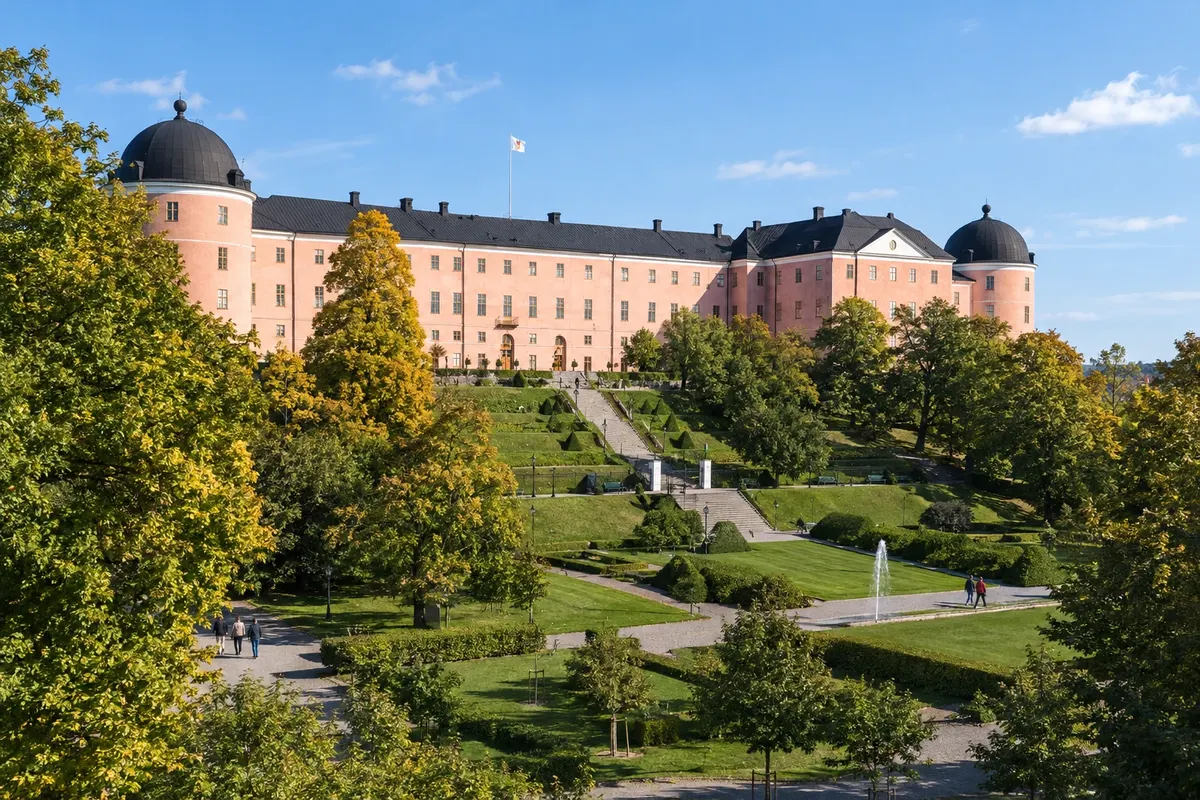
Na fotografiji: Uppsala slott
Illustrative images. The pictures in this guide are illustrations based on the real place, not photographs, and may differ from it.
Spoznajte kraj
Uppsala is 70 km north of Stockholm and about 20 minutes from Arlanda airport. It is Sweden's fourth largest city and revolves around Uppsala University, founded in 1477, the oldest in the Nordic countries. Students on bicycles, academic buildings and the student nations—associations with their own premises and 17th-century traditions—set the pace of the centre.
The river Fyris cuts through the city. On the west bank are the Domkyrka, the Gothic cathedral with pointed towers, the largest church in Scandinavia, where King Gustavo Vasa and the botanist Lineu are buried; the Gustavianum, the university's old building with a 17th‑century anatomical theatre; the Universitetshuset, with the ceremonial hall; and the Carolina Rediviva library, which houses the Bíblia de Prata, a 6th‑century Gothic manuscript. On the hill above, Gustavo Vasa's pink castle overlooks the city and the Jardim Botânico.
Lineu, the scientist who created the system of scientific names for species, lived and taught here. The garden he laid out, the Linnéträdgården, was rebuilt according to the original plans beside the house where he lived, now a museum. Five kilometres from the centre, Gamla Uppsala contains three large royal mounds from the 5th and 6th centuries, a medieval church and a museum about the pre‑Viking and Viking eras, when it was the religious centre of the Swedes.
Uppsala works well as a day trip from Stockholm, but it also makes a good first or last night of a trip because of its proximity to Arlanda. On the last day of April, Valborg gathers thousands of students in the streets and on the river to celebrate the arrival of spring.

V vodniku še ni nastanitev – Uppsala.
kako do tja · koliko dni · načrt poti · vprašanja
✈ Aeroporto de Estocolmo-Arlanda (ARN), kraj: Sigtuna· 35 km do cilja (Uppsala)
Check before you buy. Uppsala is about 20 minutes by train from Arlanda airport and about 40 minutes from Stockholm Central Station, with frequent trains throughout the day. Uppsala station is in the centre, a 10‑minute walk from the cathedral.
Doživite kraj
Uppsala's Gothic cathedral, the largest church in Scandinavia, with towers of 118.7 metres: the tombs of King Gustavo Vasa and Lineu, the reliquary of Santo Érico and a treasury museum.
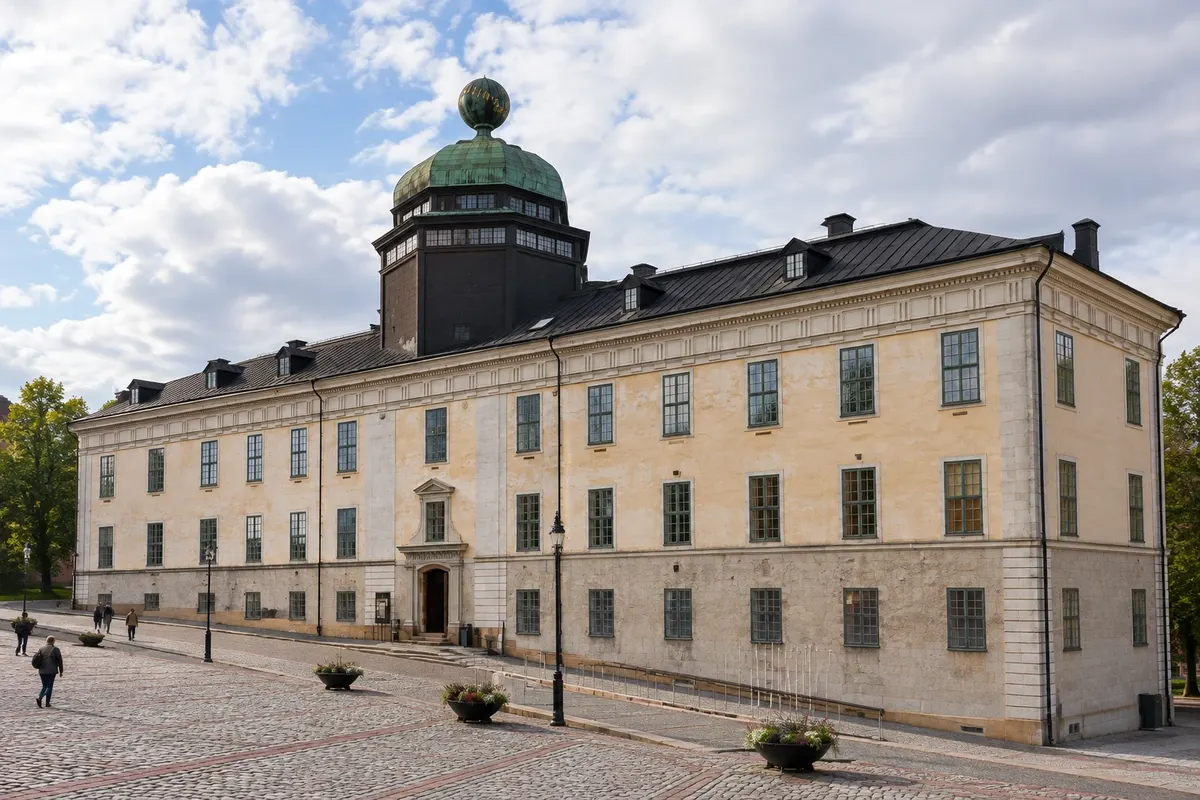
The museum of Uppsala University, in a 1620 building with a dome: the anatomical theatre of 1663, the Augsburg cabinet of curiosities, instruments of Celsius and Viking finds.
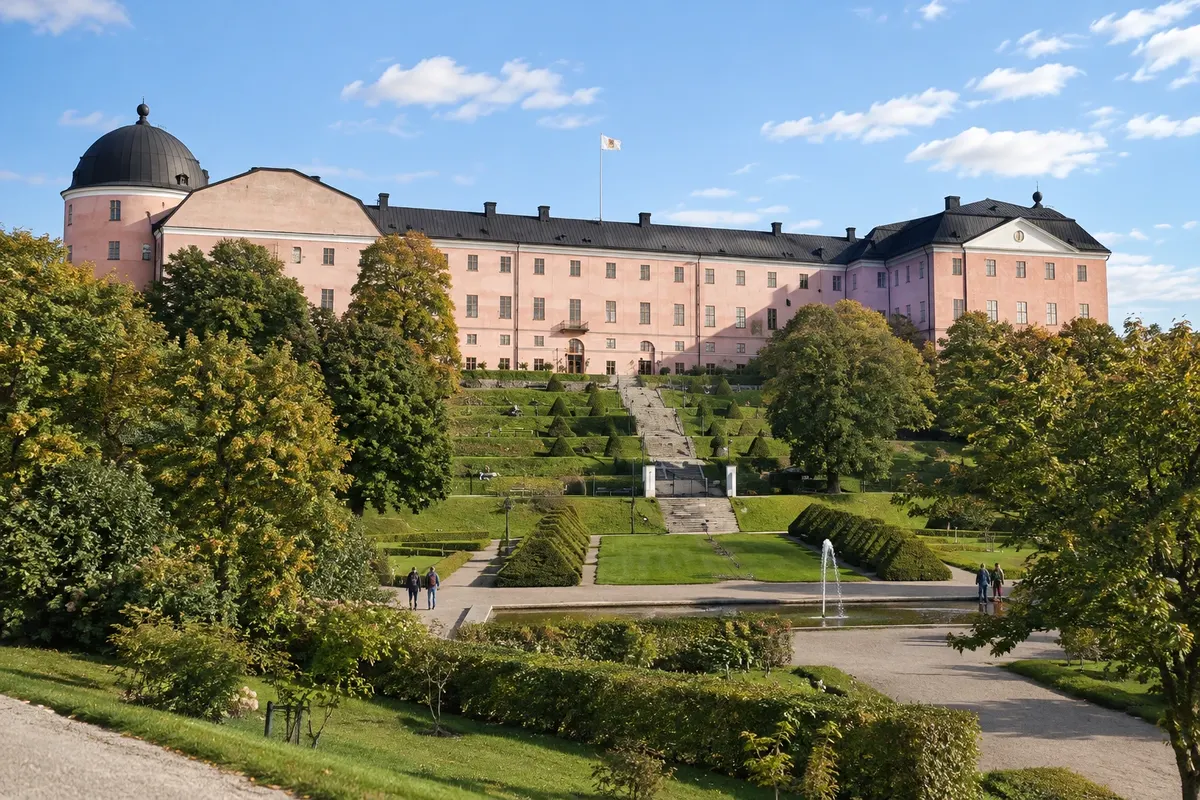
The pink castle of Uppsala, begun by Gustavo Vasa in 1549, on the hilltop above the city: cannons aimed at the cathedral, the bell Gunilla and the city's art museum.
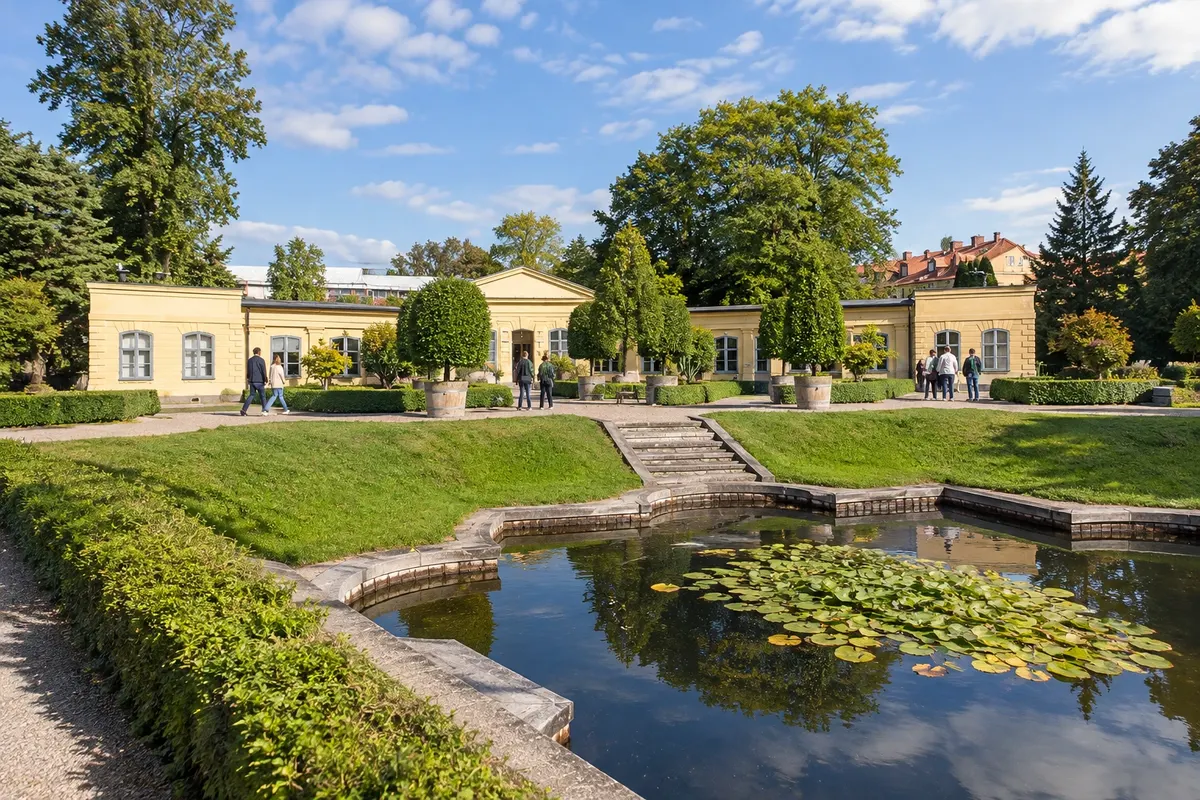
The botanical garden that Carl Lineu ran in the 18th century, rebuilt according to his plans, with about 1,300 species in beds arranged according to his system, and the house where he lived, now a museum.
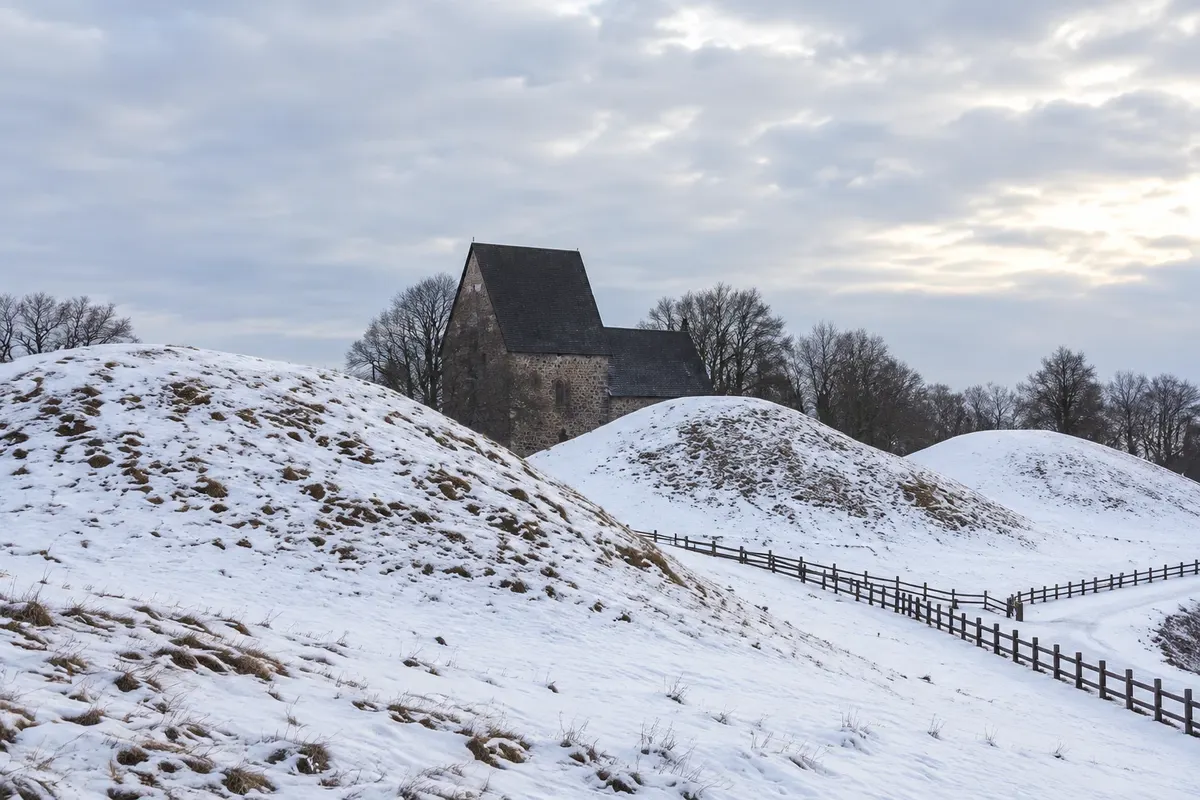
The old religious and royal centre of the Swedes, 5 km from the centre: three large burial mounds from the 5th and 6th centuries, a 12th-century church and a museum about the pre-Viking and Viking eras.
Kaj izbrati pred odhodom
Izhodišče, trajanje, potek, vključene storitve in okvirna cena vsakega izleta.
The cathedral and the university museum are located in Uppsala's old town. Visit them in sequence and then walk down to the river. The route combines religious history with collections linked to education.
Kraji na poti: Uppsala domkyrka, Gustavianum.
Leave the center by bus to the area of the burial mounds. The museum helps interpret the landscape and the archaeological remains. Stay on the designated paths when walking around the mounds.
Kraji na poti: Gamla Uppsala.
Po dnevih
Predlogi za načrtovanje poti. Vrstni red dni prilagodite vremenu in razpoložljivosti izletov.
Visit Uppsala domkyrka and Gustavianum, which are close to each other. Then walk through the city center along the Fyrisån River. Combine indoor visits according to opening times.
Go up to the area around Uppsala slott and reserve the afternoon for the botanical garden. The gardens and the museum rooms have different access arrangements; check what you want to visit.
Start at Linnéträdgården when the visiting season allows. Then take a bus to Gamla Uppsala, allowing time for the museum and the burial mounds.
Najboljši čas za obisk
From May to September, when the Jardim de Lineu is usually open and the days are long. Valborg, on April 30, fills the city with students. In winter, from November to March, it's cold, it gets dark early and the garden closes, but the cathedral and museums remain open.
The seasons shown are the most usual ones; nature doesn't always follow the calendar.
January · cold winter
Winter is typically cold with short days; rain and snow can alternate. To plan your day, prioritize the cathedral and the university and schedule outdoor activities around the daylight hours.
February · cold winter
February generally remains cold, with daylight slowly increasing. To plan your day, prioritize the cathedral and the university and schedule outdoor activities around the daylight hours.
March · season transition
Early spring is usually chilly and changeable. To plan your day, prioritize the castle and the garden and schedule outdoor activities around the daylight hours.
April · season transition
April tends to have longer days, but mornings are often still cold. To plan your day, prioritize the castle and the garden and schedule outdoor activities around the daylight hours.
May · season transition
May typically brings milder temperatures and plenty of daylight. To plan your day, prioritize Linnaeus and Gamla Uppsala and schedule outdoor activities around the daylight hours.
June · mild summer
June is usually mild, with very long days and short nights. To plan your day, prioritize Linnaeus and Gamla Uppsala and schedule outdoor activities around the daylight hours.
July · mild summer
July is often one of the mildest months; it also tends to have rain. To plan your day, prioritize the cathedral and the university and schedule outdoor activities around the daylight hours.
August · mild summer
August usually maintains mild temperatures, with nights gradually getting longer. To plan your day, prioritize the cathedral and the university and schedule outdoor activities around the daylight hours.
September · season transition
September typically brings falling temperatures and fewer daylight hours. To plan your day, prioritize the castle and the garden and schedule outdoor activities around the daylight hours.
October · season transition
October is usually cold and wet, with autumn well underway. To plan your day, prioritize the castle and the garden and adjust outdoor activities to the daylight hours.
November · season transition
November usually has short days, cold weather, and a chance of snow. To plan your day, prioritize Linnaeus and Gamla Uppsala and adjust outdoor activities to the daylight hours.
December · cold winter
December is usually cold, with limited daylight and precipitation as rain or snow. To plan your day, prioritize Linnaeus and Gamla Uppsala and schedule outdoor activities around the daylight hours.
Načrtujte pot
The center is compact. Local buses make Gamla Uppsala accessible; Linnaeus's garden and the area around the cathedral can be combined on foot.
Pred odhodom
Z nekaj načrtovanja boste imeli več časa za uživanje na poti.
From May to September, when the Jardim de Lineu is usually open and the days are long. Valborg, on April 30, fills the city with students. In winter, from November to March, it's cold, it gets dark early and the garden closes, but the cathedral and museums remain open.
The seasons shown are the most usual ones; nature doesn't always follow the calendar.
One day is enough for the cathedral, the Gustavianum, the castle and the Jardim de Lineu. With one night you have the following morning for Gamla Uppsala and a walk along the river Fyris. Many people do day trips from Stockholm.
The centre, between the station and the river Fyris, concentrates hotels, just steps from the cathedral and the museums. Hotels near the station are most convenient for travellers heading to Arlanda. The west bank, beside the cathedral and the castle, is quieter and full of university buildings. Gamla Uppsala, further out, has few options.
Odnesite svoje odpadke, upoštevajte oznake in podprite lokalne ponudnike. V naravi upoštevajte navodila za obiskovalce.
Odgovori na vaša vprašanja
Yes. The train takes about 40 minutes and runs several times an hour. In one day you can see the cathedral, the Gustavianum, the castle and the Jardim de Lineu; Gamla Uppsala needs about two extra hours.
Yes, about 20 minutes by train. That's why it's an option for the first or last night of a trip.
No. The centre is walkable and there are city buses to Gamla Uppsala. Bicycles are the locals' means of transport.
From May to September, when the Jardim de Lineu is open. Valborg, on April 30, is the liveliest festival in the city, with students floating down the river on improvised rafts.
Carl Lineu was the 18th‑century botanist who created the system of giving scientific names to species, using genus and species. He was a professor in Uppsala, and the city preserves the garden he ran, the house where he lived and his tomb in the cathedral.
Več kot vodnik