Cascais town centre and Boca do Inferno
Odhod: Cascais station on foot Približno 3 ure Dopoldne ali popoldne Lahko
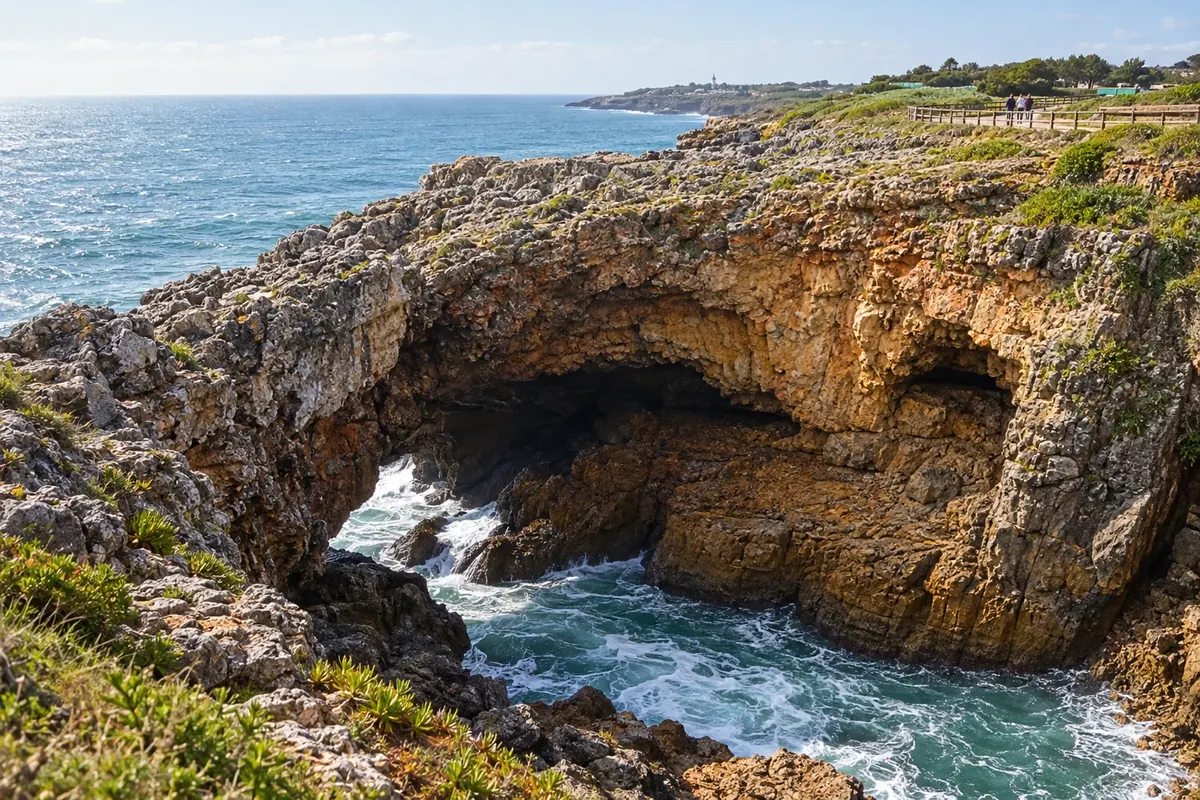
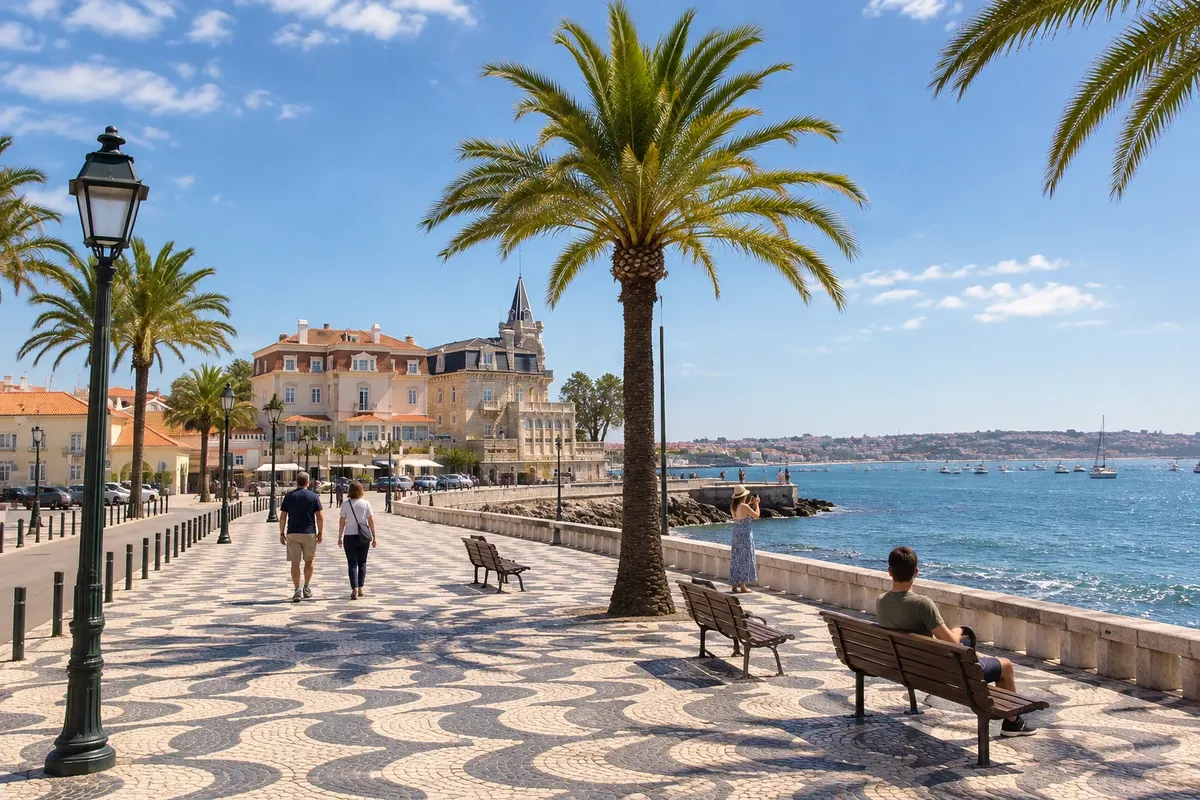
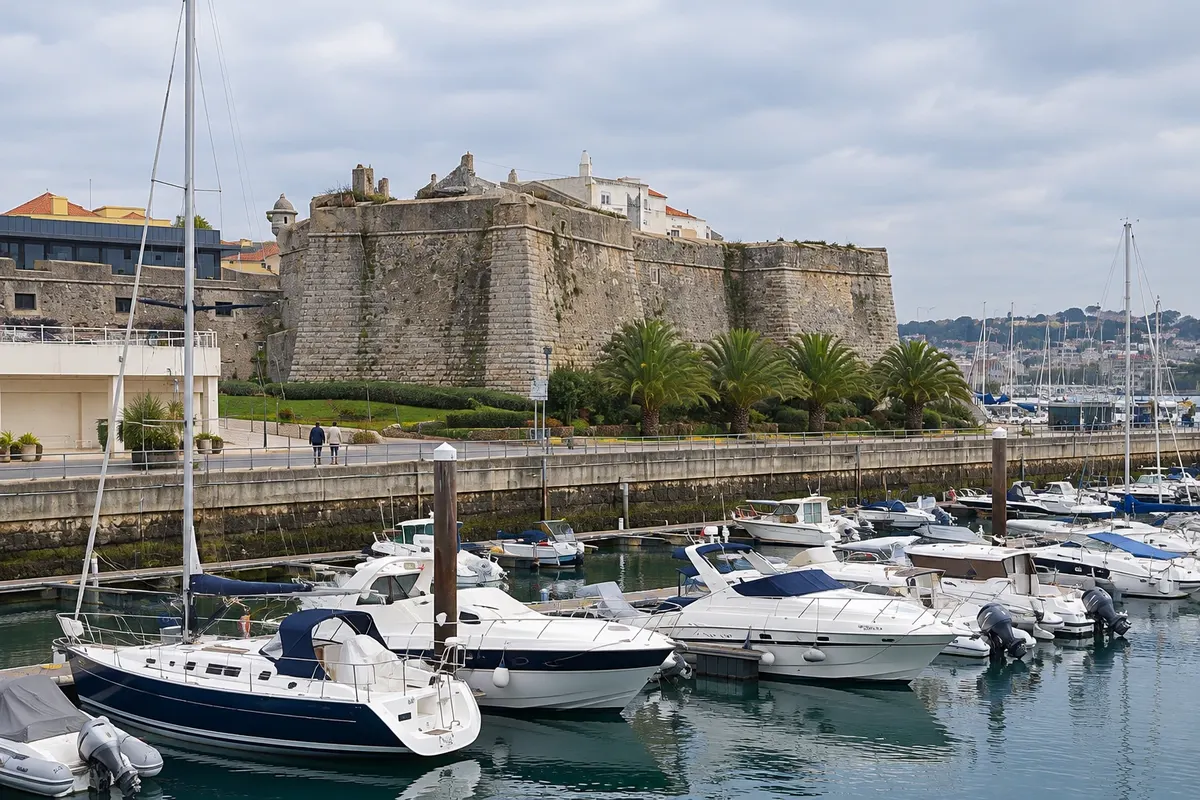
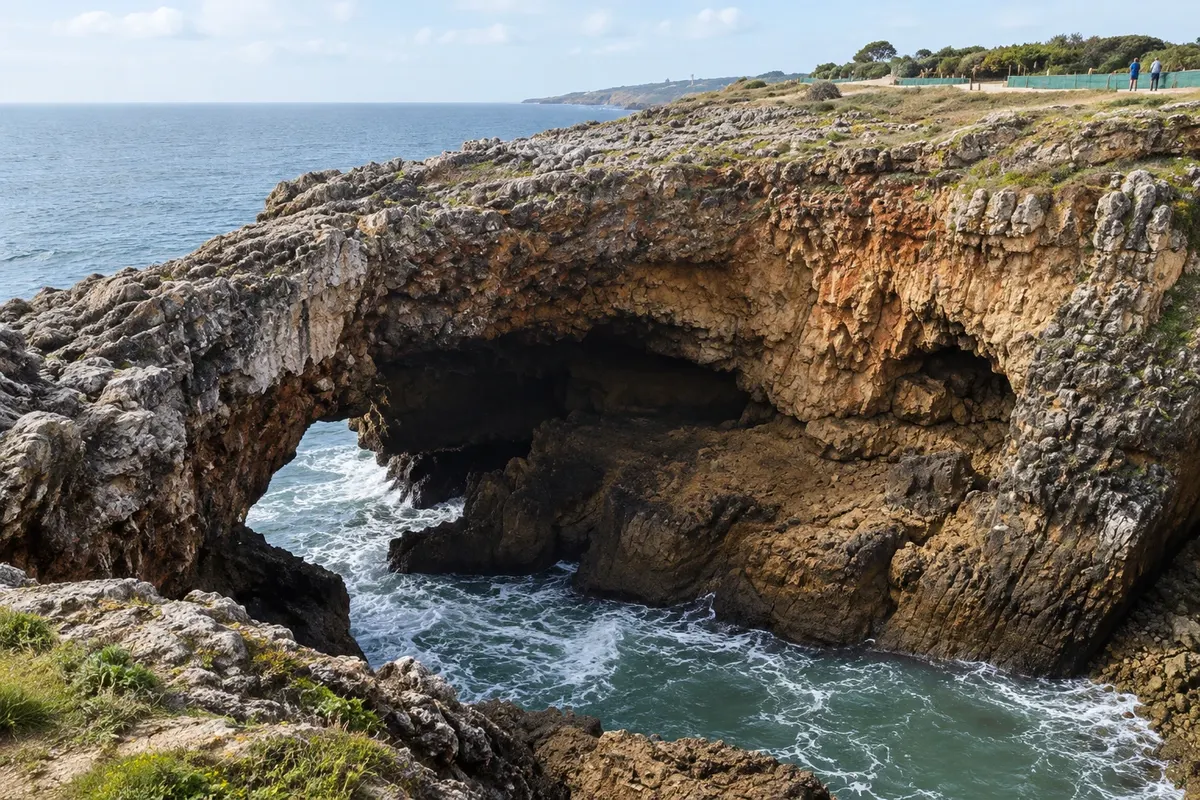
Cascais was a fishing village and became a summer resort for the court when King D. Luís I chose it as his summer residence at the end of the 19th century. The walk starts at the train station (comboio), next to Praia da Conceição and Praia da Rainha, and continues along the cobbled streets of the historic centre, with low houses, Portuguese pavement in wave patterns, shops and restaurants. Further on are the Citadel of Cascais, a 16th–17th century fortress that houses the Citadel Museum, and Cascais Marina. Following the seafront westward, about 2 km from the centre, you reach Boca do Inferno: a crack in the cliff rocks where the sea enters and breaks. On calm days the spectacle is small; with a rough sea the waves rise high. There are fenced viewpoints, and the coastal walk takes about 20 minutes from the centre. Cascais has a seaside town pace, and is a good base for anyone who wants to sleep near the sea and go to Sintra by bus.
Kraji na poti: historic centre of Cascais, Praia da Conceição, Citadel of Cascais, Cascais Marina, Boca do Inferno.
Vključuje: Walking tour of the center and the coast; museums with separate admission fees.
Nasvet: At Boca do Inferno, stay on the fenced viewpoints and away from wet rocks. The coastal path to there is the start of the Guincho bike path, so you can link the two outings.
Najboljši čas za obisk: All year; May to October for the central beaches.
Cascais–Guincho cycleway and Praia do Guincho
Odhod: Cascais town centre bike, on foot or bus about 3 to 4 hours (round trip) Dopoldne easy to moderate (headwind)
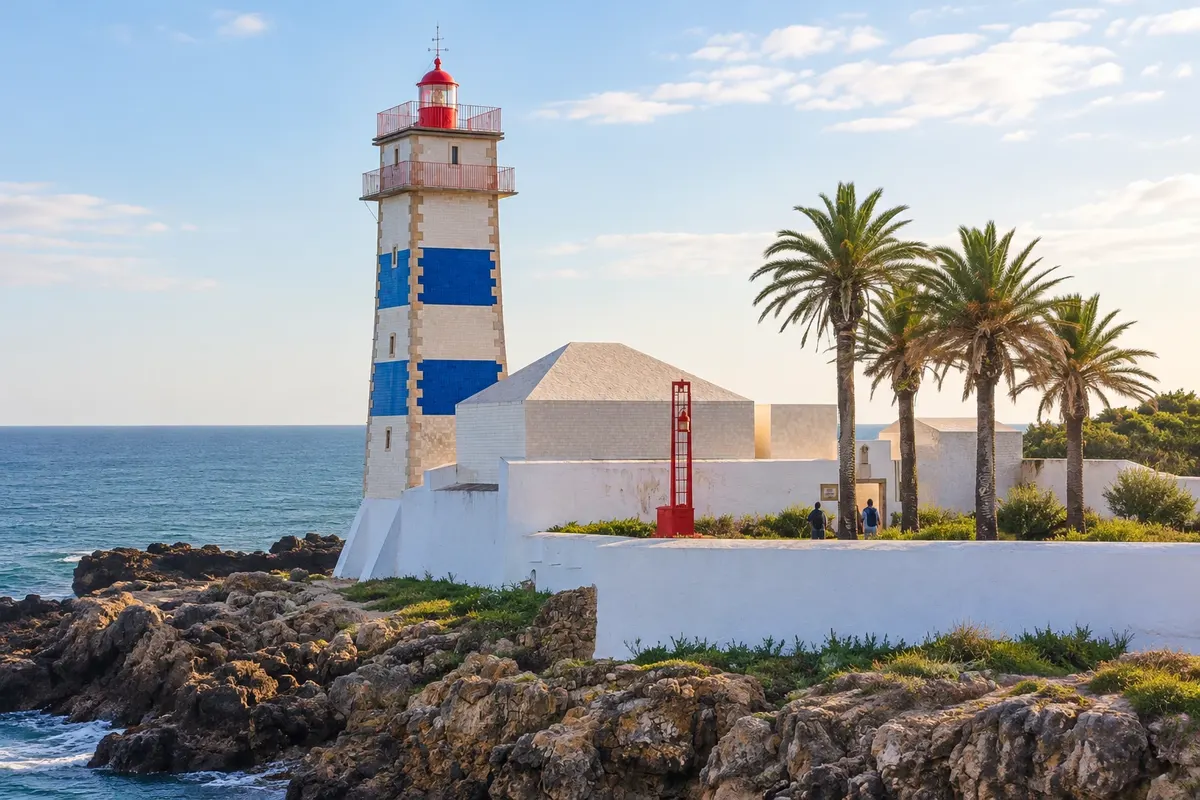
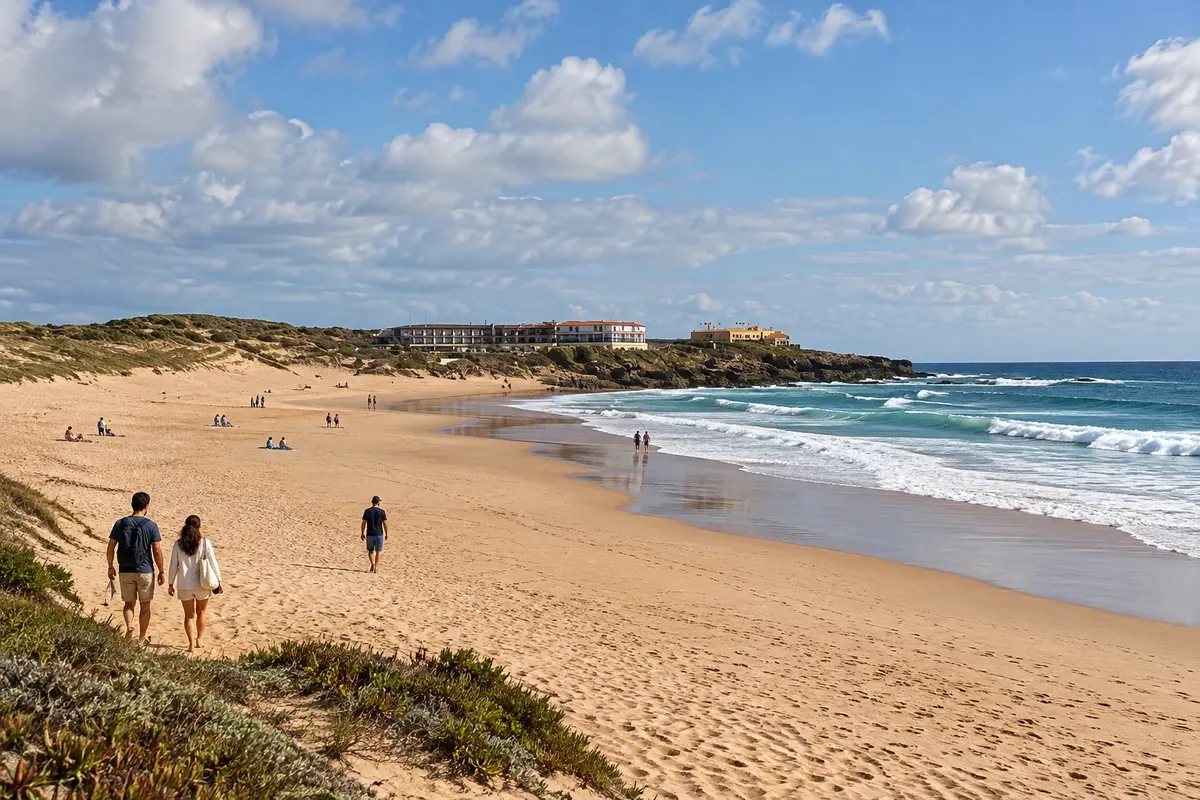
The cycleway that links Cascais to Praia do Guincho is about 9 km. It starts next to the Farol de Santa Marta, near the marina, and follows the seafront, passing Boca do Inferno and a low-rock coastline with the Serra de Sintra in the background. It is flat for most of the route, but the wind often blows strongly head-on on the outbound or return leg. At the end, Praia do Guincho is a long beach, open to the Atlantic and surrounded by dunes, inside the Sintra-Cascais Natural Park. Because of the wind and waves it is a well-known spot for surfing, windsurfing and kitesurfing, and the sea is often rough for swimming. Beside it is the Duna da Cresmina, with a wooden boardwalk of about 1 km that crosses the dunes and explains the vegetation. Those who do not cycle can do sections on foot or take a bus to Guincho and return via the cycleway.
Kraji na poti: Cascais–Guincho cycleway, Farol de Santa Marta, Boca do Inferno, Praia do Guincho, Duna da Cresmina.
Vključuje: Cycle lane is open. Bicycle rental, when used, is paid separately; Cascais municipality has a bike system with docking points in the centre (check the rules).
Nasvet: Start in the morning, when the wind is usually weaker. Bring water, sunscreen and a windbreaker. At Guincho, respect the lifeguards' flags and enter the sea only in a supervised area.
Najboljši čas za obisk: May to October; in winter the wind and cold are stronger.
Convento dos Capuchos
Odhod: Sintra car, taxi or bus around 1 hour and a half Dopoldne ali popoldne easy (low doorways)
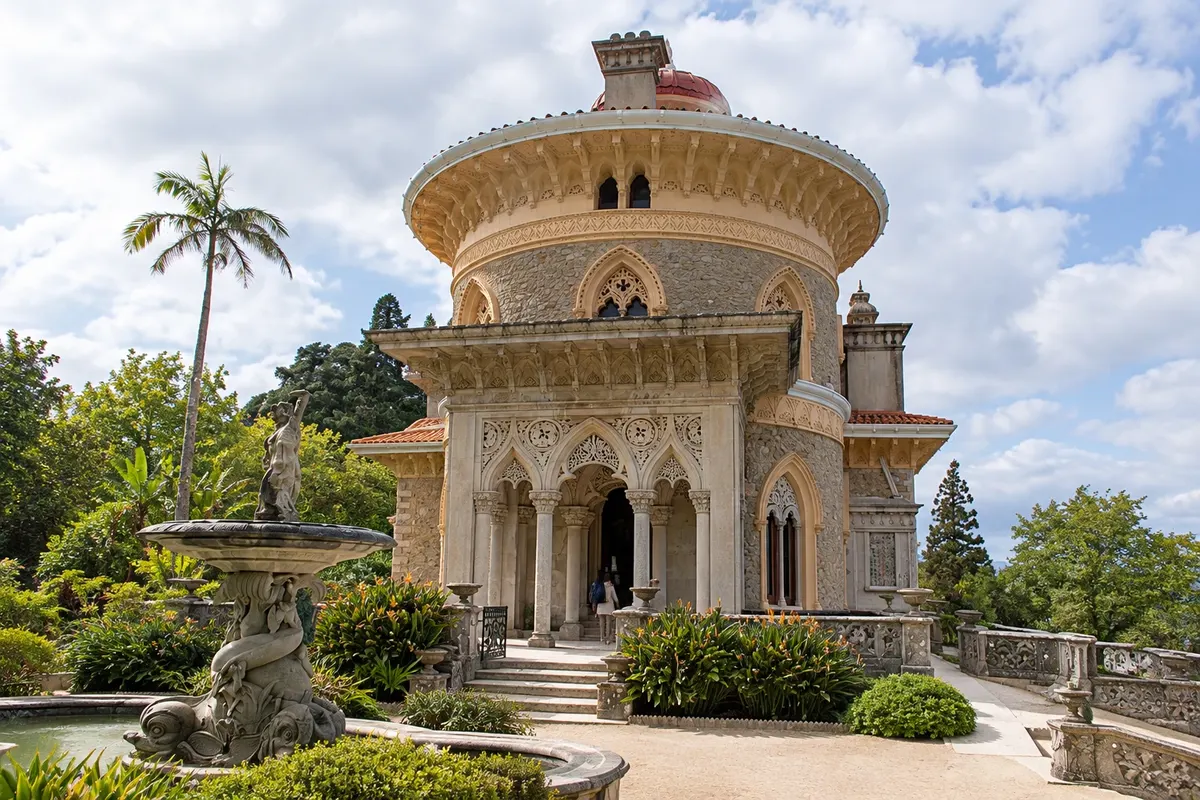
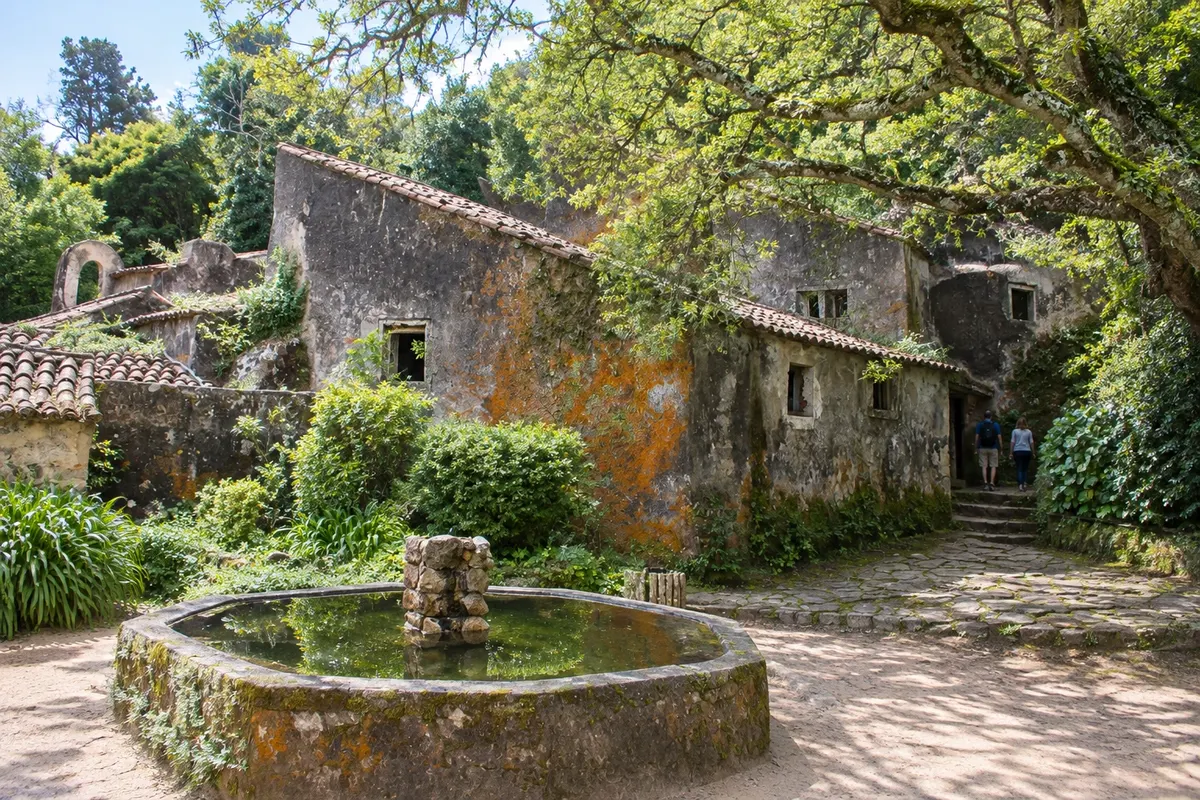
The Convento dos Capuchos lies isolated in the middle of the Serra de Sintra forest, on the route between Sintra and Cabo da Roca. It was founded in 1560 by D. Álvaro de Castro and handed over to Franciscan friars who lived in extreme poverty. The convent is small and was built among the rocks, with tiny cells, doors so low you must stoop, and narrow corridors. Cork was used to line doors, ceilings and walls, which is why it is also called the Convento da Cortiça. The visit follows the entrance courtyard, the chapel, the refectory, the kitchen and the Corridor of the Cells, and ends in the surrounding woods, with moss-covered rocks. It is the opposite of the mountain palaces: silence, stone and wood. It is part of the Cultural Landscape of Sintra, a UNESCO World Heritage Site.
Kraji na poti: Convento dos Capuchos, Corridor of the Cells, Serra de Sintra.
Vključuje: Admission fee not included; check the current price list.
Nasvet: The bus there usually has few departures: by car or taxi the outing is simpler, and it pairs well with Cabo da Roca on the same day. Tall people and those with knee problems should take care in low-clearance passages.
Najboljši čas za obisk: Open year-round; there is less crowding in spring and autumn and the woods become greener.
Praia da Ursa, Praia da Adraga and Azenhas do Mar
Odhod: Sintra car (the bus serves only part of the route) full day morning and afternoon difficult at Ursa; easy at the others
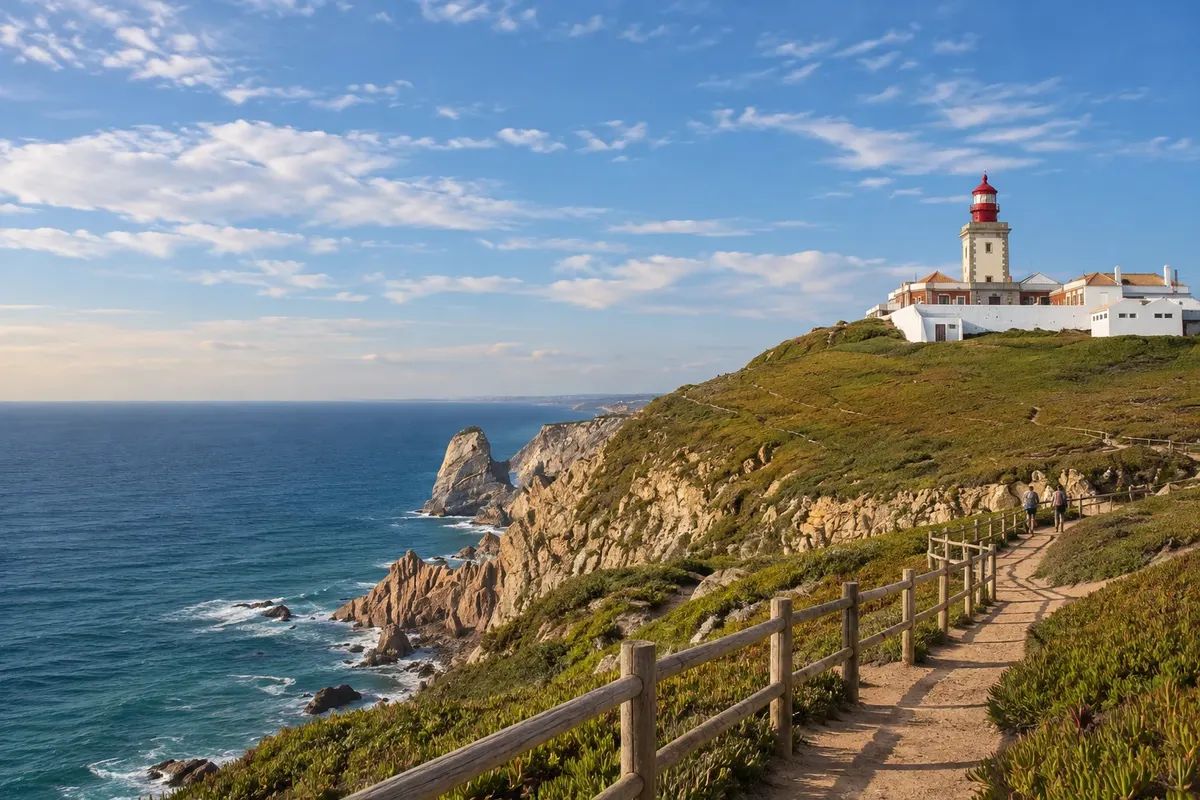
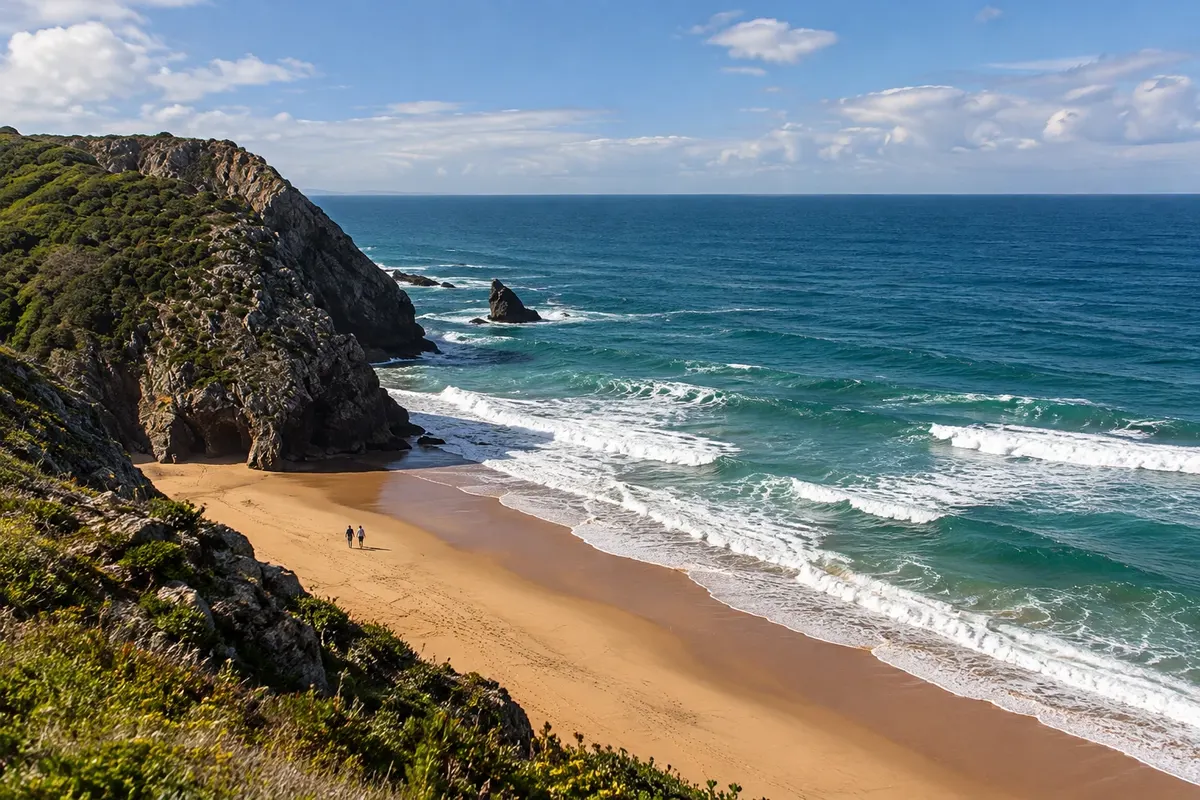
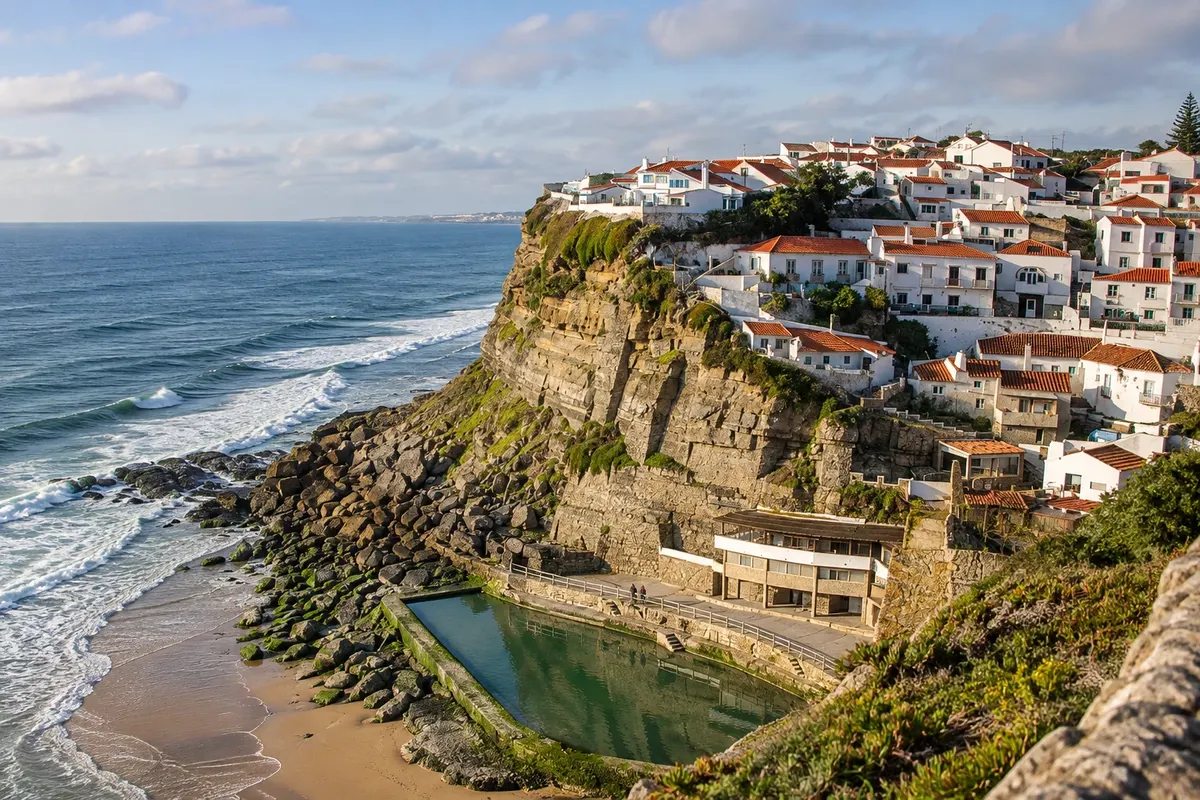
The coast of Sintra north of Cabo da Roca has high cliffs and small beaches between rocks. Praia da Ursa is the most photographed: its name comes from a rock formation shaped like a bear. Access is via a steep dirt trail that descends the cliff from a parking area near Cabo da Roca; the return climb is tiring. Praia da Adraga, further north, has road access down to the sand, stone arches and caves, and is popular for watching the sunset. Continuing north past Colares brings you to Azenhas do Mar, a village of white houses on the cliff, with a viewpoint offering a full view of the village. Below there is an ocean pool that fills with the tide; swimming depends on sea conditions and local permission. Between Ursa and Adraga there is also a coastal trail for those who like to hike. The sea on this coast is open and cold, even in summer.
Kraji na poti: Praia da Ursa, Praia da Adraga, Azenhas do Mar, Colares.
Vključuje: Access to the beaches open. Parking and restaurants are paid separately.
Nasvet: Do not descend to Praia da Ursa wearing flip-flops or in the rain: the path is loose dirt and very steep. Enter the sea only in a lifeguarded area with a green flag. In Azenhas do Mar, the viewpoint is on the road before the descent to the village.
Najboljši čas za obisk: June to September for the beach; spring and autumn for walking and photography.
Cascais–Estoril promenade and Estoril Casino
Odhod: Cascais or Estoril station on foot Približno 2 uri Popoldne Lahko
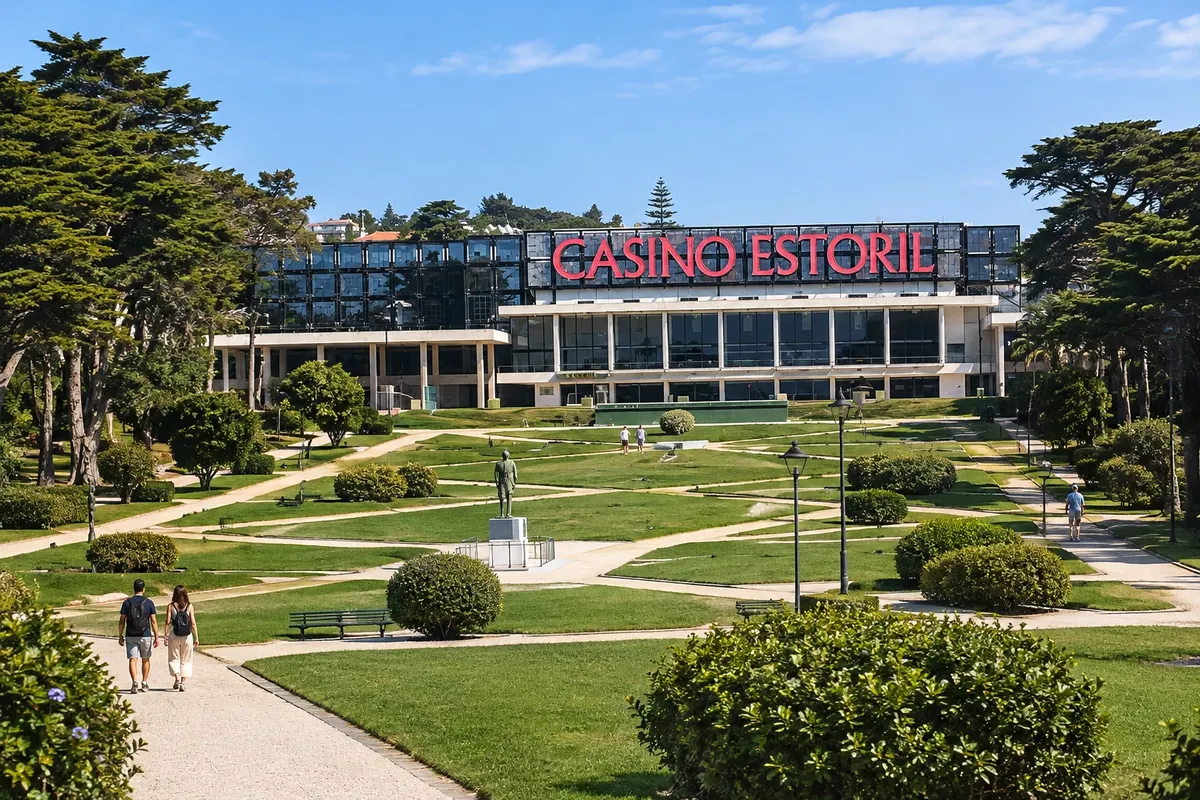
The paredão is a seaside promenade about 2.7 km long, between Praia da Conceição in Cascais and Praia da Azarujinha in Estoril. On one side are small sandy beaches; on the other, restaurants, bars and buildings facing the sea. It’s where locals walk and run, and the simplest way to go from Cascais to Estoril without taking transport. Midway is Praia do Tamariz, opposite the Jardim do Casino, an avenue of palm trees that rises to Casino Estoril. Estoril was a refuge for exiled royal families and a meeting point for diplomats and spies during World War II; the casino is linked to the creation of Ian Fleming’s first James Bond novel. Today the casino operates with gaming rooms, shows and restaurants, and the garden in front is open to visitors. The train (comboio) from Lisbon stops at several stations along the paredão, so you can walk one way and return by train.
Kraji na poti: Cascais–Estoril promenade, Praia da Conceição, Praia da Azarujinha, Praia do Tamariz, Estoril, Casino Estoril, Jardim do Casino.
Vključuje: Outdoor walking tour. Casino entry subject to the house rules (ID and minimum age).
Nasvet: Do the route in the late afternoon, when the sun is lower; at midday there is no shade. Casino entry requires photo ID and has a minimum age: bring your passport if you want to enter.
Najboljši čas za obisk: All year; May to October to combine with the beach.
Casa das Histórias Paula Rego and Cascais museums
Odhod: Cascais town centre on foot about 2 to 3 hours Dopoldne ali popoldne Lahko
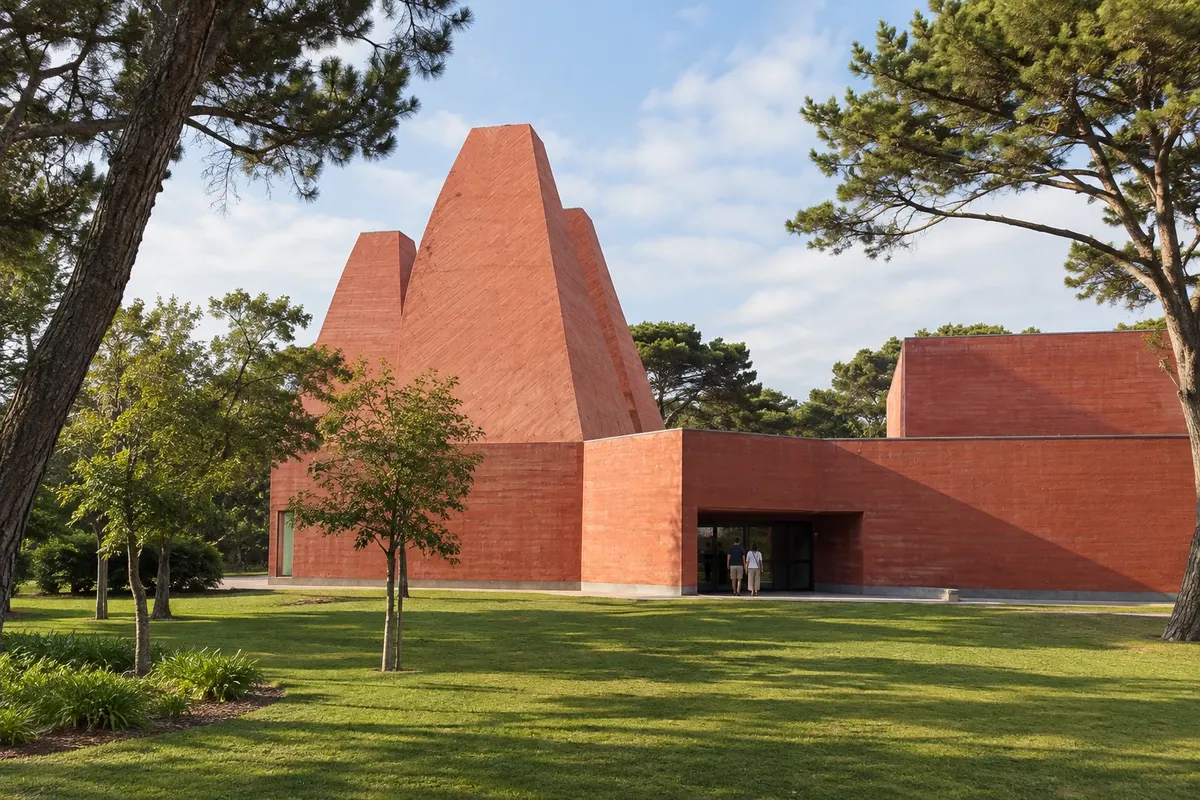
Cascais brings together several museums a few minutes’ walk from each other in the so-called Museum Quarter. The best known is the Casa das Histórias Paula Rego, dedicated to the work of Portuguese painter Paula Rego, with paintings and drawings from the collection and temporary exhibitions. The building, by architect Eduardo Souto de Moura, has two pyramid-shaped towers in a reddish color and is worth visiting even from the outside. Nearby are the Museu Condes de Castro Guimarães, a late 19th-century summer house by a small cove with a library, furniture and azulejos; the Farol Museu de Santa Marta, a lighthouse still in use with a small museum about the lighthouses on the Portuguese coast; and Parque Marechal Carmona, a shaded garden with a lake and children’s areas. The Cascais Citadel completes the circuit. It’s a good choice for a rainy day or for those who want a break from the beaches.
Kraji na poti: Casa das Histórias Paula Rego, Museum Quarter, Museu Condes de Castro Guimarães, Farol Museu de Santa Marta, Parque Marechal Carmona, Cascais Citadel.
Vključuje: Museum tickets paid separately, per museum; check the current schedule and closing days.
Nasvet: Check the weekly closing days before you go, because they vary from museum to museum. Casa das Histórias Paula Rego is at the start of the route to the Guincho bike path and to Boca do Inferno.
Najboljši čas za obisk: All year; a good option for the rainy months, from November to February.
Sintra Mountains trail: Peninha and Cruz Alta
Odhod: Sintra on foot (car or taxi access up to the start) about 4 to 6 hours Ves dan moderate to difficult (long climbs)
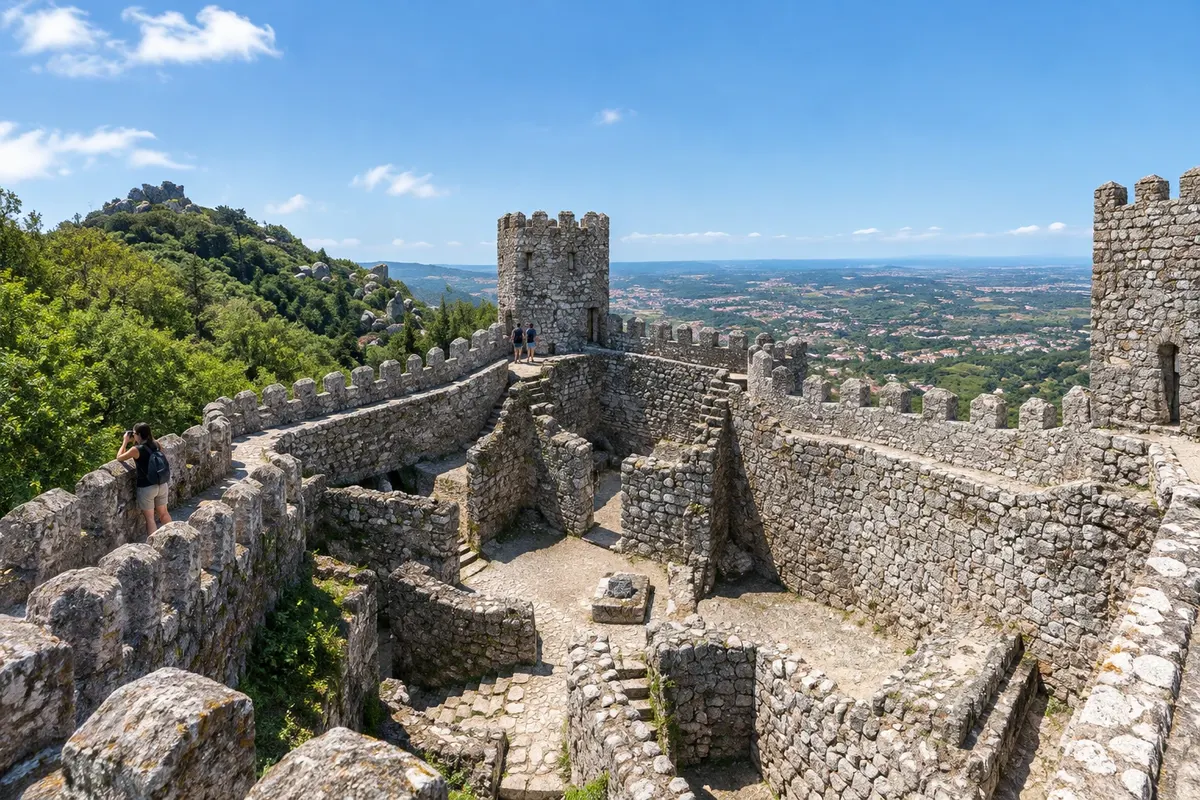
The Sintra mountain range is cut by trails through pine, oak and fern woods, with granite outcrops and viewpoints over the coast. Two summits draw walkers. Cruz Alta, at 529 meters, is the highest point of the range and lies within Parque da Pena, with views of the Palácio da Pena, the Castle of the Moors and, on clear days, Lisbon and the sea. The Santuário da Peninha, at 488 meters, sits further west, near the Convento dos Capuchos: an old hermitage and a small palace from the early 20th century on a rock outcrop, from which you can see the coast from Cabo Espichel to Ericeira on very clear days. The trails linking these points have long climbs and sections of loose rock, and waymarking is not always continuous. A shorter option is the Percurso de Santa Maria, about 1.8 km, from Sintra town center to the Castle of the Moors. For longer routes, go with a map or a trail app downloaded to your phone, or with a local guide.
Kraji na poti: Serra de Sintra, Santuário da Peninha, Cruz Alta, Parque da Pena, Percurso de Santa Maria.
Vključuje: Hike along the open trails. Cruz Alta lies within Parque da Pena, with a separate paid entrance; check the current fee table.
Nasvet: Bring water, snacks, a jacket and hiking footwear: mountain weather changes quickly and fog can arrive in the afternoon. Tell someone your route and download the map beforehand, because cell signal fails in some valleys.
Najboljši čas za obisk: March to June and September to November; in summer, start early.
Sintra Electric Tram and Praia das Maçãs
Odhod: Sintra (Estefânea) historic tram Približno pol dneva Popoldne Lahko
The Sintra Electric Tram is a historic tram that links the newer part of Sintra to Praia das Maçãs, on a roughly 11 km route that takes about 45 minutes. The cars are old, open or closed, and the line passes quintas, vineyards and woods, with the mountain range on one side and the Colares plain on the other. Praia das Maçãs is an easily accessible beach with restaurants, bars and a seawater pool, and it is commonly chosen by families. Nearby is Praia Grande, with a wide sandy shore and waves, known for surf and bodyboard competitions. The Colares region is known for vineyards planted on sand, a landscape you can see from the tram window. The ride is a break from the palaces and a different way to reach the sea from Sintra.
Kraji na poti: Sintra Electric Tram, Praia das Maçãs, Colares, Praia Grande.
Vključuje: Tram ticket paid separately, purchased on board; check the current price list.
Nasvet: The tram does not operate year-round and has few departures per day: check the calendar and schedules before you go. If you miss the return, there are buses between Praia das Maçãs and Sintra.
Najboljši čas za obisk: The season usually runs from spring to autumn; for beachgoing, from June to September.
Palácio Nacional de Queluz
Odhod: Lisbon (Rossio) or Sintra Sintra Line train and walk about 2 to 3 hours Dopoldne ali popoldne Lahko
The Queluz National Palace is located between Lisbon and Sintra, on the Sintra Line, and is a standalone stop on the mountain circuit. It was a country house that the infante D. Pedro, later D. Pedro III, turned into a summer palace starting in 1747; he married his niece, who would become Queen D. Maria I, and the palace became a royal residence. Pedro IV of Portugal, the D. Quixote Room, decorated with scenes from Cervantes’ book. The visit includes the Throne Room, with mirrors, gilding and chandeliers, and rooms in the rococo style. The gardens, in French style, have statues, lakes and the Tile Canal, a canal lined with blue panels where the royal family used to boat. It is about 15 minutes by train from Lisbon, and pairs well with a trip to or from Sintra.
Kraji na poti: Queluz National Palace, Queluz Gardens, Throne Room, D. Quixote Room, Tile Canal.
Vključuje: Admission to the palace and gardens paid separately; check the current price list.
Nasvet: Get off at Queluz-Belas station and walk to the palace following the signs. It’s a good stop on the way back from Sintra to Lisbon, or for a rainy day when the hills are clouded over.
Najboljši čas za obisk: All year; April to June for the gardens.
Palácio Nacional de Mafra
Odhod: Lisbon or Sintra bus or car full day including travel morning and afternoon Lahko
Mafra is about 40 km north of Lisbon and works well as a day trip for those spending more days in the region. The Palácio Nacional de Mafra was commissioned by D. João V in the 18th century and combines, in a single building, a palace, basilica and convent, across an area of about 40,000 square meters, where roughly 300 Franciscan friars once lived. The basilica, at the center of the façade, has six historic organs, and the towers house two carillons with 98 bells in total. The library, with nearly 36,000 volumes, is the most famous room of the complex. The visit includes long corridors, the royal family’s apartments and the friars’ infirmary. The complex is a UNESCO World Heritage Site. Next to it is the Tapada Nacional de Mafra, the court’s former hunting ground, with trails and animals. The town of Mafra is close to Ericeira, a fishing and surfing village, and the two places are often combined in the same day.
Kraji na poti: Palácio Nacional de Mafra, Basílica de Mafra, Biblioteca do Palácio de Mafra, Tapada Nacional de Mafra.
Vključuje: Palace ticket paid separately; the Tapada has its own admission. Check the current price list and closing days.
Nasvet: The palace is closed one day a week, and the library and the basilica have separate opening hours: check before you go. By car, the route from Lisbon is via the A8 and then the A21. By public transport, there are buses from Lisbon (Campo Grande) and from Sintra (Portela de Sintra).
Najboljši čas za obisk: All year; a good option for rainy days.


 Brazilija
 Antarktika
 Argentina
 Bolivija
 Čile
 Kolumbija
 Ekvator
 Gvajana
 Francoska Gvajana
 Falklandski otoki (Malvini)
 Paragvaj
 Peru
 Surinam
 Urugvaj
 Venezuela
 Nemčija
 Avstrija
 Belgija
 Hrvaška
 Danska
 Slovaška
 Slovenija
 Španija
 Finska
 Francija
 Grčija
 Nizozemska
 Madžarska
 Irska
 Islandija
 Italija
 Luksemburg
 Norveška
 Poljska
 Združeno kraljestvo
 Češka
 Švedska
 Švica
 Turčija
 Bermudi
 Kanada
 Združene države Amerike
 Grenlandija
 Mehika
 Sveta Peter in Mihael
 Dominikanska republika
 Japonska
 Južnoafriška republika
 Egipt
 Avstralija
 Fidži
 Nova Zelandija
 Papua Nova Gvineja