Nidaros Cathedral (Nidarosdomen)
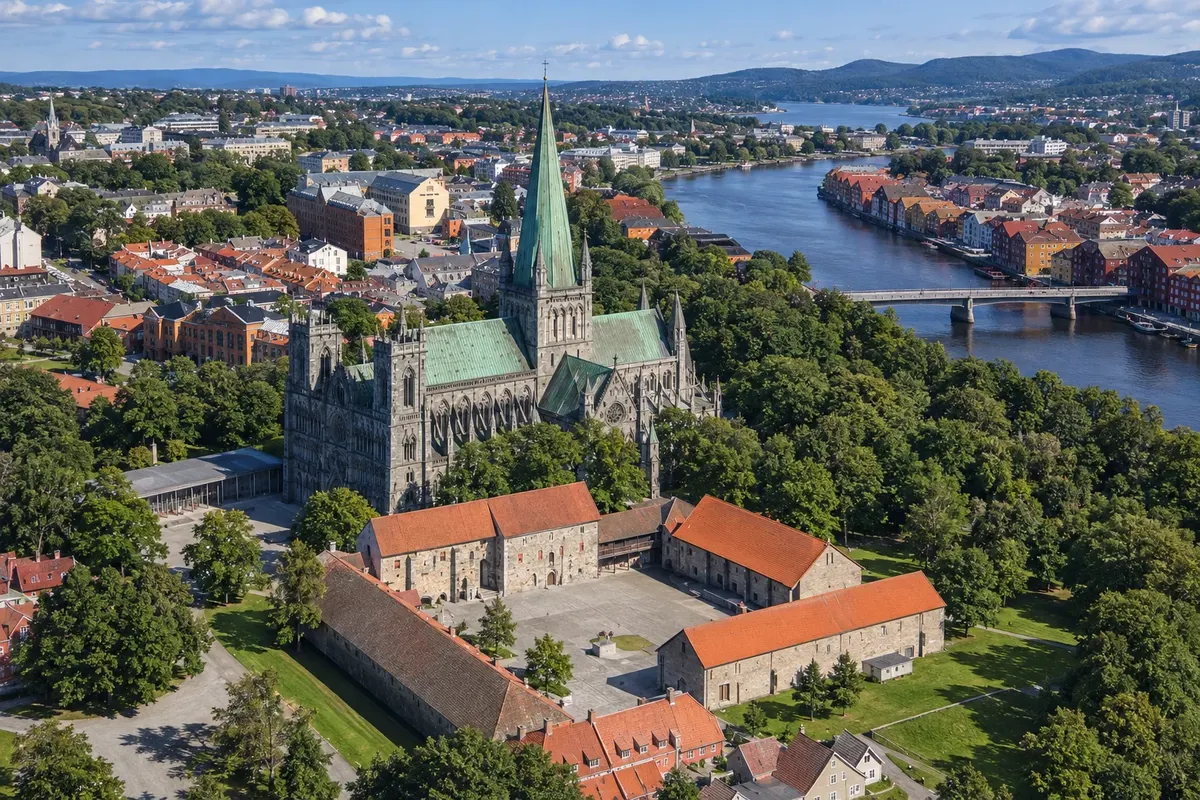
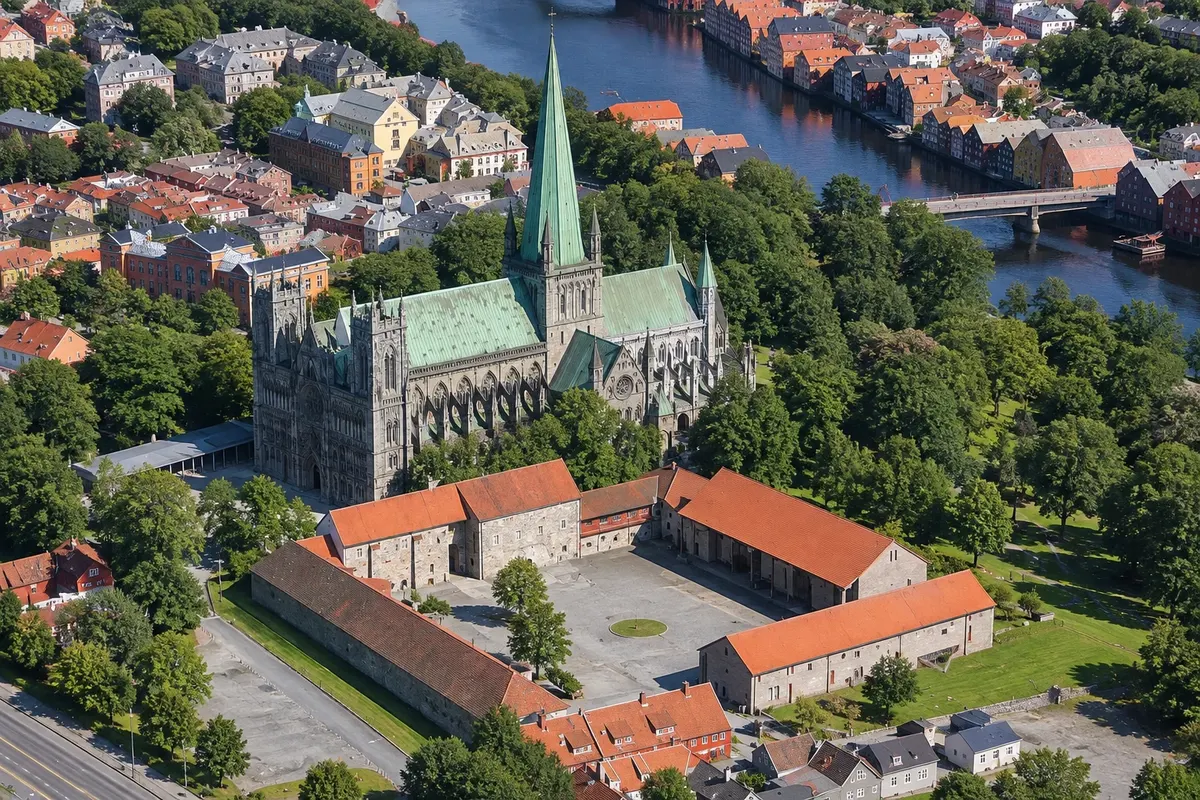
The Catedral de Nidaros, built over the tomb of Santo Olavo from 1070: a west facade of soapstone with dozens of statues, a Gothic nave, a rose window and the tower with views. Coronation site of Norwegian kings.
Antarktika
Trøndelag · Norveška
The old Viking capital in central Norway: the Catedral de Nidaros over the tomb of Santo Olavo, the old bridge, the colorful river warehouses on the Nidelva and the Bakklandet neighborhood.
Na fotografiji: Nidarosdomen
Illustrative images. The pictures in this guide are illustrations based on the real place, not photographs, and may differ from it.
Spoznajte kraj
Trondheim lies in central Norway, at the mouth of the Nidelva river, on the Trondheimsfjord. It was founded at the end of the 10th century as Nidaros and was the country’s capital during the Viking age and the early Middle Ages. It is the country’s third city, home to the main technical university and a compact center ringed by the river.
The town grew around the tomb of Olav II, the king who Christianized Norway, killed in battle in 1030 and soon declared a saint. The Catedral de Nidaros was built over the tomb — the largest medieval church in Scandinavia and the endpoint of the Caminho de Santo Olavo, a pilgrimage route that has been revived. Beside it, the Palácio do Arcebispo houses the Norwegian crown jewels.
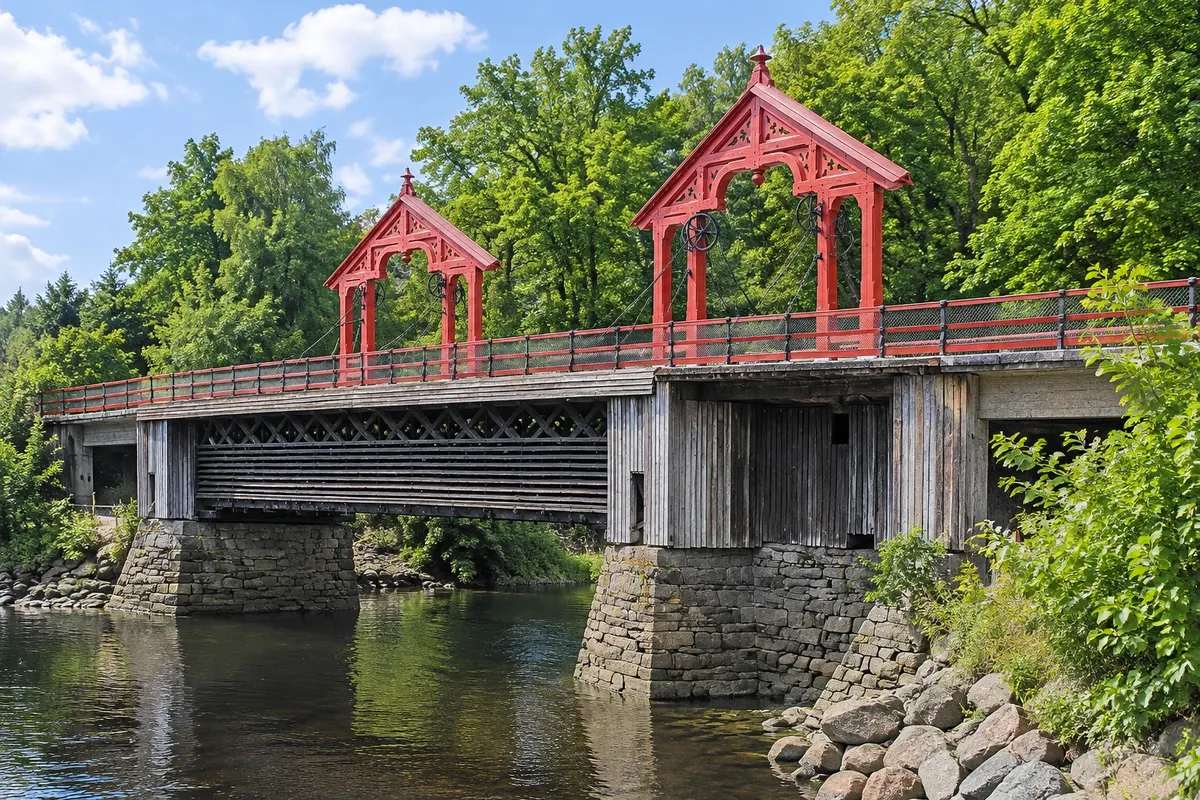
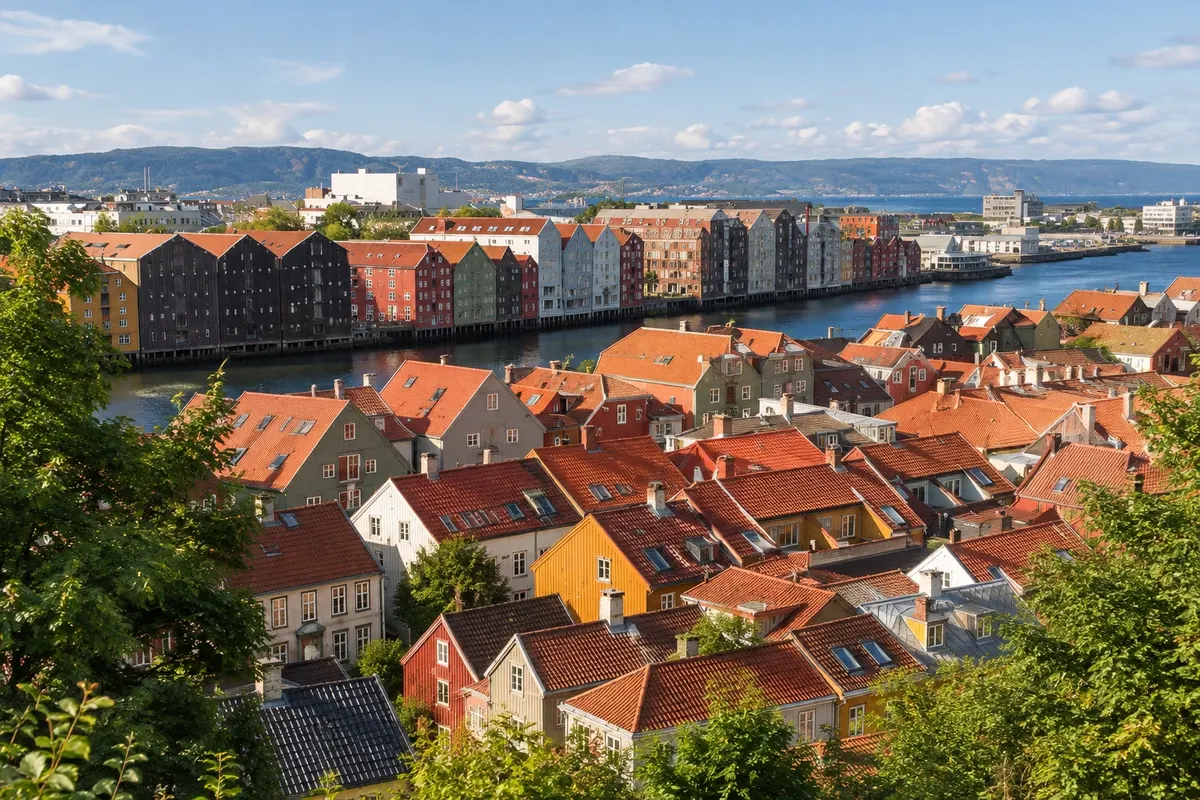
On the other side of the river, the Gamle Bybro — the old wooden bridge with a red portal — leads to Bakklandet, a neighborhood of colorful wooden houses, cafés and cobbled streets, with a bicycle elevator on the slope. Along the Nidelva, the old stilted warehouses painted yellow, red and ochre form the city’s best-known image. In the center, the Stiftsgården, an 18th-century wooden palace, is a royal residence; above it, Kristiansten fortress overlooks everything.
Summers are usually mild with very long days; winters are cold, snowy, with around five hours of daylight in December.
V vodniku še ni nastanitev – Trondheim.
kako do tja · koliko dni · načrt poti · vprašanja
✈ Trondheim lufthavn, Værnes (TRD), kraj: Stjørdal· 33 km do cilja (Trondheim)
Check before booking. Værnes airport is about 33 km away, with train and buses to the center. From Oslo, the train via the Gudbrandsdalen valley or via Røros takes six to seven hours. The Hurtigruten calls at Trondheim.
Doživite kraj
The Catedral de Nidaros, built over the tomb of Santo Olavo from 1070: a west facade of soapstone with dozens of statues, a Gothic nave, a rose window and the tower with views. Coronation site of Norwegian kings.
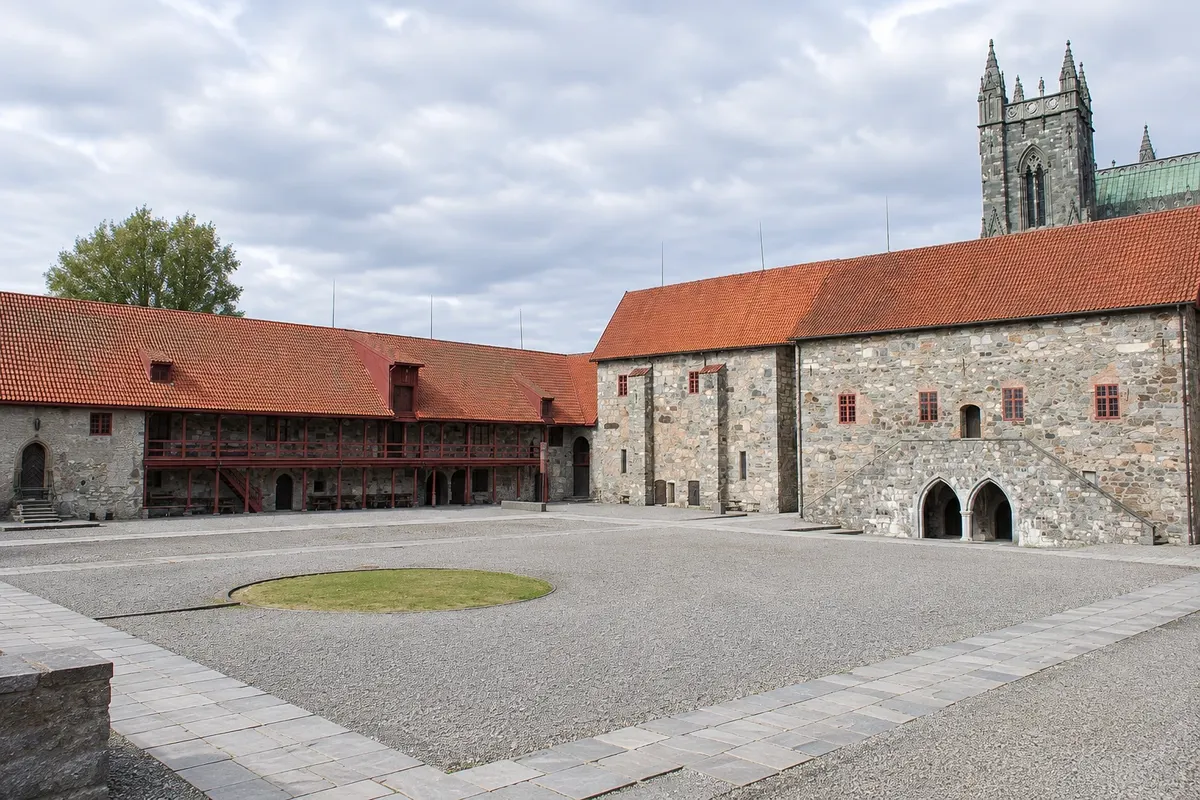
The Palácio do Arcebispo, next to the Catedral de Nidaros: a medieval stone residence housing the museum of the Norwegian crown jewels, the original statues from the cathedral, and the history of the archbishopric.
The old wooden bridge over the river Nidelva, with the red gateway called Portão da Felicidade, linking the center to Bakklandet, with views of the colorful warehouses on stilts.
The neighborhood of colorful wooden houses on the other side of the old bridge, with cobbled streets, cafés, bookshops and the Trampe bicycle lift on the slope of Brubakken.
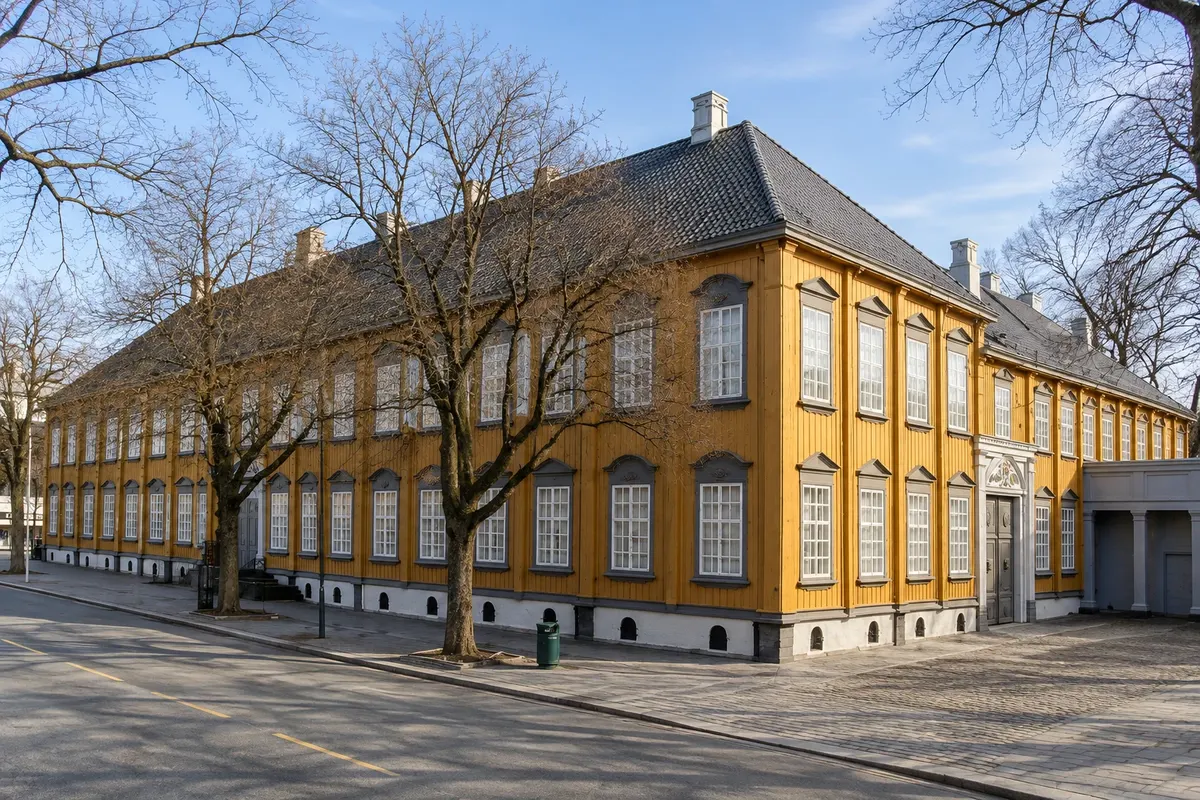
The 18th-century wooden palace on Trondheim’s main street, one of the largest wooden buildings in northern Europe, the royal family’s official residence in the city, with guided tours in summer.
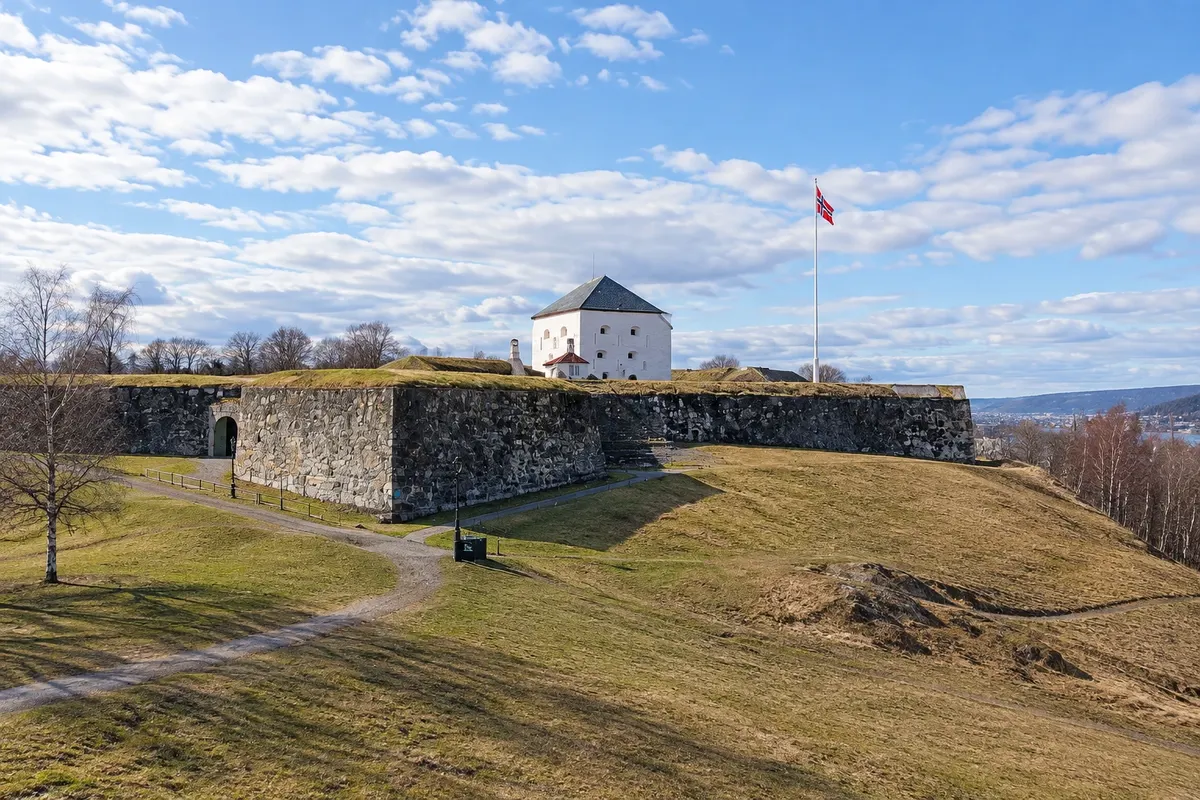
17th-century fortress on the hill east of Trondheim’s centre, with a white tower and open lawns offering views of Bakklandet, the river, the cathedral and the fjord.
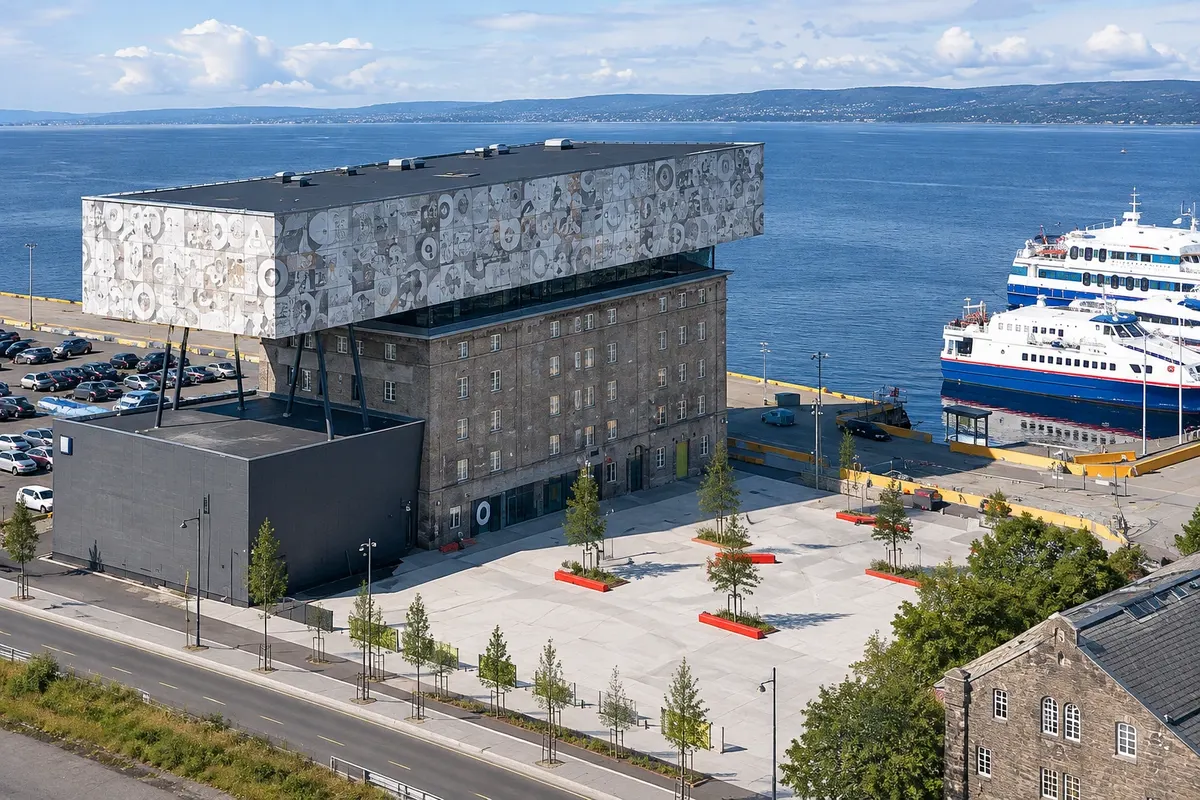
The national museum of popular music in Norway, housed in an old warehouse on the Brattøra harbour covered by an illuminated box: rock, pop, electronic music and black metal, with studios for playing and recording.
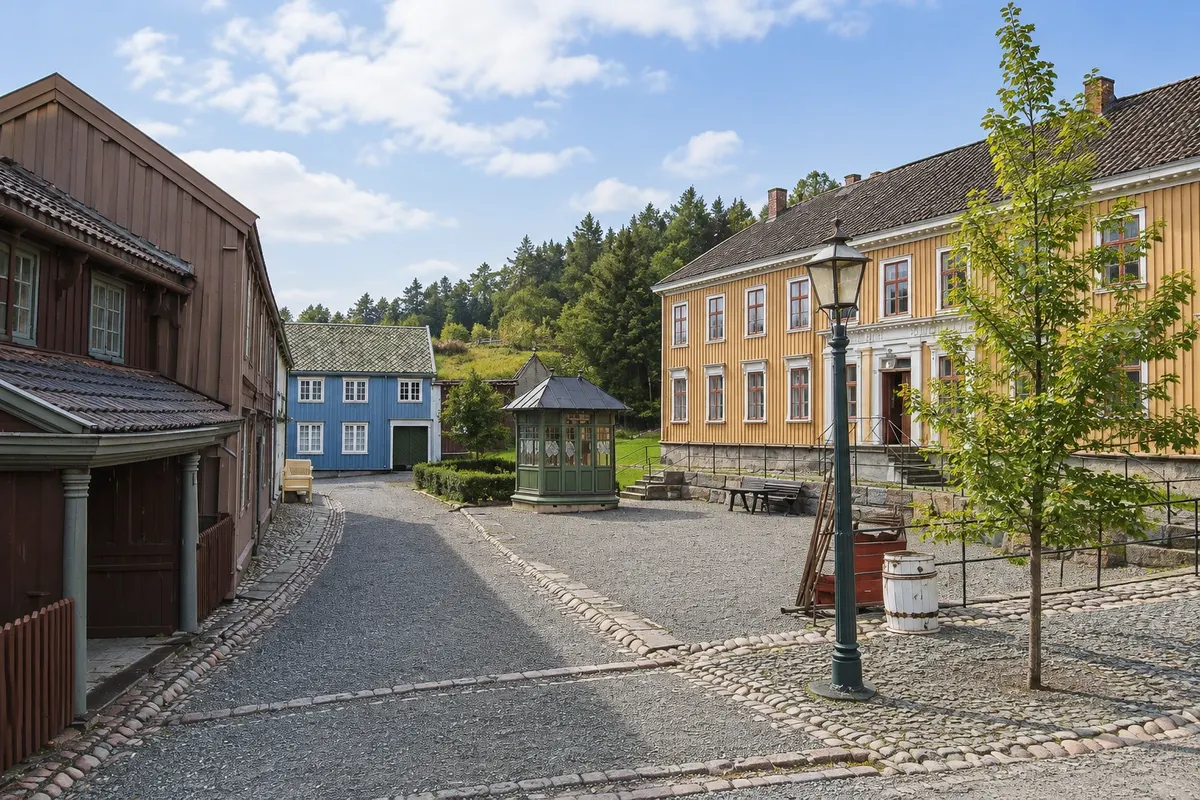
Open-air museum west of the centre, on the ruins of King Sverre's castle, with more than 80 historic buildings from Trøndelag, a medieval wooden church and a 19th-century town street.
Kaj izbrati pred odhodom
Izhodišče, trajanje, potek, vključene storitve in okvirna cena vsakega izleta.
Nidaros Cathedral was built over the tomb of Olav II, king and patron saint of Norway, beginning in 1070, and reached its current form in the 12th and 13th centuries in Romanesque and Gothic styles. It is the largest medieval church in Scandinavia and the end point of the St. Olav’s Way. During the Middle Ages, pilgrims from across northern Europe came here. The west façade is the best-known part: a greenish soapstone wall with dozens of statues of saints, kings, apostles and biblical figures arranged in rows, beneath a rose window. Much of the statuary was carved in the 19th and 20th centuries during the long restoration of the cathedral, which had been damaged by fires and by the Reformation.
Kraji na poti: Nidarosdomen.
Vključuje: Arrange access to the site and transport separately. Guided activities and tickets have their own conditions.
Nasvet: Buy the combined ticket with the Archbishop’s Palace next door. Study the west façade carefully before you go in and return late in the afternoon, when the light hits the statues.
Najboljši čas za obisk: From June to August, when the tower usually opens and there are more guided tours
The Erkebispegården, the Archbishop’s Palace, sits beside Nidaros Cathedral and was built beginning in the late 12th century as the residence and power center of the archbishops of Nidaros, who oversaw the church across Norway, Iceland, and Greenland. It is one of the oldest non-religious medieval buildings in Scandinavia, with stone walls surrounding a courtyard. Three exhibitions occupy the complex. The crown jewels display shows the king’s and queen’s crowns, the scepter, the orb, and the sword of the realm, used in coronations and consecrations in the adjacent cathedral. The palace museum exhibits the original statues from the cathedral’s west façade, removed for preservation, and objects found in excavations of the palace itself.
Kraji na poti: Erkebispegården.
Vključuje: Arrange access to the site and transport separately. Guided activities and tickets have their own conditions.
Nasvet: Start with the crown jewels and then look at the cathedral’s original statues before entering: that way the details of the façade become clearer.
Najboljši čas za obisk: Year-round, with longer opening hours in summer
The Gamle Bybro, the city’s old bridge, crosses the Nidelva River between downtown Trondheim and the Bakklandet neighborhood. The first bridge on the site was built in 1681 along with the Kristiansten fortress, and the current wooden bridge with stone piers follows the same alignment. At the entrance on the city side, a red wooden gateway with a roof and walkway is called Lykkens portal, the Gate of Happiness, and tradition holds that whoever passes through it with a wish will have good luck. From the middle of the bridge you see Trondheim’s most familiar scene: the old wooden warehouses on stilts, the bryggene, painted yellow, red, ochre, and white, reflected in the river. They were used for centuries to store goods arriving by boat and today house apartments, offices, and restaurants.
Kraji na poti: Gamle Bybro.
Vključuje: Arrange access to the site and transport separately. Guided activities and tickets have their own conditions.
Nasvet: Pass through the red portal with a wish, as tradition dictates. For a photo of the warehouses, go to the middle of the bridge or to the next bridge further north.
Najboljši čas za obisk: All year round
Bakklandet is the neighborhood on the east bank of the Nidelva River, just past the Gamle Bybro. It emerged in the 17th century as a district of workers, fishermen and craftsmen, outside the city walls, and retains two-storey wooden houses painted in different colours, with white windows and flower boxes. In the 1960s and 1970s there were plans to build an expressway in its place, but the neighbourhood was preserved and the houses were restored. Today, the streets Øvre Bakklandet and Nedre Bakklandet have cafés, bakeries, restaurants, bookshops and design stores, and in summer the tables spill onto the sidewalks.
Kraji na poti: Bakklandet.
Vključuje: Arrange access to the site and transport separately. Guided activities and tickets have their own conditions.
Nasvet: Have a coffee with a cinnamon cake on the streets below and walk up the Brubakken hill to Kristiansten. Notice Trampe, the bicycle lift, on the ascent.
Najboljši čas za obisk: All year round
Stiftsgården is a wooden palace built between 1774 and 1778 for Cecilie Christine Schøller, the widow of a wealthy councillor, on Munkegata street in central Trondheim. With about 58 meters of façade and more than 60 rooms, it is one of the largest wooden buildings in northern Europe. The style is late rococo and neoclassical, with a yellow façade, white windows and a columned entrance. The state bought the palace in 1800, and it came to be used as the royal family's official residence in Trondheim. The monarchs stay here on visits to the city and for consecrations at Nidaros Cathedral. The halls preserve furniture, portraits, painted wallpapers and chandeliers from the 18th and 19th centuries.
Kraji na poti: Stiftsgården.
Vključuje: Arrange access to the site and transport separately. Guided activities and tickets have their own conditions.
Nasvet: Book the summer guided tour in advance. Outside the season, view the façade from Munkegata on the walk between the square and the cathedral.
Najboljši čas za obisk: From June to August, when guided tours are usually available
The Kristiansten Fortress was built between 1681 and 1685 after a major fire destroyed Trondheim, to protect the city from attacks coming from the east, from Sweden. It sits on a hill above Bakklandet, and the layout was designed by military engineer Johan Caspar von Cicignon, the same person who redesigned Trondheim’s center with wide streets to contain fires. The central white tower with thick walls is the main building, surrounded by low ramparts and lawns. In 1718 the fortress withstood a siege by the Swedish army, which never captured it. It later lost its military function, and today the grounds are open to the public as a park.
Kraji na poti: Kristiansten festning.
Vključuje: Arrange access to the site and transport separately. Guided activities and tickets have their own conditions.
Nasvet: Climb the Brubakken slope, passing Trampe, and descend by another path to Bakklandet. Bring a snack for the lawns in summer.
Najboljši čas za obisk: All year, preferably at dusk, with low light over the city and the fjord

Rockheim is Norway’s national museum of popular music, covering rock'n'roll from the 1950s to the present. It occupies a former grain warehouse on the Brattøra quay, near the central station, with a box on top covered by thousands of glass panels featuring album covers, lit at night in different colors. The visit starts on the top floor and descends through the decades. Each period has its own room, with clothing, instruments, album covers, recordings and excerpts from performances by Norwegian artists, from the jazz and dance music of the 1950s to the pop of the 1980s, such as a-ha, and to electronic music and Norwegian black metal, which gained audiences in several countries.
Kraji na poti: Rockheim.
Vključuje: Arrange access to the site and transport separately. Guided activities and tickets have their own conditions.
Nasvet: Start at the top floor and work down through the decades. Allow time for the interactive studios: they are the most fun part.
Najboljši čas za obisk: All year round
The Sverresborg Trøndelag Folkemuseum sits on a hill about 3 km west of Trondheim city centre, around the ruins of the castle that King Sverre Sigurdsson built at the end of the 12th century. From the top of the ruins you can see the city, the cathedral and the fjord. The open-air museum brings together more than 80 buildings moved from across the Trøndelag region: farms, barns, fisherfolk houses, a school and a village shop. The oldest exhibit is the Haltdalen wooden church, a small 12th-century stavkirke, transferred to the museum. One area recreates a 19th-century Trondheim street, with merchants' houses, a pharmacy, a barber and a dentist.
Kraji na poti: Sverresborg Trøndelag Folkemuseum.
Vključuje: Arrange access to the site and transport separately. Guided activities and tickets have their own conditions.
Nasvet: Climb to the ruins of Sverre Castle for the view and then descend through the houses. Don’t miss the Haltdalen church, the oldest in the complex.
Najboljši čas za obisk: From June to August, when the houses are usually open and there are activities with guides
Po dnevih
Predlogi za načrtovanje poti. Vrstni red dni prilagodite vremenu in razpoložljivosti izletov.
Split the day between Nidaros Cathedral and the Archbishop’s Palace complex. The visits are next to each other and let you follow different phases of the city’s history.
Cross Gamle Bybro to Bakklandet and walk the wooden streets. The climb up to Kristiansten adds a view over Trondheim and takes more time than the flat riverside section.
Rockheim covers Norwegian popular music in the harbour area. Sverresborg is outside the centre and takes up another part of the day, with historic outdoor architecture and settings.
Najboljši čas za obisk
From May to September days are usually long and mild, with the river and Bakklandet’s terraces in use; at the end of July the Olavsfest, the festival of Santo Olavo, fills the city. Winter, from December to February, typically brings snow, below-zero temperatures and about five to six hours of daylight.
The seasons shown are the most usual ones; nature doesn't always follow the calendar.
Winter · plan your travel
The monthly average at the reference station is usually around -1.0 °C. Normal monthly precipitation is about 81 mm, combining rain and snow as water equivalent. Cold tends to be persistent and days are usually short. Prioritize outings with confirmed access for the period.
Winter · plan your travel
The monthly average at the reference station is usually around -1.2 °C. Normal monthly precipitation is about 73 mm, combining rain and snow as water equivalent. Cold tends to be persistent and days are usually short. Prioritize outings with confirmed access for the period.
Spring · plan your travel
The monthly average at the reference location is usually around 0.7 °C. The typical precipitation for the month is about 69 mm, combining rain and snow as water equivalent. Daylight tends to increase through the season, while snow usually remains on the mountains. High‑altitude routes follow their own calendar.
Spring · plan your travel
The monthly average at the reference location is usually around 4.6 °C. The typical precipitation for the month is about 49 mm, combining rain and snow as water equivalent. Daylight tends to increase through the season, while snow usually remains on the mountains. High‑altitude routes follow their own calendar.
Spring · long days
The monthly average at the reference location is usually around 8.5 °C. The typical precipitation for the month is about 50 mm, combining rain and snow as water equivalent. Daylight tends to increase through the season, while snow usually remains on the mountains. High‑altitude routes follow their own calendar.
Summer · long days
The monthly average at the reference location is usually around 11.8 °C. The typical precipitation for the month is about 72 mm, combining rain and snow as water equivalent. The weather is usually mild and the days are often very long. There is higher demand for outdoor tours; book reservations in advance.
Summer · long days
The monthly average at the reference location is usually around 14.8 °C. The typical precipitation for the month is about 70 mm, combining rain and snow as water equivalent. The weather is usually mild and the days are often very long. There is higher demand for outdoor tours; book reservations in advance.
Summer · long days
The monthly average at the reference location is usually around 14.1 °C. The typical precipitation for the month is about 84 mm, combining rain and snow as water equivalent. The weather is usually mild and the days are often very long. There is higher demand for outdoor tours; book reservations in advance.
Autumn · plan your travel
The monthly average at the reference location is usually around 10.6 °C. The typical precipitation for the month is about 90 mm, combining rain and snow as water equivalent. Temperatures and day length tend to fall. Long hikes and mountain travel require planning before setting out.
Autumn · plan your travel
The monthly average at the reference station is usually around 5.5 °C. Normal monthly precipitation is about 80 mm, combining rain and snow as water equivalent. Temperatures and day length tend to fall. Long hikes and mountain travel require planning before setting out.
Autumn · plan your travel
The monthly average at the reference station is usually around 2.1 °C. Normal monthly precipitation is about 72 mm, combining rain and snow as water equivalent. Temperatures and day length tend to fall. Long hikes and mountain travel require planning before setting out.
Winter · plan your travel
The monthly average at the reference station is usually around -0.9 °C. Normal monthly precipitation is about 81 mm, combining rain and snow as water equivalent. Cold tends to be persistent and days are usually short. Prioritize outings with confirmed access for the period.
Načrtujte pot
Check train, bus, and ferry connections to Trondheim for your travel date. Verify each segment and the return connection before combining different services. On ferry routes, confirm the pier and the direction of travel.
No. The city centre, Bakklandet and Kristiansten are reached on foot. For Sverresborg and the Gråkallen hill, use the bus and the Gråkallbanen tram.
Pred odhodom
Z nekaj načrtovanja boste imeli več časa za uživanje na poti.
From May to September days are usually long and mild, with the river and Bakklandet’s terraces in use; at the end of July the Olavsfest, the festival of Santo Olavo, fills the city. Winter, from December to February, typically brings snow, below-zero temperatures and about five to six hours of daylight.
The seasons shown are the most usual ones; nature doesn't always follow the calendar.
Two days are enough for the cathedral, the Palácio do Arcebispo, Bakklandet, the river warehouses and Kristiansten. With three days you can add Rockheim, the Sverresborg open-air museum and the Stiftsgården in summer.
The center, between the cathedral, the market square and the port, is the most practical base, everything within walking distance. Bakklandet, across the old bridge, has guesthouses and apartments in wooden houses. The area around the central station and Brattøra is close to the Hurtigruten and the trains.
Odnesite svoje odpadke, upoštevajte oznake in podprite lokalne ponudnike. V naravi upoštevajte navodila za obiskovalce.
Odgovori na vaša vprašanja
Two days for the cathedral, Bakklandet and Kristiansten; three to include Rockheim and Sverresborg.
By train in six to seven hours, or by domestic flight of about one hour. The train via Gudbrandsdalen passes Lillehammer and Dombås.
No. The center is walkable, and buses and the Gråkallen tram cover the neighborhoods.
The medieval pilgrimage route that ends at the Catedral de Nidaros, which has been revitalized in recent decades and is walked from Oslo and from Sweden.
They can appear on clear nights from September to March, but are more common further north, in Tromsø and the Lofoten.
Več kot vodnik