Oslo Opera House (Operahuset Oslo)
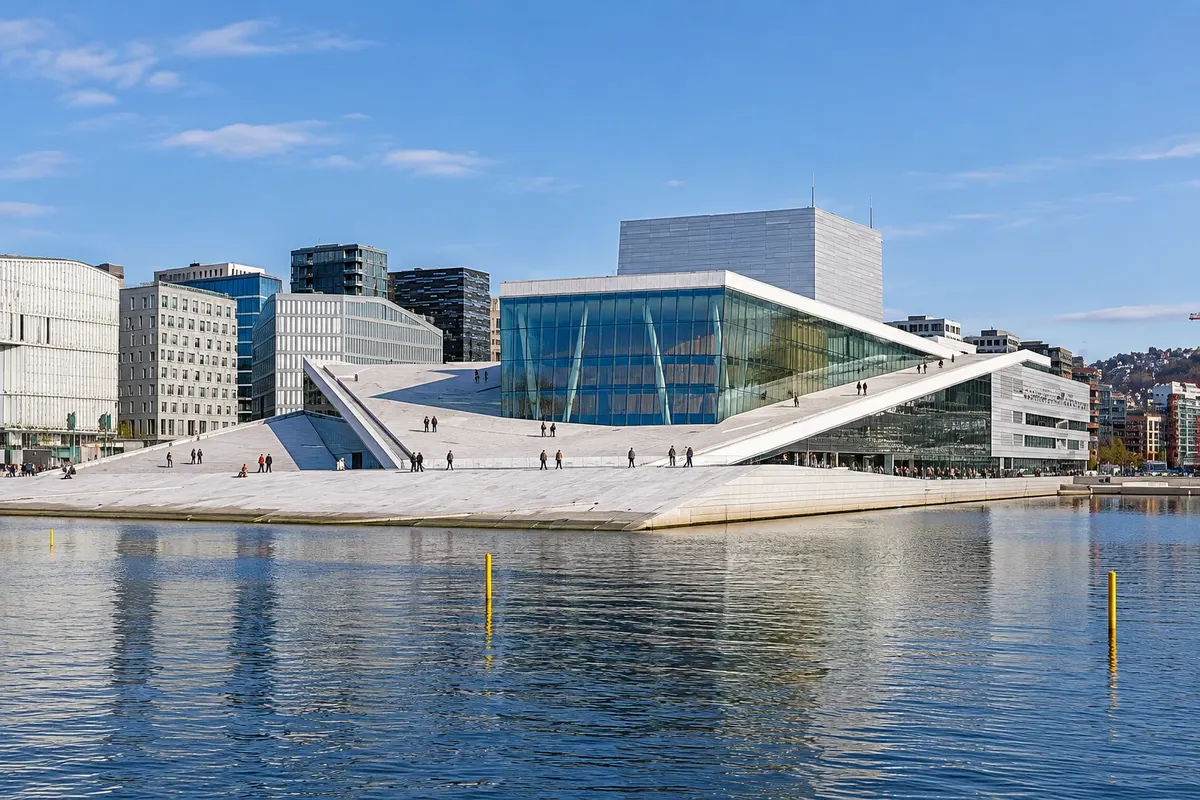
The home of the Opera and National Ballet in the bay of Bjørvika: the white marble roof slopes down to the water and can be walked to the top, with views of the fjord and the city.
Antarktika
Oslo · Norveška
The capital of Norway at the end of the Oslofjord: the Ópera with a marble roof, the Munch, Parque Vigeland, the ship museums of Bygdøy and the Holmenkollen forest half an hour from the center.
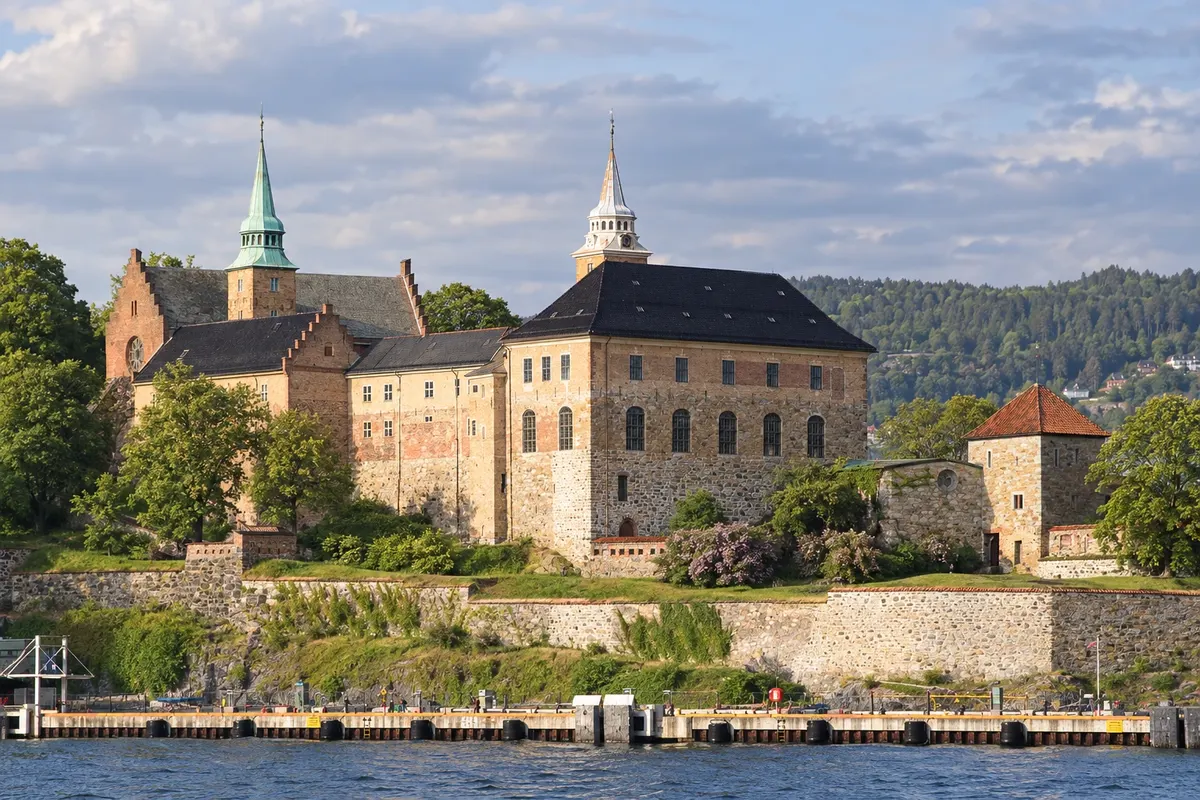
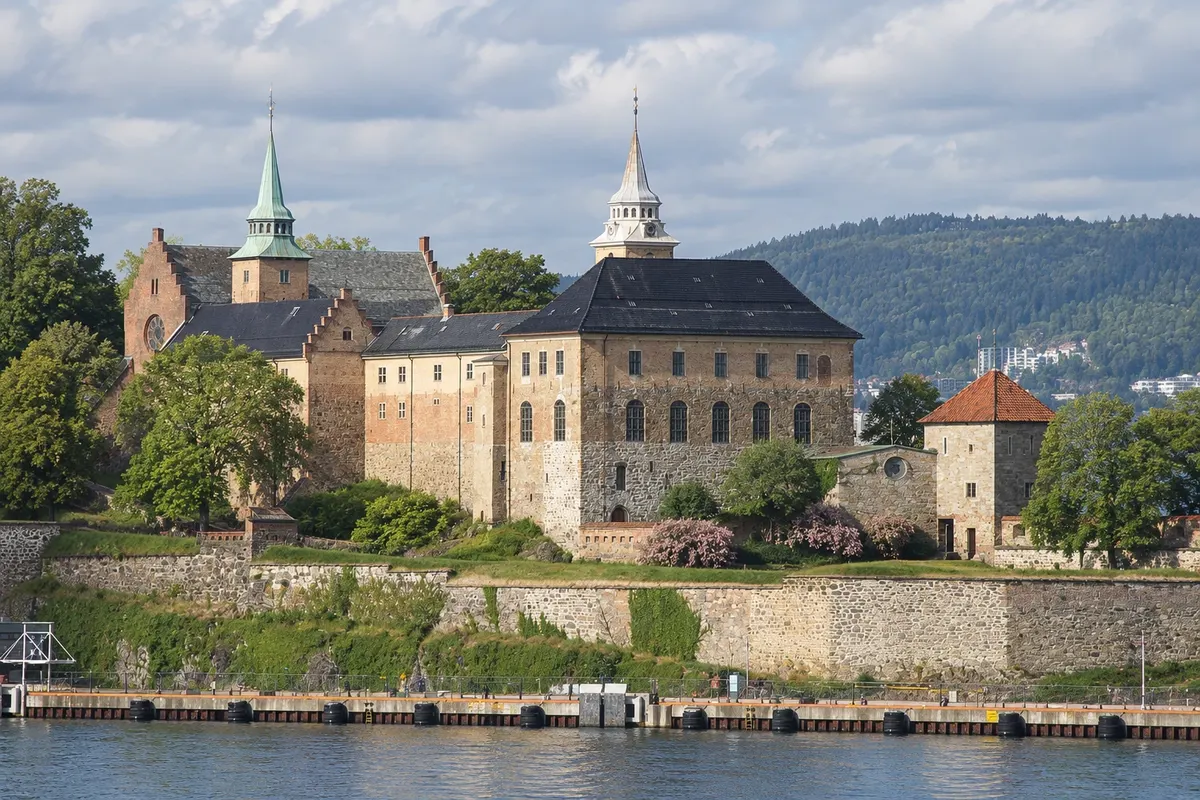
Na fotografiji: Fortaleza de Akershus
Illustrative images. The pictures in this guide are illustrations based on the real place, not photographs, and may differ from it.
Spoznajte kraj
Oslo lies at the end of the Oslofjord, in southeastern Norway, surrounded by forested hills. It is the capital and the largest city in the country, but it has a relaxed pace: the center is walkable, the tram and the metro reach the neighborhoods and the trails, and the fjord, with islands and summer beaches, is just a few minutes from the central station.
The waterfront has changed in recent decades. In Bjørvika are the Ópera, with its sloping roof you can walk up to the top, the tall building of the Museu Munch and the Deichman library. On the other side of the bay, the medieval fortress of Akershus guards the entrance to the port, and further along Aker Brygge and Tjuvholmen bring together restaurants, galleries and the Museu Astrup Fearnley. Between them is the brick City Hall, where the Nobel Peace Prize is awarded, and the Museu Nacional, with The Scream by Munch.
Karl Johans gate links the central station to the Palácio Real, passing the Parliament and the university. To the west, Parque Vigeland displays more than two hundred sculptures by Gustav Vigeland. On the Bygdøy peninsula, a ten-minute boat ride in summer, are the Museu do Folclore (open-air), the Museu do Fram with the polar ship, and the Museu Kon-Tiki with Thor Heyerdahl's raft. Above the city, the Holmenkollen ski-jump offers views over the whole fjord.
The museums require two or three days. Winter is usually cold and dark, with about six hours of daylight in December; summer is mild and has very long days.
V vodniku še ni nastanitev – Oslo.
kako do tja · koliko dni · načrt poti · vprašanja
✈ Oslo lufthavn, Gardermoen (OSL), kraj: Gardermoen· 50 km do cilja (Oslo)
Check before booking. Requirements can change: confirm before travel. The airport train reaches the center in about 20 minutes. From Bergen the railway takes about 7 hours; from Stockholm there are trains, and from Copenhagen, overnight ferries.
Doživite kraj
The home of the Opera and National Ballet in the bay of Bjørvika: the white marble roof slopes down to the water and can be walked to the top, with views of the fjord and the city.
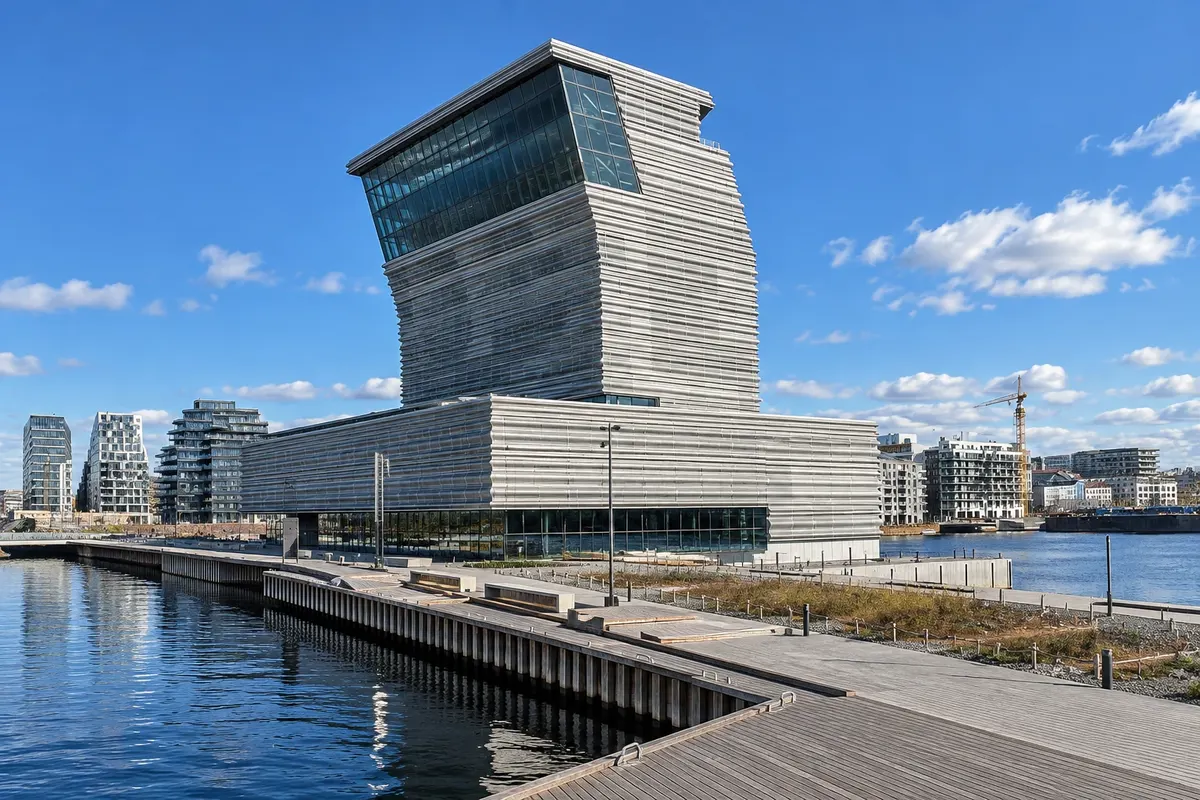
The Museu de Edvard Munch in Bjørvika, in a 13-storey building on the fjord edge: paintings, prints and drawings by the artist, with versions of The Scream and of the Frieze of Life series, and a terrace at the top.
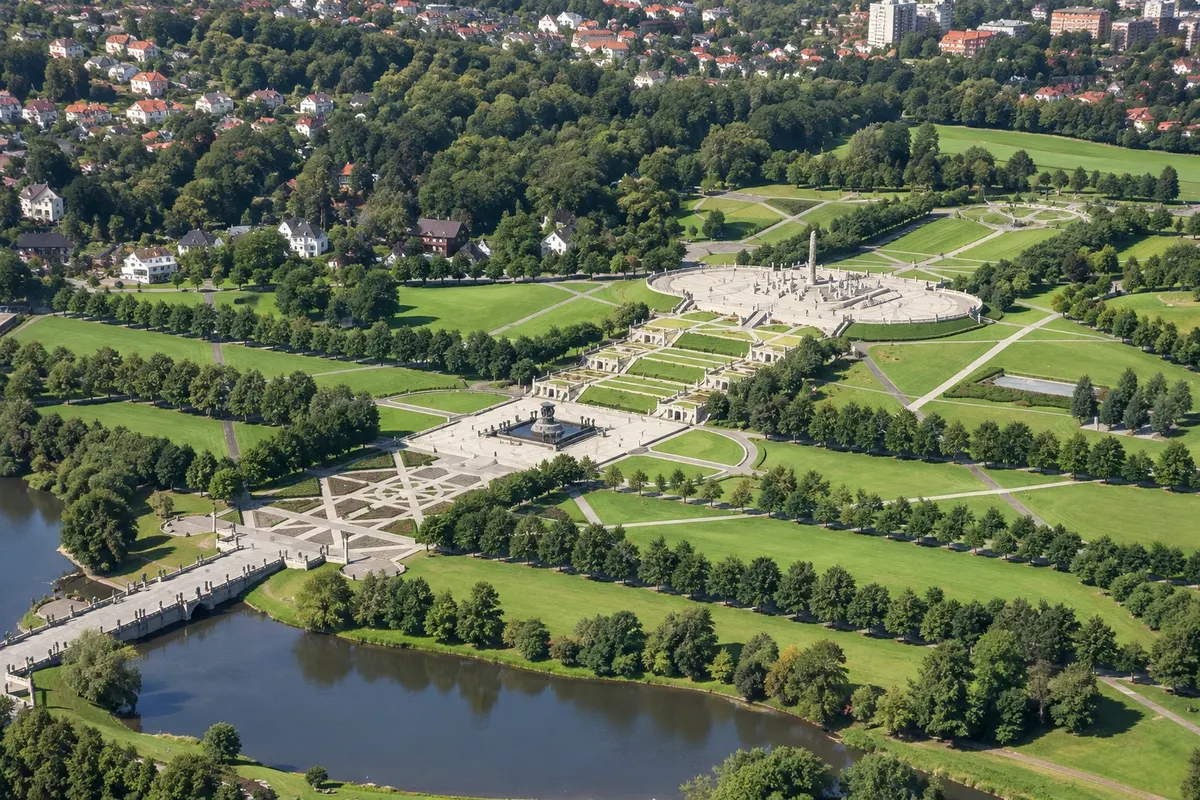
Gustav Vigeland's life's work inside Parque Frogner: more than 200 bronze and granite sculptures on the cycle of human life, featuring the bridge of figures, the fountain and the Monolith of 121 bodies.
The medieval fortress that has guarded Oslo's harbour since the late 13th century, with a Renaissance castle, walkable ramparts, the royal mausoleum and the Museu da Resistência.
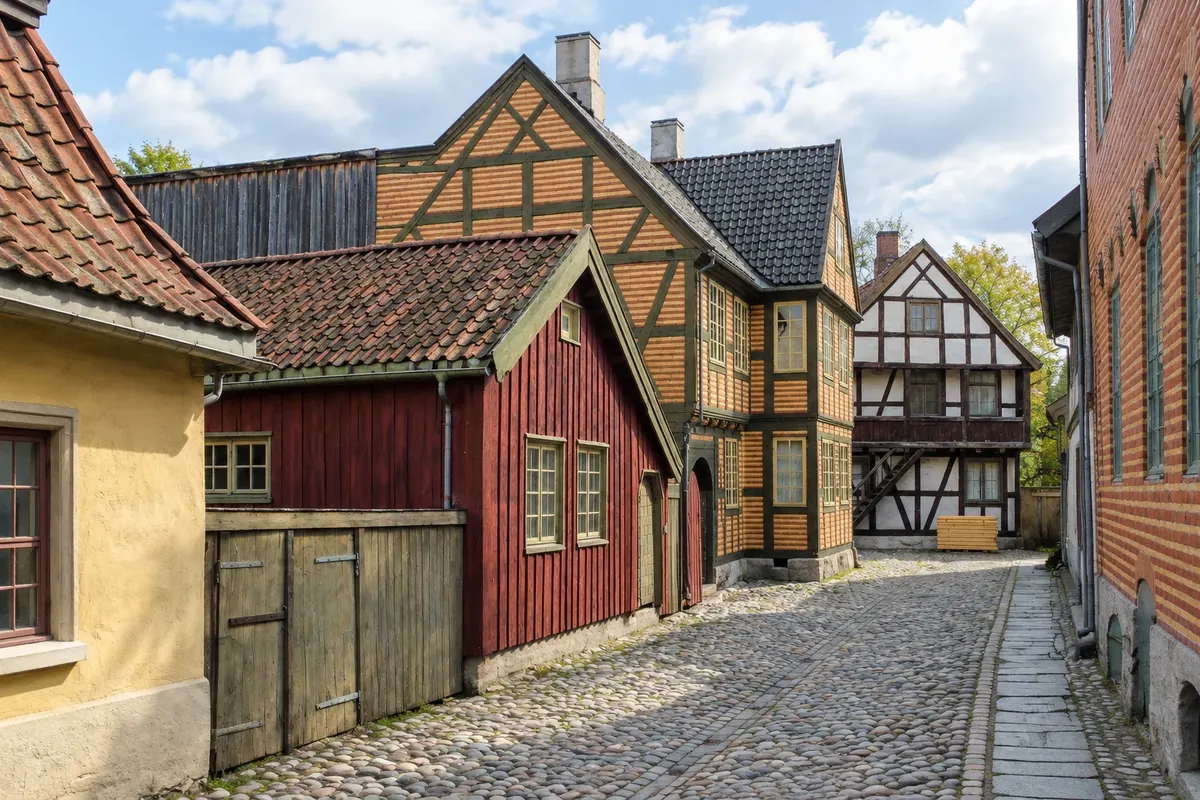
An open-air museum on Bygdøy with more than 150 historic houses brought from across the country, including the wooden church of Gol, farms, an Oslo neighbourhood and exhibitions of traditional dress and Sámi culture.
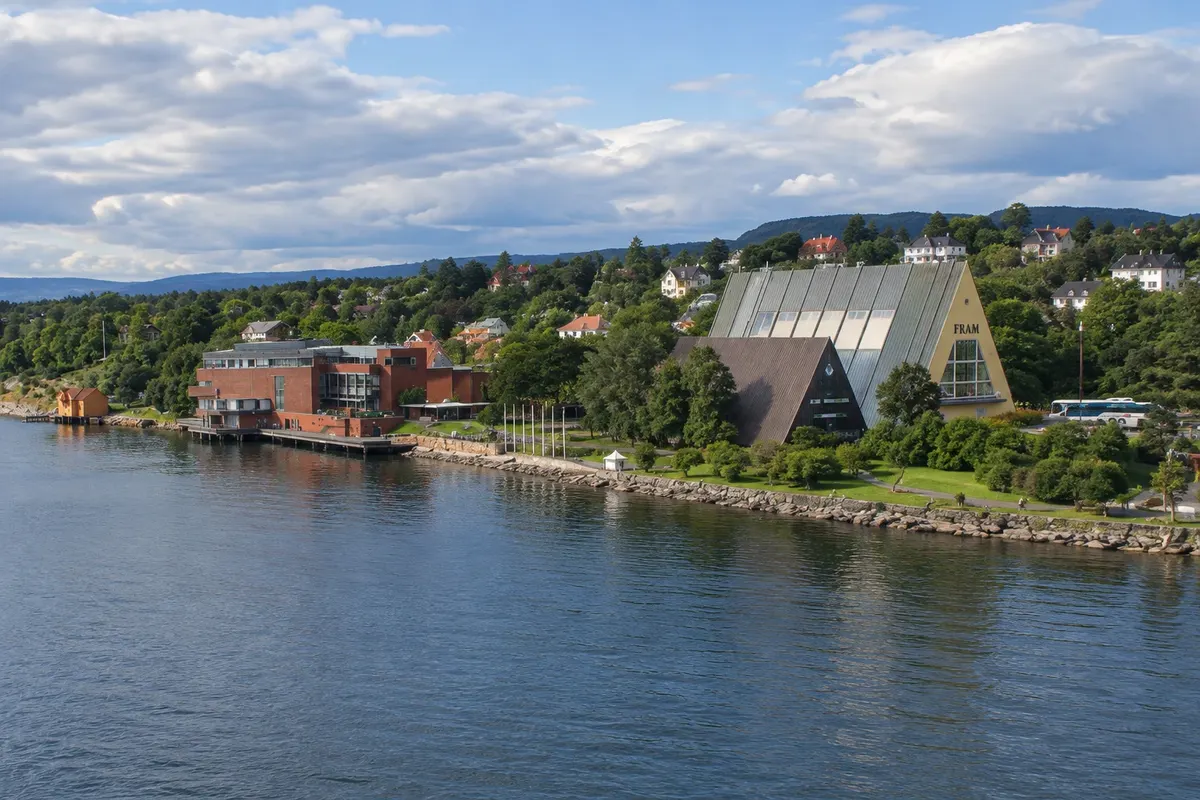
The museum of Norwegian polar expeditions in Bygdøy, built around the ship Fram, of Nansen and Amundsen, with the Gjøa, the first ship to cross the Northwest Passage.
The museum of Thor Heyerdahl's expeditions in Bygdøy, featuring the Kon-Tiki balsa raft, which crossed the Pacific from Peru to Polynesia in 1947, and the papyrus boat Ra II.
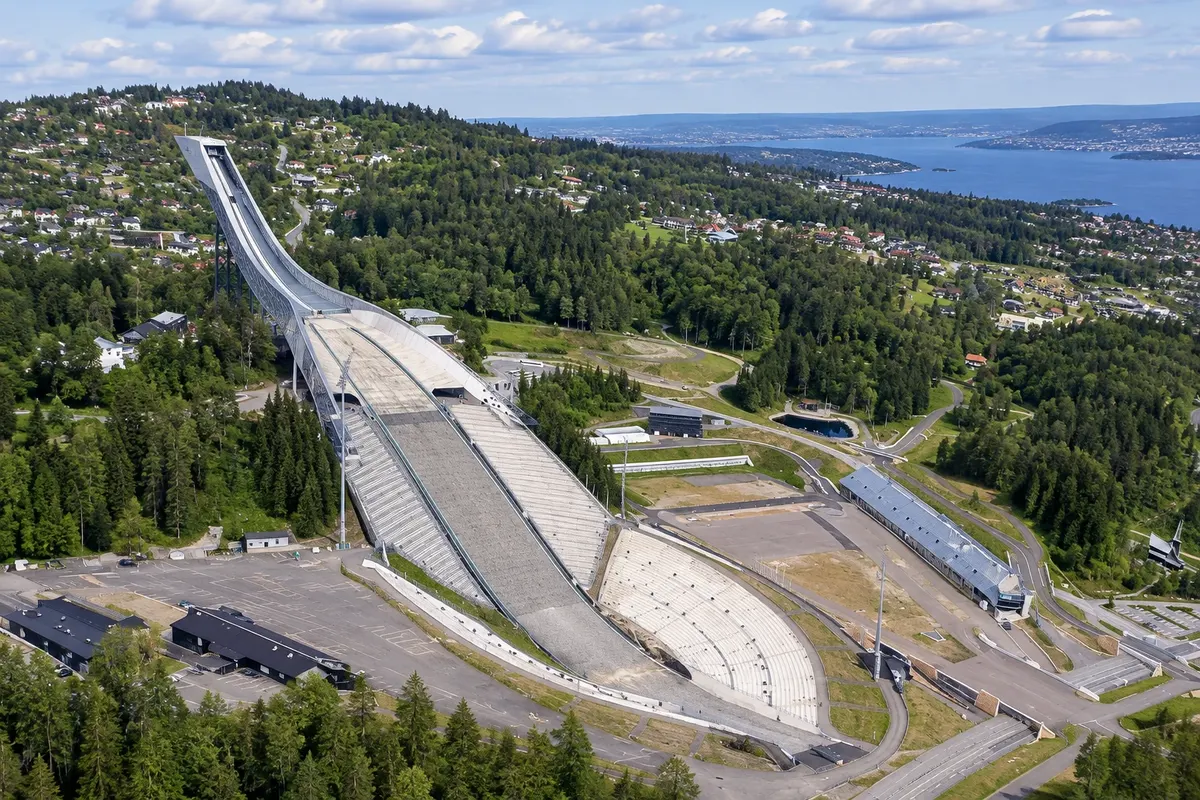
The ski jumping hill high above Oslo, a venue for competitions since the late 19th century, with the Ski Museum at its base and a platform at the top with views over the Oslofjord.
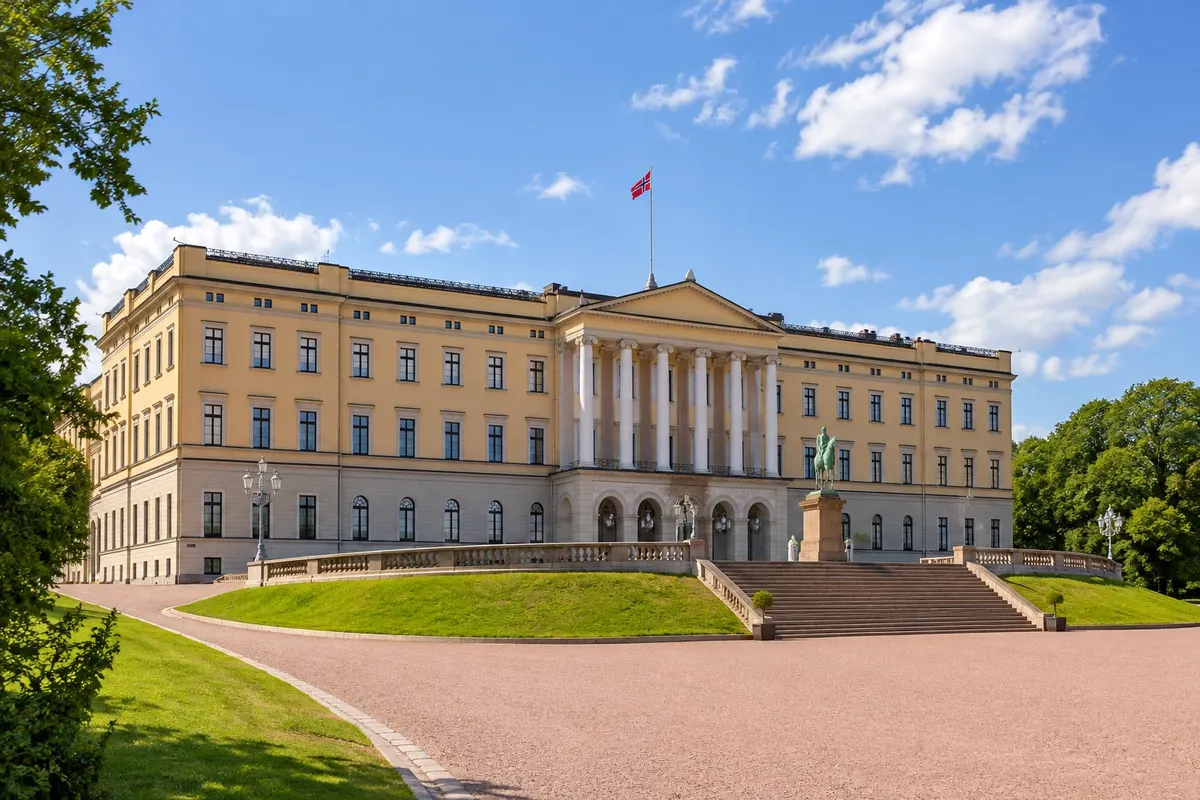
The Palácio Real de Oslo, the king's official residence, at the top of Karl Johans gate, with the park open year‑round, the changing of the guard and guided tours of the state rooms in summer.
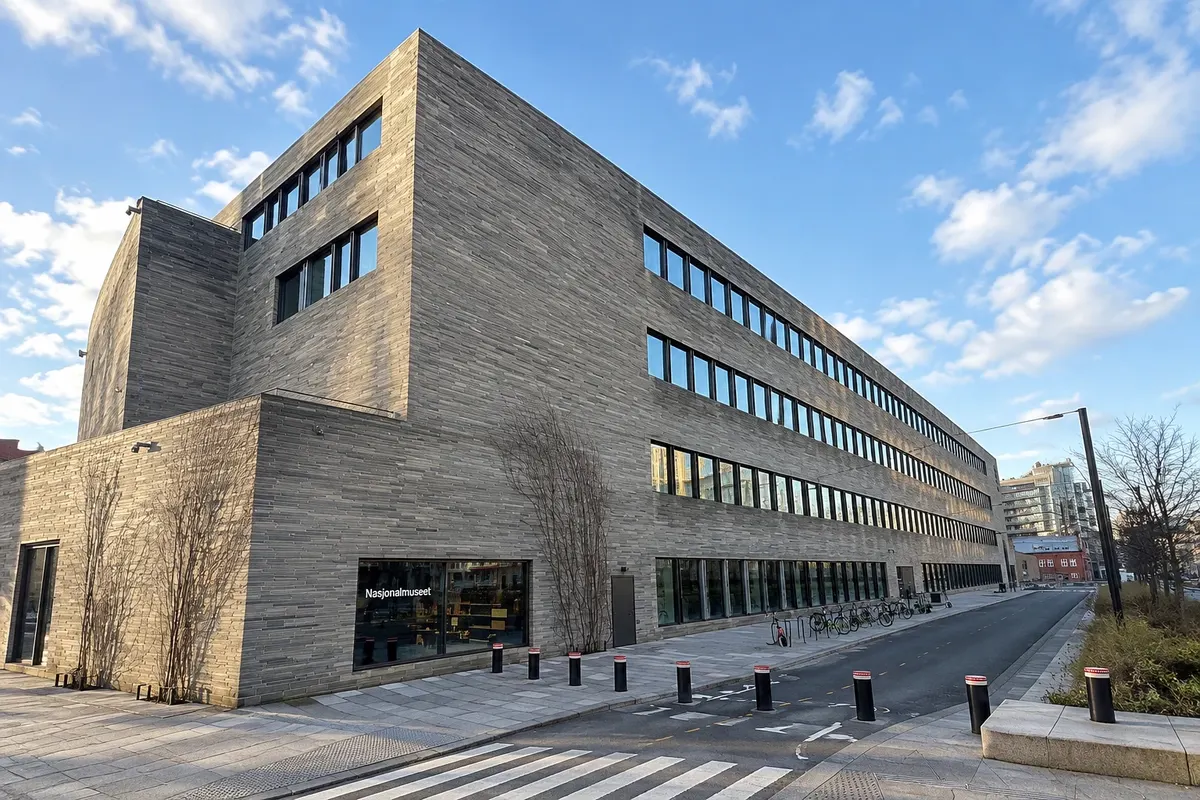
The Museu Nacional da Noruega, next to the former Vestbanen station: art, architecture and design of the country in a single building, housing the first painted version of The Scream by Munch, and a glass hall at the top.
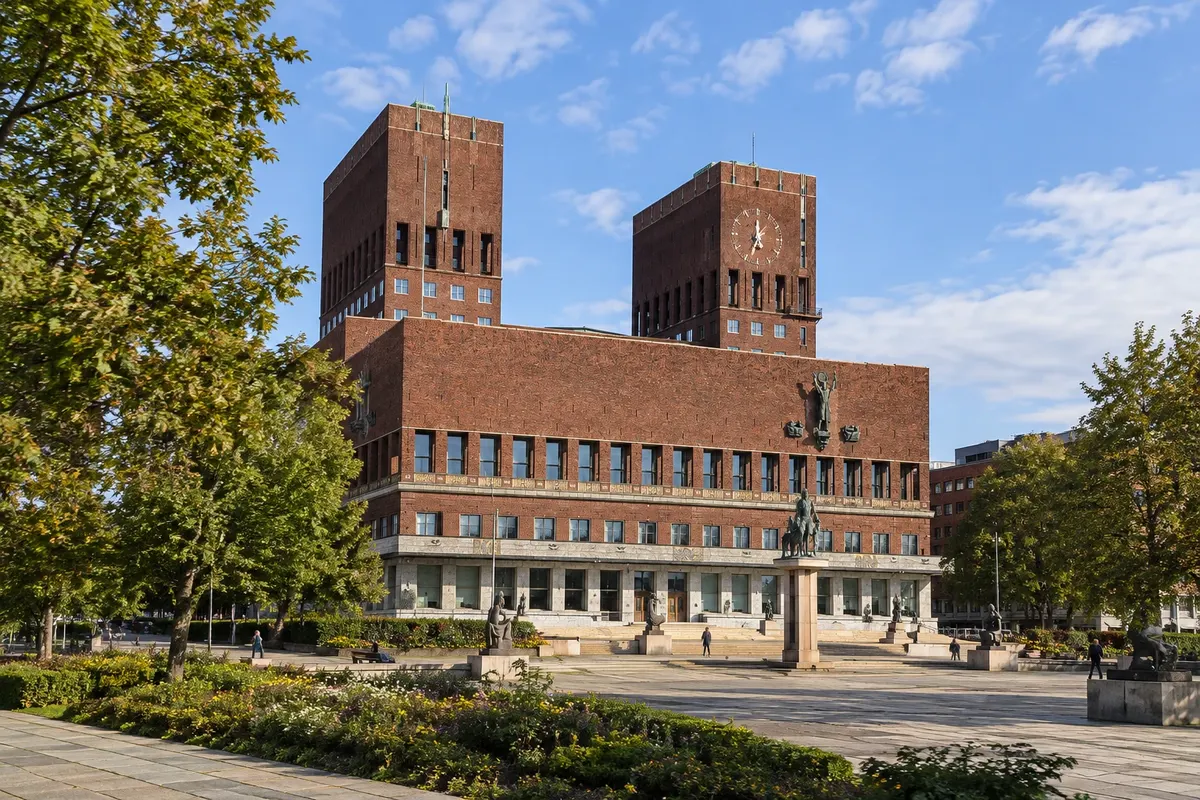
The Prefeitura is a brick building with two towers on the harbour edge, where the Nobel Peace Prize is presented every December 10, with the main hall covered in murals about Norway's history.
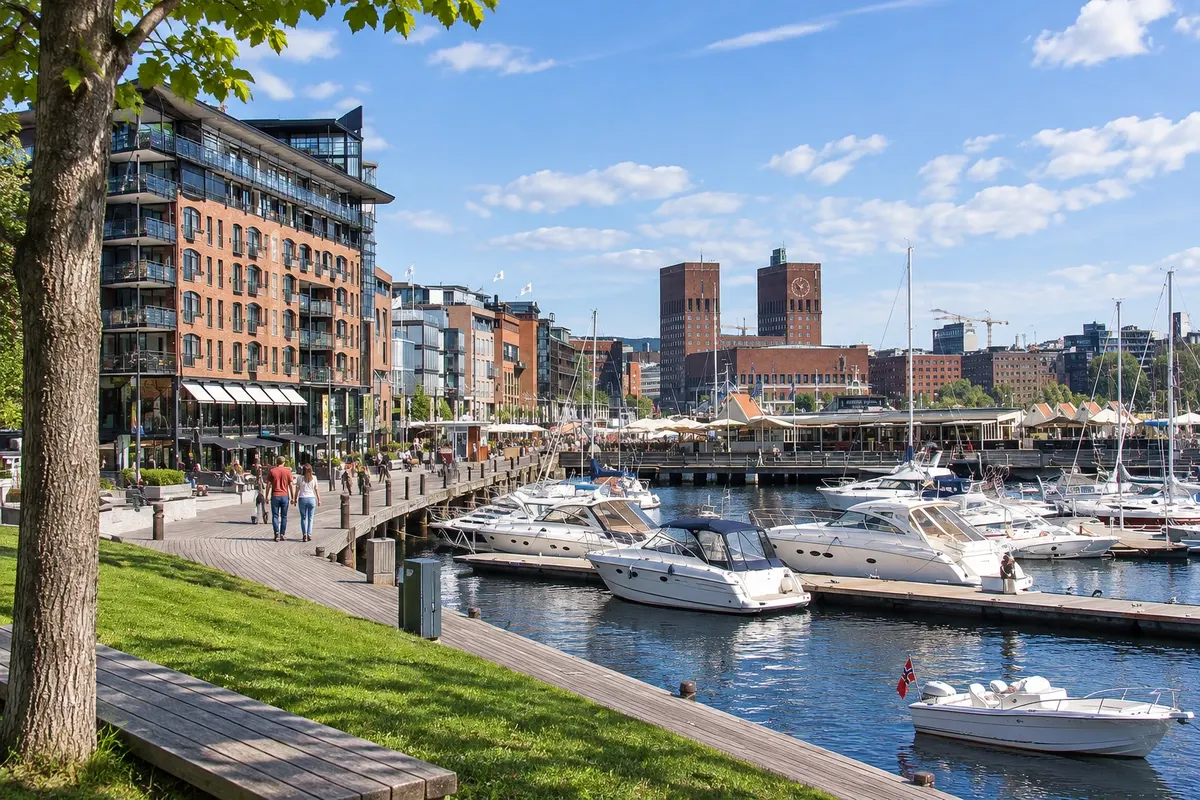
The old shipyard on Oslo's harbour has become a district of promenades, restaurants and waterfront apartments; it continues to Tjuvholmen, with the Museu Astrup Fearnley and a small urban beach.
Kaj izbrati pred odhodom
Izhodišče, trajanje, potek, vključene storitve in okvirna cena vsakega izleta.
Oslo Opera House is the home of the Norwegian National Opera and Ballet and sits on the Bjørvika waterfront beside the central station. The building was designed by the Norwegian firm Snøhetta to resemble a glacier entering the fjord: the roof is a large ramp clad in Italian white marble and granite that rises from the water level up to the roofline. The roof is open to the public and is why many people visit here without a ticket. From the highest point you can see the Oslofjord with its islands, Akershus Fortress, the new Bjørvika neighborhood and the Munch Museum building. In the water opposite is the glass-and-steel sculpture "Ela jaz" by Monica Bonvicini, which turns with the wind and the tide.
Kraji na poti: Operahuset Oslo.
Vključuje: Arrange access to the site and transport separately. Guided activities and tickets have their own conditions.
Nasvet: Go up onto the roof from the fjord side and descend on the city side to see the ramp and the Munch Museum from different angles. Tickets for performances often sell out; buy them in advance on the website. Combine it with the Munch, a 5-minute walk away.
Najboljši čas za obisk: In the late afternoon, from May to August, when the light often lasts late and the sunset is over the fjord
MUNCH is the museum dedicated to Edvard Munch, the Norwegian painter of The Scream. The artist bequeathed to the city of Oslo, in his will, most of the works he kept at home: thousands of paintings, prints, drawings, and photographs. The collection remained for decades in the Tøyen neighborhood and now occupies the tall, slanted building in Bjørvika, designed by the Spanish firm estudio Herreros, next to the Opera. Exhibitions spread across several floors. The permanent display follows Munch’s life, from his early realist canvases to works from the Frieze of Life, about love, anxiety, and death, such as Madonna, Vampire, and The Dance of Life. The museum’s versions of The Scream—a painting, a drawing, and a lithograph—are usually shown on rotation because of light; one is on view at a time, in intervals.
Kraji na poti: MUNCH.
Vključuje: Arrange access to the site and transport separately. Guided activities and tickets have their own conditions.
Nasvet: Start on the upper floors and descend on the escalators, looking out over the fjord. If you want to see the earliest painted version of The Scream from 1893, you should also visit the National Museum, which holds it.
Najboljši čas za obisk: At opening on weekdays, to see The Scream with fewer people
Vigeland Park is the sculpture area created by Gustav Vigeland within Frogner Park, in west Oslo. The sculptor made an agreement with the city: he received a studio and, in return, would leave the work to the city. He worked on the project from 1924 until his death in 1943, also designing the gates, the bridges and the layout of the gardens. There are 212 sculptures, all in bronze, granite or iron, representing the stages of life, from birth to old age. The visit follows an axis of nearly one kilometer from the main gate on Kirkeveien. The bridge over the lake has 58 bronze figures, including Sinnataggen, the angry little boy stamping his foot, the park’s most photographed statue. After that comes the children’s playground, with bronze babies, and the fountain, held up by six men and surrounded by a mosaic paving in a labyrinth pattern.
Kraji na poti: Vigelandsanlegget.
Vključuje: Arrange access to the site and transport separately. Guided activities and tickets have their own conditions.
Nasvet: Enter through the main gate on Kirkeveien and follow the axis to the Wheel of Life, without skipping the bridge, where most of the bronze statues are located. Bring a snack: the Frogner lawn is one of Oslo’s favorite picnic spots.
Najboljši čas za obisk: From May to September, with the rose gardens in bloom from June to August
Akershus Fortress occupies a promontory in Oslo’s harbor, between Bjørvika and Aker Brygge. It was begun by King Haakon V around 1300 to defend the city and endured sieges over the centuries. In the early 17th century, King Christian IV converted the medieval castle into a Renaissance residence and rebuilt Oslo beside it after a fire. The fortress grounds are open to the public and are walked on foot along paths among ramparts, cannons and lawns, with views of the fjord, the City Hall and the Opera. It is still a military area, with the guard and the noon changing of the guard. Inside the castle, which is visited with a ticket, are banquet halls, the chapel and the royal mausoleum, where Norwegian kings such as Haakon VII and Olav V are buried.
Kraji na poti: Akershus festning.
Vključuje: Arrange access to the site and transport separately. Guided activities and tickets have their own conditions.
Nasvet: Enter from the city side and exit through the harbor gate, descending toward the City Hall and Aker Brygge. The site is extensive and has stone inclines: wear comfortable shoes.
Najboljši čas za obisk: From May to September, when the castle usually has extended hours and guided tours
The Norsk Folkemuseum is Norway’s folk culture museum and one of the oldest open-air museums in the world. It’s on the Bygdøy peninsula and brings together more than 150 buildings dismantled from various regions and reassembled here in a park with woods and paths. The idea is to show how people lived in the countryside and in the city from the 16th to the 20th century. The best-known piece is the wooden Gol church, built around 1200 in the Hallingdal valley and moved to Oslo at the end of the 19th century. Around it are log houses from different regions: Telemark barns, Setesdal farms, mountain pasture huts. In summer, staff in period costumes bake bread, tend animals and demonstrate traditional crafts.
Kraji na poti: Norsk Folkemuseum.
Vključuje: Arrange access to the site and transport separately. Guided activities and tickets have their own conditions.
Nasvet: Start with the Gol church and follow the map by regions; save the indoor exhibits for the end or for a rainy day. There is a café inside the museum.
Najboljši čas za obisk: From June to August, when the houses are usually open and there are activities with guides in period costumes
The Frammuseet tells the story of Norway’s polar expeditions and was built around the Fram, the wooden ship used by Fridtjof Nansen, Otto Sverdrup and Roald Amundsen. The Fram was designed to be pushed up by the ice rather than crushed, and it carried Amundsen to Antarctica on the expedition that first reached the South Pole in 1911. The ship is entirely inside the A‑roof building, and visitors can go on board, walk the deck and descend to the cabins, the galley and the engine room, preserved with period objects. Around it, on the floors that circle the hull, panels, photos and equipment show the Fram’s three expeditions: to the Arctic Ocean, to the Canadian archipelago and to Antarctica.
Kraji na poti: Frammuseet.
Vključuje: Arrange access to the site and transport separately. Guided activities and tickets have their own conditions.
Nasvet: Board the Fram before seeing the exhibitions, when the ship is still empty. The Kon-Tiki is on the other side of the parking lot: you can do both in one morning.
Najboljši čas za obisk: Open year-round

The Kon-Tiki Museum houses the boats and collections from Thor Heyerdahl’s expeditions, the Norwegian explorer who sought to show that ancient peoples could have crossed oceans in simple vessels. The centerpiece is the Kon-Tiki, the balsa log raft on which he and five companions sailed about 8,000 km across the Pacific, from Peru to Polynesia, in 101 days in 1947. The original raft is displayed as if at sea, with its sail and bamboo cabin. Below it, on a lower level, a model of a whale shark and other animals recall what the crew saw during the voyage. Beside it is the Ra II, the papyrus boat in which Heyerdahl crossed the Atlantic from Morocco to Barbados in 1970 with an international crew.
Kraji na poti: Kon-Tiki Museum.
Vključuje: Arrange access to the site and transport separately. Guided activities and tickets have their own conditions.
Nasvet: Go down to the lower floor to see the raft from below, with the whale shark. Do the Kon‑Tiki and the Fram in sequence and continue on foot to the Folk Museum.
Najboljši čas za obisk: Open year-round

Holmenkollen is the hill in northwest Oslo where Norway’s best‑known ski jump is located. Competitions have taken place there since 1892, and the Holmenkollen Ski Festival in March usually draws thousands of people. The current steel jump, with a silhouette visible from many points in the city, hosted the FIS Nordic World Ski Championships in 2011. At the base of the jump is the Ski Museum, covering four thousand years of skiing: prehistoric skis found in bogs, equipment from the polar expeditions of Nansen and Amundsen, the development of competitive skiing and a section about the 1952 Winter Games in Oslo. the museum ticket includes access to the elevator and stairs up to the platform at the top of the jump.
Kraji na poti: Holmenkollbakken.
Vključuje: Arrange access to the site and transport separately. Guided activities and tickets have their own conditions.
Nasvet: Bring a jacket even in summer: it’s windy at the top of the hill and it’s colder than in the center. If you have time, ride two more metro stops to Frognerseteren and walk back, descending through the forest.
Najboljši čas za obisk: On a clear day, for the fjord view
The Royal Palace is the official residence of the King of Norway and stands atop Karl Johans gate, at the end of the axis that begins at the central station. It was built in the first half of the 19th century for King Charles John, who ruled Sweden and Norway in union, and was completed in 1849. It is a light-yellow neoclassical building, with its façade facing the city and the equestrian statue of Charles John in the square in front. The palace park, Slottsparken, is open to the public year-round and serves as a passage between downtown and the western neighborhoods. It has lakes, tree-lined promenades and sculptures, and locals use it for walking and picnicking in summer. In front of the façade, the Royal Guard performs the changing of the guard every day around during the day; check before you go.
Kraji na poti: Det kongelige slott.
Vključuje: Arrange access to the site and transport separately. Guided activities and tickets have their own conditions.
Nasvet: Buy the summer guided tour in advance. Walk up Karl Johans gate from the central station, passing the Parliament and the university, to arrive facing the façade.
Najboljši čas za obisk: The changing of the guard takes place daily; in summer, from late June to mid-August, there is usually a guided tour of the halls
The National Museum brings together in one building the collections that used to be housed in four Oslo museums: the National Gallery, the Museum of Contemporary Art, the Museum of Decorative Arts, and the Museum of Architecture. It sits on the waterfront, between the City Hall and Aker Brygge, in a gray stone building with a long glass hall at the top, the Light Hall, used for temporary exhibitions. The permanent collection traces Norwegian art and design from the Middle Ages to the present across about 90 rooms. The Edvard Munch room is the most sought after: it houses the first painted version of The Scream, from 1893, Madonna, The Sick Child and other paintings. Before it, the 19th-century rooms show Norwegian landscape painters, with fjords, mountains and countryside scenes, such as works by J. C. Dahl and Hans Gude.
Kraji na poti: Nasjonalmuseet.
Vključuje: Arrange access to the site and transport separately. Guided activities and tickets have their own conditions.
Nasvet: Go straight to the Munch gallery and then return through the 19th-century rooms. Combine it with the City Hall across the square and lunch in Aker Brygge.
Najboljši čas za obisk: At opening, to visit the Munch room with fewer people
Oslo City Hall is the red-brick building with two square towers on the harbor square, between Akershus Fortress and Aker Brygge. It houses the city administration and is the place where the Nobel Peace Prize is awarded each December 10. The building opened in 1950, on the city’s 900th anniversary, and has a clock with a carillon in one of the towers. The interior can be visited. The Main Hall, where the Nobel ceremony takes place, has walls covered by murals by Henrik Sørensen and Alf Rolfsen about work, life and Norway’s history, including the occupation during World War II. On the upper floor are the Council Chamber, the Gallery and other rooms decorated with tapestries and paintings by Norwegian 20th-century artists.
Kraji na poti: Oslo City Hall.
Vključuje: Arrange access to the site and transport separately. Guided activities and tickets have their own conditions.
Nasvet: Enter through the city-facing facade, see the murals in the Central Hall and exit on the harbor side to catch the boat to Bygdøy. Notice the wooden friezes in the courtyard, which many people miss.
Najboljši čas za obisk: During the day, on weekdays
Aker Brygge is the waterfront neighborhood on the west side of Oslo Harbor, built where the Akers mekaniske verksted shipyard once operated; it closed in the 1980s. The old sheds and new buildings form a promenade along the water with restaurants, bars, shops and offices, and fjord tour boats dock in front. Continuing along the promenade to the west, a bridge leads to Tjuvholmen, the tip of the neighborhood, with contemporary architecture, art galleries and canals. Here you’ll find the Astrup Fearnley Museum of contemporary art in a Renzo Piano building with a glass sail-shaped roof. Behind the museum, a sculpture park and a small urban beach often fill up on warm summer days.
Kraji na poti: Aker Brygge.
Vključuje: Arrange access to the site and transport separately. Guided activities and tickets have their own conditions.
Nasvet: Walk from the City Hall to the tip of Tjuvholmen and return along the canals. For simpler meals, look for the side streets and food markets.
Najboljši čas za obisk: In the late afternoon, from May to September, when there is often light until late and the terraces are open
Po dnevih
Predlogi za načrtovanje poti. Vrstni red dni prilagodite vremenu in razpoložljivosti izletov.
Bjørvika brings together the Opera’s marble ramp and the rooms of the MUNCH. Split the day between the waterfront architecture and the museum’s collection, walking between the two.
Walk the Akershus ramparts in the morning. Then stroll along the waterfront to the National Museum and choose the art and design rooms you want to visit.
Go to Bygdøy by bus or by boat in season. The Norsk Folkemuseum requires outdoor walking; Fram and Kon-Tiki are close to each other and can take up the rest of the day.
Najboljši čas za obisk
From May to September days are usually long and mild, with the fjord, the islands and the boats to Bygdøy in full operation; June and July have light until almost midnight. From December to February the cold often falls below zero, with snow and short days, and Holmenkollen becomes a ski area.
The seasons shown are the most usual ones; nature doesn't always follow the calendar.
Winter · plan your travel
The monthly average at the reference station is usually around -2.3 °C. Normal precipitation for the month is about 58 mm, combining rain and snow in water equivalent. Cold tends to be persistent and the days are usually short. Prioritize outings with confirmed access for the period.
Winter · plan your travel
The monthly average at the reference station is usually around -2.0 °C. Normal precipitation for the month is about 46 mm, combining rain and snow in water equivalent. Cold tends to be persistent and the days are usually short. Prioritize outings with confirmed access for the period.
Spring · plan your travel
The monthly average at the reference station is usually around 1.3 °C. Normal precipitation for the month is about 41 mm, combining rain and snow in water equivalent. Light tends to increase over the season, while snow usually remains on the mountains. High-altitude routes follow their own schedule.
Spring · plan your travel
The monthly average at the reference station is usually around 6.2 °C. Normal precipitation for the month is about 48 mm, combining rain and snow in water equivalent. Light tends to increase over the season, while snow usually remains on the mountains. High-altitude routes follow their own schedule.
Spring · long days
The monthly average at the reference station is usually around 11.4 °C. Normal precipitation for the month is about 60 mm, combining rain and snow in water equivalent. Light tends to increase over the season, while snow usually remains on the mountains. High-altitude routes follow their own schedule.
Summer · long days
The monthly average at the reference station is usually around 15.3 °C. Normal precipitation for the month is about 80 mm, combining rain and snow in water equivalent. The weather is generally mild and the days are usually very long. There is greater demand for outdoor activities; arrange reservations in advance.
Summer · long days
The monthly average at the reference station is usually around 17.7 °C. Normal precipitation for the month is about 87 mm, combining rain and snow in water equivalent. The weather is generally mild and the days are usually very long. There is greater demand for outdoor activities; arrange reservations in advance.
Summer · long days
The monthly average at the reference station is usually around 16.5 °C. Normal precipitation for the month is about 103 mm, combining rain and snow in water equivalent. The weather is generally mild and the days are usually very long. There is greater demand for outdoor activities; arrange reservations in advance.
Autumn · plan your travel
The monthly average at the reference station is usually around 12.2 °C. Normal precipitation for the month is about 82 mm, combining rain and snow in water equivalent. Temperatures and day length usually decrease. Long hikes and mountain travel require planning before setting out.
Autumn · plan your travel
Monthly average at the reference station is usually around 6.6 °C. Normal monthly precipitation is about 93 mm, combining rain and snow in water equivalent. Temperatures and day length tend to fall. Long hikes and transfers in the mountains require planning before departure.
Autumn · plan your travel
Monthly average at the reference station is usually around 2.2 °C. Normal monthly precipitation is about 85 mm, combining rain and snow in water equivalent. Temperatures and day length tend to fall. Long hikes and transfers in the mountains require planning before departure.
Winter · plan your travel
Monthly average at the reference station is usually around -1.4 °C. Normal monthly precipitation is about 54 mm, combining rain and snow in water equivalent. Cold tends to be persistent and days tend to be short. Prioritize outings with confirmed access for the period.
Načrtujte pot
Check train, bus and boat connections to Oslo for your travel date. Verify each leg and the return connection before combining different services. On boat routes, confirm the quay and the direction of travel.
No. The city centre is walkable, and metro, tram, bus and the harbour boats use the same ticket. Holmenkollen is 30 minutes by metro; Bygdøy, 15 minutes by bus. There is an urban toll and limited parking in the centre.
Pred odhodom
Z nekaj načrtovanja boste imeli več časa za uživanje na poti.
From May to September days are usually long and mild, with the fjord, the islands and the boats to Bygdøy in full operation; June and July have light until almost midnight. From December to February the cold often falls below zero, with snow and short days, and Holmenkollen becomes a ski area.
The seasons shown are the most usual ones; nature doesn't always follow the calendar.
Two days are enough for the Bjørvika waterfront, the center, Parque Vigeland and the museums of Bygdøy. Three days allow adding the Museu Nacional, Holmenkollen and a boat trip around the fjord's islands. Those heading to the fjords usually leave Oslo by train for Myrdal and Flåm.
The center, between the central station and the Palácio Real, is the most practical base, close to trains, boats and museums. Aker Brygge and Tjuvholmen are on the waterfront, with restaurants. Grünerløkka, to the north, has cafés, thrift shops and nightlife, 15 minutes by tram. Frogner, to the west, is residential and close to Parque Vigeland.
Odnesite svoje odpadke, upoštevajte oznake in podprite lokalne ponudnike. V naravi upoštevajte navodila za obiskovalce.
Odgovori na vaša vprašanja
Two days cover the essentials: Ópera, Munch, Akershus, Parque Vigeland and Bygdøy. With three, there's time for the Museu Nacional, Holmenkollen and the fjord islands. Many people stay overnight in Oslo on arrival and on return from the fjord trip.
No. Metro, tram, bus and boats cover the city with the same ticket, and the center is walkable. A car only helps if you head into the mountains; for Bergen and the fjords, the train is simpler.
Gardermoen airport is about 50 km away. The express train and the regional train take 20 to 25 minutes to the central station; there are also buses to the neighborhoods. Check schedules before you go.
From May to September, with long days and the fjord in use. Winter, from December to February, usually has snow and only a few hours of daylight, but the museums are open and there is skiing at Holmenkollen.
They are about 15 minutes by bus from the center. From April to October there is usually a boat departing from the City Hall quay. The Fram and the Kon-Tiki are next to each other; the Museu do Folclore is about a 15-minute walk from them.
Generally yes: shops, restaurants, transport and museums usually accept cards, and some places don't accept cash. The currency is the Norwegian krone.
Več kot vodnik