

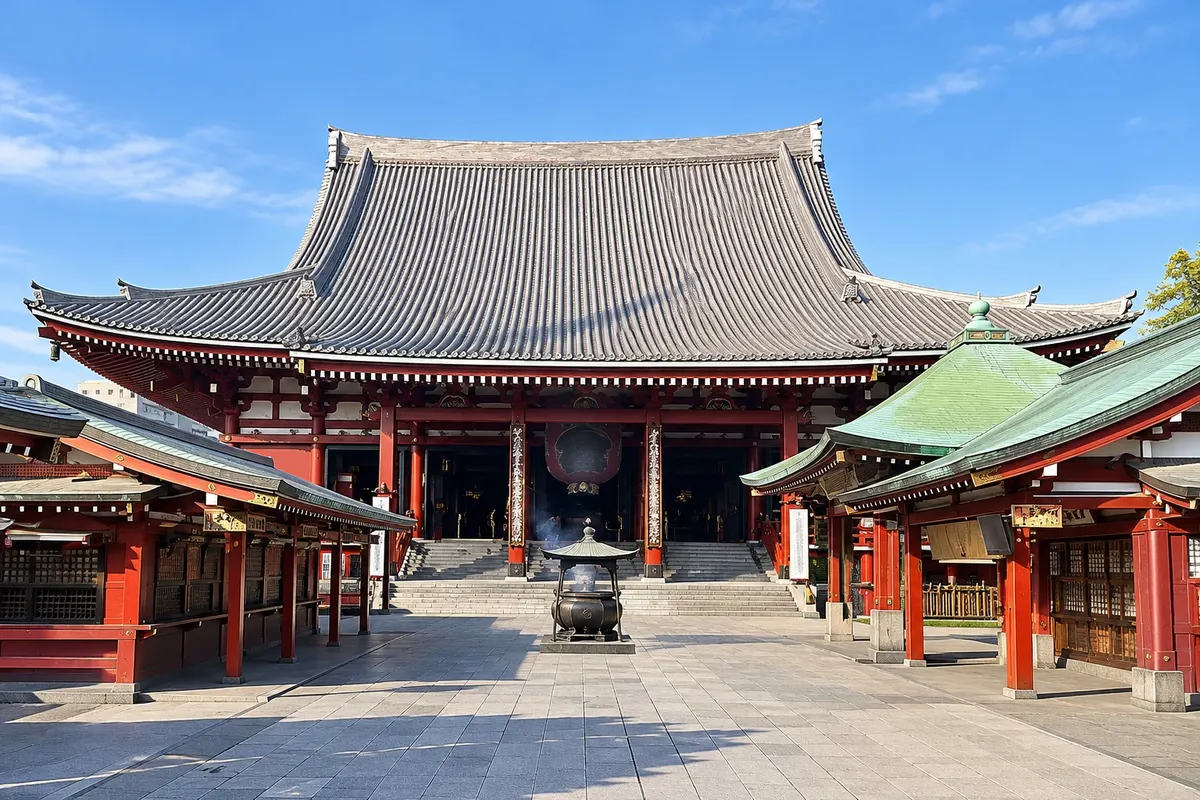
Tokyo · Tokyo · Temple
Senso-ji Temple
Tokyo’s oldest temple, in Asakusa: the Kaminarimon gate with its large red lantern, the Nakamise shopping street, the Kannon hall and the five-story pagoda.

 Išči
 Brazilija
 Antarktika
 Argentina
 Bolivija
 Čile
 Kolumbija
 Ekvator
 Gvajana
 Francoska Gvajana
 Falklandski otoki (Malvini)
 Paragvaj
 Peru
 Surinam
 Urugvaj
 Venezuela
 Nemčija
 Avstrija
 Belgija
 Hrvaška
 Danska
 Slovaška
 Slovenija
 Španija
 Finska
 Francija
 Grčija
 Nizozemska
 Madžarska
 Irska
 Islandija
 Italija
 Luksemburg
 Norveška
 Poljska
 Portugalska
 Združeno kraljestvo
 Češka
 Švedska
 Švica
 Turčija
 Bermudi
 Kanada
 Združene države Amerike
 Grenlandija
 Mehika
 Sveta Peter in Mihael
 Dominikanska republikaJaponskaTurčija
 Južnoafriška republika
 Egipt
 Avstralija
 Fidži
 Nova Zelandija
 Papua Nova Gvineja
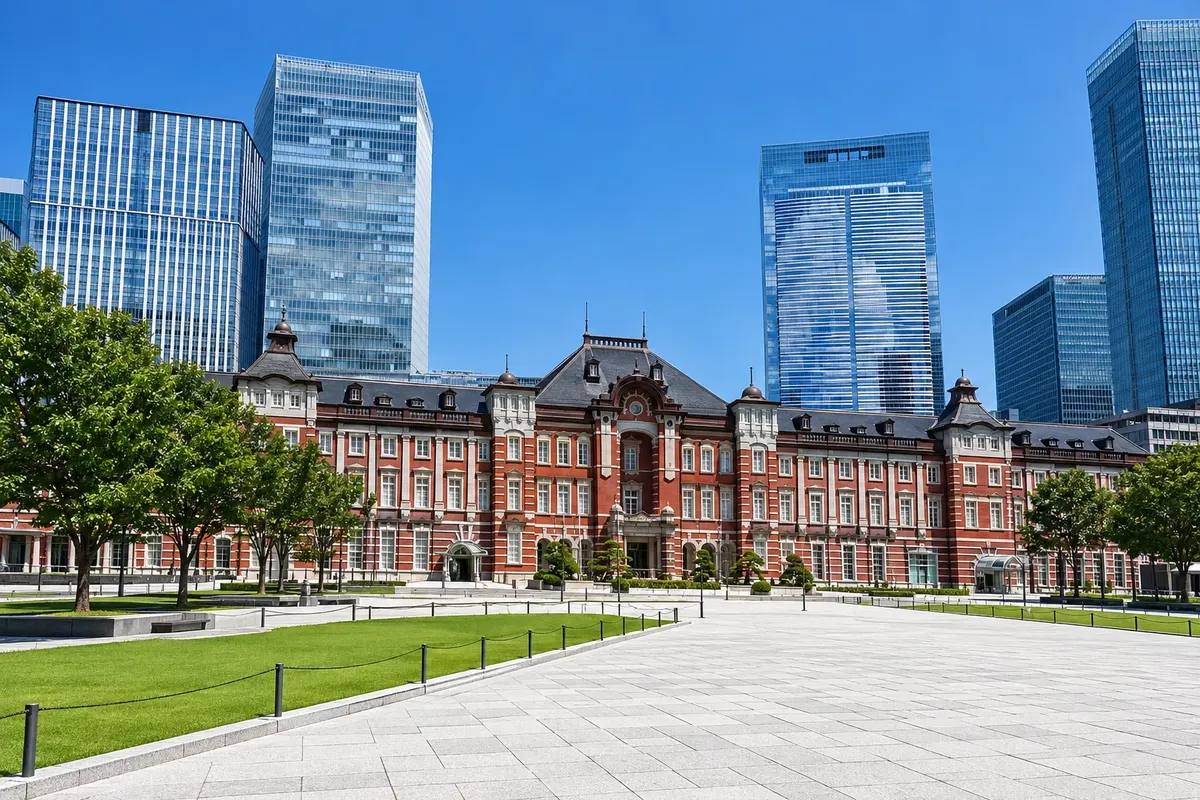
Tokyo · Japonska
Japan’s capital brings together Asakusa’s temples, the Meiji Shrine, Shibuya Crossing, Ueno’s museums and the gardens of the old Edo Castle, all linked by a network of trains and subway lines.
Na fotografiji: Tokyo Station, seen from the Marunouchi side.
Illustrative images. The pictures in this guide are illustrations based on the real place, not photographs, and may differ from it.
Spoznajte kraj
Tokyo is the capital of Japan and the gateway for most travelers, through Haneda and Narita airports. It does not have a single center: it is a collection of neighborhoods with distinct personalities, connected by JR trains, subway lines, and private railways. The Yamanote loop line runs through Tokyo, Ueno, Akihabara, Shinjuku, Harajuku and Shibuya, and serves as a mental map for newcomers.
The old side appears in Asakusa, around Senso-ji Temple, and in Ueno, where the park houses the Tokyo National Museum, other museums and Shinobazu Pond. In the center, the East Gardens occupy part of the former Edo Castle grounds, headquarters of the Tokugawa shoguns, next to the Imperial Palace. The Meiji Shrine sits in a planted forest between Harajuku and Yoyogi.
The modern side is in Shinjuku, with skyscrapers, department stores and the narrow alleys of Omoide Yokocho and Golden Gai; in Shibuya, with the crossing in front of the station; in Ginza, of luxury shops; and in Akihabara, of electronics, manga and games. The Tokyo Skytree tower dominates the eastern skyline, and the artificial island of Odaiba lies in the bay.
Food is part of the experience: ramen, sushi, tempura, izakayas and the food floors in department store basements. The outer Tsukiji market still has fish stalls and kitchens near the old wholesale market, which moved to Toyosu. From Tokyo you can take day trips to Kamakura, Nikko, Hakone and Mount Fuji.
V vodniku še ni nastanitev – Tokyo.
kako do tja · koliko dni · načrt poti · vprašanja
✈ Aeroporto Internacional de Tóquio (Haneda) (HND), kraj: Ota· 20 km do cilja (Tokyo)
✈ Aeroporto Internacional de Narita (NRT), kraj: Narita· 66 km do cilja (Tokyo)
International flights arrive at Haneda, on the bay, and at Narita, in Chiba, about 60 km away. Both have trains and buses to the city center. From other cities, the shinkansen arrives at Tokyo Station and Shinagawa; from Kyoto it takes about 2h15.
Doživite kraj
Tokyo’s oldest temple, in Asakusa: the Kaminarimon gate with its large red lantern, the Nakamise shopping street, the Kannon hall and the five-story pagoda.
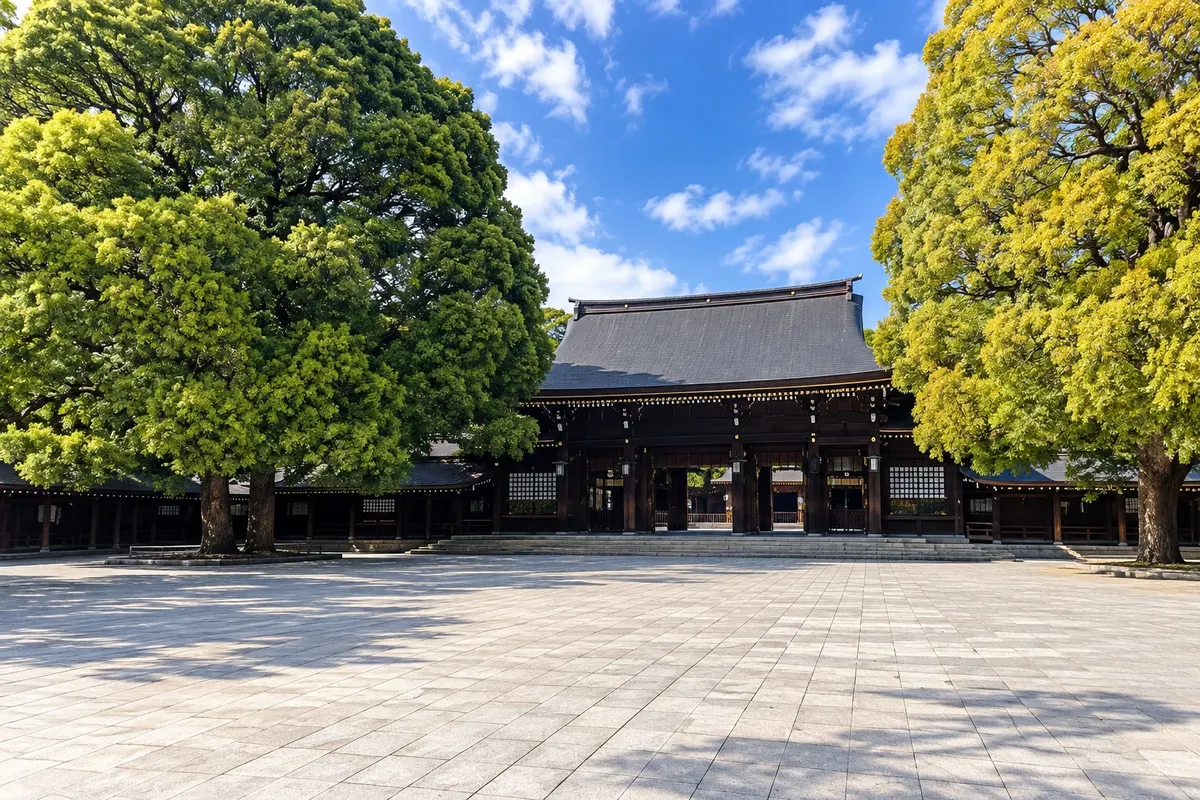
The large Shinto shrine of Tokyo, dedicated to Emperor Meiji and Empress Shoken, surrounded by a forest planted between Harajuku and Yoyogi.
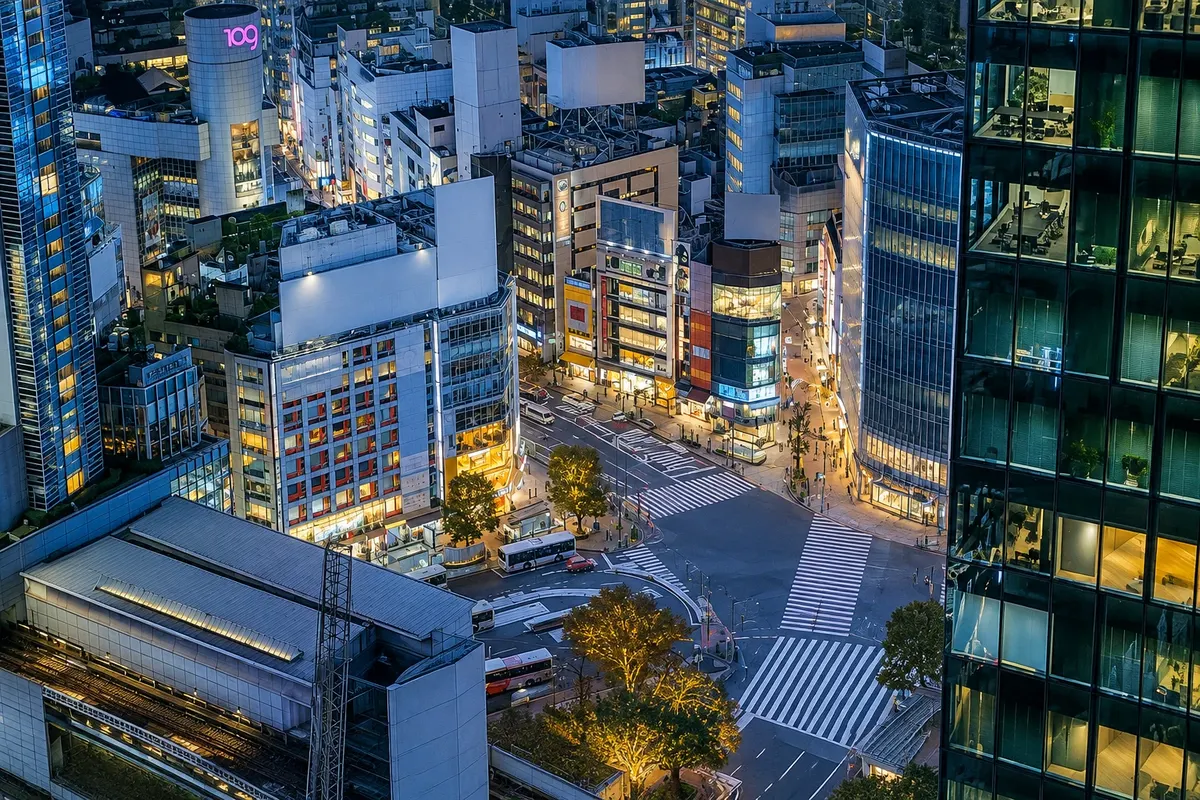
The pedestrian crossing in front of Shibuya Station, crossed in all directions at each green signal, with the Hachiko dog statue and viewing points on surrounding buildings.
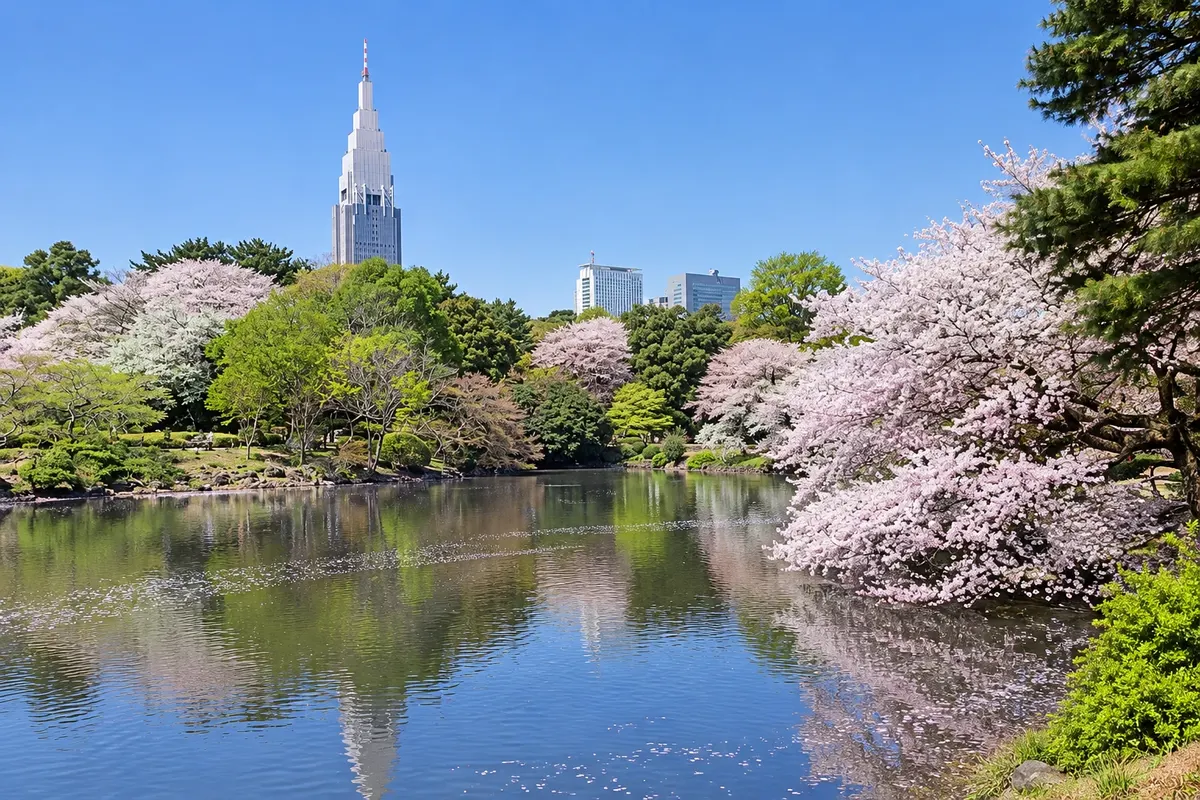
A former imperial garden in the middle of Shinjuku, with areas of Japanese garden, English landscape and formal French garden, a greenhouse and around a thousand cherry trees.
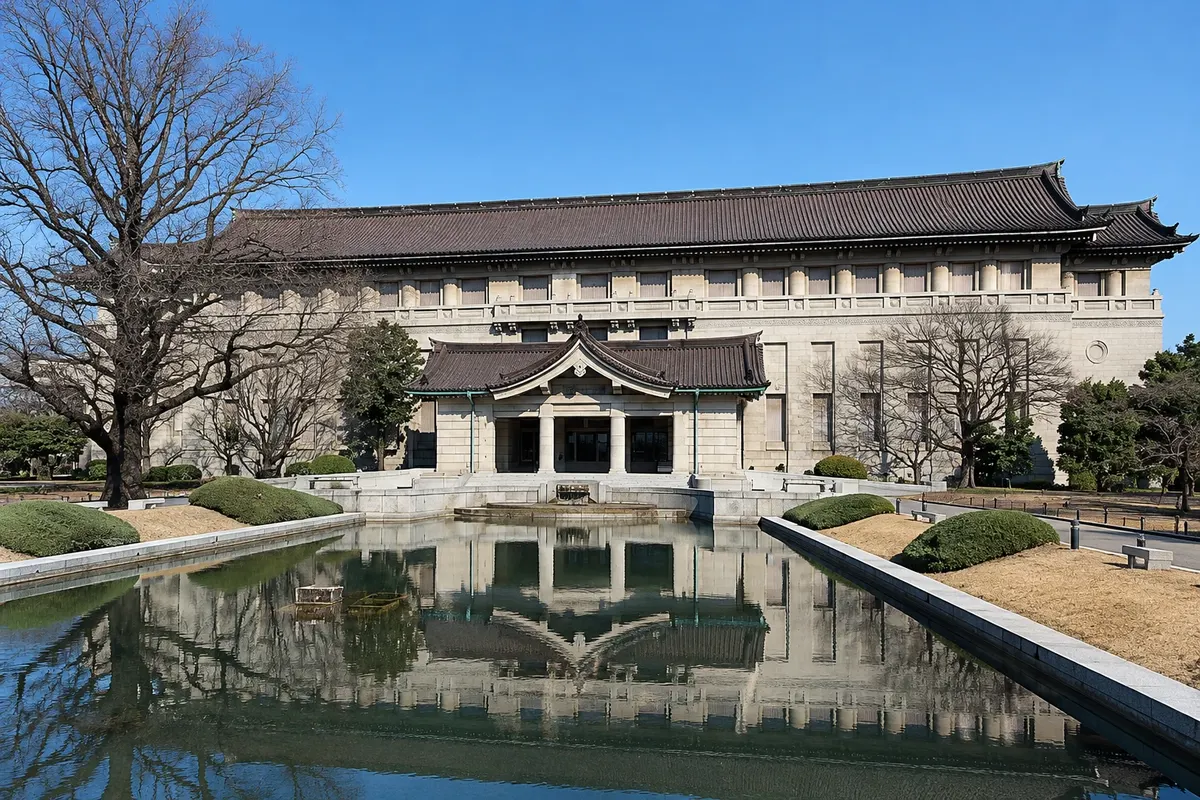
Japan’s oldest museum, in Ueno Park, with the country’s largest collection of Japanese art: samurai armor, paintings, ceramics, kimonos and Buddhist sculptures.
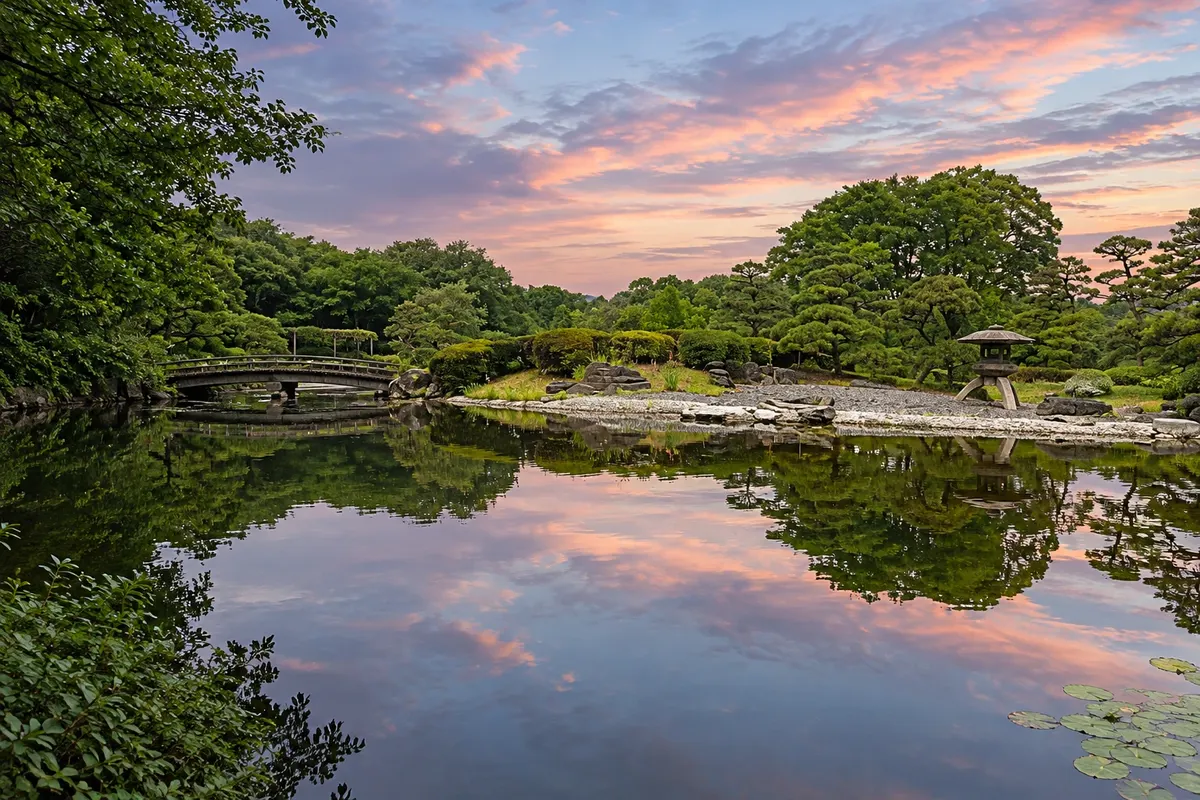
The area of the former Edo Castle open to the public, with stone walls, the stone base of the main keep, guardhouses and the Ninomaru Garden, in central Tokyo.
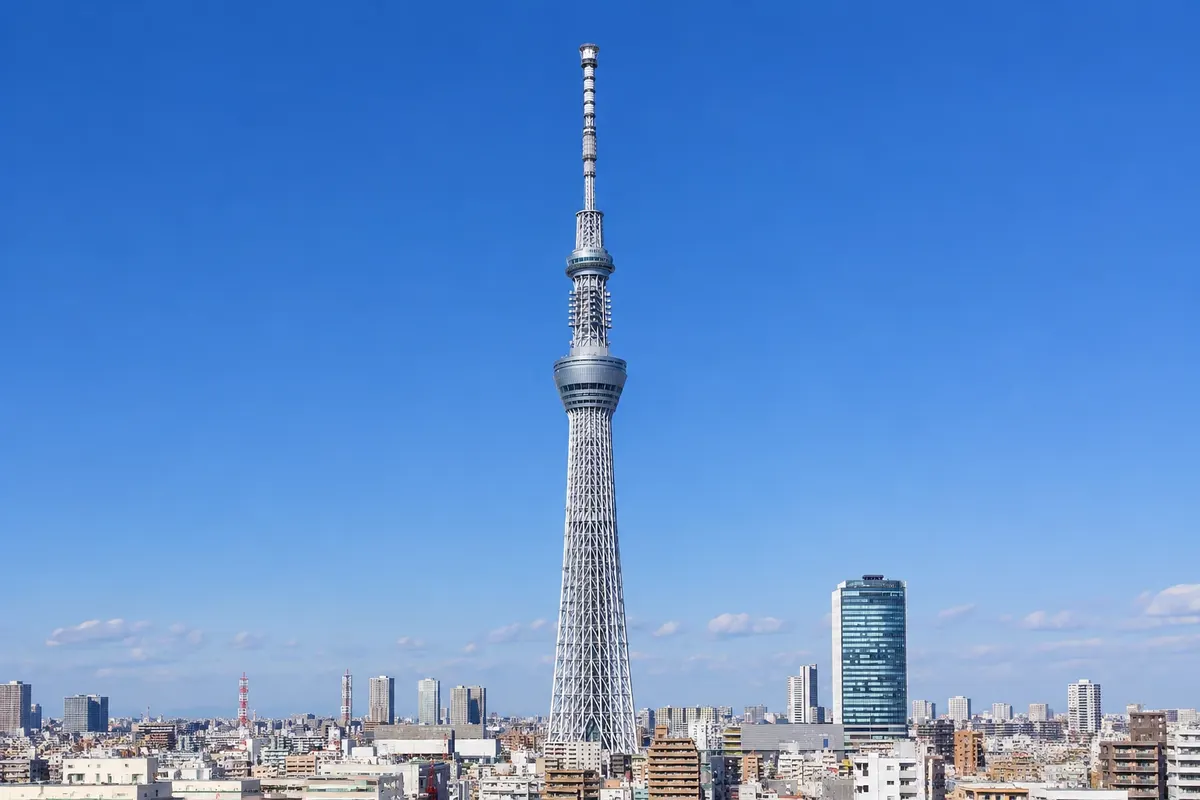
The 634-meter tower in Sumida, with two observation decks at 350 m and 450 m over the Tokyo plain, and a shopping center and aquarium at the base.
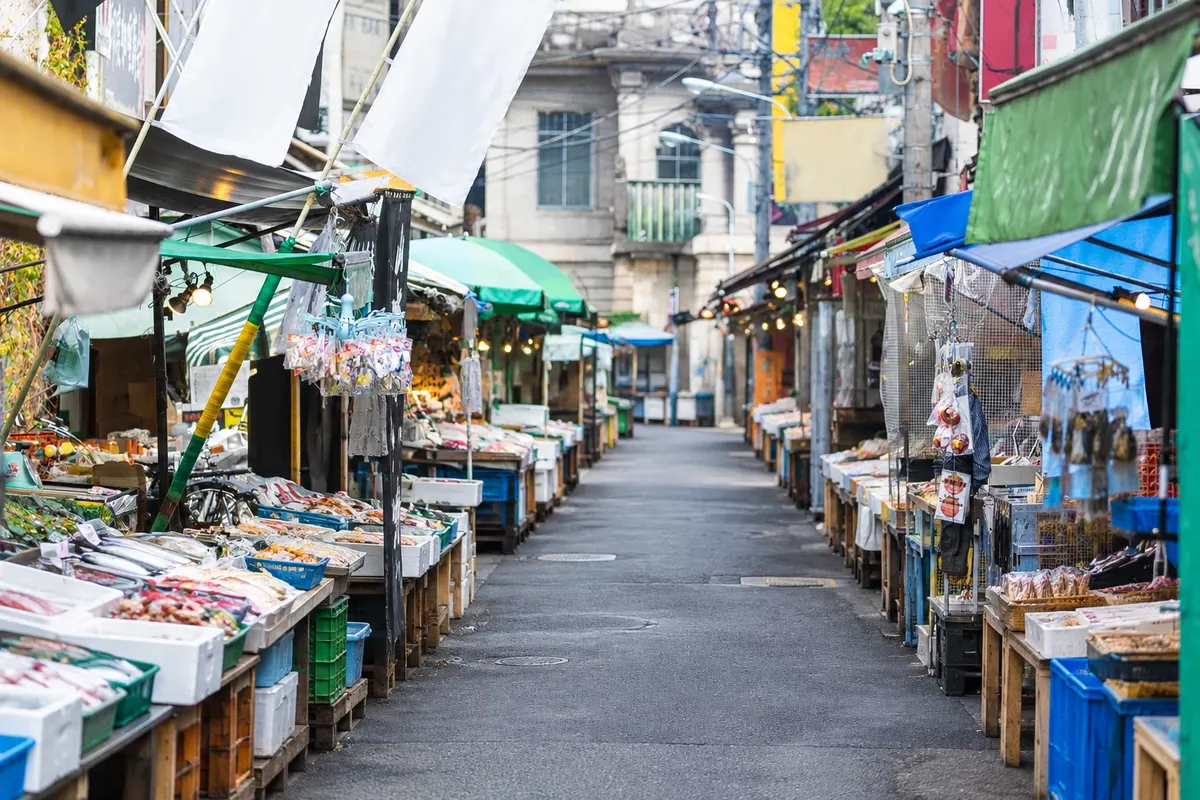
The streets of stalls and shops beside Tokyo’s former wholesale fish market, selling seafood, Japanese omelettes, knives and utensils, liveliest in the morning.
Pred odhodom
Tokyo – Tokyo Capital
Razdalje so približne. Pred potovanjem preverite lete in vozne rede avtobusov, vlakov ali ladij.
Haneda, on the bay, has a monorail, trains and buses to Hamamatsucho, Shinagawa and Shinjuku in under an hour. From Narita, the Narita Express and the Skyliner reach central stations in 1 hour to 1h30. shinkansen services to the west stop at Shinagawa and Tokyo Station; those to the north and to Kanazawa stop at Ueno and Tokyo Station.
Three days for the main neighborhoods: Asakusa and Ueno, the center and Ginza, Shinjuku, Harajuku and Shibuya. With four or five days, you’ll have time for Odaiba Bay, Akihabara’s shops and a day trip outside the city. Because the city is large, it’s best to group nearby neighborhoods on the same day.
The most pleasant days are in cherry blossom spring and in autumn, from October to November. From June to mid-July there is heavy rain; summer is hot and humid. Winter is usually dry, cold and clear, good for seeing Mount Fuji from viewpoints.
The seasons shown are the most usual ones; nature doesn't always follow the calendar.
No. Trains and subways reach all neighborhoods and neighboring cities, and rechargeable Suica and PASMO cards pay the fares. Parking is expensive and difficult. Taxis are an option at night, after the last train.
Predlog poti
Pot povezuje znamenitosti na tej strani. Za oglede boste imeli dovolj časa.
Start early at Senso-ji temple, entering through the Kaminarimon and along Nakamise Street before the shops open. Then cross the Sumida River to the Tokyo Skytree or take the subway to Ueno Park.
Take the train to Harajuku, cross the forest to Meiji Shrine and return via Takeshita Street and Omotesando Avenue.
Walk to Shibuya, cross the intersection in front of the station and view the square from above. Have dinner in the surrounding streets.
Dan 1
Visit Senso-ji early, walk the streets parallel to Nakamise and continue to Kappabashi, the restaurant-supply street with knives, tableware and plastic food models.
Take the subway to Ueno, visit the Tokyo National Museum and walk to Shinobazu Pond. Finish on Ameyoko Street.
Go up the Skytree in the late afternoon to watch the city light up.
Dan 2
Have breakfast at Tsukiji Outer Market and walk to Ginza.
Visit the East Gardens of the Imperial Palace, pass over Nijubashi Bridge and end in front of the red-brick Tokyo Station building.
Dan 3
Walk through the forest of Meiji Shrine and descend Omotesando Avenue.
Spend the afternoon at Shinjuku Gyoen and head to Shibuya at dusk for the crossing and Shibuya Sky.
Dine in Omoide Yokocho or Golden Gai, the narrow alleys of small bars near Shinjuku Station.
Check before you go. Opening hours and days change, and places may close for renovations, holidays or events. This itinerary is a suggestion from Cidade Turismo, not a commitment: plan yours by checking directly with each place you intend to visit.
Pred odhodom
The rechargeable Suica and PASMO cards pay for trains, subways and buses and also work at convenience stores. They can be used on compatible mobile devices or bought at stations, subject to availability.
Shinjuku and Shibuya have many trains and nightlife; near Tokyo Station and in Ginza you’ll be in the center, close to long-distance train platforms; Ueno and Asakusa are more traditional and connected to Narita.
By express trains such as the JR Narita Express and the Keisei Skyliner, or by buses to central stations and hotels. The journey generally takes about 1 hour to 1h30.
No. Service stops around midnight and resumes in the early morning. After the last train, the option is a taxi.
Visit Senso-ji in Asakusa in the morning, Meiji Shrine and Harajuku in the afternoon, and the Shibuya crossing at night.
Pred odhodom
Z nekaj načrtovanja boste imeli več časa za uživanje na poti.
March and April bring the cherry blossoms, generally from late March to early April. October and November have mild days and autumn foliage in the parks. From June to mid-July is the rainy season; July and August are hot and humid. Winter is usually dry and cold, with clear skies and rare snow.
The seasons shown are the most usual ones; nature doesn't always follow the calendar.
In three days, the classic neighborhoods fit without rush. Five days leave room for the bay, the museums and a day trip to the surroundings. Travelers using Tokyo as a base for the rest of the country may set aside one night on arrival and another on departure.
The west side, in Shinjuku and Shibuya, has trains in every direction and nightlife. The area around Tokyo Station and Ginza sits midway between neighborhoods and is the most practical for those taking the shinkansen. Ueno and Asakusa are more traditional, with smaller lodgings and direct access to Narita via Keisei trains. Shinagawa is convenient for reaching Haneda and for shinkansen services to the west.
Odnesite svoje odpadke, upoštevajte oznake in podprite lokalne ponudnike. V naravi upoštevajte navodila za obiskovalce.
Odgovori na vaša vprašanja
Three days allow you to see Asakusa, Ueno, the East Gardens, Shinjuku, Harajuku and Shibuya. With four or five days, you can add Odaiba, Akihabara, more museums and a day trip to Kamakura, Nikko or Hakone.
Haneda is closer to the center and has fast connections by monorail and trains to Hamamatsucho and Shinagawa. Narita is about 60 km away in Chiba, connected by express trains and buses to central stations. The choice usually depends on the flight; both offer frequent transport options.
No. Trains and subways cover the city and day trips, and rechargeable cards like Suica and PASMO pay fares. Parking is scarce. A car only makes sense for itineraries into the countryside after leaving the city.
Yes. Kamakura is about 1 hour by train; Yokohama, less than that; Nikko, about 2 hours; Hakone, about 1h30 by express train from Shinjuku; and the Mount Fuji region is roughly 2 hours by bus or train. Check timetables before you go.
Več kot vodnik


