

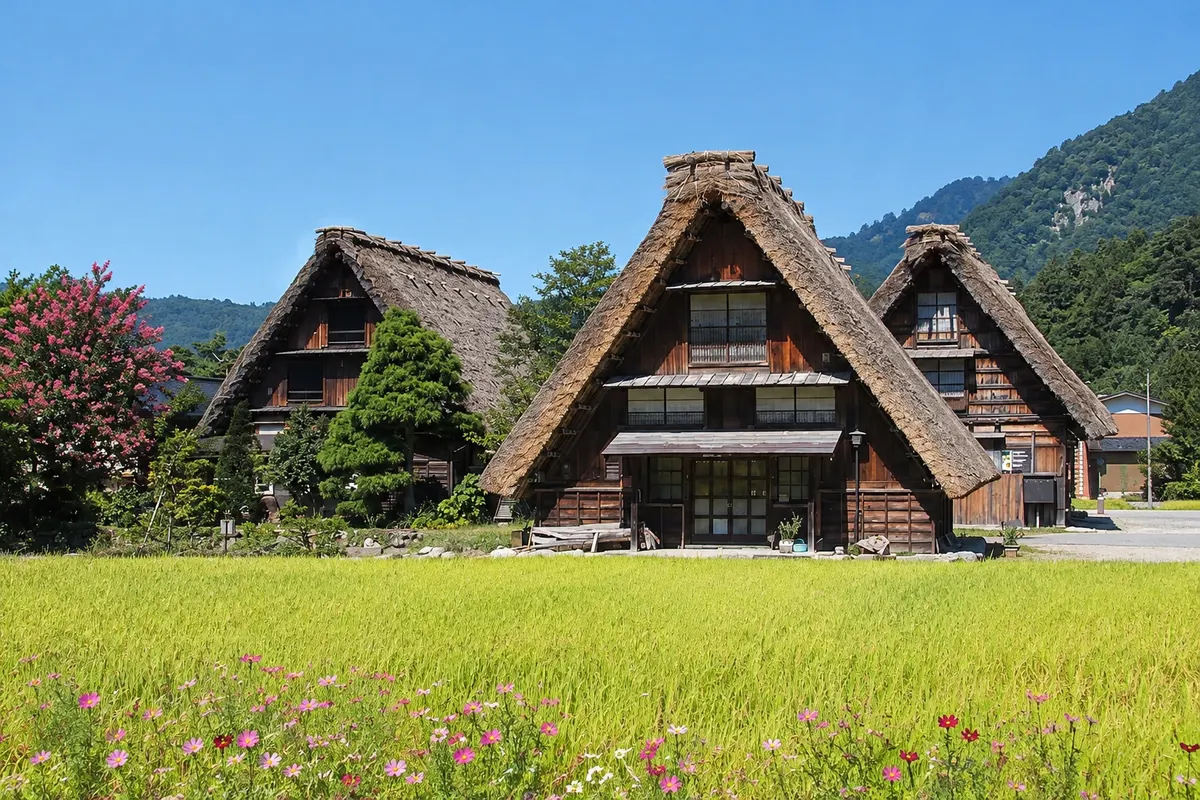
Zgodovinska vas
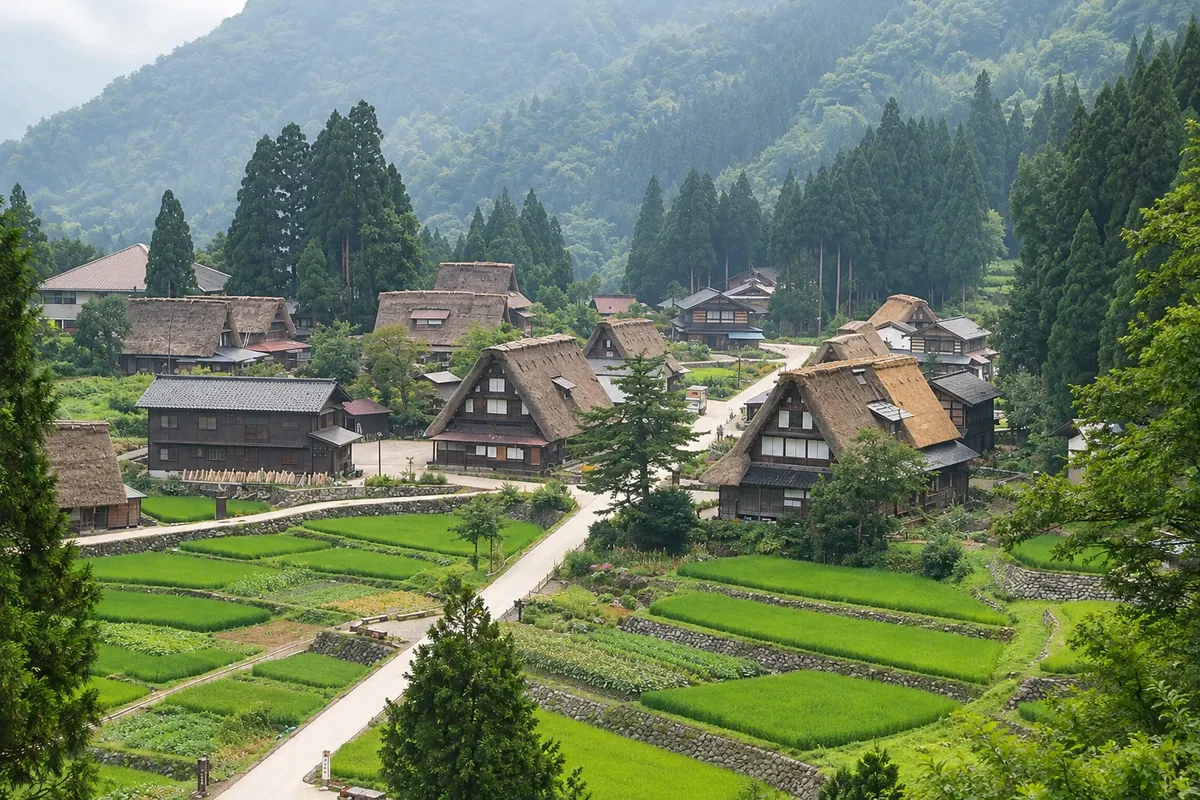
Ogimachi Village (Shirakawa-go)
The largest village of Shirakawa-go, with dozens of gassho-zukuri thatched houses among rice fields and the Sho River; a World Heritage site.

 Išči
 Brazilija
 Antarktika
 Argentina
 Bolivija
 Čile
 Kolumbija
 Ekvator
 Gvajana
 Francoska Gvajana
 Falklandski otoki (Malvini)
 Paragvaj
 Peru
 Surinam
 Urugvaj
 Venezuela
 Nemčija
 Avstrija
 Belgija
 Hrvaška
 Danska
 Slovaška
 Slovenija
 Španija
 Finska
 Francija
 Grčija
 Nizozemska
 Madžarska
 Irska
 Islandija
 Italija
 Luksemburg
 Norveška
 Poljska
 Portugalska
 Združeno kraljestvo
 Češka
 Švedska
 Švica
 Turčija
 Bermudi
 Kanada
 Združene države Amerike
 Grenlandija
 Mehika
 Sveta Peter in Mihael
 Dominikanska republikaJaponskaTurčija
 Južnoafriška republika
 Egipt
 Avstralija
 Fidži
 Nova Zelandija
 Papua Nova Gvineja
Gifu · Japonska
Destinacija: Takayama and Shirakawa-go.
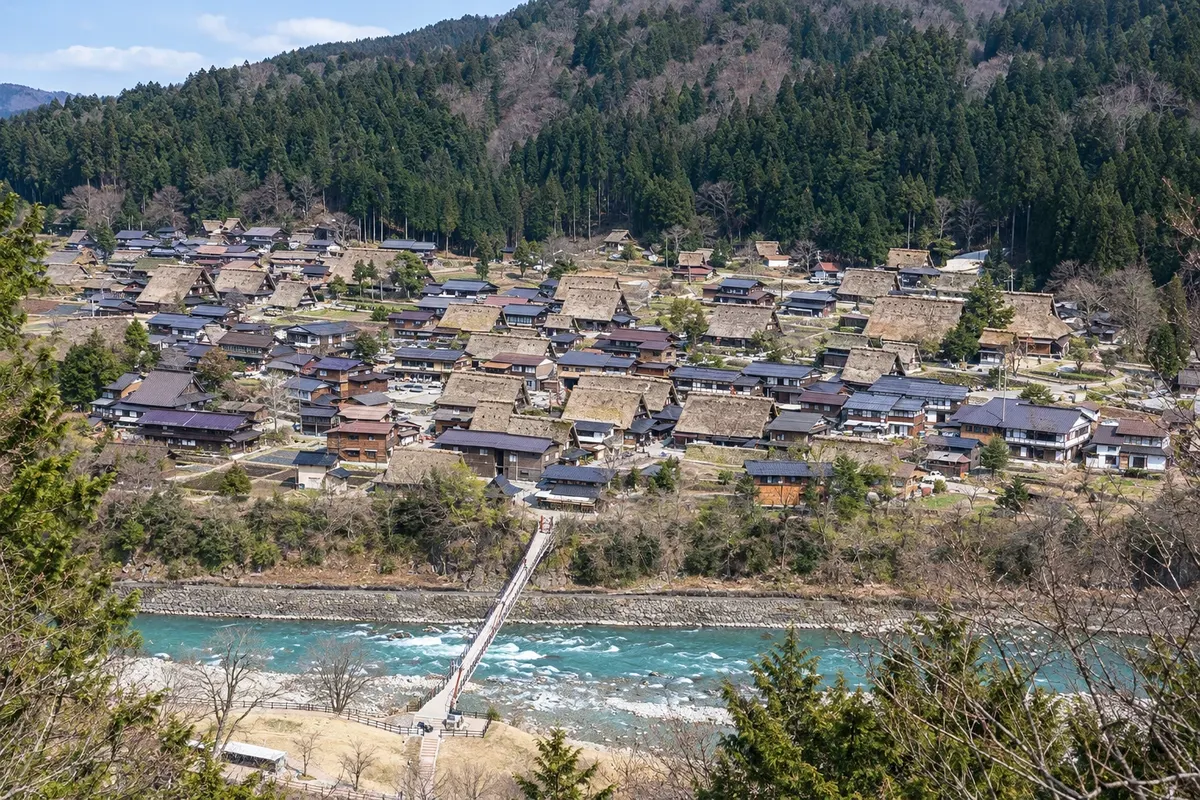
Na fotografiji: Shirakawa and the Shokawa River.
Illustrative images. The pictures in this guide are illustrations based on the real place, not photographs, and may differ from it.
Mesto
The village of Shirakawa sits in the Sho River valley in northwest Gifu and is known to visitors as Shirakawa-go. Its Ogimachi hamlet, with thatched houses shaped like hands pressed together, shares World Heritage status with two villages in Gokayama. The Shiroyama viewpoint overlooks the whole village, and houses such as Wada are open to visitors. Some houses host guests and serve dinner by the hearth.
V vodniku še ni nastanitev – Shirakawa.
kako do tja · koliko dni · načrt poti · vprašanja
Doživite kraj
The largest village of Shirakawa-go, with dozens of gassho-zukuri thatched houses among rice fields and the Sho River; a World Heritage site.
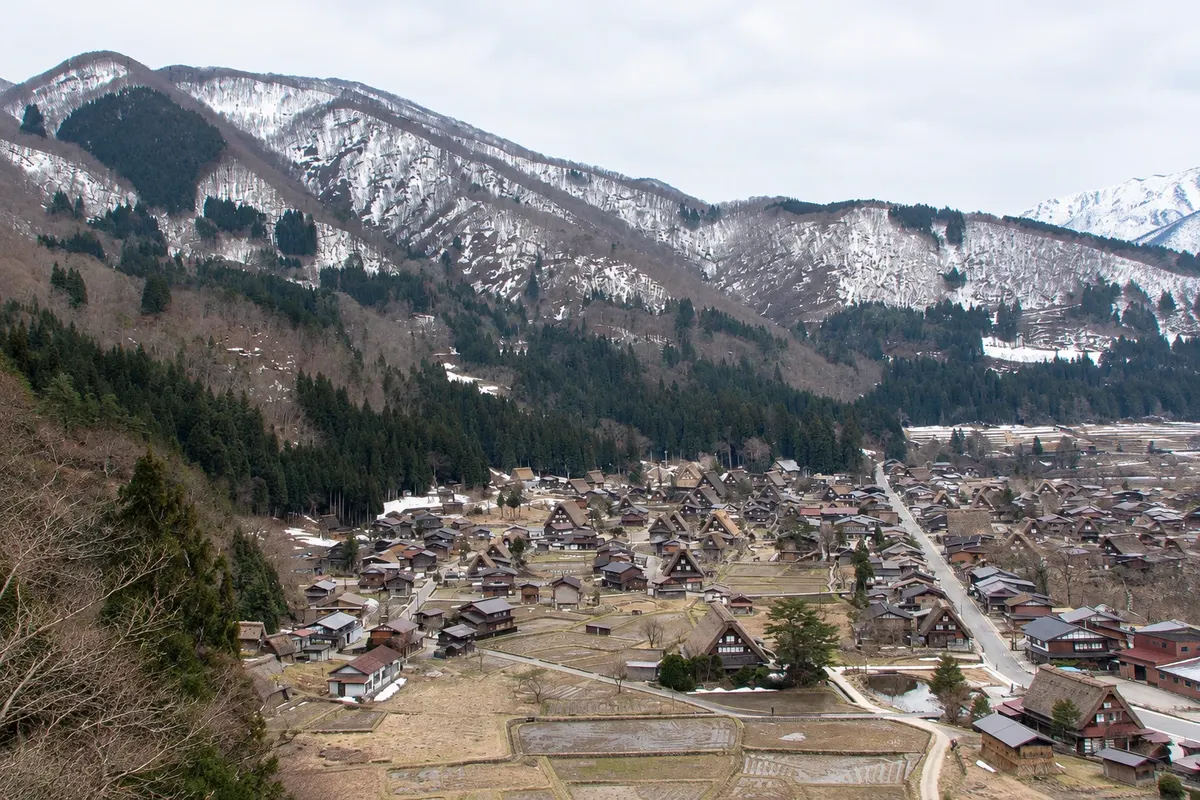
The viewpoint on the hill of the former Ogimachi castle ruins, from which you can see the entire village of Shirakawa-go, with the thatched roofs among the fields.
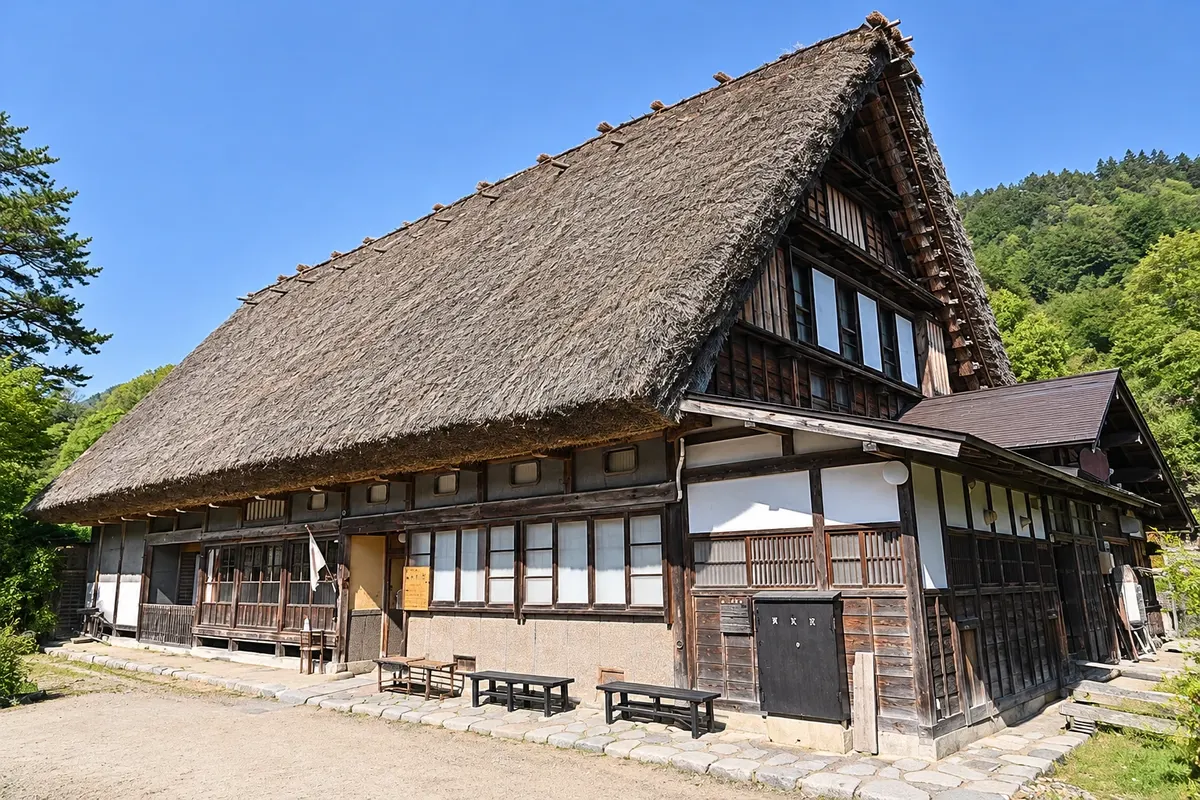
The largest gassho-zukuri house in Ogimachi, from the village headman’s family, open to visitors, with the hearth on the ground floor and the upper floors displaying silk-working tools.
The villages of Ainokura and Suganuma in Toyama, with gassho-zukuri houses in a mountain valley, quieter than Shirakawa-go and part of the same World Heritage site.
Pred odhodom
Shirakawa – Gifu Destinacija Takayama and Shirakawa-go
Razdalje so približne. Pred potovanjem preverite lete in vozne rede avtobusov, vlakov ali ladij.
Highway buses arrive at the Shirakawa-go terminal from Takayama in about 50 minutes and from Kanazawa in about 1h15–1h30; there are also buses from Nagoya and Toyama. Several departures require reservation. By car, use the Tōkai-Hokuriku Expressway.
Most visitors spend about half a day. Those who stay overnight in the village see the streets empty in the late afternoon and the next morning; by car, you can combine it with Gokayama.
Winter, from December to March, when snow covers the roofs and there are illuminated nights in January and February by reservation. May and June, with flooded rice fields; late October and early November, for the autumn leaves. Winter requires clothing and footwear suitable for snow.
The seasons shown are the most usual ones; nature doesn't always follow the calendar.
No. Highway buses reach the village, and Ogimachi is explored on foot. A car helps to reach Gokayama and the nearby hot springs; the village asks drivers to leave cars in parking lots outside the settlement.
Predlog poti
Pot povezuje znamenitosti na tej strani. Za oglede boste imeli dovolj časa.
Arrive early by bus, cross the suspension bridge and visit the Wada house and the village streets.
Climb to the Shiroyama viewpoint and continue by bus or car to Gokayama, or head on to Kanazawa or Takayama.
Check before you go. Opening hours and days change, and places may close for renovations, holidays or events. This itinerary is a suggestion from Cidade Turismo, not a commitment: plan yours by checking directly with each place you intend to visit.
Pred odhodom
Yes. From Takayama it’s about 50 minutes by bus; from Kanazawa, 1h15 to 1h30. Book the services that require reservations.
Yes, at the bus terminal, with limited space. Travelers doing the route between Takayama and Kanazawa with large suitcases can send them via delivery service.
At midday and on weekends, yes — there are many tour buses. Early morning and late afternoon the village is calmer.
Do not enter private property, do not use drones, keep your voice low and take your trash with you. Many houses are inhabited.
Cold and very snowy, usually from December to March. Bring boots and waterproof clothing; the road may require a bus or a car with snow tires.
Več kot vodnik


