Nikkō Tōshō-gū Shrine
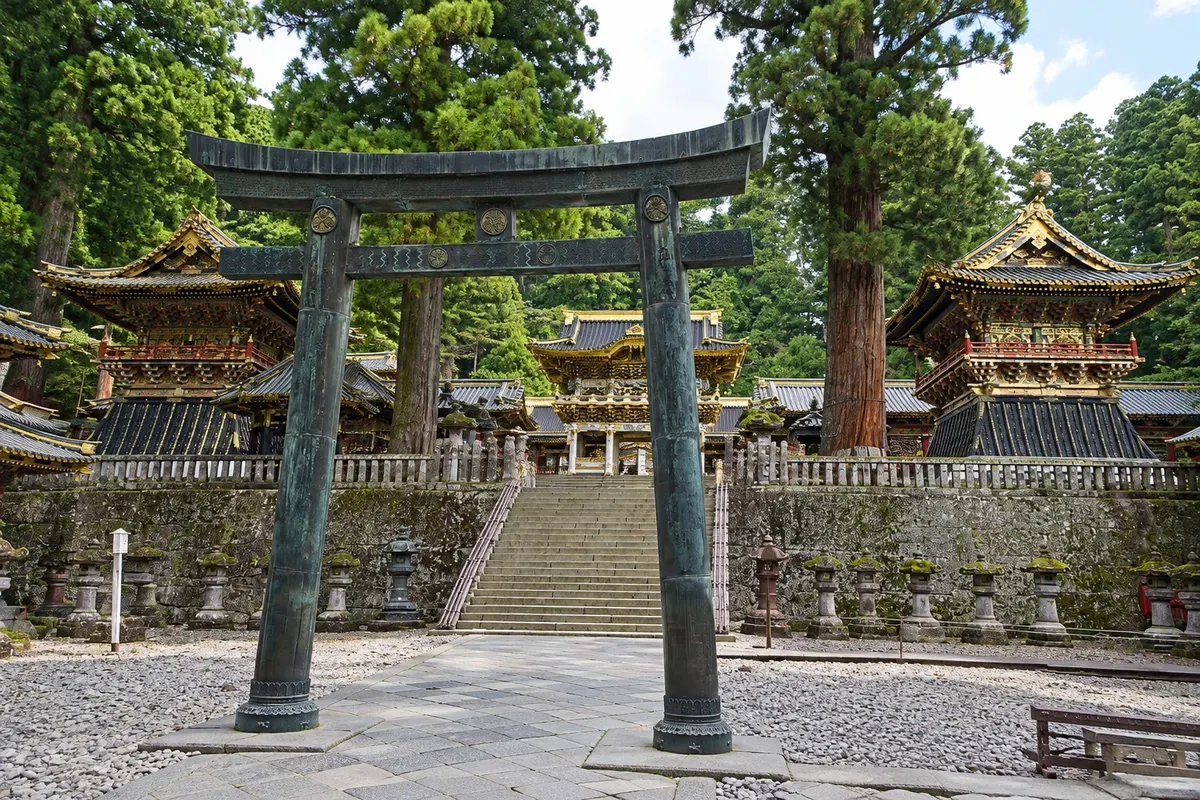
The mausoleum of Tokugawa Ieyasu, covered in colorful carvings and gold leaf, featuring the Yomeimon gate, the three monkeys and the sleeping cat; World Heritage site.
Antarktika
Tochigi · Japonska
The shrines and temples of Nikko among giant cedars, with the carved mausoleum of the first Tokugawa shogun, and, high in the mountains, Lake Chuzenji and Kegon Falls.
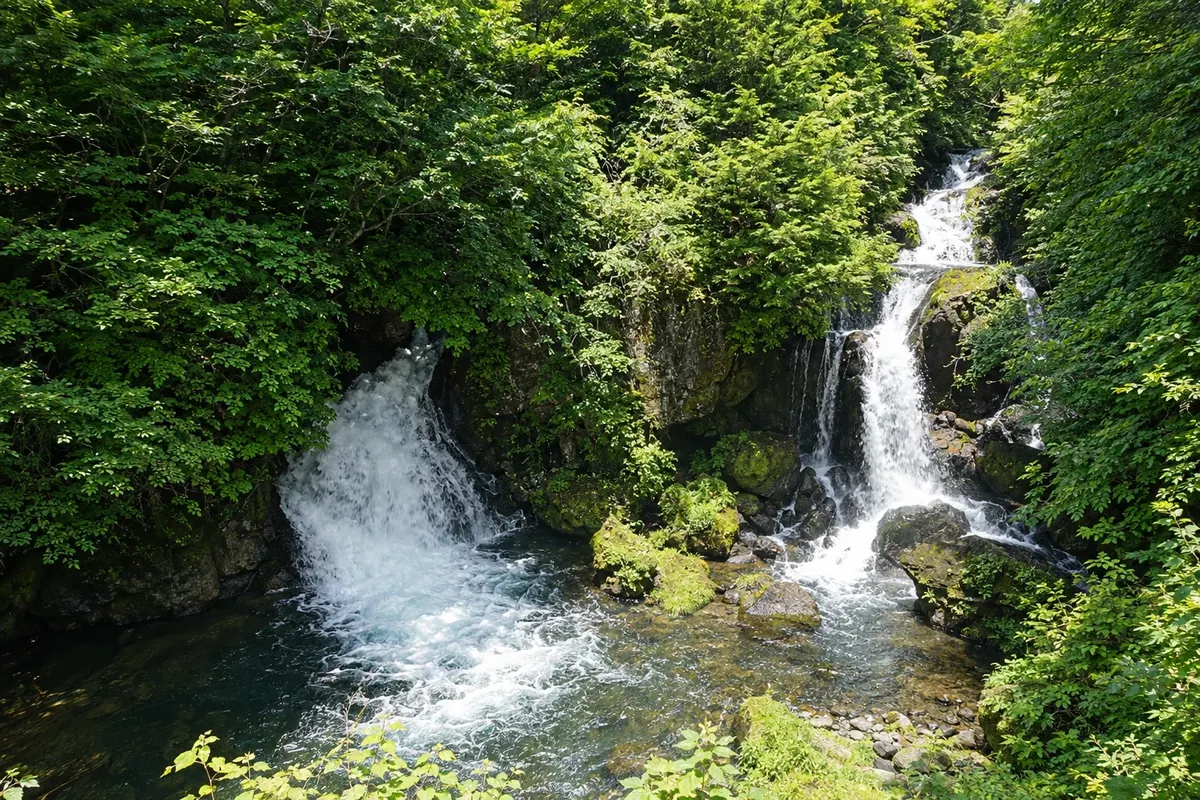
Na fotografiji: Ryuzu Falls, in Nikko.
Illustrative images. The pictures in this guide are illustrations based on the real place, not photographs, and may differ from it.
Spoznajte kraj
Nikko is in the northwest of Tochigi Prefecture, at the foot of the mountains, about 140 km north of Tokyo. Since the 8th century it has been a center for mountain worship, begun by the monk Shodo, who founded the first temples there. In the 17th century, the Tokugawa shogunate chose Nikko for the mausoleum of Tokugawa Ieyasu, founder of the dynasty, and the town became a pilgrimage destination.
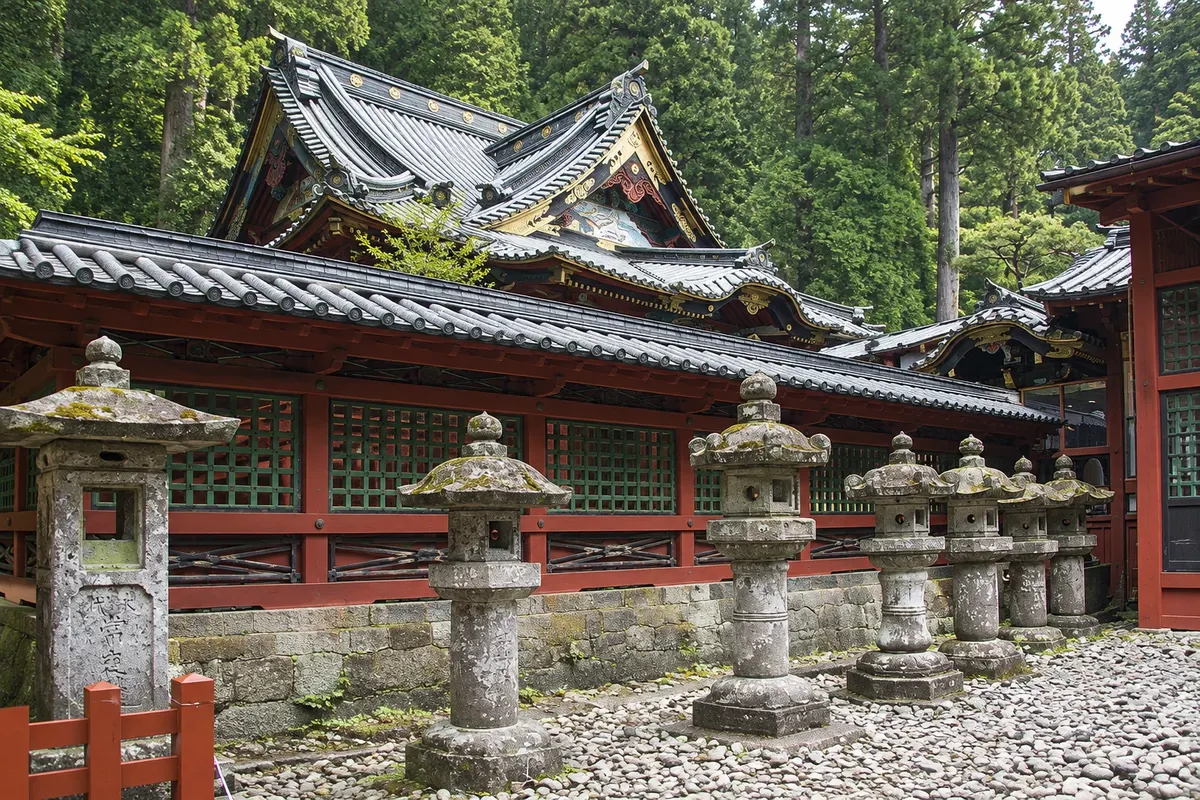
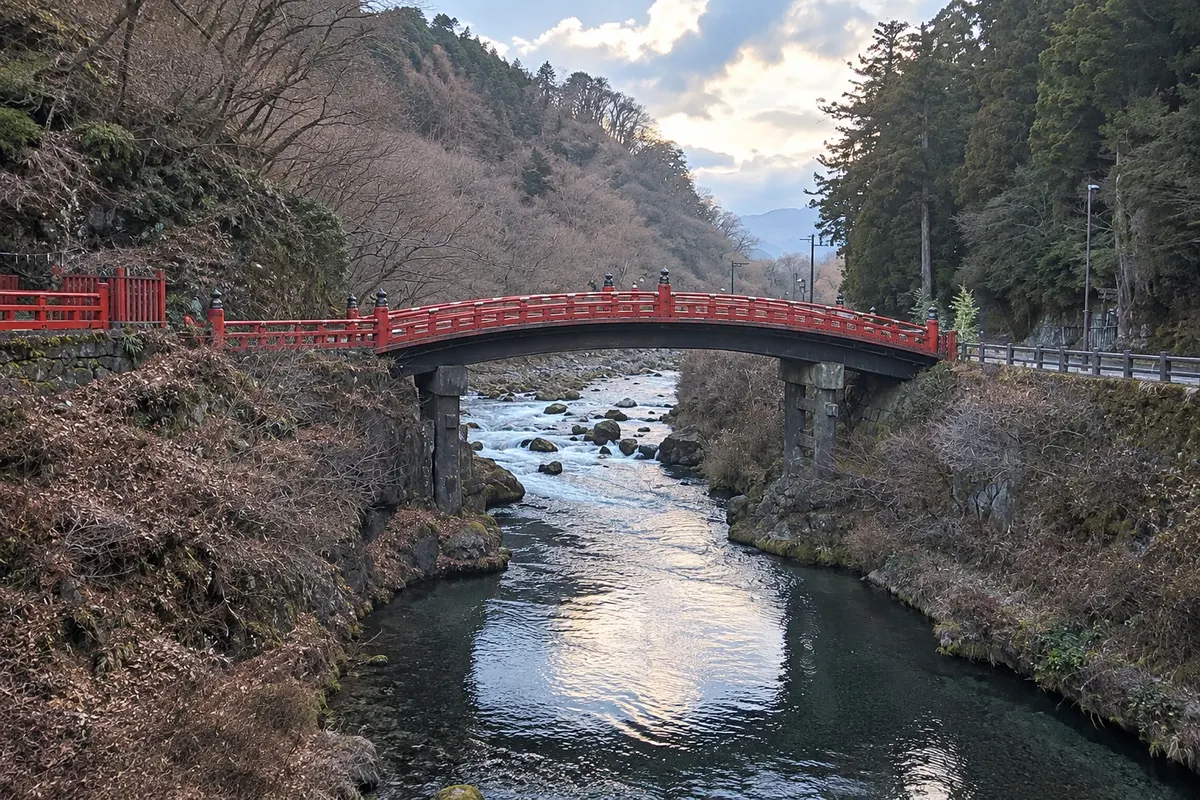
The Shrines and Temples of Nikko, a UNESCO World Heritage Site, occupy a cedar-covered slope across the Daiya River. They include Toshogu, with its carved and painted gates, the Rinno-ji temple, the Taiyuin mausoleum and the Futarasan Shrine. The red Shinkyo Bridge marks the entrance to the sacred area, and Nikko’s avenue of cedars, planted in the 17th century, lines the roads that lead into town.
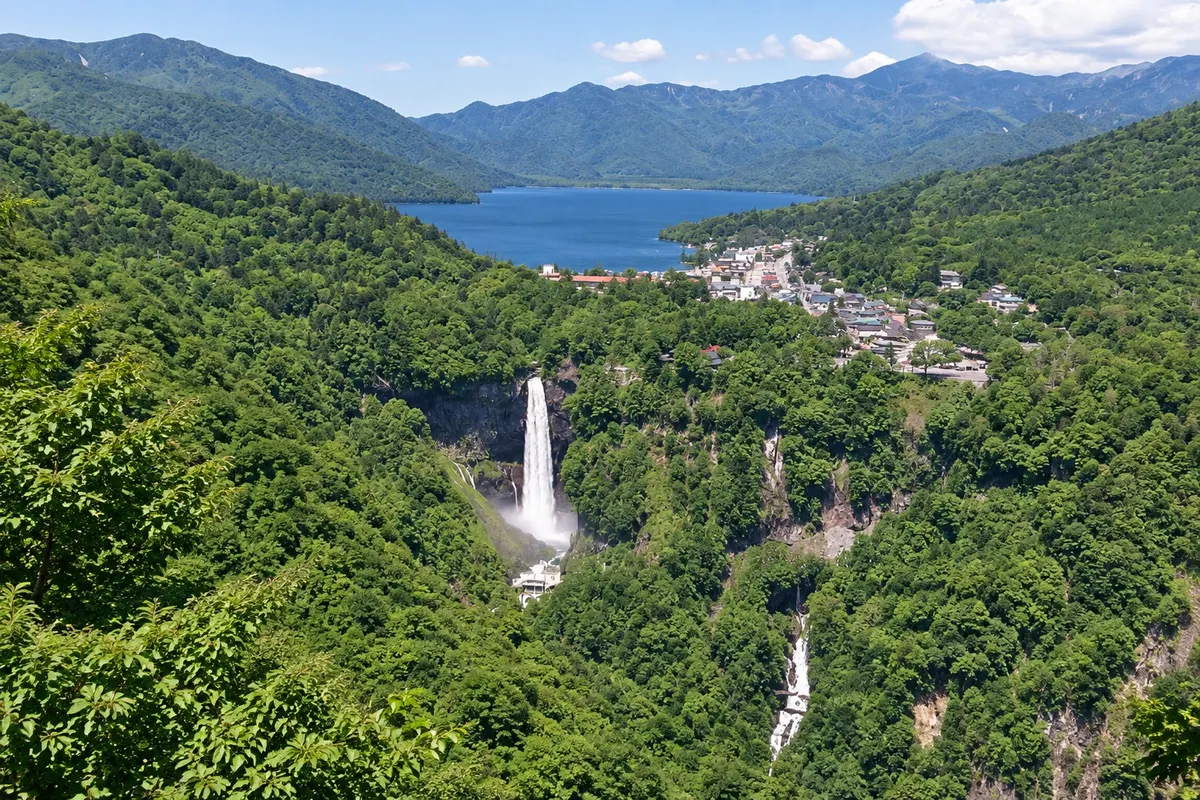
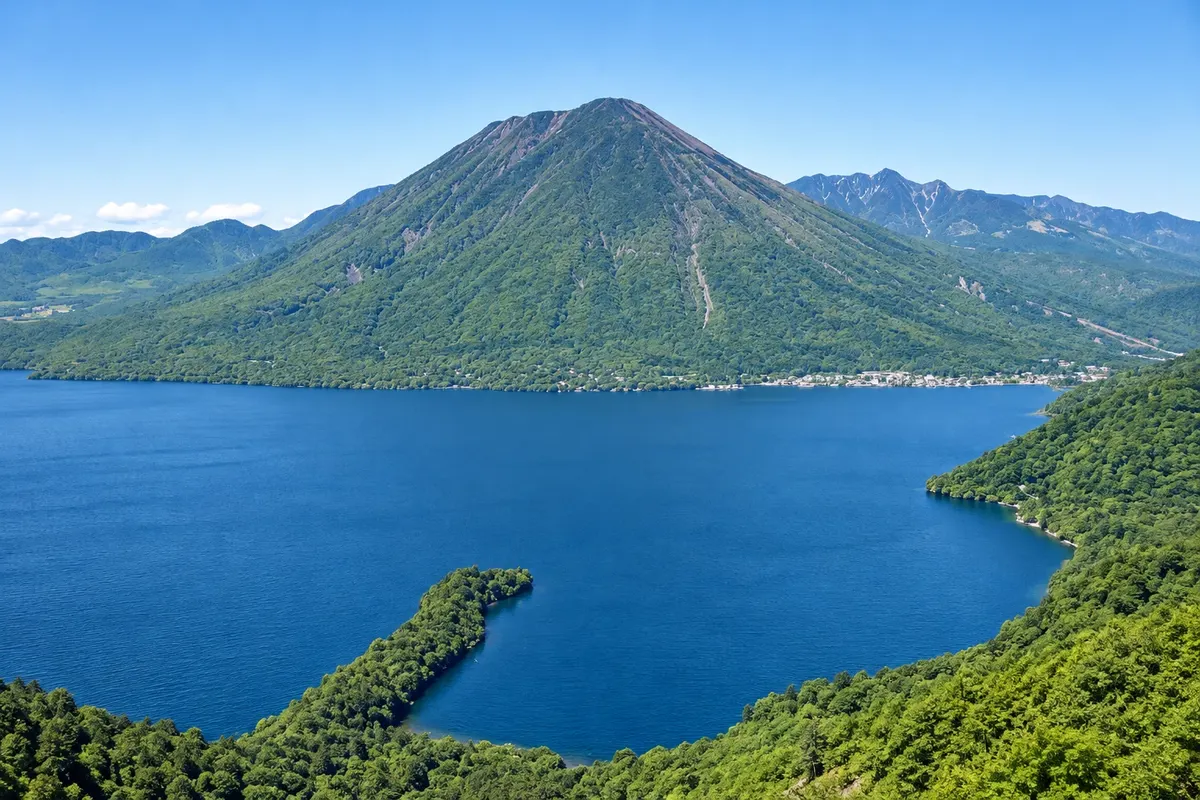
Climbing the winding Irohazaka Road, at about 1,270 meters elevation, is Lake Chuzenji, at the foot of Mount Nantai. At the lake’s outlet, Kegon Falls drops around 97 meters into a rocky valley. The area is part of Nikko National Park, with trails across the high-altitude Senjogahara marsh and the hot-spring village of Yumoto.
The town is known for yuba, the film that forms on the surface of heated soy milk, served in many ways at restaurants, and for bean sweets. In autumn, the slopes and the lake take on fall colors, which move down from the highlands to the town during October and November.

V vodniku še ni nastanitev – Nikko.
kako do tja · koliko dni · načrt poti · vprašanja
✈ Aeroporto Internacional de Tóquio (Haneda) (HND), kraj: Ota· 160 km do cilja (Nikko)
From Asakusa in Tokyo, Tobu express trains reach Tobu-Nikko Station in about 2 hours. On JR, the bullet train goes to Utsunomiya in about 50 minutes and the JR Nikko line takes about another 45 minutes. From the station, buses climb up to the shrines and to Lake Chuzenji.
Doživite kraj
The mausoleum of Tokugawa Ieyasu, covered in colorful carvings and gold leaf, featuring the Yomeimon gate, the three monkeys and the sleeping cat; World Heritage site.
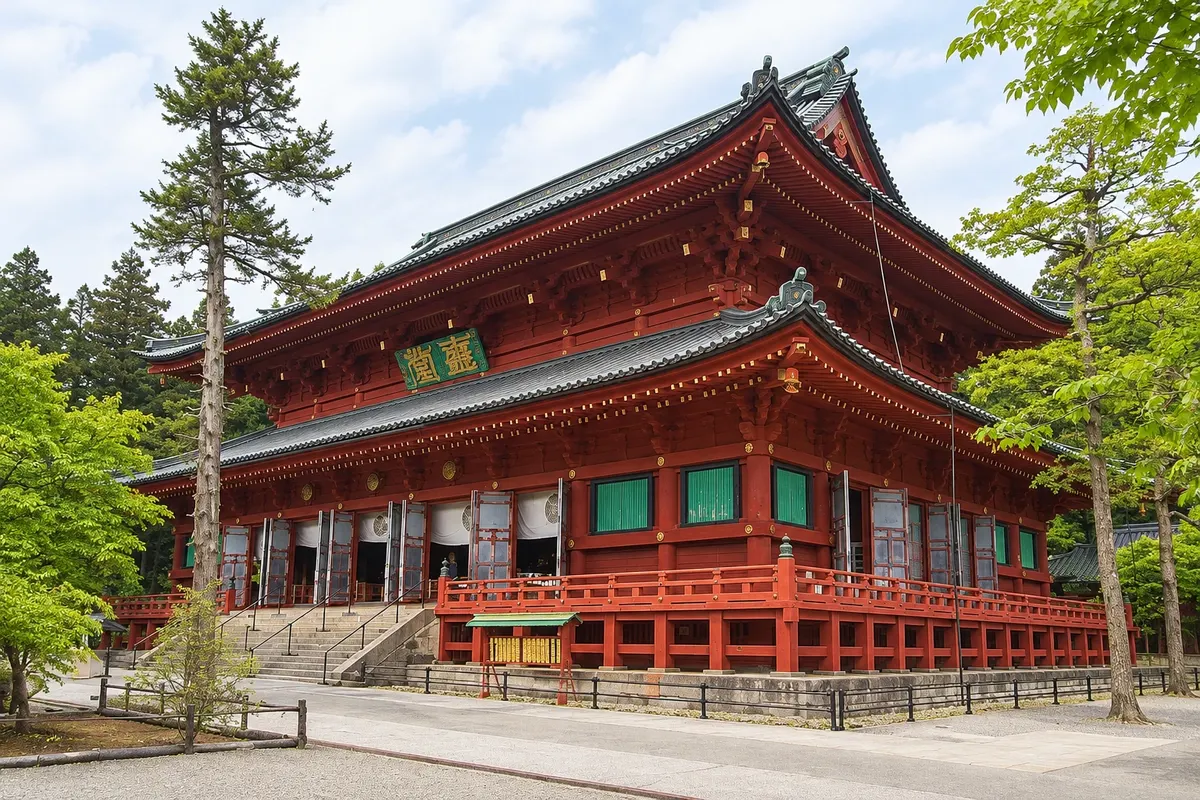
Nikko’s main Buddhist temple, with the Sanbutsudo hall and three large gilded statues, and the Taiyuin, mausoleum of the third Tokugawa shogun; World Heritage site.
The shrine of Nikko’s three sacred mountains, founded in the 8th century, owning a vast area that includes Kegon Falls and the summit of Mount Nantai; World Heritage site.
The red-lacquered bridge over the Daiya River at the entrance to Nikko’s sacred area, and upstream, the Kanmangafuchi gorge with its stone statues.
A drop of about 97 meters at the outlet of Lake Chuzenji, seen from a platform at the valley bottom, reached by an elevator.
The mountain lake at about 1,270 meters, at the foot of Mount Nantai, with boats, old embassy vacation houses, Chuzen-ji temple and the Senjogahara marsh.
Pred odhodom
Nikko – Tochigi
Razdalje so približne. Pred potovanjem preverite lete in vozne rede avtobusov, vlakov ali ladij.
Two adjacent stations receive trains: Tobu-Nikko, the terminus of express trains from Asakusa, and JR Nikko, connected to Utsunomiya, where the northbound bullet train stops. By either route, the trip from Tokyo is about 2 hours. The two stations are side by side, about 2 km from the shrines.
The shrines take one day. The mountains require another: the lake, Kegon Falls and the marsh walkways. Those who stay three nights can relax in the hot springs of Yumoto or Kinugawa.
Autumn colors flow down from the mountains to town between October and early November. In late spring the slopes are green and there are fewer visitors. Winter is cold, with snow at the shrines, and summer is cooler than in Tokyo.
The seasons shown are the most usual ones; nature doesn't always follow the calendar.
No. Buses run from the stations to the shrines, Lake Chuzenji and Yumoto, and there are tourist bus passes. In leaf season, traffic on the Irohazaka Road becomes slow.
Predlog poti
Pot povezuje znamenitosti na tej strani. Za oglede boste imeli dovolj časa.
Walk up from the station to Shinkyo Bridge and visit Toshogu at opening time, including the climb to Ieyasu’s tomb.
Head to Futarasan Shrine and the Taiyuin mausoleum and finish at Rinno-ji’s Sanbutsudo. Try yuba at lunch.
Dan 1
Visit Toshogu early and stop by Rinno-ji’s Sanbutsudo.
Visit Futarasan Shrine and Taiyuin and walk to the Jizo statues at Kanmangafuchi.
Dan 2
Take the bus up the Irohazaka Road and go down via the elevator at Kegon Falls.
Visit the former embassy houses, take the boat cruise or walk across Senjogahara.
Check before you go. Opening hours and days change, and places may close for renovations, holidays or events. This itinerary is a suggestion from Cidade Turismo, not a commitment: plan yours by checking directly with each place you intend to visit.
Pred odhodom
They are side by side. Tobu-Nikko receives trains from Asakusa; JR Nikko serves trains from Utsunomiya. Buses to the shrines and the lake stop at both.
It is the skin that forms on heated soy milk, collected in thin sheets. In Nikko it is served rolled, fried, in soups and with rice, and it is the town’s typical dish.
Yes. There are passes that cover the buses between the stations, the shrines and Lake Chuzenji, and Tobu passes that include the train from Tokyo. Check the current options.
Visit the Shinkyo Bridge, Toshogu, Futarasan Shrine, Taiyuin and Rinno-ji. If you’re short on time, you can go up to Kegon Falls in the afternoon.
Yes, especially around Lake Chuzenji and up on the highlands. In the town, snow is more occasional, and the shrines with snow attract photographers.
Pred odhodom
Z nekaj načrtovanja boste imeli več časa za uživanje na poti.
October and early November, with the leaves changing first up high near the lake and later in town. May and June bring fresh green and azaleas. In summer the mountain area is cooler than Tokyo. In winter snow often covers the shrines and the lake, and some high roads close.
The seasons shown are the most usual ones; nature doesn't always follow the calendar.
One day is enough for the shrines and temples as a day trip from Tokyo. To include Lake Chuzenji, Kegon Falls and Senjogahara, stay one or two nights. During the leaf season, traffic on the Irohazaka Road can delay buses.
Near Tobu-Nikko and JR Nikko stations and along the main street that climbs to Shinkyo Bridge, with simple accommodation and walking access to the shrines. At Lake Chuzenji, hotels and ryokan with water views. In Kinugawa Onsen, the hot-spring resort in the south of the municipality, and in Yumoto up high, there are hot springs.
Odnesite svoje odpadke, upoštevajte oznake in podprite lokalne ponudnike. V naravi upoštevajte navodila za obiskovalce.
Odgovori na vaša vprašanja
One day for the shrines and temples; two days to include Lake Chuzenji, Kegon Falls and the Senjogahara trails.
Yes. Tobu trains depart from Asakusa and take about 2 hours. In one day you can see the shrines and, if rushed, Kegon Falls.
By bus from Tobu-Nikko and JR Nikko stations, via the winding Irohazaka Road, in about 45 minutes to 1 hour depending on traffic.
Generally from early October up high to early November in town. On those weekends, traffic to the lake becomes slow.
No. Buses connect the stations with the shrines, Lake Chuzenji and Yumoto. There are bus passes for tourists.
Več kot vodnik