Kenroku-en Garden
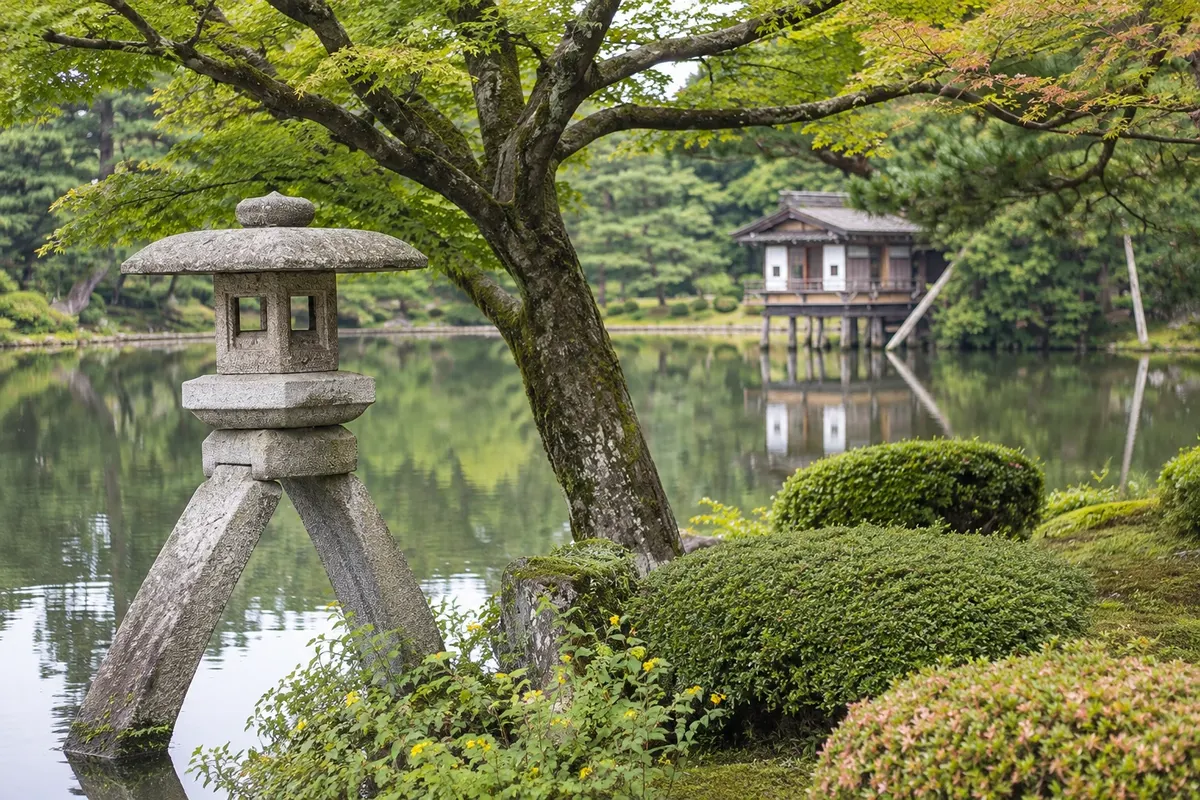
The Maeda clan garden, one of Japan’s three most celebrated gardens, with ponds, pines, the two-legged stone lantern, the country’s oldest water fountain and the winter yukitsuri ropes.
Antarktika
Ishikawa · Japonska
The city of the Maeda clan on the Sea of Japan: Kenroku-en garden, the castle, tea-house and samurai districts, Omicho Market and the Round Glass Contemporary Art Museum.
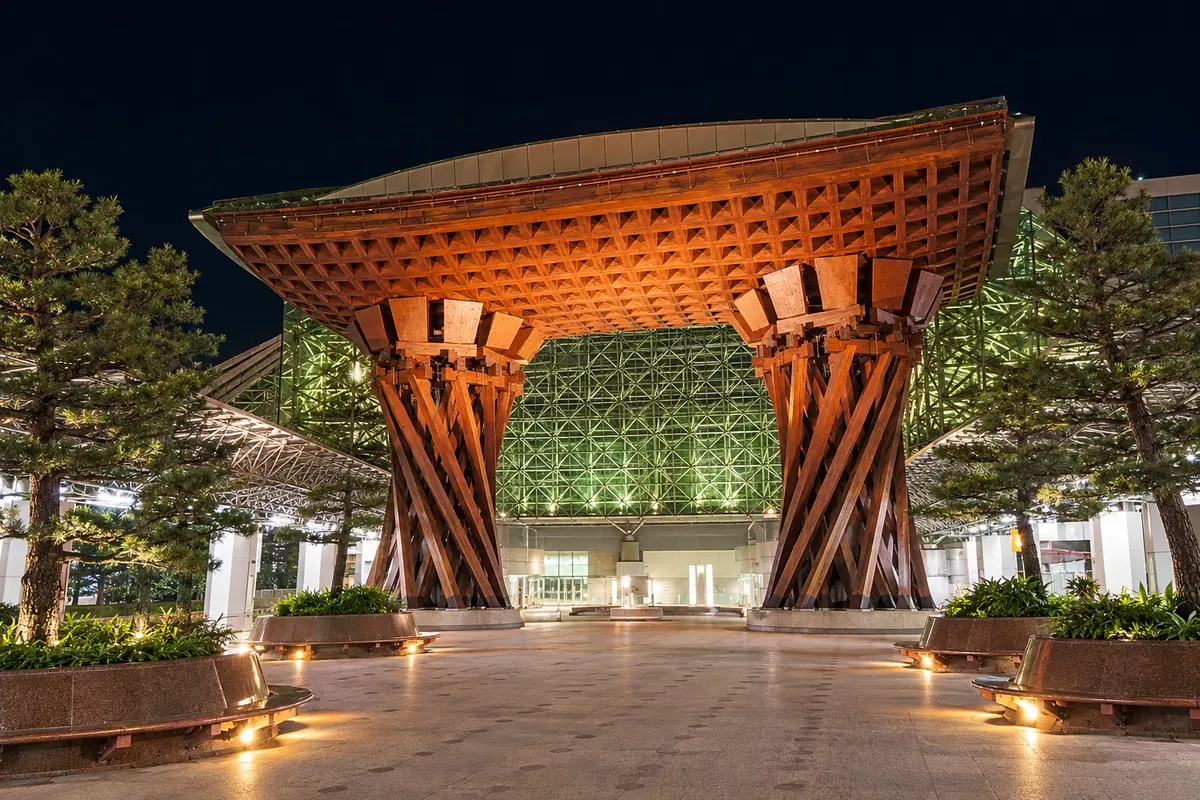
Na fotografiji: Tsuzumi-mon gate at Kanazawa Station.
Illustrative images. The pictures in this guide are illustrations based on the real place, not photographs, and may differ from it.
Spoznajte kraj
Kanazawa is the capital of Ishikawa Prefecture on the Sea of Japan coast. During the Edo period it was the seat of the Kaga domain, ruled by the Maeda clan, the wealthiest feudal lords after the Tokugawa themselves. The Maeda invested in the arts, crafts and gardens, and the city, which escaped the bombings of World War II, preserves entire neighborhoods from that period.
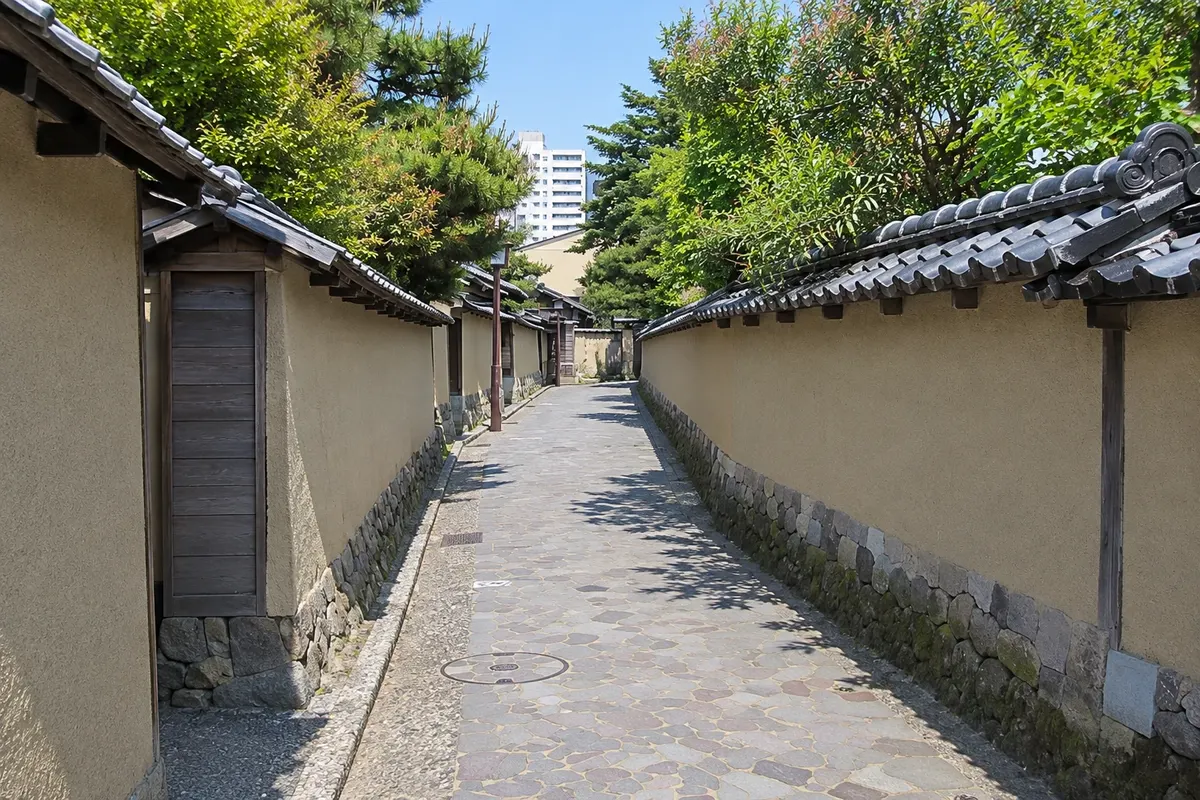
The center revolves around the castle park and Kenroku-en garden, one of Japan’s three most famous gardens. Around them are the Nagamachi samurai district, with earthen walls and canals, and the geisha tea-house districts Higashi Chaya, Nishi Chaya and Kazuemachi, with wooden lattice façades. Omicho Market, with fish and seafood from the Sea of Japan, lies between the station and the castle.
The city keeps traditional crafts alive: gold leaf—Kanazawa produces almost all of the country’s supply—Kutani ceramics, lacquerware, Kaga-yuzen dyed silk and sweets for the tea ceremony. Next to the castle, the 21st Century Museum of Contemporary Art, in a round glass building, shows the city is not only about the past.
Kanazawa is about 2h30 from Tokyo on the Hokuriku Shinkansen and is the gateway to the bus route to Shirakawa-go and Takayama. In Ishikawa’s coast and mountains are the Kaga hot springs and, to the north, the Noto Peninsula.

V vodniku še ni nastanitev – Kanazawa.
kako do tja · koliko dni · načrt poti · vprašanja
✈ Aeroporto de Komatsu (KMQ), kraj: Komatsu· 35 km do cilja (Kanazawa)
The Hokuriku Shinkansen links Tokyo to Kanazawa in about 2h30 and continues to Fukui and Tsuruga. From Osaka and Kyoto, the express train goes to Tsuruga, where you change to the Shinkansen, for a total of about 2 to 2h30. Komatsu Airport is about a 40-minute bus ride away.
Doživite kraj
The Maeda clan garden, one of Japan’s three most celebrated gardens, with ponds, pines, the two-legged stone lantern, the country’s oldest water fountain and the winter yukitsuri ropes.
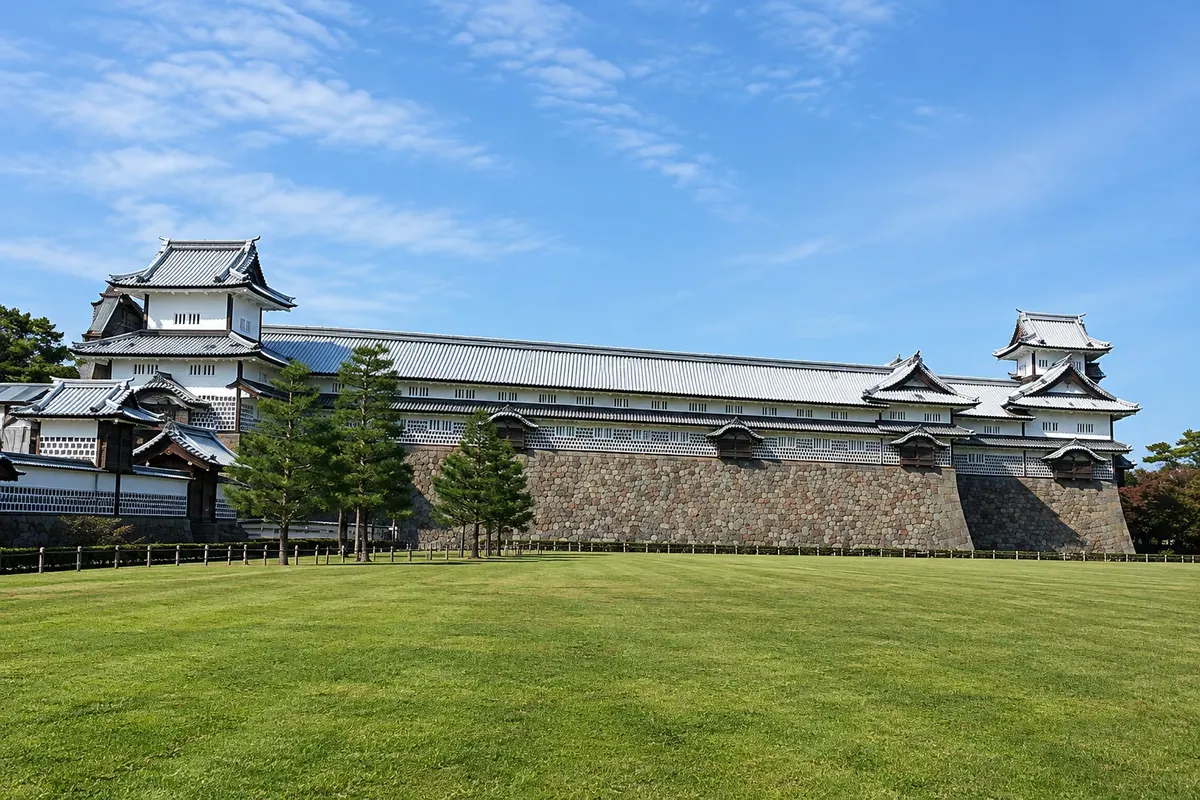
The Maeda clan castle park, with the original Ishikawa Gate, long wooden storehouses rebuilt using traditional techniques, stone walls and gardens.
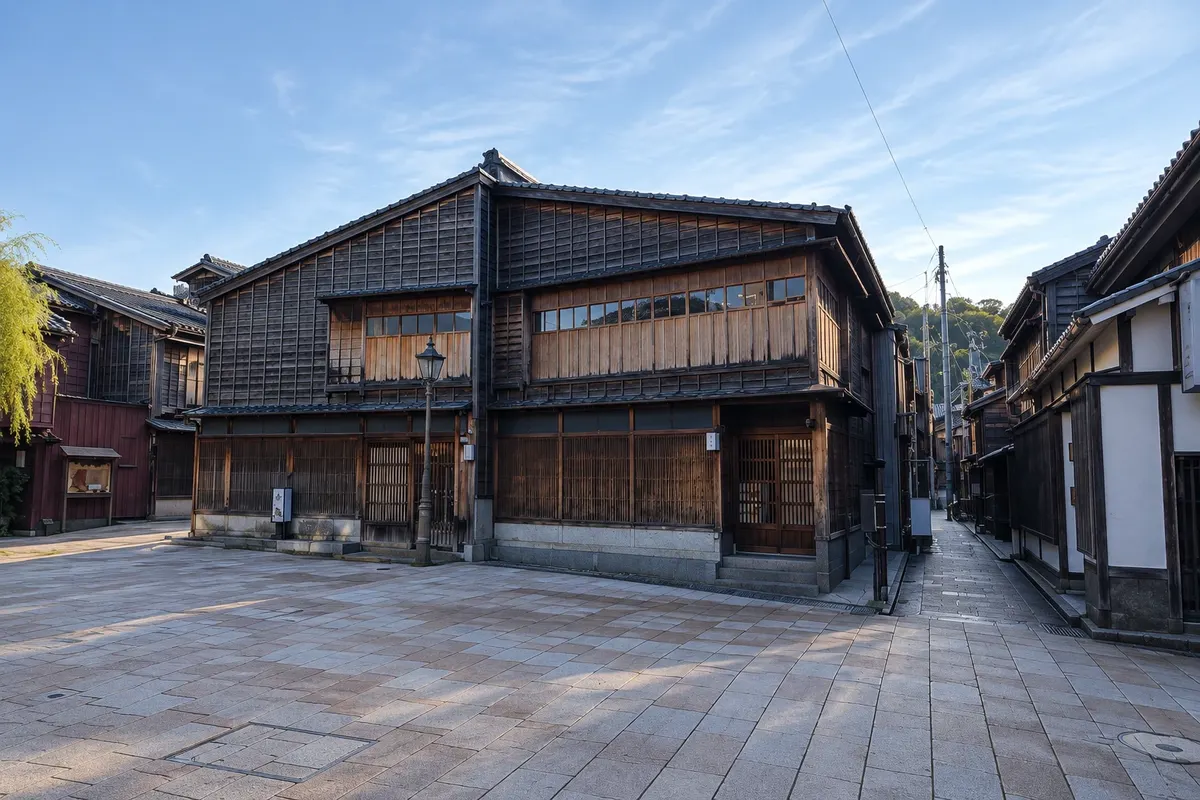
Kanazawa’s geisha teahouse district, with streets of wooden houses featuring thin latticework, the Shima teahouse open to visitors, and gold leaf shops.
The samurai district of Kanazawa, with earthen walls, canals and the Nomura family residence with its small pond garden.
Kanazawa’s covered market, with stalls selling fish and seafood from the Sea of Japan, winter crab in season and counters serving rice bowls topped with raw fish.
The contemporary art museum in a round glass building, next to Kenroku-en, featuring Leandro Erlich’s Pool and James Turrell’s open-sky room.
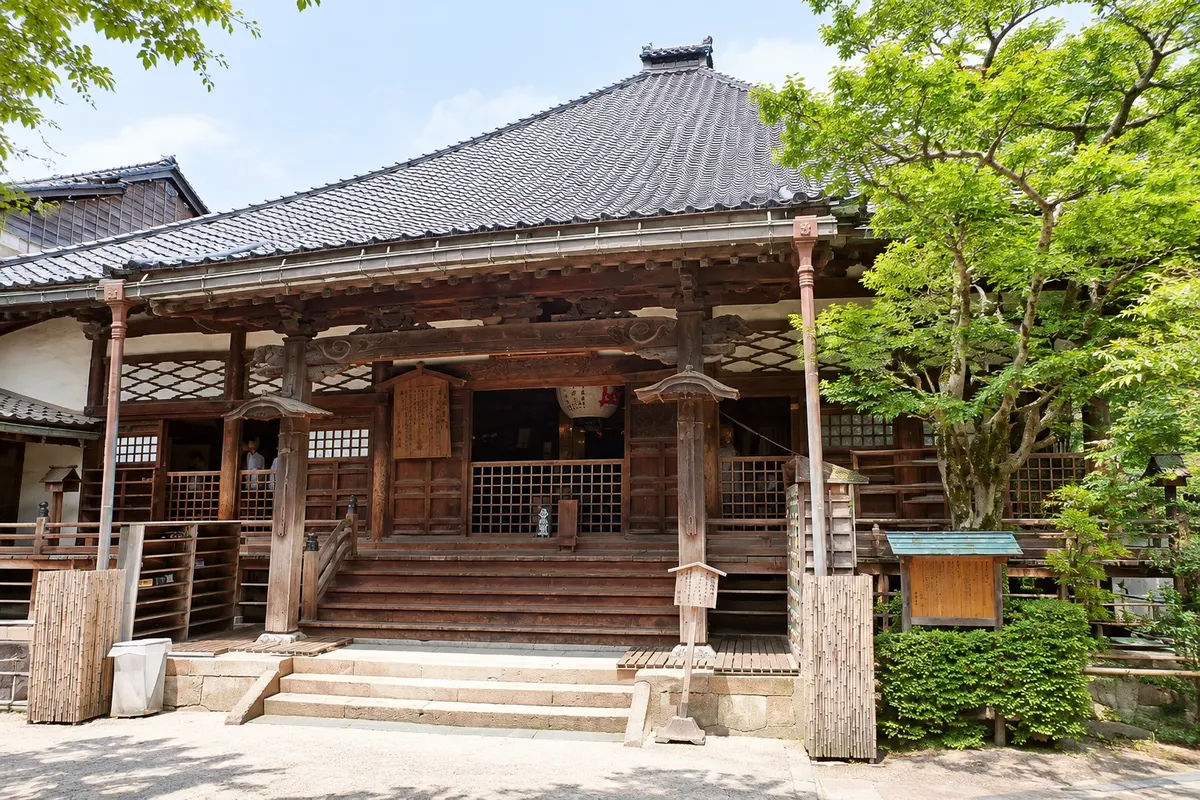
Kanazawa’s “ninja temple,” a 17th-century temple full of hidden stairs, trapdoors and secret passages, visited only on guided tours with reservation.
Pred odhodom
Kanazawa – Ishikawa Capital
Razdalje so približne. Pred potovanjem preverite lete in vozne rede avtobusov, vlakov ali ladij.
Kanazawa Station, with its wooden drum-shaped gate, receives the Hokuriku Shinkansen coming from Tokyo and Ueno in about 2h30. Travelers from Osaka or Kyoto change trains at Tsuruga. Komatsu Airport is about a 40-minute bus ride away. Highway buses connect the city to Shirakawa-go and Takayama.
The historic center is compact: in two days you can see the garden, the castle park, the geisha and samurai districts, the market and the round glass museum. The third day is for the temple of secret passages, a gold leaf workshop or a visit to the thatched houses of Shirakawa-go.
April, for the cherry blossoms, and November, for autumn leaves and the start of crab season. In winter, from December to March, there is snow, yukitsuri on the pines and straw-covered walls in Nagamachi. Summer is hot and humid.
The seasons shown are the most usual ones; nature doesn't always follow the calendar.
No. The tourist circulator bus and city buses link the station to the historic districts, and the center is walkable. There are shared bicycles.
Predlog poti
Pot povezuje znamenitosti na tej strani. Za oglede boste imeli dovolj časa.
Have breakfast at Omicho Market and cross the castle park to Ishikawa Gate.
Visit Kenroku-en, have tea at the Shiguretei house and continue to the 21st Century Museum.
End in Higashi Chaya at dusk, with the tea houses’ lanterns lit.
Dan 1
Arrive early at Kenroku-en and cross the castle park.
Visit the Nomura residence in Nagamachi and the 21st Century Museum.
Dan 2
Eat at Omicho Market and head to Higashi Chaya and the Shima tea house.
Take the reserved guided tour of Myoryu-ji and stroll through Nishi Chaya and Teramachi.
Check before you go. Opening hours and days change, and places may close for renovations, holidays or events. This itinerary is a suggestion from Cidade Turismo, not a commitment: plan yours by checking directly with each place you intend to visit.
Pred odhodom
Omicho Market and the castle in the morning, Kenroku-en and the 21st Century Museum in the afternoon, and Higashi Chaya at the end of the day.
Yes. The tourist circulator bus leaves from the station and passes Omicho Market, Higashi Chaya, the castle, Kenroku-en and Nagamachi. One-day passes are available.
Seafood from the Sea of Japan at Omicho Market, such as kaisendon, winter crab and nodoguro; jibuni, a duck stew; and Kanazawa curry.
At the gold leaf and Kutani pottery shops in Higashi Chaya, at shops in the city center, and at the Prefectural Crafts Center near Kenroku-en.
Yes, generally from December to February, with days of rain and snow. The Kenroku-en pines with yukitsuri and the Nagamachi walls covered in straw are classic winter scenes.
Pred odhodom
Z nekaj načrtovanja boste imeli več časa za uživanje na poti.
April, with the castle and Kenroku-en cherry blossoms, and October and November, with autumn leaves. From November to March, yukitsuri ropes protect the pines from snow, and winter is the season for crab and Sea of Japan fish. Winter is wet, with frequent snow and rain; summer is hot.
The seasons shown are the most usual ones; nature doesn't always follow the calendar.
Two days cover Kenroku-en, the castle, Higashi Chaya, Nagamachi, Omicho Market and the 21st Century Museum. With three days you can add Myoryu-ji temple, the other tea-house districts and craft workshops, or a day trip to Shirakawa-go.
Near Kanazawa Station, the area is convenient for the Shinkansen and the buses to Shirakawa-go. The Korinbo and Katamachi areas in the center are within walking distance of Kenroku-en, Nagamachi and restaurants. Higashi Chaya and the old districts have traditional inns in wooden houses.
Odnesite svoje odpadke, upoštevajte oznake in podprite lokalne ponudnike. V naravi upoštevajte navodila za obiskovalce.
Odgovori na vaša vprašanja
Two days are enough for the main sites, which are close to each other. With a third day, you’ll have time for crafts, Myoryu-ji temple or Shirakawa-go.
By the Hokuriku Shinkansen from Tokyo or Ueno Station, in about 2h30.
By highway bus from Kanazawa Station, in about 1h15 to 1h30. Many schedules require advance reservation.
No. Tourist circulator buses and city buses link the station to the sights, and the center is walkable or reachable by shared bicycle.
Kanazawa produces almost all of Japan’s gold leaf, used on temples, lacquerware and crafts. Shops and workshops in the city show the process and sell items and even sweets decorated with gold.
Več kot vodnik