Kakunodate Samurai District
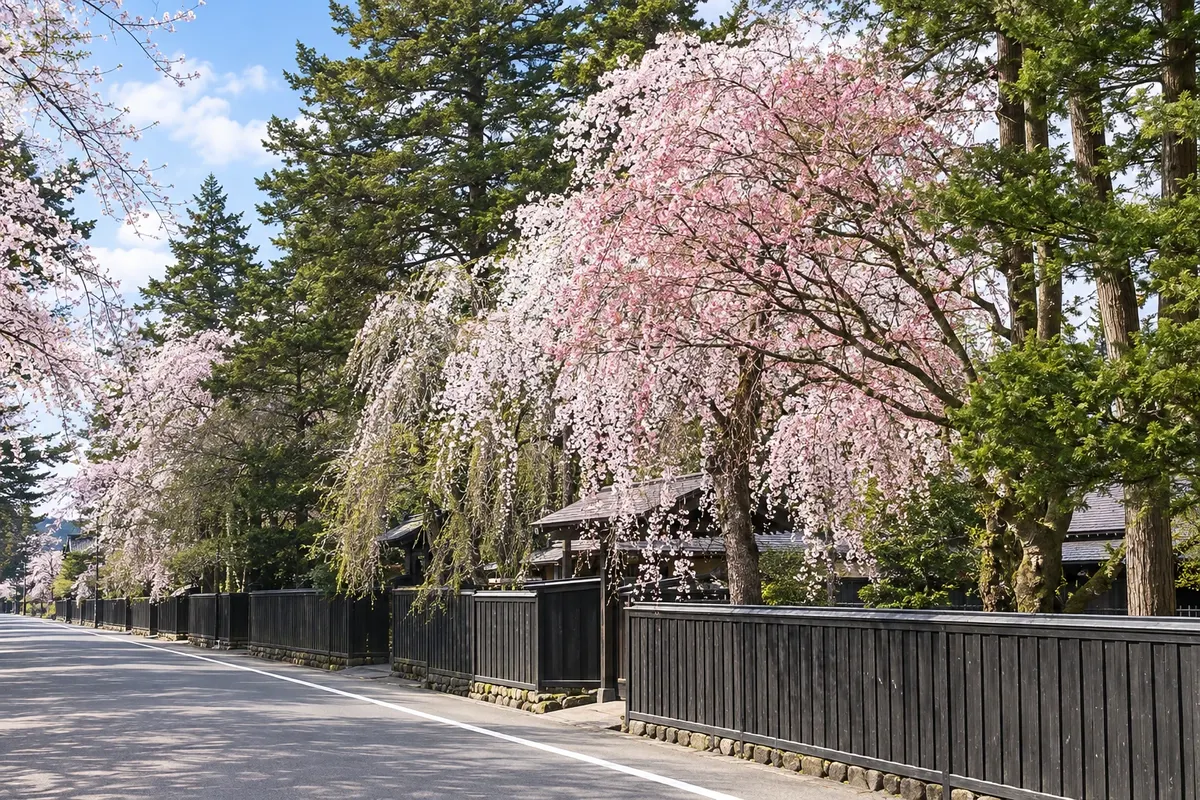
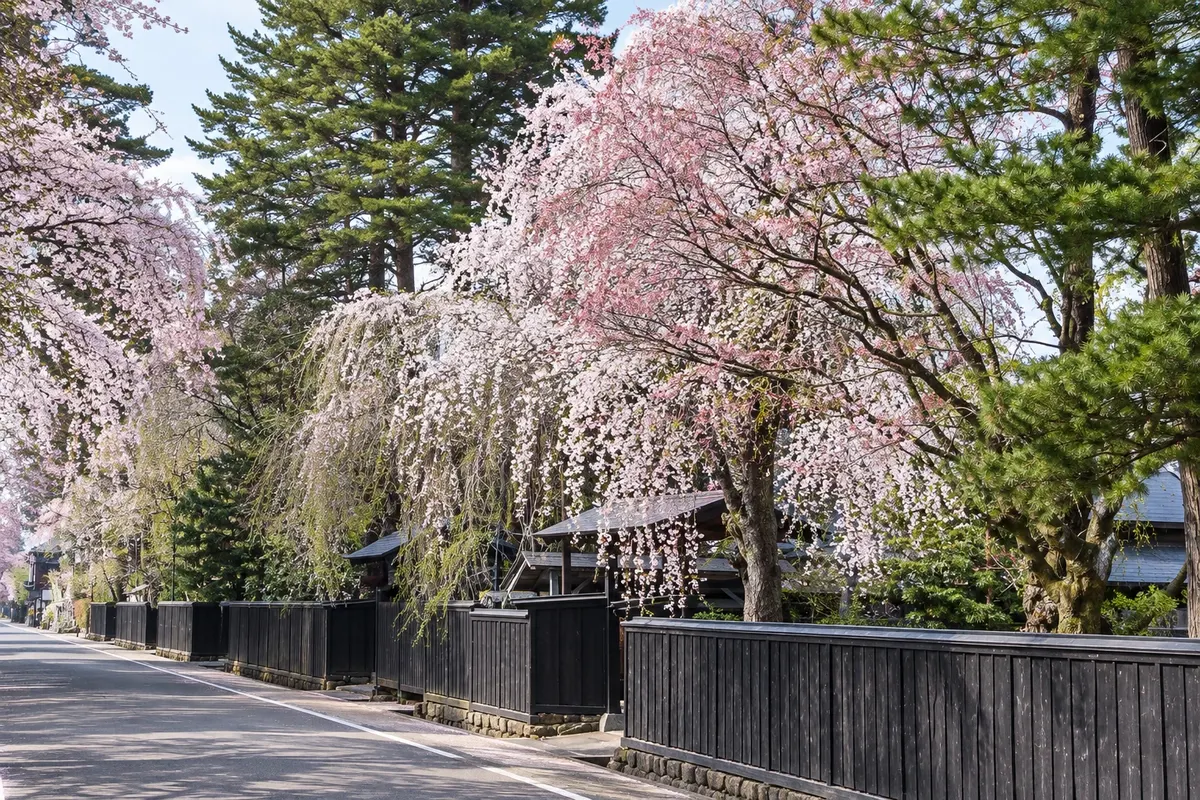
Wide streets with black wooden fences, gates and samurai houses from the Edo period, shaded by weeping cherry trees and centennial trees, with several residences open to visitors.
Antarktika
Akita · Japonska
Destinacija: Kakunodate and Lake Tazawa.
Na fotografiji: Cherry trees and wooden fences in Kakunodate’s neighborhood, in Semboku.
Illustrative images. The pictures in this guide are illustrations based on the real place, not photographs, and may differ from it.
Mesto
Semboku is the inland municipality of Akita that includes Kakunodate, the castle town with its samurai district and weeping cherry trees, Lake Tazawa—the deepest lake in Japan—and Nyuto Onsen, a group of hot-spring inns in the forest of Mount Komagatake. The center is in Kakunodate, next to the Shinkansen station.
V vodniku še ni nastanitev – Semboku.
kako do tja · koliko dni · načrt poti · vprašanja
Doživite kraj
Wide streets with black wooden fences, gates and samurai houses from the Edo period, shaded by weeping cherry trees and centennial trees, with several residences open to visitors.
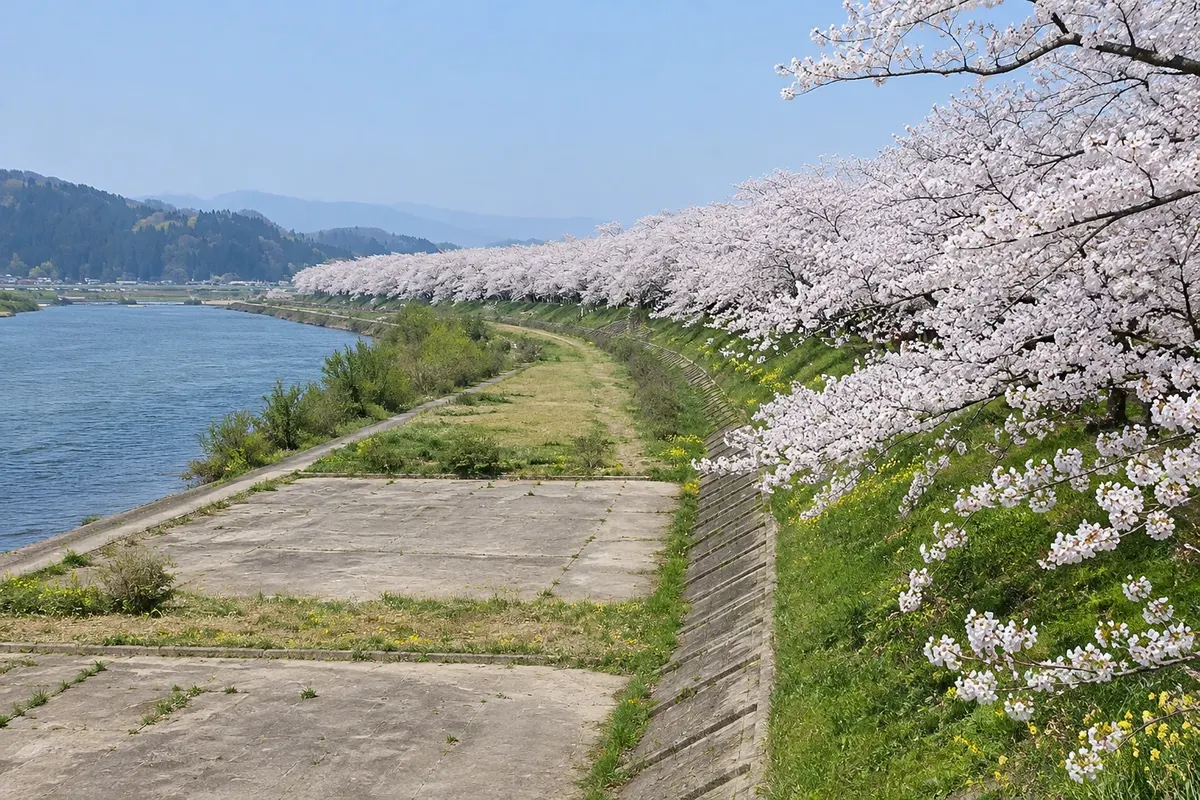
Bank of the Hinokinai River in Kakunodate with about 2 km of cherry trees planted in 1934, forming a tunnel of flowers between late April and early May and a green avenue the rest of the year.
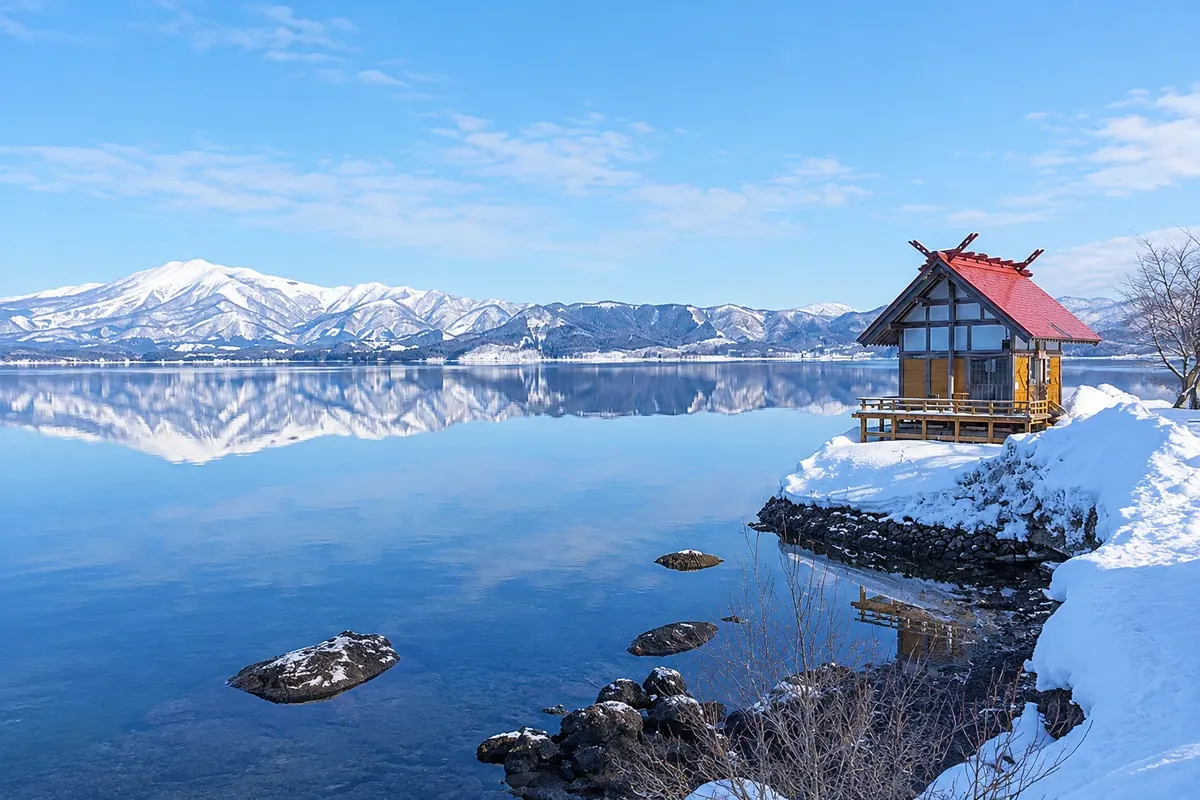
Round crater lake, 423 meters deep, the deepest in Japan, with dark blue water that does not freeze, featuring the golden statue of Tatsuko and a red torii at the water’s edge.
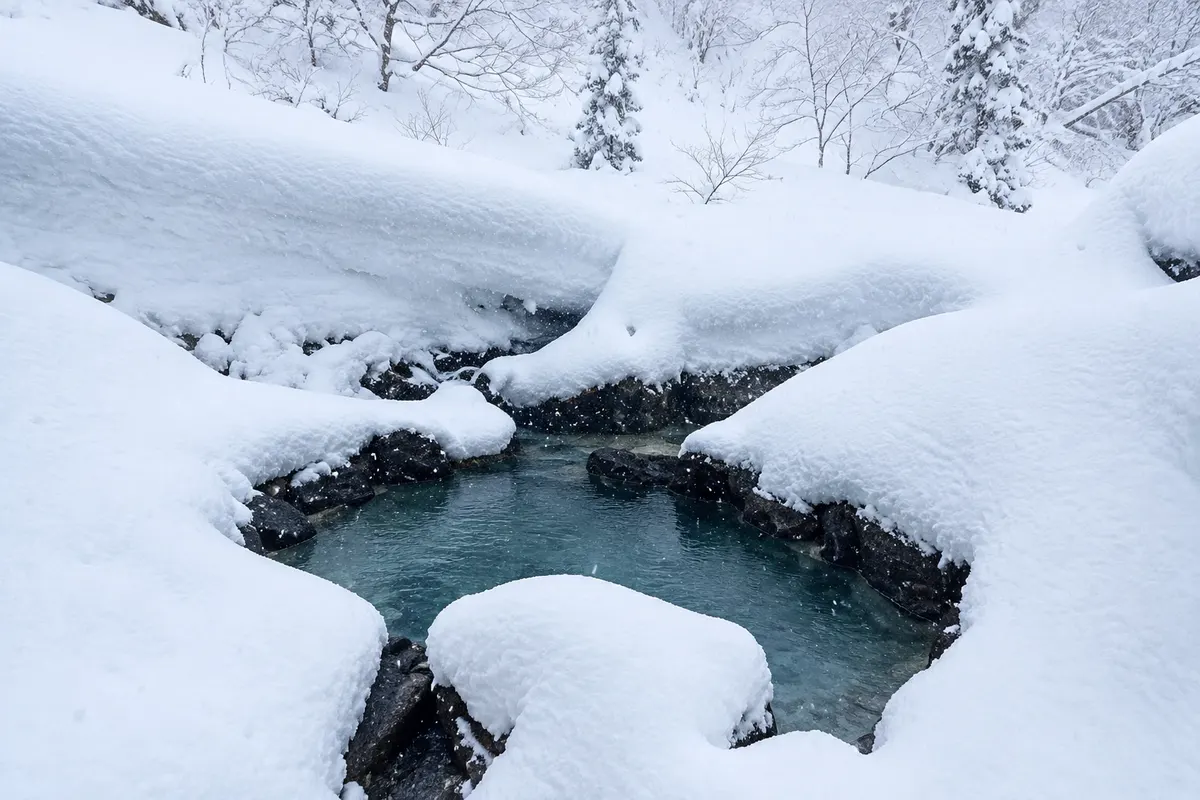
A group of seven secluded hot-spring inns in the forest of Mount Komagatake, each with its own source, including Tsurunoyu, with thatched-roof buildings and an outdoor bath of milky white water.

Pred odhodom
Semboku – Akita
Razdalje so približne. Pred potovanjem preverite lete in vozne rede avtobusov, vlakov ali ladij.
Kakunodate Station is on the Komachi Shinkansen line, about 3 hours from Tokyo and 50 minutes from Akita. Tazawako Station, on the same line, serves the lake and Nyuto Onsen. Akita Airport is about 45 km away, with buses.
One day for Kakunodate. With two days, include Lake Tazawa and one night at Nyuto Onsen. Three days allow hiking on Mount Komagatake in summer.
Late April and early May have the cherry blossoms. From June to September the weather is mild, with good days for the lake. October brings autumn foliage. From December to March snowfall is heavy, and it’s the most sought-after time for the Nyuto baths.
The seasons shown are the most usual ones; nature doesn't always follow the calendar.
No, not for Kakunodate, which is explored on foot, nor for the lake and Nyuto, which are served by buses from Tazawako Station. A car makes it easier to circle the lake and to move between Nyuto’s seven inns, but roads need caution in winter.
Predlog poti
Pot povezuje znamenitosti na tej strani. Za oglede boste imeli dovolj časa.
Walk from the station to Uchimachi and stroll along the samurai houses’ street, entering the Aoyagi House and the Ishiguro House.
Go down to the Hinokinai River and walk along the tree-lined embankment. Visit the cherry-bark crafts museum, the kabazaiku.
Return through the merchants’ area, to the south, with thick-walled warehouses and shops selling miso and shoyu.
Dan 1
Start with the open houses in the samurai district and walk along the Hinokinai River embankment.
Take the Shinkansen to Tazawako and a bus to the lake. See the statue of Tatsuko and the red torii of Gozanoishi Shrine.
Dan 2
After a night at an inn in Nyuto, try the baths at a different house in the group, such as Tsurunoyu, with milky water.
Go down to the lake and follow the shore by car or bicycle, stopping at the beaches on the west side before taking the train.
Check before you go. Opening hours and days change, and places may close for renovations, holidays or events. This itinerary is a suggestion from Cidade Turismo, not a commitment: plan yours by checking directly with each place you intend to visit.
Pred odhodom
Kakunodate is the old castle town; since 2005 it has been part of the municipality of Semboku, which also includes Lake Tazawa and Nyuto Onsen. The station and the samurai district still carry the name Kakunodate.
Six houses in the Uchimachi district usually open to visitors. The larger ones, Aoyagi and Ishiguro, charge admission; the smaller ones usually do not. Opening days vary in winter.
It is Kakunodate’s craft made from cherry bark, polished until it shines, used for tea boxes, cases and trays. There is a museum dedicated to it next to the samurai district.
Yes. Inns usually accept day visitors at set times. Guests can buy a pass to use the baths of the seven houses.
Več kot vodnik