

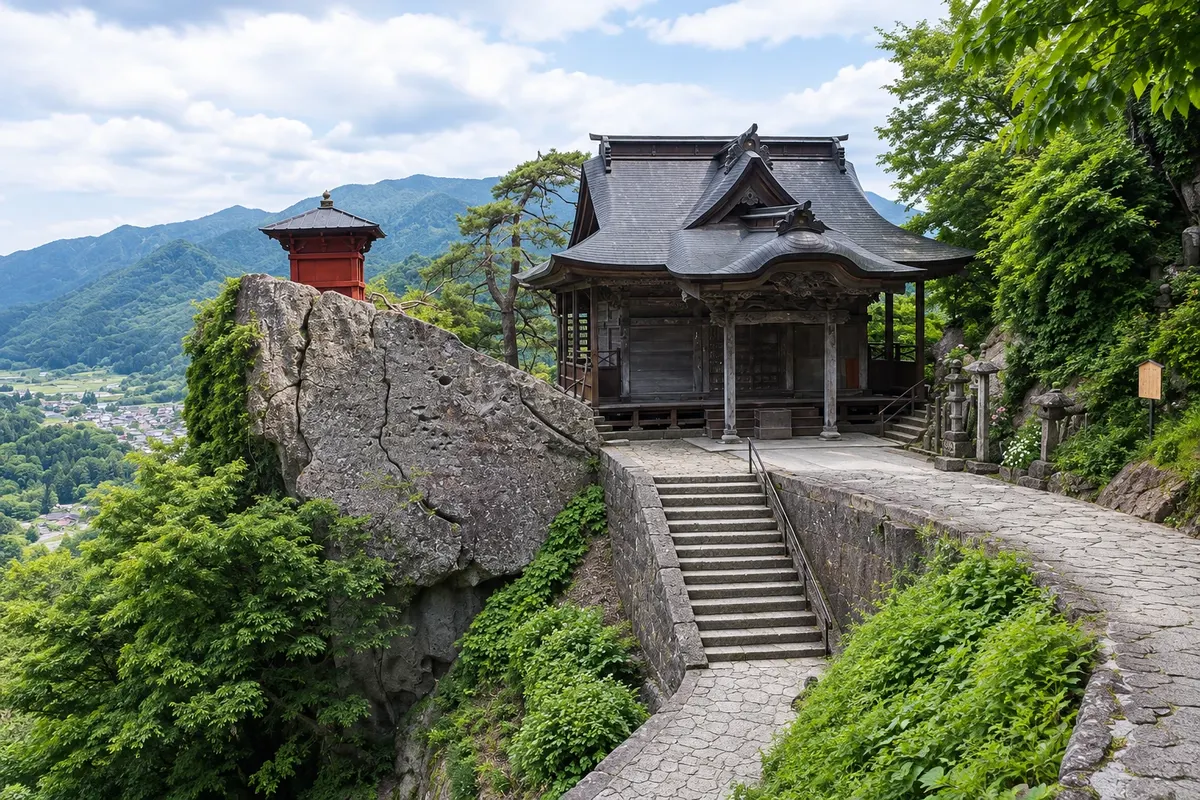
Temple
Yamadera (Risshaku-ji)
A 9th-century Buddhist temple on a rocky mountain northeast of Yamagata, with about a thousand stone steps among cedars up to the upper halls and the Godaido viewpoint over the valley.

 Išči
 Brazilija
 Antarktika
 Argentina
 Bolivija
 Čile
 Kolumbija
 Ekvator
 Gvajana
 Francoska Gvajana
 Falklandski otoki (Malvini)
 Paragvaj
 Peru
 Surinam
 Urugvaj
 Venezuela
 Nemčija
 Avstrija
 Belgija
 Hrvaška
 Danska
 Slovaška
 Slovenija
 Španija
 Finska
 Francija
 Grčija
 Nizozemska
 Madžarska
 Irska
 Islandija
 Italija
 Luksemburg
 Norveška
 Poljska
 Portugalska
 Združeno kraljestvo
 Češka
 Švedska
 Švica
 Turčija
 Bermudi
 Kanada
 Združene države Amerike
 Grenlandija
 Mehika
 Sveta Peter in Mihael
 Dominikanska republikaJaponskaTurčija
 Južnoafriška republika
 Egipt
 Avstralija
 Fidži
 Nova Zelandija
 Papua Nova Gvineja
Yamagata · Japonska Capital
Destinacija: Ginzan Onsen and Yamadera.
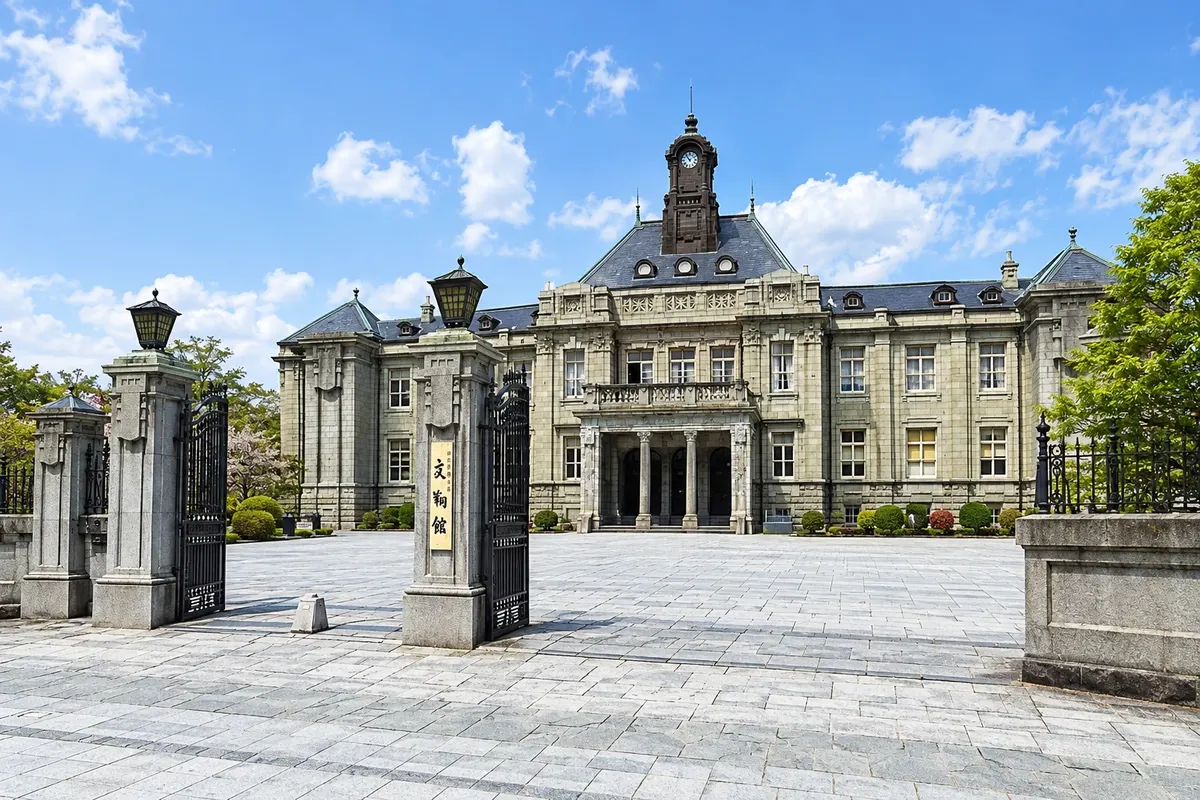
Na fotografiji: Facade of the Bunshokan in Yamagata.
Illustrative images. The pictures in this guide are illustrations based on the real place, not photographs, and may differ from it.
Mesto
Yamagata is the capital of the province of the same name, in a basin surrounded by mountains in inland Tohoku. It is the base for the Yamadera temple, high on a rock cliff to the northeast, and for Zao Onsen, to the south, known for its sulfurous waters and winter snow monsters. In the center are the Bunshokan, the former provincial government building, and the park with the castle ruins.
V vodniku še ni nastanitev – Yamagata.
kako do tja · koliko dni · načrt poti · vprašanja
Doživite kraj
A 9th-century Buddhist temple on a rocky mountain northeast of Yamagata, with about a thousand stone steps among cedars up to the upper halls and the Godaido viewpoint over the valley.
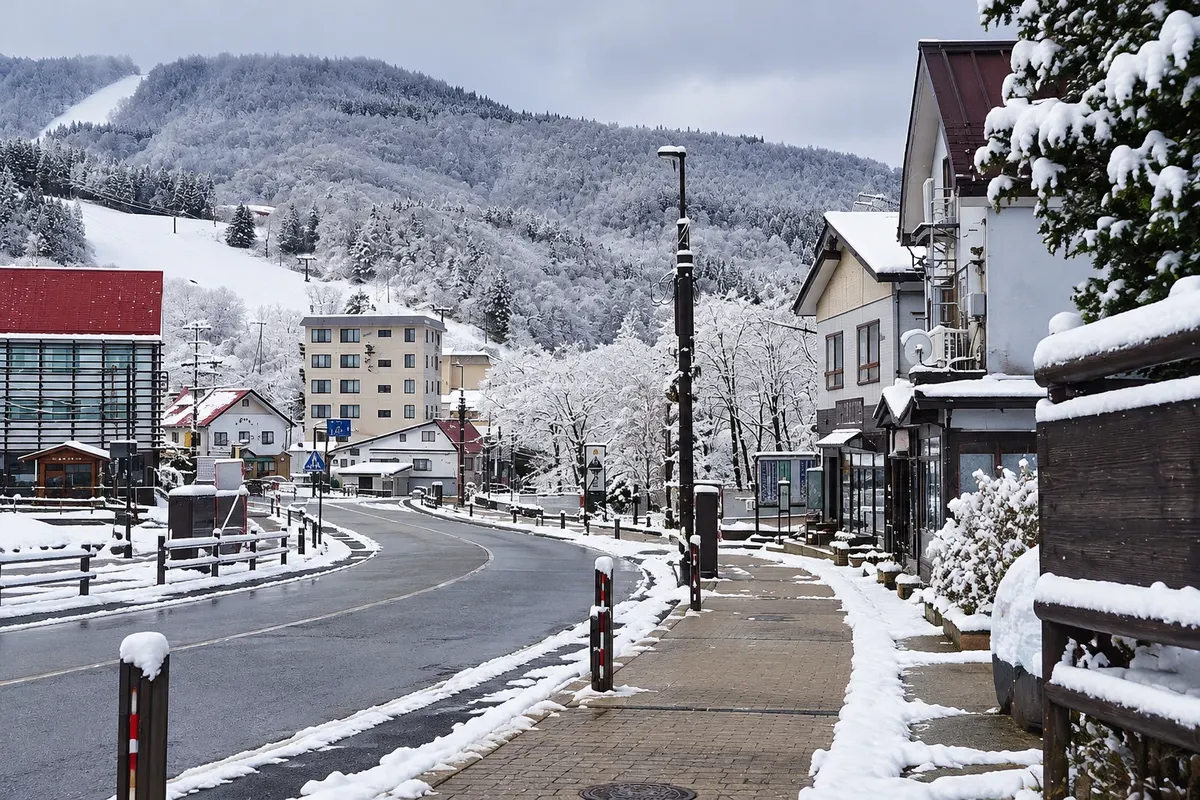
A hot-spring village of sulfurous waters and a ski resort south of Yamagata, with ropeways to Mount Jizo where, in the height of winter, ice- and snow-covered trees form the snow monsters.
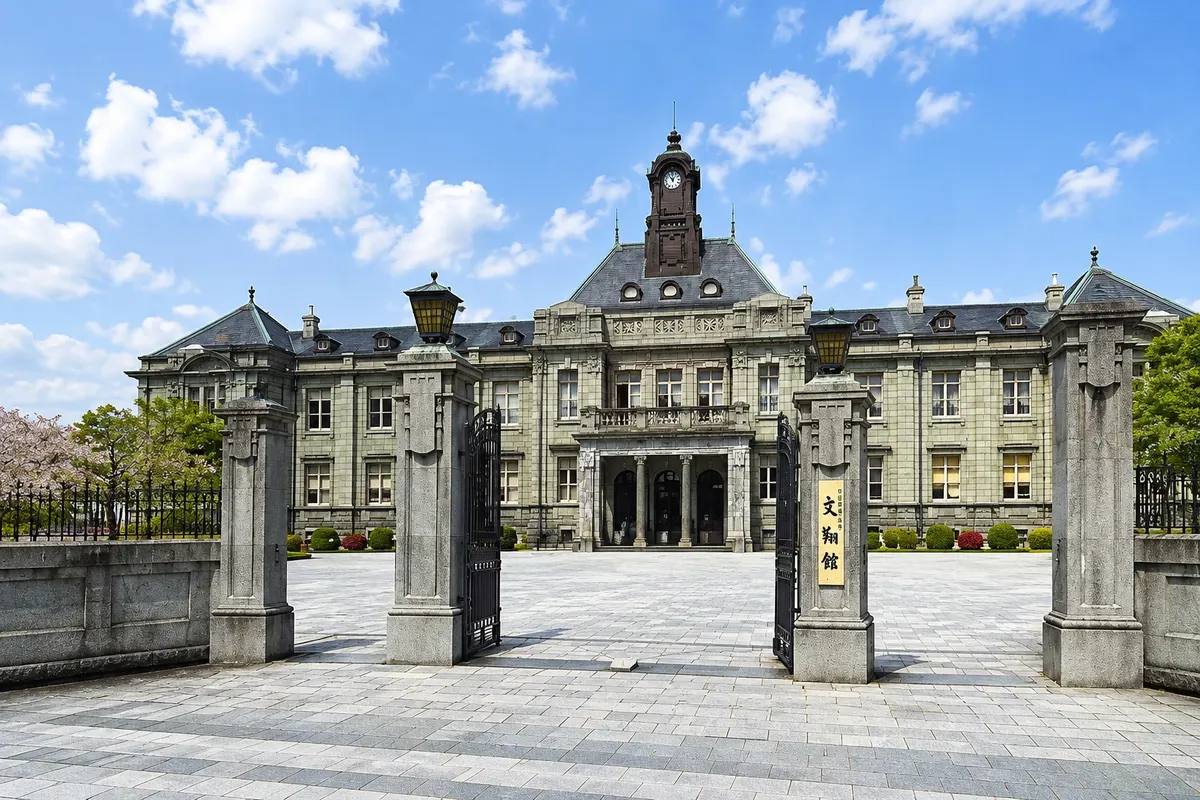
The former Yamagata prefectural government and assembly building, from 1916, in brick and stone in the English Renaissance style, with a clock tower, restored rooms and free entry.
Pred odhodom
Yamagata – Yamagata Destinacija Ginzan Onsen and Yamadera Capital
Razdalje so približne. Pred potovanjem preverite lete in vozne rede avtobusov, vlakov ali ladij.
Yamagata Station is served by the Tsubasa shinkansen, about 2h30 to 2h45 from Tokyo. The Senzan Line connects Yamagata to Sendai in about 1h15, passing through Yamadera. Yamagata Airport is about 24 km away, with bus connections. Express buses link the city to Sendai.
One day for Yamadera and downtown Yamagata. With two days, add Zao Onsen, including the ropeway and the baths; in winter, the snow monsters deserve an afternoon and early evening.
April to November for Yamadera, with foliage at the end of October. June and July bring the cherries; August, the Hanagasa festival; September, the imoni festival, a soup cooked in a giant pot. January and February are the season for Zao’s snow monsters and skiing.
The seasons shown are the most usual ones; nature doesn't always follow the calendar.
No. The Senzan Line reaches Yamadera Station in about 20 minutes, and buses connect Yamagata Station to Zao Onsen in about 40 minutes. The center is walkable. A car only helps for the Zao road in summer and autumn.
Predlog poti
Pot povezuje znamenitosti na tej strani. Za oglede boste imeli dovolj časa.
Take the Senzan Line to Yamadera and climb the stone steps between cedars up to the Okunoin and the Godaido viewpoint.
Return to Yamagata, visit the Bunshokan, the former provincial government building, and walk to the park with the castle ruins.
Have cold soba for dinner, typical of the prefecture, or Yamagata beef at a restaurant near the station.
Dan 1
Climb Yamadera early and have lunch near the station, with sesame tofu and skewered konnyaku.
Visit the Bunshokan and the park with the castle ruins, with restored walls and gate.
Dan 2
Take a bus to Zao Onsen and bathe in sulfurous water at one of the village’s public baths.
Ride the ropeway to the top of Mount Jizo. In winter, see the snow monsters; in summer, walk among the alpine flowers.
Check before you go. Opening hours and days change, and places may close for renovations, holidays or events. This itinerary is a suggestion from Cidade Turismo, not a commitment: plan yours by checking directly with each place you intend to visit.
Pred odhodom
Climb Yamadera in the morning on the Senzan Line, and return to town in the afternoon for the Bunshokan and the park with the castle ruins. In winter, swap the center for Zao Onsen and the snow monsters.
By bus from Yamagata Station in about 40 minutes. Zao’s ropeways depart from the village itself.
It is a taro-and-beef soup with scallions cooked in a soy-based broth, typical of autumn in Yamagata. In September, a festival cooks imoni in a giant pot by the river.
Generally June to July. Yamagata is Japan’s largest cherry producer, and nearby farms offer pick-your-own during the season.
Več kot vodnik


