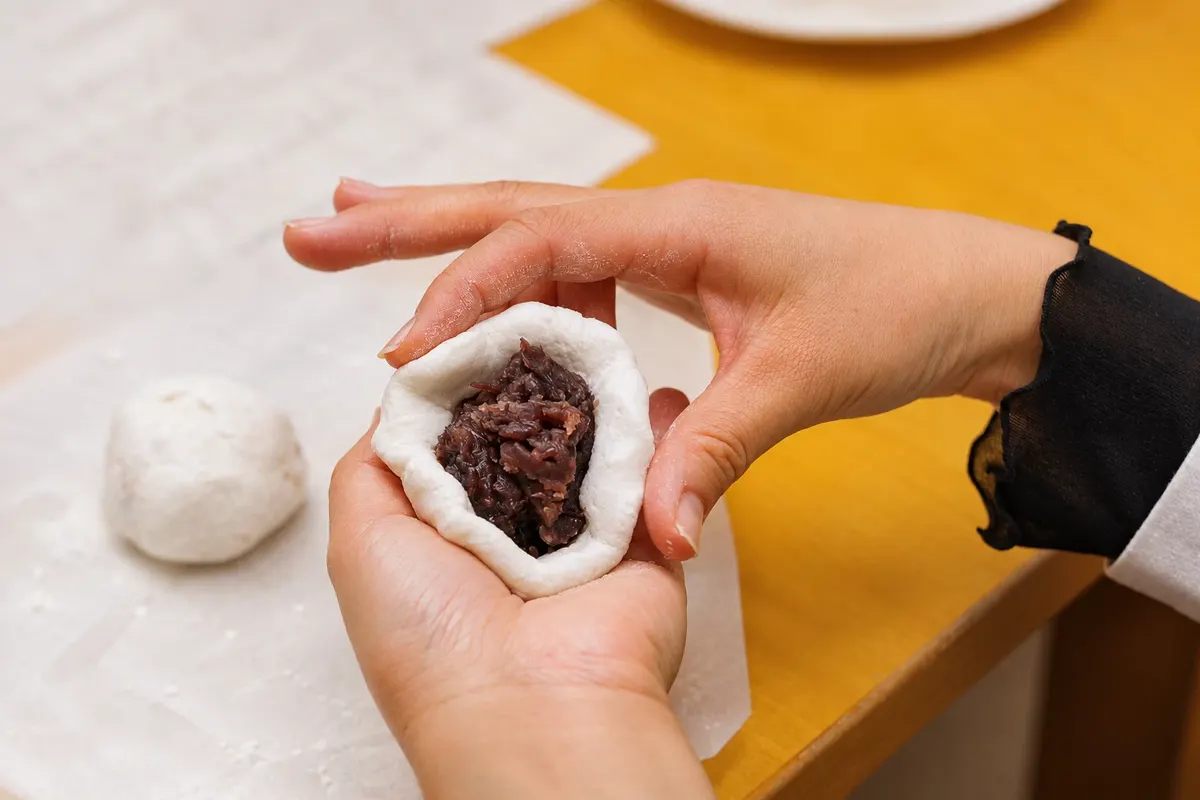
Umegae-mochi
Thin rice‑cake filled with sweet azuki bean paste and toasted on both sides in an iron mold stamped with a plum blossom, the symbol of Dazaifu Tenmangu shrine. It’s the sweet of the shrine avenue in Dazaifu.
Antarktika
Fukuoka · Japonska
Destinacija: Fukuoka (Fukuoka); Dazaifu (Dazaifu).
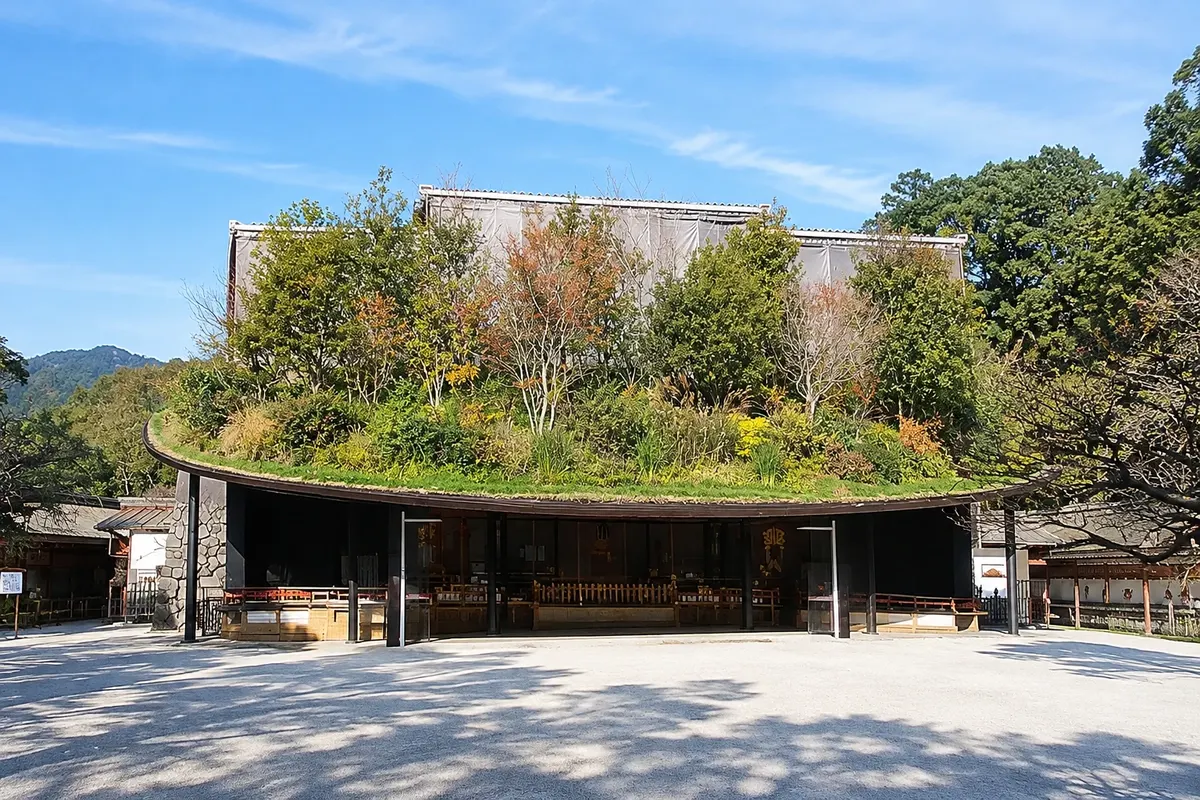
Na fotografiji: Glass facade and undulating roof of the Kyushu National Museum.
Illustrative images. The pictures in this guide are illustrations based on the real place, not photographs, and may differ from it.
Mesto
Dazaifu is a city about 16 km from Fukuoka that for centuries was the administrative and military center of Kyushu. Today it is known for Dazaifu Tenmangu Shrine, dedicated to the deity of learning, with more than six thousand plum trees, and the Kyushu National Museum, about Japan’s cultural exchanges with Asia. The approach street to the shrine sells umegae-mochi, a traditional sweet.
V vodniku še ni nastanitev – Dazaifu.
kako do tja · koliko dni · načrt poti · vprašanja
Lokalni okusi – of Japonska
Doživite kraj
Sanctuary built over the tomb of Sugawara no Michizane, a 9th-century scholar venerated as the god of learning. It has a main hall from the 16th century, arched bridges over a pond, and more than six thousand plum trees.
One of Japan’s four national museums, dedicated to cultural exchanges between Japan and Asia, in a wave-shaped glass building on the Dazaifu hills, connected to the shrine by a walkway.
Pred odhodom
Dazaifu – Fukuoka Destinacija Fukuoka (Fukuoka); Dazaifu (Dazaifu) približno 17 km stran (izhodišče: Fukuoka)
Razdalje so približne. Pred potovanjem preverite lete in vozne rede avtobusov, vlakov ali ladij.
From Tenjin in Fukuoka, Nishitetsu trains reach Dazaifu Station in about 30 minutes with a transfer at Futsukaichi; at certain times there are direct trains. Buses run from Hakata Station and from Fukuoka Airport.
Half a day for the shrine, the approach street and the museum; a full day to include Komyozen-ji Temple and the ruins of the old government office.
From February to early March, when the plum trees usually bloom; at the end of March, the cherry trees. November brings colored leaves at Komyozen-ji. Students fill the shrine during entrance exam season, from January to March.
The seasons shown are the most usual ones; nature doesn't always follow the calendar.
No. The shrine, the museum and Komyozen-ji are within walking distance of Dazaifu Station.
Predlog poti
Pot povezuje znamenitosti na tej strani. Za oglede boste imeli dovolj časa.
Walk up the approach street, cross the arched bridges over Shinji-ike Pond and arrive at the main hall, with the sacred plum tree Tobiume beside it.
Follow the illuminated walkway to the Kyushu National Museum and, on the return, stop by the dry garden of Komyozen-ji Temple.
Try the hot umegae-mochi on the approach street before the shops close and return to Fukuoka by train.
Check before you go. Opening hours and days change, and places may close for renovations, holidays or events. This itinerary is a suggestion from Cidade Turismo, not a commitment: plan yours by checking directly with each place you intend to visit.
Pred odhodom
A rice cake filled with sweet bean paste, grilled on a hot plate with the imprint of a plum blossom, sold on the approach street to the shrine.
For the shrine and the museum, half a day is sufficient. A full day allows you to include Komyozen-ji, the ruins of the old Dazaifu government office and Kanzeon-ji Temple.
By Nishitetsu train from Tenjin in about 30 minutes with a transfer at Futsukaichi, or by bus from Hakata.
The seat of the regional government that administered Kyushu and relations with the continent from the 7th to the 12th century. The ruins of the government building are about 2 km from the shrine.
Več kot vodnik