

Geothermal phenomenon
Beppu Jigoku (Hells of Beppu)
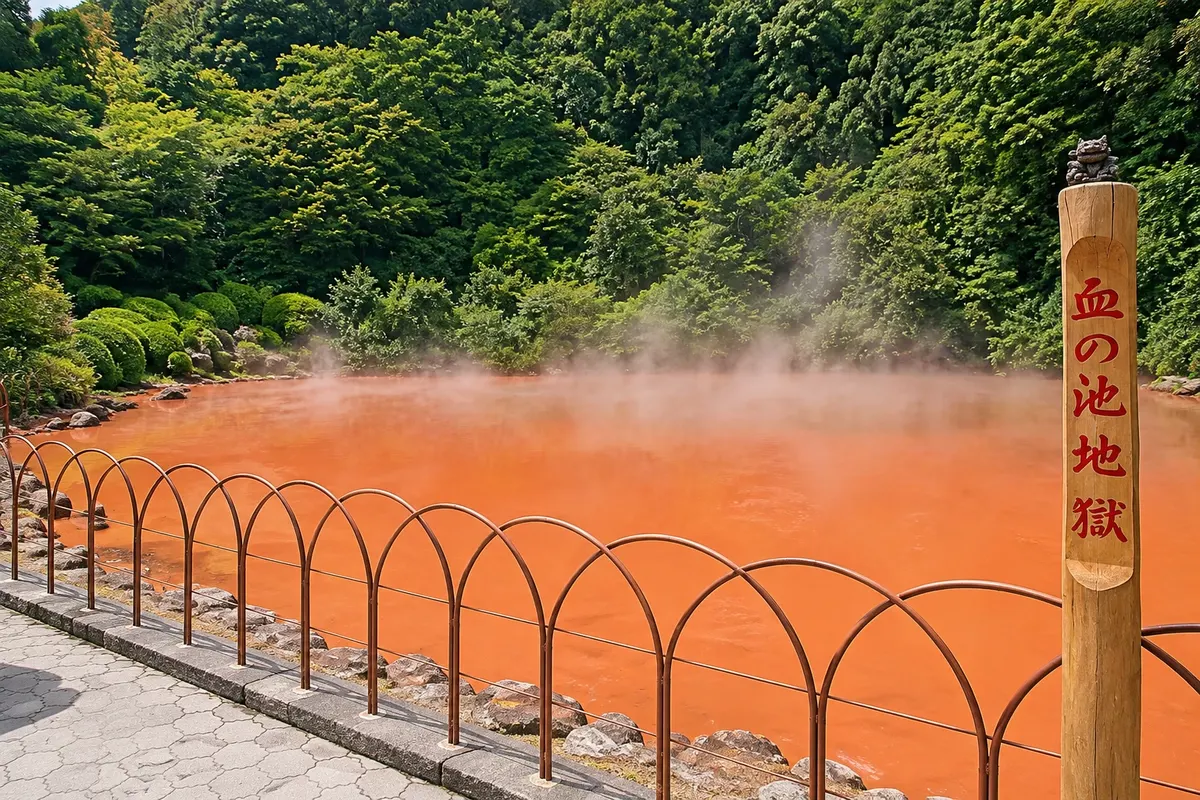
Seven hot springs visited as scenery: the cobalt blue of Umi Jigoku, the mud of Oniishibozu, the red of Chinoike and the geyser Tatsumaki, in Kannawa and Shibaseki.

 Išči
 Brazilija
 Antarktika
 Argentina
 Bolivija
 Čile
 Kolumbija
 Ekvator
 Gvajana
 Francoska Gvajana
 Falklandski otoki (Malvini)
 Paragvaj
 Peru
 Surinam
 Urugvaj
 Venezuela
 Nemčija
 Avstrija
 Belgija
 Hrvaška
 Danska
 Slovaška
 Slovenija
 Španija
 Finska
 Francija
 Grčija
 Nizozemska
 Madžarska
 Irska
 Islandija
 Italija
 Luksemburg
 Norveška
 Poljska
 Portugalska
 Združeno kraljestvo
 Češka
 Švedska
 Švica
 Turčija
 Bermudi
 Kanada
 Združene države Amerike
 Grenlandija
 Mehika
 Sveta Peter in Mihael
 Dominikanska republikaJaponskaTurčija
 Južnoafriška republika
 Egipt
 Avstralija
 Fidži
 Nova Zelandija
 Papua Nova Gvineja
Oita · Japonska
Destinacija: Beppu and Yufuin.
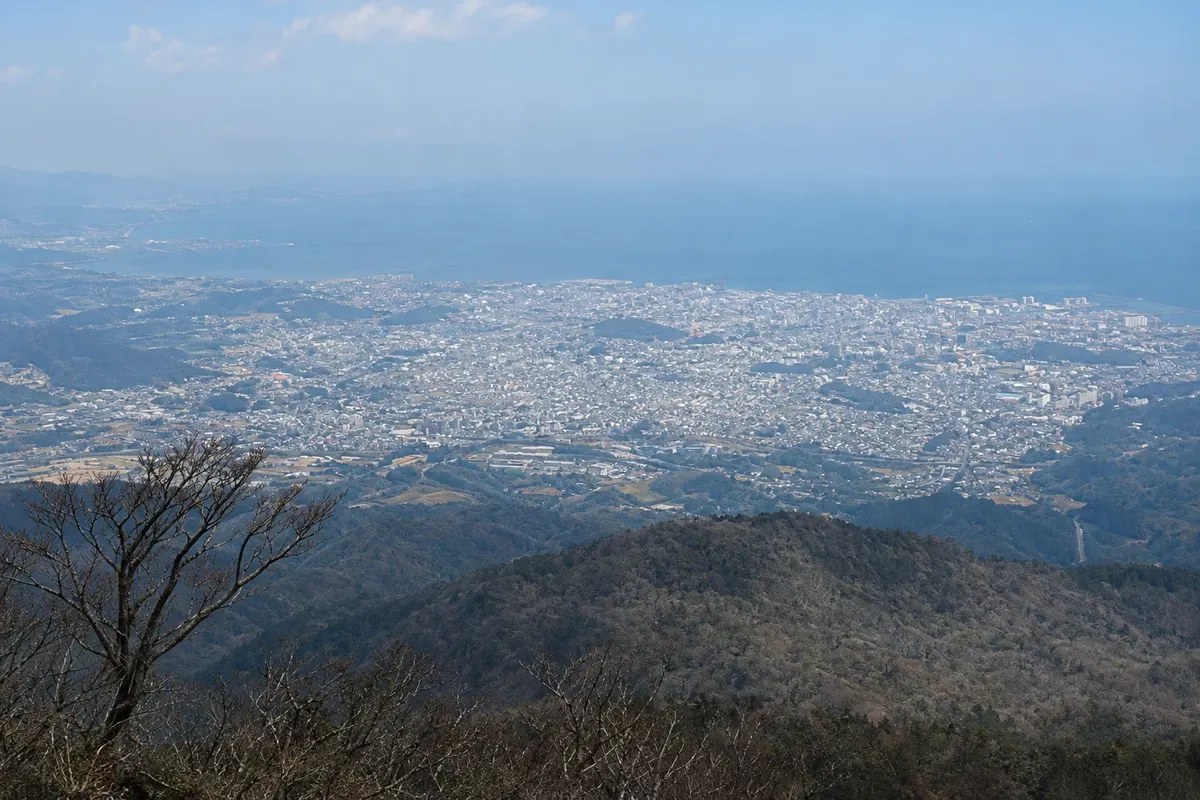
Na fotografiji: Beppu and the bay, seen from the hillside
Illustrative images. The pictures in this guide are illustrations based on the real place, not photographs, and may differ from it.
Mesto
Beppu is the hot-spring city on Beppu Bay in Oita, where steam rises from streets and slopes. It has hundreds of baths, the Kannawa and Shibaseki hells—which are visited as scenery—the hot sand bath at Takegawara and Myoban’s yunohana huts. Mount Tsurumi, with a ropeway, rises behind the town.
V vodniku še ni nastanitev – Beppu.
kako do tja · koliko dni · načrt poti · vprašanja
Doživite kraj
Seven hot springs visited as scenery: the cobalt blue of Umi Jigoku, the mud of Oniishibozu, the red of Chinoike and the geyser Tatsumaki, in Kannawa and Shibaseki.
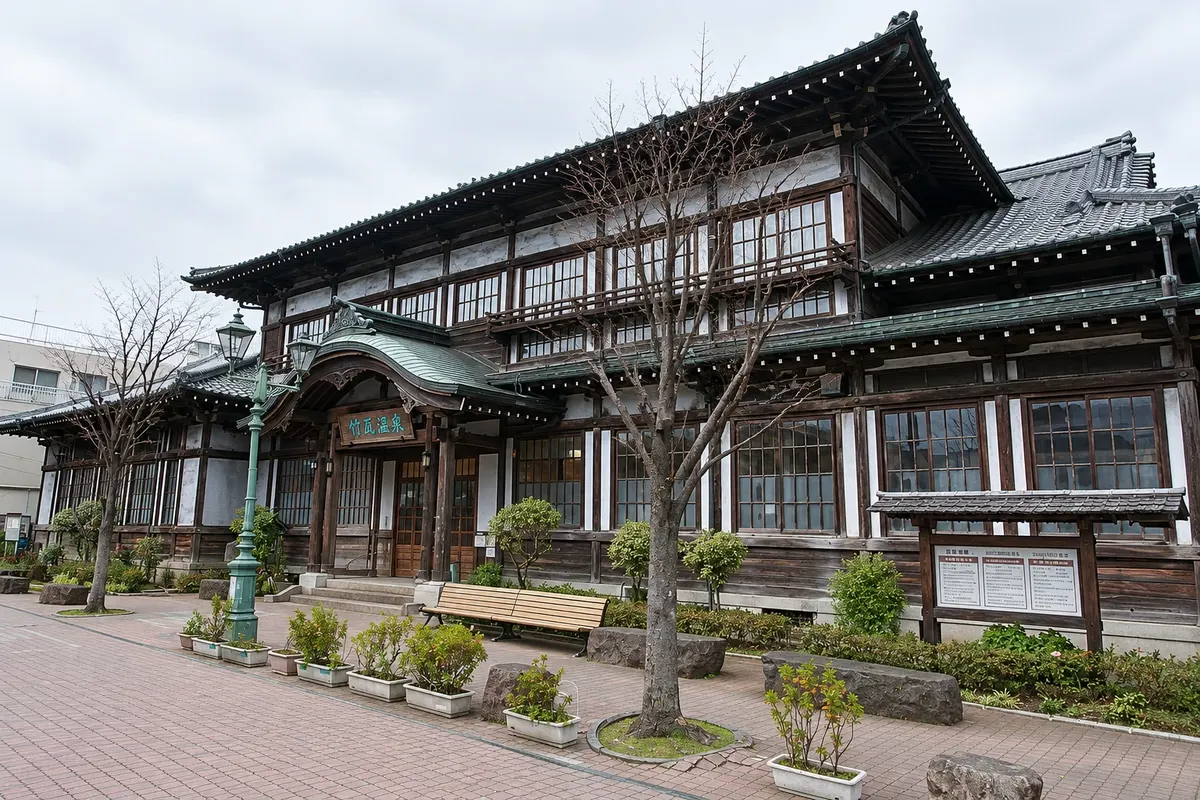
A public bathhouse near Beppu Station, in a wooden building with a curved roof, famous for its hot sand bath, which is done wearing a yukata and with attendants covering you in sand.
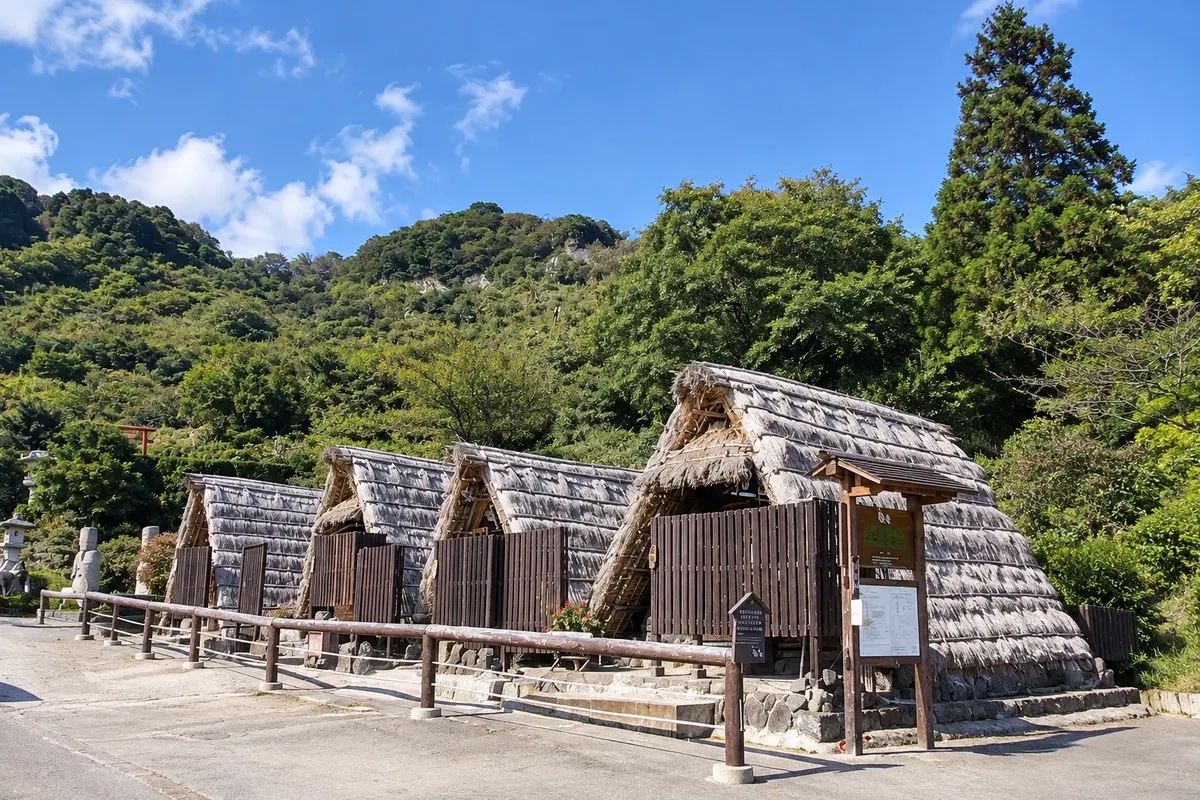
A thermal area on the slope above Kannawa with straw huts where yunohana crystallizes, milky waters and views over Beppu Bay.
Pred odhodom
Beppu – Oita Destinacija Beppu and Yufuin
Razdalje so približne. Pred potovanjem preverite lete in vozne rede avtobusov, vlakov ali ladij.
JR Beppu Station receives express trains from Fukuoka (about 2 hours) and from Kokura, where shinkansen trains stop. Oita Airport is about 40 km away, with a direct bus of roughly 40 minutes. Beppu port receives overnight ships from Osaka and Kobe. There are long-distance buses to Fukuoka, Aso and Kumamoto.
One full day covers the hells, an old public bath and Myoban. With two days there’s time for Kannawa’s steam bath, Mount Tsurumi and an afternoon in Yufuin.
From March to May and October to November the weather is usually mild. Winter, from December to February, is cold and dry, good for baths and for seeing the steam. Rain is more frequent from June until mid-July; August and September are humid and can bring typhoons through October.
The seasons shown are the most usual ones; nature doesn't always follow the calendar.
No. City buses depart from the station to Kannawa, where five of the hells are located, and continue to Shibaseki and Myoban. A one-day pass usually pays off if you take several buses. A car only helps if you continue along the Yamanami Road toward Aso.
Predlog poti
Pot povezuje znamenitosti na tej strani. Za oglede boste imeli dovolj časa.
Take the bus from the station to Kannawa and visit the five “hells” in the area, from the cobalt-blue Umi Jigoku to the gray mud of Oniishibozu. Buy the joint ticket if you plan to see them all.
Have something steamed for lunch in Kannawa, then head to Shibaseki to see the red lake Chinoike and the geyser Tatsumaki. Finish by climbing up to Myoban to see the thatched yunohana huts.
Return to the center and be buried in the hot sand at Takegawara, the curved-roof bathhouse near the station. Afterwards, wander the alleys of the old neighborhood.
Dine near the station: Oita fried chicken (toriten), bay fish, or the local ramen. Many ryokan serve dinner in-room or in a communal dining hall.
Dan 1
Start in Kannawa and walk along Miyuki Slope, with steam rising from houses and sidewalks. Visit the area’s hells.
Steam your lunch in one of Kannawa’s steam kitchens, using baskets set over boiling water, then head to Chinoike and Tatsumaki.
Climb Myoban to see the yunohana huts and Beppu Bay below. There are milky water baths in the area.
Sleep in a ryokan with a private bath, in Kannawa or Myoban, and wear the house yukata for dinner.
Dan 2
Take the ropeway up Mount Tsurumi, west of the center, for views of the steaming city and the bay. At the top, short trails lead to viewpoints.
Back in the center, take the Takegawara sand bath and stroll through the Kitahama district and along the waterfront.
Take the bus through the mountains to Yufuin, about an hour, to stay overnight in the village or just do an afternoon visit.
Stay in Yufuin or return to Beppu for one last soak in one of the public bathhouses downtown, many of which stay open into the evening.
Check before you go. Opening hours and days change, and places may close for renovations, holidays or events. This itinerary is a suggestion from Cidade Turismo, not a commitment: plan yours by checking directly with each place you intend to visit.
Pred odhodom
They are hot springs — boiling pools, mud pots, or intensely colored ponds — called jigoku. They are not for bathing: you visit them as scenery, with walkways and viewing platforms. Seven of them make up the Jigoku Meguri circuit: five in Kannawa and two in Shibaseki.
In the center, at the Takegawara bathhouse near the station, and on the Shoningahama shore, where beach sand is heated by the hot-spring water. Staff cover you with the warm sand; the treatment lasts about 10 minutes.
Beppu, Hamawaki, Kankaiji, Horita, Myoban, Kannawa, Shibaseki and Kamegawa. Each has its own waters and bathhouses; Kannawa and Myoban are the most visited.
It’s food steamed by hot-spring steam, a Kannawa tradition. In public steam kitchens you buy vegetables, eggs and seafood and place them in baskets over the steam for a few minutes.
Yes. Sand and steam baths are done wearing the yukata the facility lends, and there are foot baths, free of charge, at several spots in Kannawa and downtown. In common public bathhouses, bathing is without clothes.
Več kot vodnik


