Arancina
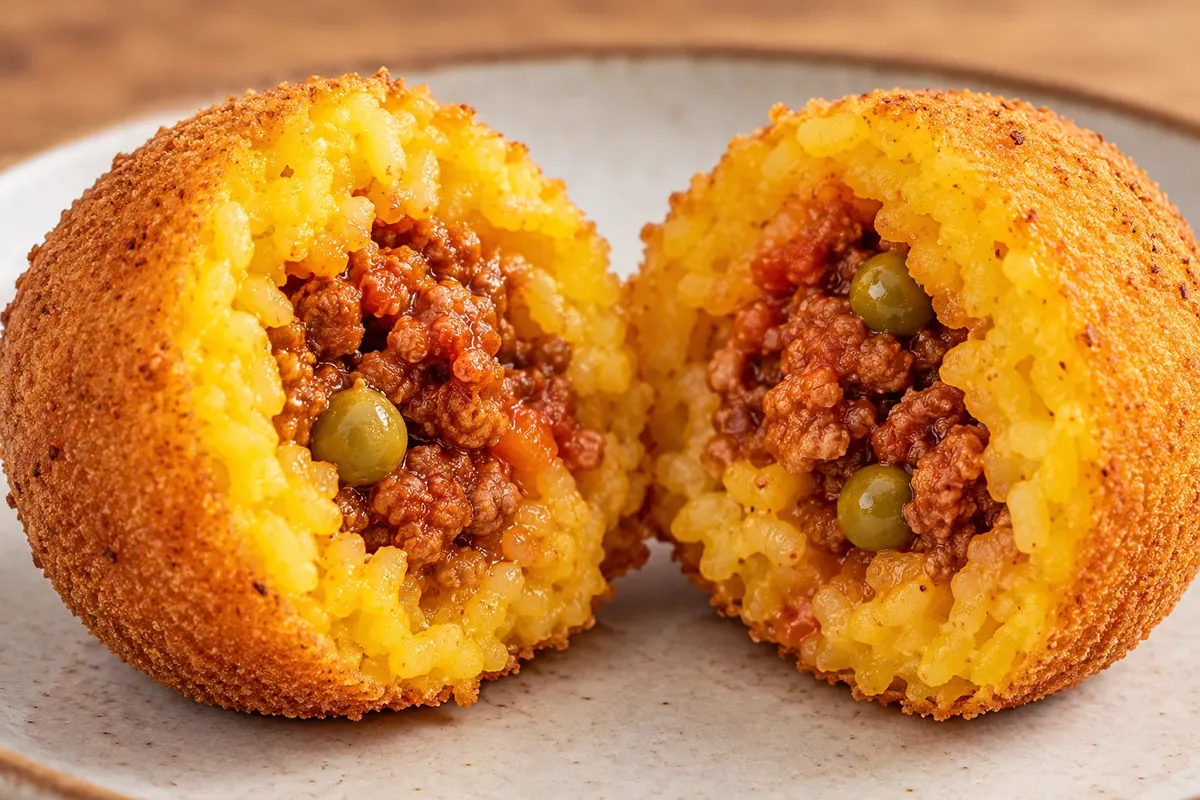
Rice ball with saffron, stuffed, breaded and fried. In Palermo it’s called arancina (feminine) and is round like an orange. It is the food of Saint Lucy’s Day, December 13, when people from Palermo do not eat bread or pasta.
Antarktika
Sicília · Italija Capital
Destinacija: Sicily.
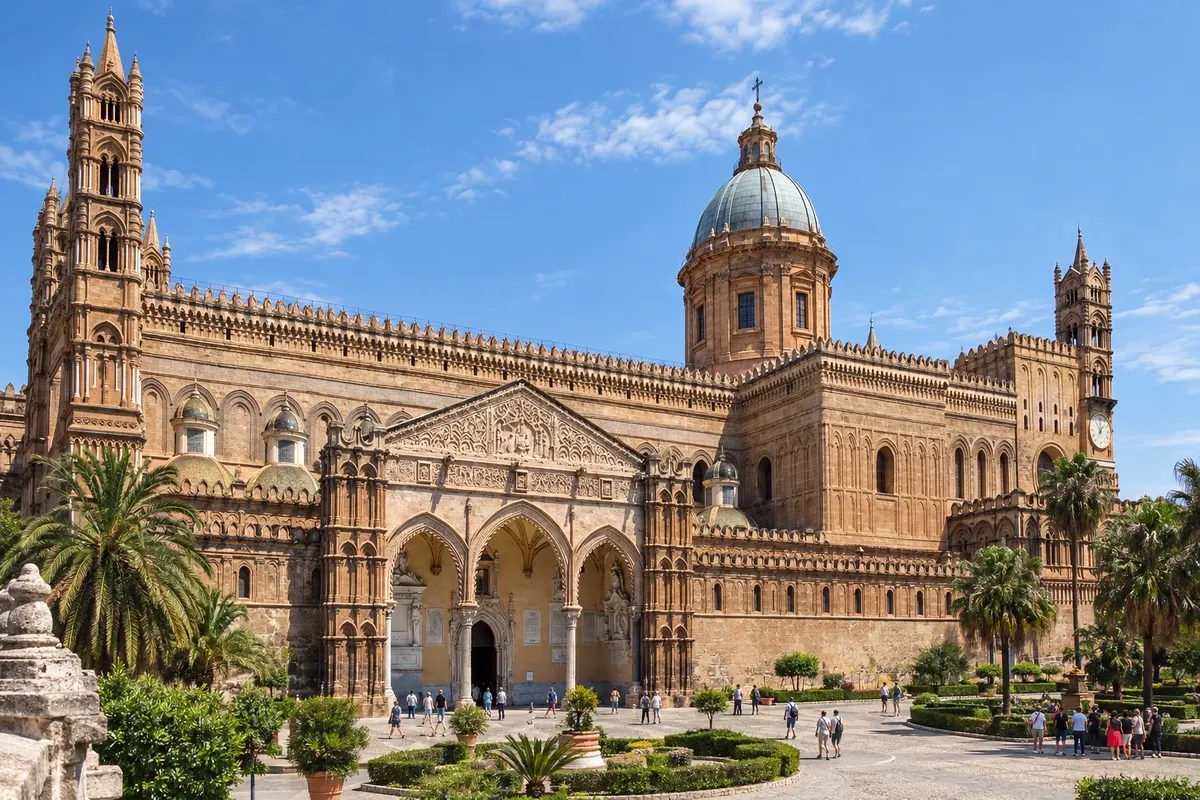
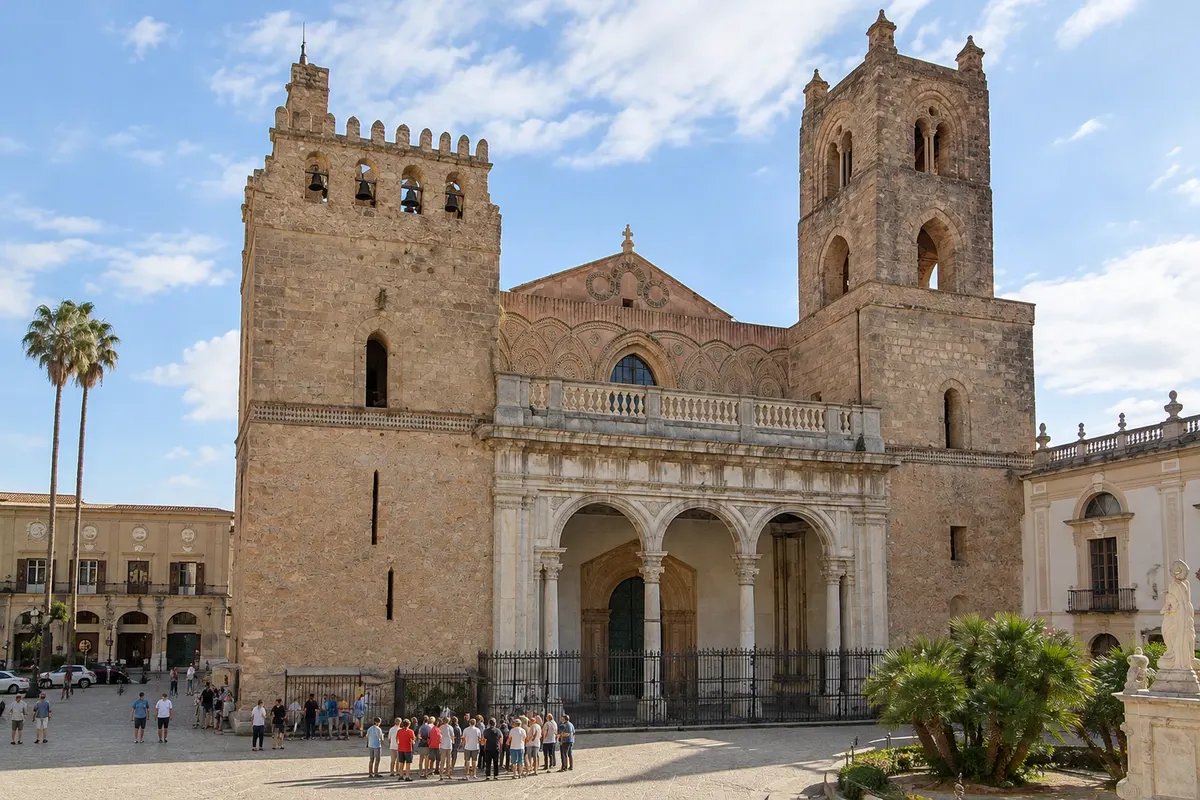
Na fotografiji: Cattedrale di Palermo
Illustrative images. The pictures in this guide are illustrations based on the real place, not photographs, and may differ from it.
Mesto
Palermo is the capital of Sicily and the city of the Arab-Norman UNESCO World Heritage ensemble: the cathedral, the Palazzo dei Normanni with the Cappella Palatina, the Martorana, San Giovanni degli Eremiti, the Zisa and the Duomo di Monreale. It has the Quattro Canti, Piazza Pretoria, the Teatro Massimo, the museums of Palazzo Abatellis and Salinas, the Catacombe dei Cappuccini, the Ballarò market, the sanctuary of Santa Rosália and the beach of Mondello.
V vodniku še ni nastanitev – Palermo.
kako do tja · koliko dni · načrt poti · vprašanja
Lokalni okusi – of Italija

Rice ball with saffron, stuffed, breaded and fried. In Palermo it’s called arancina (feminine) and is round like an orange. It is the food of Saint Lucy’s Day, December 13, when people from Palermo do not eat bread or pasta.

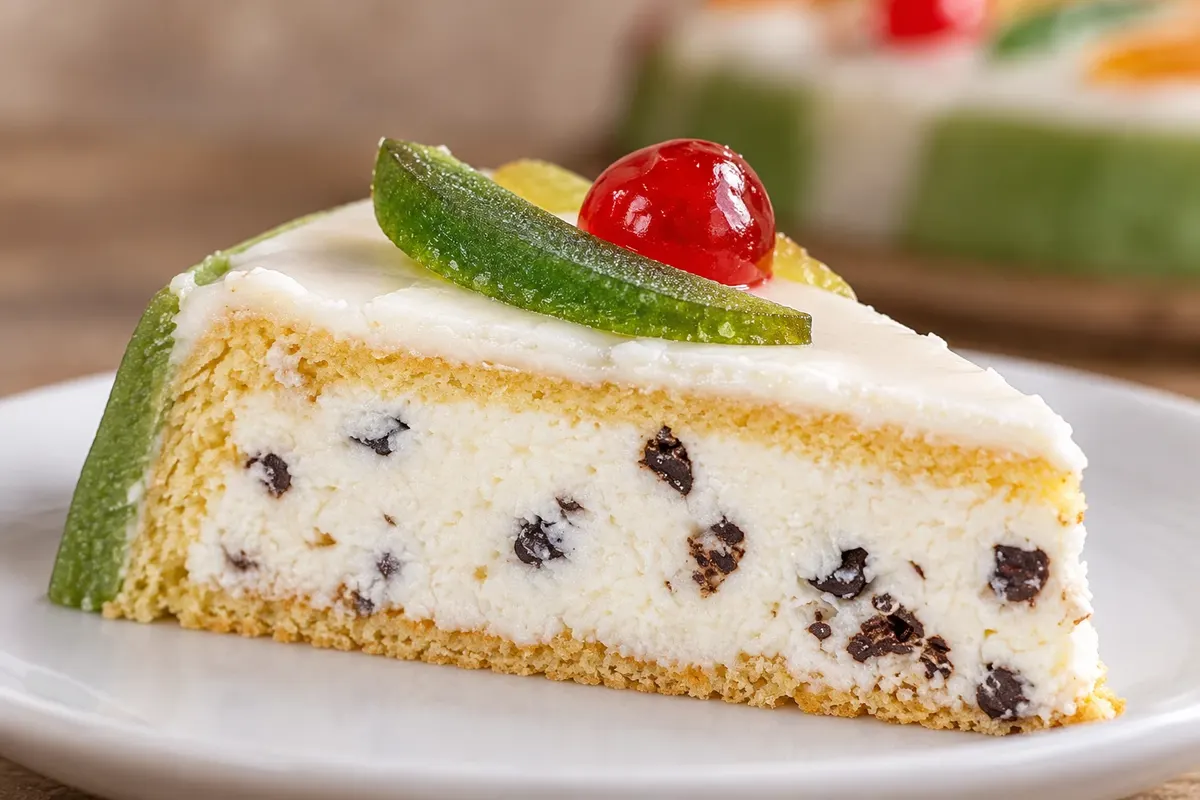
Sponge cake and sweetened ricotta cream, covered in green pasta reale and topped with icing and candied fruit. An Easter sweet, it layers the history of Sicily and is linked to the convents of Palermo.

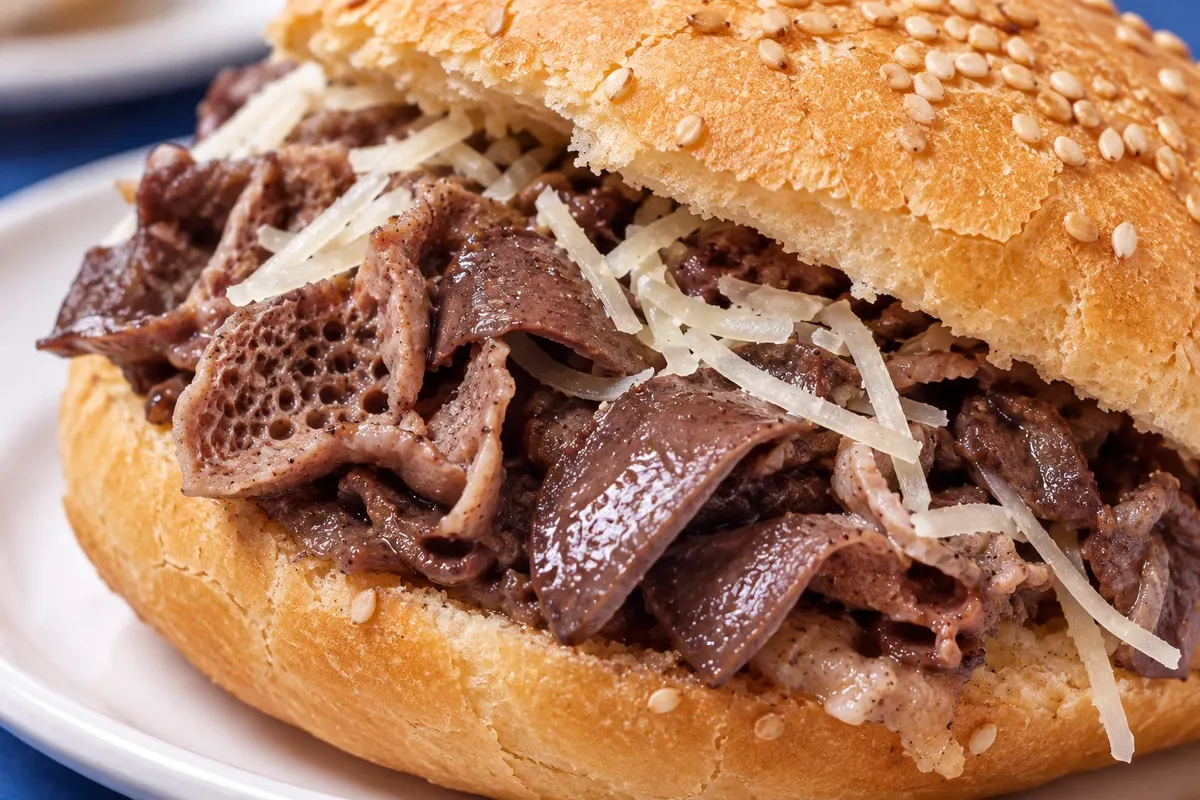
Soft sesame bread filled with cooked calf spleen and lung, then reheated in lard. It can be served just with lemon or with cheese and ricotta. It’s Palermo’s most typical street sandwich.
Doživite kraj
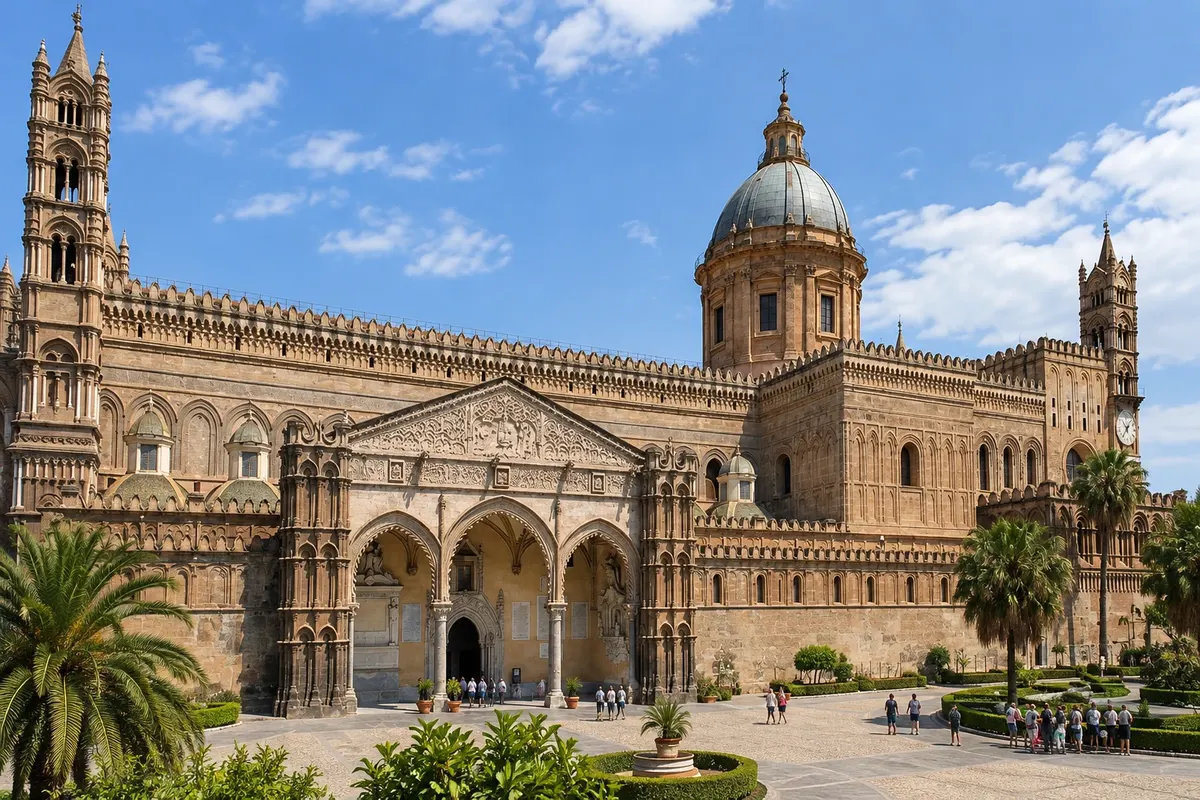
The cathedral of Palermo, built beginning in 1185, mixes Norman, Catalan Gothic and Neoclassical styles. It houses tombs of kings and emperors and the silver reliquary of Santa Rosália.
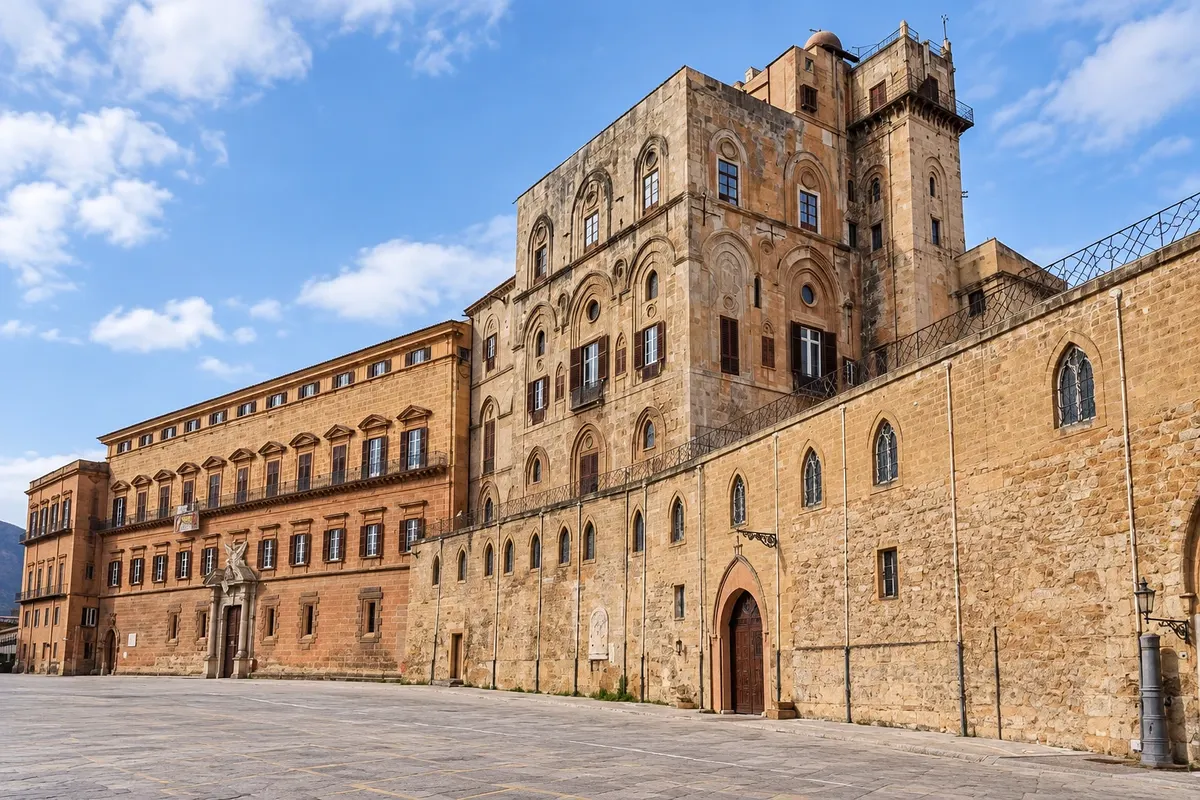
Royal palace of the Normans, seat of the Sicilian Regional Assembly. On the first floor is the Cappella Palatina, from 1140, covered in Byzantine mosaics and with a wooden ceiling in an Arabic style.
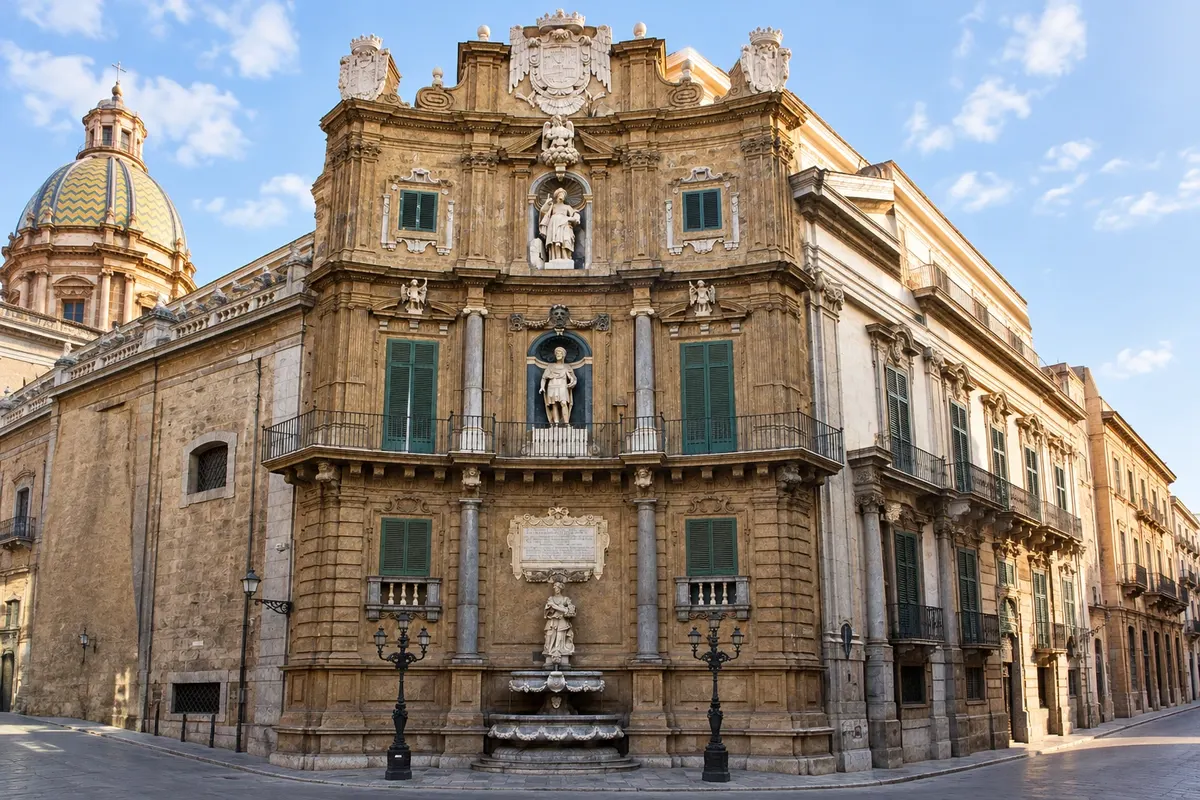
The baroque intersection of Palermo's two main streets, Via Maqueda and Corso Vittorio Emanuele, with four curved facades decorated with fountains, statues of kings and patron saints.
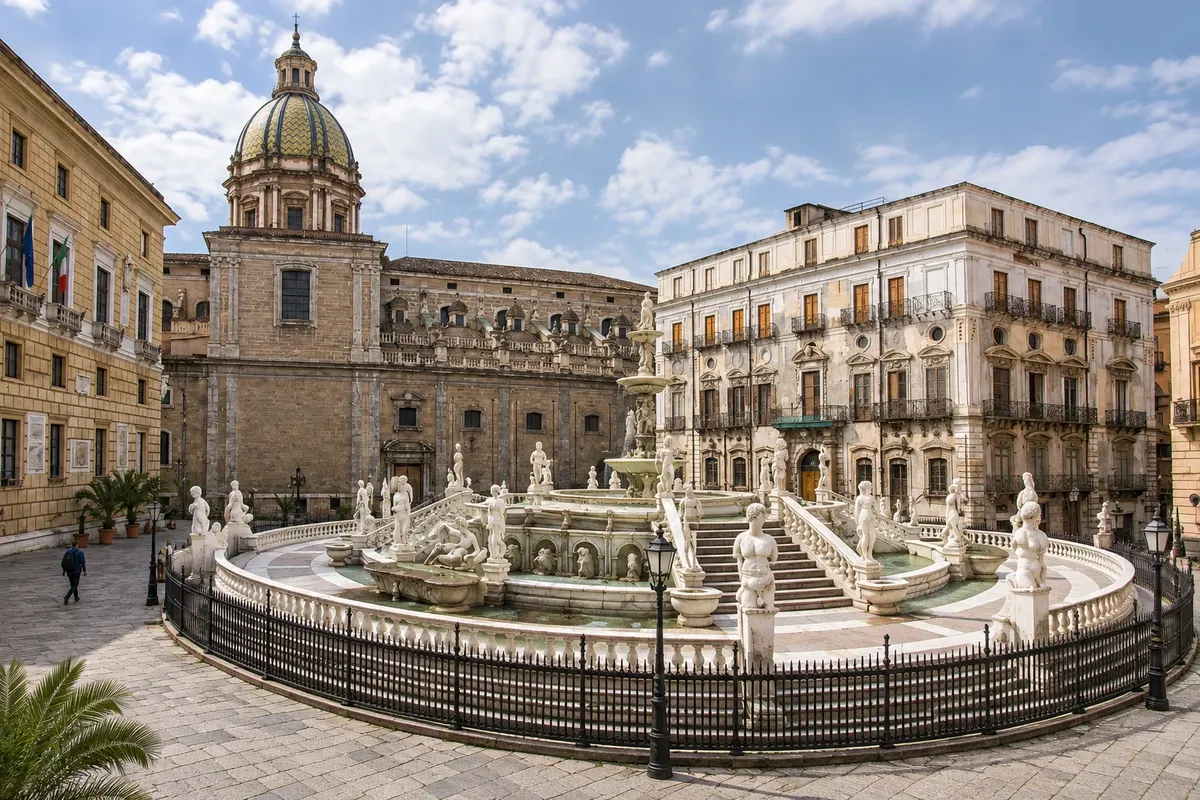
Square next to the Quattro Canti featuring the Fontana Pretoria, a Renaissance marble fountain with dozens of statues, made in Florence in the 16th century and reassembled in Palermo.
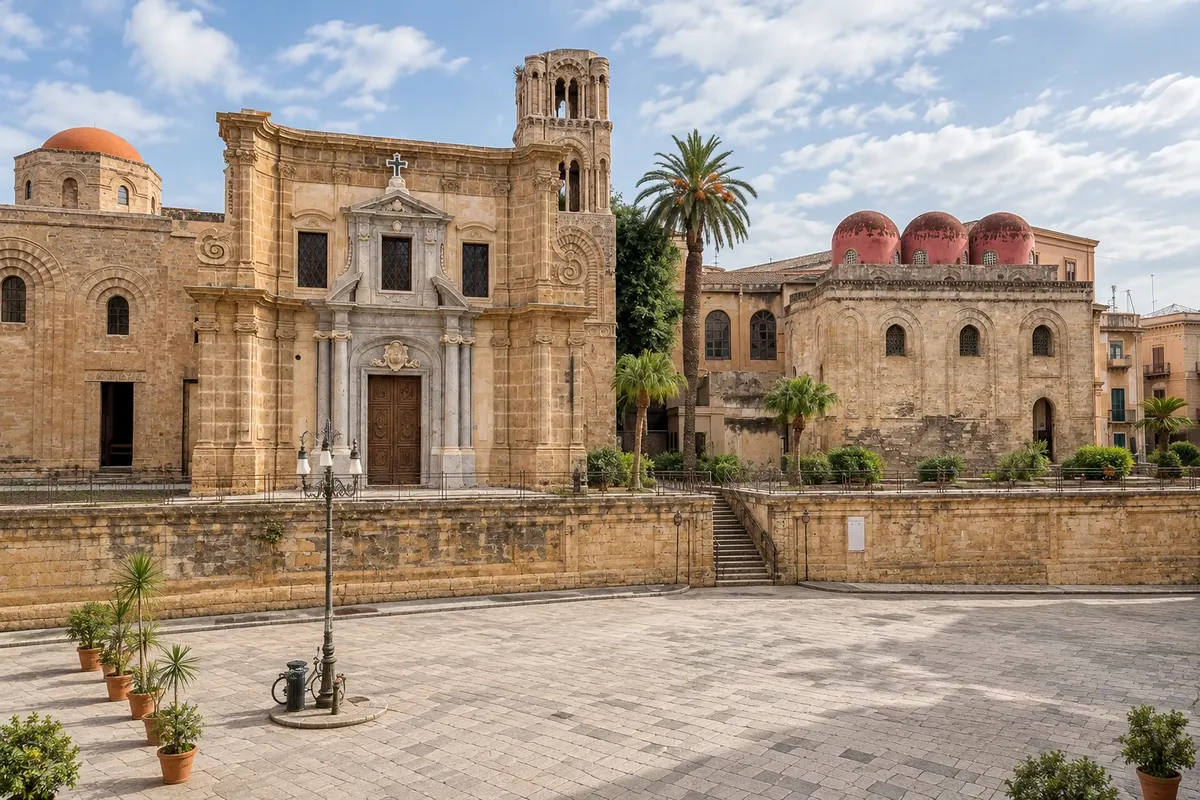
The Martorana, a church from 1143 with Byzantine gold-background mosaics, including Rogério II crowned by Christ. Beside it, the small San Cataldo, with red domes.
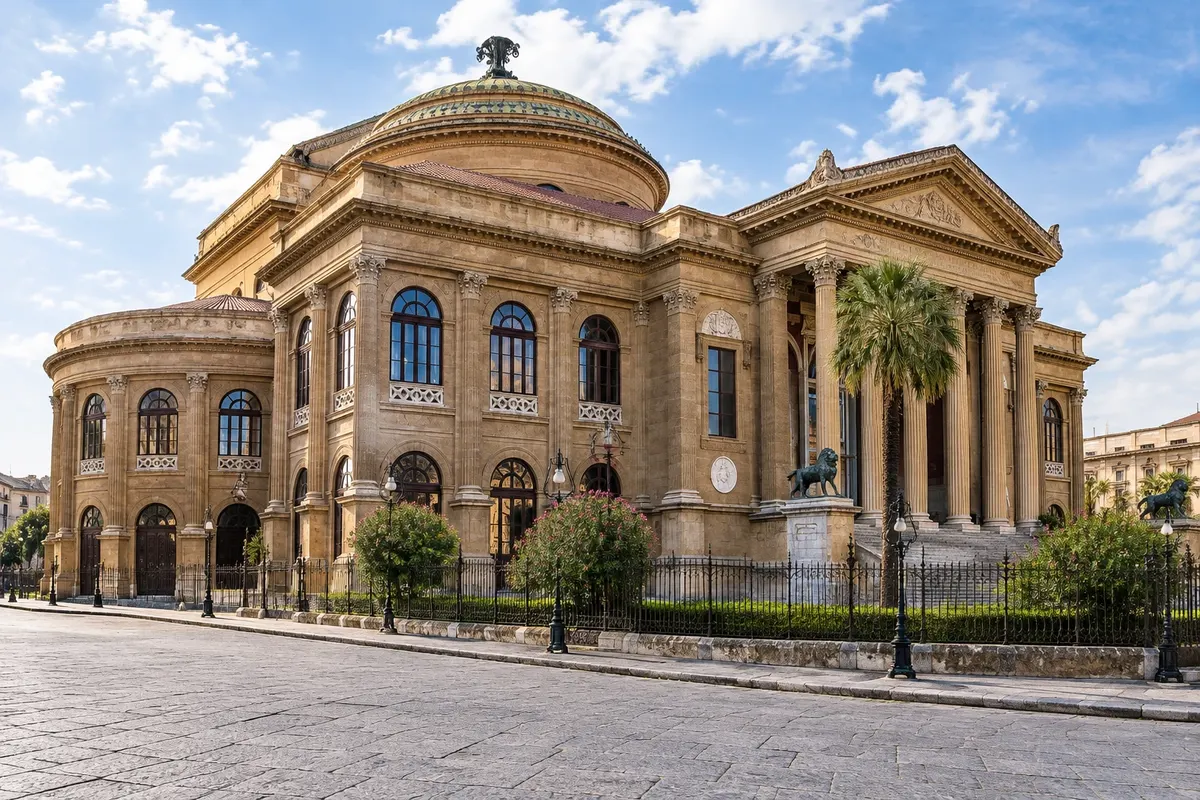
The Teatro Massimo Vittorio Emanuele, opened in 1897, is the largest opera house in Italy. Guided tours visit the auditorium, the boxes and the Pompeian hall.
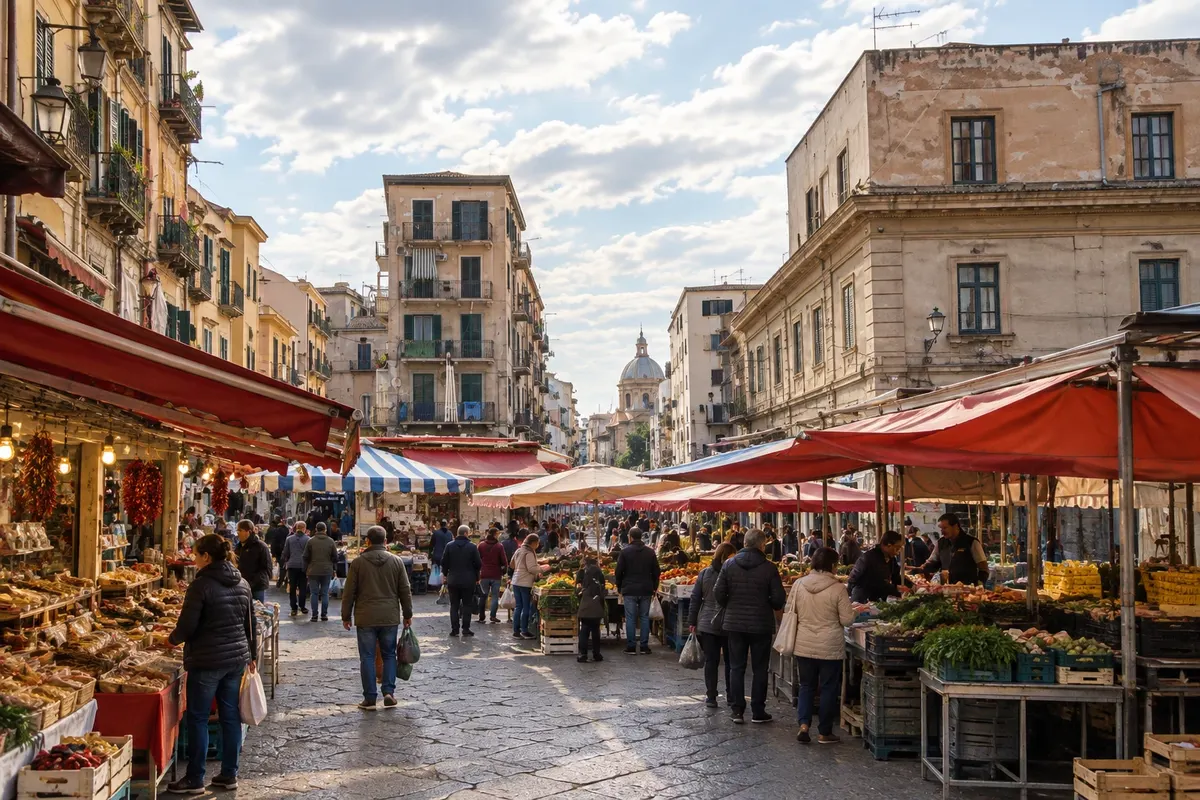
The oldest street market in Palermo, in the Albergheria district, with stalls selling fish, fruit and vegetables and Sicilian street food such as panelle and arancine.
The Norman cathedral of Monreale, 8 km from Palermo, begun in 1174 by Guilherme II, has about 6,400 m² of gold mosaics and a cloister with 228 double columns.
Underground galleries of the Capuchin convent where, from the late 16th century to the early 20th century, thousands of dressed bodies were preserved and displayed.
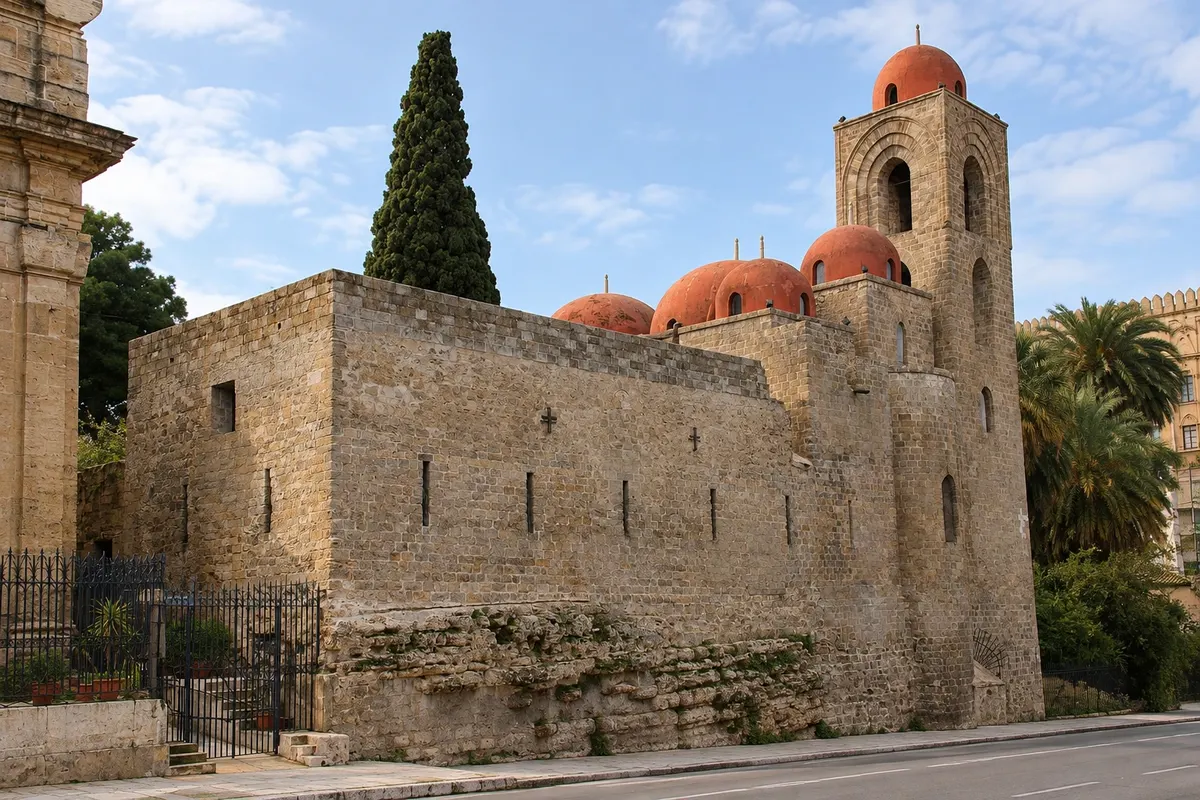
12th-century Norman church, with five red domes of Arabic inspiration and a small cloister with a garden of orange trees and Mediterranean plants.
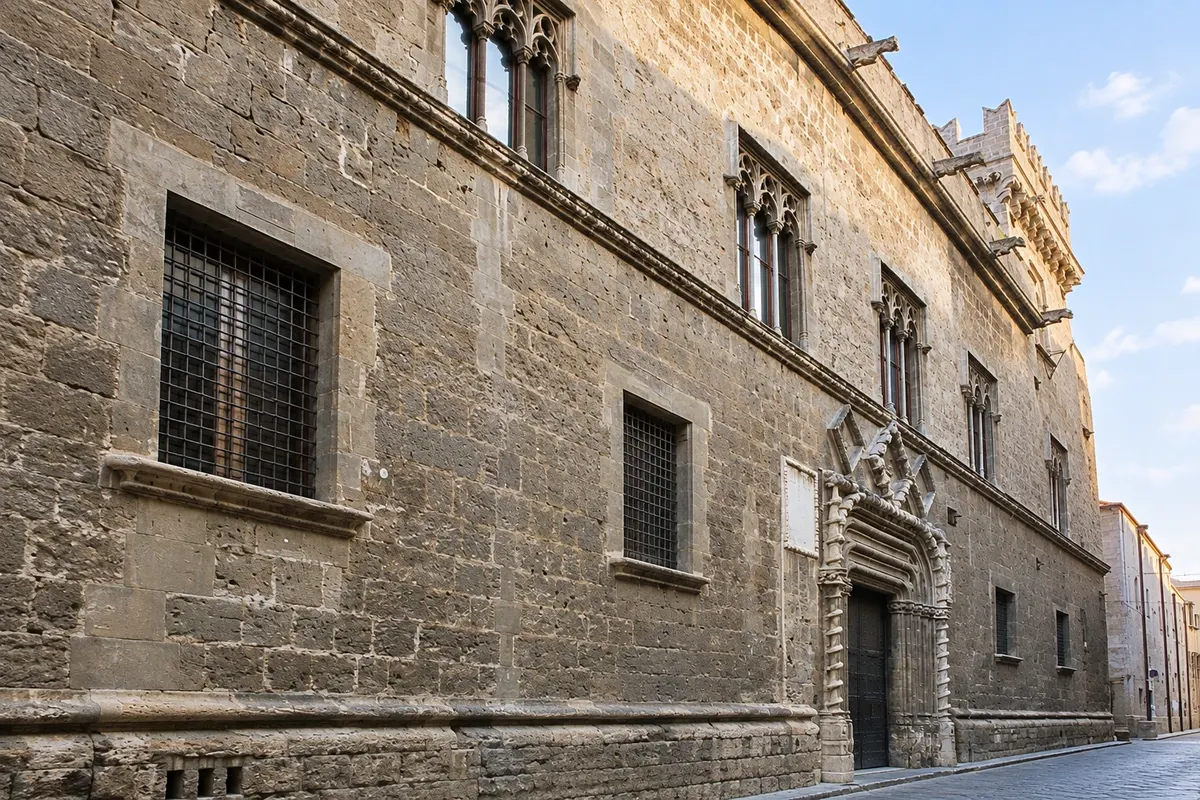
15th‑century Catalan‑Gothic palace that houses the Galleria Regionale della Sicilia, including the Triumph of Death fresco and Antonello da Messina's Virgin Annunciate.
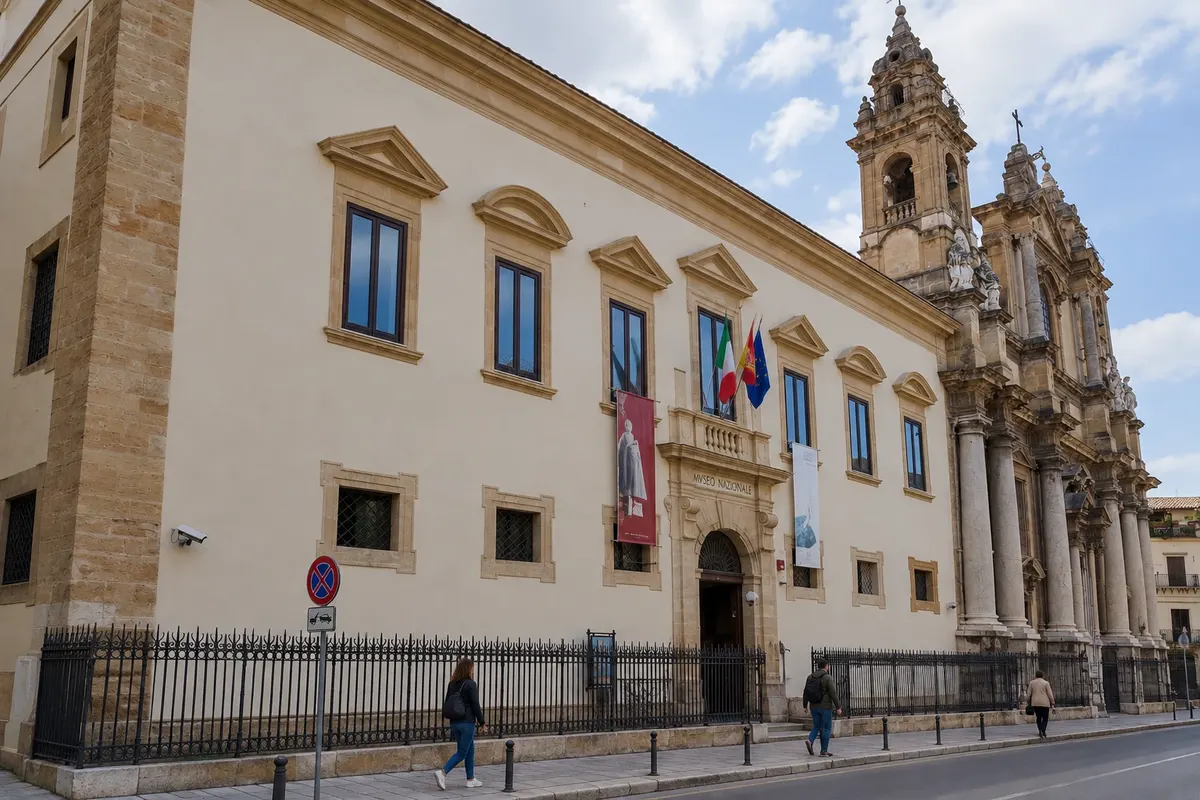
One of Italy's main archaeological museums, in the former convent of the Olivella, with the metopes from the temples of Selinunte and Punic, Greek and Roman pieces from Sicily.
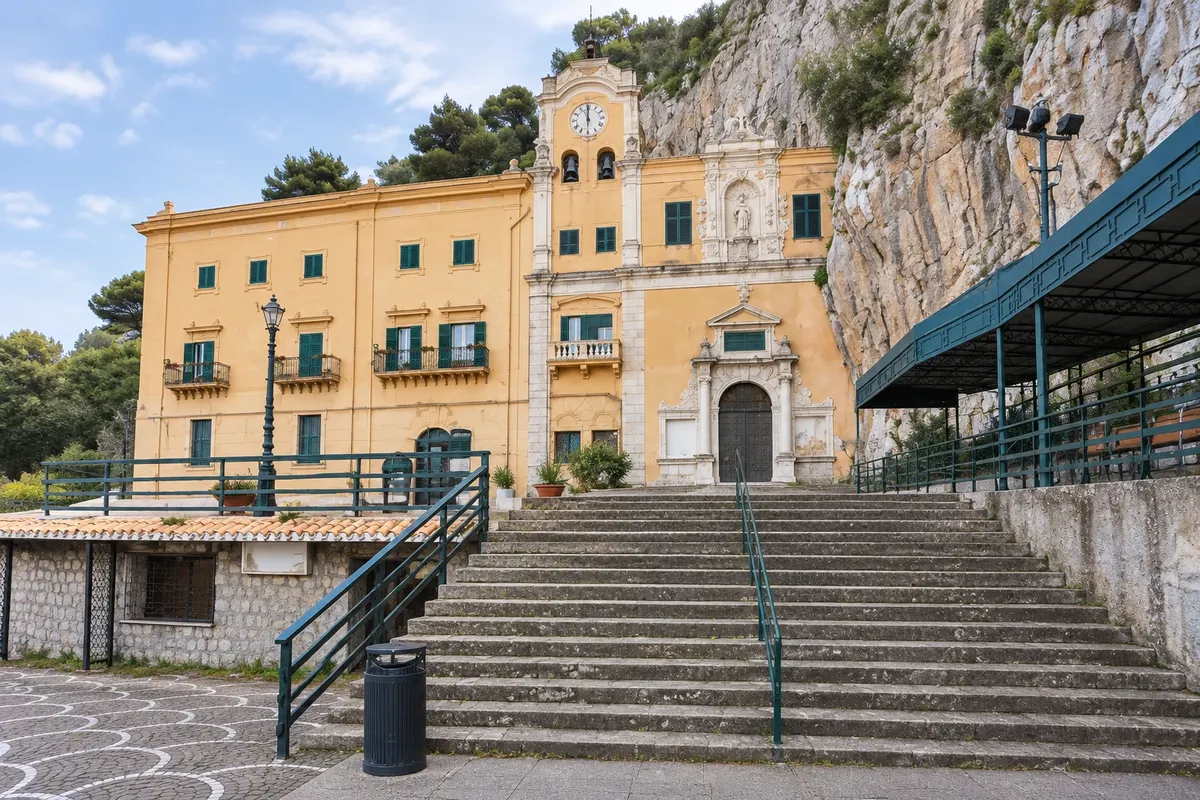
Sanctuary in a grotto on Monte Pellegrino, 600 meters above Palermo, where Saint Rosalia lived, patron saint of the city. The road up there has views over the gulf.
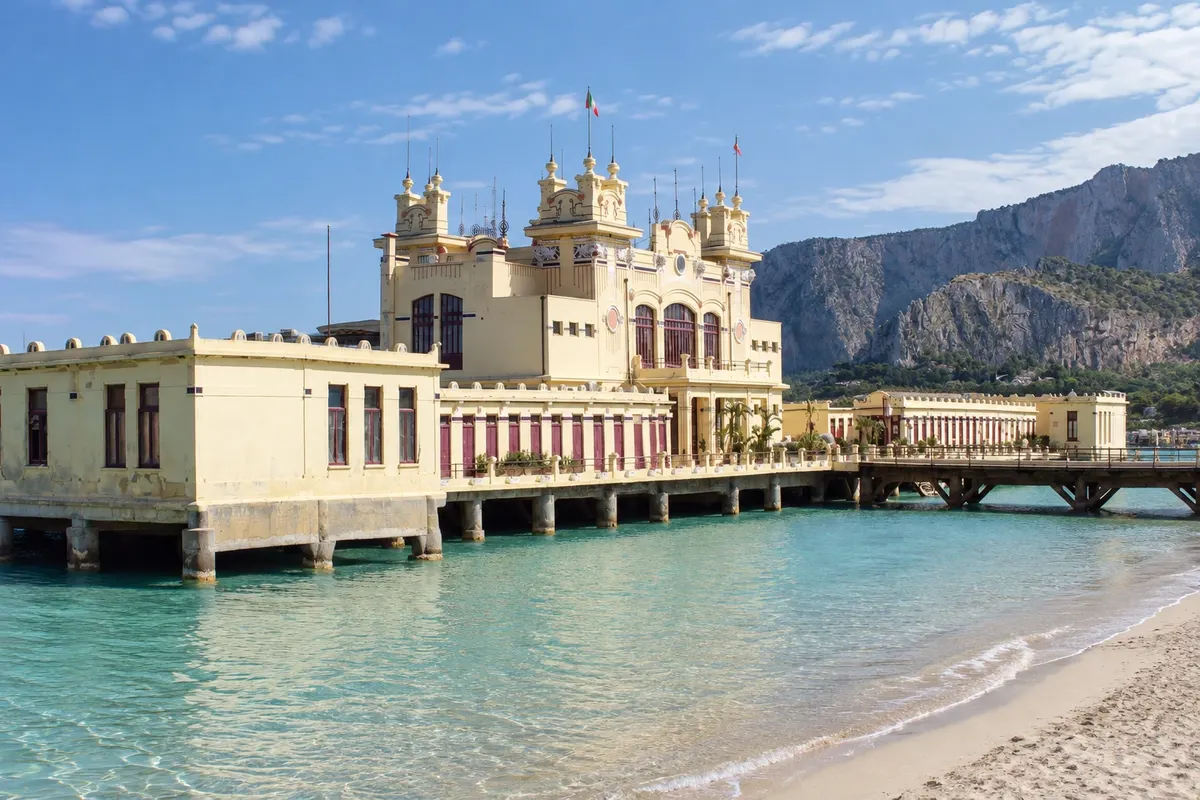
Palermo's beach, in a gulf between Monte Pellegrino and Monte Gallo, with pale sand, clear water and the old liberty‑style bathing establishment built over the sea.
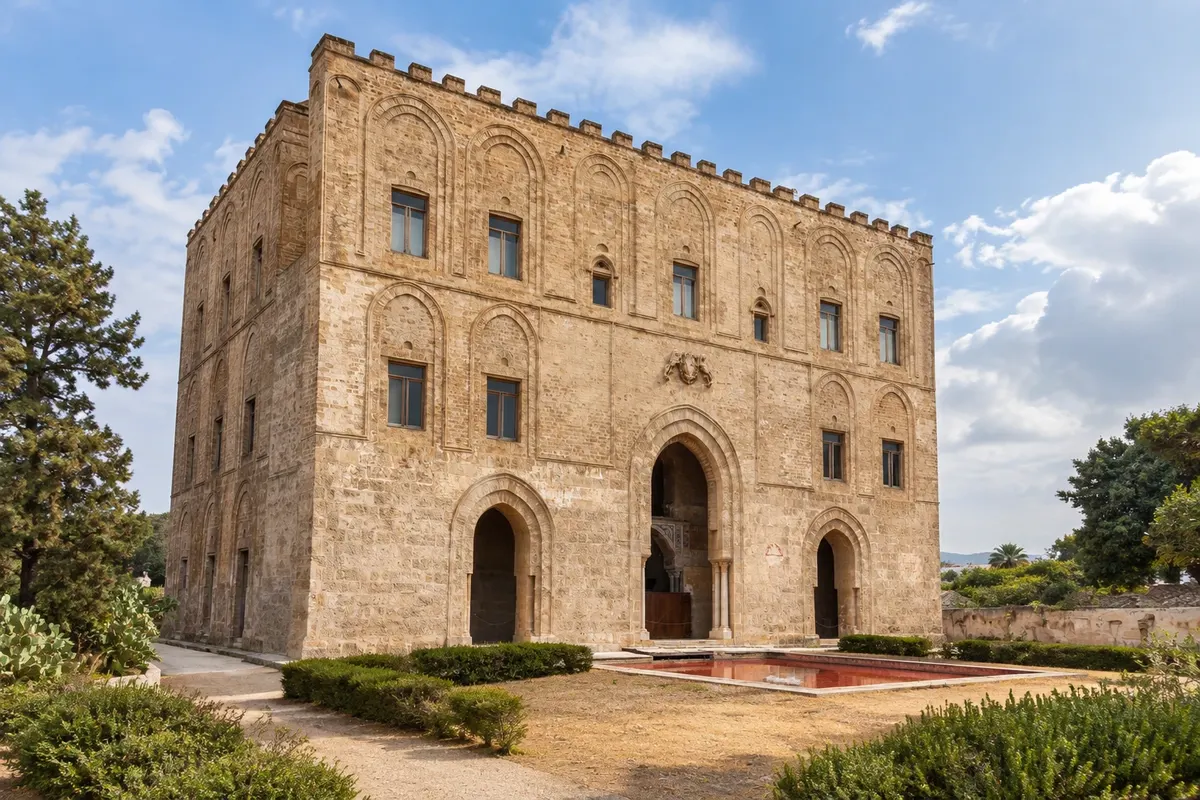
Summer palace of the Norman kings, begun by Guilherme I around 1165, with the muqarnas fountain room. It houses a museum of Islamic art.
Pred odhodom
Palermo – Sicily Destinacija Sicily Capital
Razdalje so približne. Pred potovanjem preverite lete in vozne rede avtobusov, vlakov ali ladij.
Check before you buy. From Rome or Milan, the domestic flight to Falcone-Borsellino Airport (PMO) takes about an hour or slightly more; from the airport, trains and buses go to the city center. There are Intercity trains from Rome that cross the Strait of Messina on a ferry, and overnight ferries from Naples, Civitavecchia and Genoa.
Two days cover the center: cathedral, Palazzo dei Normanni, Quattro Canti, Martorana, Ballarò and Teatro Massimo in one day, and Monreale with museums the next. With three or four days you can include the Catacombe, the Zisa, Monte Pellegrino, Mondello and a day trip to Cefalù.
April to June and September to October usually have good weather for walking. July and August are very hot; visit museums and churches around midday. The Festino de Santa Rosália, on July 14–15, fills the center. Winter is mild, with more rain.
The seasons shown are the most usual ones; nature doesn't always follow the calendar.
No. The center is walked on foot, and city buses go to Monreale, Mondello and Monte Pellegrino. The historic center has a ZTL (limited traffic zone) and traffic is difficult: if you rent a car to tour the island, pick it up after leaving the city or leave it in a car park.
Predlog poti
Pot povezuje znamenitosti na tej strani. Za oglede boste imeli dovolj časa.
Start with the opening of the Palazzo dei Normanni and the Cappella Palatina. Walk down Corso Vittorio Emanuele to the Cattedrale di Palermo and, if time allows, climb up to the roof terraces.
Head to the Ballarò market in the Albergheria and have street food for lunch: panelle, arancina and sfincione. Return via Via Maqueda to the Quattro Canti.
See the four façades of the Quattro Canti, the Fontana Pretoria and, at Piazza Bellini, the mosaics of the Martorana and the red domes of San Cataldo.
Walk up Via Maqueda to the illuminated Teatro Massimo. Dine in the theatre area or at the Capo market, with dishes such as pasta con le sarde and caponata.
Dan 1
Open the day at the Palazzo dei Normanni and the Cappella Palatina. Walk down to San Giovanni degli Eremiti, with its red domes and cloister.
Visit the Cattedrale di Palermo and have lunch at the Ballarò market, with street food.
Pass through the Quattro Canti and the Fontana Pretoria and visit the Martorana and San Cataldo at Piazza Bellini.
End the day at Piazza Verdi, in front of the Teatro Massimo, and dine in the Capo area or on Via Maqueda.
Dan 2
Take the bus to Monreale early and see the cathedral mosaics, the cloister and the view from the terraces.
Back in Palermo, have lunch and visit the Museo Salinas, with the metopes of Selinunte, or the Palazzo Abatellis, with the Triumph of Death.
Walk through the Kalsa to Piazza Marina and the fig tree in Villa Garibaldi, then continue to the Foro Italico waterfront.
Dine in the Vucciria, which becomes a bar hub at night, or go to Mondello to eat fish by the sea.
Check before you go. Opening hours and days change, and places may close for renovations, holidays or events. This itinerary is a suggestion from Cidade Turismo, not a commitment: plan yours by checking directly with each place you intend to visit.
Pred odhodom
Two days for the essentials of the center and Monreale. Three or four to include the Catacombe, the Zisa, Monte Pellegrino, Mondello and a trip to Cefalù.
Falcone-Borsellino Airport (PMO) is about 35 kilometres away. There is a train to Palermo Centrale and buses to the center, with stops on Via Libertà and at the station. Check schedules before you arrive.
Yes. Cefalù is about an hour away by regional train. Agrigento is about two hours by train or bus, so it makes for a long day, but it's possible.
Street food (arancina, panelle, crocchè, sfincione), pasta con le sarde, caponata, cannolo and cassata. Lunch is usually between 12:30 and 14:30 and dinner from around 20:00.
In the Cappella Palatina, the cathedral, the Martorana and Monreale, cover shoulders and knees. Bring a light scarf in summer.
Več kot vodnik