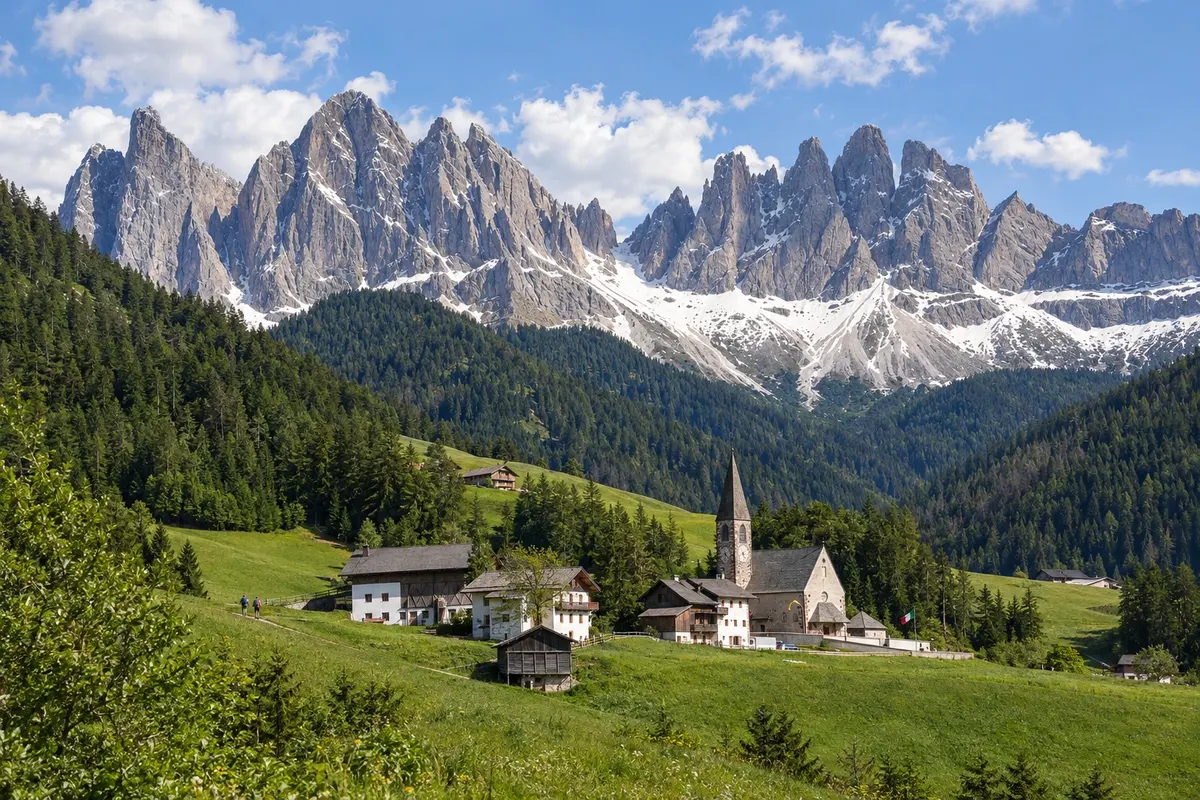
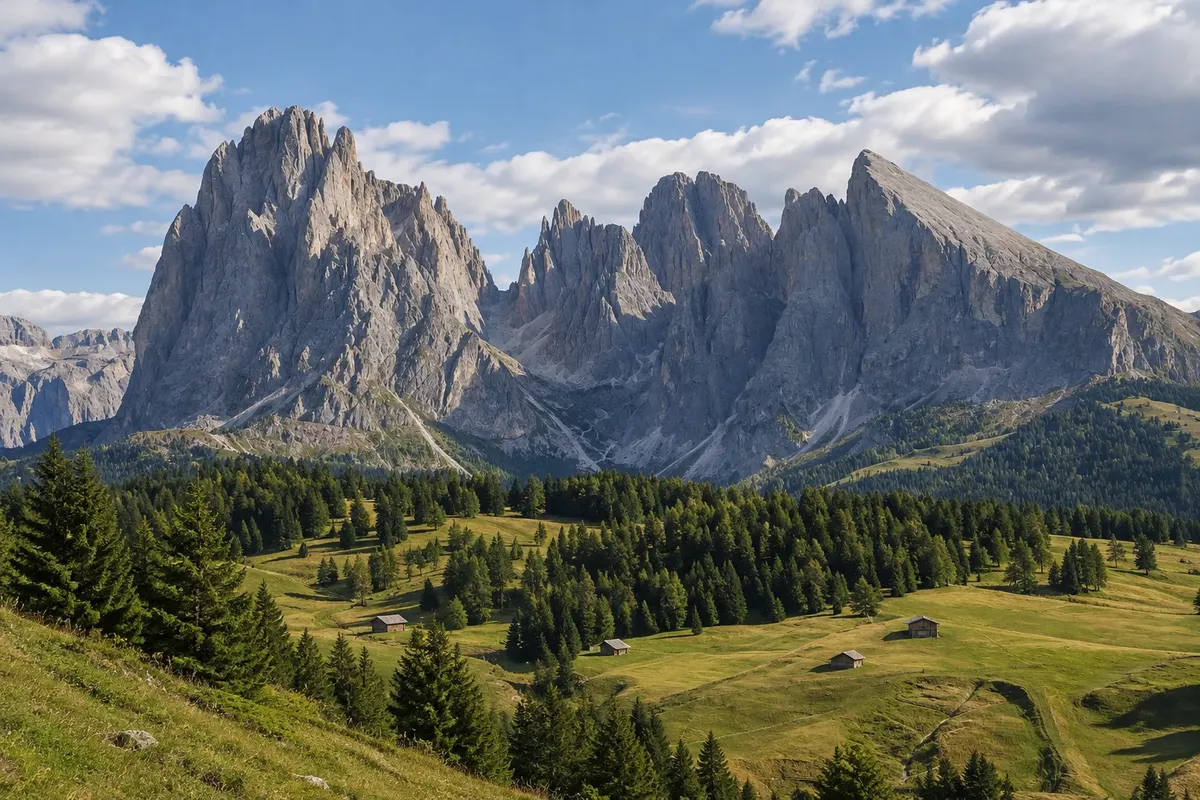
Sassolungo and Passo Sella: the standing cabin and the Torri del Sella
Odhod: Passo Sella (bus from Ortisei, Selva or Canazei) Cable car and high-mountain trail Približno 4 ure Dopoldne difficult (rocky trail, at 2,700 m)
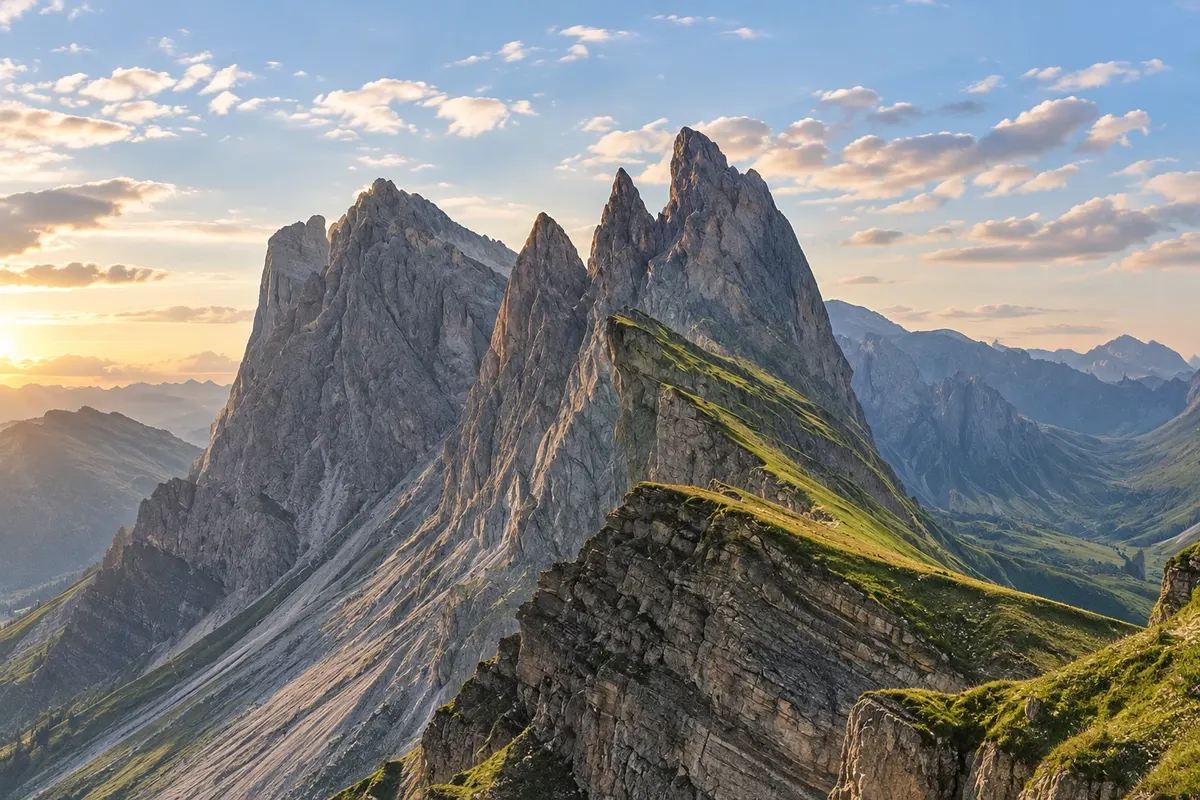
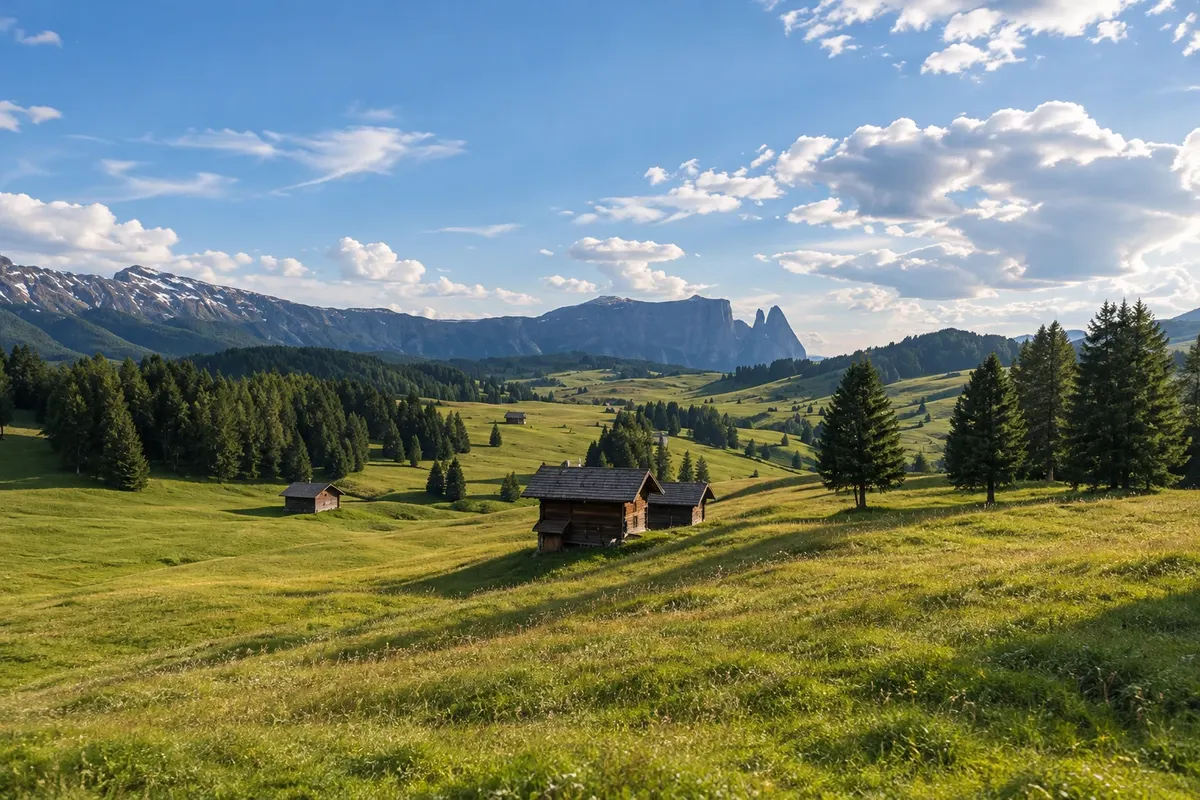
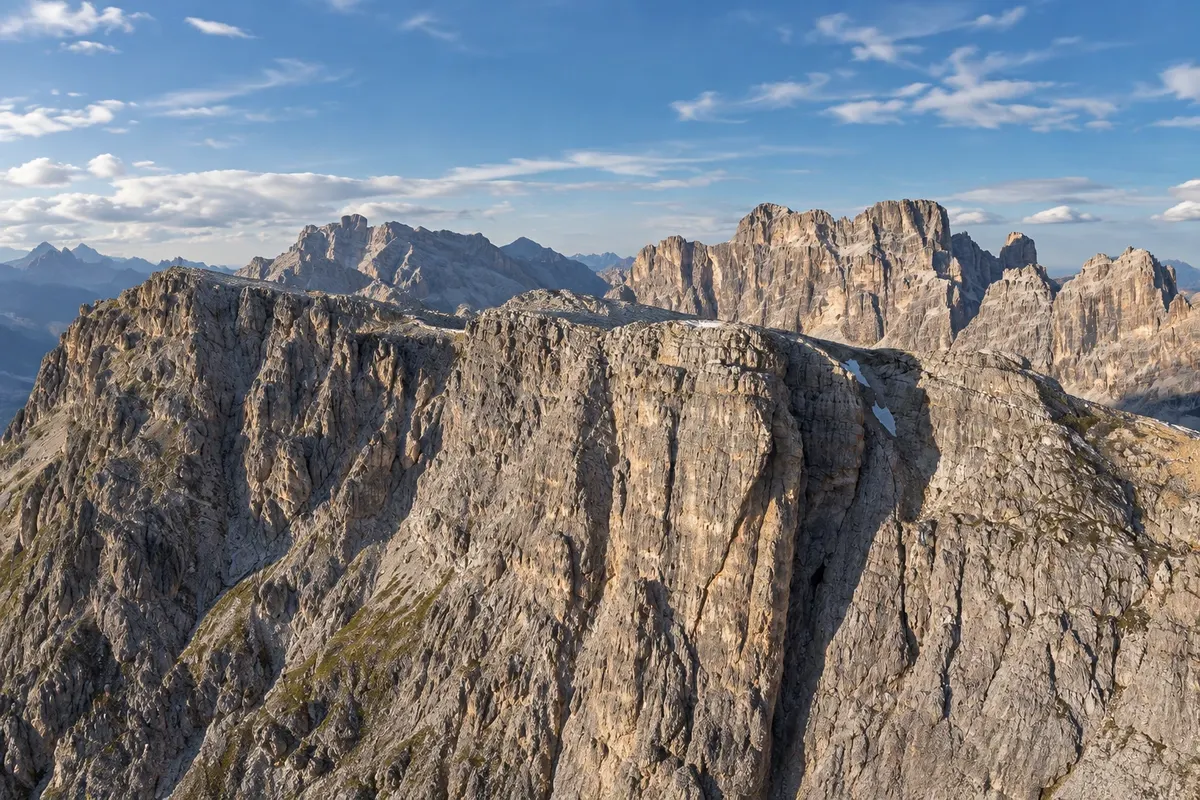
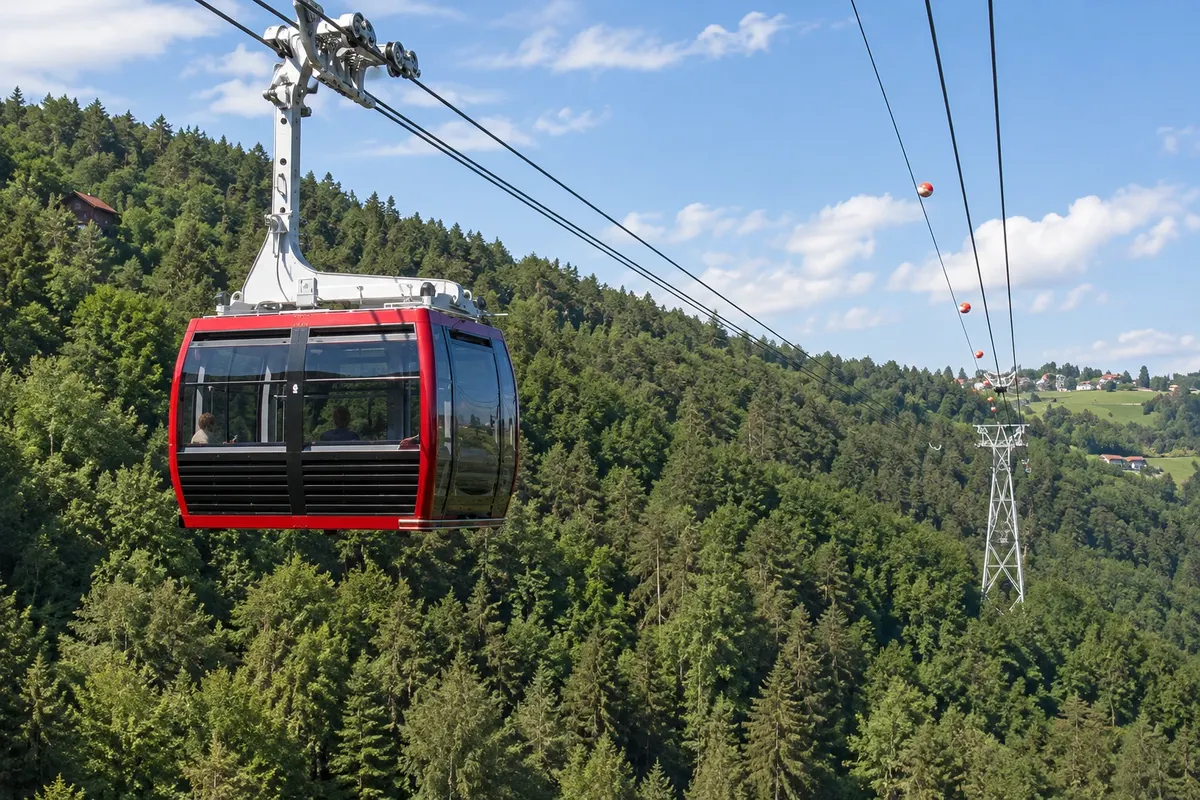
Passo Sella, at 2,218 m, between Val Gardena and Val di Fassa, is the pass of the Torri del Sella, the three rock teeth beside the road, and the base of the Sassolungo (Langkofel), the 3,181 m massif that dominates Val Gardena. From the pass a 'standing-cabin' lift (the Cabinovia Forcella Sassolungo, two-person, standing, from 1970) rises in 10 minutes to the Forcella, at 2,681 m, the notch between Sassolungo and Sassopiatto, with the Rifugio Toni Demetz; from there a rocky trail descends through the glacial valley to Rifugio Vicenza and around Sassolungo, 5 to 6 hours for experienced hikers, or you can return to the road. The Città dei Sassi, the rock blocks fallen at the foot of the pass, has an easy 1-hour trail; Passo Sella is part of the Sellaronda, the circuit around the Sella massif over four passes, for skiing in winter and cycling in summer, when the road is closed to motor traffic on some days.
Kraji na poti: Sassolungo, Seceda.
Vključuje: Cabin lift paid separately (one way or return); trails free; buses paid separately (Mobilcard). Mountain huts with food charged separately.
Nasvet: The standing cabin is not for those with vertigo; the Sassolungo loop requires boots, a map and good weather. For an effortless view, Passo Sella already serves as the lookout. Check the 'Sellaronda Bike Day' dates (road closed to cars) in summer.
Najboljši čas za obisk: From June to September (the cabin) and in winter for skiing; check the seasonal opening.
Cortina d'Ampezzo: the village, the basilica and the Tofana and Faloria cable cars
Odhod: Corso Italia, Cortina d'Ampezzo Hike and cable car Približno 4 ure Dopoldne ali popoldne Lahko
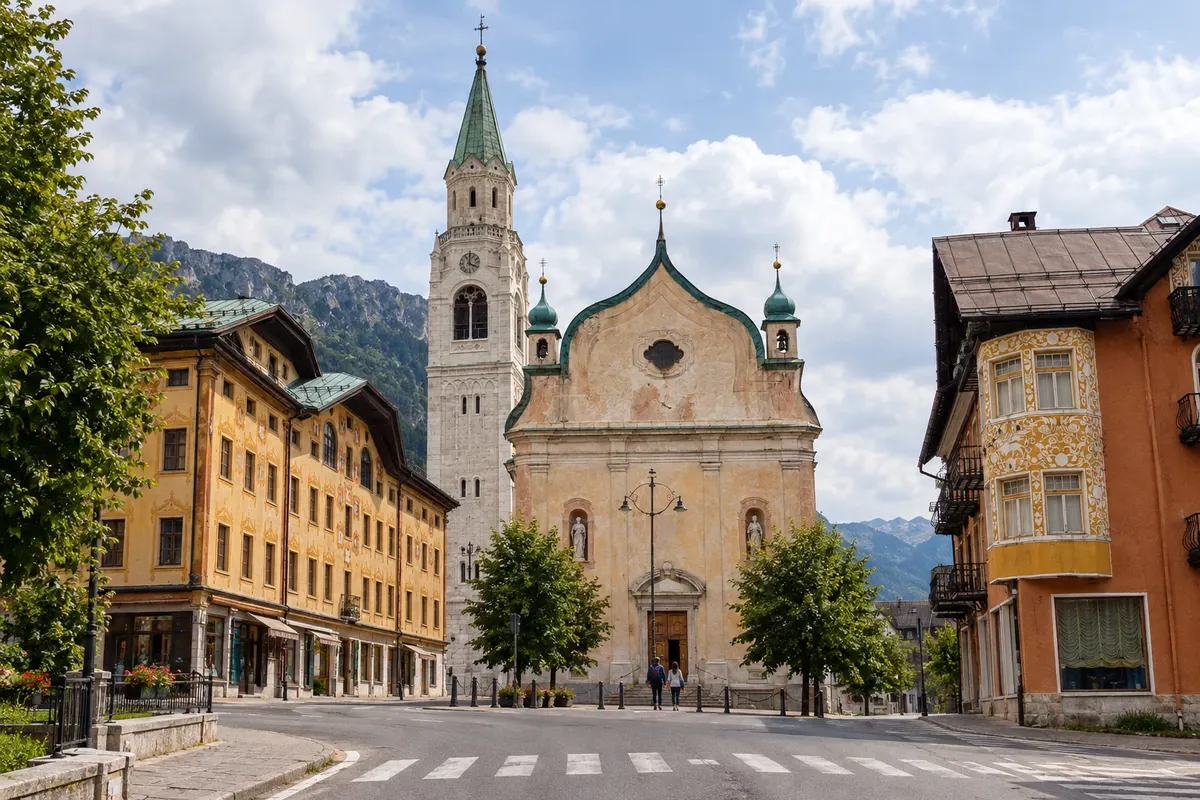
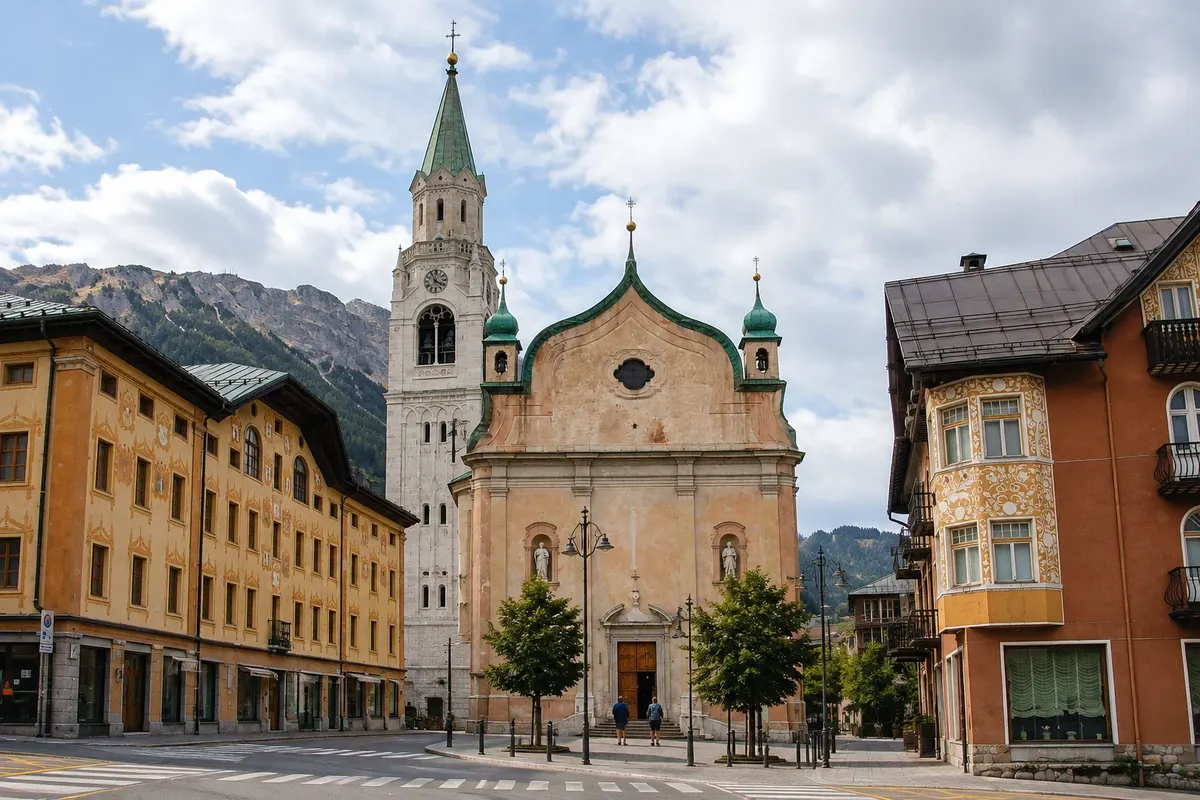
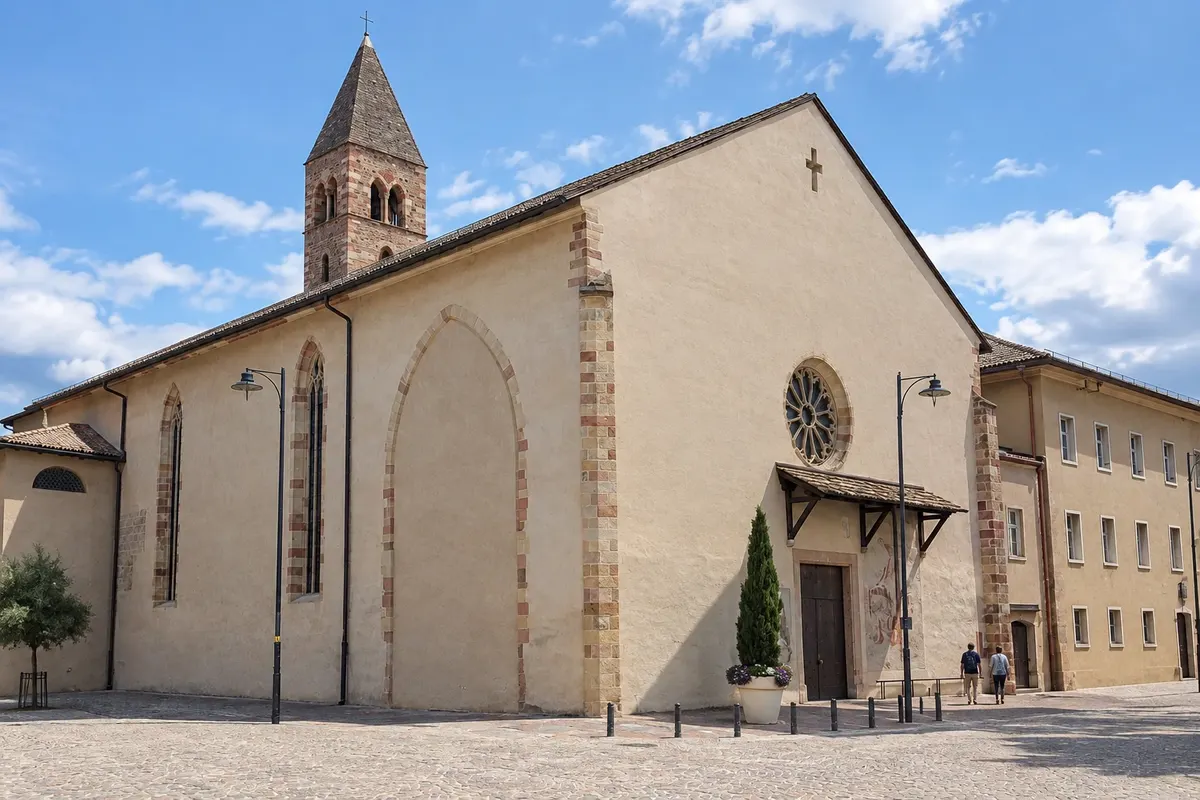
Cortina d'Ampezzo, at 1,224 m in an amphitheater of mountains (Tofane, Cristallo, Sorapis, Faloria), is the “queen of the Dolomites,” a winter resort for the 1956 and 2026 Games, with the pedestrian Corso Italia, shops, the Basilica dei Santi Filippo e Giacomo (1775) whose 65 m bell tower defines the square, and the Rimoldi modern art museum; the Museo delle Regole, the old community of families that manages the forests, tells the village’s history. From the center, the Faloria cable car climbs to 2,123 m in 10 minutes, with the whole village below and trails to Rifugio Faloria; the Freccia nel Cielo, up Tofana di Mezzo, reaches 3,244 m in three stages, the “Dolomites’ terrace,” with views of Lagazuoi, the Tre Cime and the Austrian Alps. Summer Cortina is for hiking and cycling; in winter, the 2026 Games upgraded slopes and the bobsleigh track.
Kraji na poti: Basilica dei Santi Filippo e Giacomo, Cinque Torri.
Vključuje: Self-guided hike; cable cars paid separately (Faloria and Tofana, round trip); museums require admission.
Nasvet: Go up to the Tofana only with clear skies (check the webcams on the Freccia nel Cielo website); there may be snow at the top in July. The village is expensive in August and at Christmas; June and September are quieter. The local bus serves the cable car stations.
Najboljši čas za obisk: June to September for hiking; December to March for skiing. Cable cars close during shoulder seasons.
Tre Cime di Lavaredo: the circuit around the three towers
Odhod: Rifugio Auronzo (toll road from Misurina or bus from Cortina/Dobbiaco) High-mountain circular trail about 4 hours (10 km) Ves dan moderate (300 m elevation gain, at 2,300 m)
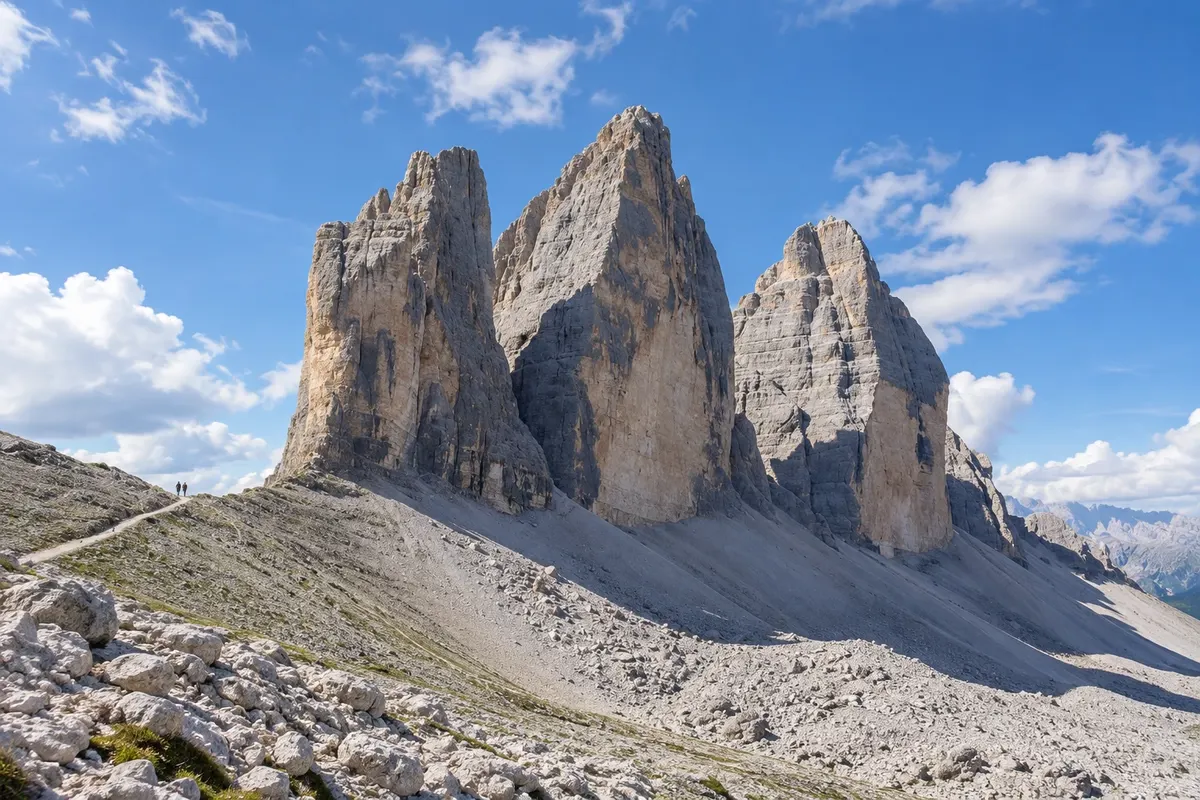
The Tre Cime di Lavaredo (Drei Zinnen) are the three rock towers (the Grande is 2,999 m) that are the symbol of the Dolomites, a UNESCO site, on the border between Veneto and South Tyrol. The classic route, numbers 101 and 105, starts at Rifugio Auronzo, at 2,320 m, at the end of the toll road that climbs from Misurina, skirts the towers on the south to Rifugio Lavaredo and Forcella Lavaredo, from where the three north faces, 500 m vertical, appear head-on; it continues to Rifugio Locatelli (Dreizinnenhütte), the classic photo spot, with World War I trenches carved into the rock, and returns via the north side, about 10 km and 4 hours, on a wide stony path. On summer weekends the Auronzo parking fills before 9:00 and the road is closed; the bus from Cortina (via Misurina) and from Dobbiaco reaches the rifugio in season.
Kraji na poti: Tre Cime di Lavaredo, Lago di Braies.
Vključuje: Toll road paid separately (per car, includes parking); buses paid separately, with bookings required in some periods; trail free of charge. Rifugios with food charged separately.
Nasvet: Leave early or take the bus: the toll stop stops admitting cars when the parking fills. Bring a jacket, water and trail shoes; snow can remain on the route until June and return in September. On low-cloud days the towers may not be visible.
Najboljši čas za obisk: From mid-June to mid-October, when the road is open; July and August are crowded; September combines good weather and fewer people.
Lago di Braies: the green lake among the mountains
Odhod: Braies (bus from Dobbiaco or Villabassa; car with parking reservation) Walk around the lake and boat Približno 3 ure early morning easy (3.5 km, wooden steps)
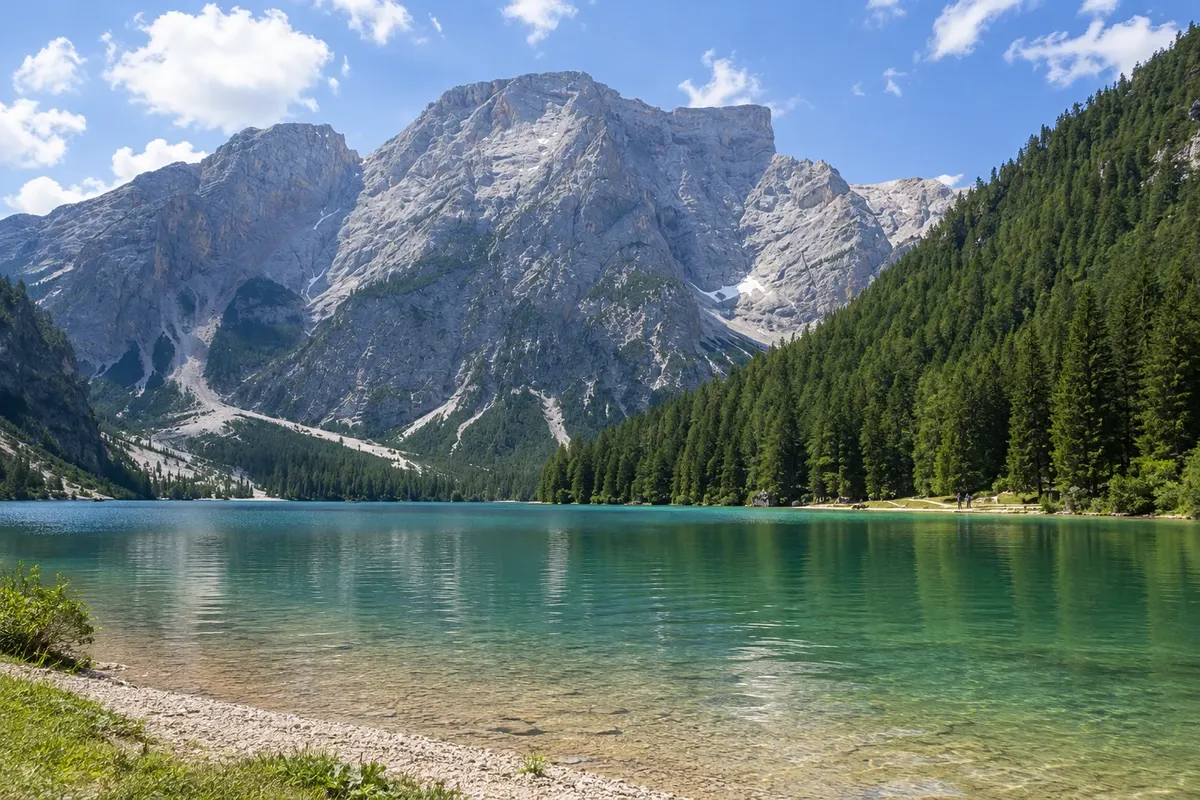
Lago di Braies (Pragser Wildsee), at 1,496 m, in the Fanes-Sennes-Braies Nature Park, is the emerald-green water lake at the foot of the Croda del Becco, with the 1899 hotel and the wooden pier for rowboats—the image the series 'Un passo dal cielo' and social media made the most sought-after in the Dolomites. The circuit around the lake, 3.5 km, takes 1 to 1.5 hours on a dirt path with sections of wooden stairs on the east shore, and has benches and a chapel on the north side; rowboats are rented by the half hour in season, with a line early. From July to September the access road is closed to outside cars between 9:30 and 16:00, with online parking reservations or buses from Dobbiaco and Villabassa. Trails from the lake climb to Rifugio Biella and Croda del Becco, 3 to 4 hours, for experienced hikers.
Kraji na poti: Lago di Braies, Tre Cime di Lavaredo.
Vključuje: Lake with no entrance fee; parking paid separately, with reservation in high season; boats paid separately; buses paid separately.
Nasvet: Arrive before 8:00 or after 17:00; at midday in summer the path around the lake gets crowded. On the provincial website you reserve a car slot and check the annual access plan. In October the lake falls silent and the larches turn yellow; in winter it freezes.
Najboljši čas za obisk: From June to October; from July to September access is controlled; winter gives a different landscape.
Cinque Torri and Lagazuoi: the First World War trenches and the Passo Falzarego cable car
Odhod: Passo Falzarego (bus from Cortina) and Bai de Dones Funiculars and museum-trails Približno 5 ur Ves dan moderate (altitude; tunnel requiring a flashlight)
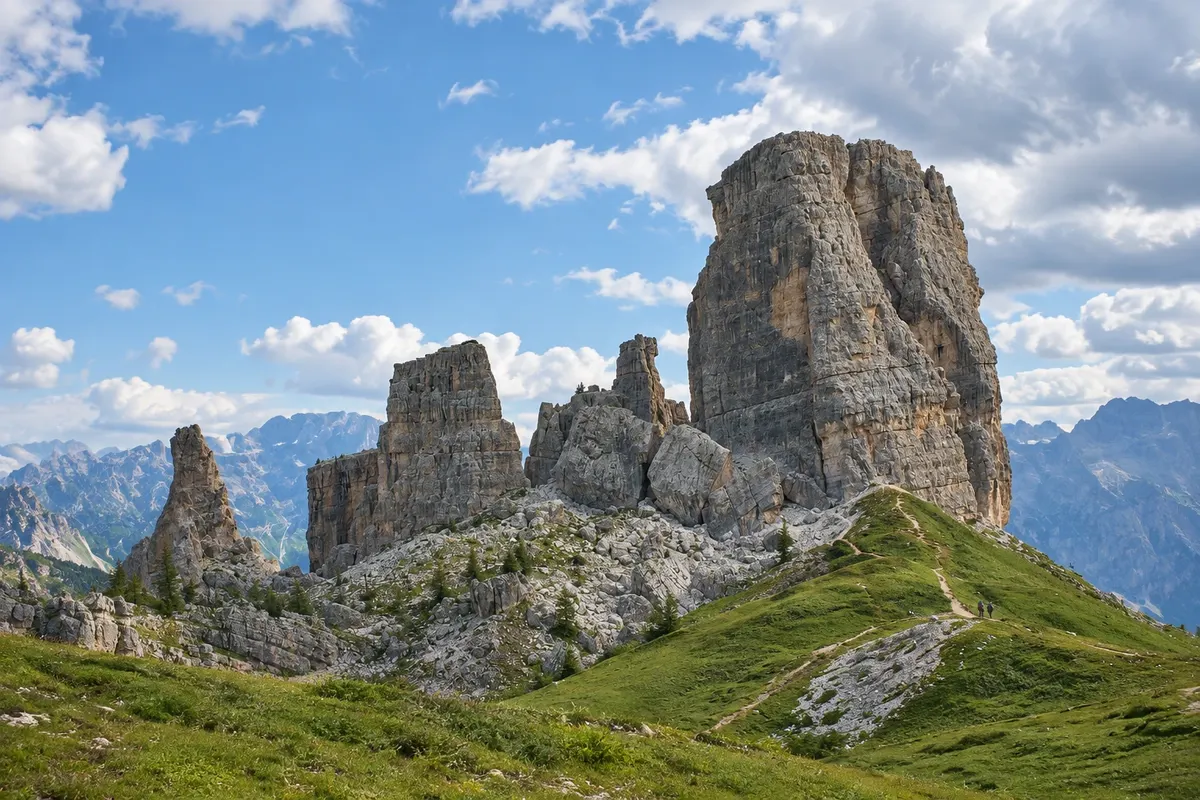
Passo Falzarego, at 2,105 m and 15 km from Cortina, was the frontline between Italians and Austrians from 1915 to 1917, and the surrounding mountains are open-air museums of the First World War. The Cinque Torri, the five rock towers up to 2,361 m, reached by the Bai de Dones chairlift or by a one-hour trail, have restored Italian trenches, posts and shelters with information panels around them, in a 1 h 30 circuit among the towers; they are also a climbing school. Rifugio Scoiattoli sits at their base. Lagazuoi, on the other side of the pass, goes up by cable car to 2,752 m in 4 minutes for a 360-degree view (Marmolada, Tofane, Civetta); from there you descend the Galleria del Lagazuoi, the 1 km tunnel dug into the rock by Italians to undermine Austrian positions, with windows onto the valley, traversed with helmet and torch in about 1 h 30 back to the pass. In winter, both are part of the Grande Guerra Ski Tour.
Kraji na poti: Cinque Torri, Lagazuoi.
Vključuje: Funiculars and chairlift paid separately (Lagazuoi; Cinque Torri chairlift); trails and trenches free of charge; helmet and flashlight for the tunnel can be rented at the Lagazuoi station. Bus fares paid separately.
Nasvet: Do the Cinque Torri in the morning and Lagazuoi in the afternoon, descending through the tunnel only when the weather is dry and with a flashlight; the tunnel is dark, wet and steep. The Cortina–Falzarego bus has few departures: check the timetable. In August the pass road can be congested.
Najboljši čas za obisk: From June to September (funiculars and tunnel); winter use is for skiing.
Lago di Sorapis: the trail to the milky-blue lake
Odhod: Passo Tre Croci (bus from Cortina) Peš do slapa in nazaj about 5 hours (12 km) Dopoldne moderate (sections with cables, 400 m)
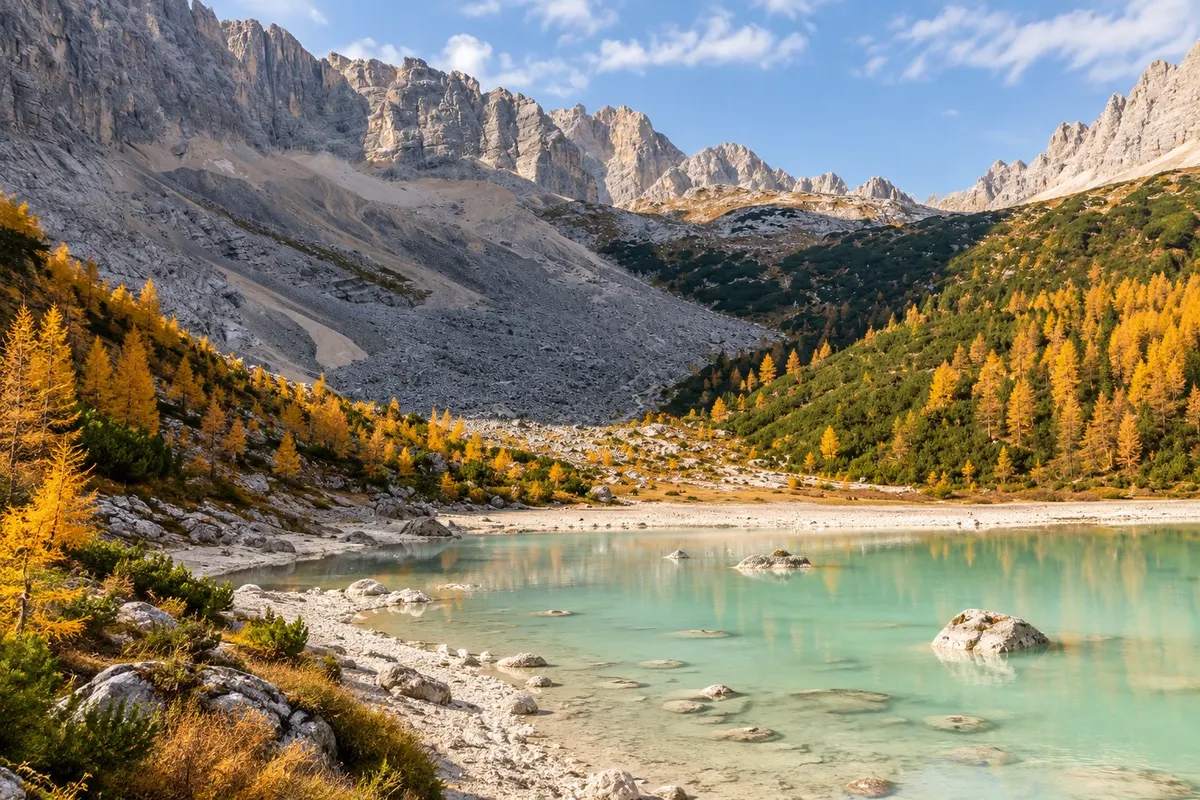
Lago di Sorapis, at 1,925 m, is the milky-blue water lake—color caused by glacier-ground rock—nestled beneath the walls of Sorapis and the Dito di Dio (the Finger of God), 12 km from Cortina. Trail 215 starts at Passo Tre Croci, at 1,805 m, and climbs 2 hours through forest and then along a ledge with sections protected by steel cables and metal ladders above the valley, to Rifugio Vandelli and the lake, 6 km one way; return the same way. It is not long nor very steep, but the exposed sections require a steady step, and in summer the trail becomes congested; the lake shrinks late in summer and freezes in winter. Swimming and camping are not allowed: it is a reserve. The Cortina bus to Passo Tre Croci runs in season.
Kraji na poti: Lago di Sorapis, Cinque Torri.
Vključuje: Trail with no entrance fee; bus paid separately; Rifugio Vandelli food paid separately (open June to September).
Nasvet: Leave at 7:00 or 8:00: after 10:00 the ledge becomes a queue. Hiking boots, water and a jacket; on rainy or icy days the trail is not passable. Overnight at Rifugio Vandelli with reservation to see the lake at dawn.
Najboljši čas za obisk: From mid-June to September; in July and August it gets crowded; in early October the color is more intense and there are fewer people, with risk of ice.


 Brazilija
 Antarktika
 Argentina
 Bolivija
 Čile
 Kolumbija
 Ekvator
 Gvajana
 Francoska Gvajana
 Falklandski otoki (Malvini)
 Paragvaj
 Peru
 Surinam
 Urugvaj
 Venezuela
 Nemčija
 Avstrija
 Belgija
 Hrvaška
 Danska
 Slovaška
 Slovenija
 Španija
 Finska
 Francija
 Grčija
 Nizozemska
 Madžarska
 Irska
 Islandija
 Luksemburg
 Norveška
 Poljska
 Portugalska
 Združeno kraljestvo
 Češka
 Švedska
 Švica
 Turčija
 Bermudi
 Kanada
 Združene države Amerike
 Grenlandija
 Mehika
 Sveta Peter in Mihael
 Dominikanska republika
 Japonska
 Južnoafriška republika
 Egipt
 Avstralija
 Fidži
 Nova Zelandija
 Papua Nova Gvineja