Acropolis of Athens (Akropolis)
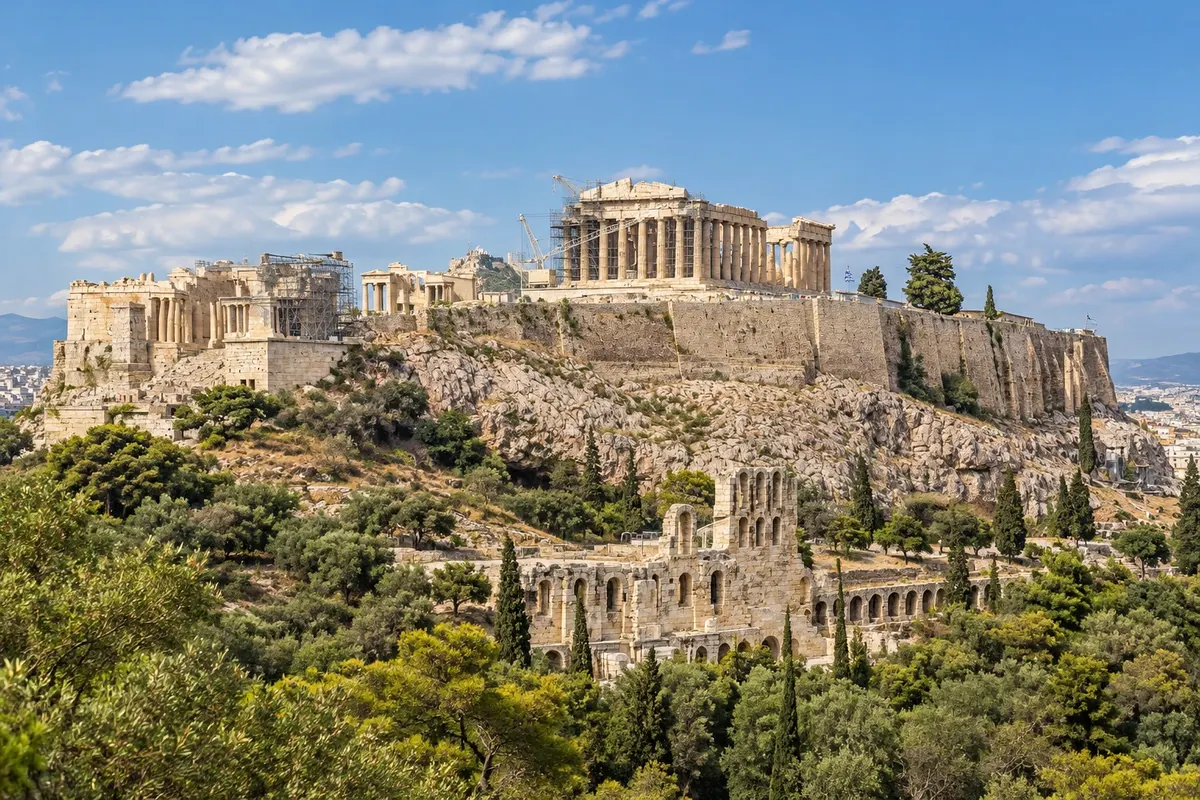
The sacred hill of Athens, with the Partenon, the Erecteion, the Propileus and the Templo de Atena Nike on top, and the Teatro de Dioniso and the Odeon of Herodes Ático on the south slope. UNESCO World Heritage Site.
Antarktika
Attica · Grčija
The Acrópole and the Partenon, the ancient agoras, top-tier museums, neighborhoods of narrow streets beneath the rock, and the changing of the guard at Syntagma square: the Greek capital is the gateway to the country.
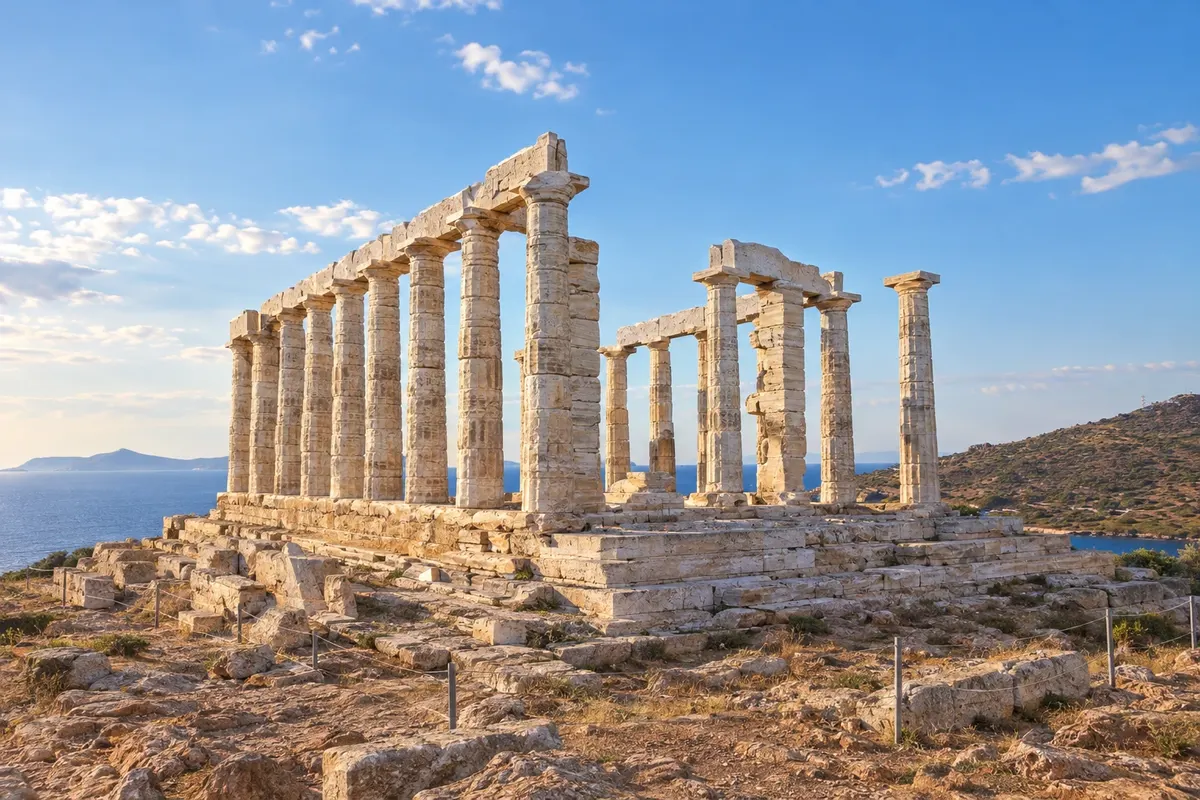
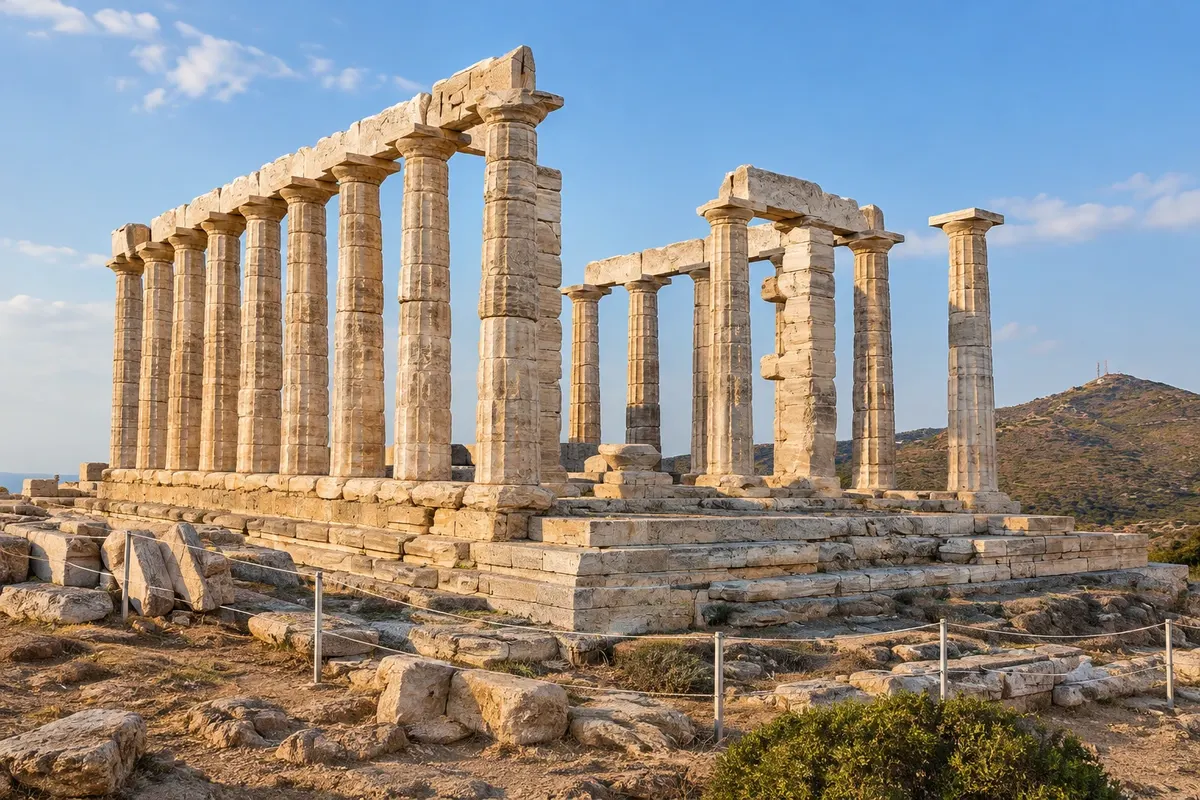
Na fotografiji: Templo de Poseidon, Cabo Sunião
Illustrative images. The pictures in this guide are illustrations based on the real place, not photographs, and may differ from it.
Spoznajte kraj
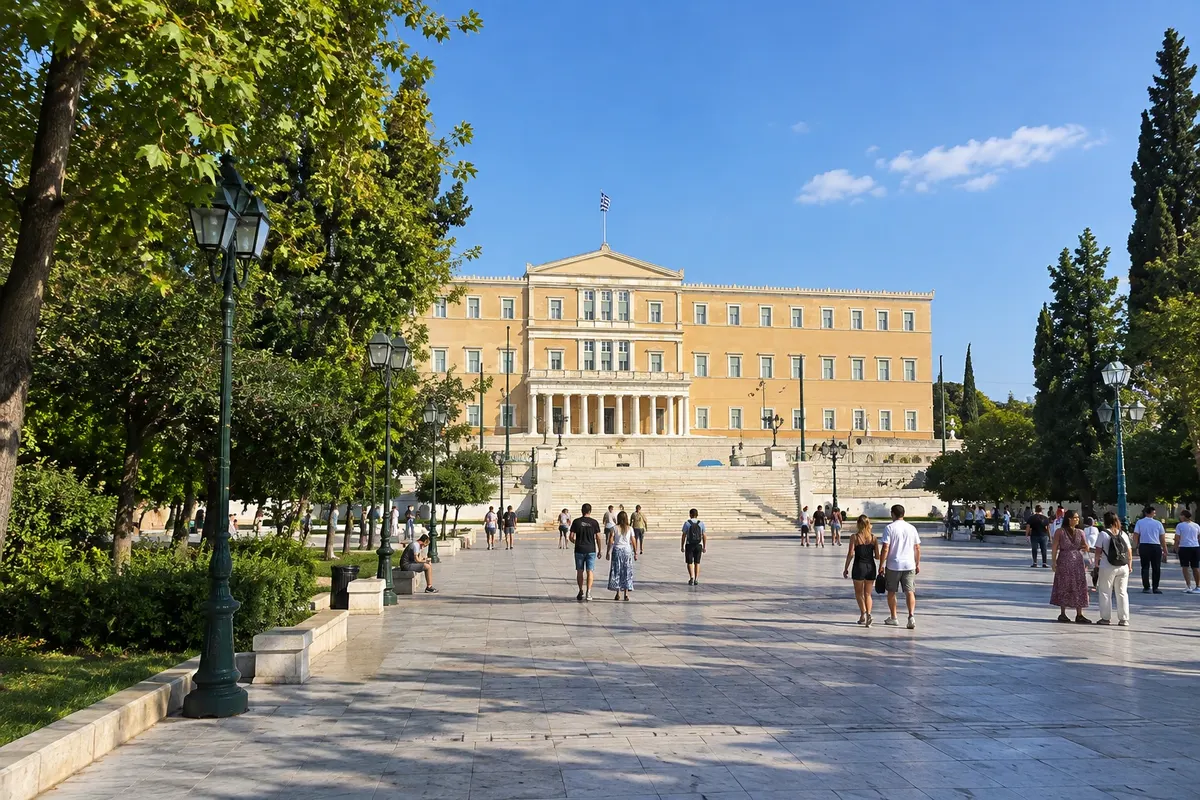
The historic center is compact: the Acrópole, the Ágora Antiga, the Ágora Romana, the Biblioteca de Adriano, the Templo de Zeus Olímpico and the Estádio Panatenaico are a few minutes' walk from each other, linked by pedestrian streets and the neighborhoods of Plaka, Monastiraki and Psiri. Syntagma square, in front of the Parliament, is the reference point for everything.
The ancient city coexists with a modern capital of more than three million inhabitants in the metropolitan area. The major museums are spread out: the Museu da Acrópole, at the foot of the rock; the Museu Arqueológico Nacional, near Omonia square; and, on Vasilissis Sofias avenue, the Benaki, the de Arte Cicládica and the Bizantino e Cristão. For viewpoints, Monte Licabeto and the Colina de Filopapo are the natural lookouts over the sea of white buildings and the Acrópole.
The metropolis stretches to the sea. The Pireu (Pireas), about 10 km from the center, is the port from which boats depart for the islands, and the southern shore, from the Fundação Stavros Niarchos to Glyfada and Vouliagmeni, has beaches and a tram that runs along the coast. At the end of that road, about 70 km away, the Templo de Poseidon at Cabo Sunião is the classic day trip.
Greek is written in a different alphabet, but metro signs, main street signs and sites have Latin-letter versions, and English is common in tourism. Kalimera means “good morning”; efharisto means “thank you”.

V vodniku še ni nastanitev – Athens.
kako do tja · koliko dni · načrt poti · vprašanja
✈ Aeroporto Internacional de Atenas Eleftherios Venizelos (ATH), kraj: Spata· 33 km do cilja (Athens)
Check before buying. Flights land at Aeroporto Eleftherios Venizelos, about 33 km from the center. From there, metro line 3 reaches Syntagma in about 40 minutes; there is suburban train, buses X95 (Syntagma) and X96 (Pireu) and taxis with a fixed fare. Confirm night/early-morning schedules.
Doživite kraj
The sacred hill of Athens, with the Partenon, the Erecteion, the Propileus and the Templo de Atena Nike on top, and the Teatro de Dioniso and the Odeon of Herodes Ático on the south slope. UNESCO World Heritage Site.
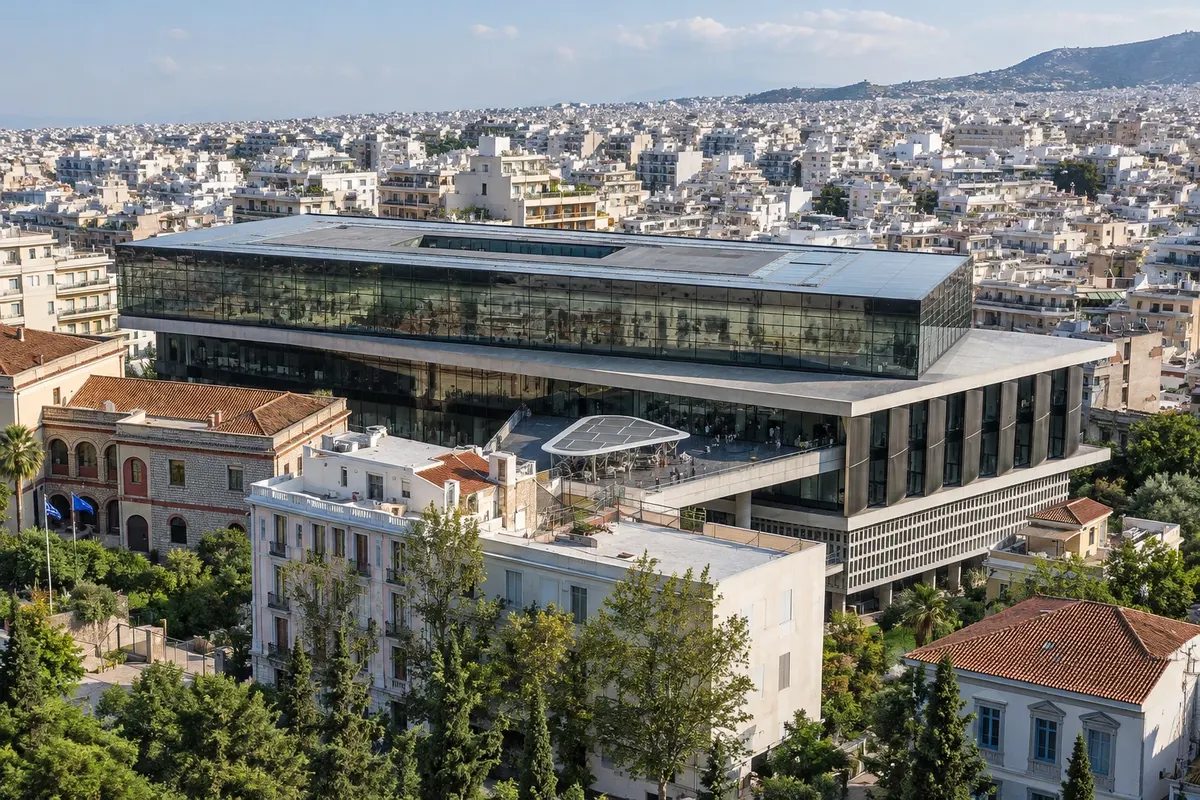
Museum at the foot of the rock housing the original sculptures of the Acrópole, including the Caryatids and the Parthenon friezes, in a glass building aligned with the temple above.
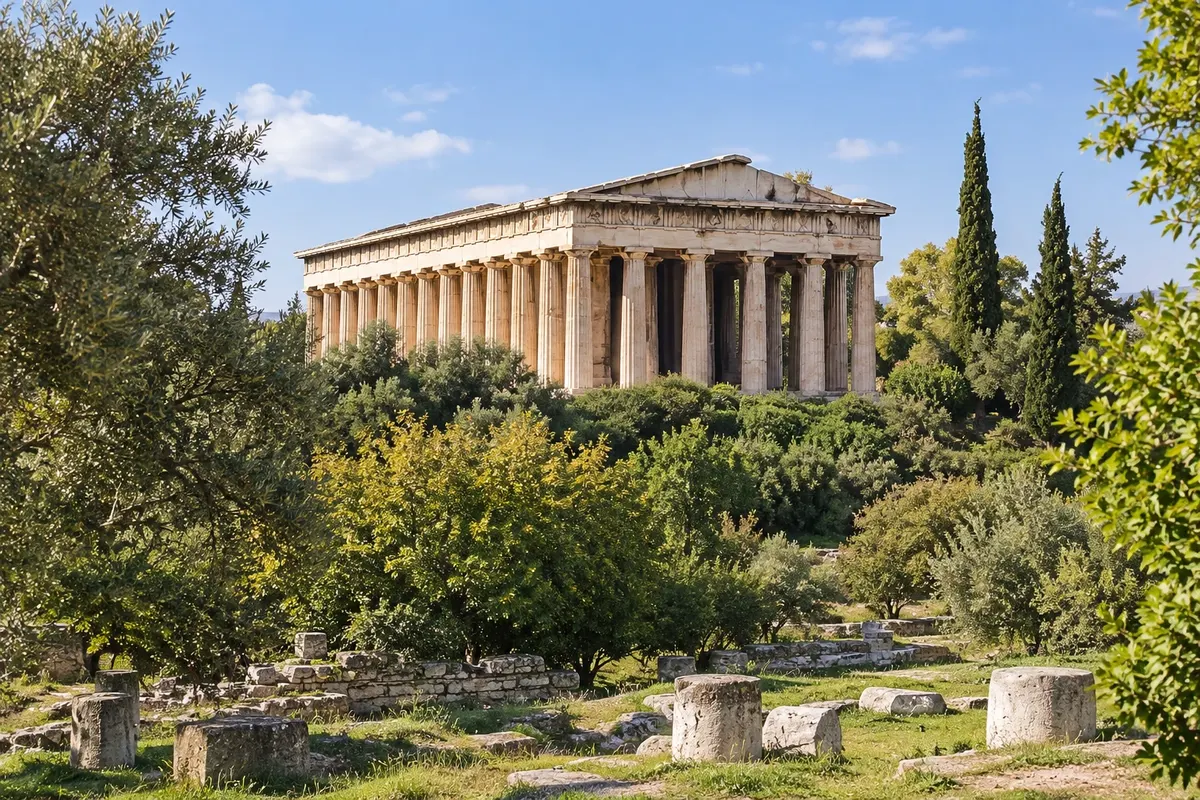
The public square of classical Atenas, at the foot of the Acrópole, with the Templo de Hefesto, one of the best-preserved Greek temples, and the reconstructed Stoa de Átalo, which houses the site's museum.
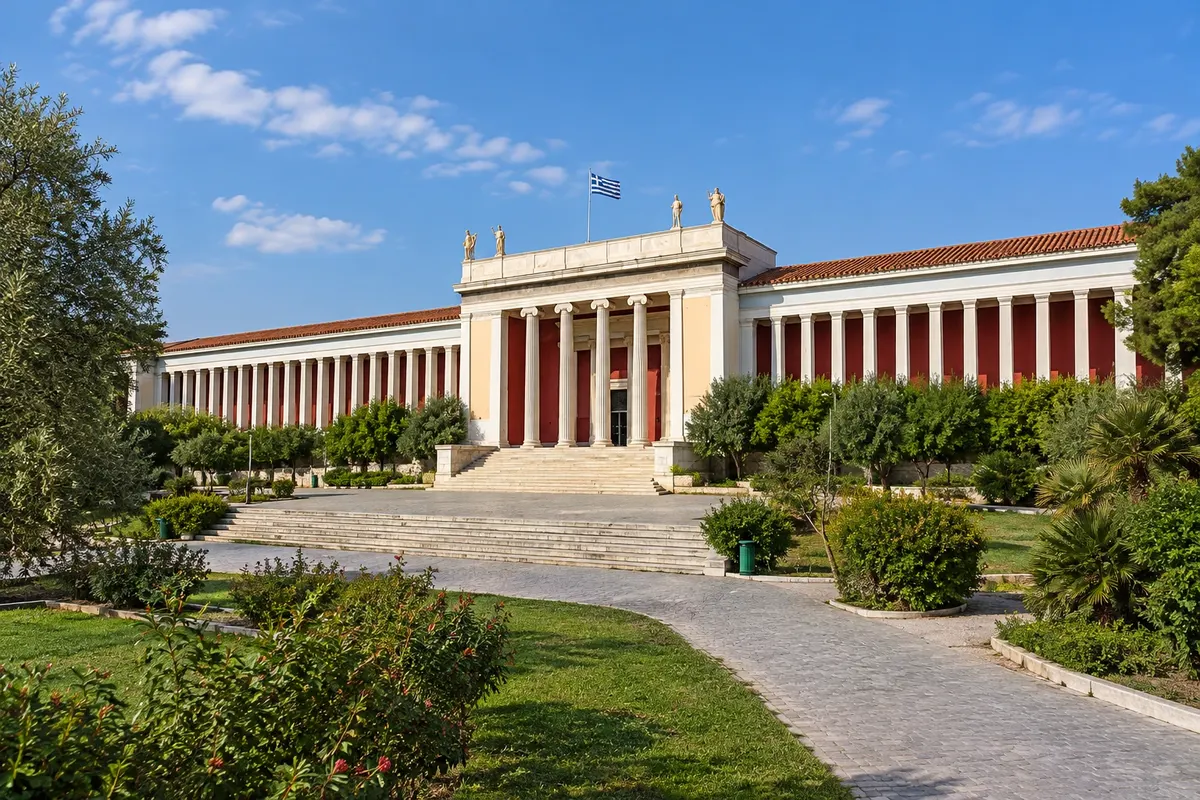
The largest archaeological museum in Grécia, with the Mask of Agamemnon, the Anticítera mechanism, the Artemísion bronzes and the frescoes from Santorini, housed in a neoclassical building near praça Omonia.
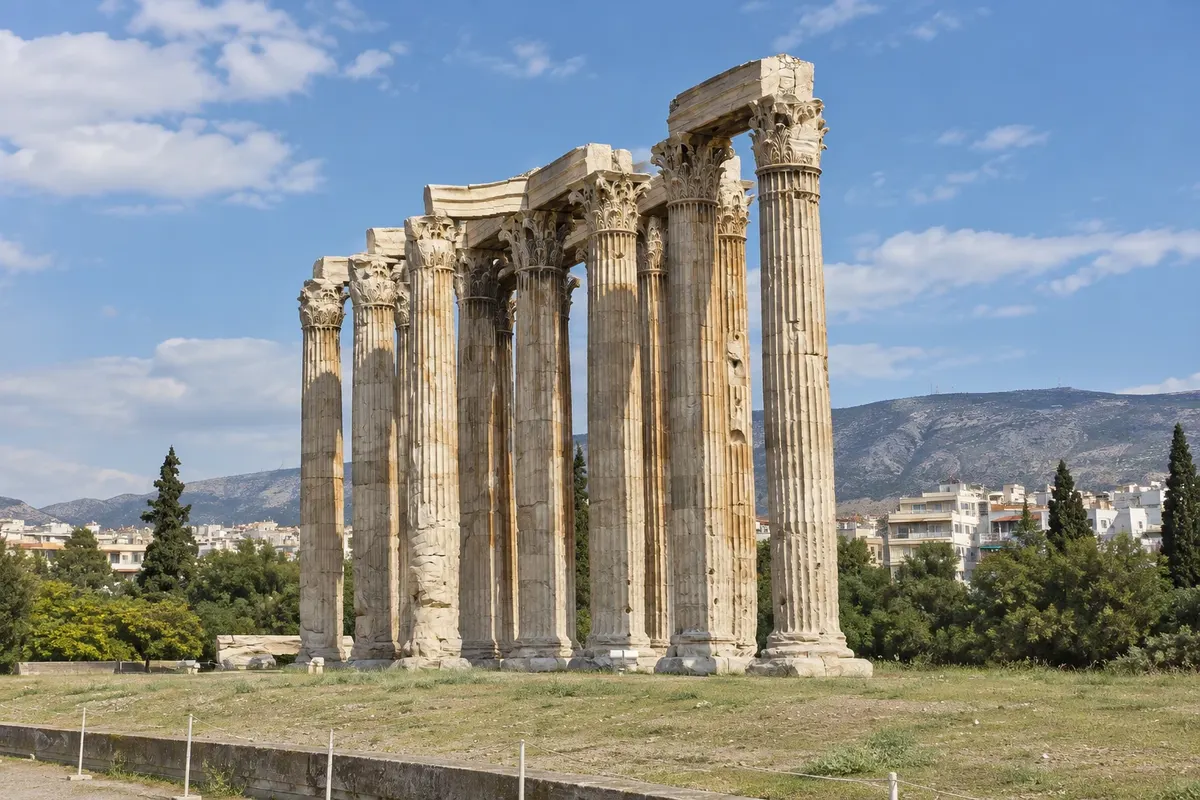
The 17-metre Corinthian columns of the largest temple of ancient Greece, which took almost seven centuries to complete, with the Arco de Adriano on the corner.
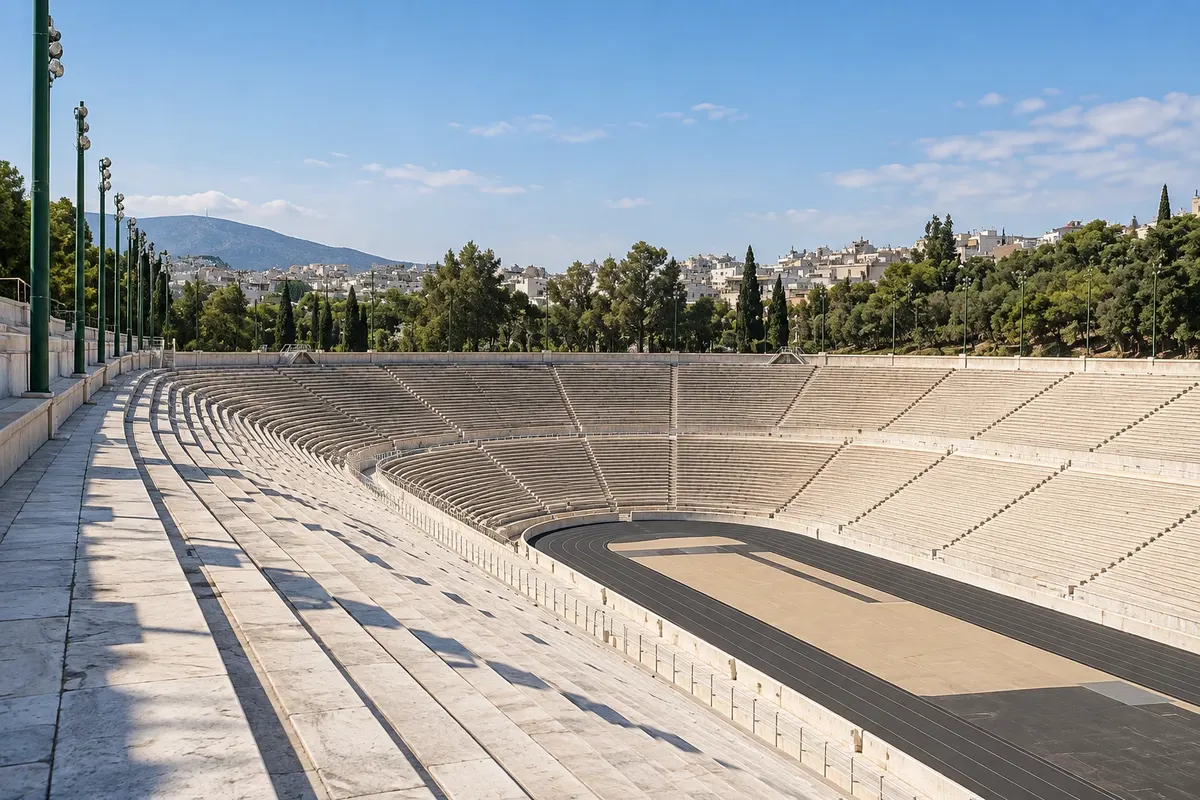
A stadium entirely of white marble, rebuilt over the ancient stadium for the first modern Olympic Games in 1896. Called Kallimarmaro by the Athenians.
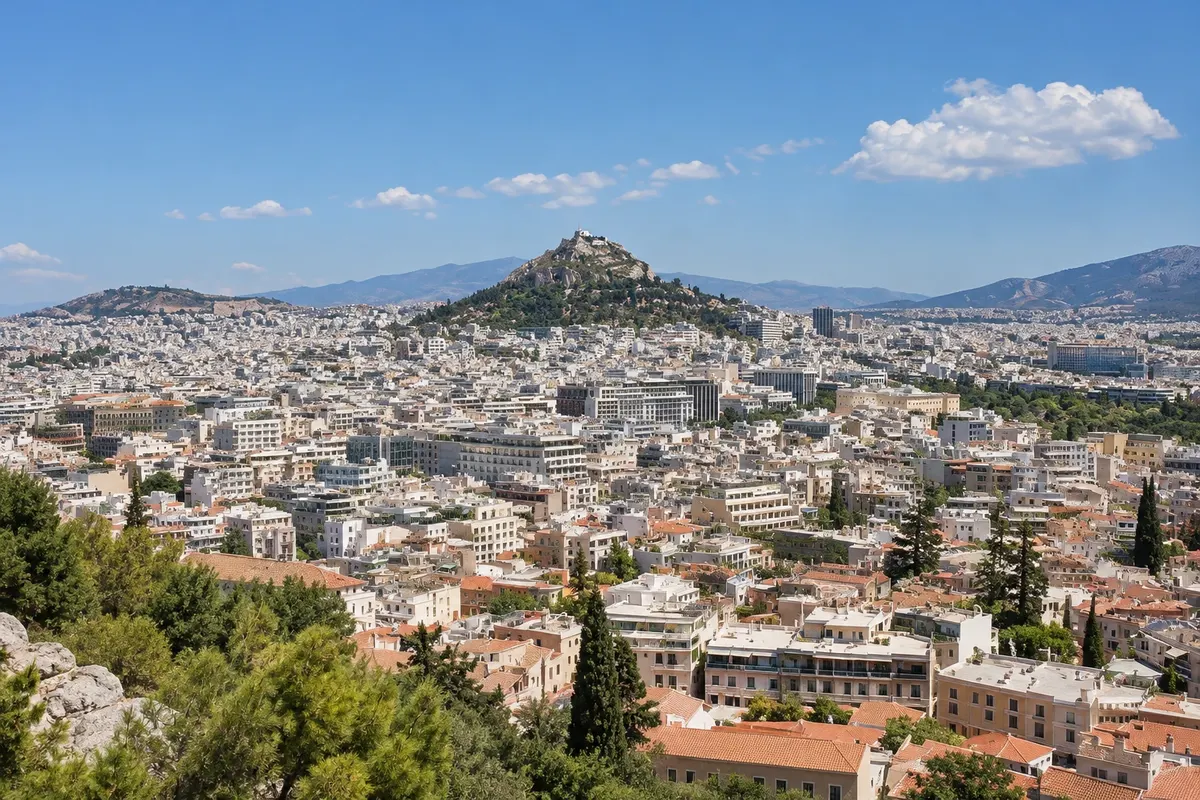
The 277-metre hill that dominates central Athens, with the white chapel of São Jorge at the top and views across the whole city to the sea and the Acrópole. You can climb on foot or take the cable car.
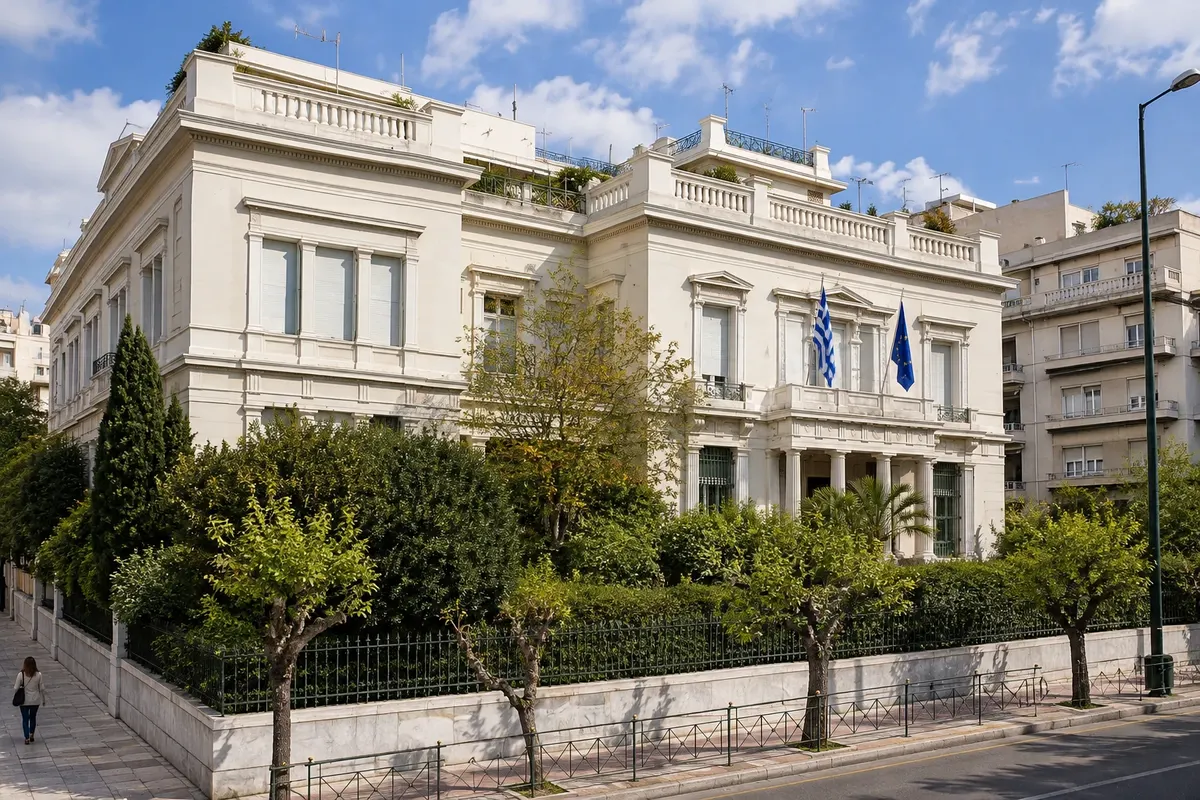
Museum of Greek art and culture from prehistory to the 20th century, housed in a neoclassical mansion facing the Jardim Nacional. Costumes, jewellery, icons and two rooms with 18th-century wooden interiors.
Collection of marble figurines from the Cyclades islands, 4,500 years old, and of ancient Greek and Cypriot art, in a small, well-curated museum in Kolonaki, with an annex in a neoclassical mansion.
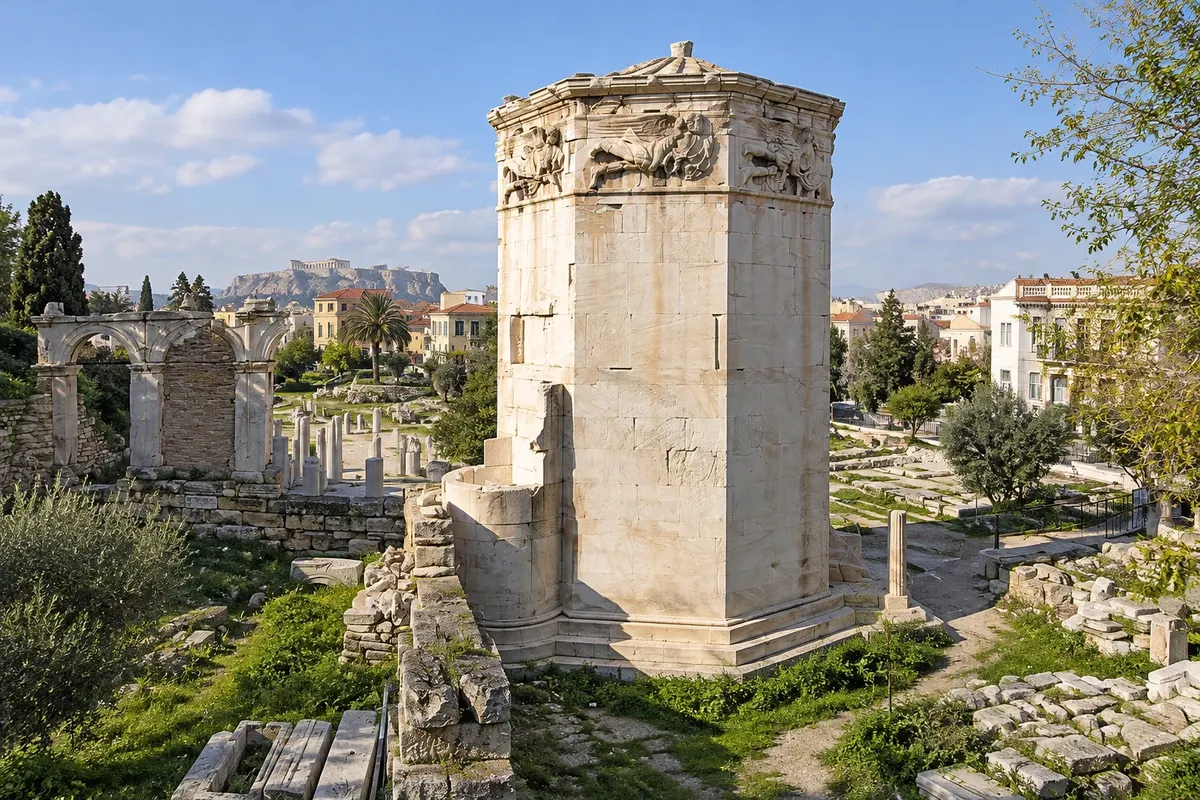
The market built in Athens in the time of Augustus, with the Gate of Atena Arquegetis and the Torre dos Ventos, a water clock and sundial from the 1st century BC with the eight winds carved.
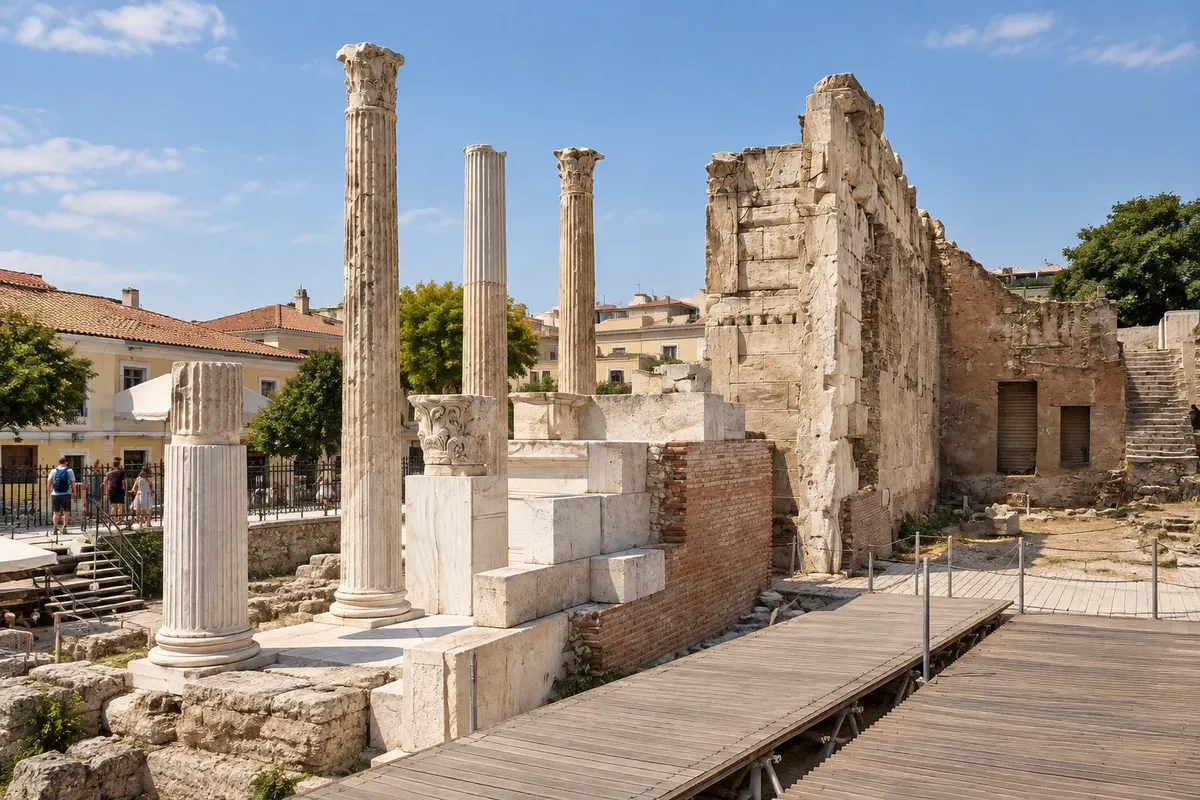
Ruins of the library built by Emperor Hadrian in 132 AD next to Monastiraki, with a façade of Corinthian columns and the remains of three Byzantine churches in the courtyard.
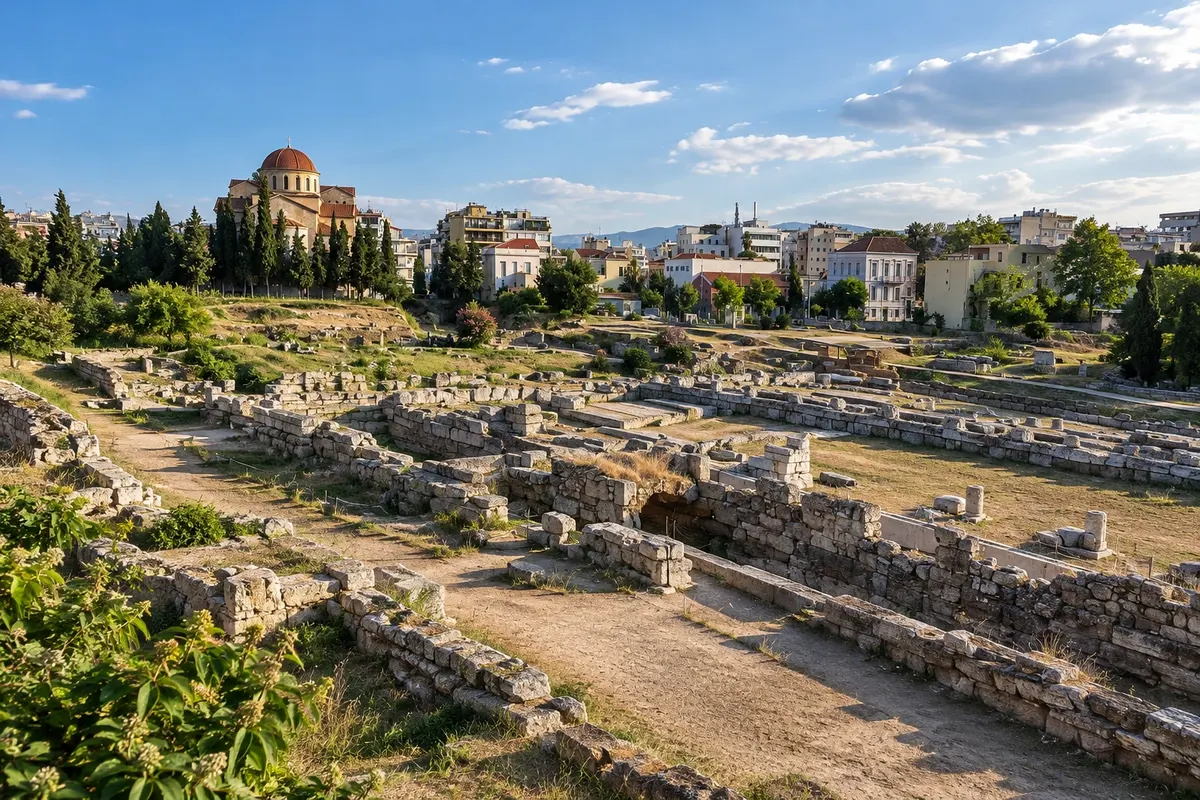
The cemetery of ancient Athens, at the end of rua Ermou, with the two gates of Temístocles' wall, the Via Sacra, funerary monuments and a small museum with stelae and vases.
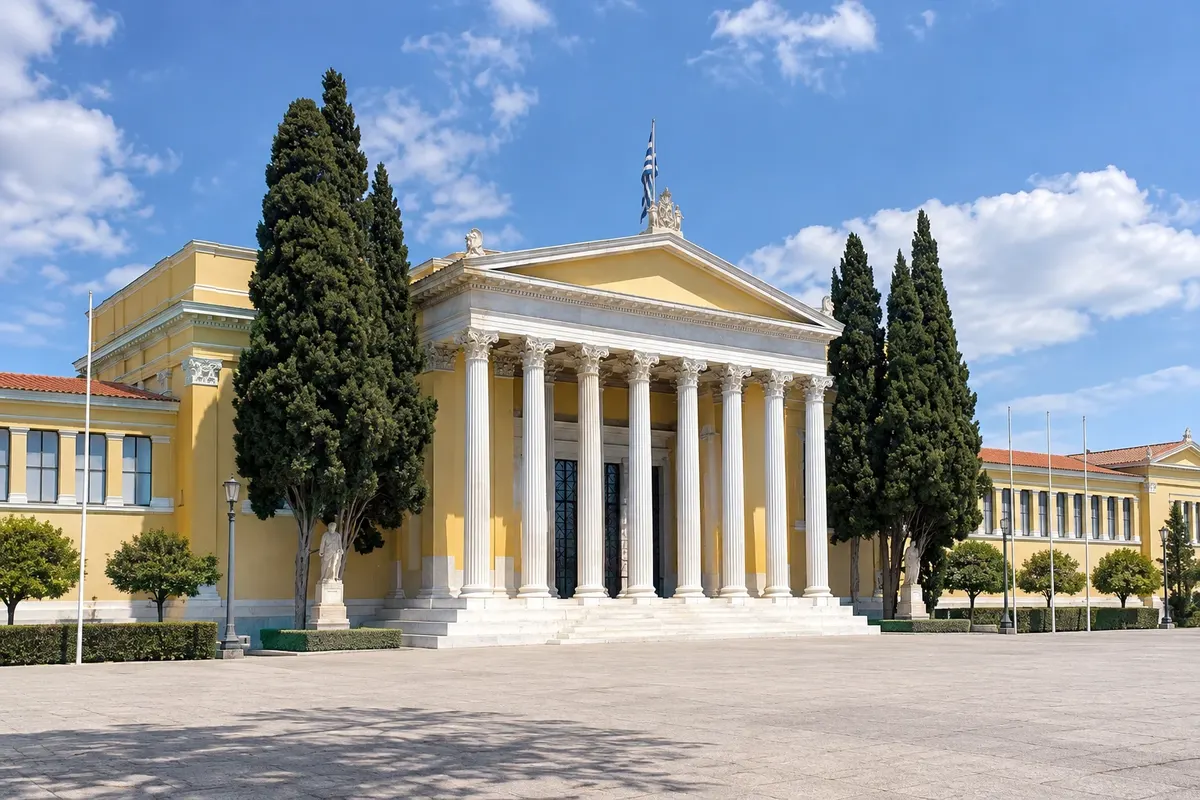
The 15.5-hectare park behind the Parliament, the former royal palace garden, with lakes, dense shade and ruins, linked to the Zappeion, the 1888 exhibition palace where Greece's entry into the European Community was signed.
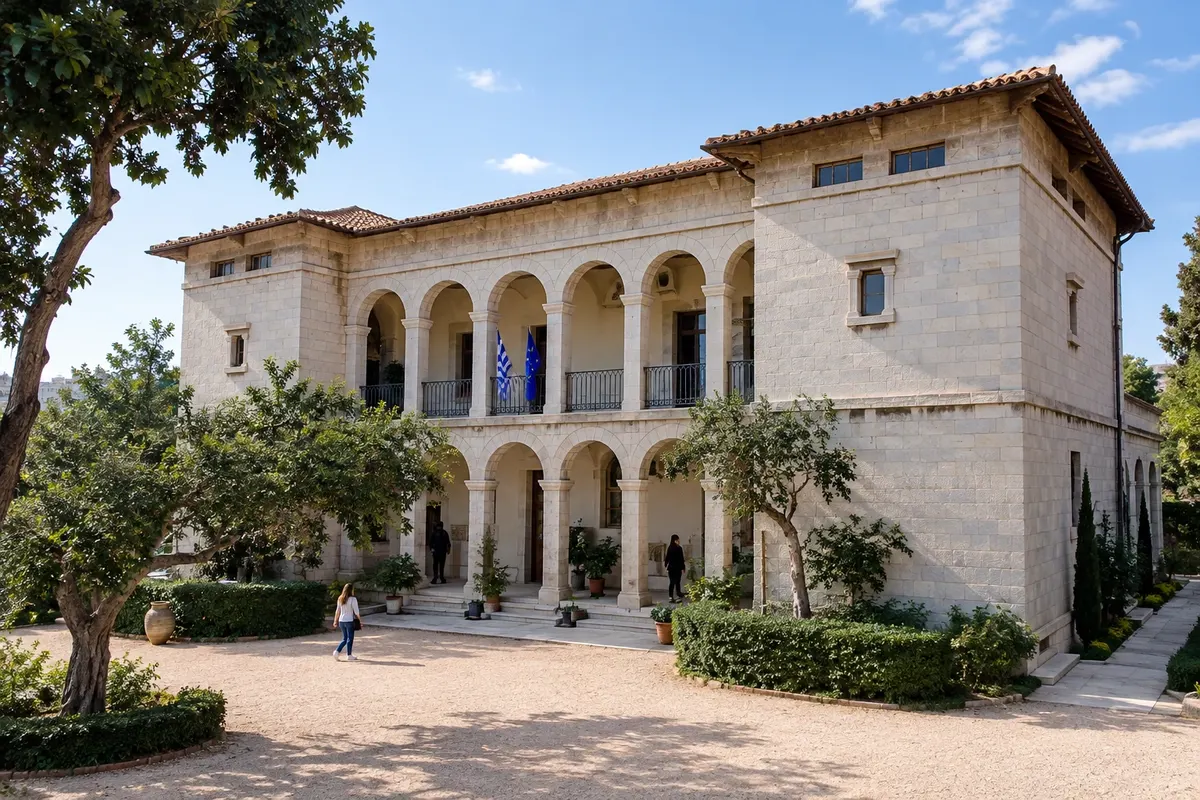
Icons, mosaics, frescoes and devotional objects from the 3rd to the 19th century, in a modern museum beneath the gardens of a Florentine villa from 1848 on Vasilissis Sofias avenue.
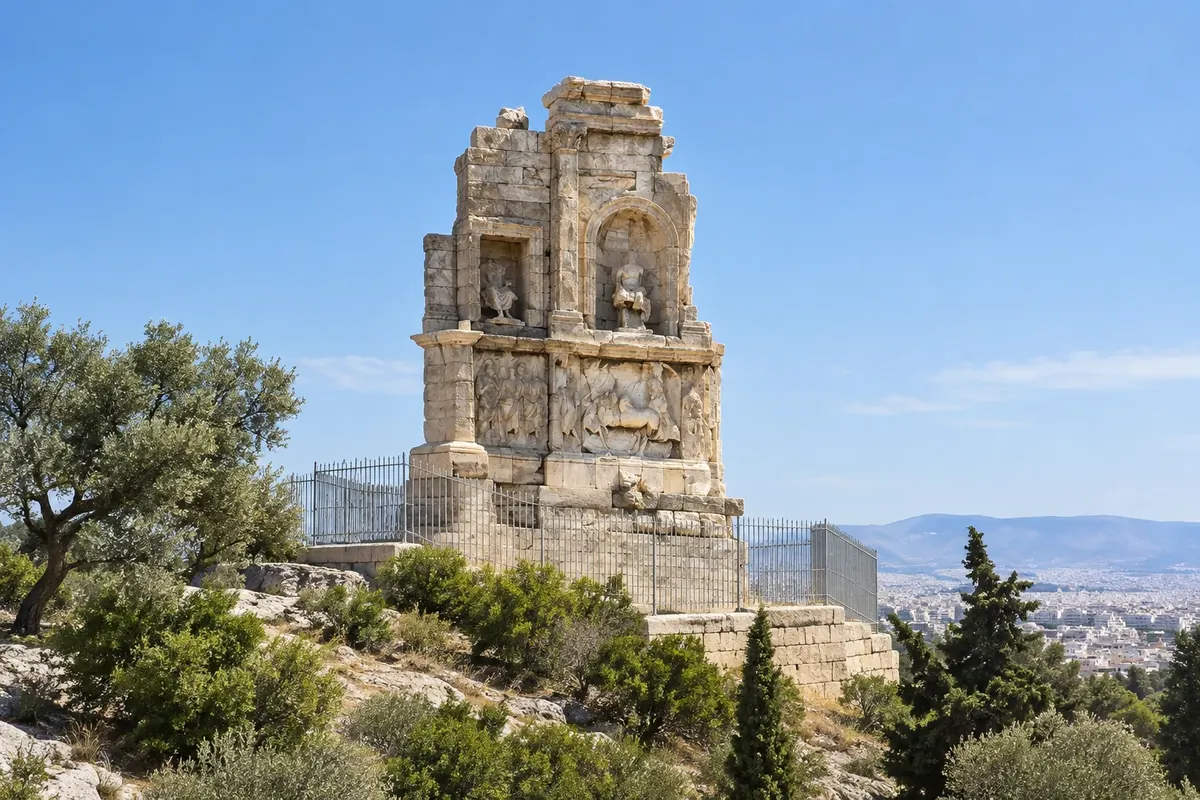
The tree-covered hill facing the Acrópole, with the Roman Monument of Filopapo at the top, stone paths designed by Dimitris Pikionis and the most photographed view of the Partenon.
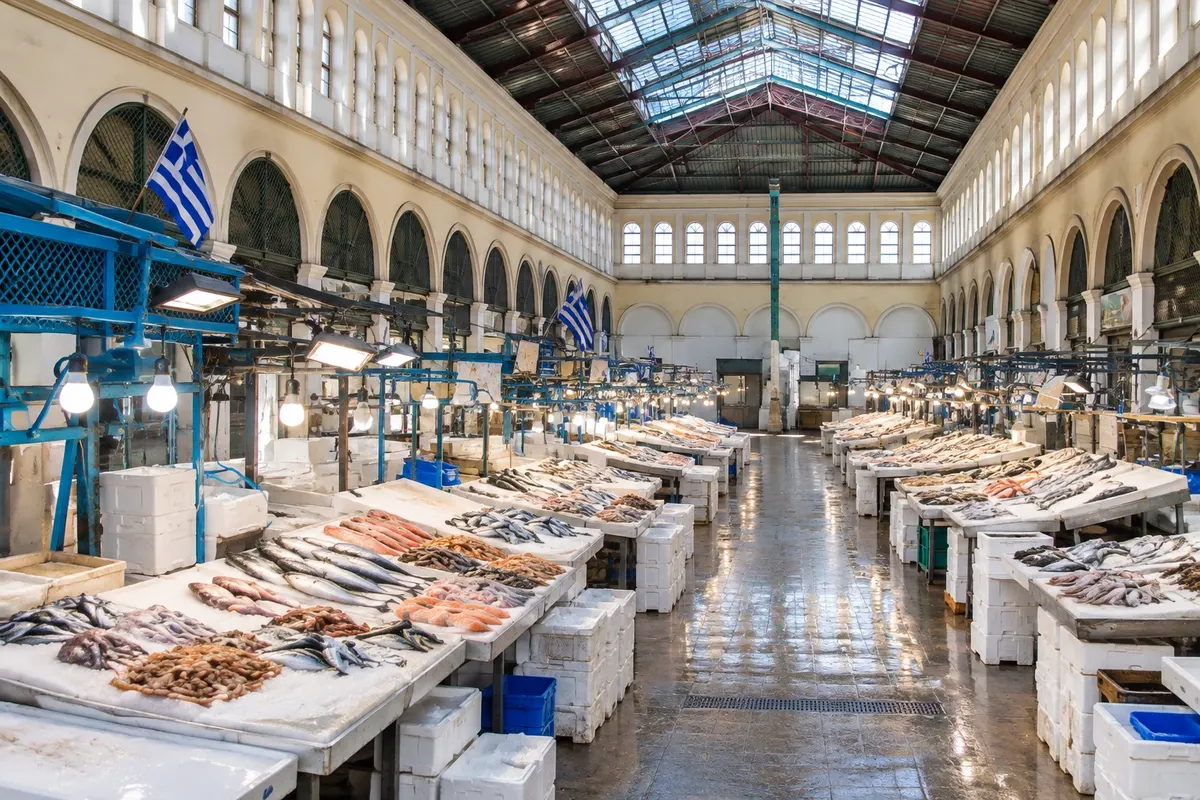
Athens' municipal market since 1886, on Athinas street, with the fish pavilion in the middle, the butcher shops around it and the fruit and olive stalls on the other side of the street. Taverns that serve food all day.
The central square of Athens, facing the Parliament, the former royal palace, where the evzones in fustanella and pompom shoes perform the changing of the guard at the Tomb of the Unknown Soldier every hour.
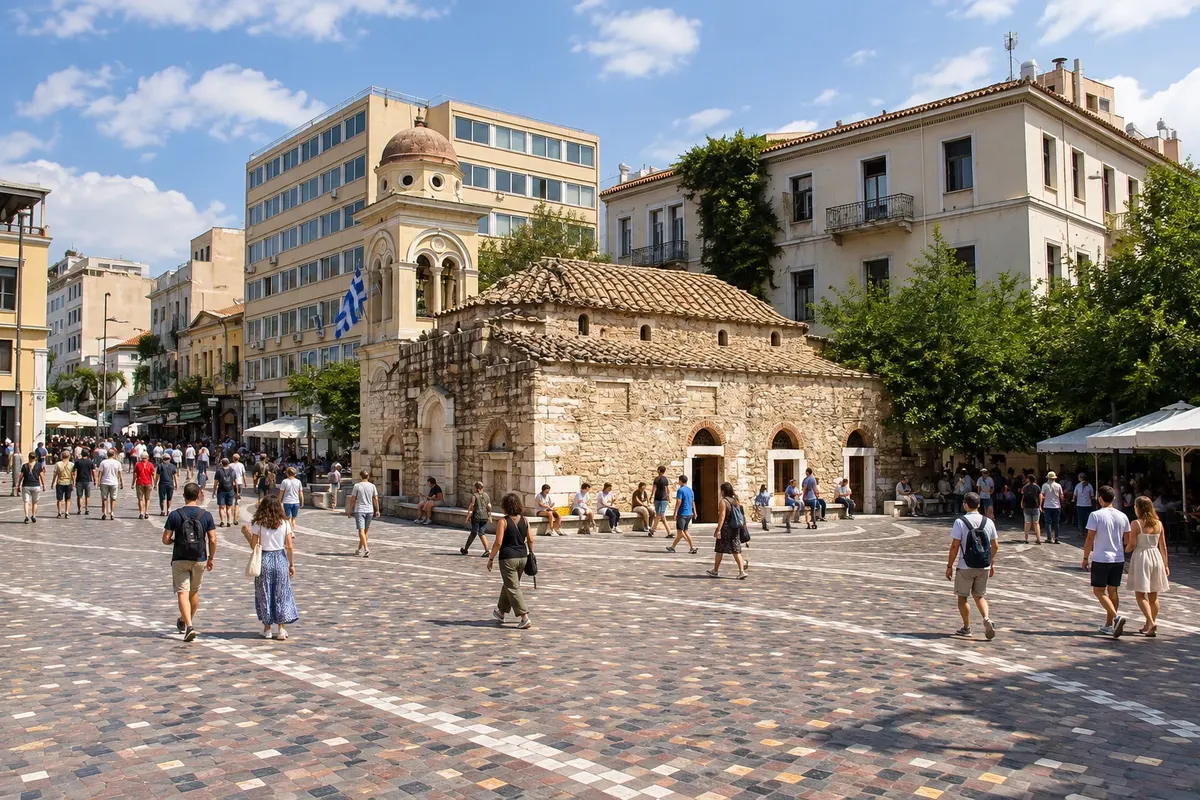
The square with the small church, the Ottoman mosque and the metro station, and the bazaar streets around: the flea market on Ifestou Street, Avissynias and the terrace cafés with views of the Acropolis.
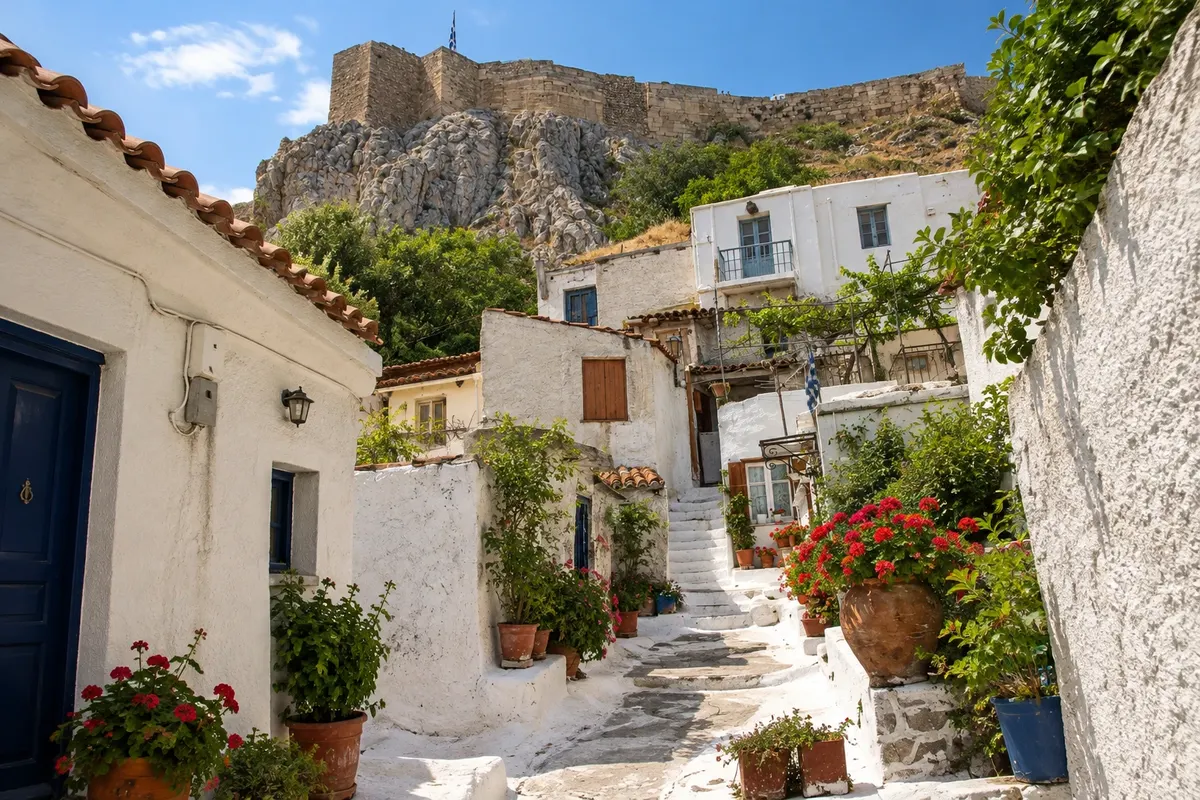
The old neighborhood on the slopes of the Acropolis, with pedestrian streets, neoclassical houses, small Byzantine churches and tavernas, and, at the top, Anafiotika—a cluster of white island-style houses clinging to the rock.
The Doric temple of the 5th century BC on top of the cliffs of Cape Sounion, the southern tip of Attica, 60 meters above the Aegean Sea, with fifteen columns standing and Lord Byron’s name carved on one of them.
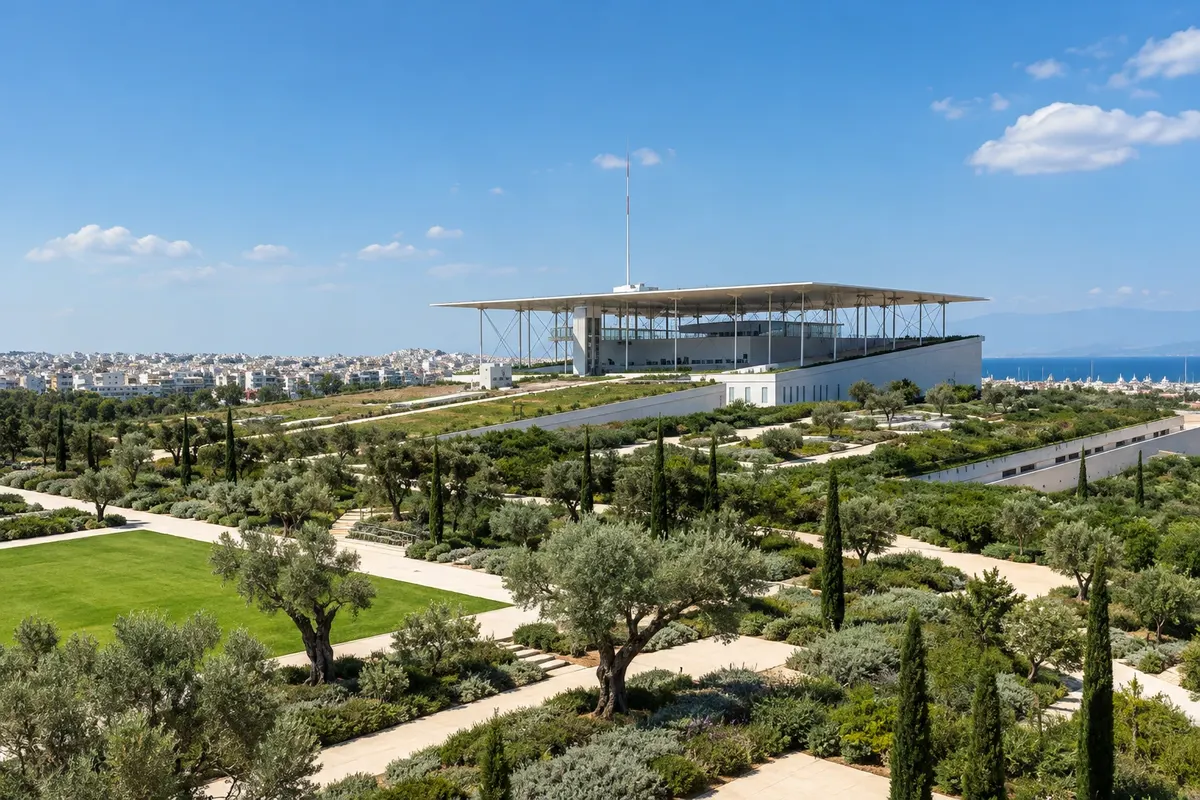
The Renzo Piano complex on the Kallithea waterfront, housing the National Library, the National Opera, a 21-hectare park, a seawater canal and a terrace with views of the Acropolis and the gulf. Park entry is free.
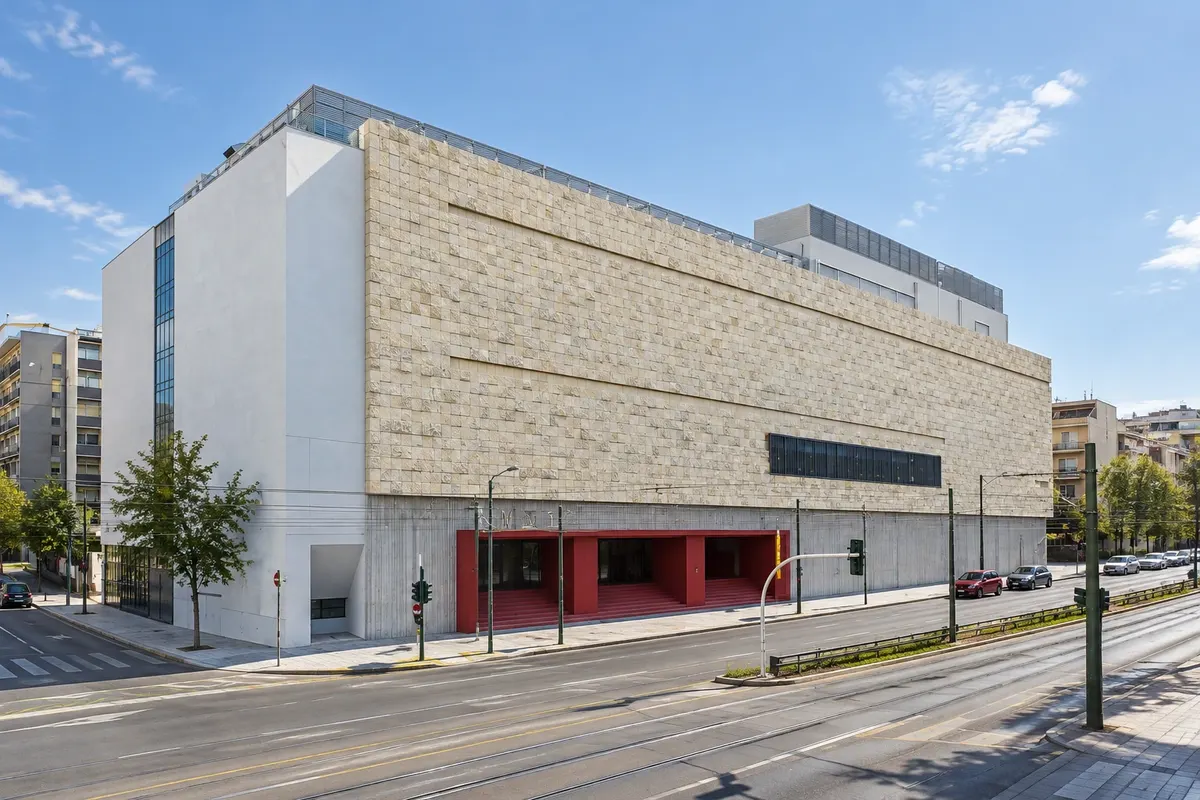
Greece's contemporary art museum, housed in the former Fix brewery, with Greek and international works from the 20th and 21st centuries across eight floors next to the Syngrou-Fix metro station.
Pred odhodom
Athens – Attica Capital
Razdalje so približne. Pred potovanjem preverite lete in vozne rede avtobusov, vlakov ali ladij.
Check before buying. The airport is about 33 km away and is linked to the center by metro (line 3), the suburban train, buses X95 and X96 and by taxi with a fixed fare. Trains from Thessaloniki arrive at Athina (Larissa) station on metro line 2. KTEL buses from other regions arrive at the Kifissou and Liossion terminals. Island ferries arrive at Pireu, with metro (line 1) to the center.
Three days: one for the Acrópole, the Museo da Acrópole and Plaka; one for the ágoras, Monastiraki, Kerameikos and the National Archaeological Museum; one for the museums on Vasilissis Sofias, Licabeto and the Panathenaic Stadium. With a fourth day, Cape Sounion or the Fundação Stavros Niarchos and the waterfront.
From April to June and from September to October, with long days and bearable heat. July and August often exceed 35 °C and the sites have little shade: start at 8 am and return late afternoon. From November to March it rains more and archaeological sites often close in the middle of the afternoon, but museums remain open and queues disappear.
The seasons shown are the most usual ones; nature doesn't always follow the calendar.
No. The historic center is largely pedestrian and the metro (three lines), the coastal tram and buses cover the rest. Parking in the center is difficult and traffic is heavy. A car only makes sense to leave the city, for example to Cabo Sunião or the Peloponnese, and even then there are regional buses. For the airport and Pireu, metro or taxi.
Predlog poti
Pot povezuje znamenitosti na tej strani. Za oglede boste imeli dovolj časa.
Enter the Acrópole at the first time slot, through the main entrance or the one by the Theatre of Dionysus, with a timed ticket. See the Partenon, the Erecteion and the city view. Walk down Dionysiou Areopagitou street to the Museo da Acrópole and see the original sculptures on the Parthenon level.
Have lunch in Plaka and climb the white alleys of Anafiotika, clinging to the rock. Descend to the Ágora Romana and the Tower of the Winds, pass Hadrian's Library and enter the Ágora Antiga to see the Temple of Hephaestus and the museum in the Stoa of Attalos.
Cross Monastiraki square and the flea market. Then follow Apostolou Pavlou to Thissio and climb Colina de Filopapo by the stone path: it is the classic viewpoint of the Acrópole at the end of the day.
Psiri, between Monastiraki and Athinas street, has tavernas and mezedopolia (small-plate places) that only fill up after 9 pm. Plaka is more touristy and has outdoor tables with the Acrópole lit up in the background.
Dan 1
Same start as the one-day itinerary: Acrópole at the first time slot and Museo da Acrópole afterwards, taking time for the Parthenon level and the Caryatids.
From the museum exit, a 10-minute walk to the Arco de Adriano and the Templo de Zeus Olímpico. Continue to the marble Estadio Panatenaico and return via the Jardim Nacional and the Zappeion to praça Syntagma.
See the changing of the guard in front of the Parliament, which takes place every hour, and walk down Ermou to Plaka and Anafiotika, at the time when the alleys are quieter.
Tavernas on Adrianou street and the steps of Mnisikleous, with outdoor tables in the warm months.
Dan 2
Start at the Ágora Antiga, with the Temple of Hephaestus and the museum in the Stoa of Attalos. Continue to the Ágora Romana and the Tower of the Winds and to the Biblioteca de Adriano, all a few minutes from Monastiraki.
Have lunch at the tavernas inside or around Mercado Varvakios on Athinas street. Then walk or take the metro (Omonia or Viktoria) to the Museu Arqueológico Nacional to see the Mask of Agamemnon, the Antikythera mechanism and the bronzes.
Ascend Licabeto on foot from Kolonaki or by funicular along Aristippou street, and see the entire city to the sea with the Acrópole in the middle.
Kolonaki has more formal restaurants and bars on the streets around praça Kolonaki; Psiri is more informal and noisy.
Dan 1
Acrópole at the first time slot, with a timed ticket, and Museo da Acrópole afterwards.
Arco de Adriano, Templo de Zeus Olímpico, Estadio Panatenaico and the return through Jardim Nacional and the Zappeion.
Changing of the guard at the Parliament, Ermou street and the alleys of Plaka and Anafiotika.
Tavernas on Adrianou and the steps of Mnisikleous.
Dan 2
Ágora Antiga, Ágora Romana with the Tower of the Winds, Biblioteca de Adriano and, at the end of Ermou street, the ancient cemetery of Kerameikos with its small museum.
Lunch around Mercado Varvakios and an afternoon at the Museu Arqueológico Nacional.
Ascent on foot or by funicular for the end-of-day view.
Mezedopolia and live music in the streets around praça Iroon.
Dan 3
Choose two among Museu Benaki, the Cycladic Art Museum and the Byzantine and Christian Museum, neighbors on the same avenue, 10 minutes from Syntagma.
To stay in the city, the park, the canal and the terrace of Fundação Stavros Niarchos in Kallithea, with the coastal tram on the return. To go out of town, the Temple of Poseidon at Cabo Sunião, about 70 km away, by KTEL bus or car, with time to return in the evening.
If you stayed in the city, climb the Colina de Filopapo from Thissio for the final view of the Acrópole.
Cafés and restaurants on Apostolou Pavlou street in Thissio, facing the Acrópole, or the neighborhood tavernas in Koukaki.
Check before you go. Opening hours and days change, and places may close for renovations, holidays or events. This itinerary is a suggestion from Cidade Turismo, not a commitment: plan yours by checking directly with each place you intend to visit.
Pred odhodom
There are three lines. Line 1 (green) links Pireu with Monastiraki and Omonia; line 2 (red) goes through Akropoli, Syntagma and the Larissa train station; line 3 (blue) runs from Monastiraki and Syntagma to the airport. The urban ticket is valid for 90 minutes on metro, bus and tram; the airport ticket is separate. Several stations, such as Syntagma, Monastiraki and Akropoli, display archaeological finds from the excavations.
There is a wheelchair lift on the north face of the rock, which is used with prior notice, and an adapted path at the top, but the surface is uneven and slippery stone. Visitors with reduced mobility should choose the main entrance, which has fewer steps than the Teatro de Dioniso entrance, and avoid midday in summer.
Hat, sunscreen, water and closed shoes with rubber soles: polished marble is slippery and there is no shade on the Acrópole or in the Agora. Large backpacks are not allowed in the Acrópole. On extreme heat days, the sites may close during the hottest hours; check before you go.
In Pireu, 10 km from the center, reachable by metro (line 1) and suburban train to the port station. Boarding gates are numbered and far apart; arrive with an hour to spare. For some Cyclades islands, boats also depart from Rafina and Lavrio, ports east of Athens, linked to the center by KTEL buses.
If you have time. The Kastella neighborhood, on a hill, and the Mikrolimano marina, with seafood restaurants facing the boats, are the nicest parts. The Museu Arqueológico do Pireu houses ancient bronzes found in the port. The rest of Pireu is an ordinary port city.
Pred odhodom
Z nekaj načrtovanja boste imeli več časa za uživanje na poti.
From April to June and from September to October the weather is usually mild and the days are long, good for walking among the ruins. July and August are very hot and dry, with sites lacking shade; go early or late in the afternoon. From November to March it rains more, archaeological sites often close earlier and there are fewer lines. Orthodox Easter, a movable date between April and May, changes opening hours.
The seasons shown are the most usual ones; nature doesn't always follow the calendar.
Three days cover the essentials: one for the Acrópole, the Museu da Acrópole and Plaka; one for the agoras, Monastiraki, Kerameikos and the Museu Arqueológico Nacional; one for the museums on Vasilissis Sofias, Licabeto and the Estádio Panatenaico. With four days you can include Cabo Sunião or the Fundação Stavros Niarchos. Those who use Atenas only as a base for the islands usually stay two days.
Plaka and Monastiraki leave the Acrópole and the agoras within walking distance, with pedestrian streets and restaurants; it's the place for first-time visitors. Syntagma and Kolonaki are more formal, near the Parliament, the National Garden and the museums on Vasilissis Sofias. Koukaki and Makrygianni, south of the Acrópole, have a neighborhood feel, metro access (Akropoli and Syngrou-Fix) and lower prices than Plaka. Psiri and Thissio are lively at night and close to Kerameikos. Avoid staying near Omonia and Metaxourgio if you arrive late: they are commercial areas that empty at night. If you only need to catch an early boat you can stay in the Pireu.
Odnesite svoje odpadke, upoštevajte oznake in podprite lokalne ponudnike. V naravi upoštevajte navodila za obiskovalce.
Odgovori na vaša vprašanja
The most direct option is the metro, line 3, which departs from the terminal and reaches Syntagma and Monastiraki in about 40 minutes, with spaced departures; the airport ticket is different from the urban fare. There is also the suburban train, buses X95 (Syntagma) and X96 (Pireu), which run overnight, and taxis with a fixed fare to the center, higher at night. Confirm schedules before boarding.
Two days are enough for the Acrópole, the Museu da Acrópole, the agoras and the central neighborhoods. Three days include the Museu Arqueológico Nacional and a viewpoint. If the trip passes through the city twice, on the way in and back, split it: the ancient part on arrival and the museums and Cabo Sunião at the end.
Yes. The Acrópole operates with timed entry and tickets are sold online on the official platform of the Ministry of Culture. The earliest morning slots and the late-afternoon ones are the most sought after, especially from May to October. Check whether there is a ticket that includes other sites before buying separate entries.
The historic center, yes: from Syntagma to the Acrópole is 15 minutes, and the pedestrian street Dionysiou Areopagitou skirts the rock to Thissio. The climbs are short, but the old marble pavement is slippery. For the museums on Vasilissis Sofias, Licabeto and the Pireu use metro, bus or taxi, which is inexpensive compared with other European capitals.
Yes. Cabo Sunião is about 70 km away, with regional buses (KTEL Attikis) from the center or by car. Delphi is about 180 km away and has KTEL buses from the Liossion terminal; it is a full day. For islands, the nearest are Egina, Hidra and Poros, in the Saronic Gulf, with boats from the Pireu.
Več kot vodnik