Lyon · Auvergne-Rhône-Alpes · Zgodovinska mestna četrt
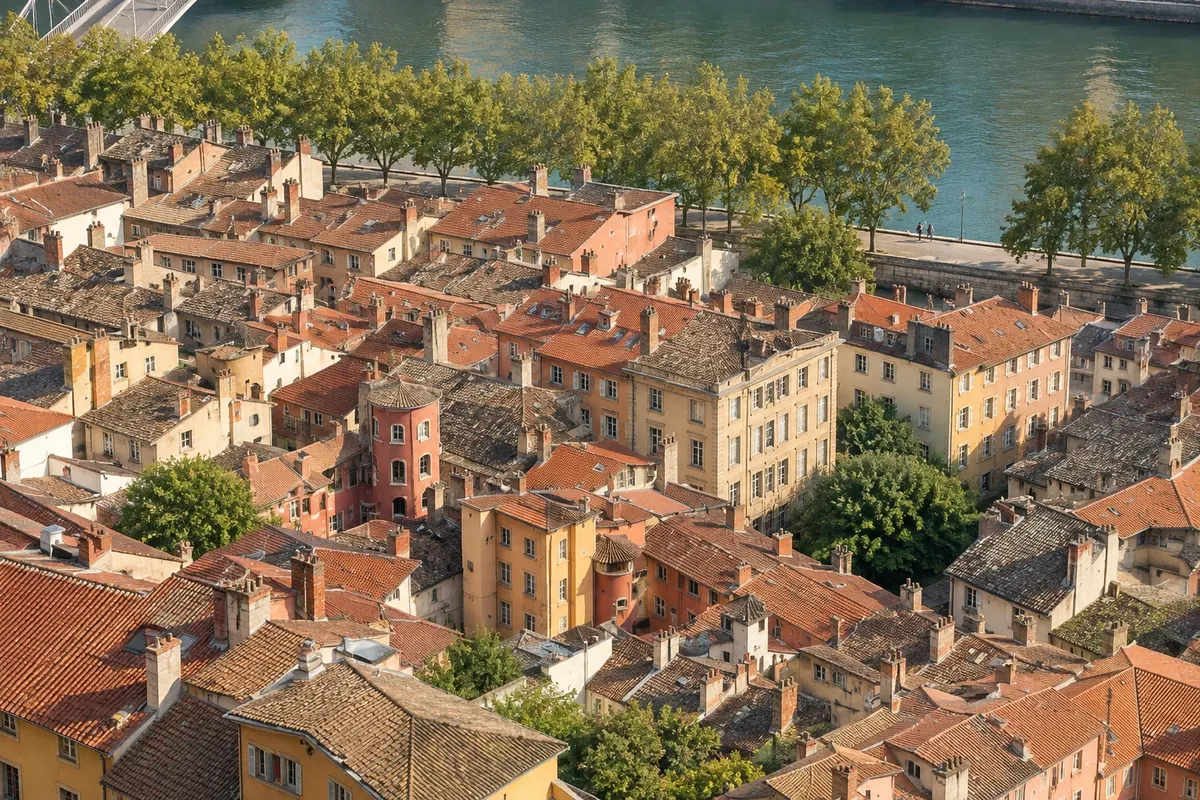
Vieux Lyon
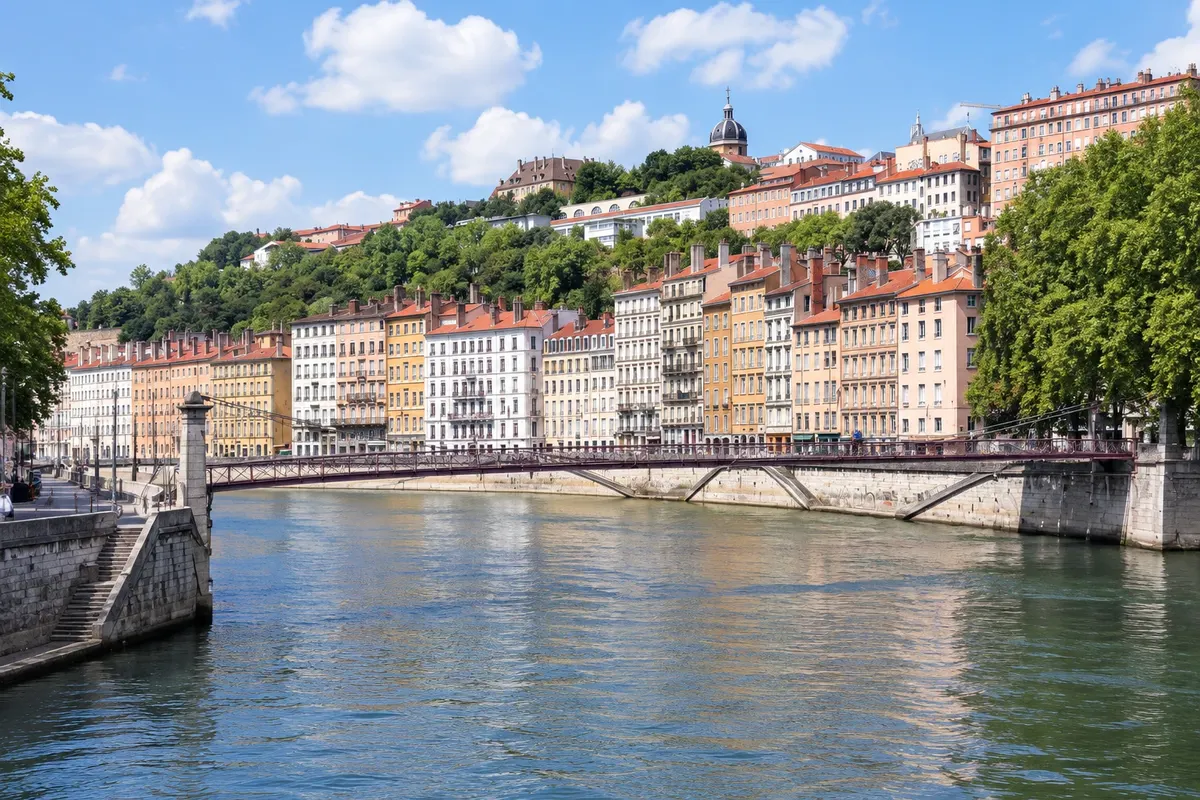
Medieval and Renaissance district on the banks of the Saona, at the foot of Fourvière, with cobbled streets, traboules and the Cathédrale Saint-Jean.

 Išči
 Brazilija
 Antarktika
 Argentina
 Bolivija
 Čile
 Kolumbija
 Ekvator
 Gvajana
 Francoska Gvajana
 Falklandski otoki (Malvini)
 Paragvaj
 Peru
 Surinam
 Urugvaj
 Venezuela
 Nemčija
 Avstrija
 Belgija
 Hrvaška
 Danska
 Slovaška
 Slovenija
 Španija
 FinskaFrancija
 Grčija
 Nizozemska
 Madžarska
 Irska
 Islandija
 Italija
 Luksemburg
 Norveška
 Poljska
 Portugalska
 Združeno kraljestvo
 Češka
 Švedska
 Švica
 Turčija
 Bermudi
 Kanada
 Združene države Amerike
 Grenlandija
 Mehika
 Sveta Peter in Mihael
 Dominikanska republika
 JaponskaTurčija
 Južnoafriška republika
 Egipt
 Avstralija
 Fidži
 Nova Zelandija
 Papua Nova Gvineja
Auvergne-Rhône-Alpes · Francija
Third largest city in France, between the Ródano and the Saona rivers: historic center listed by UNESCO, bouchons, traboules and the Festa das Luzes in December.
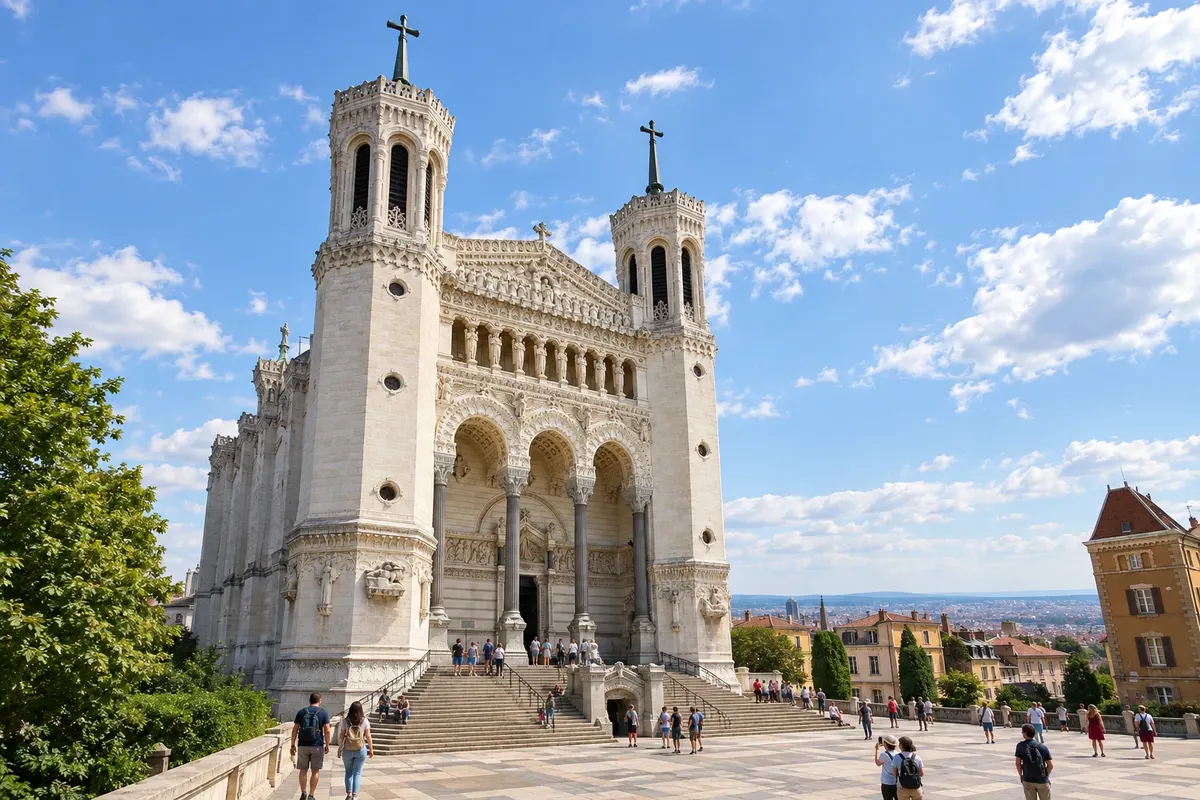
Na fotografiji: Basilique Notre-Dame de Fourvière · Lyon
Illustrative images. The pictures in this guide are illustrations based on the real place, not photographs, and may differ from it.
Spoznajte kraj
Lyon is in eastern France, at the meeting of two rivers, the Ródano (Rhône) and the Saona (Saône). It is the country's third-largest city by population and the capital of the Auvérnia-Ródano-Alpes region.
The city began as Lugdunum, founded by the Romans in 43 BC, and preserves layers of more than two thousand years side by side. The Roman theaters atop Fourvière, the Renaissance quarter of Vieux Lyon, the classical Presqu'île between the two rivers and the slopes of the Croix-Rousse, neighborhood of the old silk weavers, make up the historic site inscribed by UNESCO as a World Heritage Site in 1998.
Lyon is famed as the capital of French gastronomy. The most Lyonnais way to eat is in a bouchon, the city's typical restaurant, with hearty dishes like quenelles and salade lyonnaise. The covered market named after chef Paul Bocuse brings together cheeses, charcuterie and sweets from the region.
Two words help explain the city. Traboule is the pedestrian passage that cuts through building courtyards and links one street to another, common in the Vieux Lyon and the Croix-Rousse. Fête des Lumières is the Festa das Luzes, which fills the center for four nights around December 8, with projections on façades and candles in the windows.
V vodniku še ni nastanitev – Lyon.
kako do tja · koliko dni · načrt poti · vprašanja
✈ Aéroport Lyon-Saint-Exupéry (LYS), kraj: Colombier-Saugnieu· 25 km do cilja (Lyon)
Confirm before you buy. The airport is Lyon-Saint-Exupéry (LYS), linked to the center by the Rhônexpress express tram. From Paris, the TGV takes about 2 hours to Lyon-Part-Dieu and Lyon-Perrache stations.
Doživite kraj
Medieval and Renaissance district on the banks of the Saona, at the foot of Fourvière, with cobbled streets, traboules and the Cathédrale Saint-Jean.
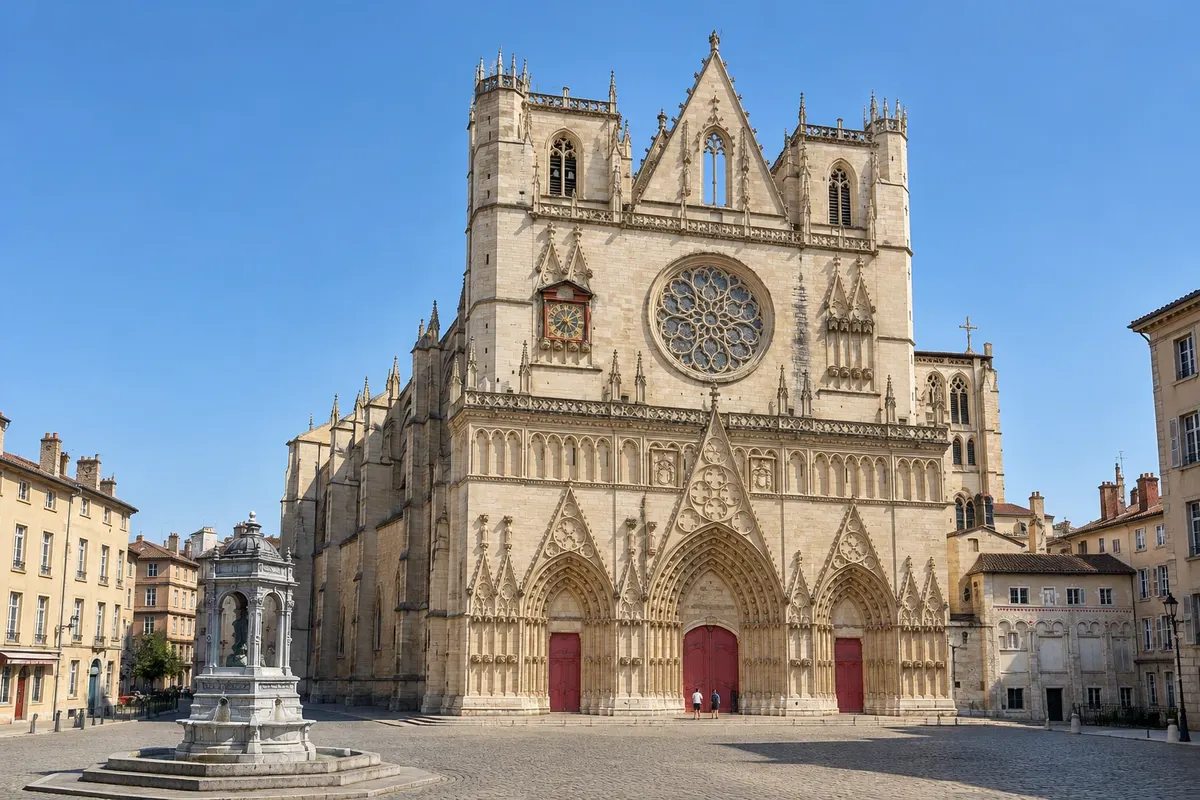
Primate of the Gauls, Lyon's cathedral blends Romanesque and Gothic styles and houses a medieval astronomical clock.
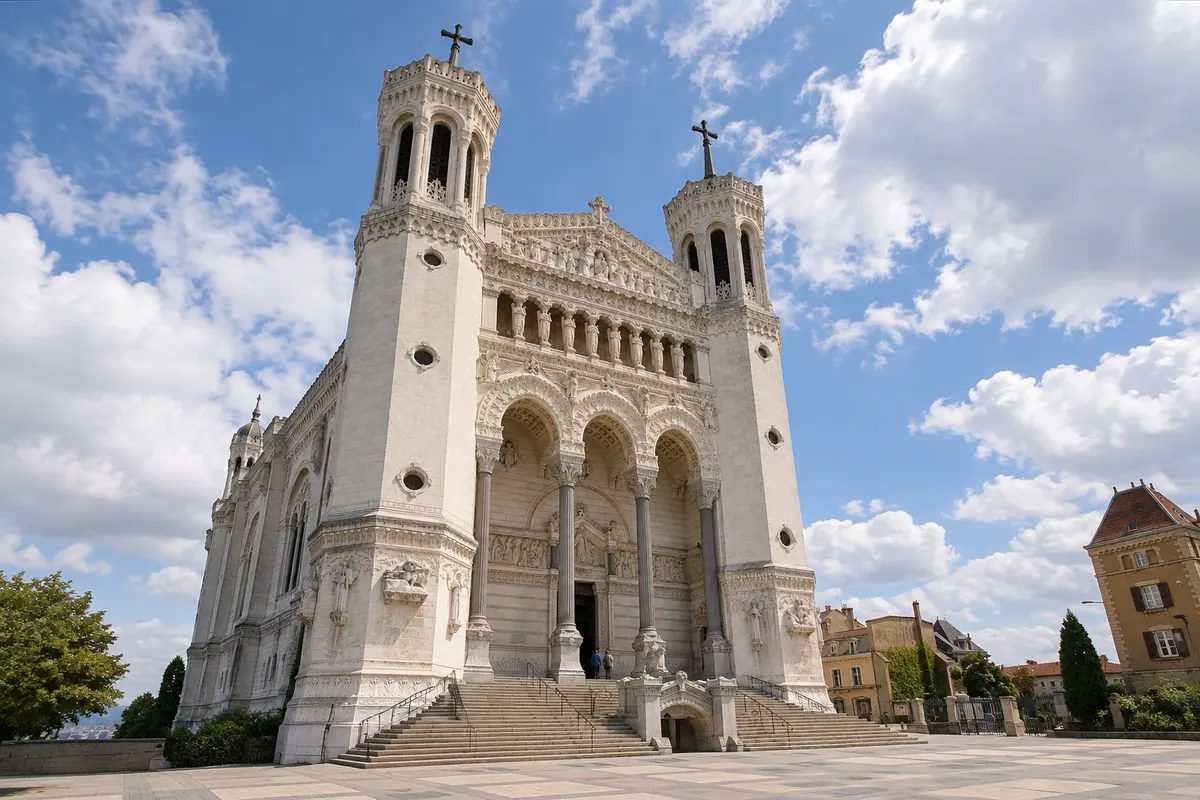
19th-century basilica atop the hill of Fourvière, with an interior covered in mosaics and a viewpoint overlooking the whole city.
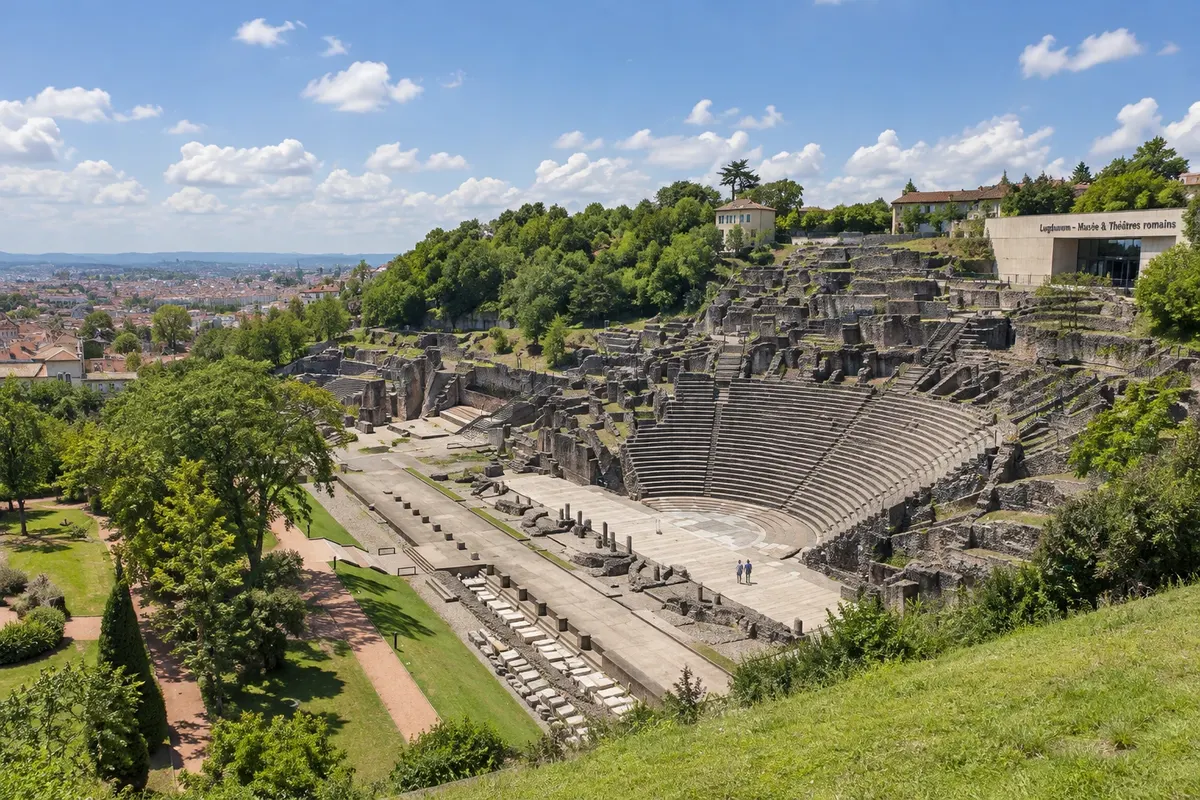
The open-air theaters of ancient Lugdunum and, alongside them, a museum carved into the hill with mosaics and the Tábua de Cláudio.
The "hill that works", neighborhood of the former silk weavers, with slopes, traboules, a street market and the large Mur des Canuts.
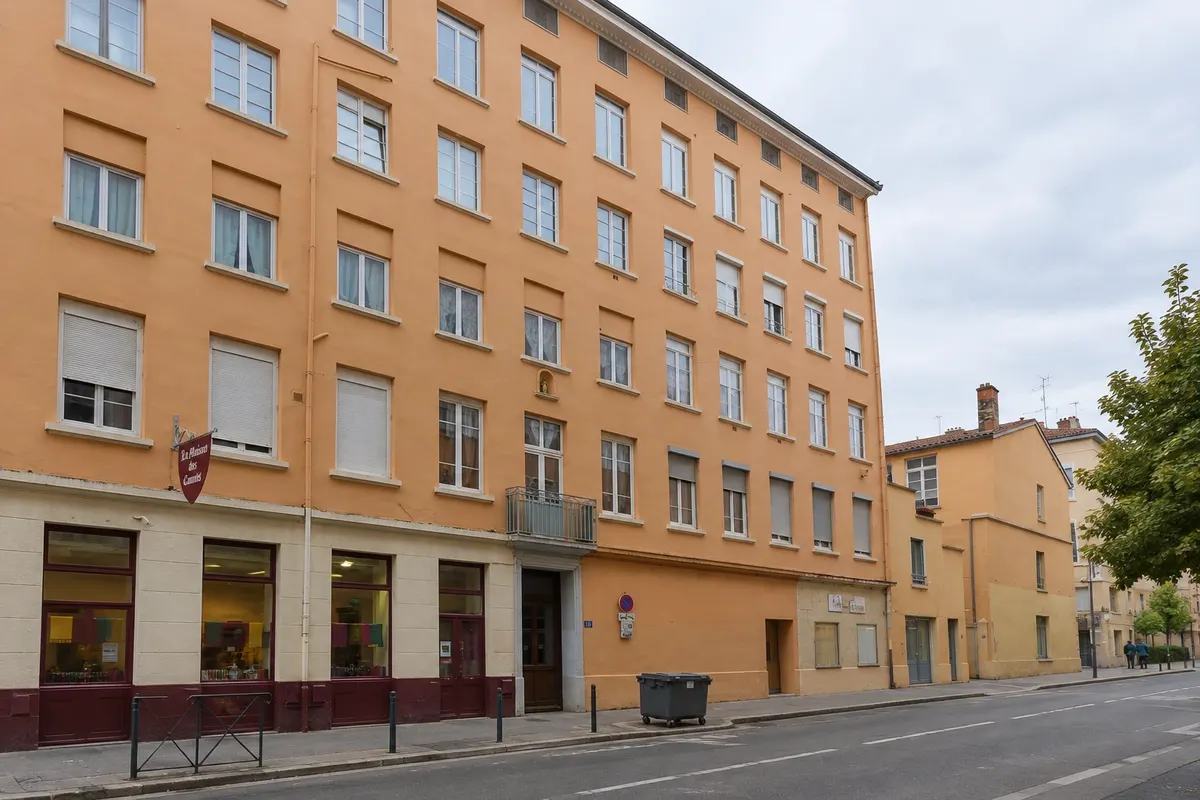
Small Lyonnaise silk museum in the Croix-Rousse, with a weaving demonstration on a Jacquard loom.
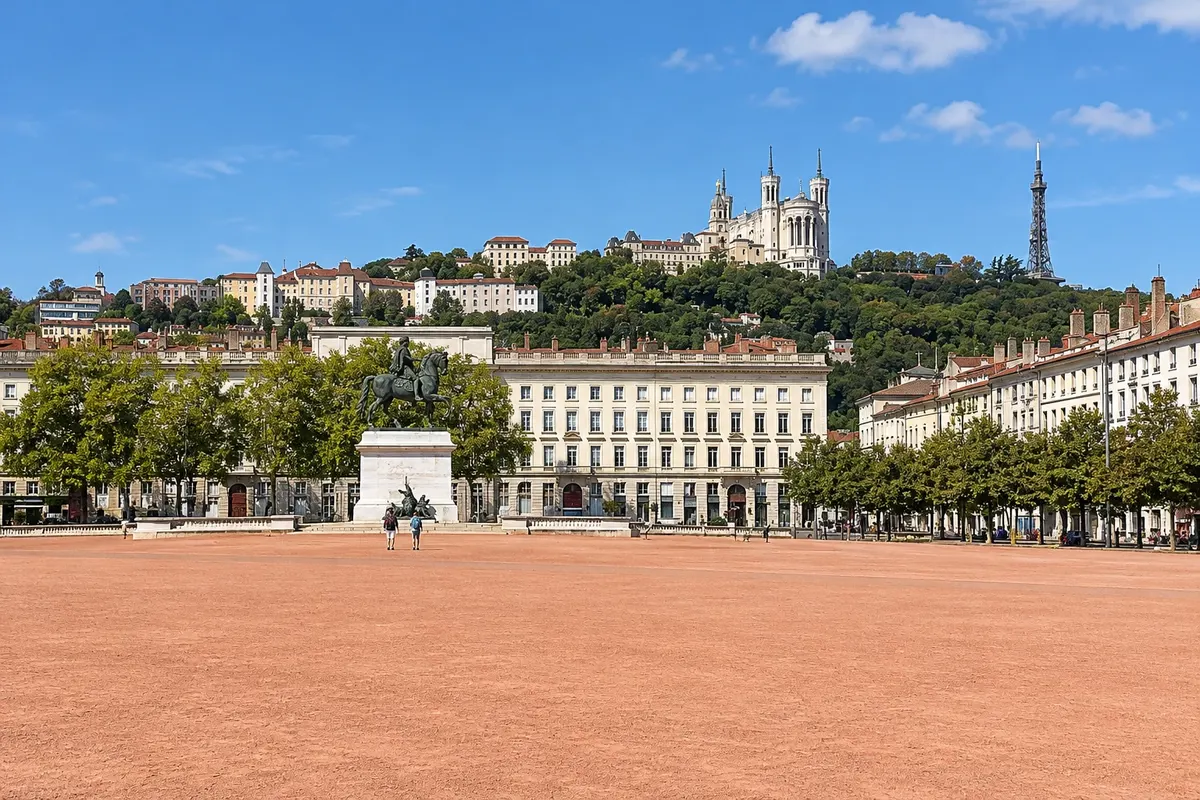
Large square of Lyon and the city's point zero, with an equestrian statue of Louis XIV and views towards Fourvière.
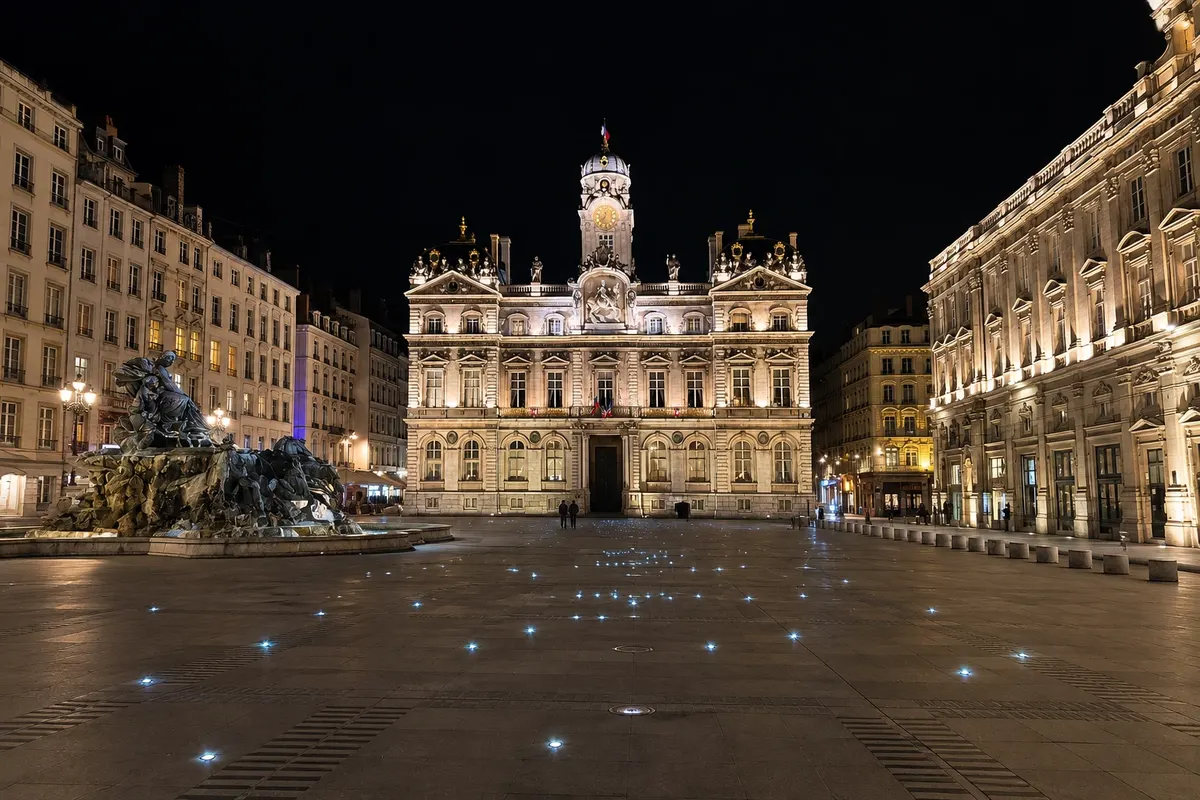
Square in the north of the Presqu'île with the 17th-century Hôtel de Ville, the Bartholdi fountain and the Musée des Beaux-Arts.
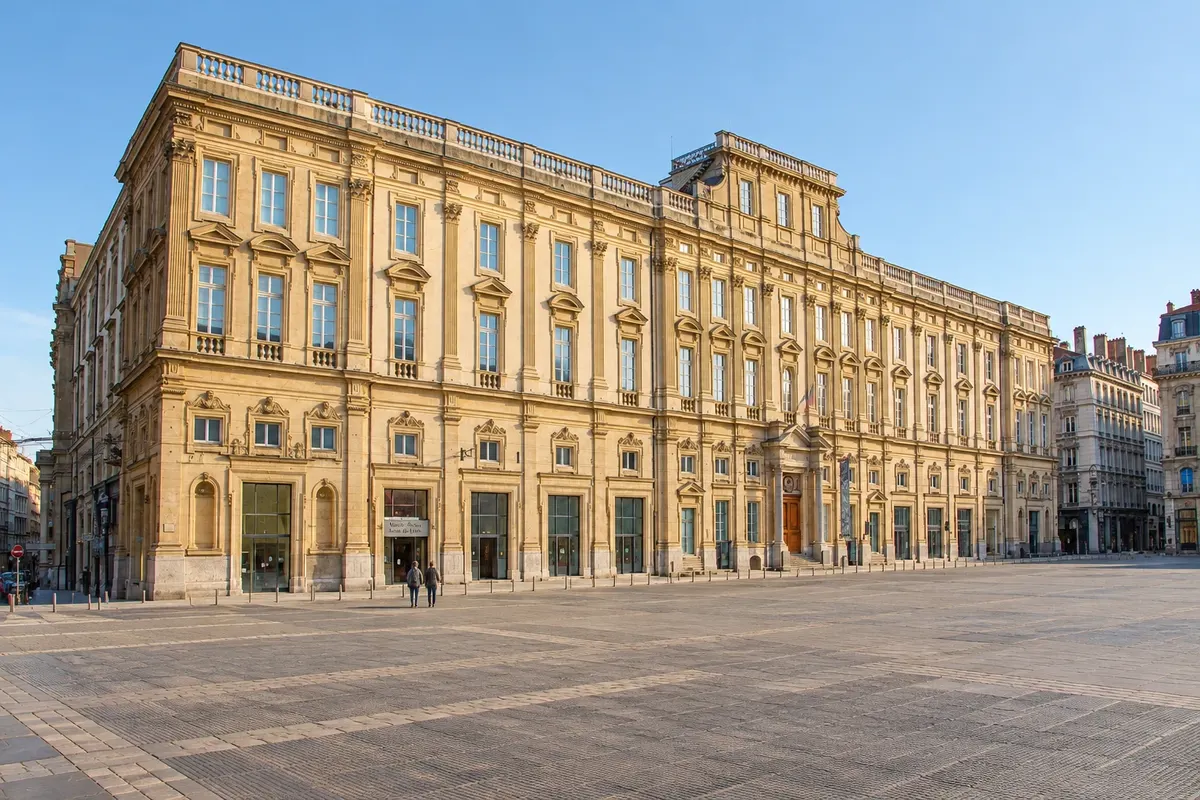
One of the largest art museums in France, in a former abbey on the Place des Terreaux, with works from Antiquity to modern art.
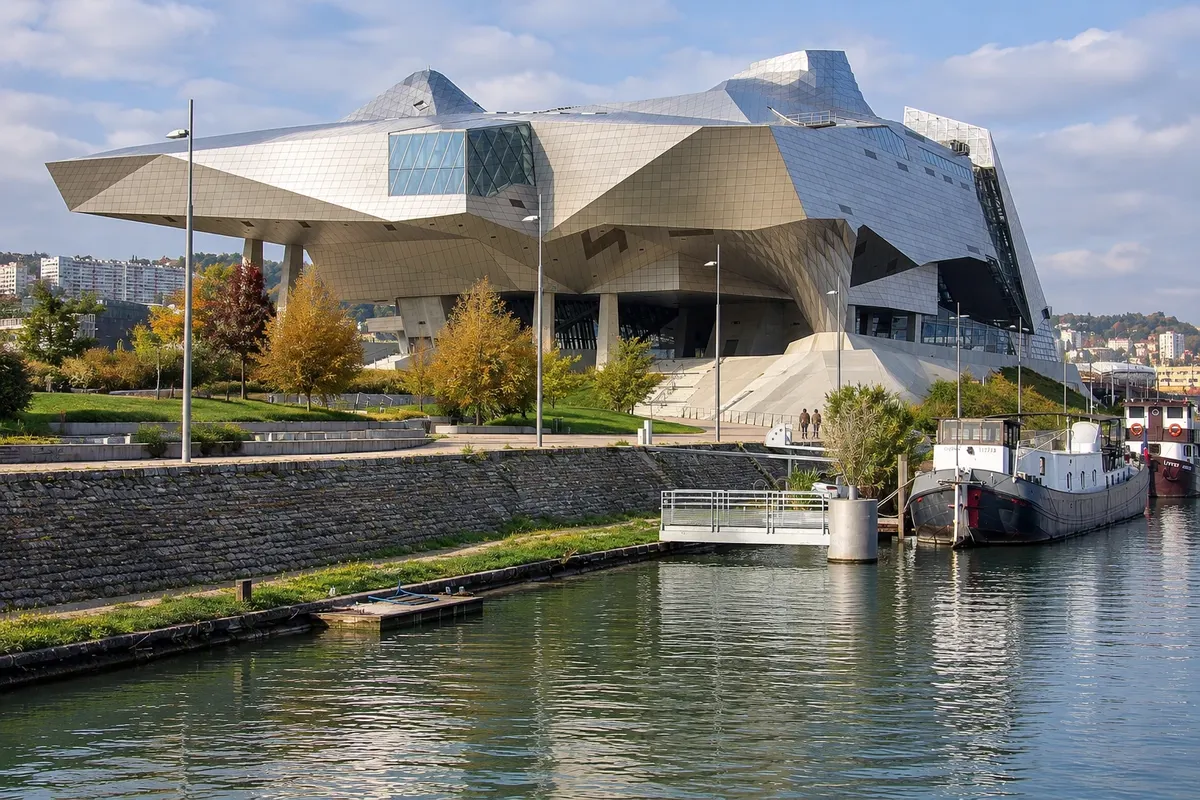
Museum of science and societies in a futuristic glass-and-steel building at the tip where the Ródano and the Saona meet.
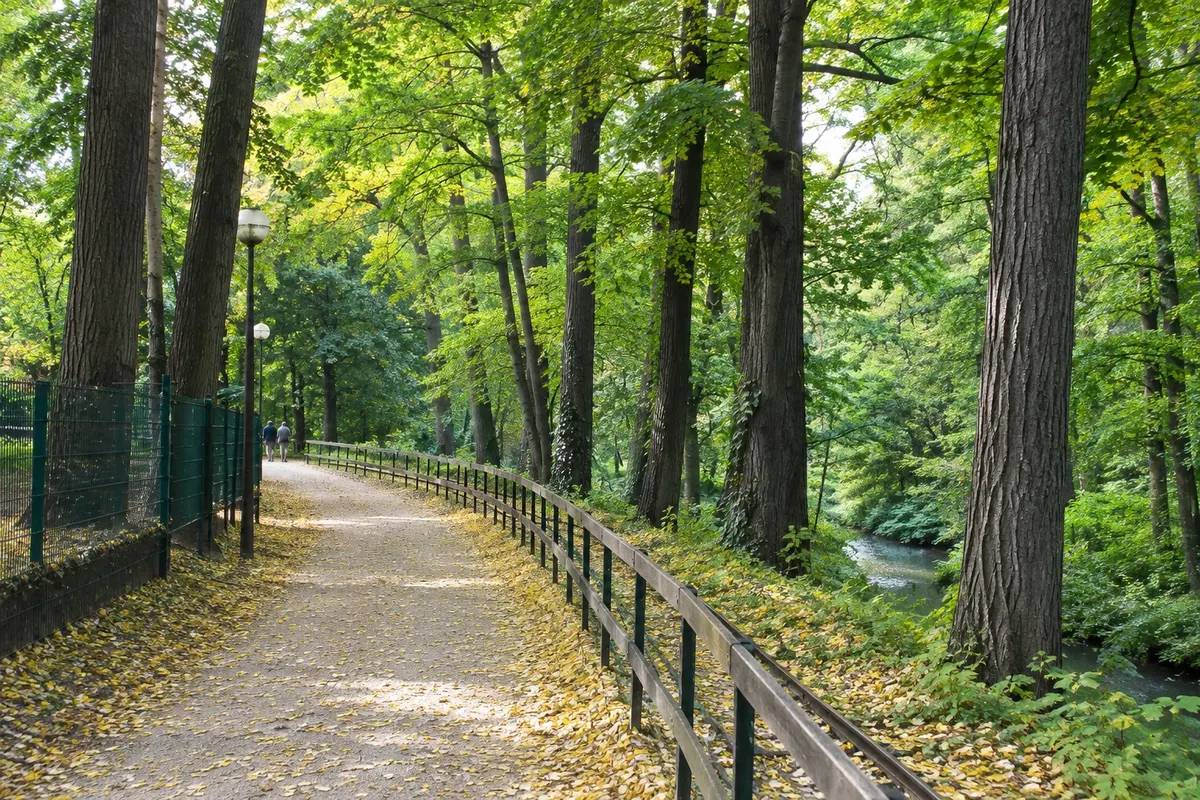
Urban park of 117 hectares with a lake, greenhouses, rose garden, botanical garden and a zoo with free admission.
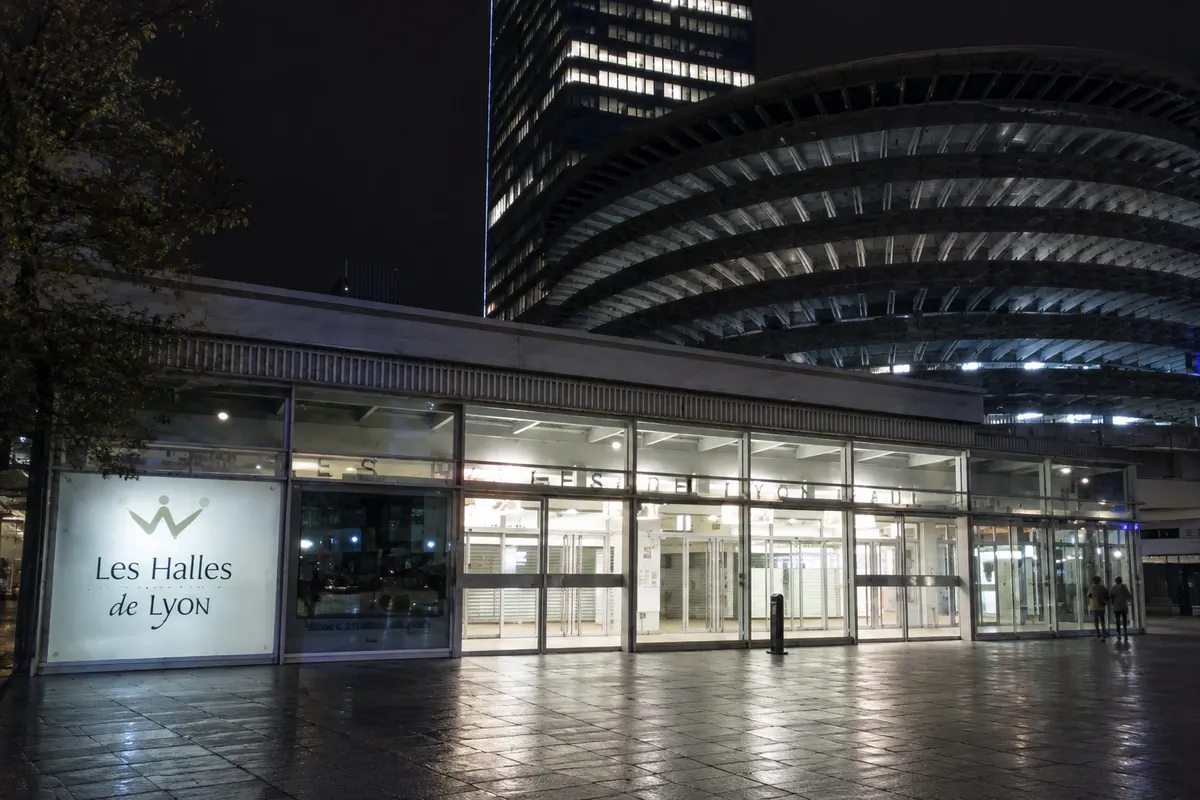
Covered market with about 60 stalls selling cheeses, charcuterie, sweets and restaurant counters, named in honor of Paul Bocuse.
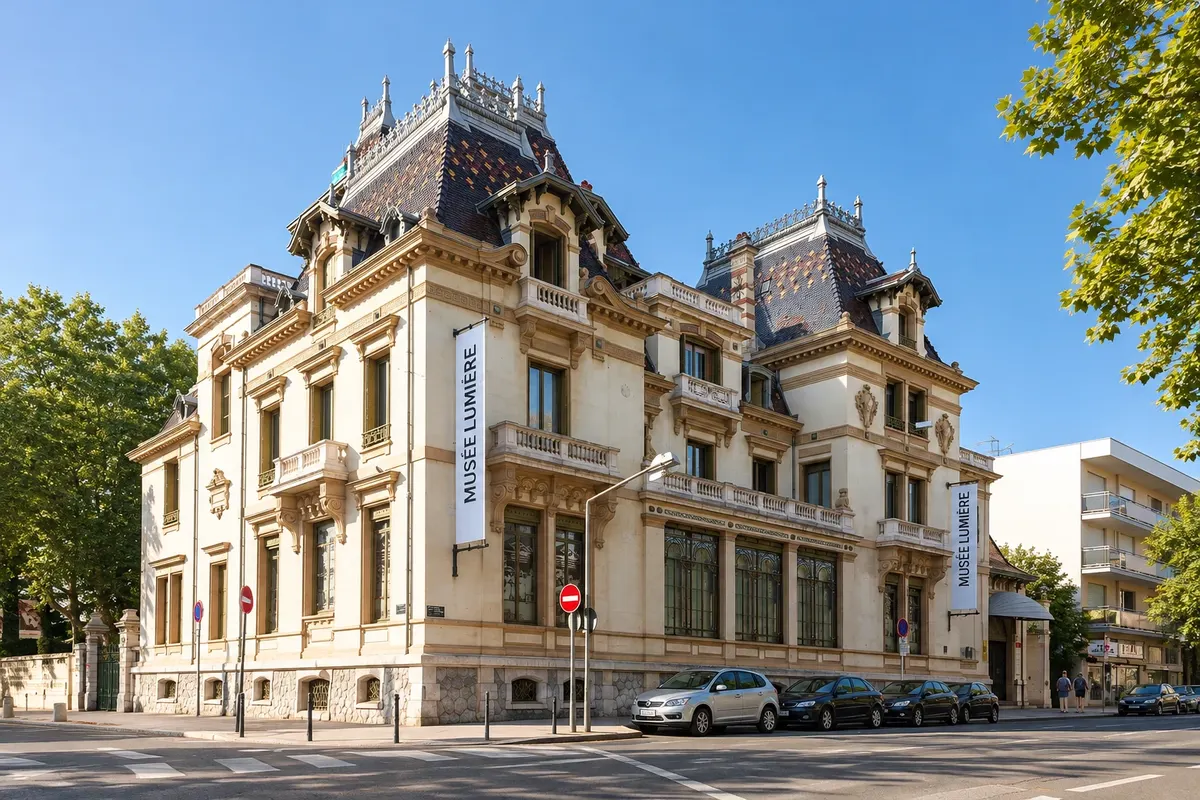
Museum in the Lumière family house, next to the place where the brothers filmed the first movie in the history of cinema, in 1895.
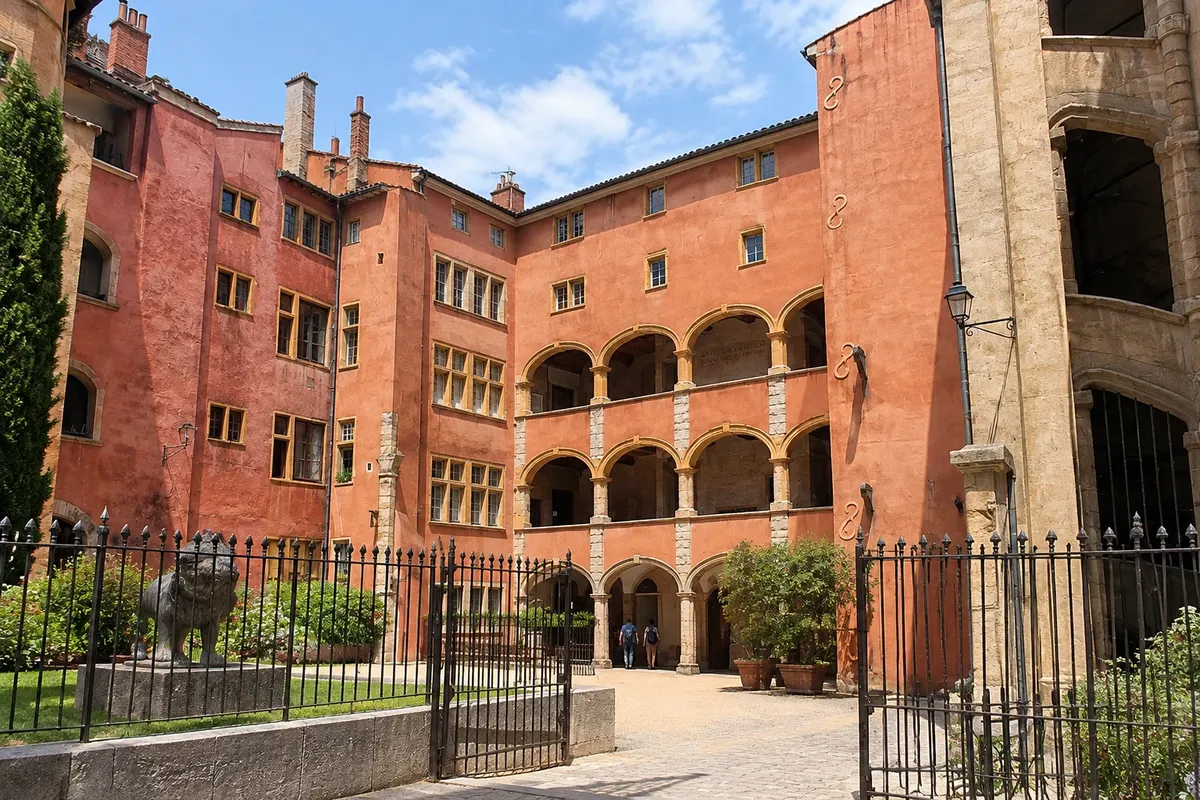
Private museum in Vieux Lyon with miniature sets and original special effects props and objects from well-known films.
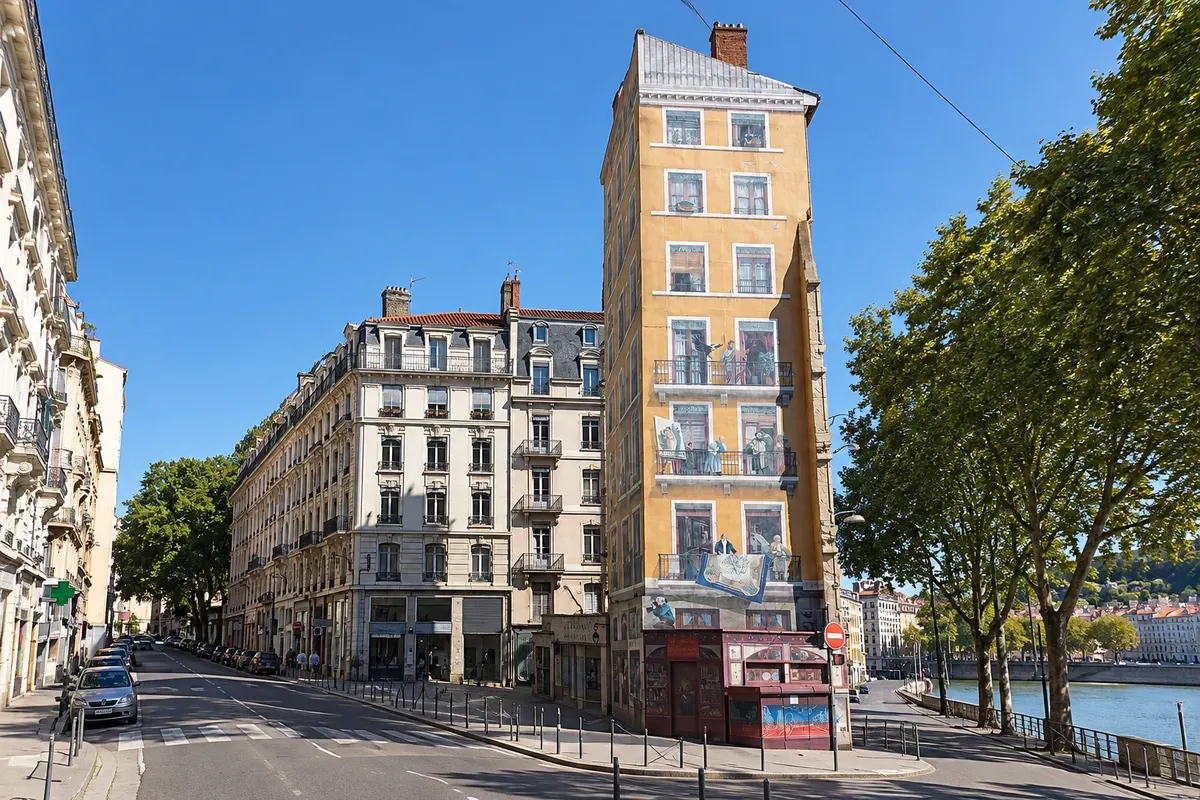
An 800 m² trompe-l'œil mural featuring famous Lyon figures in the windows of a building on the banks of the Saona.
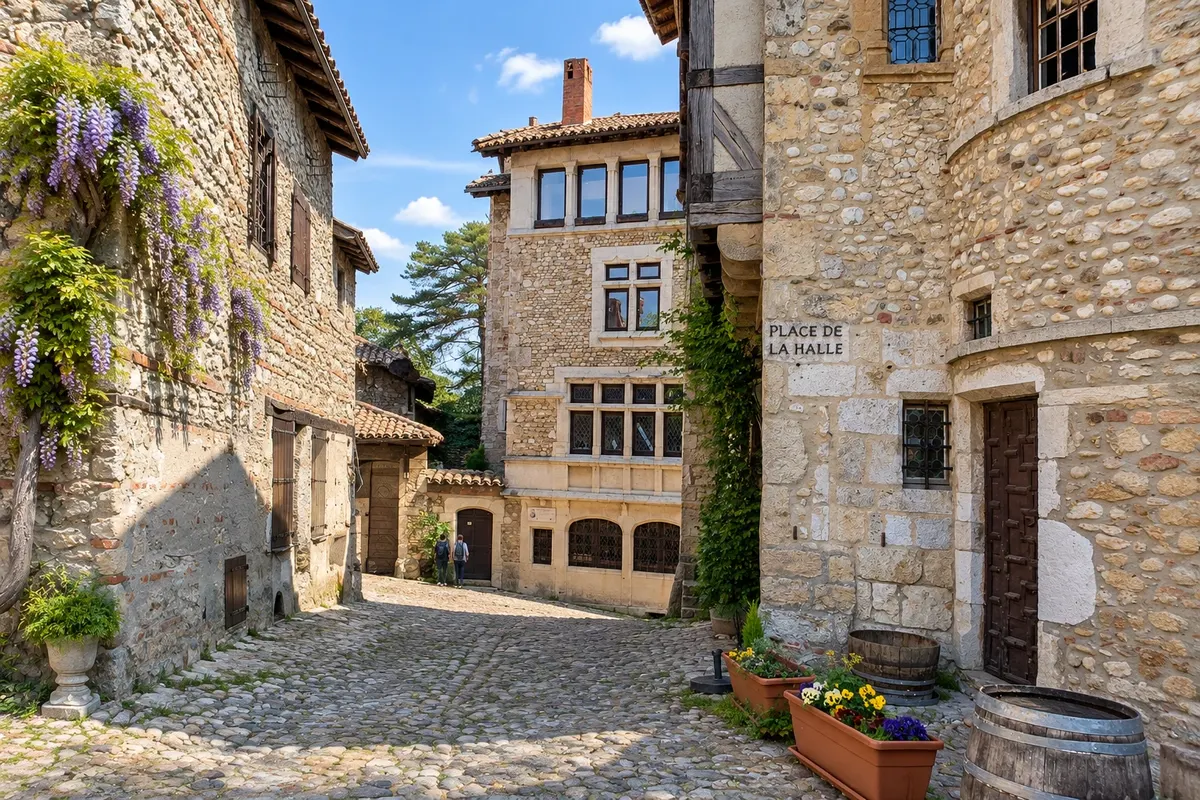
A walled medieval village on top of a hill, about 35 km from Lyon, with stone streets, weavers' houses and the lime-tree square.
Kaj izbrati pred odhodom
Izhodišče, trajanje, potek, vključene storitve in okvirna cena vsakega izleta.
Vieux Lyon is the Renaissance district on the banks of the Saône, at the foot of Fourvière hill, and is part of the historic site of Lyon inscribed by UNESCO in 1998. It is divided into three parts: Saint-Georges to the south, Saint-Jean in the middle and Saint-Paul to the north. The walk begins at the Cathédrale Saint-Jean-Baptiste, the Primatiale, built between the late 12th century and the late 15th century, with a Romanesque choir, a Gothic nave and a 14th-century astronomical clock. From there you follow Rue Saint-Jean, Rue du Bœuf and Rue Juiverie, with façades from the 15th and 16th centuries. What sets the district apart are the traboules: passages that go through buildings and connect one street to another via courtyards, corridors and staircases. The name comes from Latin and means "to pass through." Lyon has about 500 traboules, roughly 200 of them in Vieux Lyon, and only some are open to the public, during the day. The Longue Traboule links number 54 Rue Saint-Jean to 27 Rue du Bœuf, crossing four courtyards and four buildings. Other passages include: from 27 Rue Saint-Jean to 6 Rue des Trois-Maries, the courtyard of the Maison du Chamarier (37 Rue Saint-Jean) and the Philibert de l'Orme gallery (8 Rue Juiverie). On open doors, a plaque indicates the passage.
Kraji na poti: Vieux Lyon, Cathédrale Saint-Jean-Baptiste, Rue Saint-Jean, Longue Traboule, Rue du Bœuf, Saint-Paul, Saint-Georges.
Vključuje: Entry to the traboules and the cathedral is free. The Office de Tourisme sells guided visits of Vieux Lyon and the traboules, paid separately; check the current rates.
Nasvet: The traboules are residential areas: be quiet and do not climb private staircases. A traboule may be closed for works; move on to the next one. Combine this with Fourvière: the funicular leaves from Vieux Lyon station.
Najboljši čas za obisk: All year. The traboules open to the public are accessible during the day.
Fourvière is the hill west of the Saône, above Vieux Lyon. Locals call it "the hill that prays," as opposed to Croix-Rousse, "the hill that works." At the top stands the Basilique Notre-Dame de Fourvière, begun in 1872 to a design by Lyonnais architect Pierre Bossan and consecrated in 1896; the interior decoration was only finished after the Second World War. The style mixes Byzantine, Romanesque and Gothic influences. Inside, the upper church is covered in mosaics that tell the story of the Virgin Mary through the history of France and the Church; below is the more sober crypt of Saint-Joseph. Beside the basilica the esplanade is the city viewpoint: from there you can see the Cathédrale Saint-Jean, the Grand Hôtel-Dieu, the Hôtel de Ville and the towers of La Part-Dieu, with the Rhône and the Saône. There is a guided visit to the basilica roofs, by day or at night, passing through the timberwork and spiral staircases. To go up, funicular F2 departs from Vieux Lyon station; on foot, the Montée du Gourguillon climbs from Vieux Lyon.
Kraji na poti: Basilique Notre-Dame de Fourvière, Esplanade de Fourvière, Fourvière, Montée du Gourguillon.
Vključuje: Entry to the basilica is free. The visit to the roofs is guided and charged separately, with advance booking; check the current fee.
Nasvet: Take the funicular up and walk down through the gardens and stairways to Vieux Lyon. Combine this visit with the Roman theatres, a few minutes’ walk from the basilica.
Najboljši čas za obisk: All year. Views are usually clearer on dry autumn and winter days.
Lyon began as Lugdunum, a Roman colony founded on the Fourvière hill. At the site are two ancient open-air theatres and a museum built into the slope. The Grand théâtre was constructed in the time of Augustus, around 15 BC, and is considered the oldest Roman theatre in France; it seated about 4,700 people and was enlarged in the 2nd century to roughly 10,700 seats. Beside it is the Odéon, smaller, from the mid-2nd century, used for music and readings. You can walk through the stands and the stage area. The museum, Lugdunum – Musée & Théâtres romains, houses mosaics, sculptures, pottery, jewelry and coins from the Roman period. Three items stand out: the Table claudienne, a bronze plaque with a speech by Emperor Claudius, who was born in Lugdunum; the mosaic of the circus games, showing a chariot race; and the Coligny calendar, a Gallic calendar engraved in bronze. From the museum windows you can see the theatres from above. In summer the theatres host the Les Nuits de Fourvière festival, with evening performances.
Kraji na poti: Lugdunum – Musée & Théâtres romains, Grand théâtre, Odéon, Fourvière.
Vključuje: Access to the Roman theatres is free. The museum has an admission fee and is closed on Mondays; check the current schedule.
Nasvet: Do the museum first and then descend to the theatres with the map of the Roman city in mind. On summer festival performance days, some of the theatres are occupied by staging.
Najboljši čas za obisk: All year. In summer, generally from June to July, the Les Nuits de Fourvière festival takes place.
La Croix-Rousse is the hill north of the Presqu'île. In the 19th century it became Lyon's silk center: the canuts, silk weavers, lived and worked in buildings with ceilings up to 4 m high, built to fit Jacquard looms. It was also the scene of the canut revolts, among the first major workers' uprisings in France. The walk starts below, at Place des Terreaux, and climbs the slopes, areas listed by UNESCO. The Montée de la Grande-Côte links Place des Terreaux to the plateau. Along the way there are about 160 traboules; the best-known crosses the Cour des Voraces, with the large external staircase typical of the canuts' buildings. At the top, on the corner of Boulevard des Canuts and Rue Denfert-Rochereau, is the Mur des Canuts, a trompe-l'œil painting of about 1,200 m² made in 1987 and updated in 1997 and 2013, which depicts neighborhood life; the characters age with each version. Nearby, the Maison des Canuts (Rue d'Ivry) offers guided visits of about 50 minutes with a weaving demonstration on a 19th-century handloom. Finish at the Gros Caillou, a viewpoint on the eastern tip of the plateau overlooking the Rhône.
Kraji na poti: Croix-Rousse, Pentes de la Croix-Rousse, Montée de la Grande-Côte, Cour des Voraces, Mur des Canuts, Maison des Canuts, Gros Caillou.
Vključuje: The streets, the traboules and the Mur des Canuts are free to visit. The Maison des Canuts charges admission, is open Tuesday to Saturday and offers tours in French and English; check the current schedule/table.
Nasvet: To save the climb, take metro line C to Hénon, see the Mur des Canuts and the Maison des Canuts, and walk down the slopes to the Terreaux. In the traboules, keep quiet: they are residential buildings.
Najboljši čas za obisk: All year. On hot summer days, do the climb in the morning.
The Presqu'île is the center of Lyon, the strip of land between the Rhône and the Saône, from the Place des Terreaux in the north to the Confluence in the south. The walk starts at Place Bellecour, a pedestrian square about 312 m by 200 m, with the equestrian statue of Louis XIV in the center and, at the west end, the statue of Antoine de Saint-Exupéry with the Little Prince; the Office de Tourisme is in one of the pavilions. From there, head north along Rue de la République, a pedestrian street opened in the 1850s, with 19th-century façades and shops. At the end of the street are the Opéra and the Hôtel de Ville. Place des Terreaux brings together the Hôtel de Ville, the Bartholdi fountain, author of the Statue of Liberty, and the Musée des Beaux-Arts de Lyon. To finish, walk to Quai Saint-Vincent on the Saône’s bank to see the Fresque des Lyonnais: a mural of about 800 m², from 1994–1995, featuring 31 famous Lyonnais in the windows of a building, including the emperor Claude, Louise Labé, Jacquard, Saint-Exupéry, Guignol and Paul Bocuse. On the Rhône side is the Grand Hôtel-Dieu, a former hospital turned into an area of shops and restaurants.
Kraji na poti: Presqu'île, Place Bellecour, Rue de la République, Place des Terreaux, Hôtel de Ville, Fontaine Bartholdi, Fresque des Lyonnais.
Vključuje: Walk through the streets and squares; entry is free. The Musée des Beaux-Arts has a separate admission.
Nasvet: Start at Bellecour, where the Office de Tourisme and the metro station for lines A and D are located. At the Fresque des Lyonnais, look for the names on the plaques under each window.
Najboljši čas za obisk: Year-round. In December, the Presqu'île is the center of the Fête des Lumières.
The Musée des Beaux-Arts de Lyon occupies a former 17th-century abbey on the Place des Terreaux, the Palais Saint-Pierre. The cloister was turned into a sculpture garden open to the public. The collections occupy about 70 rooms and 7,000 m², divided into five departments, and span from Antiquity to the present day: Egyptian and Near Eastern antiquities, decorative arts, coins, sculpture and European painting from the 14th to the 20th century. It is an encyclopedic museum that requires a long visit: choose in advance the departments that interest you most. In addition to the permanent collection, the museum hosts temporary exhibitions. Some modern collections may be off display during exhibition installations; check what is open before you go.
Kraji na poti: Musée des Beaux-Arts de Lyon, Place des Terreaux, Palais Saint-Pierre.
Vključuje: There is admission for the collections; temporary exhibitions may have separate tickets. The cloister garden has free access. The museum is closed on Tuesdays and public holidays. Check the current schedule.
Nasvet: The cloister garden provides a restful stop during a walk through the Presqu'île. On rainy days, swap a walk for a visit to the museum.
Najboljši čas za obisk: All year; a good option for rainy and cold days.
The Musée des Confluences sits on the southern tip of the Presqu'île, where the Saône meets the Rhône. The building, by the Coop Himmelb(l)au firm, opened in December 2014: a glass “crystal” at the entrance and a metallic “cloud” that houses the galleries. It is a museum of sciences and societies, with a collection of about 2 million objects from the former Muséum de Lyon; roughly 3,000 are on display. The permanent exhibition has four parts: Origins (the world’s stories), Species, Societies, and Eternities (views of the beyond). Among the items are two dinosaur skeletons, meteorites, ammonites, Senufo sculptures, and samurai armor. In the garden, the tip of the site offers a view of the meeting of the two rivers. After the museum, walk north through the Confluence district, a former industrial and port area transformed into a new neighborhood: the Quai Rambaud along the Saône with contemporary architecture, La Sucrière, an old warehouse hosting exhibitions and festivals, and the Place nautique, a dock with a marina and promenade.
Kraji na poti: Musée des Confluences, Confluence, Quai Rambaud, Place nautique, La Sucrière.
Vključuje: The museum requires an admission ticket; check the current price and the closing day. The walk through the neighborhood is free.
Nasvet: Allow at least 3 hours for the museum: the permanent route covers about 3,000 m². In season, a boat-bus connects the Confluence with Vieux Lyon and Bellecour along the Saône.
Najboljši čas za obisk: All year; the museum is a good option on rainy days. The neighborhood walk is more rewarding from spring through fall.
Parc de la Tête d'Or is Lyon’s large urban park, covering about 117 hectares, opened in 1857 in the north of the 6th arrondissement, on the left bank of the Rhône. In the center is the lake, about 16 hectares, with rowboats in summer. The zoo occupies roughly 6 hectares in the park’s central area and houses a few hundred animals. Lyon’s botanical garden spreads across about 7 hectares and has large 19th-century glass greenhouses, built and rebuilt between 1865 and 1899. There are also four rose gardens, tree-lined promenades for walking and running, and picnic areas. It’s the Lyonnais’ weekend outing and a breather between one museum and another.
Kraji na poti: Parc de la Tête d'Or, Lac de la Tête d'Or, Jardin botanique de Lyon, Large greenhouses, Zoo of Lyon, Rose garden.
Vključuje: Entrance to the park and the zoo is free. Boats on the lake and other activities are paid separately.
Nasvet: Arrive on metro A to Masséna and exit on the Rhône side, following the bank to the Presqu'île. Bring a snack: Lyon residents picnic on the grass on warm days.
Najboljši čas za obisk: From spring to autumn, April to October; the roses typically bloom from May to June.
Les Halles de Lyon Paul Bocuse is Lyon’s covered market on Cours Lafayette, near Part-Dieu station. It is named after chef Paul Bocuse and brings together about 60 vendors: cheesemongers such as Mère Richard and Cellerier, the charcuterie Sibilia, smoked salmon from Maison Rolle, bakeries, patisseries and seafood stalls. It’s where Lyon’s residents buy the ingredients of the local cuisine, from quenelles to cold cuts and the tarte aux pralines, the pink praline tart. Several counters serve food to eat on the spot, standing or at small tables: a quenelle, a plate of cold cuts or a seafood platter. The city’s food tours and cooking classes often include a stop here.
Kraji na poti: Les Halles de Lyon Paul Bocuse, Cours Lafayette, Part-Dieu.
Vključuje: Entrance to the market is free. Products and meals at the counters are paid for separately.
Nasvet: Go in the late morning, when the stalls start serving lunch, and buy your snack for the train there. On Sunday mornings the market tends to get crowded.
Najboljši čas za obisk: All year; at the end of the year activity increases with holiday shopping.
Lyon is known as France’s culinary capital, and eating is part of the trip. The symbol of the local cuisine is the bouchon: a small restaurant with a simple atmosphere and Lyonnaise home-style cooking. The name comes from the bundle of branches ("bousche") that innkeepers hung on the door to show that food and drink were served there. Bouchons used to serve the canuts and the city’s workers, with hearty dishes: for starters, salade lyonnaise and cervelle de canut (white cheese whipped with herbs); for main course, pike quenelle with Nantua sauce and tablier de sapeur (breaded tripe); for dessert, tarte aux pralines. There is a seal, "Les Bouchons Lyonnais", for places that follow the tradition in atmosphere, service and recipes. Walking food tours go through Vieux Lyon, Les Halles or Croix-Rousse, with stops to taste cheeses, cold cuts, sweets and Lyonnaise dishes and to hear the story of each product. Half-day cooking classes usually begin with shopping at the market and end with the meal prepared by the group; some schools offer classes in English.
Kraji na poti: Vieux Lyon, Les Halles de Lyon Paul Bocuse, Croix-Rousse, Presqu'île.
Vključuje: On tours and in classes, typically included: a guide or chef, the tastings or the meal, and the ingredients. Drinks may or may not be included. Prices vary by company; check the current schedule.
Nasvet: Reserve the bouchon in advance, especially on weekends: many are open only Tuesday through Saturday, for lunch and dinner. Look for the Les Bouchons Lyonnais seal on the door.
Najboljši čas za obisk: All year. In winter, bouchon dishes suit the cold weather.
Brothers Auguste and Louis Lumière invented the cinematograph in Lyon, in the Monplaisir neighborhood, where the family ran a photographic plate factory. The Institut Lumière is located there, on Rue du Premier-Film. The Musée Lumière occupies the Villa Lumière, the family’s Art Nouveau house built between 1899 and 1902 by their father, Antoine Lumière. There are 21 rooms that tell the story of cinema’s invention, with optical devices, projectionists’ objects, and cinematograph No. 1, which made the first public projection of moving images at the Grand Café in Paris in 1895. Behind the house is the Hangar du Premier Film, the warehouse that remained from the old factory: it was in front of this hangar that the brothers filmed “La sortie de l'usine Lumière” in 1895. Today the hangar is a cinema screening classic and new films. In October, the Institut Lumière organizes the Lumière Festival with film programs in dozens of venues across Lyon and the surrounding area.
Kraji na poti: Institut Lumière, Musée Lumière, Villa Lumière, Hangar du Premier Film, Rue du Premier-Film.
Vključuje: The museum requires an admission ticket and is closed on Mondays. Hangar screenings are paid separately. Check the current prices.
Nasvet: Check the hangar’s film listings and fit a screening in after the museum. Metro D connects Monplaisir-Lumière with Bellecour and Vieux Lyon in a few minutes.
Najboljši čas za obisk: All year. In October, the Lumière Festival livens up the neighborhood.
The Musée Miniature et Cinéma is on Rue Saint-Jean in Vieux Lyon, inside the Maison des Avocats, a 16th-century Renaissance building. The museum was created by French miniaturist Dan Ohlmann and has two sections. The miniatures section brings together about 50 scenes at 1/12 scale that recreate real environments such as shops, restaurants, and studios, with detailed furniture, dishes, and objects. The cinema section displays costumes, props, sets, and models from well-known films and explains production stages, from special effects to set design. The visit is self-guided, floor by floor, and appeals to both adults and children. It fits well into a Vieux Lyon walk or a rainy-day plan.
Kraji na poti: Musée Miniature et Cinéma, Maison des Avocats, Rue Saint-Jean, Vieux Lyon.
Vključuje: There is an admission fee; check the current pricing and opening days.
Nasvet: Do the museum in the middle of the stroll through Vieux Lyon, between the cathedral and the traboules on Rue Saint-Jean. Those traveling with children can start with the cinema section.
Najboljši čas za obisk: Vse leto, tudi v dežju.
Lyon lies between two rivers, the Saône to the west and the Rhône to the east, which meet at the Confluence. Sightseeing boats depart from Quai des Célestins, on the left bank of the Saône, next to the Palais de Justice footbridge, facing Vieux Lyon. The classic cruise lasts about 1 hour, with commentary, and goes down the Saône along Vieux Lyon and the Presqu'île to the Confluence, where you can see the Musée des Confluences from the river. Another option goes up the Saône to Île Barbe, an island north of the city, passing tree-lined banks. There are also departures focused on riverside wildlife, guided by naturalists. Riverboat restaurants leave from the Rhône quay and the Saône quay, with lunch or dinner on board, on routes of about 2.5 hours.
Kraji na poti: Saône, Rhône, Quai des Célestins, Vieux Lyon, Confluence, Île Barbe.
Vključuje: Commented boat cruise. Riverboat restaurants include the meal; drinks may be charged separately. Check the current schedule.
Nasvet: The late-afternoon cruise shows the city in a different light. Combine it with Vieux Lyon: the departure quay is a short walk from the footbridge.
Najboljši čas za obisk: From spring to autumn, generally April to October; in winter there are fewer departures. Check daily schedules.
The Fête des Lumières is Lyon’s major festival and takes place around December 8, usually over four nights. Its origin goes back to 1852: the inauguration of a gilded statue of the Virgin Mary in the chapel of Fourvière was postponed to December 8, and that night the people of Lyon lit candles, called lumignons, in their windows. The tradition remains: on the 8th many residents still place candles on their windowsills. Since the late 1990s the festival has added light installations and projections on facades and monuments, created by invited artists, spread across the Presqu'île, Vieux Lyon and Fourvière. Typical illuminated sites include Place des Terreaux, Cathédrale Saint-Jean, the Basilica of Fourvière and Place Bellecour. The program changes each year, with more than 20 works. The city attracts large crowds on these nights: central streets are closed to cars and some routes are one-way in parts.
Kraji na poti: Place des Terreaux, Place Bellecour, Cathédrale Saint-Jean-Baptiste, Basilique Notre-Dame de Fourvière, Vieux Lyon.
Vključuje: The festival takes place outdoors and there is no admission fee.
Nasvet: Check the dates and the map for the year on the official website before booking your trip: dates change depending on the day of the week. Use the metro and walk; book restaurants in advance and arrive early at the busiest sites.
Najboljši čas za obisk: Early December, around December 8; exact dates are announced each year.
Pérouges is a medieval village on top of a hill northeast of Lyon, in the Ain department, listed among Les Plus Beaux Villages de France since 1988. It was a village of weavers, once surrounded by a double wall, and it preserves irregular stone streets and houses of stone and half-timber. The center is the Place du Tilleul, with a linden tree planted soon after the French Revolution as a Liberty tree, surrounded by old houses. You can walk around the village in one to two hours, entering through the gates of the old enclosure and following the street that runs around the top of the hill. The village’s sweet is the galette de Pérouges, a thin pastry with butter, sugar and lemon zest, sold in the square’s houses. The village has been used as a setting for period films, such as "The Three Musketeers." By train, the TER from Lyon-Part-Dieu stops at Meximieux-Pérouges station, about 2 km from the village; the rest is on foot, uphill.
Kraji na poti: Pérouges, Place du Tilleul, Meximieux, Ain.
Vključuje: Visiting the village has no entrance fee. Train and meals are paid separately.
Nasvet: Try the warm galette in the square. Go early or late afternoon to find the village quieter; in summer and on weekends, activity increases around midday.
Najboljši čas za obisk: From spring to autumn, April to October; in winter the village is quieter and some shops close.
Beaujolais is the wine region north of Lyon, a roughly 55 km strip along the Saône valley, of hills covered in vines and stone villages. The tour is by car, because the villages are spread out and public transport is sparse. To the south lies the Pays des Pierres Dorées, with villages built from an ochre-colored limestone; the best known is Oingt, a restored medieval village at about 520 m elevation above the Azergues valley, listed among Les Plus Beaux Villages de France. Further north, after Villefranche-sur-Saône, are the ten crus of Beaujolais, each with its village: Saint-Amour, Juliénas, Chénas, Moulin-à-Vent, Fleurie, Chiroubles, Morgon, Régnié, Brouilly and Côte de Brouilly. Visits to estates show the vineyards, the gamay grape and winemaking in the cellars, with tasting. Beaujolais nouveau, the young wine of the harvest, is released on the third Thursday of November.
Kraji na poti: Beaujolais, Villefranche-sur-Saône, Oingt, Pays des Pierres Dorées, Fleurie, Morgon, Juliénas, Brouilly.
Vključuje: On excursions, generally: transport, guide and a visit to one or two estates with tasting. Meals are usually paid separately. Check the current schedule/table.
Nasvet: If you’re driving, don’t drink: to taste wines, opt for the excursion with a driver. Book visits to the estates in advance; many are closed on Sundays.
Najboljši čas za obisk: From spring to autumn, April to October; the harvest usually takes place in September and October.
Po dnevih
Predlogi za načrtovanje poti. Vrstni red dni prilagodite vremenu in razpoložljivosti izletov.
For travelers arriving from Brazil: the overnight flight lands in the morning at Charles de Gaulle airport. From the airport station there is a direct TGV to Lyon-Part-Dieu, about a 2-hour journey; if the schedule doesn’t fit, go to Paris-Gare de Lyon and catch the TGV there. In Lyon, drop your bags and have lunch in a bouchon. In the afternoon, walk the Presqu'île from Place Bellecour to Place des Terreaux. At the end of the day, cross the Saône and stroll through Vieux Lyon. If you prefer to arrive well rested, spend the first night in Paris and continue to Lyon the next morning.
In the morning, take the funicular to Fourvière: the basilica, the esplanade and the Roman theatres of Lugdunum, with the museum. Walk down to Vieux Lyon and explore the traboules on Rue Saint-Jean and the Cathédrale Saint-Jean-Baptiste. In the afternoon, take metro line C to Hénon, see the Mur des Canuts and descend the slopes of the Croix-Rousse and the Cour des Voraces to the Terreaux. Return to Paris by TGV in the evening, or continue your journey.
Arrival in Paris in the morning and TGV to Lyon-Part-Dieu, direct from the airport station at Charles de Gaulle or from Paris-Gare de Lyon, about 2 hours. In the afternoon, walk the Presqu'île: Place Bellecour, Rue de la République, Place des Terreaux and the Fresque des Lyonnais on Quai Saint-Vincent. Dinner in a bouchon reserved in advance.
Morning in Vieux Lyon: Cathédrale Saint-Jean-Baptiste, Rue Saint-Jean, Longue Traboule and the Musée Miniature et Cinéma. Funicular F2 to Basilique Notre-Dame de Fourvière and the esplanade. In the afternoon, the Roman theatres and the Lugdunum museum. End the late afternoon with a boat cruise on the Saône departing from Quai des Célestins.
Start early at Les Halles de Lyon Paul Bocuse, or swap the morning for a food tour or a cooking class. Then, Croix-Rousse: Mur des Canuts, Maison des Canuts and descend the slopes and traboules down to the Terreaux. In the afternoon, tram T1 to the Musée des Confluences and a walk through the Confluence district to the Place nautique. If you prefer a park, swap Confluence for Parc de la Tête d'Or.
Overnight flight to Charles de Gaulle airport, arrival in the morning and TGV to Lyon-Part-Dieu, about 2 hours, direct from the airport or from Paris-Gare de Lyon. Another option is a connecting flight through a European city to Lyon-Saint-Exupéry and the Rhônexpress to Part-Dieu. In the afternoon, walk the Presqu'île from Place Bellecour to Place des Terreaux, and have dinner in a bouchon.
Morning in Vieux Lyon and the traboules, including Cathédrale Saint-Jean-Baptiste. Funicular to the basilica of Fourvière and the esplanade; then Lugdunum and the Roman theatres. In the afternoon, Musée Miniature et Cinéma, and a boat cruise on the Saône at the end of the day.
Morning in Croix-Rousse: Mur des Canuts, Maison des Canuts, Cour des Voraces and the descent down the slopes. Lunch at Les Halles de Lyon Paul Bocuse, or a food tour. In the afternoon, Parc de la Tête d'Or, with the botanical garden, the greenhouses and the lake.
In the morning, Musée des Confluences and the Confluence neighborhood. In the afternoon, choose between the Musée des Beaux-Arts de Lyon at Place des Terreaux and the Musée Lumière with the Hangar du Premier Film in Monplaisir, via metro line D. If time remains, catch a film screening in the hangar.
Pick a day trip. By train, Annecy in the Alps has direct TER services from Lyon-Part-Dieu, about 2 hours travel time: a full day in the old town, along the Thiou canals and by the lake; Annecy has its own page with city walks. Closer, Pérouges, a medieval village, is about half an hour by TER to Meximieux‑Pérouges. By car or organized tour, the Beaujolais region with its Pierres Dorées villages and crus. Last night in Lyon.
Najboljši čas za obisk
Spring (April to June) and early autumn (September and October) usually have mild temperatures for walking. The European summer, from June to August, is hot and features nighttime shows in the Roman theaters. In winter, from December to February, it's cold and the days are short, but that's when the Festa das Luzes takes place, around December 8.
The seasons shown are the most usual ones; nature doesn't always follow the calendar.
cold · short days
Winter. In Lyon, averages are between 1 °C and 7 °C, and it rains on about 8 days in the month, with limited sun. It can freeze and occasionally snow. Museums, the Halles and bouchons remain open as usual; parks and boats have less activity and fewer departures. A good month for museums and Lyonnaise cuisine. New Year holiday on January 1.
cold · quiet city
Winter. Averages range from 1 °C to 9 °C, with rain on about 8 days. Days begin to lengthen. Winter school holidays in France boost activity at Alpine ski resorts, not so much in Lyon. Walks work well with a coat; tour boats have few departures.
spring arriving · fewer people
Early spring. Averages range from 4 °C to 14 °C, and it rains on about 8 days. At the end of March daylight saving time begins in Europe and the days become much longer. Parks start to bloom and tour boats return to more frequent departures. Footfall is still low. Easter and Easter Monday, a public holiday, can fall in March or April.
spring · long days
Spring. Averages range from 7 °C to 17 °C, with rain on about 9 days. A good month for walking the hills of Fourvière and Croix-Rousse and for Parc de la Tête d'Or. French spring school holidays increase visitor numbers for part of the month. Easter may fall in April, with Easter Monday as a holiday.
spring · holidays
late spring. Averages range from 11 °C to 22 °C, and it rains on about 10 days, sometimes in afternoon showers. The roses in Parc de la Tête d'Or often bloom at the end of the month. Public holidays on May 1 and May 8, Ascension Day and sometimes Whit Monday; on long weekends, Lyon and nearby day-trip destinations get crowded.
summer · very long days
early summer. Averages range from 15 °C to 26 °C, with rain on about 8 days, often in short storms. The sun sets after nine p.m. The Les Nuits de Fourvière festival begins in the Roman theaters. A good month for boating, Beaujolais and Pérouges. The Fête de la Musique on June 21 brings music to the streets.
heat · festival at the theaters
summer. Averages range from 17 °C to 28 °C, and hot days exceed 30 °C; it rains on about 7 days, with storms. Do the climbs to Fourvière and Croix-Rousse in the morning and save museums for the afternoon. European holidays start: more tourists, and many locals leave the city. National holiday on July 14 with fireworks.
heat · European holidays
summer. Averages are between 17 °C and 28 °C, with heat waves; it rains on about 7 days. It is the peak of European holidays: some bouchons and small shops close for two or three weeks, and tourist sites are busier. Parks and boat services run at full speed. Public holiday on August 15.
late summer · harvest
late summer and early autumn. Averages range from 13 °C to 23 °C, with rain on about 7 days. The city returns to its normal rhythm after the holidays and the heat eases. A good month for walking and for Beaujolais: the harvest usually runs from September to October. The Journées du Patrimoine, on the third weekend, open buildings that are normally closed.
autumn · Festival Lumière
Autumn. Averages range from 10 °C to 18 °C, and it is the rainiest month of the year, with rain on about 10 days. Leaves change color in Parc de la Tête d'Or and in the vineyards. The Festival Lumière, a film festival, uses city venues in October. At the end of the month daylight saving time ends in Europe and the days get shorter.
rainy autumn · Beaujolais nouveau
Late autumn. Averages range from 5 °C to 11 °C, with rain on about 9 days and limited sun. Tour boats run less frequently. On the third Thursday of November the Beaujolais nouveau is released, with events in the region. Holidays on November 1 and 11. A good month for museums and bouchons, with fewer tourists.
Fête des Lumières · cold
Winter. Averages range from 2 °C to 8 °C, with rain on about 9 days and the shortest days of the year. At the beginning of the month, around December 8, the Fête des Lumières takes place, usually over four nights: the city becomes crowded and you need to book everything in advance. After that, the Christmas atmosphere takes over the Presqu'île. Christmas holiday on December 25.
Načrtujte pot
The TGV departs Paris‑Gare de Lyon and arrives at Lyon‑Part‑Dieu in about 2 hours on direct trains; the fastest ones take less. There are roughly 25 to 30 departures per day. Some trains terminate at Lyon‑Perrache, closer to the southern Presqu'île. Low‑cost Ouigo trains also run the route, but some depart from stations outside central Paris, such as Marne‑la‑Vallée‑Chessy or Massy TGV: check the departure station. Be careful when buying: Lyon‑Saint‑Exupéry TGV station is at the airport, about 30 minutes from the city. Buy via SNCF Connect.
Lyon is about 465 km from Paris via the A6 motorway, the Autoroute du Soleil, which follows the Saône valley. To the south, the A7 continues to Provence and Marseille; to the east, the A43 and A41 lead to the Alps and Annecy. Motorways are tolled. Within Lyon a car hinders more than it helps: traffic, narrow streets in Vieux Lyon and paid parking. A car makes sense for Beaujolais and the nearby villages; rent one at Part‑Dieu station or the airport only for those days.
The TCL network has four metro lines (A, B, C and D), trams, buses and two funiculars, and the same ticket is valid for all. Metro A runs through Perrache, Bellecour, Hôtel de Ville and Masséna (Parc de la Tête d'Or); B serves Part‑Dieu; C goes up to Croix‑Rousse; D links Vieux Lyon station to Bellecour and to Monplaisir‑Lumière. The funiculars, the ficelles, depart from Vieux Lyon station: F2 climbs to Fourvière and F1 goes to Minimes, next to the Roman theaters, and to Saint‑Just. Tram T1 runs from Perrache to Confluence and the Musée des Confluences. There are shared bicycles Vélo'v and, in season, a boat‑bus on the Saône. The center, the Presqu'île and Vieux Lyon are best explored on foot.
Lyon museums charge admission: Lugdunum, Musée des Beaux-Arts, Musée des Confluences, Musée Lumière, Maison des Canuts, and Musée Miniature et Cinéma. There is no charge to enter the Roman theatres of Fourvière, the basilica, traboules that are open to the public, the Parc de la Tête d'Or, and the zoo. Several museums close one day a week, usually Monday or Tuesday: check before planning your day. The Lyon City Card, sold by the Office de Tourisme, bundles museum entries and guided tours, such as the tour of the Fourvière roofs; check what is included and the current price list.
Pred odhodom
Z nekaj načrtovanja boste imeli več časa za uživanje na poti.
Spring (April to June) and early autumn (September and October) usually have mild temperatures for walking. The European summer, from June to August, is hot and features nighttime shows in the Roman theaters. In winter, from December to February, it's cold and the days are short, but that's when the Festa das Luzes takes place, around December 8.
The seasons shown are the most usual ones; nature doesn't always follow the calendar.
One day is enough for the Vieux Lyon, the Fourvière hill and the Presqu'île. With two days you can add the Croix-Rousse, the Paul Bocuse market and the Parc de la Tête d'Or. Three or four days allow for museums at a relaxed pace, such as the Musée des Confluences and the Musée Lumière, and a trip to the medieval village of Pérouges.
The Presqu'île, between Place Bellecour and Place des Terreaux, is the most practical base: it's close to the metro, restaurants and the two rivers. The Vieux Lyon, on the Saona bank, has cobbled streets and Renaissance buildings, with climbs and stairs. The area around Part-Dieu station serves those arriving and departing by train or using the Rhônexpress. The Croix-Rousse has a neighborhood feel, with a street market and bistros. Near Perrache station and in the Confluence district there are newer options.
Odnesite svoje odpadke, upoštevajte oznake in podprite lokalne ponudnike. V naravi upoštevajte navodila za obiskovalce.
Odgovori na vaša vprašanja
Two days allow seeing the essentials without rushing: Vieux Lyon, Fourvière, Presqu'île, Croix-Rousse and the Paul Bocuse market. With three or four days you can include the larger museums and a trip to the medieval village of Pérouges, about 35 km away.
No. Lyon has a metro, trams, buses and two funiculars that climb the Fourvière hill, and the center is easy to explore on foot. A car only makes sense for trips outside the city, like Pérouges, which also has regional train access.
You can, because the TGV takes about 2 hours each way, but the day is packed. With an early departure you can see Vieux Lyon, Fourvière and the Presqu'île. To try bouchons at a leisurely pace and see the city at night, it's worth staying at least one night.
Rotas entre países
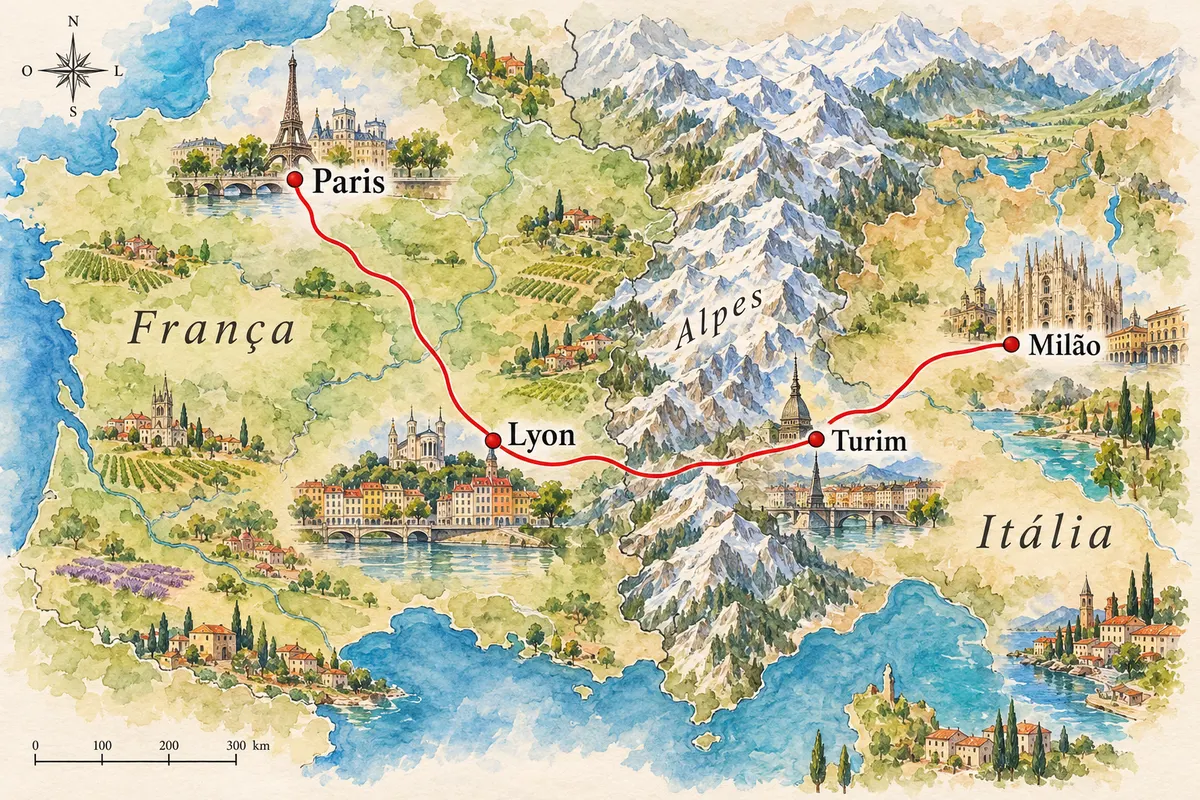
By train from Italy to France through the Alps: Milan, Turin, the Maurienne valley, Lyon and Paris in about seven hours, without changing trains.
Več kot vodnik