

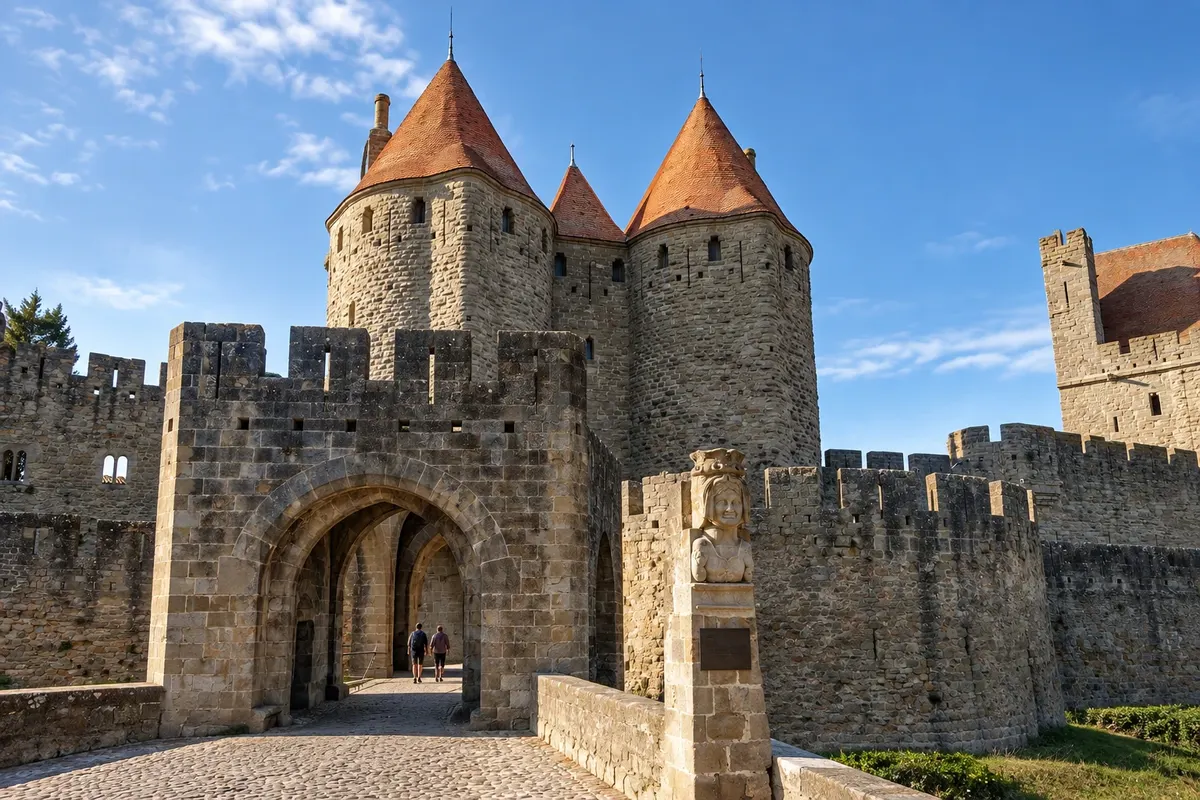
Historic site
Cité de Carcassonne
Medieval fortified town on top of a hill, with a double wall of about 3 km and 52 towers, a UNESCO World Heritage Site; access to the streets is free.

 Išči
 Brazilija
 Antarktika
 Argentina
 Bolivija
 Čile
 Kolumbija
 Ekvator
 Gvajana
 Francoska Gvajana
 Falklandski otoki (Malvini)
 Paragvaj
 Peru
 Surinam
 Urugvaj
 Venezuela
 Nemčija
 Avstrija
 Belgija
 Hrvaška
 Danska
 Slovaška
 Slovenija
 Španija
 FinskaFrancija
 Grčija
 Nizozemska
 Madžarska
 Irska
 Islandija
 Italija
 Luksemburg
 Norveška
 Poljska
 Portugalska
 Združeno kraljestvo
 Češka
 Švedska
 Švica
 Turčija
 Bermudi
 Kanada
 Združene države Amerike
 Grenlandija
 Mehika
 Sveta Peter in Mihael
 Dominikanska republika
 JaponskaTurčija
 Južnoafriška republika
 Egipt
 Avstralija
 Fidži
 Nova Zelandija
 Papua Nova Gvineja
Occitânia · Francija
Destinacija: Carcassonne and Toulouse.
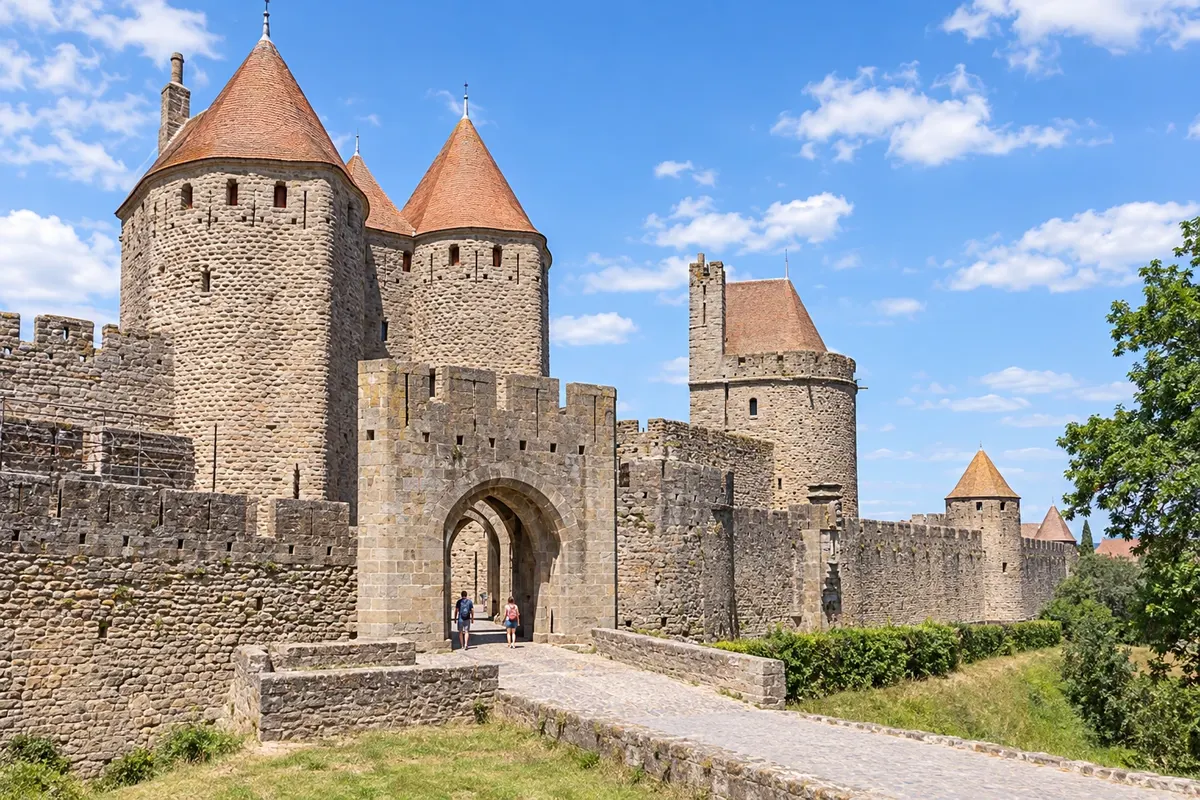
Na fotografiji: Porte Narbonnaise in Carcassonne, France.
Illustrative images. The pictures in this guide are illustrations based on the real place, not photographs, and may differ from it.
Mesto
Carcassonne has two parts: the Cité, the medieval walled town on top of the hill, with the Château comtal and the Basilique Saint-Nazaire, a UNESCO World Heritage Site, and the Bastide Saint-Louis, the lower town with the Place Carnot. Between them flow the Aude River, crossed by the Pont-Vieux, and the Canal du Midi. In the surrounding mountains are the castles of Lastours, Peyrepertuse and Quéribus.
V vodniku še ni nastanitev – Carcassonne.
kako do tja · koliko dni · načrt poti · vprašanja
Doživite kraj
Medieval fortified town on top of a hill, with a double wall of about 3 km and 52 towers, a UNESCO World Heritage Site; access to the streets is free.
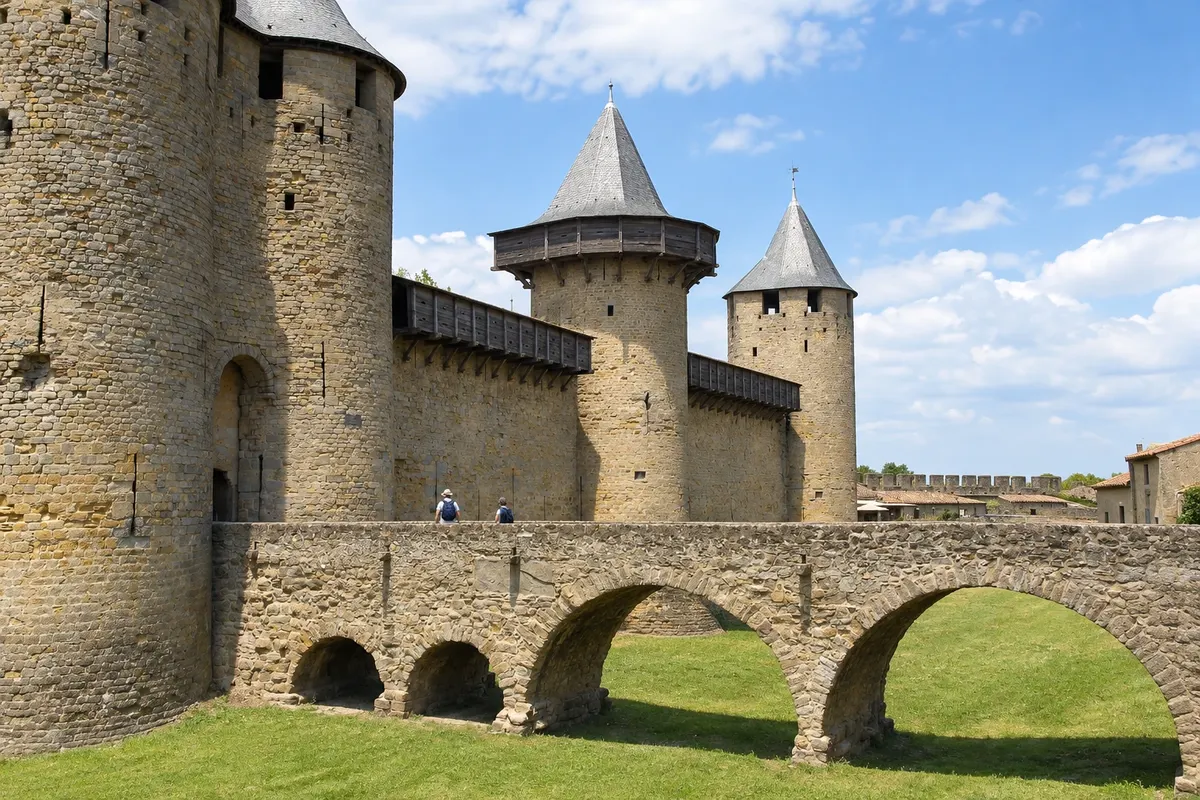
The castle of the viscounts of Carcassonne, inside the Cité, and the walk along the ramparts, a national monument with admission.
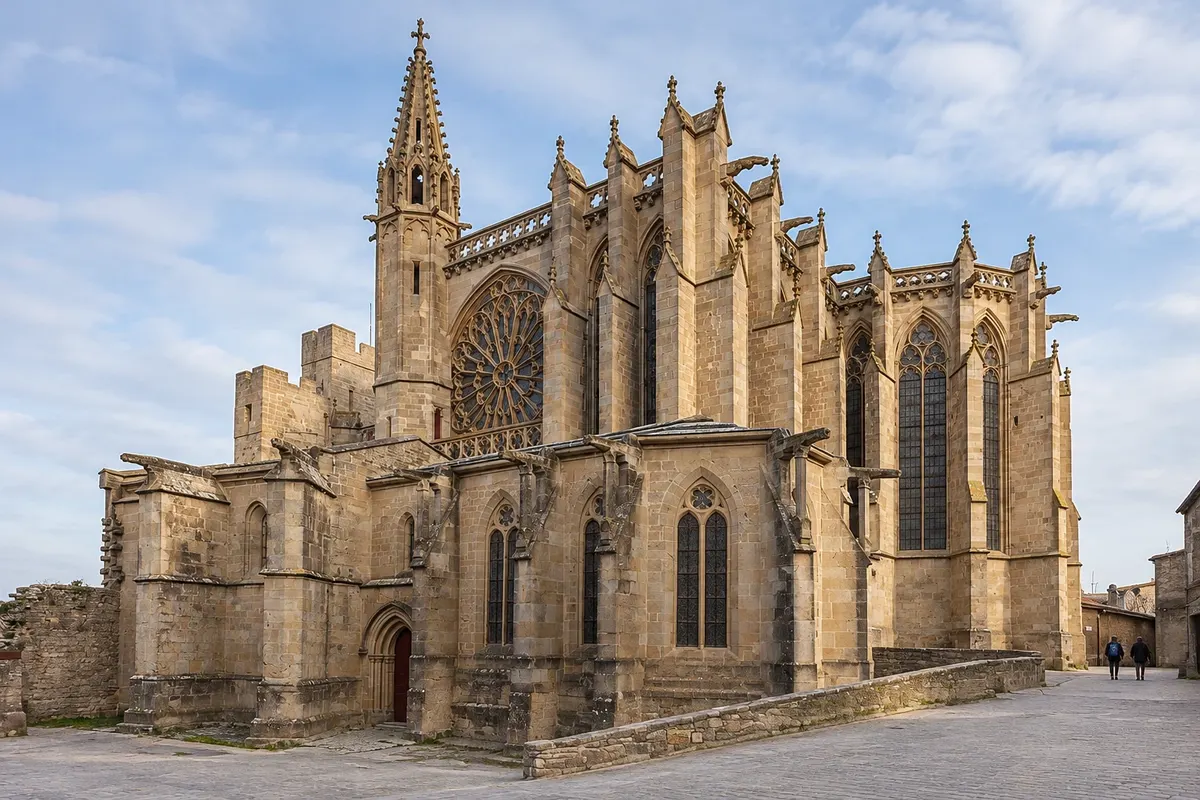
Former cathedral inside the Cité, with a Romanesque nave and a Gothic choir lit by stained glass windows from the 13th and 14th centuries.
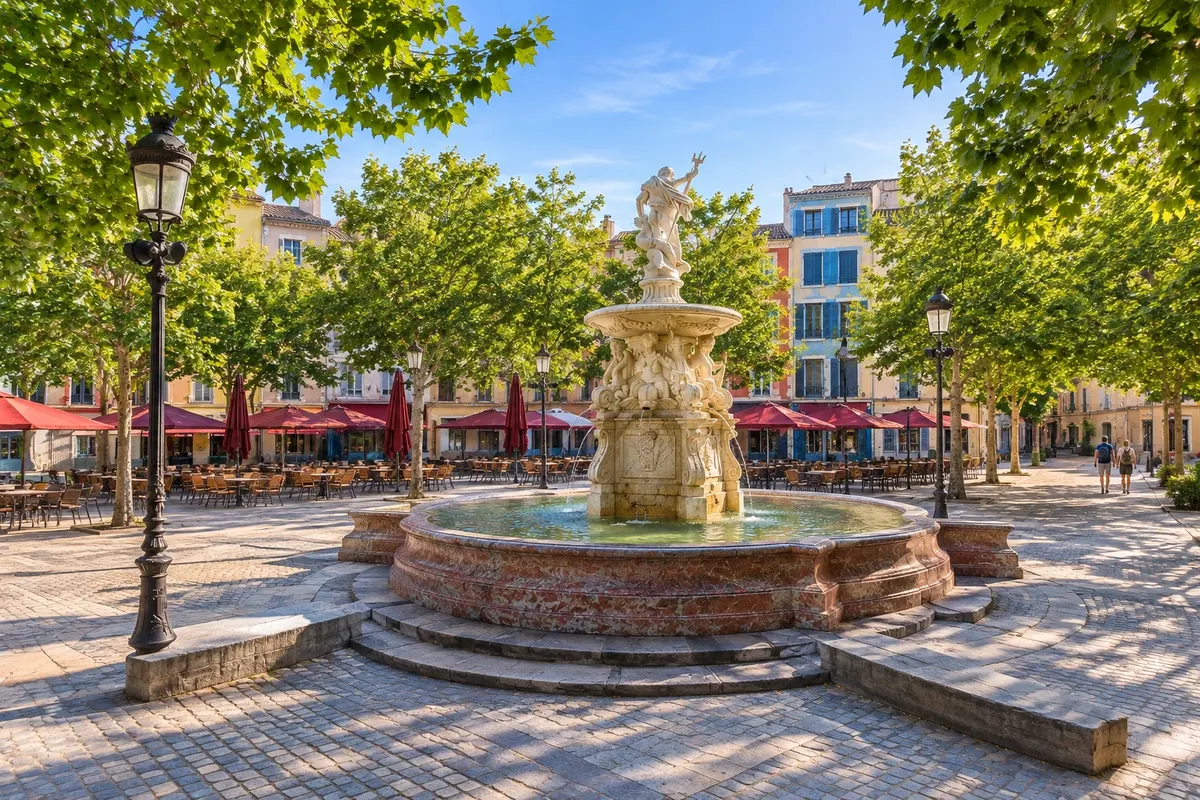
The lower town of Carcassonne, founded in the 13th century with a grid of streets around the Place Carnot, where the shops, restaurants and station are located.
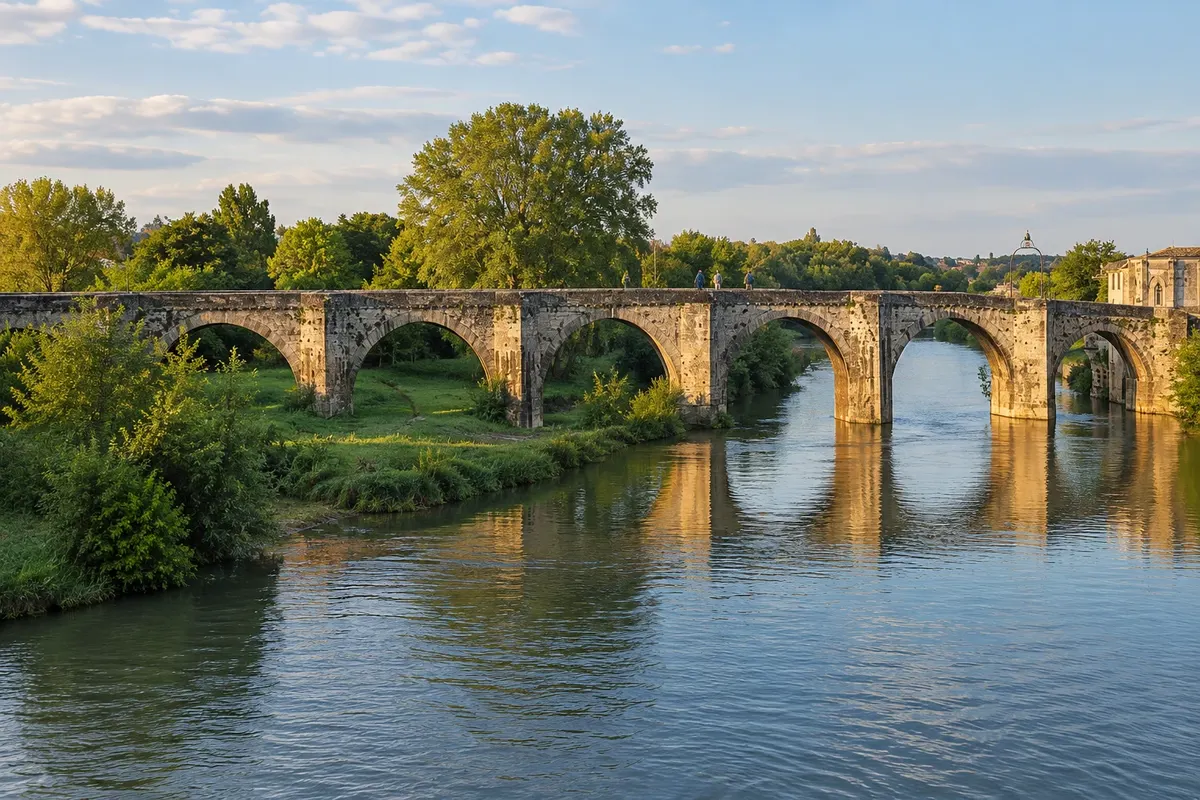
Stone bridge from the 14th century over the Aude river, linking the lower town to the ascent to the Cité, with views of the walls.
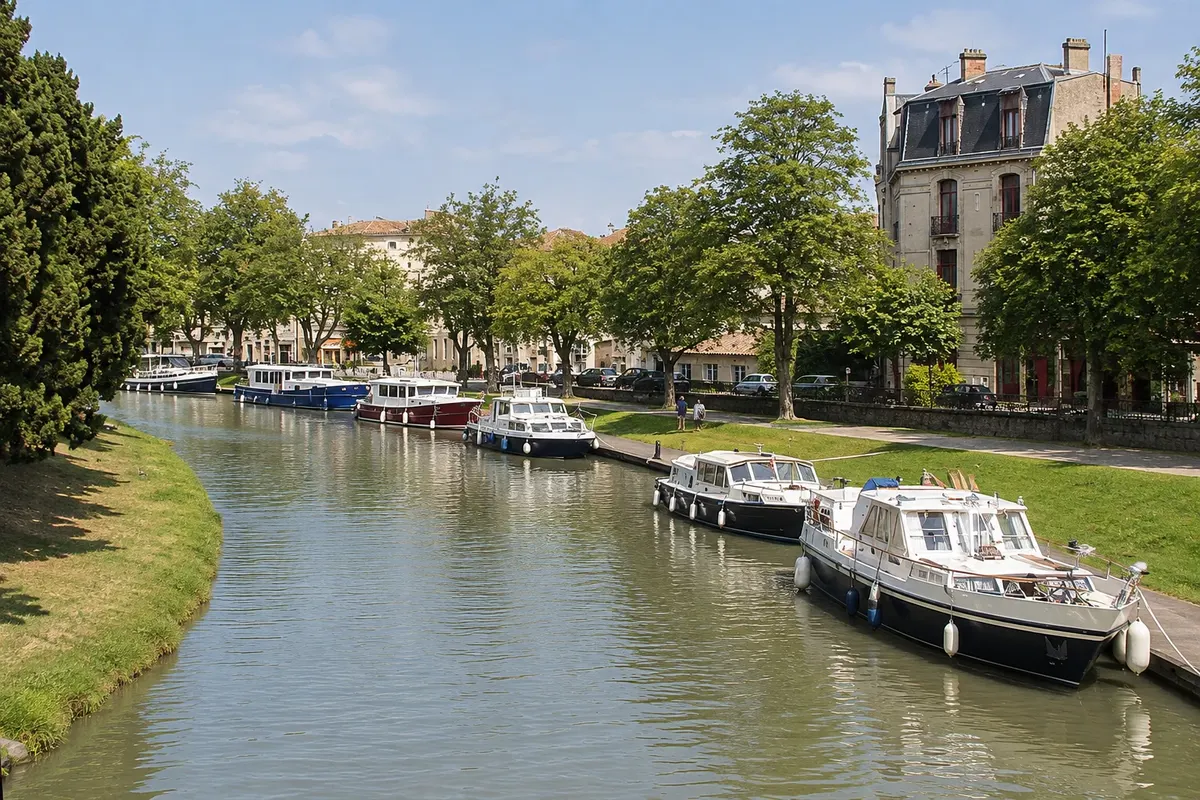
Stretch of the Canal du Midi beside the station, with a lock and a port from which boat trips depart, between the Gare and the Bastide Saint-Louis.
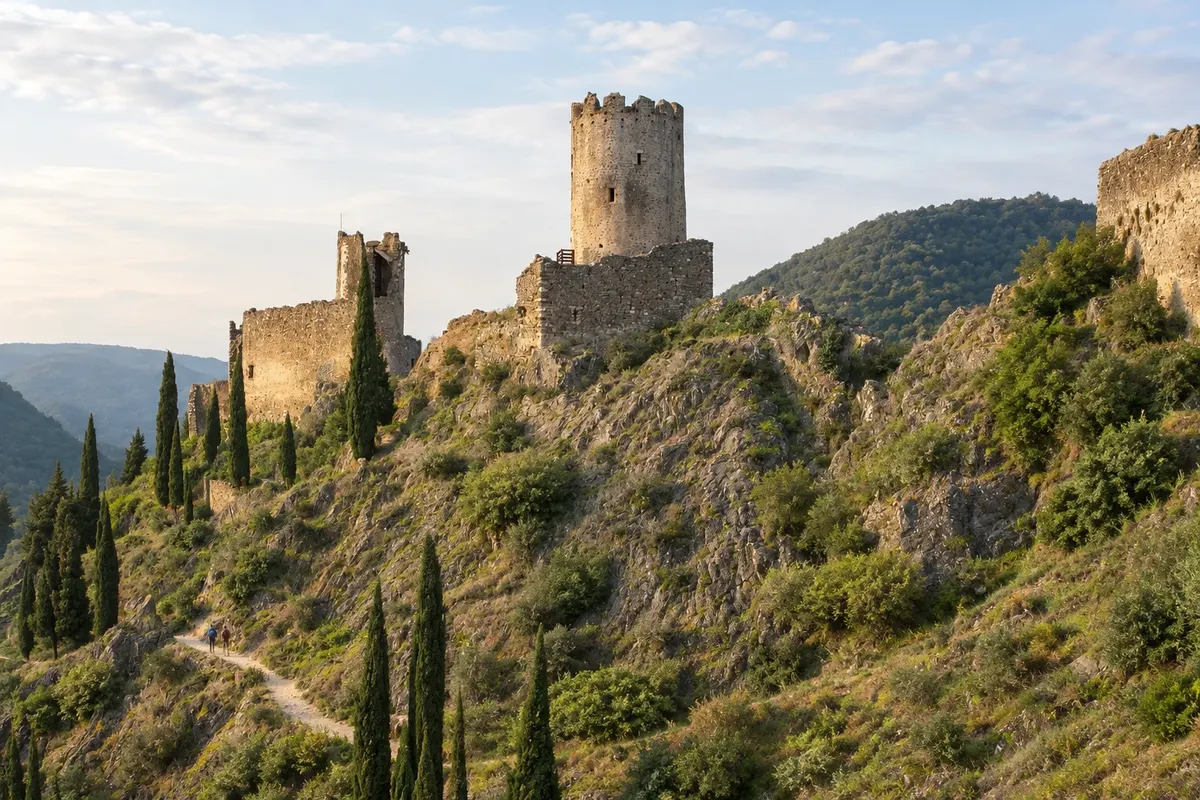
Four medieval ruined castles on a rocky spur above the Orbiel river, about 20 km north of Carcassonne.
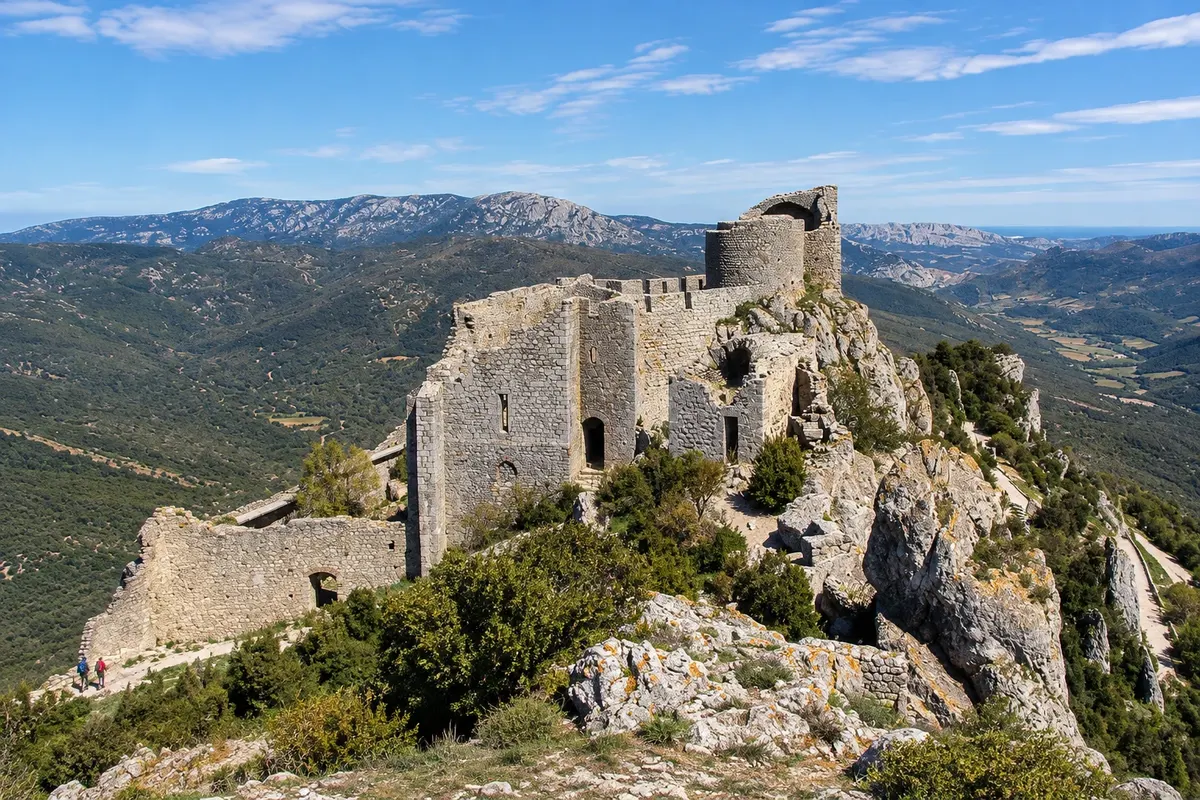
Ruined fortress on a limestone ridge of nearly 800 meters in the Corbières, one of the largest in the region, about 85 km from Carcassonne.
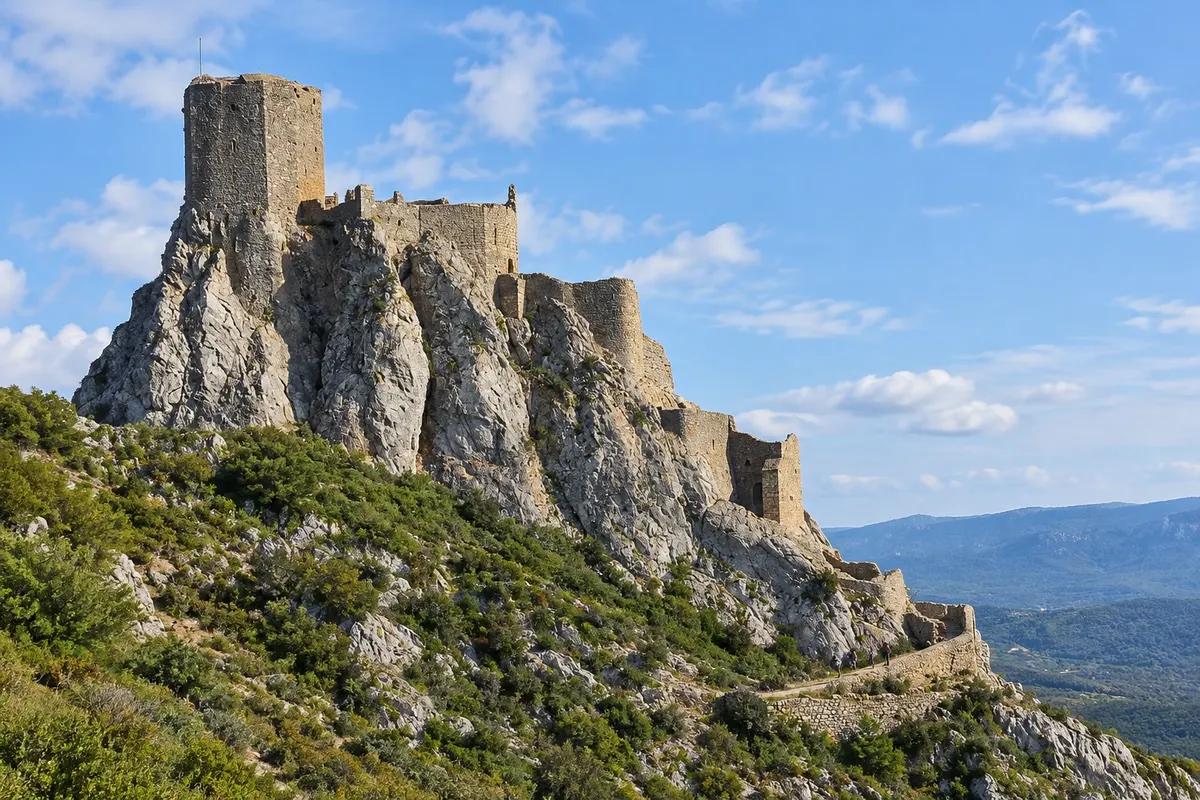
Castle atop a rocky peak at 728 meters, above Cucugnan, with a tower that houses a Gothic hall with a central pillar; views over the Corbières and the Roussillon.
Pred odhodom
Carcassonne – Occitanie Destinacija Carcassonne and Toulouse približno 92 km stran (izhodišče: Toulouse)
Razdalje so približne. Pred potovanjem preverite lete in vozne rede avtobusov, vlakov ali ladij.
Gare de Carcassonne receives trains from Toulouse in 45 minutes to about 1 hour, and also from Narbonne, Montpellier and Bordeaux. Check before buying.
One day is enough for the Cité, the castle and the ramparts and a stroll through the lower town. With two days and a car, you’ll have a day for the castles of Peyrepertuse and Quéribus or for Lastours. Seeing the Cité lit up at night makes it worth staying overnight in the town.
April to June and September to October usually offer pleasant weather and fewer crowds. July and August are hot and busy, with the Cité full of groups. In winter, from December to February, it’s windy and cold, but the Cité is quiet. The town is generally windy year-round.
The seasons shown are the most usual ones; nature doesn't always follow the calendar.
For the Cité and the lower town, no: everything can be done on foot from the station, with the city bus as an option to go up to the Cité. For the Cathar castles in the Corbières and the Montagne Noire, a car is practically necessary, or else an organized tour.
Predlog poti
Pot povezuje znamenitosti na tej strani. Za oglede boste imeli dovolj časa.
Leave early from the Bastide Saint-Louis, cross the Pont-Vieux and walk up to the Porte d'Aude. Visit the Château comtal and walk along the ramparts before the tour groups arrive.
Have lunch inside the Cité between 12:00 and 14:00. Then see the Basilique Saint-Nazaire and walk around the lices, between the two walls.
Walk down to the Bastide Saint-Louis, stroll through the Place Carnot and the streets laid out in a grid, and continue to the Canal du Midi, near the station.
Have dinner in the lower town or in the Cité from 19:30, with cassoulet on the menu, and return to the Pont-Vieux to see the illuminated walls.
Dan 1
Start with the Cité: enter through the Porte Narbonnaise and visit the Château comtal and the walkway along the ramparts.
After lunch, visit the Basilique Saint-Nazaire and walk the lices between the walls.
Go down via the Porte d'Aude, cross the Pont-Vieux and stroll through the Bastide Saint-Louis to the Place Carnot.
Return to the Cité after dinner to see the illuminated walls and the almost empty streets.
Dan 2
Drive early and head to the Corbières, about a 1h30 drive. Climb up to the Château de Peyrepertuse, on the limestone ridge.
Have lunch in Cucugnan or Duilhac and climb to the Château de Quéribus, about 10 km away, with a Gothic hall featuring a central pillar.
Return via roads through vineyards. Those who prefer a shorter day can swap the two castles for Lastours, 20 km from the city.
At the end of the day, walk along the bank of the Canal du Midi near the station and have dinner in the Bastide Saint-Louis.
Check before you go. Opening hours and days change, and places may close for renovations, holidays or events. This itinerary is a suggestion from Cidade Turismo, not a commitment: plan yours by checking directly with each place you intend to visit.
Pred odhodom
By train, in 45 minutes to about 1 hour to the Gare de Carcassonne, or by car, about 92 km via the A61 motorway.
About 2 km. You can walk up via the Bastide Saint-Louis and the Pont-Vieux in about 30 minutes, or take a local bus.
Yes, if you want to see the Cité illuminated and walk the streets without groups, early in the morning or at night.
Fortresses in the mountains around Carcassonne, associated with the crusade against the Cathars in the 13th century and later with the defense of the border with Aragon. Lastours, Peyrepertuse and Quéribus are the most visited from the city.
Cassoulet is a dish of the whole Languedoc. Carcassonne, Toulouse and Castelnaudary have their versions, and it appears on many of the city's restaurant menus.
Več kot vodnik


