Bassins des Lumières in the former Base sous-marine
Odhod: Bacalan neighborhood, north of the center Tram C to Ravezies and bus 9, or bus 5 around 1 hour and a half Dopoldne ali popoldne Lahko
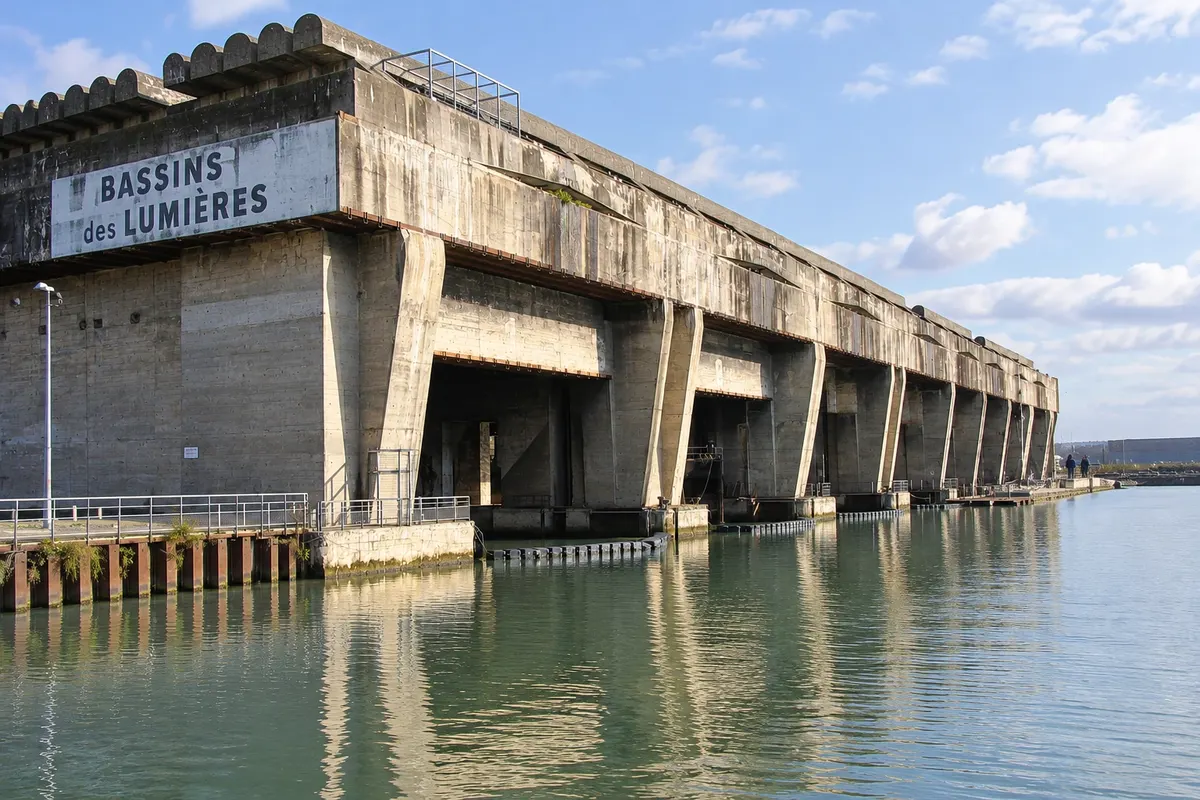
Les Bassins des Lumières are a digital art center installed in the former submarine base of Bordeaux, built by German forces from 1940 during the occupation, in the Bacalan neighborhood. The project employed more than 6,500 workers, a third of them Spanish Republican prisoners, and the reinforced concrete structure has a roof 9 m thick. Inside that block, 360° projections cover walls and pillars, accompanied by music, and are reflected in the water of four monumental basins where the submarines were housed. The programs change throughout the year and usually feature a long exhibition dedicated to a painter, such as Matisse, and a shorter one on another theme. There is also the Cube, a space for contemporary creation. The visit is self-guided and follows the sequence of projections. The place has historical weight, and it is worth reading the panels about the base before entering the dark rooms.
Kraji na poti: Bassins des Lumières, Base sous-marine de Bordeaux, Bassins à flot.
Vključuje: There is a timed-entry ticket; buy in advance. Check the current price list and the program for your travel dates.
Nasvet: The projections may pose a risk for people with epilepsy or photosensitivity and are not recommended for children under 2. Bus 5 departs from the Tourny stop, near Les Quinconces. Combine with the Cité du Vin, on the same side of the city.
Najboljši čas za obisk: Year-round; a good option for rainy days or very hot weather.
Musée d'Aquitaine: from prehistory to the port of Bordeaux
Odhod: Cours Pasteur, in central Bordeaux Tram B to the Musée d'Aquitaine stop Približno 2 uri Dopoldne ali popoldne Lahko
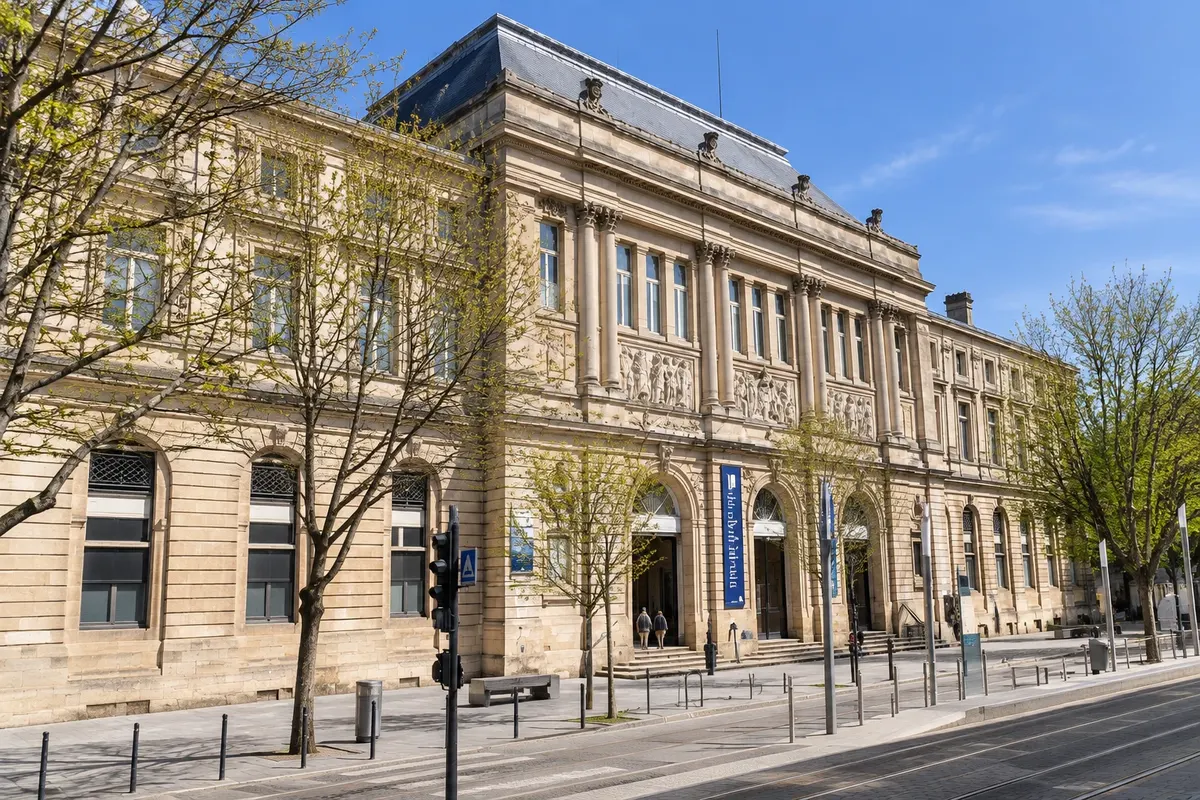
The Musée d'Aquitaine tells the history of Bordeaux and the region from prehistory to the 21st century. On the ground floor are the prehistoric collections, including the Vénus de Laussel, a female figure carved in stone, and objects from the Bronze Age; these are followed by Roman Bordeaux, the Middle Ages and the Renaissance. The upper floor covers the 18th to 21st centuries. The 18th-century rooms show the period when Bordeaux's port grew wealthy from Atlantic trade and from the trafficking of enslaved people, with ship documents and portraits; the subject is presented directly and requires a careful visit. The same building houses the Centre d'interprétation Bordeaux Patrimoine Mondial, with models and maps explaining why the Port de la Lune urban ensemble was inscribed as a World Heritage site. A visitor app, accessed by a QR code at the entrance, offers a route of about 1 hour and a half through the main works, in several languages.
Kraji na poti: Musée d'Aquitaine, Centre d'interprétation Bordeaux Patrimoine Mondial.
Vključuje: There is an admission ticket for the collections; guided tours carry an extra charge. Payment is made at reception, with no reservation required for individual visitors. Check the current prices.
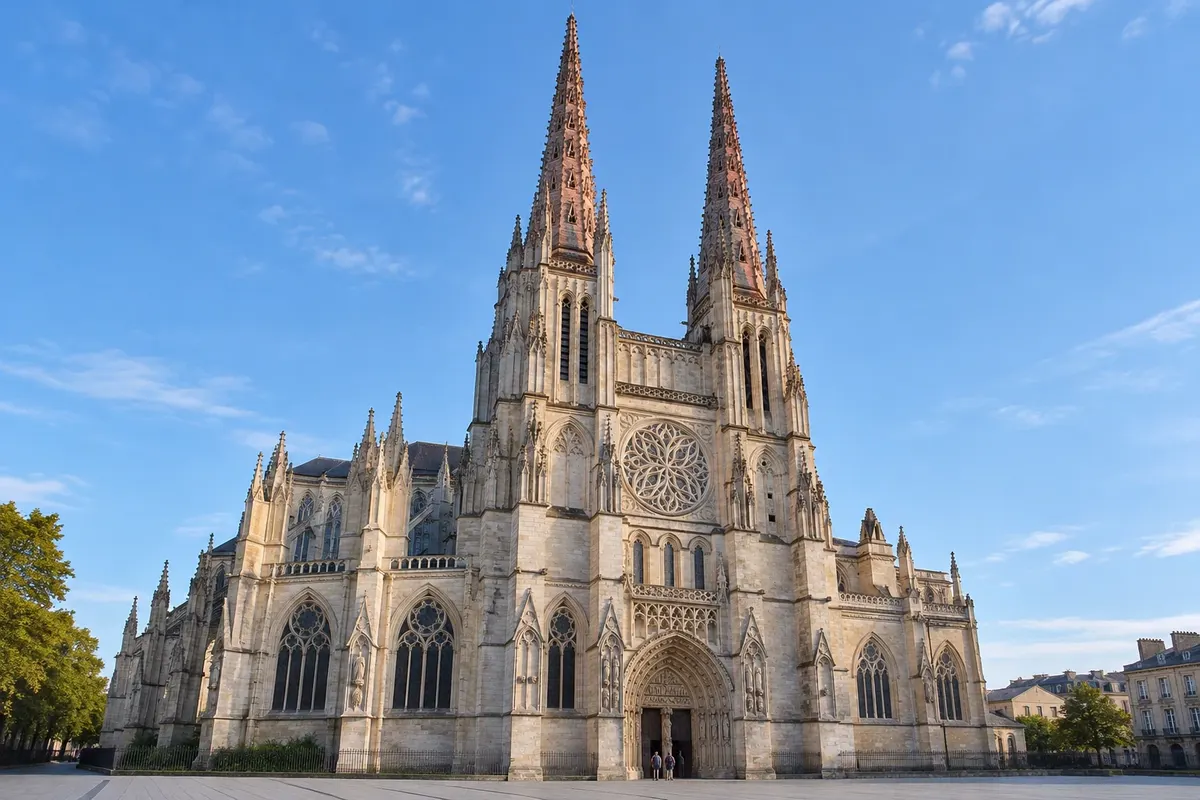
Nasvet: The museum is open Tuesday through Sunday and closed on Mondays and public holidays. It is a few minutes from Cathédrale Saint-André: you can do both in the same morning.
Najboljši čas za obisk: Vse leto, tudi v dežju.
Boat ride on the Garonne in front of the Port de la Lune
Odhod: Pontoons from which, near the Place de la Bourse Commented cruise boat or the Bato boat of the TBM network around 1 hour and a half popoldne ali zvečer Lahko
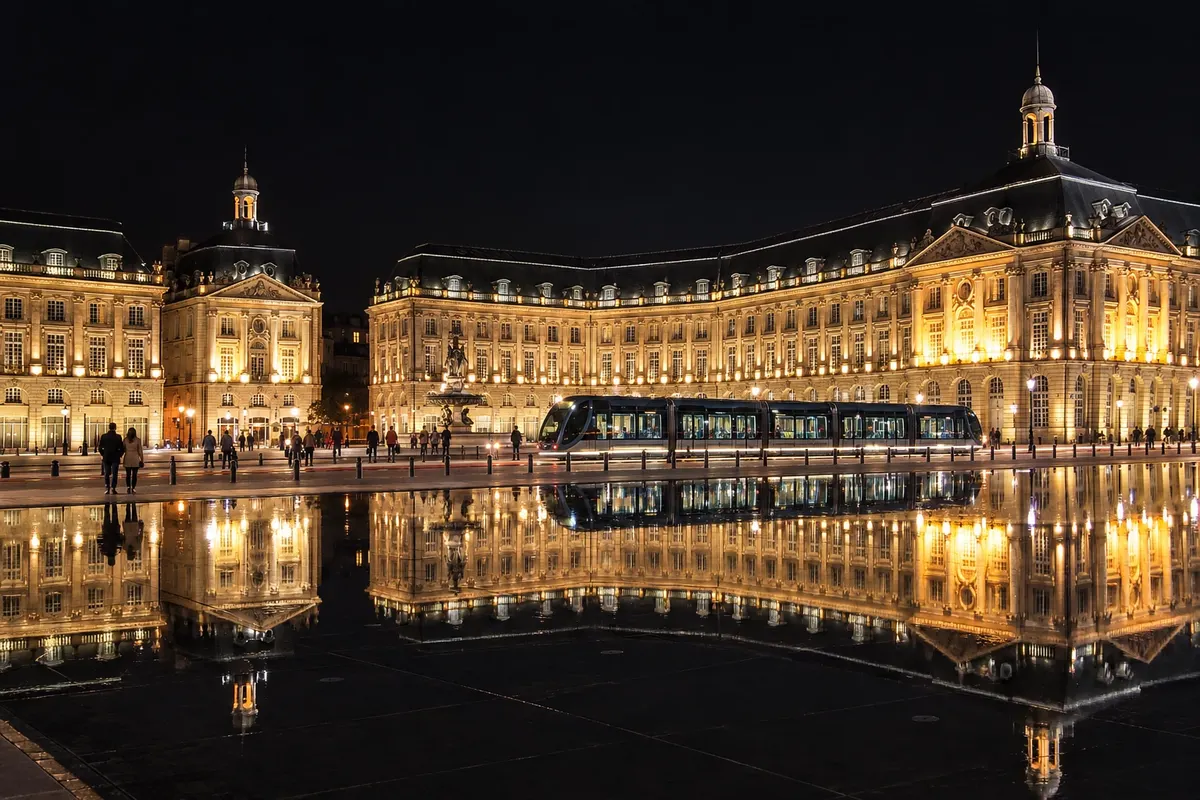
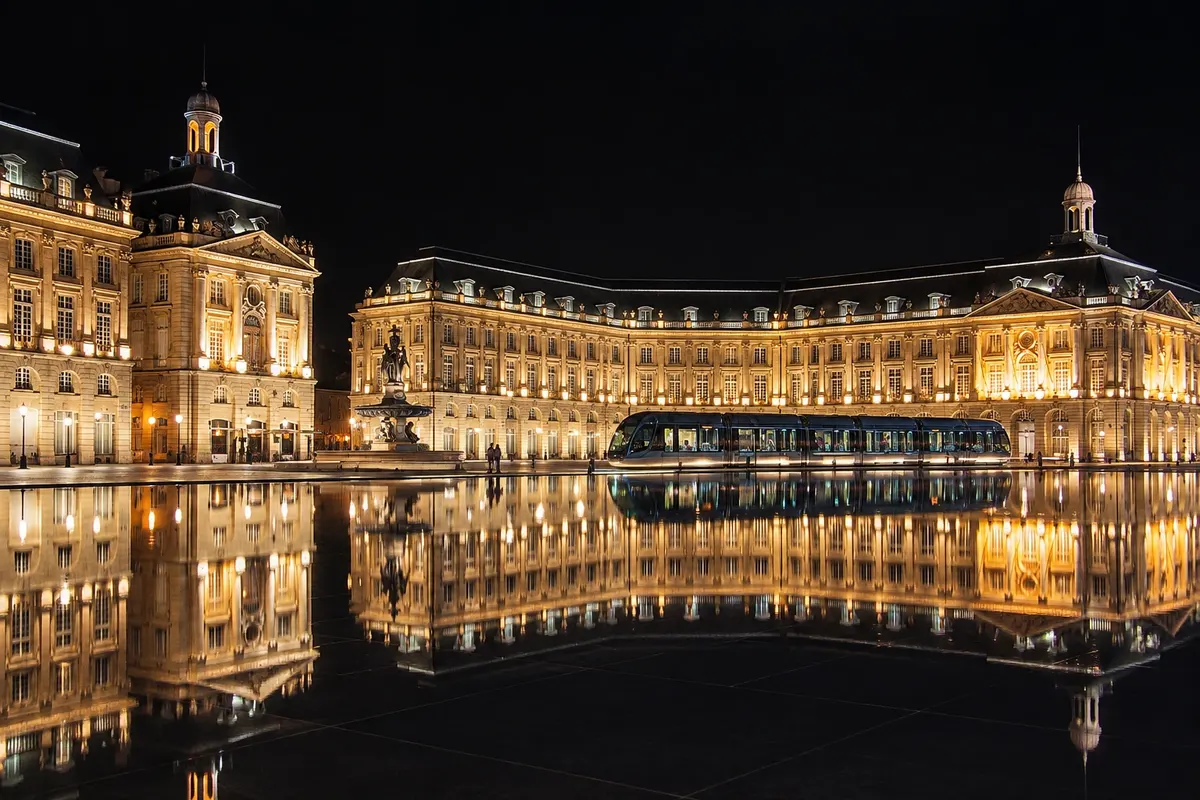
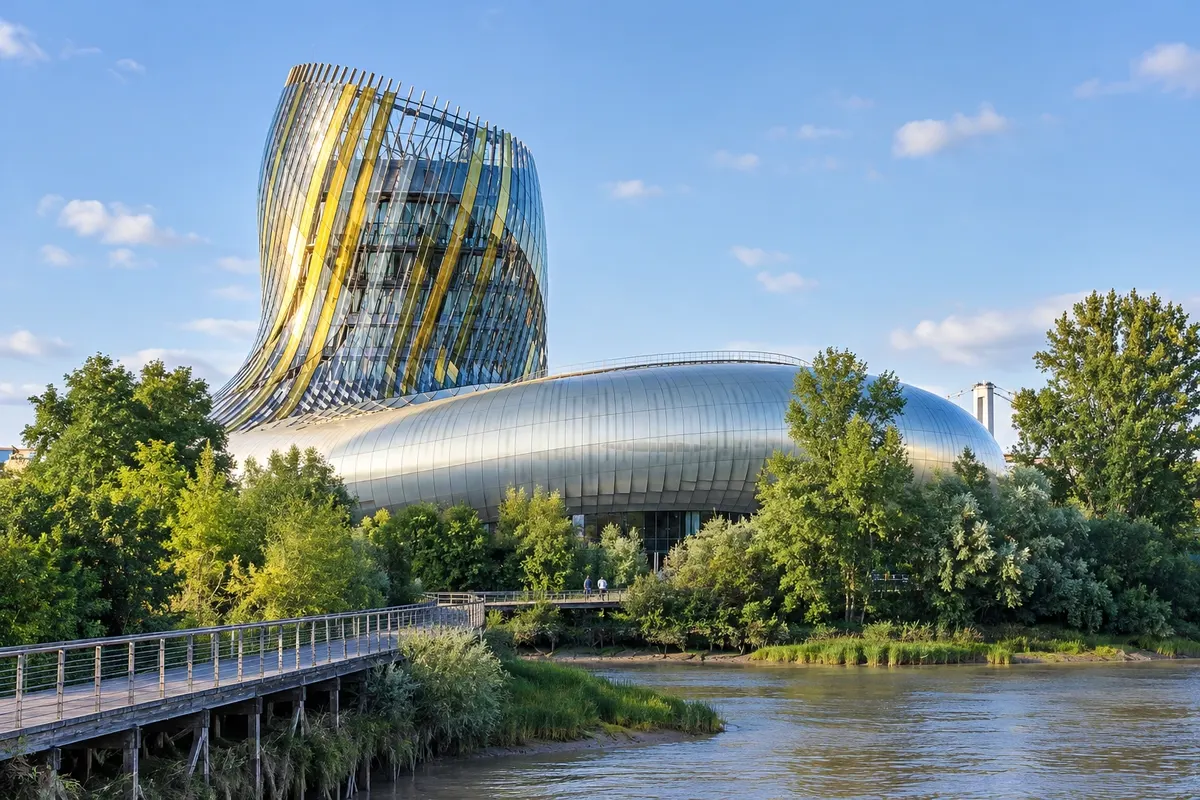
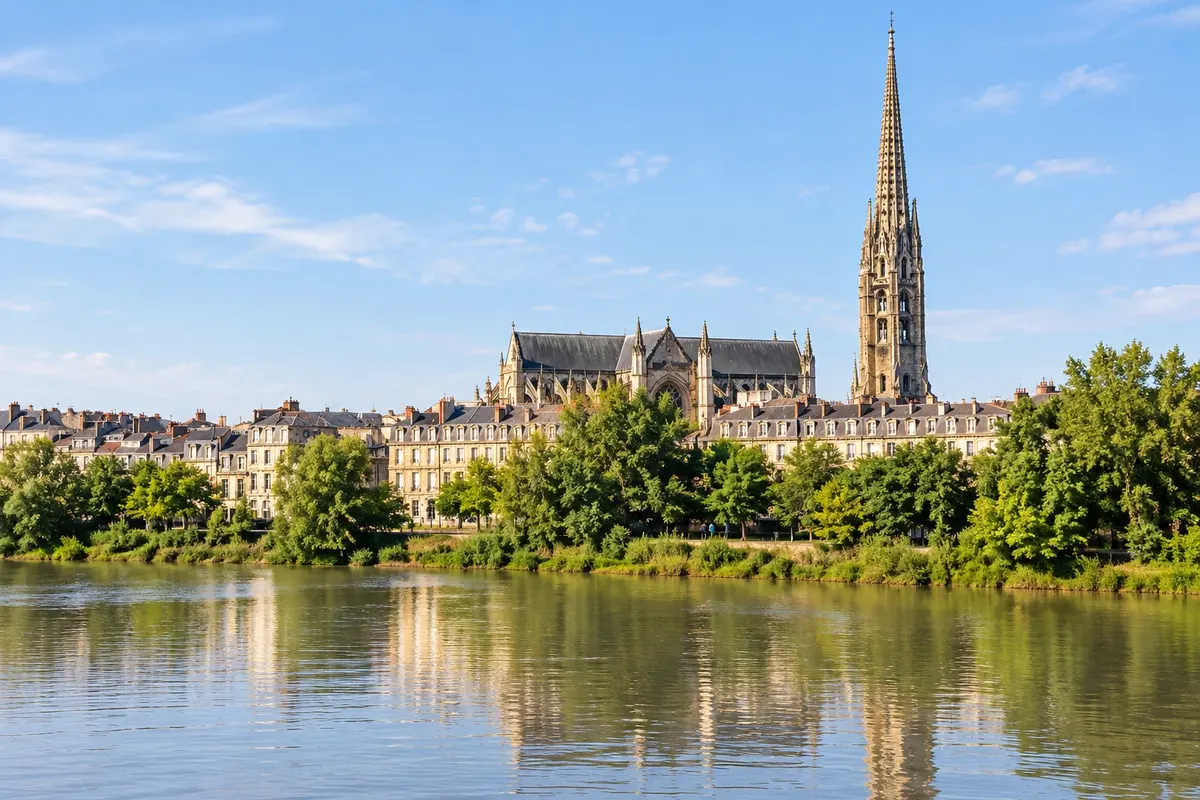
From the river you can understand Bordeaux’s layout: the continuous light-stone 18th-century façade along the curve of the Garonne, the Port de la Lune. Several boats run short commented cruises of about 1 hour and a half, departing from pontoons in the center. The route usually passes under the city’s bridges, from the Pont de pierre to the Pont Jacques-Chaban-Delmas, which has a movable deck to let ships pass, and shows the Place de la Bourse with the Miroir d'eau, the Esplanade des Quinconces and the Cité du Vin. Some companies offer formats with a meal on board, at lunch or dinner, or a ride with a canelé, Bordeaux’s typical pastry. To cross the river on your own, there is the Bato, the line boats of the TBM transport network: four lines link the two banks, for example to Lormont or to the right bank in the Bastide neighborhood, where the Darwin cultural space is located.
Kraji na poti: Garonne, Port de la Lune, Pont de pierre, Pont Jacques-Chaban-Delmas, Esplanade des Quinconces.
Vključuje: On the cruises, generally: a guided commentary in French and sometimes in English. Meals and drinks, when offered, depend on the chosen format. The Bato uses the standard ticket of the TBM network. Check the current schedule.
Nasvet: Book the cruise in advance in summer. Late afternoon is good for seeing the façade lit up. On the right bank, the Chantiers de la Garonne, near Darwin, face the Place de la Bourse.
Najboljši čas za obisk: From April to October, with long days; in winter the schedule options are usually fewer.
Saint-Émilion: the medieval village, the Tour du Roy and the cloisters
Odhod: Gare de Bordeaux-Saint-Jean Regional TER train to Saint-Émilion station about 8 hours round trip Ves dan moderate (steep stone streets)
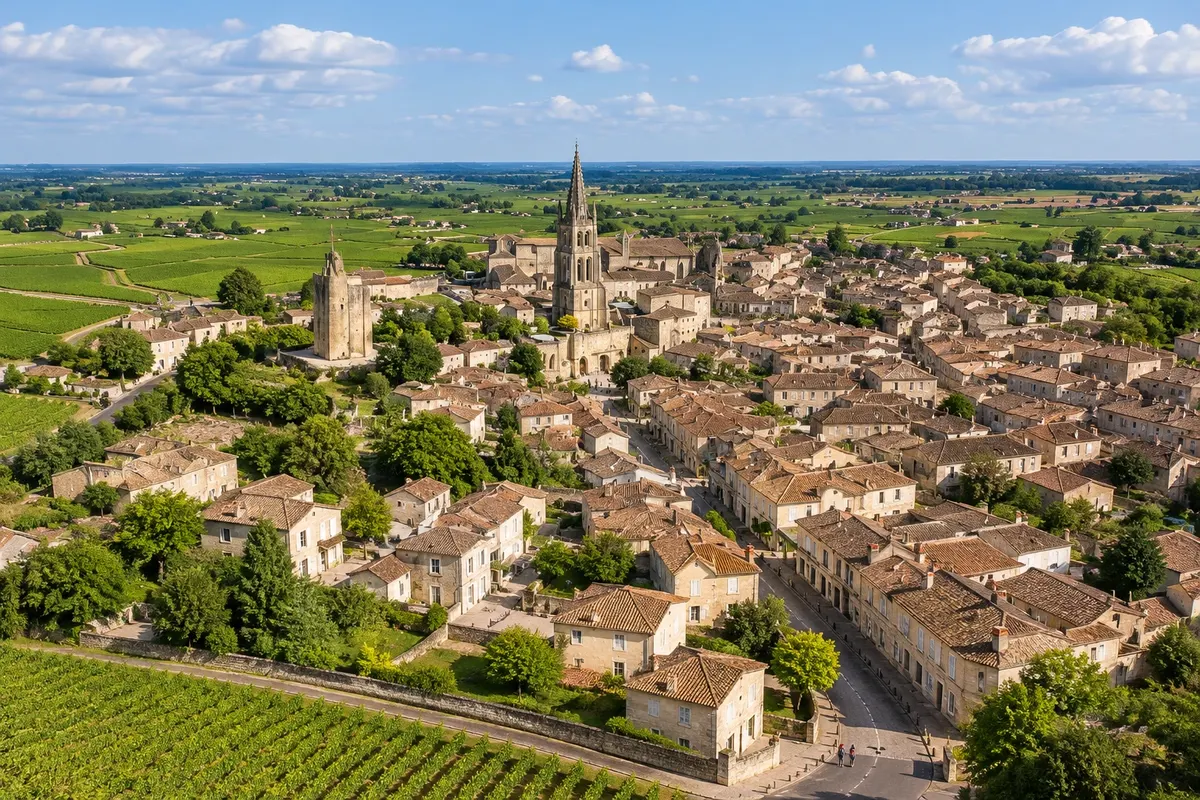
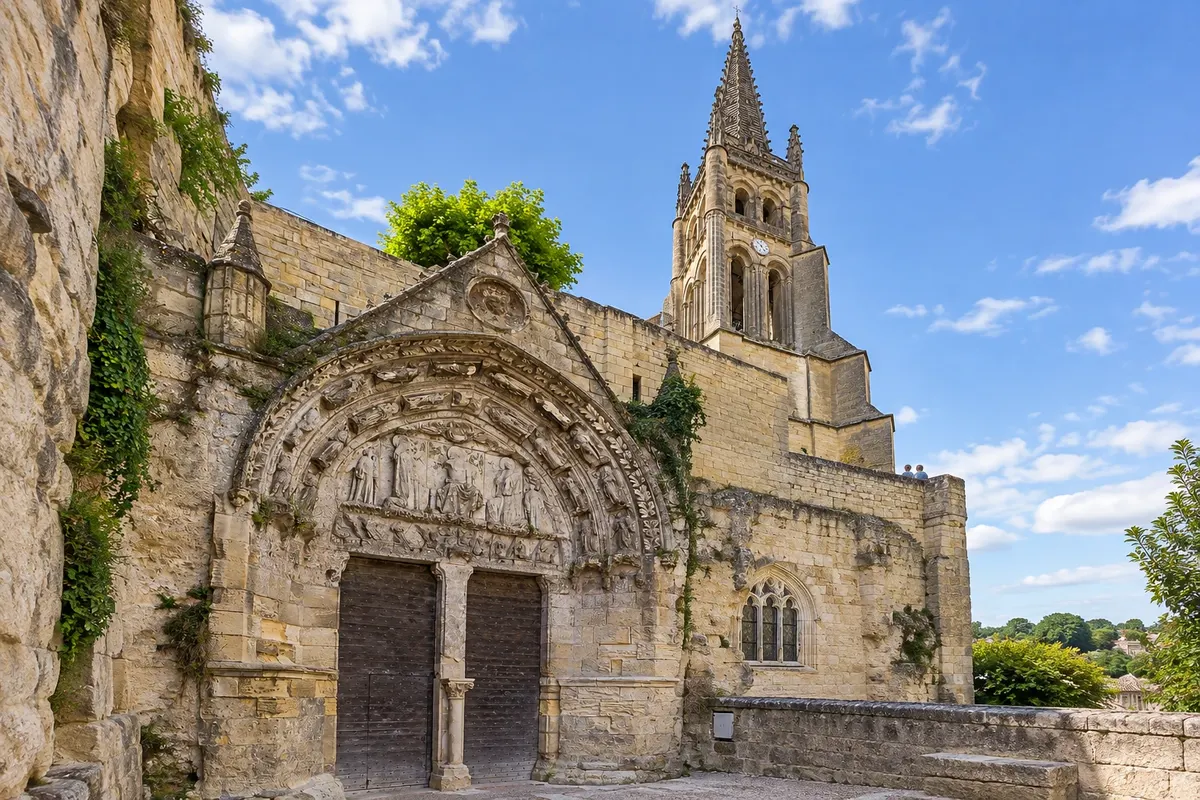
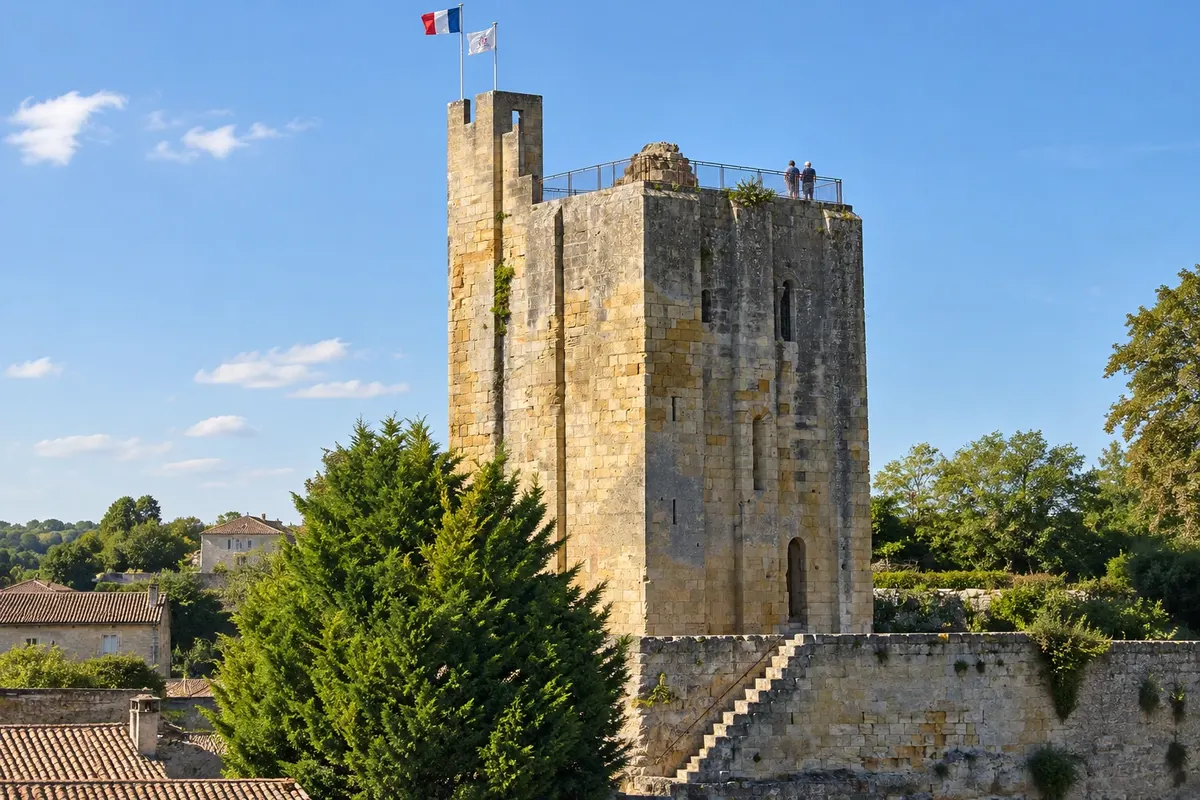
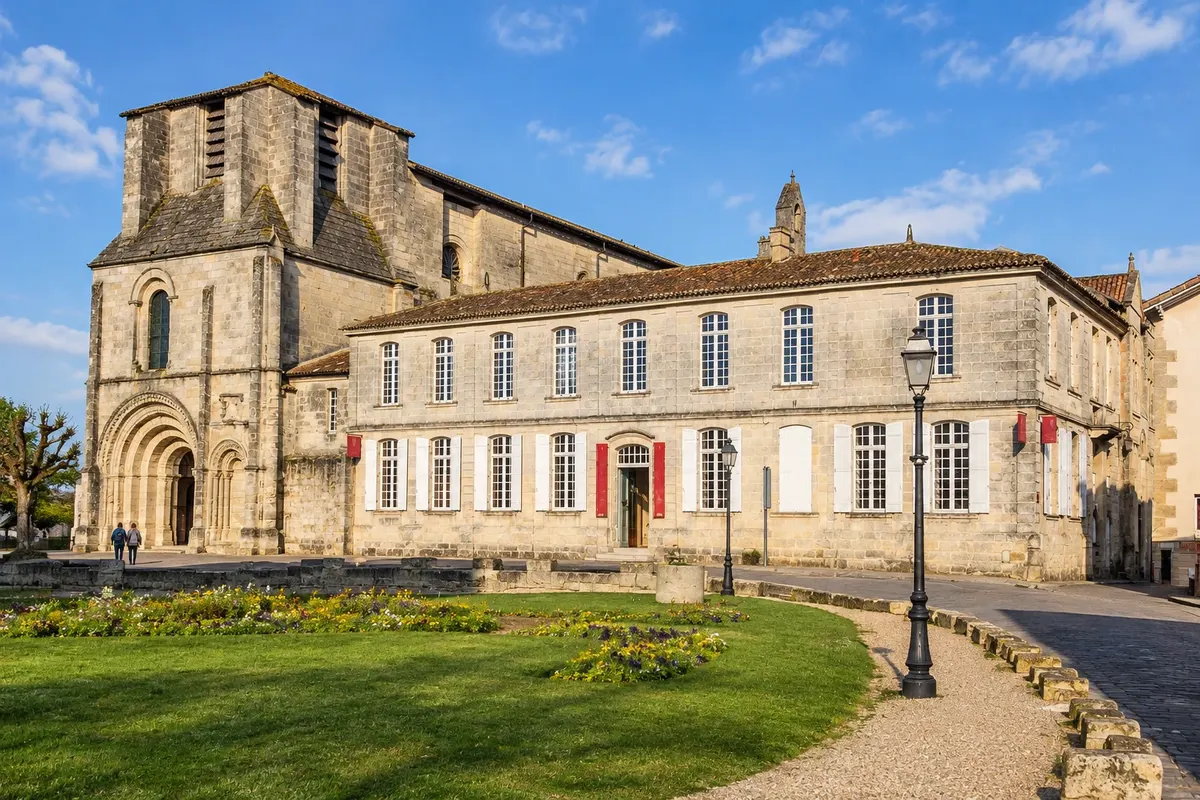
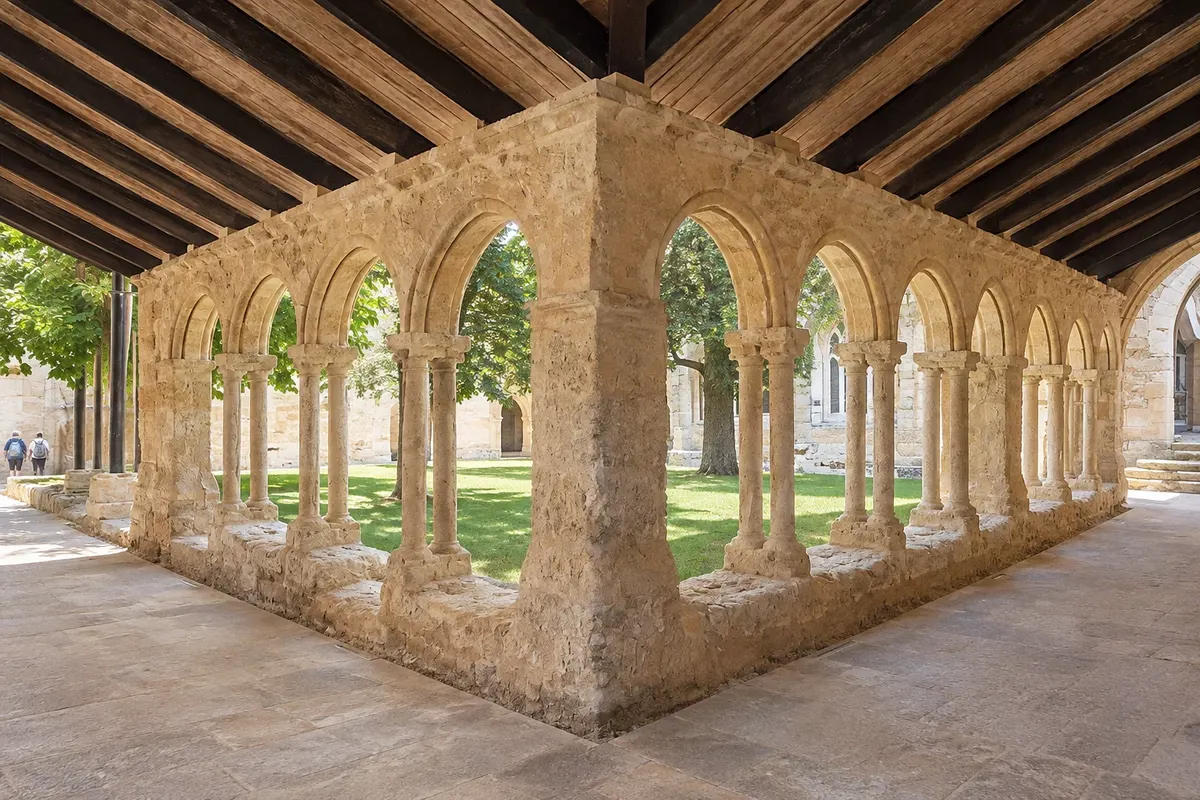
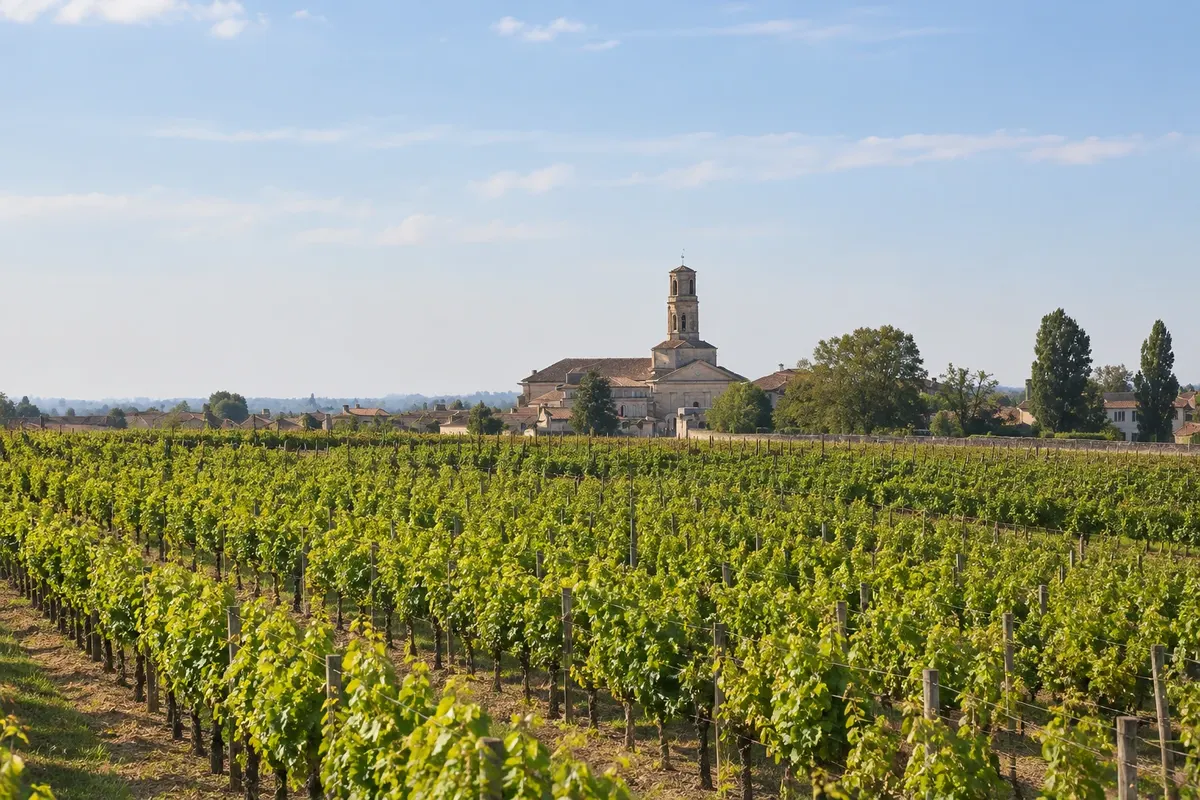
Saint-Émilion is a medieval village of limestone east of Bordeaux, on top of a slope surrounded by vineyards. In 1999, the Juridiction of Saint-Émilion, including the village and seven other communes and about 5,000 hectares of vineyards, became the first vineyard to be inscribed on the UNESCO World Heritage list as a cultural landscape. The TER departs from Bordeaux-Saint-Jean and arrives in about 35 to 45 minutes; the station is located roughly 1.5 km below the village, on an uphill path. At the top, the Collégiale, a Romanesque and Gothic church with its first stone laid in 1110, has a cloister that now houses the Office de Tourisme. The Tour du Roy, a 13th‑century tower on a mass of rock, is the only intact Romanesque keep in the Gironde; there are 118 steps to the terrace, from which the Jurade, the local wine brotherhood, proclaims the Ban des Vendanges, the start of the harvest, in September. The bell tower of the Église monolithe, at 68 m, has 196 steps and the widest view over the village and the Juridiction. In the Cloître des Cordeliers are the ruins of a 14th‑century cloister and cellars dug to 17 m deep, where Crémant de Bordeaux, the region’s sparkling wine, is made, with a guided visit. Between points, the streets descend in stone slopes, the tertres, down to the square of the Église monolithe.
Kraji na poti: Cité médiévale de Saint-Émilion, Tour du Roy, Collégiale de Saint-Émilion, Cloître des Cordeliers, Clocher de l'Église monolithe.
Vključuje: Walking around the village is free. The climb of the Tour du Roy, the bell tower (ticket at the Office de Tourisme) and the visit to the Cloître des Cordeliers are paid separately. Check the current price list.
Nasvet: Wear low shoes: the stone slopes are slippery when it rains. From the station, the walking route climbs and has pavement only in part; there is a tuk‑tuk that makes the trip. Book the visit to the Église monolithe in advance and plan your day around its schedule.
Najboljši čas za obisk: From April to October. September and October are usually the harvest period, with activity at the estates.
Saint-Émilion underground: Église monolithe with guided tour
Odhod: Place de l'Église Monolithe, in Saint-Émilion Guided tour sold by the Office de Tourisme about 45 minutes to 1 hour Dopoldne ali popoldne easy (stairs and uneven floor)
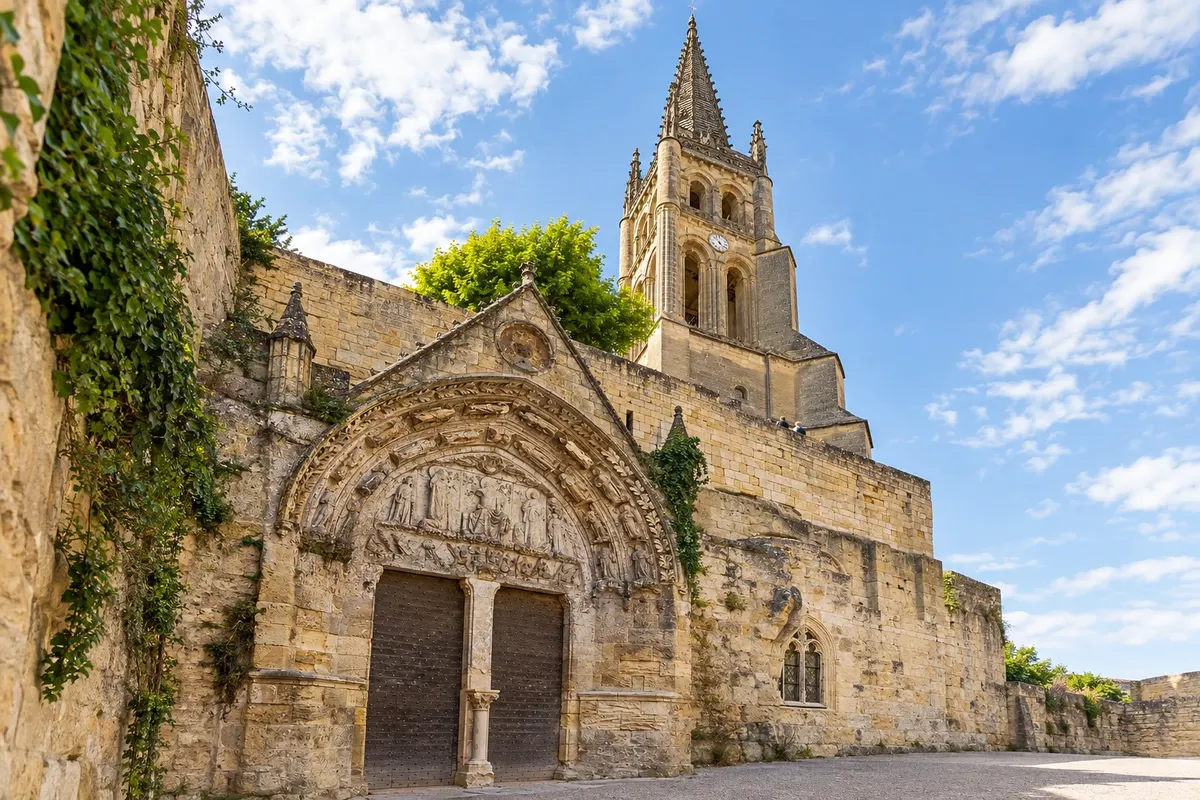
The Église monolithe of Saint-Émilion was carved into limestone at the beginning of the 12th century: it is 38 m long by 12 m high and is the largest underground church in Europe. The name comes from Greek and means "one stone", because the whole structure forms a single block. Entry is only possible with a guide. The visit, called Saint-Émilion Souterrain, passes through four monuments: the Ermitage, the grotto where the monk Émilion is said to have lived, who gave the village its name in the 8th century; the Chapelle de la Trinité, with medieval paintings; the catacombs; and the church itself, with naves hewn in the rock. The guide tells the story of the monk, the pilgrimage that grew around his tomb, and how the church was carved, painted, looted and restored over the centuries. The church remains consecrated and hosts ceremonies, including those of the Jurade.
Kraji na poti: Église monolithe de Saint-Émilion, Ermitage de Saint-Émilion, Chapelle de la Trinité, Catacombs of Saint-Émilion.
Vključuje: Guided‑tour ticket, purchased at the Office de Tourisme or online. The tour is in French, with a paper translation in several languages, including Portuguese, available on request at reception before it starts. The climb of the bell tower is charged separately.
Nasvet: Arrive before the scheduled time: once the group enters, you cannot catch up with it or request a refund, and parking in the village can take time. Photos are not allowed in the underground monuments. Small children also need a ticket.
Najboljši čas za obisk: All year; in summer book in advance because groups fill up.
Saint-Émilion wineries: visit châteaux by reservation
Odhod: Saint-Émilion or Bordeaux Car, taxi, tour or bicycle from the village about 3 to 4 hours Dopoldne ali popoldne Lahko
The Saint-Émilion vineyard has more than 900 producers and is a mosaic of small estates. The main grape is merlot, supplemented by cabernet franc and cabernet sauvignon, on clay and limestone soils. A typical visit walks the vineyard, explains the annual cycle, goes through the cuvier (the vat room where fermentation happens), and the chai, where the wine ages in barrels, finishing with a guided tasting. Some estates feature contemporary architecture: Château Faugères has a monumental chai designed by architect Mario Botta, and Château La Dominique a chai by Jean Nouvel with a red cuvier and a terrace overlooking the vineyards of Saint-Émilion and Pomerol. The Office de Tourisme compiles the visit options, lists which châteaux are open that day and sells short vineyard excursions departing from the village. During harvest time, the estates are in full picking and the pace of visits may change.
Kraji na poti: Vignoble de Saint-Émilion, Juridiction de Saint-Émilion, Château Faugères, Château La Dominique, Pomerol.
Vključuje: On visits, in general: guided tour of the property and a guided tasting. Each château has its own price list; tours with transportation are sold separately. Check the current rates.
Nasvet: Book in advance and confirm the tour language. If you will be driving, do not drink: at tastings you can just sip and spit, as professionals do, or stick to the explanation only. Tours that include transport solve this issue.
Najboljši čas za obisk: From April to October. Harvest usually takes place in September and October.
Médoc and the Route des Châteaux: Margaux, Saint-Julien and Pauillac
Odhod: Bordeaux Drive along the D2 road or half-day or full-day tour about 5 to 9 hours Ves dan Lahko
The Médoc is the strip of land north of Bordeaux, between the Gironde estuary and the pine forest that separates it from the Atlantic. The Route des Châteaux, the Médoc wine route, runs about 100 km along the D2 road, from Blanquefort at the exit of Bordeaux to Saint-Vivien-de-Médoc. It crosses the communes of the Haut-Médoc: Margaux, Saint-Julien, Pauillac, Saint-Estèphe, Moulis-en-Médoc and Listrac-Médoc. There are 60 of the Grands Crus Classés from the 1855 classification there, including Lafite-Rothschild, Latour, Margaux and Mouton-Rothschild. Along the road the châteaux follow one after another at the roadside and display very different styles: classic manor houses, Château Beychevelle—called the “Versailles of the Médoc”—and Cos d'Estournel, with an oriental-inspired façade. In Pauillac, on the estuary, the Maison du Tourisme et du Vin arranges visits at partner estates and distributes a map of the architecture of the crus classés. A walk through the vineyards to the village of Bages also starts there. The Odyssée de la Rose in Pauillac offers a multimedia visit about the vine cycle, also designed for children.
Kraji na poti: Pauillac et la Route des Châteaux, Margaux, Saint-Julien, Saint-Estèphe, Château Beychevelle, Cos d'Estournel, Maison du Tourisme et du Vin de Pauillac.
Vključuje: On organized tours, typically: transportation, guide, and visits to two estates with tastings. Meals are usually paid separately. For self-guided visits, each château has its own price list and booking procedure. Check the current prices.
Nasvet: The top grands crus only accept visits by reservation: book in advance. Without a car, there is a TER from Bordeaux to Pauillac in just over 1 hour, but the estates are spread out: a tour is the simplest option. If you’re driving, don’t drink.
Najboljši čas za obisk: From April to October. In September and October the harvest is often underway.
Graves and Sauternes: the oldest vineyard and the sweet wines
Odhod: Bordeaux Car or organized tour of southern Gironde about 5 to 8 hours Ves dan Lahko
South of Bordeaux lie the Graves, where the region's first vines were planted more than 2,000 years ago. The area closest to the city is the Pessac-Léognan appellation, with crus classés just minutes from the center. At Château Smith Haut-Lafitte the visit includes the cooperage, where barrels are made, and the Forêt des Sens, a 10-hectare land art trail. Further south, the Sauternes area is crossed by the Ciron, a cold-water river. In autumn it creates morning mists that favor a fungus, Botrytis cinerea, called “noble rot”: it concentrates the sugar in the grapes and gives rise to the sweet white wines of Sauternes, such as those of Château d'Yquem. The region also has real medieval castles, the châteaux clementins, linked to the family of Pope Clement V: Roquetaillade and Villandraut can be visited and work well for children.
Kraji na poti: Graves, Pessac-Léognan, Sauternes, Château Smith Haut-Lafitte, Château de Roquetaillade, Château de Villandraut.
Vključuje: On excursions, typically: transport, guide and tastings included. Medieval castles have separate admission. Check the current price table.
Nasvet: For those who have already done Saint-Émilion and the Médoc, it is the natural complement: a different landscape and another type of wine. Book the estates in advance. Without a car there are trains to Cérons and Podensac, from which you can reach Cadillac, but the châteaux are spread out.
Najboljši čas za obisk: From April to October. In autumn, the morning mists over the Ciron are part of the Sauternes landscape.
Dune du Pilat: climb to the dune between the ocean and the forest
Odhod: Gare de Bordeaux-Saint-Jean TER to Arcachon and Baïa bus line 3, or car about 6 hours, there and back Ves dan moderate (ascent on sand)
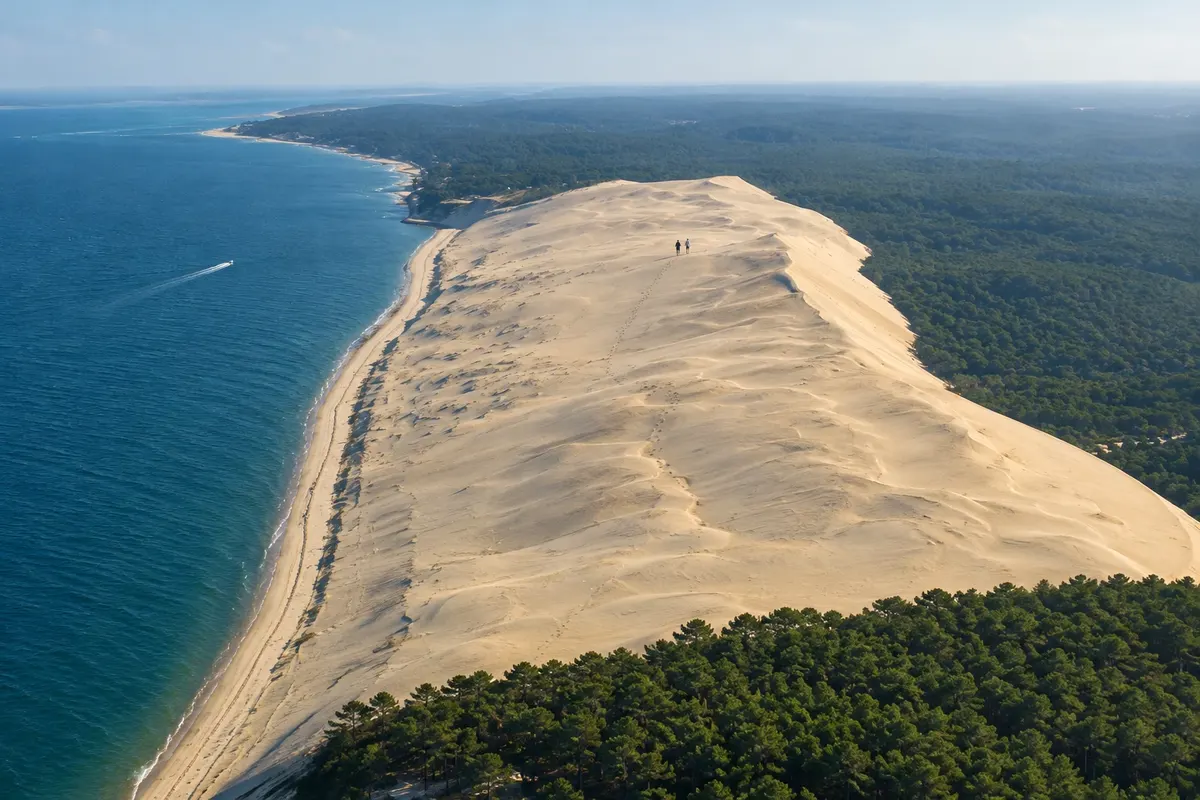
The Dune du Pilat is the tallest dune in Europe: a hill of about 55 million cubic meters of sand accumulated over 4,000 years at the outlet of the Bassin d'Arcachon, between the Atlantic Ocean and the Landes pine forest. It is a protected Grand Site, publicly owned. The visit begins at the welcome area, with parking, snack outlets and restrooms, and continues along a path through the woods to the base of the dune. The climb takes about 15 minutes; from April to October stairs are installed in the sand. At the top, the crest stretches to both sides: on one side, the ocean, the Banc d'Arguin and the tip of Cap Ferret; on the other, a sea of pines to the horizon. Many people walk along the crest and descend on the ocean side down to the beach. The dune keeps advancing inland, pushed by the wind, gradually swallowing the forest. To get there without a car, take the TER from Bordeaux to Arcachon, about 50 minutes, and the Baïa bus line 3 to the Dune du Pilat stop, about 25 minutes.
Kraji na poti: Dune du Pilat, Grand Site de la Dune du Pilat, Banc d'Arguin, Bassin d'Arcachon.
Vključuje: Access to the dune is free; the Grand Site parking is paid and the revenue goes to site maintenance. There are guided activities with mediators throughout the year.
Nasvet: At the top there is no shade, water, or snack bar: bring water, a hat, and sunscreen. In summer the sand gets very hot, so go early in the morning or late afternoon, and wear shoes. Bus line 3 does not run on Sundays and holidays; in July and August there is line 101 Express. Parking on the roadside is prohibited.
Najboljši čas za obisk: From April to October, with stairs installed. In July and August it is very busy: arrive early.
Arcachon: Ville d'Hiver, oysters and boat to Cap Ferret
Odhod: Gare de Bordeaux-Saint-Jean TER to Arcachon and UBA boat to Cap Ferret about 9 hours round trip Ves dan Lahko
Arcachon is Bordeaux’s seaside town, on the edge of an almost closed bay, the Bassin d'Arcachon, about 50 minutes by TER. The town grew in the 19th century as a summer resort established by the Pereire brothers. Above, the Ville d'Hiver covers 110 hectares of 19th- and early-20th-century villas in styles ranging from Swiss chalet to Moorish, with Place Fleming and its white bandstand from 1893. Below, on the waterfront, is Jetée Thiers, where UBA boats depart for Cap Ferret: the crossing to Jetée Bélisaire takes 30 minutes and runs year-round, except on December 25 and January 1. In Cap Ferret, the 53 m lighthouse has 258 steps and views over the Bassin, the oyster parks, Île aux Oiseaux and the Dune du Pilat. In the oyster-farming villages on the peninsula, such as Le Canon and L'Herbe, producers open their huts for on-site oyster tasting. Another option from Arcachon is the boat trip to Île aux Oiseaux to see the cabanes tchanquées, two wooden houses on stilts in the middle of the bay; boats only approach them at high tide.
Kraji na poti: Arcachon, Ville d'Hiver d'Arcachon, Jetée Thiers, Cap Ferret, Phare du Cap Ferret, Île aux Oiseaux, Cabanes tchanquées.
Vključuje: The Arcachon–Cap Ferret boat and trips to Île aux Oiseaux require tickets, sold at the piers or online. The climb of the lighthouse and oysters at the huts are paid separately. Check the current price list.
Nasvet: Check the tidal table before the trip to Île aux Oiseaux. In summer there is also a sea bus between Petit Port, Jetée Thiers and Le Moulleau. You can combine Arcachon and Dune du Pilat in one day, but it’s rushed: choose one of the two if you want time for Cap Ferret.
Najboljši čas za obisk: From May to September, for beach and boat. Oysters are available year-round.
Entre-deux-Mers by bike on the Roger Lapébie piste
Odhod: Bordeaux, right bank of the Garonne Bicycle along the greenway; return by bus or bicycle about 6 to 8 hours Ves dan moderate (25 to 30 km per section)
The Entre-deux-Mers is the vineyard region between the Garonne and Dordogne rivers, the largest wine region of the Bordelais, producing dry whites, reds, rosés and crémants. The piste cyclable Roger Lapébie is a greenway of about 47 km built on an old railway between Latresne, near Bordeaux, and Sauveterre-de-Guyenne, almost flat and separated from cars. The most common day ride goes from Bordeaux to Créon, about 25 km: a bastide, a planned medieval town with a square and arcades at the Place de la Prévôté, with a market on Wednesday morning. After roughly 30 km of track you leave the greenway to reach the Abbaye de La Sauve-Majeure, a Romanesque abbey founded in 1079, with capitals carved with animals and human figures. It is part of UNESCO World Heritage for the Routes of Santiago de Compostela. It was the monks of that abbey who cleared the surrounding forest to plant vines. Along the way there are vineyards, mills and Romanesque churches, and some estates welcome visitors.
Kraji na poti: Entre-deux-Mers, Piste cyclable Roger Lapébie, Créon, Abbaye de La Sauve-Majeure, Sauveterre-de-Guyenne.
Vključuje: The greenway has no entrance fee. Bicycle rental, abbey admission and visits to estates are paid separately. Check the current price table.
Nasvet: Rent the bicycle in Bordeaux, preferably electric if you are not used to long distances. To return without pedaling, express bus 470 connects Créon to Bordeaux in about 40 minutes, and 473 serves La Sauve. Bring water and check in advance whether the bus accepts bicycles.
Najboljši čas za obisk: From April to June and in September and October, with mild temperatures. In summer, start early.


 Brazilija
 Antarktika
 Argentina
 Bolivija
 Čile
 Kolumbija
 Ekvator
 Gvajana
 Francoska Gvajana
 Falklandski otoki (Malvini)
 Paragvaj
 Peru
 Surinam
 Urugvaj
 Venezuela
 Nemčija
 Avstrija
 Belgija
 Hrvaška
 Danska
 Slovaška
 Slovenija
 Španija
 Finska
 Grčija
 Nizozemska
 Madžarska
 Irska
 Islandija
 Italija
 Luksemburg
 Norveška
 Poljska
 Portugalska
 Združeno kraljestvo
 Češka
 Švedska
 Švica
 Turčija
 Bermudi
 Kanada
 Združene države Amerike
 Grenlandija
 Mehika
 Sveta Peter in Mihael
 Dominikanska republika
 Japonska
 Južnoafriška republika
 Egipt
 Avstralija
 Fidži
 Nova Zelandija
 Papua Nova Gvineja