Musée Unterlinden and the Retable d'Issenheim, in Colmar
Odhod: Place Unterlinden, Colmar On foot, in central Colmar Približno 2 uri Dopoldne ali popoldne Lahko
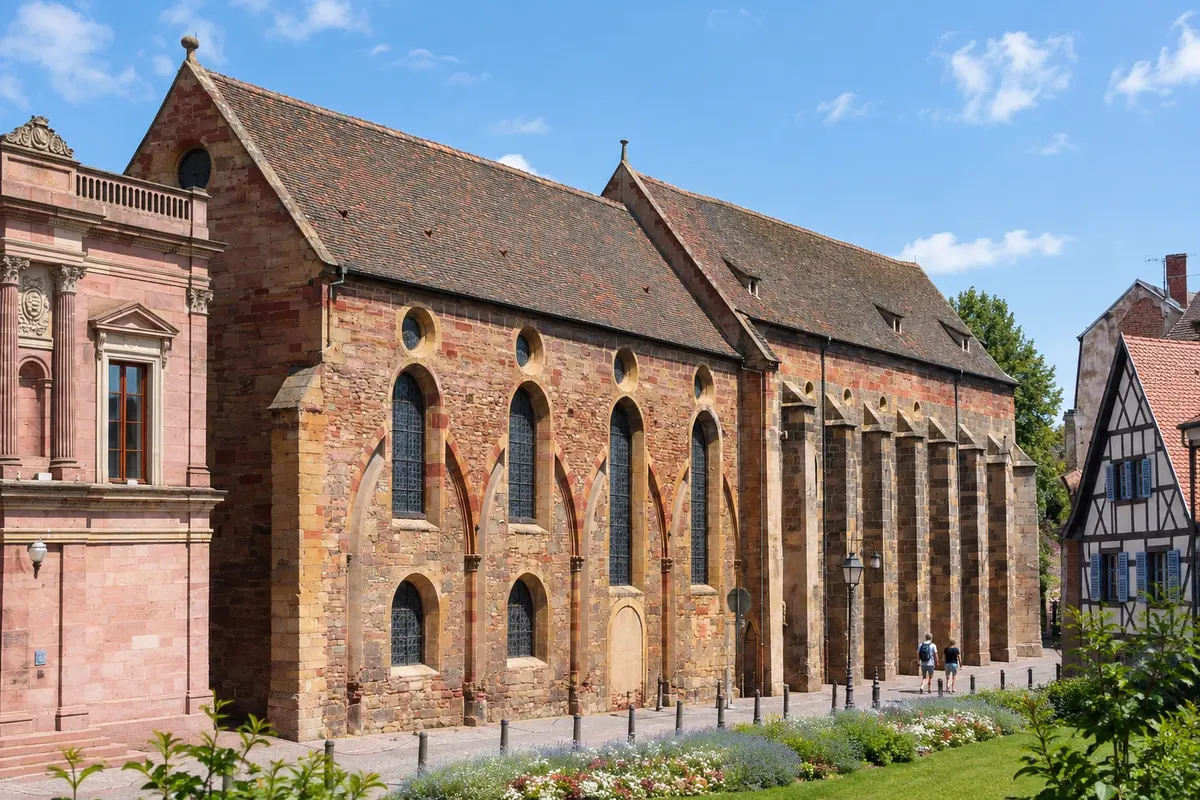
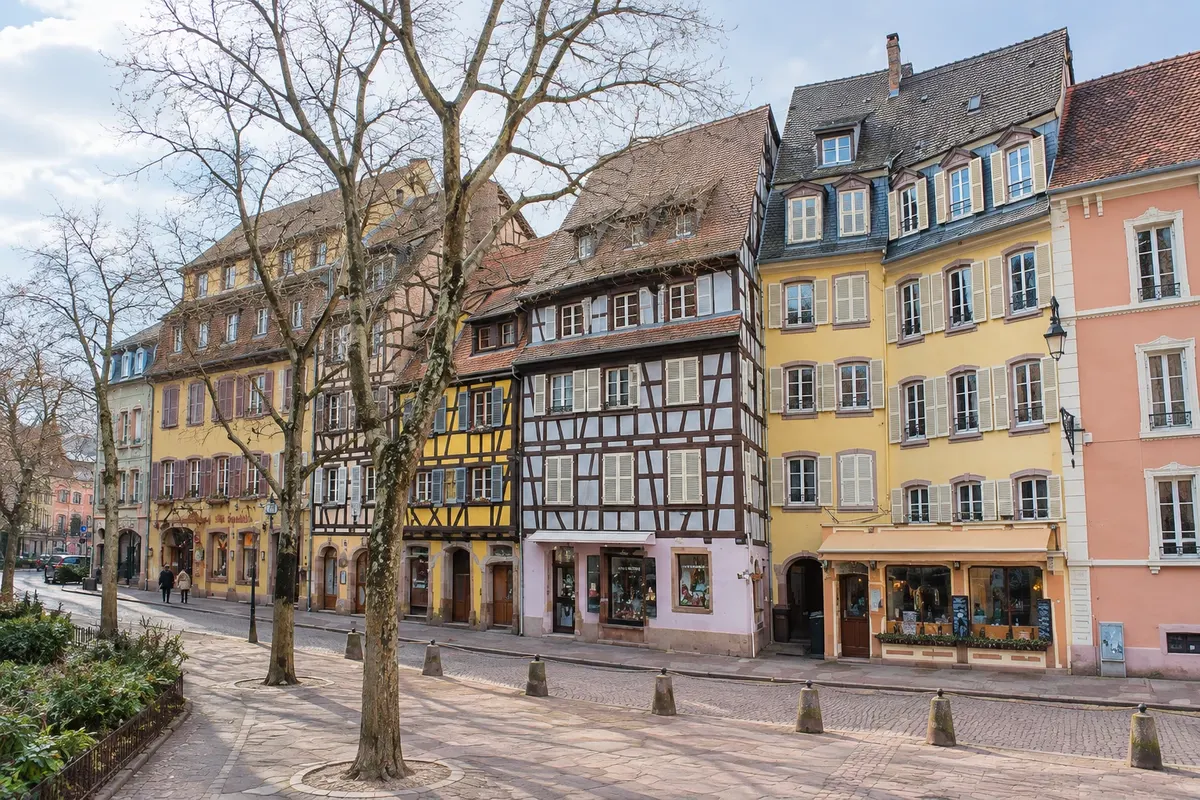
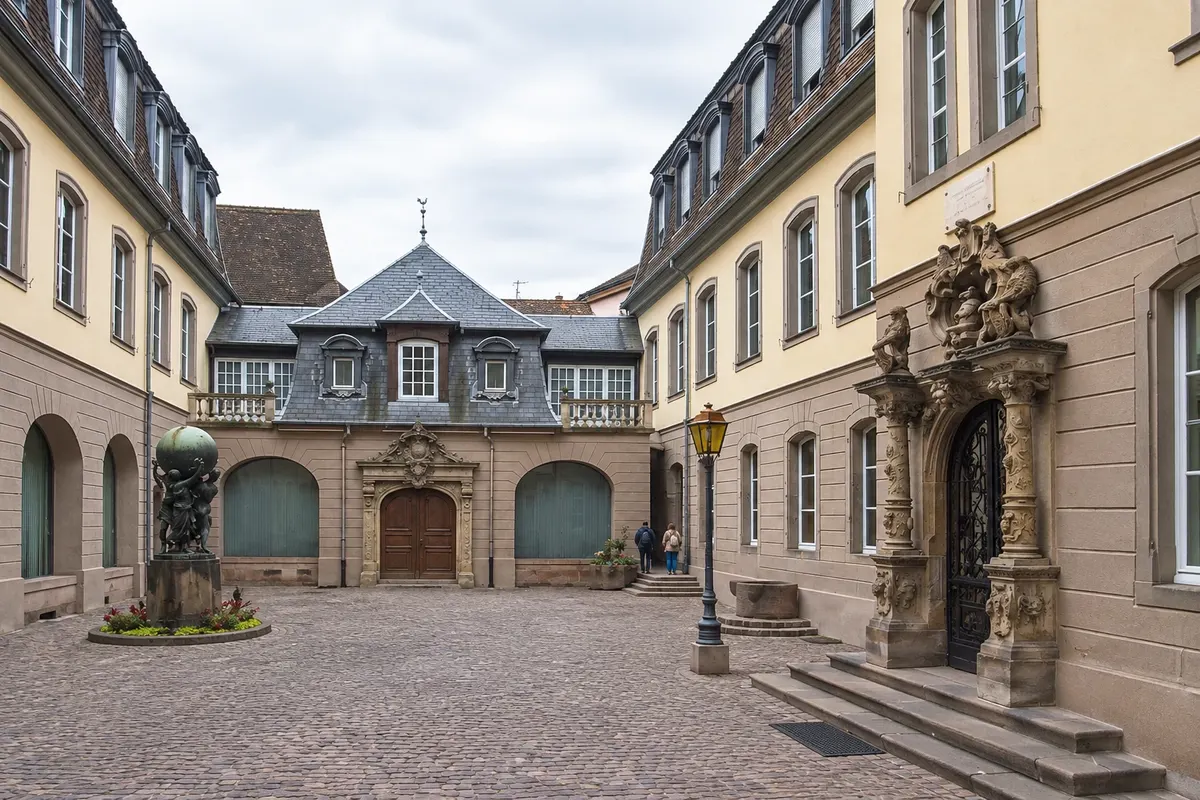
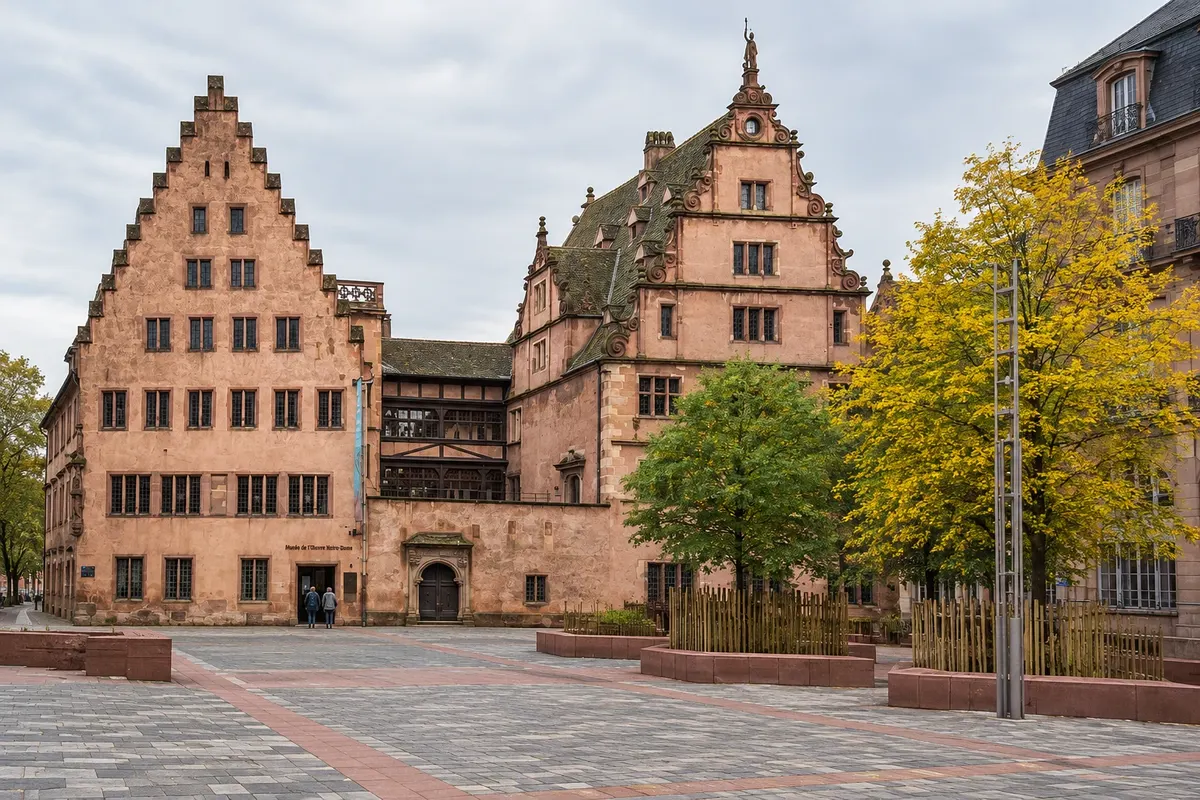
The museum occupies the former convent of the Dominican sisters of Unterlinden, with a 13th-century cloister, and was expanded by architects Herzog & de Meuron, who linked the convent to a new brick-and-copper building, the Ackerhof; the new museum opened in December 2015. The central piece is the Retable d'Issenheim, painted by Grünewald and carved by Nicolas de Haguenau between 1512 and 1516 for the altar of the Antonine commandery of Issenheim, which cared for the sick. The altarpiece was restored from 2018 to 2022 and is displayed in the old chapel, with the panels open side by side. The collection covers about 7,000 years of history, with more than 3,500 works: archaeology, such as the Bergheim mosaic; art from the 11th to the 16th centuries, including Martin Schongauer; decorative arts and modern art, with works by Picasso, Monet and Dubuffet in the Ackerhof.
Kraji na poti: Musée Unterlinden, Retable d'Issenheim, Ackerhof.
Vključuje: There is an admission fee, paid separately; an audio guide and guided tours are available. Check the current schedule/prices.
Nasvet: Go straight to the chapel to see the altarpiece before the tour groups arrive, then continue through the cloister and the Ackerhof. The museum is closed one day a week; check before you go.
Najboljši čas za obisk: All year; a program for rainy or cold days.
Riquewihr and Hunawihr: town walls, the Dolder and vineyards
Odhod: Colmar Car, regional bus, or tour Približno 4 ure Dopoldne ali popoldne Lahko
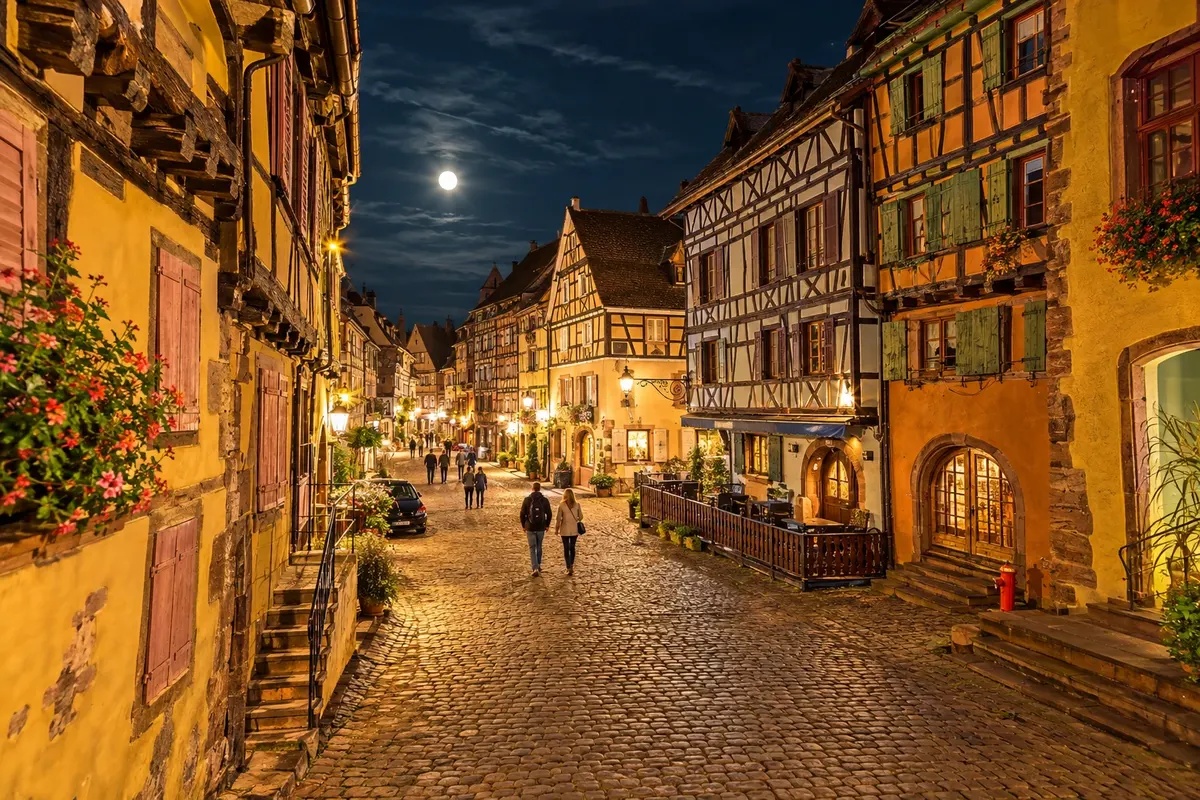
Riquewihr is a walled village amid the vineyards, north of Colmar, with half-timbered houses—some dated 1521—and 16th-century walls. The main street climbs up to the Dolder, the gate-tower that served as an alarm belfry. It’s worth leaving the main street to explore the side lanes and the winegrowers’ courtyards. About 4 km away is Hunawihr, a smaller village with a 15th-century fortified church surrounded by a wall, high above the vineyards. Hunawihr is also home to NaturOparC, a species protection park of Alsace, with white storks and otters.
Kraji na poti: Riquewihr, Dolder, Hunawihr, Église fortifiée de Hunawihr.
Vključuje: Self-guided visit; entrance to the villages is free. Visits to the cellars and to NaturOparC are paid separately. Check the current price table.
Nasvet: Arrive before late morning: Riquewihr receives many groups. Combine with Ribeauvillé and Kaysersberg on the same day if you are driving. Wear comfortable shoes: the main street is uphill.
Najboljši čas za obisk: From April to October, with green vineyards or at harvest; in December, Christmas market.
Eguisheim and the Trois Châteaux trail
Odhod: Colmar Car, regional bus or bicycle Približno 3 ure Dopoldne ali popoldne easy (moderate trail to the castles)
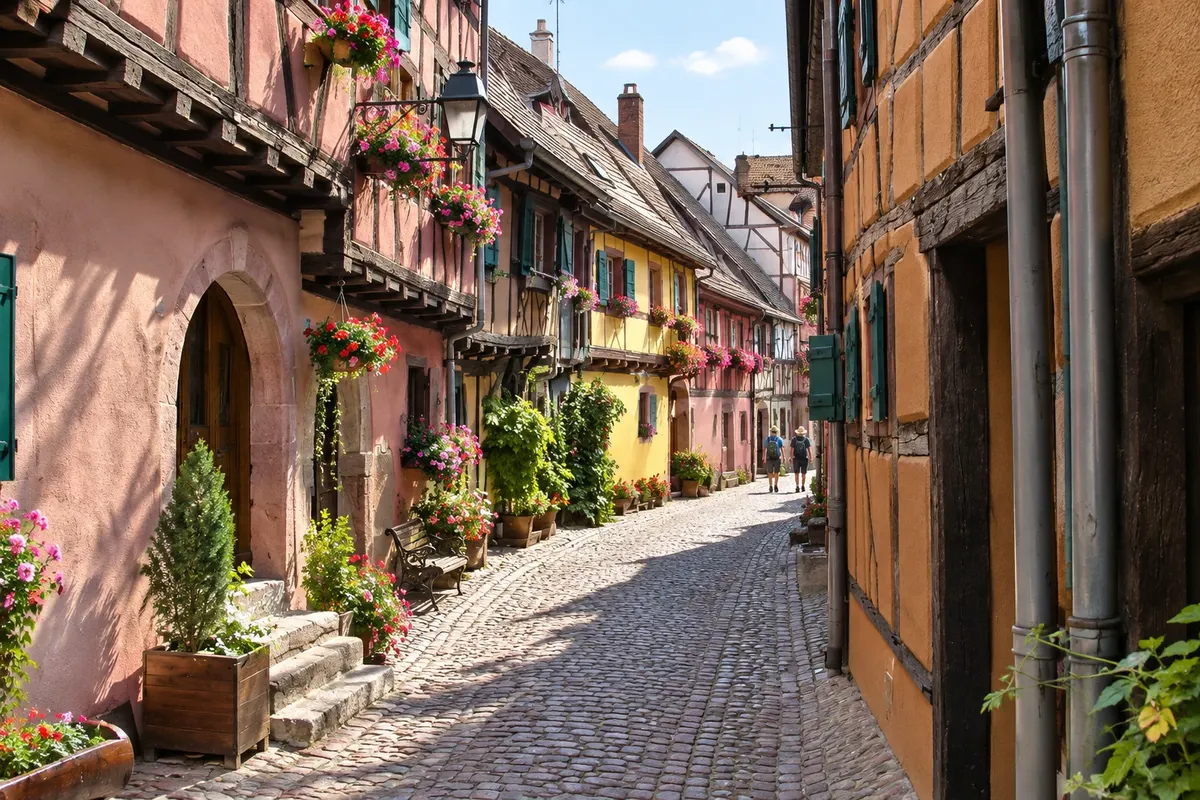
Eguisheim, south of Colmar, has an unusual layout: the lanes form concentric circles around the old counts’ castle in the village center. A full circuit along the outer ring passes by colorful half-timbered houses, fountains and winegrowers’ courtyards. Eguisheim is the birthplace of Pope Leo IX, commemorated in the castle square in the center. If you’re up for it, you can walk from the village up to the Trois Châteaux (Haut-Eguisheim), the three watchtowers Weckmund, Wahlenbourg and Dagsbourg on the ridge, with views over the Alsace plain. The trail takes about 1 hour 30 minutes round trip.
Kraji na poti: Eguisheim, Trois Châteaux, Weckmund, Wahlenbourg, Dagsbourg.
Vključuje: Self-guided visit; entry to the village and the ruins is free. Visits to the wine cellars are paid separately.
Nasvet: Do the outer ring first, then enter the castle square. For the castle trail, wear sneakers and bring water. Eguisheim is close to Colmar and is easy to do by bicycle.
Najboljši čas za obisk: From April to October. In December, the Christmas market runs on Advent weekends.
Kaysersberg: fortified bridge, castle and Albert Schweitzer’s house
Odhod: Colmar Car or regional bus Približno 3 ure Dopoldne ali popoldne easy (short climb to the castle)
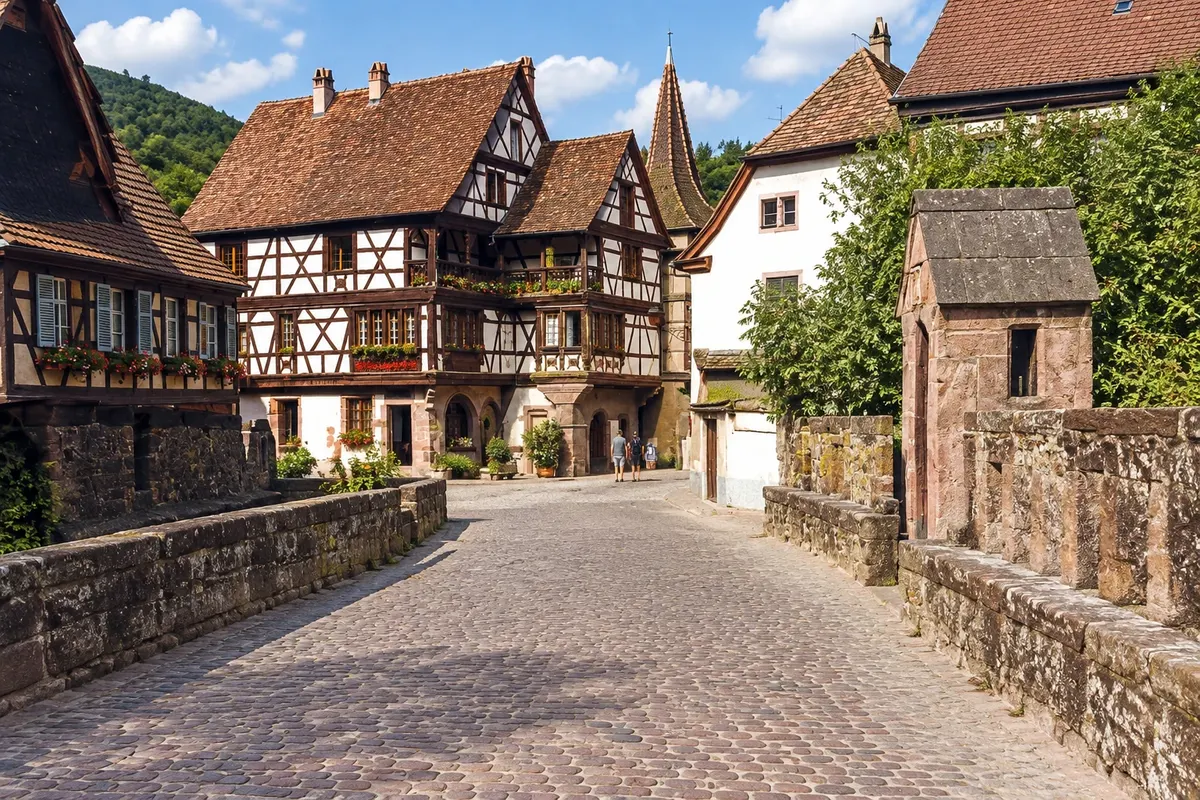
Kaysersberg is about 13 km from Colmar, roughly a 20-minute drive, at the entrance to the Weiss River valley. The village has no train station but is served by buses from Colmar. Its symbol is the fortified bridge of 1514 over the Weiss, with a small chapel in the middle. The Église Sainte-Croix, built between the 13th and 15th centuries, has a Romanesque portal and a carved wooden altarpiece by Jean Bongart dating to 1518; opposite it stands the 16th-century Fontaine Constantin. Albert Schweitzer, physician, theologian and Nobel Peace Prize laureate of 1952, was born in the village; his birthplace houses a center about his life and work. A short climb leads to the ruins of the 13th-century imperial castle, with a round tower and views over the village, the vineyards and the valley. From Kaysersberg, a roughly 2 km path through the vineyards, about 30 minutes on foot, leads to Kientzheim.
Kraji na poti: Kaysersberg, Pont fortifié, Château de Kaysersberg, Église Sainte-Croix, Centre Albert Schweitzer.
Vključuje: Self-guided visit; entry to the village and the castle ruins is free. The Centre Albert Schweitzer charges admission. Check the current schedule.
Nasvet: Climb to the castle early, before the heat in summer. In December, the village Christmas market, with about sixty stalls, fills up on weekends: go in the morning.
Najboljši čas za obisk: From April to October; in December, Christmas market.
Château du Haut-Kœnigsbourg
Odhod: Sélestat, Colmar or Strasbourg Train to Sélestat and bus 500, or car about 1 hour and a half visit Dopoldne ali popoldne easy (about 300 steps)
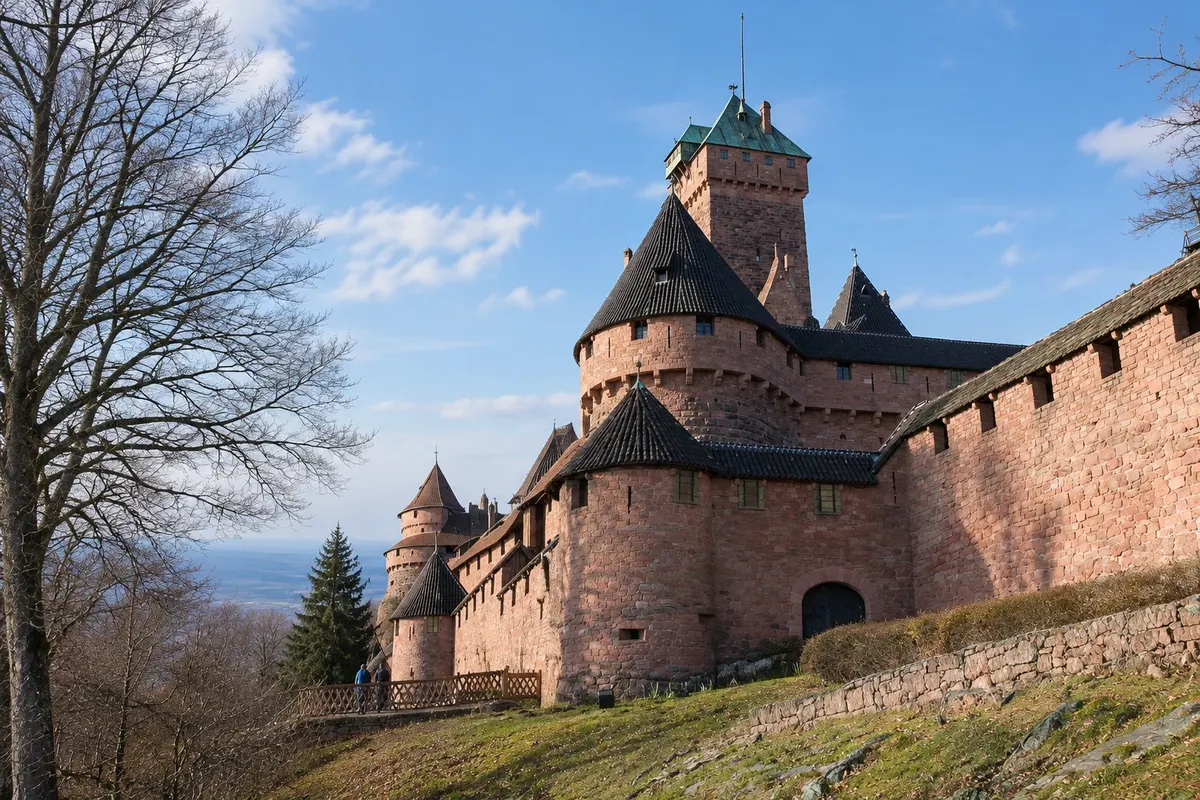
The castle stands at 757 m altitude, on a rocky spur overlooking the Alsace plain, in the commune of Orschwiller. It was built in the 12th century by the Hohenstaufen to watch trade routes, was sacked by the Swedes in 1633 and lay in ruins for almost 250 years. In 1899, the town of Sélestat offered the ruins to the German Emperor Wilhelm II, who ordered its reconstruction; architect Bodo Ebhardt led the work from 1900 to 1908. The result is an idealized reconstruction of a medieval castle, with a donjon and drawbridge, and it has been debated since. A self-guided visit takes about 1 hour and a half, with about 300 steps, and is not suitable for baby strollers. From the top, the view reaches the Alsace plain and the vineyards. Without a car, the route is by train to Sélestat, between Strasbourg and Colmar, and the line 500 bus to the castle.
Kraji na poti: Château du Haut-Kœnigsbourg, Orschwiller, Sélestat.
Vključuje: There is an admission fee, paid separately, also sold online. the bus 500 ticket gives a discount on entry. The castle parking is free of charge. Check the current schedule.
Nasvet: Bring a coat: at the top it is windy and colder than in Colmar. Bus 500 runs from March to December, with timetables set each year, and does not operate in January and February. The castle is closed on January 1 and on December 25 and 26. Combine your visit with the Montagne des Singes in Kintzheim, at the foot of the same mountain.
Najboljši čas za obisk: From March to December, while bus 500 is operating. In July and August, arrive at opening time.
Palais Rohan and Musée de l'Œuvre Notre-Dame
Odhod: Place du Château, Strasbourg On foot, beside the cathedral Približno 3 ure Dopoldne ali popoldne Lahko
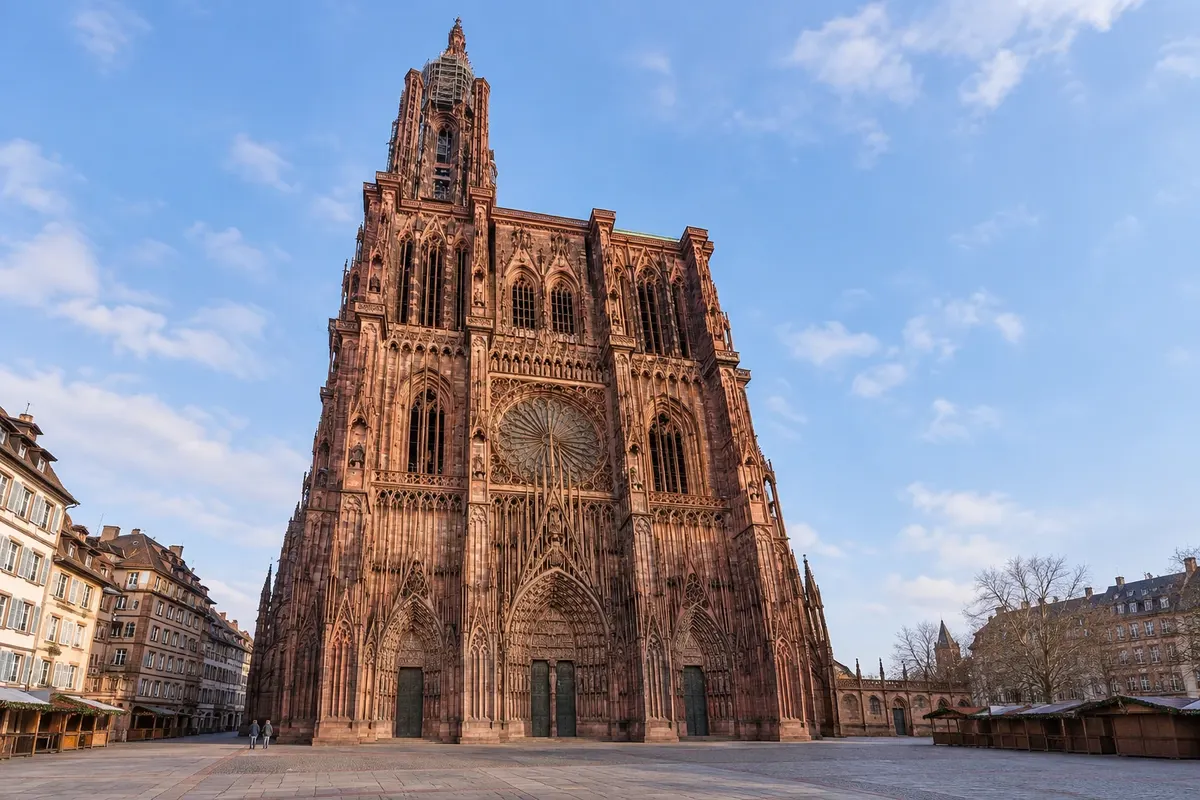
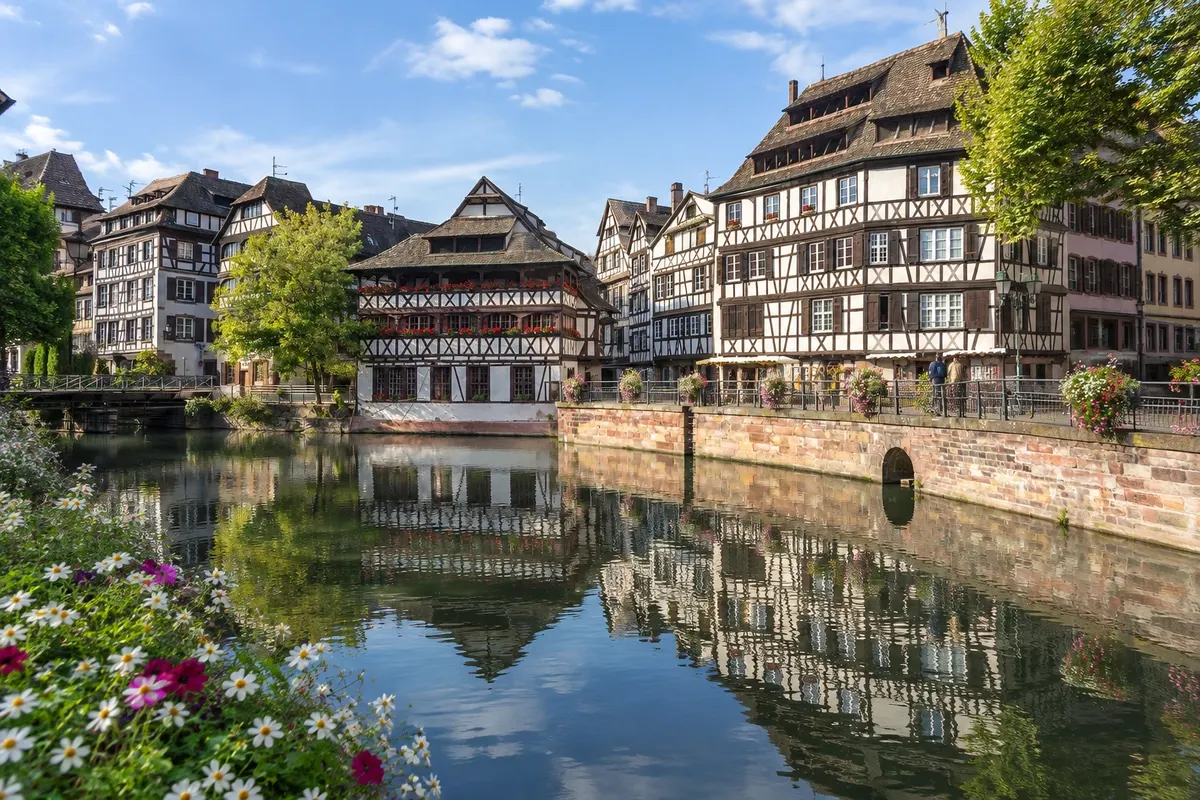
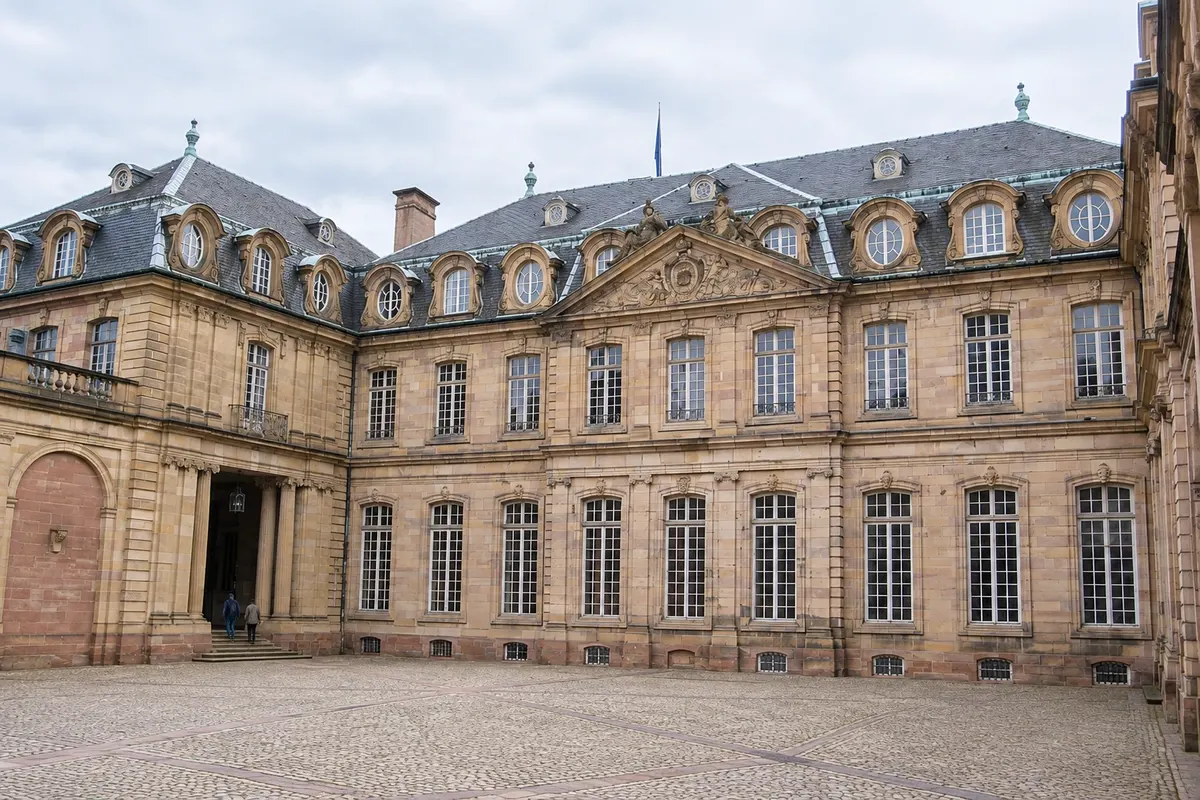
The Palais Rohan, south of the cathedral, was built between 1732 and 1742 for the prince-bishops of the Rohan family, designed by Robert de Cotte, first architect to the king. Today it houses three municipal museums. The Musée des Arts décoratifs occupies the ground floor and the grand ceremonial apartments, including the king’s chamber and the Assembly hall, decorated with gilded stucco. The Musée des Beaux-Arts, on the upper floor, displays European painting, and the Musée archéologique, in the basement, tells the story of Alsace from prehistory to the Middle Ages. Across Place du Château is the Musée de l'Œuvre Notre-Dame, linked to the foundation that has cared for the cathedral since the Middle Ages: it holds original sculptures and stained-glass windows removed from the façade, as well as medieval and Renaissance art from the Upper Rhine. Choose one or two museums per visit; the palace’s three museums together with the Œuvre museum fill a whole day.
Kraji na poti: Palais Rohan, Musée des Arts décoratifs, Musée des Beaux-Arts, Musée archéologique, Musée de l'Œuvre Notre-Dame.
Vključuje: Each museum has its own ticket. Strasbourg museums sell passes that combine several museums. Check the current chart.
Nasvet: If you have limited time, the apartments of the Musée des Arts décoratifs and the Musée de l'Œuvre Notre-Dame are the most connected to the city’s history. Municipal museums close one day a week; check before you go.
Najboljši čas za obisk: All year; a program for rainy or cold days.
Christmas markets: Christkindelsmärik of Strasbourg and the markets of Colmar
Odhod: Strasbourg or Colmar On foot through the historic centers Približno 4 ure afternoon and evening Lahko
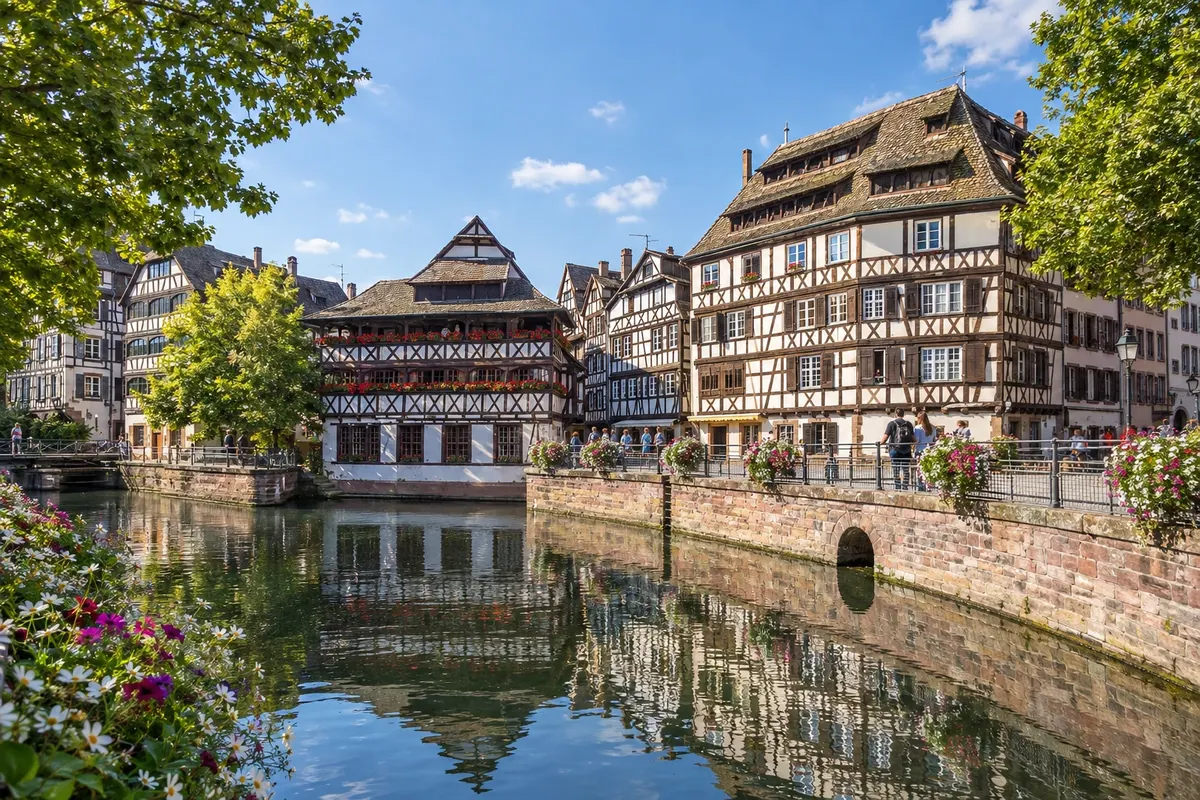
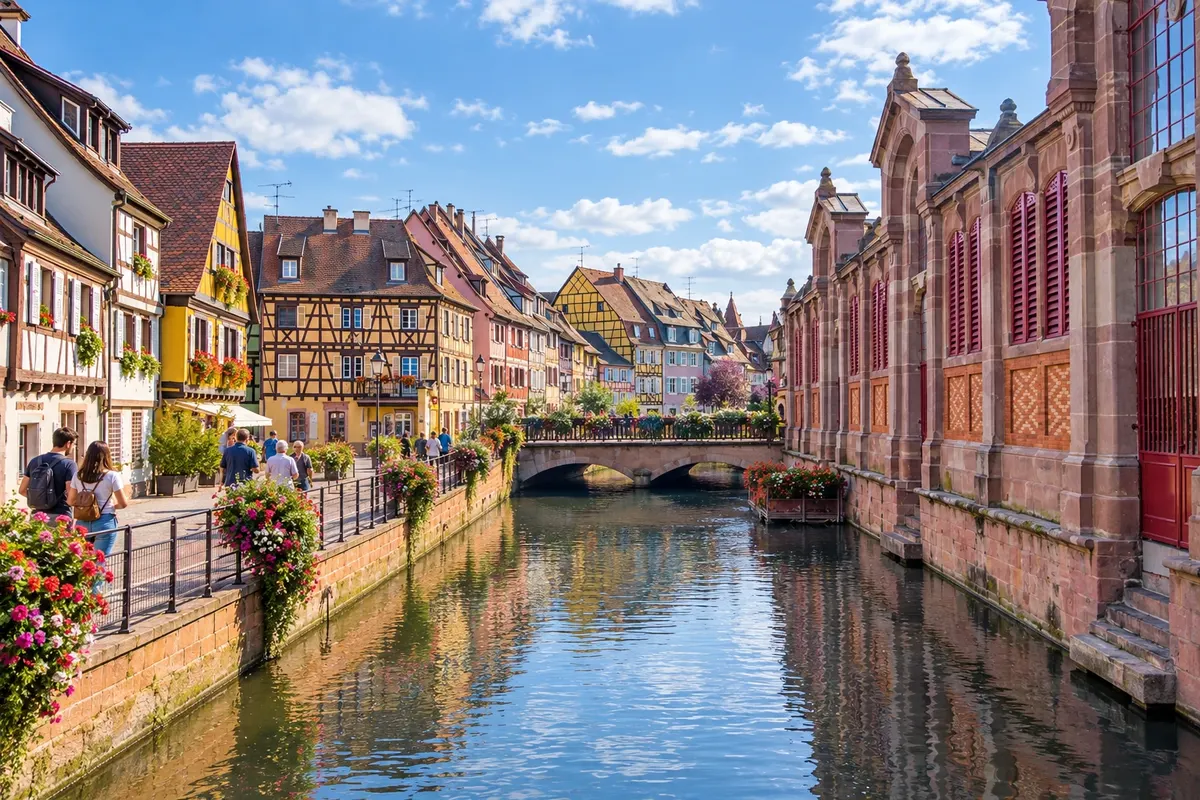
The Christkindelsmärik of Strasbourg dates back to 1570 and is among the oldest Christmas markets in Europe. It covers Place Broglie, Place de la Cathédrale and the streets of the Grande Île, with about 300 wooden stalls selling decorations, crafts, holiday sweets and hot drinks. The large Christmas tree stands on Place Kléber, and Petite France hosts a smaller market. In Colmar there are five or six markets spread through the center, including those on Place des Dominicains, with an ice rink and a children’s market, Place de l'Ancienne Douane and Place Jeanne d'Arc, as well as the illuminated Petite Venise. Villages along the Route des Vins also have markets: Kaysersberg, with around sixty stalls around the church, Riquewihr and Eguisheim, the latter only on Advent weekends. Markets typically open in late November and run until close to Christmas or until the end of December, depending on the town and the year.
Kraji na poti: Christkindelsmärik, Place Broglie, Place de la Cathédrale, Place Kléber, Colmar, Kaysersberg, Riquewihr, Eguisheim.
Vključuje: Entrance to the markets is free. Food, drinks and purchases are paid separately.
Nasvet: The weekends in early December are the busiest: Strasbourg can receive up to 100,000 visitors a day. Prefer weekdays and mornings. Trains between Strasbourg and Colmar get crowded; buy in advance. Bring winter clothing: nights are cold, around 0 °C.
Najboljši čas za obisk: From late November to December; check the dates for the year before you book the trip.
Ribeauvillé: Tour des Bouchers and the three Ribeaupierre castles
Odhod: Colmar Regional transport, car, or tour about 4 hours including the trail Dopoldne ali popoldne moderate (uphill trail)
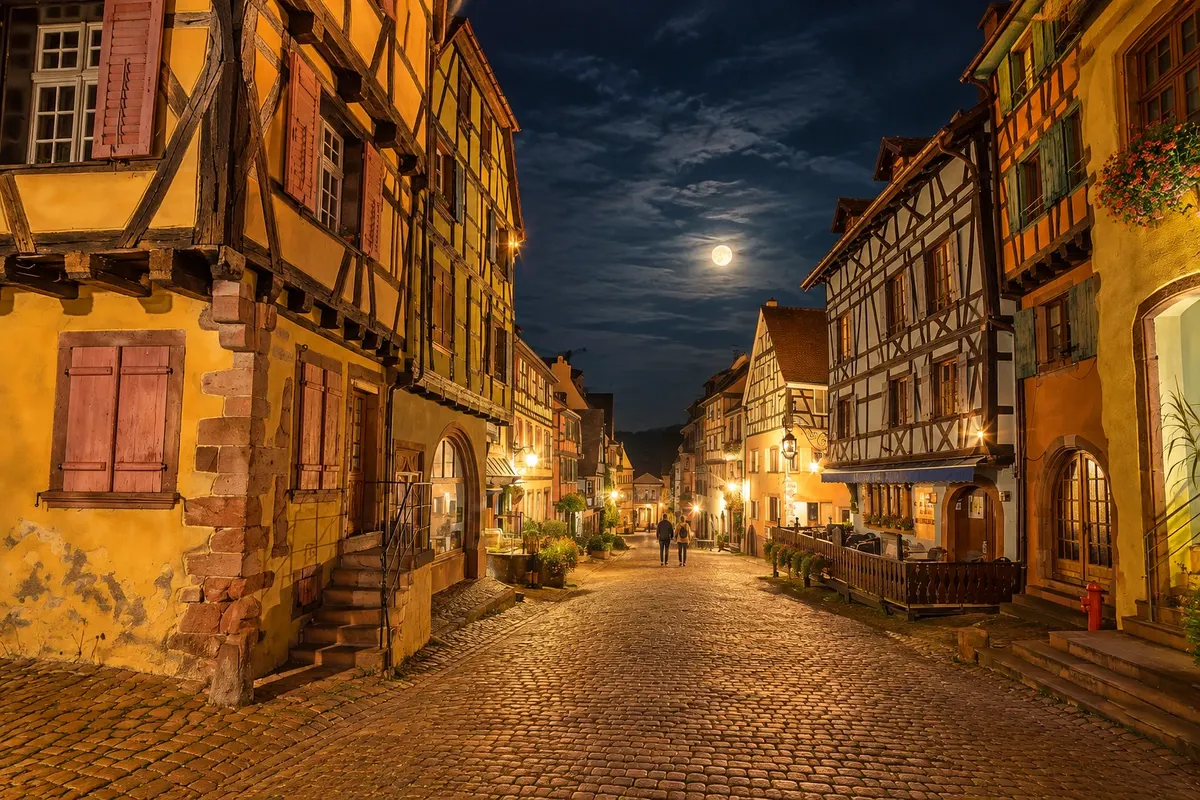
Ribeauvillé, north of Riquewihr, was the seat of the lords of Ribeaupierre, and their three castles stand high on the hillside above the village. The Grand'Rue runs through town and passes beneath the Tour des Bouchers, a 13th-century tower that separated the upper and lower town. Along the street are half-timbered houses, fountains, and wine cellars. Those who enjoy walking can climb the forest trail to the ruins of Château de Saint-Ulrich and continue to the other two, Girsberg and Haut-Ribeaupierre. The circuit of the three castles is a long uphill forest trail; visitors with less time usually go only to Saint-Ulrich. Ribeauvillé is one of the vineyard villages served by regional transport from Colmar.
Kraji na poti: Ribeauvillé, Tour des Bouchers, Château de Saint-Ulrich, Château du Girsberg, Château du Haut-Ribeaupierre.
Vključuje: Self-guided visit; entry to the village and the ruins is free. Visits to the wine cellars are paid separately.
Nasvet: Wear shoes with good soles on the trail and bring water: there are no services along the way. Off the trail, one hour is enough to reach the Grand'Rue. Ribeauvillé is about ten minutes by car from Kaysersberg and pairs well with Riquewihr.
Najboljši čas za obisk: From April to October, with the trail dry. In winter the path can become slippery.
Neustadt: the German quarter, from Place de la République to the Palais du Rhin
Odhod: Place de la République, Strasbourg Walk starting from the Grande Île Približno 2 uri Dopoldne ali popoldne Lahko
In 1871 Strasbourg became part of the German Empire, and from the 1880s the city gained a new district to the east and north of the Grande Île: the Neustadt (new town). Wide avenues, squares and stone public buildings contrast with the medieval streets of the center. The axis is the former imperial square, today Place de la République, a circular garden surrounded by official buildings, including the Palais du Rhin, built as the emperor’s palace. In 2017 UNESCO extended the Grande Île World Heritage listing to include the Neustadt, under the name De la Grande-Île à la Neustadt. The walk starts at Place de la République and follows the district’s avenues, with residential buildings from the same period. You can combine it with the Batorama boat, which passes the Neustadt, or with a visit to the Parlement européen.
Kraji na poti: Neustadt, Place de la République, Palais du Rhin.
Vključuje: Self-guided walk. The Office de Tourisme offers paid guided tours; check current prices.
Nasvet: Place de la République is a few minutes' walk from the cathedral, on the other side of the Ill. It’s a walk to do on your second or third day in Strasbourg, after seeing the Grande Île.
Najboljši čas za obisk: All year; in spring and summer the gardens of Place de la République are green.
Parlement européen, Parlamentarium Simone Veil and Parc de l'Orangerie
Odhod: Strasbourg city centre Tram line E to the Parlement européen stop Približno 3 ure Dopoldne ali popoldne Lahko
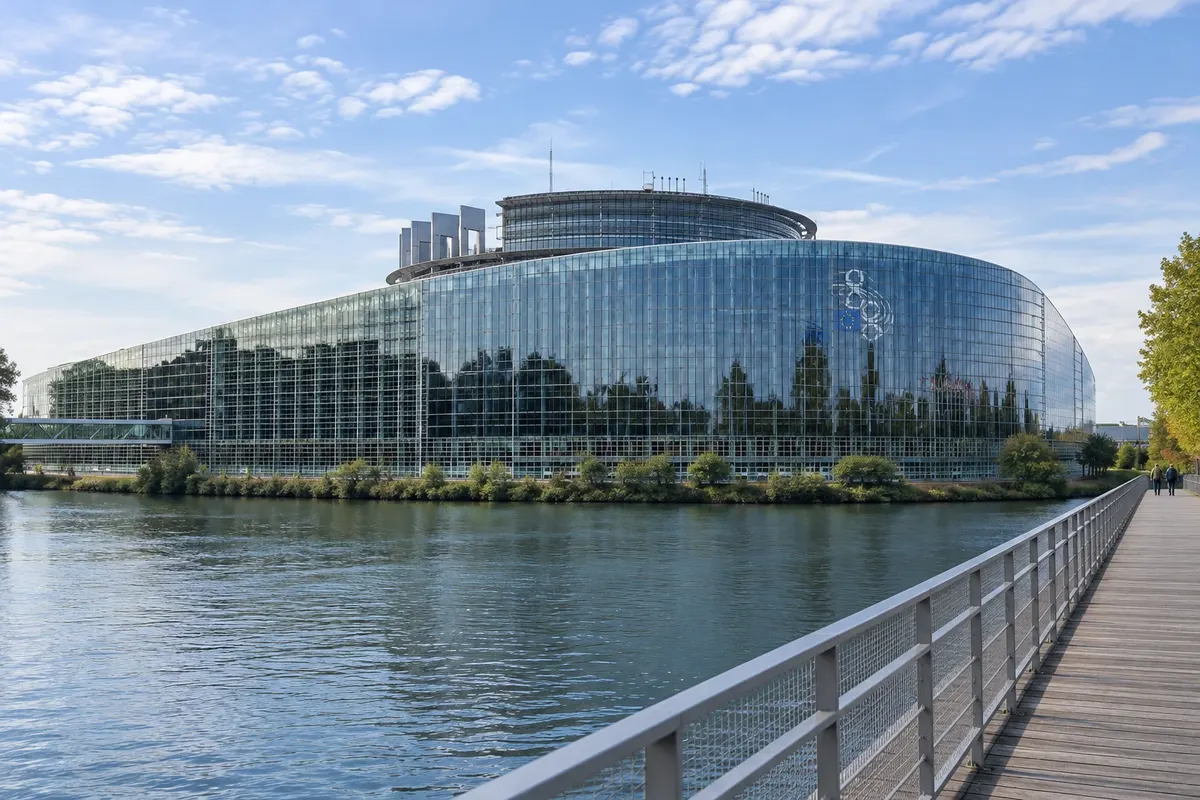
Strasbourg is one of the seats of the European Parliament, which holds plenary sessions there from Monday to Thursday, about once a month, except in August. The visitors' entrance is in the Louise Weiss building. Outside session weeks, individual visitors can enter without a reservation, Monday to Saturday, pass through security screening and make a self-guided visit to the hemicycle, the Parlamentarium Simone Veil (an exhibition about European integration), and temporary exhibits, using an app or an audio device. The visit takes about one hour. During session weeks the public may watch from the galleries, subject to available seats. Nearby are the Palais de l'Europe, home of the Council of Europe (not part of the European Union), and the building of the European Court of Human Rights, designed by Richard Rogers, which is viewed from the outside. A few minutes' walk away is the Parc de l'Orangerie, with a lake and tree-lined paths, to finish the walk.
Kraji na poti: Parlement européen, Parlamentarium Simone Veil, Palais de l'Europe, Cour européenne des droits de l'homme, Parc de l'Orangerie.
Vključuje: The visit to the Parliament is free of charge. You must present the original passport; copies and phone photos are not accepted.
Nasvet: Bring your passport, because without it you cannot enter. Liquids over 100 ml are barred at security, as at the airport. Bring your own headphones for the app. The building is closed on Sundays and public holidays.
Najboljši čas za obisk: All year, Monday to Saturday. To see a plenary session, check the Parliament calendar.
Across the Rhine: Kehl by tram and a day trip to Baden-Baden or Freiburg
Odhod: Strasbourg or Colmar Tram D to Kehl; train or bus to Baden-Baden and Freiburg from 2 hours (Kehl) to a full day Dopoldne ali ves dan Lahko
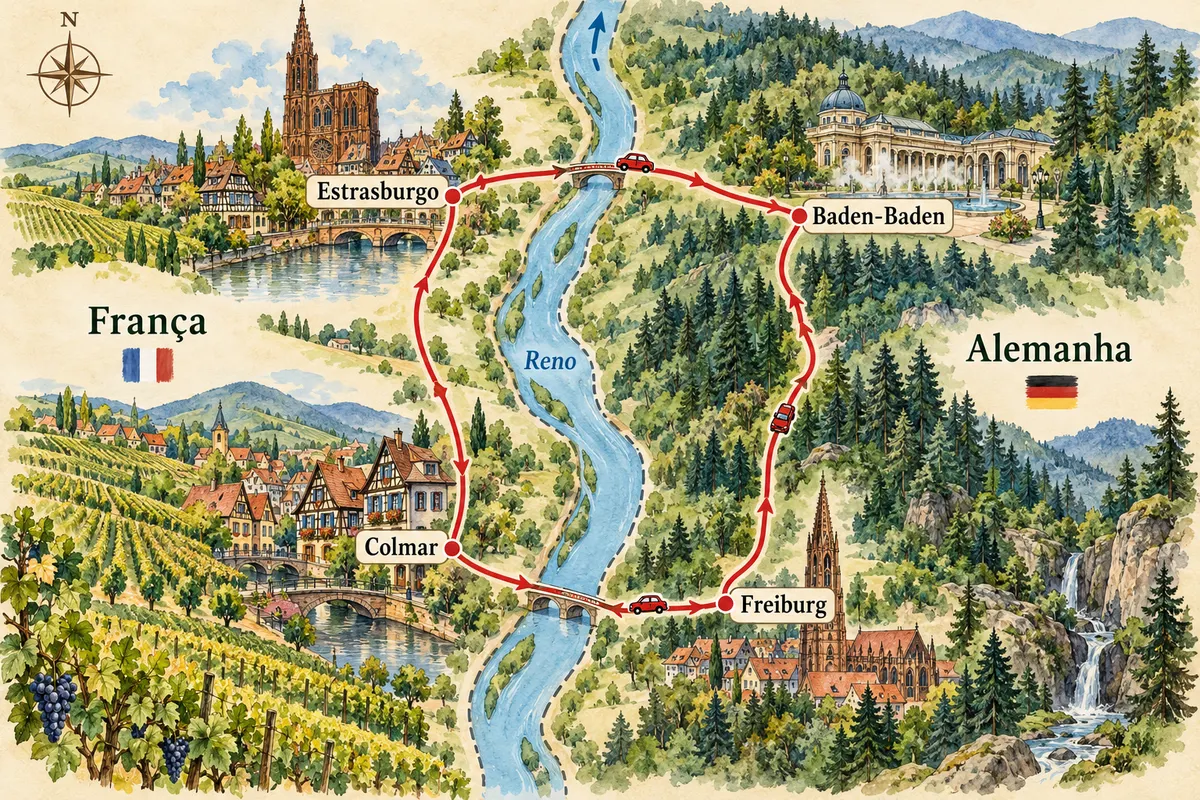
Alsace borders Germany along the Rhine, and within the Schengen area crossings generally have no border control. It’s an add-on, not the focus of the trip. The simplest option is Kehl, the German town opposite Strasbourg: tram line D crosses the Rhine and goes to Kehl Rathaus, the town hall, in the city center. You can go and return in a morning. Baden-Baden, a spa town in the northern Black Forest, is about 41 km from Strasbourg; by train the journey takes from 30 minutes to just over 1 hour, usually with a change. Freiburg im Breisgau, a university town in the southern Black Forest, is closer to Colmar: regional bus Fluo 1076 runs from Colmar to Breisach on the German bank, from where trains depart for Freiburg. If you arrive at EuroAirport there is an hourly bus to Freiburg’s bus station, next to the railway station, taking about 60 minutes.
Kraji na poti: Kehl, Rhine, Baden-Baden, Freiburg im Breisgau, Breisach.
Vključuje: Self-guided trip. Strasbourg’s tram uses the urban network tickets; trains and buses to Germany are paid separately. Check the current schedule.
Nasvet: Bring your passport even to go to Kehl. In Germany, shops are closed on Sundays. For Baden-Baden and Freiburg, check return times before you go.
Najboljši čas za obisk: Vse leto.
Montagne des Singes, in Kintzheim, and NaturOparC, the stork park in Hunawihr
Odhod: Colmar or Sélestat Car about 2 hours in each park Dopoldne ali popoldne Lahko
Two animal parks near the Route des Vins, good for travelers with children. Montagne des Singes, in Kintzheim at the foot of Haut-Kœnigsbourg, is a 24-hectare forest where more than 200 Barbary macaques live free-roaming. Visitors walk a trail through the forest with monkeys nearby, and keepers run feeding sessions during the day. The visit takes about 2 hours, and the park is open from late March to mid November. NaturOparC, in Hunawihr next to Riquewihr, is a park dedicated to the protection of Alsace species such as the white stork, the region’s symbol, the European otter and the European hamster. The visit is self-guided, with keeper encounters, and the park is open year round, with reduced hours on some days.
Kraji na poti: Montagne des Singes, Kintzheim, NaturOparC, Hunawihr.
Vključuje: Each park has an admission fee, paid separately. Check the current price table.
Nasvet: At Montagne des Singes, follow the instructions of the keepers. Combine Montagne des Singes with Haut-Kœnigsbourg and NaturOparC with Riquewihr. Without a car, access is difficult.
Najboljši čas za obisk: Montagne des Singes: from late March to mid November. NaturOparC: year round.


 Brazilija
 Antarktika
 Argentina
 Bolivija
 Čile
 Kolumbija
 Ekvator
 Gvajana
 Francoska Gvajana
 Falklandski otoki (Malvini)
 Paragvaj
 Peru
 Surinam
 Urugvaj
 Venezuela
 Nemčija
 Avstrija
 Belgija
 Hrvaška
 Danska
 Slovaška
 Slovenija
 Španija
 Finska
 Grčija
 Nizozemska
 Madžarska
 Irska
 Islandija
 Italija
 Luksemburg
 Norveška
 Poljska
 Portugalska
 Združeno kraljestvo
 Češka
 Švedska
 Švica
 Turčija
 Bermudi
 Kanada
 Združene države Amerike
 Grenlandija
 Mehika
 Sveta Peter in Mihael
 Dominikanska republika
 Japonska
 Južnoafriška republika
 Egipt
 Avstralija
 Fidži
 Nova Zelandija
 Papua Nova Gvineja