Nyhavn
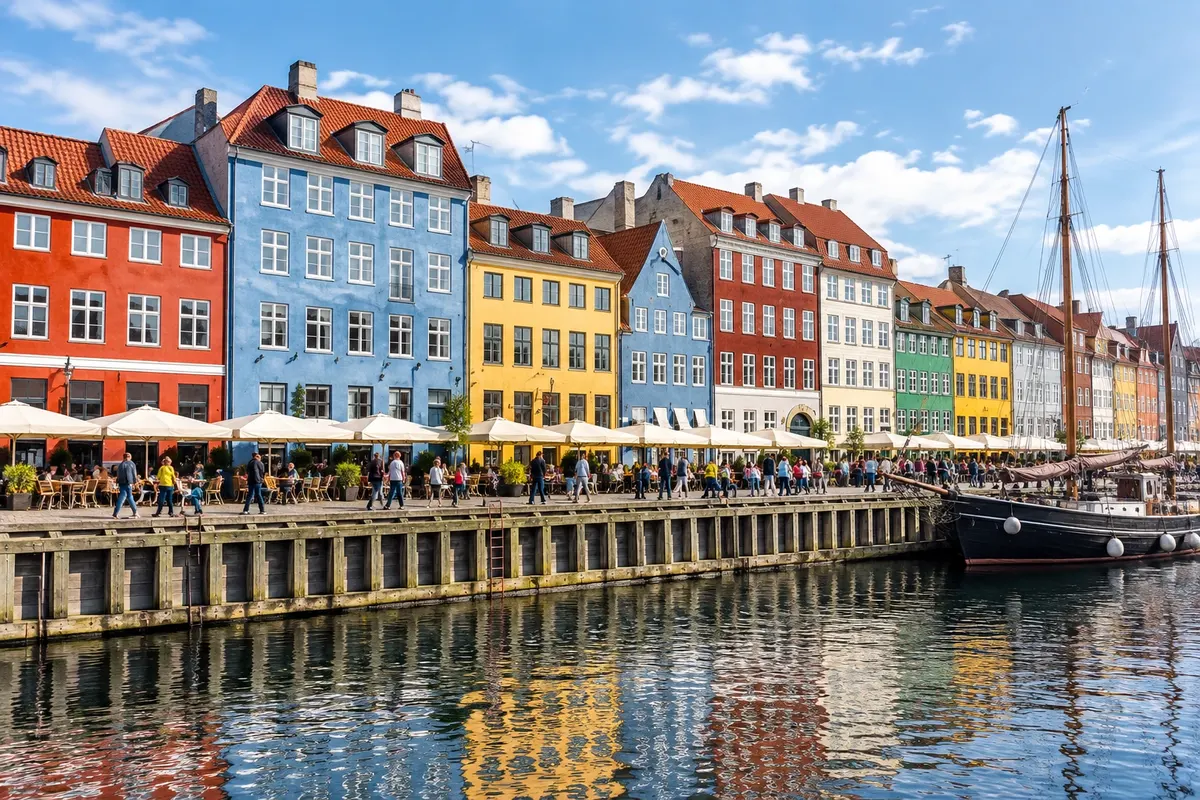
The canal dug in the 17th century between Kongens Nytorv and the harbour, with colourful houses, wooden boats and the street of restaurants on the sunny side. H. C. Andersen lived in three of those houses.
Antarktika
Capital Region · Danska
The Danish capital on the shores of the Øresund: the Nyhavn canal, the Tivoli, the royal palaces, art and design museums, the Pequena Sereia and a city best explored by bicycle.
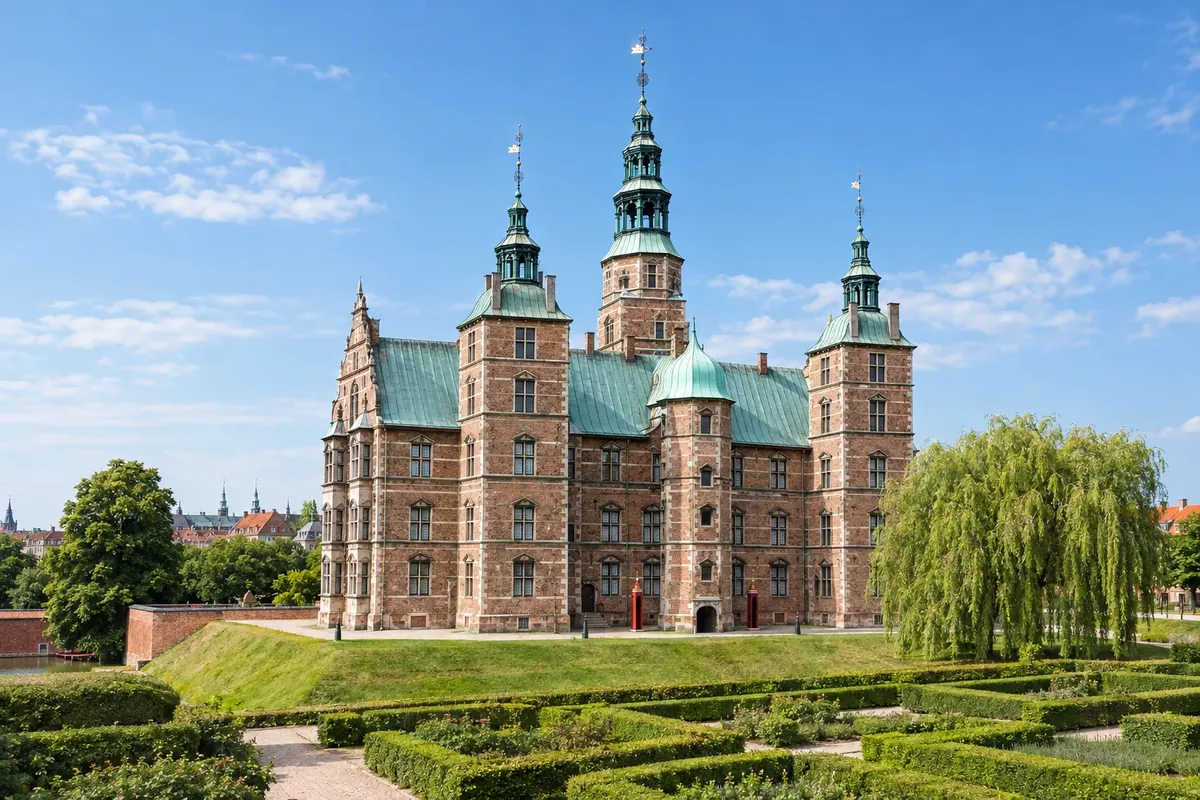
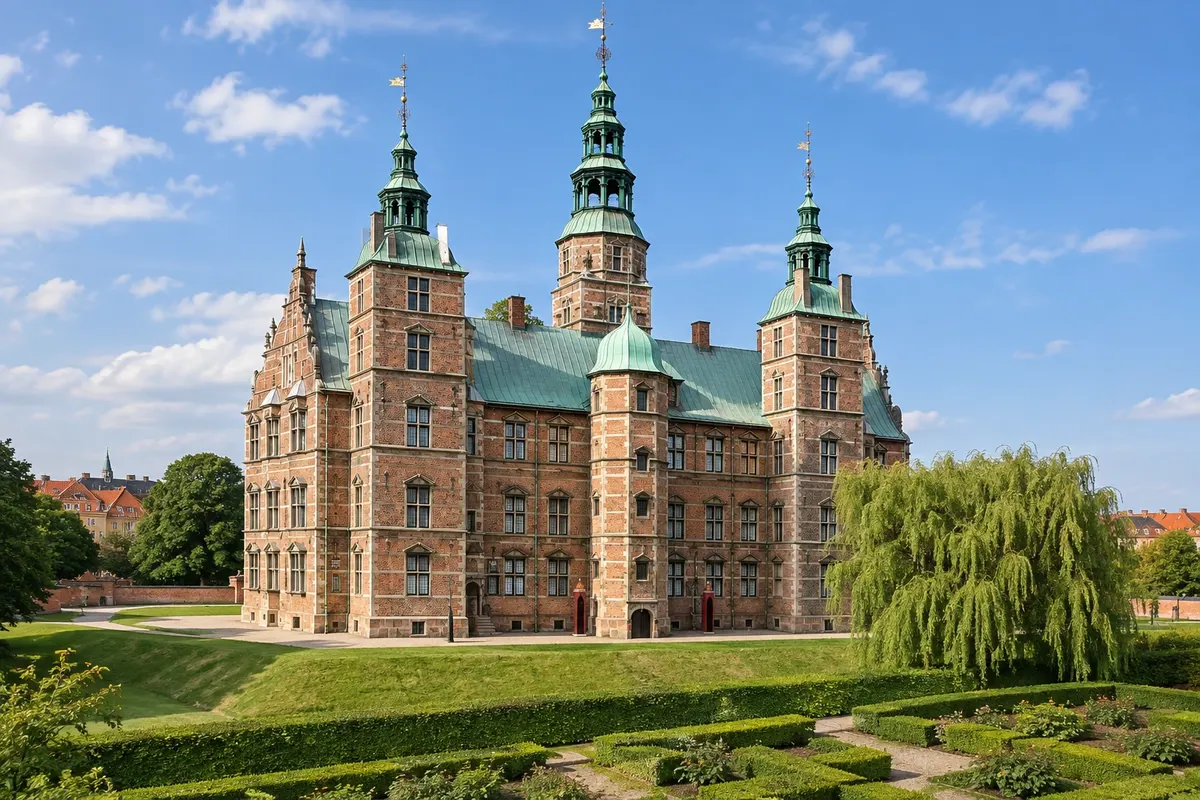
Na fotografiji: Castelo de Rosenborg
Illustrative images. The pictures in this guide are illustrations based on the real place, not photographs, and may differ from it.
Spoznajte kraj
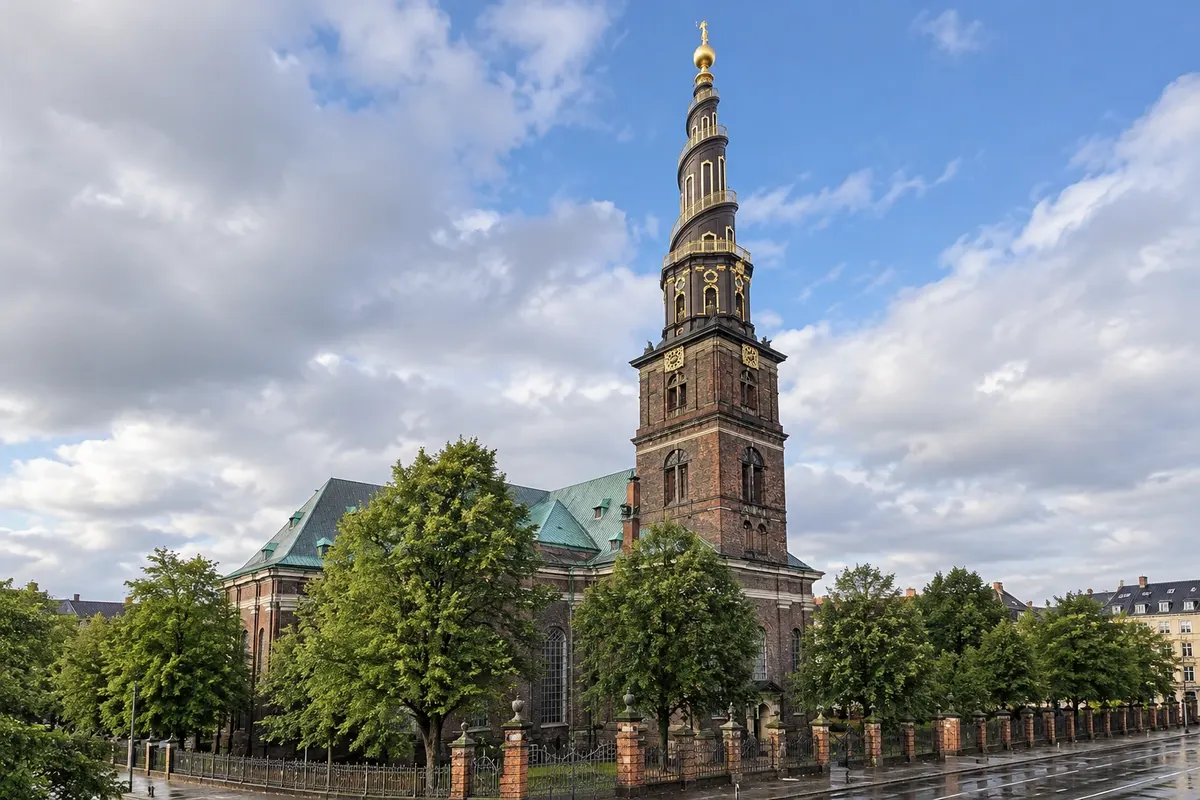
Copenhague (København) is the capital of Denmark and lies on the east coast of the island of Zealand, facing the Øresund strait that separates it from Sweden. The historic center can be covered on foot: from the City Hall square, the pedestrian street Strøget leads to Kongens Nytorv and the Nyhavn canal, with its colorful 17th- and 18th-century houses. Across the harbor is Christianshavn, a canal neighborhood created by Cristiano IV, with the spiral tower of the Church of Our Saviour.
The city preserves the history of one of Europe’s oldest monarchies. Rosenborg, Cristiano IV’s castle, displays the crown jewels; Amalienborg, the royal family’s residence, has the guard change at noon; Christiansborg, on the islet of Slotsholmen, houses Parliament, the queen’s reception rooms and the ruins of Bishop Absalon’s castle, the city’s 12th‑century founder. To the north, the star-shaped fortress of Kastellet leads to the Langelinie promenade and the statue of the Pequena Sereia.
The museums are a reason to travel by themselves: the Museu Nacional tells prehistory and the Vikings’ story; the Ny Carlsberg Glyptotek brings together Roman sculptures, Rodin and French Impressionists; the Galeria Nacional (SMK) holds Golden Age Danish painting; the Designmuseum shows the chairs and objects that made the country’s design famous. About 35 km away in Humlebæk, the Louisiana combines modern art and a seaside sculpture garden. The Tivoli, an amusement park opened in 1843, operates seasonally in the middle of the city.
Cycling is the everyday transport, with bike lanes on almost every street, and renting one is the most local way to get around. Danish is spoken, but English is widely used in shops, hotels and restaurants.
V vodniku še ni nastanitev – Copenhagen.
kako do tja · koliko dni · načrt poti · vprašanja
✈ Aeroporto de Copenhague (Københavns Lufthavn, Kastrup) (CPH), kraj: Kastrup· 8 km do cilja (Copenhagen)
Confirm before booking. Kastrup airport is 8 km from the center, about 15 minutes by metro or train. Trains arrive from Hamburg, Stockholm and Malmö. Requirements can change: check before traveling.
Doživite kraj
The canal dug in the 17th century between Kongens Nytorv and the harbour, with colourful houses, wooden boats and the street of restaurants on the sunny side. H. C. Andersen lived in three of those houses.
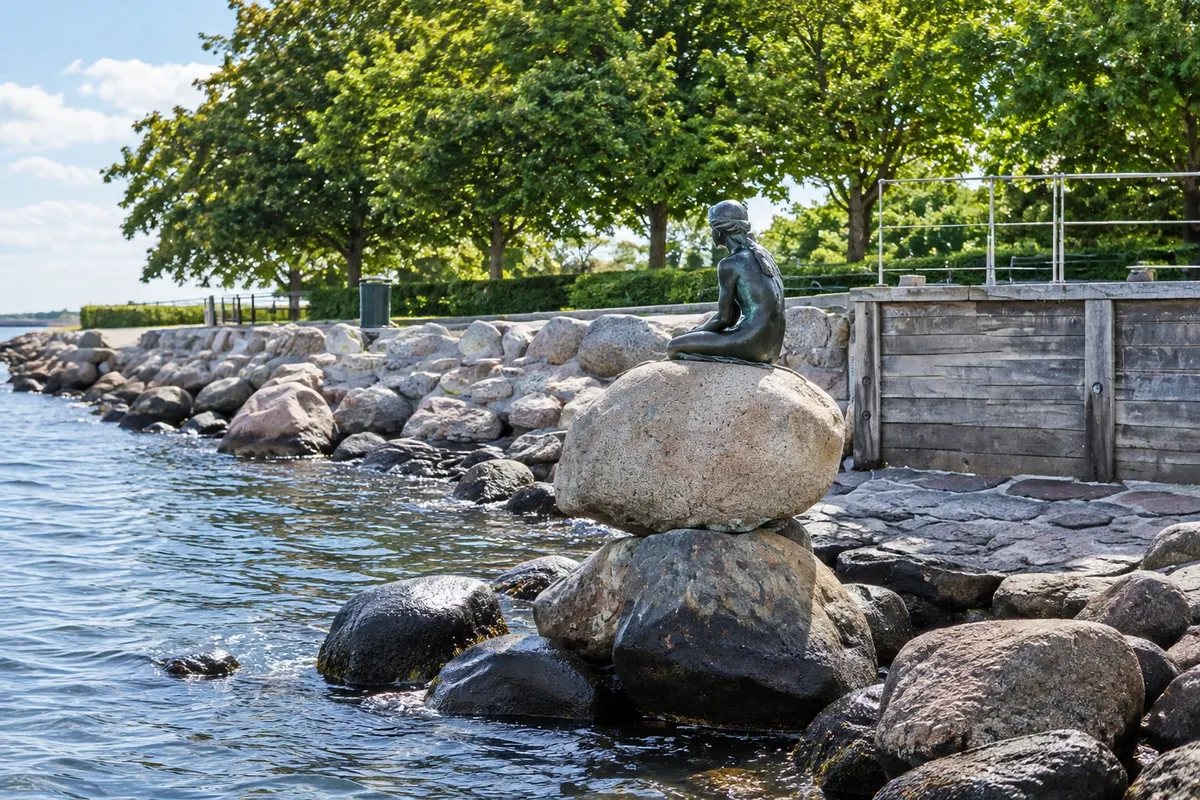
The 1913 bronze statue seated on a rock on the Langelinie promenade, inspired by the tale of H. C. Andersen. It measures about 1.25 meters and is located near Kastellet.
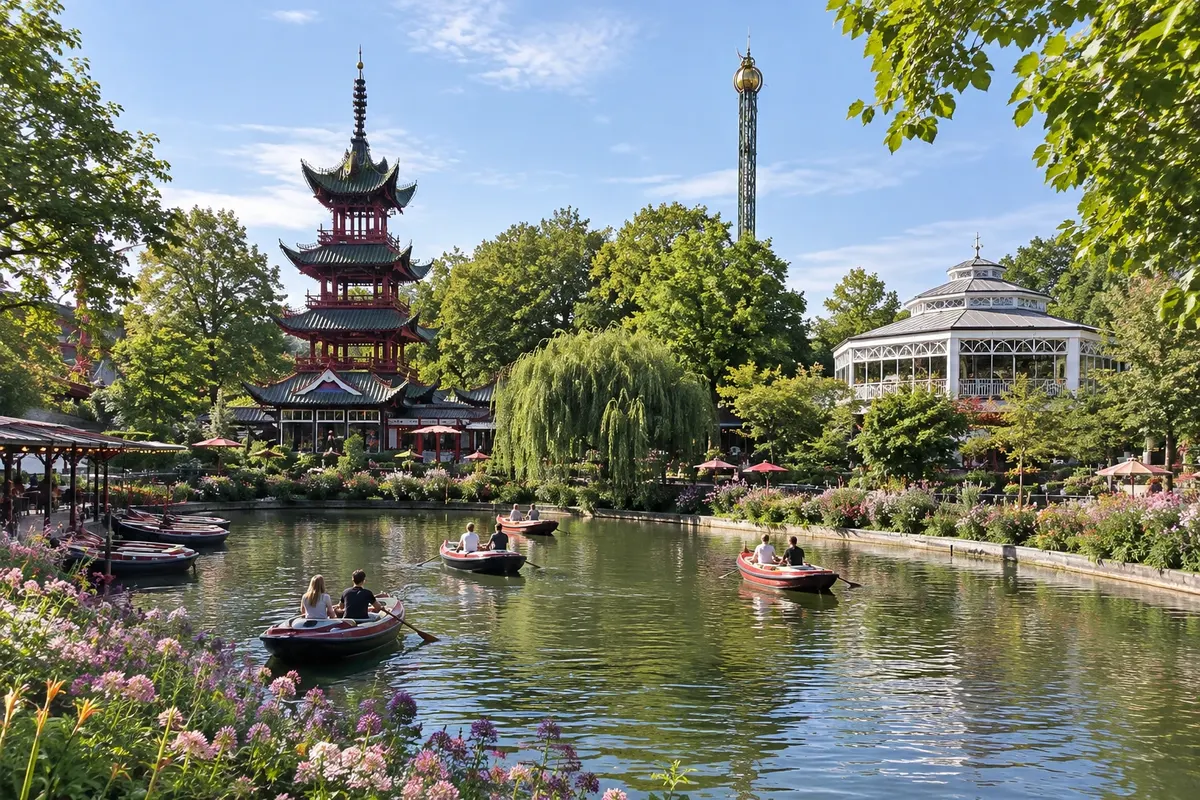
The amusement park and garden opened in 1843 in the city centre, next to the central station: 1914 wooden roller coaster, pavilions, lakes, restaurants and shows. It operates seasonally.
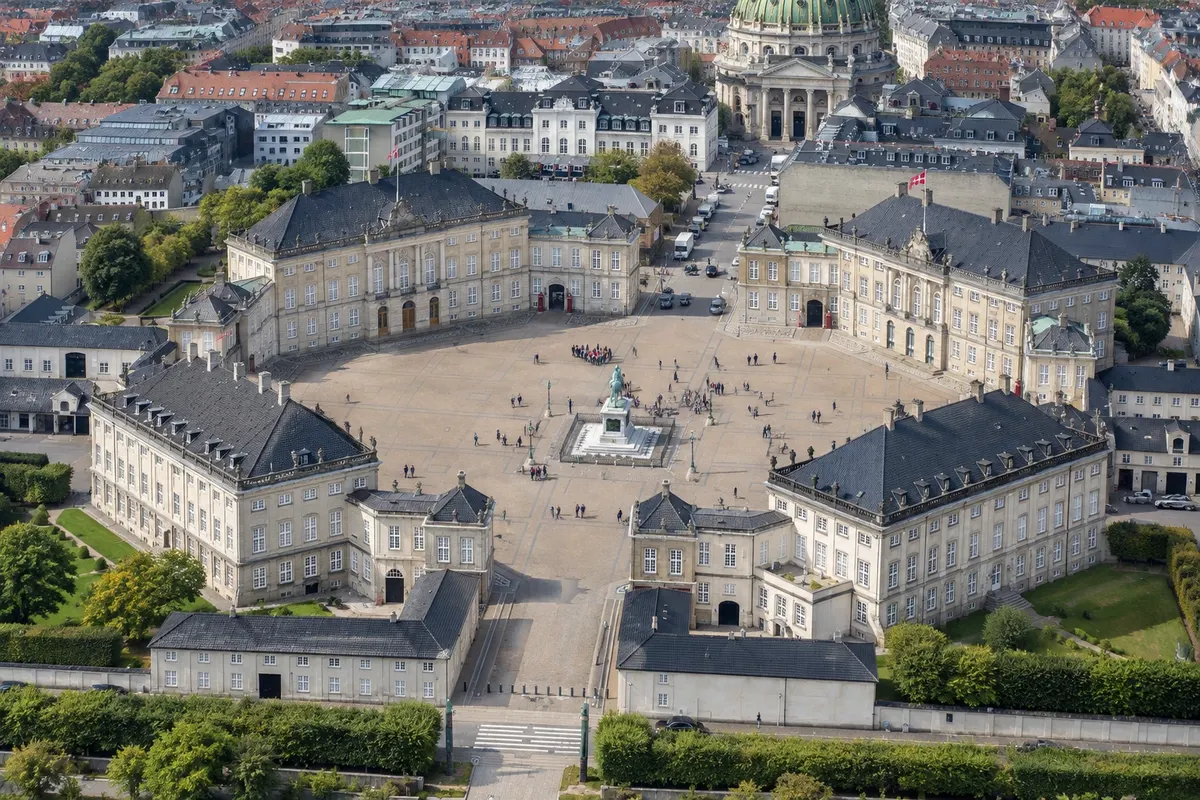
The residence of the Danish royal family: four rococo palaces around an octagonal square, with the equestrian statue of Frederico V and the changing of the guard at noon. One of the palaces is a museum.
The Renaissance castle of Cristiano IV, from 1606 to 1624, in the garden of Kongens Have. It houses the crown jewels, the coronation thrones and halls with objects spanning four centuries of kings.
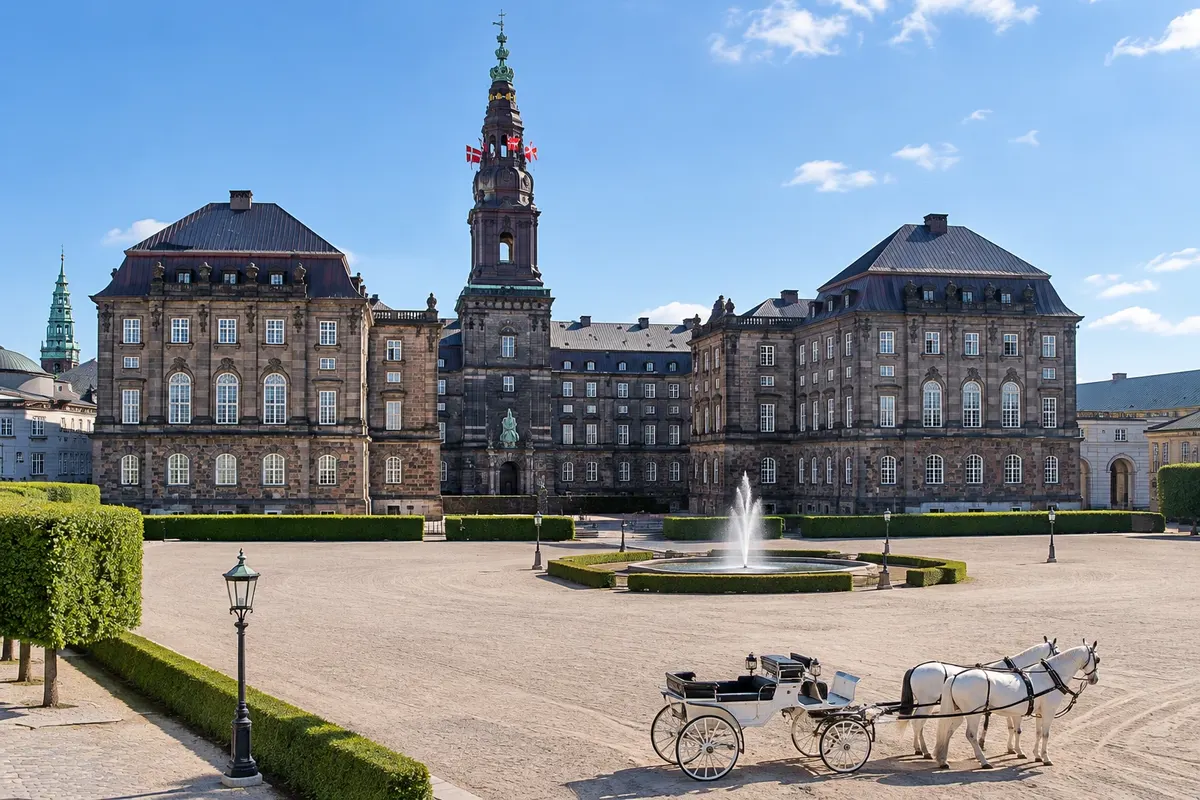
On the islet of Slotsholmen, the palace that houses Parliament, the Supreme Court and the prime minister's office, with the royal reception halls, the ruins of Absalon's castle, the stables and the tower with an observation deck.
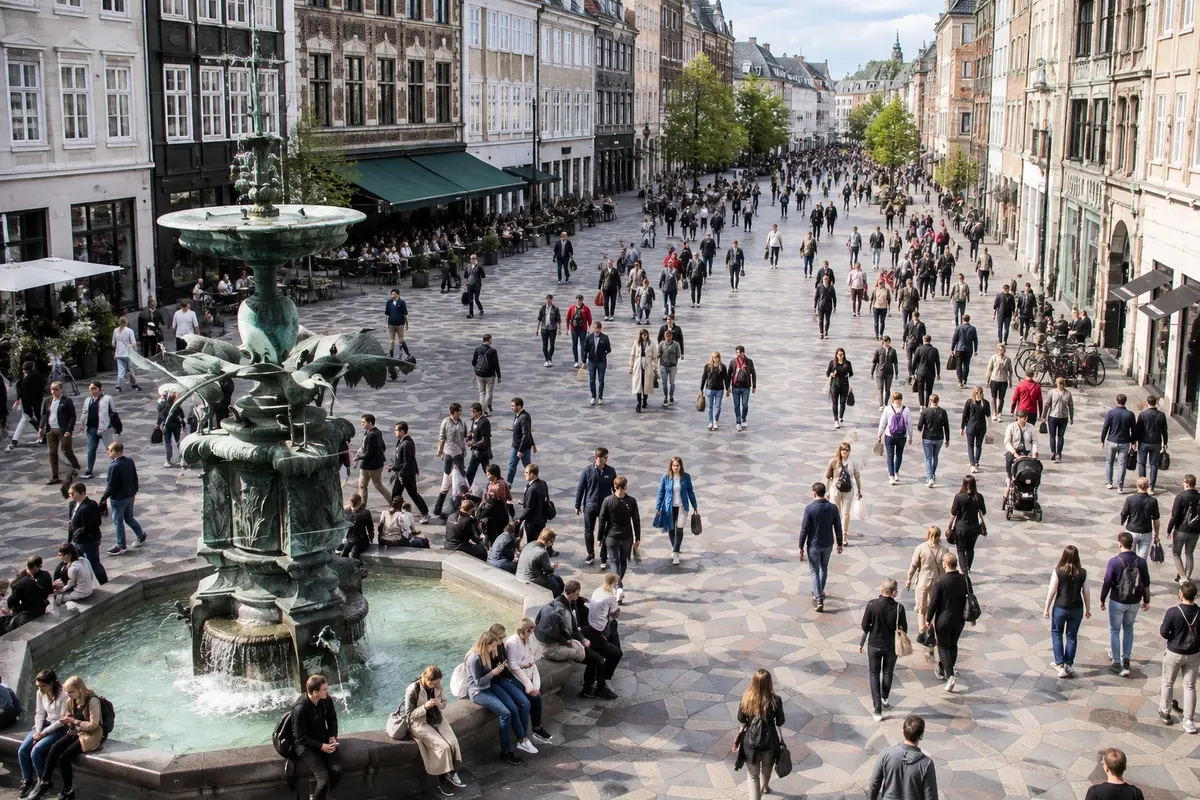
The pedestrian street that cuts through the old centre from City Hall Square to Kongens Nytorv, about 1.1 km of shops, squares and churches, closed to cars since 1962.
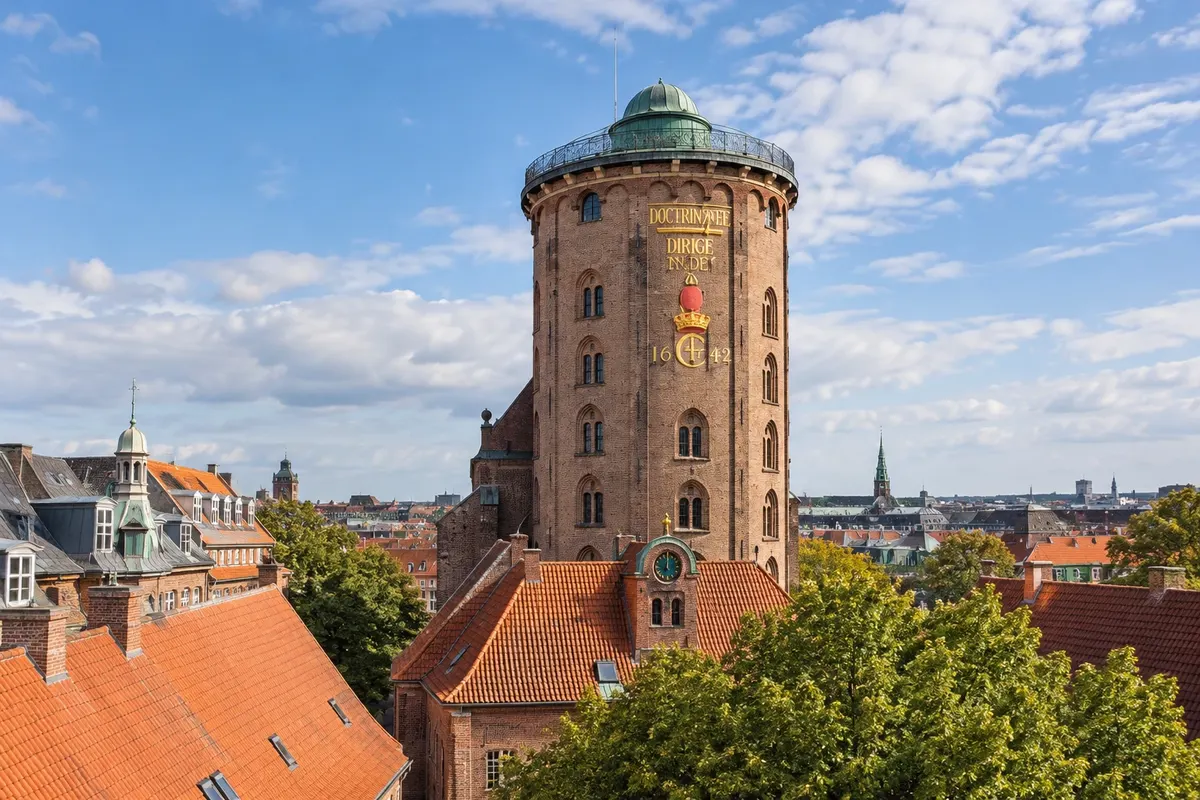
The 1642 tower-observatory of Cristiano IV, with a spiral ramp of seven and a half turns, without steps, up to the viewpoint 34.8 metres above the roofs of the centre.
Baroque church in Christianshavn with the spiral tower of 1752: the final 150 of the 400 steps climb outside, up to the gilded sphere at 90 metres. Inside, the organ is supported by elephants.
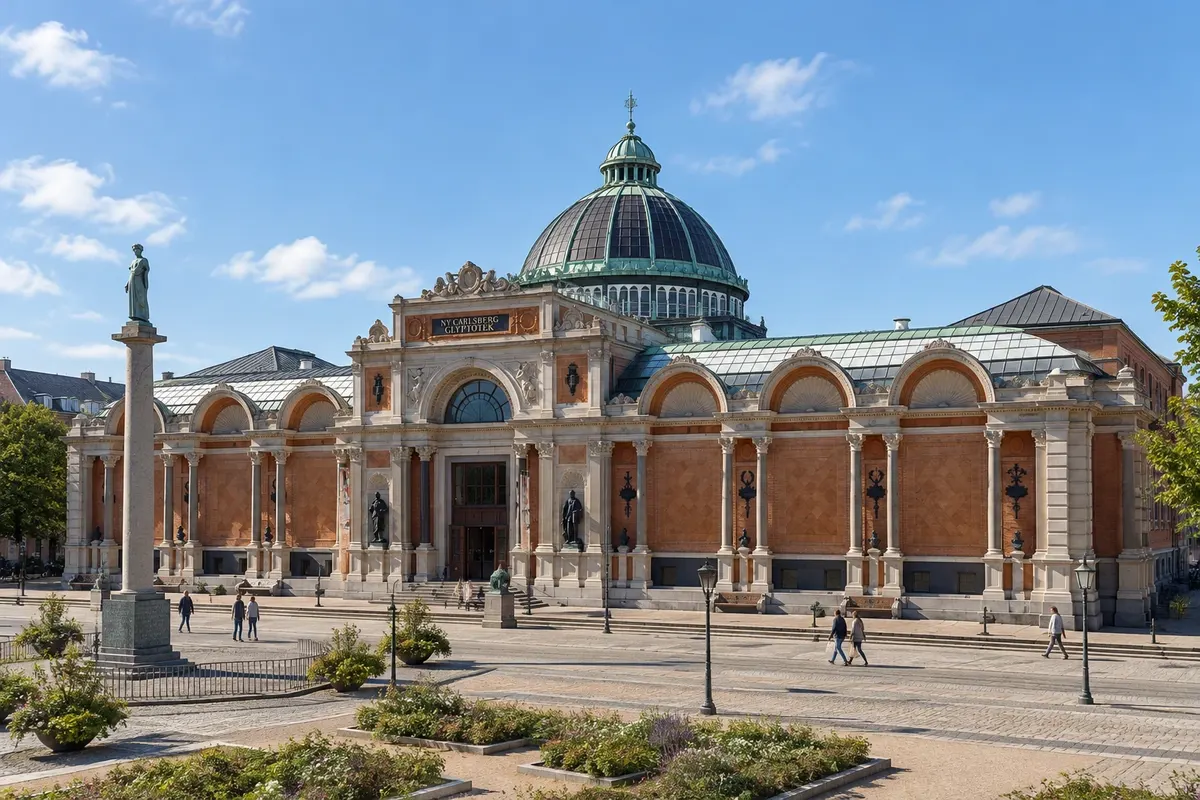
Museum of sculpture and painting founded by Carl Jacobsen of Carlsberg: ancient art from Egypt to Rome, one of the largest Rodin collections outside France, Impressionists and the Winter Garden with palm trees.
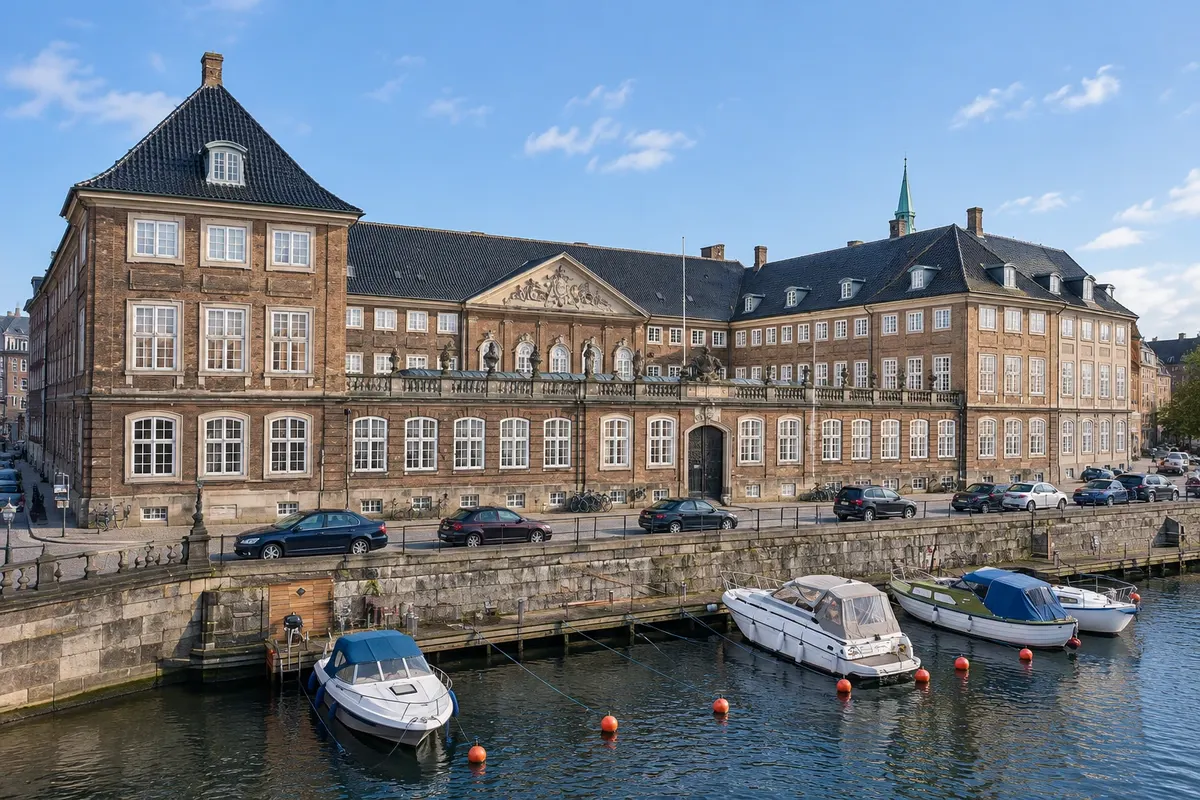
The national history museum housed in Prinsens Palæ: from prehistory to the Vikings and the Middle Ages, featuring the Carruagem do Sol de Trundholm, the Egtved Girl and the Gundestrup cauldron.
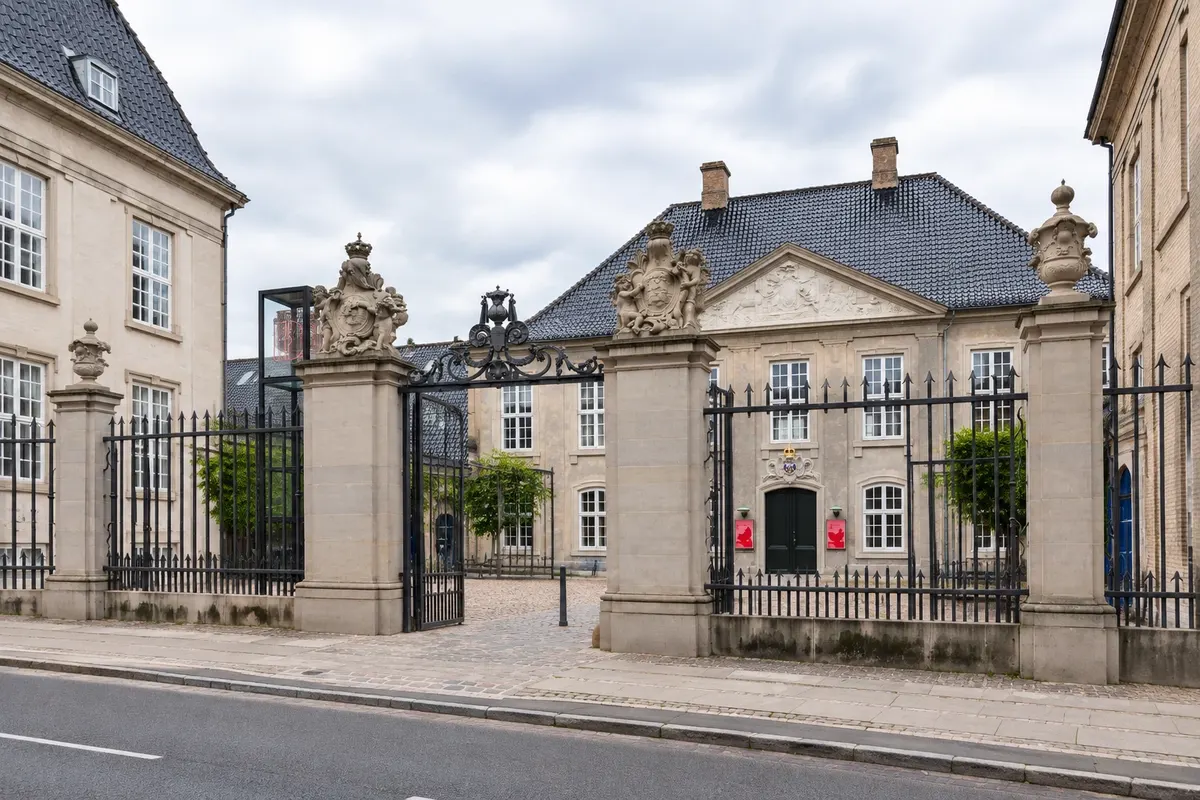
The museum of Danish design in an 18th-century hospital on Bredgade: chairs by Arne Jacobsen, Hans J. Wegner and Kaare Klint, everyday objects, porcelain and fashion, with an inner garden.
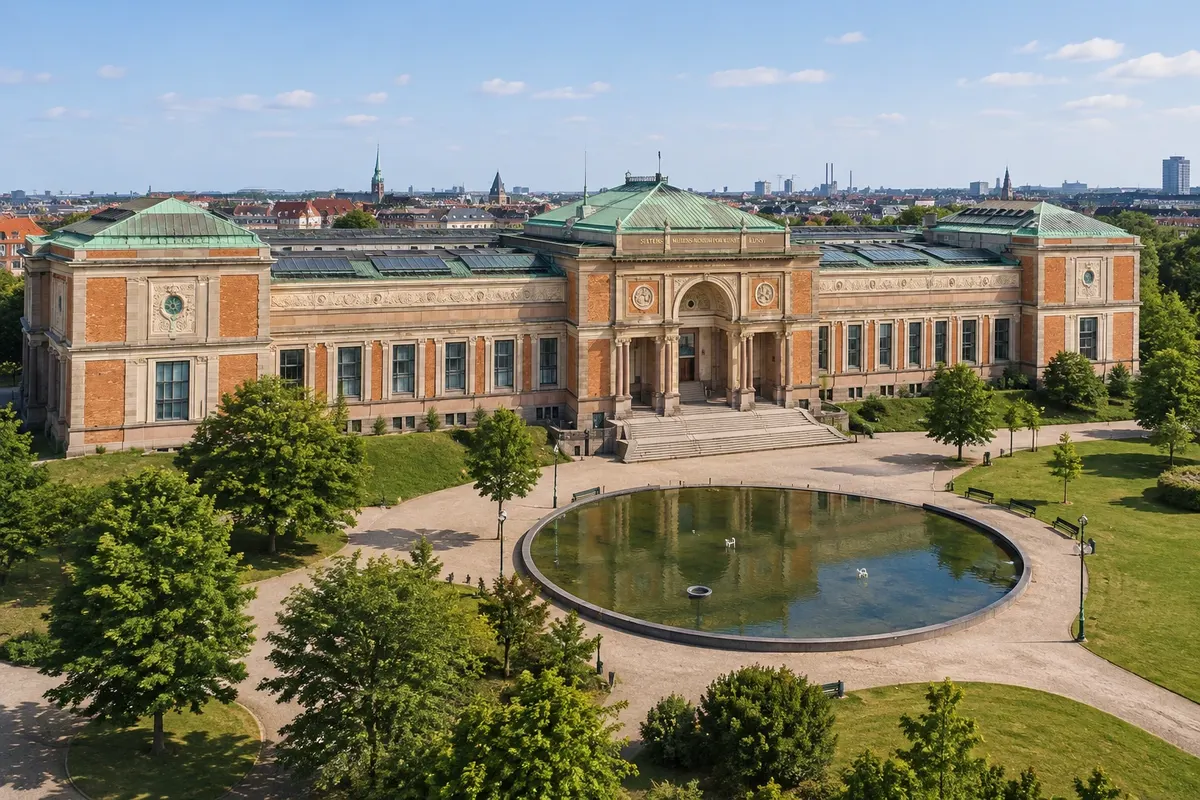
The country's largest art museum, on the edge of Østre Anlæg park: Danish Golden Age painting, European masters and the French collection with Matisse.
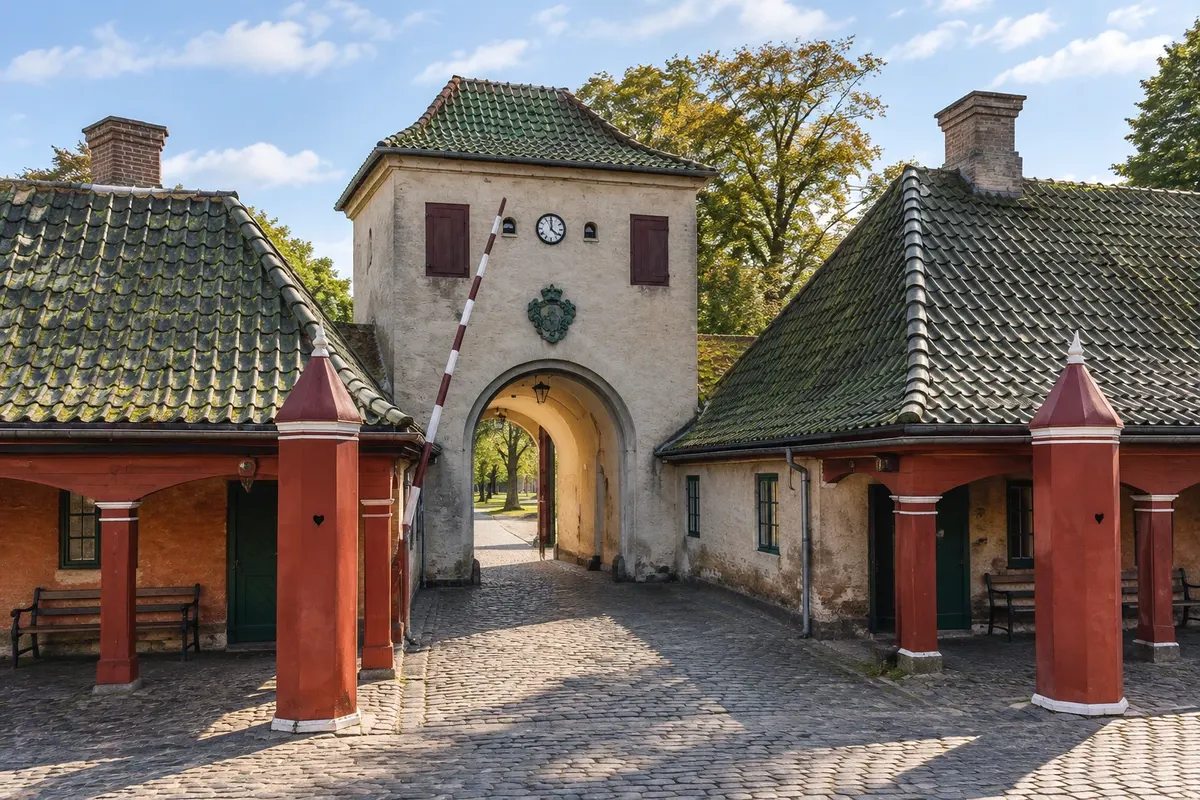
The 17th-century star-shaped fortress, still in military use, with grass-covered bastions, moats, an 1847 windmill and red barracks. It's on the route between Amalienborg and the Pequena Sereia.
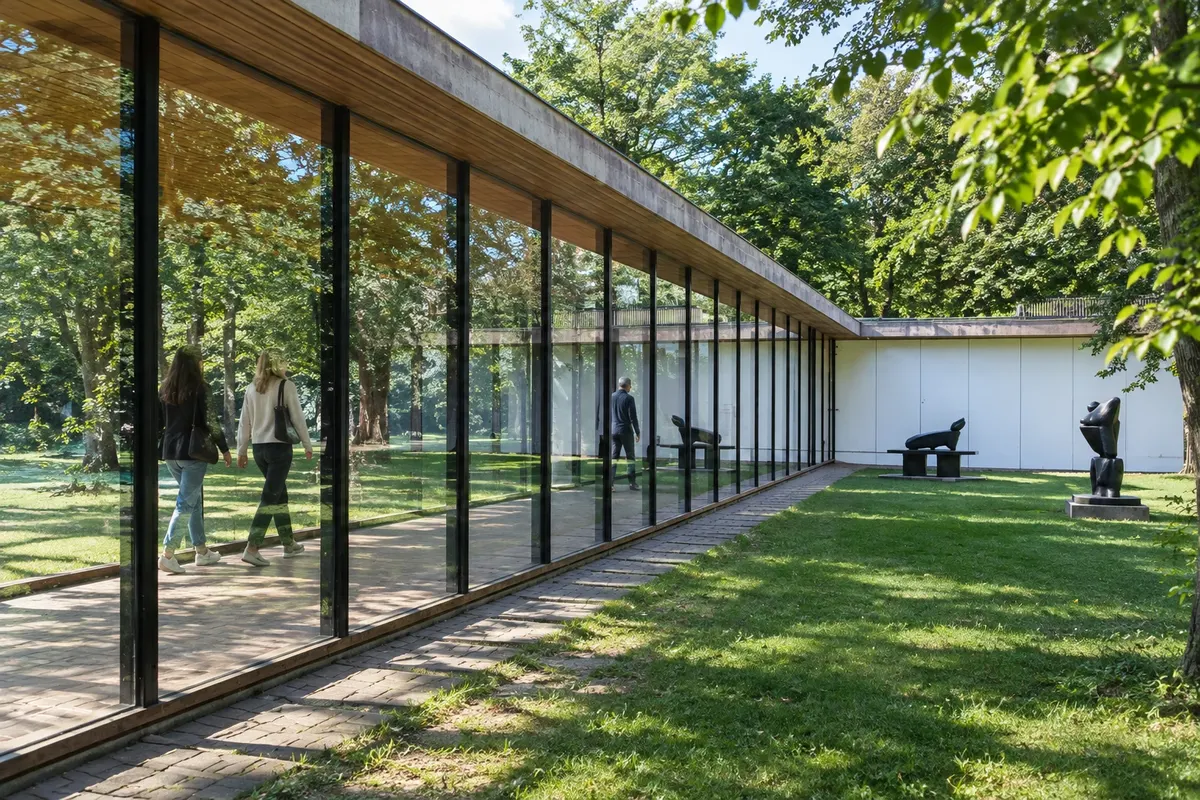
Museum of modern and contemporary art in Humlebæk, 35 km north of Copenhagen, with low wings set in a sculpture park that slopes down to the Øresund. Giacometti, Henry Moore and the Yayoi Kusama room.
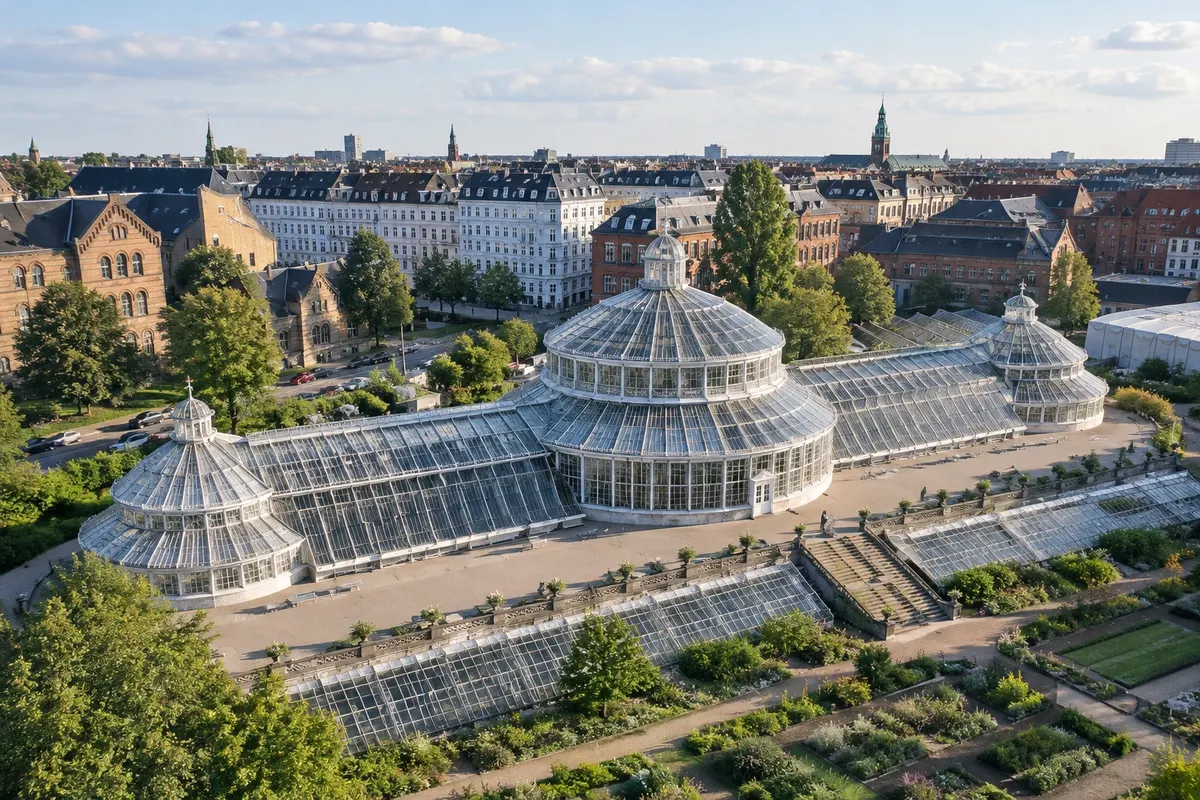
Jardim botânico near Nørreport, with outdoor plant collections and the historic Palmehuset greenhouse.
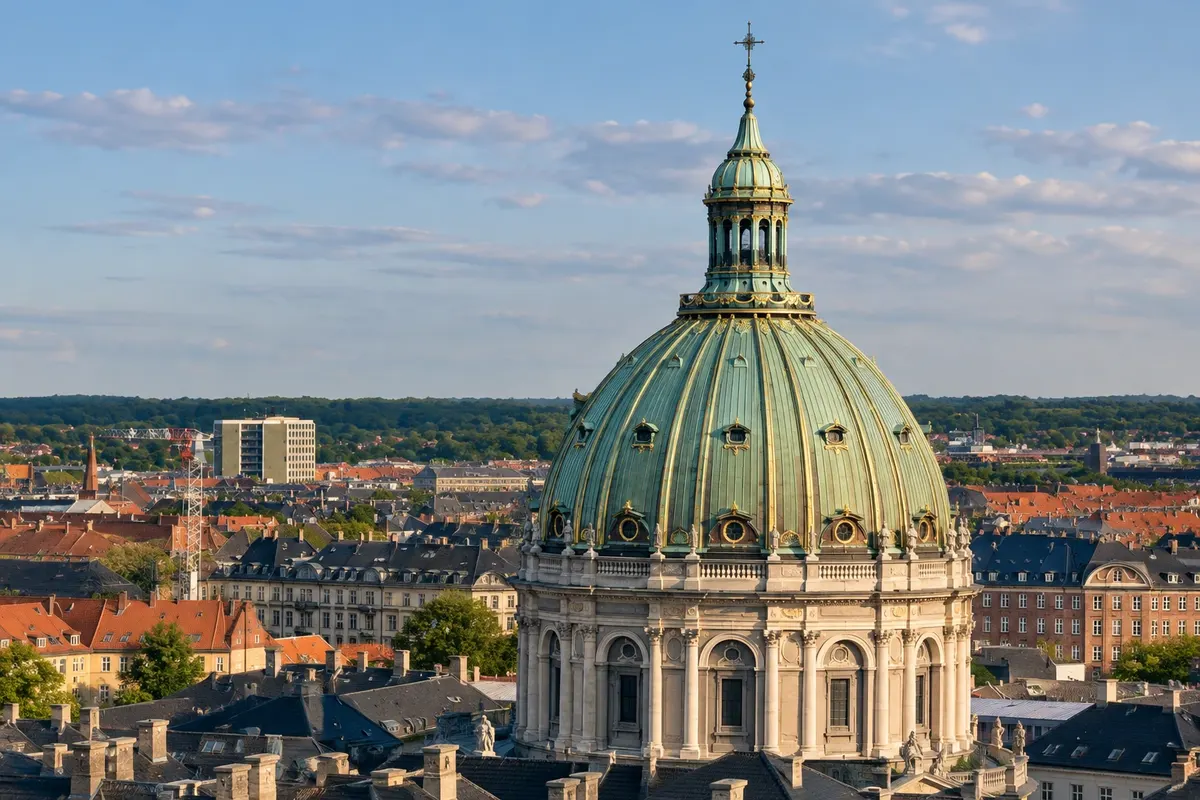
Church with a green dome aligned with Amalienborg square, in the Frederiksstaden neighborhood.
Kaj izbrati pred odhodom
Izhodišče, trajanje, potek, vključene storitve in okvirna cena vsakega izleta.
Start at Rosenborg Castle and its garden, allowing time for the interior visit. Continue to Amalienborg and then to the Nyhavn canal. The route lets you observe royal residences from different eras and the city’s relationship with the harbor, without relying on a specific ceremony.
Kraji na poti: Rosenborg, Amalienborg, Nyhavn.
Choose the history or art collection that interests you most before crossing to Christianshavn. Walk along the canals and check the visit to the Church of Our Saviour. The tower has its own conditions and schedule; walking around the neighborhood remains an alternative to climbing.
Kraji na poti: Nationalmuseet, Ny Carlsberg Glyptotek, Vor Frelsers Kirke.
Take the train to Humlebæk and walk to the Louisiana. Divide your time between the galleries and the park by the Øresund. The visit takes up a significant part of the day and requires checking opening hours before heading to Helsingør or returning to Copenhagen.
Kraji na poti: Louisiana Museum of Modern Art.
Po dnevih
Predlogi za načrtovanje poti. Vrstni red dni prilagodite vremenu in razpoložljivosti izletov.
Rosenborg, Amalienborg and Nyhavn, including an interior visit to one of the palaces and a walk along the harbor.
National Museum or Glyptotek, Christianshavn and, depending on the season, some time in the Tivoli gardens.
Rosenborg, Amalienborg and Nyhavn, including an interior visit to one of the palaces and a walk along the harbor.
National Museum or Glyptotek, Christianshavn and, depending on the season, some time in the Tivoli gardens.
Louisiana in Humlebæk or more time at Copenhagen’s museums; choose the transport before deciding on tickets.
Najboljši čas za obisk
From May to September the days are usually long, with light until after 22:00 in June, and mild temperatures between 15 °C and 22 °C; it’s the season when the Tivoli is open, when people swim in the harbor and when cafés put tables on the pavement. April and October are cool and quieter. From November to March it’s typically cold, between 0 °C and 5 °C, with wind and short days; in December, the Tivoli and Christmas markets fill the city with lights.
The seasons shown are the most usual ones; nature doesn't always follow the calendar.
winter
In Copenhagen, plan your day around palaces and Nyhavn. As a national reference for 1991–2020, the average lows and highs are -0.7 °C and 3.6 °C; monthly precipitation is 65.3 mm.
winter
For a trip to Copenhagen, February is still usually cold with short days; the trip calls for more indoor activities. In Copenhagen, plan your day around downtown museums. As a national reference for 1991–2020, the average lows and highs are -0.9 °C and 3.7 °C; monthly precipitation is 50.3 mm.
spring
For a trip to Copenhagen, spring begins in March, but cold often continues and daylight gradually increases. In Copenhagen, plan your day around the Christianshavn canals. As a national reference for 1991–2020, the average lows and highs are 0.3 °C and 6.4 °C; monthly precipitation is 46.4 mm.
spring
For a trip to Copenhagen, April typically alternates cool air and rain, with more daylight hours for walking. In Copenhagen, plan your day around palaces and Nyhavn. As a national reference for 1991–2020, the average lows and highs are 3.4 °C and 11.2 °C; monthly precipitation is 38.5 mm.
spring
In Copenhagen, plan your day around downtown museums. As a national reference for 1991–2020, the average lows and highs are 7.1 °C and 15.6 °C; monthly precipitation is 47.3 mm.
summer
For a trip to Copenhagen, June usually brings mild summer weather and very long days; the wind still calls for an extra layer of clothing. In Copenhagen, plan your day around the Christianshavn canals. As a national reference for 1991–2020, the average lows and highs are 10.4 °C and 18.5 °C; monthly precipitation is 64.3 mm.
summer
For a trip to Copenhagen, July is usually one of the milder months, with long daylight and possible rain during outings. In Copenhagen, plan your day around palaces and Nyhavn. As a national reference for 1991–2020, the averages of the lows and highs are 12.7 °C and 21.2 °C; monthly precipitation is 65.8 mm.
summer
For a trip to Copenhagen, August usually maintains mild, long days, although daylight hours begin to shorten. In Copenhagen, plan your day around central museums. As a national reference for 1991–2020, the averages of the lows and highs are 12.8 °C and 21.2 °C; monthly precipitation is 82.1 mm.
autumn
For a trip to Copenhagen, September typically marks the transition to autumn, with cool air and shortening days. In Copenhagen, plan your day around the canals of Christianshavn. As a national reference for 1991–2020, the averages of the lows and highs are 10.1 °C and 17.2 °C; monthly precipitation is 74.7 mm.
autumn
For a trip to Copenhagen, October is usually a cooler, wetter autumn; schedule outdoor routes during daylight hours. In Copenhagen, plan your day around palaces and Nyhavn. As a national reference for 1991–2020, the average lows and highs are 6.4 °C and 12.3 °C; monthly precipitation is 83.2 mm.
autumn
For a trip to Copenhagen, November is usually cold and dim; the long winter already affects travel. In Copenhagen, plan your day around downtown museums. As a national reference for 1991–2020, the average lows and highs are 3.1 °C and 7.6 °C; monthly precipitation is 70.3 mm.
winter
In Copenhagen, plan your day around the Christianshavn canals. As a national reference for 1991–2020, the average lows and highs are 0.4 °C and 4.7 °C; monthly precipitation is 70.9 mm.

Načrtujte pot
Walking and cycling cover the city center. Use metro, train and bus for longer journeys; Humlebæk requires a train and an additional walk.
Pred odhodom
Z nekaj načrtovanja boste imeli več časa za uživanje na poti.
From May to September the days are usually long, with light until after 22:00 in June, and mild temperatures between 15 °C and 22 °C; it’s the season when the Tivoli is open, when people swim in the harbor and when cafés put tables on the pavement. April and October are cool and quieter. From November to March it’s typically cold, between 0 °C and 5 °C, with wind and short days; in December, the Tivoli and Christmas markets fill the city with lights.
The seasons shown are the most usual ones; nature doesn't always follow the calendar.
Three days cover the historic center, the palaces, two or three museums, Christianshavn and the Tivoli. With four or five days you’ll have time for day trips by train: Helsingør and Kronborg Castle, the Louisiana in Humlebæk, Hillerød and Frederiksborg, Roskilde and the Viking ships.
Indre By, the old city center, lets you walk Strøget, Nyhavn and the palaces. Vesterbro, behind the central station and the Tivoli, has hotels of various kinds, cafés and the former slaughterhouse district (Kødbyen), full of restaurants. Østerbro is residential and quiet, close to Kastellet and the lakes. Nørrebro is young and multicultural, with bars and street food. Christianshavn is small and ringed by canals, one metro stop from the center.
Odnesite svoje odpadke, upoštevajte oznake in podprite lokalne ponudnike. V naravi upoštevajte navodila za obiskovalce.
Odgovori na vaša vprašanja
Three days for the city and another one or two for train day trips: Helsingør and Kronborg, the Louisiana, Hillerød and Roskilde are all less than an hour from the central station.
The metro departs from the terminal itself and reaches Kongens Nytorv and Nørreport in about 15 minutes; the regional train goes to the central station in the same time. The ticket covers the two zones from the airport to the center; buy it in the app or at the machines.
Yes. The city is flat, almost every street has a separated bike lane and there are rentals at many spots and hotels. Follow the local rules: ride on the right, signal with your arm before stopping or turning, and do not ride on the sidewalk.
From May to September, with long days and mild temperatures. December also attracts visitors for Tivoli’s Christmas and the markets. In winter, from November to March, it’s usually cold and it gets dark by mid‑afternoon.
No. English is widely spoken, including by drivers, waiters and museum staff. Signs and menus usually have an English version.
Helsingør and Kronborg Castle (about 45 minutes by train), the Louisiana in Humlebæk (35 minutes), Hillerød and Frederiksborg (40 minutes), Roskilde (25 minutes) and Malmö in Sweden via the Øresund Bridge (35 minutes).
Več kot vodnik