Zermatt and the Matterhorn

Valais · Švica

Zermatt and the Matterhorn

Village without combustion-engine cars at the foot of the Matterhorn, at 1.608 m, with rack railways and cable cars that ascend to viewpoints above 3.000 m and the departure point of the Glacier Express.

French-speaking Switzerland

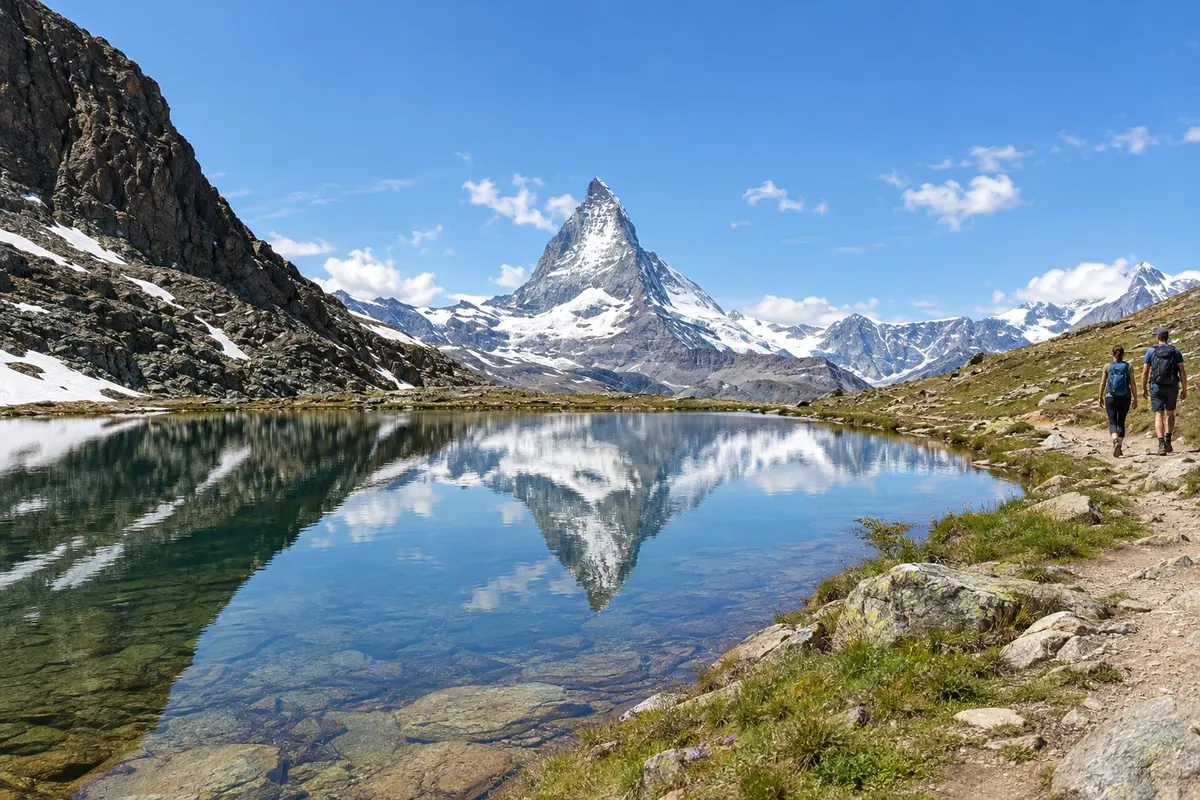
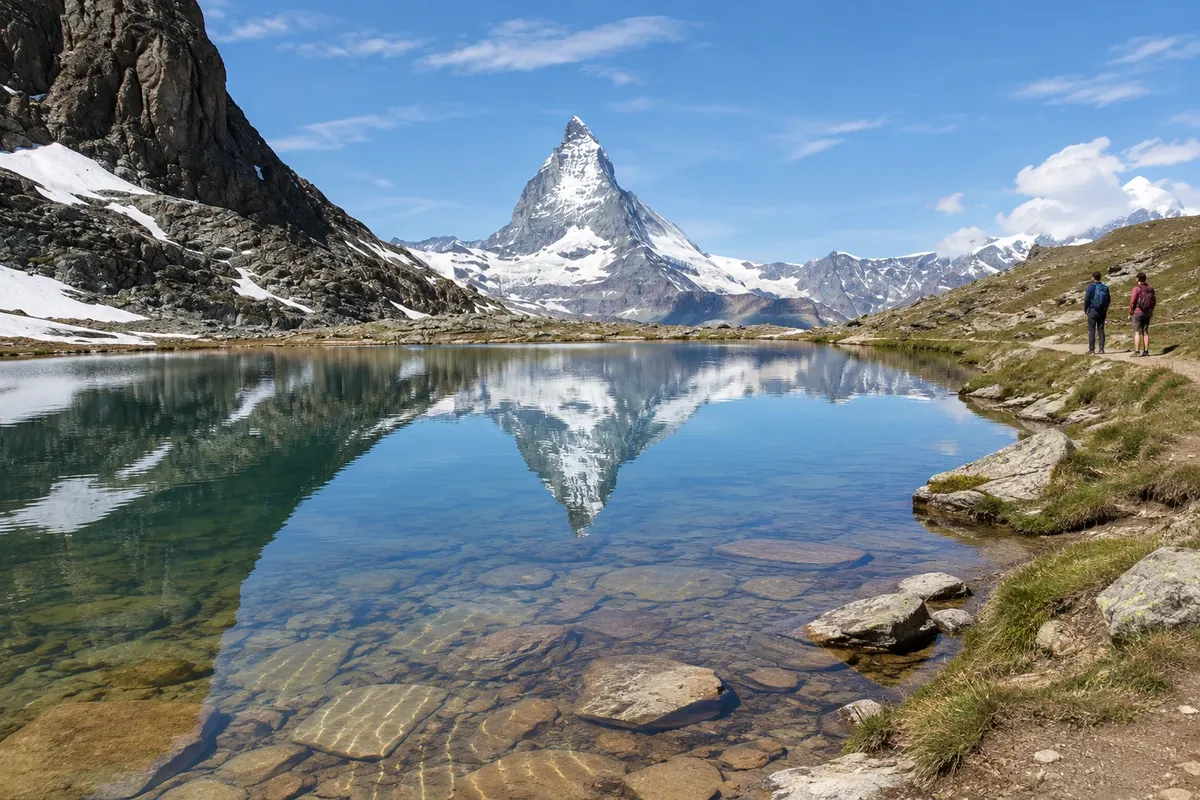
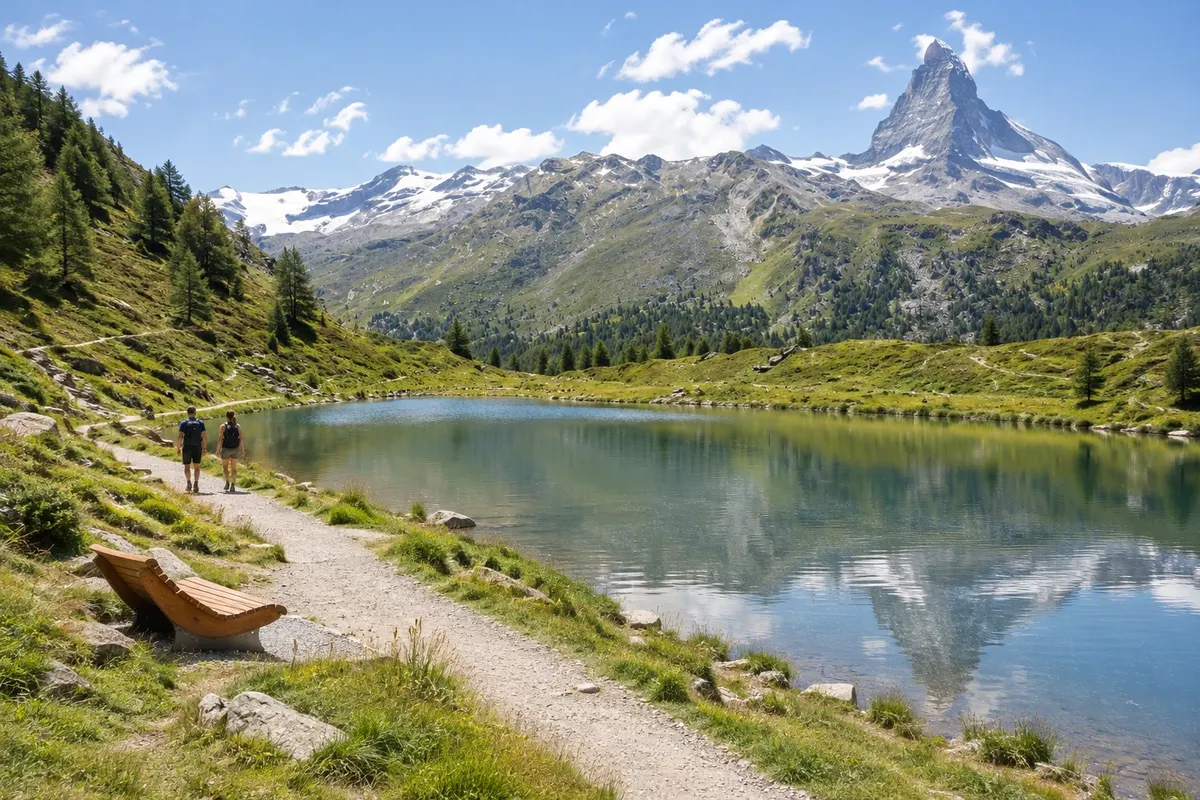
Na fotografiji: Matterhorn seen from the Riffelsee

Illustrative images. The pictures in this guide are illustrations based on the real place, not photographs, and may differ from it.

Na voljo v trgovini Google Play Pošljite svoje fotografije

Spoznajte kraj

Pokrajina, ki jo doživite
v svojem ritmu.

Zermatt sits at the end of the Mattertal valley, in the south of Valais, near the border with Itália. The village is at 1.608 m and its neighbor is the Matterhorn, at 4.478 m, a four-faced mountain that divides Switzerland and Itália. Around it, dozens of peaks exceed 4.000 m, including those of the Monte Rosa massif.

Valais is a bilingual canton: in the lower part, where the capital Sion is located, French is spoken; in Upper Valais, where Zermatt is, German is spoken, with the region's Swiss German dialect. English is widely used in tourism. The currency is the franco suíço, and Switzerland does not use the euro.

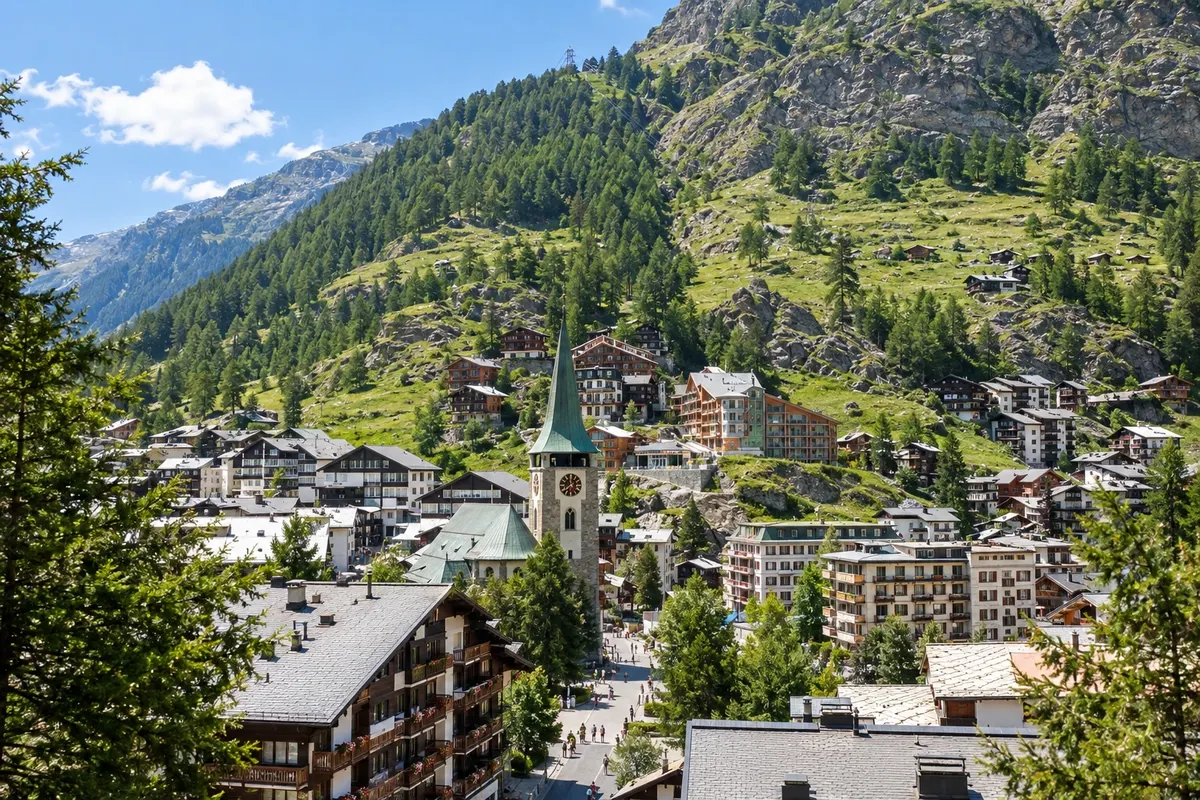
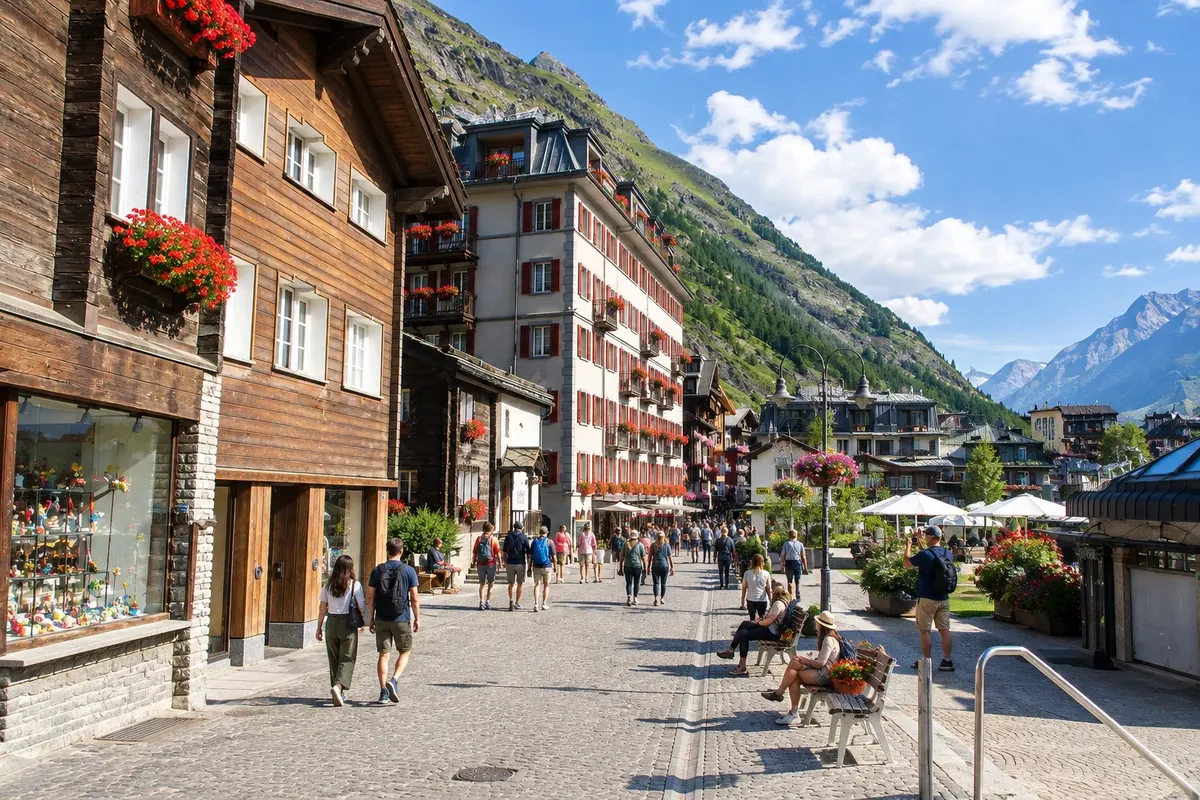
The village has no combustion-engine cars. Those who arrive by car leave the vehicle in Täsch, 5 km before, and continue by a 12-minute shuttle train. Inside Zermatt taxis and electric buses operate, and the center is walked on foot, from the station along the Bahnhofstrasse to the church, the Matterhorn Museum and the dark wooden houses of the Hinterdorf.

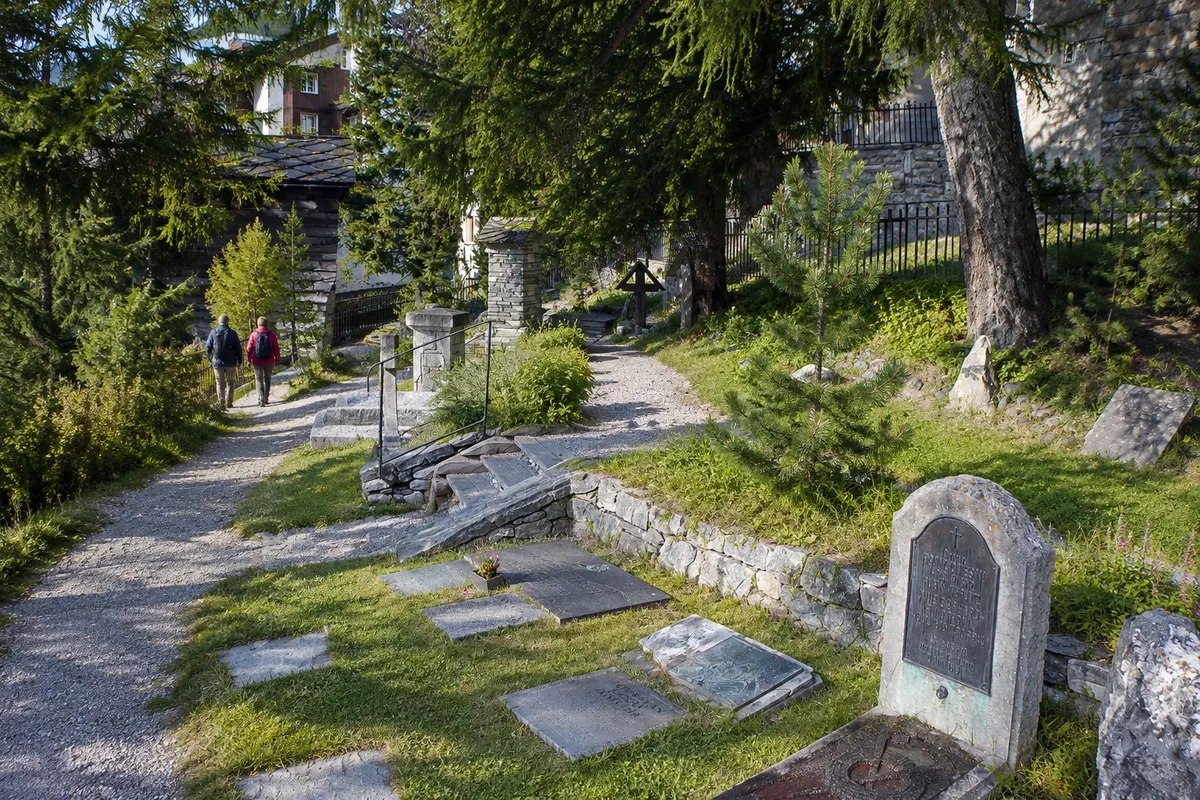
The history of tourism in the village is linked to the first ascent of the Matterhorn on July 14, 1865, which ended with the death of four of the seven climbers on the descent. The climbers' cemetery, next to the church, preserves that memory.

From the village depart the Gornergrat rack railway, the cable cars of the Matterhorn Glacier Paradise and Schwarzsee, and the Sunnegga funicular, where the five-lakes trail begins. In the European summer the Gornerschlucht gorge opens, with wooden walkways. Zermatt is also the departure point of the Glacier Express, a panoramic train that runs to St. Moritz, in the Grisons.

This destination brings together 1 city: Zermatt.

Delite: WhatsApp
Delite svoja popotniška doživetja s fotografijami Pošljite fotografije vsakega kraja, ki ste ga obiskali. Največje število fotografij na kraj: 5.

Ena destinacija, več poti

Mesta na tej poti

Začnite v enem mestu ali v načrt poti vključite več mest.

Zermatt and the Matterhorn – lega
Zermatt

Obrisi: ©swisstopo. Priredba: Cidade Turismo.

Kako do tja:Zermatt and the Matterhorn

✈ Aeroporto de Zurique (ZRH), kraj: Zurique· 240 km do cilja (Zermatt)

✈ Aeroporto de Genebra (GVA), kraj: Genebra· 235 km do cilja (Zermatt)

By train, change in Visp to the Matterhorn Gotthard Bahn train to Zermatt. From Zurique the journey takes about 3 h 15 min; from Genebra, about 3 h 45 min. The airports are Zurique (ZRH) and Genebra (GVA). Confirm before purchasing.

Doživite kraj

Kaj početi – Zermatt and the Matterhorn

Matterhorn
Zermatt · Valais · Gora

Matterhorn

The 4,478 m mountain on the border between Switzerland and Italy, with four faces oriented approximately to the cardinal points. First climbed in 1865 from Zermatt, it is visible from the village and from all the valley viewpoints.

Gornergrat
Zermatt · Valais · Viewpoint and mountain train

Gornergrat

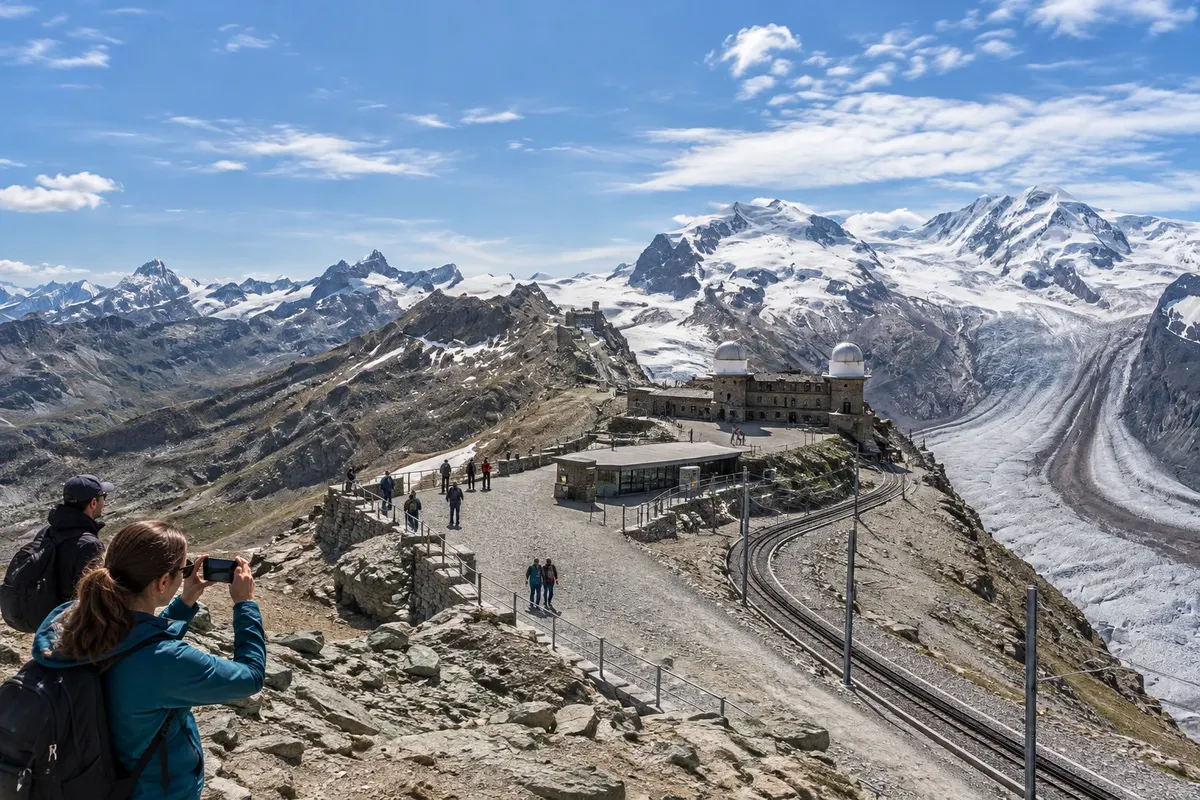
Lookout at 3,089 m served by the rack railway Gornergrat Bahn, which departs in front of Zermatt station and climbs in about 33 minutes. From the top you can see the Matterhorn, the Monte Rosa massif and the Gorner Glacier.

Riffelsee
Zermatt · Valais · Mountain lake

Riffelsee

Small lake at 2,757 m, a few minutes' walk from the Rotenboden stop on the Gornergrat line. On windless days the water can reflect the Matterhorn.

Matterhorn Glacier Paradise
Zermatt · Valais · Viewpoint and glacier

Matterhorn Glacier Paradise

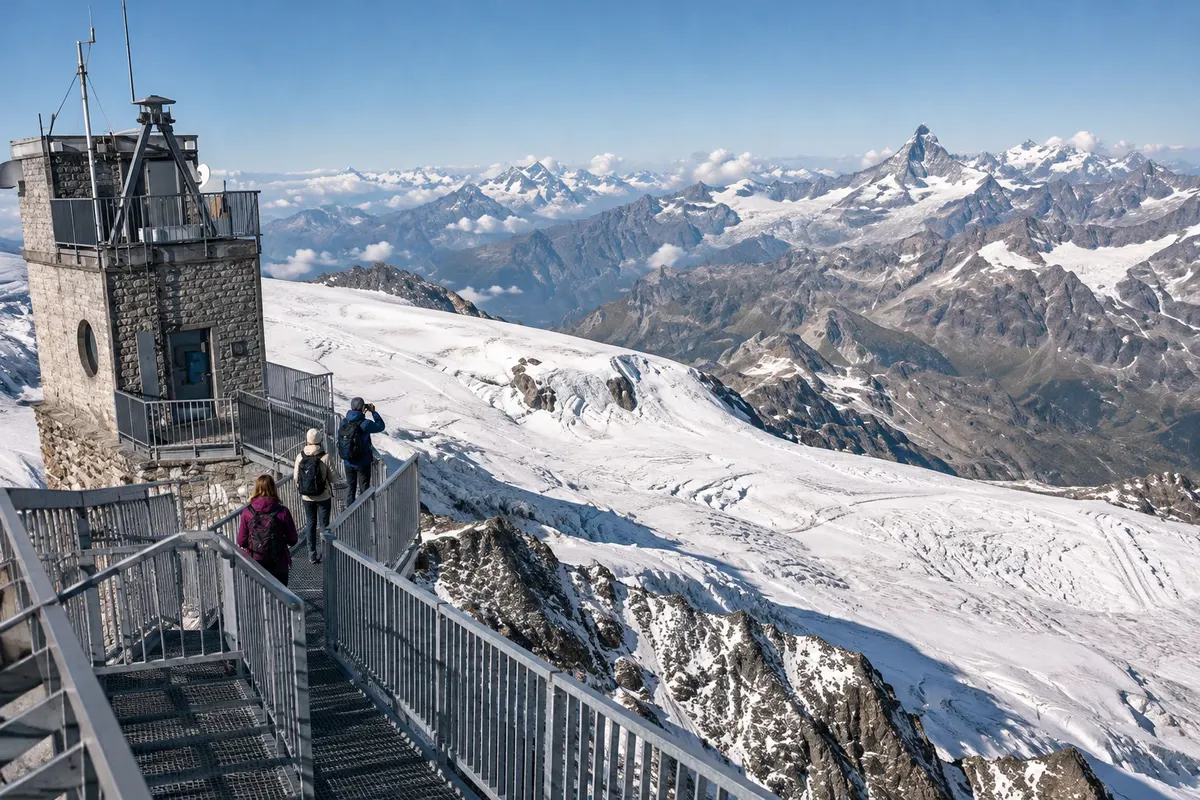
Cable car station on the Klein Matterhorn, with a panoramic platform at 3,883 m, the Glacier Palace carved 15 m below the glacier surface and views of 38 peaks over 4,000 m in Switzerland, Italy and France.

Zermatt and the Matterhorn – prikaži dodatne kraje (9)
Schwarzsee
Zermatt · Valais · Mountain lake

Schwarzsee

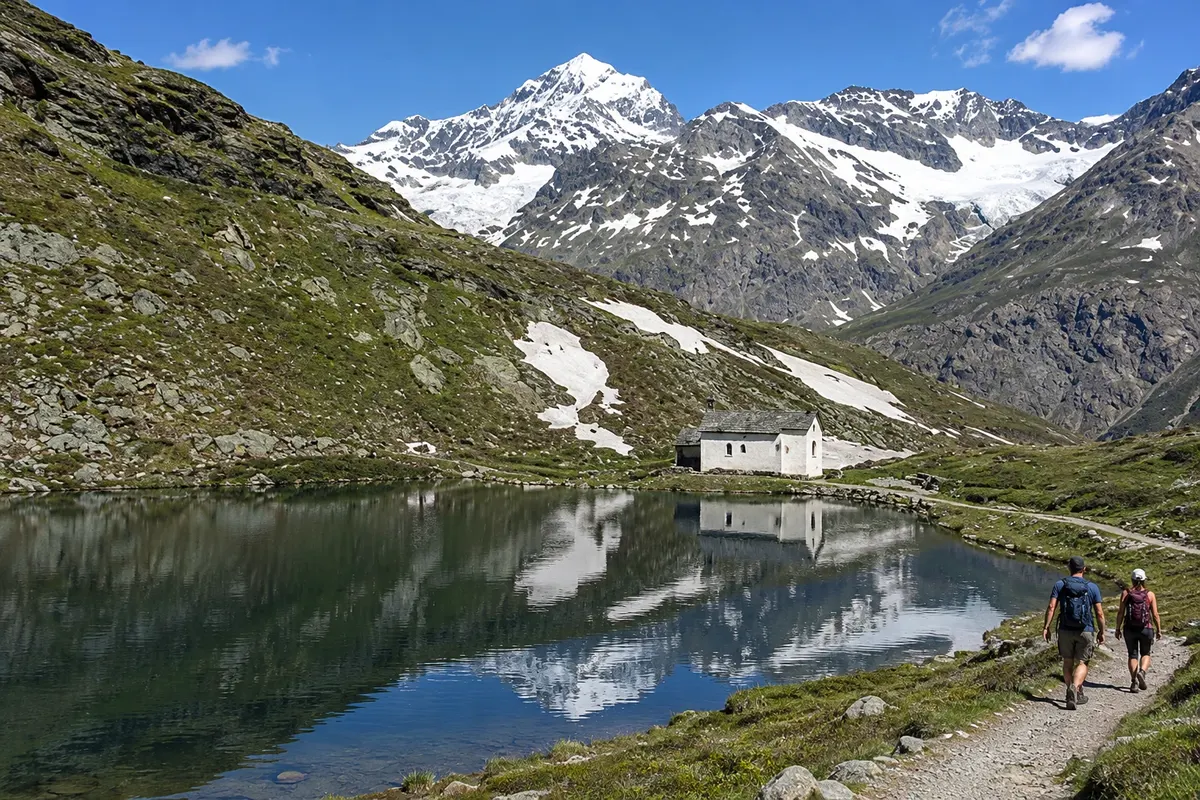
Lake at 2,583 m at the foot of the Hörnli ridge, with the chapel Maria zum Schnee on its shore. It is a stop on the Matterhorn Express cable car and the starting point of the trail to Hörnlihütte.

Sunnegga
Zermatt · Valais · Viewpoint and lake

Sunnegga

Terrace at 2,288 m reached by a funicular that climbs inside the mountain in about 5 minutes. It has the Leisee, where you can swim, a playground, and cable cars that continue to Blauherd and to Rothorn at 3,103 m.

5-Seenweg (Five Lakes Walk)
Zermatt · Valais · Kolesarska in pešpot

5-Seenweg (Five Lakes Walk)

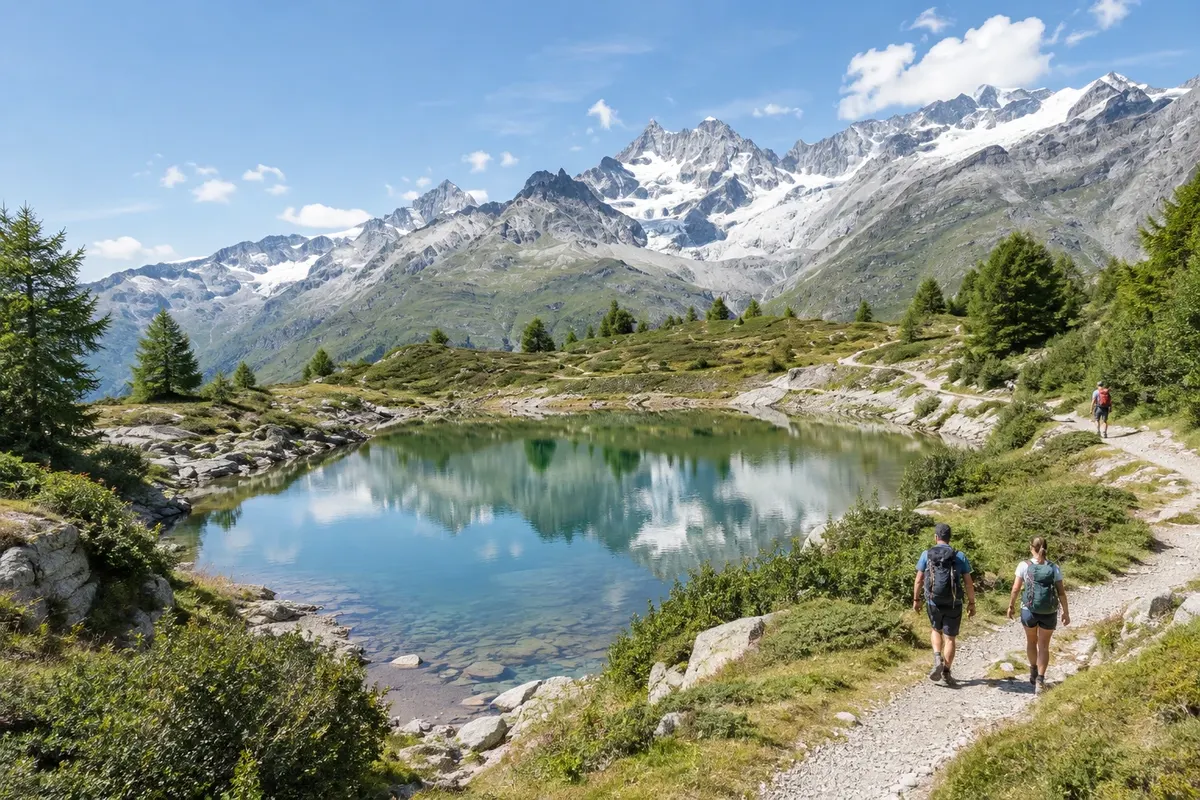
Trail of about 10 km between Blauherd and Sunnegga that passes five mountain lakes: Stellisee, Grindjisee, Grünsee, Moosjisee and Leisee. It takes 2 h 30 min to 3 h and has more descent than ascent.

Matterhorn Museum – Zermatlantis
Zermatt · Valais · Muzej

Matterhorn Museum – Zermatlantis

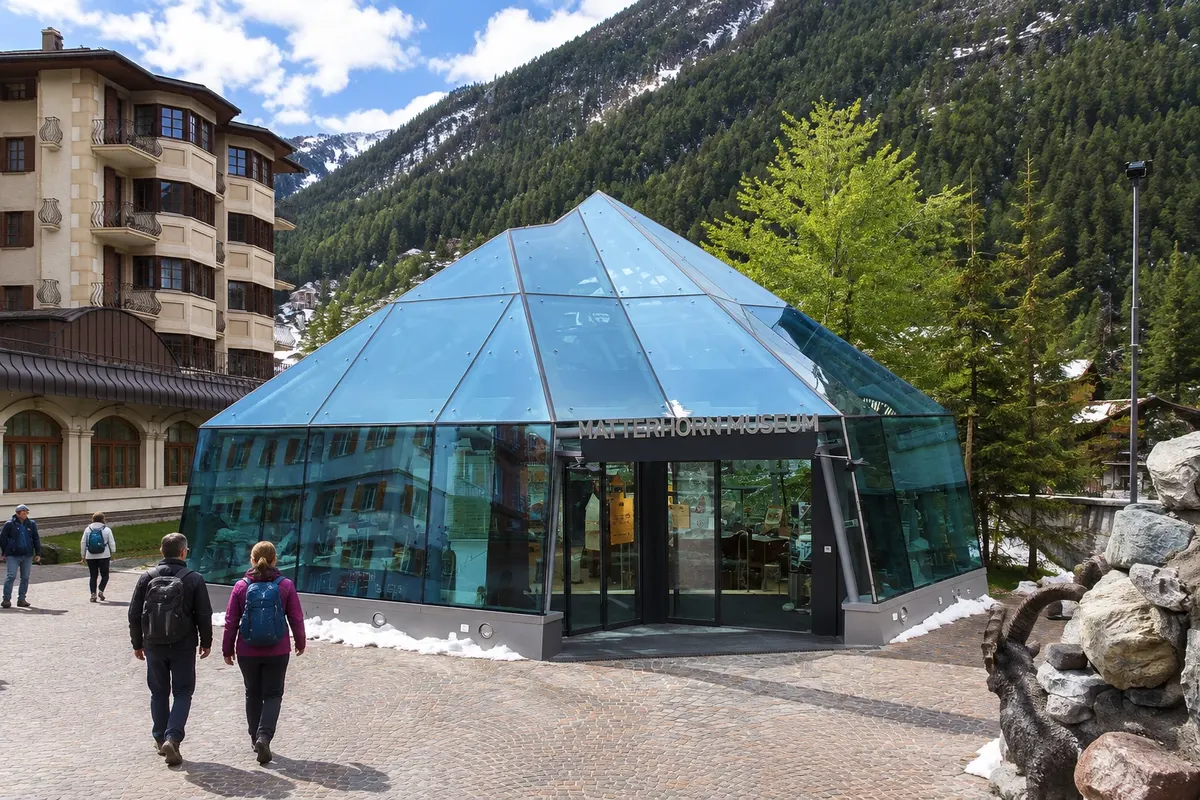
Underground museum at the Kirchplatz that reconstructs old village houses and tells the history of the Matterhorn, featuring the rope that broke on the first ascent in 1865.

Hinterdorf (Old Village)
Zermatt · Valais · Staro mestno jedro

Hinterdorf (Old Village)

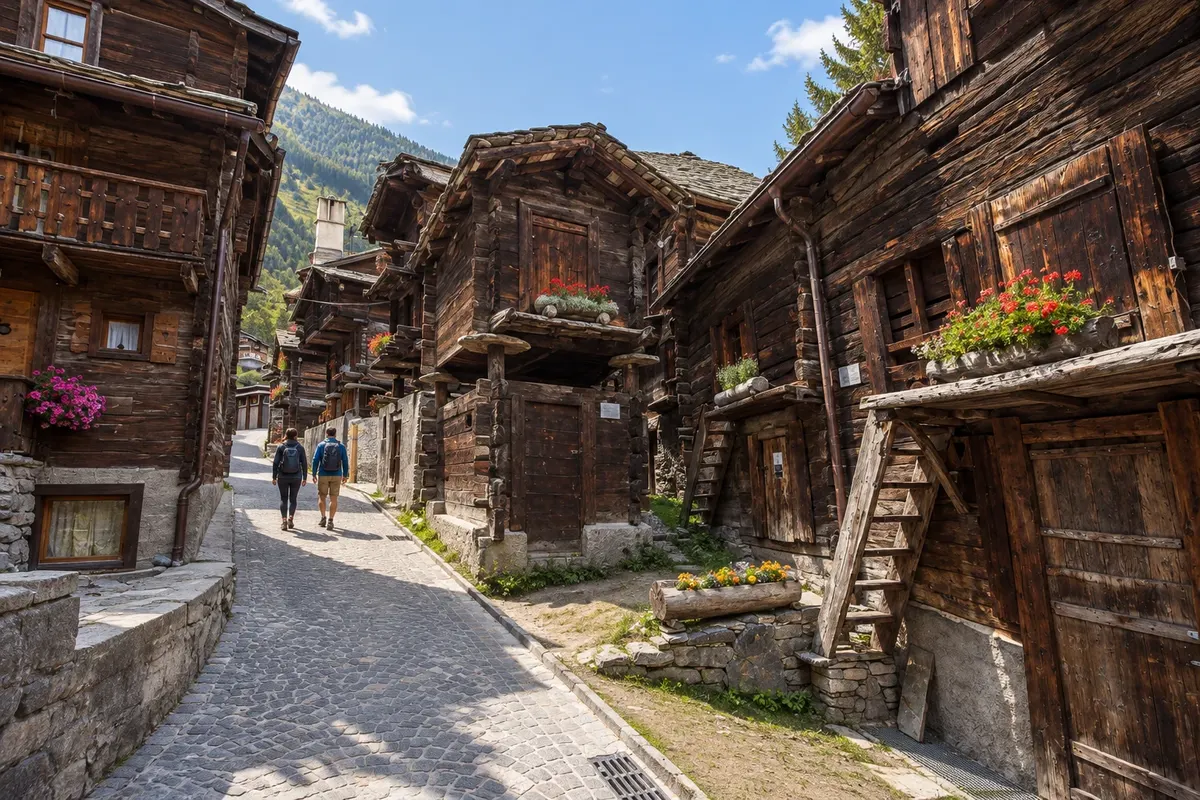
The old core of Zermatt, with more than 30 barns, storehouses and larch wood houses darkened with age, dating from the 16th to 18th centuries, built on stilts with stone discs to keep out rodents.

Bahnhofstrasse
Zermatt · Valais · Street

Bahnhofstrasse

Zermatt's main street, from the train station to Kirchplatz, with shops, historic hotels and the bronze plaques of the Walk of Climb, which honor the mountaineers of the first ascents of the Matterhorn.

Bergsteigerfriedhof (Mountaineers' Cemetery)
Zermatt · Valais · Cemetery and memorial

Bergsteigerfriedhof (Mountaineers' Cemetery)

The climbers' cemetery, next to Zermatt's Catholic church, with about 50 graves of mountaineers from several countries who died in the mountains around the village, almost all in the 19th century.

Gornerschlucht (Gorner Gorge)
Zermatt · Valais · Gorge

Gornerschlucht (Gorner Gorge)

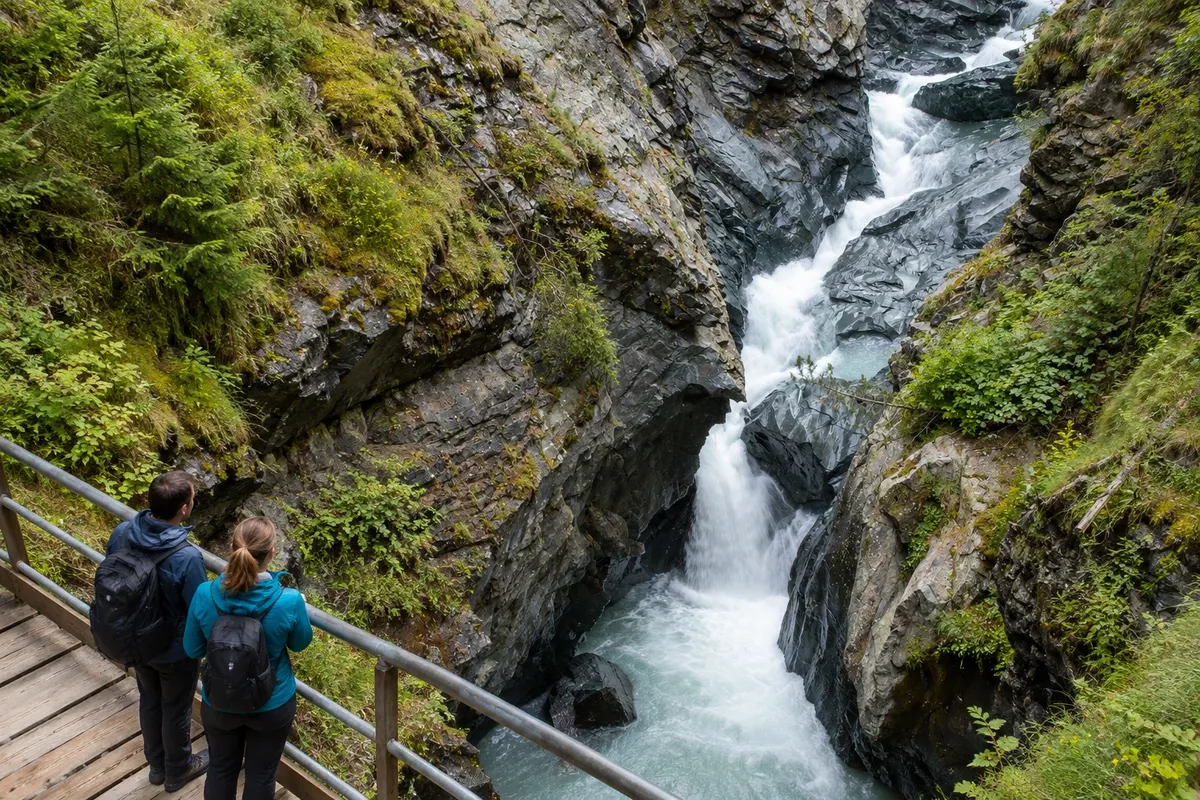
Gorge carved by the Gornera river in green serpentinite rock, crossed by wooden walkways and tunnels, about a 15-minute walk south of Zermatt. The season usually runs from June to mid-October.

Glacier Express
Zermatt · Valais · Scenic train

Glacier Express

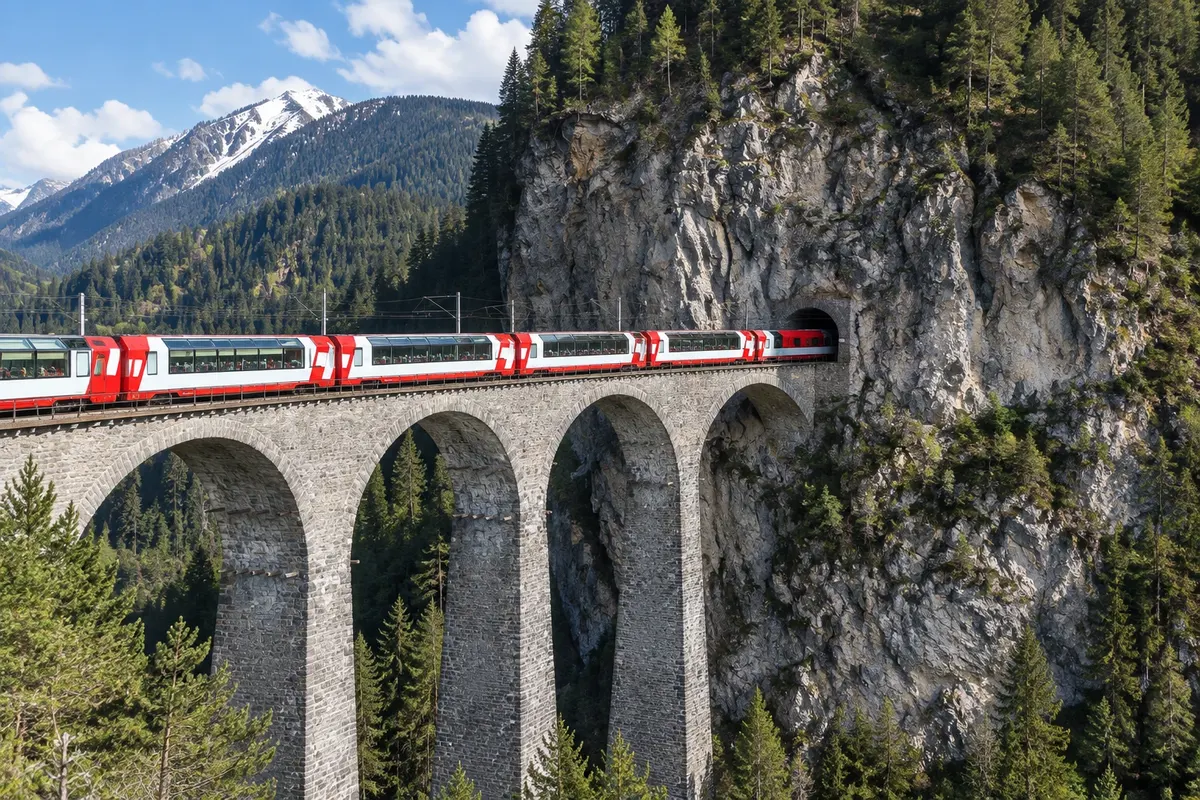
The panoramic train takes about 8 hours between Zermatt and St. Moritz, with 291 bridges and 91 tunnels, passing through Brig, Andermatt, the Oberalppass at 2,033 m, Disentis/Mustér, Chur and the Landwasser viaduct. Seat reservation required.

Kaj izbrati pred odhodom

Izleti – Zermatt and the Matterhorn

Izhodišče, trajanje, potek, vključene storitve in okvirna cena vsakega izleta.

Gornergrat Bahn: the rack railway from Zermatt to the Gornergrat (3,089 m)

Odhod: Gornergrat Bahn station in central Zermatt Rack railway (Zahnradbahn) of the Gornergrat Bahn about 3 to 4 hours, including ascent and descent Dopoldne ali popoldne easy (altitude 3,089 m)

This is Zermatt’s classic excursion. The train departs from the Gornergrat Bahn station in the village center, at about 1,600 m, and climbs in roughly 33 minutes to the Gornergrat at 3,089 m. It is a rack railway (Zahnradbahn, a train with a central gear to handle steep grades), opened in 1898 as Switzerland’s first electric rack railway. Along the way the train stops at Riffelalp, Riffelberg and Rotenboden; you can get off at any of these stations and continue later. At the top the station is outdoors and there is a viewing platform just above it. In clear weather the view reaches the Matterhorn (4,478 m), the Monte Rosa massif with the Dufourspitze (4,634 m), and altogether 29 peaks over 4,000 m. Below runs the Gornergletscher (Gorner Glacier), the second longest in the Alps. Many people ride up and walk down a section to Rotenboden and the Riffelsee, then reboard the train farther down. The train operates year-round; in winter the Gornergrat is also a ski area.

Kraji na poti: Gornergrat, Riffelalp, Riffelberg, Rotenboden, Riffelsee, Gornergletscher, Monte Rosa, Dufourspitze, Matterhorn.

Vključuje: The train ticket entitles you to the ascent and descent, depending on the type purchased. Meals at the summit are paid separately. There are multi-day passes that include Zermatt cableways. Check the current fare table.

Nasvet: Go up early: clouds often cover the peaks as the day progresses. Check live cameras before buying your ticket. Bring a jacket, a hat, and sunglasses even in summer: up there it is much colder than in the village. The Matterhorn can be cloud-covered all day.

Najboljši čas za obisk: All year. From July to September you can combine it with hikes; from December to April, with snow.

Riffelsee and the descent on foot from Rotenboden to Riffelberg

Odhod: Gornergrat or Rotenboden station of the Gornergrat Bahn Gornergrat Bahn train and mountain-trail walk about 1½ hours’ walk from the Gornergrat Dopoldne easy to moderate (mountain trail)

This is the best-known short hike on the Gornergrat route. The trail starts at the Gornergrat station (3,089 m) and descends about 4.7 km to Riffelberg (2,582 m), passing Rotenboden in roughly 30 minutes and Riffelsee in about 40 minutes. Riffelsee is a small mountain lake at about 2,760 m. On windless, clear days the Matterhorn often appears reflected in the water, a well-known photo spot in the area. From Riffelberg the Gornergrat Bahn train returns you to Zermatt. The trail is a mountain path, marked white-red-white, and is almost all downhill: about 70 m of ascent and 580 m of descent. If you want to walk less, you can get off the train at Rotenboden and go only to the lake.

Kraji na poti: Gornergrat, Rotenboden, Riffelsee, Riffelberg, Matterhorn.

Vključuje: Use a Gornergrat Bahn ticket. The trail has no charge. Check the train’s current timetable/pricing.

Nasvet: The reflection depends on still water: early morning usually has less wind. Wear footwear with a firm sole, as there are stretches of loose rock. In winter the trail is covered by snow and does not follow the same route.

Najboljši čas za obisk: From July to October, when the trail is usually snow-free.

Matterhorn Glacier Paradise (3,883 m) and the Glacier Palace

Odhod: Matterhorn Express station, in the south of Zermatt Cable cars: Matterhorn Express and Matterhorn Glacier Ride I about 3 to 4 hours, including ascent and descent Dopoldne easy (altitude 3,883 m)

This is the highest cable‑car station in Europe, at 3,883 m, on the Klein Matterhorn. The ascent takes about 45 minutes. The Matterhorn Express departs from south Zermatt, passes Furi and reaches Trockener Steg at 2,939 m. From there, the Matterhorn Glacier Ride I rises in about 11 minutes to the summit. An elevator takes you from the station to the viewpoint, with 360‑degree views of 38 peaks above 4,000 m and 14 glaciers in Switzerland, Italy and France, including the Matterhorn, the Breithorn and, in the distance, Mont Blanc. Inside the mountain is the Glacier Palace, roughly 15 m below the glacier surface, with an ice tunnel, slide, a glacier crevasse you can walk through and ice sculptures; the visit takes about 30–45 minutes. There is also a cinema in the Breithorn tunnel showing films about mountaineering and the mountain. In summer, the plateau has a snow area with tubes (snowtubing) and summer skiing on the glacier. The cable car runs year‑round; in autumn the first section often stops for a few days for inspection.

Kraji na poti: Matterhorn Glacier Paradise, Klein Matterhorn, Furi, Trockener Steg, Glacier Palace, Breithorn, Matterhorn, Mont Blanc, Theodulgletscher.

Vključuje: The cable‑car ticket covers the ascent and descent; the Glacier Palace and the cinema are in the same complex. Meals are paid separately. Check the current fare table.

Nasvet: At 3,883 m the air is thin: ascend slowly, drink water and avoid exertion, especially young children and anyone with heart or respiratory problems. Bring winter clothing even in August and sunglasses because of the snow. Check the live webcams before going up: with cloud cover the view can disappear.

Najboljši čas za obisk: Year‑round; from June to September there is snow at the top and long daylight hours.

Matterhorn Alpine Crossing: from Zermatt to Breuil-Cervinia, Italy, by cable car

Odhod: Matterhorn Express station, in the south of Zermatt Four cable cars: Matterhorn Express, Glacier Ride I and Glacier Ride II full day, round trip Ves dan easy (altitude 3,883 m)

This is the cable car crossing of the Alps between Switzerland and Italy. The route starts the same way as the Matterhorn Glacier Paradise: Matterhorn Express to Trockener Steg (2,939 m) and Matterhorn Glacier Ride I to the Klein Matterhorn (3,883 m), in about 11 minutes. From there, the Matterhorn Glacier Ride II crosses the Theodul Glacier in around 4 minutes to Testa Grigia (3,480 m), on the border between the two countries—the line passes right in front of the station. On the Italian side, further cable cars descend to Breuil-Cervinia in the Valle d'Aosta, a mountain village on the other side of the Matterhorn. Many people have lunch in Cervinia and return to Zermatt the same day by the same route. The connection operates year-round, subject to weather; in autumn the first section usually stops for a few days for inspection.

Kraji na poti: Furi, Trockener Steg, Matterhorn Glacier Paradise, Testa Grigia, Theodulgletscher, Breuil-Cervinia.

Vključuje: There is a separate ticket for the crossing, one-way or round-trip. Meals in Cervinia are paid separately. Check the current price list.

Nasvet: Bring your passport: to enter Italy you need a valid travel document. Strong winds can suspend the Glacier Ride II; check the cable car status on the morning of your trip and allow extra time for the return so you don’t miss the last departure.

Najboljši čas za obisk: All year; from June to September the days are longer for a round trip.

Matterhorn Glacier Trail: from Trockener Steg to Schwarzsee

Odhod: Trockener Steg station (2,939 m) Cable‑car to Trockener Steg and hike Približno 2 uri hoje Dopoldne ali popoldne moderate (high‑alpine trail)

This is a themed trail at the foot of the Matterhorn, between rock and ice. It starts at Trockener Steg, 2,939 m, reached by the Matterhorn Express, and ends at Schwarzsee, 2,583 m, passing Hirli. It is about 6.6 km, with 23 panels along the way explaining the Furgg glacier (Furggletscher), the retreat of the ice and the plants and animals that colonize the land it leaves behind. The path crosses moraines and slabs of rock polished by the glacier, with the Matterhorn’s east face ahead. It is one of the more demanding easy‑walk trails in the region: there are sections of loose rock and short climbs. At Schwarzsee, the Matterhorn Express takes you back to Zermatt.

Kraji na poti: Trockener Steg, Hirli, Furggletscher, Schwarzsee, Matterhorn.

Vključuje: There is a combined cable‑car ticket to ascend to Trockener Steg and descend from Schwarzsee. The trail itself is free of charge. Check the current fare table.

Nasvet: Wear hiking boots and bring water, a jacket and sunscreen: the section is entirely above 2,500 m and exposed. In winter the route is only done with snowshoes and a mountain guide.

Najboljši čas za obisk: From June to September, when the trail is usually open.

Schwarzsee (2,583 m) and the Maria zum Schnee chapel

Odhod: Matterhorn Express station, in the south of Zermatt Matterhorn Express cable car about 2 to 3 hours Dopoldne ali popoldne Lahko

Schwarzsee (Black Lake) lies at the foot of the Matterhorn, at an intermediate cable car station. The Matterhorn Express takes about 20 minutes from Zermatt to the station at 2,583 m. Just below is the lake, with the small chapel Maria zum Schnee (Maria of the Snows) on the shore at 2,552 m. Tradition holds that two men from Zermatt, lost in the mist above the Theodul glacier, promised to build a chapel there if they were saved; it is believed to date from the early 18th century. From Schwarzsee the trail leads to the Hörnlihütte, the hut from which the most common ascent of the Matterhorn via the Hörnli ridge starts — a route only for those with mountain experience. For the ordinary visitor, the excursion is to walk around the lake, see the chapel and return by cable car, or walk down to Furi.

Kraji na poti: Schwarzsee, Kapelle Maria zum Schnee, Furi, Hörnlihütte, Matterhorn.

Vključuje: The cable car ticket covers the ascent and descent. Visiting the chapel is free of charge. Check the current fare table.

Nasvet: Combine it with the Matterhorn Glacier Trail or the walk down to Furi. The trail to the Hörnlihütte is steep and exposed: do not go without proper preparation and suitable footwear.

Najboljši čas za obisk: From June to September for walking; in winter the area is part of the ski slopes.

Prikaži dodatne izlete (7)

Sunnegga, the Leisee and the Rothorn (3,103 m)

Odhod: Sunnegga funicular station, in central Zermatt Underground funicular, gondola and cable car about 3 to 4 hours Dopoldne ali popoldne easy (altitude 3,103 m)

This is Zermatt’s sunny side, good for families. An underground funicular climbs through the mountain in about 5 minutes to Sunnegga, at 2,288 m. Near the station is the Leisee, a lake where swimming is allowed in summer and which is crossed on a raft pulled by rope; there is a small shuttle between the station and the lake. Sunnegga also hosts the Wolli Abenteuerpark, a playground with slides, swings and water play. From Sunnegga a gondola (small-cabin cable car) rises in about 7 minutes to Blauherd (2,571 m), and a cable car (Seilbahn) takes another ~7 minutes up to the Rothorn, at 3,103 m, where there is a restaurant and 18 metal sculptures representing mountains of the region. The full trip from Zermatt to the Rothorn takes about 35 minutes. In summer you can ride a mountain scooter (trottinette) down to Zermatt from Sunnegga.

Kraji na poti: Sunnegga, Leisee, Blauherd, Rothorn, Wolli Abenteuerpark, Matterhorn.

Vključuje: The transport ticket covers the purchased sections. The playground and the Leisee are next to the station. Meals and scooter rental are charged separately. Check the current fare table.

Nasvet: Sunnegga is the start of the 5-Seenweg. The cable cars in this sector often stop for maintenance during parts of spring and autumn; check before you go.

Najboljši čas za obisk: From July to September for the Leisee and walks; from December to April, with snow, for skiing.

5-Seenweg: the five-lakes trail between Blauherd and Sunnegga

Odhod: Blauherd station (2,571 m) Funicular to Sunnegga, cable car to Blauherd and hike about 3 to 4 hours of walking Ves dan Zmerno zahtevno

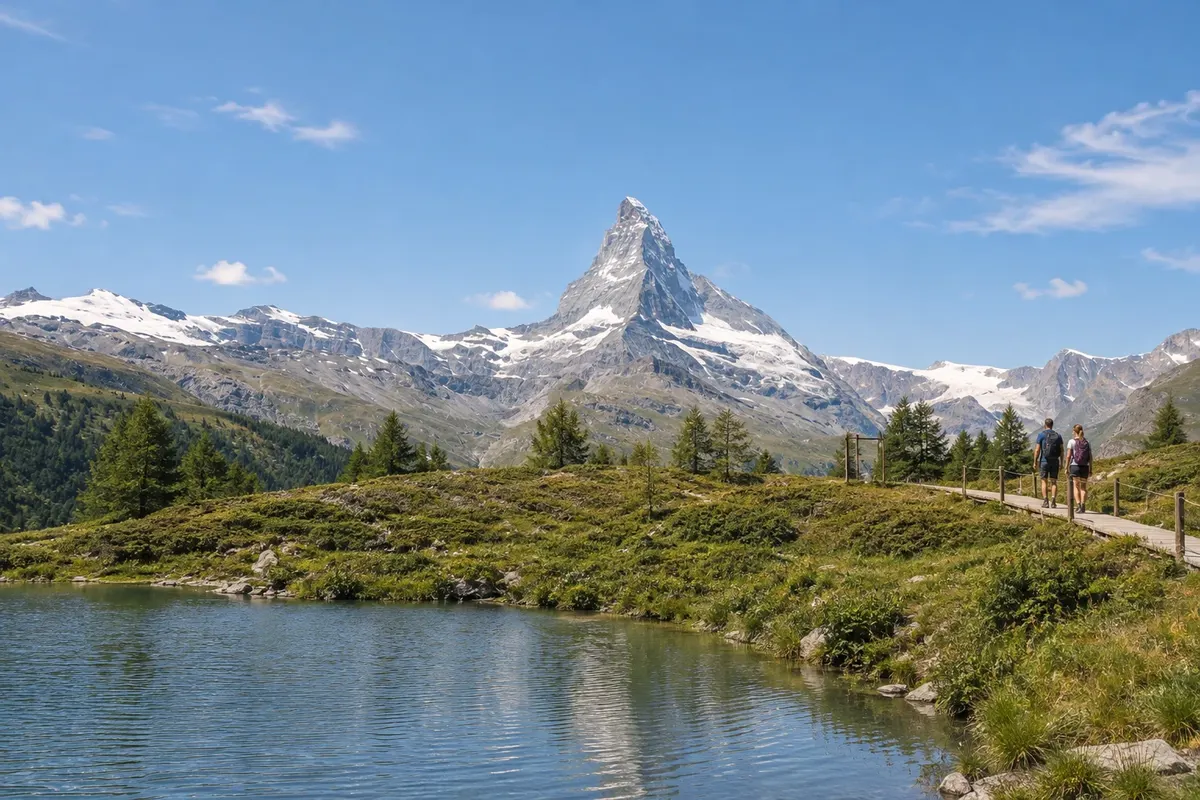
This is the classic summer hike on the Sunnegga side. You take the funicular to Sunnegga (2,288 m) and the cable car to Blauherd (2,571 m), where the trail begins. In about 20 minutes you reach the Stellisee, the lake where the Matterhorn often appears reflected on windless days. After that come Grindjisee, Grünsee — where you can swim — Moosjisee, with milky blue water, and finally Leisee, near the Sunnegga station, where the funicular returns you to Zermatt. It’s about 11 km, with roughly 380 m of ascent and 660 m of descent, around 3 hours 15 minutes of walking, not counting stops. The final section between Moosjisee and Leisee is the steepest. If you don’t want the full route you can go only from Blauherd to Stellisee and back.

Kraji na poti: Blauherd, Stellisee, Grindjisee, Grünsee, Moosjisee, Leisee, Sunnegga, Matterhorn.

Vključuje: Use the funicular and cable car tickets. The trail has no fee. Check the current timetable/prices.

Nasvet: Start early to catch the Stellisee with calm water. Bring snacks and water: there are few support points along the way. The trail can be blocked by snow at the beginning and end of the season.

Najboljši čas za obisk: From July to September, when the trail is usually snow-free.

Zermatt center on foot: Bahnhofstrasse, Hinterdorf and Bergsteigerfriedhof

Odhod: Bahnhofplatz, in front of Zermatt station Peš Približno 2 uri Popoldne Lahko

Zermatt has no private cars: only small electric vehicles, electric taxis and horse-drawn carriages operate, and most things are done on foot. The walk starts at Bahnhofplatz and follows Bahnhofstrasse, the main street with shops and cafés, to Kirchplatz, the square of the Catholic church St. Mauritius. Nearby, on Hinterdorfstrasse, is the Hinterdorf (the rear village), the old core, with more than 30 wooden buildings from upper Valais, raised between the 16th and 18th centuries; some barns are over 500 years old. There are two main types: the Stadel, a hay barn with one door, and the Speicher, a food store such as dried meat, generally with four doors, one for each family. Many rest on round stone slabs on posts to prevent rats from entering. The wood is larch and darkens with age; the roofs are stone slabs. Linked to the parish is the Bergsteigerfriedhof (mountaineers' cemetery), with about 50 graves of climbers who died in the surrounding mountains, mostly from the 19th century, including the guide Michel-Auguste Croz, who died on the descent from the first ascent of the Matterhorn in 1865.

Kraji na poti: Bahnhofstrasse, Hinterdorf, Kirchplatz, Pfarrkirche St. Mauritius, Bergsteigerfriedhof, Matterhorn Museum – Zermatlantis.

Vključuje: The walk and the cemetery visit are free. The Tourist Office organizes guided tours of the village in German, English and French; check the current schedule.

Nasvet: The cemetery is a place of remembrance: speak quietly and do not climb on the graves. Combine the visit with the Matterhorn Museum, which is located at Kirchplatz.

Najboljši čas za obisk: All year; in late summer afternoons the center becomes livelier.

Matterhorn Museum – Zermatlantis

Odhod: Kirchplatz, in central Zermatt Peš about 1 hour to 1½ hours Popoldne Lahko

The museum is located beneath Kirchplatz and shows, in an underground space, how Zermatt evolved from a mountain farming village into a mountaineering and tourist destination. There are reconstructed original houses and interiors, with everyday objects from residents and the early climbers. The central section is the Matterhorn room: it tells the story of the first ascent, on July 14, 1865, by Edward Whymper’s seven-man team, and the descent in which four of them died. The original rope that broke is on display, along with belongings of the deceased climbers. There is also a stone axe from the Neolithic period, finds from a 16th-century mercenary soldier, a scale model of the Matterhorn with the ascent routes, and a multimedia room with clips from the film Der Berg ruft, shot in Zermatt in 1937 and 1938. An audio guide is available in English, German, French and Japanese. The museum has wheelchair access.

Kraji na poti: Matterhorn Museum – Zermatlantis, Kirchplatz, Matterhorn.

Vključuje: There is an admission fee. Some tourist transport passes and the Swiss Museum Pass grant access; check the current price table.

Nasvet: The museum usually opens in the afternoon and closes for a few weeks at the end of autumn; check the seasonal hours. It’s a good option for a cloudy day, when the viewpoints aren’t worthwhile.

Najboljši čas za obisk: All year round, especially on overcast days.

Gornerschlucht: the walkways in the Gorner Gorge

Odhod: Zermatt town centre On foot, or cable car to Furi and descent on foot about 1.5 hours, returning via Blatten Dopoldne ali popoldne easy (stairs and narrow walkways)

The Gornerschlucht (Gorner Gorge) is at the southern exit of the village, about a 15-minute walk from the town centre. The Gornera river, which flows from the Gorner Glacier, has cut a narrow channel in a greenish rock, serpentinite, about 220 million years old. Wooden walkways and stairs fixed to the rock follow the water for roughly 200 m, rising about 40 m; walking through the gorge takes around 20 minutes. On exiting, a suggested loop continues through the village of Blatten, about 15 minutes away, and returns down to Zermatt in a circuit of about 2.75 km. Another option is to take the cable car up to Furi and walk down to the gorge. For those wanting more, there is a guided via ferrata inside the gorge, bookable in advance.

Kraji na poti: Gornerschlucht, Blatten, Furi, Gornera.

Vključuje: There is an entrance fee for the walkways. The guided via ferrata requires a separate ticket, with equipment available to rent on site. Check the current price list.

Nasvet: The walkways get wet and slippery: wear footwear with a firm sole. It may close for a few days in heavy rain. It’s a short excursion to fit into an arrival day or a day with poor visibility at the summit.

Najboljši čas za obisk: From late May to mid-October, when it is usually open.

Glacier Express: from Zermatt to St. Moritz on a panoramic train

Odhod: Zermatt Station Glacier Express panoramic train (seat reservation required) about 8 hours Ves dan Lahko

The Glacier Express links Zermatt to St. Moritz in the Engadine in about 8 hours, crossing 291 bridges and 91 tunnels. It departs Zermatt descending the Mattertal (Matter valley), partially using a rack system, down to Visp and Brig. It passes through the Furka Tunnel, 15.4 km long, goes by Andermatt and climbs to the Oberalppass at 2,033 m, the highest point on the route. In Disentis/Mustér the locomotive is changed and the train enters the section operated by the Rhätische Bahn. It continues through the Rheinschlucht (Rhine Gorge), reaches Chur where the train reverses direction, and crosses the Landwasserviadukt, a curved viaduct near Filisur, before descending to St. Moritz. The carriages have panoramic windows and meals are served at your seat. For travelers continuing into the Engadine, it is a transfer journey; those who just want a taste can ride a shorter section, such as Zermatt–Brig or Zermatt–Andermatt.

Kraji na poti: Zermatt, Mattertal, Visp, Brig, Furkatunnel, Andermatt, Oberalppass, Disentis/Mustér, Rheinschlucht, Chur, Landwasserviadukt, Filisur, St. Moritz.

Vključuje: Train ticket plus mandatory seat reservation, including for those with a rail pass. Onboard meals are paid separately. Check the current schedule.

Nasvet: Book in advance: reservations open about 93 days beforehand and summer tends to sell out. The train usually has an annual pause between mid-October and early December; confirm the dates.

Najboljši čas za obisk: From June to September for long days; from December to March for snowy scenery.

Round-trip day to Saas-Fee and Mittelallalin (3,500 m)

Odhod: Zermatt Station Train to the Saas valley and PostAuto bus to Saas-Fee about 9 hours, with roughly 2 hours travel each way Ves dan easy (altitude around 3,500 m)

Saas-Fee is the neighboring village, in the Saastal (Saas Valley), also without private cars, at about 1,800 m and surrounded by 18 summits over 4,000 m. From Zermatt, the trip takes roughly 2 hours, with a change from train to the PostAuto bus. In Saas-Fee you walk from the bus station to the cable cars. The Alpin Express climbs to the Metro Alpin station at about 3,000 m, and from there the Metro Alpin, an underground funicular, takes you to the Mittelallalin at about 3,500 m. Up there is a revolving restaurant, which makes one full turn per hour, and the ice pavilion, with a grotto carved into the glacier. In summer a glacier ski area operates between 3,000 and 3,600 m. On the way back there is time to stroll the village streets.

Kraji na poti: Saas-Fee, Saastal, Felskinn, Mittelallalin, Allalin, Metro Alpin, Feegletscher.

Vključuje: Train and bus transport and the Saas-Fee cable cars have separate tickets; the ice pavilion and meals are paid separately. Check the current timetable/prices.

Nasvet: Leave Zermatt early to have time up top. Check the cable car season in advance: the Metro Alpin often stops for part of spring. Bring winter clothing for Mittelallalin.

Najboljši čas za obisk: From June to April, when the Metro Alpin is usually operating.

Po dnevih

Zermatt and the Matterhorn – načrt poti. Število dni: 2, 3in5

Predlogi za načrtovanje poti. Vrstni red dni prilagodite vremenu in razpoložljivosti izletov.

2 dni · Zermatt in 2 days: village, Gornergrat and Matterhorn Glacier Paradise

ZaWho has little time in Switzerland and wants to see the two main viewpoints · Izhodišče:Zermatt
  1. Dan 1 · Arrival from Brazil and center of Zermatt

    With an overnight flight, arrival in Zürich is usually in the morning. At the airport station, Zürich Flughafen, the train takes about 3 hours 40 minutes to Zermatt, with changes in Bern and Visp. Those arriving via Genève take around 4 hours by train from Genève-Aéroport, with a change in Visp. In the afternoon, drop your bags and walk the center of Zermatt: Bahnhofstrasse, Hinterdorf and Bergsteigerfriedhof. If time allows, the Matterhorn Museum – Zermatlantis usually opens in the afternoon. Sleep early to make the most of the next morning.

  2. Dan 2 · Gornergrat in the morning and Matterhorn Glacier Paradise in the afternoon

    Take one of the first Gornergrat Bahn trains up to the Gornergrat (3,089 m), when clouds are usually less frequent. In summer, hike down from Rotenboden to the Riffelsee and Riffelberg and rejoin the train. After lunch, go up to the Matterhorn Glacier Paradise (3,883 m) and visit the Glacier Palace. If the weather closes in at the summit, swap the order and leave that viewpoint for another day, or do the Gornerschlucht, which is near the center.

3 dni · Zermatt in 3 days: viewpoints, lakes and trails at the foot of the Matterhorn
ZaWho travels in summer and wants to combine mountain trains with easy hikes · Izhodišče:Zermatt
  1. Dan 1 · Arrival and center of Zermatt

    Morning arrival in Zürich and train from Zürich Flughafen to Zermatt, in about 3 hours 40 minutes, with changes in Bern and Visp. In the afternoon, explore the center of Zermatt on foot, including the Hinterdorf and the Bergsteigerfriedhof, and the Gornerschlucht, about a 15-minute walk from the center, if it is in season (late May to mid-October).

  2. Dan 2 · Gornergrat and Riffelsee

    Take the Gornergrat Bahn early up to the Gornergrat (3,089 m). Walk down to Rotenboden and the Riffelsee for the classic reflected Matterhorn photo if the day is wind‑still, then continue to Riffelberg, where the train returns to Zermatt. In the afternoon, visit the Matterhorn Museum – Zermatlantis.

  3. Dan 3 · Sunnegga and the 5‑Lakes Trail, or Matterhorn Glacier Paradise

    In good weather, take the funicular to Sunnegga and the cable car to Blauherd and do the 5‑Lakes Trail (5‑Seenweg) to the Leisee, about a 3‑hour walk. If you prefer less effort you can visit Matterhorn Glacier Paradise (3,883 m) and the Glacier Palace, with a stop at Schwarzsee on the return. In the late afternoon, train back to Zürich or your next destination.

5 dni · Zermatt in 5 days: the Matterhorn from every side, Italy and Saas-Fee
ZaWho wants to explore the region at a relaxed pace, with leeway for cloudy days · Izhodišče:Zermatt
  1. Dan 1 · Arrival and center of Zermatt

    Overnight flight to Zürich and train from Zürich Flughafen to Zermatt, in about 3 hours 40 minutes, with changes in Bern and Visp; by car, leave the vehicle in Täsch and continue on the 12-minute shuttle. In the afternoon, explore the center of Zermatt on foot: Bahnhofstrasse, Hinterdorf and Bergsteigerfriedhof.

  2. Dan 2 · Gornergrat, Riffelsee and Matterhorn Museum

    Gornergrat Bahn early to the Gornergrat (3,089 m), hike from Rotenboden to Riffelsee and on to Riffelberg, then return by train. In the afternoon, visit the Matterhorn Museum – Zermatlantis to learn the history of the first ascent before seeing the mountain up close.

  3. Dan 3 · Matterhorn Glacier Paradise, Glacier Trail and Schwarzsee

    Ascend to Matterhorn Glacier Paradise (3,883 m) and visit the Glacier Palace. On the descent, get off at Trockener Steg and do the Matterhorn Glacier Trail to Schwarzsee, about 2 hours, from June to September. At Schwarzsee, see the chapel Maria zum Schnee and return by cable car. Outside the trail season, descend directly to Schwarzsee by cable car.

  4. Dan 4 · Sunnegga, Rothorn and the 5‑Lakes Trail

    Funicular to Sunnegga and cable car to Blauherd. If you want the viewpoint, ascend the Rothorn (3,103 m) before starting the trail. Then do the 5‑Lakes Trail via the Stellisee, Grindjisee, Grünsee, Moosjisee and Leisee, returning to Sunnegga. With children, stay at the Leisee and the Sunnegga playground.

  5. Dan 5 · Breuil‑Cervinia or Saas‑Fee

    Choose a day trip. On the Matterhorn Alpine Crossing, cable cars take you to Testa Grigia (3,480 m) on the border and descend to Breuil‑Cervinia in Italy for lunch with a same‑day return; carry your passport. The other option is a day trip to Saas‑Fee and Mittelallalin, about 2 hours by train and PostAuto bus. If your trip continues to the Engadin, swap this day for the Glacier Express to St. Moritz.

Najboljši čas za obisk

Kdaj se odpraviti:Zermatt and the Matterhorn po mesecih

From July to September the trails are usually snow-free, and the Gornerschlucht and the five-lakes trail operate. From December to April is ski season. In May, June, October and November some cable cars often stop for maintenance. Weather at altitude changes quickly: check operations before ascending.

The seasons shown are the most usual ones; nature doesn't always follow the calendar.

januar Malo padavin

winter with snow · skiing

Deep winter. According to MeteoSwiss normals (1991–2020) for the Zermatt station at 1,638 m, the mean temperature is about -4 °C, with an average high of 1 °C and an average low of -7 °C; about 42 mm of precipitation falls during the month. Days are short. The ski season usually runs from late November to early May, and snow typically covers the slopes. The Gornergrat and the Matterhorn Glacier Paradise operate year‑round; it is much colder up high than in the village.

februar Malo padavin

driest month · skiing

It is the driest month of the year: about 30 mm, according to MeteoSwiss normals (1991–2020) for Zermatt. The average temperature is around -3 °C, with an average high of 2 °C and an average low of -7 °C. The ski season remains in full swing, with winter school holidays in several European countries. Summer trails such as the 5‑Seenweg remain under snow; there are marked winter routes.

marec Malo padavin

skiing · longer days

Days grow longer and the sun appears more. According to MeteoSwiss normals (1991–2020) for Zermatt, the mean is 0 °C, with an average high of 6 °C and an average low of -4 °C; about 33 mm of precipitation. Snow usually remains good on the high slopes.

april Malo padavin

end of ski season · Zermatt Unplugged

According to MeteoSwiss normals (1991–2020) for Zermatt, the mean is 4 °C, with an average high of 10 °C and an average low of -1 °C; about 40 mm of precipitation. The ski season usually runs until early May, and some lifts begin to stop for maintenance. The Zermatt Unplugged music festival is typically held in April.

maj Veliko padavin

shoulder season · lift maintenance

It is the wettest month of the year, with about 77 mm, according to MeteoSwiss normals (1991–2020) for Zermatt. The mean temperature rises to 8 °C, with an average high of 14 °C and an average low of 3 °C. It is a low season: several lifts commonly stop for maintenance and high trails still have snow. The Gornergrat and the Matterhorn Glacier Paradise remain open. The Gornerschlucht usually opens at the end of the month.

junij Veliko padavin

start of summer · snow on high trails

Beginning of summer, with long days. According to MeteoSwiss normals (1991–2020) for Zermatt, the mean is 12 °C, with an average high of 18 °C and an average low of 7 °C; about 70 mm of rainfall, typically in afternoon showers. Trails open gradually: the Matterhorn Glacier Trail usually opens in June, but the 5‑Seenweg and the Riffelsee route may have snow until early July.

julij Zmerne padavine

high season · trails open

The warmest month: mean 14 °C, average high 20 °C and average low 8 °C, according to MeteoSwiss normals (1991–2020) for Zermatt; about 59 mm of rain, often in afternoon storms. Trails are generally open, including the 5‑Seenweg and Riffelsee. European school holidays fill trains and lifts: start early. Up high, temperatures remain close to zero.

avgust Veliko padavin

high season · August 1st

According to MeteoSwiss normals (1991–2020) for Zermatt, the mean is 13 °C, with an average high of 20 °C and an average low of 8 °C; about 68 mm of rain. High season continues due to European holidays. On August 1st, Swiss National Day, there are usually celebrations and fireworks in the village. Afternoon showers are common: save viewpoints for the morning.

september Zmerne padavine

trails open · fewer crowds

Good month for hiking, with less traffic than in August. According to MeteoSwiss normals (1991–2020) for Zermatt, the mean is 9 °C, with an average high of 15 °C and an average low of 5 °C; about 51 mm of rain. Trails generally remain open. Days are already shortening and mornings become chilly.

oktober Zmerne padavine

autumn · Glacier Express pause

According to MeteoSwiss normals (1991–2020) for Zermatt, the average is 5 °C, with an average high of 11 °C and low of 1 °C; about 57 mm of precipitation. The Gornerschlucht often closes mid‑month, the Glacier Express typically begins its annual pause and several cable cars start stopping for maintenance. It can snow at higher elevations.

november Veliko padavin

shoulder season · first snow

According to MeteoSwiss normals (1991–2020) for Zermatt, the average is 0 °C, with an average high of 5 °C and low of -3 °C; about 65 mm, largely as snow. It is low season: many cable cars and the Matterhorn Museum often close for several weeks. The ski season usually begins at the end of the month, with Gornergrat and the Sunnegga area opening.

december Zmerne padavine

skiing · Christmas and New Year

Winter begins. According to MeteoSwiss normals (1991–2020) for Zermatt, the average is -3 °C, with an average high of 2 °C and low of -6 °C; about 47 mm of precipitation, generally as snow. The Glacier Express typically resumes service at the start of the month. Christmas and New Year are high season, with the village busy: book trains and excursions in advance.

Načrtujte pot

Kako do tja:Zermatt and the Matterhorn

By train (SBB/CFF/FFS) from Zurich and from Genève

The train is the main way to reach Zermatt, and trains go all the way to the village center. From Zürich HB (Zurich main station) the journey takes about 3 hours 10 minutes, with a change at Visp (sometimes also at Bern or Spiez, depending on the schedule). From Genève, the line runs along the shore of Lac Léman (Lake Geneva) and the Rhône valley to Visp, where you change trains. In Visp the Matterhorn Gotthard Bahn line begins, climbing the Mattertal (Matter valley) in about 1 hour to Zermatt, with trains every half hour. Switzerland offers tourist transport passes that are valid on trains and on some mountain trains and cable cars, with discounts on others; check whether a pass pays off for your itinerary.

Panoramic and mountain trains

The Glacier Express links Zermatt with St. Moritz, in the Engadine, in about 8 hours, passing over the Oberalppass (2,033 m). Seat reservation is mandatory, including for those with a transport pass, and the train usually has an annual pause between mid-October and early December. Within Zermatt, the Gornergrat Bahn, a rack railway, climbs from the center to the Gornergrat (3,089 m) in about 33 minutes, year-round; no reservation is required.

By car: leave the car in Täsch

Zermatt has no private cars. Private vehicles, including electric cars, may only go as far as Täsch, about 5 km before the village; continuing without authorization results in a heavy fine. In Täsch, the Matterhorn Terminal has approximately 2,100 covered parking spaces, and private companies offer more than 1,000 additional spaces. From the terminal, the Shuttle, a Matterhorn Gotthard Bahn train, departs every 20 minutes and takes 12 minutes to reach central Zermatt; there are also authorized taxis. To reach Täsch you continue to Visp in the Rhône valley and then up the Mattertal. From Genève the route is via the A1 to Lausanne and the A9 through Valais. From Bern, one option is the car shuttle train through the Lötschberg tunnel between Kandersteg and Goppenstein. The motorway vignette is mandatory on Swiss highways.

How to get around Zermatt

The village is explored on foot: from the station to Kirchplatz is a few minutes along Bahnhofstrasse. There are electric taxis, horse‑drawn carriages, bicycles and local electric buses with two lines, which go, for example, to the Matterhorn Express station in the south of the village. To go up the mountains: the Gornergrat Bahn departs in front of the main station; the Sunnegga funicular departs from the center; the Matterhorn Express departs from the south of the village for Furi, Schwarzsee, Trockener Steg and the Matterhorn Glacier Paradise. Multi‑day passes are available that combine Zermatt’s trains and cableways.

Reservations and tickets for mountain trains

The Glacier Express requires seat reservation, which opens about 93 days before travel. The Gornergrat Bahn and Zermatt cable cars do not require reservations: tickets are bought at the station or online, and there are one- or multi-day passes that combine several sections. The Gornerschlucht via ferrata has limited places and requires advance booking. Cable cars may stop for several days or weeks for maintenance, usually in spring and autumn: check before you go.

Pred odhodom

Praktične informacije

Z nekaj načrtovanja boste imeli več časa za uživanje na poti.

Kdaj se odpraviti

From July to September the trails are usually snow-free, and the Gornerschlucht and the five-lakes trail operate. From December to April is ski season. In May, June, October and November some cable cars often stop for maintenance. Weather at altitude changes quickly: check operations before ascending.

The seasons shown are the most usual ones; nature doesn't always follow the calendar.

Koliko dni ostati

Two days are enough for the Gornergrat, the Matterhorn Glacier Paradise and the village center. With three or four days you can add Sunnegga with the five-lakes trail, Schwarzsee and the Gornerschlucht, with leeway to change the order of visits depending on the weather at altitude.

V katerem mestu prenočiti

Accommodation is concentrated near the station and the Bahnhofstrasse, a few steps from the Gornergrat trains and the Sunnegga funicular. Around the Kirchplatz and the Hinterdorf, the old town is quieter. Winkelmatten and the streets to the south, near the Matterhorn Express cable car, are on the slope and require an electric bus. There are hotels on the mountain, in Riffelalp, Riffelberg and at the top of the Gornergrat. Those arriving by car can stay in Täsch, next to the shuttle train.

Spoštujte kraj

Odnesite svoje odpadke, upoštevajte oznake in podprite lokalne ponudnike. V naravi upoštevajte navodila za obiskovalce.

Odgovori na vaša vprašanja

Pogosta vprašanja – Zermatt and the Matterhorn

How many days to stay in Zermatt?

At least two full days, to have two chances of clear skies over the Matterhorn. Three or four days allow you to go up to the viewpoints, do a hike and see the center without rushing.

What's the best time to go to Zermatt?

For trails and lakes, from July to September (European summer). For snow and skiing, from December to April. Outside those periods some cable cars close for maintenance.

Do you need a car to go to Zermatt?

No, and combustion cars are not allowed into the village. The train arrives at Zermatt station, in the center. Those who go by car park in Täsch and take the shuttle train.

Is it possible to do a day trip to Zermatt departing from Zurique or Genebra?

It is possible, but it's 3 to 4 hours by train each way, which leaves little time to go up to the viewpoints. Ideally you should spend at least one night in the village.

Can you go from Zermatt to Itália?

Yes. The Matterhorn Alpine Crossing links Zermatt to Breuil-Cervinia by cable cars, crossing the border at Testa Grigia, at 3.480 m. It operates part of the year and closes for maintenance: check in advance and take your passport.

Odkrijte druge destinacije Iskanje po zvezni državi in mestu

Več kot vodnik