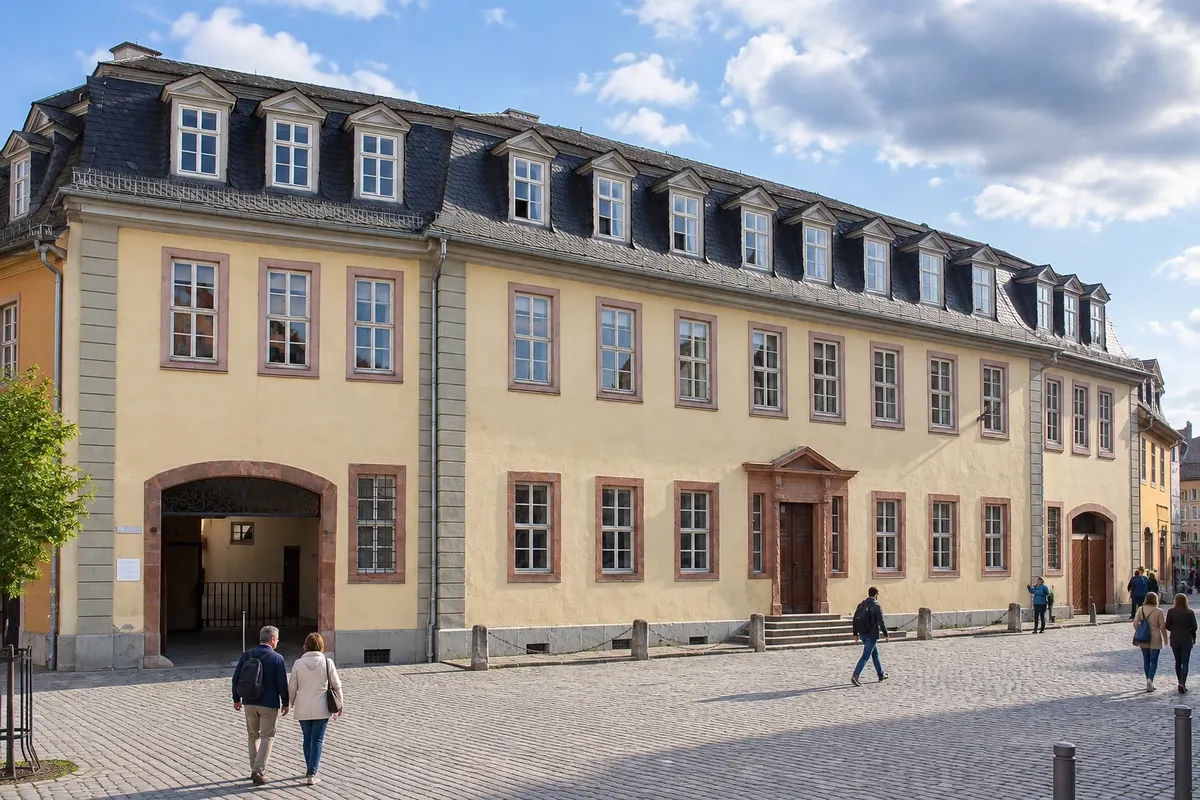
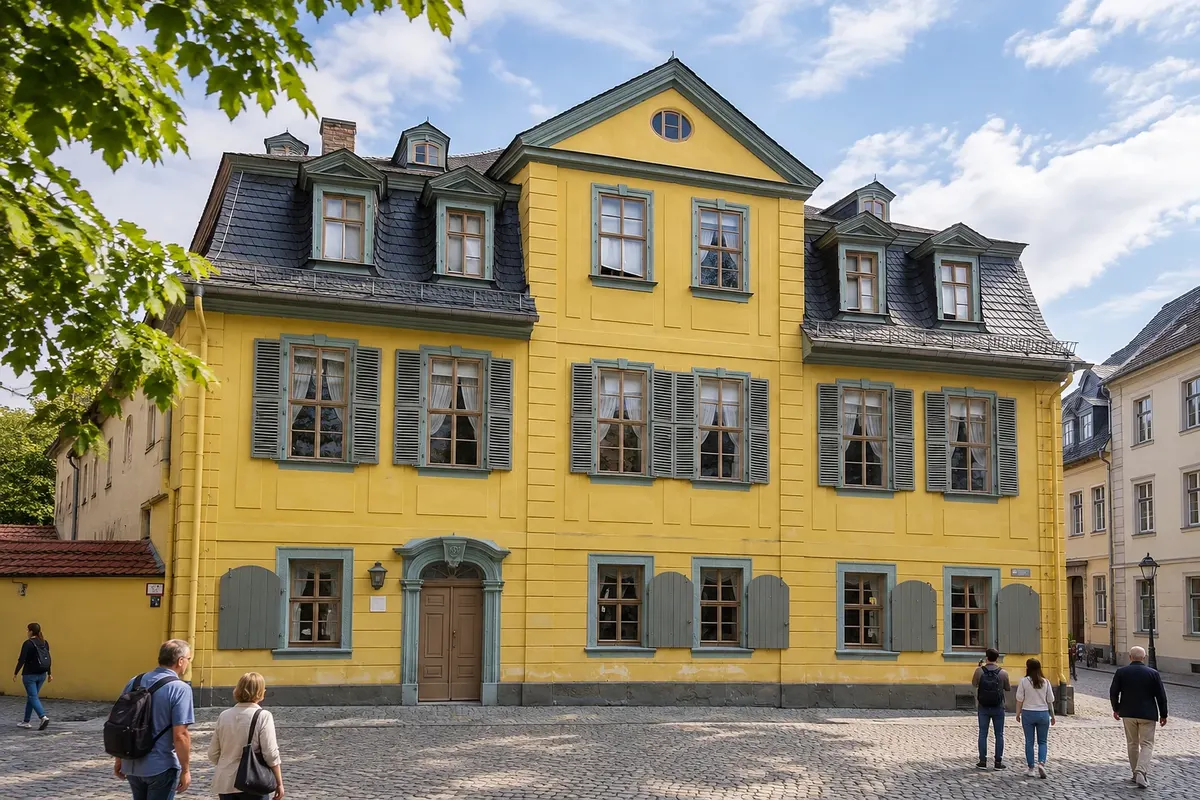
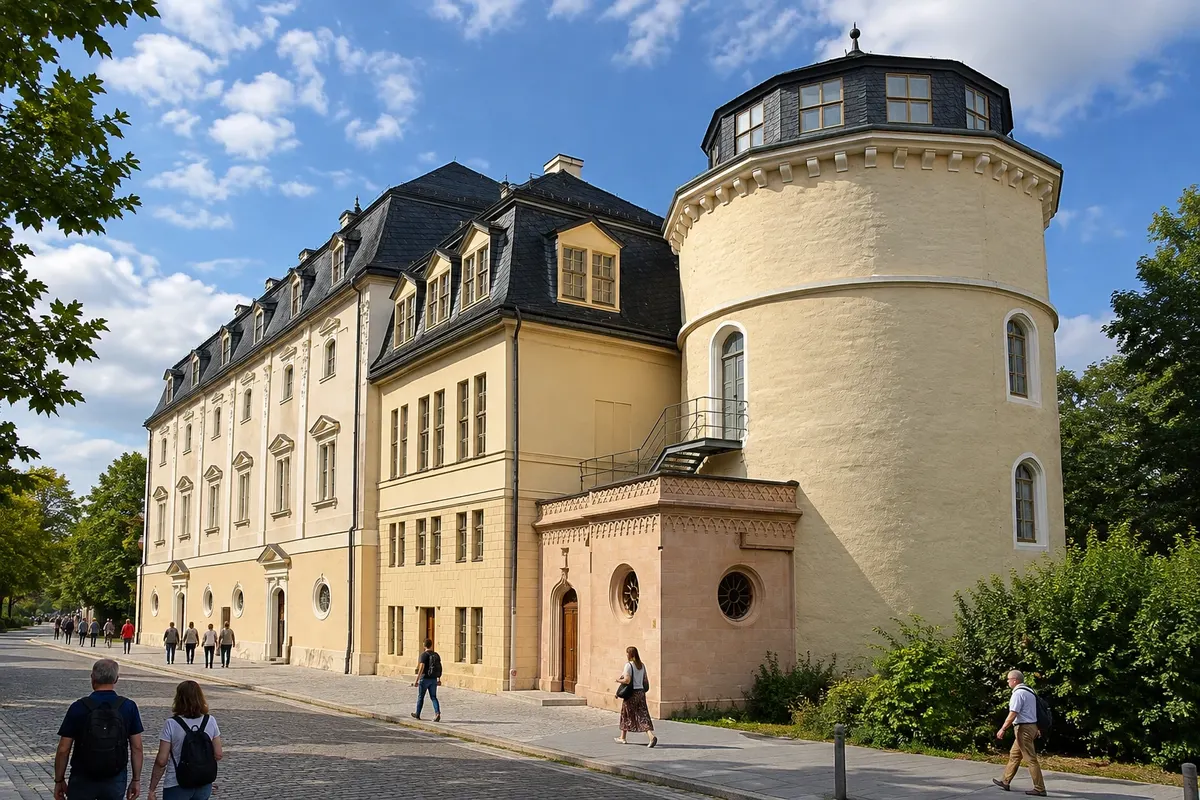
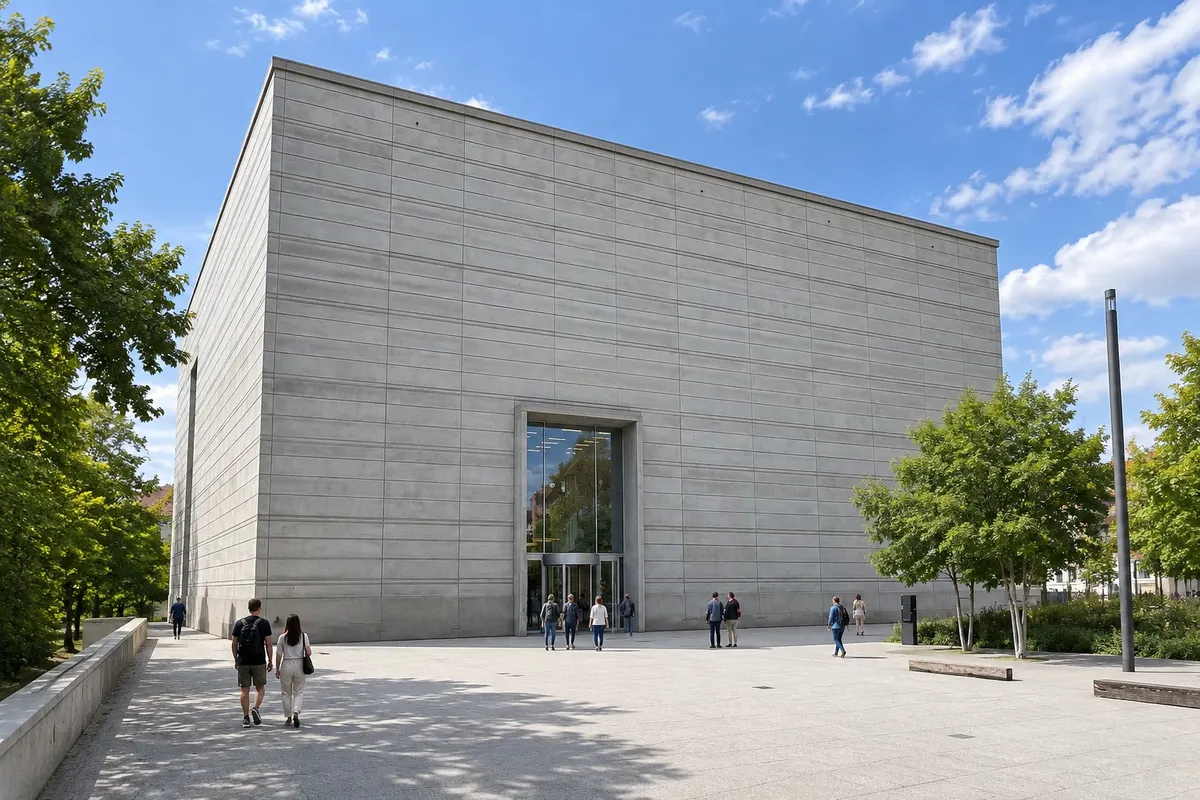
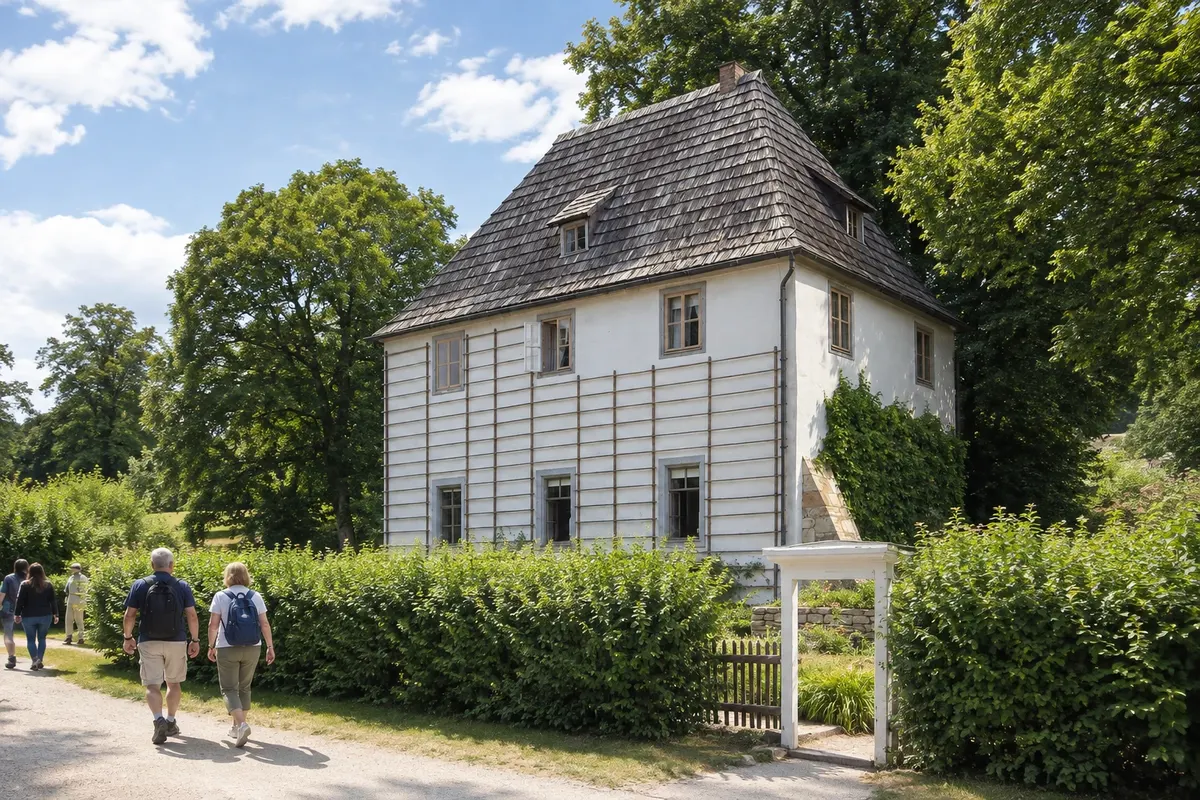
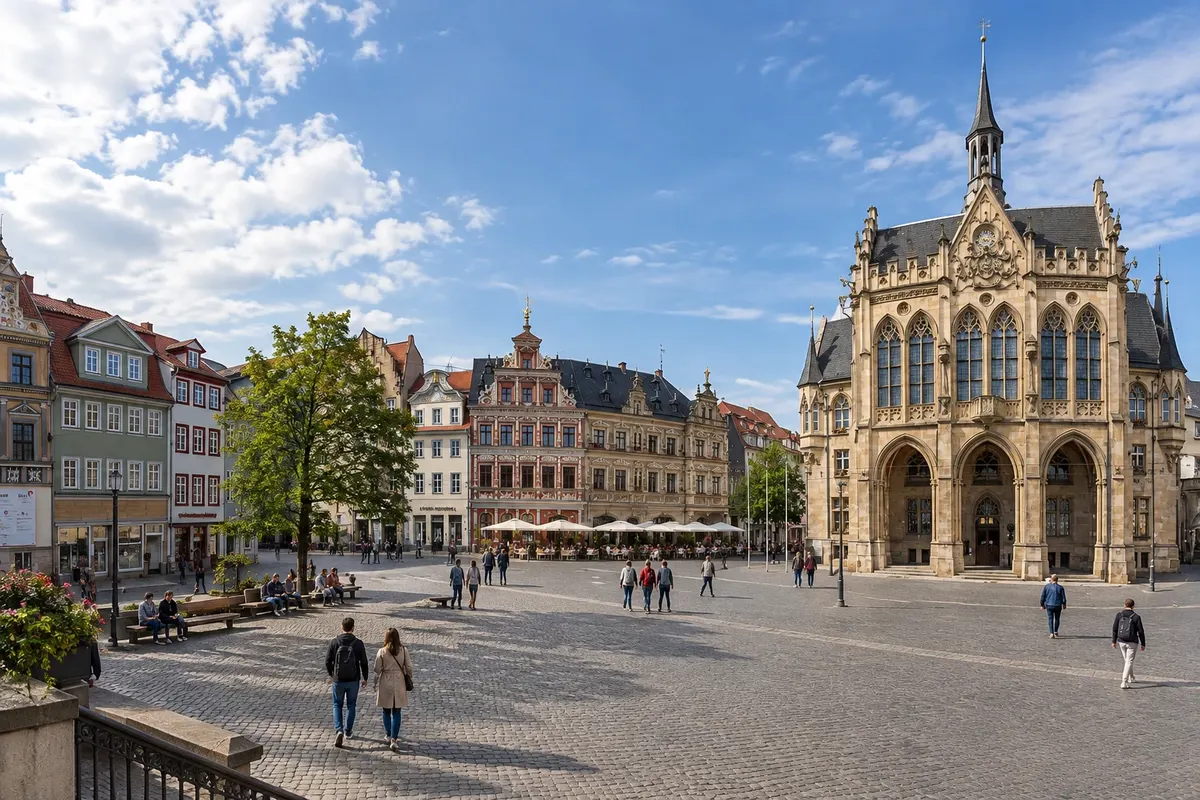
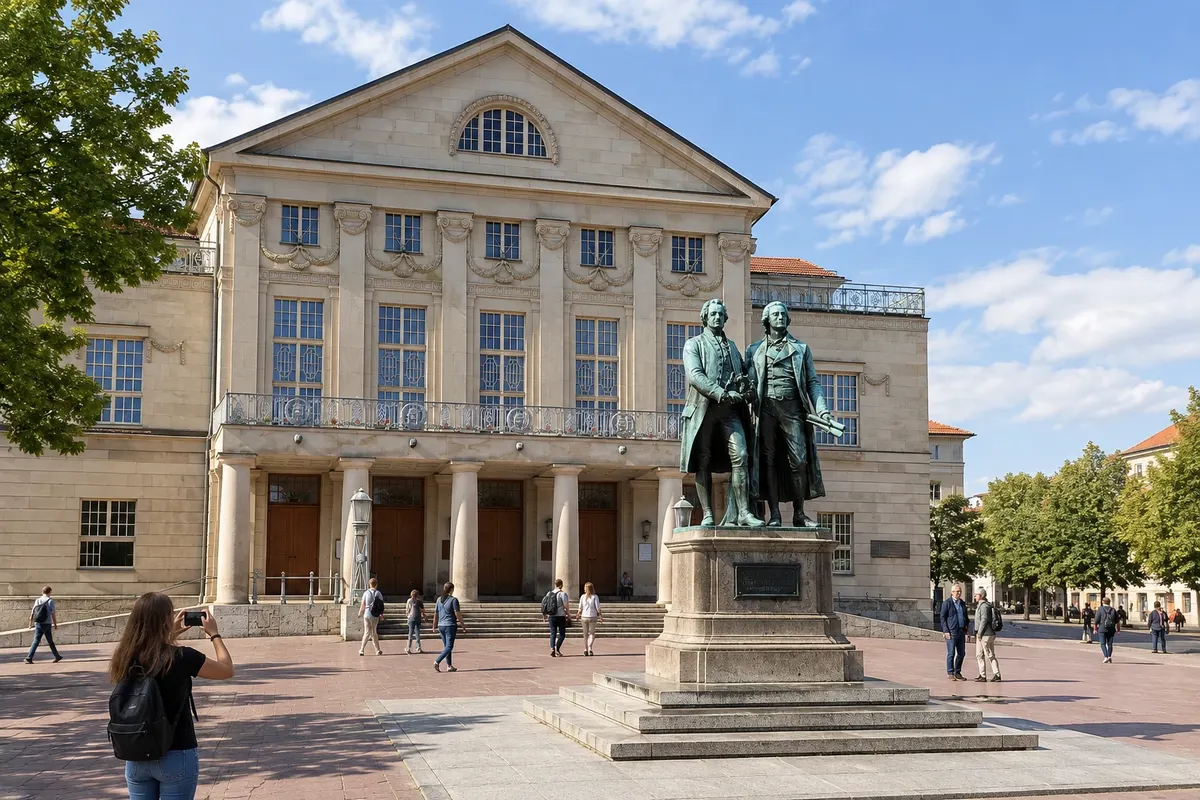
Weimar on foot: Markt, Herderkirche with Cranach altar and the Stadtschloss courtyard
Odhod: Weimar, Theaterplatz Peš po starem mestnem jedru Približno 2 uri Dopoldne ali pozno popoldne Lahko
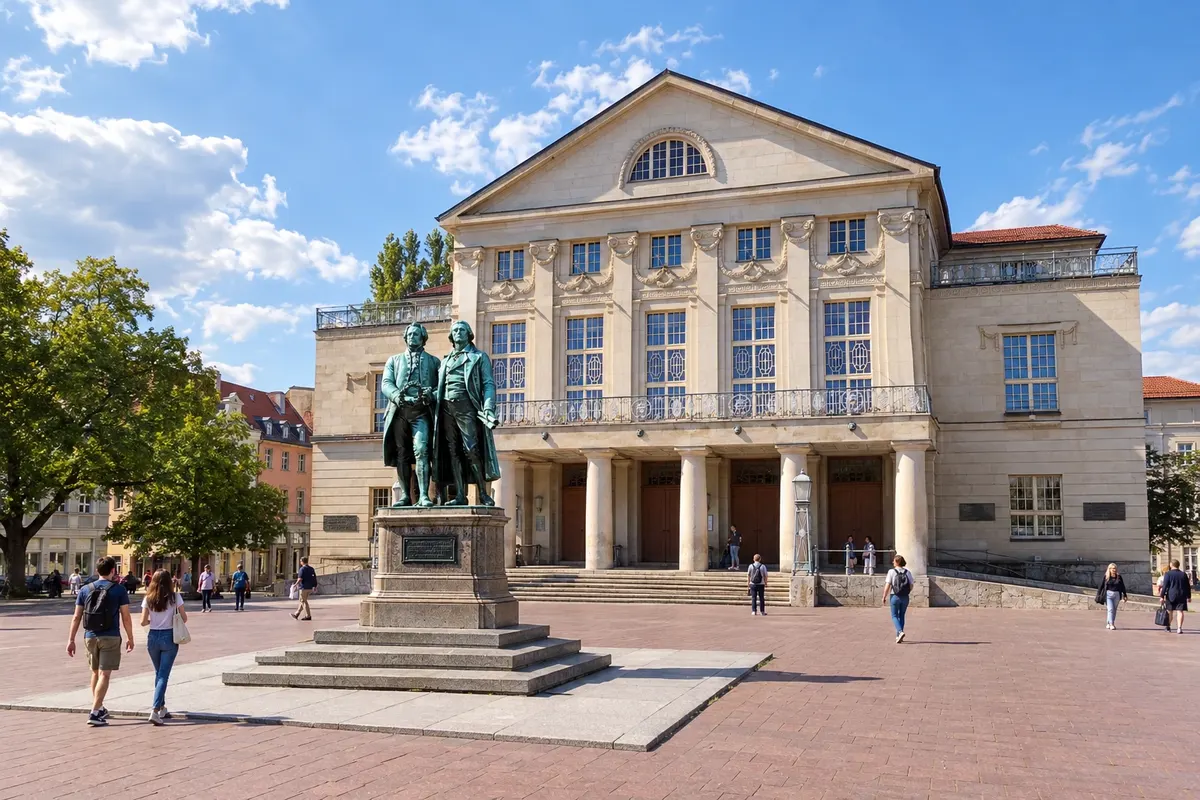
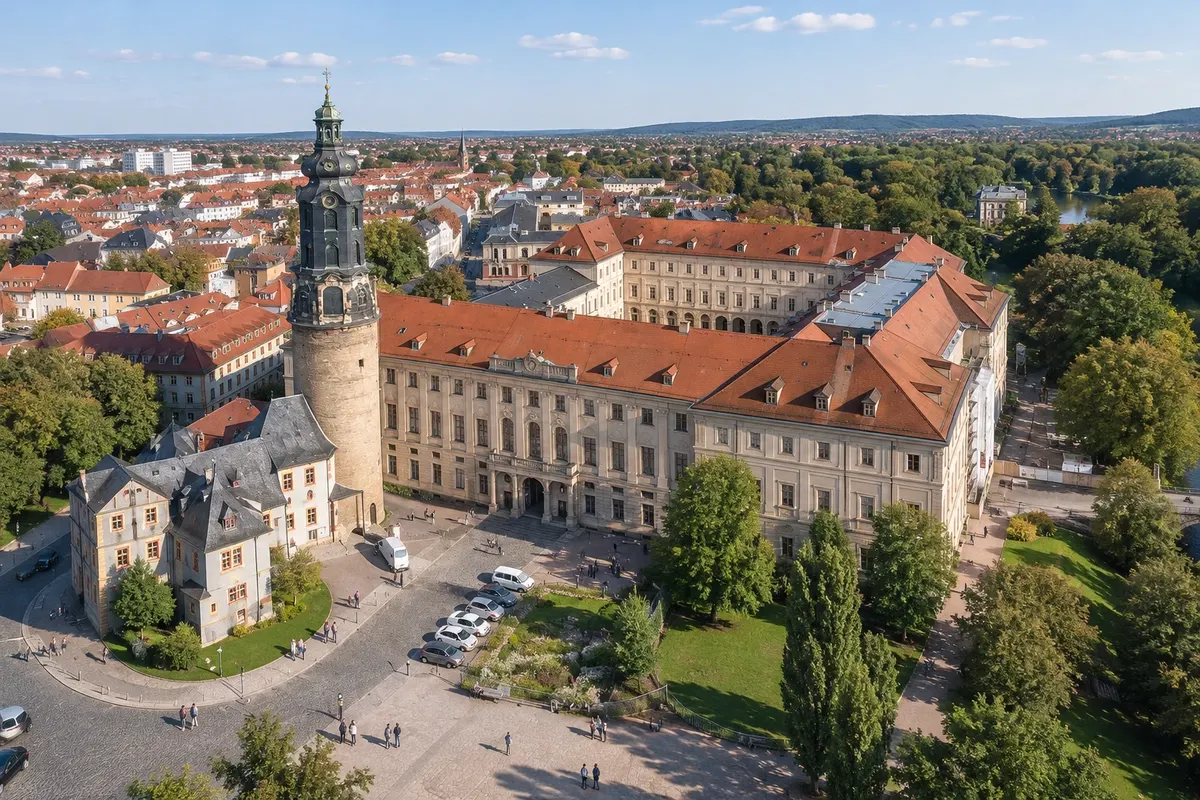
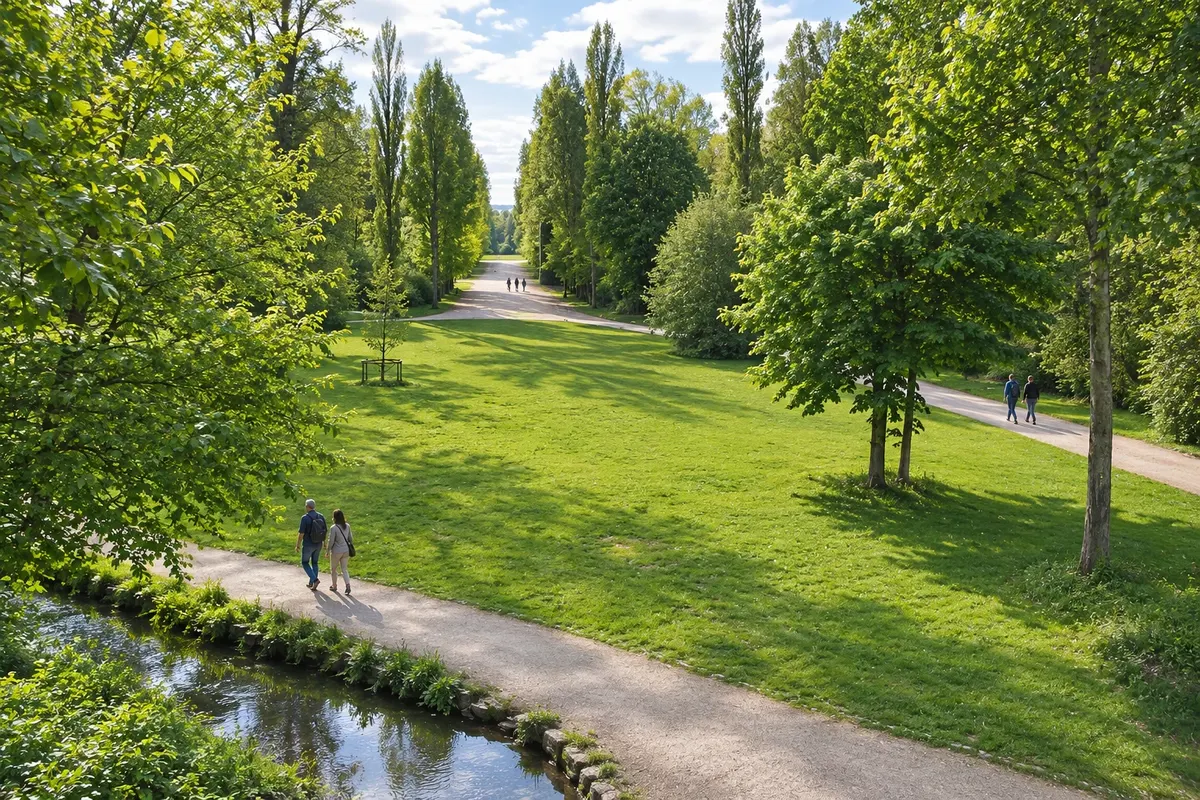
Weimar’s center is small and flat and can be seen in a morning. Start at the Goethe-Schiller-Denkmal on Theaterplatz and follow Schillerstraße, a pedestrian street with shops and cafés, to the Markt, the market square. There you’ll find the neo‑Gothic town hall of 1841 with a Meissen porcelain carillon, the Cranachhaus with its Renaissance façade where the painter Lucas Cranach the Elder spent his last year and died in 1553, and the Hotel Elephant, mentioned in Thomas Mann’s novel Lotte in Weimar. On weekdays there are bratwurst stands and Thuringian products in the square. Two blocks to the north is the Herderkirche, the city church of Saints Peter and Paul, a late Gothic hall church erected between 1498 and 1500. The altar triptych was begun by Cranach the Elder and finished by his son in 1555; the central panel shows Luther and Cranach himself at the foot of the cross. Johann Gottfried Herder was superintendent of this church from 1776 to 1803 and is buried there; his 1850 statue stands in the square opposite. Johann Sebastian Bach played the organ there in the years he worked at the Weimar court. Finish by descending the Platz der Demokratie, between the Anna Amalia library and the Stadtschloss, the ducal residential palace whose courtyard opens onto the Park an der Ilm.
Kraji na poti: Goethe-Schiller-Denkmal, Park an der Ilm.
Vključuje: Free walk: streets, squares and the palace courtyard are open and free to enter. The Herderkirche accepts donations. Paid guided walking tours are available, departing from the tourist office at the Markt.
Nasvet: The Herderkirche is closed during services and usually has reduced hours in winter; visit mid-morning. At the Markt, the tourist office sells the city’s sightseeing card, which covers the bus and several museums. Avoid visiting during the Zwiebelmarkt in October if you dislike crowds: the squares fill with stalls.
Najboljši čas za obisk: All year. From May to September there are tables in the squares; in early October the Zwiebelmarkt (onion market) takes place and in December the Christmas market is held at the Markt.
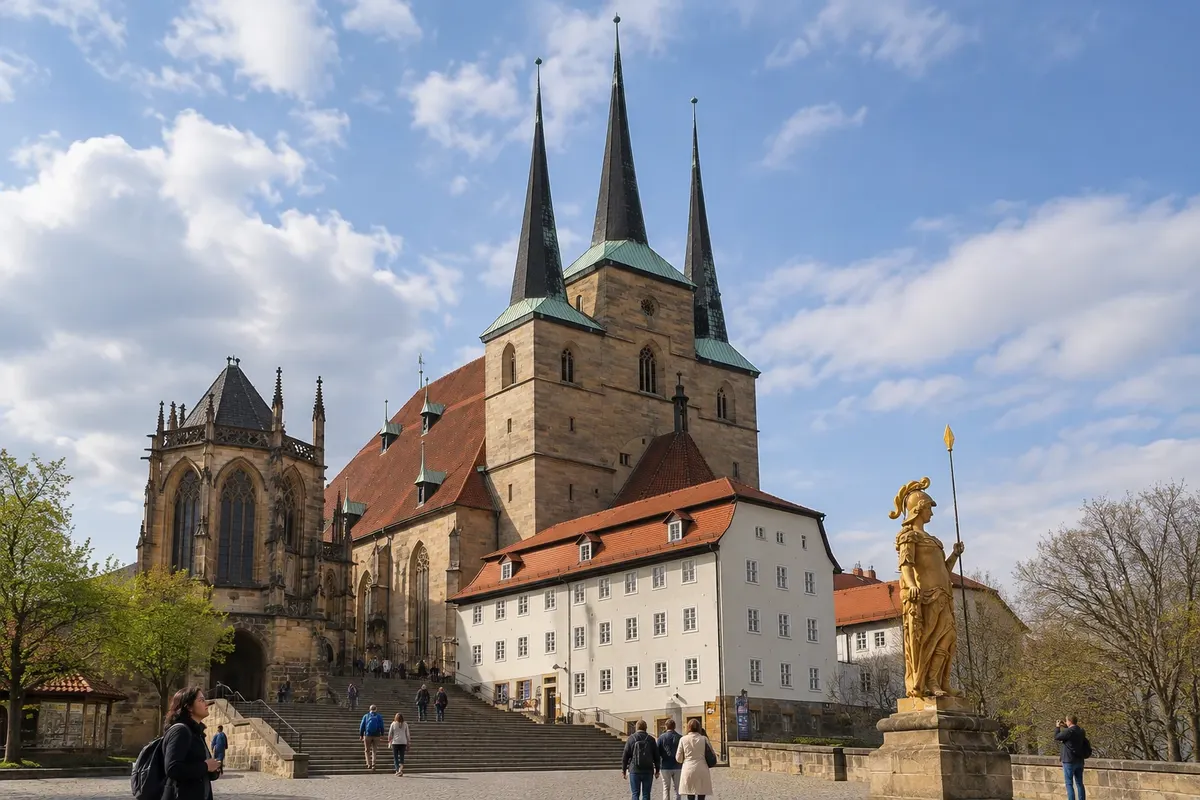
Domberg of Erfurt: the Cathedral of St. Mary and the Severikirche above the Domplatz
Odhod: Erfurt, Domplatz Walking visit, climbing the staircase Približno 2 uri Dopoldne easy (staircase of 70 steps)
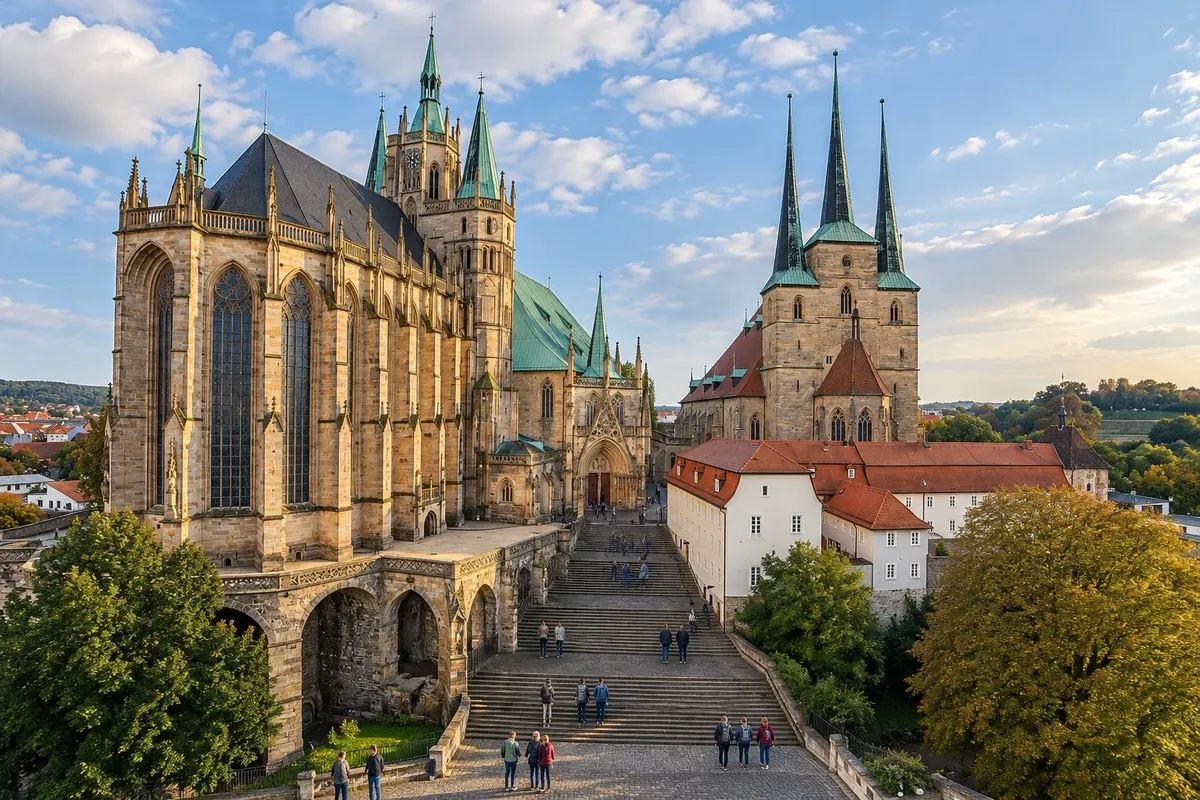
Two Gothic churches side by side on top of a hill, linked to the square by a 70-step staircase: that is the image that identifies Erfurt. The Erfurter Dom (Cathedral of St. Mary) grew from a church founded in 742 by Boniface when he created the diocese of Erfurt. The high-Gothic choir was built from 1349 atop a huge retaining wall, with tall windows whose 14th-century stained glass is largely preserved. Inside, notice the 14th-century choir stalls, the Romanesque enthroned Madonna and the Wolfram, a 12th-century bronze candelabrum shaped like a man. In the central tower is the Gloriosa, a bell cast in 1497 by Geert van Wou, weighing about 11.4 tonnes, regarded as the largest medieval swinging bell still in use; it rings only on a few dates each year. Martin Luther was ordained a priest in the cathedral in 1507. The Severikirche beside it is a Gothic hall church of five naves begun in 1278, with the sarcophagus of Saint Severus from 1365, a stone Madonna from 1345 and a baptismal font from 1467 about 15 m high. The Domplatz below is one of Germany’s largest market squares and hosts fairs, the Christmas market and, in summer, the Domstufen-Festspiele, open-air opera performances on the steps.
Kraji na poti: Erfurter Dom, Severikirche, Domplatz.
Vključuje: Entrance to both churches is free, with a suggested donation. Guided tours and the climb to the tower with the Gloriosa, offered on certain days, are paid separately; check the current rates. The Domstufen-Festspiele performances have their own tickets.
Nasvet: On Sundays the churches open only in the afternoon after services; from Monday to Saturday visit in the morning when there are fewer people. Climb the staircase late in the day for the view over the square and façades. In July and August the Festspiele stage often covers part of the staircase; check before you go.
Najboljši čas za obisk: All year round. In July and August the Domstufen-Festspiele usually take place; from late November through December the Domplatz hosts the Christmas market, with a tree and a Ferris wheel.
Krämerbrücke: the bridge of houses over the Gera River and the Ägidienkirche tower
Odhod: Erfurt, Benediktsplatz or Wenigemarkt Short walk, with climb to the tower Približno uro in pol Dopoldne ali popoldne easy (narrow staircase in the tower)
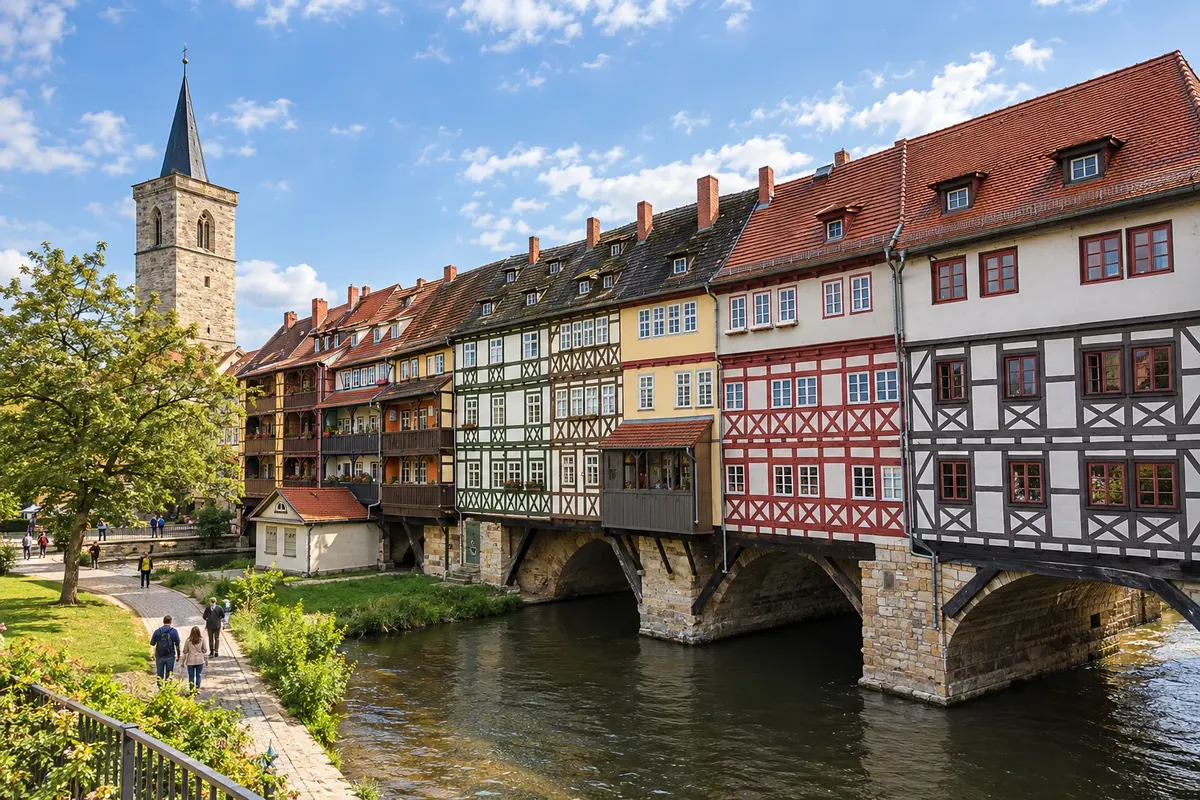
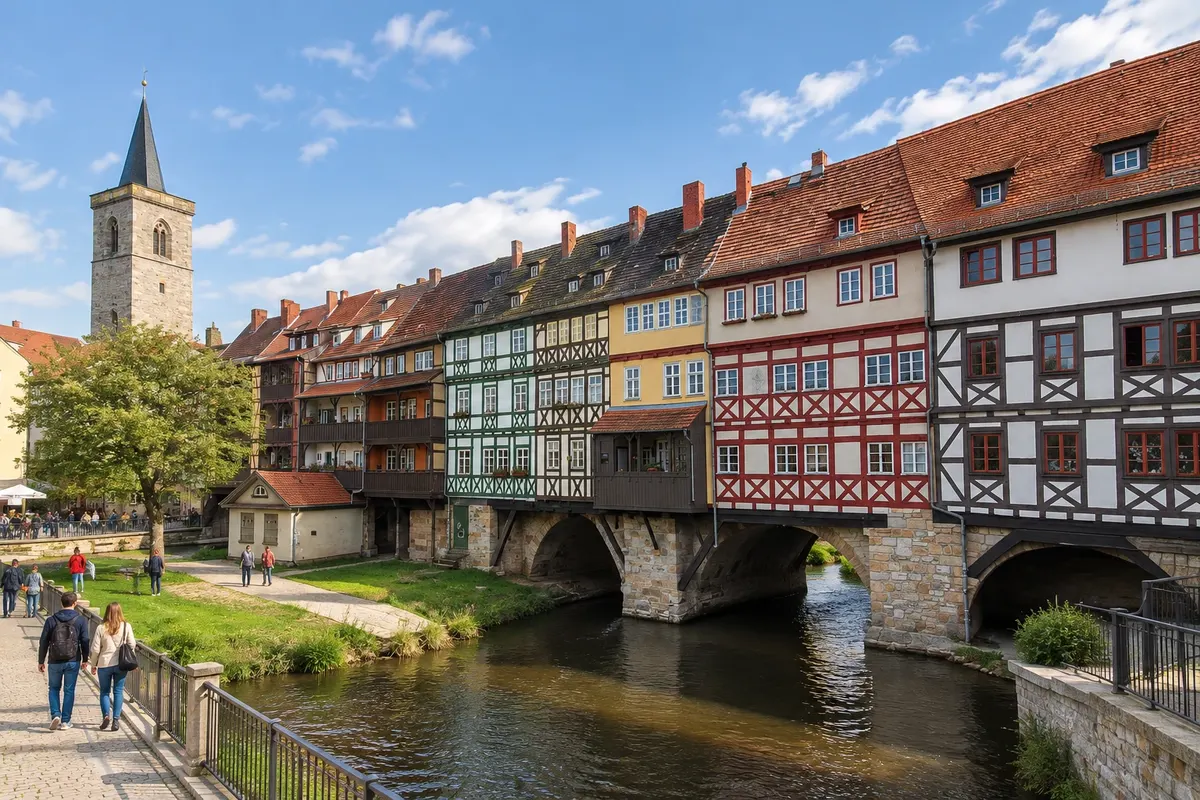
The Krämerbrücke (merchants’ bridge) spans a branch of the Gera River in the middle of Erfurt’s old town. It was wooden until 1325, when it was rebuilt in stone, measuring about 120 m long with six arches. On both sides of the street that runs across it houses were built: there were 62 narrow ones initially, later merged into the 32 timber-framed houses that exist today. It is the longest run of inhabited buildings on a bridge in Europe, and people still live on the upper floors. On the ground level are workshops and small shops selling Thuringian blue-printed fabrics, painted pottery, Lauscha glass, jewelry, carvings and regional food. Walking along the street you do not notice you are over water; the view of the houses resting on the arches is from below, from the riverbank near Wenigemarkt or from the neighboring bridge. At the eastern end stands the Ägidienkirche, the only one of the two chancel churches that remains: its tower can be climbed and offers views over the bridge’s roof, the Domberg and the city centre. At house number 31 is the Stiftung Krämerbrücke, with a small exhibition about the bridge’s history. In June the bridge and surrounding squares host the three-day medieval Krämerbrückenfest.
Kraji na poti: Krämerbrücke.
Vključuje: The bridge is a public street and there is no entrance fee. The climb to the Ägidienkirche tower requires a separate paid ticket and the foundation’s exhibition requests a contribution. Shops generally open Monday through Saturday.
Nasvet: Go early in the morning to photograph the street without people and return in the late afternoon when the light hits the façades as seen from the riverbank. The tower is closed on Mondays and has a narrow staircase; if you have difficulties with heights you may prefer the view from the Rathausbrücke bridge next to it. In June, during the Krämerbrückenfest, shops change their opening hours; check before you go.
Najboljši čas za obisk: All year. In the first half of June the Krämerbrückenfest usually takes place; in December the bridge is decorated for Christmas.
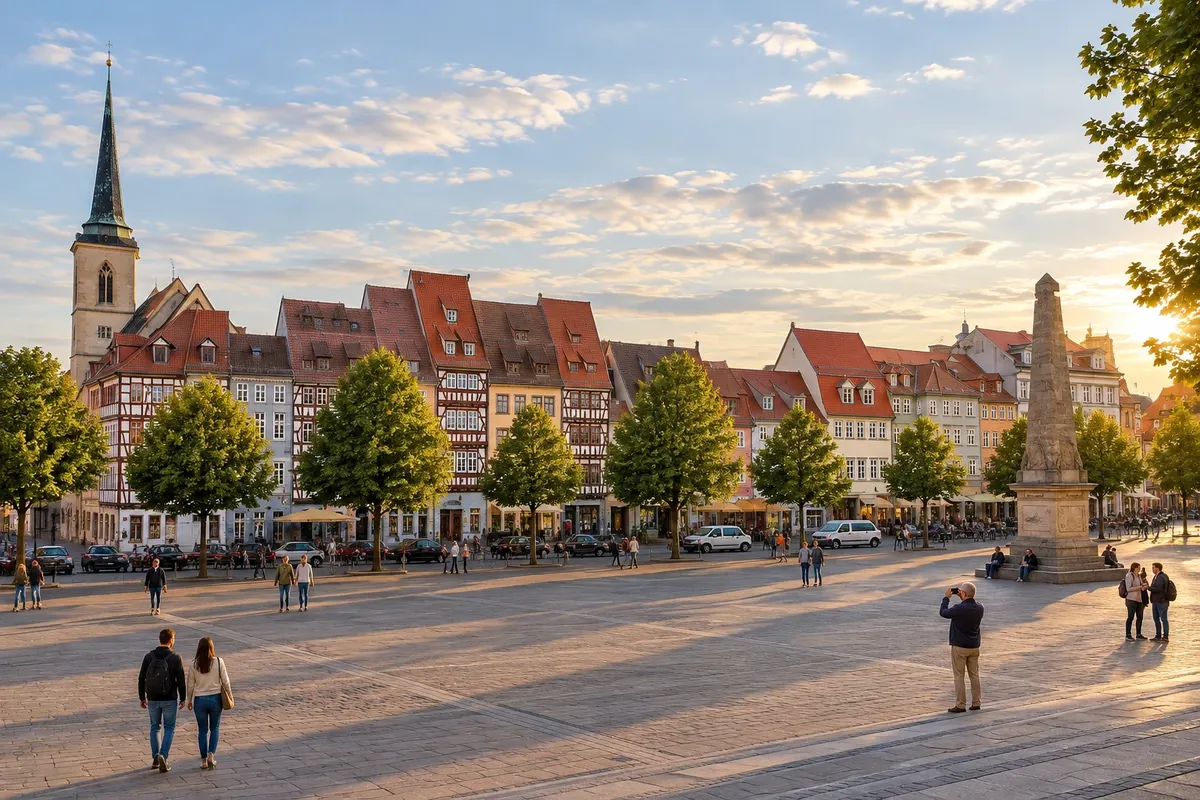
Fischmarkt, Rathaus and Anger: Old Erfurt center on foot
Odhod: Erfurt Hauptbahnhof Peš po starem mestnem jedru about 2 hours and 30 minutes Dopoldne ali popoldne Lahko
Erfurt has one of the largest medieval centers in Germany, lightly damaged by the war, and everything is walkable from the main station. Start at the Anger, the elongated square that was the wool and woad market (the dye plant that enriched the city in the Middle Ages) and today is the shopping street, with the Kaufmannskirche, the merchants’ church consecrated in 1364, where Bach’s parents married. Continue along Schlösserstraße to the Fischmarkt, the central square, mentioned in 1293 and a market site since then. There stand the neogothic Rathaus from 1870–1874, with murals about the city’s history, Faust and Luther, and two Renaissance houses: the Haus zum Breiten Herd, from 1584, and the Haus zum Roten Ochsen, from 1562, now home to the Kunsthalle art gallery. In the middle of the square, the column with the armed warrior, from 1591, reminded the archbishop of Mainz (Mayence) that citizens would defend their freedoms. From the Fischmarkt it is two minutes to the Krämerbrücke and five to the Domplatz via Marktstraße. Along the way are narrow lanes with half-timbered houses, such as Michaelisstraße, the old university street, founded in 1379, where Luther studied.
Kraji na poti: Fischmarkt, Krämerbrücke, Domplatz.
Vključuje: Self-guided walk: the squares and streets are open and there is no entrance fee. The interior of the Rathaus can only be seen on a guided tour. There are paid guided walking tours separately, departing from the tourist office at Benediktsplatz, near the Krämerbrücke.
Nasvet: The tram connects the station to the Anger and the Domplatz in a few minutes, but on foot you see more: it’s about a 10-minute walk from the station to the Anger. On Sundays shops are closed and the squares are quiet; on Saturday mornings the Domplatz has a market. Book the guided tour of the Rathaus if you want to see the murals.
Najboljši čas za obisk: All year. From May to September the squares have outdoor seating; from late November to December there is a Christmas market in the Domplatz and decorations on the Anger.
Medieval Jewish Erfurt: Alte Synagoge, the Mikwe and the Steinernes Haus
Odhod: Erfurt, Waagegasse (by the Fischmarkt) Walking visit, with guided tour of the Mikwe Približno 2 uri Dopoldne ali popoldne easy (staircase down to the Mikwe basement)
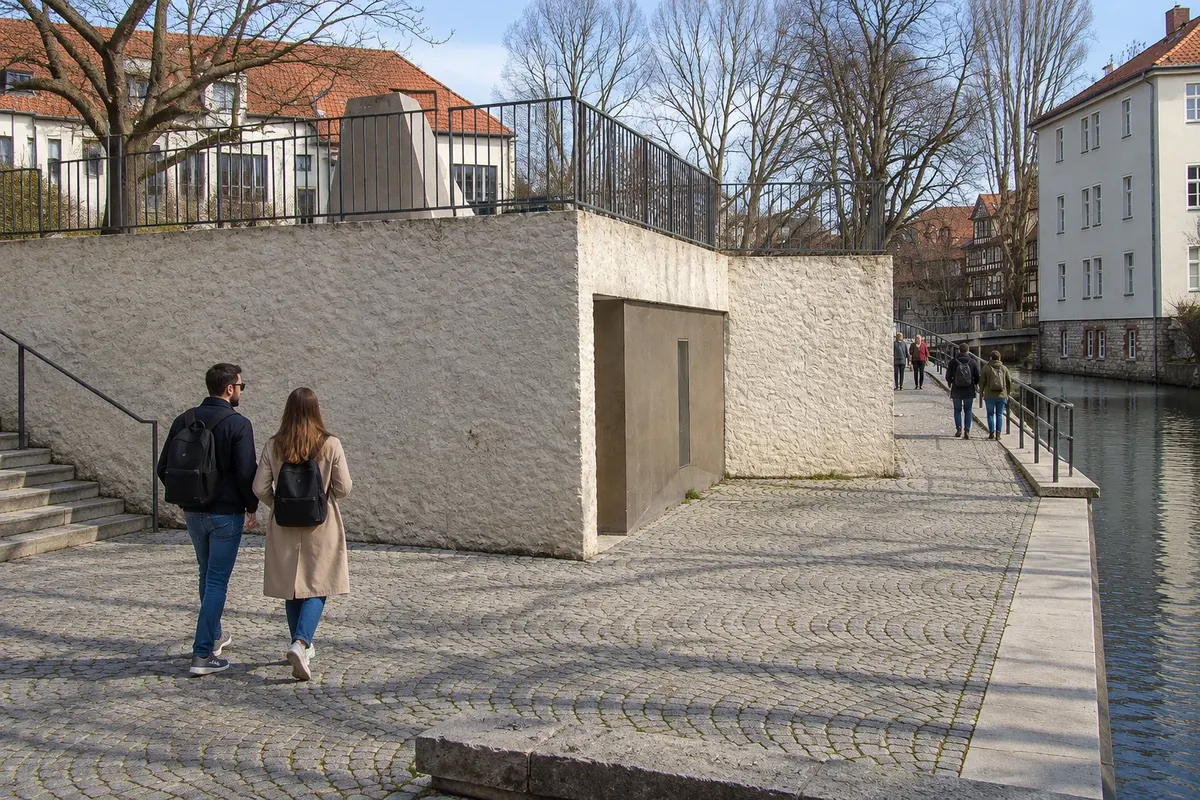
In September 2023 UNESCO inscribed three buildings of medieval Erfurt’s Jewish community on the World Heritage list: the Alte Synagoge (old synagogue), the Mikwe (ritual bath) and the Steinernes Haus (stone house). The synagogue, in an alley behind the Fischmarkt, has parts dating to the late 11th century and is one of the oldest and best-preserved in Europe. After the 1349 pogrom, when the community was massacred, the building became a storage depot and later a dance hall, which hid and thus saved it; it was restored and opened as a museum in 2009. Inside is the Erfurter Schatz (Treasure of Erfurt), found in 1998 beneath a neighboring house: 3,140 silver coins, 14 ingots, about 700 pieces of goldsmith work from the 13th and 14th centuries and a Jewish gold wedding ring, one of three known in the world, as well as Hebrew manuscripts. The Mikwe, on the banks of the Gera beside the Krämerbrücke, is a 13th-century bath found in excavation and protected by a cover; the descent to the water is made during a short guided tour. The Steinernes Haus, a Jewish residential house from the 12th and 13th centuries, stands on Benediktsplatz and is viewed from the outside. The synagogue undergoes periods of restoration when it closes and the treasure is removed from display; check before you go.
Kraji na poti: Mittelalterliche Mikwe.
Vključuje: Separate paid admission for the Alte Synagoge, with audio guide; the guided tour of the Mikwe runs at fixed times and admission is free, with registration at the tourist office. The open-air exhibition Inter Judeos, in the streets of the former Jewish quarter, is open. Check the current rates.
Nasvet: Register for the Mikwe tour at the tourist office on Benediktsplatz as soon as you arrive in Erfurt: groups are small. Combine it with the Krämerbrücke, which is 2 minutes away. Check whether the synagogue is open before adding the visit to your itinerary.
Najboljši čas za obisk: All year round, Tuesday to Sunday. From April to October Mikwe tours are more frequent.
Augustinerkloster: the monastery where Luther was a monk
Odhod: Erfurt, Augustinerstraße (10 min on foot from the Krämerbrücke) Guided tour of the monastery Približno uro in pol Dopoldne Lahko
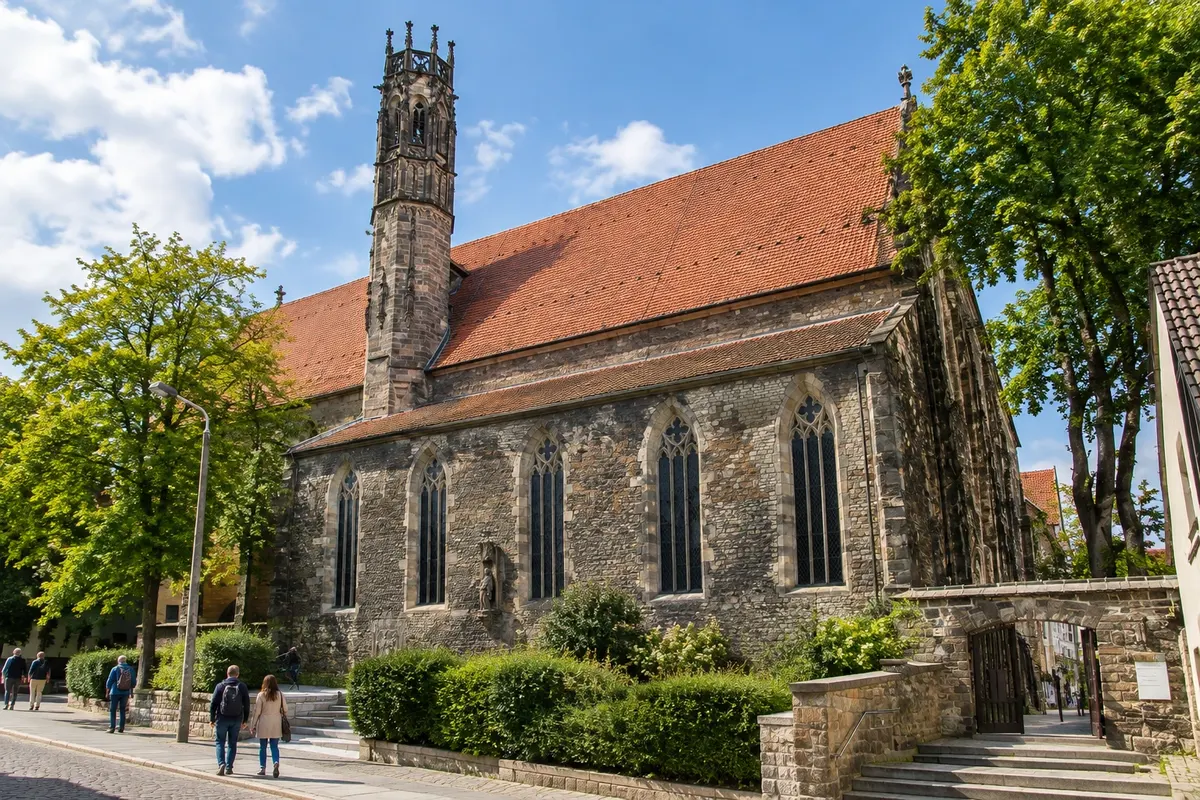
The Augustinerkloster (Augustinian monastery) was built around 1300 in the northern part of the old town, with a church, three inner courtyards, a cloister and convent buildings. Martin Luther, a student at the University of Erfurt from 1501, entered the monastery in July 1505, took vows in 1506 and was ordained a priest in the cathedral in 1507; he celebrated his first mass in the monastery church in May that year and lived there until 1511. The guided tour goes through the church, whose stained glass is about 700 years old and bears the rose that Luther later used on his seal, the cloister, the chapter house, the Renaissance courtyard and the Lutherzelle, the reconstructed cell recalling the monk’s years. The historic library, from the early 16th century, holds about 60,000 volumes and is visited only by appointment. An exhibition with an audio guide covers two other episodes in the building’s history: the Erfurt Union parliament, which met there in 1850, and the meetings of autumn 1989 during the change in the GDR. Today the monastery is Protestant and functions as a meeting center and guesthouse; the church is used for services. The guided tour departs every day in the late morning and, on Saturdays, there is a longer version about Luther in Erfurt.
Kraji na poti: Augustinerkloster.
Vključuje: Guided tour paid separately, in German, lasting about 1 hour; audio guide available at reception for those who prefer to visit independently. The church can be viewed outside service times free of charge. Check the current timetable.
Nasvet: Arrive before the start time of the morning guided tour, which is the only tour of the day for most of the year. Ask for the English audio guide at reception if you don't understand German. The walking route from the Krämerbrücke goes along Johannesstraße, with old houses; at night the courtyard is lit.
Najboljši čas za obisk: All year. From April to September there are night visits on Fridays; on October 31st, Reformation Day, a public holiday in Thuringia, the monastery usually has special programming.
Zitadelle Petersberg and egapark: the Baroque fortress and the garden park
Odhod: Erfurt, Domplatz (Petersberg) and tram 2 (egapark) Walk around the citadel, then tram to the park full day (half a day at each) Ves dan easy (ascent, with an elevator in the wall)
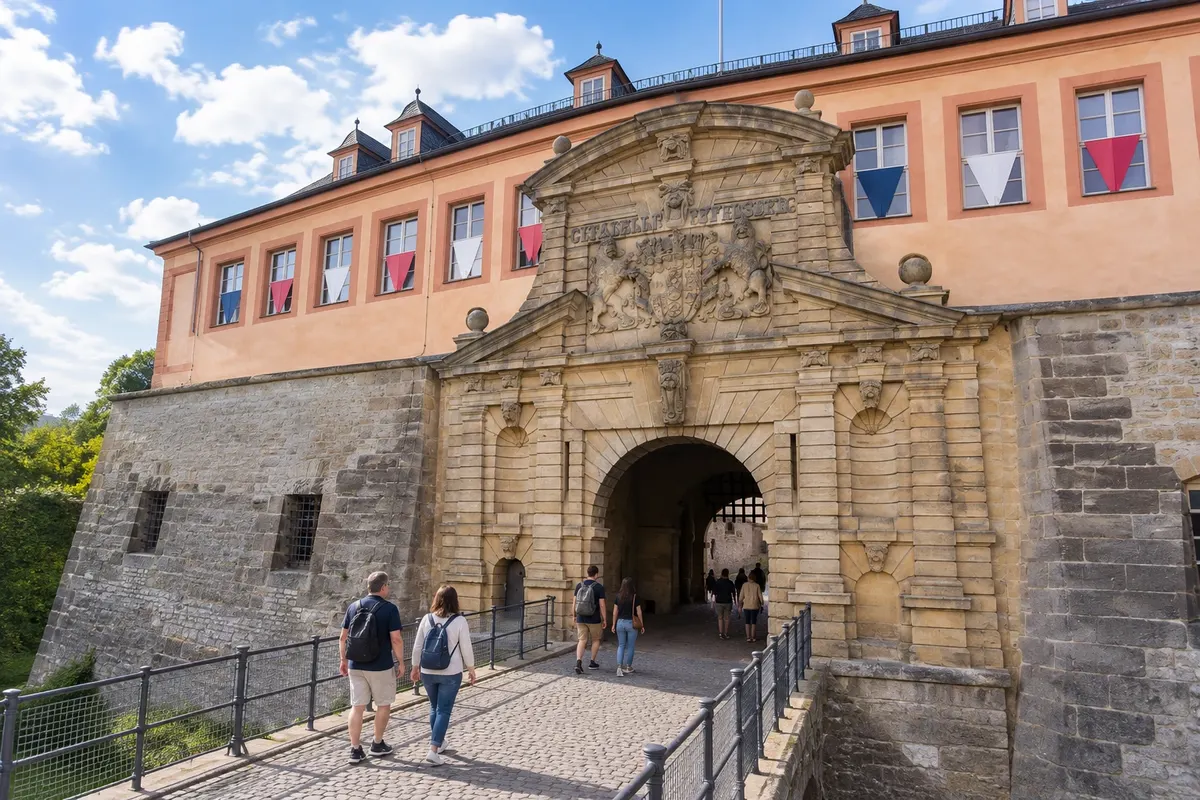
Above the Domplatz, on the side opposite the cathedral, is the Zitadelle Petersberg, a star‑shaped fortress built by the prince‑electors of Mainz from 1665 after they took the city and expanded until 1728. It covers 36 hectares enclosed by 2,180 m of walls, stone bastions and the Peterstor, the main gate dated 1666–1668 bearing the archbishop’s coat of arms. Inside are the Peterskirche, a Romanesque basilica from 1103–1147 of the Benedictine monastery that once stood on the hill, and the Kommandantenhaus, dating from 1669, which houses the visitor center with an exhibition on the site’s history; guided Horchgänge tours depart from there—listening galleries dug under the bastions to detect enemy tunnels—kept at 10 to 15 °C year‑round. French troops occupied the citadel from 1806 to 1814, and Napoleon received Tsar Alexander in Erfurt in 1808. From the top you can see the old town with the Domberg towers. A panoramic path and an elevator in the wall link the square to the plateau. In the afternoon take tram 2 to the egapark, a 36‑hectare park created for a horticultural exhibition in 1961 around the Cyriaksburg, a 15th‑century fortification that houses the Deutsches Gartenbaumuseum (gardening museum) and an observation tower. The park features a 6,000 m² ornamental bed, greenhouses, the Danakil desert and jungle house with tropical butterflies, a lake, a children’s farm and a playground.
Kraji na poti: Zitadelle Petersberg, Domplatz.
Vključuje: The citadel is open and free to enter; the Kommandantenhaus exhibition and guided Horchgänge tours are paid separately. The egapark has a separate paid entry, with different rates for the season and winter—check the current schedule. Tram 2 accepts the urban transport ticket.
Nasvet: The citadel is best visited in the morning, with the sun behind anyone looking toward the Domberg. Book the Horchgänge tour at the visitor center on arrival: spaces are limited. The egapark is closed on Mondays and requires at least 3 hours; on rainy days the Danakil and the greenhouses keep the visit worthwhile. Bring water: the park has little shade along the central beds.
Najboljši čas za obisk: From April to October, when the egapark is in season and in bloom; from mid‑March to May there is a spring flower exhibition. The citadel operates year‑round.
Day trip by train to Eisenach: the Wartburg, Luther’s castle and Saint Elizabeth’s castle
Odhod: Erfurt Hauptbahnhof (or Weimar, via Erfurt) Train to Eisenach (25 to 45 min), bus 3 and uphill walk about 7 hours by train Ves dan moderate (500 m uphill)
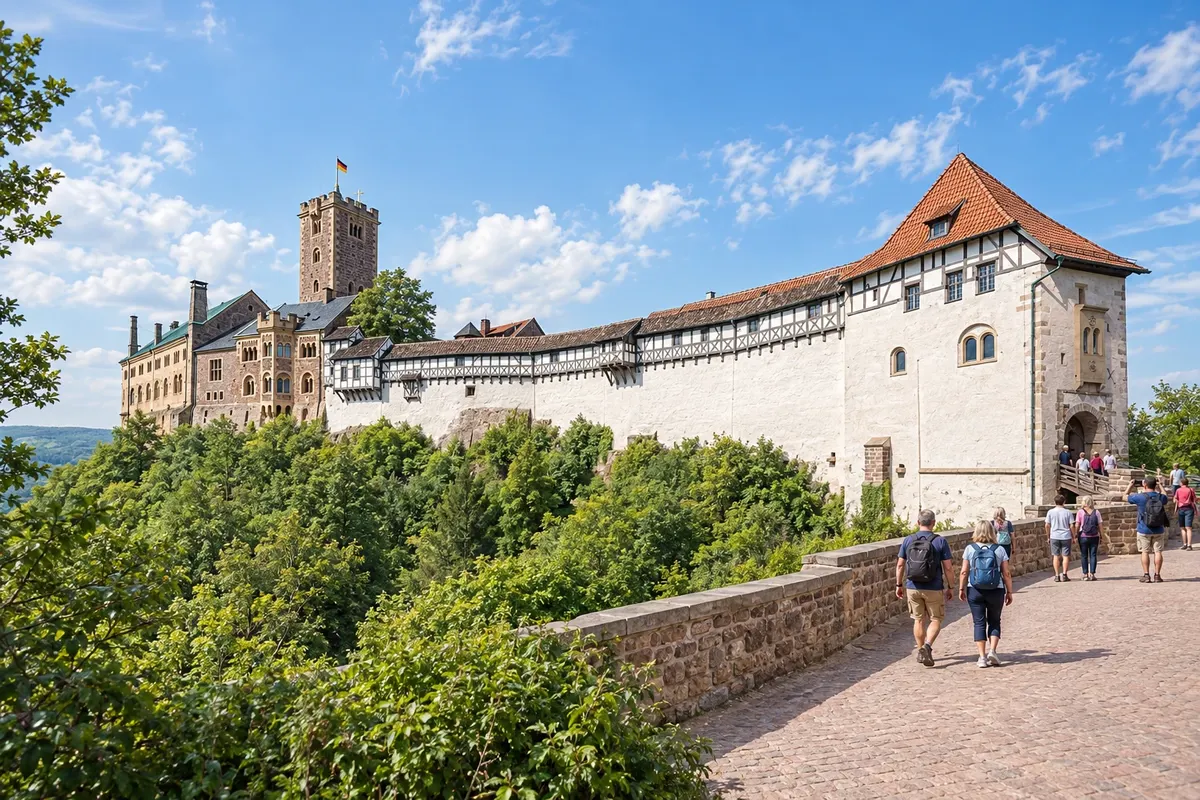
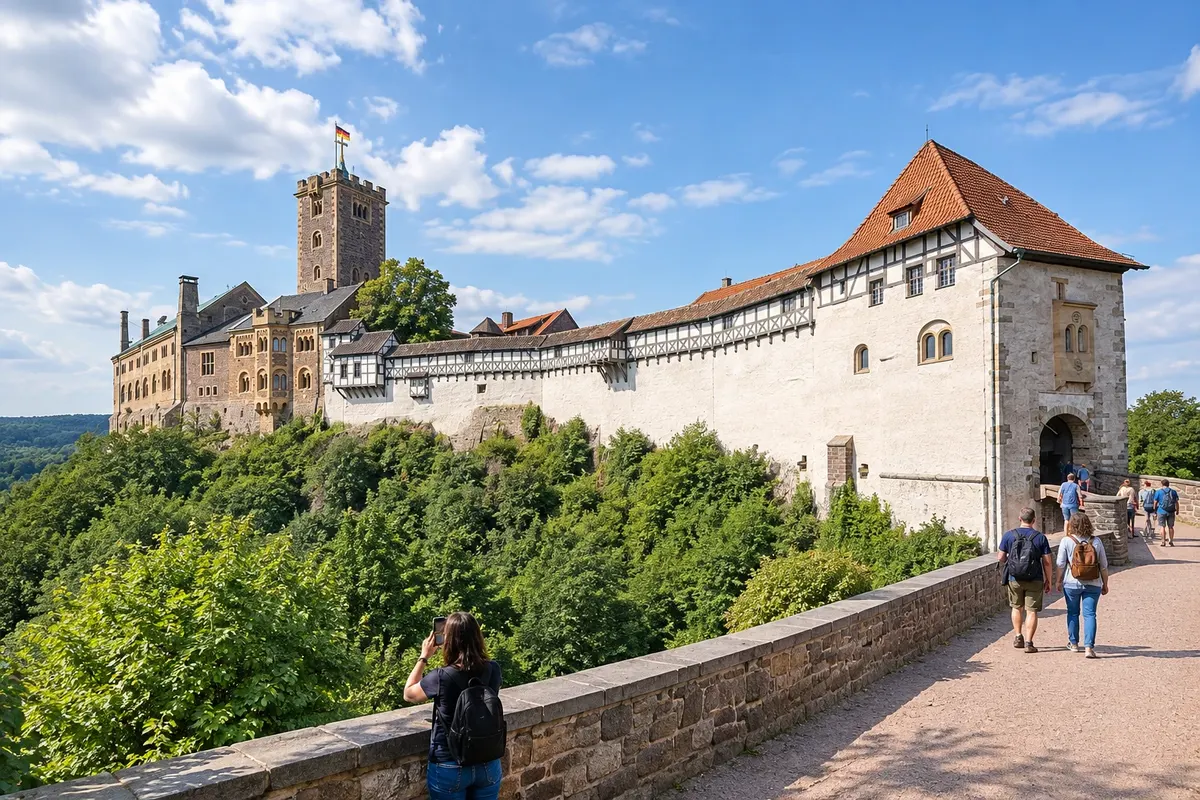
Eisenach is 49 km west of Erfurt, on the same rail line. From the station, bus 3 goes up to the Wartburg parking area, and from there it’s about 500 m uphill on foot (a paid minibus covers the final stretch). The castle, at 410 m above sea level over the Thuringian forest, was begun around 1067 by Ludwig der Springer and was the first German castle listed by UNESCO, in 1999. The Palas, the main hall, built between 1157 and 1170, is considered the best-preserved civil Romanesque building north of the Alps; the legend places the Sängerkrieg there, the singers’ contest of 1206 that Wagner adapted into the opera Tannhäuser. Saint Elizabeth of Hungary lived there from 1211 to 1228, and her rooms, the Elisabethkemenate, were lined with golden mosaics between 1902 and 1906. In the Vogtei is the Lutherstube, the wooden room where Martin Luther, hiding under the name Junker Jörg from May 1521 to March 1522, translated the New Testament into German in ten weeks. In 1817 students gathered at the Wartburgfest to call for German unity. The 19th-century restoration under Grand Duke Carl Alexander of Weimar gave the complex its current appearance, completed in 1890. The courtyard and ramparts are open daily; the interior is visited with a ticket and set times, and the museum houses an art collection including works by Cranach. Return to Erfurt in the late afternoon; from Weimar add about 15 minutes by train.
Kraji na poti: Wartburg.
Vključuje: Train fare paid separately (the Deutschlandticket and Thüringen-Ticket are valid on regional trains, not on ICE). Castle ticket paid separately, with timed tickets available online or at the box office; bus 3 and the uphill shuttle minibus charged separately. Check the current timetable.
Nasvet: Buy the castle ticket online for the time you expect to arrive to avoid the box office line in summer. From Erfurt, regional trains are covered by the Deutschlandticket. Wear footwear with a firm sole: the climb and courtyards are made of uneven stone. In Eisenach, the Bachhaus, the museum in the town where Bach was born in 1685, complements the afternoon.
Najboljši čas za obisk: From April to October, with the castle open longer and forest trails dry; October offers autumn colors. From November to March opening hours are short and the climb can be icy.


 Brazilija
 Antarktika
 Argentina
 Bolivija
 Čile
 Kolumbija
 Ekvator
 Gvajana
 Francoska Gvajana
 Falklandski otoki (Malvini)
 Paragvaj
 Peru
 Surinam
 Urugvaj
 Venezuela
 Avstrija
 Belgija
 Hrvaška
 Danska
 Slovaška
 Slovenija
 Španija
 Finska
 Francija
 Grčija
 Nizozemska
 Madžarska
 Irska
 Islandija
 Italija
 Luksemburg
 Norveška
 Poljska
 Portugalska
 Združeno kraljestvo
 Češka
 Švedska
 Švica
 Turčija
 Bermudi
 Kanada
 Združene države Amerike
 Grenlandija
 Mehika
 Sveta Peter in Mihael
 Dominikanska republika
 Japonska
 Južnoafriška republika
 Egipt
 Avstralija
 Fidži
 Nova Zelandija
 Papua Nova Gvineja