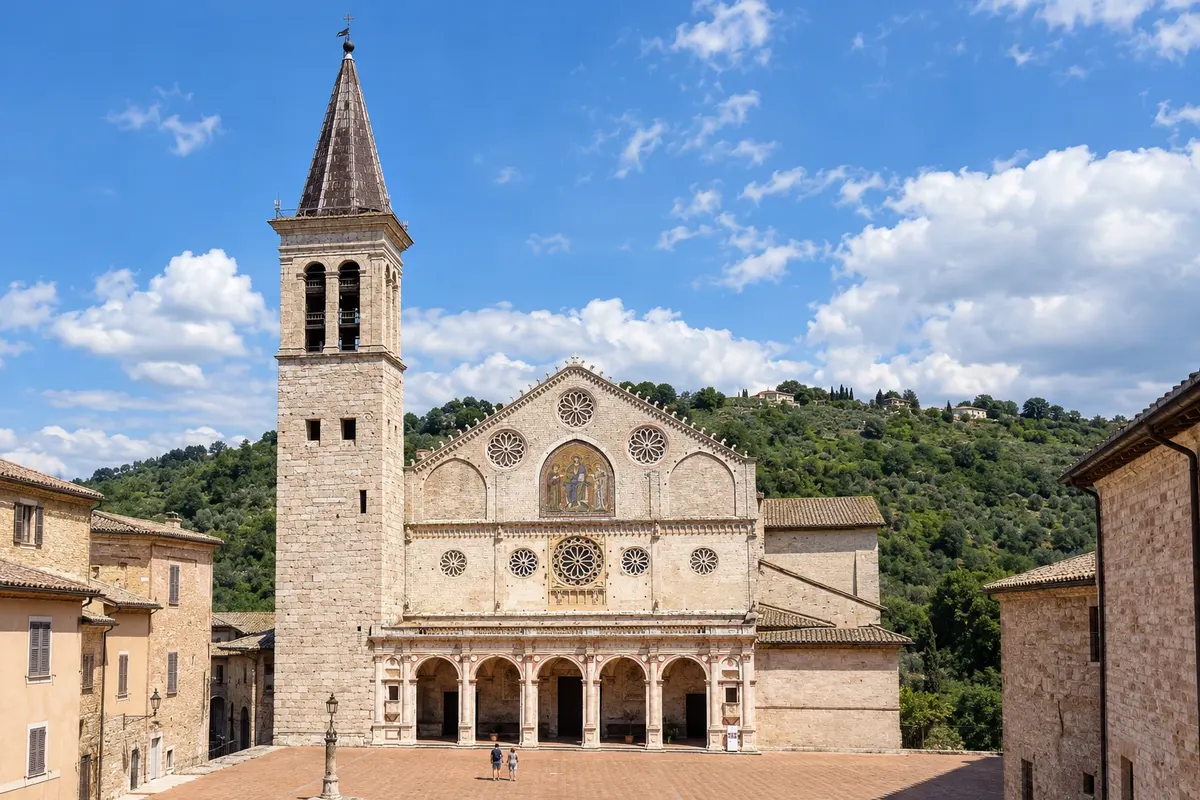
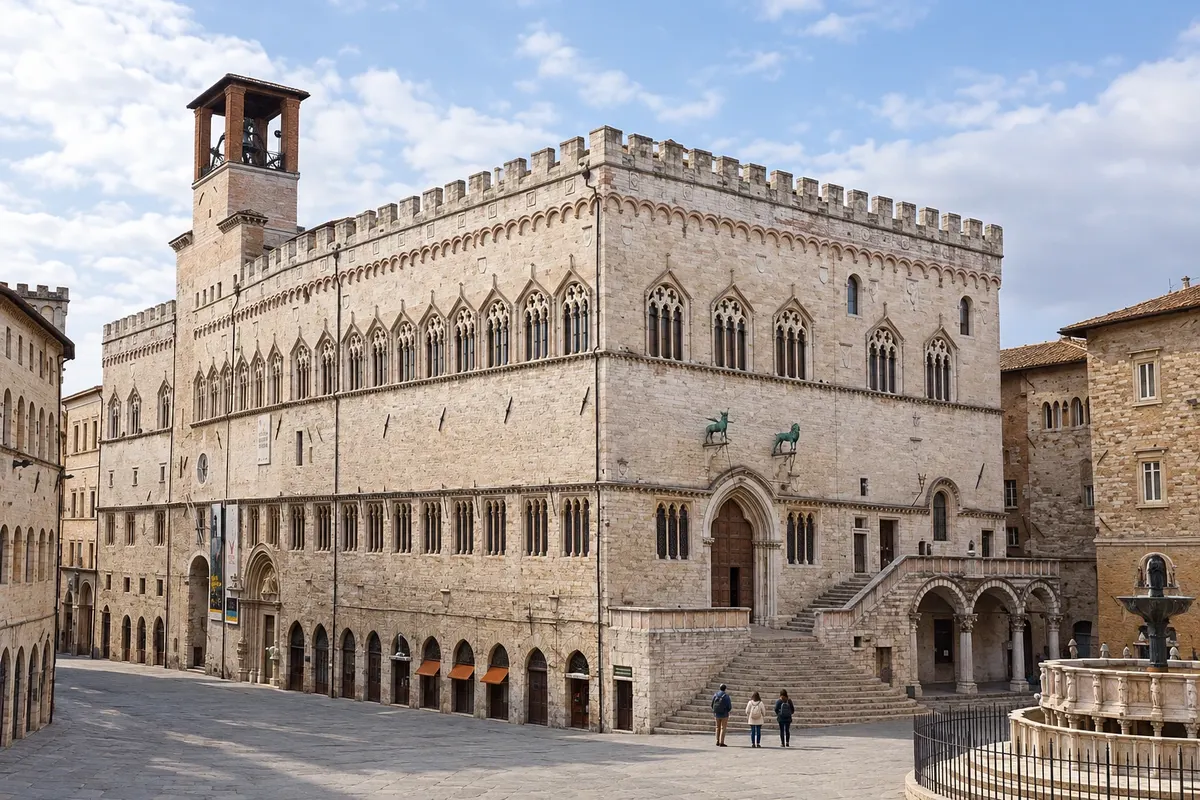
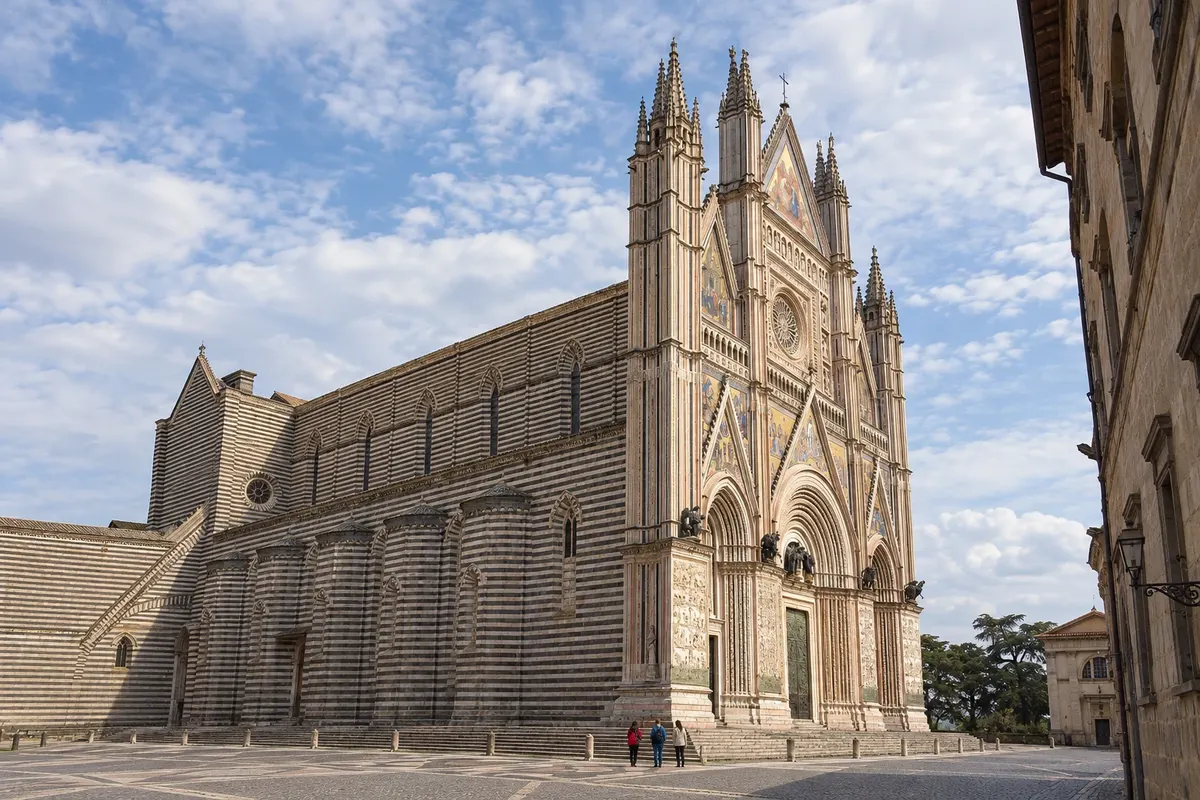
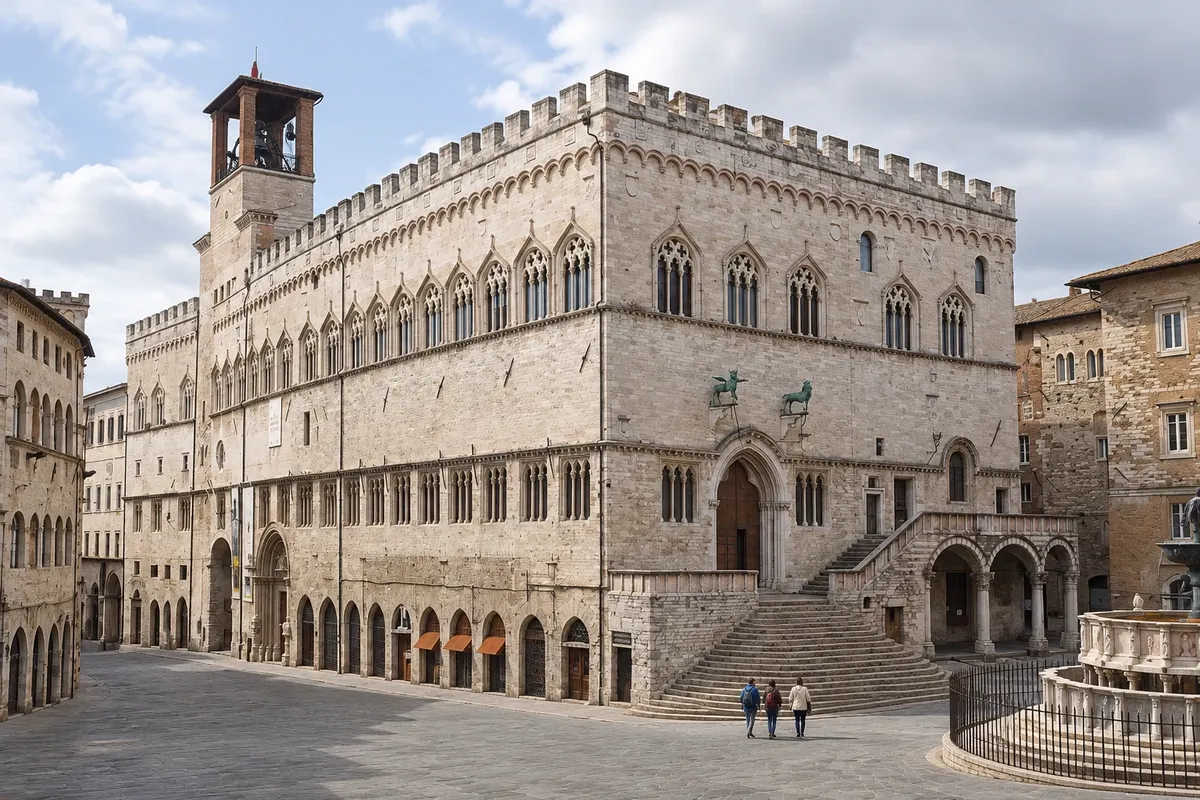
Perugia: Corso Vannucci, Palazzo dei Priori, Fontana Maggiore and the Cathedral
Odhod: Piazza IV Novembre, Perugia (minimetrò from the station to Pincetto) Sprehod po srednjeveškem jedru Približno 3 ure Dopoldne ali pozno popoldne moderate (hills and stairways)
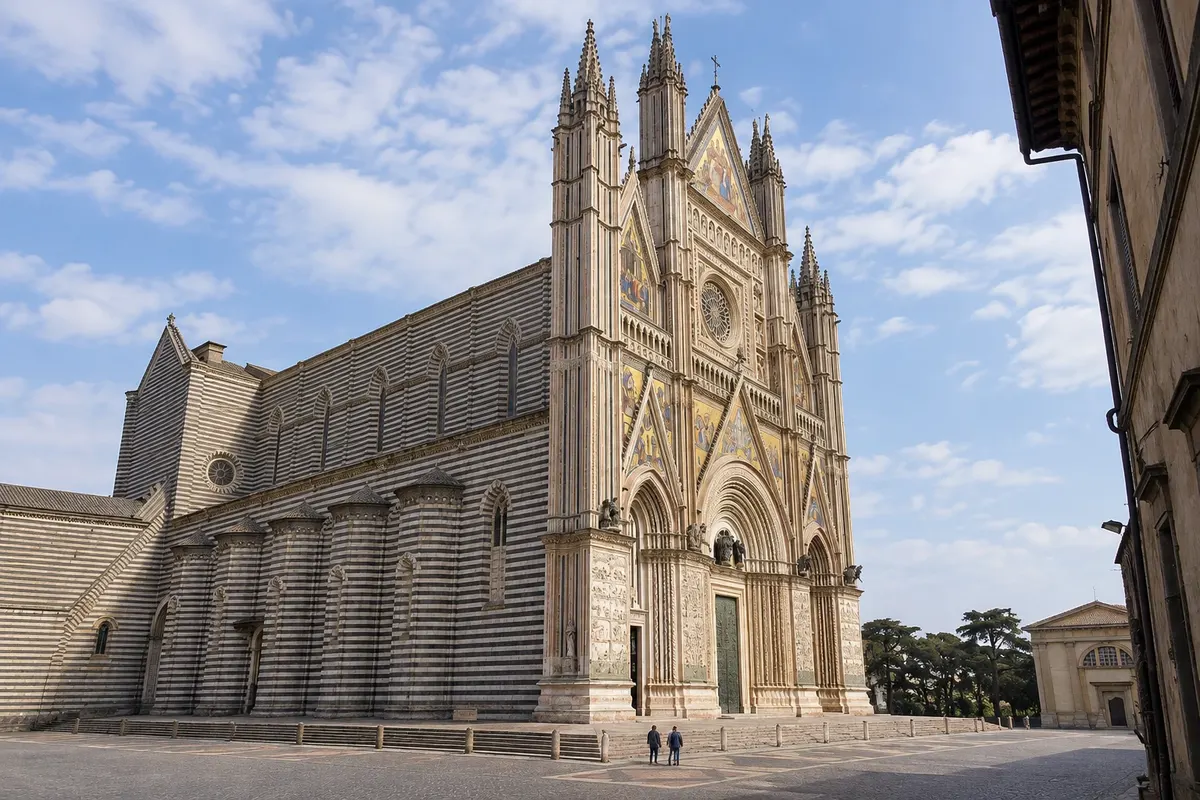
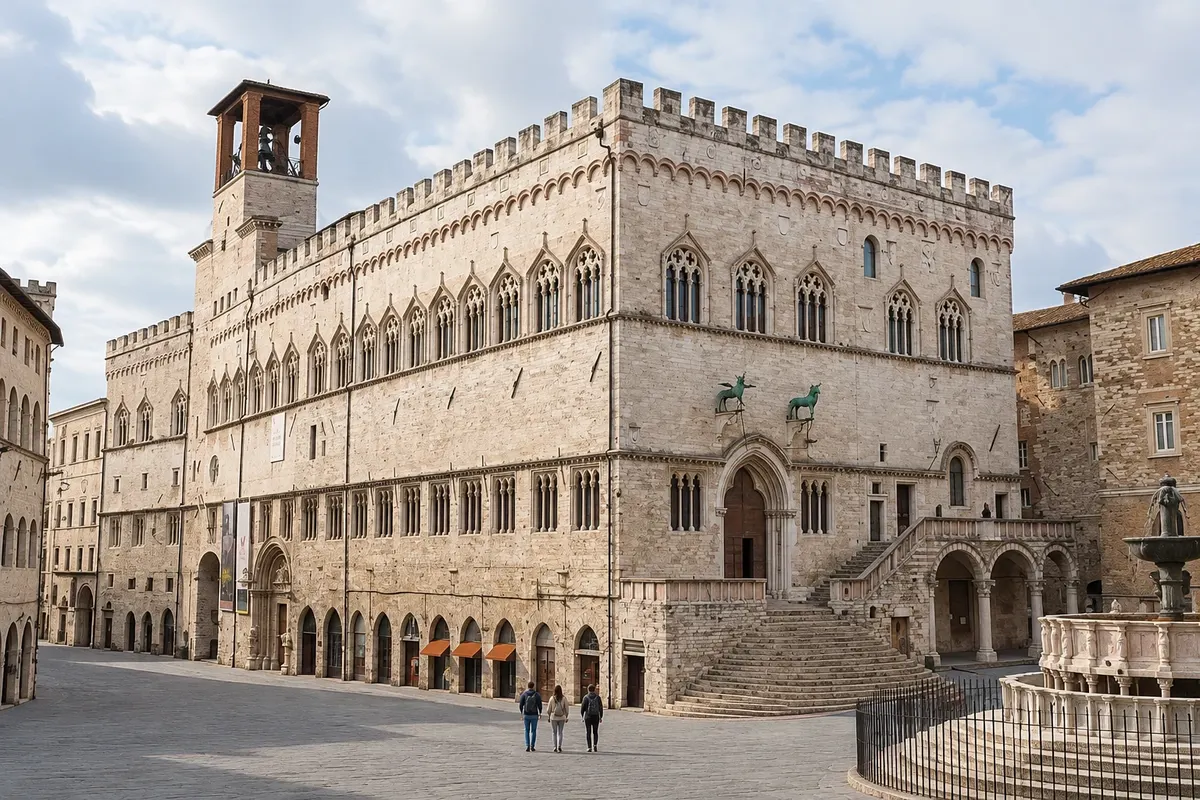
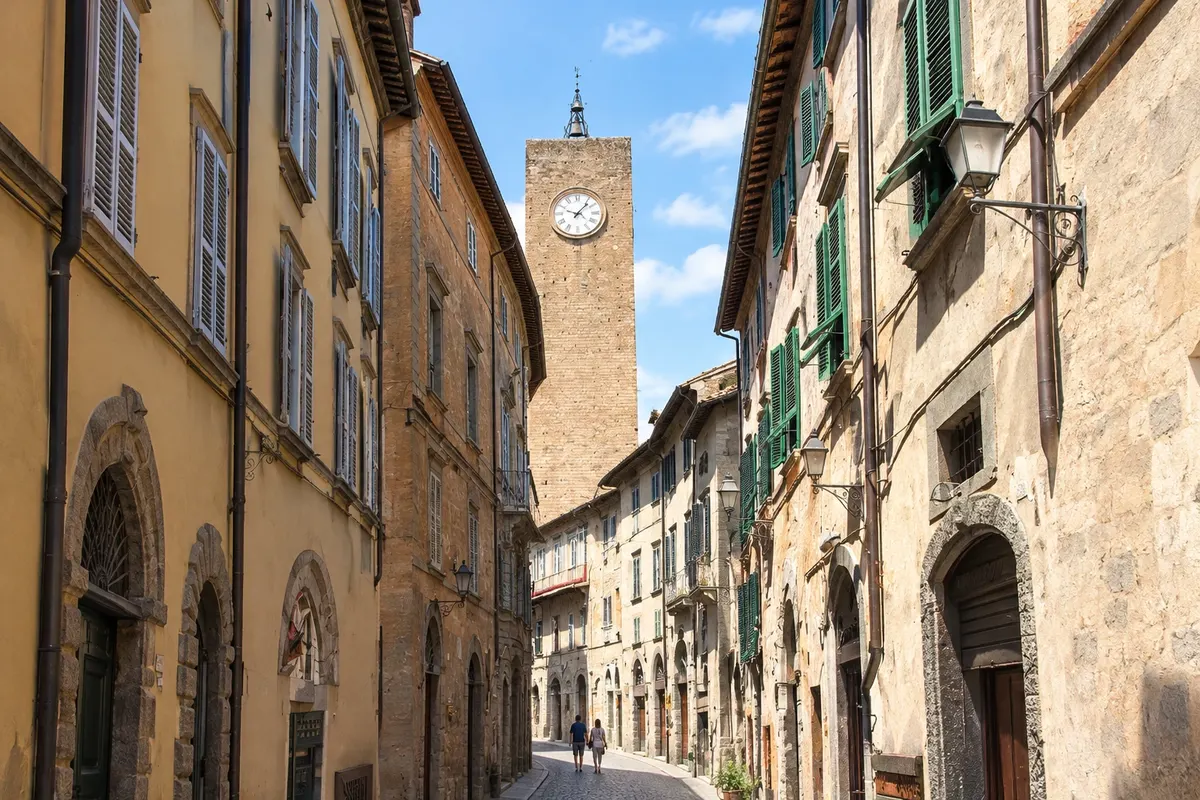
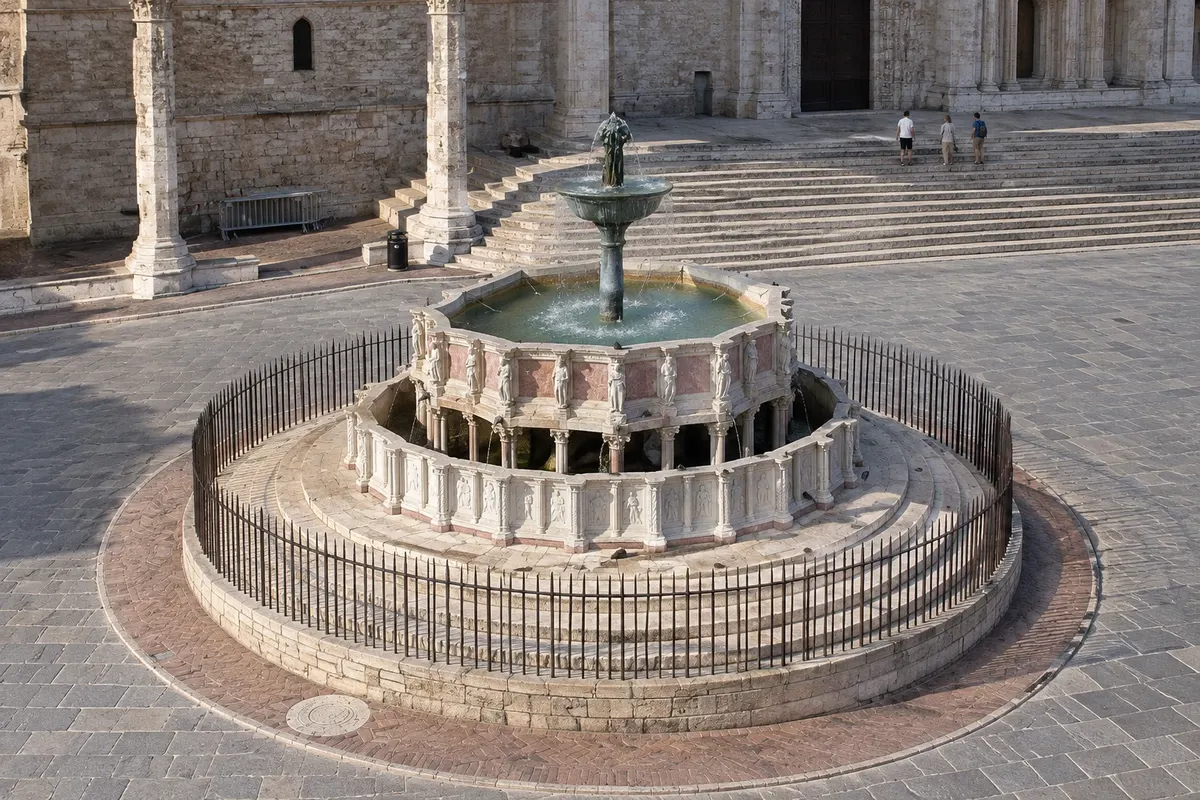
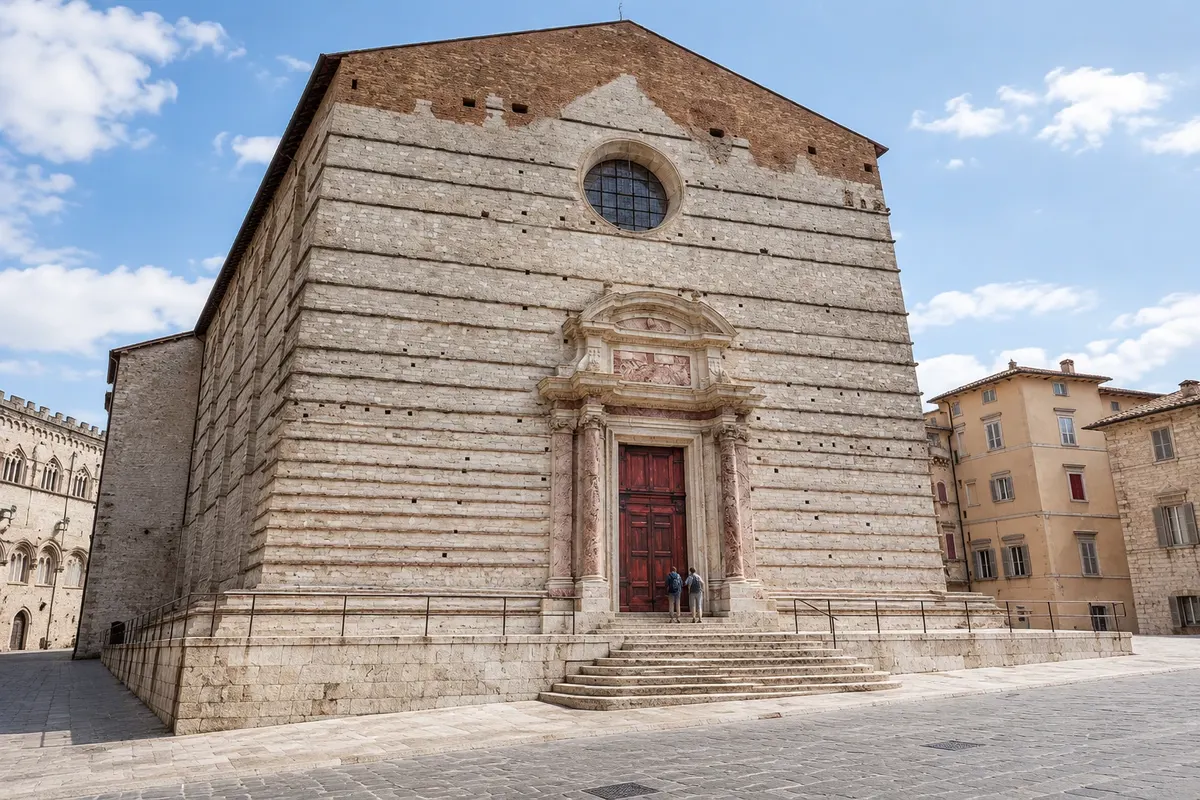
Perugia (Perúgia), the capital of Umbria, sits on a hill at 493 m, and the medieval center is reached by the minimetrò, the 2008 monorail that climbs from the station in 12 minutes to Pincetto, and by escalators that pass through the Rocca Paolina. Corso Vannucci, the pedestrian street with cafés and the Pasticceria Sandri (est. 1860), leads to Piazza IV Novembre, with the Fontana Maggiore, the 1278 fountain by Nicola and Giovanni Pisano, featuring 50 reliefs of the months, the arts and fables, between the Palazzo dei Priori, the Gothic town hall from 1293 to 1443, with the painted Sala dei Notari and the Galleria Nazionale inside, and the Cattedrale di San Lorenzo, unfinished, with a loggia and, inside, the Virgin’s wedding ring, kept in 15 chests. From Via delle Prome and the Giardini Carducci there are views over the valley to Assisi. The city is a university town, home to the Università per Stranieri since 1921, and hosts Umbria Jazz in July and Eurochocolate in October or November.
Kraji na poti: Palazzo dei Priori, Fontana Maggiore, Cattedrale di San Lorenzo.
Vključuje: Self-guided walk; minimetrò ticket paid separately; Sala dei Notari free of charge; cathedral free of charge (chapter museum has an entry fee).
Nasvet: Arrive by the minimetrò and exit at Pincetto; use the escalators of the Rocca Paolina to go up and down. Sunset from the Giardini Carducci, at the end of the Corso, is the square’s prime hour. In July, Umbria Jazz fills the squares for ten days.
Najboljši čas za obisk: year-round; July (Umbria Jazz) and October (Eurochocolate) are crowded.
Galleria Nazionale dell'Umbria and Collegio del Cambio: Perugino and Umbrian painting
Odhod: Corso Vannucci, Perugia Two museums in the same palace Približno 2 uri in pol Dopoldne ali popoldne Lahko
The Galleria Nazionale dell'Umbria, on the upper floors of the Palazzo dei Priori, renovated in 2022, is the museum of regional painting from the 13th to the 19th century: Piero della Francesca’s Polyptych of Sant'Antonio, Duccio’s Madonna, Fra Angelico’s Pala di Perugia, Perugino (Pietro Vannucci, Raphael’s teacher, born near Perugia) and Pinturicchio, displayed across 40 rooms with valley views. On the ground floor of the same palace, the Collegio del Cambio, the money-changers’ guild hall, has the Sala delle Udienze entirely painted by Perugino between 1498 and 1500, with the sibyls, prophets and ancient sages, the ceiling and the painter’s self-portrait, and carved wooden benches; beside it, the chapel with frescoes by Giannicola di Paolo. The Collegio della Mercanzia, with its 1390 wood-paneled hall, is two doors further on.
Kraji na poti: Galleria Nazionale dell'Umbria, Collegio del Cambio, Palazzo dei Priori.
Vključuje: Galleria with a separate paid ticket (no charge on the first Sunday of the month); Collegio del Cambio and Mercanzia have small tickets (combined ticket).
Nasvet: The Galleria requires about two hours; the Cambio, 20 minutes, and has reduced hours in winter and on Sundays. The Galleria’s audio guide has a Portuguese version.
Najboljši čas za obisk: Vse leto.
Rocca Paolina, Arco Etrusco and Pozzo Etrusco: Perugia underground and Etruscan
Odhod: Piazza Italia, Perugia Walk through an underground fortress and Etruscan monuments Približno 2 uri Popoldne Lahko
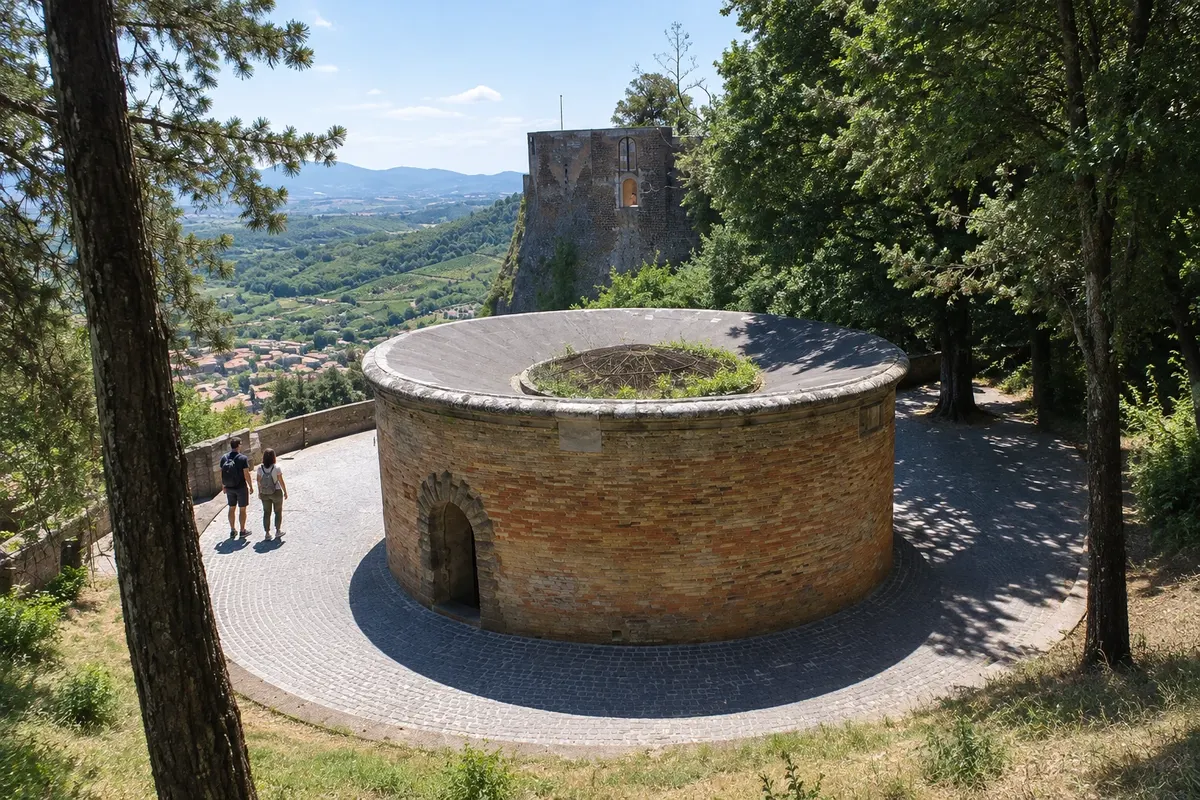
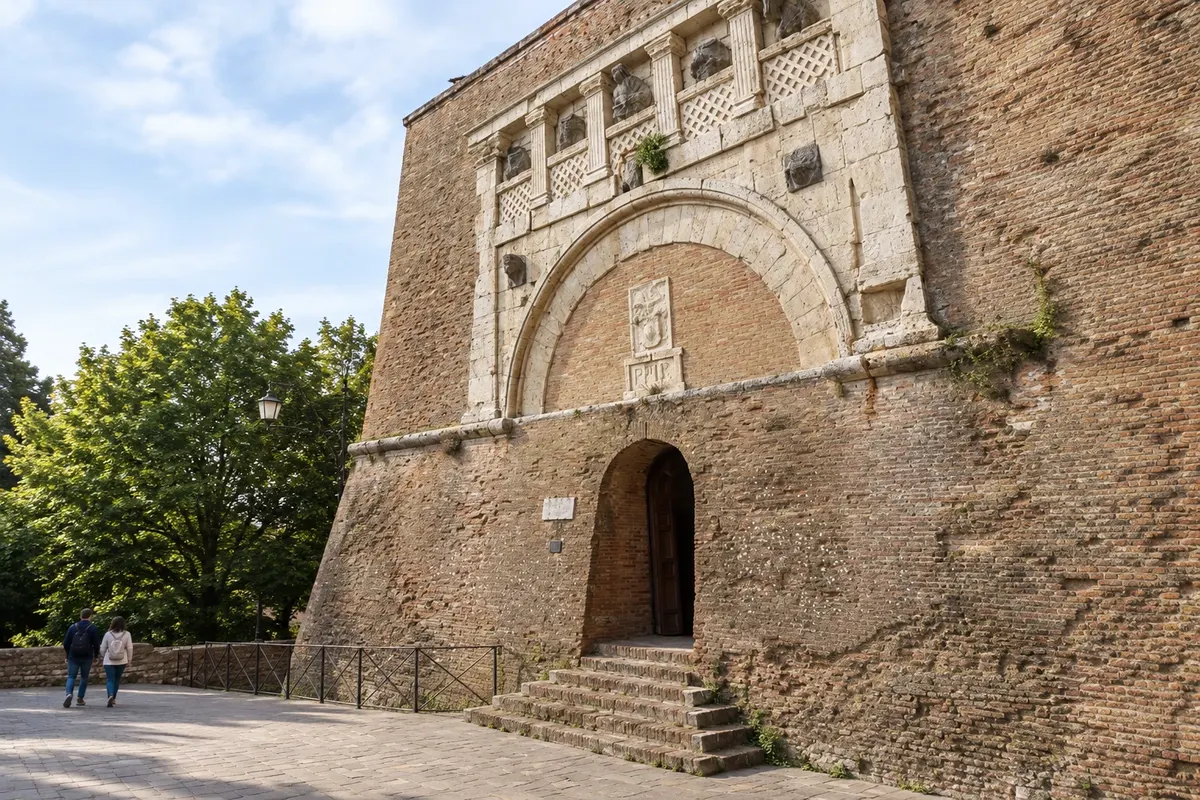
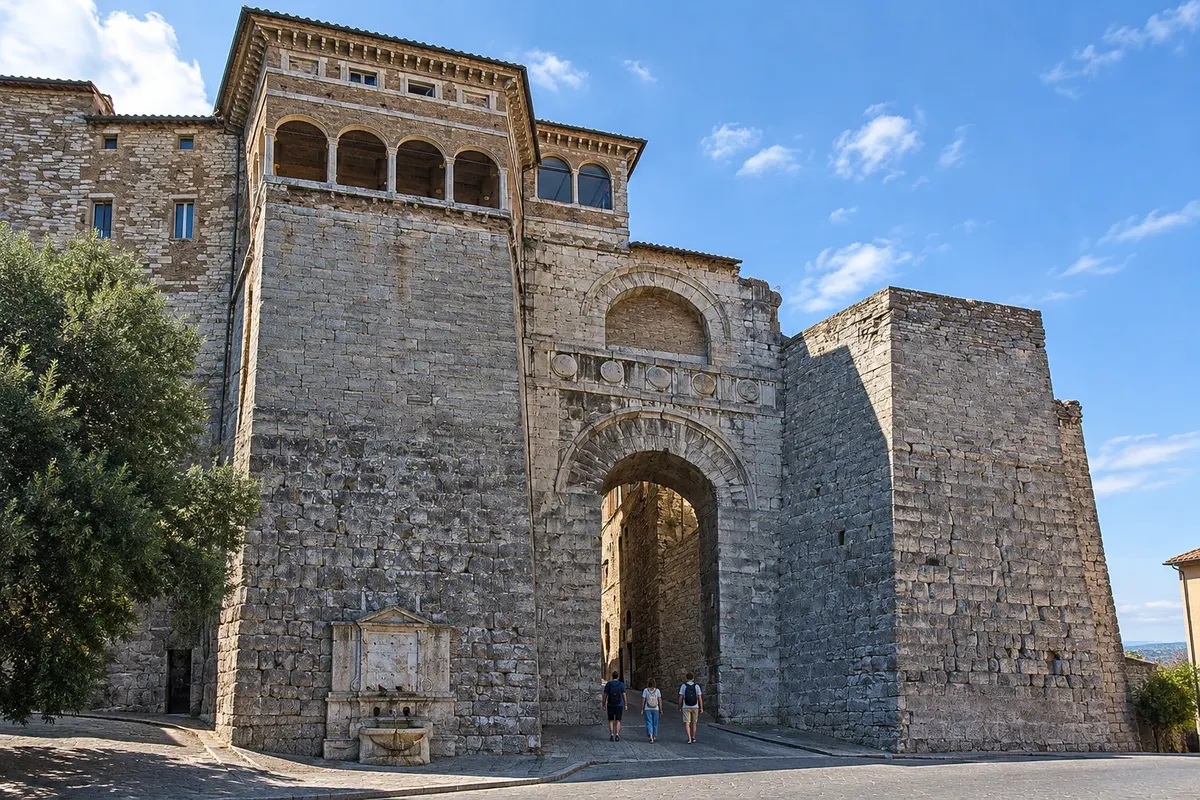
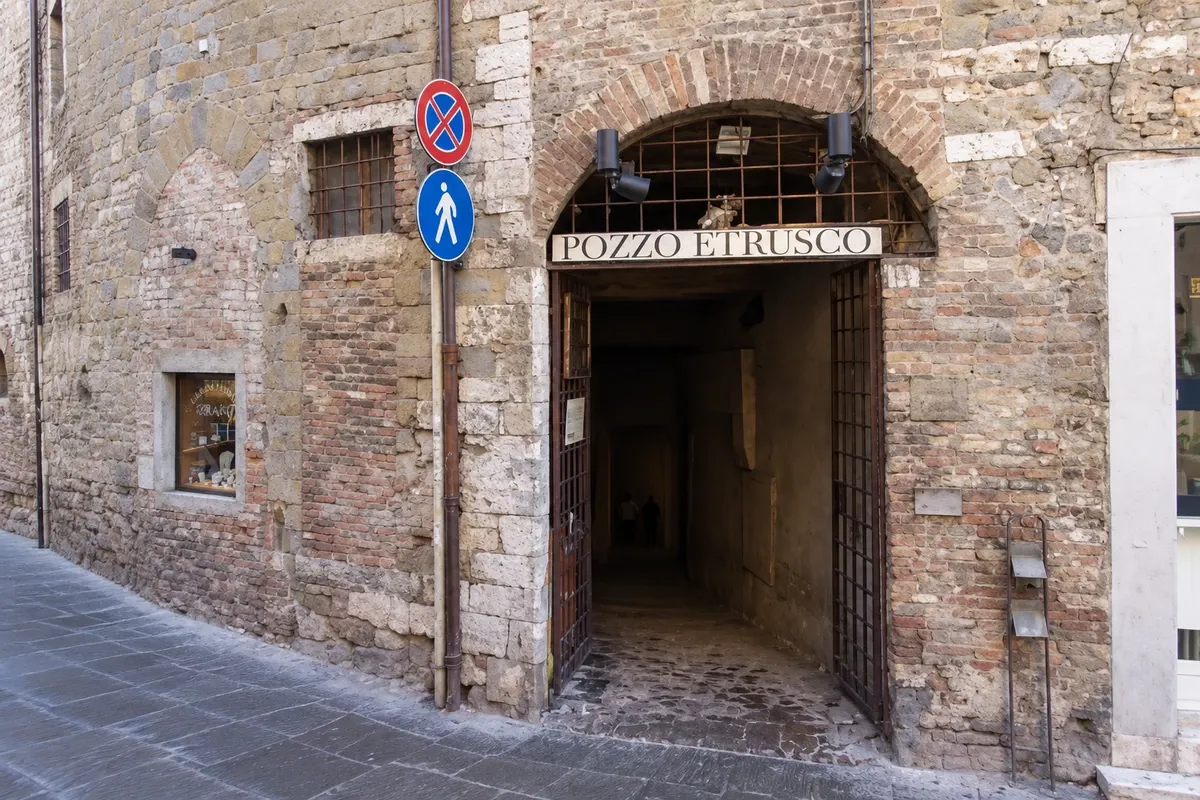
The Rocca Paolina is the fortress that Pope Paul III ordered built in 1540, after Perugia’s revolt against the salt tax, swallowing an entire neighborhood of the Baglioni family: the houses, streets and medieval towers remained within the walls as an underground city, today traversed by escalators that link Piazza Italia to the lower part, with exhibitions in the halls; the fortress above was demolished in 1860 when the city joined Italy. Perugia was one of the twelve Etruscan cities: the Arco Etrusco (or Arco di Augusto), from the 3rd century B.C., at 11 m, is the best-preserved gate of Etruria, with a Renaissance loggia above; the Pozzo Etrusco, in Piazza Danti, is the 37 m deep cistern from the 3rd century B.C., visited by a walkway down to the bottom; sections of the Etruscan walls still encircle the center. The Ipogeo dei Volumni, on the outskirts, is the 2nd century B.C. Etruscan tomb with the family’s urns.
Kraji na poti: Rocca Paolina, Arco Etrusco, Pozzo Etrusco.
Vključuje: Rocca Paolina free of charge (exhibitions paid); Pozzo Etrusco with small entry fee (combined ticket available with the Cappella di San Severo, which has the Raphael fresco); Arch free of charge.
Nasvet: Enter the Rocca Paolina via the escalators at Piazza Partigiani and exit at Piazza Italia; it’s the natural route if you come by car. The Pozzo is short but impressive for its scale; the Cappella di San Severo, with the only Raphael fresco in Umbria, is 2 minutes away.
Najboljši čas za obisk: Vse leto.
Oratorio di San Bernardino, Basilica di San Pietro and the Ipogeo dei Volumni
Odhod: Piazza San Francesco, Perugia Walk between churches and round-trip to the Etruscan tomb Približno 3 ure Dopoldne ali popoldne Lahko
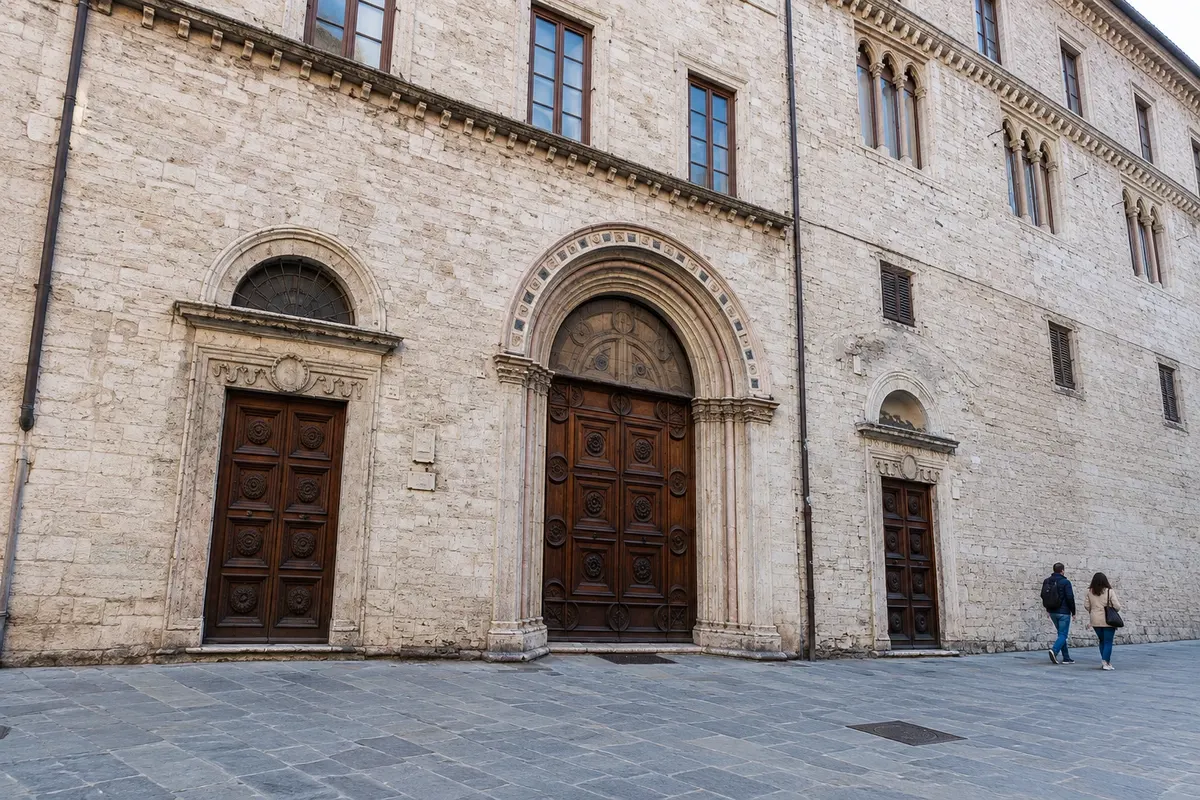
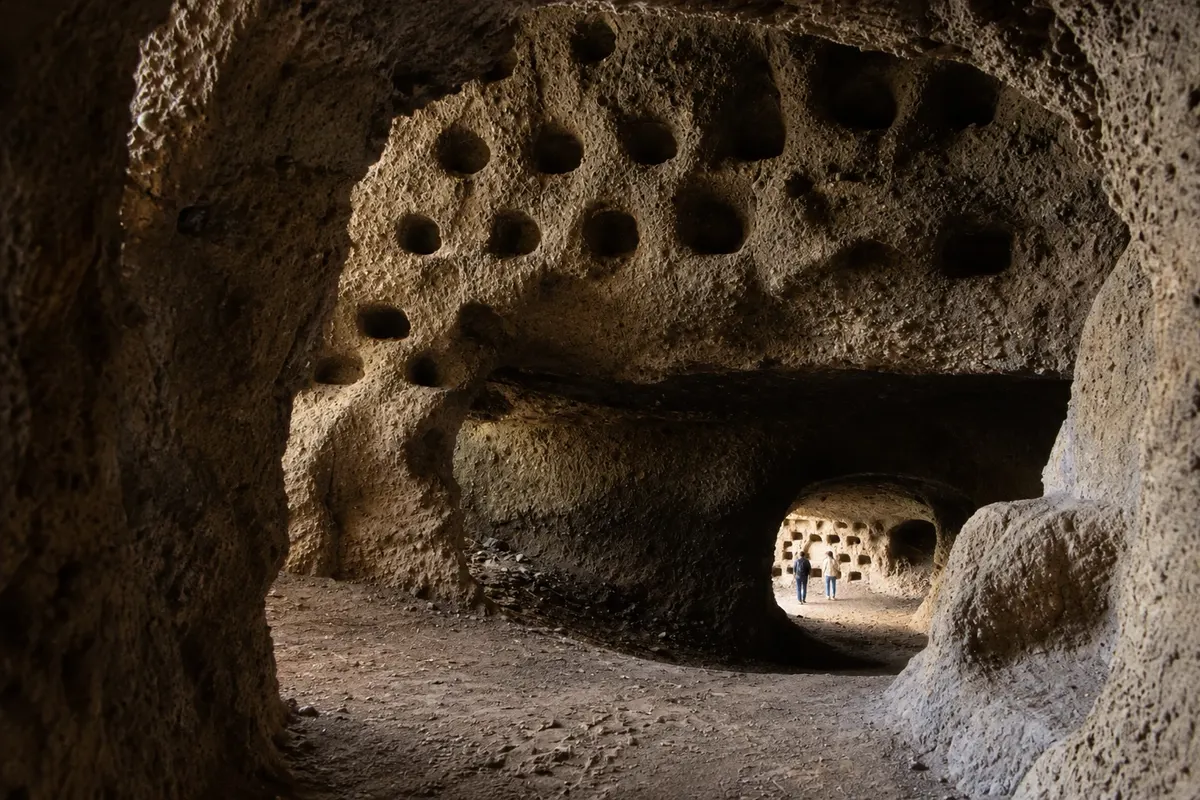
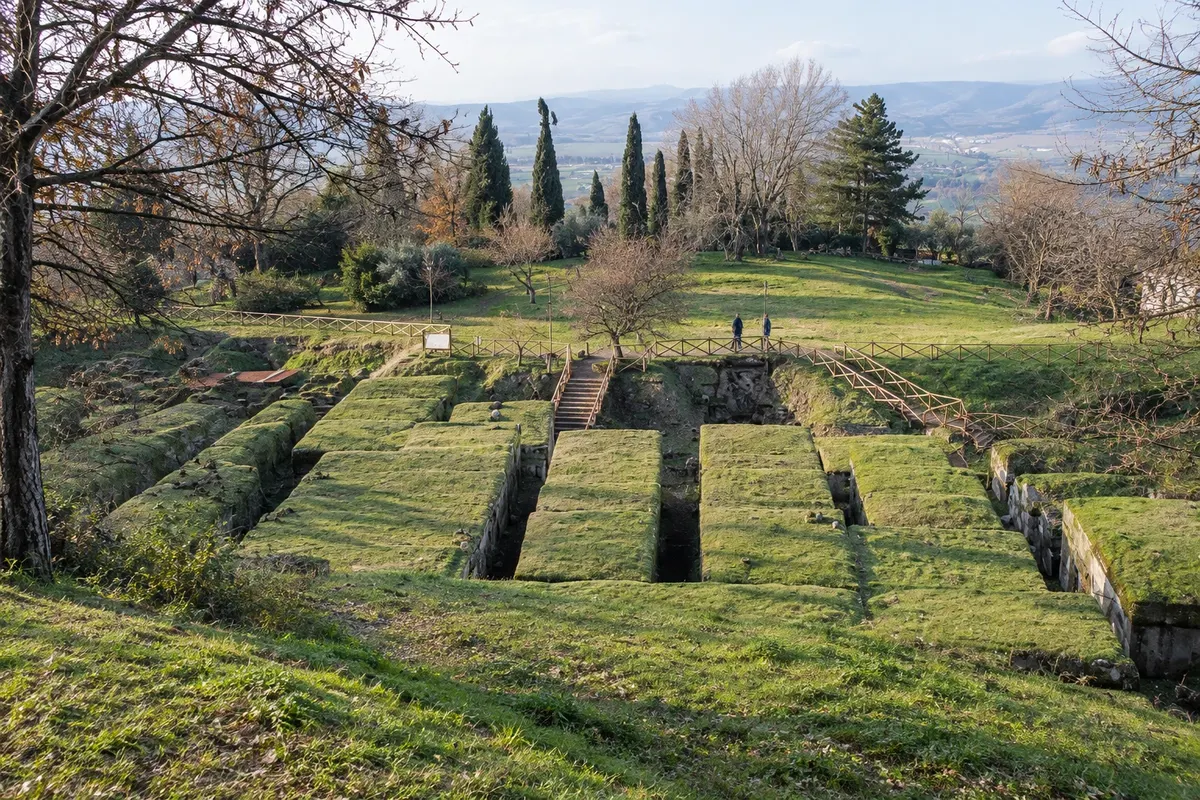
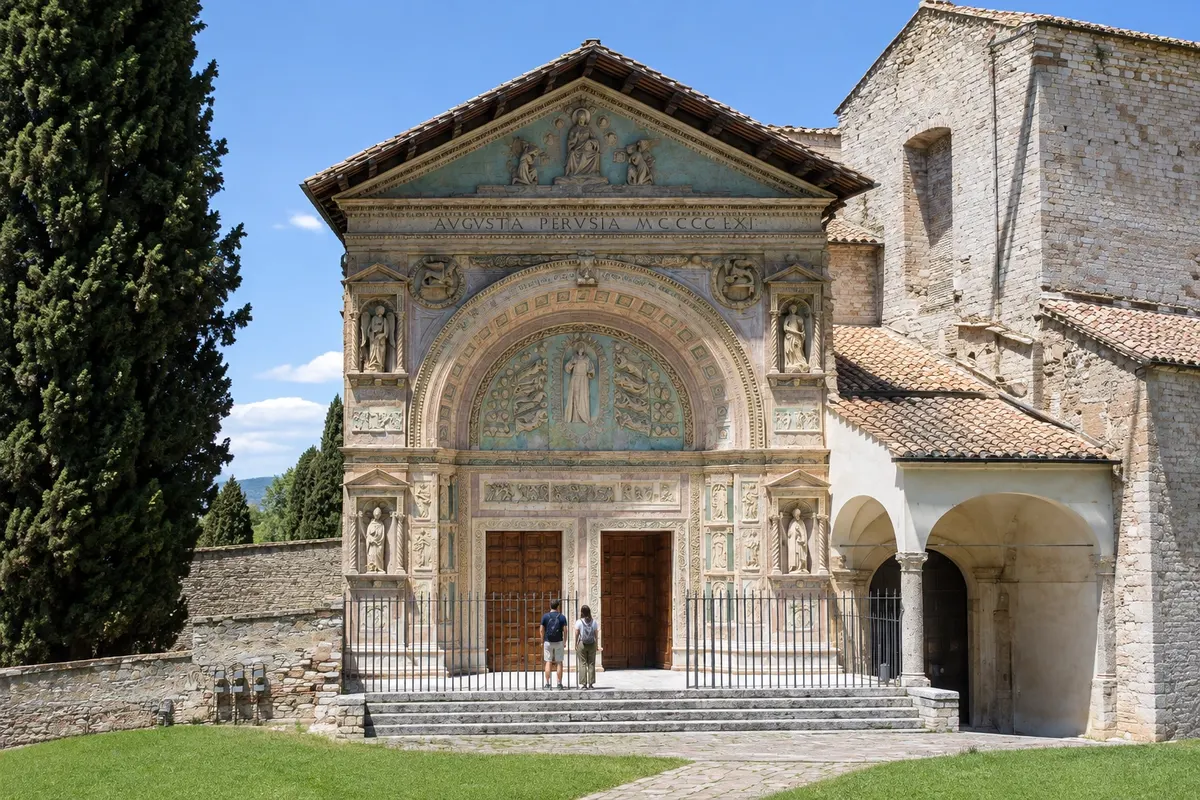
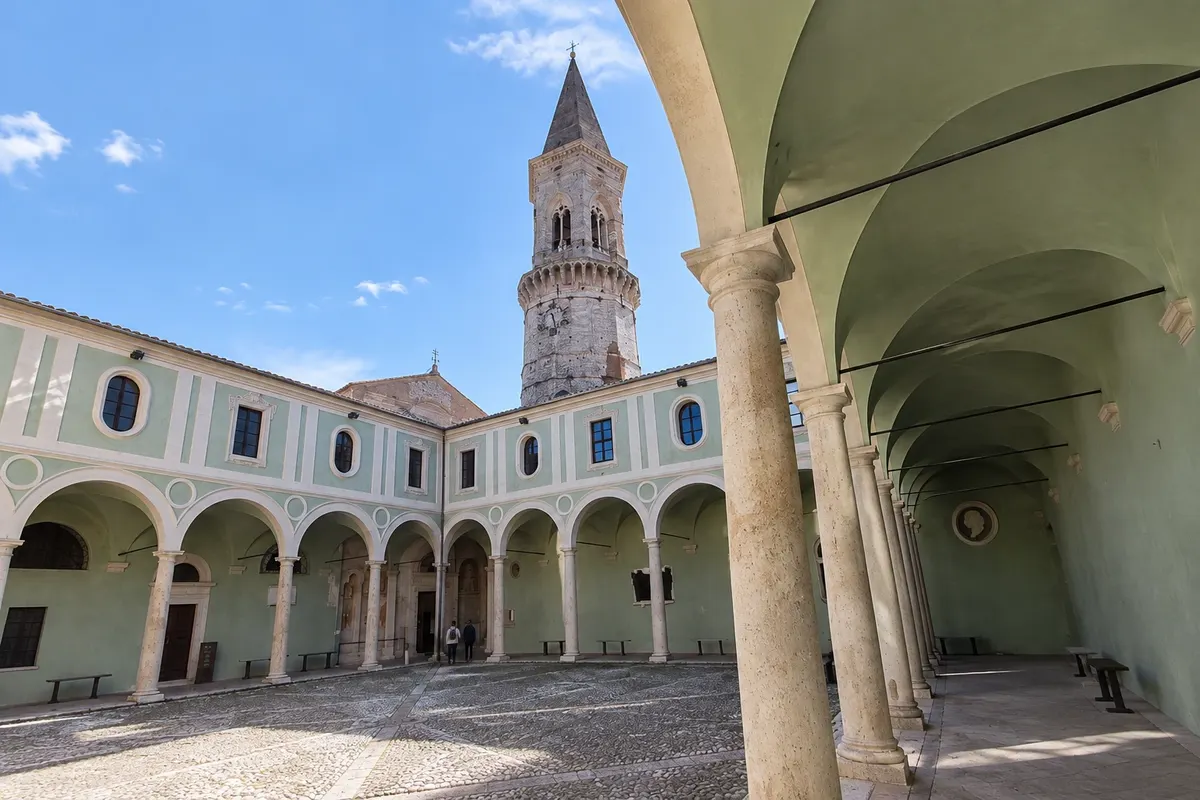
The Oratorio di San Bernardino, from 1457 to 1461, has the façade by Agostino di Duccio, the masterpiece of Renaissance sculpture in Umbria, with reliefs of musician angels in polychrome marble and a polychromed background; inside, a Roman sarcophagus serves as the altar. At the other end of town, along Corso Cavour and the Porta San Pietro, the Basilica di San Pietro, the 10th-century Benedictine abbey, has a nave of ancient columns, the carved wooden choir from 1535—the richest in the region—paintings by Perugino and Vasari, and the medieval gardens with the kitchen garden; the pointed Gothic bell tower is visible from afar. Five kilometers away, in Ponte San Giovanni, the Ipogeo dei Volumni is a 2nd-century BC Etruscan underground tomb, dug into the tuff like a house, with the seven travertine urns of the Volumnia family showing reclining figures, discovered in 1840; the Antiquarium beside it houses other urns.
Kraji na poti: Oratorio di San Bernardino, Basilica di San Pietro, Ipogeo dei Volumni.
Vključuje: Oratory and basilica free of charge; Ipogeo with a small admission (free on the first Sunday of the month). Urban bus to the Ipogeo paid separately.
Nasvet: The Oratory opens at limited hours; check ahead. The Basilica of San Pietro closes at midday. The Ipogeo is on the Assisi road: stop there on the way.
Najboljši čas za obisk: Vse leto.
Assisi: Basilica di San Francesco
Odhod: Piazza Inferiore di San Francesco, Assisi Visit to the basilica Približno 2 uri Dopoldne easy (ramps between the two churches)
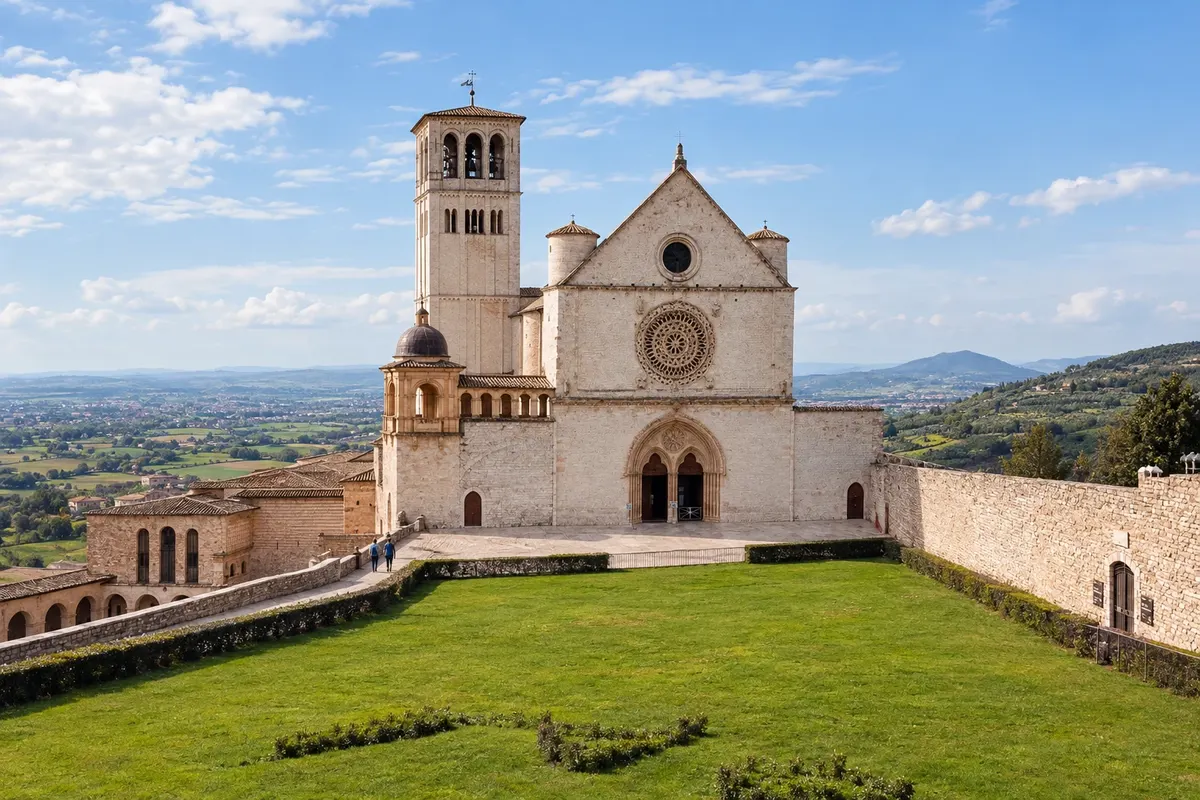
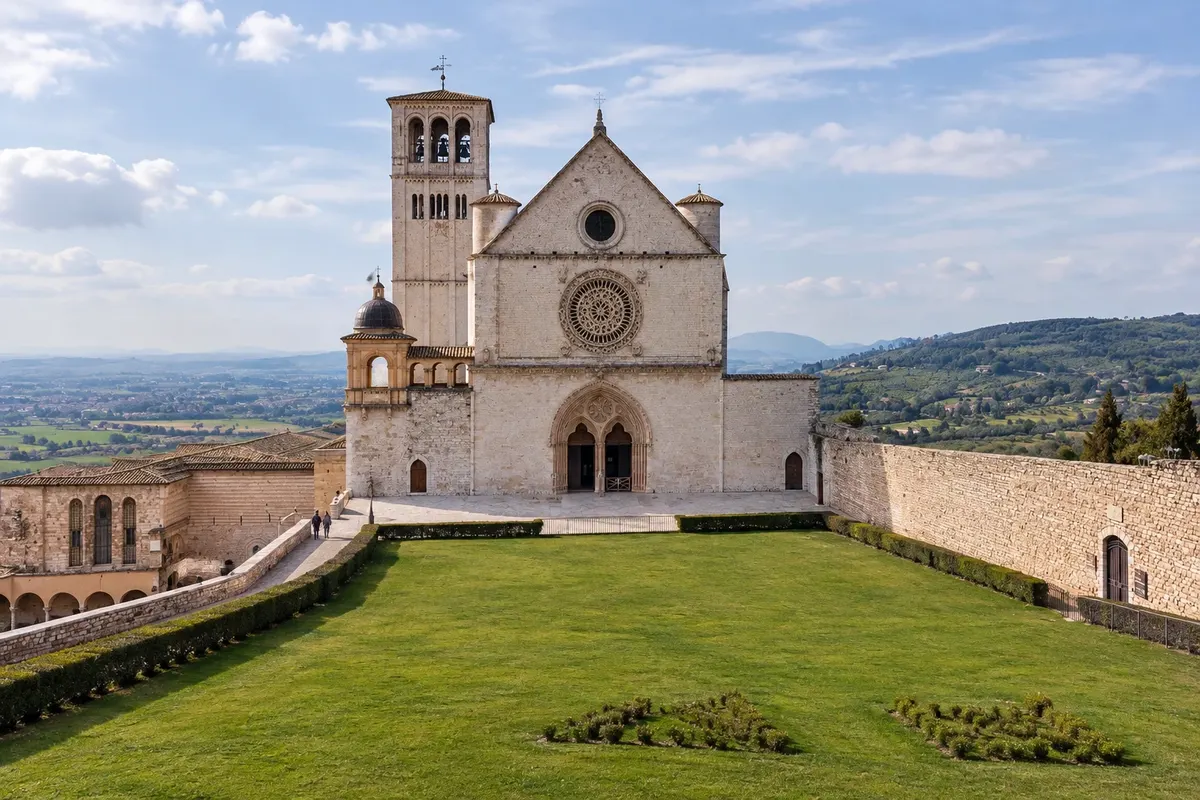
The Basilica of San Francis (Basilica di San Francesco), begun in 1228, two years after the saint’s death, and listed by UNESCO, consists of two stacked churches: the Inferiore, low and dim, with frescoes by Cimabue, Simone Martini (the life of Saint Martin), Pietro Lorenzetti and the crypt with Saint Francis’s tomb, found in 1818 and surrounded by the tombs of four companions; and the Superiore, Gothic and luminous, with 28 scenes of the saint’s life painted by Giotto and the workshop around 1295, the first narrative cycle of Italian painting, and the biblical scenes by Cimabue in the apse and transept, damaged by the 1997 earthquake and restored. Franciscan friars lead tours in several languages, including Portuguese; silence is requested and photography is forbidden. The basilica sits on the west edge of Assisi, atop the Colle del Paradiso, with the square and the colonnade of the Sacro Convento.
Kraji na poti: Basilica di San Francesco.
Vključuje: Free entry (donation); guided visits by the friars with donation or reservation; audio guide paid separately. Dress code: shoulders and knees covered.
Nasvet: Go at opening time, before the tour groups, and start with the Inferiore and the crypt; the Superiore in the morning has the best light on Giotto’s paintings. On October 4th is Saint Francis’s feast, with the offering of oil from regions across Italy; on August 2nd is the Perdono of Assisi.
Najboljši čas za obisk: All year; October and Easter are very busy.
Assisi on foot: Piazza del Comune, Santa Chiara, San Rufino and Rocca Maggiore
Odhod: Piazza del Comune, Assisi Walk through the town with a climb to the fortress Približno 3 ure Popoldne moderate (hills; 20 minutes to the Rocca)
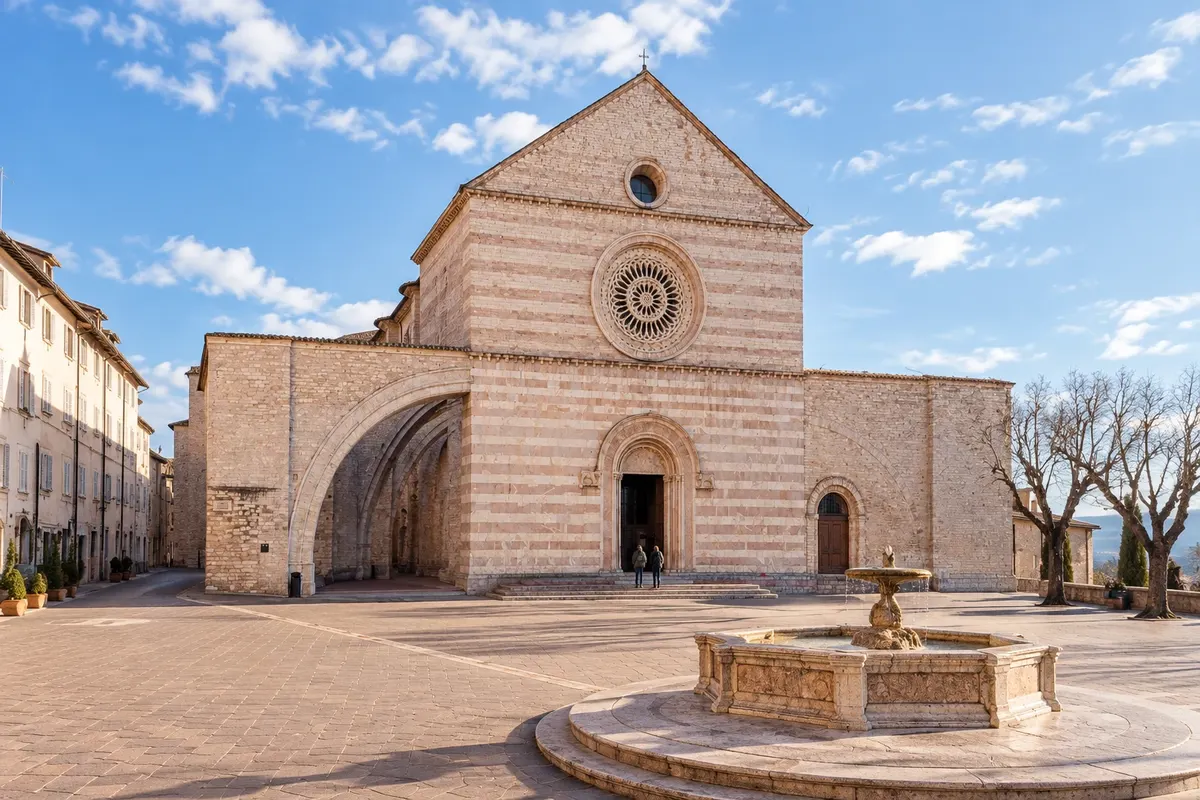
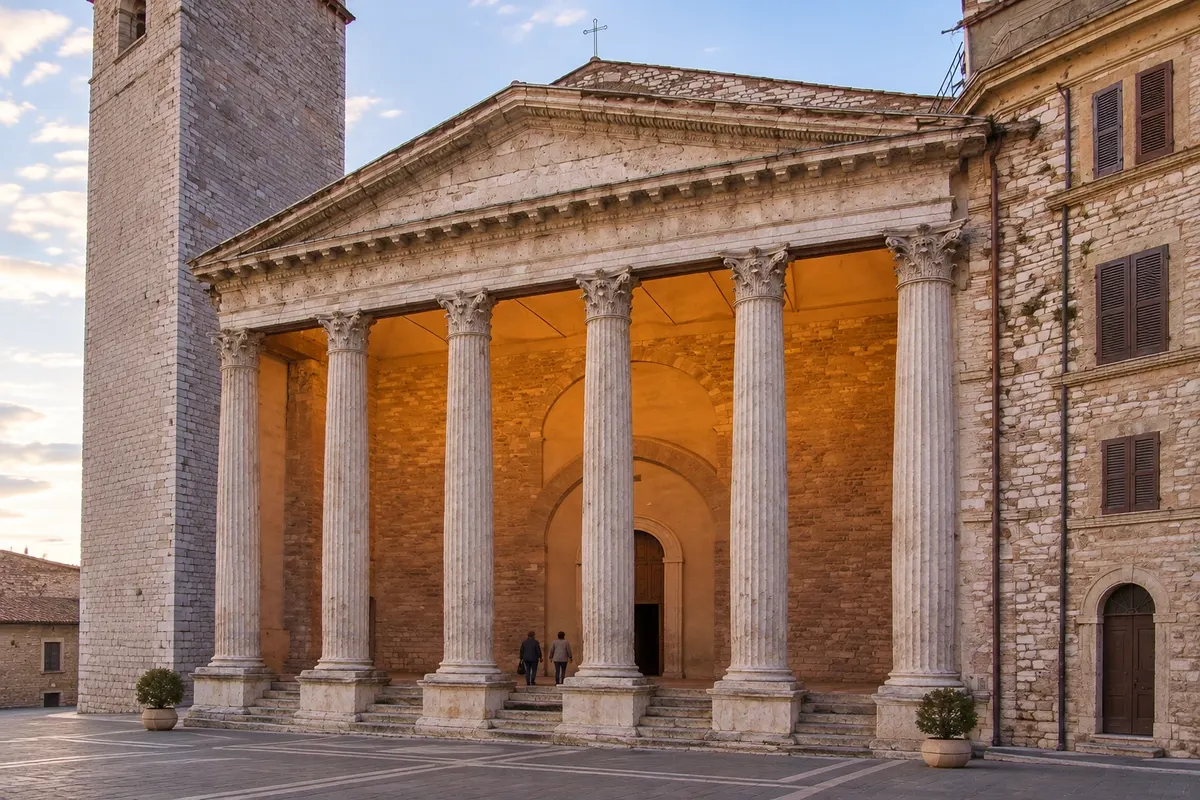
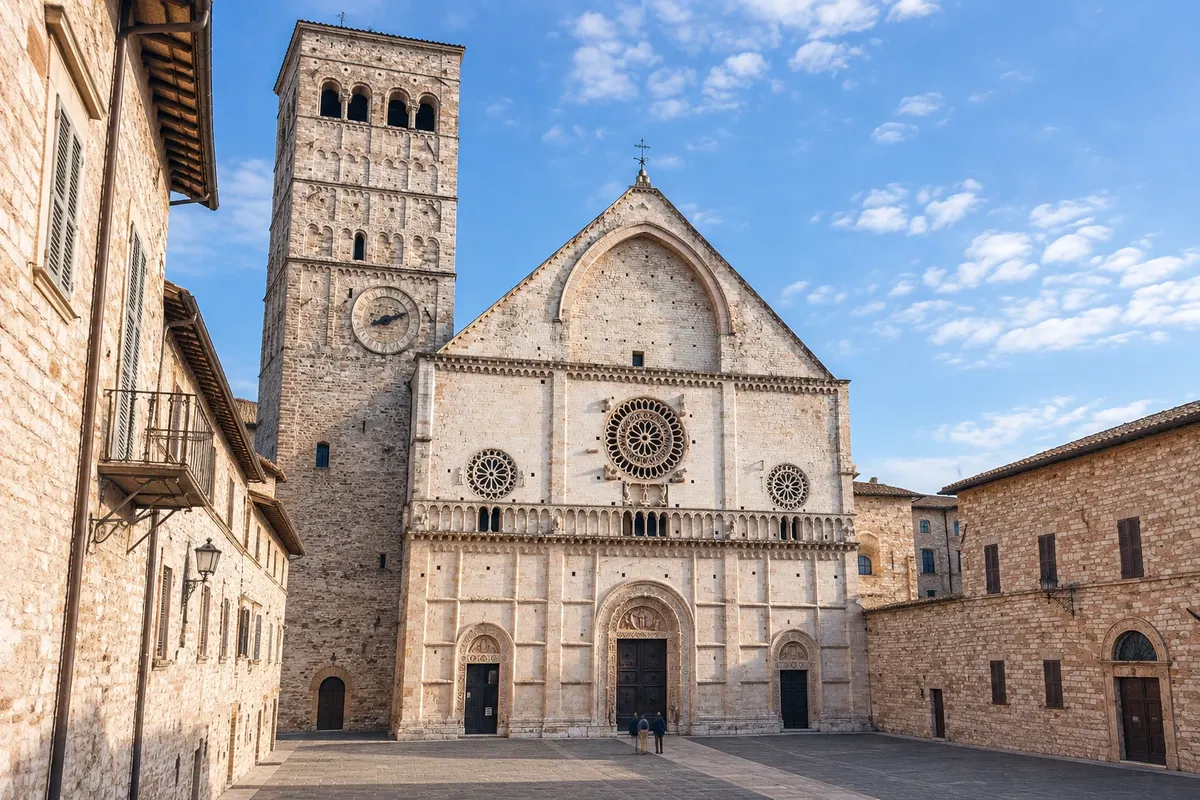
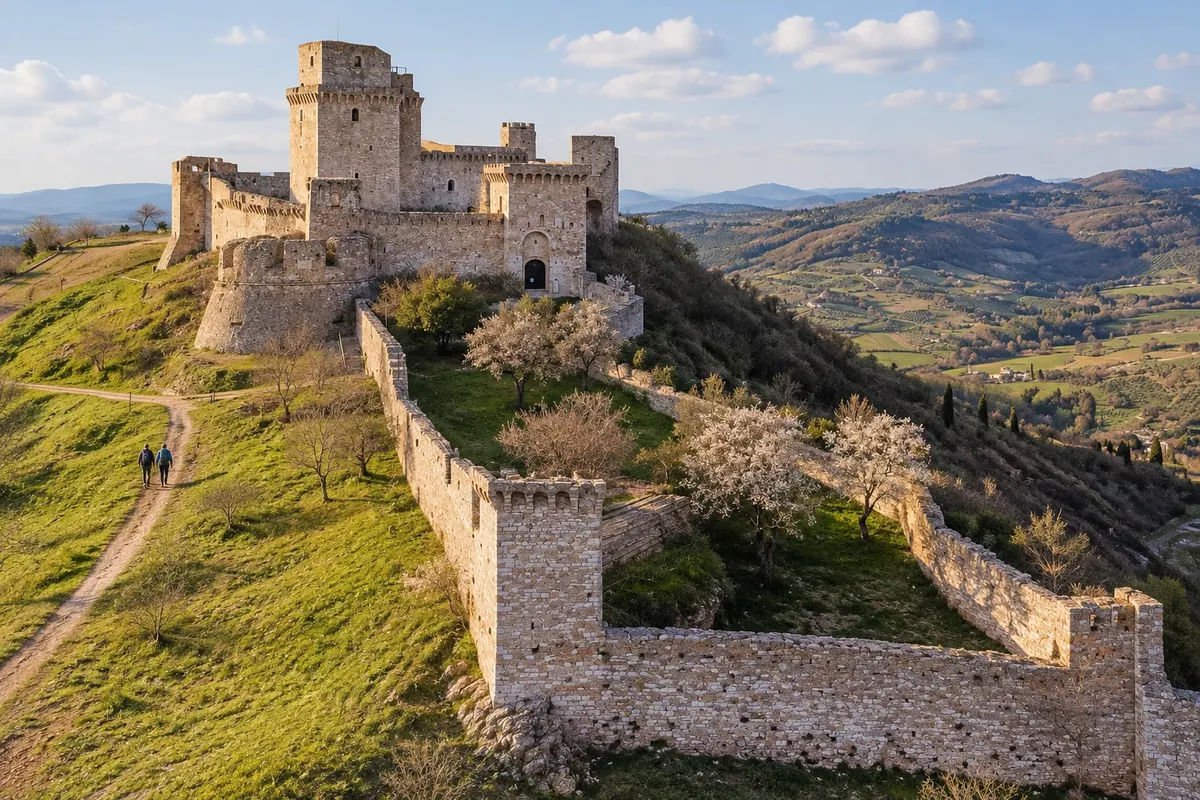
Assisi is the pink-stone town on Monte Subasio, entirely protected by UNESCO. The Piazza del Comune, the Roman forum, features the Tempio di Minerva, the 1st-century BC temple with six intact Corinthian columns, converted into a church, and the town tower; the underground Roman forum can be visited beneath the square. The Basilica di Santa Chiara, from 1260, striped pink and white with flying buttresses, houses Saint Clare’s body in the crypt and the crucifix of San Damiano, which spoke to Francis; the Cattedrale di San Rufino, Romanesque from 1140 with a façade of three rose windows, has the font where Francis and Clare were baptized. The Rocca Maggiore, the 1367 fortress above the town with towers and walkways, dominates the town and the valley as far as Perugia; the climb takes 20 minutes. The streets are stepped, with geranium pots and shops selling ceramics and Franciscan souvenirs.
Kraji na poti: Tempio di Minerva, Basilica di Santa Chiara, Cattedrale di San Rufino, Rocca Maggiore.
Vključuje: Self-guided walk; churches free of charge; Rocca Maggiore and the Roman forum have small entrance fees.
Nasvet: Do the Rocca at late afternoon, with the light over the town and the valley; in the morning, visit the churches. Stay overnight in Assisi: at night, after the buses leave, the town is different. Parking is outside the walls, with moving walkways/escalators.
Najboljši čas za obisk: All year; in May, the Calendimaggio, with the town in medieval dress.


 Brazilija
 Antarktika
 Argentina
 Bolivija
 Čile
 Kolumbija
 Ekvator
 Gvajana
 Francoska Gvajana
 Falklandski otoki (Malvini)
 Paragvaj
 Peru
 Surinam
 Urugvaj
 Venezuela
 Nemčija
 Avstrija
 Belgija
 Hrvaška
 Danska
 Slovaška
 Slovenija
 Španija
 Finska
 Francija
 Grčija
 Nizozemska
 Madžarska
 Irska
 Islandija
 Luksemburg
 Norveška
 Poljska
 Portugalska
 Združeno kraljestvo
 Češka
 Švedska
 Švica
 Turčija
 Bermudi
 Kanada
 Združene države Amerike
 Grenlandija
 Mehika
 Sveta Peter in Mihael
 Dominikanska republika
 Japonska
 Južnoafriška republika
 Egipt
 Avstralija
 Fidži
 Nova Zelandija
 Papua Nova Gvineja