Sintra and Cascais

Lisbon · Portugalska

Sintra and Cascais

The Sintra hills, with romantic palaces and gardens in the mist, and the coast of Cascais, a former fishing village turned seaside resort, less than an hour from Lisboa.

Lisbon and the South

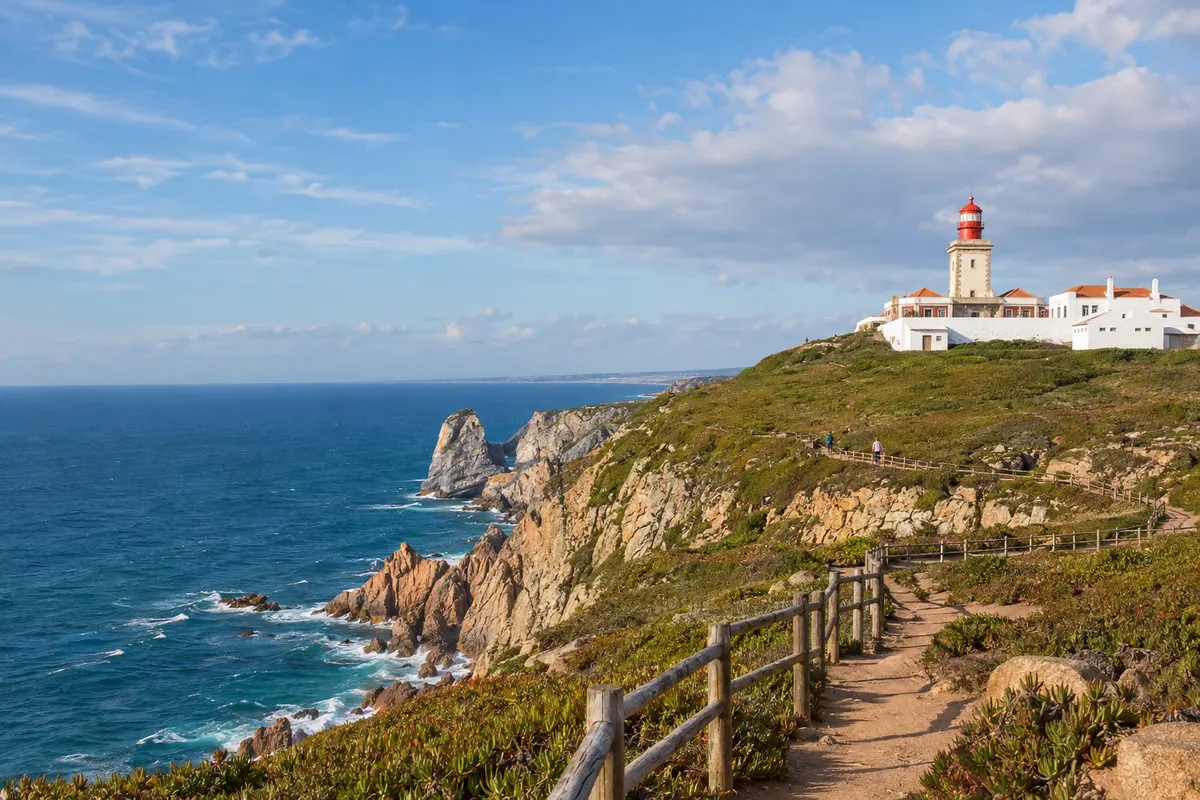
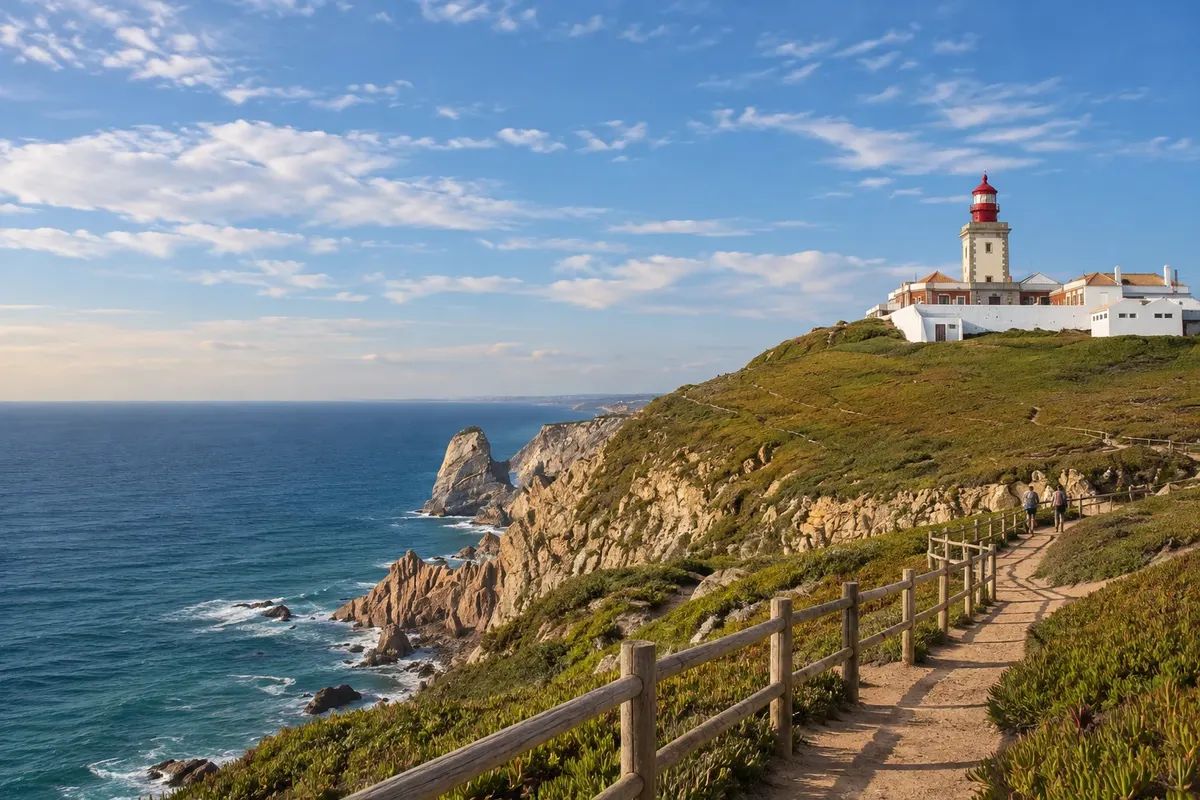
Na fotografiji: Cabo da Roca

Illustrative images. The pictures in this guide are illustrations based on the real place, not photographs, and may differ from it.

Na voljo v trgovini Google Play Pošljite svoje fotografije

Spoznajte kraj

Pokrajina, ki jo doživite
v svojem ritmu.

Sintra and Cascais lie west of Lisboa, at the tip of the European continent. Between them stretches the Serra de Sintra, covered in woodland and protected by the Parque Natural de Sintra-Cascais, which slopes down to the Atlantic at the Cabo da Roca, the westernmost point of continental Europe.

For centuries Sintra was a summer retreat for kings and aristocrats. The Cultural Landscape of Sintra has been a UNESCO World Heritage Site since 1995 and includes the Palácio Nacional de Sintra in the town centre, the Palácio da Pena high on the hills, the Castelo dos Mouros, the Quinta da Regaleira, Monserrate and the Convento dos Capuchos. The hills create a humid microclimate, with frequent mist and temperatures lower than in Lisboa.

Cascais was a fishing village until the late 19th century, when King D. Luís I began to spend summers at the Cidadela and the aristocracy followed. Today the town has a bay with boats, a historic centre of cobbled streets, museums such as the Casa das Histórias Paula Rego and a seafront promenade to the Estoril. To the west the coast becomes wilder, with the Boca do Inferno and the Praia do Guincho.

A road over the hills and along the coast connects the two towns.

This destination brings together 2 cities: Sintra, Cascais.

Delite: WhatsApp
Delite svoja popotniška doživetja s fotografijami Pošljite fotografije vsakega kraja, ki ste ga obiskali. Največje število fotografij na kraj: 5.

Ena destinacija, več poti

Mesta na tej poti

Začnite v enem mestu ali v načrt poti vključite več mest.

Sintra and Cascais – lega
CascaisSintra

Obrisi: Direção-Geral do Território, CAOP 2025, CC BY 4.0. Priredba: Cidade Turismo.

Kako do tja:Sintra and Cascais

✈ Aeroporto Humberto Delgado (LIS), kraj: Lisboa· 30 km do cilja (Sintra)

From Lisboa, the train departs Rossio for Sintra and Cais do Sodré for Cascais, taking about 40 minutes each. The nearest airport is the aeroporto de Lisboa (LIS). Check before booking.

Predlagana točka prihoda:Sintra

Doživite kraj

Kaj početi – Sintra and Cascais

Cascais Bay and historic center
Cascais · Lisbon · Staro mestno jedro

Cascais Bay and historic center

The bay where fishing boats share space with the village's beaches, surrounded by the center's stone streets, the Câmara Municipal with tiled panels, and Praia da Rainha.

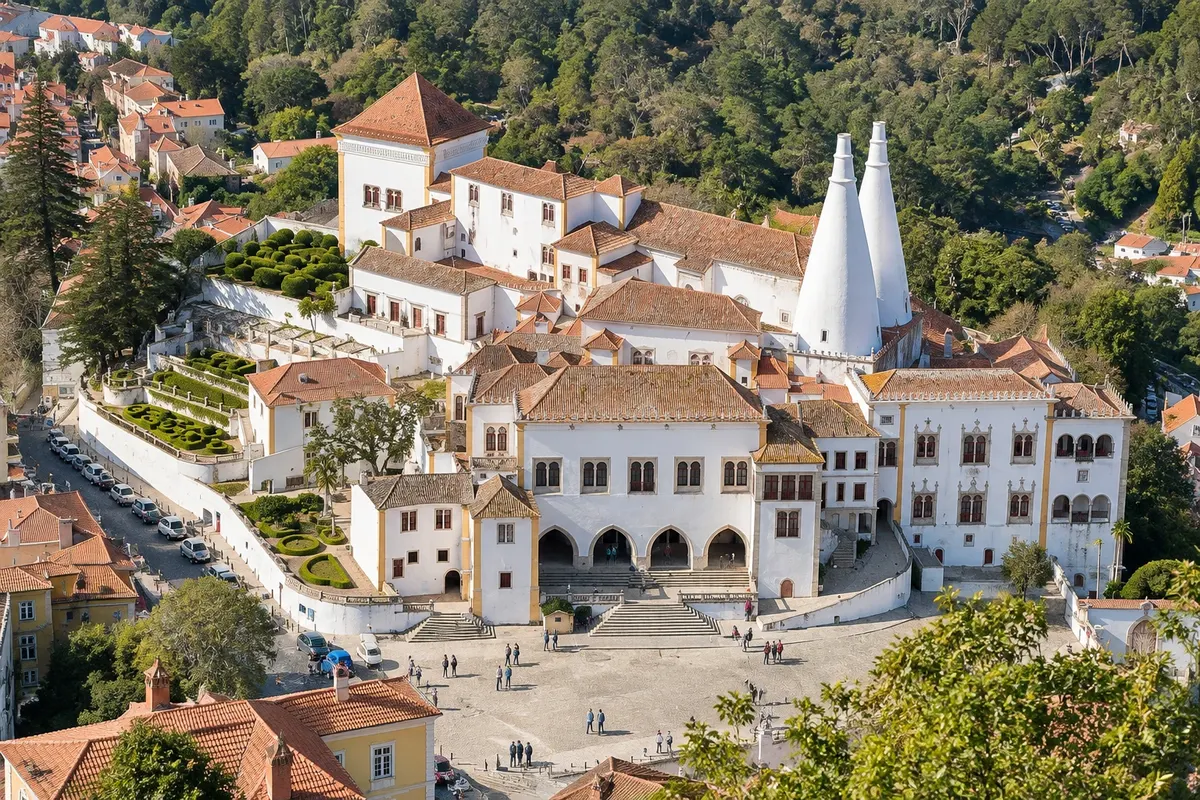
National Palace of Sintra
Sintra · Lisbon · Palace

National Palace of Sintra

Royal palace of medieval origin in the center of the village, with two large white conical chimneys. It was used by the royal family from the 15th to the 19th century and houses rooms with Mudéjar tiles and painted ceilings.

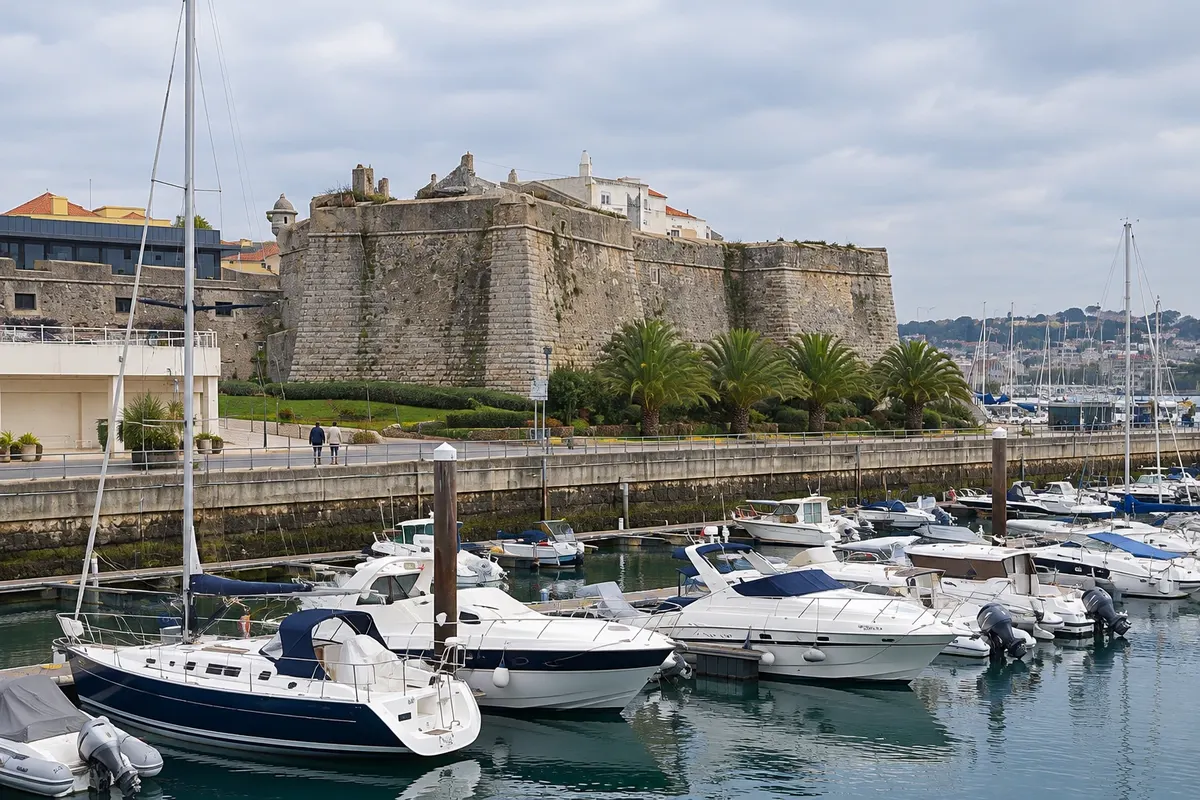
Cidadela de Cascais
Cascais · Lisbon · Trdnjava

Cidadela de Cascais

A group of fortifications from the 16th and 17th centuries on the edge of the bay, which was the royal family's summer residence and today houses a pousada, art galleries and studios.

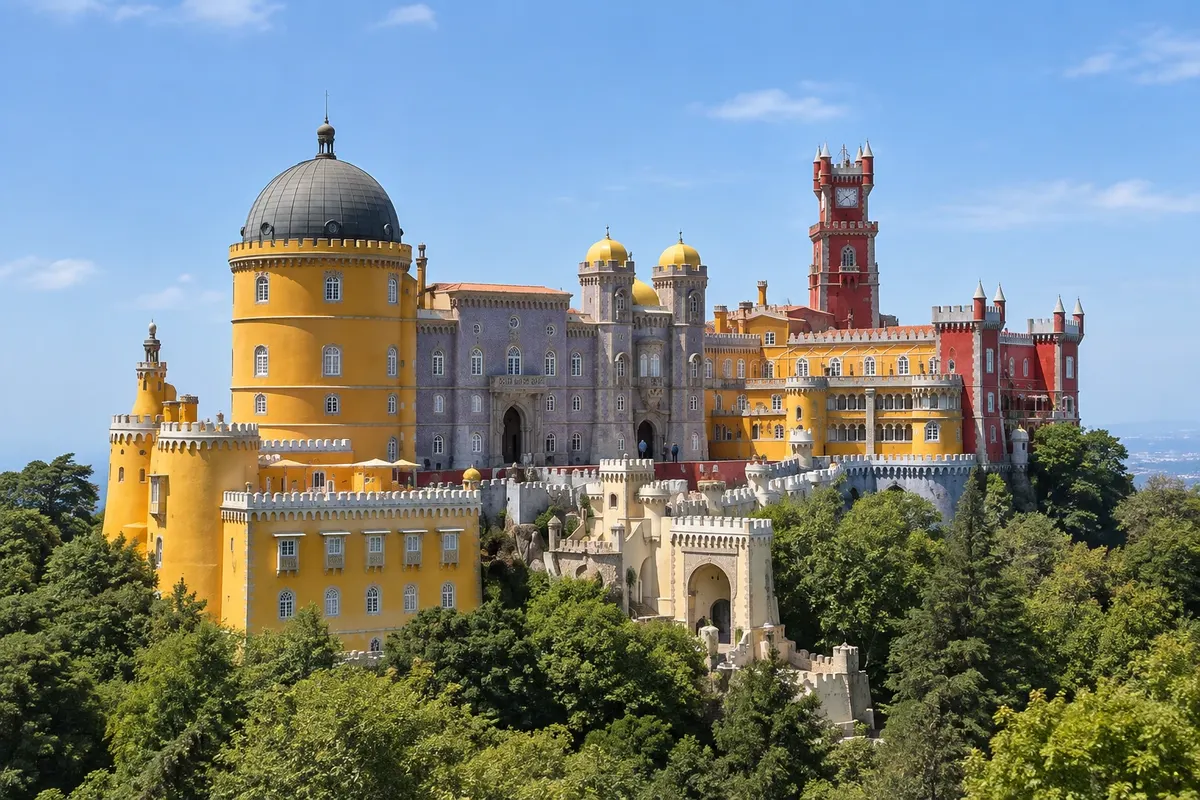
Pena National Palace
Sintra · Lisbon · Palace

Pena National Palace

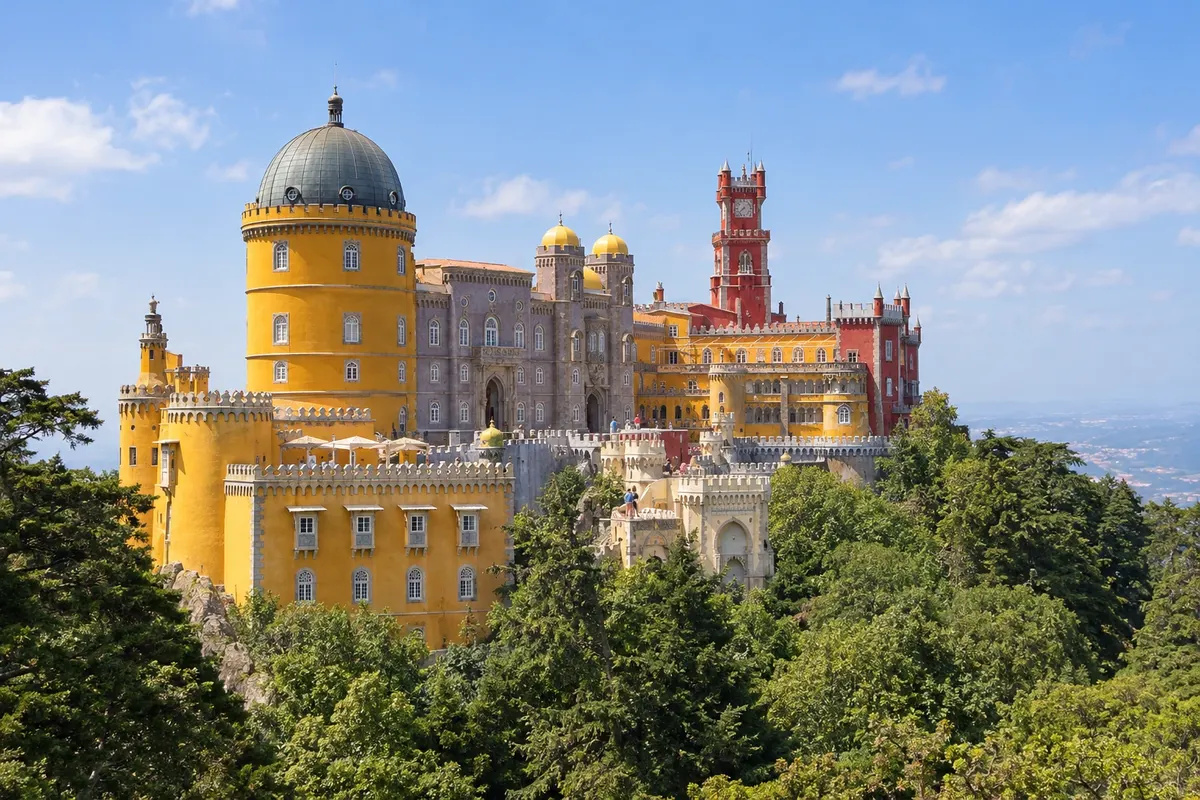
19th-century romantic palace high on the sierra, painted yellow and red, built by King D. Fernando II over an old convent. Around it, the Parque da Pena has lakes, trails and viewpoints.

Sintra and Cascais – prikaži dodatne kraje (12)
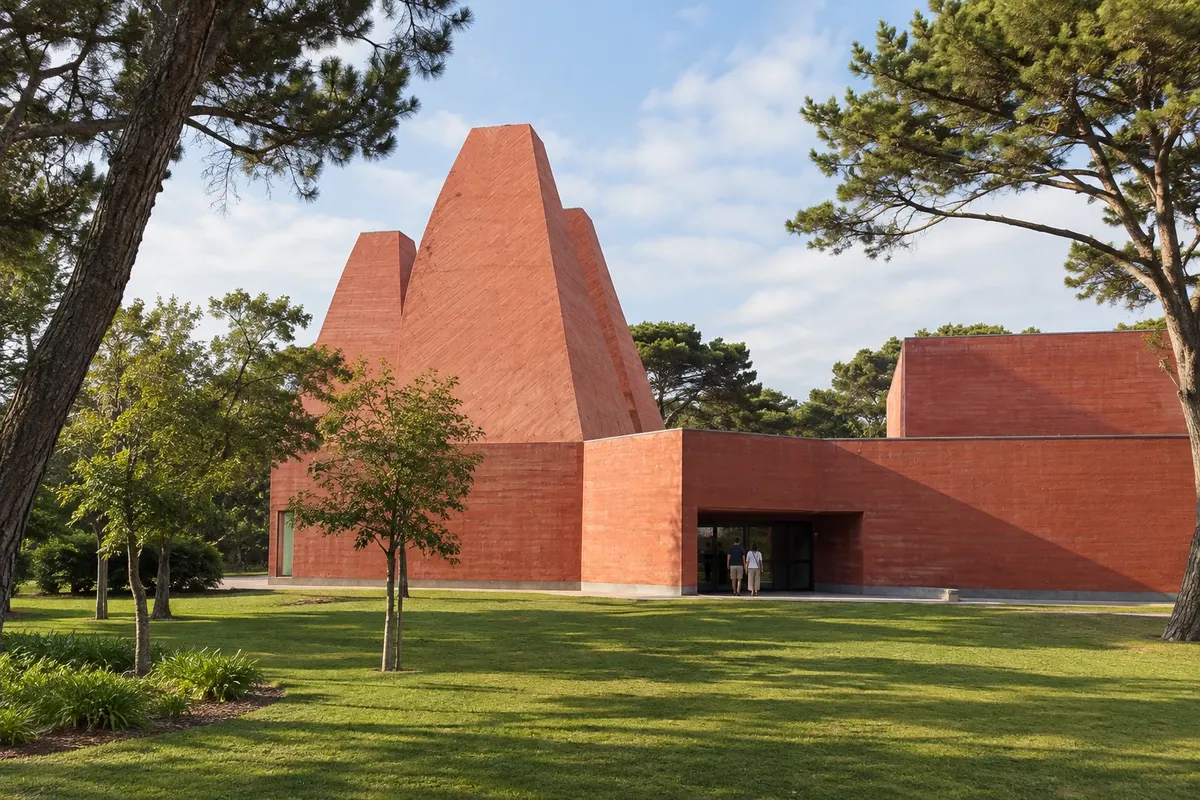
Paula Rego House of Stories
Cascais · Lisbon · Muzej

Paula Rego House of Stories

Museum dedicated to the painter Paula Rego, in a 2009 building with two red pyramidal towers designed by Eduardo Souto de Moura, winner of the Pritzker Prize.

Castle of the Moors
Sintra · Lisbon · Grad

Castle of the Moors

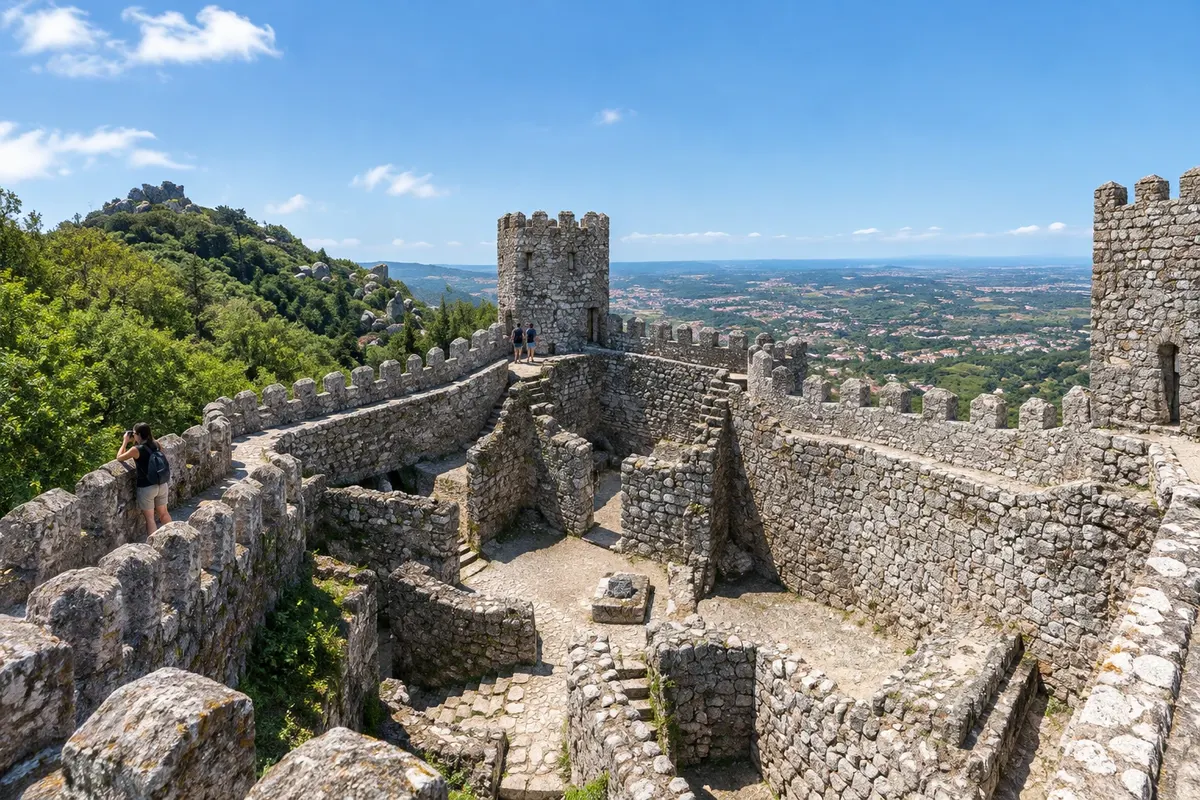
Walls of a castle built by the Muslims between the 9th and 10th centuries, winding along the ridge of the hills with views over the village, the Pena and the sea.

Santa Marta Lighthouse Museum
Cascais · Lisbon · Muzej

Santa Marta Lighthouse Museum

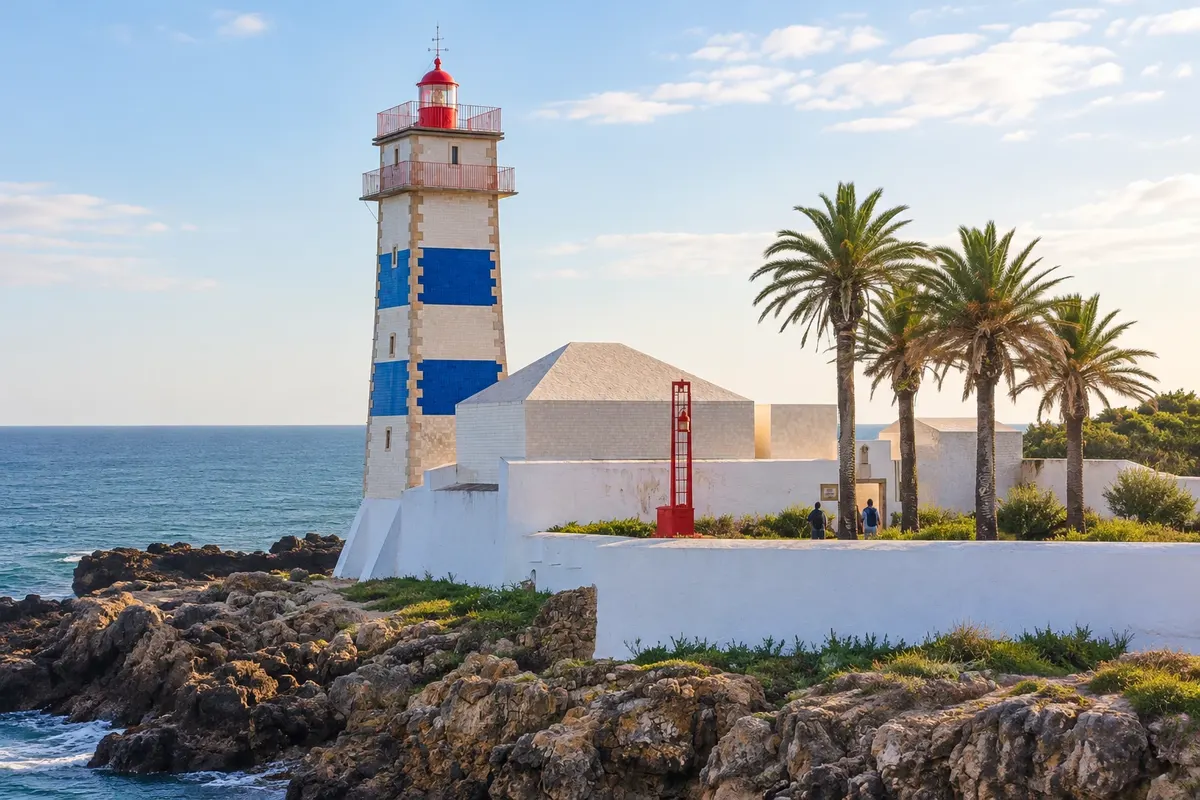
The Farol de Santa Marta, built in 1868 on the Santa Marta cove, with blue and white stripes, converted into a museum of Portuguese lighthouses. Beside it is the Museu Condes de Castro Guimarães.

Quinta da Regaleira
Sintra · Lisbon · Palace

Quinta da Regaleira

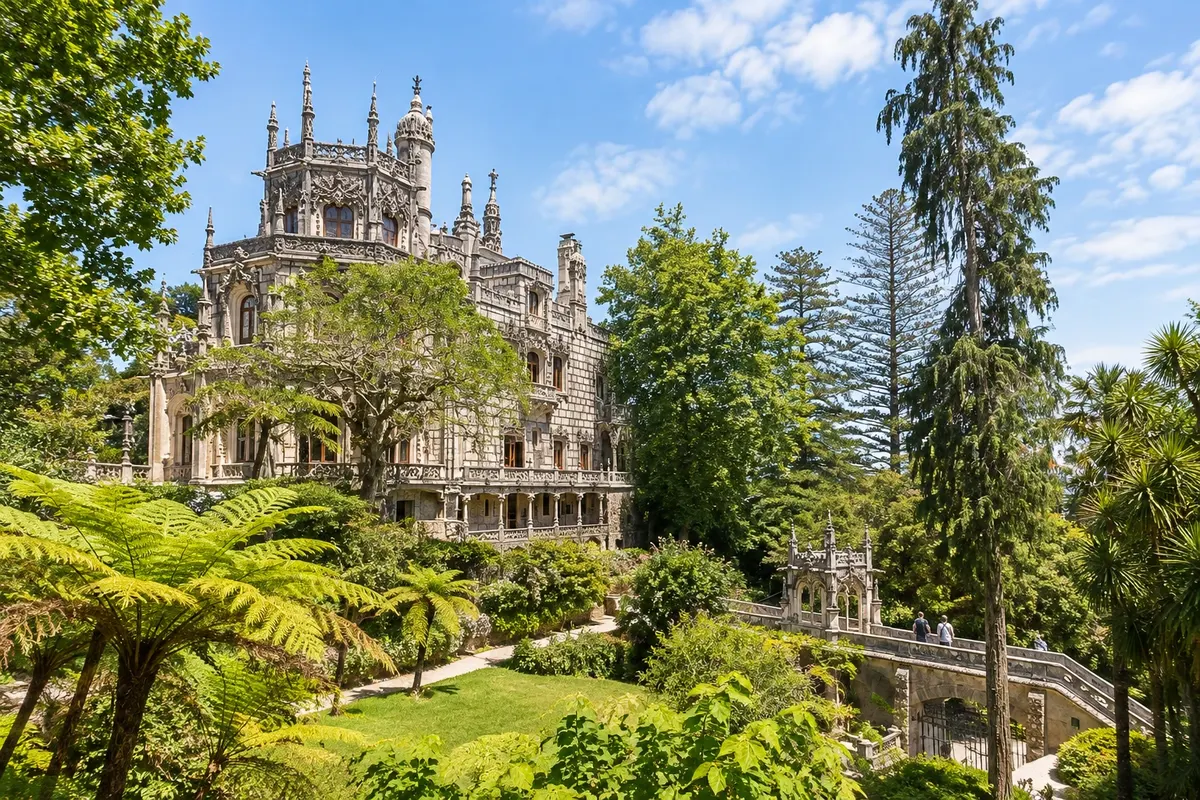
Early 20th-century palace and garden, created by the millionaire Carvalho Monteiro and the architect Luigi Manini, with grottoes, lakes and the Poço Iniciático, a spiral staircase that descends about 27 meters.

Boca do Inferno
Cascais · Lisbon · Razgledišče

Boca do Inferno

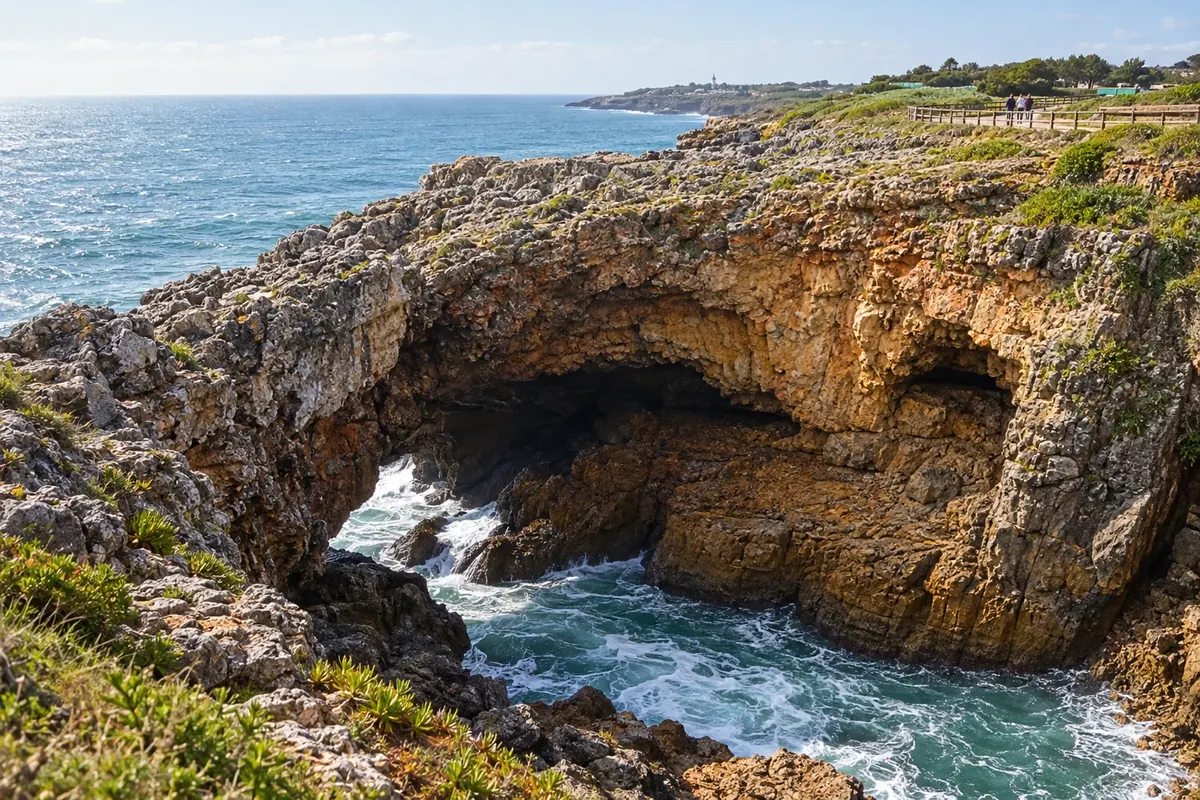
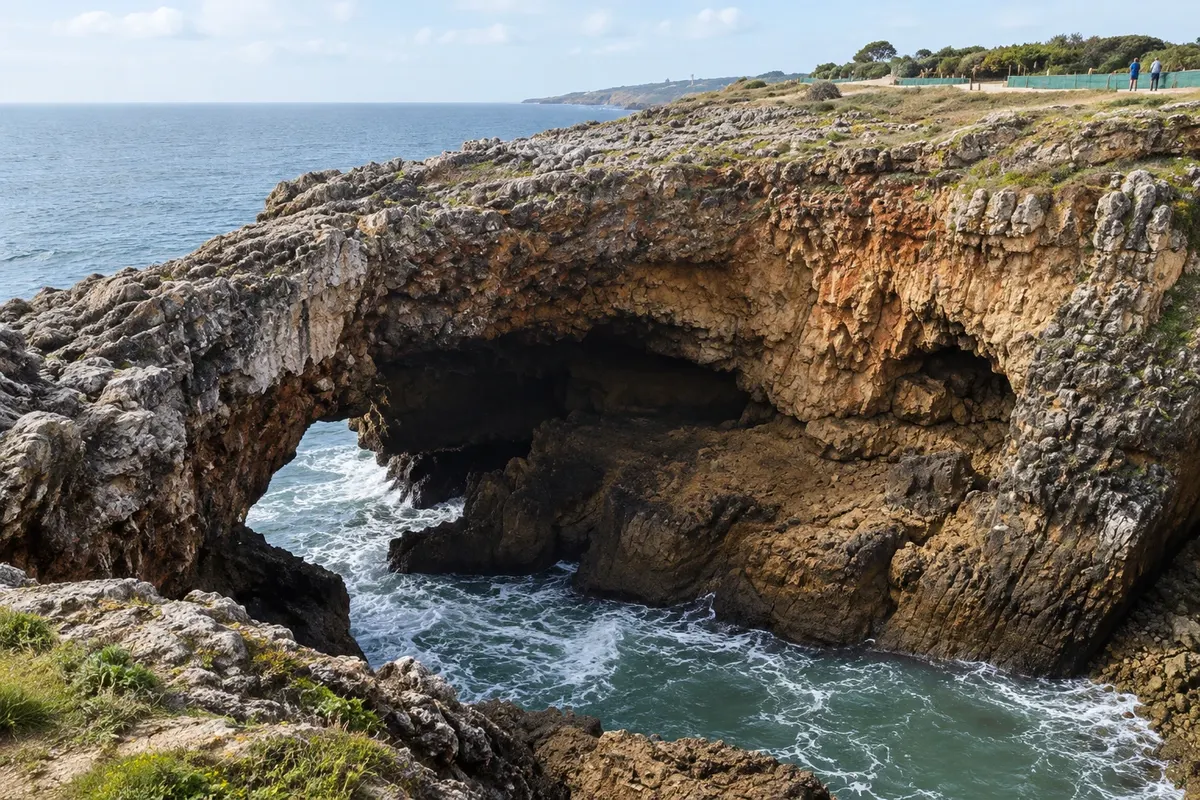
An opening in the cliff west of Cascais, where the sea enters a collapsed cave and, with strong waves, sprays water between the rocks. There are viewpoints and a coastal walkway.

Monserrate Palace and Gardens
Sintra · Lisbon · Palace

Monserrate Palace and Gardens

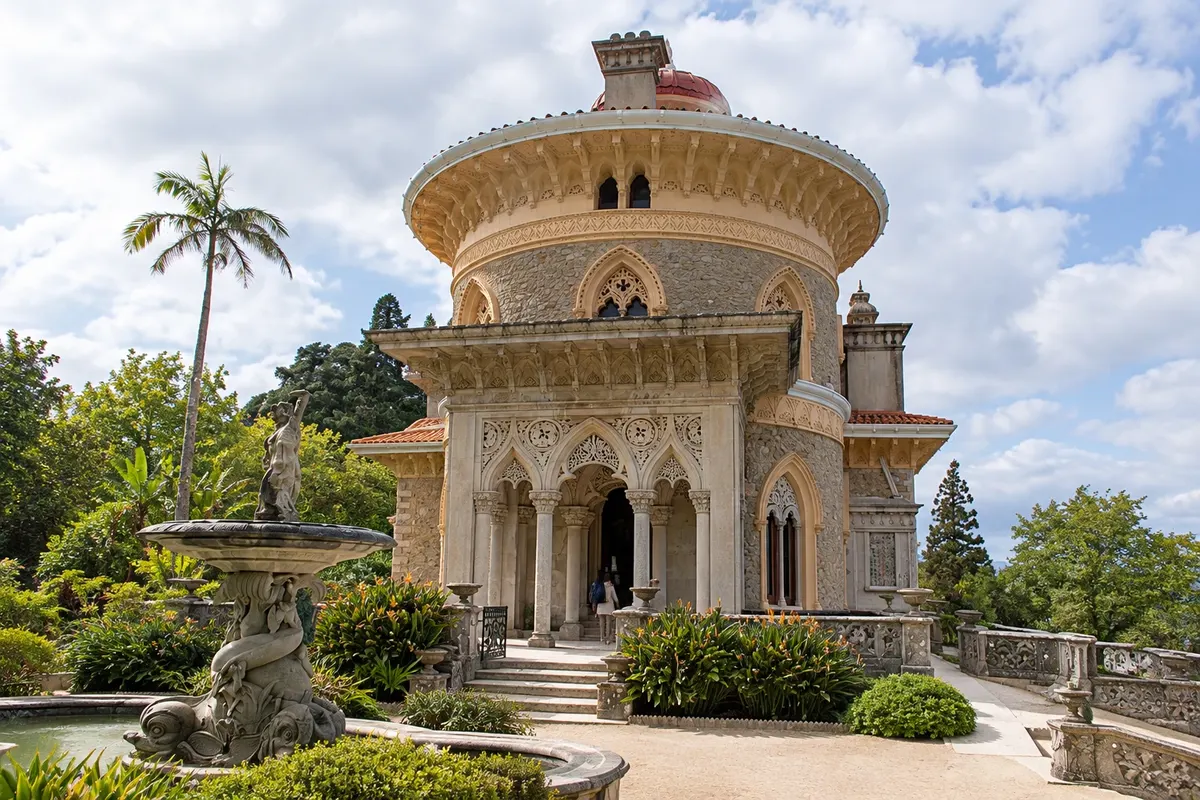
A 19th-century palace of Oriental inspiration, built by the Englishman Francis Cook, surrounded by a garden with plants from several continents, lakes and the ruins of a chapel.

Convent of the Capuchos
Sintra · Lisbon · Convent

Convent of the Capuchos

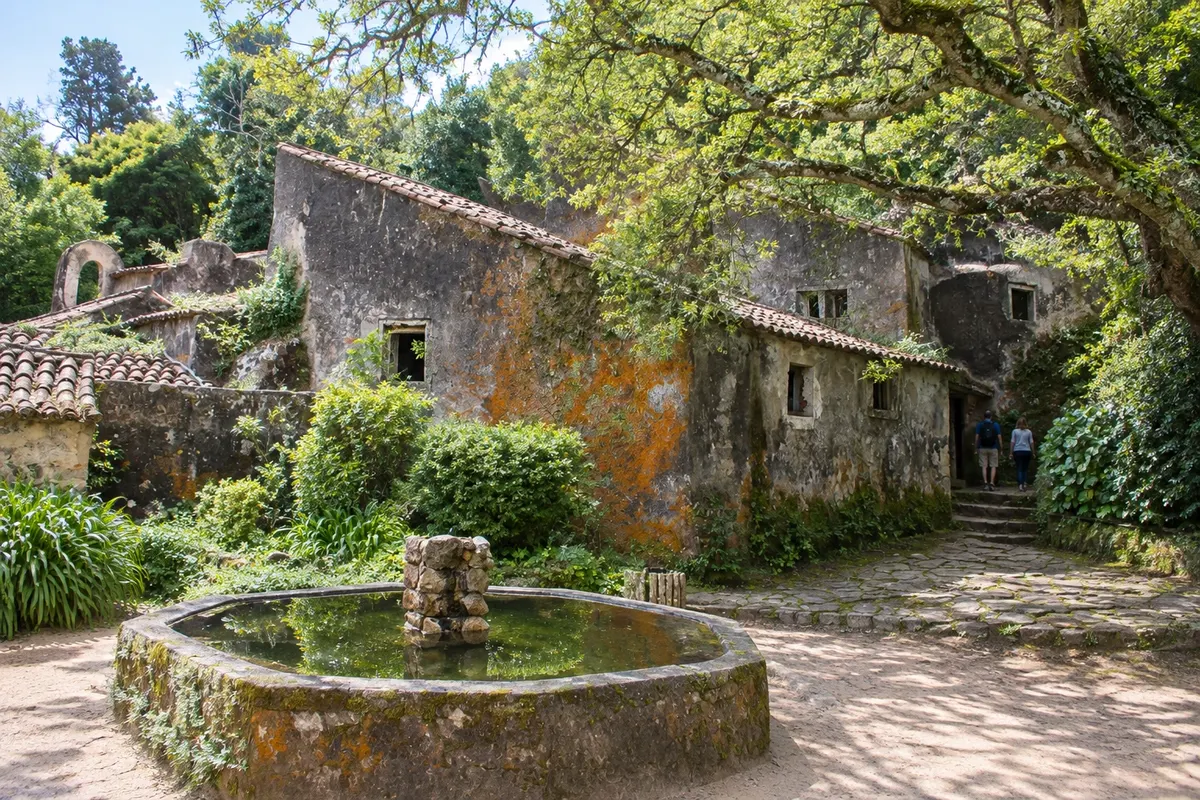
Small Franciscan convent from 1560 hidden in the mountain woodland, with tiny cork-lined cells and paths among rocks, showing the austere life of the friars.

Guincho Beach
Cascais · Lisbon · Plaža

Guincho Beach

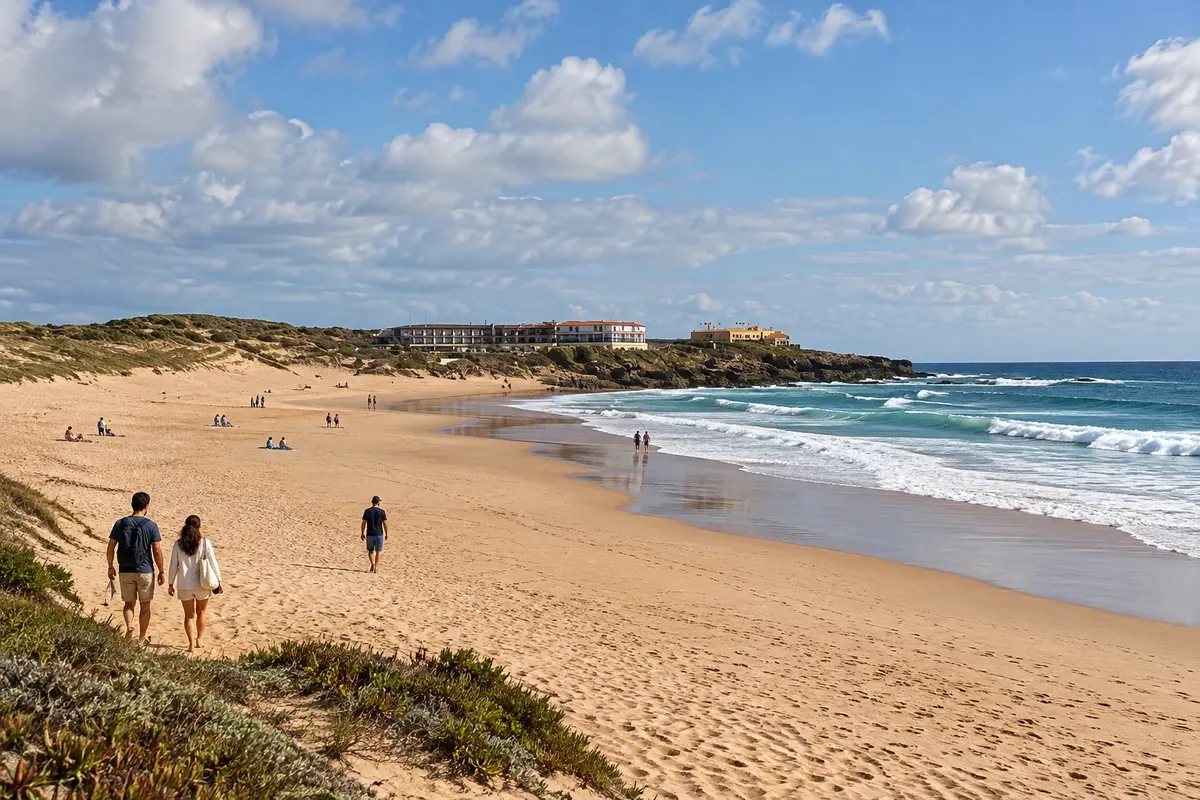
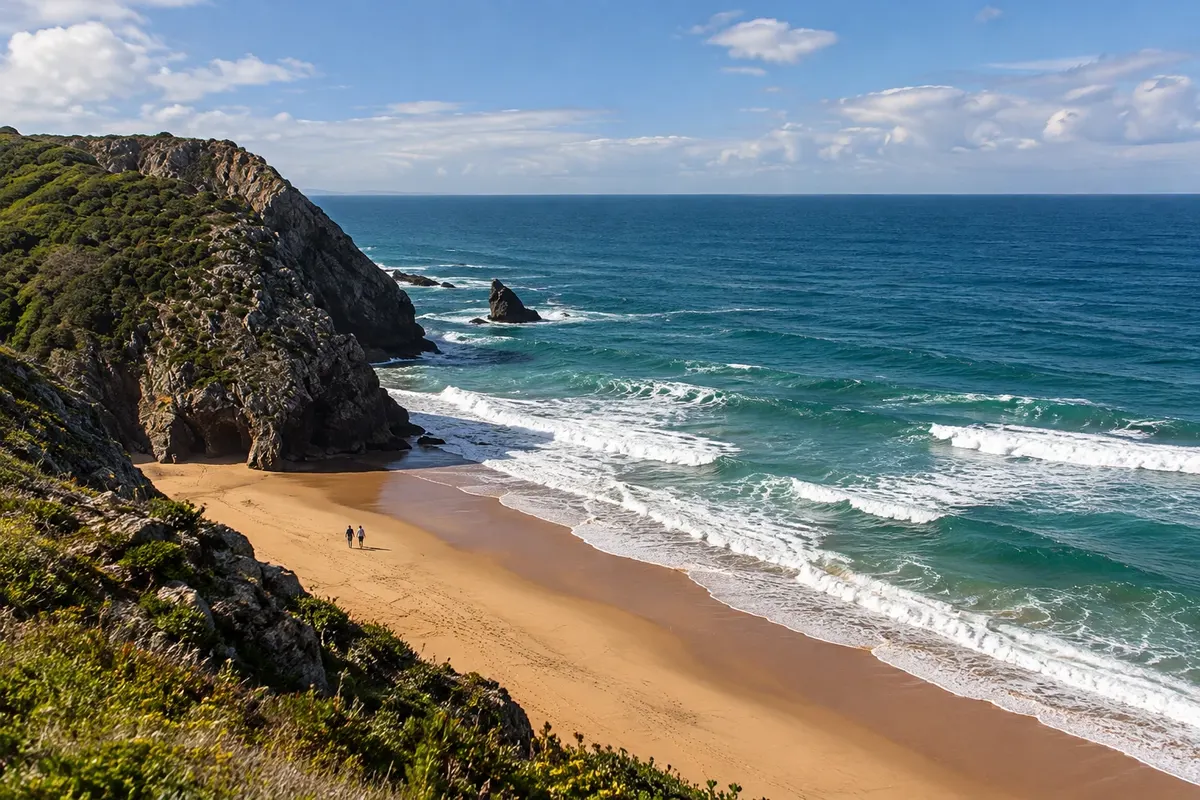
A wide sandy beach with dunes on the Atlantic coast west of Cascais, with the Serra de Sintra in the background. The steady wind and waves make it one of the region's main spots for surfing, windsurfing and kitesurfing.

Cabo da Roca
Sintra · Lisbon · Razgledišče

Cabo da Roca

The westernmost point of continental Europe, with cliffs about 140 meters above the Atlantic, an 18th-century lighthouse and a monument with a verse by Camões.

Estoril and the Casino
Cascais · Lisbon · Neighborhood

Estoril and the Casino

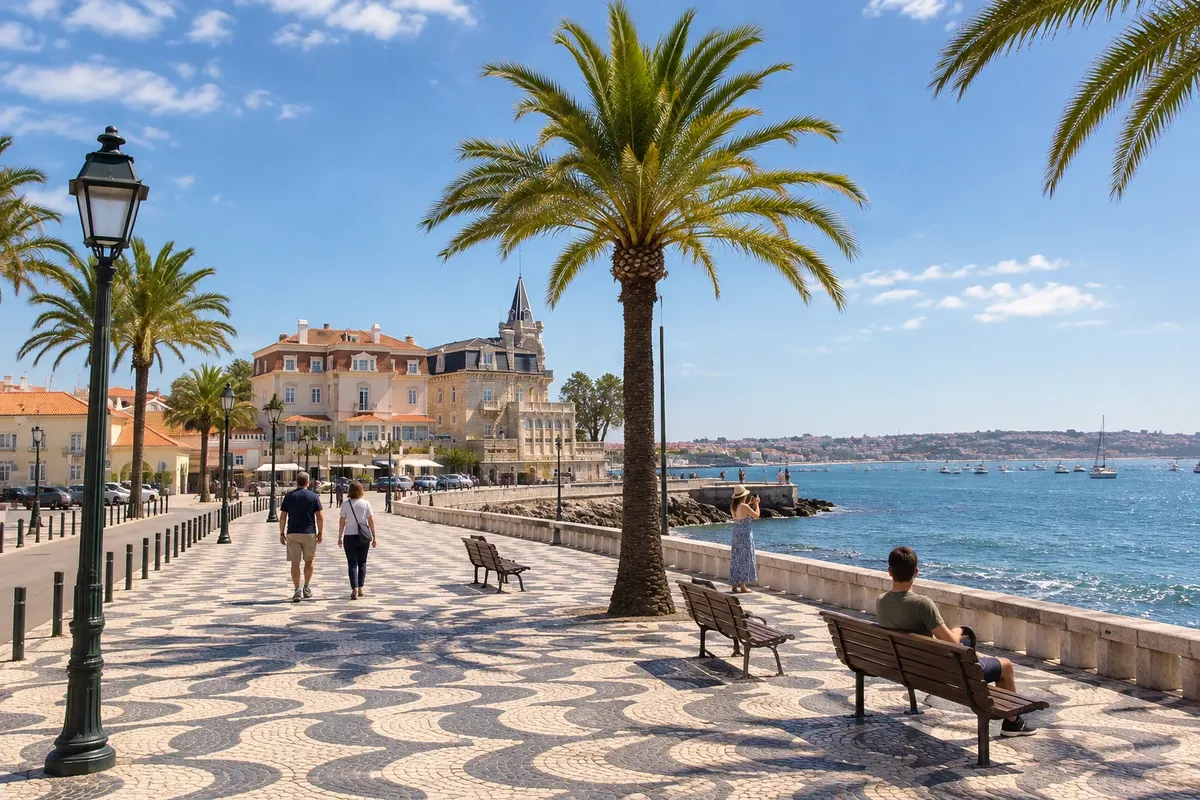
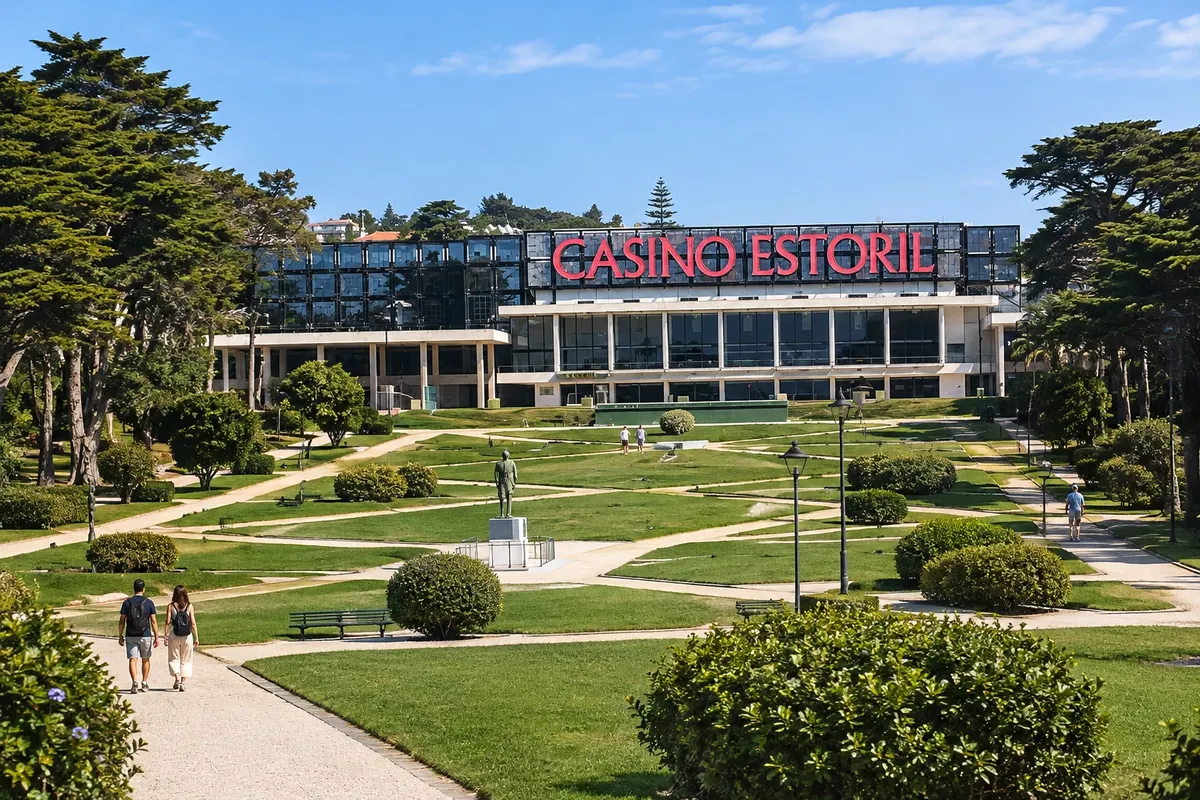
Seaside resort neighbouring Cascais, connected by the seafront promenade, with the Praia do Tamariz, gardens and the Casino Estoril, which inspired Ian Fleming to write the first James Bond novel.

Adraga Beach
Sintra · Lisbon · Plaža

Adraga Beach

Sandy beach between high cliffs on the Sintra coast, with arches and caves carved by the sea, near Almoçageme. It is one of the best-known beaches on the mountain coastline.

Azenhas do Mar
Sintra · Lisbon · Village

Azenhas do Mar

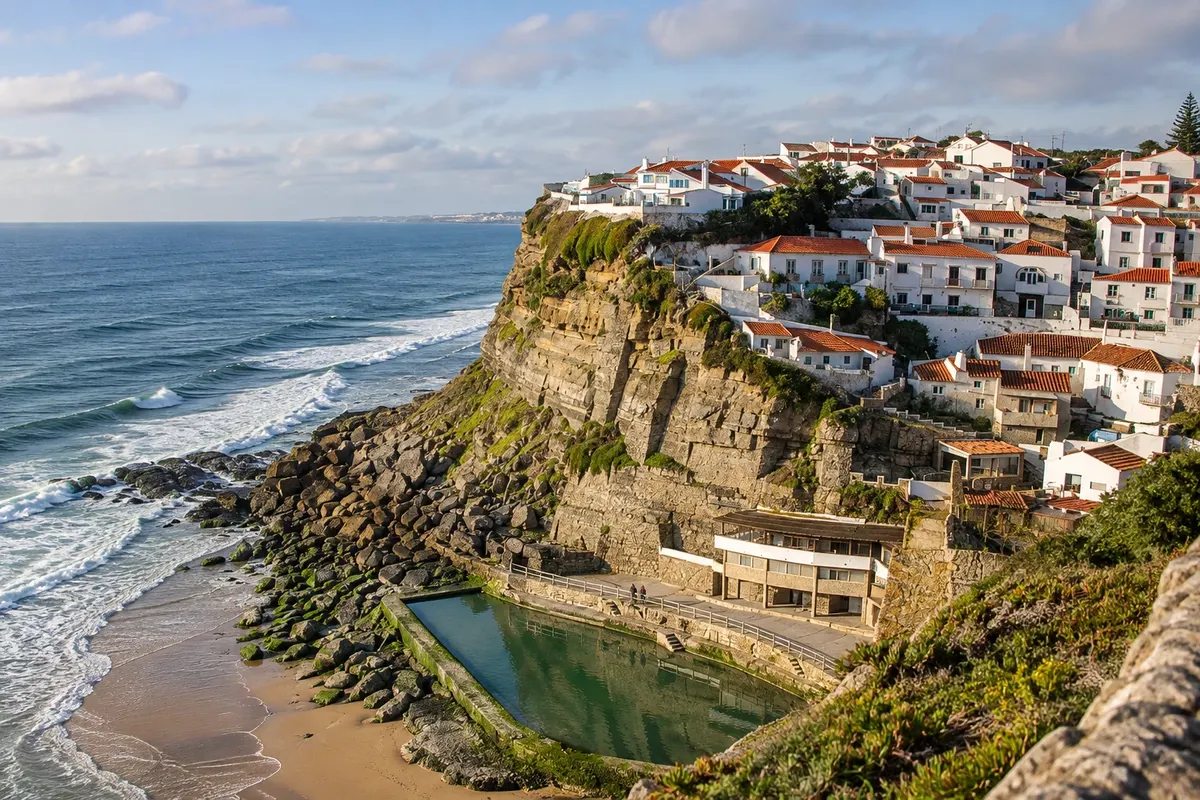
Village of white houses perched on a cliff above the Atlantic, north of Colares, with an ocean pool at the base of the rocks.

Kaj izbrati pred odhodom

Izleti – Sintra and Cascais

Izhodišče, trajanje, potek, vključene storitve in okvirna cena vsakega izleta.

Palácio da Pena and Parque da Pena

Odhod: Sintra station bus 434 and walk about 3 to 4 hours Dopoldne moderate (uphill sections in the park)

Palácio da Pena sits atop the Serra de Sintra and is the region’s iconic landmark. It was created by D. Fernando II, husband of Queen D. Maria II, from a former 16th-century Hieronymite monastery that he bought in 1838. The result is a 19th-century Romantic palace with colorful towers, Moorish-pattern tiles on the façade and Manueline parts of the original monastery, such as the cloister and the chapel. Inside, the visit goes through rooms furnished as in the royal family’s time and the terraces, from which you can see the hills, the Castle of the Moors and, on clear days, the sea. Around it lies the Parque da Pena, about 85 hectares of woodland, lakes and gardens. Allow time for Alto de Santa Catarina, with the bench carved into the rock known as the Queen’s Throne; the Cruz Alta, at 529 meters, the highest point of the Serra de Sintra; the Chalet da Condessa d'Edla, built by the king and his second wife; and the Vale dos Lagos, with five lakes. The mountain range is part of the Cultural Landscape of Sintra, a UNESCO World Heritage Site.

Kraji na poti: Palácio Nacional da Pena, Parque da Pena, Alto de Santa Catarina, Cruz Alta, Chalet da Condessa d'Edla, Vale dos Lagos, Templo das Colunas.

Vključuje: Palace and park tickets (there is also a park-only ticket), paid separately; check the current rates. The bus (autocar) to the entrance is paid separately.

Nasvet: Entry to the palace requires a timed reservation: buy your ticket in advance and arrive at the gate with plenty of time, because there is still an uphill walk from the park entrance to the palace. Start early, before the groups. Bring a jacket: high on the hill it is usually cooler and windier than in central Sintra, and fog can obscure the view.

Najboljši čas za obisk: April to June and September to October; in summer, book ahead and arrive early.

Quinta da Regaleira

Odhod: Sintra historic center on foot (about 10 to 15 minutes from the center) about 2 to 3 hours Dopoldne ali popoldne moderate (stairs and caves)

The complex mixes a palace, chapel, and a hillside garden full of symbols, grottoes, lakes, and towers. The most sought-after feature is the Initiation Well: a spiral staircase that descends about 27 meters into the earth, with overlapping landings, ending in tunnels that lead to grottoes and to a lake with stepping stones. In the palace, in neo-Manueline style, the visit passes through rooms with ornate ceilings and fireplaces; the Chapel of the Holy Trinity has frescoes and a small crypt. The garden has narrow paths, stairways and dark sections, and the route is free: each visitor makes their own. The quinta is run by the Fundação Cultursintra, and is a short walk from the historic center along the road toward Monserrate.

Kraji na poti: Quinta da Regaleira, Palácio da Regaleira, Initiation Well, Chapel of the Holy Trinity, Gruta do Oriente, Regaleira Tower.

Vključuje: Paid admission separately, sold via the quinta’s official channel; check the current price list. There are guided tours on scheduled dates, including at night, also paid separately.

Nasvet: Tickets have timed entry; buy them through the official channel and check the late-tolerance. The queue at the Poço Iniciático grows during the day: go straight there upon arrival. Bring your phone flashlight for the tunnels and footwear with a firm sole, because the rock becomes wet.

Najboljši čas za obisk: All year; in spring and autumn there is less crowding than in summer.

Castle of the Moors

Odhod: Sintra station bus 434 or walking trail around 1 hour and a half Dopoldne ali popoldne moderate (many stairs)

The Castelo dos Mouros is a fortification founded in the 10th century during the Muslim presence on the Iberian Peninsula, on one of the peaks of the Sintra Mountains. The older structures that remain are mainly the walls, which rise and fall between granite blocks following the ridge. The walk is along the battlement path on top of the walls, with irregular stairs and steps. From the top you can see central Sintra, the National Palace of Sintra with its white chimneys, the Pena Palace on the neighboring summit and, in clear weather, the Atlantic. Points along the route include the Royal Tower and the old cistern. It is close to the entrance of the Pena Park and is usually visited the same day. Private cars do not drive up to the access points; go by bus or on foot. Hikers can climb via the Percurso de Santa Maria, about 1.8 km, which starts at São Pedro de Sintra.

Kraji na poti: Castelo dos Mouros, Royal Tower, Percurso de Santa Maria, São Pedro de Sintra.

Vključuje: Admission ticket sold separately, also available online; check the current schedule.

Nasvet: Visit the castle before or after the Pena on the same day: the two sit side by side on the hilltop. Wear sneakers and bring water; the wind on top of the walls is often strong and there are sections without side protection, so take it easy with children.

Najboljši čas za obisk: Spring and autumn; on foggy days the view disappears.

Sintra National Palace and historic center

Odhod: Sintra station on foot (about 15 minutes) or bus 434 about 2½ hours Dopoldne ali popoldne Lahko

The Sintra National Palace, also called the Palace of the Town, is in the historic center and is recognizable from afar by the two white conical kitchen chimneys, 33 meters high. It was the residence of the Portuguese court for several centuries: there are records dating back to the Moorish period, works by D. Dinis and major expansions by D. João I and D. Manuel I. It was in Sintra that D. The visit includes the Swan Room, with 27 swans painted on the ceiling; the Peacock Room, with 136 peacocks; and the Coats of Arms Room, with the coats of arms of 72 noble families on the ceiling. The Palatine Chapel has a wooden ceiling and mudéjar-style ceramic flooring, and the entire palace is covered in Hispano-Moorish tiles. After the visit, the historic center is worth a walk: narrow hilly streets, shops, bakeries with the local sweets like queijadas and travesseiros, and, on the way to the station, the Sintra Town Hall building and the Moorish Fountain.

Kraji na poti: Sintra National Palace, Swan Room, Peacock Room, Coats of Arms Room, Palatine Chapel, Sintra historic center.

Vključuje: Palace ticket paid separately; check the current price list. The return through the historic center is on foot.

Nasvet: Leave the palace for the afternoon if your morning is for Pena: it is in the center and does not depend on buses. Try the queijadas and travesseiros of Sintra at a bakery in the center. The center has hilly streets and stone paving.

Najboljši čas za obisk: All year; a good option for rainy or foggy days in the hills.

Palácio and Gardens of Monserrate

Odhod: Sintra station bus 435 or 1253 about 2 to 3 hours Popoldne Lahka do srednje zahtevna pot

Monserrate lies on the road linking central Sintra to Colares, in a lower, wetter valley than Pena. The palace was transformed in the 19th century by English industrialist and art collector Francis Cook, with a design by architect James Knowles Jr., and blends influences from several places: arches and latticework inspired by the East, a dome and bright rooms. The interior has little furniture; the focus is on stone and stucco decoration. The main reason to visit is the park: themed gardens with species from several continents, such as the Jardim do México, the rose garden, the Vale dos Fetos with tree ferns, and the Jardim do Japão. Along the way you’ll find lakes, waterfalls and ruins, like Beckford’s Waterfall and the Arch of Vathek. The route descends from the gate to the palace and then returns uphill along dirt and stone paths. It usually has fewer visitors than Pena and the Regaleira.

Kraji na poti: Parque and Palácio de Monserrate, Jardim do México, Roseiral, Vale dos Fetos, Jardim do Japão, Cascata de Beckford, Arco de Vathek.

Vključuje: Palace and park tickets paid separately; check the current rates.

Nasvet: Combine it with the Quinta da Regaleira on the same day: both are on the same road and bus 435 serves both. Allow time for the park, which is the main part of the visit. After rain, the dirt paths become slippery.

Najboljši čas za obisk: April to June, when the gardens are in bloom, and September to October.

Cabo da Roca

Odhod: Sintra or Cascais bus or car about 1 hour on site Popoldne Lahko

Cabo da Roca is the westernmost point of continental Europe. It lies between Sintra and Cascais, at the tip of the Sintra Ridge, with cliffs of about 140 meters dropping straight into the Atlantic. The site is open: a plateau of low vegetation, with fenced viewpoints, the 1772 lighthouse and a stone monument with a cross that marks the cape’s position and recalls Camões’s verse about the place where the land ends and the sea begins. There is not much to do besides looking at the sea, taking photos and walking the paths around the lighthouse, but it is a stop that almost every itinerary includes. The road to get there is part of the experience: it climbs from Praia do Guincho through pines and low scrub, or descends from the ridge on the Sintra side. The trail to Praia da Ursa leaves from Cabo da Roca. The wind is often strong and the temperature is lower than in Lisbon, even in summer.

Kraji na poti: Cabo da Roca, Cabo da Roca Lighthouse, Sintra-Cascais Natural Park.

Vključuje: Visit to the site is open, no ticket required. Transport paid separately.

Nasvet: Stay behind the fences and do not approach the cliff edge: the wind is strong and the ground is loose. Bring a jacket even in summer. Late afternoon is the busiest time because of the sunset over the sea; if you come by bus, check the return schedule before you get off.

Najboljši čas za obisk: All year; with clear skies the view reaches farther, and in winter the wind is stronger.

Prikaži dodatne izlete (10)

Cascais town centre and Boca do Inferno

Odhod: Cascais station on foot Približno 3 ure Dopoldne ali popoldne Lahko

Cascais was a fishing village and became a summer resort for the court when King D. Luís I chose it as his summer residence at the end of the 19th century. The walk starts at the train station (comboio), next to Praia da Conceição and Praia da Rainha, and continues along the cobbled streets of the historic centre, with low houses, Portuguese pavement in wave patterns, shops and restaurants. Further on are the Citadel of Cascais, a 16th–17th century fortress that houses the Citadel Museum, and Cascais Marina. Following the seafront westward, about 2 km from the centre, you reach Boca do Inferno: a crack in the cliff rocks where the sea enters and breaks. On calm days the spectacle is small; with a rough sea the waves rise high. There are fenced viewpoints, and the coastal walk takes about 20 minutes from the centre. Cascais has a seaside town pace, and is a good base for anyone who wants to sleep near the sea and go to Sintra by bus.

Kraji na poti: historic centre of Cascais, Praia da Conceição, Citadel of Cascais, Cascais Marina, Boca do Inferno.

Vključuje: Walking tour of the center and the coast; museums with separate admission fees.

Nasvet: At Boca do Inferno, stay on the fenced viewpoints and away from wet rocks. The coastal path to there is the start of the Guincho bike path, so you can link the two outings.

Najboljši čas za obisk: All year; May to October for the central beaches.

Cascais–Guincho cycleway and Praia do Guincho

Odhod: Cascais town centre bike, on foot or bus about 3 to 4 hours (round trip) Dopoldne easy to moderate (headwind)

The cycleway that links Cascais to Praia do Guincho is about 9 km. It starts next to the Farol de Santa Marta, near the marina, and follows the seafront, passing Boca do Inferno and a low-rock coastline with the Serra de Sintra in the background. It is flat for most of the route, but the wind often blows strongly head-on on the outbound or return leg. At the end, Praia do Guincho is a long beach, open to the Atlantic and surrounded by dunes, inside the Sintra-Cascais Natural Park. Because of the wind and waves it is a well-known spot for surfing, windsurfing and kitesurfing, and the sea is often rough for swimming. Beside it is the Duna da Cresmina, with a wooden boardwalk of about 1 km that crosses the dunes and explains the vegetation. Those who do not cycle can do sections on foot or take a bus to Guincho and return via the cycleway.

Kraji na poti: Cascais–Guincho cycleway, Farol de Santa Marta, Boca do Inferno, Praia do Guincho, Duna da Cresmina.

Vključuje: Cycle lane is open. Bicycle rental, when used, is paid separately; Cascais municipality has a bike system with docking points in the centre (check the rules).

Nasvet: Start in the morning, when the wind is usually weaker. Bring water, sunscreen and a windbreaker. At Guincho, respect the lifeguards' flags and enter the sea only in a supervised area.

Najboljši čas za obisk: May to October; in winter the wind and cold are stronger.

Convento dos Capuchos

Odhod: Sintra car, taxi or bus around 1 hour and a half Dopoldne ali popoldne easy (low doorways)

The Convento dos Capuchos lies isolated in the middle of the Serra de Sintra forest, on the route between Sintra and Cabo da Roca. It was founded in 1560 by D. Álvaro de Castro and handed over to Franciscan friars who lived in extreme poverty. The convent is small and was built among the rocks, with tiny cells, doors so low you must stoop, and narrow corridors. Cork was used to line doors, ceilings and walls, which is why it is also called the Convento da Cortiça. The visit follows the entrance courtyard, the chapel, the refectory, the kitchen and the Corridor of the Cells, and ends in the surrounding woods, with moss-covered rocks. It is the opposite of the mountain palaces: silence, stone and wood. It is part of the Cultural Landscape of Sintra, a UNESCO World Heritage Site.

Kraji na poti: Convento dos Capuchos, Corridor of the Cells, Serra de Sintra.

Vključuje: Admission fee not included; check the current price list.

Nasvet: The bus there usually has few departures: by car or taxi the outing is simpler, and it pairs well with Cabo da Roca on the same day. Tall people and those with knee problems should take care in low-clearance passages.

Najboljši čas za obisk: Open year-round; there is less crowding in spring and autumn and the woods become greener.

Praia da Ursa, Praia da Adraga and Azenhas do Mar

Odhod: Sintra car (the bus serves only part of the route) full day morning and afternoon difficult at Ursa; easy at the others

The coast of Sintra north of Cabo da Roca has high cliffs and small beaches between rocks. Praia da Ursa is the most photographed: its name comes from a rock formation shaped like a bear. Access is via a steep dirt trail that descends the cliff from a parking area near Cabo da Roca; the return climb is tiring. Praia da Adraga, further north, has road access down to the sand, stone arches and caves, and is popular for watching the sunset. Continuing north past Colares brings you to Azenhas do Mar, a village of white houses on the cliff, with a viewpoint offering a full view of the village. Below there is an ocean pool that fills with the tide; swimming depends on sea conditions and local permission. Between Ursa and Adraga there is also a coastal trail for those who like to hike. The sea on this coast is open and cold, even in summer.

Kraji na poti: Praia da Ursa, Praia da Adraga, Azenhas do Mar, Colares.

Vključuje: Access to the beaches open. Parking and restaurants are paid separately.

Nasvet: Do not descend to Praia da Ursa wearing flip-flops or in the rain: the path is loose dirt and very steep. Enter the sea only in a lifeguarded area with a green flag. In Azenhas do Mar, the viewpoint is on the road before the descent to the village.

Najboljši čas za obisk: June to September for the beach; spring and autumn for walking and photography.

Cascais–Estoril promenade and Estoril Casino

Odhod: Cascais or Estoril station on foot Približno 2 uri Popoldne Lahko

The paredão is a seaside promenade about 2.7 km long, between Praia da Conceição in Cascais and Praia da Azarujinha in Estoril. On one side are small sandy beaches; on the other, restaurants, bars and buildings facing the sea. It’s where locals walk and run, and the simplest way to go from Cascais to Estoril without taking transport. Midway is Praia do Tamariz, opposite the Jardim do Casino, an avenue of palm trees that rises to Casino Estoril. Estoril was a refuge for exiled royal families and a meeting point for diplomats and spies during World War II; the casino is linked to the creation of Ian Fleming’s first James Bond novel. Today the casino operates with gaming rooms, shows and restaurants, and the garden in front is open to visitors. The train (comboio) from Lisbon stops at several stations along the paredão, so you can walk one way and return by train.

Kraji na poti: Cascais–Estoril promenade, Praia da Conceição, Praia da Azarujinha, Praia do Tamariz, Estoril, Casino Estoril, Jardim do Casino.

Vključuje: Outdoor walking tour. Casino entry subject to the house rules (ID and minimum age).

Nasvet: Do the route in the late afternoon, when the sun is lower; at midday there is no shade. Casino entry requires photo ID and has a minimum age: bring your passport if you want to enter.

Najboljši čas za obisk: All year; May to October to combine with the beach.

Casa das Histórias Paula Rego and Cascais museums

Odhod: Cascais town centre on foot about 2 to 3 hours Dopoldne ali popoldne Lahko

Cascais brings together several museums a few minutes’ walk from each other in the so-called Museum Quarter. The best known is the Casa das Histórias Paula Rego, dedicated to the work of Portuguese painter Paula Rego, with paintings and drawings from the collection and temporary exhibitions. The building, by architect Eduardo Souto de Moura, has two pyramid-shaped towers in a reddish color and is worth visiting even from the outside. Nearby are the Museu Condes de Castro Guimarães, a late 19th-century summer house by a small cove with a library, furniture and azulejos; the Farol Museu de Santa Marta, a lighthouse still in use with a small museum about the lighthouses on the Portuguese coast; and Parque Marechal Carmona, a shaded garden with a lake and children’s areas. The Cascais Citadel completes the circuit. It’s a good choice for a rainy day or for those who want a break from the beaches.

Kraji na poti: Casa das Histórias Paula Rego, Museum Quarter, Museu Condes de Castro Guimarães, Farol Museu de Santa Marta, Parque Marechal Carmona, Cascais Citadel.

Vključuje: Museum tickets paid separately, per museum; check the current schedule and closing days.

Nasvet: Check the weekly closing days before you go, because they vary from museum to museum. Casa das Histórias Paula Rego is at the start of the route to the Guincho bike path and to Boca do Inferno.

Najboljši čas za obisk: All year; a good option for the rainy months, from November to February.

Sintra Mountains trail: Peninha and Cruz Alta

Odhod: Sintra on foot (car or taxi access up to the start) about 4 to 6 hours Ves dan moderate to difficult (long climbs)

The Sintra mountain range is cut by trails through pine, oak and fern woods, with granite outcrops and viewpoints over the coast. Two summits draw walkers. Cruz Alta, at 529 meters, is the highest point of the range and lies within Parque da Pena, with views of the Palácio da Pena, the Castle of the Moors and, on clear days, Lisbon and the sea. The Santuário da Peninha, at 488 meters, sits further west, near the Convento dos Capuchos: an old hermitage and a small palace from the early 20th century on a rock outcrop, from which you can see the coast from Cabo Espichel to Ericeira on very clear days. The trails linking these points have long climbs and sections of loose rock, and waymarking is not always continuous. A shorter option is the Percurso de Santa Maria, about 1.8 km, from Sintra town center to the Castle of the Moors. For longer routes, go with a map or a trail app downloaded to your phone, or with a local guide.

Kraji na poti: Serra de Sintra, Santuário da Peninha, Cruz Alta, Parque da Pena, Percurso de Santa Maria.

Vključuje: Hike along the open trails. Cruz Alta lies within Parque da Pena, with a separate paid entrance; check the current fee table.

Nasvet: Bring water, snacks, a jacket and hiking footwear: mountain weather changes quickly and fog can arrive in the afternoon. Tell someone your route and download the map beforehand, because cell signal fails in some valleys.

Najboljši čas za obisk: March to June and September to November; in summer, start early.

Sintra Electric Tram and Praia das Maçãs

Odhod: Sintra (Estefânea) historic tram Približno pol dneva Popoldne Lahko

The Sintra Electric Tram is a historic tram that links the newer part of Sintra to Praia das Maçãs, on a roughly 11 km route that takes about 45 minutes. The cars are old, open or closed, and the line passes quintas, vineyards and woods, with the mountain range on one side and the Colares plain on the other. Praia das Maçãs is an easily accessible beach with restaurants, bars and a seawater pool, and it is commonly chosen by families. Nearby is Praia Grande, with a wide sandy shore and waves, known for surf and bodyboard competitions. The Colares region is known for vineyards planted on sand, a landscape you can see from the tram window. The ride is a break from the palaces and a different way to reach the sea from Sintra.

Kraji na poti: Sintra Electric Tram, Praia das Maçãs, Colares, Praia Grande.

Vključuje: Tram ticket paid separately, purchased on board; check the current price list.

Nasvet: The tram does not operate year-round and has few departures per day: check the calendar and schedules before you go. If you miss the return, there are buses between Praia das Maçãs and Sintra.

Najboljši čas za obisk: The season usually runs from spring to autumn; for beachgoing, from June to September.

Palácio Nacional de Queluz

Odhod: Lisbon (Rossio) or Sintra Sintra Line train and walk about 2 to 3 hours Dopoldne ali popoldne Lahko

The Queluz National Palace is located between Lisbon and Sintra, on the Sintra Line, and is a standalone stop on the mountain circuit. It was a country house that the infante D. Pedro, later D. Pedro III, turned into a summer palace starting in 1747; he married his niece, who would become Queen D. Maria I, and the palace became a royal residence. Pedro IV of Portugal, the D. Quixote Room, decorated with scenes from Cervantes’ book. The visit includes the Throne Room, with mirrors, gilding and chandeliers, and rooms in the rococo style. The gardens, in French style, have statues, lakes and the Tile Canal, a canal lined with blue panels where the royal family used to boat. It is about 15 minutes by train from Lisbon, and pairs well with a trip to or from Sintra.

Kraji na poti: Queluz National Palace, Queluz Gardens, Throne Room, D. Quixote Room, Tile Canal.

Vključuje: Admission to the palace and gardens paid separately; check the current price list.

Nasvet: Get off at Queluz-Belas station and walk to the palace following the signs. It’s a good stop on the way back from Sintra to Lisbon, or for a rainy day when the hills are clouded over.

Najboljši čas za obisk: All year; April to June for the gardens.

Palácio Nacional de Mafra

Odhod: Lisbon or Sintra bus or car full day including travel morning and afternoon Lahko

Mafra is about 40 km north of Lisbon and works well as a day trip for those spending more days in the region. The Palácio Nacional de Mafra was commissioned by D. João V in the 18th century and combines, in a single building, a palace, basilica and convent, across an area of about 40,000 square meters, where roughly 300 Franciscan friars once lived. The basilica, at the center of the façade, has six historic organs, and the towers house two carillons with 98 bells in total. The library, with nearly 36,000 volumes, is the most famous room of the complex. The visit includes long corridors, the royal family’s apartments and the friars’ infirmary. The complex is a UNESCO World Heritage Site. Next to it is the Tapada Nacional de Mafra, the court’s former hunting ground, with trails and animals. The town of Mafra is close to Ericeira, a fishing and surfing village, and the two places are often combined in the same day.

Kraji na poti: Palácio Nacional de Mafra, Basílica de Mafra, Biblioteca do Palácio de Mafra, Tapada Nacional de Mafra.

Vključuje: Palace ticket paid separately; the Tapada has its own admission. Check the current price list and closing days.

Nasvet: The palace is closed one day a week, and the library and the basilica have separate opening hours: check before you go. By car, the route from Lisbon is via the A8 and then the A21. By public transport, there are buses from Lisbon (Campo Grande) and from Sintra (Portela de Sintra).

Najboljši čas za obisk: All year; a good option for rainy days.

Po dnevih

Sintra and Cascais – načrt poti. Število dni: 2, 3in5

Predlogi za načrtovanje poti. Vrstni red dni prilagodite vremenu in razpoložljivosti izletov.

2 dni · Sintra in 2 days: palaces of the hills

ZaFor those in Lisbon who want to spend two days just in Sintra, using train and buses, without a car. · Izhodišče:Lisbon (train from Rossio) or Sintra
  1. Dan 1 · Palácio da Pena and Castelo dos Mouros

    Take one of the earliest trains from Rossio to Sintra (about 40 to 45 minutes) and, at the station, the 434 bus to the entrance of Parque da Pena. Visit the Palácio da Pena at your reserved time and then walk through Parque da Pena to Alto de Santa Catarina or Cruz Alta. In the afternoon, do the Castelo dos Mouros next door and descend by bus or on foot to Sintra’s historic center. Try the queijadas and travesseiros at a pastry shop before catching the train back.

  2. Dan 2 · Regaleira, Palácio Nacional and Monserrate

    Start at Quinta da Regaleira, a 10 to 15 minute walk from the center, and go straight to the Initiation Well before the line grows. Have lunch in the historic center and visit the Palácio Nacional de Sintra, with the Sala dos Cisnes and the Sala dos Brasões. In the mid-afternoon, take the 435 bus to the Palácio and Gardens of Monserrate and allow time for the park. Return to Sintra station by bus. If you have energy left, stop at the Palácio Nacional de Queluz on the way back to Lisbon on another day.

3 dni · Cascais and Sintra in 3 days, arriving from Brazil
ZaIf you arrive from Brazil to Lisbon and want to stay near the sea, with Sintra and the coast reachable by bus and train. · Izhodišče:Cascais
  1. Dan 1 · Arrival and Cascais center

    The overnight flight from Brazil usually arrives in Lisbon in the morning. From the airport, take the metro to Cais do Sodré and catch the train (comboio) to Cascais, about 40 minutes along the Tagus and the sea. Drop your bags and take a light day: Cascais center and Boca do Inferno on foot, with a stop at Praia da Conceição. In the late afternoon, walk the Cascais–Estoril promenade to Jardim do Casino and return by train. Sleep early to beat the jet lag.

  2. Dan 2 · Sintra: Pena, Castelo dos Mouros and Regaleira

    Take the bus from Cascais to Sintra in the morning and, at Sintra station, the 434 bus. Do the Palácio da Pena and Parque da Pena with a reserved time and the Castelo dos Mouros afterward. Descend to the historic center for lunch and, in the afternoon, visit Quinta da Regaleira. If time allows, stop by the façade of the Palácio Nacional de Sintra before returning to Cascais by bus.

  3. Dan 3 · Cabo da Roca, Guincho and the coast

    In the morning, do the Cascais–Guincho cycleway by bicycle or part of it on foot, up to Praia do Guincho and the Duna da Cresmina. From Guincho, continue by bus or taxi to Cabo da Roca to see the lighthouse and the cliffs. In the afternoon, return to Cascais and visit the Casa das Histórias Paula Rego or another museum in the Museum Quarter. Finish with the sunset at Cascais’ seaside.

5 dni · Sintra, Cascais and the coast in 5 days
ZaFor those who want to explore the palaces and the coast of Sintra and Cascais at a relaxed pace, with one day by car for the beaches and the Convento dos Capuchos. · Izhodišče:Sintra (3 nights) and Cascais (2 nights)
  1. Dan 1 · Arrival and Palácio Nacional de Sintra

    The flight from Brazil usually lands in Lisbon in the morning. From the airport, take the metro to Oriente station, where you can catch the direct train to Sintra (about 50 minutes). After dropping your bags, do a light program: the Palácio Nacional de Sintra and a walk around Sintra’s historic center, without going up the hills. Sleep early.

  2. Dan 2 · Palácio da Pena and Castelo dos Mouros

    Go up early with the 434 bus to the Palácio da Pena and Parque da Pena, with a reserved time. After the palace, walk through the park to Cruz Alta, the highest point of the hills, and the Chalet da Condessa d'Edla. In the afternoon, visit the Castelo dos Mouros and walk down via the Percurso de Santa Maria to the center.

  3. Dan 3 · Quinta da Regaleira and Monserrate

    In the morning, Quinta da Regaleira, on foot from the center. In the afternoon, Monserrate Palace and Gardens, by bus, with time for the gardens. If the day is nice and the tram is running, swap Monserrate for the Sintra Tram to Praia das Maçãs.

  4. Dan 4 · Capuchos, Sintra beaches and Cabo da Roca

    Rent a car for a day or hire a taxi. Start at the Convento dos Capuchos, in the mountain forest. Descend to Colares and continue to Azenhas do Mar, Praia da Adraga and, for those willing to tackle the steep trail, Praia da Ursa. Finish at Cabo da Roca and follow the coastal road, passing Guincho, to Cascais, where the new base is located.

  5. Dan 5 · Cascais, Guincho and Estoril

    Do the Cascais–Guincho bike path in the morning, by bike or partly on foot, passing Boca do Inferno. In the afternoon, explore downtown Cascais and a museum in the Museum Quarter, such as Casa das Histórias Paula Rego. At dusk, walk the Cascais–Estoril promenade to Casino Estoril. If you have more days, the National Palace of Mafra and the National Palace of Queluz make good day trips.

Najboljši čas za obisk

Kdaj se odpraviti:Sintra and Cascais po mesecih

From April to June and in September and October the weather is usually pleasant for walking in the hills. In the European summer, from June to August, Cascais has a beach season and Sintra becomes very crowded. From November to March it rains more, and mist in the hills is common; bring a coat at any time of year.

The seasons shown are the most usual ones; nature doesn't always follow the calendar.

januar Veliko padavin

Winter · Damp cold

On average, highs are around 14 °C and lows near 5 °C in the Sintra region, with rain on about half the days. In the hills, fog and cold winds are common. It's the least touristy month: short lines at Pena and Regaleira, but short days and muddy trails. Bring a waterproof jacket and plan palaces and museums for rainy days.

februar Veliko padavin

Winter · Quiet

Still winter, with average highs around 15 °C and lows near 6 °C. Rain remains frequent and the hills are often overcast. Palace attendance is low, which makes booking easier. On the beaches, stick to walks. In Cascais, the seaside promenade and museums work well as winter activities.

marec Zmerne padavine

Spring arriving · Longer days

Spring starts at the end of the month and days get longer. Average highs rise to about 17 °C and rain decreases, though it still occurs. The gardens of Monserrate and Pena begin to flower. Visitor levels are still moderate, and it's a good time for trails in the hills.

april Zmerne padavine

Spring · Flowering gardens

Spring, with average highs around 17–18 °C and lows near 8 °C. It still rains on some days and the hills alternate between sun and fog. The gardens of Pena, Monserrate and Queluz are in bloom. Crowds increase over the Easter holidays: book a time slot at Pena in advance. A good month for walking along the coast.

maj Zmerne padavine

Spring · Stable weather

Late spring, with average highs around 19 °C and less rain. Days are long and the weather usually settles by the end of the month. It’s a balanced time to combine palaces, hikes and the Guincho bike path. The sea is still cold for swimming. Activity increases on weekends.

junij Malo padavin

Early summer · More tourists

The European summer begins. Average highs are around 22 °C in Sintra and higher in Lisbon; rain is rare. The beach season usually starts this month, with lifeguards on supervised beaches. Still, the hills and Cabo da Roca can have mist and wind in the mornings. Activity increases: buy tickets in advance and arrive early at the palaces.

julij Malo padavin

Summer · High season

High season. On average highs are about 25 °C in Sintra and around 28 °C in Lisbon, with almost no rain. The hills remain cooler and are sometimes foggy in the morning. The palaces have lines and traffic in central Sintra is heavy: prefer train and bus. Guincho often has strong wind, and the sea water remains cold. Book everything in advance.

avgust Malo padavin

Summer · Crowded beaches

The hottest month, with average highs around 25 °C in Sintra and about 29 °C in Lisbon. Hardly any rain. It’s the European holiday period, with Cascais and Estoril beaches crowded and long lines at Pena and Regaleira. Start the day early, leave the beach for the afternoon and bring a jacket for the end of the day at Cabo da Roca.

september Malo padavin

Late summer · More pleasant sea

Summer ends at the end of the month. Average highs are around 24 °C in Sintra and rain returns gradually. Activity decreases after the European holidays, and it’s still possible to combine beach and palaces. The supervised beach season usually runs until September. It’s one of the most popular months for those wanting to avoid the July and August lines.

oktober Veliko padavin

Autumn · Return of the rain

Autumn, with average highs around 21 °C and more frequent rain. The mountains become damp and foggy again, and trails can be muddy. Visitor numbers drop considerably. Bring an umbrella and a light jacket.

november Veliko padavin

Autumn · Short days

One of the rainiest months, with average highs around 17 °C and lows near 9 °C. Days are short and the mountains are overcast much of the time. The palaces are empty, which works for those who don't mind rain. Concentrate outdoor activities on sunny days and save museums and the National Palace of Sintra for cloudy days.

december Veliko padavin

Winter · Christmas

Winter begins, with average highs around 15 °C and lows near 7 °C. It is the rainiest month in the Sintra region. Cascais and Sintra have Christmas decorations and events, and visitor numbers rise over the year-end holidays. Days are the shortest of the year: start mountain outings early and bring waterproof clothing.

Načrtujte pot

Kako do tja:Sintra and Cascais

From Lisbon to Sintra by train

The Sintra Line urban train (comboio) departs Rossio station in central Lisbon and reaches Sintra station in about 40 to 45 minutes. Trains run frequently throughout the day, every day. There are also direct trains to Sintra from Oriente station, about 50 minutes, which is useful for those coming from the airport (metro to Oriente). The same trains stop at Queluz-Belas, for the National Palace of Queluz. Buy tickets at station machines or ticket offices and load them onto a rechargeable transport card. From Sintra station to the historic center is about a 15‑minute walk.

From Lisbon to Cascais and Estoril by train

The Cascais Line train departs from Cais do Sodré station in Lisbon and runs along the Tagus riverside and then the coast, with about 25 km of track. The trip to Cascais takes 33 to 45 minutes, depending on whether the train stops at all stations; to Estoril, about 30 minutes. On the way are beach stations such as Carcavelos and São Pedro do Estoril. Check the destination board to see if the train goes to Cascais, because some terminate earlier in Oeiras. The ticket works like the Sintra Line, using a rechargeable transport card. From the airport, take the metro to Cais do Sodré.

Z avtom

From Lisbon to Sintra the main road is the IC19; from Cascais to Sintra, the EN9 or the A5. From Lisbon to Cascais, the A5 (Autoestrada da Costa do Estoril) is about 25 km and has toll plazas (portagem). The coastal road between Cascais and Sintra, via Praia do Guincho and Cabo da Roca, is the N247. For Mafra from Lisbon, take the A8 and then the A21. A car helps for coastal outings (Capuchos, Praia da Ursa, Adraga, Azenhas do Mar), but hinders in central Sintra: the historic center has restricted traffic, the hill roads are one‑way and narrow, and Estrada da Pena can be closed to cars in high season. Use the signed parking lots at the village entrance and go up by bus.

How to get around Sintra and Cascais

In Sintra, bus (autocarro) 434 runs a one-way circuit from the station: historic center, Moorish Castle and Pena Palace, returning to the center. The 435 links the station to the National Palace of Sintra, Quinta da Regaleira and Monserrate. There is a one-day ticket for these tourist lines. A Carris Metropolitana line also goes past Monserrate and reaches the Capuchos, with fewer departures. Between Sintra, Cabo da Roca and Cascais there are direct buses and a coastal route; check the line number and schedules before you leave. In Cascais, the center, Boca do Inferno and the promenade are walkable, and the municipal bikes are available. The Sintra Eléctrico, a historic tram (eléctrico), runs from Sintra to Praia das Maçãs during its operating period. Taxis and ride‑hail apps also serve the area, but traffic in the hills is slow on busy days.

Palace tickets and reservations

The palaces and parks of the sierra (Palácio da Pena, Castelo dos Mouros, Palácio Nacional de Sintra, Monserrate, Convento dos Capuchos and Palácio Nacional de Queluz) are managed by the public company Parques de Sintra, and each has its own ticket, paid separately, sold online. Entry to Palácio da Pena requires a timed reservation; in summer time slots sell out, so buy in advance. Quinta da Regaleira has its own management and ticketing, also with timed entry. Palácio Nacional de Mafra and the museums in Cascais charge separate admission. Cabo da Roca, the viewpoints, the beaches and the sea wall are open access. Check the current schedule and closure days before you go.

Pred odhodom

Praktične informacije

Z nekaj načrtovanja boste imeli več časa za uživanje na poti.

Kdaj se odpraviti

From April to June and in September and October the weather is usually pleasant for walking in the hills. In the European summer, from June to August, Cascais has a beach season and Sintra becomes very crowded. From November to March it rains more, and mist in the hills is common; bring a coat at any time of year.

The seasons shown are the most usual ones; nature doesn't always follow the calendar.

Koliko dni ostati

One day in Sintra is enough for two palaces and the town centre; two days allow you to see the Pena, the Castelo dos Mouros, the Regaleira, Monserrate and the Cabo da Roca. Cascais needs one day for the town, the Boca do Inferno and the Guincho. For both places, three days is ideal.

V katerem mestu prenočiti

Many people stay in Lisboa and make day trips. In Sintra, the historic centre near the Palácio Nacional puts the Regaleira and the buses up to the Pena within reach; the quintas in the hills are more isolated. In Cascais, the centre and the bay have restaurants and the train station. The Estoril, a few kilometres away, has seafront hotels on the promenade.

Spoštujte kraj

Odnesite svoje odpadke, upoštevajte oznake in podprite lokalne ponudnike. V naravi upoštevajte navodila za obiskovalce.

Odgovori na vaša vprašanja

Pogosta vprašanja – Sintra and Cascais

Can you visit Sintra and Cascais on a day trip from Lisboa?

Yes. The train takes about 40 minutes from Lisboa to each. Each town warrants a full day; doing both in the same day is possible by car or on an organized tour, but it will be rushed.

Can you go from Sintra to Cascais without returning to Lisboa?

Yes. There are buses linking Sintra to Cascais via the coastal road, passing near the Cabo da Roca, and by car the route over the hills takes less than an hour.

Do you need a car in Sintra and Cascais?

No. The train reaches both, and in Sintra buses run up to the hilltop palaces. Traffic in Sintra's historic centre and on the road up to the Palácio da Pena is regulated, and parking is difficult.

Do you need to buy tickets in advance for the palaces of Sintra?

It is recommended, especially for the Palácio da Pena, which uses timed-entry tickets. In the European summer the queues are usually long.

What is the best time to go?

Spring and autumn usually have mild weather. In the European summer Sintra gets very crowded and Cascais is in beach season. In winter it rains more and mist is common in the hills.

Odkrijte druge destinacije Iskanje po zvezni državi in mestu

Več kot vodnik