Ponte Coberta Armindo Lauffer
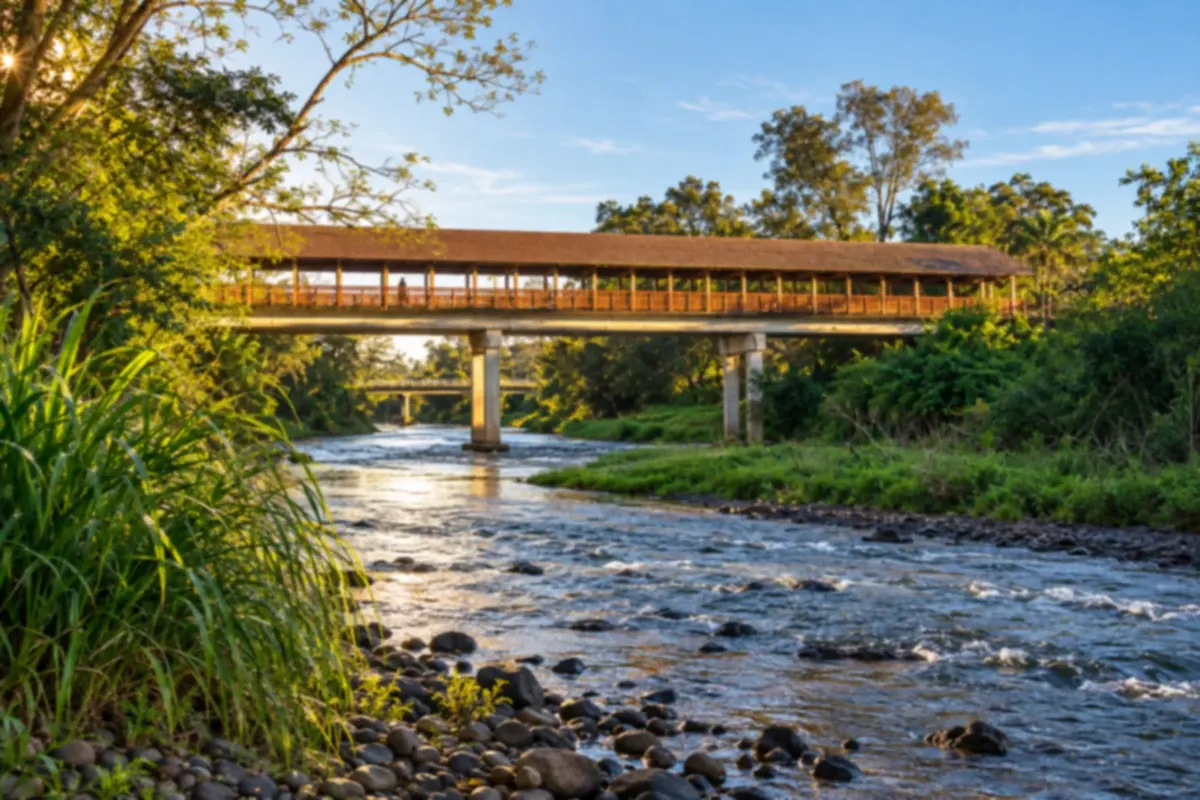
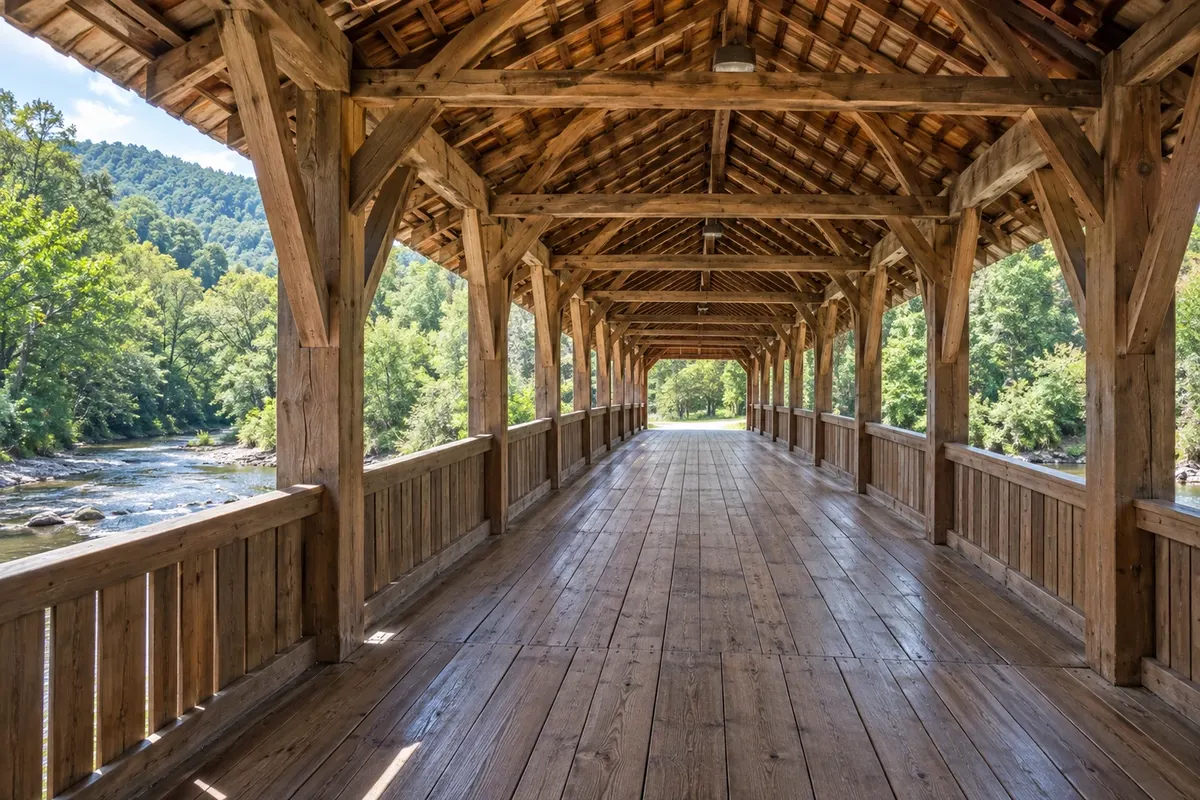
About 70 meters long, the covered bridge crosses the Rio Paranhana and draws on German building traditions. It's one-way for vehicles and gets special lighting at night.
Raziščite Ponte Coberta Armindo Lauffer
Antarktika
Rio Grande do Sul · Brazilija
Destinacija: Serra Gaúcha.
Illustrative images. The pictures in this guide are illustrations based on the real place, not photographs, and may differ from it.
Mesto
Três Coroas lies in the Vale do Paranhana, among rivers and hills near Serra Gaúcha. You can stroll along the riverbanks, see the covered bridge and enjoy outdoor activities in the surrounding area.
Três Coroas lies in the Vale do Paranhana, Rio Grande do Sul, at the foot of the Serra Gaúcha. It’s about 92 km from Porto Alegre and roughly 25 km from Gramado on RS-115, the road that climbs from Taquara to the highlands. The town occupies the valley floor at low altitude, on the banks of the Rio Paranhana and surrounded by forested hills. It has about 25,000 inhabitants and is mainly known for the footwear industry.
The name comes from a tree: an araucária with three crowns that once stood in the valley and served as a landmark for travelers. Colonization began in 1846 with Colônia de Santa Maria do Mundo Novo; German immigrants arrived from 1854 and Italians from 1875 onward. The place was a district of Taquara and became a municipality in 1959.
Two reasons bring most visitors, and they could not be more different. The first is on a hill: Chagdud Gonpa Khadro Ling, a Tibetan Buddhist center founded in 1995, with temple, statues, stupas and prayer wheels painted in vivid colors amid the gaúcha forest. The second is on the river: Paranhana rapids have made Três Coroas a destination for rafting and canoeing. Parque Municipal das Laranjeiras hosted a world slalom canoeing championship in 1997 and later continental events, and three adventure parks offer guided raft descents.
The center is small and can be seen quickly. The Armindo Lauffer Covered Bridge, about 70 meters long, crosses the Rio Paranhana one-way and is lit at night. Nearby, Praça Francisco Leal has decks over the river, and Praça Affonso Saul is bordered by a covered street shaped like an L. A manor from 1856 houses the city museum.
The temple and the parks are outside the urban area on rural roads. Almost everyone visits Três Coroas as a day trip from Gramado, Canela or Porto Alegre, but those who come by the river find camping, chalets and inns in the parks themselves and in the countryside.
The warmest months, from October to April, are the most sought for rafting because of water temperature. The temple is open to visitors year-round on certain days of the week. In May the city celebrates its anniversary with Três Coroas em Festa, and in November Parque das Laranjeiras hosts the Canoeing Festival.
Três Coroas – število nastanitev: 54.
Três Coroas – število lokalov: 16.
Doživite kraj
About 70 meters long, the covered bridge crosses the Rio Paranhana and draws on German building traditions. It's one-way for vehicles and gets special lighting at night.
Raziščite Ponte Coberta Armindo Lauffer
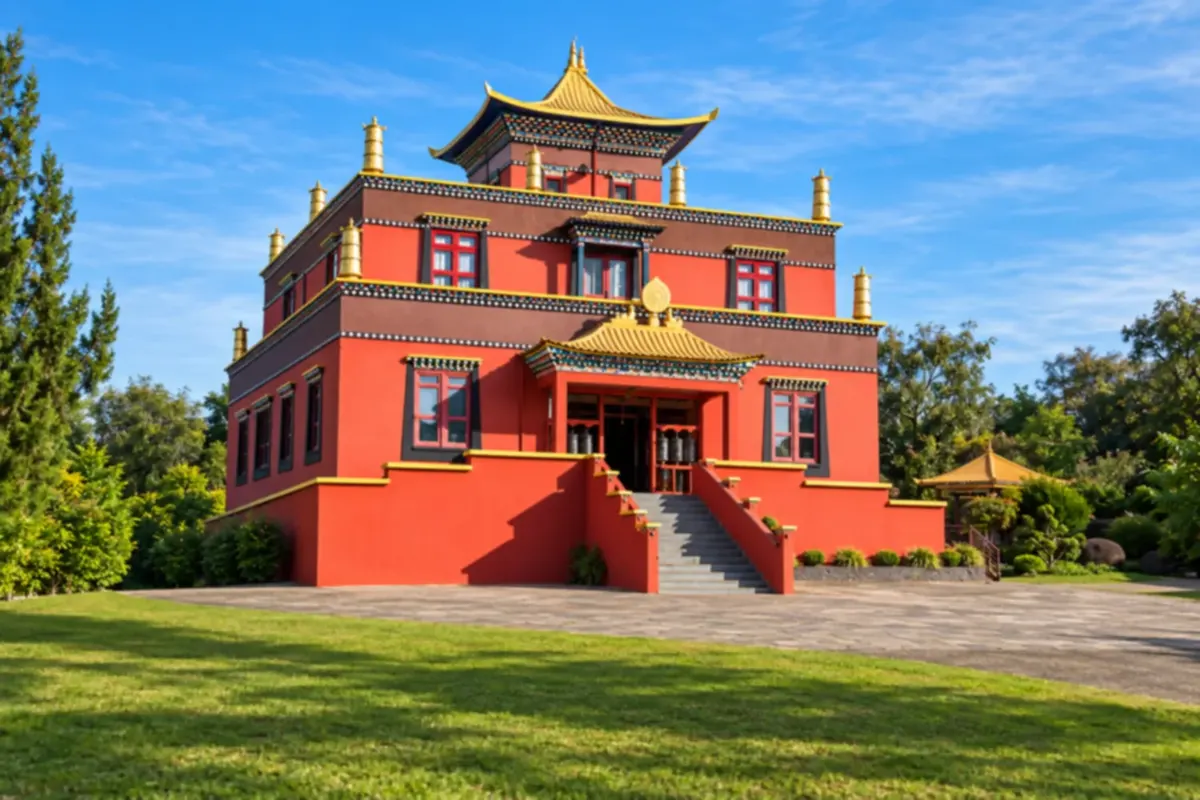
A brightly colored Tibetan Buddhist temple tucked into the mountains, open to visitors. The Eastern architecture in the middle of the Rio Grande do Sul forest surprises everyone who arrives.
Raziščite Templo Budista Chagdud Gonpa Khadro Ling
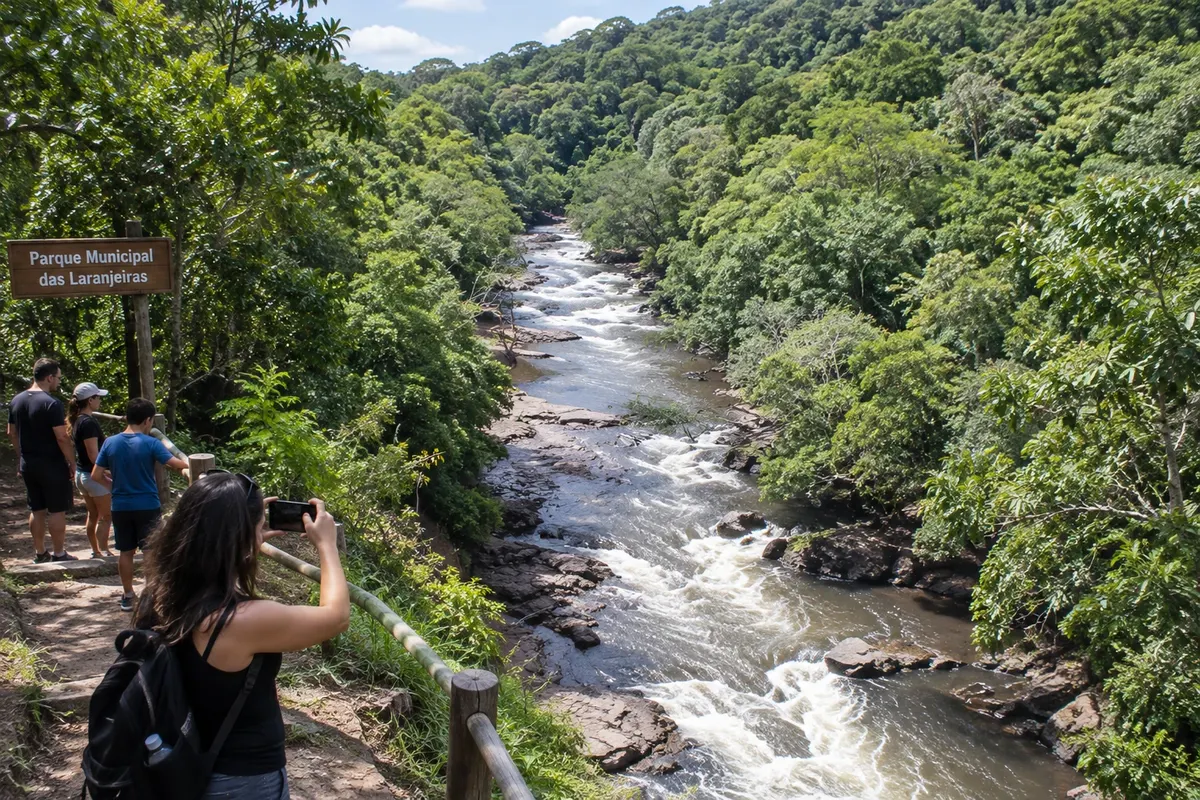
Parque de Três Coroas beside the Rio Paranhana, with trails, rest areas and adventure activities. Rafting and the other services are organized by operators and require booking according to the chosen activity.
Raziščite Parque Municipal das Laranjeiras
Kaj izbrati pred odhodom
Izhodišče, trajanje, potek, vključene storitve in okvirna cena vsakega izleta.
Khadro Ling sits atop a hill about 8 km from the center of Três Coroas, along the Estrada das Águas Brancas. It is the South American seat of Chagdud Gonpa, a network of Tibetan Buddhist centers of the Vajrayana tradition whose origin is a Tibetan monastery founded in the 15th century. It was established in 1995 by the Tibetan teacher Chagdud Tulku Rinpoche. The name means something like "abode of the dancers of the sky." It is not a park or a museum: it is an active religious center where practices and retreats take place. Visits are self-guided, on foot through the gardens, following the signs. The main temple has a red façade and ornate roofs; the wooden floor is painted, so you enter barefoot, leaving shoes at the door. Prayer wheels—cylinders inscribed with mantras—are turned clockwise beside the temple. Statues of Buddha and stupas, tower-shaped monuments—one of which holds the founder’s ashes—are scattered across the grounds. Lower down is the Padmasambhava Pure Land, one of the Tibetan-style buildings in the complex. From the hill you can see the valley and surrounding hills. A shop with a bookstore sells works on Buddhism and religious articles; there is no restaurant or snack bar. The temple is not open every day: it closes at the start of the week and on retreat dates, and it does not allow arrival on foot via the road. On Sunday mornings there is often an open meditation for anyone who wants to participate; you must arrive before it begins.
Kraji na poti: Chagdud Gonpa Khadro Ling, Main temple, Padmasambhava Pure Land, Stupas, Prayer wheels.
Vključuje: No admission fee; the center accepts voluntary contributions. Transportation is the visitor’s responsibility. Groups arriving by van or bus must schedule the visit with the temple.
Nasvet: Check the official website for visiting days before you go. Speak quietly, dress discreetly and respect areas reserved for practitioners. Mobile signal is weak on the hill, and on warm days it’s worth bringing insect repellent. Eat before or after, in town.
Najboljši čas za obisk: All year round. On clear days the valley view is wider; with fog or rain, visiting the buildings is still worthwhile.
The Paranhana River descends from the mountains in rapids, and it is in this stretch, outside the urban area, that Três Coroas concentrates its adventure tourism. Three parks operate along the river in the rural area, more than 10 km from the center: Parque Municipal das Laranjeiras, which is public and has operators on site, and two private parks. Rafting is done in an inflatable boat with a guide in each vessel. Before entering the water the group is given a helmet, vest and paddle and receives safety and paddling instructions. Routes vary from park to park: there are short descents of about 5 km and roughly two hours, and long ones of 8 to 10 km, which take up to four hours including the bus transfer to the starting point near the Barragem das Laranjeiras. Along the way there are rapids, natural stone slides and calm stretches where you can jump into the water. Some operators also offer night descents. Parque das Laranjeiras also has a slalom canoeing track where athletes who reached the Olympic Games trained. It was there that, in 1997, the first world championship of the discipline in South America was held; the park later hosted Pan American championships. Off the river, the parks offer zip lines, one of them about 1,200 meters, rappelling, canopy courses, kayaking, ATV rides, archery and trails. All have a restaurant or snack bar, changing rooms and day-use areas, and some have camping and cabins. Each operator sets minimum age, group size and departure times.
Kraji na poti: Paranhana River, Parque Municipal das Laranjeiras, Barragem das Laranjeiras.
Vključuje: Helmet, life jacket, paddle, and guide are included in the rafting. Park admission, wetsuit rental, photos, food, transport, and other activities are paid separately; check the current fee schedule of each park.
Nasvet: Book in advance, especially in summer and on holidays. Bring swimwear, a towel, and a change of dry clothes. In cold months, rent a wetsuit.
Najboljši čas za obisk: From October to April, with higher demand from December to March when the water is less cold. In winter rafting runs with a wetsuit.
Três Coroas’s center is small and follows the river. The walk is good for stretching your legs between the temple and the parks, or to end the day. The Armindo Lauffer Covered Bridge is the most photographed structure. It is about 70 meters long and has a roof, in the manner of covered bridges from the German building tradition, rare in the state. It crosses the Paranhana River on Rua Mundo Novo, with one-way vehicle traffic. It is lit at night. Praça Francisco Leal, known as the Paranhana River Decks, occupies the riverbank between two bridges. It has decks over the water, walking areas, courts, a skatepark, and a playground; in summer a small beach forms there. Praça Affonso Saul, with a fountain and gardens, is bordered by the covered street in an L shape, with a colonial-style roof used for craft fairs and events. Nearby is the Sagrada Família Church, the cathedral, with modern lines and a side tower. The Armindo Lauffer Museum operates in a German house from 1856. Those traveling by car can continue to Cascata de Sander, beside a road within the town. You can drive to the base. The waterfall drops a lot in dry periods and usually has more water after rainy days.
Kraji na poti: Armindo Lauffer Covered Bridge, Praça Francisco Leal (Paranhana River Decks), Praça Affonso Saul and covered street, Armindo Lauffer Museum.
Vključuje: There is no charge to walk along the bridge, the squares, or the covered street. The visit is self-guided.
Nasvet: The museum is closed on Sundays and Mondays; confirm before you go. Walk across the covered bridge at early evening, when the lights come on. Avenida Santa Maria is the town’s main street.
Najboljši čas za obisk: All year. In summer the decks and the little beach are busier in the late afternoon.
Po dnevih
Predlogi za načrtovanje poti. Vrstni red dni prilagodite vremenu in razpoložljivosti izletov.
Check first whether the temple is open on your chosen day: it is closed at the start of the week. Arrive in Três Coroas in the morning and go straight up to Chagdud Gonpa Khadro Ling, about 8 km from downtown. Walk through the gardens at a relaxed pace: the main temple, the prayer wheels, the stupas, the statues and Padmasambhava’s Pure Land. Allow about two hours. Descend for lunch in town or continue to one of the adventure parks, which have a restaurant. In the afternoon, the river. With a reservation, the short rafting trip takes about two hours and leaves time for a zip line or for relaxing by the water. If you don’t want to get in the boat, you can spend the afternoon at Parque Municipal das Laranjeiras, watching the canoeing course and the rapids. At the end of the day, return to downtown, walk the decks at Praça Francisco Leal and cross the Armindo Lauffer Covered Bridge when the lights come on. In summer, you can reverse the order: rafting in the morning and the temple in the afternoon, within visiting hours. If you’re only interested in the temple, you can see it in a half day from Gramado or Canela.
Najboljši čas za obisk
The seasons shown are the most usual ones; nature doesn't always follow the calendar.
Rafting high season · Summer
Peak summer and peak demand for rafting: the Paranhana River is at its most pleasant temperature of the year and adventure parks are busier, especially on weekends. Book your descent in advance. Afternoon showers are common.
Summer · Carnival
The river season continues, with frequent heavy showers. The Carnival holiday increases attendance at parks and campgrounds. The downtown decks and the Paranhana small beach get people in the late afternoon. For the temple, bring insect repellent and water.
End of summer · Water still warm
Last month of the most popular period for rafting, with fewer people than in January. Rainfall drops compared with the summer peak. A good time to combine temple and river on the same day without competing for spots.
Autumn · Easter
One of the driest months in the region. Rafting remains in season, and clear-sky days favor views of the valley from Temple Hill. On the Easter holiday, traffic increases from visitors descending from Gramado and Canela.
Três Coroas in Festa · Municipality anniversary
The city celebrates its anniversary on May 12 with the Três Coroas in Festa program. Rain is scarce. Outside the warm months, rafting is done with a wetsuit.
Start of winter · River with wetsuit
Winter begins. Rafting continues, with wetsuits, and the parks are quieter. The temple is the main attraction of the season, and the downtown can be explored in any weather.
School holidays · Winter
Brazilian school holidays fill Gramado and Canela, and it’s common to combine the mountains with a descent to the temple; groups in vans or buses need to schedule in advance. On the river, departures use neoprene. Confirm visiting days before you hit the road.
Winter · Little activity on the river
Cold continues, with rainfall below the regional average. A quiet month for adventure parks and good for seeing the temple with fewer people except on weekends. The covered bridge is lit at night, and nighttime comes early at this time of year.
Spring · Semana Farroupilha
Rain increases again in the region and the days lengthen. In September Rio Grande do Sul celebrates Semana Farroupilha, with gaucho traditions. For rafting, it’s still neoprene season.
Rafting season opens · Rainy spring
October marks the start of the most popular period for rafting, but it also tends to be the rainiest month in the region. Confirm your trip with the operator the day before and have an alternate plan, such as the temple and the town center.
Canoeing Festival · Três Coroas in Action
Parque Municipal das Laranjeiras hosts the Canoeing Festival, with events on the slalom course. The town also holds Três Coroas em Ação, a festival of amateur and student theater. Days warm up and demand for rafting increases.
Summer · Christmas in the neighboring mountains
The river high season begins, with afternoon rain showers. Christmas crowds in Gramado and Canela bring more visitors to the temple, which may close on special dates: check the schedule. Book rafting in advance between Christmas and New Year’s.
Načrtujte pot
Três Coroas does not have an airport. The nearest with many flights is Salgado Filho International Airport (POA) in Porto Alegre, about 92 km away. It has flights to many Brazilian cities and few international routes, so arrivals from abroad generally include a domestic connection.
From the airport continue by land: intercity bus, rental car, taxi, or ride-hailing app. The drive takes around one and a half hours.
The regional Caxias do Sul airport (CXJ) is another possibility, with few flights and changing routes; from there the route passes through Gramado.
Citral runs the line between Porto Alegre, Gramado and Canela, and some schedules follow the Vale do Paranhana route, passing through Taquara, Igrejinha and Três Coroas. Other departures go via Nova Petrópolis and do not pass the town: check the itinerary when purchasing.
From the mountains, the same company connects Gramado to Três Coroas in about 35 minutes, and Canela to Três Coroas in just over an hour.
The bus drops you in town, not at the temple or the adventure parks. The temple does not allow arrival on foot, and the parks are more than 10 km from the center: from the bus terminal you’ll need a taxi, and it’s advisable to arrange the return with the driver.
Saturdays, Sundays and holidays have their own timetables: check before traveling.
Três Coroas is on RS-115, the road that connects Taquara to Gramado.
From Porto Alegre it’s about 92 km: BR-116 to Novo Hamburgo, then RS-239 to Taquara and RS-115, passing Igrejinha. It’s the same route many people use to go up to Gramado, with some dual carriageway sections.
From Gramado it’s about 25 km downhill on RS-115, about half an hour. From Canela you pass through Gramado.
The temple and the adventure parks are outside the urban area, on rural roads. Shortcuts via local roads can include unpaved stretches and little signage; if you are not familiar with the area, follow the main access roads.
The center is walkable: the covered bridge, the Rio Paranhana decks, Praça Affonso Saul and the museum are close together.
For everything else you need a vehicle. The Buddhist temple sits atop a hill about 8 km from the center, and the adventure parks are more than 10 km away. There is no public transport to those places.
Visitors from Gramado or Canela without a car can find agency excursions that include the temple with round‑trip transport, and the parks offer transport from the mountain for those who buy rafting. Taxis handle city trips; arrange the return in advance, because cellphone signal is weak on the temple hill.
By car you can do the temple and the river in the same day without rush.

Odgovori na vaša vprašanja
No. The official website lists visiting days as Thursday to Sunday, and the temple may close on exceptional days. Check before you go.
No. The temple doesn't allow visitors to arrive on foot: go by car, taxi or tour. Groups in vans or buses must book ahead.
October to April, busiest in summer. The run is done with a tour operator, which provides the equipment.
One day is enough for the Buddhist temple, a rafting descent and a walk around town. Most visitors make a day trip from Gramado, Canela or Porto Alegre. Those who want to enjoy the adventure parks at leisure, or do more than one river activity, may stay overnight: the parks and rural area offer camping, cabins and pousadas.
By car it’s about 25 km via RS-115, descending the mountain, in roughly half an hour. By bus, Citral connects the two cities in about 35 minutes, but drops off at the bus station, far from the temple and the parks. Without a car, the simplest option is an agency tour that picks you up at the hotel and takes you to the temple.
For the town center, no. For the Buddhist temple and the adventure parks, yes: the temple is about 8 km away, does not permit arrival on foot and has no bus service; the parks are over 10 km away. Alternatives to a car are taxi, an agency tour, or the transport offered by the parks to those who buy rafting.
There is no entrance fee. Chagdud Gonpa Khadro Ling is a non-profit organization and accepts voluntary donations. The shop sells books and religious items. The visit’s expenses are transportation and, for those on a tour, the tour fee.
It is an active religious center with practices and retreats. Speak quietly, dress modestly, do not enter areas marked as reserved, and remove your shoes to enter the main temple. Prayer wheels are turned clockwise. There is no place to eat on the hill: bring water and have your meals in town.
On the Paranhana River, in the rural area. Three parks offer the descent: the Parque Municipal das Laranjeiras, which is public and has operators, and two private adventure parks. Routes range from about 5 km to around 10 km. All provide helmets, life jackets, paddles and a guide in the raft, and also offer zip lines, rappelling and canopy courses. Book in advance, especially in summer.
Yes, from the minimum age set by each operator; one operator accepts children from 8 years old on the traditional descent and has a special version for younger kids. State the child’s age when booking and follow the guide’s instructions. The parks have other activities for those who do not get in the raft.
Yes, by car and with bookings. The temple visit takes about two hours and a short rafting descent about two more. The usual plan is to visit the temple in the morning and go to the river in the afternoon. Check the temple’s visiting days in advance — it is closed at the start of the week — and the raft departure time.
In town: the Armindo Lauffer Covered Bridge, the decks at Praça Francisco Leal over the Paranhana River, the covered street at Praça Affonso Saul and the Armindo Lauffer Museum, in an 1856 manor house. In the adventure parks there are zip lines, rappelling, canopy courses, kayaking and trails. Sander Waterfall sits alongside a road and usually has more water after rain.
From an araucaria tree with three crowns that stood in the valley and served as a landmark for travelers. The tree was cut down at an unknown date, but the name remained. The region was colonized from 1846 and received German and later Italian immigrants; Três Coroas has been a municipality since 1959.
Več kot vodnik