waterfall
Parque do Caracol
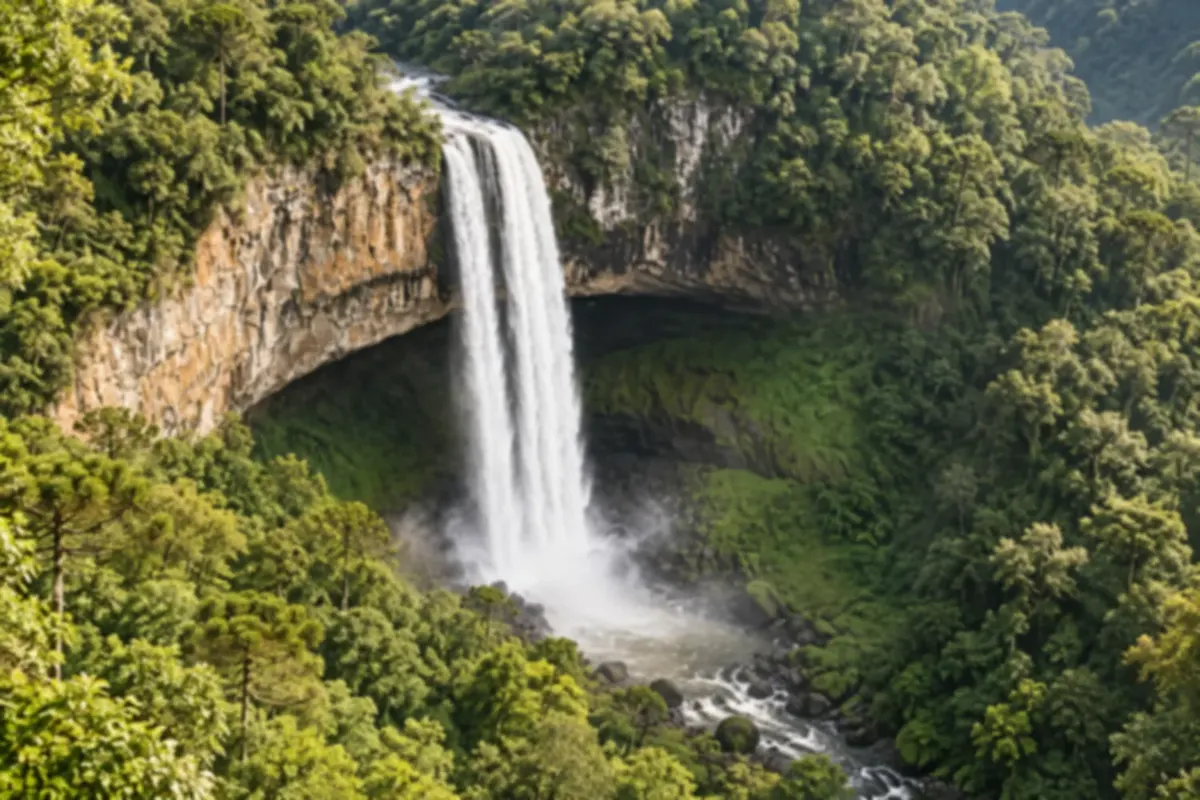
It's home to the Cascata do Caracol, a 131-meter waterfall that plunges through araucaria forest. There are viewpoints to see the waterfall from different angles.

 Išči
Brazilija
 Antarktika
 Argentina
 Bolivija
 Čile
 Kolumbija
 Ekvator
 Gvajana
 Francoska Gvajana
 Falklandski otoki (Malvini)
 Paragvaj
 Peru
 Surinam
 Urugvaj
 Venezuela
 Nemčija
 Avstrija
 Belgija
 Hrvaška
 Danska
 Slovaška
 Slovenija
 Španija
 Finska
 Francija
 Grčija
 Nizozemska
 Madžarska
 Irska
 Islandija
 Italija
 Luksemburg
 Norveška
 Poljska
 Portugalska
 Združeno kraljestvo
 Češka
 Švedska
 Švica
 Turčija
 Bermudi
 Kanada
 Združene države Amerike
 Grenlandija
 Mehika
 Sveta Peter in Mihael
 Dominikanska republika
 JaponskaTurčija
 Južnoafriška republika
 Egipt
 Avstralija
 Fidži
 Nova Zelandija
 Papua Nova Gvineja
Rio Grande do Sul · Brazilija
Destinacija: Serra Gaúcha.
Illustrative images. The pictures in this guide are illustrations based on the real place, not photographs, and may differ from it.
Mesto
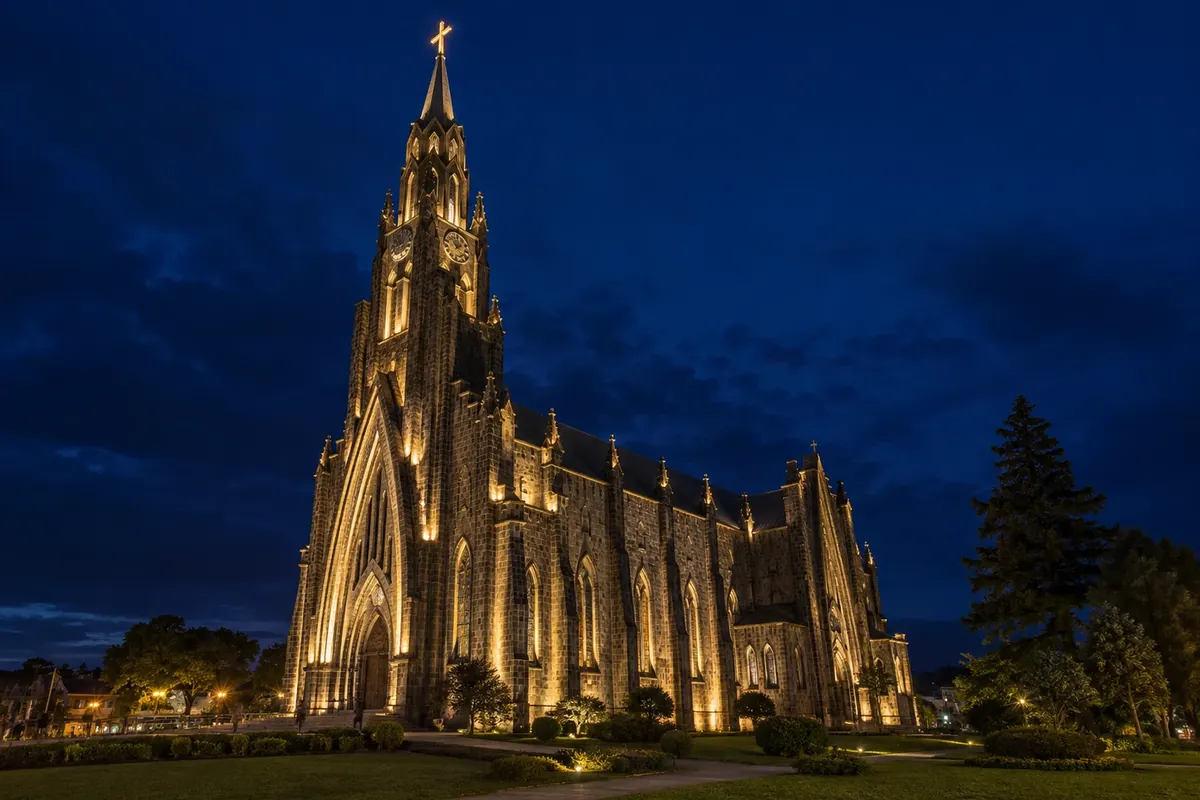
Canela combines architectural heritage and forested areas in Serra Gaúcha. You can visit the Catedral de Pedra and follow routes that lead from town to waterfalls and forest scenery.
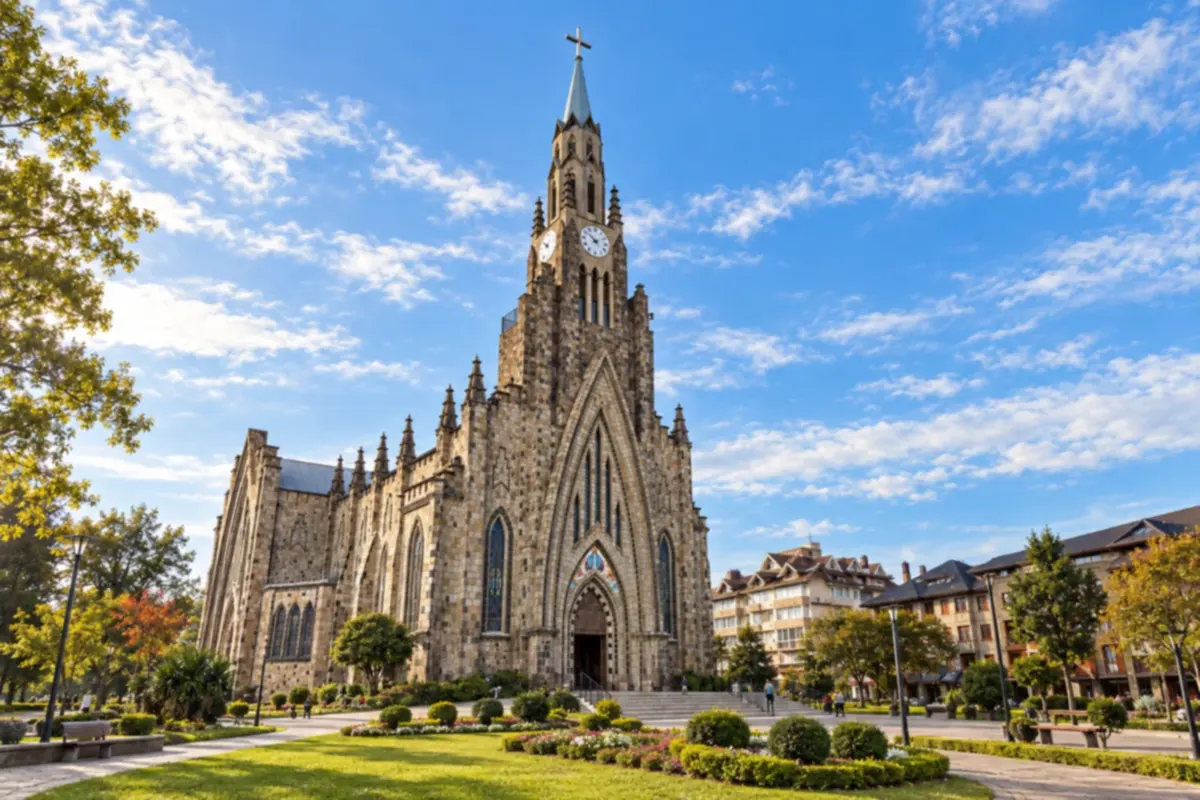
Canela is in the Serra Gaúcha, in Rio Grande do Sul, at about 837 meters above sea level, roughly 120 km from Porto Alegre and about 7 km from Gramado, with which it shares hotels, roads and visitors. It’s the city of the Caracol Waterfall, a 131-meter drop amid araucária forest, and of the Stone Cathedral, the basalt church with a 65-meter tower in the center.
The name comes from a tree. In the 19th century, drovers crossing the range stopped to rest in the shade of a caneleira near today’s Praça João Corrêa, and the stopping point grew into a settlement. The railway that connected Canela to Taquara arrived in 1924; the old station is now Estação Campos de Canella, a covered street with shops and restaurants.
The center is small and can be explored on foot. Praça da Matriz, with the Stone Cathedral, Rua Felisberto Soares with shops and cafés, Praça João Corrêa and Estação Campos de Canella are close to each other. It’s a calmer center than Gramado’s, with less nighttime activity.
What brings most travelers, however, lies outside the center, and that’s what sets Canela apart from its neighbor: nature has greater weight here. The Caracol road leads to Castelinho Caracol, an early 20th-century wooden house turned museum, and to Caracol Park, about 7 km away, where a three-story viewpoint faces the waterfall. Further on, 14 km from the center, the Skyglass Canela projects over the Vale da Ferradura, 360 meters above the Rio Caí. About 3 km from the center is Alpen Park, an adventure park with a mountain toboggan, and on the avenue from Gramado is Mundo a Vapor, recognizable by the locomotive that crosses its façade.
The climate is mountainous. From June to August it’s cold, with highs near 18 °C, nights that can approach 0 °C and frost on some days; snow is rare. Fog is common on cold mornings and can hide the waterfall and the valley for a few hours. Summer is mild, with highs around 26–27 °C, afternoon rain showers and cool nights. April and May usually have less rain and fewer visitors, and October is among the wetter months.
Two festivals mark the calendar. Sonho de Natal fills the center from late October to the first half of January, with decorations, parades and performances around the Stone Cathedral and Praça João Corrêa. Festa Colonial, in July, brings to the center the cucas, breads, cured meats and music of the municipality’s rural families. July, Brazil’s school vacation month, and the Christmas period are the busiest times.
Two days are enough for the center, Caracol Park and one or two other parks; with three days the trip is unhurried. Because the main attractions are spread out, decide in advance how you’ll get around: car, taxi, rideshare or tourist bus.
Canela – število nastanitev: 89.
Canela – število lokalov: 37.
Canela – nazivi in posebnosti
Doživite kraj
It's home to the Cascata do Caracol, a 131-meter waterfall that plunges through araucaria forest. There are viewpoints to see the waterfall from different angles.
Built between 1953 and 1987 in English Neo-Gothic style, the Igreja Matriz Nossa Senhora de Lourdes has a 65-meter central tower. The carillon of 12 bronze bells, cast in Italy, was installed in 1972.
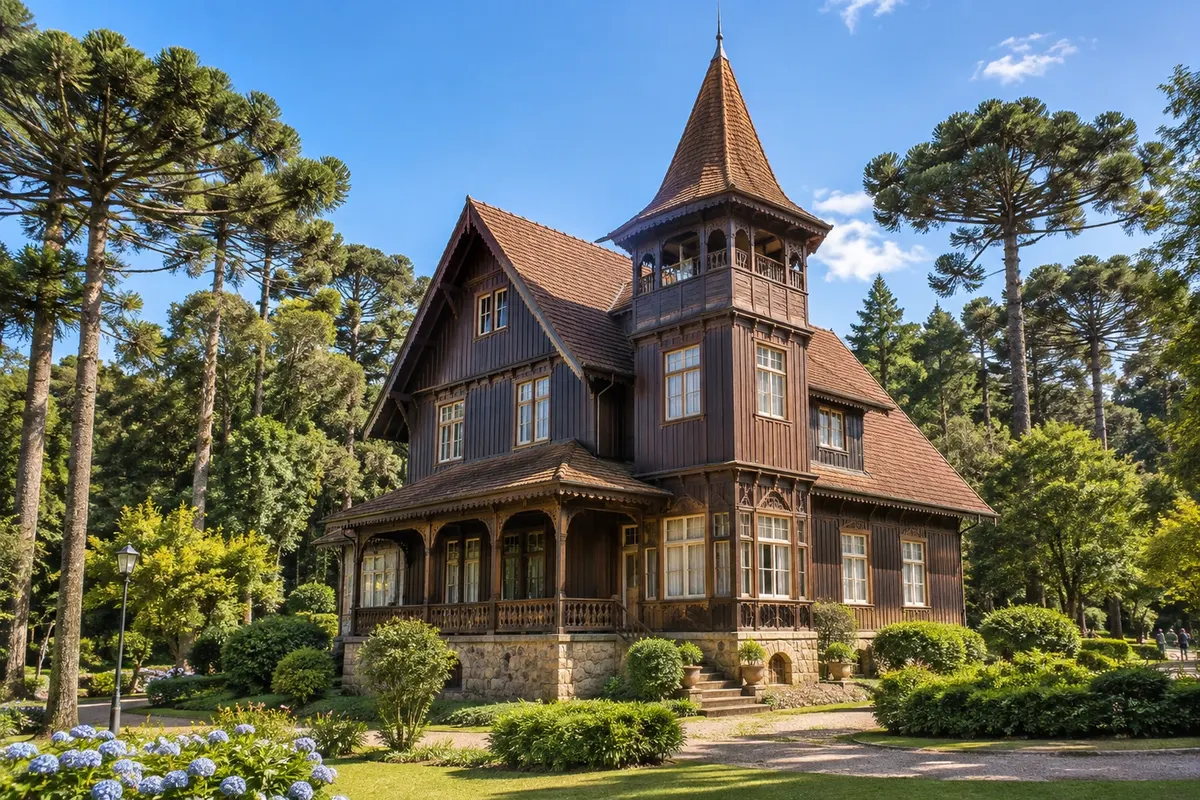
Built between 1913 and 1915 by Pedro Carlos Franzen from araucaria wood, without nails, it has been a museum since 1985. It keeps period furniture in its 18 rooms, plus an old sawmill and German immigrant houses.
Founded in 1991 by the Urbani brothers, it has working replicas of steam-powered machines, such as a brickworks, a quarry and power plants. The facade reproduces the 1895 accident at the Montparnasse station in Paris, when a locomotive crashed through the wall.
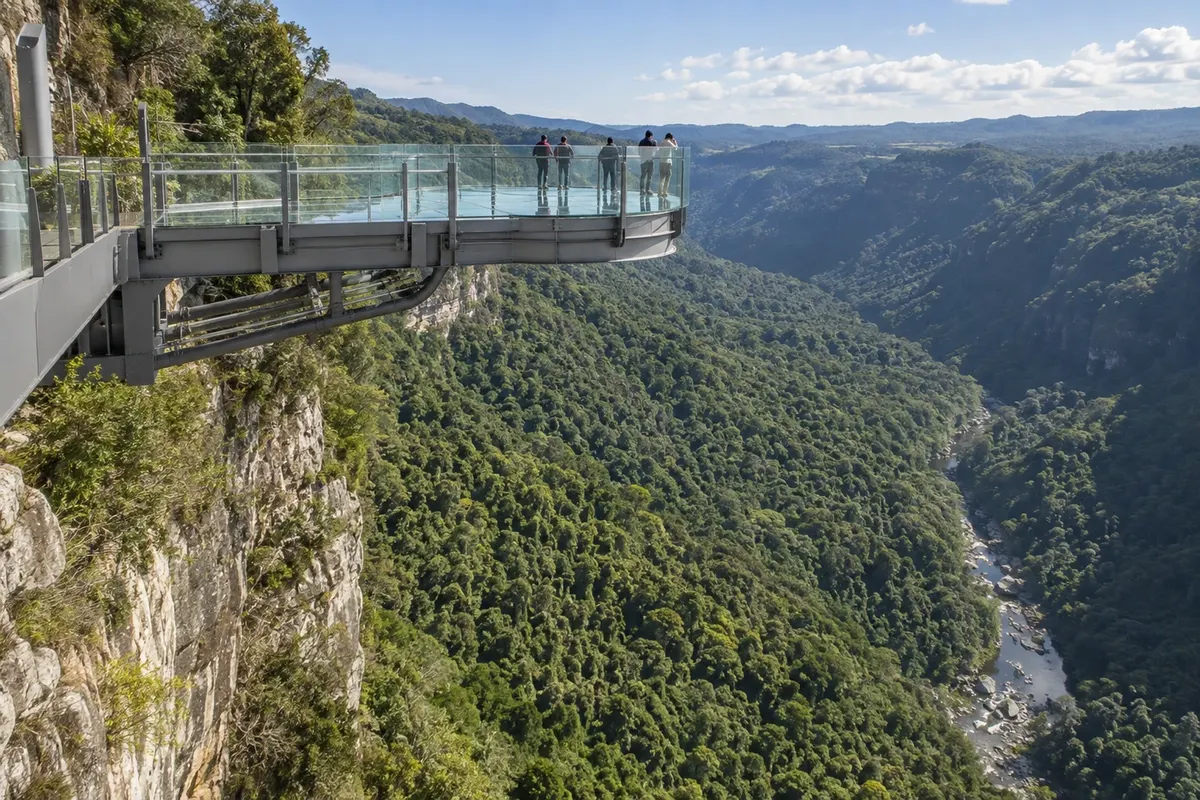
Opened in 2021, the glass platform juts out 35 meters over the Vale da Ferradura, 360 meters high. From there you can see the horseshoe-shaped bend of the Rio Caí, and the complex also includes a museum of clothes irons.
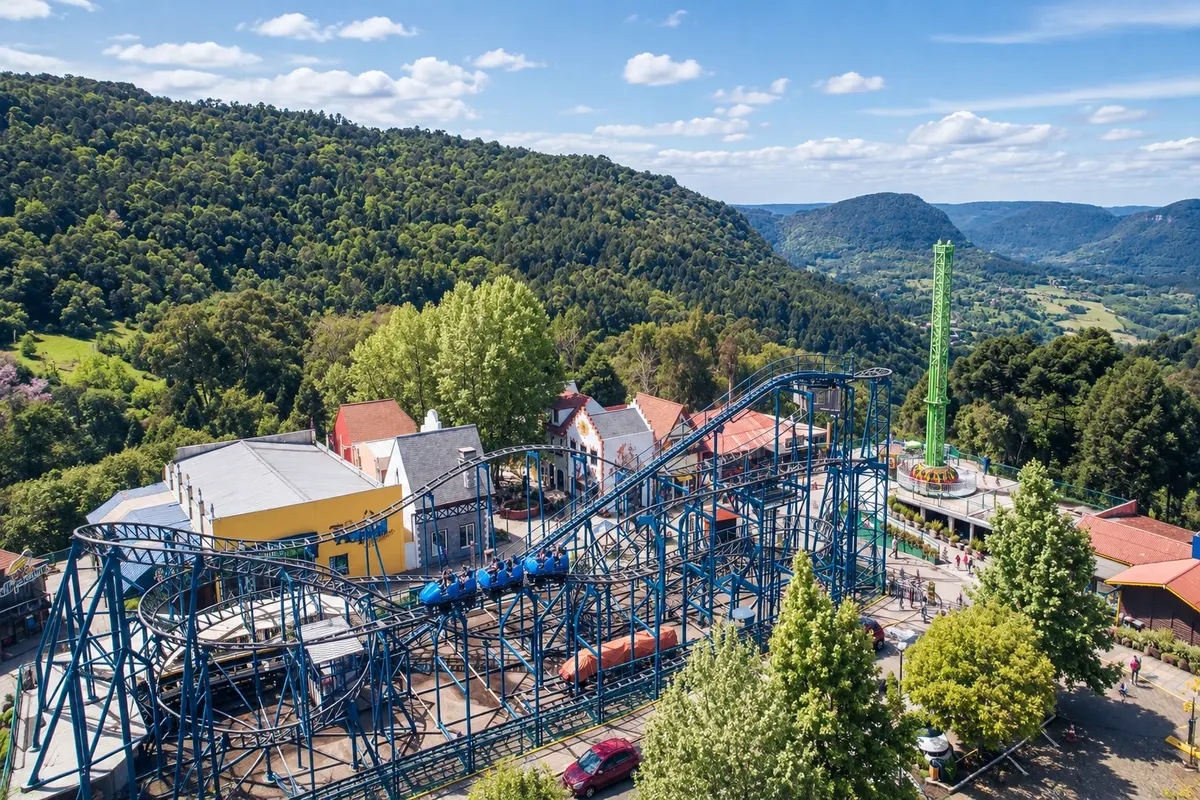
Amusement and adventure park in Canela, known for the alpine sled that descends the hillside through the forest, with a roller coaster, free-fall tower, 4D cinema, ziplines, treetop adventure course, quad bike rides and a children's castle.
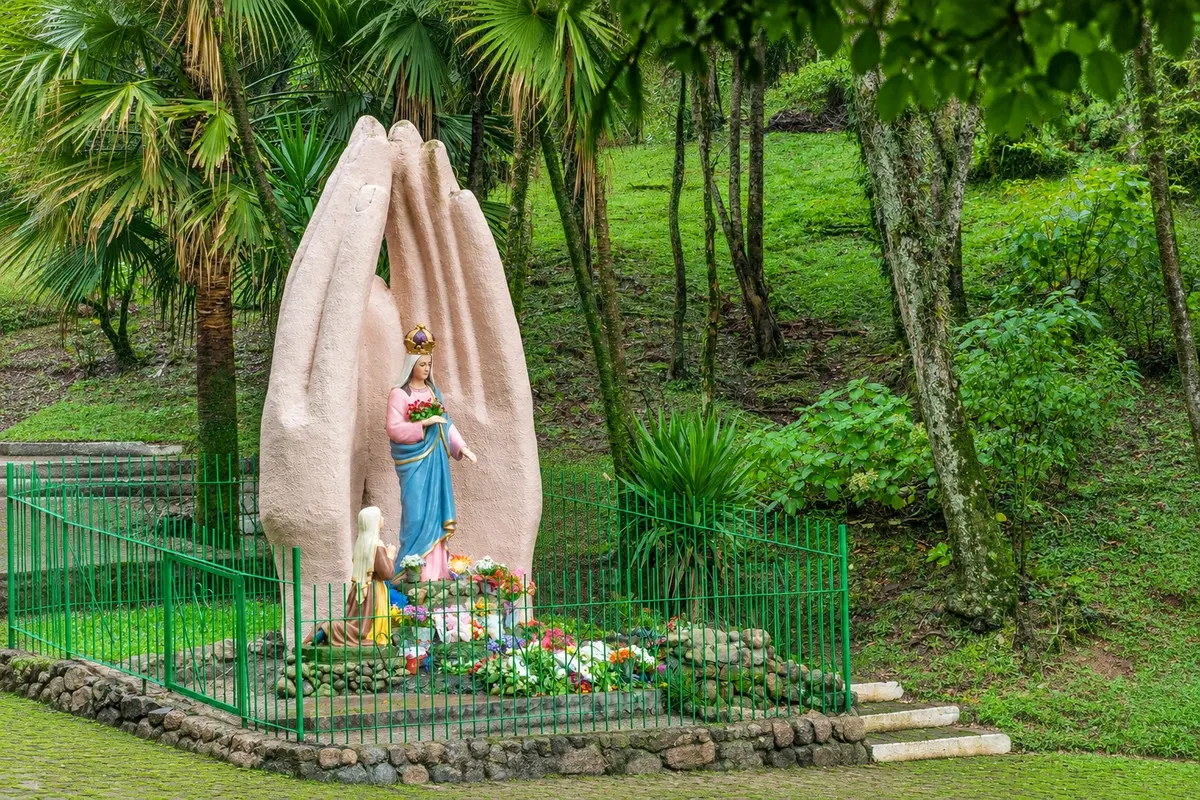
Sanctuary in Saiqui, about 6 km from downtown Canela along RS-235, with the Monument of Prayer, two large hands in prayer that shelter the image of Our Lady. In May it hosts one of the largest pilgrimages in the Serra Gaúcha.
Raziščite Sanctuary of Our Lady of Caravaggio
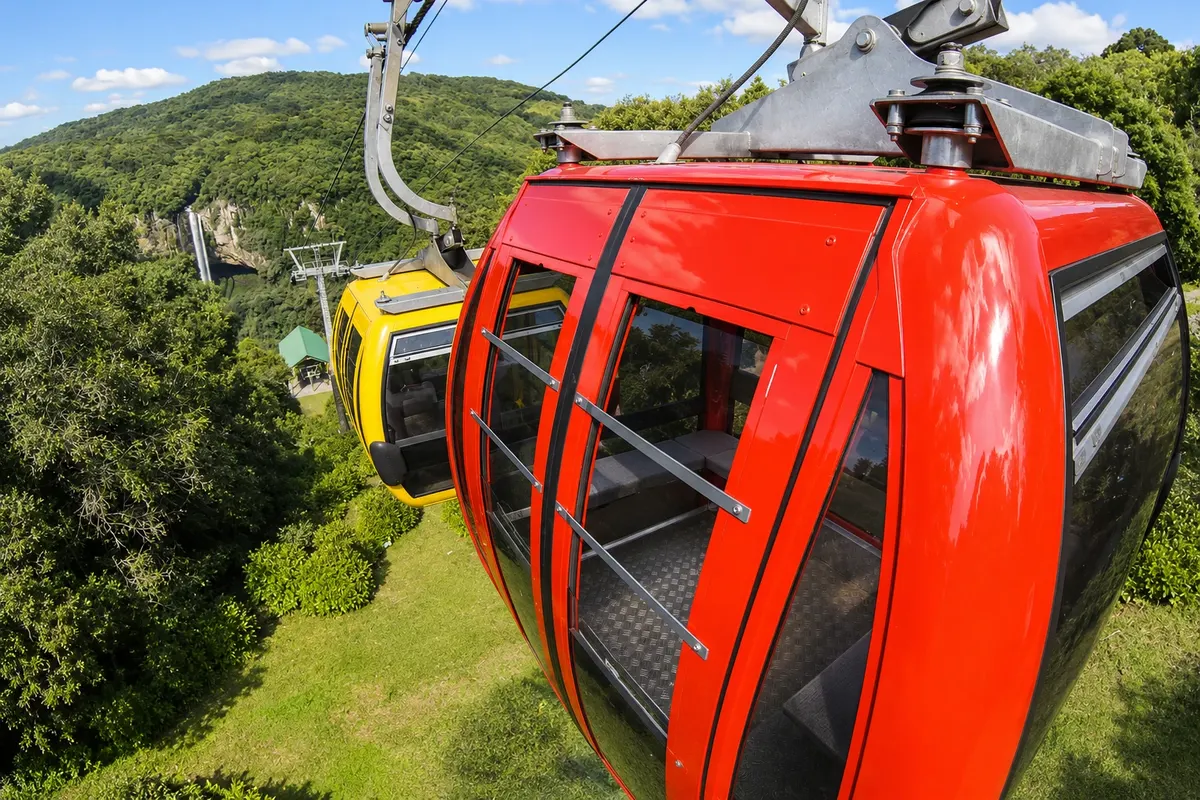
Cable car next to Parque do Caracol, with cabins that descend into the valley and stop at viewpoints facing Cascata do Caracol. There are three stations, with forest trails and access via ramps and elevators.
Raziščite Parque da Serra Cable Cars
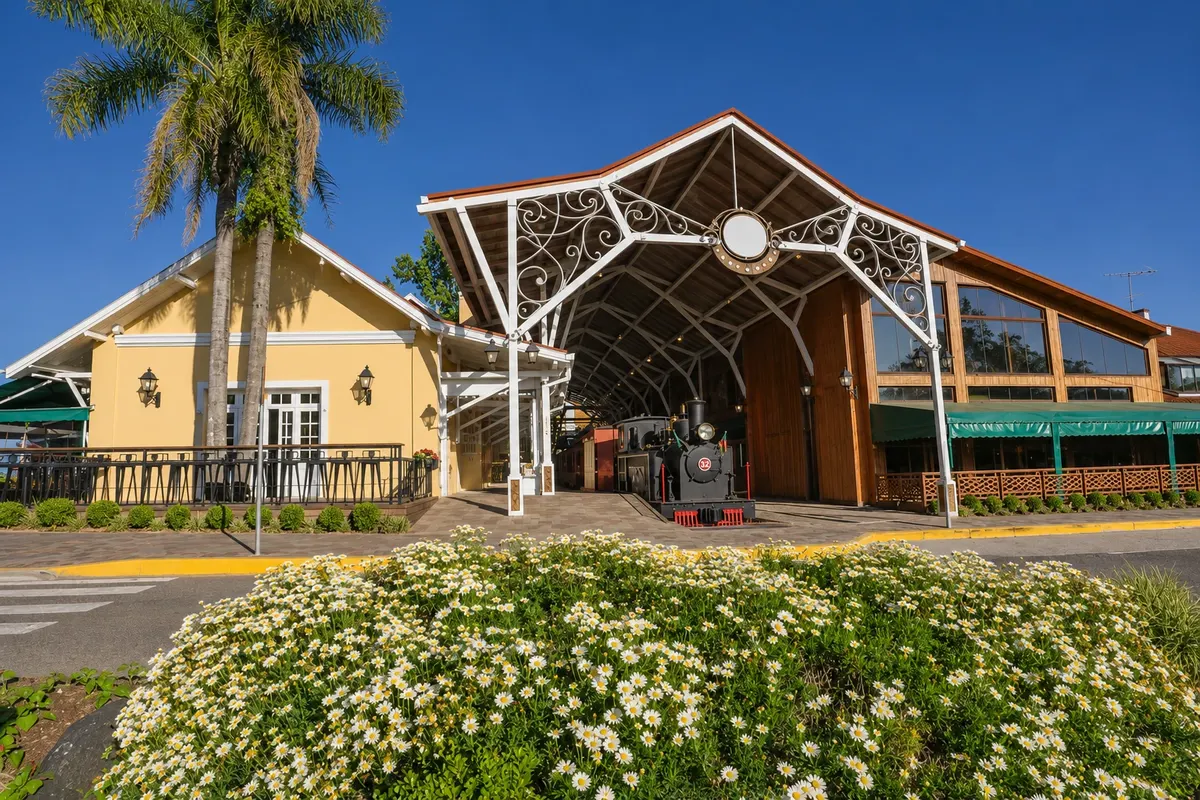
Old Canela railway station in the town center, turned into a leisure area with the La Meuse steam locomotive, passenger cars, craft shops, cafés and events. It is about 500 meters from the Stone Cathedral.
Raziščite Campos de Canella Station
Kaj izbrati pred odhodom
Izhodišče, trajanje, potek, vključene storitve in okvirna cena vsakega izleta.
Canela’s center fits into a short walk, and the starting point is Praça da Matriz. There stands the Cathedral of Stone, the popular name for the Igreja Matriz de Nossa Senhora de Lourdes, built between 1953 and 1987 in English neo-Gothic style, with basalt walls and a 65-meter tower. Inside, the stained glass represents the Litany of Our Lady, three panels by artist Marciano Schmitz decorate the walls, and the main altar is carved wood, featuring the scene of the Last Supper. If you wish, you can climb the tower on a visit known as Sinos da Catedral: about 100 steps over three levels up to the carillon of 12 bronze bells cast in Italy. Access is by stairs only. From the square begins Rua Felisberto Soares, the street of shops, cafés, and chocolate shops. A short way on is Praça João Corrêa, with the city sign and an arts-and-crafts fair; it was near here that the cinnamon tree that gave Canela its name grew. Further along is Estação Campos de Canella, the old train station converted into a covered street with shops, restaurants, and a preserved locomotive. It’s worth finishing the walk back at Praça da Matriz in the early evening, when the church façade receives a several-minute light projection.
Kraji na poti: Cathedral of Stone, Praça da Matriz, Rua Felisberto Soares, Praça João Corrêa, Estação Campos de Canella.
Vključuje: There is no charge to enter the church, the squares, or Estação Campos de Canella, and the light projection on the façade is free. The climb to the tower, which includes the museum, is paid separately; check the current price list. Purchases and meals are at your own expense.
Nasvet: The church is an active place of worship: avoid visiting during services and speak quietly. Check the schedule for the light projection on the day you go. Bring a jacket for the evening, even in summer.
Najboljši čas za obisk: All year. From late October until the first half of January the town center is decorated for the Sonho de Natal and becomes much busier.
Caracol Park is about 7 km from downtown Canela, on a paved road, and protects the Caracol Waterfall, a 131-meter drop where the stream plunges off a rock face into a forested valley. It is the town’s main attraction and the one most affected by the weather: in thick fog the falls disappear. After the ticket gate, marked paths lead to the Waterfall Lookout, a three-story structure facing the falls with a section of glass flooring over the valley. Beside it, the Observatory is a tower with a panoramic elevator and an upper platform, from which you can also see the stream bed above the falls. Short trails through the shaded forest lead to the stream’s rapids above the drop. The park also has a visitor center, craft shops, and places to eat. Some attractions have separate fees. Estação Sonho Vivo is a little train that travels a stretch of the park with narration about the arrival of immigrants. For those seeking adventure there are activities such as zipline and pendulum jump, which have age, weight, and height rules. If you travel without a car, arrange your return before entering, because at the park exit there is not always a taxi or ride-hail vehicle waiting.
Kraji na poti: Caracol Park, Caracol Waterfall, Waterfall Lookout, Observatory, Estação Sonho Vivo.
Vključuje: The ticket grants access to the park, the Cascata viewpoint, the visitor center and the trails. Parking, the little train, adventure attractions, food and transport are paid separately. There is half-price admission for some categories; check the current price list and what the day ticket includes, such as the Observatory.
Nasvet: Go early, when there are fewer people at the viewpoint, and check the sky before you go: on foggy mornings wait for it to clear. Wear closed shoes because the trail ground is often damp. Tickets bought online in advance are usually cheaper than at the ticket office.
Najboljši čas za obisk: All year. After rain the waterfall usually has more water; with clear skies the valley view is wider. July and holidays have longer lines.
Castelinho Caracol is on the road to Parque do Caracol, a few kilometers from the center, and is a natural stop on the way to or from the waterfall. The house was built between 1913 and 1915 by Pedro Carlos Franzen, using araucaria wood and no nails. It operates as a museum: the 18 rooms preserve period furniture and tools and show how a family of German origin lived in the highlands in the early 20th century. The grounds also include an old sawmill and immigrant houses. The visit ends at the table. The house serves apfelstrudel, the apple pastry of German families, and for many people that is the reason to stop. The place is small and the visit is brief. On rainy days or with heavy fog, when the waterfall does not appear, Castelinho is a good alternative.
Kraji na poti: Castelinho Caracol, Estrada do Caracol.
Vključuje: The ticket grants access to the museum. The apfelstrudel and beverages are charged separately; check the current price list.
Nasvet: The dessert is served inside the museum: to taste the apfelstrudel you must pay museum admission. Combine this visit with Parque do Caracol, on the same road, and leave the Castelinho for the return, at snack time. Confirm opening days before you go.
Najboljši čas za obisk: All year. In cold months, the hot dessert makes more sense.
Vale da Ferradura is the tight bend that the Rio Caí makes between cliff faces of forested land in the interior of Canela. Skyglass sits on the edge of that valley, 14 km from downtown, via a paved road that passes through the Caracol area. The main attraction is the steel-and-glass platform, 68 meters long, 35 of which extend beyond the cliff, 360 meters above the river. The start of the walkway has a metal floor for those who prefer to get used to the height; after that comes the glass floor. From the tip you can see the river’s bend down below. Underneath the platform runs the Abusado, a rail with suspended chairs in which visitors take a ride over the valley with their feet dangling. It is paid separately or included in a combined ticket and has weight and age restrictions. The park also has the Memorial do Ferro de Passar, with a collection of old irons, a deck facing the sunset and a food court. Those who don’t want to step on the glass can view the valley from the park’s decks. Without a car, options are the sightseeing bus when it operates, taxi or rideshare with a return arranged, or the transfer sold by agencies with hotel pickup.
Kraji na poti: Skyglass Canela, Vale da Ferradura, Rio Caí, Memorial do Ferro de Passar, Deck Pôr do Sol.
Vključuje: The ticket includes park admission, the platform and the memorial. The Abusado attraction depends on the ticket type. Parking, transportation and food are paid separately. There is half-price admission for some categories; check the current price list.
Nasvet: Only one electronic device per person is allowed on the platform; the rest stays in the locker. On foggy days the valley may not appear: check the weather before you leave. Late afternoon usually has shorter lines and low light on the cliffs.
Najboljši čas za obisk: All year round, preferably with clear skies. On cold mornings the valley often fills with mist; July and public holidays have longer lines.
Alpen Park is an adventure park set in a forested area about 3 km from Canela’s center. There is no charge to enter the grounds: you pay per attraction or buy a passport that bundles the main ones. The most sought-after attraction is the mountain coaster, the first of its kind in Brazil. The sled runs along a 900-meter track through the trees, and the rider controls the brake, reaching about 40 km/h. Younger children ride accompanied by an adult. The park also has a roller coaster, a free-fall tower, zip lines, a treetop ropes course with hanging walkways, bumper cars, a 4D cinema with moving seats, and a play area for small children. The ATV ride along a dirt trail is scheduled by time slot and may be driven only by adults. Each attraction has height, weight, or age rules, and not all are included in the passport. It’s worth checking the list before you buy, especially when children have different heights. Covered attractions, such as the cinema and games, remain open in rain; outdoor attractions depend on the weather.
Kraji na poti: Alpen Park, Mountain coaster, Roller coaster, Zip lines, Treetop ropes course, 4D cinema.
Vključuje: The pass brings together the main attractions, such as the sled, the roller coaster and the 4D cinema. ATV, treetop courses, zip lines, parking and food are usually paid separately. There is a child pass by height range; check the rate table.
Nasvet: Arrive at opening to ride the sled without a line. Entry may have a daily visitor limit in the busiest times: buy in advance. Without a car, arrange the return with your driver.
Najboljši čas za obisk: All year. Weekdays outside July and the Christmas period have shorter waits.
Mundo a Vapor is on the avenue you take coming from Gramado and is hard to miss: a full-size locomotive appears to have burst through the facade. The scene recreates an accident that occurred in 1895 at the Montparnasse station in Paris and became one of the city’s most photographed spots. The park was created in 1991 by the Urbani brothers and is the oldest in Canela. Inside, the theme is the steam engine. Scale replicas of a pottery, a quarry and power plants actually run on steam in front of visitors. It’s a visit that appeals to school-age children and adults curious about mechanics. There is also a short train ride. Much of the visit is covered, which makes the park a good choice on a rainy day. The visit is brief and pairs well with a stop in Canela downtown or with one of the parks on the road to Gramado.
Kraji na poti: Mundo a Vapor.
Vključuje: The ticket grants access to the machines and demonstrations. The train ride, photos and snacks may be charged separately depending on the ticket type; check the current price list.
Nasvet: The facade can be photographed from the sidewalk; no entry is required. Check opening days before you go.
Najboljši čas za obisk: All year. In July and on holidays there are larger crowds at the entrance.
Sonho de Natal is Canela’s Christmas festival, held every year from late October to the first half of January. For more than two months the center is decorated and illuminated, and the program takes place outdoors around the Stone Cathedral and Praça João Corrêa. The church is the main setting. In the Contos da Catedral show, Santa Claus descends from the towers with lights on the façade. A Living Nativity also takes place inside the church. On Praça João Corrêa, called Praça do Sonho during the festival, there is Santa’s House, open in the afternoon for children. In the Aldeia do Sonho, also downtown, there is a craft fair, a bandstand with music and little illuminated houses that light up to Christmas songs. The themed parade goes through the downtown streets, starting in front of the church, especially on Saturday nights; on other days, smaller processions and street performers circulate among the crowd. On parade nights the center fills up and traffic becomes slow. If you’re staying in Gramado, allow extra time to get there or take a taxi; if you’re staying in central Canela you can do everything on foot.
Kraji na poti: Catedral de Pedra, Praça João Corrêa, Aldeia do Sonho, Rua Felisberto Soares.
Vključuje: In recent editions, the street program did not charge entry. Transport, parking, shopping and meals are each person’s responsibility. Check the year’s program to see the dates of each attraction.
Nasvet: Arrive early on parade nights to find a spot on the sidewalk. Bring warm clothing and a raincoat: evenings are cool and rain is common at this time. November weekdays are less crowded than December.
Najboljši čas za obisk: From late October to the first half of January. Parades are concentrated on Saturdays from November onward.
Po dnevih
Predlogi za načrtovanje poti. Vrstni red dni prilagodite vremenu in razpoložljivosti izletov.
Start at Parque do Caracol, about 7 km from the center. Early in the morning there are fewer people at the Waterfall Viewpoint; if fog is thick, reverse the order and leave the park for after lunch. See the fall from the viewpoint, walk one of the trails down to the rapids and allow around three hours for the visit. On the way back, stop at Castelinho Caracol on the same road to visit the wooden house and try the apfelstrudel. In the afternoon, leave the car near Praça da Matriz and explore the center on foot: the Stone Cathedral (Catedral de Pedra) interior, Rua Felisberto Soares, Praça João Corrêa and Campos de Canella Station. If you have time left, Mundo a Vapor is on the road to Gramado. Return to the church square at early evening to see the light projection on the façade, before dinner or the trip back.
Spend the morning at Parque do Caracol: the Cascata viewpoint, the observatory, a trail in the forest and, with children, the little train at Estação Sonho Vivo. Wear closed shoes and bring warm clothing. Have lunch on the way back or downtown and stop at Castelinho Caracol, on the same road, to visit the museum and try the apfelstrudel. In the late afternoon, walk through downtown: Catedral de Pedra, Rua Felisberto Soares, Praça João Corrêa and Estação Campos de Canella. Stay until it gets dark to see the church façade illuminated. From late October to the first half of January, the nights feature the Sonho de Natal.
Reserve the second day for Vale da Ferradura. Skyglass is 14 km from the center; if the morning is foggy, start at the other park and go to the valley in the afternoon, when the view usually clears. Allow two to three hours for the glass platform, the Abusado (if you dare), and the decks. The rest of the day depends on who is traveling. With older children and teenagers, Alpen Park, about 3 km from the center, easily fills an afternoon with the sled, roller coaster and ziplines. With small children, in rain, or for a calmer plan, Mundo a Vapor is indoors and can be seen in under two hours. Travelers without a car should arrange each park return with the driver.
Use the first day to get your bearings. In the morning, visit Mundo a Vapor on the arrival avenue in Gramado, with its miniature machines and the locomotive on the façade. After lunch, walk through the center: the Stone Cathedral, with the climb to the bell tower for those who feel like it, Felisberto Soares Street, the craft fair at Praça João Corrêa and Estação Campos de Canella. Sit in a café and let the afternoon pass. At dusk, return to Praça da Matriz for the light projection on the church façade.
Nature day. Leave early for Parque do Caracol and see the waterfall from the viewpoint while there are fewer people; walk a trail and, if you want, try one of the adventure activities, paid separately. On the way out, stop at Castelinho Caracol for the museum and the apfelstrudel, which works well as a snack. In the afternoon, continue on to Skyglass in Vale da Ferradura, 14 km from downtown. The late-afternoon light favors the view of the cliffs, and the park has a deck facing the sunset. This is a day with quite a bit of travel: it flows better by car. If using the tourist bus, check in advance whether it runs that day and the time of the last bus.
Reserve the morning for Alpen Park. Arrive at opening, start with the mountain sled, which builds the longest line, then choose between the roller coaster, zip lines, treetop course and 4D cinema. With a pass, three or four hours are enough. The afternoon is free. You can repeat what you liked most, shop for knitwear and chocolates on Rua Felisberto Soares, or cross the roughly 7 km of Avenida das Hortênsias to Gramado, which has its own guide. On rainy days, reverse the plan: Mundo a Vapor, Castelinho Caracol and Alpen Park’s covered attractions remain open, and the waterfall and the valley can wait for clearer skies.
Najboljši čas za obisk
The seasons shown are the most usual ones; nature doesn't always follow the calendar.
Sonho de Natal until the first half of the month · Summer holidays
Lows around 18 °C and highs near 27 °C, with rain showers late in the afternoon and cool nights. Sonho de Natal runs until the first half of the month and Brazilian school holidays keep the town busy. Mornings tend to be the most stable part of the day for Parque do Caracol and the Skyglass. Book accommodation in advance.
Carnival · Mild summer
Lows around 18 °C and highs of 26 °C. It keeps raining often in short showers, and the waterfall usually has a lot of water. After the Christmas Dream festival, visitor numbers drop, except during Carnival. Do outdoor activities in the morning and save covered parks for the afternoon.
Easter in Canela · Mild days
Lows around 17 °C and highs around 25 °C; nights become cooler. The Easter program brings decorations and attractions to the downtown and usually starts in March, depending on the holiday date. Outside the holiday, it’s a quiet month, with short lines at parks and good temperatures for hikes.
Easter · Autumn
Lows near 14 °C and highs of 23 °C, in one of the least rainy months. The Easter holiday fills the town when it falls in April; other days are quiet. Tree leaves change color in the squares and along Estrada do Caracol, and clear days favor the view of Vale da Ferradura. At night a jacket is already necessary.
Cold Approaching · Less Crowds
Lows around 11 °C and highs of 19 °C, with little rain. It’s one of the calmest times of the year, making it easier to book lodging and avoid long lines at Alpen Park and Skyglass. Mornings can start foggy in the valleys; once it lifts, the day usually turns clear. The cold pairs well with fondue and tea with apfelstrudel.
Start of winter · Frosts · Lovers’ Week
Lows around 10 °C and highs of 18 °C, with cold mornings, fog and frost on some days. The winter season begins, with fireplaces lit and more activity on weekends and on the Corpus Christi holiday when it falls in the month. The city’s calendar includes Lovers’ Week around June 12, the date when Brazil celebrates Valentine’s Day.
Colonial Festival · Colder temperatures · School holidays
Coldest month: lows around 9 °C and highs of 18 °C, with early mornings that can approach 0 °C. Snow is rare and should not be planned for. The Colonial Festival fills the town center from the second half of the month, with food from rural families, small bands and parades. Brazilian school holidays make July one of the busiest times of the year: book everything in advance.
End of the Festa Colonial · Cold
Lows near 10 °C and highs of 20 °C, with below‑average rainfall. The Festa Colonial ends in the first days of the month. After the holidays visitor numbers fall in Canela, although the week of the Film Festival in neighboring Gramado raises hotel demand in the region. Nights still require a heavy coat.
Spring · Semana Farroupilha
Lows around 11 °C and highs of 21 °C. Rain returns, but days get longer. Gardens bloom and the forest of Parque do Caracol turns a fresh green. In September Rio Grande do Sul celebrates Semana Farroupilha, with music and gaucho traditions. Activity is moderate and nights remain cold.
Rainy spring · Start of the Christmas Dream
Lows near 13 °C and highs of 22 °C. This tends to be the rainiest month of the year: bring a rain poncho and closed shoes and have covered parks as an alternative. The waterfall tends to be full. Christmas decorations take over the town and the Christmas Dream (Sonho de Natal) begins at month’s end. Before that, weekdays are among the quietest of the year.
Christmas dream · Mild days
Lows around 14 °C and highs of 24 °C, with less rain than in October. Sonho de Natal has events almost daily around the Stone Cathedral and Praça João Corrêa, with parades concentrated on Saturdays. Crowds grow through the month, but weekdays are still calmer than in December.
Christmas dream in full swing · High season
Lows around 17 °C and highs of 26 °C, with afternoon rain showers. This is the busiest time of the year: lodging and restaurants should be booked well in advance, and traffic in the city center slows down in the early evening. On Christmas Eve, Christmas Day and New Year’s Eve, parks have special hours; check before you go.
Načrtujte pot
Canela does not have an airport with regular flights. The usual gateway is Salgado Filho International Airport (POA) in Porto Alegre, about 120 km away, roughly 2 to 2.5 hours by road. It receives flights from several Brazilian cities and some international connections that vary with the season. Travelers from other countries typically connect through a larger Brazilian airport.
The regional Hugo Cantergiani Airport (CXJ) in Caxias do Sul is closer, just over 70 km away, but has few flights and routes change. Check with the airline and don’t rely on it as the only option.
From Porto Alegre airport you continue by land: intercity bus, transfer, taxi, ride-hailing app, or rental car. Book transport before arrival, especially in July and during the Christmas period, and allow time between landing and onward departure by road.
The company Citral runs the Porto Alegre–Gramado–Canela line. Buses depart from Porto Alegre’s bus station, and most schedules also stop at Salgado Filho Airport when there are passengers boarding there. Canela is the final stop: the bus first stops at Gramado’s bus station and reaches Canela’s about 15 minutes later. The whole trip takes 2h30 to 3 hours, depending on route and traffic.
There are departures from morning to night, with schedule changes on weekends and holidays. Tickets are sold online and at counters. If you’re arriving by plane, buy a ticket that boards at the airport and allow plenty of time after landing.
On the return, the company recommends leaving several hours before your flight. There are also regular buses between Caxias do Sul and Canela at a few times per day. Check the current timetable.
Local agencies and operators sell transfers between Salgado Filho Airport and hotels in Canela in both directions. On shared transfers, the vehicle waits for the group to fill and drops passengers at other hotels along the way, which lengthens the trip. On private transfers, the car departs when the passenger arrives and goes direct. Provide flight number and hotel name when booking.
Taxis and ride‑hail cars also operate from the airport. App fares fluctuate with demand and rise on event days; in the opposite direction, from Canela to Porto Alegre, it can be hard to get a car at night, so arrange your return in advance.
Fees are paid separately; check each company’s current rates.
From Porto Alegre to Canela it’s about 120 km, generally 2 to 2h30. The two main paved routes both pass through Gramado.
Via Taquara: BR-116 to Novo Hamburgo, then RS-239 and RS-115, passing Taquara and Três Coroas. It has dual carriageway sections and fewer curves.
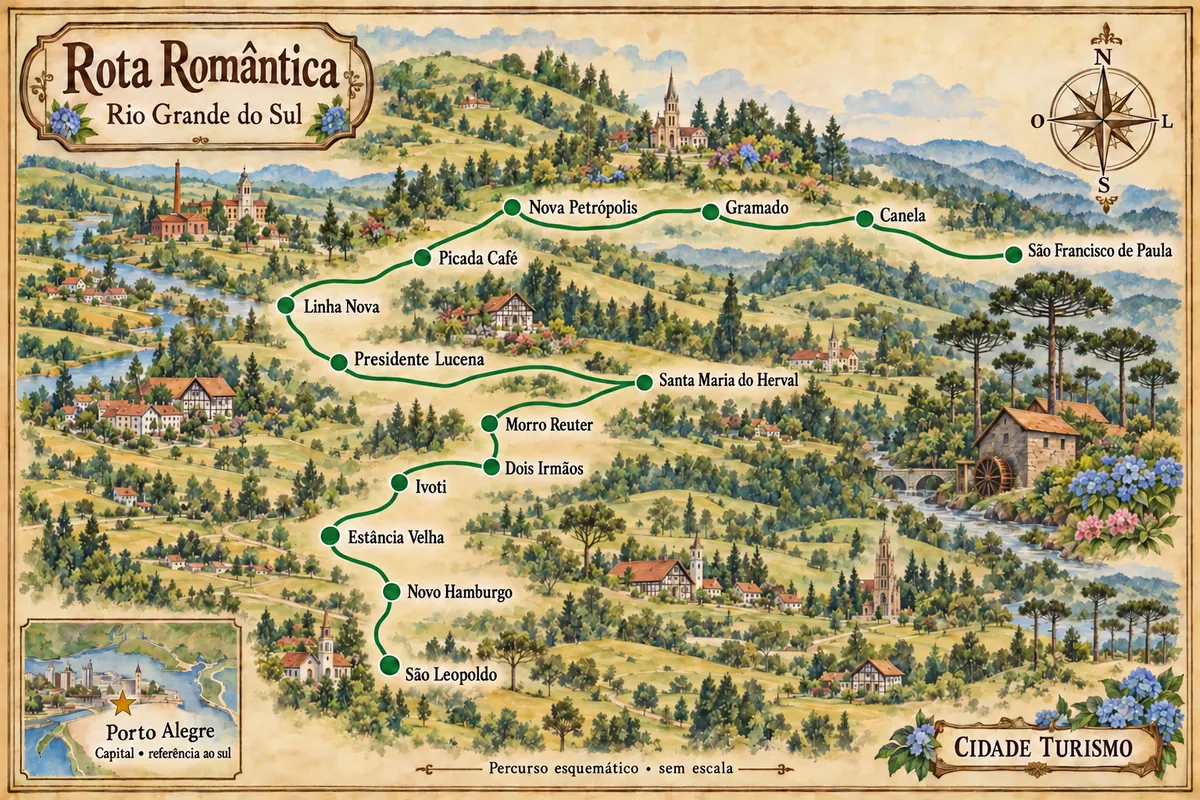
Via Nova Petrópolis, the Rota Romântica: BR-116 through Novo Hamburgo, Ivoti and Picada Café to Nova Petrópolis, then RS-235. It’s more winding.
In both cases, from Gramado follow Avenida das Hortênsias about 7 km to central Canela. From Caxias do Sul the route is BR-116 to Nova Petrópolis and RS-235.
There are tolls on the accesses, and the mountains can have fog, especially early morning and at night in the cold months: reduce speed and use low beams. People who rent cars usually pick them up at the airport.
Canela’s center is walkable: the Stone Cathedral, Rua Felisberto Soares, Praça João Corrêa and Estação Campos de Canella are close to each other. Everything else requires transport. Alpen Park is about 3 km from the center, Parque do Caracol about 7 km and Skyglass 14 km.
Taxis and ride‑hailing apps work well in town and to Gramado, but near the more remote parks there may be no cars available: arrange your return with the driver. The Bustour hop‑on hop‑off bus links Canela’s and Gramado’s main attractions; it does not run every day and ends service in the late afternoon. Agencies sell tours and transfers to the parks, usually with hotel pickup.
Gramado is about 7 km along Avenida das Hortênsias, roughly a 15‑minute drive without traffic; the Citral public bus connects the two bus stations. In July and on Christmas nights the route can be slow.
Odgovori na vaša vprašanja
Yes. The park reopened in 2025, after a renovation that rebuilt the panoramic viewpoint and added new facilities.
Yes. Citral connects the two centers throughout the day. It's about 8 km.
Canela is quieter and closer to the nature attractions, such as the Cascata do Caracol. Gramado has more restaurants and more going on at night. The two complement each other.
From late October to mid-January, with the town decorated and shows. It coincides with Gramado's Natal Luz: book lodging early.
Two days are enough for the center, Caracol Park and one or two more parks, like Skyglass and Alpen Park. With three days the trip is unhurried and you’ll have time for Castelinho Caracol, Mundo a Vapor and an afternoon in Gramado. If you have only one day, prioritize Caracol Waterfall and the Stone Cathedral.
Not in the center: everything is walkable. For the main attractions, yes—you’ll need transport, since Caracol Park is about 7 km away and Skyglass 14 km. Without a car, options are taxi, ride-hailing apps, the tourist bus on days it runs, or agency tours with hotel pickup. Always arrange the return from distant parks in advance.
It depends on what you want. June to August is cold, and July hosts the Colonial Festival. From late October to the first half of January the Christmas Dream event takes place. These are also the busiest times. April and May typically have less rain, clearer skies for viewing the waterfall and the Ferradura Valley, and fewer visitors.
Mundo a Vapor is mostly indoors, Castelinho Caracol is a museum inside a house and the Stone Cathedral can be visited inside, including the tower climb. At Alpen Park the cinema and indoor games still operate. Save Caracol Waterfall and Skyglass for clearer weather: with heavy fog the view disappears.
Alpen Park has a mountain sled where little ones ride down accompanied by an adult, a children’s area, and a height-based pass system. Mundo a Vapor displays working miniature machines and has a small train. At Parque do Caracol, the trails are short and there is the Sonho Vivo Station train. At the end of the year, Santa’s House opens at Praça João Corrêa.
There is no charge to visit the interior of the Stone Cathedral, to see the nighttime light projection on the façade, to walk along Rua Felisberto Soares, Praça João Corrêa and Estação Campos de Canella, or to photograph the locomotive on Mundo a Vapor’s façade. The Festa Colonial in July and the street program of the Sonho de Natal are usually free. At Alpen Park, you pay per attraction, not to enter the park grounds.
Caracol Waterfall has a 131-meter drop. It is inside Parque do Caracol, about 7 km from downtown Canela, and is seen head-on from the Cascata Viewpoint.
Local operators sell a guided tour that reaches the base of the fall through the Vale da Lageana forest, with a hike. Inside the park, the descent to the bottom depends on trail conditions, which have been closed for long periods: confirm with the park before planning. From the viewpoint above, you can see the entire fall.
Yes. At early evening, the church façade receives a lights-and-colors projection lasting a few minutes, visible from Praça da Matriz at no charge. Confirm the time on the day. During Sonho de Natal, the façade serves as the backdrop for larger performances.
They are different visits. Parque do Caracol is the waterfall site, with a viewpoint, forest trails and more activities for children. Skyglass is the glass platform over Vale da Ferradura, offering more adrenaline and less walking. Travelers with two days often do both; with only one day, the waterfall is the classic choice.
Rarely. Winters can have nights near 0 °C and frost on some days, but snowfall is sporadic and should not be relied on when planning the trip.
Caxias do Sul Regional Airport (CXJ) is the closest, just over 70 km away, but has few flights. In practice, most travelers use Salgado Filho International Airport (POA) in Porto Alegre, about 120 km away, and continue by bus, transfer or car.
In July, extending into the first days of August, in the city center. Farming families and local food producers sell cucas, breads, jams, cheeses and cold cuts, and there are brass bands, parades and colonial games at Praça João Corrêa. Dates change each year: check the program.
Brazilske poti
From the Vale dos Sinos to the Serra Gaúcha, a trip through fourteen municipalities, landscapes and heritage.
Več kot vodnik