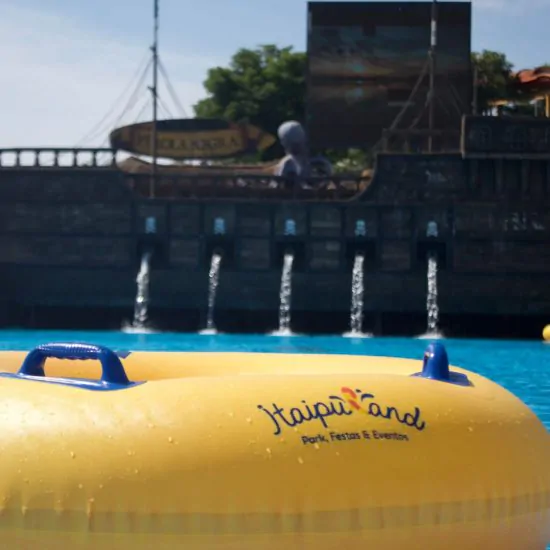
Itaipuland Thermas Park & Resort
PartnerWater park in Itaipulândia, PR, with resort and heated pools 72 km from Foz do Iguaçu. Family fun, tickets and lodging. Buy now!
Own hot spring pool

 Išči
Brazilija
 Antarktika
 Argentina
 Bolivija
 Čile
 Kolumbija
 Ekvator
 Gvajana
 Francoska Gvajana
 Falklandski otoki (Malvini)
 Paragvaj
 Peru
 Surinam
 Urugvaj
 Venezuela
 Nemčija
 Avstrija
 Belgija
 Hrvaška
 Danska
 Slovaška
 Slovenija
 Španija
 Finska
 Francija
 Grčija
 Nizozemska
 Madžarska
 Irska
 Islandija
 Italija
 Luksemburg
 Norveška
 Poljska
 Portugalska
 Združeno kraljestvo
 Češka
 Švedska
 Švica
 Turčija
 Bermudi
 Kanada
 Združene države Amerike
 Grenlandija
 Mehika
 Sveta Peter in Mihael
 Dominikanska republika
 JaponskaTurčija
 Južnoafriška republika
 Egipt
 Avstralija
 Fidži
 Nova Zelandija
 Papua Nova Gvineja

Paraná · Brazilija
Destinacija: Foz do Iguaçu and Region.
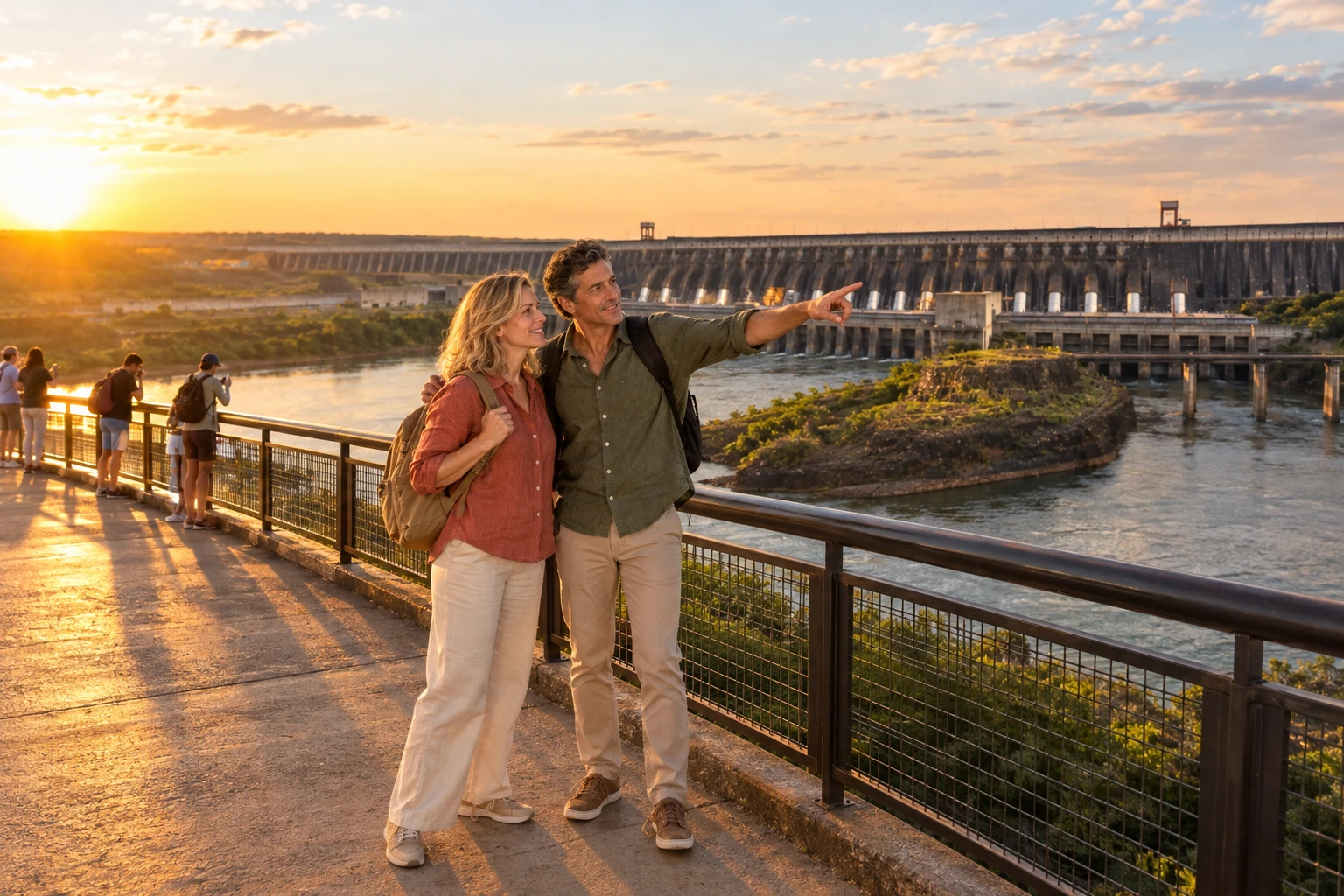
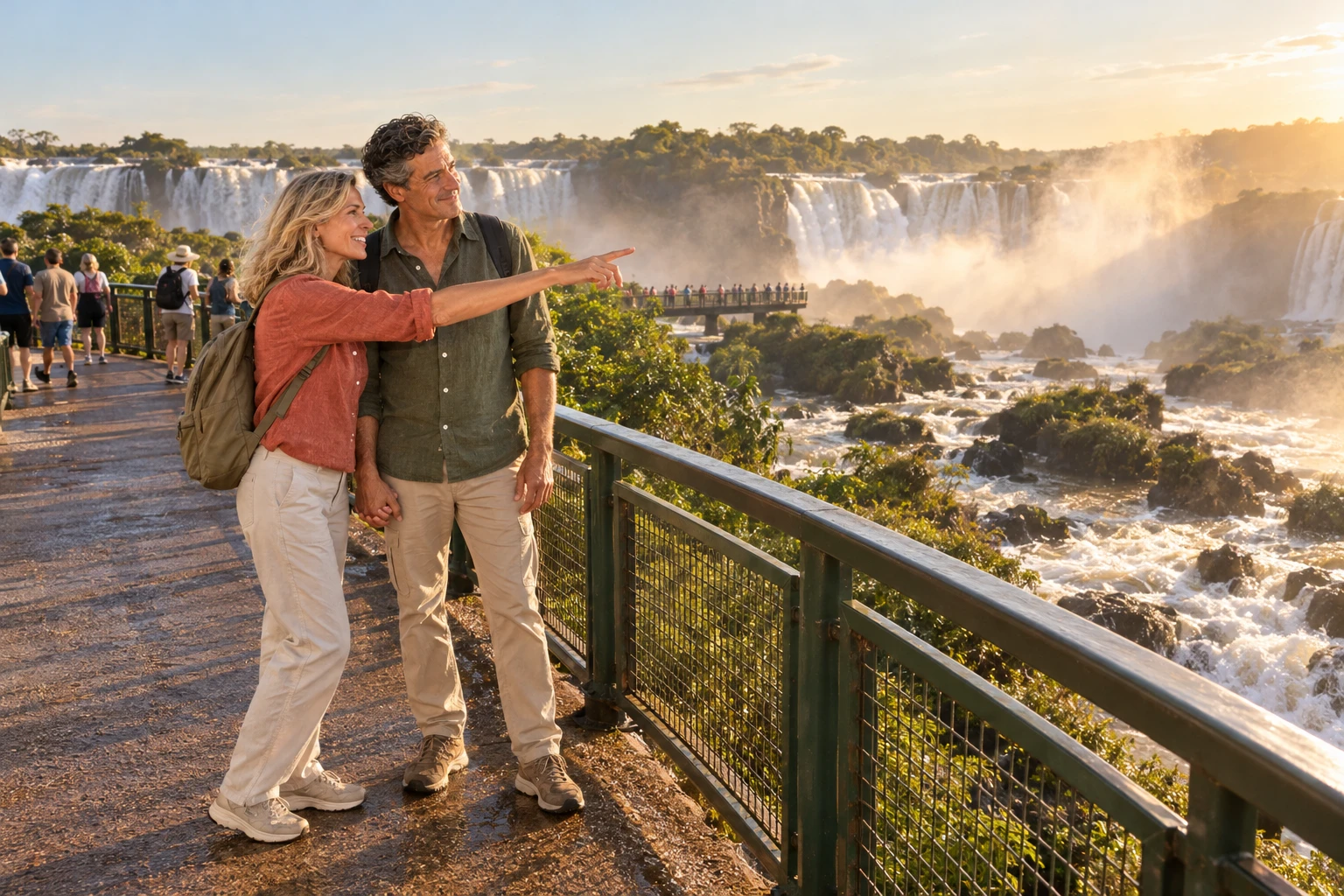
Illustrative images. The pictures in this guide are illustrations based on the real place, not photographs, and may differ from it.
Mesto
Foz do Iguaçu brings together grand river landscapes on the border between Brazil, Argentina and Paraguay. You can see the falls and explore the national park's forest on the Brazilian side.
Foz do Iguaçu is in the far west of Paraná, at the point where Brazil meets Argentina and Paraguay. Two rivers shape the city: the Iguaçu, which separates it from Puerto Iguazú in Argentina, and the Paraná, which separates it from Ciudad del Este in Paraguay. They meet at the Triple Frontier Landmark, where you can see all three countries at once.
It is the city of the Iguaçu Falls, a set of 275 drops inside Iguaçu National Park, and of the Itaipu Hydroelectric Plant, shared with Paraguay. Both visits are within the municipality, at opposite ends, and are the reason almost everyone comes. But Foz is not just the base for the Falls: it’s a city with its own life, with a busy downtown, amusement parks, a mosque, a Buddhist temple and a table where Arab food holds a prominent place.
To get oriented, it helps to think in three axes. The first is Rodovia das Cataratas, which leaves downtown and passes the airport, about 13 km away, to the entrance of Iguaçu National Park, about 18 km out. Along it are the Bird Park, adjoining the national park entrance, and many of the large hotels and theme parks, like Dreams Park Show. The second axis is the Itaipu area, with the plant, the Ecomuseum and, on the way, the Chen Tien Buddhist Temple. The third is downtown and the Triple Frontier: the Omar Ibn Al-Khattab Mosque, the Our Lady of Guadalupe Cathedral, the JK Sunday market and, about 6 km away, the Triple Frontier Landmark, with the Yup Star Ferris wheel nearby.
The mix of people is part of what you see. Foz has one of the largest Arab communities in Brazil, which began arriving in the 1950s with border trade, and the Buddhist temple was built in 1996 by Chinese communities from the region. This shows up in downtown streets, in restaurants serving hummus, kibbeh and kafta, and in guided visits to the mosque.
The climate varies a lot through the year. Summer, from December to March, is hot and rainy, with afternoon showers, and is when the Falls usually have more water. Winter, especially July and August, is drier and cooler, with cold mornings and clear days. October is often the rainiest month. The flow of the falls depends on rainfall across the entire Iguaçu River basin and on upstream hydroelectric plants, and does not follow a fixed calendar.
The city fills up in January and July, school-holiday months in Brazil and Argentina, at Easter and on long public-holiday weekends. Two days are enough for the Brazilian-side Falls, the Bird Park, Itaipu and the Triple Frontier. With three or four days you can add downtown, the parks and, for those who want, the Argentine side of the Falls and shopping in Paraguay, which require crossing the border.
Foz do Iguaçu – število nastanitev: 126.
Foz do Iguaçu – število lokalov: 48.
Foz do Iguaçu – nazivi in posebnosti
Partnerji vodnika Cidade Turismo
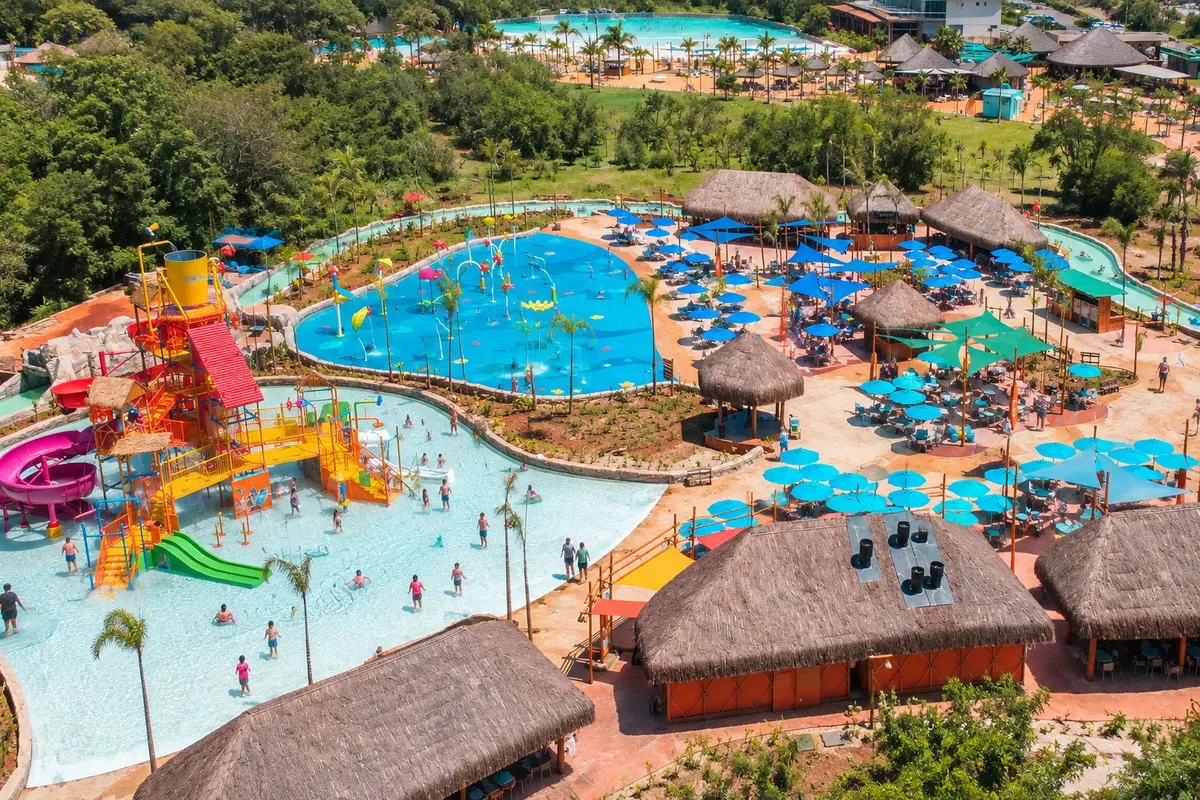
Water park in Itaipulândia, PR, with resort and heated pools 72 km from Foz do Iguaçu. Family fun, tickets and lodging. Buy now!
Own hot spring pool
Doživite kraj
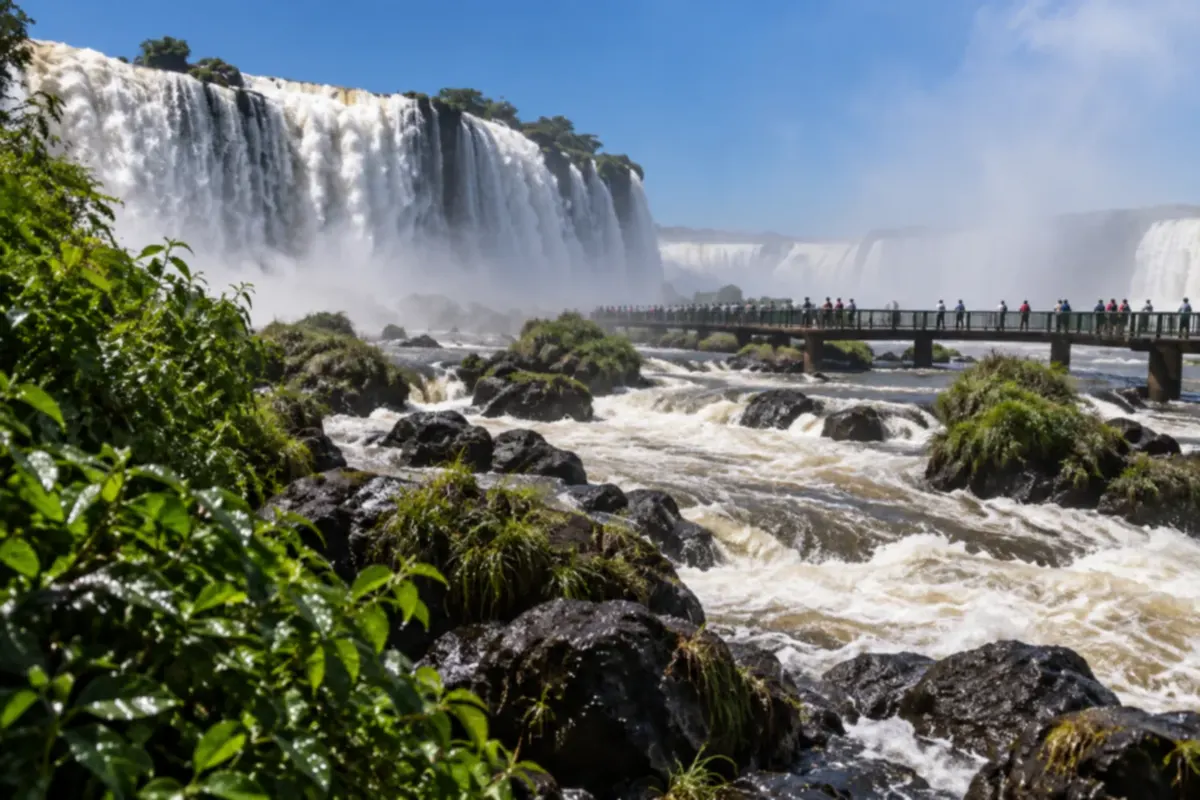
A set of 275 waterfalls inside the Parque Nacional do Iguaçu, voted one of the New Seven Wonders of Nature. The Brazilian trail delivers the panoramic view and the walkway that reaches out over the Garganta do Diabo.
Raziščite Cataratas do Iguaçu (lado brasileiro)
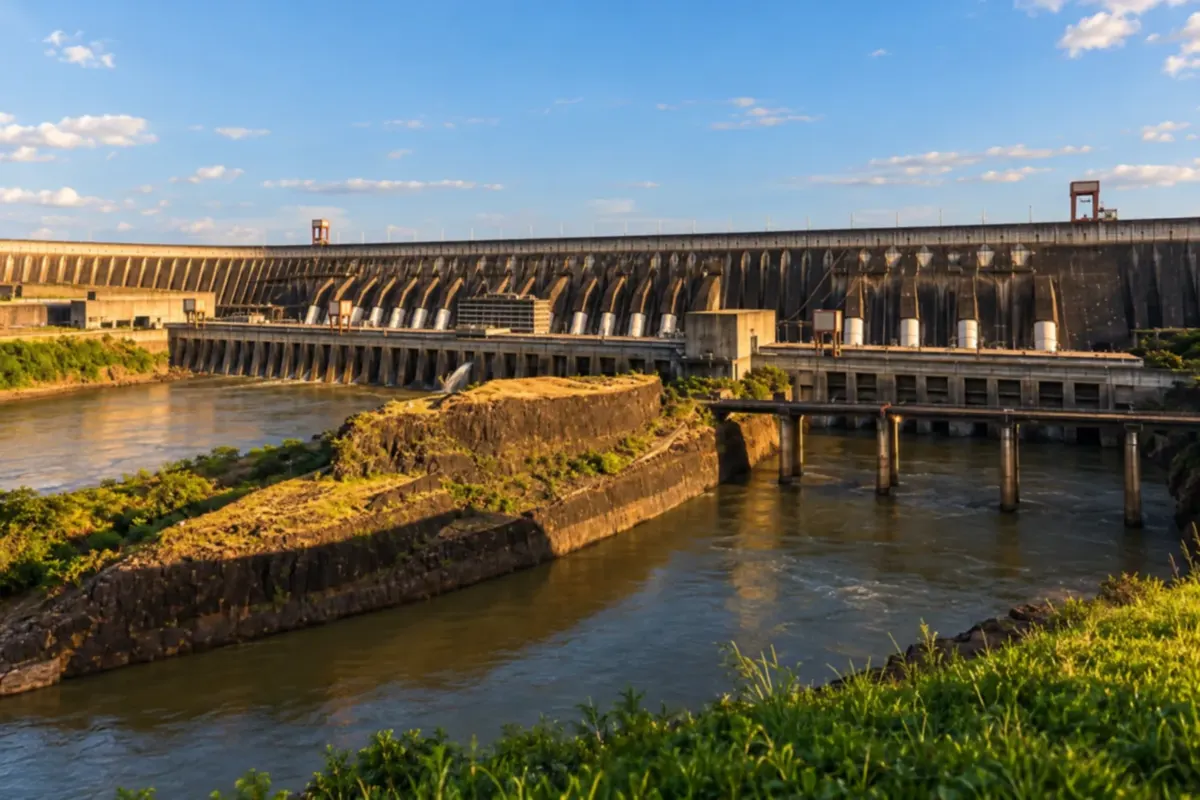
A binational Brazil-Paraguay project and one of the largest hydroelectric plants in the world, with panoramic tours and a tour inside the dam. At night, special lighting turns the dam wall into a show.
Raziščite Usina Hidrelétrica de Itaipu
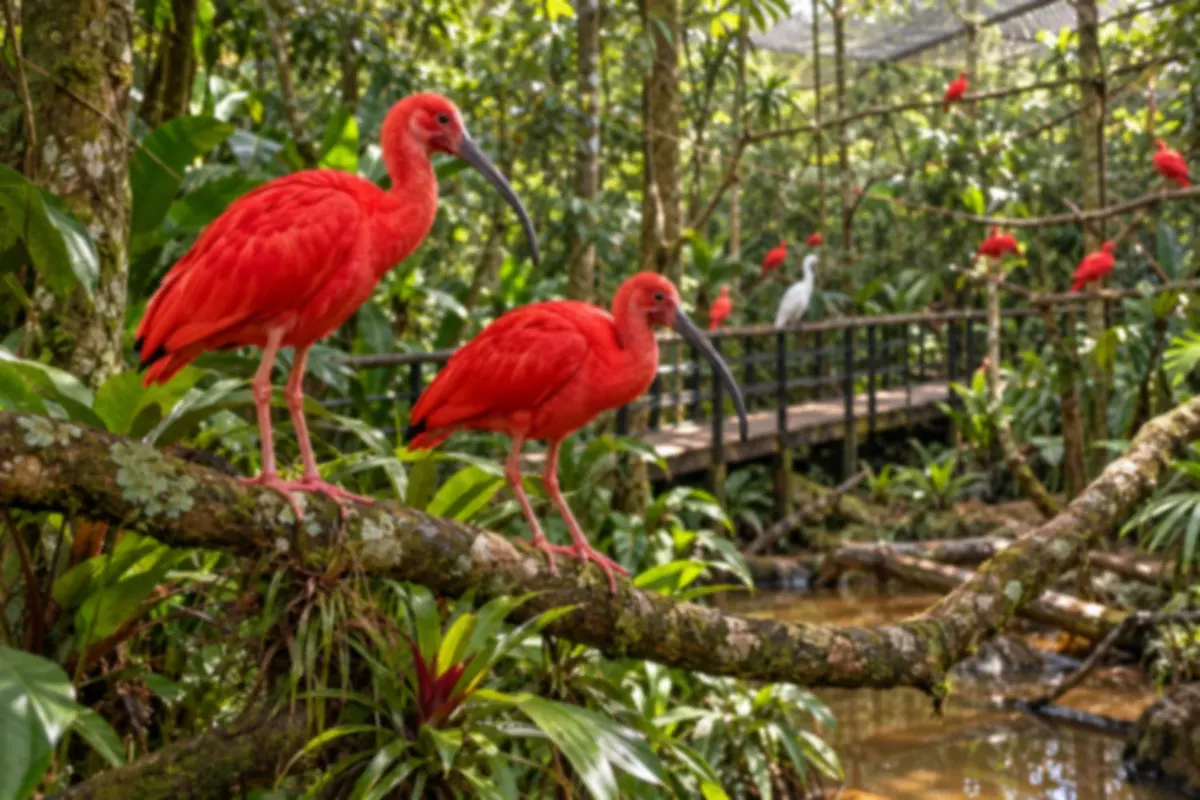
One of the largest bird parks in Latin America, with aviaries where you walk side by side with macaws, toucans and flamingos. It is at the entrance to the National Park and a must-stop with children.
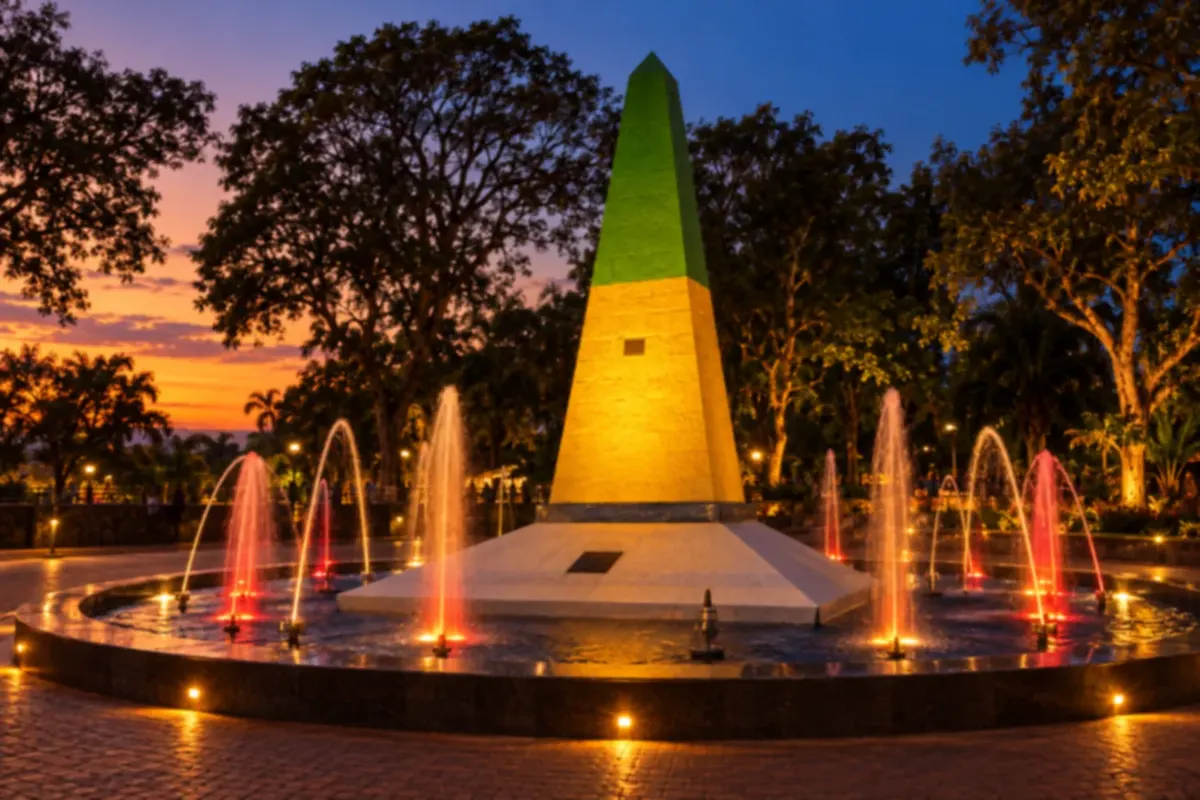
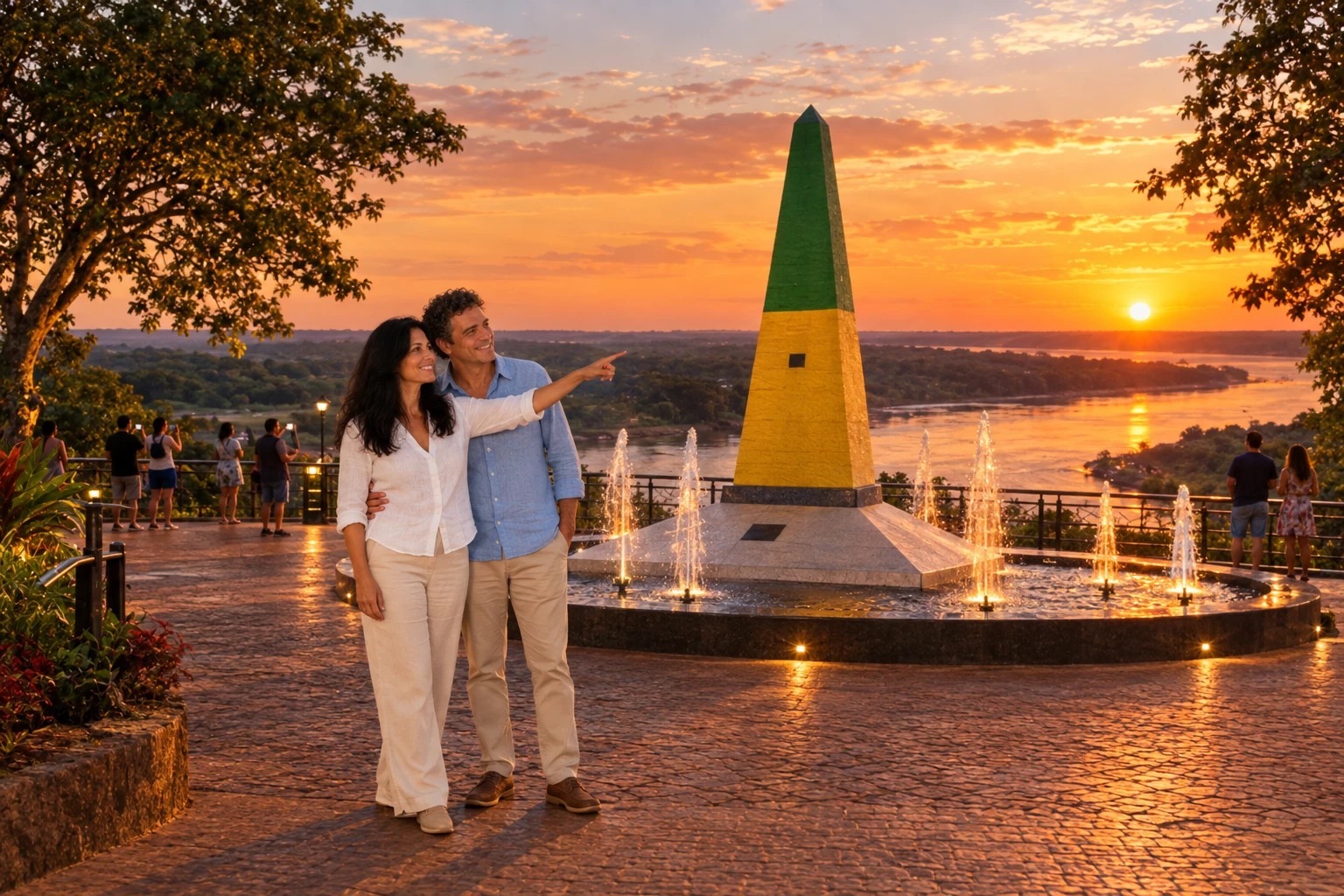
An obelisk where the Iguaçu and Paraná rivers meet, from which you can see Brazil, Argentina and Paraguay at the same time. The sunset with a cultural show is the highlight of the visit.
Raziščite Marco das Três Fronteiras
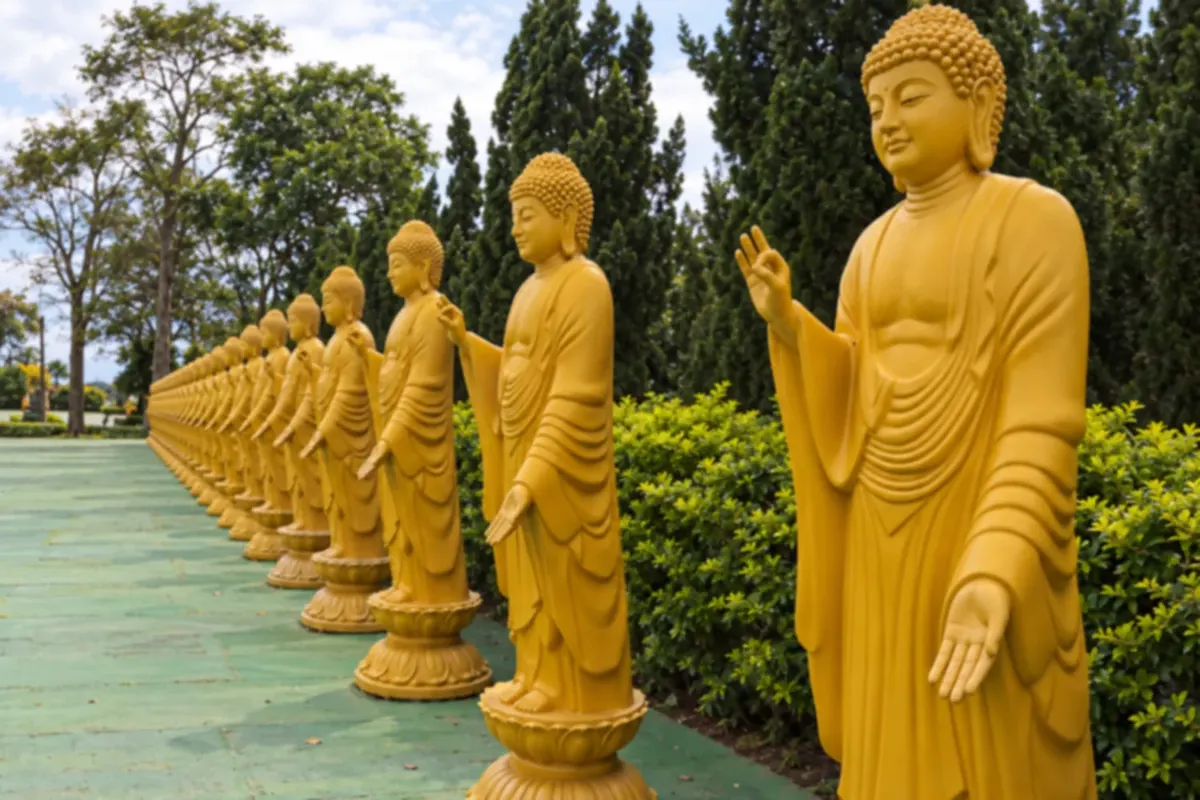
A Buddhist complex with a Buddha statue about 7 meters tall and more than a hundred sculptures spread across the gardens. The visit is peaceful and offers a beautiful view of the city.
Raziščite Templo Budista Chen Tien
A complex of indoor attractions with a wax museum, miniature wonders of the world, a dinosaur valley and an ice bar. It is the best backup plan for rainy days.
Water park of the Mabu Thermas complex in Foz do Iguaçu, featuring a thermal sand beach and waves up to 1.20 m in water around 36 °C, extreme water slides like the Wizzard and the Super Maverick, and areas for babies and children.
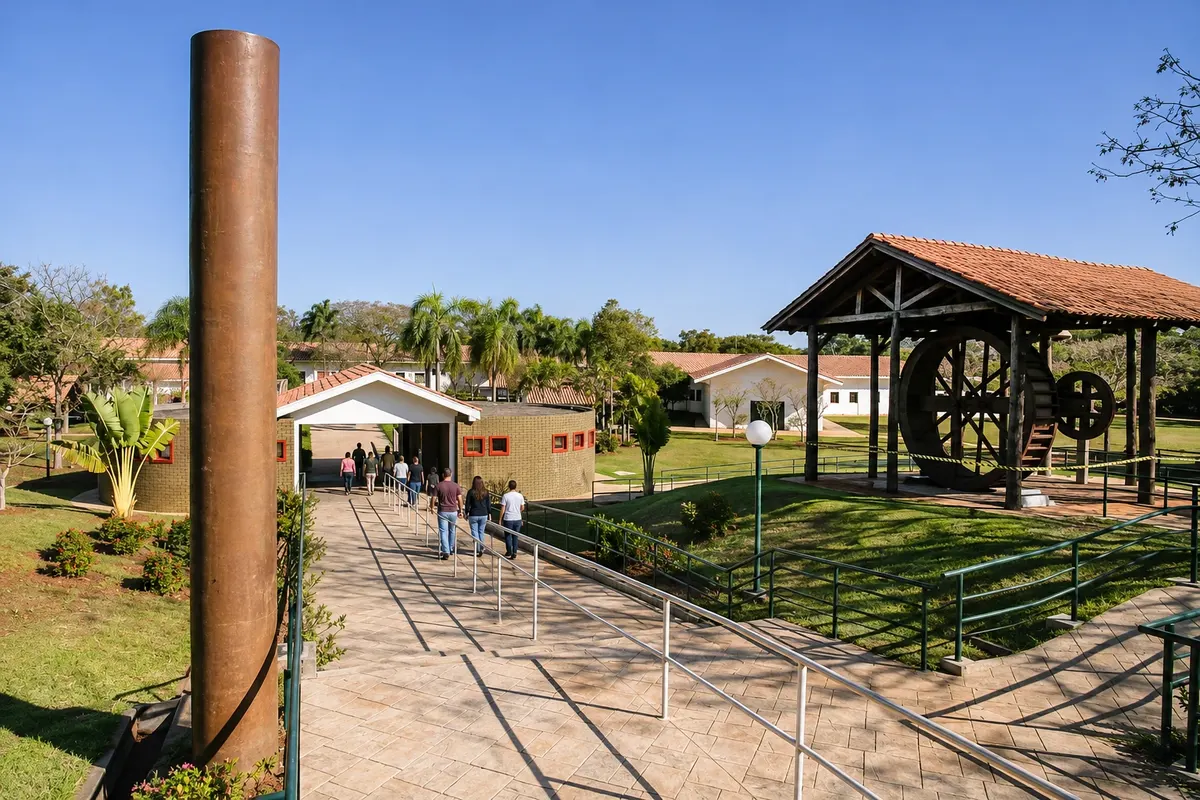
The Itaipu Binacional Museum on Avenida Tancredo Neves, on the way to the dam, with exhibits about the archaeology, fauna, flora and people of the area flooded by the reservoir, and about the construction of the hydroelectric plant.
A forested area of Itaipu Binacional on the banks of the reservoir in Foz do Iguaçu, with trails through the Atlantic Forest and enclosures for regional wildlife such as jaguar, tapir, ocelot and birds of prey. Visits are guided.
Raziščite Bela Vista Biological Refuge
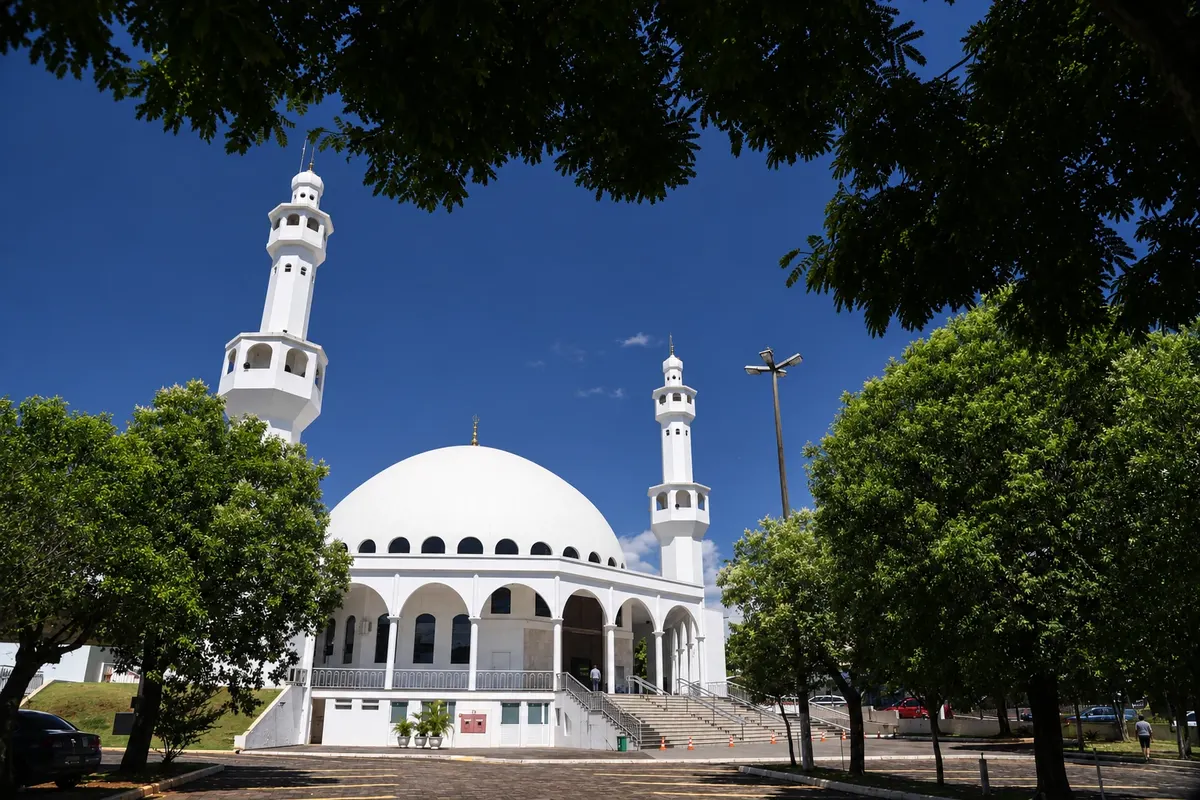
Mosque of Foz do Iguaçu’s Muslim community, on Rua Meca, with a dome and two white minarets. Guided visits explain the history of Arab immigration to the city and the precepts of Islam.
Raziščite Omar Ibn Al-Khattab Mosque
Aquarium on Avenida das Cataratas, next to the entrance of Iguaçu National Park, with more than 300 species in tanks that follow the water’s path from the Iguaçu and Paraná rivers to the Atlantic Ocean. Opened in 2025.
Kaj izbrati pred odhodom
Izhodišče, trajanje, potek, vključene storitve in okvirna cena vsakega izleta.
Downtown Foz does not have a single monument that summarizes the city, and that is precisely why it is worth a morning: it shows the Foz lived by its residents, the border city with many origins. The most striking visit is the Omar Ibn Al-Khattab Mosque, with a white dome and two minarets, a place of prayer for the Muslim community since the 1980s. Visits are guided, with frequent departures. On arrival, visitors are given clothing to borrow — a tunic for men and a scarf or veil for women — and receive an explanation about Islam. For many people, it is their first time inside a mosque. The Our Lady of Guadalupe Cathedral, also in the central area, is a modern church with a spacious interior and stained glass windows. Shopping completes the walk. Avenida Brasil is one of the most traditional shopping streets downtown, and Avenida JK has many restaurants. It is in the downtown streets that Arabic food is most present: restaurants serve hummus, kibbeh nayyeh, kafta and tabbouleh, and having lunch like this is part of the experience. On Sunday mornings, Avenida JK hosts the Feirinha da JK, the city’s best-known market, with handicrafts, pastel and sugarcane juice.
Kraji na poti: Omar Ibn Al-Khattab Mosque, Our Lady of Guadalupe Cathedral, Praça da Paz (Peace Square), Avenida JK, Avenida Brasil.
Vključuje: There is no charge to walk around downtown, enter the cathedral or visit the market. The guided visit to the mosque requires a ticket; check the current price list. Meals are at your own expense.
Nasvet: The mosque does not receive visitors on Sundays, on Monday mornings or during religious celebrations; the market is only on Sundays. Choose the day according to what interests you most and confirm visiting hours for the mosque and the cathedral before you go.
Najboljši čas za obisk: Year-round. In summer, start early, before the heat.
The two most popular visits in Foz are next to each other at the end of the Rodovia das Cataratas, about 18 km from downtown, and can be done in the same day without hurry and without a tour agency. City bus line 120 leaves from the Urban Transport Terminal in downtown, passes the airport and the Bird Park, and ends at the Iguaçu National Park Visitors’ Center in about 30 minutes. Taxis and ride-hailing cars do the same route. Start with the Falls, preferably at the earliest entry time. From the Visitors’ Center, the park bus runs about 10 km through the forest to the start of the Falls Trail, a roughly 1 km walk along boardwalks facing the falls, which ends at the walkway over the river in front of the Devil’s Throat. The visit takes three to four hours. On the way out, the Bird Park is about 500 meters from the national park entrance. The route, about 1.6 km, goes through aviaries where visitors enter the space with macaws, toucans and other Atlantic Forest birds, and takes about two hours. It also operates in the rain. Opposite the national park entrance there is also a covered, air-conditioned aquarium that serves as an alternative on bad-weather days.
Kraji na poti: Iguaçu National Park, Falls Trail, Devil’s Throat, Bird Park, Rodovia das Cataratas (Cataratas Highway).
Vključuje: Each park has its own ticket, purchased separately. The Falls ticket includes the internal shuttle. City-bus fare, parking and food are paid separately; check the current price list.
Nasvet: Buy the Falls ticket in advance with a chosen date and time. Bring a rain poncho for the Devil’s Throat walkway and do not feed the coatis. If you want the boat ride to the falls, reserve an extra two hours and leave the bird visits for another day.
Najboljši čas za obisk: All year. January, July and holidays have longer lines; on weekdays in May, August and November there is usually less crowding.
The north side of Foz is where the Itaipu Hydroelectric Dam is located, and you can combine a visit to the dam, the museum that tells its story, and the Buddhist Temple on the same outing. Start at the Chen Tien Buddhist Temple, atop a hill between downtown and Itaipu. The gardens have over a hundred statues, including a seated Buddha of about 7 meters, and an open view of the city and Ciudad del Este across the river. The visit is self-guided and takes about an hour. Then go to the Itaipu Visitor Reception Center on Avenida Tancredo Neves. The panoramic tour, the most popular, is done on a bus open on the sides that travels the external area of the dam, goes over the top of the dam, and stops at two viewpoints; it lasts a little over an hour, with frequent departures. Those who want to enter the dam need the special circuit, which is longer, has limited spots, and is only for ages 14 and up. Nearby, the Itaipu Ecomuseum completes the visit with models, objects, and panels about the dam’s construction, biodiversity, and the formation of the region. Bus lines 101, 102, and 104 connect downtown to Itaipu, and line 103 passes by the Buddhist Temple.
Kraji na poti: Itaipu Hydroelectric Dam, Visitor Reception Center, Itaipu Ecomuseum, Chen Tien Buddhist Temple.
Vključuje: Visits to the dam require a ticket, with internal transport and a guide. At the Buddhist Temple and the Ecomuseum there is no entry fee; the temple accepts donations. Transport and food are extra; check the current price table.
Nasvet: The temple is closed on Mondays and the Ecomuseum is closed on Tuesdays. At the temple, avoid tank tops, shorts, and short skirts. Bring a jacket or raincoat for the open bus at the dam and a photo ID for the special circuit.
Najboljši čas za obisk: All year. The dam spillway is open only when there is surplus water in the reservoir, which has no fixed schedule.
The point where the Iguaçu River flows into the Paraná River is about 6 km from Foz’s center along Avenida General Meira, and it’s where the idea of a triple border stops being just a point on a map: from one bank you can see Argentina on one side and Paraguay on the other. The Marco das Três Fronteiras is the visitor area around the Brazilian obelisk, painted green and yellow. It has viewpoints over the rivers, a scenic town inspired by the Jesuit Missions, shops, a children’s area and places to eat. Late afternoon is the most popular time because of the sunset over the water. Early in the evening there are music and dance performances from the three countries, included with the ticket. Nearby is Yup Star, Foz’s Ferris wheel, 88 meters high with 36 enclosed, air-conditioned cabins. A ride lasts about 20 minutes and from the top you can see the Paraná River, the Friendship Bridge and the three countries at once. You can ride before sunset and return in time to watch it from the Marco, or ride later when the city is already lit up. This is the program that best closes a day at the Falls or Itaipu, because it starts when the parks are closing.
Kraji na poti: Marco das Três Fronteiras, meeting point of the Iguaçu and Paraná rivers, Yup Star.
Vključuje: The Marco and the Ferris wheel have separate tickets. The evening performances are included with the Marco ticket. Transportation and food are not included; check the current price list.
Nasvet: Check the sunset time for the day and arrive with time to spare. The Marco is closed on Mondays and the Ferris wheel also has one weekday off: confirm before you go. If you return by taxi, arrange the ride back with the driver.
Najboljši čas za obisk: All year, preferably on a clear day. In winter the sun sets earlier and evenings require warm clothing.
Dreams Park Show is an attraction complex on Avenida das Cataratas, on the route between the city center and Iguaçu National Park. Since most of it is indoors and it stays open into the evening, it’s the most common choice for rainy days and for after visiting the parks. The attractions are independent and can be visited one by one or with a combined ticket. The Wax Museum gathers life-size figures of personalities from film and music. Next door, Wonders of the World displays famous monuments in miniature, such as the Eiffel Tower and the Statue of Liberty. The Valley of the Dinosaurs is the outdoor part: a walk along a trail with life-size dinosaur replicas that move and make sounds. The Dreams Ice Bar is a bar with walls and decor made of ice, kept at minus 11°C. Visits last about half an hour, and the park lends jackets and gloves at the entrance. Dreams Motor Show exhibits more than 30 motorcycles, both classic and customized, and includes a bar and stage. With children, the wax museum and the dinosaurs fill a good afternoon; adults often combine the ice bar and the motorcycle exhibit for an evening.
Kraji na poti: Wax Museum, Wonders of the World, Valley of the Dinosaurs, Dreams Ice Bar, Dreams Motor Show.
Vključuje: Each attraction requires a separate ticket, and there are combo tickets that include several of them. Food and transportation are not included; check the current price list and what each combo covers.
Nasvet: See how much time you have before buying a full combo: all attractions in one day is tiring. At the ice bar, wear long pants and closed shoes.
Najboljši čas za obisk: All year. In January, July and on holidays, lines are longer in the early evening.
Blue Park is a thermal-water water park fed by the Guarani Aquifer. The water is around 36 °C, which makes it an option even on cold winter days. The main attraction is the thermal beach: a large pool with a stretch of sand and artificial waves up to 1.20 meters high, in hot water. Around it there are water slides of various sizes, from the most extreme to children’s, a warm-water river, pools and separate areas for babies and toddlers. It’s a day to rest in the middle of the trip. After two days of walking the Falls’ walkways and the corridors of Itaipu, it’s a chance to stop, especially with children. The park operates during daytime hours and closes one day a week. The ticket is valid for the day.
Kraji na poti: Blue Park, thermal beach, water slides, warm-water river.
Vključuje: The ticket grants access to the pools, the thermal beach and the water slides. Food and transport are paid separately; check the current price list.
Nasvet: The park is closed on Tuesdays: confirm before you go. Bring swimwear, sunscreen and flip-flops, and check slide-height rules.
Najboljši čas za obisk: All year. The hot water compensates for cold days; in summer, go on a weekday.
Wonder Park is an entertainment complex with four attractions, open from late afternoon into the evening, and one answer to the question of what to do in Foz after the day parks close. Movie Cars is a museum of cars and film sets, with vehicles known from cinema, from street-racing movies to time-travel films. It’s of interest both to car fans and to anyone who grew up watching those movies. Big Land reverses the scale: it’s a world of oversized objects that visitors walk through, with rides and activities. The other two attractions only make sense at night. The Water Show is an evening fountain spectacle that moves to music, with lights and projections on mist. Lumina Park is a trail lit through the forest, with light scenes and interactive points along the path. Tickets are sold per attraction or as a package. For those with only one night, a good combination is the car museum plus one of the nighttime attractions.
Kraji na poti: Movie Cars, Big Land, Water Show, Lumina Park.
Vključuje: Each attraction has its own ticket, and there is a combined ticket. Food and transport are extra; check the current price table.
Nasvet: Confirm the showtimes for the Water Show and arrive early. On rainy nights, outdoor attractions may not operate: have the car museum as a backup plan.
Najboljši čas za obisk: All year. In winter, bring warm clothing for outdoor attractions.
Po dnevih
Predlogi za načrtovanje poti. Vrstni red dni prilagodite vremenu in razpoložljivosti izletov.
With only one day, stick to the essentials and don’t cross the border. Leave early for Iguaçu National Park, about 18 km from downtown, with tickets for the first entry slot. Walk the Cataracts Trail at a relaxed pace, up to the Devil’s Throat walkway. Plan three to four hours. Have lunch inside the park or just outside, then go to the Parque das Aves next door, which takes about two hours to visit. Mid-afternoon, head back toward downtown and go to the Three Borders Landmark, about 6 km from there, to watch the sunset at the confluence of the rivers and see the early-evening shows. If you still have energy, the Ferris wheel is nearby. On Mondays the Landmark is closed: substitute the Buddhist Temple in the afternoon, or have an Arabian dinner in downtown.
Devote the first day to the Cataracts Road. In the morning, visit the falls on the Brazilian side; those who want can add the boat trip that gets close to the falls, which departs from the park’s first bus stop and requires about two extra hours. After lunch, visit Parque das Aves, next door. On the way back, Dreams Park Show is on the route to downtown and stays open into the night: the Valley of the Dinosaurs with children, or the ice bar without them, closes the day.
Start at the Chen Tien Buddhist Temple, which opens in the morning, then go to Itaipu. Take the panoramic tour of the plant and visit the Ecomuseum. Have lunch downtown, preferably Arabian food, and visit the Omar Ibn Al-Khattab Mosque in the afternoon if it is an open-visit day. In the late afternoon, go to the Three Borders Landmark for the sunset and stay for the shows. The Yup Star Ferris wheel is nearby.
The first day is for the Falls. Go at the first entry time, walk the Cataracts Trail and stay as long as you want in front of the Devil’s Throat; if your budget allows, also take the boat ride. In the afternoon, visit Parque das Aves, about 500 meters from the national park entrance. At night, rest: dinner downtown or near the hotel.
In the morning, visit the Chen Tien Buddhist Temple and take the panoramic tour of Itaipu, including a stop at the Ecomuseum. With teenagers from about 14 years old, the special circuit that goes inside the plant is worth swapping in, provided it’s booked in advance. After lunch, a rest at the hotel helps, because the day ends late. In the late afternoon, head to the Triple Border: the Yup Star Ferris wheel first, the sunset at the Three Borders Landmark afterward, and the early-evening music and dance performances.
Morning in downtown: the guided visit to the Omar Ibn Al-Khattab Mosque, the Our Lady of Guadalupe Cathedral and a stroll along Avenida Brasil’s shops. If it’s Sunday, swap the mosque—which does not receive visits that day—for the JK Fair. Have lunch with Arabian food. The afternoon is for Blue Park, the hot-water theme park, or, on a rainy day, Dreams Park Show. At night, Wonder Park closes the trip with the Water Show and the illuminated trail. Those with more days can cross to the Argentine side of the Falls, which takes a full day, or go shopping in Ciudad del Este, Paraguay. Both crossings are covered in the Foz do Iguaçu regional guide.
Najboljši čas za obisk
The seasons shown are the most usual ones; nature doesn't always follow the calendar.
School holidays in Brazil and Argentina · Falls usually carry more water
Hot, rainy month with afternoon showers. The city and the parks are crowded, especially in the first weeks: buy tickets in advance and visit the Falls at the earliest opening time. The heat calls for Blue Park or an afternoon in a covered place; nights are good for the Three Borders Landmark.
Carnival · Heat and rain
Heat continues, with frequent rain. Crowds remain high until Carnival and drop afterward. Bring a rain poncho for the parades and reserve covered attractions, like Dreams Park Show, for stormy afternoons.
End of summer · Easter in some years
Still warm with frequent showers. After school holidays, lines get shorter and hotels have more availability. Easter fills the city when it falls in March; check the date for your travel year.
Autumn · Easter and Tiradentes holiday
Temperatures become milder and it rains less. A good month for walking the walkways and downtown without summer heat. Long holidays increase crowds for a few days.
Iguaçu Half Marathon · Low season
Pleasant days and cooler nights, with parks emptier on weekdays. In May the Iguaçu Half Marathon takes place, a race inside Iguaçu National Park that brings thousands of athletes over a weekend; book accommodation in advance for those dates.
Foz anniversary · Tourism fair · Start of the cool season
Cool weather begins, with dry days interspersed with rain. June is the city's anniversary month, with a road race and local events, and hosts a large tourism industry festival that fills hotels for a few days. Bring warm clothing for Itaipu’s open bus and for the evening at the Landmark.
Winter school holidays in Brazil and Argentina · Driest month
Driest and coldest month of the year, with chilly mornings and clear days. School holidays in both countries fill the city: book lodging and tickets in advance. The warm water at Blue Park makes it a good choice; the falls usually have lower flow.
Low season · Dry days
Dry and still cool, with lots of clear sky—good for the Ferris wheel and for the sunset at the Three Borders Landmark. Crowds drop after the holidays. During long droughts, the Falls lose volume.
Spring · Rain returns
Temperatures rise and the rain returns. In years of high water, walkways and trails along the river may close for a few days: check before you go. Otherwise it’s a quiet month, with good accommodation rates.
Rainiest month · October 12 public holiday
Usually the wettest month. The falls tend to be voluminous and the water can be muddy. Always have a covered plan, such as Dreams Park Show, the aquarium opposite the national park or a visit to the mosque.
Heat returns · Long weekends
The heat returns and rains are less frequent than in October. Good balance between water volume at the Falls and crowds in the parks. November long weekends increase visitor numbers for a few days.
Christmas of Waters and Lights · Holidays from the second half of the month
Hot and rainy. The first half of the month is calm; from Christmas the city fills up. In December, Foz decorates for the Christmas of Waters and Lights, with decorations and events across the city, especially downtown.
Načrtujte pot
Foz do Iguaçu International Airport (IGU) is on Rodovia das Cataratas, about 13 km from downtown and a few kilometers from the entrance to Iguaçu National Park. It receives direct flights from several Brazilian capitals; travelers from other countries usually connect through a larger Brazilian airport.
From the airport to downtown there are taxis, ride-hailing cars and local bus line 120, the same line that goes in the other direction to the Falls. Those staying on Rodovia das Cataratas are a few minutes from the arrivals area.
On the Argentine side, Puerto Iguazú Airport (IGR) receives flights from Buenos Aires. If you arrive there and stay in Foz, you must cross the border and stop at immigration.
Foz do Iguaçu’s international bus station receives buses from Curitiba, São Paulo, Porto Alegre and other cities in Brazil’s South and Southeast. The trip from Curitiba takes about 9 to 10 hours; from São Paulo, 16 to 20 hours.
From the bus station to downtown, use a taxi, ride-hailing car or local bus to the Urban Transport Terminal (TTU), where lines depart for the Falls, for Itaipu and for the Three Borders Landmark. Check the current timetable.
BR-277 crosses Paraná from east to west and ends in Foz do Iguaçu. From Curitiba it’s about 640 km, roughly 8 hours, with tolls on several stretches.
In the city, a car is useful because attractions lie far apart in three directions: Rodovia das Cataratas, the Itaipu area and the Triple Border. Parks charge separate parking fees.
If you plan to cross to Argentina or Paraguay by car, check beforehand the vehicle documents and insurance required by each country.
Foz is spread out, and only the downtown area is walkable. For the rest there are three options.
The local bus departs from the Urban Transport Terminal (TTU) in downtown. Line 120 goes to the airport, Parque das Aves and Iguaçu National Park in about 30 minutes. Line 103 serves the Buddhist Temple and the Three Borders Landmark, and lines 101, 102 and 104 go to Itaipu. It’s the most economical way.
Taxis and ride-hailing cars operate throughout the city and are the most practical option at night, for theme parks and for groups. For long or repeated trips the cost rises; in that case a rental car may be worth it.
Agencies sell tours with transport from hotels, including a city tour of about five and a half hours that passes the Three Borders Landmark, the Buddhist Temple and the Mosque.
When choosing a hotel, weigh the location: downtown has more transport, shops and restaurants; Rodovia das Cataratas is closer to the national park and the airport, with larger hotels.
Two bridges leave the city. The Fraternity Bridge, over the Iguaçu River, leads to Puerto Iguazú and the Argentine side of the Falls, with a mandatory stop at Argentine immigration. The Friendship Bridge, over the Paraná River, leads to Ciudad del Este, Paraguay.
Entry requirements depend on each traveler’s nationality and documents, and minors have specific rules. Always carry the original travel document, even for a quick trip.
Most visitors cross with a van or agency car, which handles the route and the waiting at the border. The bridges often have lines, especially on holidays. Requirements can change: confirm before traveling.
Odgovori na vaša vprašanja
It is recommended. Tickets are sold online, for a set date and time. The park is open every day, including Mondays.
Yes. The Parque das Aves is about 500 meters from the national park entrance. Do the Falls in the morning and the birds in the afternoon.
On the panoramic tour, yes. Itaipu Especial, which goes inside the plant, has a minimum age of 14 and requires a photo ID and closed-toe shoes.
Itaipu Iluminada takes place on Friday and Saturday nights. In high season, buy in advance.
No. It is open Tuesday to Sunday, from afternoon into the evening.
Within the city you can visit Itaipu Dam and the Ecomuseum, the Bird Park (Parque das Aves), the Three Borders Landmark with sunset at the meeting of the rivers, the Yup Star Ferris wheel, the Chen Tien Buddhist Temple and the Omar Ibn Al-Khattab Mosque. For families there are Dreams Park Show, Wonder Park and the Blue Park hot-water theme park. In downtown, be sure to try the Arabic food and, on Sundays, visit the JK little market (Feirinha da JK).
The Falls and the Bird Park operate in the rain — a rain poncho usually solves it. For shelter there is Dreams Park Show (wax museum and ice bar), the movie car museum at Wonder Park, the aquarium in front of the national park entrance, guided visits to the mosque and the Itaipu Ecomuseum. If the river rises a lot, the Devil’s Throat walkway may close: check on the day.
The most popular program is late afternoon at the Three Borders Landmark, which continues into the evening with music and dance performances, and the nearby Ferris wheel. Wonder Park has the Water Show and an illuminated trail; Dreams Park Show stays open into the night. For dining there are Arabic restaurants and parrillas downtown, and the Mercado Público Barrageiro with restaurants, grocers and live music on some nights.
Downtown has more restaurants, shops and transport, including the terminal for buses to the Falls, Itaipu and the Three Borders Landmark; lodging there is often more affordable. The Cataratas Highway is closer to the national park, the Bird Park and the airport, and concentrates larger hotels, but at night you’ll rely on taxis or ride apps for dinner out.
Yes — and there’s enough to do for three days or more: the Falls on the Brazilian side, the Bird Park, Itaipu, the Three Borders Landmark, downtown and the parks are all in Brazil. From the Landmark and the Ferris wheel you can see Argentina and Paraguay without leaving the country. Crossing is only necessary to visit the Argentine side of the Falls or to shop in Ciudad del Este.
The Bird Park, where you enter the aviaries, is usually a favorite, along with the Dinosaur Valley at Dreams Park Show and Blue Park, which has a warm-water beach and baby areas. At the Falls the trail is short with walkways; coatis must not be fed. At Itaipu the panoramic visit accepts all ages. Wonder Park has Big Land, a world of giant things with rides.
Because the city hosts one of Brazil’s largest Arab communities, which began arriving in the 1950s attracted by border trade. The community built the Omar Ibn Al-Khattab Mosque, open for guided visits, and spread restaurants and simple eateries downtown serving hummus, kibbeh nayeh, kafta and tabbouleh. Eating this cuisine is one of the city’s local experiences.
On Sunday mornings, along Avenida JK beside Praça da Paz in downtown Foz. It’s the city’s best-known market, with stalls selling crafts, pastel, sugarcane juice and other street foods. There is no entrance fee.
The Yup Star is 88 meters tall and has 36 enclosed, air-conditioned cabins. It’s near the Three Borders Landmark and a ride lasts about 20 minutes, with views of the Paraná River, the Friendship Bridge and the three countries.
Yes. The pools are fed with thermal water from the Guarani Aquifer at about 36 °C, so the water is warm even on cold days; you’ll feel the cold outside the water. The park closes one day a week: confirm before you go.
The airport is on Rodovia das Cataratas, about 13 km from downtown. There are taxis, ride‑hail cars, and urban bus line 120, which goes to the Urban Transport Terminal. The same line, in the opposite direction, goes to the Bird Park and Iguaçu National Park.
The Brazilian side of the Falls in the morning, in three to four hours; the Bird Park, next door, after lunch; and sunset at the Marco das Três Fronteiras, about 6 km from downtown, with shows starting in the early evening. Buy the Falls ticket in advance for the first time slot, and leave Itaipu and the Argentine side for another visit.
Fotografije popotnikov

Več kot vodnik