La Roche-en-Ardenne and the Battle of the Bulge: museum, tanks and memorials
Odhod: La Roche-en-Ardenne town centre Peš Približno 2 uri Popoldne Lahko
In World War II, La Roche-en-Ardenne was caught in the middle of the Battle of the Bulge, the German offensive that began on December 16, 1944. German troops retook the town in December, bombings destroyed much of it and 116 residents were killed. The Allies reoccupied it in January 1945.
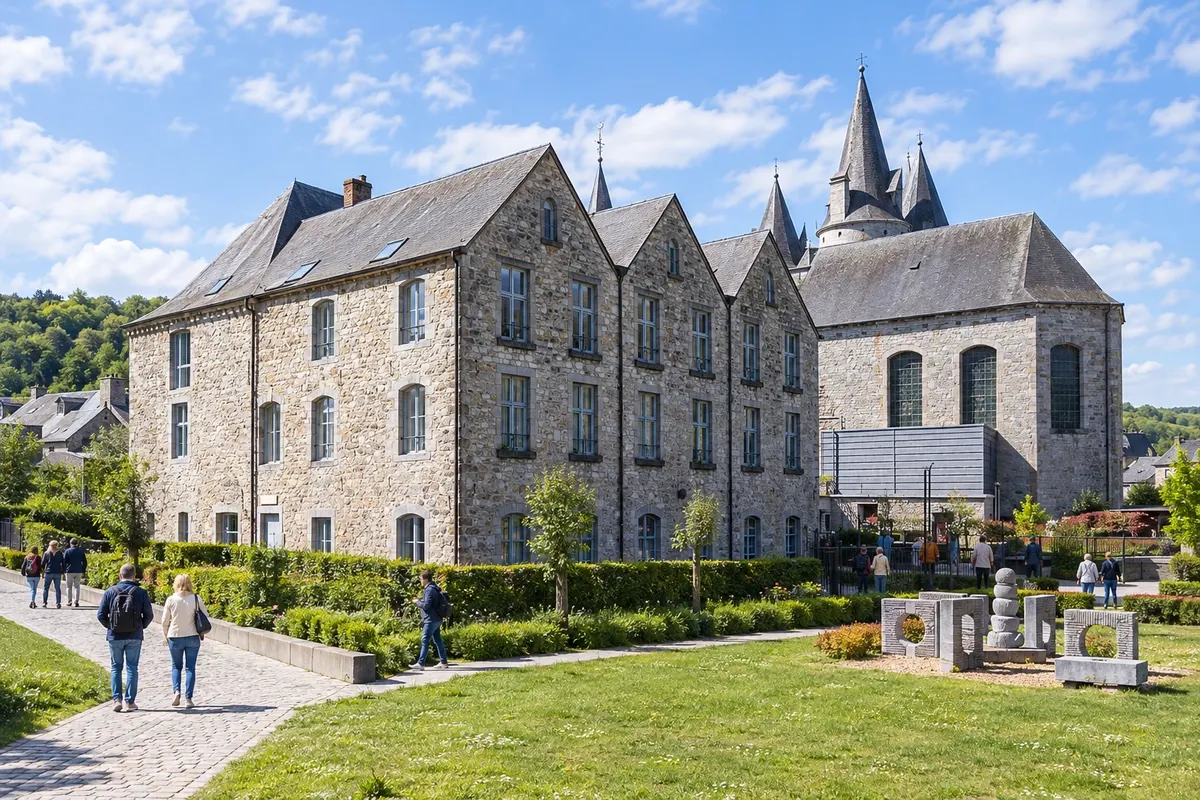
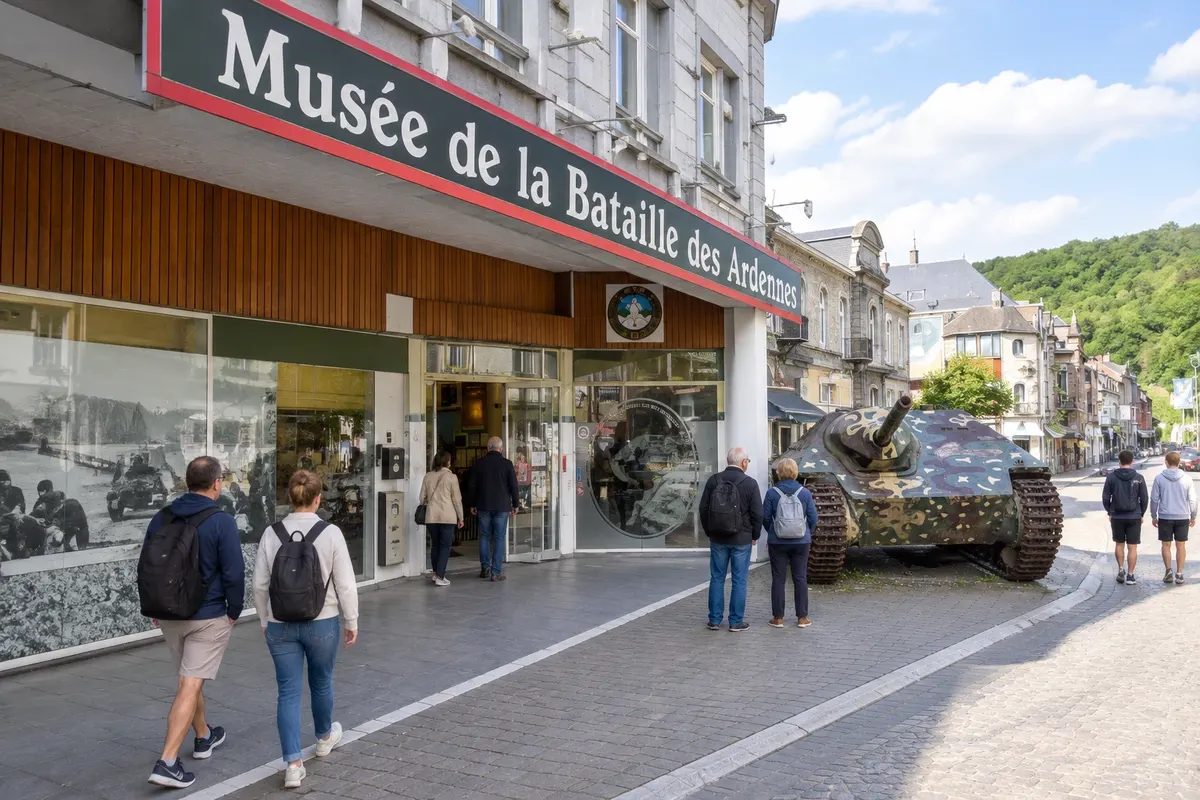
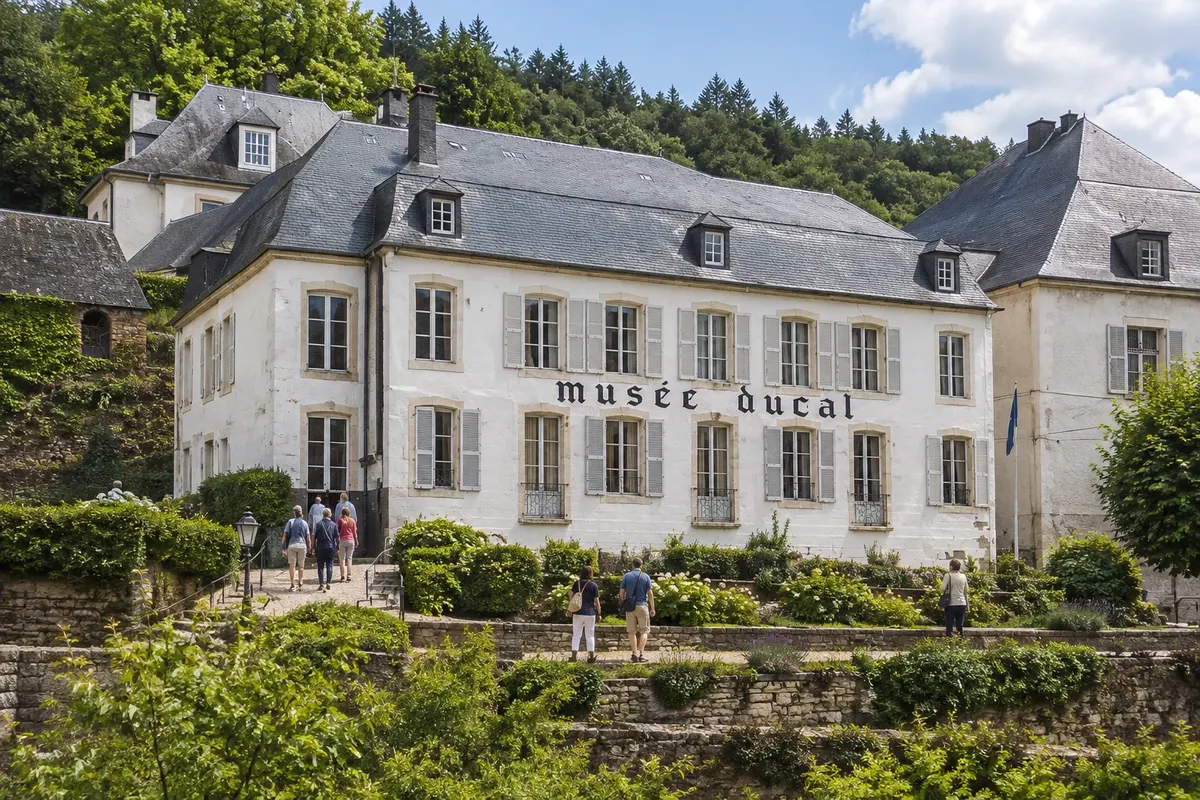
The Musée de la Bataille des Ardennes occupies two floors in the town centre. Dioramas show American and German troops with their equipment, and one section covers the role of the British in the counter-offensive from January 3 to 16, 1945, which liberated villages on the left bank of the Ourthe. On the second floor are uniforms and items donated by veterans of the regiments that liberated the town.
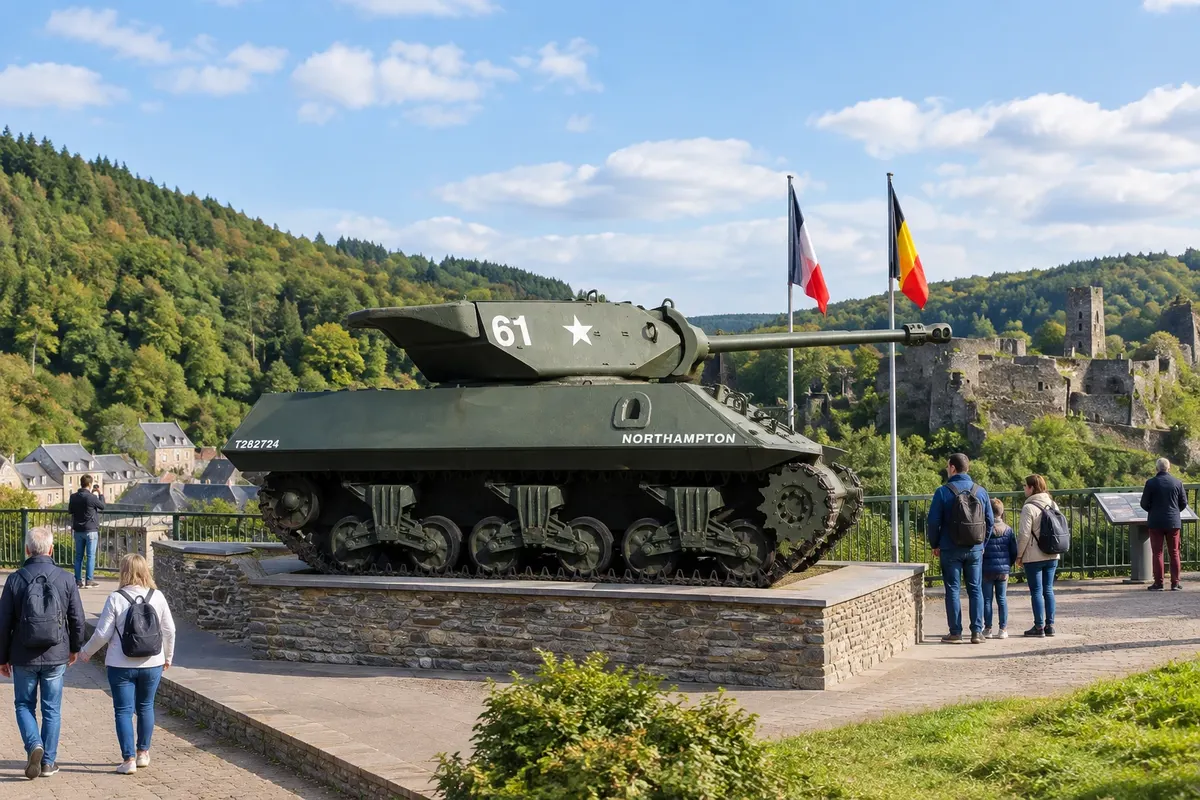
Around the town, two tanks serve as memorials: an American one in the Quai de l'Ourthe car park, in tribute to the U.S. 2nd and 3rd Armored Divisions, and a British one in tribute to the 1st Northamptonshire Armoured Regiment, which helped liberate the town in January 1945.
Kraji na poti: Musée de la Bataille des Ardennes, La Roche-en-Ardenne, Quai de l'Ourthe.
Vključuje: Self-guided visit. The museum charges an entrance fee; the tanks and memorials are in public space with free access. Check the current fee schedule.
Nasvet: This is a place of remembrance: visit with respect. Wheelchair access applies only to the ground floor of the museum. Opening days change throughout the year; check before you go.
Najboljši čas za obisk: All year. In December and January the region usually marks anniversaries of the battle.
La Roche viewpoints and trails: Deister, Nisramont and Hérou
Odhod: La Roche-en-Ardenne On foot and by car to the start of the trails Približno 4 ure Ves dan moderate (steep climbs)
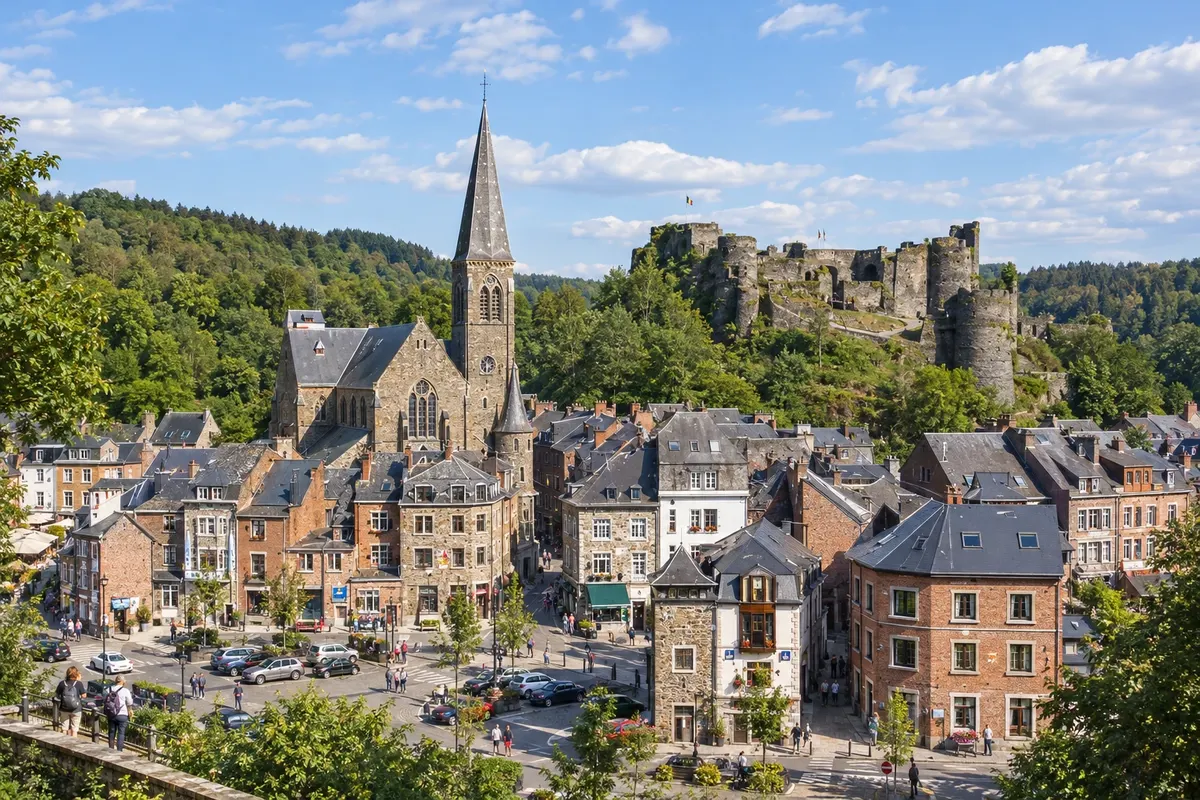
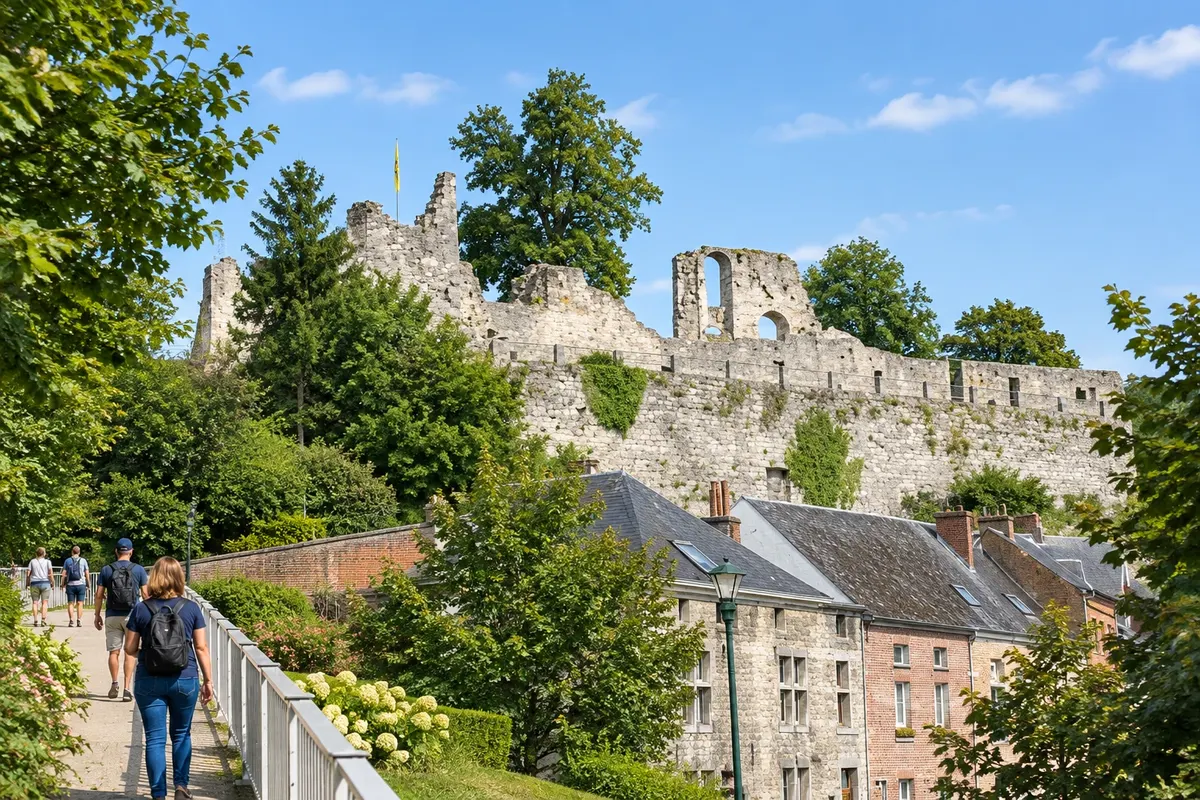
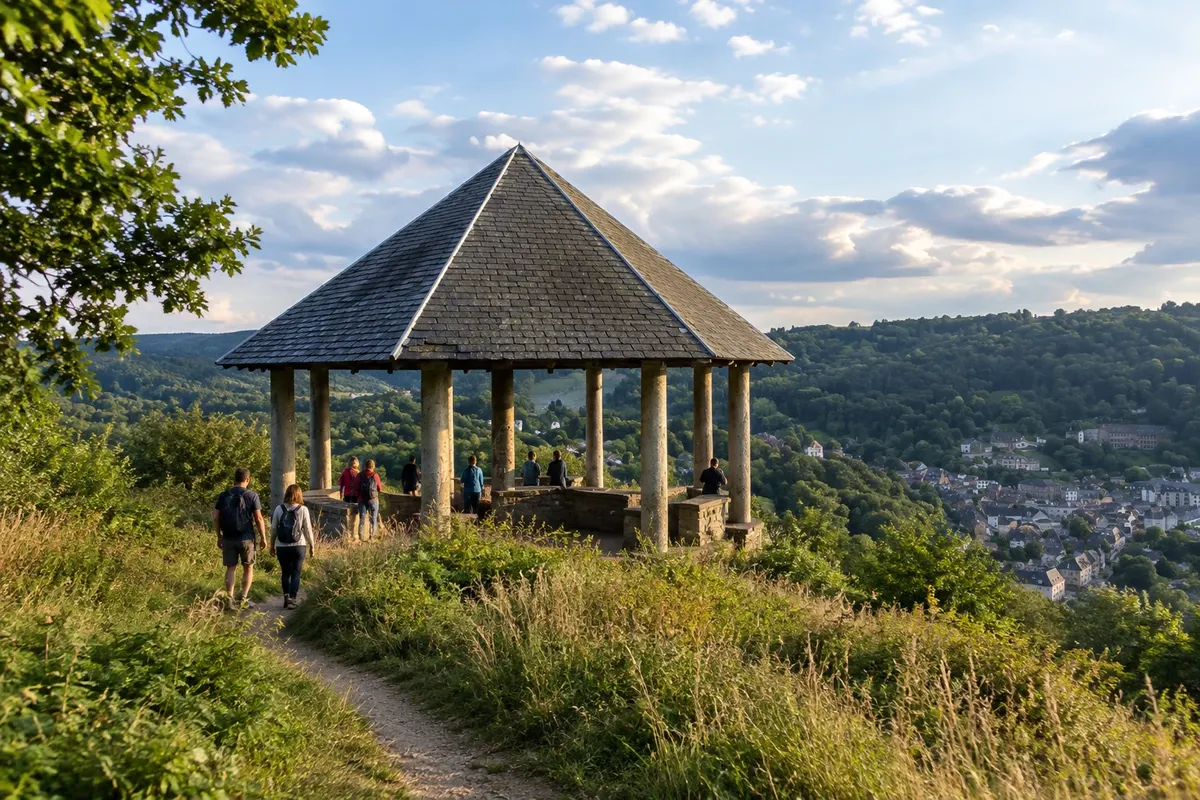
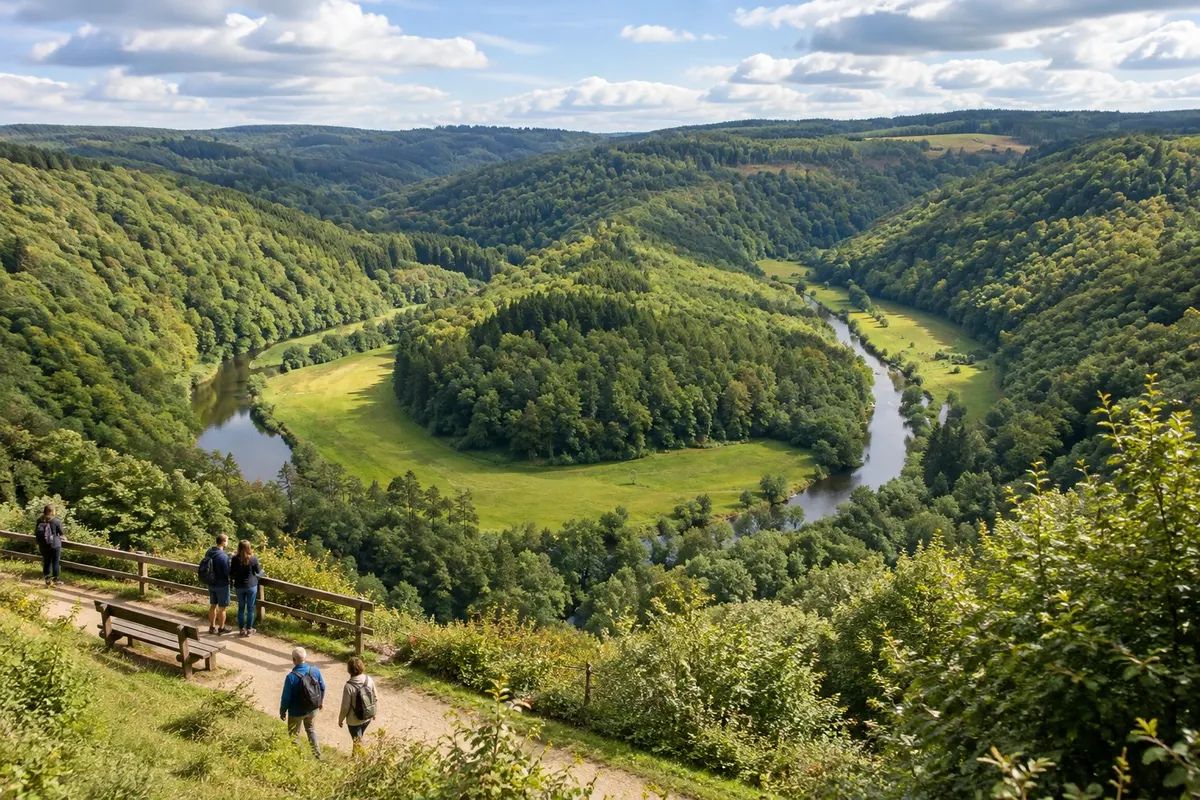
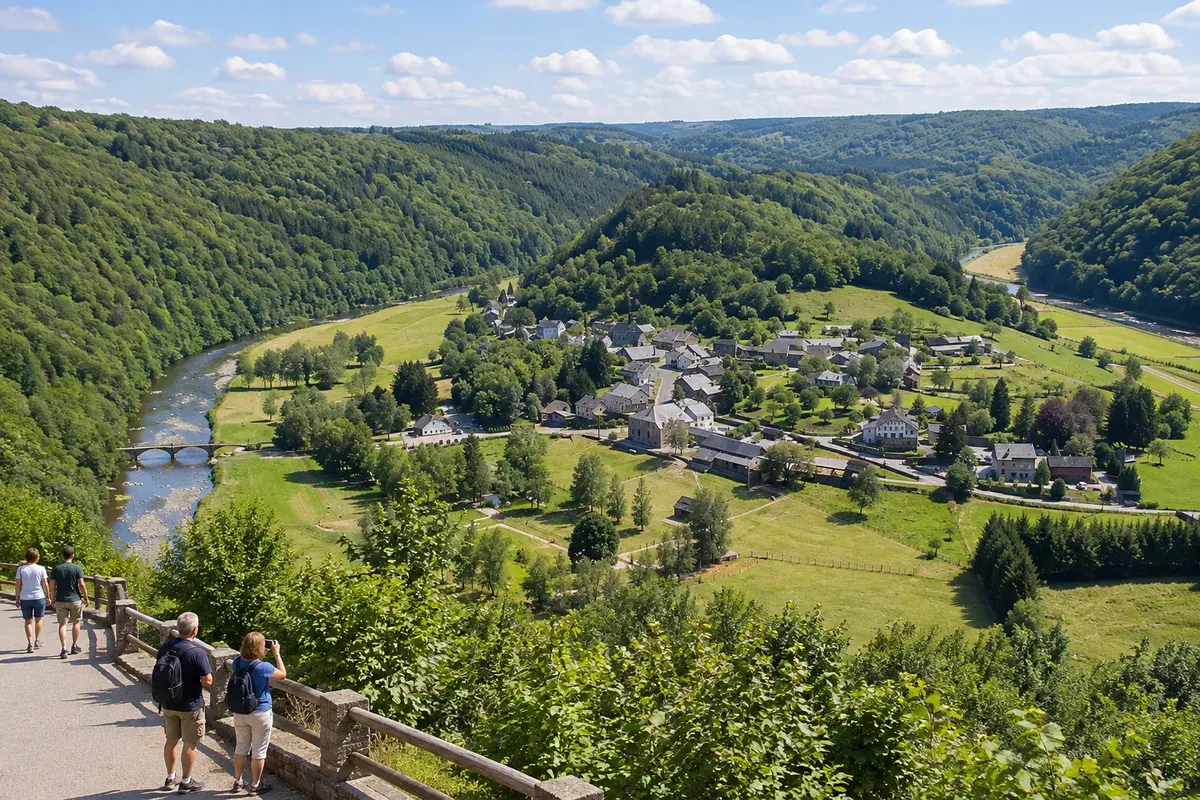
The Belvédère du Deister is the classic viewpoint over La Roche. You reach it on foot via the waymarked routes No. 4 and 11, the Deister paths, by a route that climbs from the Sainte-Marguerite chapel; the ascent requires some effort. From the top you can see the town nestled in the bend of the Ourthe, with the castle ruins at its centre.
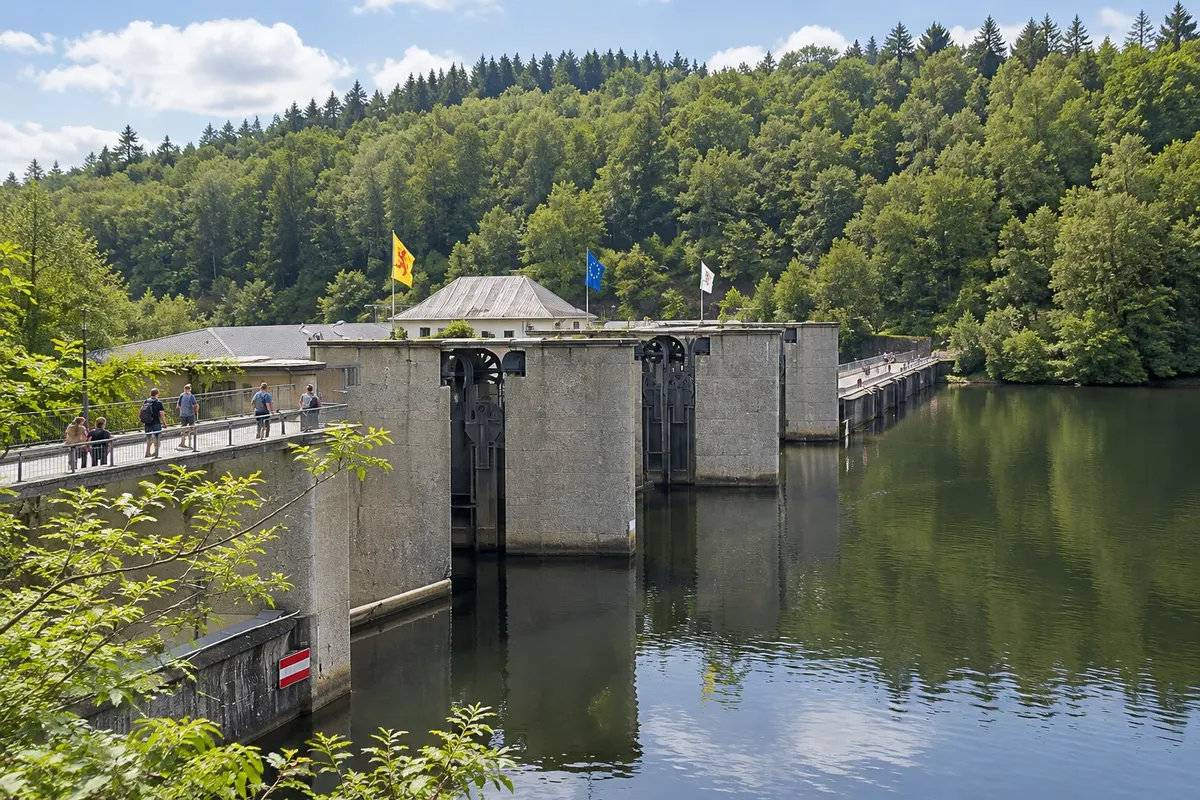
Upstream, the Lac de Nisramont is the lake formed where the western and eastern Ourthe meet, with a dam 116 m long. Around the lake and on the slopes there are forest trails.
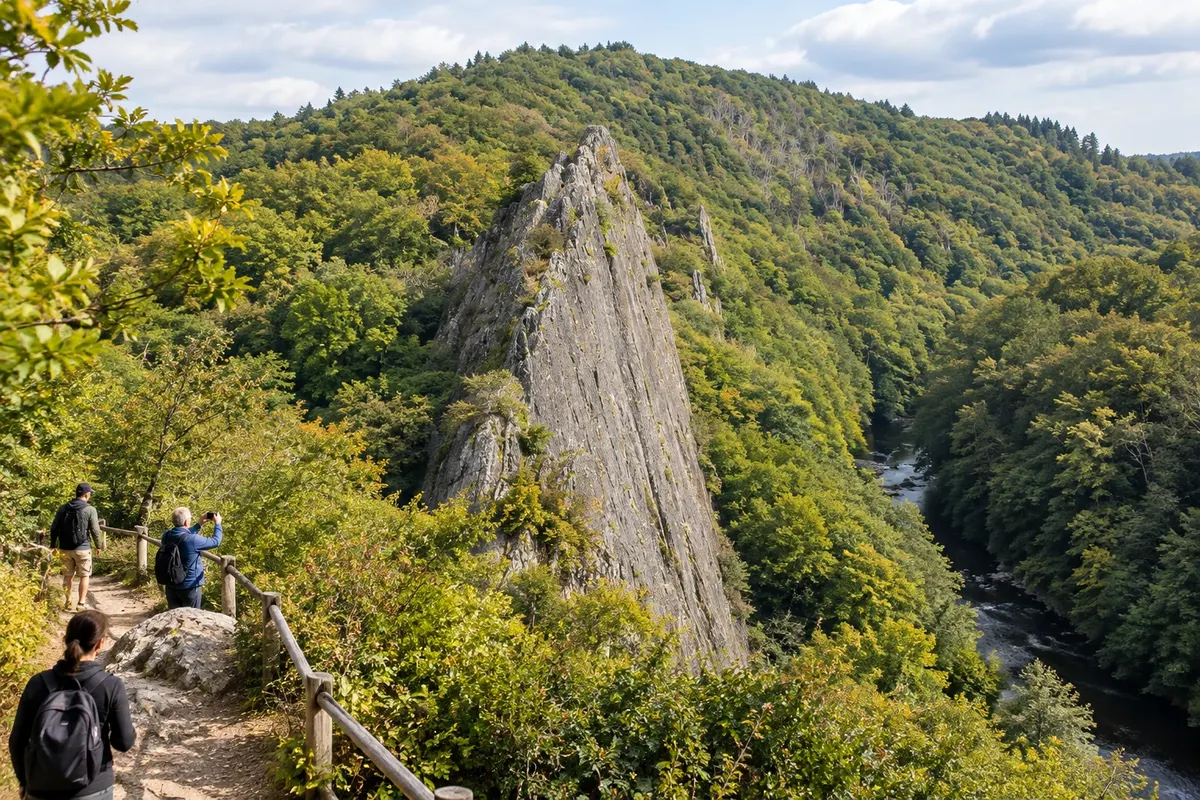
Nearby, in Nadrin, in the municipality of Houffalize, lies Le Hérou, a rocky ridge almost 1,000 m long and over 80 m high, enclosed by the meanders of the Ourthe. It has been a protected landscape since 1937. From the viewpoint you can see the river bends, and several trails descend to the ridge and the water.
Kraji na poti: Belvédère du Deister, Lac de Nisramont, Le Hérou, Nadrin, Ourthe.
Vključuje: Self-guided outing. The viewpoints and trails are freely accessible.
Nasvet: The descents to Hérou are for those used to trails: wear boots and bring water. Ask for the map of waymarked walks at the Maison du Tourisme in La Roche. In winter, when snowy, there are cross-country ski tracks in Samrée, about 8 km away, with no guarantee of snow.
Najboljši čas za obisk: From April to October, with drier trails. In autumn the forest changes colour; in winter there may be mud, ice and snow.
Château fort de Bouillon, the castle of Godfrey of Bouillon
Odhod: Bouillon town centre On foot, with uphill Približno 2 uri Dopoldne moderate (stairs and uneven surface)
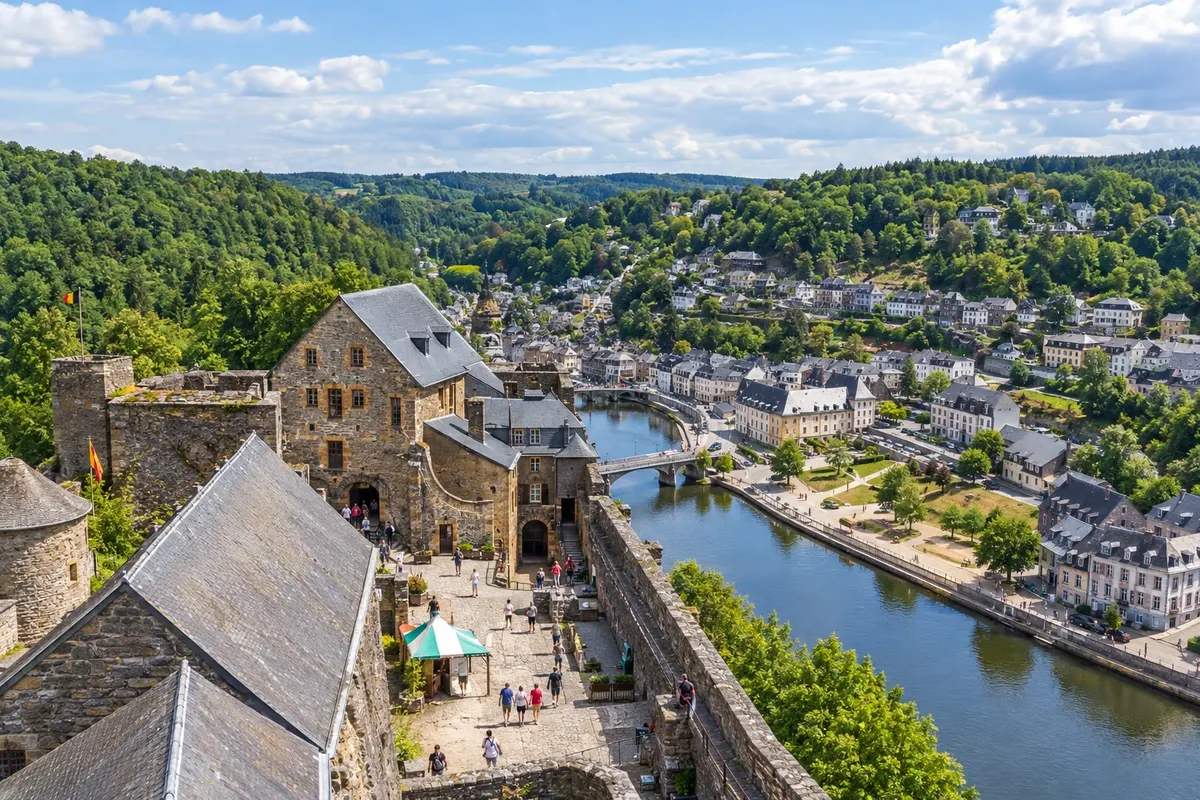
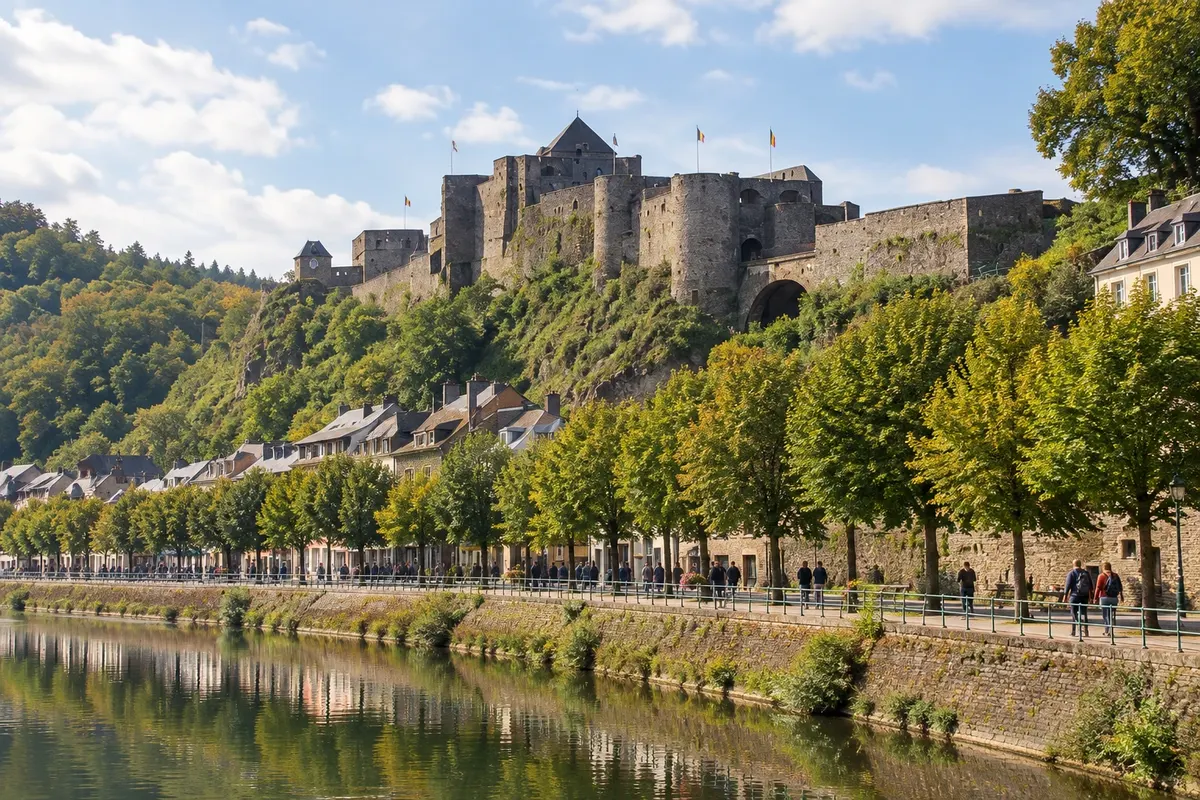
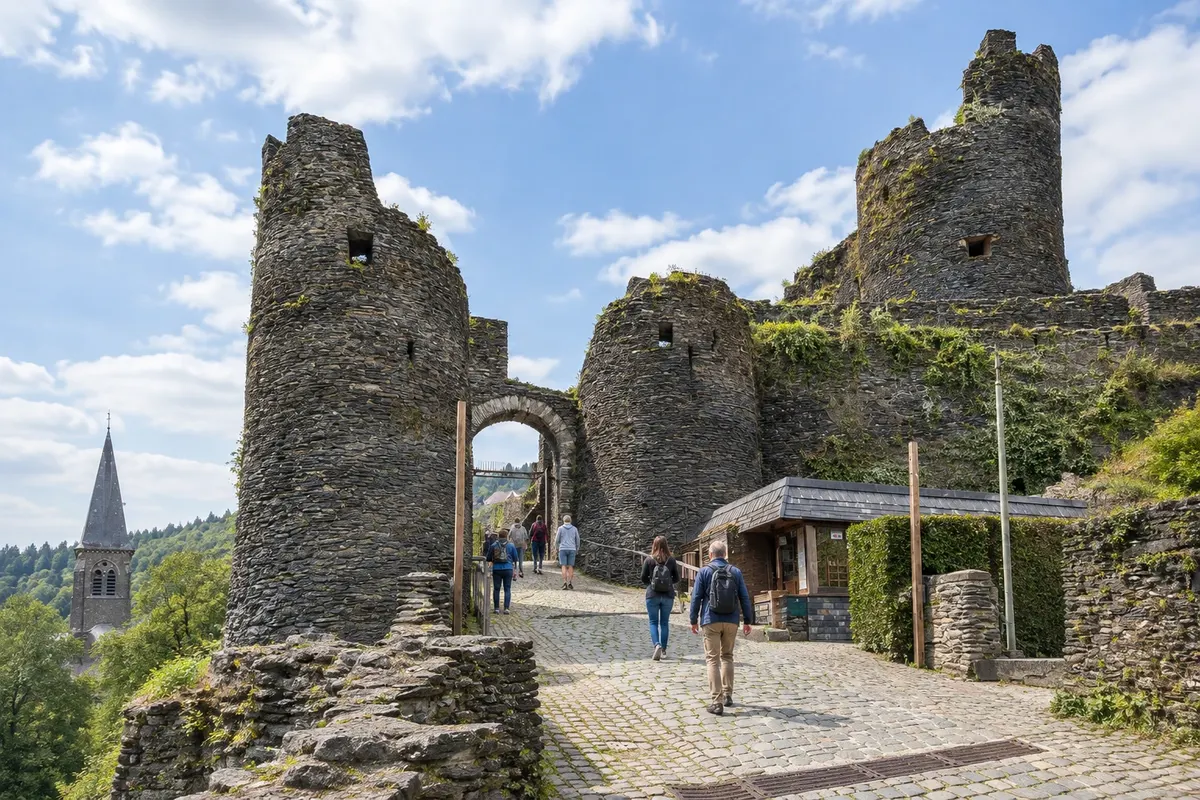
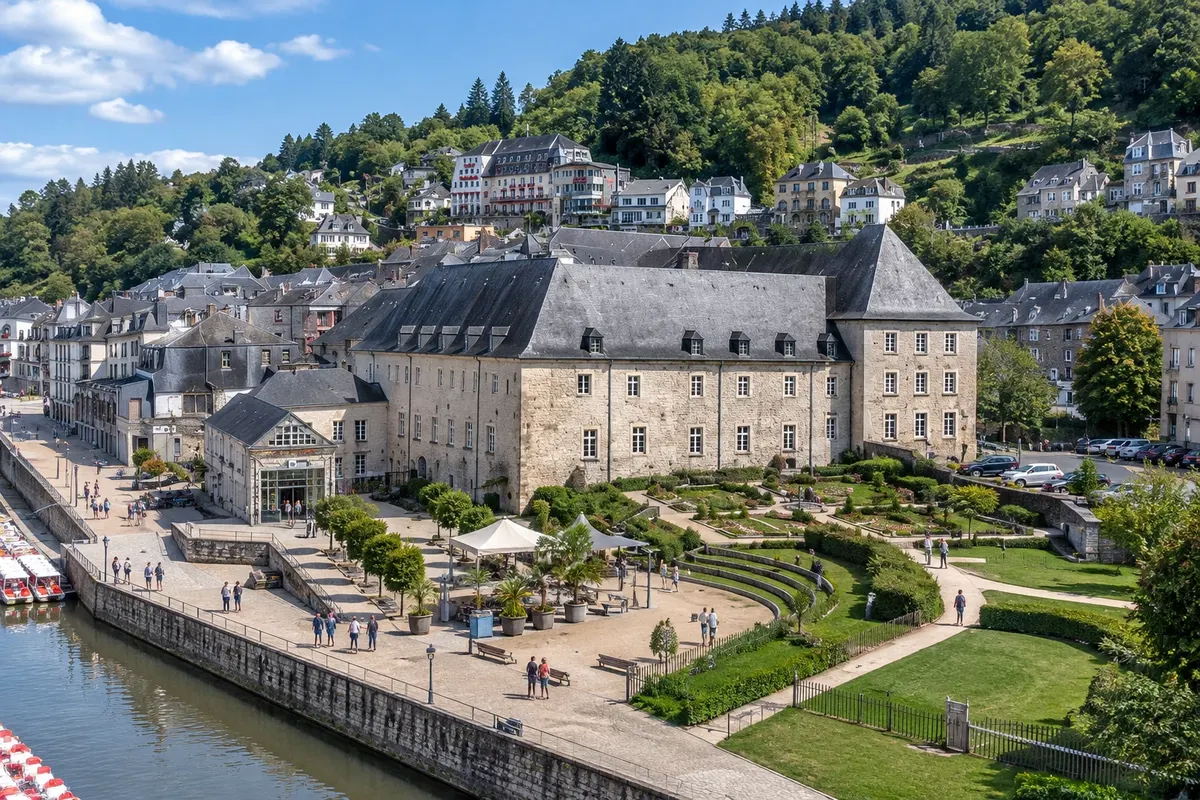
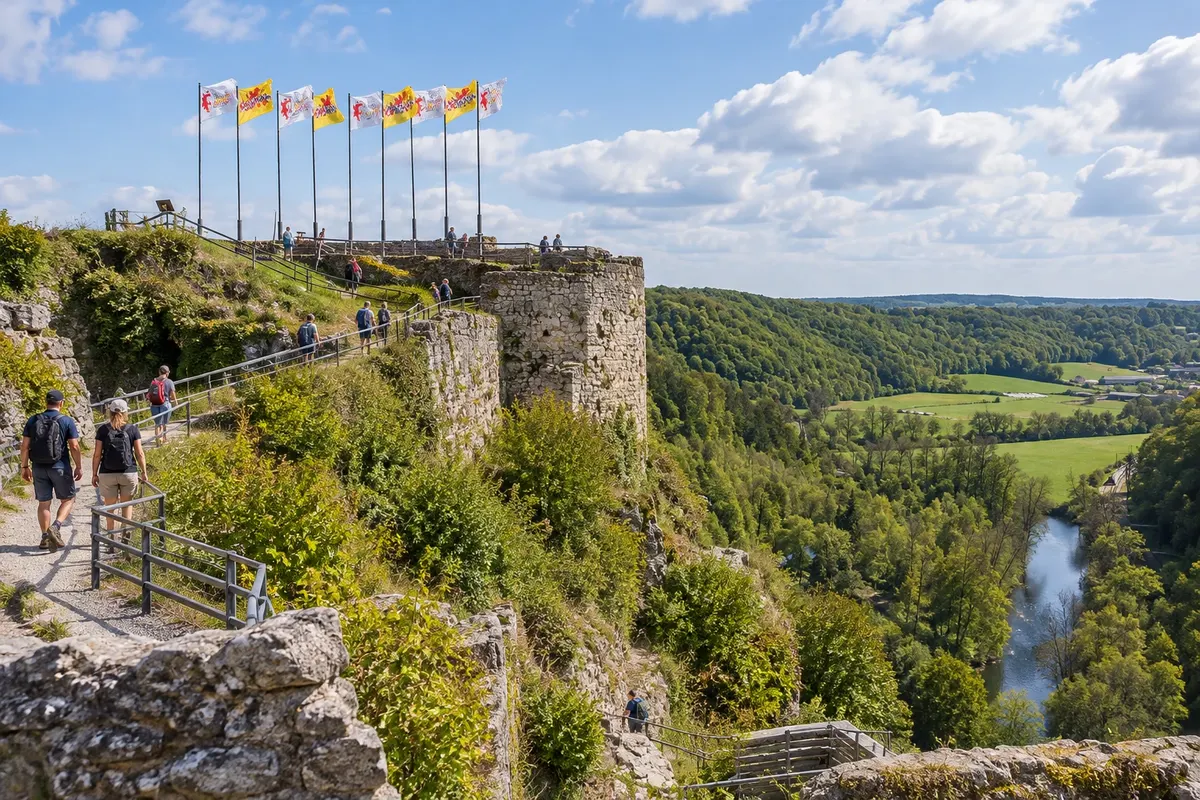
Bouillon sits on a bend of the Semois River in the south of the province of Luxembourg, near the border with France. The Château fort crowns a rocky ridge above the town and is mentioned in documents from 988. Godefroid de Bouillon (Godfrey of Bouillon) inherited the castle in 1082 and mortgaged it to the prince-bishop of Liège to fund his departure on the First Crusade in 1096. In the 17th century, Vauban, military engineer to Louis XIV, adapted the fortress for artillery, and much of its present appearance dates from him. The castle remained in military use until 1830.
The visit passes through corridors and vaulted rooms carved into the rock, such as the Salle Godefroy, an old torture chamber and the Musée Scriptura, about the history of writing and schooling. From the Tour d'Autriche you can see all of Bouillon and the Semois bend.
In the courtyard, the castle often stages falconry demonstrations, with eagles, falcons and owls flying free, several times a day during the season.
Kraji na poti: Château fort de Bouillon, Salle Godefroy, Tour d'Autriche, Semois, Bouillon.
Vključuje: Self-guided visit; the falconry demonstration is included on days it takes place. There is an admission fee; nighttime visits and special shows are charged separately. Check the current rate.
Nasvet: Wear closed shoes: there are stairs and dark, narrow passages. Check the schedule for falconry presentations and arrive early to the courtyard. During school holidays, the castle often runs torchlit night visits.
Najboljši čas za obisk: All year. The falconry season generally runs from the start of the European spring, in March, until November 11.
Bouillon Medieval Experience (Archéoscope Godefroid de Bouillon)
Odhod: Bouillon town centre Peš Približno 1 uro Popoldne Lahko
The former Archéoscope Godefroid de Bouillon, now called Bouillon Medieval Experience, is on Quai des Saulx, on the bank of the Semois, at the foot of the castle. It is a covered route of seven themed rooms and three large audiovisual shows, with reenactments and projections.
Visitors follow a knight and his squire on their way to the Holy Land and learn the story of Godfrey of Bouillon and the First Crusade. It works well as an introduction before climbing to the castle, or as an activity on a rainy day.
Kraji na poti: Bouillon Medieval Experience, Quai des Saulx, Bouillon.
Vključuje: Self-guided visit. There is an admission ticket, and sometimes a combined ticket with the castle. Check the current table.
Nasvet: Visit this before the castle: the context helps you understand the fortress rooms. The shows use sound and light in dark rooms.
Najboljši čas za obisk: Most of the year, with hours that change by season. Check the calendar.
Semois viewpoints: Tombeau du Géant and Rochehaut
Odhod: Bouillon Own car, with short walks Približno 3 ure Popoldne easy; moderate on the trails
Around Bouillon, the Semois makes tight bends between forested hills, and two viewpoints show it from above.
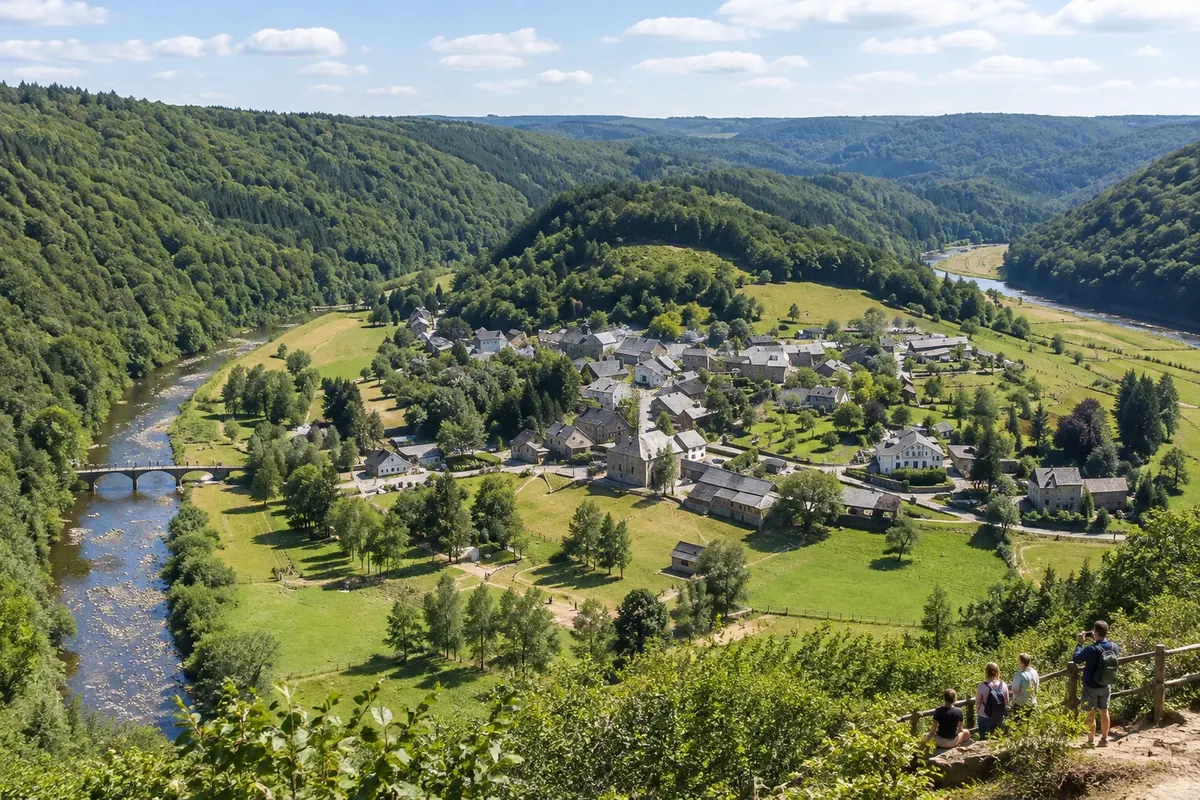
The Tombeau du Géant is in Botassart, a few kilometres from Bouillon. From there you can see a promontory covered in woodland almost entirely encircled by a bend of the river, with the Moulin du Rivage down below. According to legend, a Treveran giant jumped from the rock to avoid being taken by the Romans, and the hill looks like a tomb, hence the name. The site is an exceptional heritage of Wallonia.
In Rochehaut, which is part of the municipality of Bouillon, a viewpoint stretches about 300 m along the road above the village of Frahan, on a bend of the Semois so tight it almost forms an island. You can see tobacco drying racks, a reminder of a crop that began in 1852 and lasted about a century, and opposite the rocky ridges of Frahan. Waymarked trails, including the GR 16, descend to the valley, and a footbridge links Rochehaut to Frahan.
Kraji na poti: Tombeau du Géant, Botassart, Rochehaut, Frahan, Semois.
Vključuje: Self-guided outing. The viewpoints have free access. Kayaking on the Semois is charged separately at rental operators in Bouillon.
Nasvet: Go by car: the viewpoints are on rural roads with limited public transport. In summer you can round out the day with a kayak trip on the Semois leaving from Bouillon; confirm the water level the day before.
Najboljši čas za obisk: All year. From April to October the trails are drier; in autumn the forest changes colour. Kayaking on the Semois usually operates from April until the end of October.
Rochefort: Grotte de Lorette, Château comtal and the Trappist abbey
Odhod: Rochefort center Peš Približno 3 ure Dopoldne moderate (more than 600 steps)
Rochefort is the main town of the Han-sur-Lesse region, in the Famenne, province of Namur.
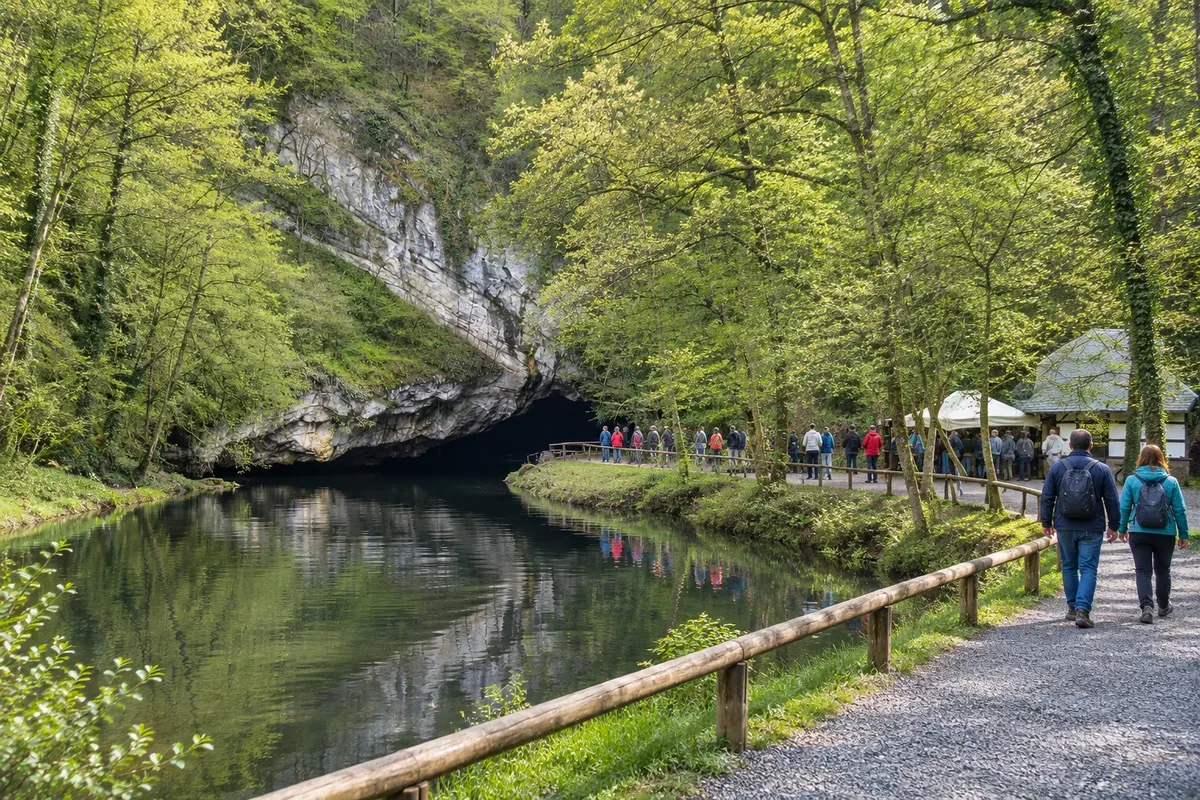
In the center is the Grotte de Lorette, a cave visited with a guide in about 1 hour. The descent, almost vertical, reaches about 60 m deep, with more than 600 steps in total. In the Salle du Sabbat, the large chamber near the underground river, a small balloon rises to the ceiling during a sound-and-light show and demonstrates the chamber’s height.
Above the town are the ramparts of the Château comtal, a 12th-century castle that in the 17th century became a palace. Sold in 1811, it was used as a quarry and was dismantled; the walls and the tower foundations remain, with guided visits.
Near the center, the Abbaye Notre-Dame de Saint-Rémy is a Trappist monastery since 1887, where the monks brew Rochefort beer. The abbey and the brewery do not receive visitors, to preserve monastic life; the masses are open, and the beer is available in the town’s cafés and shops.
Kraji na poti: Rochefort, Grotte de Lorette, Château comtal de Rochefort, Abbaye Notre-Dame de Saint-Rémy.
Vključuje: Guided tour in the Grotte de Lorette and visits to the Château comtal, with admission. The abbey is not open for visits. Check the current schedule.
Nasvet: At the Grotte de Lorette the air is cool and there are many steps: bring a jacket and wear closed shoes; the cave is not wheelchair accessible. Trappist beer is part of the local culture: try it in moderation, and don’t drive if you drink.
Najboljši čas za obisk: All year round, with opening days that change by season. Check the cave and castle calendar.
Basilique de Saint-Hubert
Odhod: Saint-Hubert center Peš Približno 1 uro Dopoldne Lahko
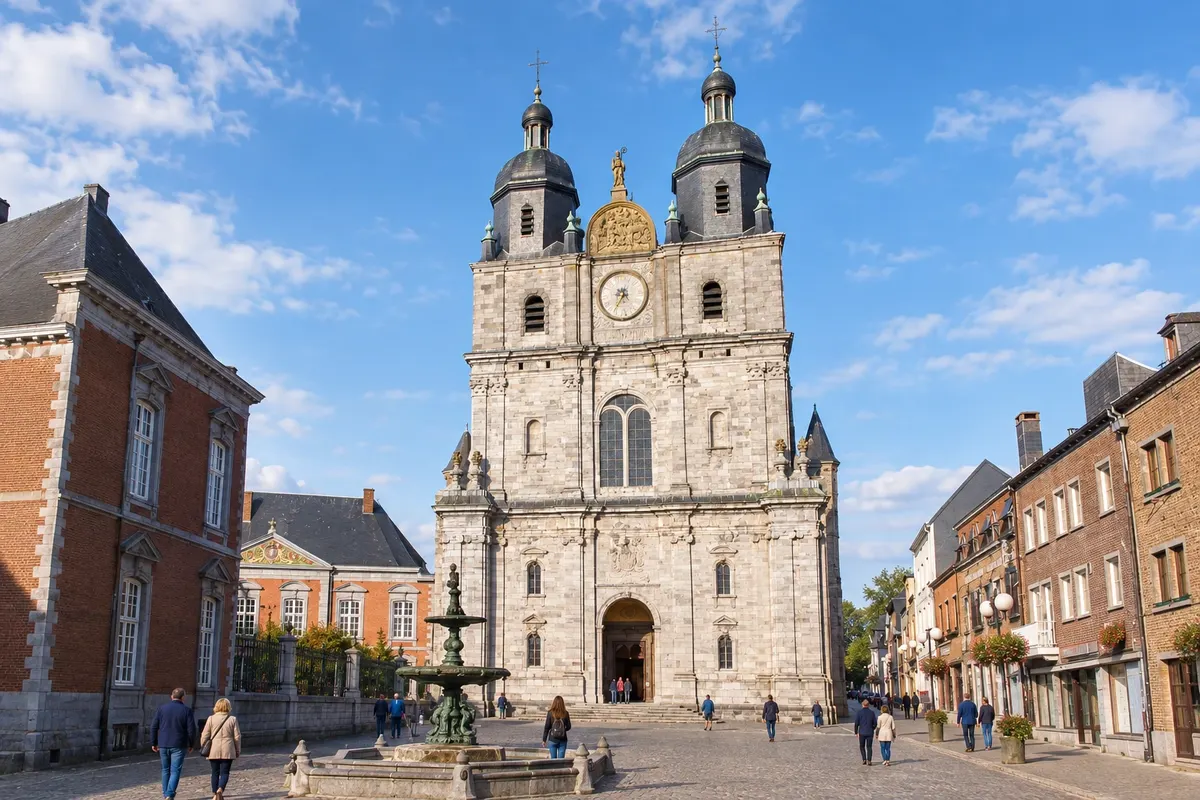
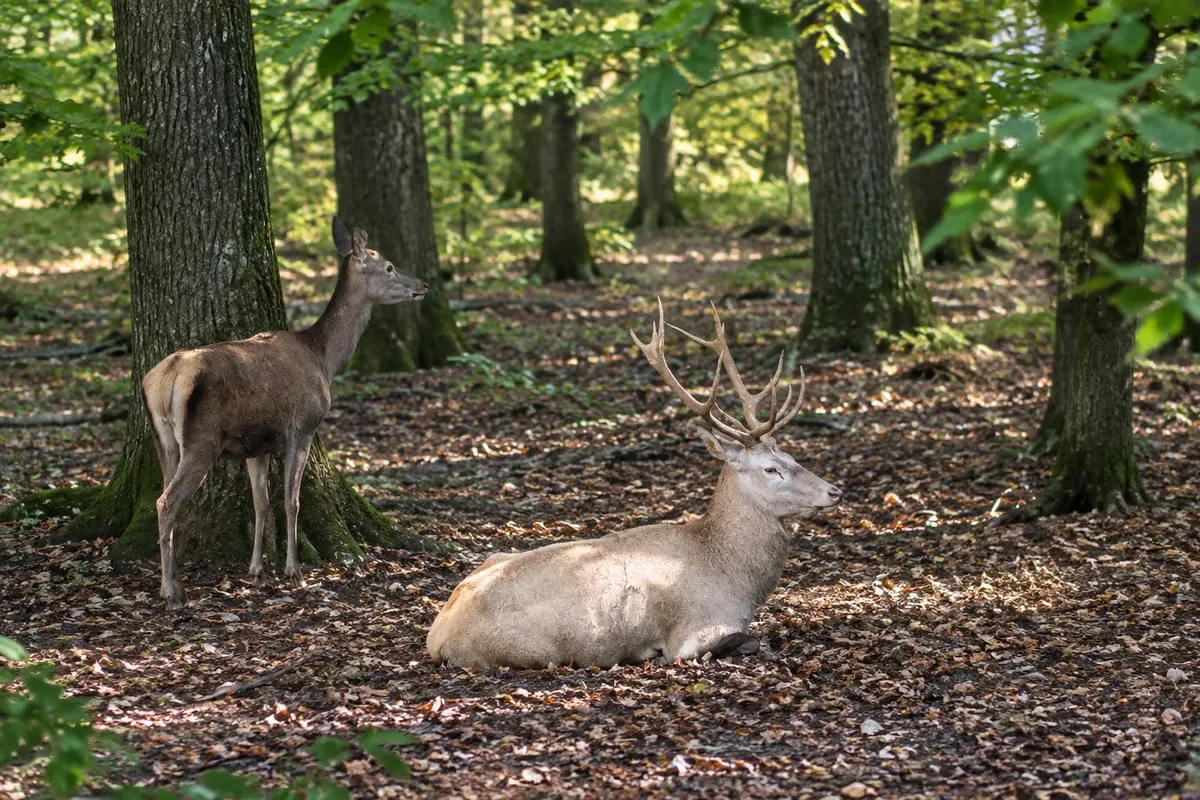
Saint-Hubert is a small town on the Ardennes plateau, surrounded by forest, and presents itself as the European capital of hunting and nature. The name comes from Saint Hubert, first bishop of Liège and patron of hunters. According to the legend, he was hunting on Good Friday when he saw a stag with a crucifix between its antlers and changed his life. His remains were moved in the 9th century to the town’s Benedictine abbey, which became a place of pilgrimage.
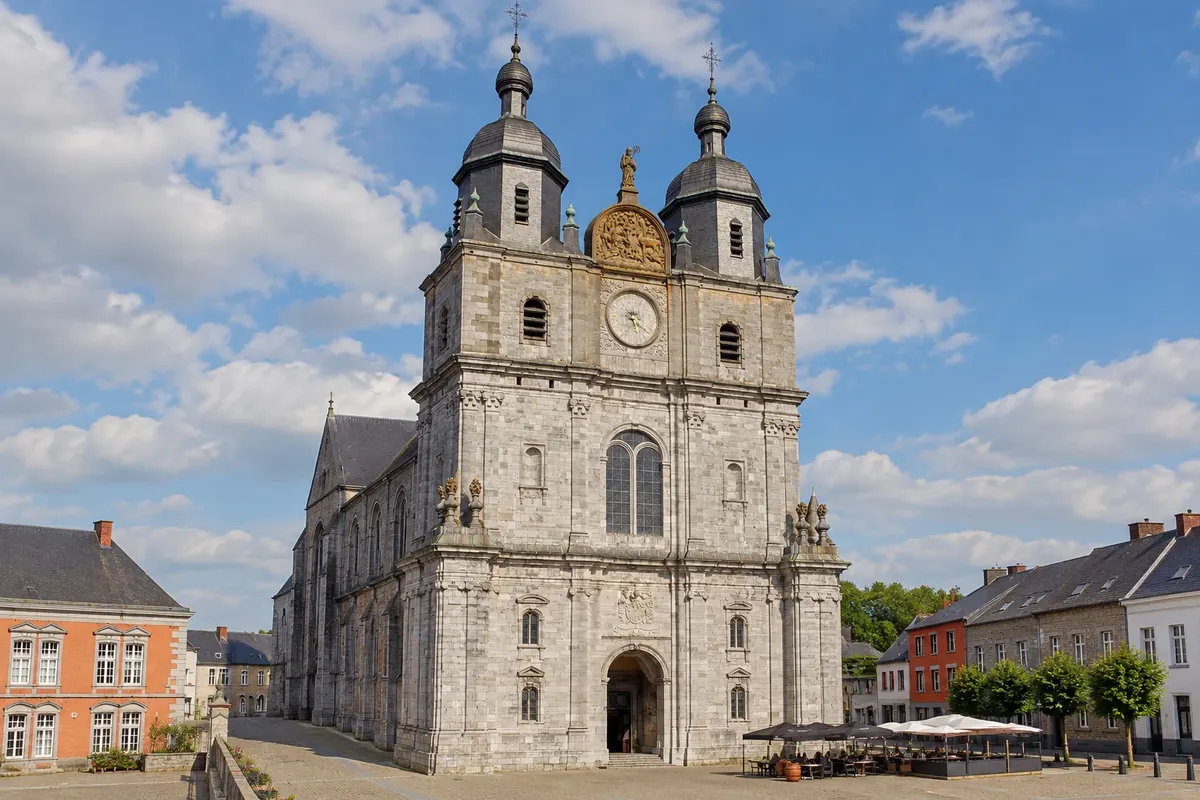
The basilica, the former abbey church, was largely built between 1526 and 1564, after a fire, in Brabantine late Gothic (gótico flamígero), on Romanesque foundations. The Baroque façade, with two octagonal towers, dates from 1700–1702. It is over 80 m long and received the title of minor basilica in 1927.
Inside, see the tomb of Saint Hubert, sculpted by Guillaume Geefs in 1847 at the request of King Leopold I, the 1733 oak choir with scenes from the lives of Saint Benedict and Saint Hubert, the 1685 organ and the Romanesque crypt.
Kraji na poti: Basilique Saint-Hubert, Place de l'Abbaye, Saint-Hubert.
Vključuje: Self-guided visit, no admission required. Guided tours, including attics and bell towers, are paid and by reservation.
Nasvet: Buy the explanatory leaflet at reception to follow the interior details. Combine it with Fourneau Saint-Michel, a few kilometers to the north. Try borquin and the Ardennes smoked sausages and cold cuts, regional specialties.
Najboljši čas za obisk: All year; from November to February it is open on fewer days. On November 3, the feast of Saint Hubert, there is a mass with blessing of bread and animals and a craft fair.
Fourneau Saint-Michel: iron museum and rural life museum
Odhod: Saint-Hubert private car Približno 4 ure Popoldne easy (long walk outdoors)
The provincial estate of Fourneau Saint-Michel lies in the forest, a few kilometers north of Saint-Hubert, on the banks of the Masblette stream.
The starting point is the blast furnace ordered built in 1771 by Dom Nicolas Spirlet, the last abbot of Saint-Hubert, which operated until 1942. It still has the chimney, the foundry house and the coal shed. The Musée du Fer shows how iron was made before industrialization, with fireplace plates and tools for making nails.
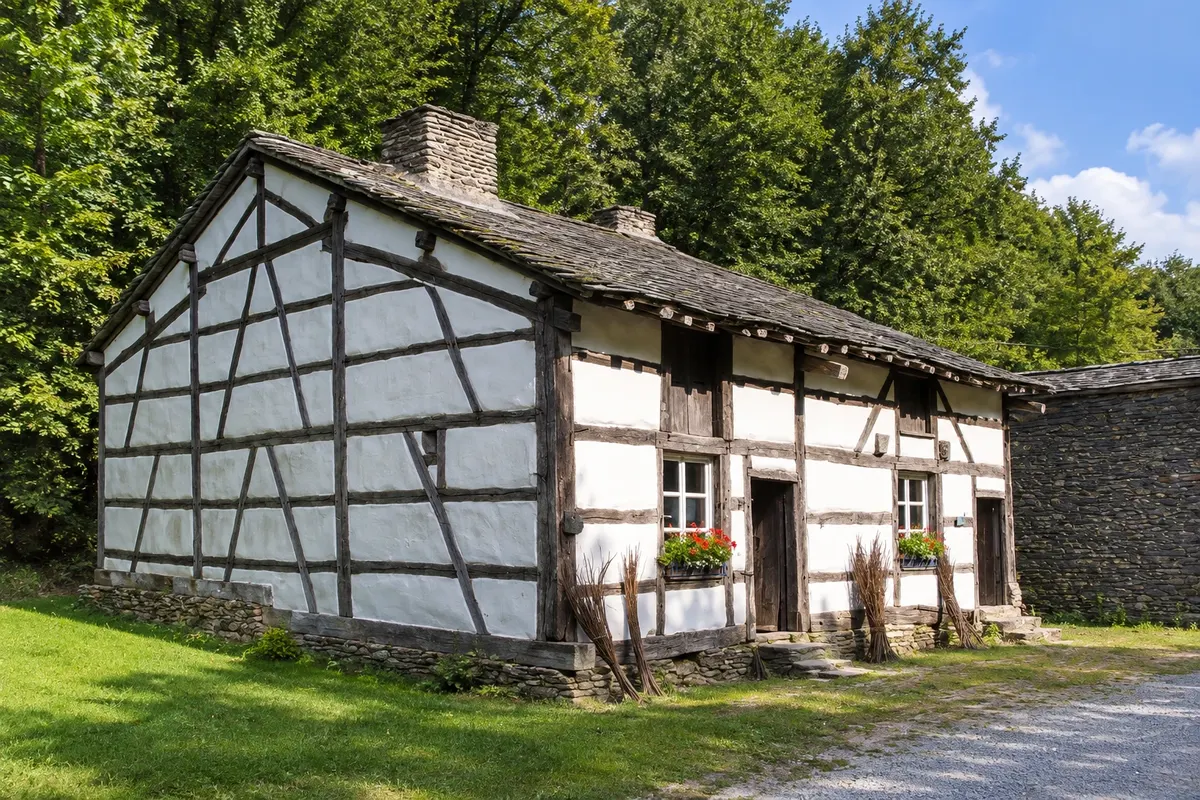
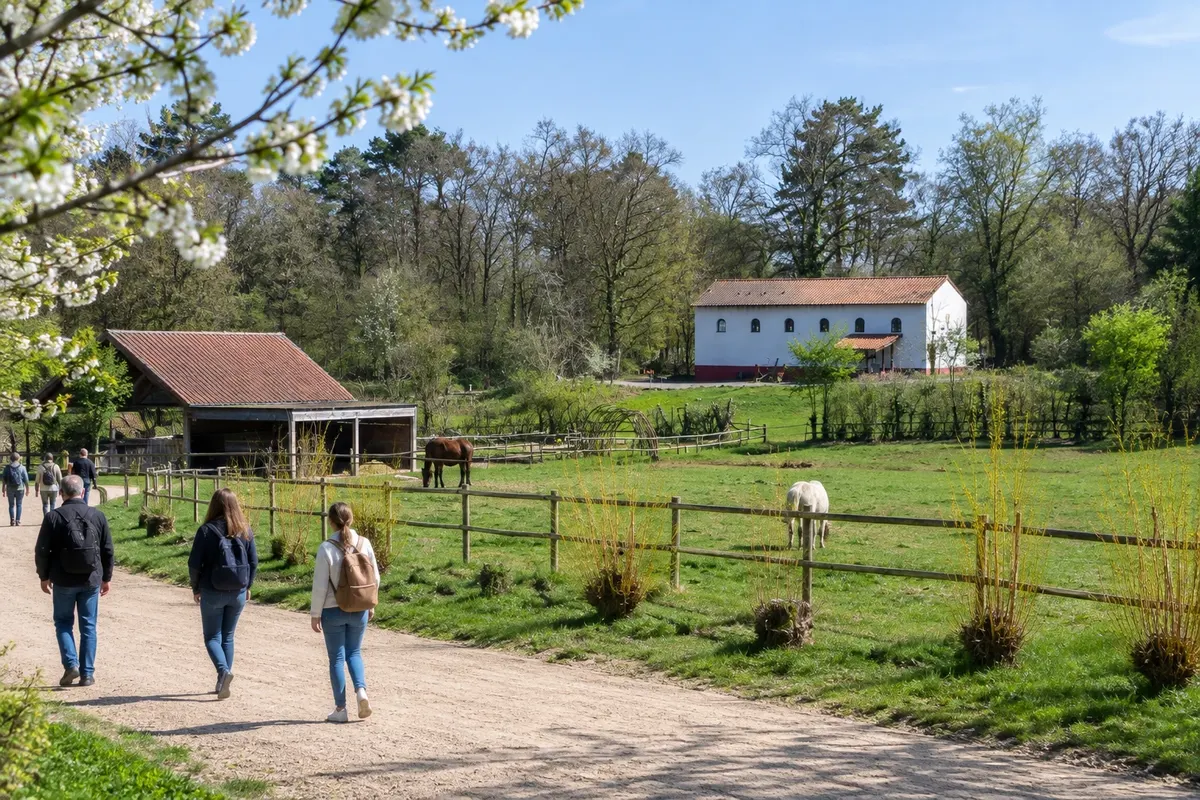
Next to it, the Musée de la Vie rurale en Wallonie is an open-air museum of more than 40 hectares. It gathers about 50 old buildings brought from various parts of Wallonia, such as farms, houses, a chapel, a small school, a print shop, bread ovens and a grocery, showing rural life in the 19th and 20th centuries.
Kraji na poti: Fourneau Saint-Michel, Musée du Fer, Musée de la Vie rurale en Wallonie, Masblette.
Vključuje: Self-guided visit, with texts in French, Dutch and English. There is an admission fee. Check the current timetable.
Nasvet: Allow half a day: the open-air museum is large and explored on foot along dirt paths. It is closed on Mondays, except in July, August and on public holidays. There is a bar serving regional food at the Musée du Fer.
Najboljši čas za obisk: From April to October, when it’s comfortable to walk outdoors. Check the calendar before going in winter.
Bastogne War Museum and Mardasson Memorial
Odhod: Bastogne Private car or train and bus Približno 3 ure Ves dan Lahko
Bastogne is in the northeast of the province of Luxembourg, on the Ardennes plateau. In the Battle of the Ardennes, the German offensive that began on December 16, 1944, the town was besieged from December 20 to 26. The U.S. 101st Airborne Division defended it, and on December 22 General Anthony McAuliffe replied “Nuts!” to the German demand for surrender. On December 26, a spearhead of the 4th Armored Division, part of Patton’s Third Army, reached the town.
The Bastogne War Museum, on the Mardasson hill, tells the causes, events and consequences of World War II, focusing on the battle. The exhibition is chronological and follows four fictional characters, including an American paratrooper, a German soldier and Bastogne residents, whose stories cross in a cellar during the town’s bombardment; there are three immersive rooms. The visit, with audio guide, takes at least 2 hours.
Next to it, the Mardasson Memorial, opened on July 16, 1950, is shaped like a five-pointed American star, about 12 m high, with the names of the 48 states at that time. In the crypt, with altars for Protestant, Catholic and Jewish services, there are mosaics by Fernand Léger.
Kraji na poti: Bastogne War Museum, Mardasson Memorial, Colline du Mardasson, Bastogne.
Vključuje: Museum visit with audio guide, admission required. The Mardasson Memorial has free access. Check the current schedule.
Nasvet: This is a place of memory: visit respectfully. Start with the museum and finish at the memorial. Allow a full day if you also want to see Bastogne town center.
Najboljši čas za obisk: All year. In December the town usually commemorates the anniversary of the siege, and winter helps imagine the conditions of the battle.
Redu, the book village, and the Euro Space Center
Odhod: Saint-Hubert or Rochefort Own car (E411 motorway, exit 24) Približno 5 ur Ves dan Lahko
Redu is a village in the municipality of Libin, in the province of Luxembourg, near the E411 motorway. Since 1984, inspired by Hay-on-Wye in Wales, it has focused on books: secondhand bookstores, booksellers and book artisans opened shops in the stone houses. It once had about 20 bookstores; today there are around a dozen. Throughout the year there are book festivals, a fair and a photography season.
In the neighboring village of Transinne, next to exit 24 of the E411, is the Euro Space Center, a space-themed center designed for families. The day ticket gives access to simulators, a planetarium, a show, a Martian village and other activities about space travel. About 1 km from Redu there is also a satellite-tracking station of the European Space Agency.
Kraji na poti: Redu, Transinne, Euro Space Center, Libin.
Vključuje: Redu is explored on your own, with free access to the village. The Euro Space Center charges admission, with a discount for online purchase. Check the current price list.
Nasvet: In Redu, bookstore opening days vary: prefer weekends and school holidays and check in advance. With children, set aside most of the day for the Euro Space Center.
Najboljši čas za obisk: From April to October, with more shops open in Redu. Check the Euro Space Center calendar before you go.


 Brazilija
 Antarktika
 Argentina
 Bolivija
 Čile
 Kolumbija
 Ekvator
 Gvajana
 Francoska Gvajana
 Falklandski otoki (Malvini)
 Paragvaj
 Peru
 Surinam
 Urugvaj
 Venezuela
 Nemčija
 Avstrija
 Hrvaška
 Danska
 Slovaška
 Slovenija
 Španija
 Finska
 Francija
 Grčija
 Nizozemska
 Madžarska
 Irska
 Islandija
 Italija
 Luksemburg
 Norveška
 Poljska
 Portugalska
 Združeno kraljestvo
 Češka
 Švedska
 Švica
 Turčija
 Bermudi
 Kanada
 Združene države Amerike
 Grenlandija
 Mehika
 Sveta Peter in Mihael
 Dominikanska republika
 Japonska
 Južnoafriška republika
 Egipt
 Avstralija
 Fidži
 Nova Zelandija
 Papua Nova Gvineja