Alsace

Grand Est · Francija

Alsace

Estrasburgo, Colmar and the villages of half-timbered houses along the Rota dos Vinhos, in a region bordering Alemanha.

East

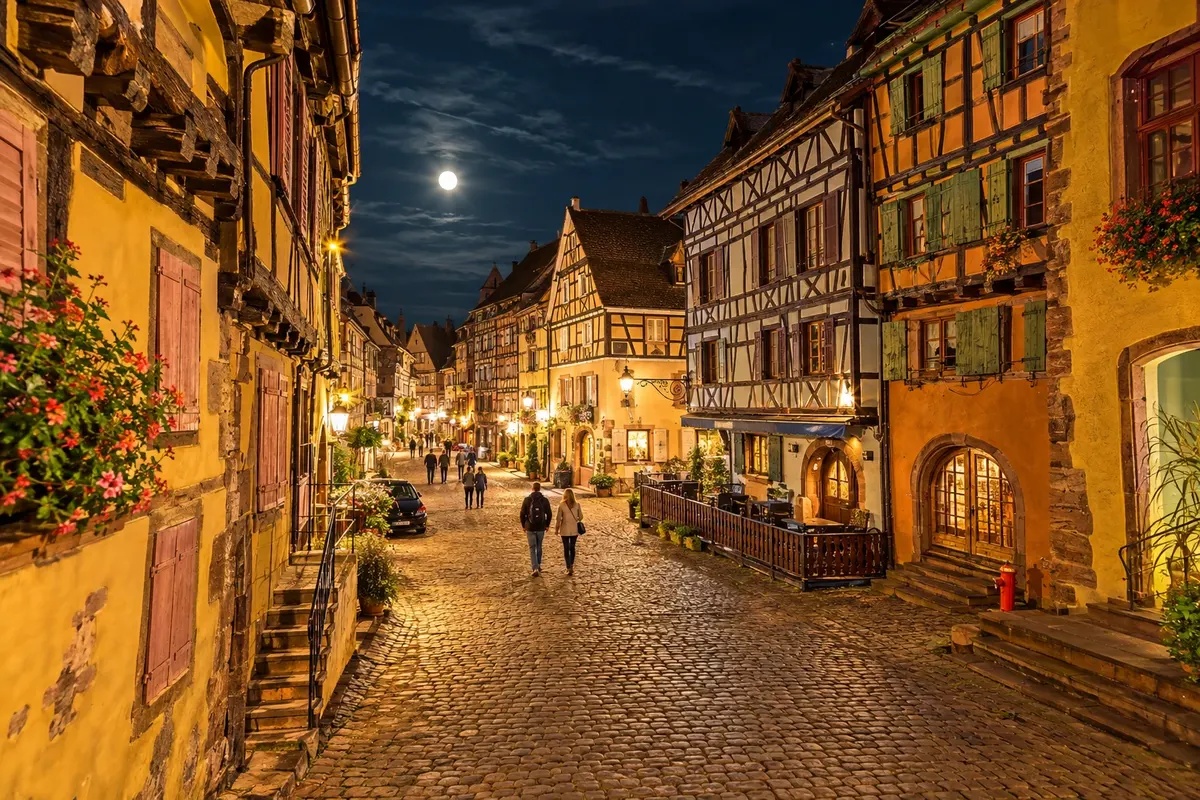
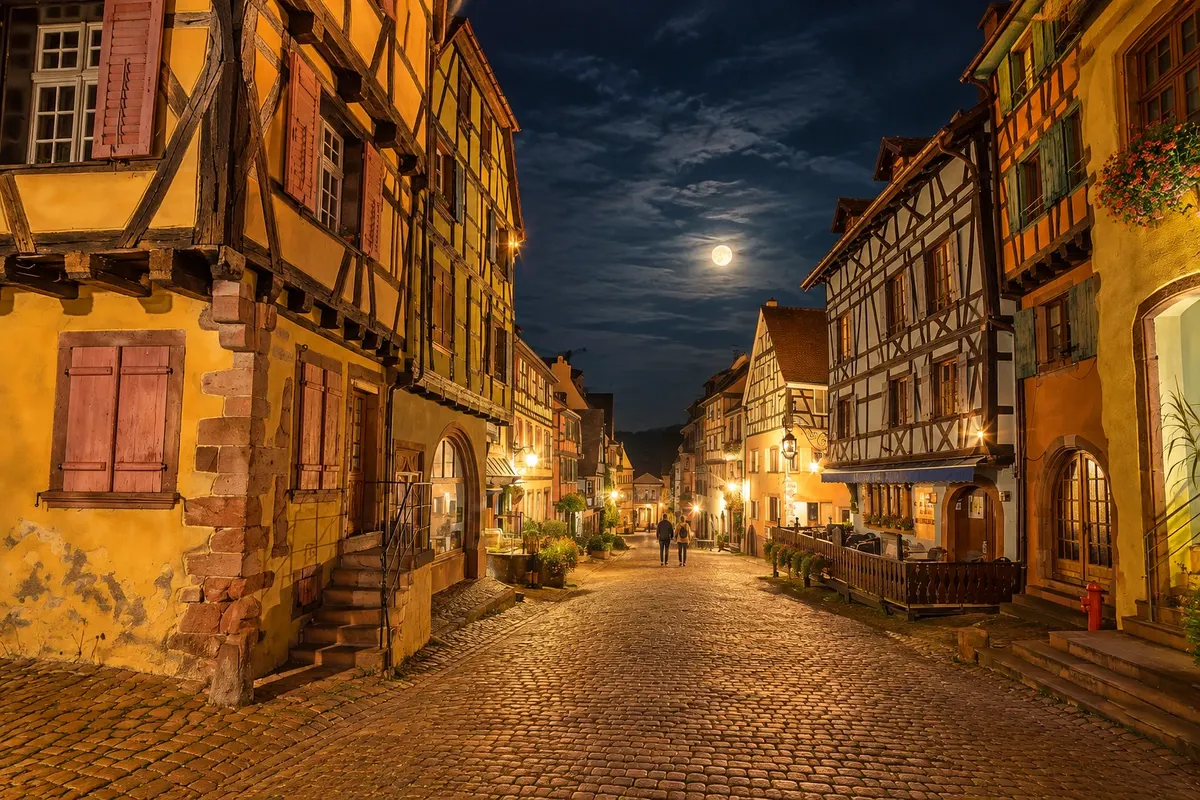
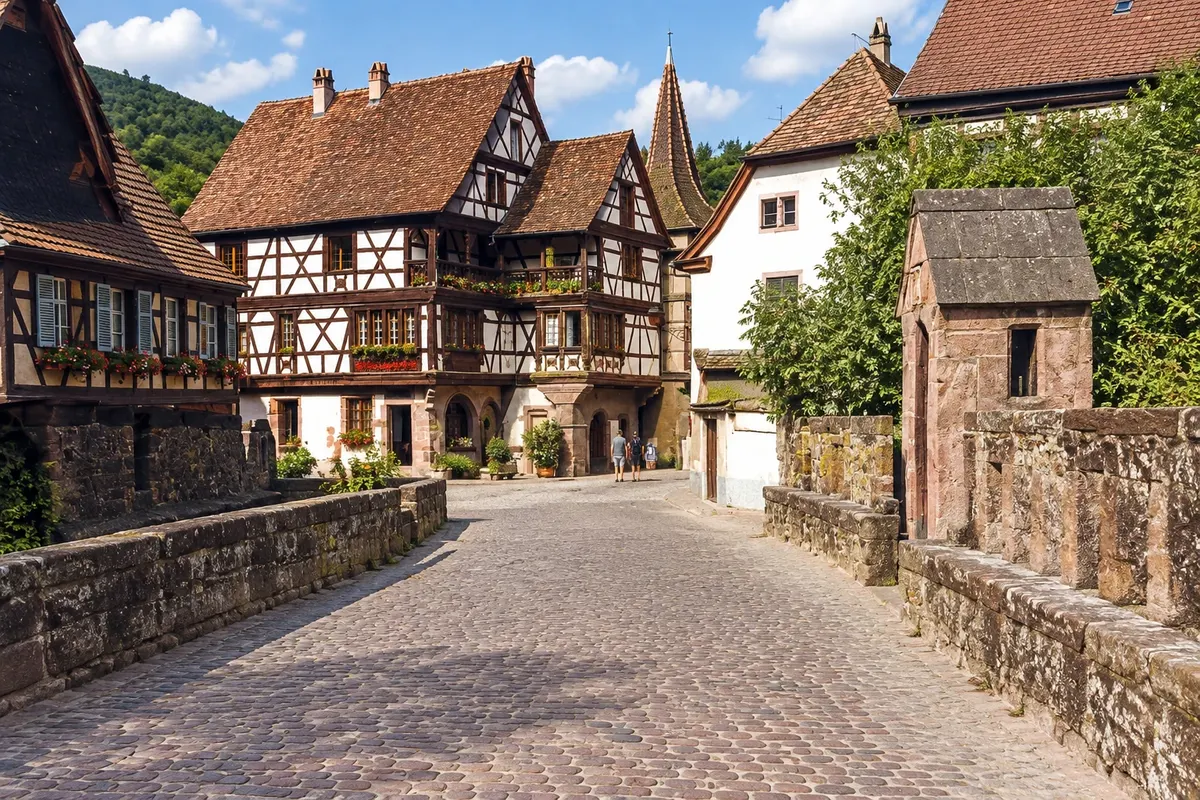
Na fotografiji: Rue du Général de Gaulle · Riquewihr

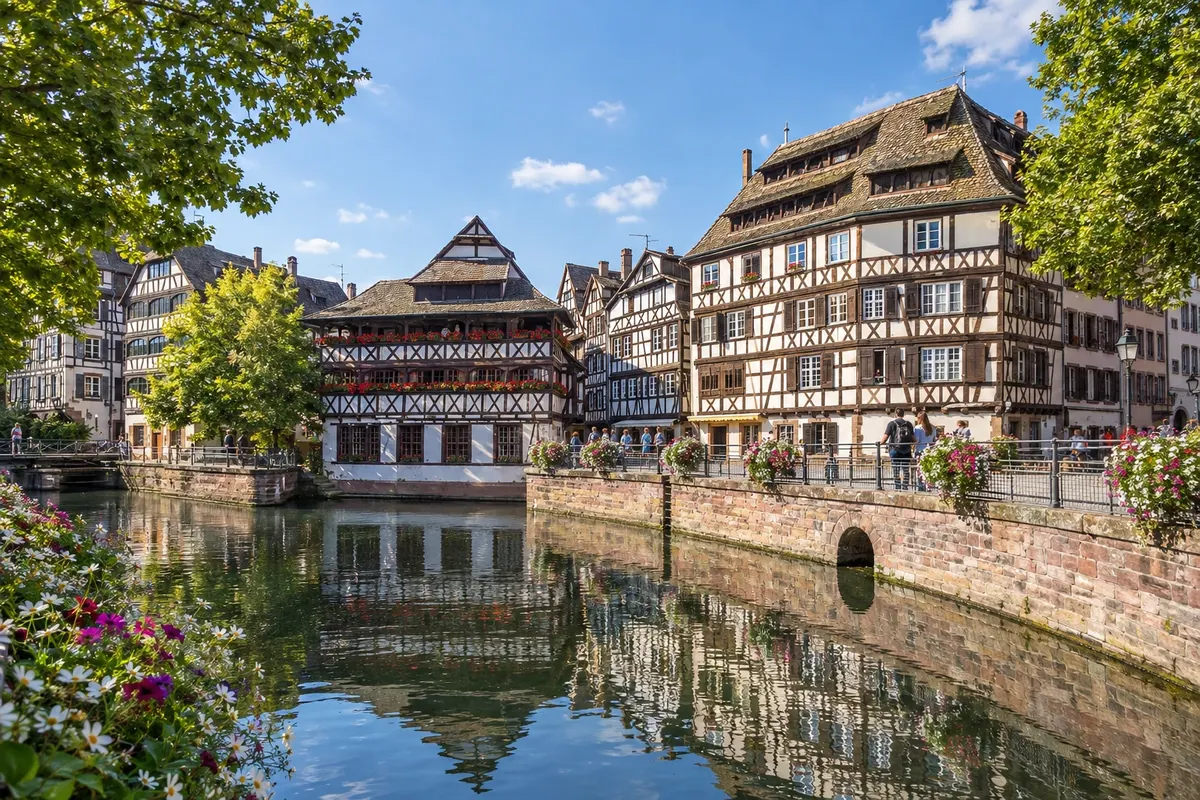
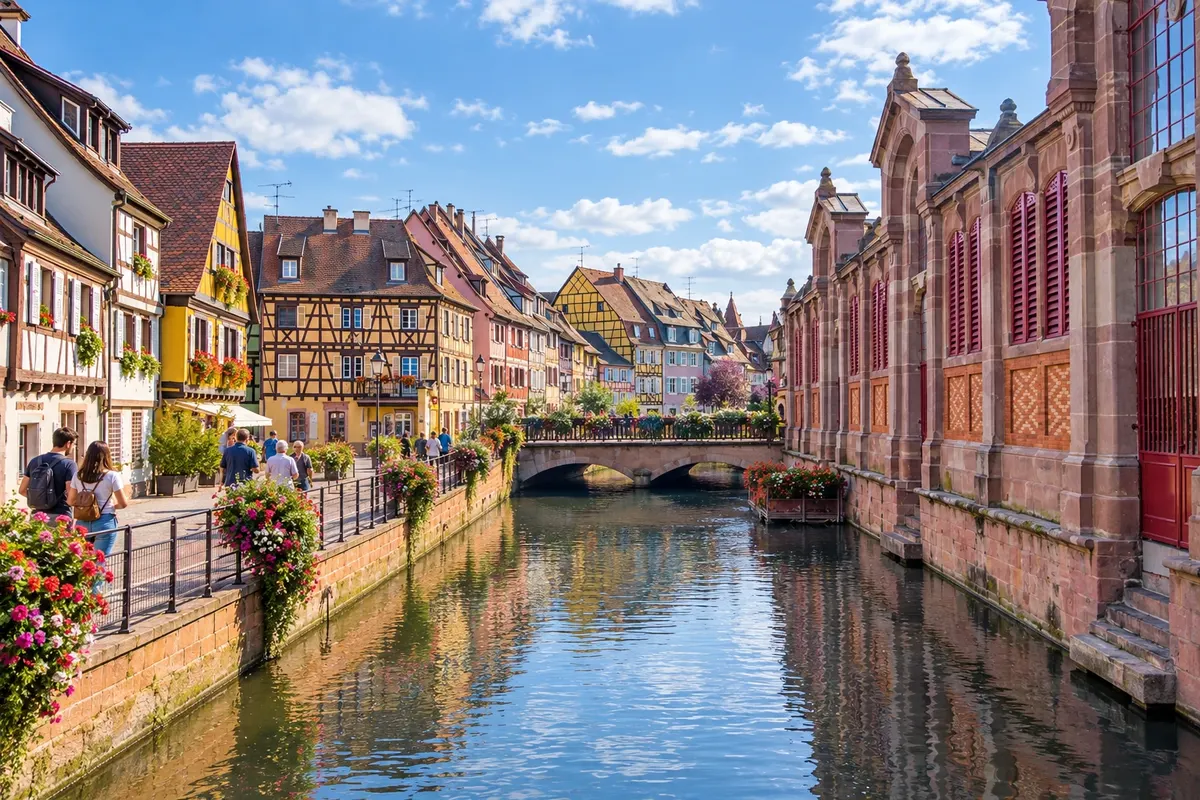
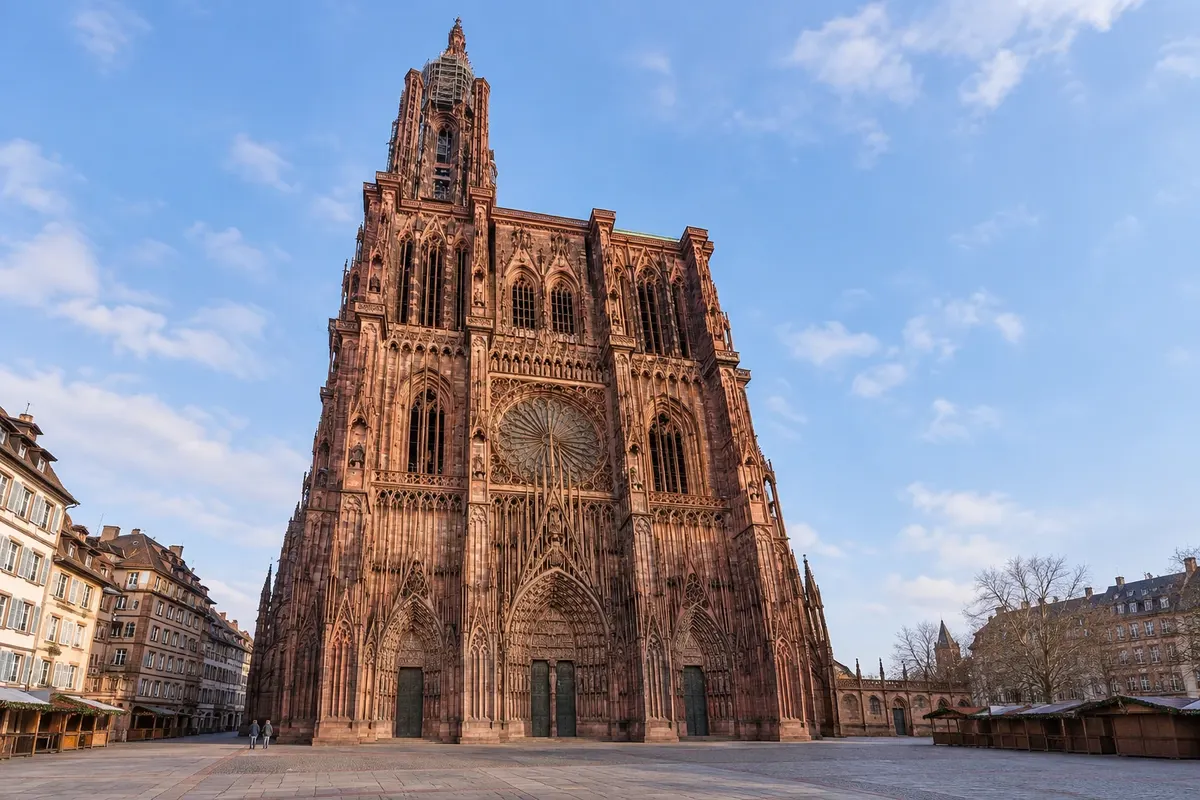
Illustrative images. The pictures in this guide are illustrations based on the real place, not photographs, and may differ from it.

Na voljo v trgovini Google Play Pošljite svoje fotografije

Spoznajte kraj

Pokrajina, ki jo doživite
v svojem ritmu.

Alsácia is the strip in eastern França between the river Reno, which forms the border with Alemanha, and the Vosges mountains. The region changed hands between França and Alemanha several times over the centuries, and that shows up in everything: in street and town names, on bilingual signs, in the cuisine and in the Alsatian dialect, which is still spoken by some of the older residents.

Estrasburgo is the gateway. The city has a pink sandstone cathedral, the historic center of the Grande Île and the Petite France quarter, both listed as World Heritage by Unesco, and it is home to the European Parliament. The TGV, the high-speed train, links Paris to Estrasburgo in about 1h50.

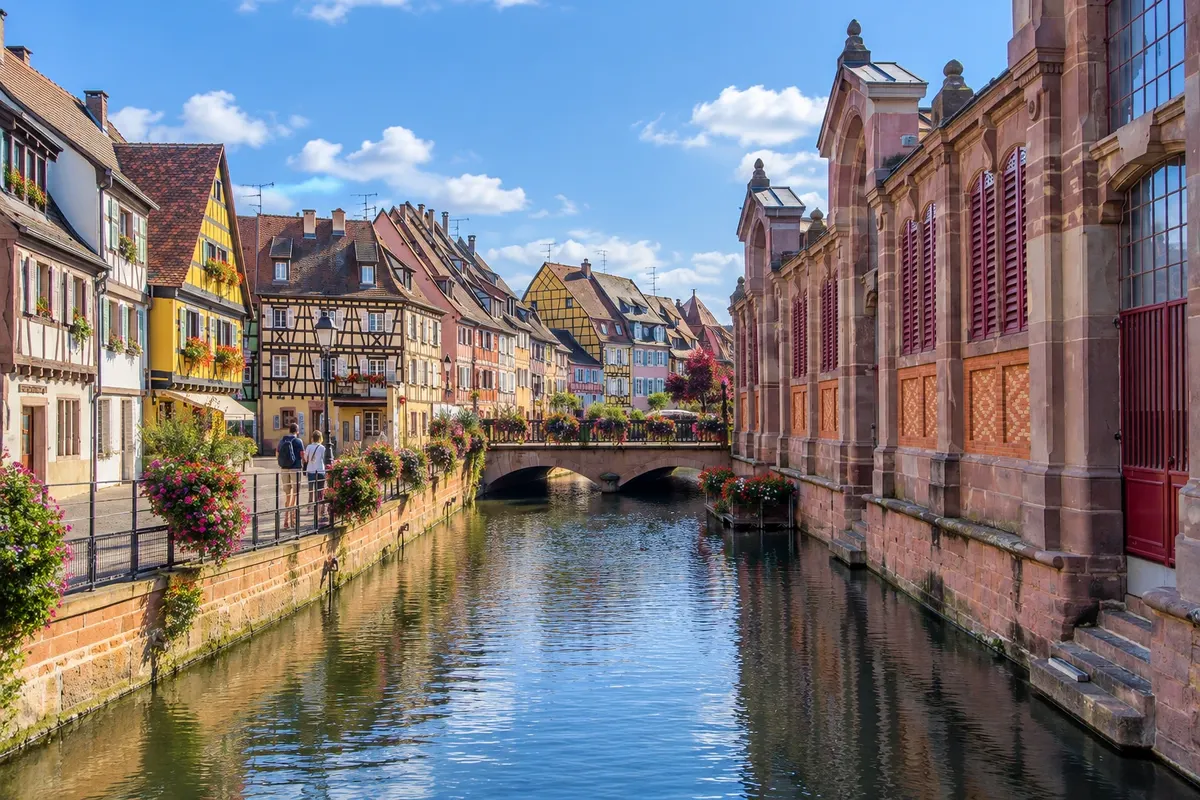
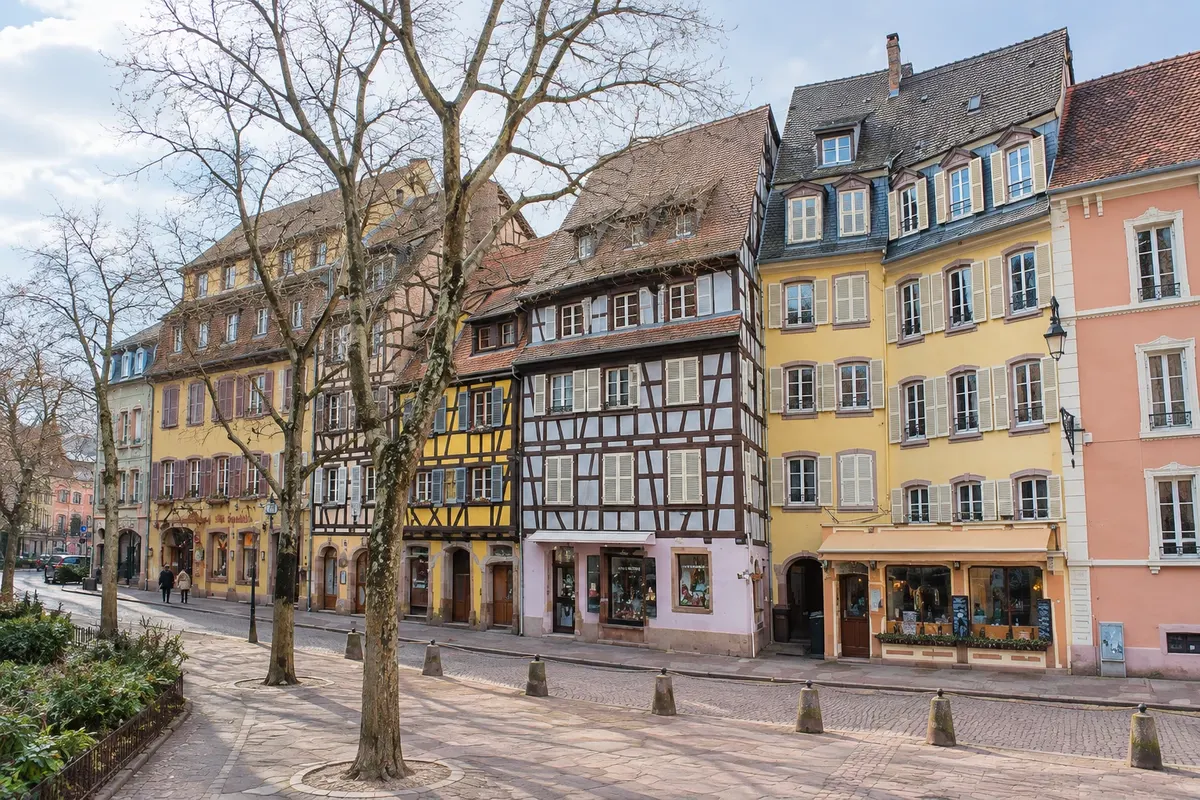
To the south is Colmar, with canals in the Petite Venise, colorful half-timbered houses and the Musée Unterlinden, which houses the Retábulo de Issenheim. Surrounding Colmar runs the Rota dos Vinhos da Alsácia, a road that connects villages such as Riquewihr, Eguisheim and Kaysersberg, amid vineyards of riesling and gewurztraminer. On top of a hill, the Château du Haut-Kœnigsbourg watches over the plain.

White wine is part of the local culture, as are choucroute (sauerkraut), flammekueche (a thin crust baked with cream, onion and bacon) and kougelhopf, a tall crown-shaped cake. Storks have become a symbol of the region and appear in nests on rooftops and on souvenirs everywhere.

In December, towns set up Christmas markets; Estrasburgo's, the Christkindelsmärik, is one of the oldest in Europe. Markets usually run from late November to late December, and it is the busiest time of the year.

This destination brings together 2 cities: Strasbourg, Colmar.

Delite: WhatsApp
Delite svoja popotniška doživetja s fotografijami Pošljite fotografije vsakega kraja, ki ste ga obiskali. Največje število fotografij na kraj: 5.

Ena destinacija, več poti

Mesta na tej poti

Začnite v enem mestu ali v načrt poti vključite več mest.

Alsace – lega
ColmarEstrasburgo

Obrisi: © IGN, ADMIN EXPRESS, Licence Ouverte 2.0. Priredba: Cidade Turismo.

Kako do tja:Alsace

✈ Aéroport Paris-Charles de Gaulle (CDG), kraj: Roissy-en-France· 480 km do cilja (Strasbourg)

✈ Aéroport de Strasbourg-Entzheim (SXB), kraj: Entzheim· 12 km do cilja (Strasbourg)

The most common route is to fly to Paris and take the TGV to Estrasburgo (about 1h50) or Colmar. There is also Estrasburgo airport (SXB) and EuroAirport Basel-Mulhouse-Freiburg (BSL/MLH) to the south. Check before buying.

Predlagana točka prihoda:Strasbourg

Doživite kraj

Kaj početi – Alsace

Strasbourg Cathedral (Notre-Dame)
Strasbourg · Grand Est · Stolnica

Strasbourg Cathedral (Notre-Dame)

Gothic cathedral of pink Vosges sandstone, with a single 142-meter tower, an astronomical clock with automatons and a platform high on the façade that is reached on foot.

Little Venice (Petite Venise)
Colmar · Grand Est · Zgodovinska mestna četrt

Little Venice (Petite Venise)

Section of Colmar on the banks of the Lauch river, with colourful half-timbered houses leaning over the water, former homes of horticulturists and fishermen.

Grande Île
Strasbourg · Grand Est · Zgodovinska mestna četrt

Grande Île

Island formed by the river Ill that contains Strasbourg's historic centre, with the cathedral, squares, medieval streets and half-timbered houses; a UNESCO World Heritage Site since 1988.

Unterlinden Museum
Colmar · Grand Est · Muzej

Unterlinden Museum

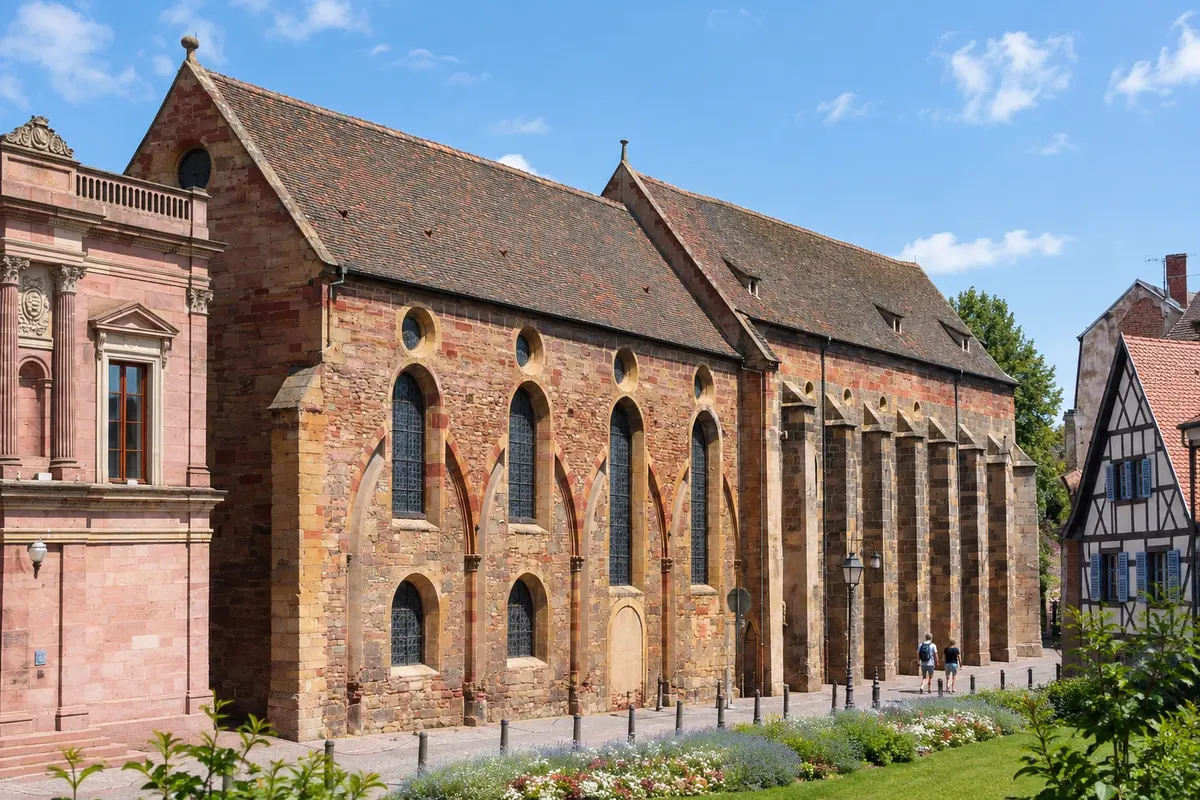
Art museum of Colmar in a 13th-century convent, famous for the Retábulo de Issenheim by Matthias Grünewald, with a modern wing designed by Herzog & de Meuron.

Alsace – prikaži dodatne kraje (12)
Collégiale Saint-Martin
Colmar · Grand Est · Cerkev

Collégiale Saint-Martin

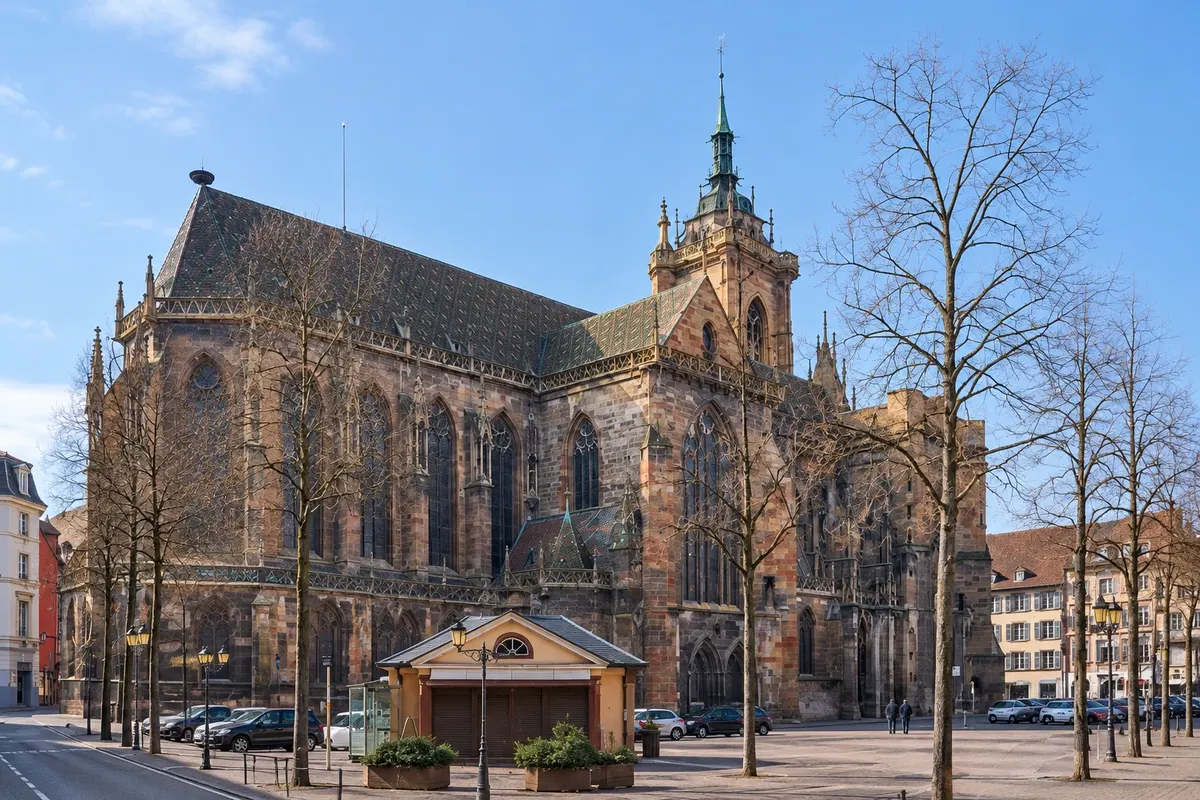
The largest church in Colmar, Gothic, built between 1234 and the mid-14th century, with a roof of colorful tiles and a bulb-shaped bell tower.

Petite France
Strasbourg · Grand Est · Zgodovinska mestna četrt

Petite France

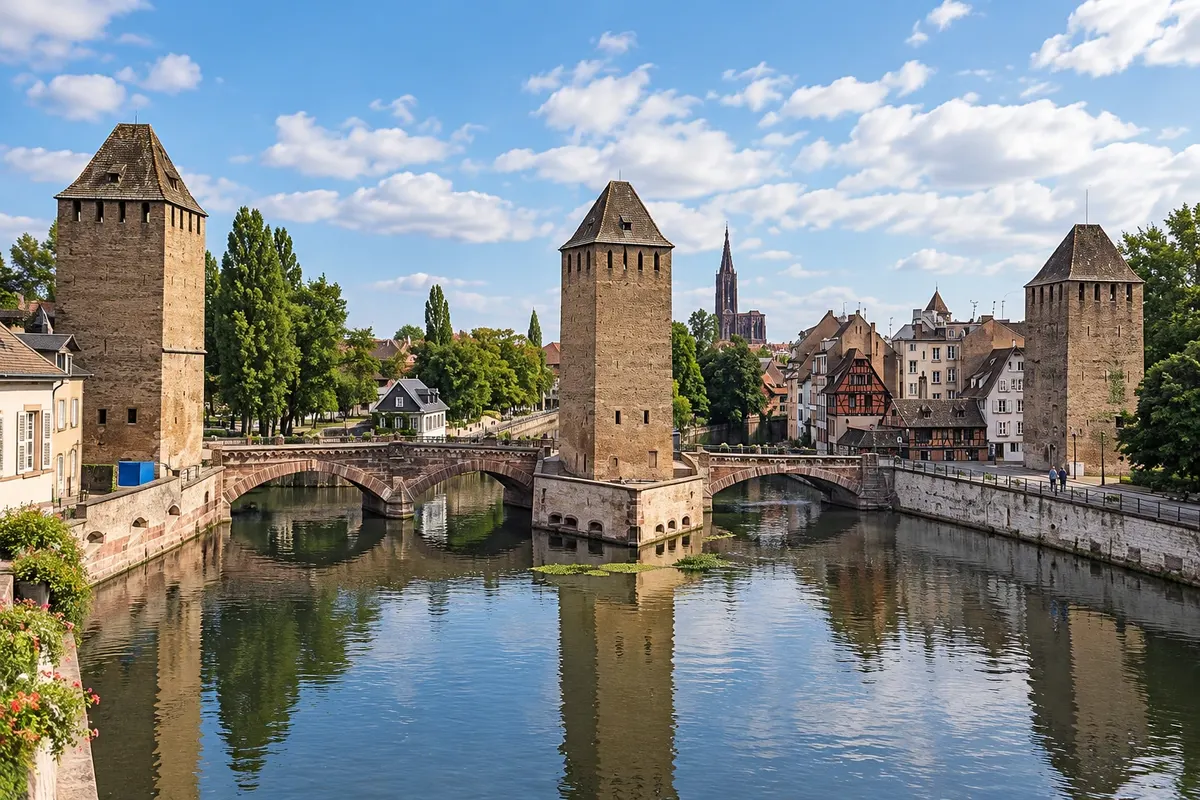
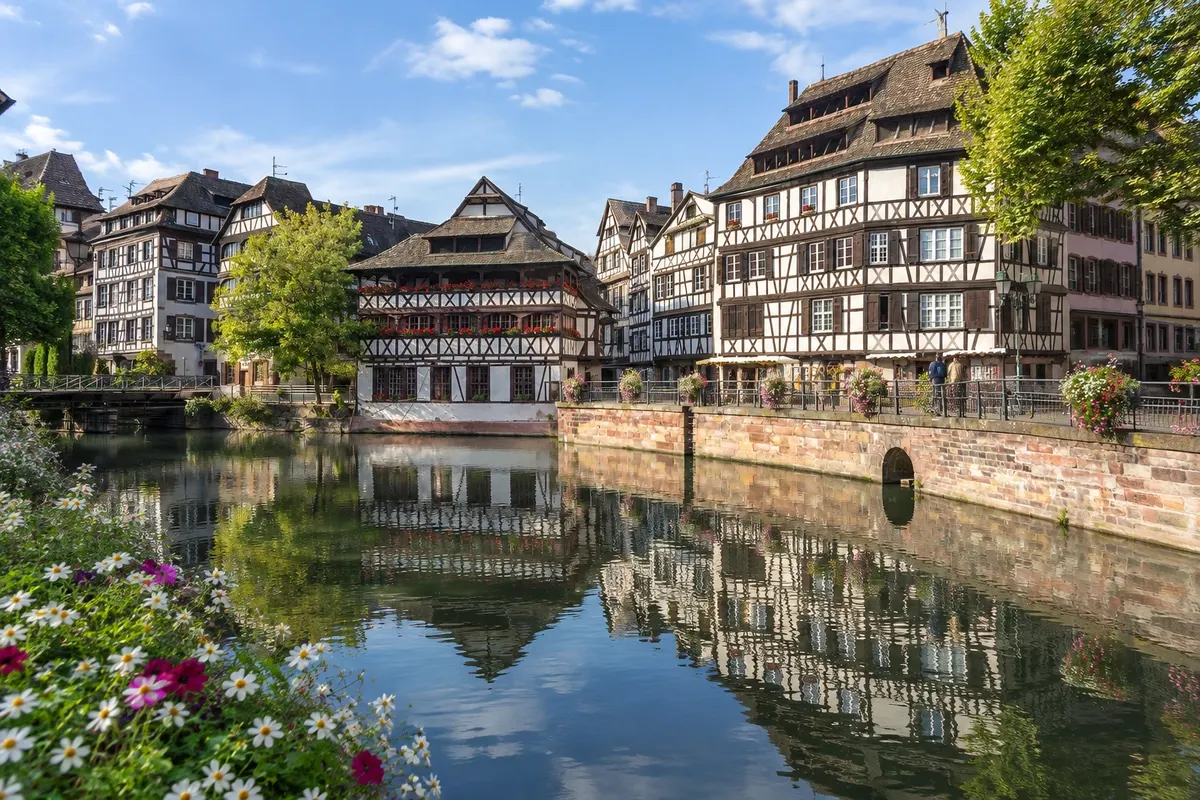
Former quarter of millers, fishermen and tanners on the banks of the Ill canals, with half-timbered houses, the Ponts couverts and the Barrage Vauban, from where you get a panoramic view of the neighbourhood.

Rohan Palace
Strasbourg · Grand Est · Palace

Rohan Palace

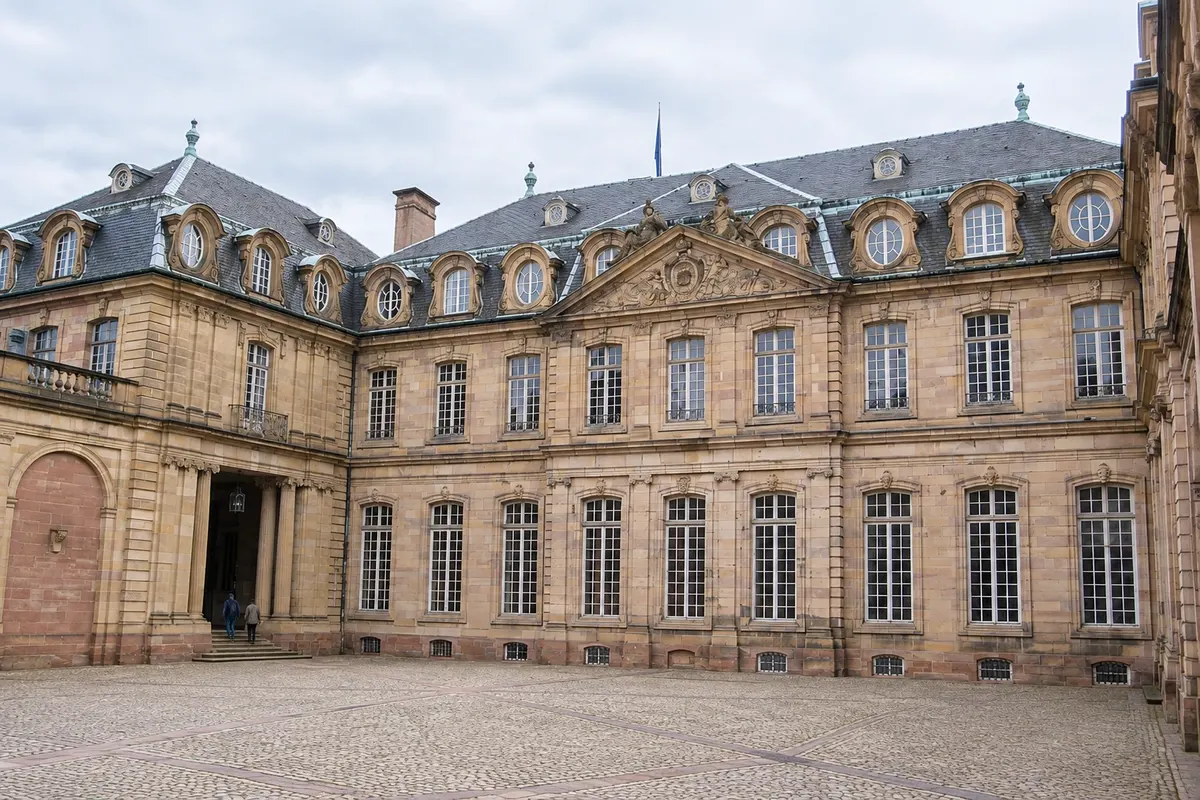
18th-century palace of the prince-bishops of Strasbourg, next to the cathedral, which houses three museums: Arts décoratifs, Beaux-Arts and Archéologique.

Quartier des Tanneurs (Tanners' Quarter)
Colmar · Grand Est · Zgodovinska mestna četrt

Quartier des Tanneurs (Tanners' Quarter)

Former leather-tanners' district of Colmar, with tall half-timbered houses and attics open to dry hides, between the Koïfhus and the canal.

Bartholdi Museum
Colmar · Grand Est · Muzej

Bartholdi Museum

House where Auguste Bartholdi was born, author of the Statue of Liberty, with models, drawings and sculptures by the artist and a room dedicated to the creation of the New York statue.

Musée de l’Œuvre Notre-Dame
Strasbourg · Grand Est · Muzej

Musée de l’Œuvre Notre-Dame

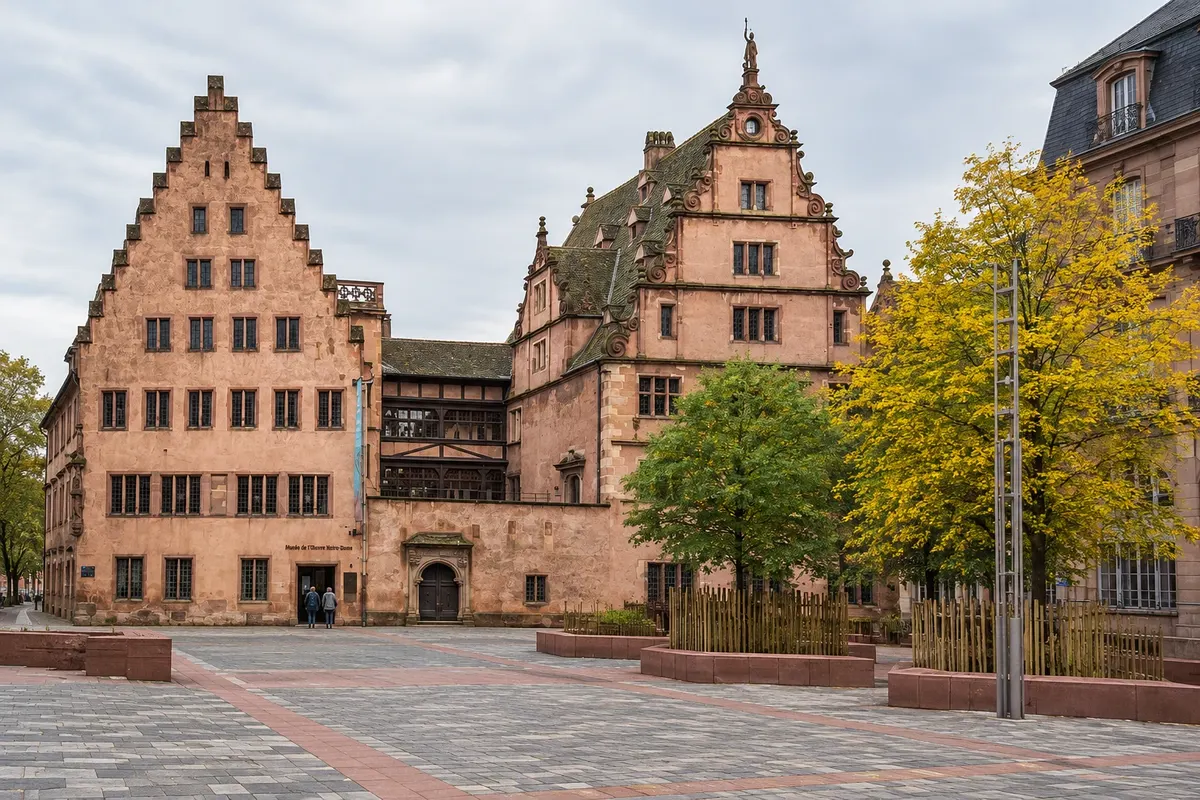
Museum of medieval and Renaissance art of the Upper Rhine, in the building of the foundation that has cared for the cathedral since the 13th century, with the original façade statues and a Gothic garden.

European Parliament (Parlement européen)
Strasbourg · Grand Est · Seat of the Parliament

European Parliament (Parlement européen)

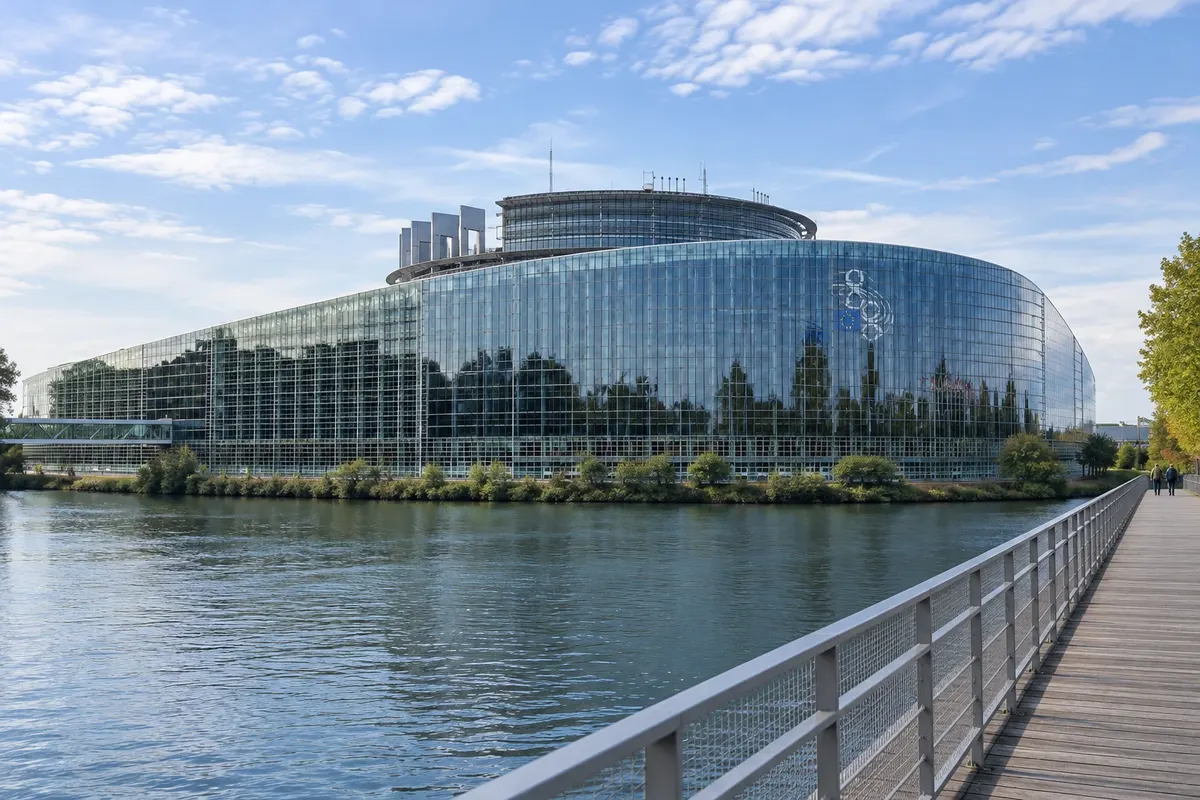
Official seat of the European Parliament, in the Louise-Weiss building on the banks of the Ill. It welcomes visitors year-round, with the hemicycle, exhibitions and the Parlamentarium Simone Veil.

Riquewihr
Colmar · Grand Est · Village

Riquewihr

Walled village on the Wine Route, 13 km from Colmar, with preserved 16th- and 17th-century houses, the Dolder tower, and Riesling vineyards around.

Eguisheim
Colmar · Grand Est · Village

Eguisheim

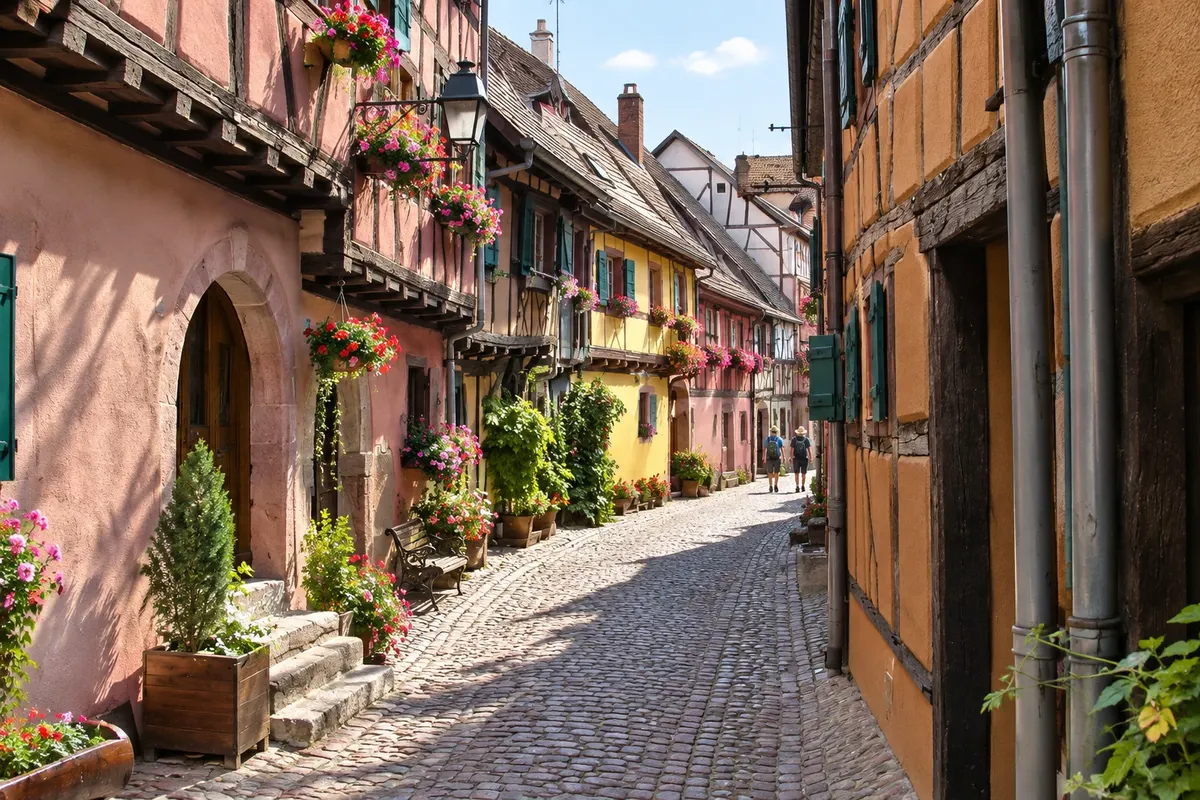
Village on the Rota dos Vinhos, 5 km from Colmar, built in concentric circles around a castle, birthplace of Pope Leão IX.

Parc de l'Orangerie
Strasbourg · Grand Est · Park

Parc de l'Orangerie

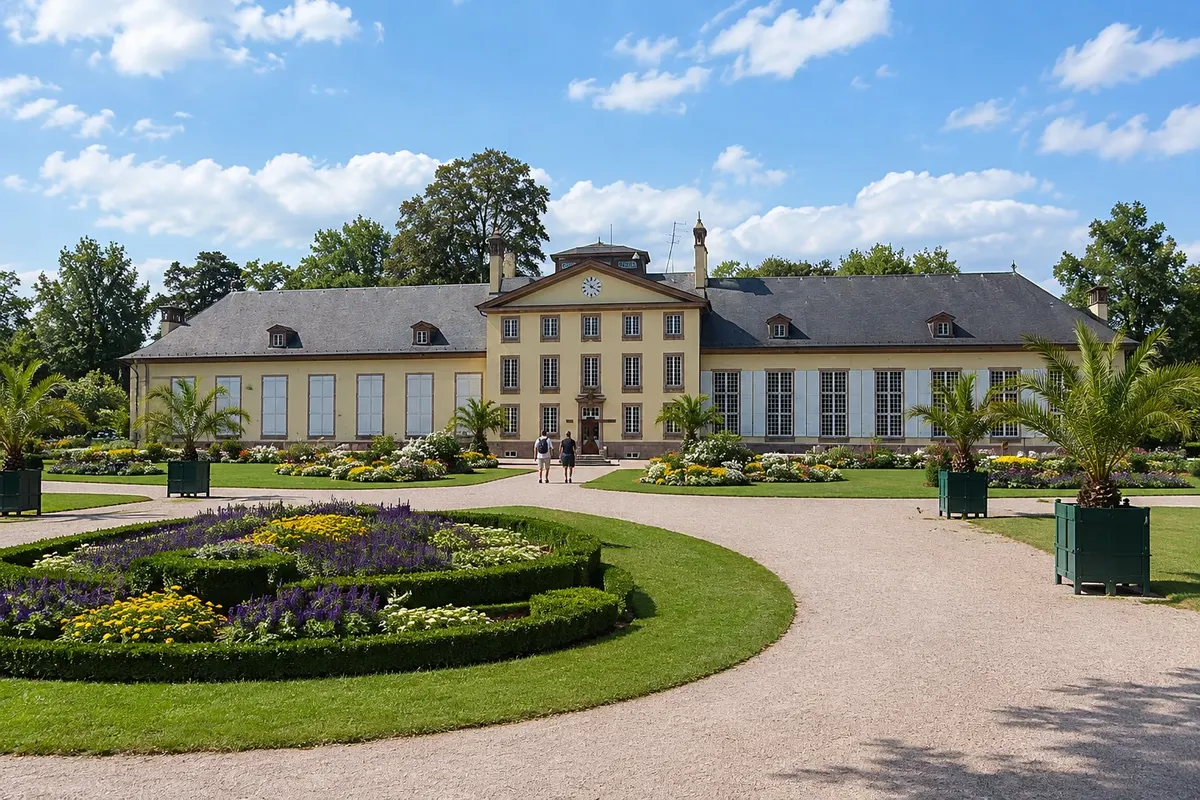
Estrasburgo's largest park, covering 26 hectares, with a lake and waterfall, the Pavillon Joséphine and an enclosure for storks, opposite the quarter of the European institutions.

Kaysersberg
Colmar · Grand Est · Village

Kaysersberg

Medieval village on the Rota dos Vinhos, 12 km from Colmar, with a fortified bridge over the Weiss river, castle ruins on the hill and the birthplace of Albert Schweitzer.

Château du Haut-Kœnigsbourg
Colmar · Grand Est · Grad

Château du Haut-Kœnigsbourg

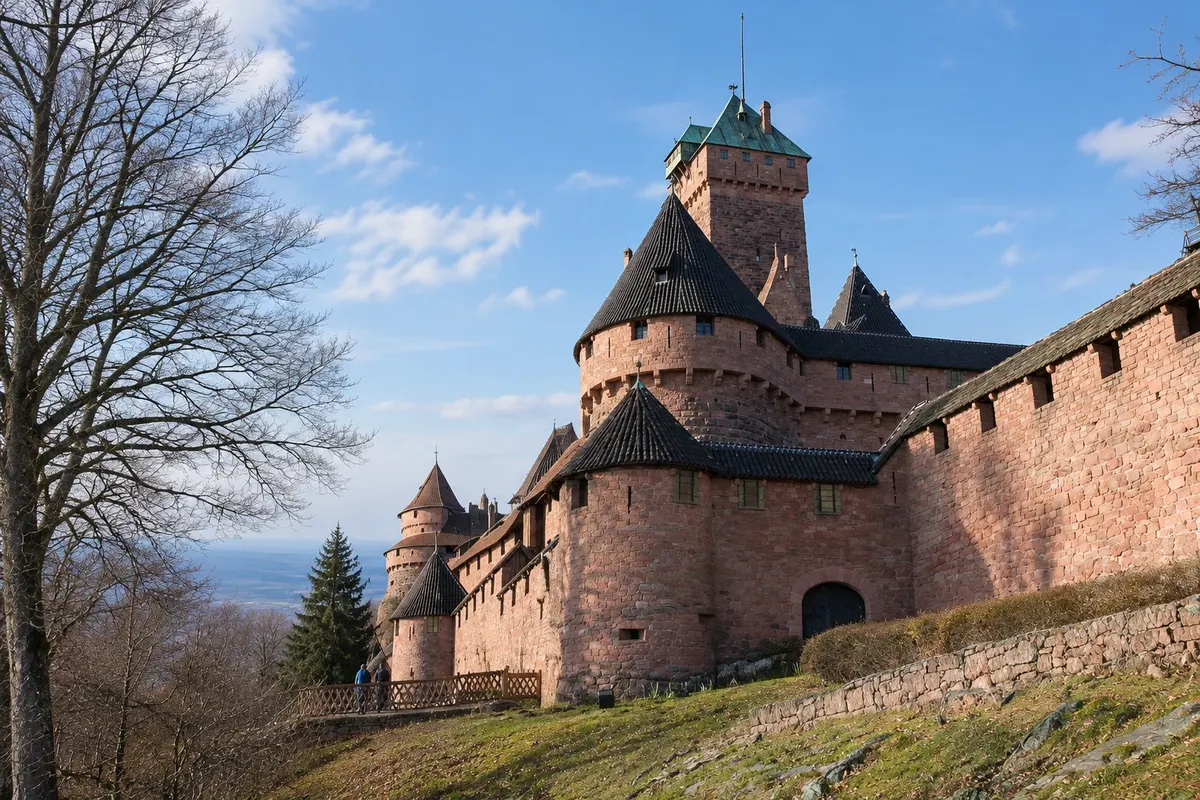
Medieval castle at 757 meters altitude, above the Alsace plain, restored in the early 20th century by Emperor Guilherme II; it is about 26 km from Colmar.

Kaj izbrati pred odhodom

Izleti – Alsace

Izhodišče, trajanje, potek, vključene storitve in okvirna cena vsakega izleta.

Cathédrale Notre-Dame de Strasbourg: nave, astronomical clock and platform

Odhod: Strasbourg city centre (Estrasburgo) On foot, in the heart of the Grande Île Približno 2 uri Dopoldne easy (330 steps to the platform)

It is the starting point for any visit to Strasbourg (Estrasburgo). The cathedral of pink Vosges sandstone was begun in the 12th century; the western façade, started in 1277, includes the large rose window, completed around 1340. The spire, finished in 1439, reaches 142 m, and the cathedral was the tallest building in the world from 1647 to 1874. Inside, in the south transept, are the Pilier des Anges, a column from around 1230 with the four evangelists and angels with trumpets, and the astronomical clock. The clock case dates from 1574; the mechanism was remade by Jean-Baptiste Schwilgué in the 19th century. Every day, near noon, there is a presentation with a film about the clock and the procession of the apostles, with a separate ticket and limited places. The platform is at 66 m height, after 330 steps up a spiral staircase, and shows the roofs of the Grande Île, the Alsace plain, and, in clear weather, the Forêt-Noire (Black Forest) on the German side. Allow one hour for the nave and the clock and another for the climb.

Kraji na poti: Cathédrale Notre-Dame de Strasbourg, Horloge astronomique, Pilier des Anges, Plateforme de la cathédrale, Place de la Cathédrale.

Vključuje: Entrance to the cathedral is free. The astronomical clock presentation and the climb to the platform have separate tickets. Check the current pricing.

Nasvet: The self-guided visit is suspended during Masses and during the clock presentation. Buy the clock ticket early, because places sell out. The platform staircase is narrow and there is no elevator. Return to the square in the late afternoon to see the façade in low light.

Najboljši čas za obisk: All year. From the platform, dry, clear days reveal the Vosges and the Forêt-Noire. In December the square is taken over by the Christmas market.

Grande Île and Petite France on foot: Place Kléber, Ponts Couverts and Barrage Vauban

Odhod: Place de la Cathédrale, Strasbourg Peš po starem mestnem jedru Približno 3 ure Popoldne Lahko

The Grande Île is the island formed by the branches of the Ill River, where Strasbourg’s historic center is located, a UNESCO World Heritage site since 1988. From Place de la Cathédrale, follow the shopping streets to Place Gutenberg and Place Kléber, the main square. Then head southwest down to La Petite France. The neighborhood originated in the 12th century in the delta of the Ill, along four parallel canals; tanners worked there, kept away from wealthy houses because of the smell, and from the 15th century three grain mills operated. The half-timbered houses (colombages) sit over the water, with bridges and locks between the streets. At the far end of the neighborhood are the Ponts Couverts, four medieval towers connected by bridges that guarded the city entrance; the roofs of the bridges disappeared in the 18th century, but the name remained. Just ahead is the Barrage Vauban, built in 1686 to block the flow of water in case of attack. Since 1966 the terrace on top of the dam has served as a viewpoint, with views of the towers and La Petite France.

Kraji na poti: Grande Île, Place Kléber, Place Gutenberg, La Petite France, Ponts Couverts, Barrage Vauban.

Vključuje: Self-guided walk. The terrace of the Barrage Vauban does not charge admission. The Office de Tourisme runs paid guided tours separately; check the current schedule.

Nasvet: Start at the cathedral and finish at the Barrage Vauban, which is at the western end of the Grande Île. In Petite France the streets get crowded around midday; early morning or late afternoon the neighborhood is quieter. Trams A, B, D and F stop nearby.

Najboljši čas za obisk: All year. In spring and summer the windows are full of flowers; in December, La Petite France has a smaller Christmas market.

Colmar historic centre on foot: Maison des Têtes, Koïfhus, Collégiale Saint-Martin and Quartier des Tanneurs

Odhod: Colmar station or Place Rapp Peš po starem mestnem jedru Približno 3 ure Dopoldne Lahko

Colmar is about 1 km from the train station, walking along the avenue de la République, through the Champ de Mars park and to Place Rapp. The historic center is small and walkable. The Maison des Têtes, dating from 1609, features 111 carved masks on its façade. On rue des Marchands is the Maison Pfister, from 1537, with a corner balcony and painted façade, and on the same street the house where sculptor Auguste Bartholdi—author of the Statue of Liberty in New York—was born in 1834; it is now the Musée Bartholdi, with a room dedicated to the statue. The Koïfhus, completed in 1480, was the old customs house and the seat of the Décapole, the league of ten Alsace towns. The Collégiale Saint-Martin, built from 1235 to 1365, is the city’s large Gothic church. The Quartier des Tanneurs has timber-framed houses from the 17th and 18th centuries, some with six floors whose attics were used to dry hides. Next to them is the Marché couvert, from 1865, with about twenty stalls, and Petite Venise.

Kraji na poti: Colmar, Maison des Têtes, Maison Pfister, Koïfhus, Collégiale Saint-Martin, Quartier des Tanneurs, Marché couvert, Musée Bartholdi.

Vključuje: Self-guided walking. The Musée Bartholdi and guided tours by the Office de Tourisme have separate fees. There are also tourist trains around the centre. Check current pricing.

Nasvet: From Strasbourg, the TER reaches Colmar in about 30 minutes, which makes the city doable as a day trip. Start early: by midday, especially on Saturdays and in December, the narrow streets get crowded. The tourist train helps those who walk less.

Najboljši čas za obisk: All year. From April to October the façades are adorned with flowers; from late November to December there are Christmas markets and heavy crowds.

Petite Venise and boat ride on the Lauch in Colmar

Odhod: Pont Saint-Pierre, Colmar Flat-bottom boat with guide about 25 minutes by boat Dopoldne ali popoldne Lahko

Petite Venise is the former neighborhood of Colmar’s market gardeners along the Lauch river, with colorful half-timbered houses on the water’s edge. The Quai de la Poissonnerie, the old fishermen’s quay, is on the same stretch. The boat departs from the foot of Pont Saint-Pierre and follows a roughly 25-minute route in a flat-bottomed boat, piloted by a boatman who narrates the ride. The boat passes between the houses of Petite Venise and along the Quai de la Poissonnerie and reaches the old market-gardeners’ quarter. After the boat, it’s worth walking along the Lauch and returning via the Quartier des Tanneurs.

Kraji na poti: Petite Venise, Lauch, Quai de la Poissonnerie, Quartier des Tanneurs.

Vključuje: About a 25-minute boat ride with a boatman. There is a ticket, paid separately; small children pay less. Check the current fare chart.

Nasvet: On Saturdays and in December, the boat queue and the streets of Petite Venise get full in the afternoon; go early. The tour is short and pairs well with a walk through the historic centre the same day.

Najboljši čas za obisk: From spring to autumn, with flowers in the windows. Outside the season departures are reduced: check with the operator.

Route des Vins d'Alsace: a day through the wine villages from Colmar

Odhod: Colmar Car, bicycle, Kut'zig bus in season or tour about 8 hours Ves dan Lahko

The Route des Vins d'Alsace (Alsace Wine Route) runs over 170 km at the foot of the Vosges, from Marlenheim near Strasbourg to Thann, west of Mulhouse, passing through winegrowers’ villages with half-timbered houses, churches, walls and hillside vineyards. The most visited section is around Colmar. A typical day combines three or four villages: Eguisheim to the south; Turckheim, about ten minutes from Colmar, with three medieval gates; Kaysersberg, about 13 km away; and to the north, Riquewihr, Hunawihr and Ribeauvillé. Many producers’ cellars welcome visitors to show the winemaking and offer tastings, and the visit is the main part of the stop. By car the circuit is simple and distances are short. Without a car there are regional Fluo buses from Colmar and, in season, the Kut'zig Tourbus, a circuit bus that stops in the villages. Cycling, regular or electric, is another option along the vineyard cycle route. There are also half-day or full-day tours from Colmar and from Strasbourg.

Kraji na poti: Route des Vins d'Alsace, Turckheim, Eguisheim, Kaysersberg, Riquewihr, Hunawihr, Ribeauvillé.

Vključuje: On excursions, generally: transport and guide; tastings may or may not be included. The Kut'zig sells a one-day ticket. Check the current price table.

Nasvet: Choose a few villages and arrive early: from late morning parking lots fill up. If you drive, leave tasting to whoever is not behind the wheel. The Kut'zig usually runs Wednesday to Sunday from July to September and only on weekends in June and early October; check the annual schedule.

Najboljši čas za obisk: From May to October. In September and October, grape harvest; in December, Christmas markets in the villages.

Batorama boat tour on the Ill: Petite France, Neustadt and the European quarter

Odhod: Cathédrale boarding point, Place du Marché-aux-Poissons Covered boat with audio guide about 1 hour 10 minutes Dopoldne ali popoldne Lahko

It’s the most practical way to see Strasbourg from another angle and to understand how the city spreads around the water. The boat departs from the boarding point next to the Palais Rohan, a few steps from the cathedral, and makes a roughly 70-minute circuit on the Ill and the canals. The route passes through Petite France, with timber-framed houses by the water, continues to the Neustadt, the late 19th-century German quarter, and reaches the European institutions district, with the Parlement européen. The commentary is via audio guide in 12 languages, and there is a children’s version. The boats are covered, with heating or air conditioning, and they open the roof on fine days. The tour runs all year, except when the river is in flood.

Kraji na poti: River Ill, Petite France, Neustadt, Parlement européen, Palais Rohan.

Vključuje: Boat trip with individual audio guide. There is a ticket, paid separately; buy it at the boarding point or online. Check the current fare chart.

Nasvet: In July, August and December there are queues and times fill up: buy in advance. Do the boat tour on your first day to get an overall view of the city before walking. People with reduced mobility need to reserve.

Najboljši čas za obisk: All year round. From May to September the boats usually operate with the roof open; on days of high water in the Ill, departures are suspended.

Prikaži dodatne izlete (12)

Musée Unterlinden and the Retable d'Issenheim, in Colmar

Odhod: Place Unterlinden, Colmar On foot, in central Colmar Približno 2 uri Dopoldne ali popoldne Lahko

The museum occupies the former convent of the Dominican sisters of Unterlinden, with a 13th-century cloister, and was expanded by architects Herzog & de Meuron, who linked the convent to a new brick-and-copper building, the Ackerhof; the new museum opened in December 2015. The central piece is the Retable d'Issenheim, painted by Grünewald and carved by Nicolas de Haguenau between 1512 and 1516 for the altar of the Antonine commandery of Issenheim, which cared for the sick. The altarpiece was restored from 2018 to 2022 and is displayed in the old chapel, with the panels open side by side. The collection covers about 7,000 years of history, with more than 3,500 works: archaeology, such as the Bergheim mosaic; art from the 11th to the 16th centuries, including Martin Schongauer; decorative arts and modern art, with works by Picasso, Monet and Dubuffet in the Ackerhof.

Kraji na poti: Musée Unterlinden, Retable d'Issenheim, Ackerhof.

Vključuje: There is an admission fee, paid separately; an audio guide and guided tours are available. Check the current schedule/prices.

Nasvet: Go straight to the chapel to see the altarpiece before the tour groups arrive, then continue through the cloister and the Ackerhof. The museum is closed one day a week; check before you go.

Najboljši čas za obisk: All year; a program for rainy or cold days.

Riquewihr and Hunawihr: town walls, the Dolder and vineyards

Odhod: Colmar Car, regional bus, or tour Približno 4 ure Dopoldne ali popoldne Lahko

Riquewihr is a walled village amid the vineyards, north of Colmar, with half-timbered houses—some dated 1521—and 16th-century walls. The main street climbs up to the Dolder, the gate-tower that served as an alarm belfry. It’s worth leaving the main street to explore the side lanes and the winegrowers’ courtyards. About 4 km away is Hunawihr, a smaller village with a 15th-century fortified church surrounded by a wall, high above the vineyards. Hunawihr is also home to NaturOparC, a species protection park of Alsace, with white storks and otters.

Kraji na poti: Riquewihr, Dolder, Hunawihr, Église fortifiée de Hunawihr.

Vključuje: Self-guided visit; entrance to the villages is free. Visits to the cellars and to NaturOparC are paid separately. Check the current price table.

Nasvet: Arrive before late morning: Riquewihr receives many groups. Combine with Ribeauvillé and Kaysersberg on the same day if you are driving. Wear comfortable shoes: the main street is uphill.

Najboljši čas za obisk: From April to October, with green vineyards or at harvest; in December, Christmas market.

Eguisheim and the Trois Châteaux trail

Odhod: Colmar Car, regional bus or bicycle Približno 3 ure Dopoldne ali popoldne easy (moderate trail to the castles)

Eguisheim, south of Colmar, has an unusual layout: the lanes form concentric circles around the old counts’ castle in the village center. A full circuit along the outer ring passes by colorful half-timbered houses, fountains and winegrowers’ courtyards. Eguisheim is the birthplace of Pope Leo IX, commemorated in the castle square in the center. If you’re up for it, you can walk from the village up to the Trois Châteaux (Haut-Eguisheim), the three watchtowers Weckmund, Wahlenbourg and Dagsbourg on the ridge, with views over the Alsace plain. The trail takes about 1 hour 30 minutes round trip.

Kraji na poti: Eguisheim, Trois Châteaux, Weckmund, Wahlenbourg, Dagsbourg.

Vključuje: Self-guided visit; entry to the village and the ruins is free. Visits to the wine cellars are paid separately.

Nasvet: Do the outer ring first, then enter the castle square. For the castle trail, wear sneakers and bring water. Eguisheim is close to Colmar and is easy to do by bicycle.

Najboljši čas za obisk: From April to October. In December, the Christmas market runs on Advent weekends.

Kaysersberg: fortified bridge, castle and Albert Schweitzer’s house

Odhod: Colmar Car or regional bus Približno 3 ure Dopoldne ali popoldne easy (short climb to the castle)

Kaysersberg is about 13 km from Colmar, roughly a 20-minute drive, at the entrance to the Weiss River valley. The village has no train station but is served by buses from Colmar. Its symbol is the fortified bridge of 1514 over the Weiss, with a small chapel in the middle. The Église Sainte-Croix, built between the 13th and 15th centuries, has a Romanesque portal and a carved wooden altarpiece by Jean Bongart dating to 1518; opposite it stands the 16th-century Fontaine Constantin. Albert Schweitzer, physician, theologian and Nobel Peace Prize laureate of 1952, was born in the village; his birthplace houses a center about his life and work. A short climb leads to the ruins of the 13th-century imperial castle, with a round tower and views over the village, the vineyards and the valley. From Kaysersberg, a roughly 2 km path through the vineyards, about 30 minutes on foot, leads to Kientzheim.

Kraji na poti: Kaysersberg, Pont fortifié, Château de Kaysersberg, Église Sainte-Croix, Centre Albert Schweitzer.

Vključuje: Self-guided visit; entry to the village and the castle ruins is free. The Centre Albert Schweitzer charges admission. Check the current schedule.

Nasvet: Climb to the castle early, before the heat in summer. In December, the village Christmas market, with about sixty stalls, fills up on weekends: go in the morning.

Najboljši čas za obisk: From April to October; in December, Christmas market.

Château du Haut-Kœnigsbourg

Odhod: Sélestat, Colmar or Strasbourg Train to Sélestat and bus 500, or car about 1 hour and a half visit Dopoldne ali popoldne easy (about 300 steps)

The castle stands at 757 m altitude, on a rocky spur overlooking the Alsace plain, in the commune of Orschwiller. It was built in the 12th century by the Hohenstaufen to watch trade routes, was sacked by the Swedes in 1633 and lay in ruins for almost 250 years. In 1899, the town of Sélestat offered the ruins to the German Emperor Wilhelm II, who ordered its reconstruction; architect Bodo Ebhardt led the work from 1900 to 1908. The result is an idealized reconstruction of a medieval castle, with a donjon and drawbridge, and it has been debated since. A self-guided visit takes about 1 hour and a half, with about 300 steps, and is not suitable for baby strollers. From the top, the view reaches the Alsace plain and the vineyards. Without a car, the route is by train to Sélestat, between Strasbourg and Colmar, and the line 500 bus to the castle.

Kraji na poti: Château du Haut-Kœnigsbourg, Orschwiller, Sélestat.

Vključuje: There is an admission fee, paid separately, also sold online. the bus 500 ticket gives a discount on entry. The castle parking is free of charge. Check the current schedule.

Nasvet: Bring a coat: at the top it is windy and colder than in Colmar. Bus 500 runs from March to December, with timetables set each year, and does not operate in January and February. The castle is closed on January 1 and on December 25 and 26. Combine your visit with the Montagne des Singes in Kintzheim, at the foot of the same mountain.

Najboljši čas za obisk: From March to December, while bus 500 is operating. In July and August, arrive at opening time.

Palais Rohan and Musée de l'Œuvre Notre-Dame

Odhod: Place du Château, Strasbourg On foot, beside the cathedral Približno 3 ure Dopoldne ali popoldne Lahko

The Palais Rohan, south of the cathedral, was built between 1732 and 1742 for the prince-bishops of the Rohan family, designed by Robert de Cotte, first architect to the king. Today it houses three municipal museums. The Musée des Arts décoratifs occupies the ground floor and the grand ceremonial apartments, including the king’s chamber and the Assembly hall, decorated with gilded stucco. The Musée des Beaux-Arts, on the upper floor, displays European painting, and the Musée archéologique, in the basement, tells the story of Alsace from prehistory to the Middle Ages. Across Place du Château is the Musée de l'Œuvre Notre-Dame, linked to the foundation that has cared for the cathedral since the Middle Ages: it holds original sculptures and stained-glass windows removed from the façade, as well as medieval and Renaissance art from the Upper Rhine. Choose one or two museums per visit; the palace’s three museums together with the Œuvre museum fill a whole day.

Kraji na poti: Palais Rohan, Musée des Arts décoratifs, Musée des Beaux-Arts, Musée archéologique, Musée de l'Œuvre Notre-Dame.

Vključuje: Each museum has its own ticket. Strasbourg museums sell passes that combine several museums. Check the current chart.

Nasvet: If you have limited time, the apartments of the Musée des Arts décoratifs and the Musée de l'Œuvre Notre-Dame are the most connected to the city’s history. Municipal museums close one day a week; check before you go.

Najboljši čas za obisk: All year; a program for rainy or cold days.

Christmas markets: Christkindelsmärik of Strasbourg and the markets of Colmar

Odhod: Strasbourg or Colmar On foot through the historic centers Približno 4 ure afternoon and evening Lahko

The Christkindelsmärik of Strasbourg dates back to 1570 and is among the oldest Christmas markets in Europe. It covers Place Broglie, Place de la Cathédrale and the streets of the Grande Île, with about 300 wooden stalls selling decorations, crafts, holiday sweets and hot drinks. The large Christmas tree stands on Place Kléber, and Petite France hosts a smaller market. In Colmar there are five or six markets spread through the center, including those on Place des Dominicains, with an ice rink and a children’s market, Place de l'Ancienne Douane and Place Jeanne d'Arc, as well as the illuminated Petite Venise. Villages along the Route des Vins also have markets: Kaysersberg, with around sixty stalls around the church, Riquewihr and Eguisheim, the latter only on Advent weekends. Markets typically open in late November and run until close to Christmas or until the end of December, depending on the town and the year.

Kraji na poti: Christkindelsmärik, Place Broglie, Place de la Cathédrale, Place Kléber, Colmar, Kaysersberg, Riquewihr, Eguisheim.

Vključuje: Entrance to the markets is free. Food, drinks and purchases are paid separately.

Nasvet: The weekends in early December are the busiest: Strasbourg can receive up to 100,000 visitors a day. Prefer weekdays and mornings. Trains between Strasbourg and Colmar get crowded; buy in advance. Bring winter clothing: nights are cold, around 0 °C.

Najboljši čas za obisk: From late November to December; check the dates for the year before you book the trip.

Ribeauvillé: Tour des Bouchers and the three Ribeaupierre castles

Odhod: Colmar Regional transport, car, or tour about 4 hours including the trail Dopoldne ali popoldne moderate (uphill trail)

Ribeauvillé, north of Riquewihr, was the seat of the lords of Ribeaupierre, and their three castles stand high on the hillside above the village. The Grand'Rue runs through town and passes beneath the Tour des Bouchers, a 13th-century tower that separated the upper and lower town. Along the street are half-timbered houses, fountains, and wine cellars. Those who enjoy walking can climb the forest trail to the ruins of Château de Saint-Ulrich and continue to the other two, Girsberg and Haut-Ribeaupierre. The circuit of the three castles is a long uphill forest trail; visitors with less time usually go only to Saint-Ulrich. Ribeauvillé is one of the vineyard villages served by regional transport from Colmar.

Kraji na poti: Ribeauvillé, Tour des Bouchers, Château de Saint-Ulrich, Château du Girsberg, Château du Haut-Ribeaupierre.

Vključuje: Self-guided visit; entry to the village and the ruins is free. Visits to the wine cellars are paid separately.

Nasvet: Wear shoes with good soles on the trail and bring water: there are no services along the way. Off the trail, one hour is enough to reach the Grand'Rue. Ribeauvillé is about ten minutes by car from Kaysersberg and pairs well with Riquewihr.

Najboljši čas za obisk: From April to October, with the trail dry. In winter the path can become slippery.

Neustadt: the German quarter, from Place de la République to the Palais du Rhin

Odhod: Place de la République, Strasbourg Walk starting from the Grande Île Približno 2 uri Dopoldne ali popoldne Lahko

In 1871 Strasbourg became part of the German Empire, and from the 1880s the city gained a new district to the east and north of the Grande Île: the Neustadt (new town). Wide avenues, squares and stone public buildings contrast with the medieval streets of the center. The axis is the former imperial square, today Place de la République, a circular garden surrounded by official buildings, including the Palais du Rhin, built as the emperor’s palace. In 2017 UNESCO extended the Grande Île World Heritage listing to include the Neustadt, under the name De la Grande-Île à la Neustadt. The walk starts at Place de la République and follows the district’s avenues, with residential buildings from the same period. You can combine it with the Batorama boat, which passes the Neustadt, or with a visit to the Parlement européen.

Kraji na poti: Neustadt, Place de la République, Palais du Rhin.

Vključuje: Self-guided walk. The Office de Tourisme offers paid guided tours; check current prices.

Nasvet: Place de la République is a few minutes' walk from the cathedral, on the other side of the Ill. It’s a walk to do on your second or third day in Strasbourg, after seeing the Grande Île.

Najboljši čas za obisk: All year; in spring and summer the gardens of Place de la République are green.

Parlement européen, Parlamentarium Simone Veil and Parc de l'Orangerie

Odhod: Strasbourg city centre Tram line E to the Parlement européen stop Približno 3 ure Dopoldne ali popoldne Lahko

Strasbourg is one of the seats of the European Parliament, which holds plenary sessions there from Monday to Thursday, about once a month, except in August. The visitors' entrance is in the Louise Weiss building. Outside session weeks, individual visitors can enter without a reservation, Monday to Saturday, pass through security screening and make a self-guided visit to the hemicycle, the Parlamentarium Simone Veil (an exhibition about European integration), and temporary exhibits, using an app or an audio device. The visit takes about one hour. During session weeks the public may watch from the galleries, subject to available seats. Nearby are the Palais de l'Europe, home of the Council of Europe (not part of the European Union), and the building of the European Court of Human Rights, designed by Richard Rogers, which is viewed from the outside. A few minutes' walk away is the Parc de l'Orangerie, with a lake and tree-lined paths, to finish the walk.

Kraji na poti: Parlement européen, Parlamentarium Simone Veil, Palais de l'Europe, Cour européenne des droits de l'homme, Parc de l'Orangerie.

Vključuje: The visit to the Parliament is free of charge. You must present the original passport; copies and phone photos are not accepted.

Nasvet: Bring your passport, because without it you cannot enter. Liquids over 100 ml are barred at security, as at the airport. Bring your own headphones for the app. The building is closed on Sundays and public holidays.

Najboljši čas za obisk: All year, Monday to Saturday. To see a plenary session, check the Parliament calendar.

Across the Rhine: Kehl by tram and a day trip to Baden-Baden or Freiburg

Odhod: Strasbourg or Colmar Tram D to Kehl; train or bus to Baden-Baden and Freiburg from 2 hours (Kehl) to a full day Dopoldne ali ves dan Lahko

Alsace borders Germany along the Rhine, and within the Schengen area crossings generally have no border control. It’s an add-on, not the focus of the trip. The simplest option is Kehl, the German town opposite Strasbourg: tram line D crosses the Rhine and goes to Kehl Rathaus, the town hall, in the city center. You can go and return in a morning. Baden-Baden, a spa town in the northern Black Forest, is about 41 km from Strasbourg; by train the journey takes from 30 minutes to just over 1 hour, usually with a change. Freiburg im Breisgau, a university town in the southern Black Forest, is closer to Colmar: regional bus Fluo 1076 runs from Colmar to Breisach on the German bank, from where trains depart for Freiburg. If you arrive at EuroAirport there is an hourly bus to Freiburg’s bus station, next to the railway station, taking about 60 minutes.

Kraji na poti: Kehl, Rhine, Baden-Baden, Freiburg im Breisgau, Breisach.

Vključuje: Self-guided trip. Strasbourg’s tram uses the urban network tickets; trains and buses to Germany are paid separately. Check the current schedule.

Nasvet: Bring your passport even to go to Kehl. In Germany, shops are closed on Sundays. For Baden-Baden and Freiburg, check return times before you go.

Najboljši čas za obisk: Vse leto.

Montagne des Singes, in Kintzheim, and NaturOparC, the stork park in Hunawihr

Odhod: Colmar or Sélestat Car about 2 hours in each park Dopoldne ali popoldne Lahko

Two animal parks near the Route des Vins, good for travelers with children. Montagne des Singes, in Kintzheim at the foot of Haut-Kœnigsbourg, is a 24-hectare forest where more than 200 Barbary macaques live free-roaming. Visitors walk a trail through the forest with monkeys nearby, and keepers run feeding sessions during the day. The visit takes about 2 hours, and the park is open from late March to mid November. NaturOparC, in Hunawihr next to Riquewihr, is a park dedicated to the protection of Alsace species such as the white stork, the region’s symbol, the European otter and the European hamster. The visit is self-guided, with keeper encounters, and the park is open year round, with reduced hours on some days.

Kraji na poti: Montagne des Singes, Kintzheim, NaturOparC, Hunawihr.

Vključuje: Each park has an admission fee, paid separately. Check the current price table.

Nasvet: At Montagne des Singes, follow the instructions of the keepers. Combine Montagne des Singes with Haut-Kœnigsbourg and NaturOparC with Riquewihr. Without a car, access is difficult.

Najboljši čas za obisk: Montagne des Singes: from late March to mid November. NaturOparC: year round.


Po dnevih

Alsace – načrt poti. Število dni: 2, 3in5

Predlogi za načrtovanje poti. Vrstni red dni prilagodite vremenu in razpoložljivosti izletov.

2 dni · Alsace in 2 days: Strasbourg and Colmar by train

ZaFor those with little time who fit Alsace into a trip through France; all by train, no car · Izhodišče:Strasbourg (2 nights)
  1. Dan 1 · Paris, Strasbourg, Grande Île and Petite France

    For travelers arriving from Brazil: the overnight flight arrives in the morning at Charles de Gaulle airport. Head to Gare de l'Est in Paris and take the TGV to Strasbourg, about 1 hour 50 minutes. Those who prefer to arrive rested sleep the first night in Paris and come the next day. In the afternoon, take the Batorama boat tour for an overview of the city and then walk through the Grande Île and Petite France, ending at the Barrage Vauban. Night in Strasbourg.

  2. Dan 2 · Cathedral in the morning, Colmar in the afternoon

    Start early at Cathédrale Notre-Dame de Strasbourg: nave, Pilier des Anges and climb to the viewing platform; the astronomical clock has a show near noon, with a separate ticket. After lunch, take the TER to Colmar, about 30 minutes. Explore the historic center on foot, including the Maison des Têtes, Collégiale Saint-Martin and Quartier des Tanneurs, and take the boat on the Lauch through Petite Venise. Return by TER to Strasbourg in the evening, or continue directly from Colmar to Paris by TGV.

3 dni · Alsace in 3 days: Strasbourg, Colmar and the Wine Route
ZaFor those who want both towns and a day in the wine villages; car only on day three, or bus and tour · Izhodišče:Strasbourg (1 night) and Colmar (2 nights)
  1. Dan 1 · Arrival and Strasbourg

    From Brazil, the overnight flight arrives in the morning at Charles de Gaulle. Go to Gare de l'Est and take the TGV to Strasbourg, about 1 hour 50 minutes; if you prefer, stay the first night in Paris. In the afternoon, visit Cathédrale Notre-Dame de Strasbourg and its viewing platform, then walk through the Grande Île and Petite France. At the end of the day, take the Batorama boat on the Ill. Night in Strasbourg.

  2. Dan 2 · Palais Rohan in the morning and Colmar in the afternoon

    In the morning, Palais Rohan and Musée de l'Œuvre Notre-Dame next to the cathedral; or, if you prefer outdoors, the Neustadt and Place de la République. After lunch, TER to Colmar, about 30 minutes. In the afternoon, explore Colmar's historic center on foot and take the boat on the Lauch through Petite Venise. Night in Colmar.

  3. Dan 3 · Route des Vins d'Alsace

    Day in the wine villages from Colmar. By rental car from Colmar: Eguisheim early, then Kaysersberg, Riquewihr and Ribeauvillé, with a visit to a producer’s winery on the way. Without a car: full-day guided tour, or, in season, the Kut'zig bus; off season, regional buses to one or two villages. On the return, if time allows, Musée Unterlinden in Colmar. Night in Colmar; the next day, TGV direct from Colmar to Paris-Est or changing in Strasbourg.

5 dni · Alsace in 5 days: Strasbourg, Colmar, vineyard and Haut-Kœnigsbourg
ZaFor those who want to explore the region unhurried, with museums, villages, a castle and a foot in Germany; a car helps on days 4 and 5 · Izhodišče:Strasbourg (2 nights) and Colmar (3 nights)
  1. Dan 1 · Arrival and first contact with Strasbourg

    The overnight flight from Brazil arrives in the morning at Charles de Gaulle. Head to Gare de l'Est and take the TGV to Strasbourg, about 1 hour 50 minutes, or spend the first night in Paris and come the next day. In the afternoon, easy: Batorama boat on the Ill and a walk through Petite France to the Barrage Vauban. Night in Strasbourg.

  2. Dan 2 · Cathedral, Palais Rohan, Neustadt and Parliament

    In the morning, Cathédrale Notre-Dame de Strasbourg, with the viewing platform and the astronomical clock show, and the Musée de l'Œuvre Notre-Dame or Palais Rohan. In the afternoon, walk through the Neustadt from Place de la République and take the tram to the European Parliament, with the Parlamentarium Simone Veil (bring your passport); finish at Parc de l'Orangerie. Those preferring Germany swap the Parliament for tram D to Kehl. Night in Strasbourg.

  3. Dan 3 · Colmar

    TER from Strasbourg to Colmar in about 30 minutes. In the morning, historic center on foot: Maison des Têtes, Maison Pfister, Koïfhus, Collégiale Saint-Martin and Quartier des Tanneurs. After lunch, Musée Unterlinden and the Retable d'Issenheim. Late afternoon, a boat on the Lauch through Petite Venise. Night in Colmar.

  4. Dan 4 · Route des Vins d'Alsace: Eguisheim, Kaysersberg, Riquewihr

    By rental car in Colmar, or by bicycle, Kut'zig bus in season or guided tour. Start at Eguisheim and, if you feel like it, climb up to the Trois Châteaux. Continue to Kaysersberg, with the fortified bridge and the castle, and finish in Riquewihr and Hunawihr, with a stop at NaturOparC if you are with children. A visit to a producer’s winery fits in around midday. Night in Colmar.

  5. Dan 5 · Haut-Kœnigsbourg and Ribeauvillé, or Freiburg

    Morning at Château du Haut-Kœnigsbourg, by car or by train to Sélestat and bus 500 (March to December). With children, add Montagne des Singes in Kintzheim at the foot of the mountain. In the afternoon, Ribeauvillé, with the Grand'Rue and the Tour des Bouchers. Alternative without a car: day trip to Freiburg im Breisgau via the Colmar–Breisach bus and train. Night in Colmar; the next day, TGV to Paris-Est.

Najboljši čas za obisk

Kdaj se odpraviti:Alsace po mesecih

From May to October the days are long and the villages are full of flowers in the windows; the harvest usually takes place from September to October. Christmas markets usually run from late November to late December, with cold weather and large crowds. Winter (December to February) is cold and the days are short.

The seasons shown are the most usual ones; nature doesn't always follow the calendar.

januar Malo padavin

cold winter · short days

Coldest month, with averages between -0.2 °C and 5.2 °C in Strasbourg and about 55 hours of sunshine in the month. Frost is common and snow can appear, irregularly. Museums, the cathedral and Colmar operate normally; bus 500 to Haut-Kœnigsbourg does not run in January and February, and Montagne des Singes remains closed. Quiet month, after the holidays. Holiday on January 1.

februar Malo padavin

cold · low activity

Still winter: averages between 0 °C and 7.3 °C in Strasbourg, with short, gray days. Good month for museums such as Palais Rohan and Musée Unterlinden, and for cities without queues. The Route des Vins villages are quiet, and several wineries and restaurants reduce hours. Winter school holidays in France bring some activity.

marec Malo padavin

late winter · villages waking up

Averages between 2.6 °C and 12.1 °C in Strasbourg and more hours of sunshine. Bus 500 resumes service to Haut-Kœnigsbourg and, at the end of the month, Montagne des Singes reopens for the season. Vineyards still without leaves. Easter can fall in March or April; in Alsace, Good Friday is also a holiday.

april Malo padavin

spring · flowers in the windows

Spring, with averages between 5.7 °C and 17 °C in Strasbourg and much longer days. Flowers begin to appear in the windows of Colmar and the villages, and the vineyards get their first leaves. A good month for walking in the towns and along the Route des Vins with fewer people. Easter holidays bring more activity on weekends.

maj Zmerne padavine

spring · holidays

Averages between 10.1 °C and 20.9 °C in Strasbourg. It’s the rainiest month of the year, with about 77 mm, often falling in showers. Green vineyards and long days; good for hikes such as the Trois Châteaux and Ribeauvillé trails. Many public holidays in France: May 1 and 8, Ascension, and sometimes Pentecost. On those long weekends, villages and trains get crowded.

junij Zmerne padavine

early summer · long days

Early summer, with averages between 13.4 °C and 24.4 °C in Strasbourg and the longest days of the year, with light late into the evening. Afternoon showers and thunderstorms are common. The Kut'zig bus on the Route des Vins usually starts running on weekends. Increasing crowds, but still below July and August levels.

julij Zmerne padavine

high season · warm

Warmest month: averages between 14.9 °C and 26.4 °C in Strasbourg, with days exceeding 30 °C. Afternoon storms. School holidays across Europe: La Petite France, Colmar and Riquewihr become very busy at midday, and the Batorama boat fills up. Go out early and buy tickets in advance. National holiday on July 14.

avgust Zmerne padavine

European holidays · heat

Averages between 14.5 °C and 26.1 °C in Strasbourg, with heat and thunderstorms. High season continues, with the Route des Vins villages and Colmar busy, especially on weekends. The Parliament does not sit in August. Holiday on August 15. Book cars and tours in advance.

september Zmerne padavine

harvest · fewer crowds

Averages between 10.7 °C and 21.6 °C in Strasbourg, with days still long and more settled. The grape harvest begins, typically from September to October, and the villages see activity from vintners. Tourist flows drop after the holidays. A good month for the Route des Vins by car or by bicycle.

oktober Zmerne padavine

autumn · golden vineyards

Averages between 7.2 °C and 15.8 °C in Strasbourg. The vineyards change color, and the harvest usually finishes during the month. The Kut'zig bus runs only on weekends at the start of the month. Days shorten. European daylight saving time ends at the end of the month.

november Zmerne padavine

late autumn · start of Christmas season

Averages between 3.3 °C and 9.4 °C in Strasbourg, with about 55 hours of sunshine in the month: gray skies and damp cold. Montagne des Singes closes in mid-month. At the end of November the Christmas markets of Strasbourg and Colmar usually open, and crowds rise sharply. Holidays on November 1 and 11.

december Zmerne padavine

Christmas markets · cold

Averages between 0.8 °C and 5.9 °C in Strasbourg and the month with the least sun, about 44 hours. Month of Christmas markets: Strasbourg, Colmar and the villages fill up, especially on weekends at the start of the month; trains and tours are crowded. In Alsace, December 25 and 26 are holidays and many places close. Bring winter clothing.

Načrtujte pot

Kako do tja:Alsace

By train from Paris

The TGV departs Paris-Gare de l'Est and reaches Strasbourg in about 1 h 50 min on the Paris–Strasbourg high-speed line, with departures throughout the day. For Colmar there are some direct TGVs per day, also from Gare de l'Est, with about 2 h 30 min travel time; at other times take a TGV to Strasbourg and continue by TER to Colmar, about 30 minutes. Colmar station is roughly 1 km from the historic center, reachable on foot or by bus. Buy tickets via SNCF Connect.

By plane to Alsace

Strasbourg Airport (SXB), in Entzheim: a shuttle train takes about 9 minutes to Strasbourg central station, with up to four departures per hour. EuroAirport Basel-Mulhouse-Freiburg (BSL/MLH), on the Swiss border: from the French sector, bus 11 goes to Saint-Louis station in 10–15 minutes, and TER trains depart from there every 30 minutes to Mulhouse, Colmar, Sélestat and Strasbourg. From the same terminal a bus leaves hourly for Freiburg, Germany, in about 60 minutes. Karlsruhe/Baden-Baden Airport is about 58 km from Strasbourg, and Frankfurt Airport is about 210 km away.

Z avtom

From Paris to Strasbourg is about 490 km via the A4 motorway, which is tolled. From Strasbourg to Colmar, the A35 runs across the Alsace plain. A car is very helpful on the Route des Vins d'Alsace, at Haut-Kœnigsbourg and at animal parks, which have limited public transport. A practical option is to take the train to Strasbourg or Colmar and rent a car there only for vineyard days. In towns, the historic center is largely pedestrian: park at edge car parks.

Getting around Alsace

In Strasbourg, the tram is the main transport: lines A, B, D and F run near La Petite France, line E goes to the European Parliament and line D crosses the Rhine to Kehl, Germany. The center is walkable. Between Strasbourg, Sélestat, Colmar and Mulhouse, TER Grand Est trains run several times a day; Strasbourg–Colmar takes about 30 minutes. For the wine villages there are regional Fluo buses from Colmar and Sélestat and, in season (generally June to early October), the Kut'zig circuit bus leaving from Colmar. For Haut-Kœnigsbourg, bus 500 departs from Sélestat station, March to December. Bicycles, normal or electric, are a good option between Colmar, Eguisheim and the nearby villages.

Tickets and admissions

Admission to Cathédrale Notre-Dame de Strasbourg is free; the platform and the astronomical clock presentation have separate tickets, and places for the clock are limited. Visiting the Parlement européen is free with a passport. Palais Rohan, Musée de l'Œuvre Notre-Dame, Musée Unterlinden, Château du Haut-Kœnigsbourg and wildlife parks charge admission; the castle ticket is also sold online. The Batorama boat and the Petite Venise boats have separate tickets, and in July, August and December it’s worth buying in advance. Check the current table.

Pred odhodom

Praktične informacije

Z nekaj načrtovanja boste imeli več časa za uživanje na poti.

Kdaj se odpraviti

From May to October the days are long and the villages are full of flowers in the windows; the harvest usually takes place from September to October. Christmas markets usually run from late November to late December, with cold weather and large crowds. Winter (December to February) is cold and the days are short.

The seasons shown are the most usual ones; nature doesn't always follow the calendar.

Koliko dni ostati

Allow 3 to 4 days: 2 in Estrasburgo and 1 or 2 in Colmar, with a trip to the villages on the Rota dos Vinhos. With 5 days you can include the Château du Haut-Kœnigsbourg without rushing. Estrasburgo and Colmar are about 30 minutes apart by regional train.

V katerem mestu prenočiti

In Estrasburgo, the Grande Île puts almost everything within walking distance; the Petite France is quieter at night; the area around Gare de Strasbourg is convenient for those arriving and departing by train; Krutenau, on the other side of the river, has bars and restaurants. In Colmar, the historic center and the Petite Venise are the most sought-after areas; near Gare de Colmar it's easier to take trains. If you have a car you can stay in one of the villages on the Rota dos Vinhos, such as Riquewihr, Eguisheim or Kaysersberg.

Spoštujte kraj

Odnesite svoje odpadke, upoštevajte oznake in podprite lokalne ponudnike. V naravi upoštevajte navodila za obiskovalce.

Odgovori na vaša vprašanja

Pogosta vprašanja – Alsace

How many days to book for Alsácia?

3 to 4 days is a good length: 2 days for Estrasburgo and 1 or 2 for Colmar and the vineyard villages. If you want to see the Château du Haut-Kœnigsbourg at a relaxed pace and more than one village on the Rota dos Vinhos, stay 5 days.

Do I need a car in Alsácia?

For Estrasburgo and Colmar, no: the two cities are connected by regional train and their historic centers are walkable. A car helps to visit several villages on the Rota dos Vinhos in one day and to reach the Château du Haut-Kœnigsbourg. Without a car there are regional buses and organized tours departing from Colmar.

Can you do a day trip from Paris to Estrasburgo?

You can, because the TGV takes about 1h50 each way, but the day will be rushed and you'll only see the center. Ideally spend at least one night and combine the trip with Colmar.

Is German spoken in Alsácia?

The official language is French. Many street and place names also appear in Alsatian, a Germanic dialect, and some residents understand German because of the border. In tourist areas, English usually suffices.

Rotas entre países

Alsace – na poti z imenom Alsace and the Black Forest

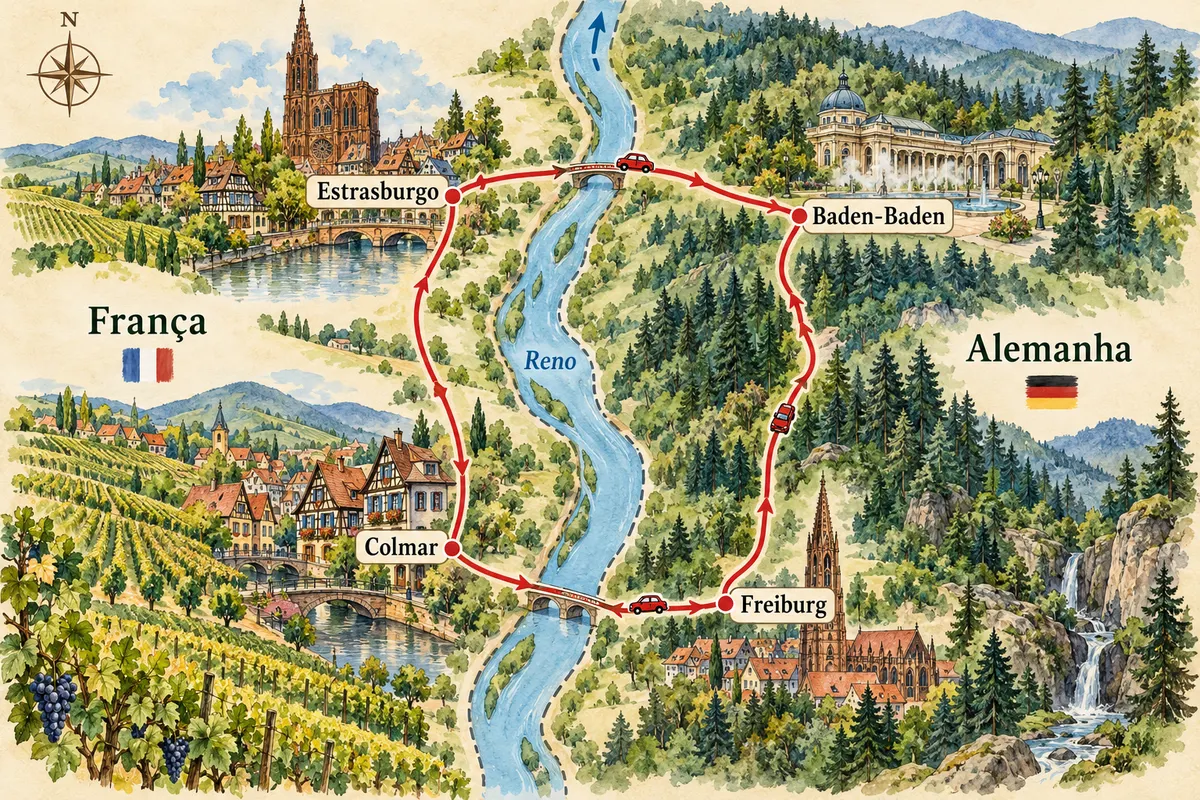
By car on both sides of the Rhine: the Alsace Wine Route, with half-timbered villages among vineyards, and the mountain roads of the Black Forest, between Strasbourg, Colmar, Freiburg and Baden-Baden.

Zemljevid je ilustrativen in ni v merilu. Dotaknite se mesta, da odprete njegovo stran.
Alsace and the Black Forest – ilustrirani zemljevid
Več o poti – Alsace and the Black Forest
Odkrijte druge destinacije Iskanje po zvezni državi in mestu

Več kot vodnik