Parque Caldas
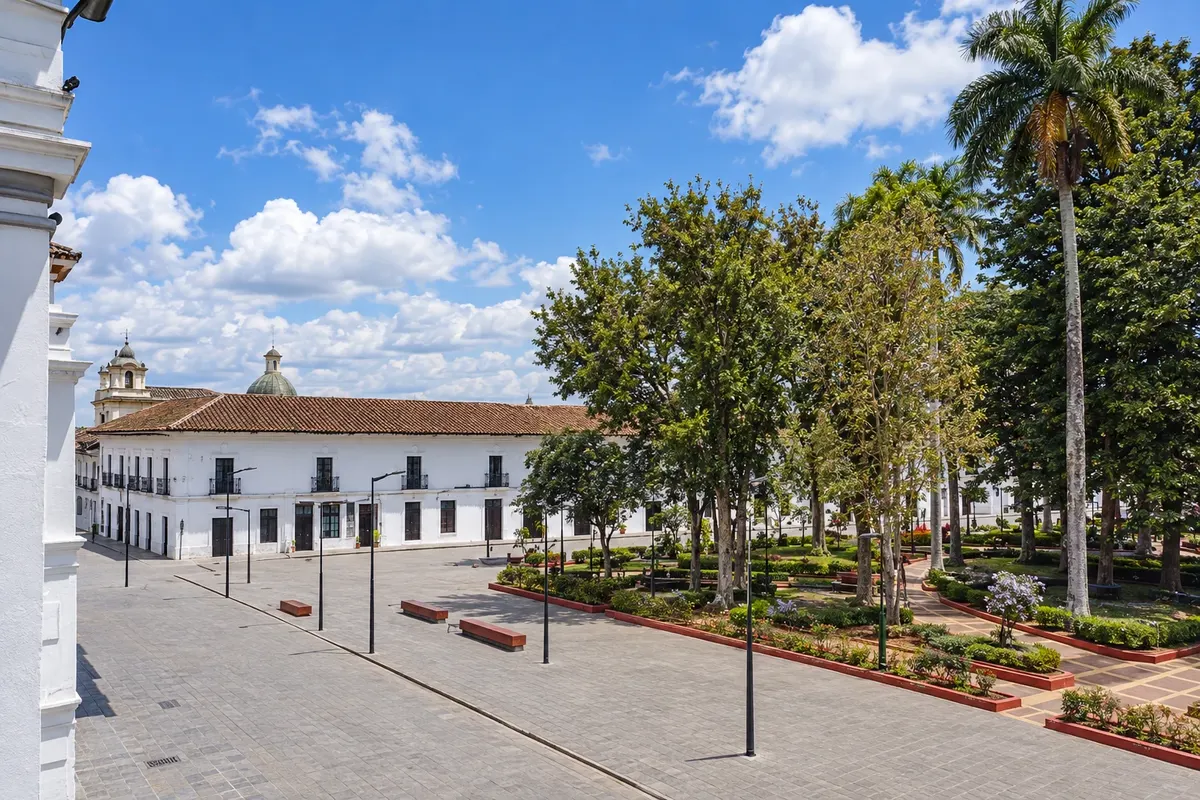
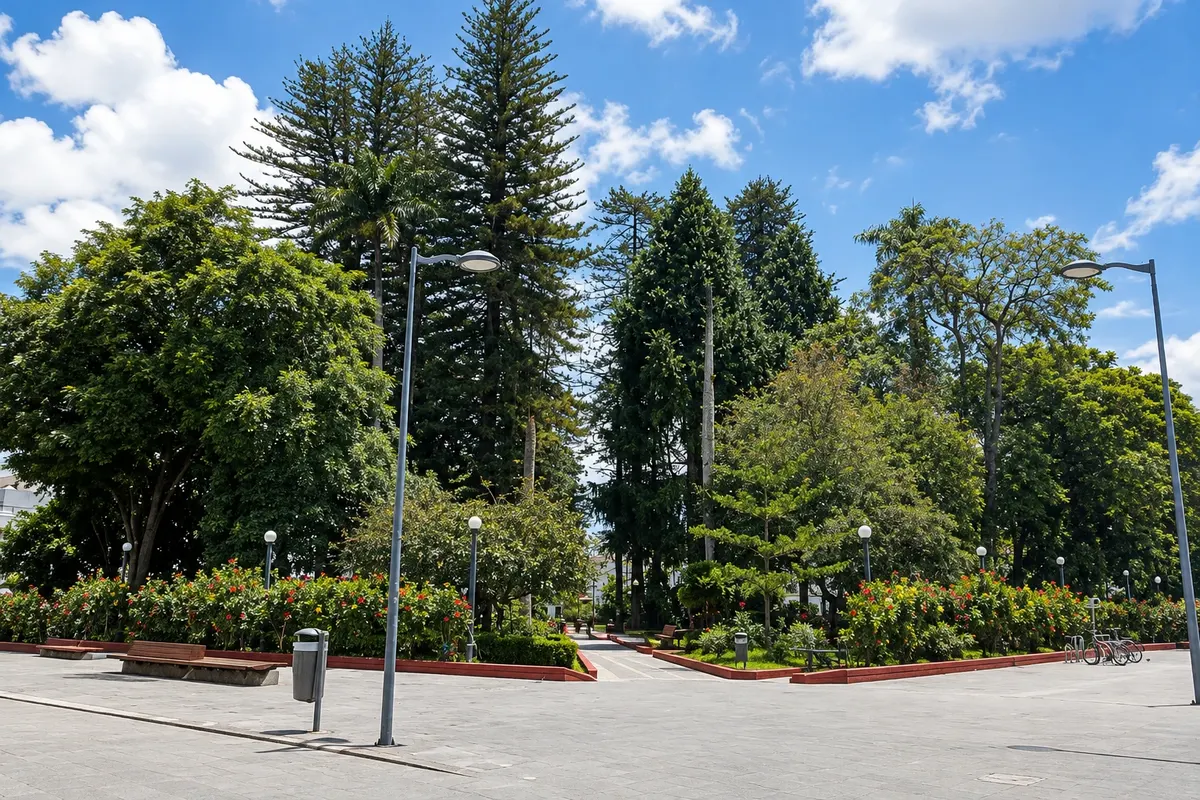
Popayán’s main square, laid out at the city's founding in 1537. It has trees, the statue of Francisco José de Caldas in the center, and around it the cathedral, the Torre del Reloj, and whitewashed colonial buildings.
Antarktika
Cauca · Kolumbija
Capital of Cauca, the White City has a whitewashed colonial center, baroque churches, Holy Week processions, and the cuisine that made Popayán a UNESCO Creative City of Gastronomy.
Na fotografiji: Popayán — Parque Caldas and facades of the historic center.
Illustrative images. The pictures in this guide are illustrations based on the real place, not photographs, and may differ from it.
Spoznajte kraj
Popayán is in southwestern Colombia, in the Pubenza valley, between the Central and Western mountain ranges, at about 1,760 meters above sea level. It is the capital of the Cauca department and one of the country’s oldest cities: it was founded by Sebastián de Belalcázar on January 13, 1537. In the colonial era it lay on the route between Quito and Cartagena and attracted wealthy families, convents, and manor houses.
The nickname White City comes from the whitewashed facades of the historic center, a grid layout of flat streets around Parque Caldas. There you’ll find the cathedral, the Torre del Reloj, 17th- and 18th-century churches, and large houses that became museums. The earthquake of March 31, 1983 destroyed much of the center, and the reconstruction preserved the houses’ architecture and white color.
The city is known for the nighttime Holy Week processions, inscribed by UNESCO in 2009 as intangible cultural heritage of humanity. In 2005 Popayán was the first city named a UNESCO Creative City of Gastronomy. Local cuisine features corn and peanuts, such as pipián empanadas, served in markets and cafés in the center.
For visitors, the center can be explored on foot in one or two days: churches, museums, the Puente del Humilladero, and the view from the top of Morro de Tulcán at sunset.

V vodniku še ni nastanitev – Popayán.
kako do tja · koliko dni · načrt poti · vprašanja
✈ Aeropuerto Guillermo León Valencia (PPN)· 2 km do cilja (Popayán)
Guillermo León Valencia Airport (PPN), about 2 km from the center, handles domestic flights, mainly from Bogotá. From Cali it’s about three hours by bus or car via the Pan-American highway. The bus terminal is next to the airport. Confirm schedules before you travel.
Doživite kraj
Popayán’s main square, laid out at the city's founding in 1537. It has trees, the statue of Francisco José de Caldas in the center, and around it the cathedral, the Torre del Reloj, and whitewashed colonial buildings.
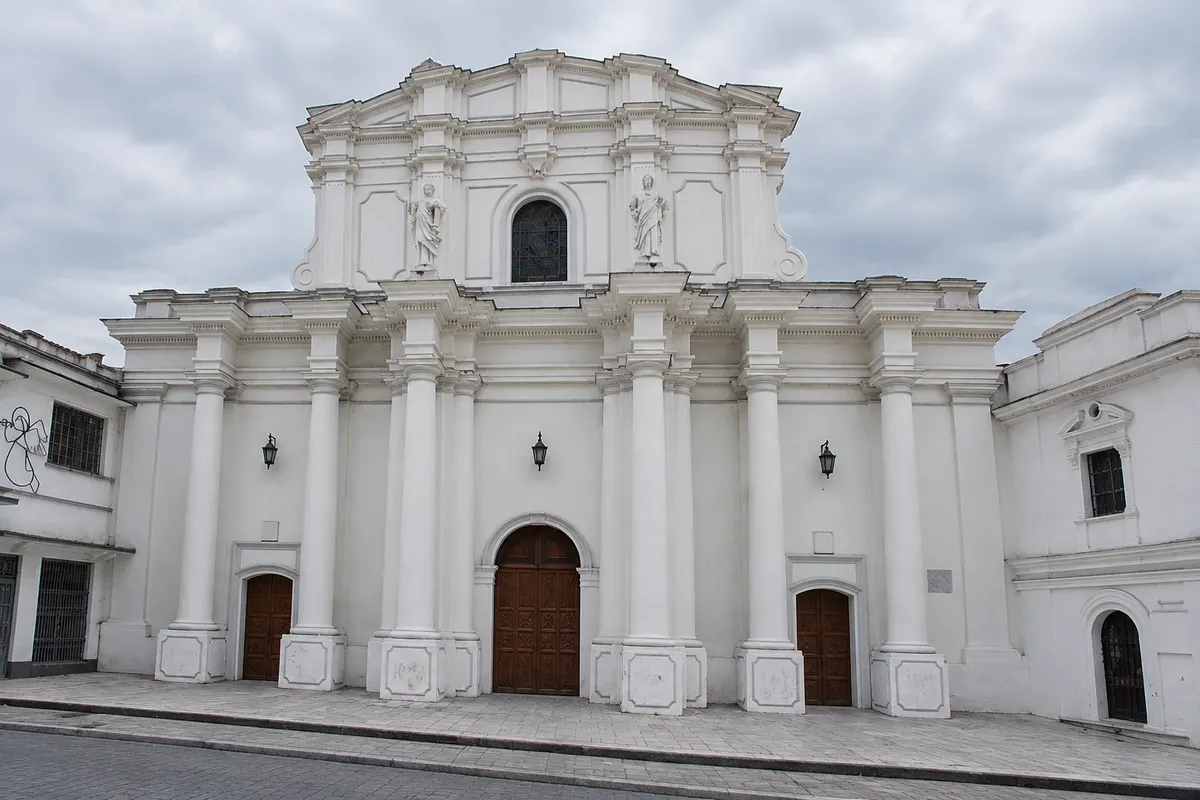
Popayán’s cathedral, with a neoclassical façade and a dome about 40 meters high, opposite Parque Caldas. The current building was completed in 1906 on the site of earlier temples destroyed by earthquakes.
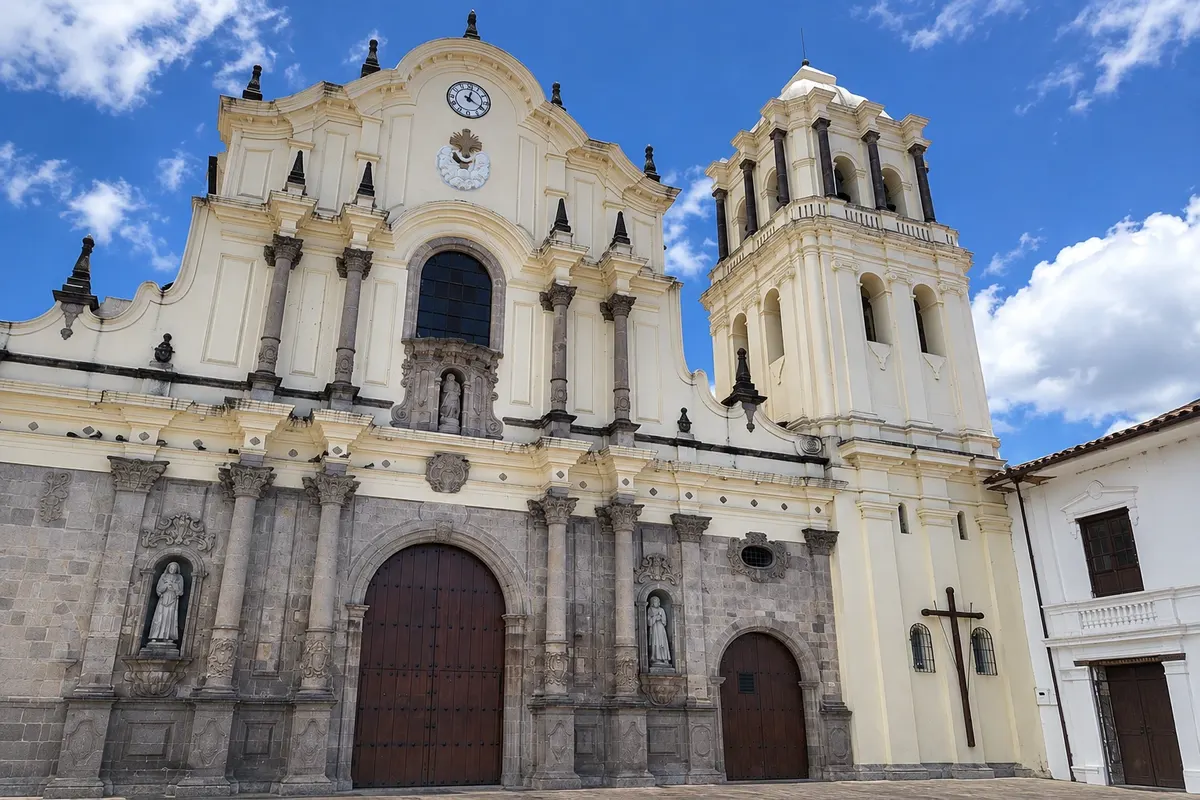
The largest colonial church in Popayán and one of the works of late Baroque in Colombia, built between 1765 and 1788. It has a main altar and carved side altars and a small plaza in front.
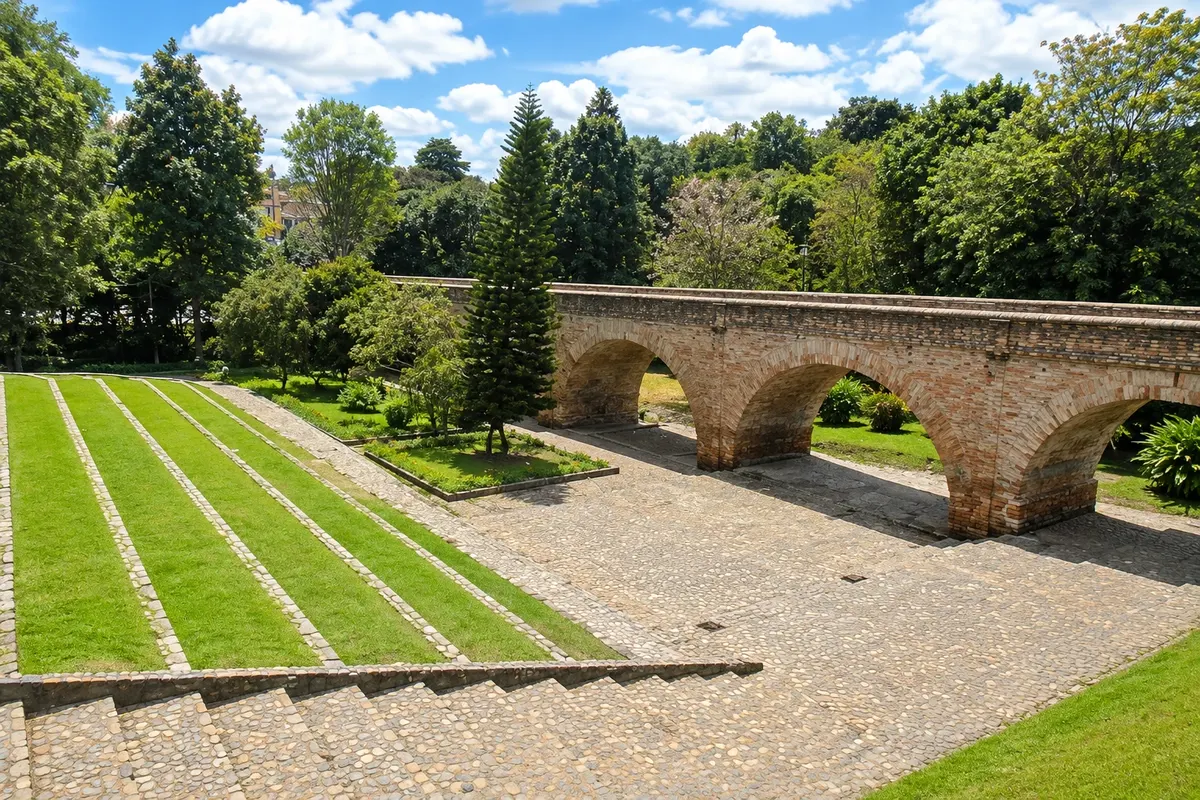
Brick bridge 240 meters long, with a series of arches over the Molino River, inaugurated in 1873. It connected the center to the northern neighborhoods and is one of Popayán’s symbols.
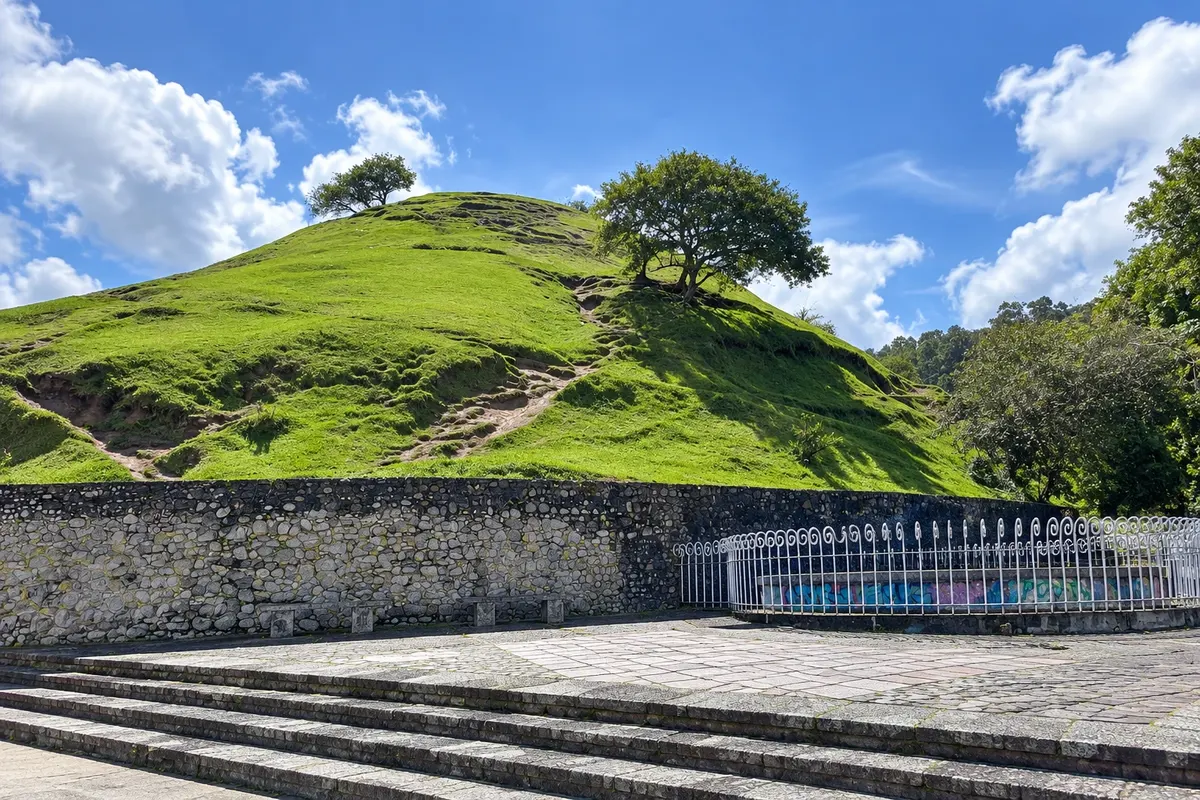
Grassed hill that conceals a pre-Hispanic earth pyramid, Popayán’s main archaeological site. From the top you can see the whole city, the valley and the surrounding mountains.
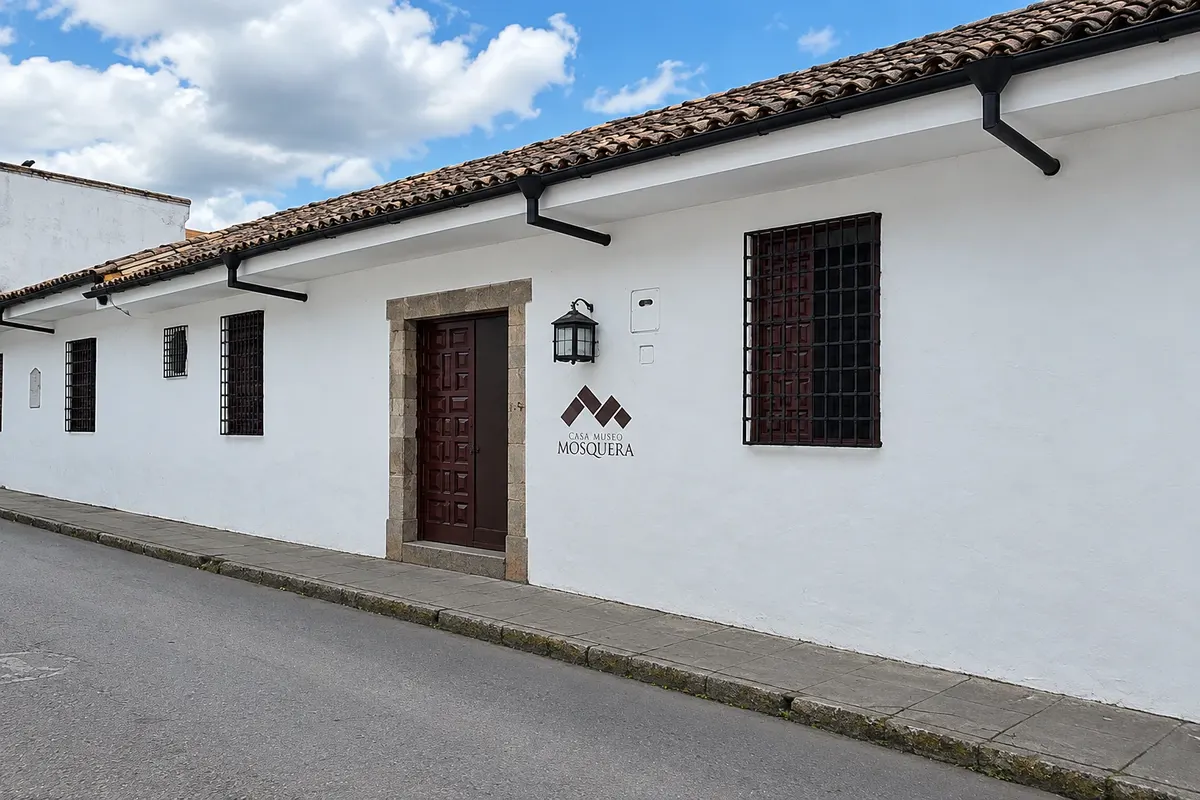
An 18th-century manor that belonged to the Mosquera family, one of Popayán’s most influential families. Today it is a museum of the Universidad del Cauca, with colonial art, period furniture and objects belonging to General Tomás Cipriano de Mosquera.
Pred odhodom
Popayán – Cauca Capital
Razdalje so približne. Pred potovanjem preverite lete in vozne rede avtobusov, vlakov ali ladij.
Guillermo León Valencia Airport (PPN) is about 2 km from the center and handles domestic flights, mainly from Bogotá. The bus terminal is next to the airport, with buses to Cali—about three hours via the Pan-American highway—and to other cities in the country’s south. From the airport or terminal to Parque Caldas it’s a few minutes by taxi.
One day covers the essentials of the center: Parque Caldas, the cathedral, the Iglesia de San Francisco, the Casa Museo Mosquera and the Puente del Humilladero, with Morro de Tulcán at late afternoon. With two days you can take your time inside churches and museums and sample traditional cuisine at the markets.
The climate is mild year-round, with averages around 18 °C, warm days and cool nights. In July and August there is little rain; from October to December, and from March to April, there is more rain. During Holy Week, between March and April, the city fills up because of the nighttime processions.
The seasons shown are the most usual ones; nature doesn't always follow the calendar.
Not needed within the city: the historic center is flat and compact, and everything is done on foot. Taxis connect the center with the airport and the terminal. For excursions around Cauca, local agencies organize departures; confirm road conditions before you go.
Predlog poti
Pot povezuje znamenitosti na tej strani. Za oglede boste imeli dovolj časa.
Start at Parque Caldas, the square laid out at the city’s founding. See the Torre del Reloj, from 1673 to 1682, and enter the cathedral, completed in 1906, with a dome by Adolfo Dueñas. Walk the whitewashed streets around the square.
Walk two blocks to the Iglesia de San Francisco, the city’s largest colonial church, with carved altars. Then visit the Casa Museo Mosquera, an 18th-century mansion of the Mosquera family, with colonial art and period furniture.
Cross the Puente del Humilladero, from 1873, and view the lower arches beside the Molino River. Continue on foot to the Morro de Tulcán and climb up to watch the sunset over the white city center.
Return to the center and try the pipián empanadas, served with peanut sauce, at a traditional café. At night, the square and the churches are often lit up.
Check before you go. Opening hours and days change, and places may close for renovations, holidays or events. This itinerary is a suggestion from Cidade Turismo, not a commitment: plan yours by checking directly with each place you intend to visit.
Pred odhodom
Walk through Parque Caldas, visit the cathedral and the Torre del Reloj, enter the Iglesia de San Francisco and the Casa Museo Mosquera, cross the Puente del Humilladero, and climb the Morro de Tulcán at sunset.
Yes, Guillermo León Valencia Airport (PPN), about 2 km from the center, with domestic flights, mainly from Bogotá.
About three hours by bus or car via the Pan-American Highway. Buses depart from Cali's bus terminal and arrive at Popayán's terminal, next to the airport.
Mild year-round, with averages around 18 °C. July and August are usually drier; October to December and March to April are rainier.
During Holy Week, between March and April, at night on several days. They were inscribed by UNESCO in 2009 as Intangible Cultural Heritage of Humanity.
Pred odhodom
Z nekaj načrtovanja boste imeli več časa za uživanje na poti.
The climate is mild year-round, with averages around 18 °C. July and August are usually the driest months. From October to December, and from March to April, there is more rain. During Holy Week, between March and April, the city receives many visitors for the processions; book in advance.
The seasons shown are the most usual ones; nature doesn't always follow the calendar.
Two days are enough for the historic center: one for Parque Caldas, the cathedral, churches and museums, and another for the Puente del Humilladero, Morro de Tulcán, and traditional market kitchens. During Holy Week allow more time, because processions take place at night over several days.
The historic center, around Parque Caldas, is the most convenient area: you can do everything on foot and there are colonial houses adapted for lodging. Streets near the Puente del Humilladero and Morro de Tulcán are also a few minutes from the center. Travelers arriving by plane or bus will find options in the northern part of the city, near the airport and the terminal.
Odnesite svoje odpadke, upoštevajte oznake in podprite lokalne ponudnike. V naravi upoštevajte navodila za obiskovalce.
Odgovori na vaša vprašanja
Because the houses and churches in the historic center are whitewashed. After the 1983 earthquake, the reconstruction preserved that color and the colonial architecture.
Two days are usually enough for the historic center, the churches, museums, the Puente del Humilladero and Morro de Tulcán. During Holy Week it’s worth staying longer because of the nighttime processions.
By bus or car via the Pan-American highway, in about three hours. There are no flights between the two cities; Popayán’s airport receives flights from Bogotá.
The climate is mild year-round. July and August tend to have less rain. During Holy Week, between March and April, the city fills up because of the processions.
Local cuisine makes extensive use of corn, potato and peanuts. Pipián empanadas and pipián tamales are the dishes most linked to the city, served with peanut sauce.
Več kot vodnik