Saice tarijeño
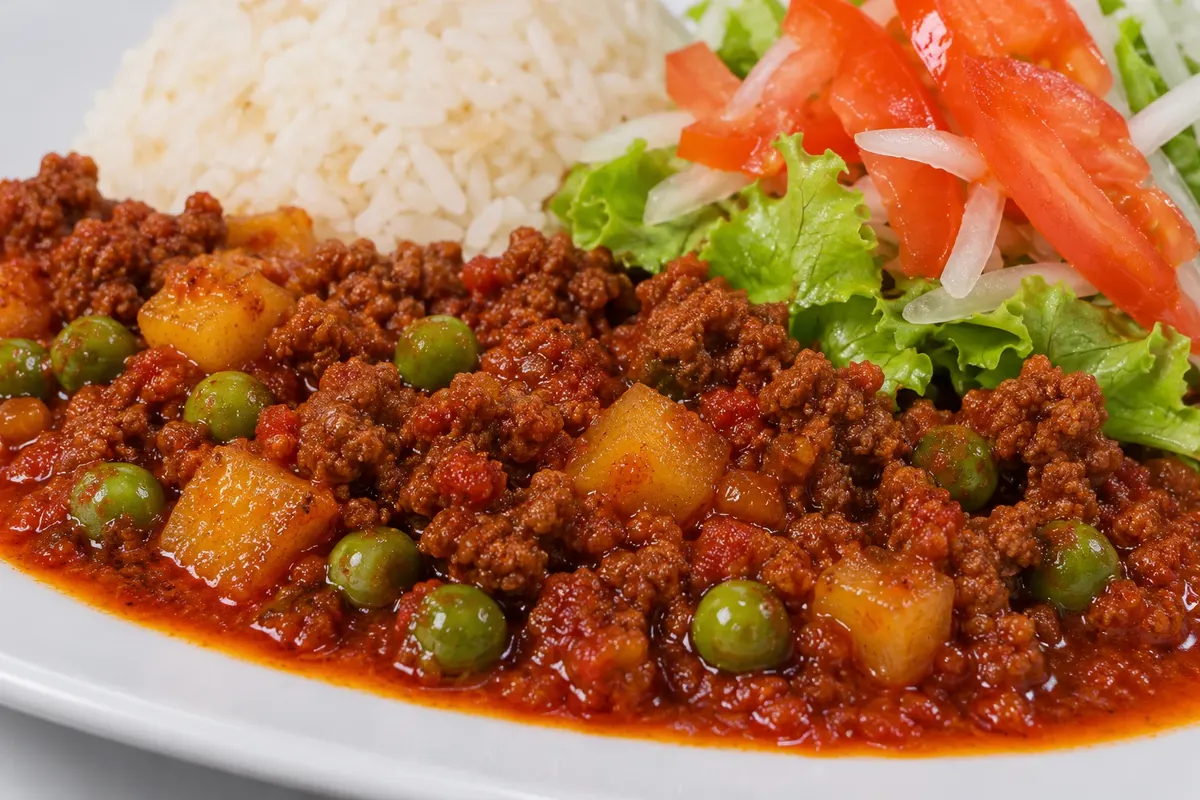
Spicy stew of ground beef with diced potato, peas and red ají, served with rice and a fresh salad. It is Tarija’s signature dish and the most representative of Tarija cuisine, according to the municipality.
Antarktika
Tarija · Bolivija Capital
Destinacija: Tarija and its valleys.
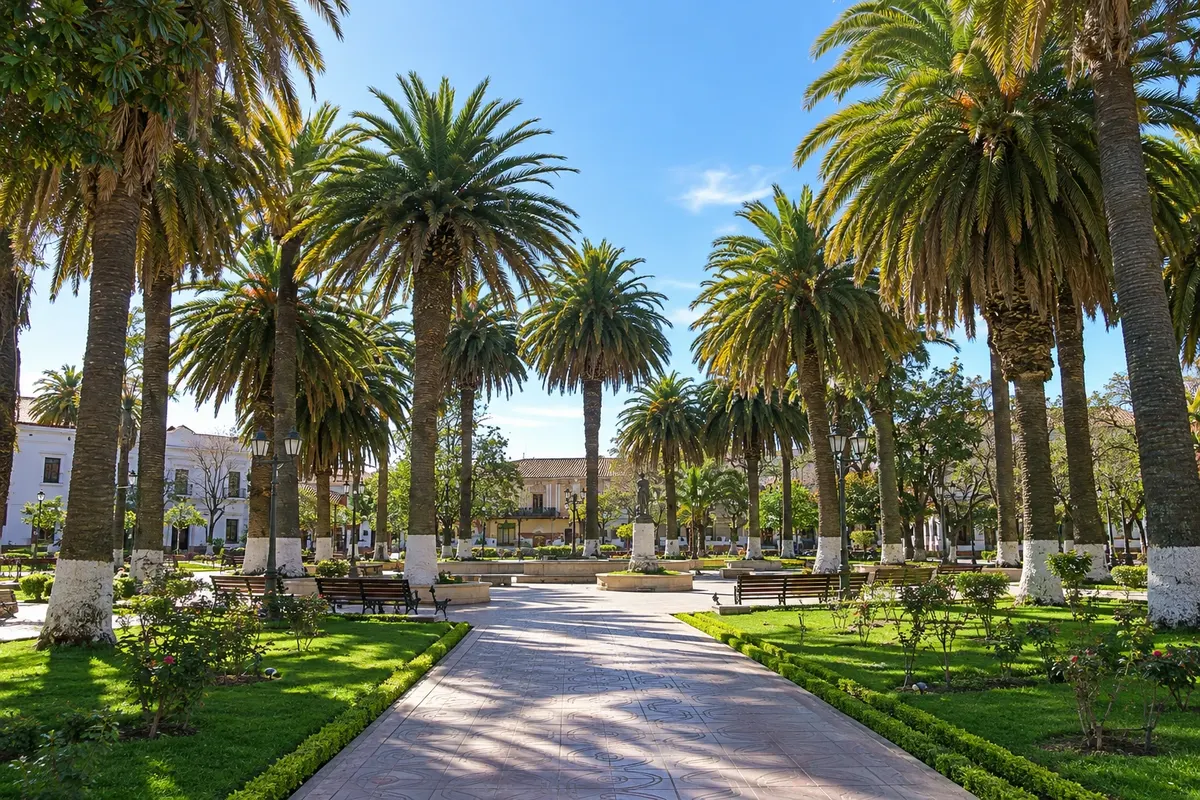
Na fotografiji: Luis de Fuentes y Vargas square, in central Tarija.
Illustrative images. The pictures in this guide are illustrations based on the real place, not photographs, and may differ from it.
Mesto
Capital of the Tarija department in southern Bolivia, in a valley about 1,850 meters high. Founded in 1574, it has a colonial center around Luis de Fuentes y Vargas square, the Casa Dorada, the San Francisco convent from 1606, and a fossil museum of the valley’s megafauna. About 25 km away are the vineyards of Valle de la Concepción. It is the city of saice tarijeño.
V vodniku še ni nastanitev – Tarija.
kako do tja · koliko dni · načrt poti · vprašanja
Lokalni okusi – of Bolivija
Doživite kraj
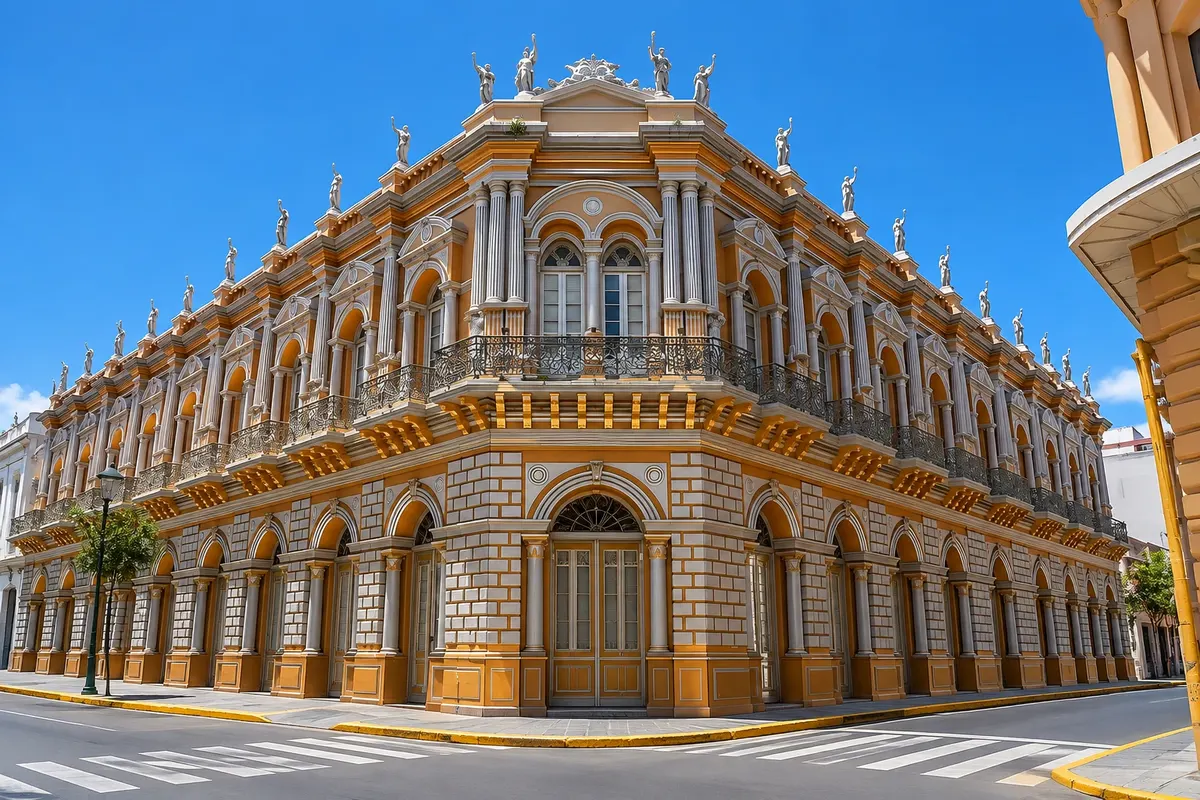
House with a gilded and silvered façade in downtown Tarija, built in the early 20th century for the merchant Moisés Navajas. It mixes Art Nouveau and Mudéjar elements and houses the Casa de la Cultura.
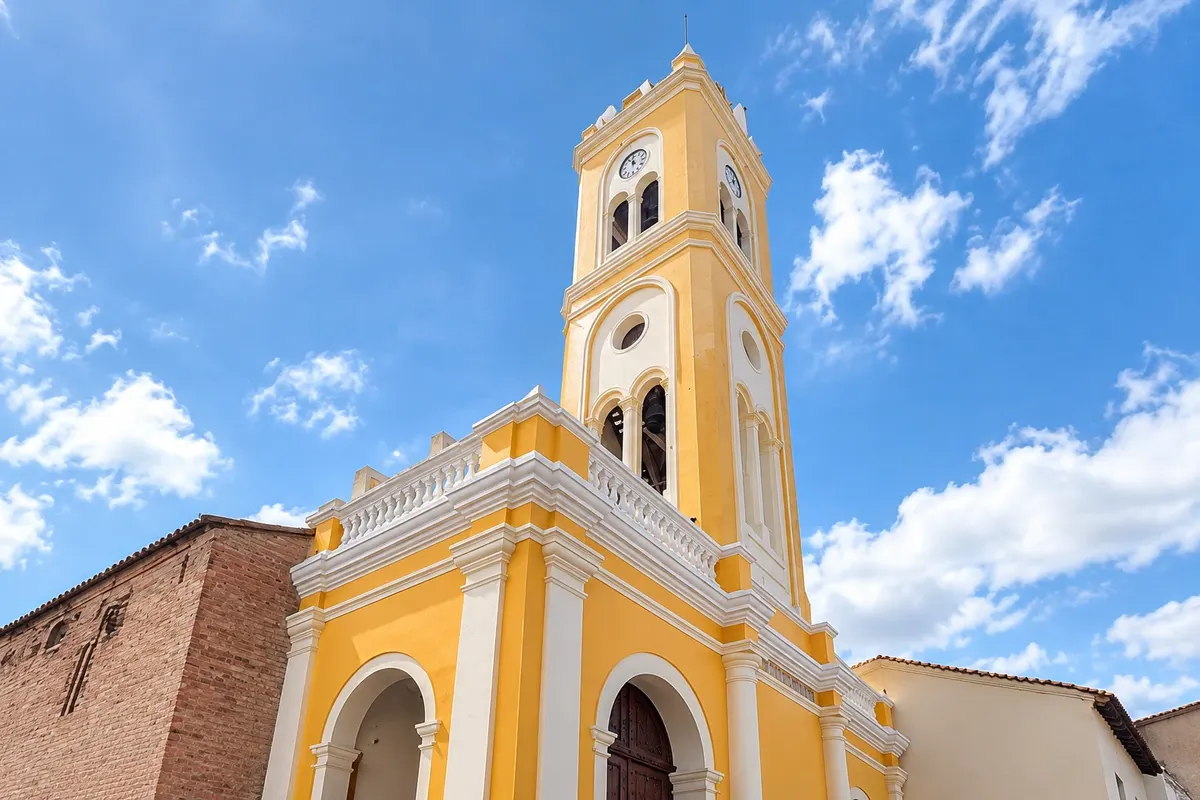
Franciscan convent founded in 1606 in central Tarija, with a church, museum and a library of old books. The complex is Bolivia’s national historical and cultural heritage.
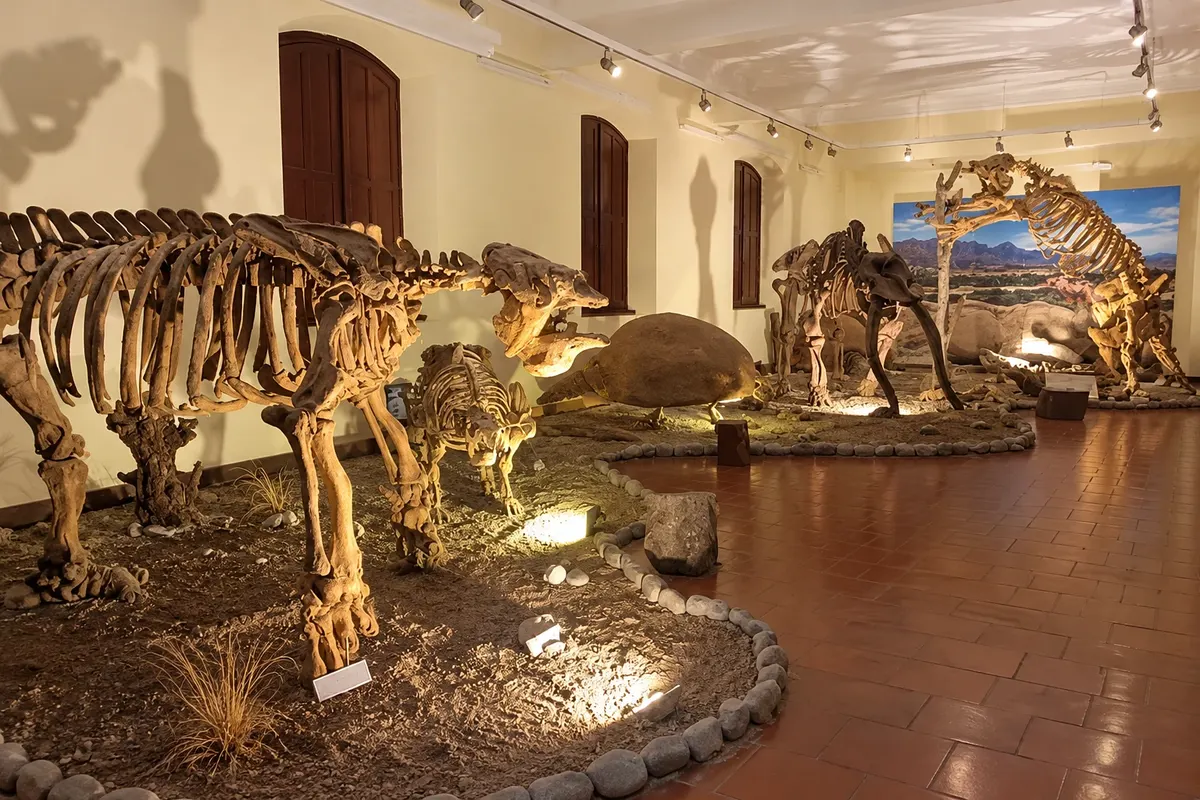
University museum of Tarija with fossils of large mammals that lived in the valley, such as giant sloths, glyptodonts and mastodons, and an archaeology and history collection on the upper floor.
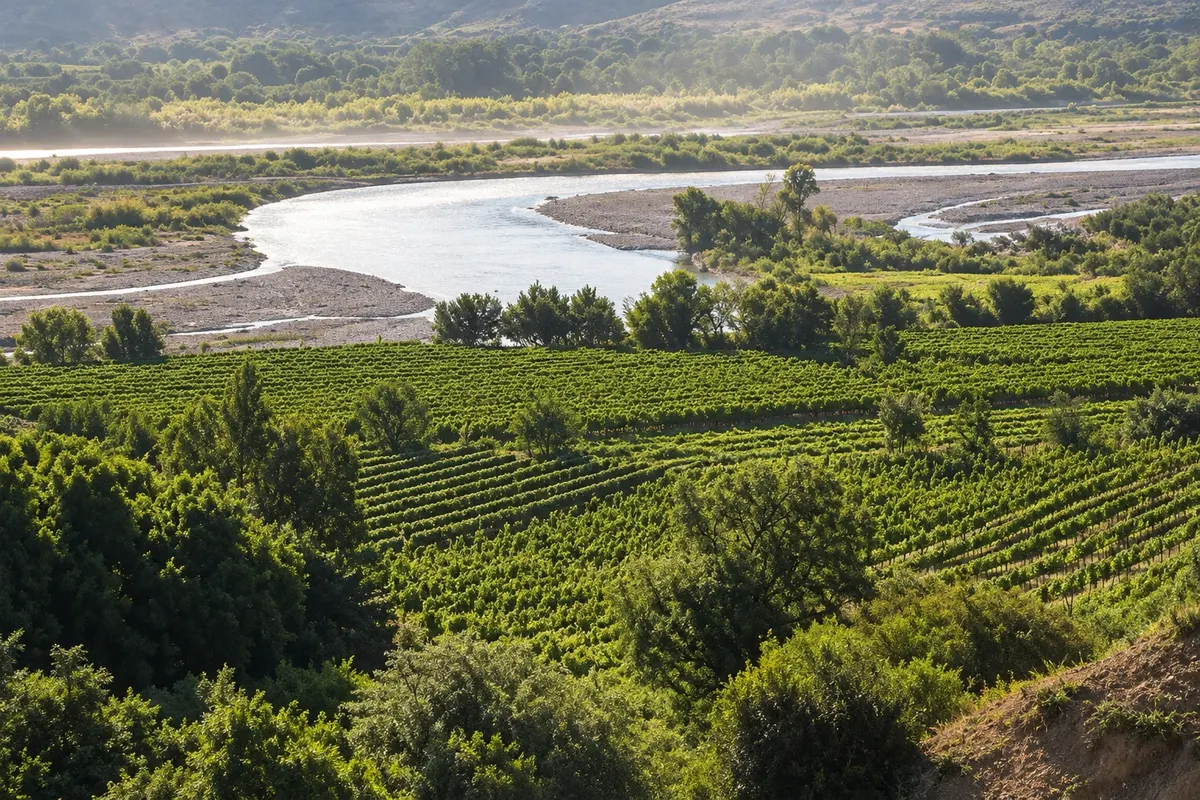
Valley of vineyards and wineries in the Uriondo municipality, about 25 km from Tarija, producing high-altitude wine and singani. Uriondo hosts the Vendimia Chapaca, the grape-harvest festival.
Pred odhodom
Tarija – Tarija Capital
Razdalje so približne. Pred potovanjem preverite lete in vozne rede avtobusov, vlakov ali ladij.
Capitán Oriel Lea Plaza Airport (TJA) is about 4 km from the center and has domestic flights. The interdepartmental bus terminal is in the south of town. By road, Tarija connects to Potosí and to Bermejo on the Argentine border. Confirm schedules and connections before traveling.
Two days cover the center, the Casa Dorada, the San Francisco convent, the fossil museum and an afternoon at the bodegas in Valle de la Concepción. With three days you can add San Lorenzo, about 15 km to the north.
From May to September there is little rain; in June and July nights are cold and frost is possible. Rainfall is concentrated from December to February, the warmest months, with average highs near 27 °C.
The seasons shown are the most usual ones; nature doesn't always follow the calendar.
Not for the center, which is walkable. For Valle de la Concepción and San Lorenzo, having a car, booking a tour or using a taxi helps.
Predlog poti
Pot povezuje znamenitosti na tej strani. Za oglede boste imeli dovolj časa.
Start at Luis de Fuentes y Vargas square and walk to the Casa Dorada for the guided visit. Continue to the San Francisco convent, founded in 1606, and see the Franciscan museum and the old library.
Visit the Museo Nacional Paleontológico y Arqueológico, with skeletons and fossils of giant sloths, glyptodonts and mastodons found in the Tarija valley, and the archaeological collection on the upper floor.
Head to Valle de la Concepción, about 25 km away, to visit a bodega and taste high-altitude wines and singani. Confirm visiting hours in advance.
Back in the center, look for a chapaca cuisine restaurant to try saice tarijeño and other local dishes.
Check before you go. Opening hours and days change, and places may close for renovations, holidays or events. This itinerary is a suggestion from Cidade Turismo, not a commitment: plan yours by checking directly with each place you intend to visit.
Pred odhodom
In the morning, Luis de Fuentes y Vargas square, the Casa Dorada and the San Francisco convent; in the afternoon, the fossil museum; at the end of the day, a bodega in Valle de la Concepción. At night, a chapaca cuisine dinner.
The valley of Tarija is one of the richest Pleistocene mammal fossil deposits in South America, with remains of giant sloths, glyptodonts and mastodons. Part of that collection is housed in the Museo Nacional Paleontológico y Arqueológico in the city center.
It is the popular demonym for someone from Tarija and also names the culture and cuisine of the region, as in Carnaval Chapaco and Vendimia Chapaca.
Saice tarijeño, a meat stew with peas and ají, is cited by the municipality as the most representative dish of Tarija’s cuisine. The city is also known for its high-altitude wines and for singani.
It is the parade of the Comadres festival, held on the Thursday one week before Carnival, with thousands of dancers. Tarija’s Comadres festival is Bolivia’s intangible cultural heritage.
Več kot vodnik