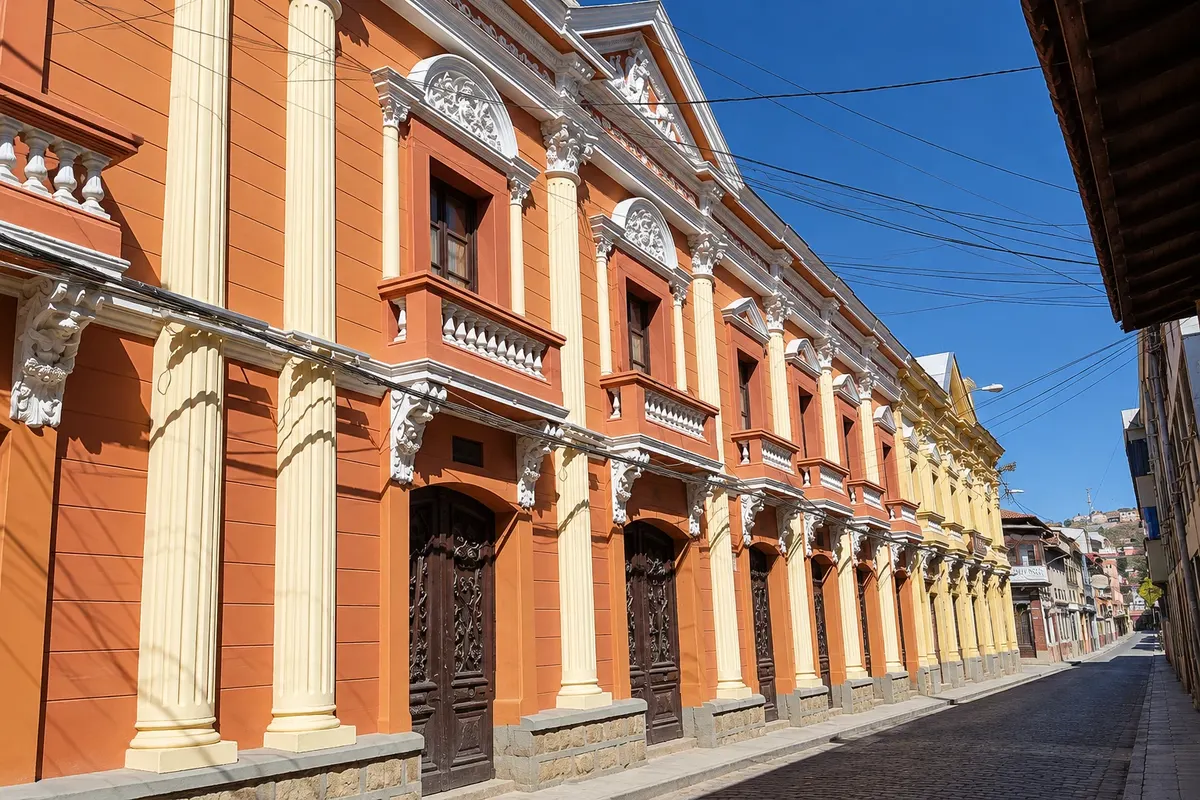
Sanctuary of the Virgin of Socavón
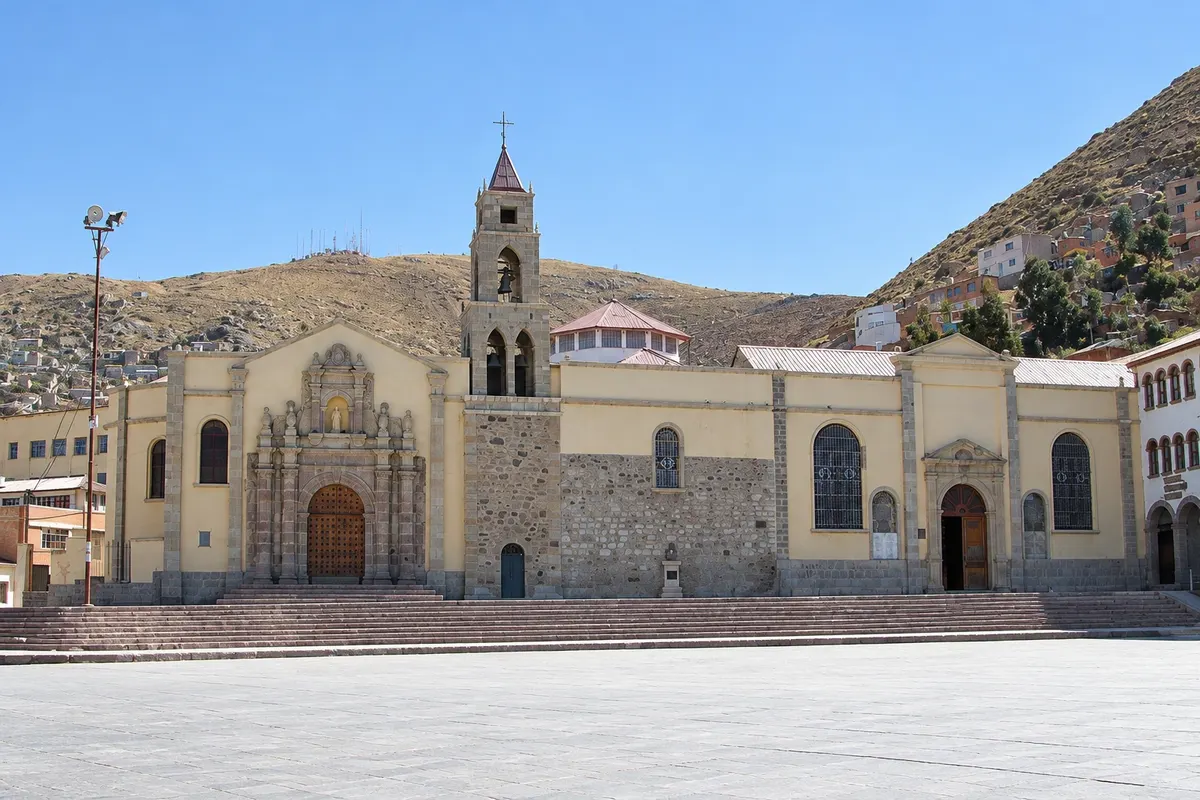
Sanctuary of the miners’ patroness, at the foot of Cerro Pie de Gallo, beside the entrance to an old mine. It is the endpoint of the Oruro Carnival and has a museum that descends to a mine gallery.
Antarktika
Oruro · Bolivija
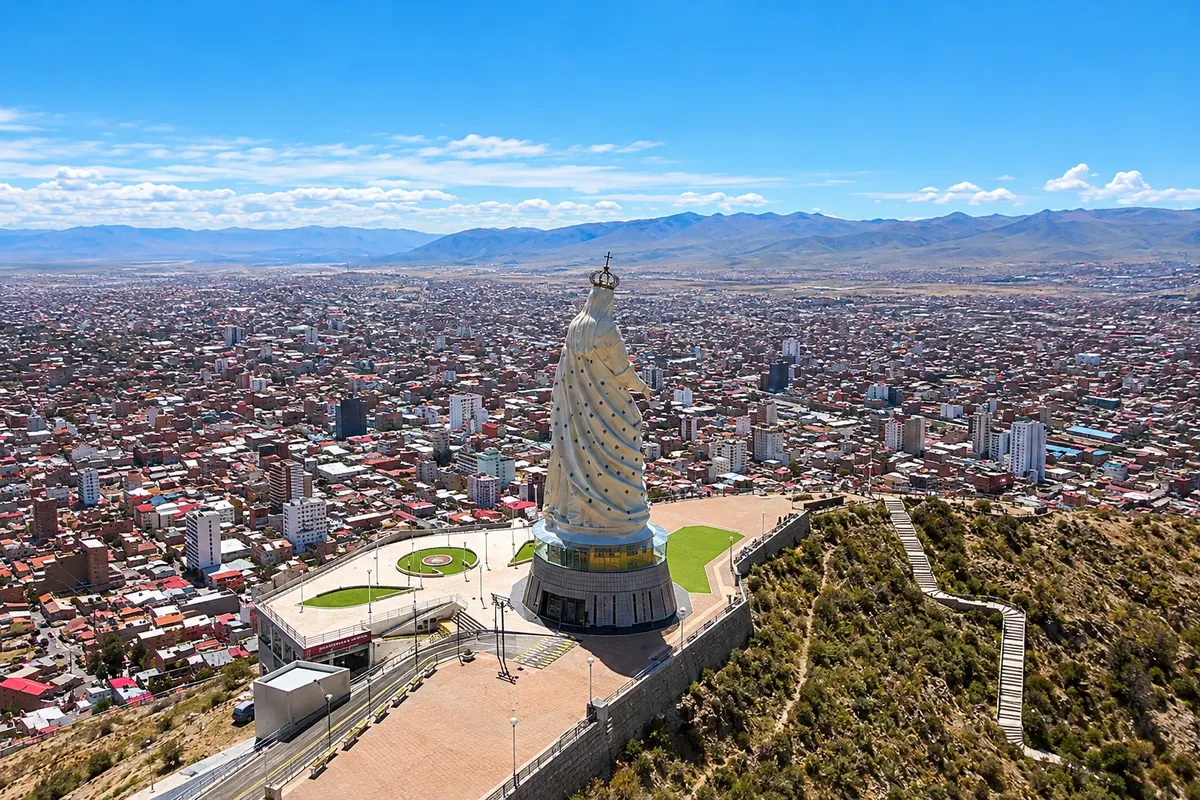
Mining city on the Bolivian altiplano, home of the Oruro Carnival, with the Sanctuary of the Virgin of the Socavón and the large monument to the Virgin on Cerro Santa Bárbara.
Na fotografiji: Oruro viewed from Cerro Santa Bárbara.
Illustrative images. The pictures in this guide are illustrations based on the real place, not photographs, and may differ from it.
Spoznajte kraj
Oruro lies on the Bolivian altiplano at about 3,700 meters elevation, between La Paz and the southern part of the country. It was founded in 1606 as Villa de San Felipe de Austria because of the silver in nearby mountains. Later, tin made Oruro one of Bolivia’s most important mining and railway centers.
The city is known for the Oruro Carnival, proclaimed by UNESCO in 2001 as a Masterpiece of the Oral and Intangible Heritage of Humanity. The festival honors the Virgin of the Socavón, patron saint of miners, with dozens of dance groups—such as the diablada, morenada and caporales—on a roughly 4 km route to the sanctuary.
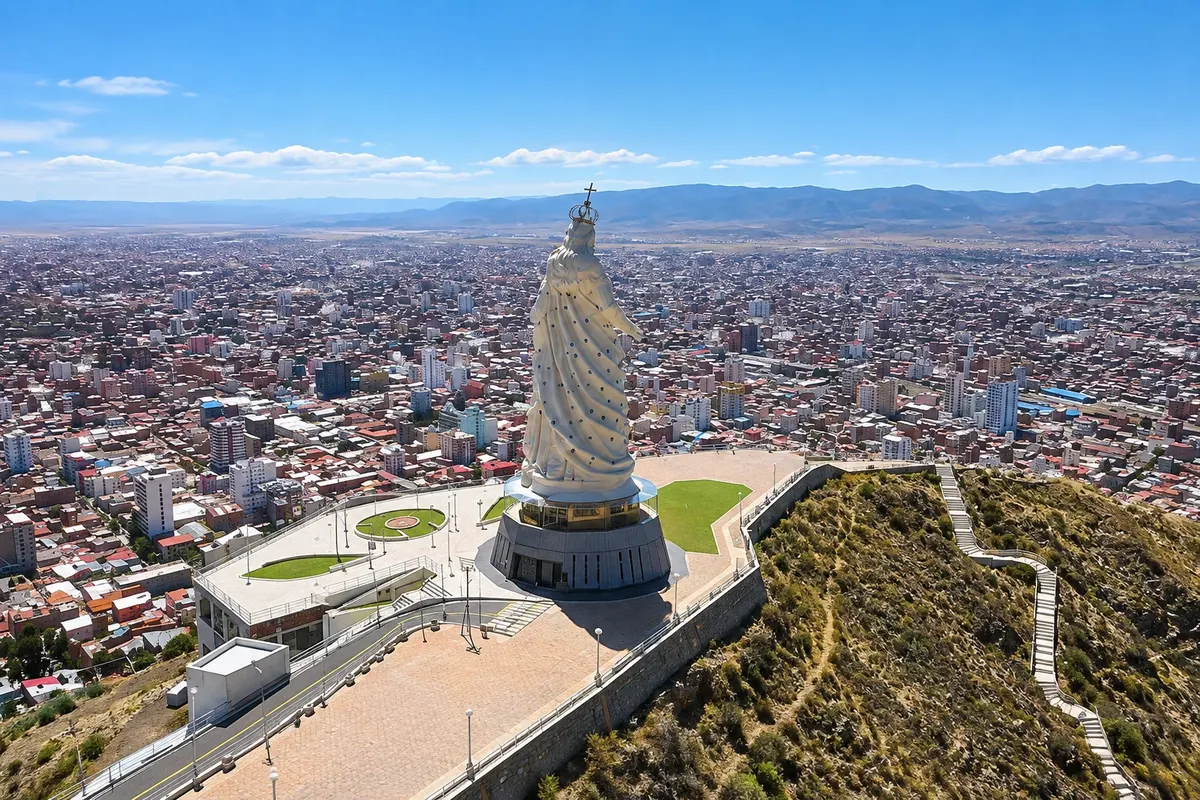
The Sanctuary of the Virgin of the Socavón sits at the foot of Cerro Pie de Gallo, next to the old entrance of a mine that can be visited through the sanctuary museum. A cable car links Plaza del Folklore to the top of Cerro Santa Bárbara, where the Virgin monument—over 45 meters high—stands. In town, the Casa de la Cultura Simón I. Patiño and the Faro de Conchupata tell other parts of the city’s history.
Oruro’s cuisine is typical of the cold altiplano, featuring llama meat, corn and potato. Charquekan is the dish that best represents the city.

V vodniku še ni nastanitev – Oruro.
kako do tja · koliko dni · načrt poti · vprašanja
✈ Aeropuerto Internacional Juan Mendoza (ORU)· 4 km do cilja (Oruro)
Juan Mendoza International Airport (ORU) is about 4 km from downtown and has few domestic flights. Most travelers arrive by road: it’s roughly a three‑hour trip from La Paz. Confirm schedules before you travel.
Doživite kraj
Sanctuary of the miners’ patroness, at the foot of Cerro Pie de Gallo, beside the entrance to an old mine. It is the endpoint of the Oruro Carnival and has a museum that descends to a mine gallery.
Statue of the Virgen del Socavón over 45 meters tall, atop Cerro Santa Bárbara, inaugurated in 2013. It is reached by cable car from Plaza del Folklore; inside, stairs lead to viewing platforms.
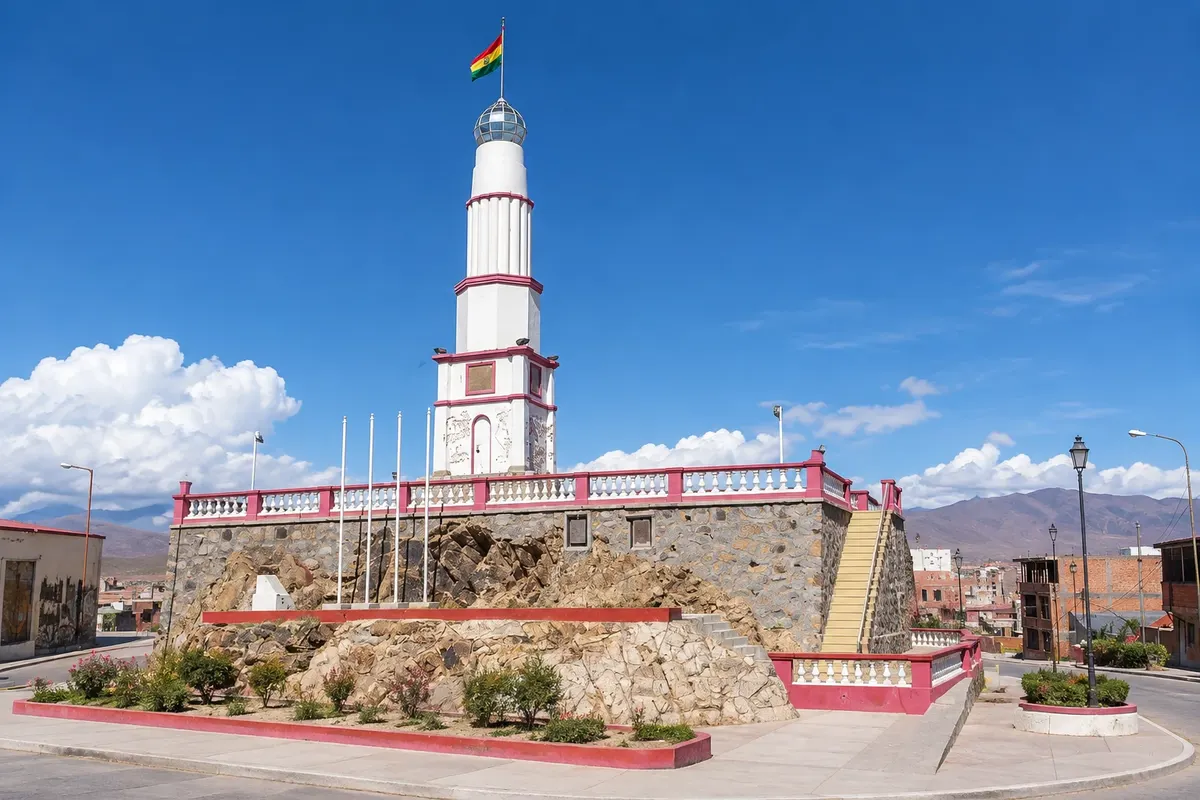
Lookout in central Oruro where, according to tradition, Bolivia’s tricolor flag was hoisted for the first time in 1851. It has a column topped by a glass globe that is lit at night.
Former house of tin magnate Simón I. Patiño in central Oruro, built between 1900 and 1913 in a French style. It is a museum of the Universidad Técnica de Oruro, with the family’s furniture and objects.
Pred odhodom
Oruro – Oruro Capital
Razdalje so približne. Pred potovanjem preverite lete in vozne rede avtobusov, vlakov ali ladij.
Juan Mendoza International Airport (ORU) is about 4 km from the center, with few domestic flights. Most travelers arrive by bus: it’s about a three‑hour road trip from La Paz. There are also buses to other cities in the country. Confirm schedules before you travel.
A full day covers the Sanctuary of the Virgin of the Socavón, the mine museum, the cable car to the Virgin monument, the Casa de la Cultura Simón I. Patiño and the Faro de Conchupata. During Carnival, allow two or three days.
It is cold year‑round. From May to August the sky tends to be clear and nights fall below zero. The rainy season is November to March. Carnival takes place in February or March depending on the date of Lent.
The seasons shown are the most usual ones; nature doesn't always follow the calendar.
No. The center, the sanctuary and the cable car station are close to one another and can be reached on foot or by taxi. Buses connect to other cities.
Predlog poti
Pot povezuje znamenitosti na tej strani. Za oglede boste imeli dovolj časa.
Start at the Sanctuary of the Virgin of the Socavón on Plaza del Folklore, and take the guided tour of the museum, which goes down into a gallery of the old mine.
On the other side of Plaza del Folklore, take the cable car up to Cerro Santa Bárbara. Climb to the monument of the Virgin of the Socavón, which has viewpoints inside, and see the city and the altiplano from above.
In the center, visit the Casa de la Cultura Simón I. Patiño, the former home of the tin magnate, and finish at the Faro de Conchupata, a viewpoint illuminated at the end of the day.
Find a restaurant or a downtown market to try charquekan, a dish of llama jerky with corn and potato.
Check before you go. Opening hours and days change, and places may close for renovations, holidays or events. This itinerary is a suggestion from Cidade Turismo, not a commitment: plan yours by checking directly with each place you intend to visit.
Pred odhodom
The Sanctuary of the Virgin of the Socavón and the mine museum, the cable car up to the Virgin monument on Cerro Santa Bárbara, the Casa de la Cultura Simón I. Patiño and the Faro de Conchupata. At night, have a plate of charquekan.
It is the city’s major festival, honoring the Virgin of the Socavón, with dozens of dance groups and thousands of dancers and musicians. It was proclaimed by UNESCO in 2001 as a Masterpiece of the Oral and Intangible Heritage of Humanity.
She is the patroness of the miners of Oruro, venerated in the sanctuary at the foot of Cerro Pie de Gallo, next to the entrance of an old mine. Local tradition places the appearance of the painted image that is venerated there in 1789.
By cable car from Plaza del Folklore, beside the sanctuary. The route is about 820 meters and takes a few minutes.
The charquekan, made with shredded and fried llama charque, corn, potato, egg and cheese. The city is also known for rostro asado, roasted lamb’s head sold at night.
Pred odhodom
Z nekaj načrtovanja boste imeli več časa za uživanje na poti.
It is cold year‑round. From May to August the sky is usually clear and nights drop well below zero. The rainy season runs from November to March. Carnival takes place in February or March depending on the date of Lent, and the city becomes very crowded.
The seasons shown are the most usual ones; nature doesn't always follow the calendar.
A full day is enough for the sanctuary, the mine museum, the cable car up to the Virgin monument and the city center. During Carnival, allow at least two or three days for the main parades.
The center, around Plaza 10 de Febrero, puts the sanctuary, the Casa de la Cultura and the Faro de Conchupata within walking distance. During Carnival demand for accommodation is very high: book well in advance or consider staying in La Paz or Cochabamba and traveling to Oruro for the parade days.
Odnesite svoje odpadke, upoštevajte oznake in podprite lokalne ponudnike. V naravi upoštevajte navodila za obiskovalce.
Odgovori na vaša vprašanja
On Carnival Saturday and the following days, in February or March depending on the date of Lent. The main parade route is about 4 km to the Sanctuary of the Virgin of the Socavón. Confirm the dates for the year before you travel.
Outside Carnival, one day is usually enough for the sanctuary, the mine museum, the cable car and the center. During Carnival, allow two or three days for the main parades.
Yes, the city is at about 3,700 meters. If you arrive from low altitude, take it easy on the first day, drink water and avoid intense exertion. Travelers coming from La Paz are often already acclimatized.
It is possible because the road trip takes about three hours, but you’ll have little time in town. Ideally, spend one night in Oruro.
Yes. Average daytime highs are near 18 °C and nights from May to July often drop below zero, with wind. Bring a coat, hat and gloves at any time of year.
Več kot vodnik