

 Brazilija
 Antarktika
 Argentina
 Bolivija
 Čile
 Kolumbija
 Ekvator
 Gvajana
 Francoska Gvajana
 Falklandski otoki (Malvini)
 Paragvaj
 Peru
 Surinam
 Urugvaj
 Venezuela
 Nemčija
 Avstrija
 Hrvaška
 Danska
 Slovaška
 Slovenija
 Španija
 Finska
 Francija
 Grčija
 Nizozemska
 Madžarska
 Irska
 Islandija
 Italija
 Luksemburg
 Norveška
 Poljska
 Portugalska
 Združeno kraljestvo
 Češka
 Švedska
 Švica
 Turčija
 Bermudi
 Kanada
 Združene države Amerike
 Grenlandija
 Mehika
 Sveta Peter in Mihael
 Dominikanska republika
 Japonska
 Južnoafriška republika
 Egipt
 Avstralija
 Fidži
 Nova Zelandija
 Papua Nova Gvineja
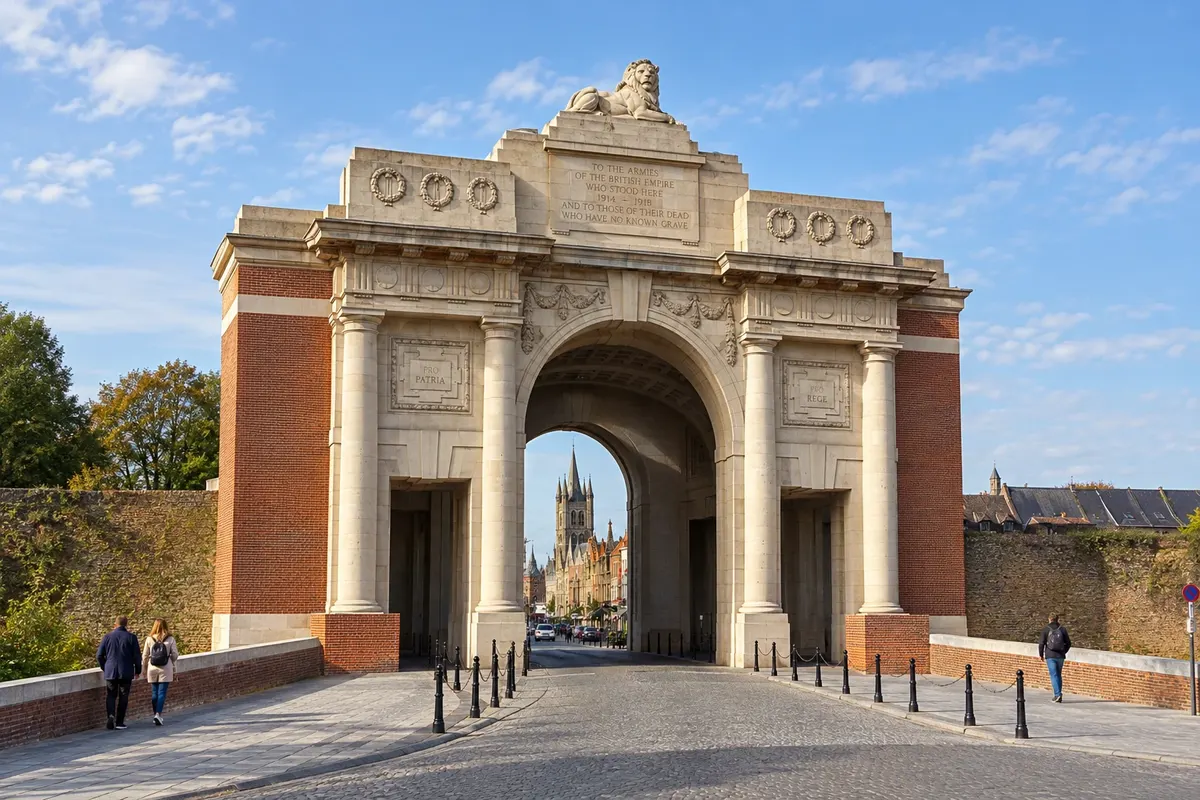
Pot · West Flanders
Flanders Fields: the First World War front, from Ypres to Nieuwpoort
Cemeteries, museums and trenches of the First World War in West Flanders, from the Ypres salient to the mouth of the IJzer River near the North Sea.
Na fotografiji: Menin Gate · Ypres
Illustrative images. The pictures in this guide are illustrations based on the real place, not photographs, and may differ from it.


Pot
Flanders Fields: the First World War front, from Ypres to Nieuwpoort – predstavitev
In the western corner of Belgium, between the border with France and the North Sea, lies the Westhoek. The English call the region Flanders Fields. From October 1914 to September 1918, the First World War front line was almost static there, in an arc of mud and polder.
The route starts in Ypres, a town the front surrounded in an arc, the so‑called salient, for most of the war. It goes on to Zonnebeke and the village of Passendale, scene of the Third Battle of Ypres, from July 31 to November 10, 1917. Then it continues to Poperinge, the rear‑area town where British soldiers rested.
Further north, Diksmuide and Nieuwpoort tell the other half of the story: the Belgian front on the IJzer River. At the end of October 1914, the Belgians opened the sluices at Nieuwpoort and flooded the plain. The water stopped the German advance and the river became a frontier until the end of the war.
Along the way are cemeteries maintained by the Commonwealth War Graves Commission, German and Belgian cemeteries, museums and preserved sections of trench. In 2023 several of these sites were added to the UNESCO World Heritage list, including Tyne Cot, Lijssenthoek, Vladslo and the Menin Gate.
Zemljevid
Število mest na poti: 5
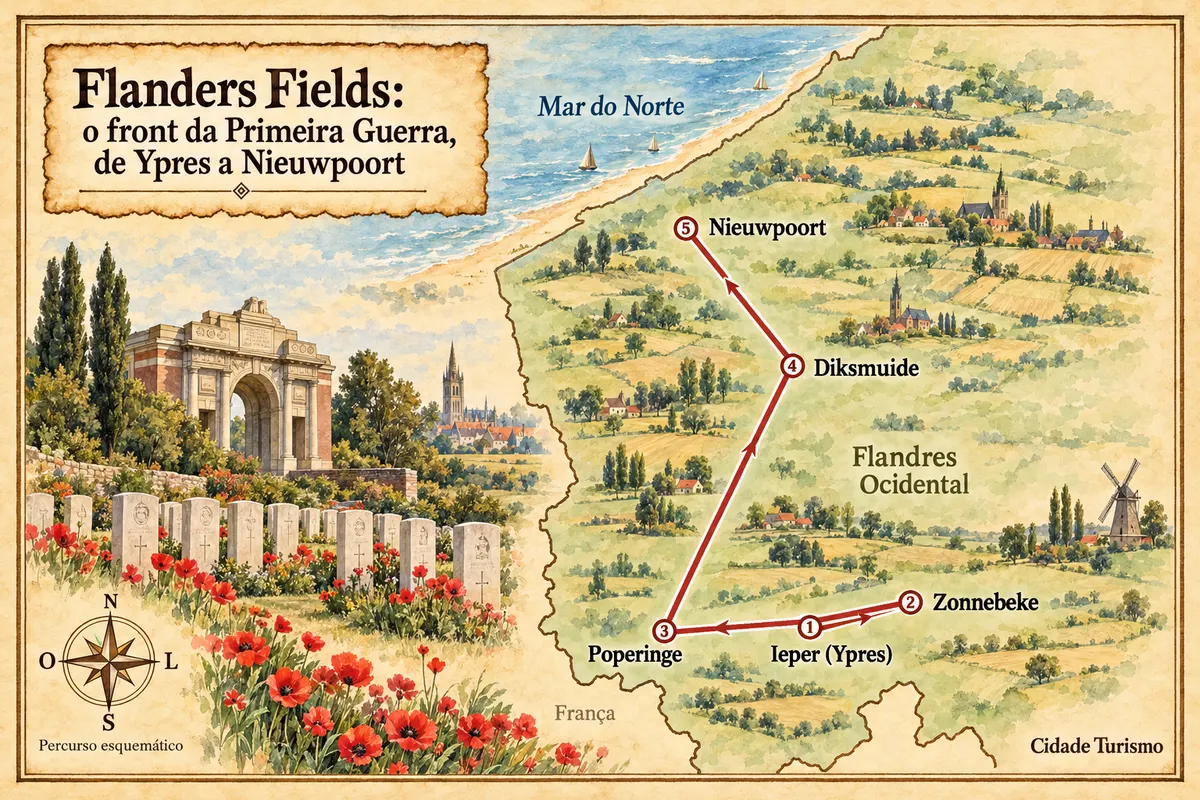
Obrisi: © NGI-IGN, AdminVector, CC BY 4.0. Priredba: Cidade Turismo.
Potek poti
Od mesta do mesta
Razdalje in časi so okvirni. Preverite jih pred odhodom.
-
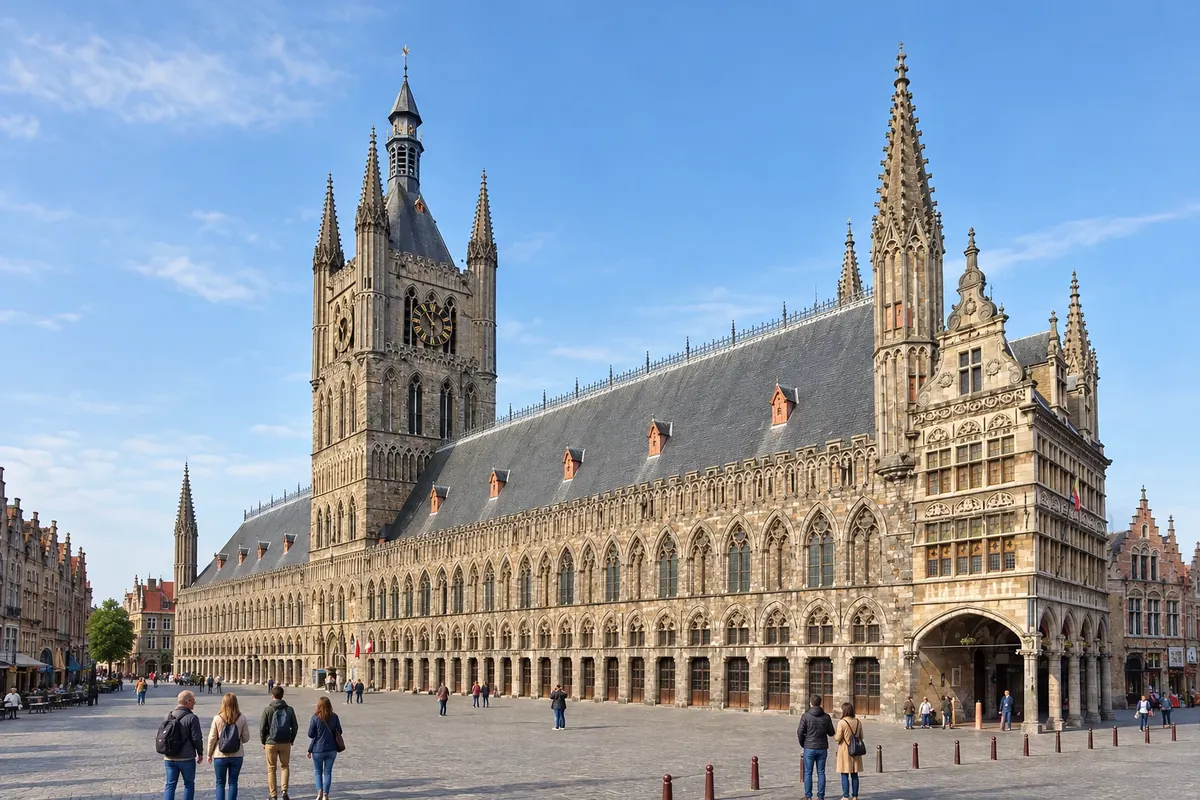 1 · West Flanders
Ypres
Base of the route and train arrival point. The main battles took place in 1914, 1915 and 1917, and the town was destroyed and rebuilt after the war, with the Lakenhal and the cathedral reconstructed. The In Flanders Fields Museum is housed in the Lakenhal. At the Menin Gate, a Commonwealth memorial opened in 1927 bearing the names of soldiers with no known grave, the Last Post is played every night.
→ Zonnebeke By car, the road leaves Ypres to the east and climbs the gentle Zonnebeke ridge, crossing the ground of the 1917 battles. There are De Lijn buses and guided tours departing from Ypres; check timetables before you go.
-
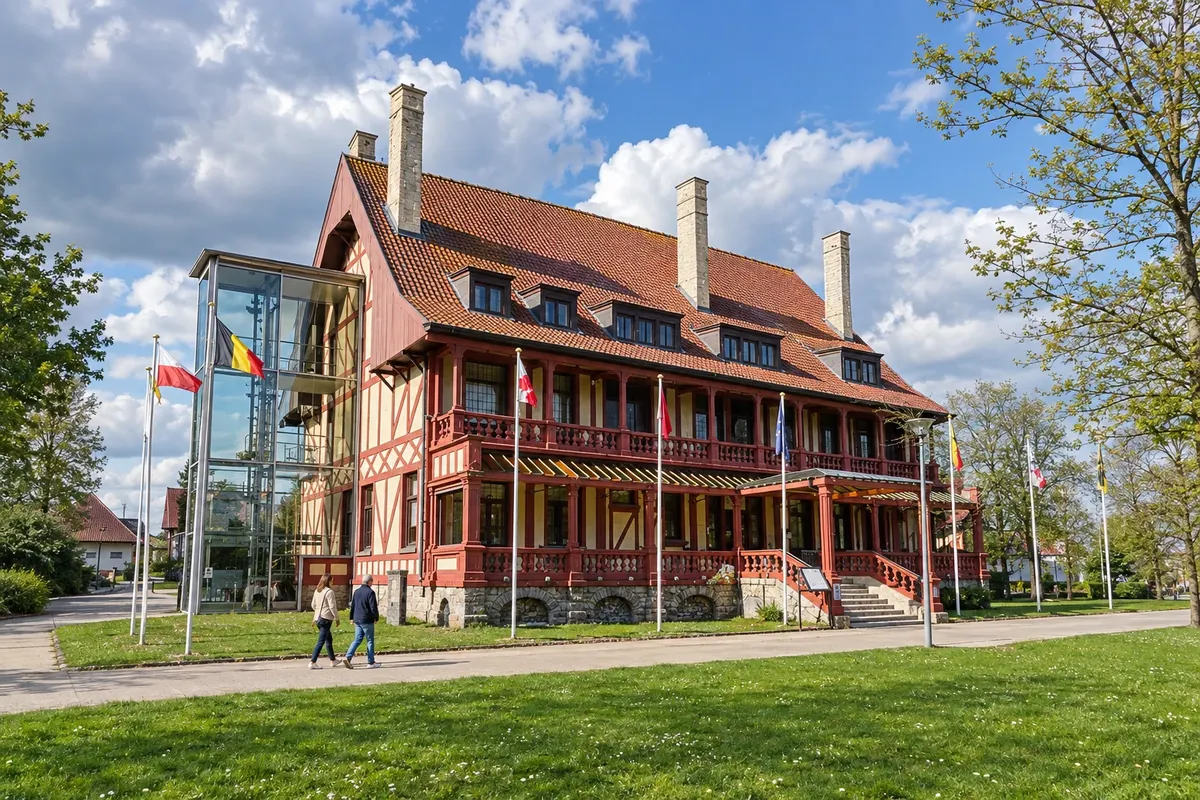 2 · West Flanders
Zonnebeke
It lies in the middle of the former salient, east of Ypres. In the castle park is the Memorial Museum Passchendaele 1917, which includes a reconstructed underground dugout. On the top of the Passendale ridge, the Tyne Cot cemetery is the largest Commonwealth cemetery in the world, with around 12,000 graves.
→ Poperinge By car, return via Ypres and continue west between hop fields. Without a car, the combination is bus to Ypres and the line 69 train, which terminates at Poperinge.
-
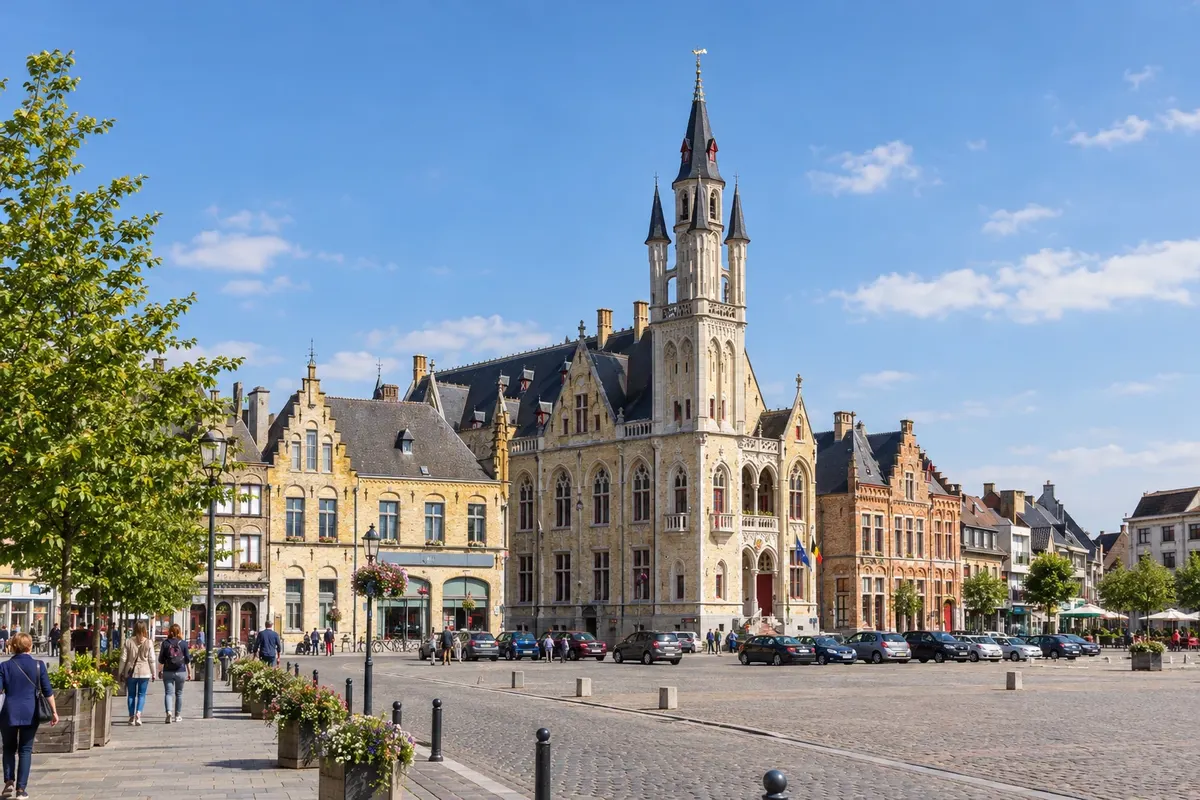 3 · West Flanders
Poperinge
It remained outside German occupation and served as a British rear area. Talbot House, opened in December 1915 as a soldiers’ club for all ranks, is now a museum. On the road south, Lijssenthoek contains almost 11,000 graves of wounded men who died in casualty clearing stations.
→ Diksmuide By car, the route cuts through the agricultural interior heading north. There is no direct train: Poperinge is at the end of line 69 and Diksmuide is on line 73, which links Ghent to De Panne, and using public transport requires changes.
-
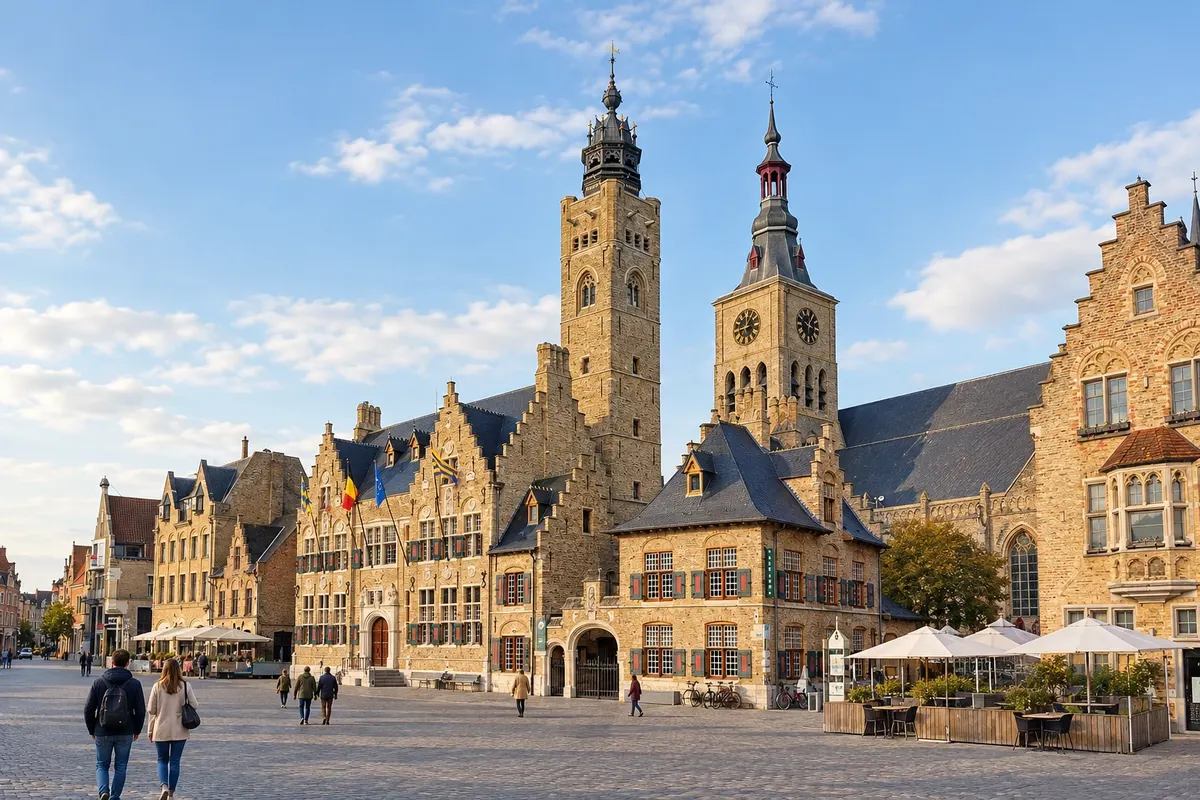 4 · West Flanders
Diksmuide
A town on the Belgian front, destroyed in 1914 and rebuilt in the 1920s. On the bank of the IJzer, the IJzertoren, at 84 meters, houses a museum about war and peace. Downriver is the Dodengang, the only preserved Belgian trench. The German cemetery at Vladslo, with Käthe Kollwitz’s sculptures, is also in the municipality.
→ Nieuwpoort The road follows the IJzer valley to the sea, across the plain that was underwater from 1914 to 1918. Nieuwpoort has no train station. The section is also part of the Western Front Way, waymarked for walking and cycling.
-
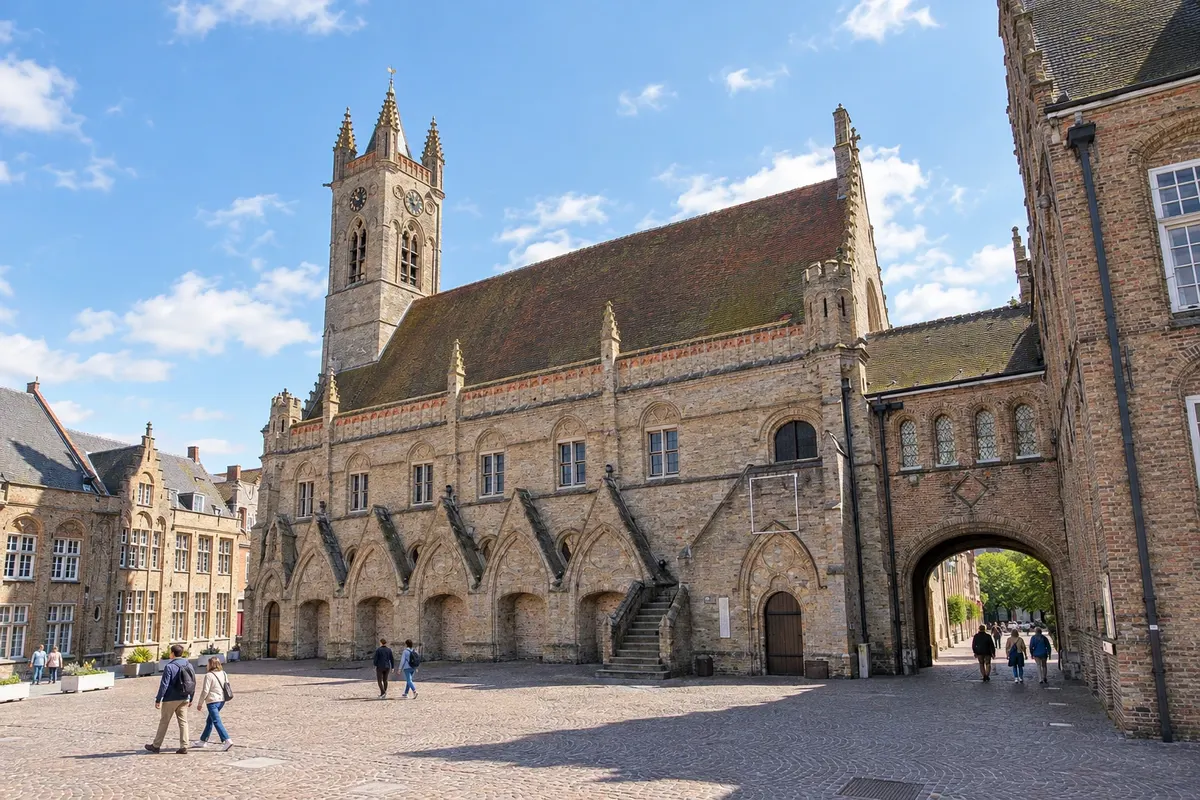 5 · West Flanders
Nieuwpoort
End of the route, at the mouth of the IJzer. At the Ganzepoot sluice complex, the Belgians flooded the plain at the end of October 1914. Beside it, the 1938 monument to King Albert I houses the Westfront Nieuwpoort centre, with an exhibition on the inundation and views from above over the polder and the sea.
Koliko dni
Two days are enough to see the essentials: one in the Ypres salient, with Zonnebeke and Poperinge, and another on the IJzer front, with Diksmuide and Nieuwpoort. With three days you’ll have time to visit museums at a relaxed pace. Many people stay overnight in Ypres to attend the Last Post at the Menin Gate.
Najboljši čas za obisk
From April to October the days are long and most museums are usually open. November hosts many ceremonies, especially on the 11th, Armistice Day, and Ypres becomes crowded. From December to February it gets dark in the middle of the afternoon, it rains frequently and some sites close for weeks, such as the Dodengang. Check ahead before you go.
The seasons shown are the most usual ones; nature doesn't always follow the calendar.
Kako prepotovati pot
By car is the simplest option, because several sites are in the countryside, far from stations. If you don’t drive you can take the train to Ypres and Poperinge and do the salient with a guided tour departing from Ypres. Diksmuide has a station on another line. Nieuwpoort has no train. Road signs are in Dutch: Ieper, Passendale, Diksmuide.
Komu je pot namenjena
For those interested in First World War history, remembrance and military cemeteries. It’s a trip of calm visits, with a lot of time outdoors among fields and rural crossroads. Older children usually cope well with museums that feature reconstructed trenches.
Odgovori na vaša vprašanja
Pogosta vprašanja – Flanders Fields: the First World War front, from Ypres to Nieuwpoort
Do you need a car to do the route?
It helps a lot. Museums are in towns, but cemeteries such as Tyne Cot and Lijssenthoek are in the countryside. Without a car you can reach Ypres and Poperinge by train and book a guided tour from Ypres for the salient. The section between Diksmuide and Nieuwpoort depends on bus or car.
Can it be done as a day trip from Brussels?
Only part of it. Ypres is at the far west of the country and the train from Brussels requires changes. In one day you can see Ypres, the Menin Gate and one or two sites in the salient. To include Diksmuide and Nieuwpoort it’s best to stay at least one night in the region.
What is the Last Post and how do you attend?
It is the bugle call in honour of Commonwealth soldiers who died in the region, played by volunteer firefighters beneath the Menin Gate arch in Ypres every night since 1928, interrupted only during the German occupation in the Second World War. The ceremony is short and solemn. Arrive early, because on dates such as November 11 the crowd is large. Check the time before you go.
What is the best time to go?
From April to October, with long days and museums open. November has Armistice ceremonies on the 11th, but also rain and short days. From December to February, some sites close for a few weeks, such as the Dodengang and the IJzertoren in January.
Do the city names change on the signs?
Yes. Flanders speaks Dutch and the signs use Ieper for Ypres, Passendale for Passchendaele and Nieuwpoort for Nieuport. Books and British cemeteries use the older English or French names, and it's useful to know both forms to find your way.
Can cemeteries be visited by anyone?
Yes. Commonwealth and German cemeteries are open to the public and have registers with names at the entrance. Silence and respect at the graves is requested. Tyne Cot and Lijssenthoek have visitor centres next to the parking.
Več kot vodnik


