Pont des Trous and the Escaut quays
Odhod: Tournai city center Peš Približno uro in pol Popoldne Lahko
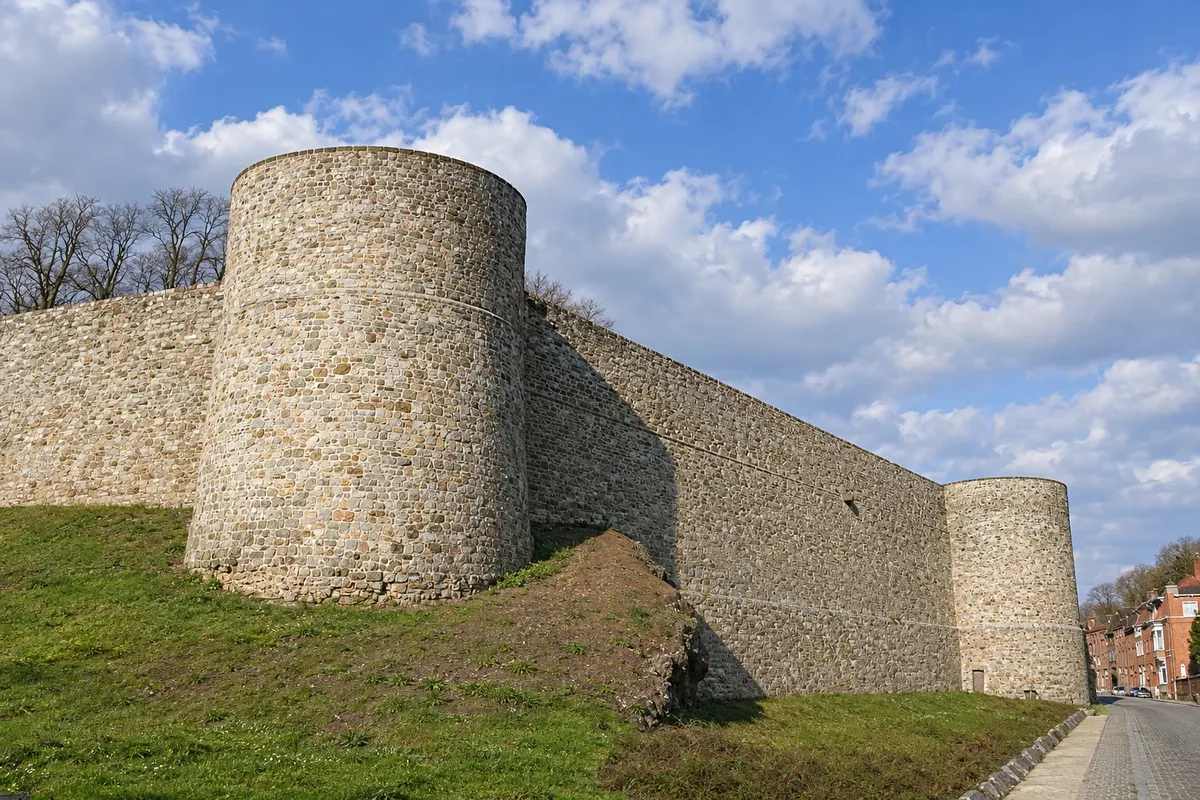
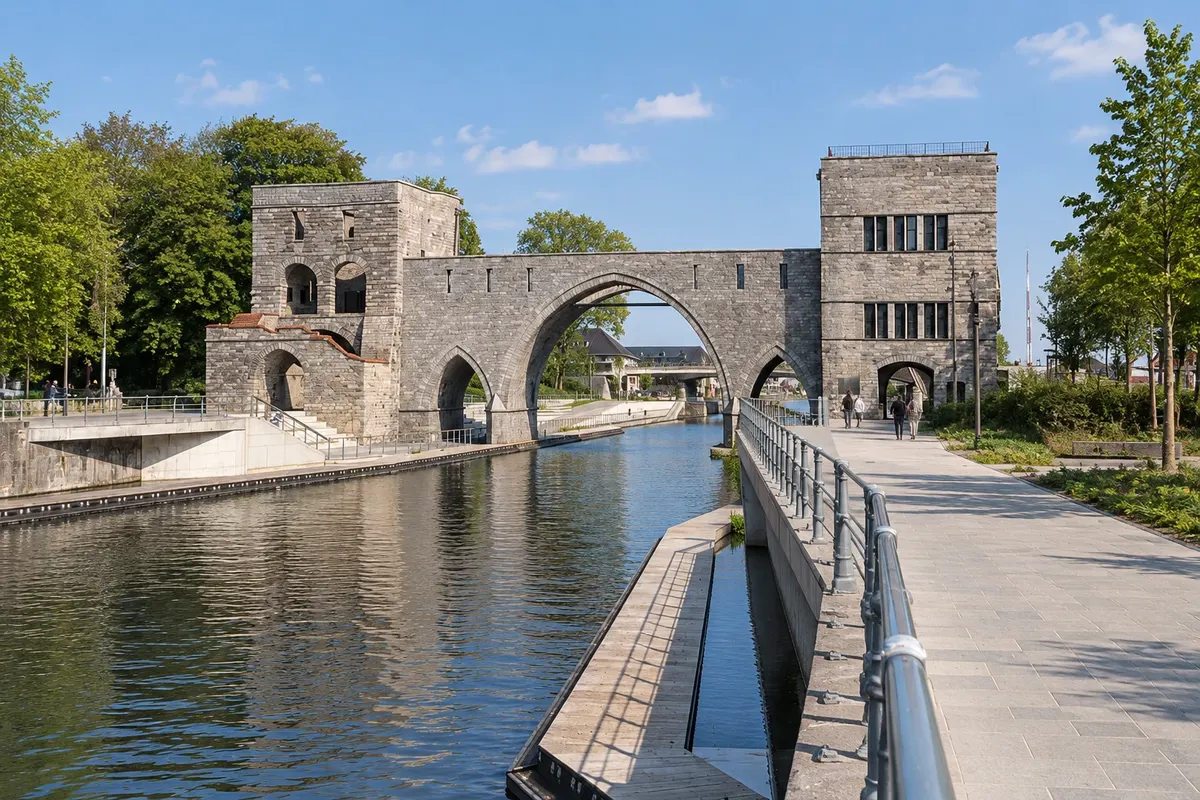
The Pont des Trous is a fortified bridge over the Escaut that was part of Tournai’s second city wall, which had 18 gates. Construction took nearly 50 years: the tower on the left bank, the Tour du Bourdiel, dates from 1281, and the tower on the right bank, the Tour de la Thieulerie, was completed in 1304. Between them, huge grilles could be lowered at any time to block the passage of boats. The name comes from a nearby lock that locals called "Les Trous" (the holes).
In 1948 the waterway arch was raised by 2.40 meters to let ships pass. Later, as vessels grew even larger, the three arches were dismantled and rebuilt higher, while the medieval towers remain standing.
The best way to see the bridge is to walk along the Escaut quays, which total about 2.7 km. The Quai des Salines has listed historic facades, and the Quai Sakharov lies on the opposite side of the bridge. In summer, the tourist office runs guided tours of about 1 hour 30 minutes that go up onto the wall between the two towers.
Kraji na poti: Pont des Trous, Escaut, Quai des Salines, Quai Sakharov, Tour du Bourdiel, Tour de la Thieulerie.
Vključuje: Free walk along the quays. The guided tour of the bridge, in summer, requires a separate paid ticket and departs on the Quai Sakharov side. Check the current schedule.
Nasvet: Do the visit at dusk, when the light strikes the towers. There is an audio route along the river, “L'Escaut vous raconte...”, offered by Tournai tourism. Combine it with the Grand-Place, a few minutes' walk away.
Najboljši čas za obisk: All year round, on dry days. Guided visits to the bridge usually take place in the European summer.
Mons Memorial Museum and the Saint-Symphorien military cemetery
Odhod: Mons center On foot to the museum; by car or taxi to Saint-Symphorien Približno 3 ure Dopoldne Lahko
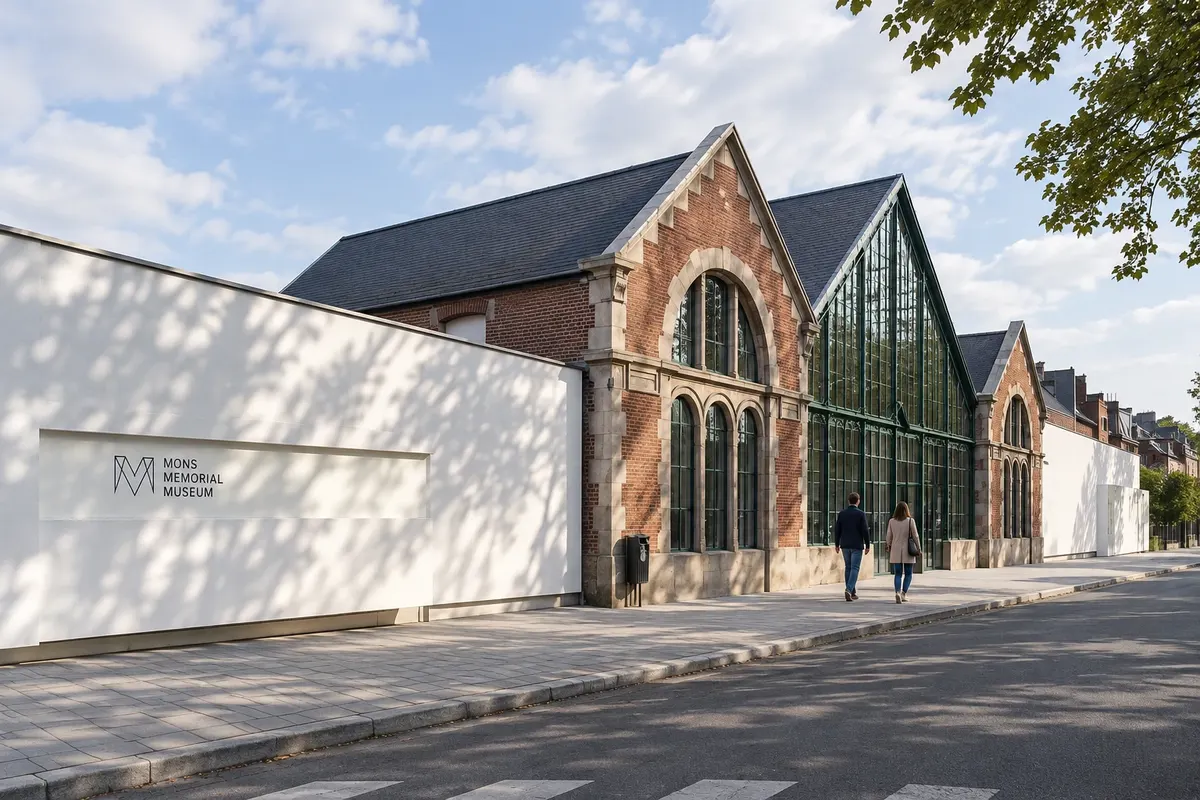
Mons has a long military history, and the Mons Memorial Museum tells that story from the perspective of those who lived it. The museum is housed in the former Machine à Eau, the building that supplied water to the whole city between 1871 and 1961. The permanent exhibition, covering 1,200 m², spans from the Middle Ages to the 20th century, with items selected from the city's roughly 5,000 military objects, letters, notebooks and testimonies from British, American, Canadian, Belgian and German soldiers and civilians. The texts are in French, Dutch and English.
On August 23, 1914, the German army attacked British troops at Mons at the start of World War I. About 4,000 Commonwealth soldiers escaped the encirclement, and the legend of the "Angels of Mons" was born, said to have shown the way to the soldiers.
Southeast of the town, the St Symphorien Military Cemetery was created by the German army in 1916 and contains 284 German soldiers and 229 Commonwealth soldiers. It is the resting place of John Parr, considered the first Commonwealth soldier killed in action in the war, and George Lawrence Price, a Canadian, killed on November 11, 1918, the day of the armistice, considered the last. The cemetery has a garden-like feel, with trees and paths among the graves. Visit quietly and respectfully.
Kraji na poti: Mons Memorial Museum, St Symphorien Military Cemetery, Saint-Symphorien.
Vključuje: The museum has a separate paid admission, included on the Mons Card; texts in three languages and guides in braille. Entry to the cemetery is free. Check the current price list.
Nasvet: The museum is closed on Mondays and the visit takes about 1 hour 30 minutes. For Saint-Symphorien, access is easier by car or taxi. On the first Sunday of the month the museum does not charge admission.
Najboljši čas za obisk: All year round. On November 11, the anniversary of the armistice, the date carries special significance in the region.
Grand-Hornu: former mining complex, MACS and CID
Odhod: Mons Car or taxi (about 10 km) Približno 3 ure Popoldne Lahko
Grand-Hornu is in Hornu, in the municipality of Boussu, about 10 km west of Mons center, in the Borinage region, which was built on coal mining. It is a former mining complex constructed between 1810 and 1830 by Henri De Gorge, a merchant from Lille, with designs by architects François Obin and later Bruno Renard. In 2012 it was inscribed on UNESCO’s World Heritage list, together with three other sites, as part of the Major Mining Sites of Wallonia.
The heart of the complex is the Cour Ovale, a large oval courtyard surrounded by the industrial buildings, within a large quadrilateral, with the former stables and the engine room. Around it, De Gorge built a workers’ village of 425 houses on six straight, wide streets. Mining ceased in 1954; the site was restored and belongs to the province of Hainaut.
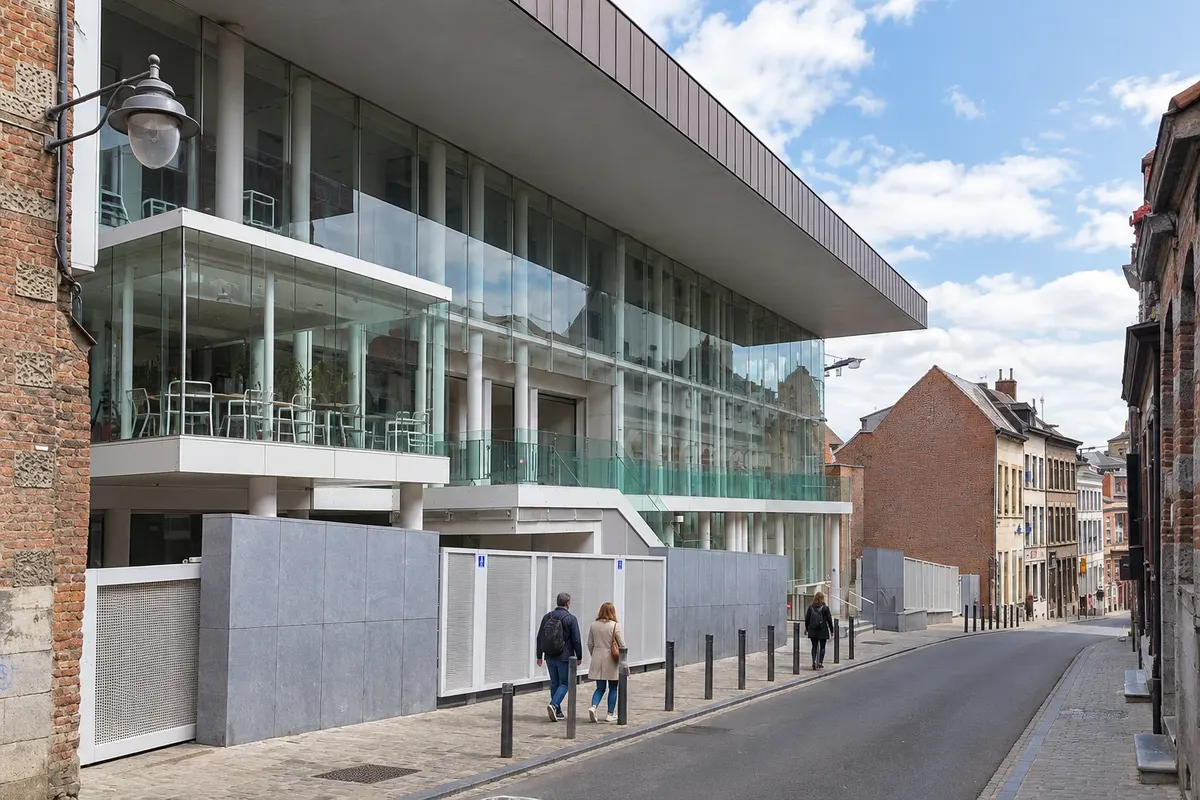
In the former engineers’ building is the MACS, the contemporary art museum of the Federation Wallonia-Brussels, designed by architect Pierre Hebbelinck. The CID, the centre for innovation and design, occupies another part of the complex. Both host temporary exhibitions that change throughout the year.
Kraji na poti: Grand-Hornu, Cour Ovale, MACS, CID, Hornu, Boussu.
Vključuje: The ticket grants access to the site and exhibitions, with guided tours included at some times and an audio guide available for rent. The Mons Card provides a discount. Check the current price list.
Nasvet: Open Tuesday to Sunday; closed on Mondays and on some year-end public holidays. There is a café and a shop on site. Also walk the streets of the workers’ village outside the complex. On the first Sunday of the month there is no admission fee.
Najboljši čas za obisk: All year round, Tuesday through Sunday.
Musée du Doudou
Odhod: Mons center Peš Približno 1 uro Popoldne Lahko
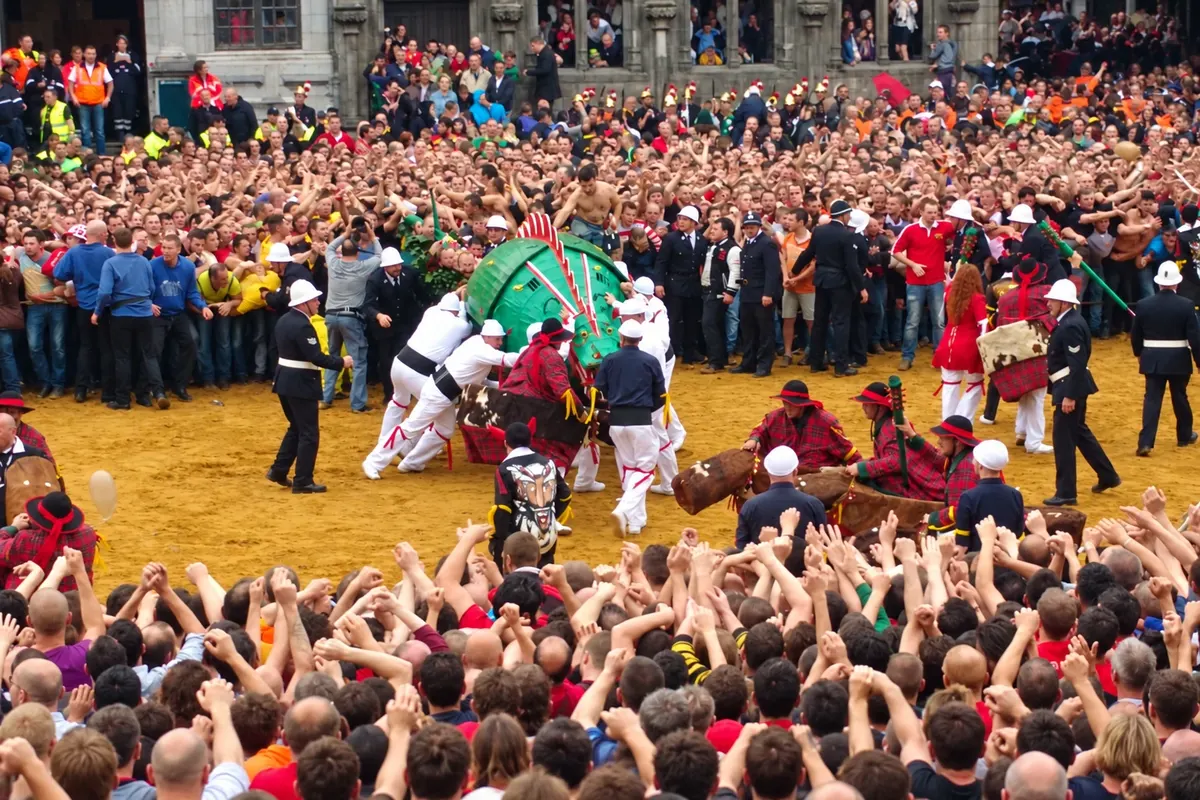
If you cannot be in Mons on the Trinity weekend, you can learn about the Doudou at the Musée du Doudou, in the Jardin du Mayeur next to the Grand-Place. The museum follows the legend of Saint George and the dragon and explains the Ducasse de Mons, recognized by UNESCO in 2005, with large panels and interactive features.
The exhibition looks at the festival from several angles: history, anthropology, science, art, religion and city life. Items include Saint George’s gilded lance, the dragon’s teeth and medallions, dragons from other periods and the seal of Sainte-Waudru.
The texts are in French, Dutch and English, and there are adapted materials and braille guides for people with visual impairments.
Kraji na poti: Musée du Doudou, Jardin du Mayeur, Grand-Place de Mons.
Vključuje: Separate paid admission; included on the Mons Card. Check the current pricing.
Nasvet: Usually open Tuesday to Sunday. Visit before going to the Grand-Place and the Collégiale Sainte-Waudru: it makes it easier to recognize the festival locations. On the first Sunday of the month, admission is free.
Najboljši čas za obisk: All year. During the week of the Doudou, between May and June, opening hours may change.
Musée des Beaux-Arts de Tournai, by Victor Horta
Odhod: Tournai city center Peš Približno uro in pol Dopoldne Lahko
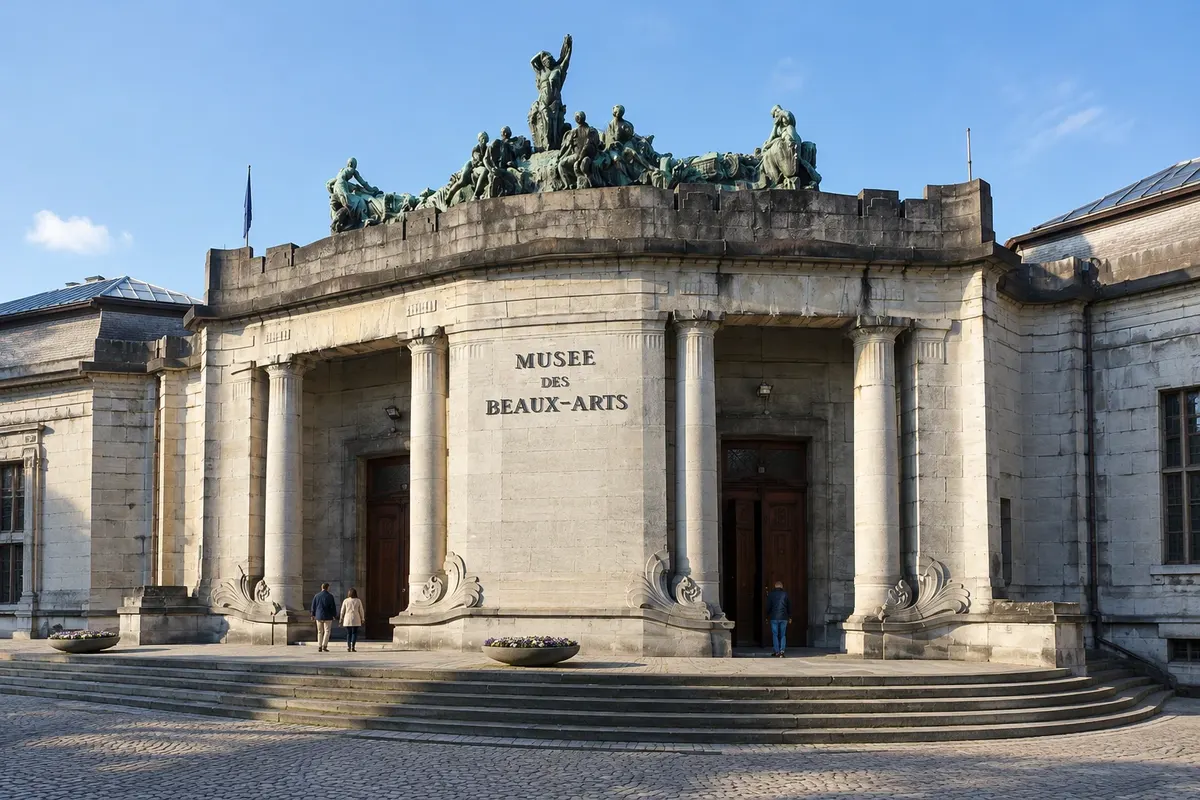
The Musée des Beaux-Arts de Tournai was designed by Victor Horta, the Belgian Art Nouveau architect. The earliest drawings date from 1907. The theft of the Mona Lisa in Paris led Horta to change the plan so that a guard in the central hall could see every room; World War I delayed the work, and the museum opened in 1928.
The building has a shape reminiscent of a turtle and blends Art Nouveau and modernism, with Art Deco influence. A large sculpture hall at the center is surrounded by smaller painting rooms, topped by glass domes that let in natural light.
The collection began with the modern art holdings of Brussels patron Henri Van Cutsem and includes two works by Édouard Manet. The museum is located in the Enclos Saint-Martin, next to the town hall park, which occupies the site of the former Benedictine abbey of Saint-Martin.
Kraji na poti: Musée des Beaux-Arts de Tournai, Enclos Saint-Martin, Hôtel de Ville de Tournai.
Vključuje: Separate paid admission; included in some city passes. Check the current pricing.
Nasvet: Closed on Mondays; on Sundays it opens only from late morning. On the first Sunday of the month, Tournai museums do not charge admission. The Muséum d'Histoire naturelle is in the same courtyard as the town hall, a few steps away.
Najboljši čas za obisk: All year round, Tuesday through Sunday.
Mundaneum: Paul Otlet's paper archive
Odhod: Mons center Peš Približno uro in pol Popoldne Lahko
The Mundaneum preserves the project of two Belgian lawyers, Paul Otlet and Henri La Fontaine, who from 1895 tried to gather and classify all the world's knowledge, with world peace as their goal. La Fontaine received the Nobel Peace Prize. They developed the Universal Decimal Classification, used in libraries, and assembled more than 12 million index cards and documents.
In 1934, Otlet imagined a network of "electric telescopes" to consult interconnected documents, and for this reason many people see the Mundaneum as a precursor of the internet. The collection is part of UNESCO's Memory of the World programme.
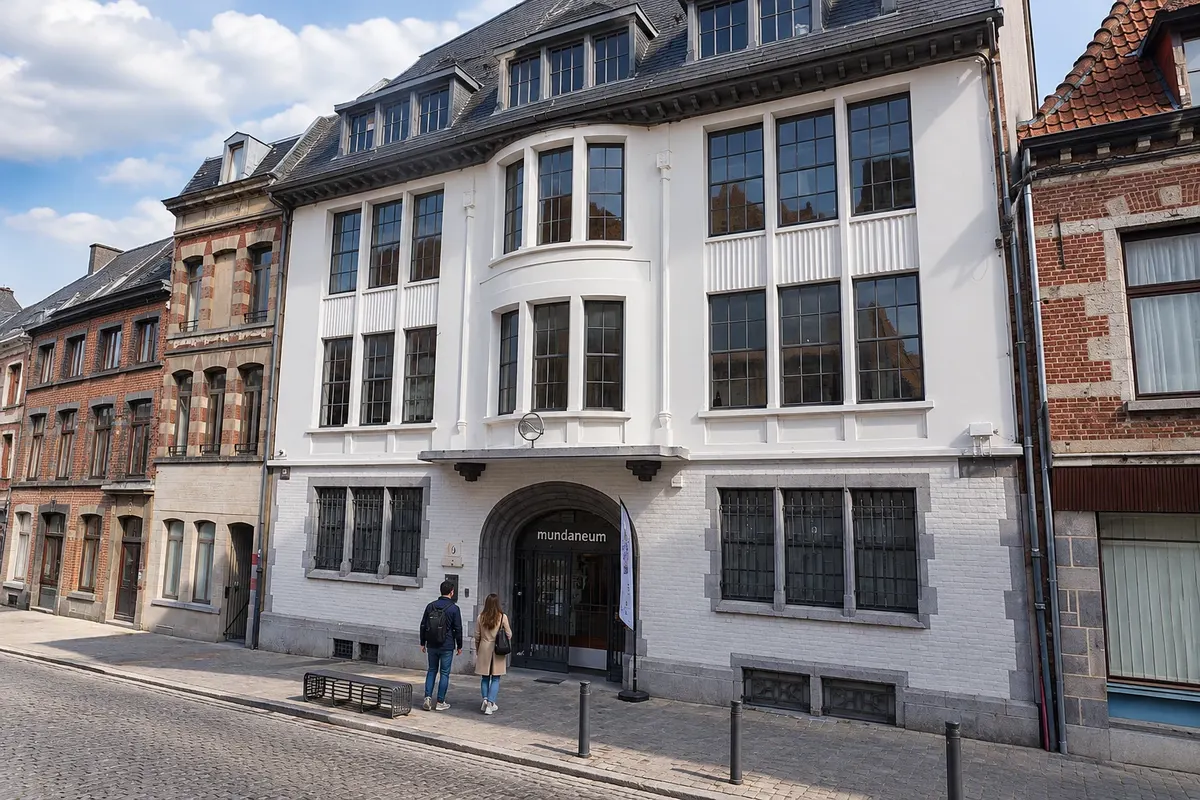
The museum operates in an old department store from the 1930s, on Rue de Nimy, in the centre of Mons. The visit displays part of the archive and temporary exhibitions on topics related to information, peace and the history of ideas.
Kraji na poti: Mundaneum, Rue de Nimy.
Vključuje: Admission paid separately; the Mons Card gives a discount. Check the current price table.
Nasvet: It is usually open Wednesday through Sunday, with a lunch break on weekdays. On the first Sunday of the month admission is free. Worthwhile for those who like libraries, history and technology.
Najboljši čas za obisk: All year round, Wednesday to Sunday.
Maison Van Gogh in Cuesmes
Odhod: Mons By car or taxi to Cuesmes, in the municipality of Mons Približno 2 uri skupaj z vožnjo Dopoldne Lahko
Vincent van Gogh lived in the Borinage, the mining region around Mons, from December 1878 to October 1880, first working as a preacher among the miners. In Cuesmes, now part of the municipality of Mons, he stayed in 1880 at the house of the miner Charles Decrucq and his wife Jeanne, sharing the room with the couple’s children. It was at that time, around August 1880, that he decided to become an artist: he drew scenes of the area, and two sketches he gave to Decrucq have been preserved.
The visit starts in the garden, goes through a renovated pavilion and continues through the small house. A sound installation places the painter and his work in the context of the 19th‑century Borinage, its mines and the life of the workers.
Kraji na poti: Maison Van Gogh, Cuesmes, Borinage.
Vključuje: Separate paid admission, included on the Mons Card; children up to 12 years old free. Check the current price table.
Nasvet: The house is small and closes early, mid‑afternoon; it is open Tuesday to Sunday. Combine with Grand-Hornu, also in the Borinage, on the same day. On the first Sunday of the month there is no admission fee.
Najboljši čas za obisk: All year round, Tuesday through Sunday.
Le CAP: Musée des Beaux-Arts de Mons and Maison des Collections
Odhod: Mons center Peš Približno 2 uri Popoldne Lahko
Le CAP is Mons’s cluster of art and history museums, on a side street off the Grand-Place. It brings together three spaces: the Musée des Beaux-Arts, formerly known as BAM; the Maison des Collections; and the Jardin du Poirier Beurré.
The Musée des Beaux-Arts hosts temporary exhibitions, some featuring works from the city collections and others with major international names. Exhibitions have included Van Gogh, Niki de Saint Phalle, Roy Lichtenstein, Joan Miró and Auguste Rodin, as well as the Mons School.
The Maison des Collections occupies the renovated house of Jean Lescarts and tells the story of Mons, from prehistory to the present day, with about a hundred items from the municipal collections, in French. The Jardin du Poirier Beurré houses a collection of carved stones, a resting area and permaculture beds.
Kraji na poti: Le CAP, Musée des Beaux-Arts de Mons, Maison des Collections, Jardin du Poirier Beurré, Rue Neuve.
Vključuje: Separate paid admission; higher price for international exhibitions; the Mons Card gives a discount. Check the current price table.
Nasvet: The Musée des Beaux-Arts opens only during exhibitions: check what’s on before you go. It generally operates Tuesday to Sunday. On the first Sunday of the month admission is usually free.
Najboljši čas za obisk: All year round, during exhibition periods.
SILEX'S: the Neolithic flint mines of Spiennes
Odhod: Mons Car or taxi (about 6 km) about 2 to 3 hours Popoldne easy; moderate for the descent to the well
At Spiennes, about 6 km southeast of Mons, Neolithic people dug shafts to extract flint, the stone used to make axes and other tools. The mines were active from roughly 4300 to 2200 BCE, and the shafts reach over 10 meters deep. In 2000 the site was inscribed on the UNESCO World Heritage list.
SILEX'S is the visitor center on the site. The museum shows how flint was extracted and worked, with original tools, ancient pieces and replicas; outside, a photo display presents recent finds. Four waymarked trails cross the surrounding fields, with maps available at reception.
The highlight is the guided descent into a Neolithic mining shaft of up to 10 meters, down a vertical ladder and wearing a helmet, in groups of up to 12 people.
Kraji na poti: SILEX'S, Spiennes, Minières néolithiques de Spiennes.
Vključuje: Separate paid ticket; included on the Mons Card. The descent to the well is guided, requires mandatory reservation, and is only for those over 10 years old. Check the current schedule.
Nasvet: Book the visit and the descent by phone before you go. Descents usually take place in the afternoon on weekends and holidays and, during Belgian school holidays, from Thursday to Sunday. Wear clothes that can get dirty and sturdy footwear.
Najboljši čas za obisk: In season, generally from April to November, Tuesday to Sunday. Confirm opening dates.
MuFIm: Musée de Folklore et des Imaginaires de Tournai
Odhod: Tournai city center Peš Približno uro in pol Popoldne easy (several stairs)
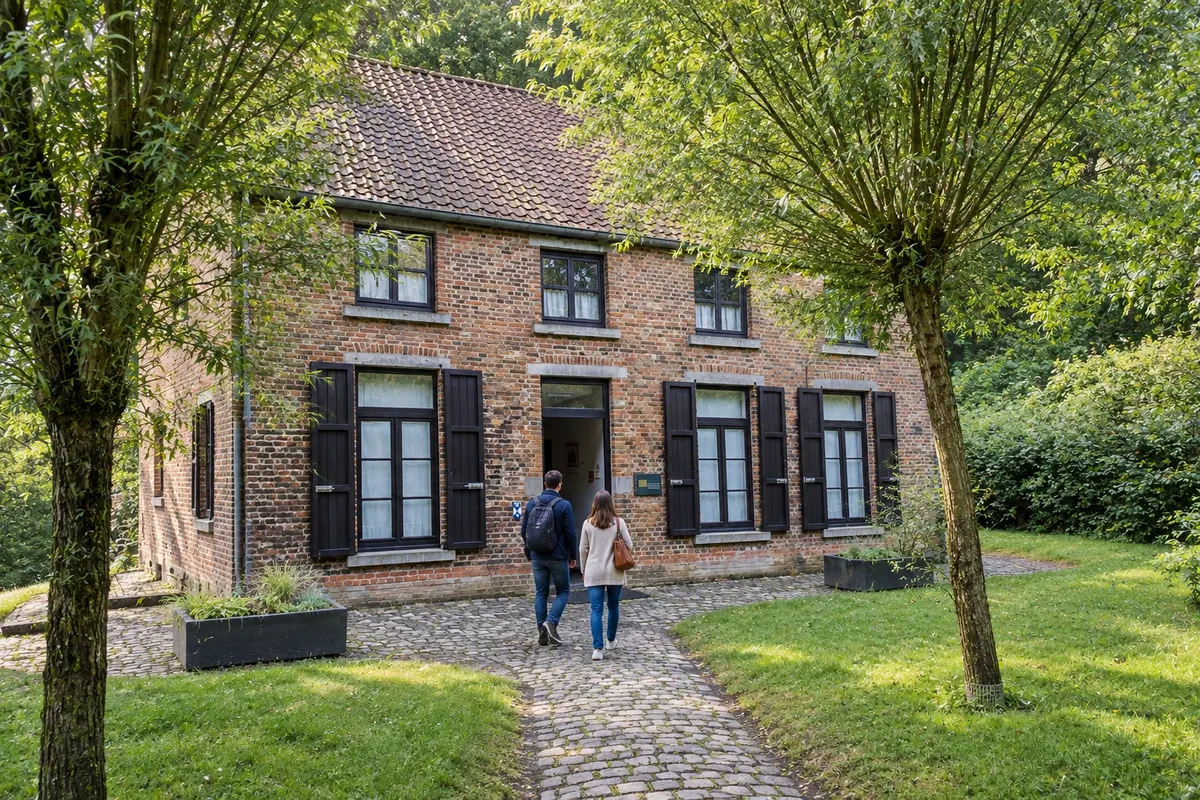
The MuFIm, the museum of folklore and the imaginary of Tournai, occupies a 17th-century Tournai house a few steps from the Grand-Place. There are 23 rooms that tell life in the city from 1800 to today.
Along the way you encounter staged scenes, such as a cotton stocking maker at work, a funeral carriage and an old French fries trailer, as well as works by 20th-century and contemporary artists.
On the top floor there is a replica of the 1701 model of Tournai, commissioned by Louis XIV, king of France, showing the fortified city. A tablet helps locate the buildings that still exist.
Kraji na poti: MuFIm, Réduit des Sions, Grand-Place de Tournai.
Vključuje: Separate paid admission; included in some city passes. Check the current pricing.
Nasvet: Closed on Mondays; on Sundays it opens only from late morning. On the first Sunday of the month, the museums in Tournai do not charge admission. Those interested in military history can continue to the Musée d'Histoire militaire, also near the Grand-Place.
Najboljši čas za obisk: All year round, Tuesday through Sunday.
Muséum d'Histoire naturelle and Vivarium of Tournai
Odhod: Tournai city center Peš Približno uro in pol Dopoldne Lahko
The Muséum d'Histoire naturelle of Tournai was founded in 1828, when the region belonged to the United Kingdom of the Netherlands, and opened to the public in 1829. Since 1839 it has occupied the former brewery of the Saint-Martin abbey, in the main courtyard of the town hall.
The gallery of taxidermied animals keeps the feel of a 19th‑century cabinet of curiosities. Among the exhibits is an elephant brought to Belgium in 1839, recognised as a “treasure” by the Fédération Wallonie‑Bruxelles.
The vivarium houses fish, spiders, amphibians and reptiles in recreated habitats. Outside, a scientific garden contains enclosures and a greenhouse of tropical butterflies. The museum is a member of the European Association of Zoos and Aquaria and takes part in breeding programmes for threatened species.
Kraji na poti: Muséum d'Histoire naturelle of Tournai, Hôtel de Ville de Tournai, Rue Saint-Martin.
Vključuje: Separate paid admission; included in some city passes. Check the current pricing.
Nasvet: Good program with children and for a rainy day. Closed on Mondays; on Sundays it opens only from late morning. On the first Sunday of the month, admission is free.
Najboljši čas za obisk: All year round, Tuesday through Sunday.
TAMAT: tapestry and textile arts museum of Tournai
Odhod: Tournai city center Peš Približno 1 uro Popoldne Lahko
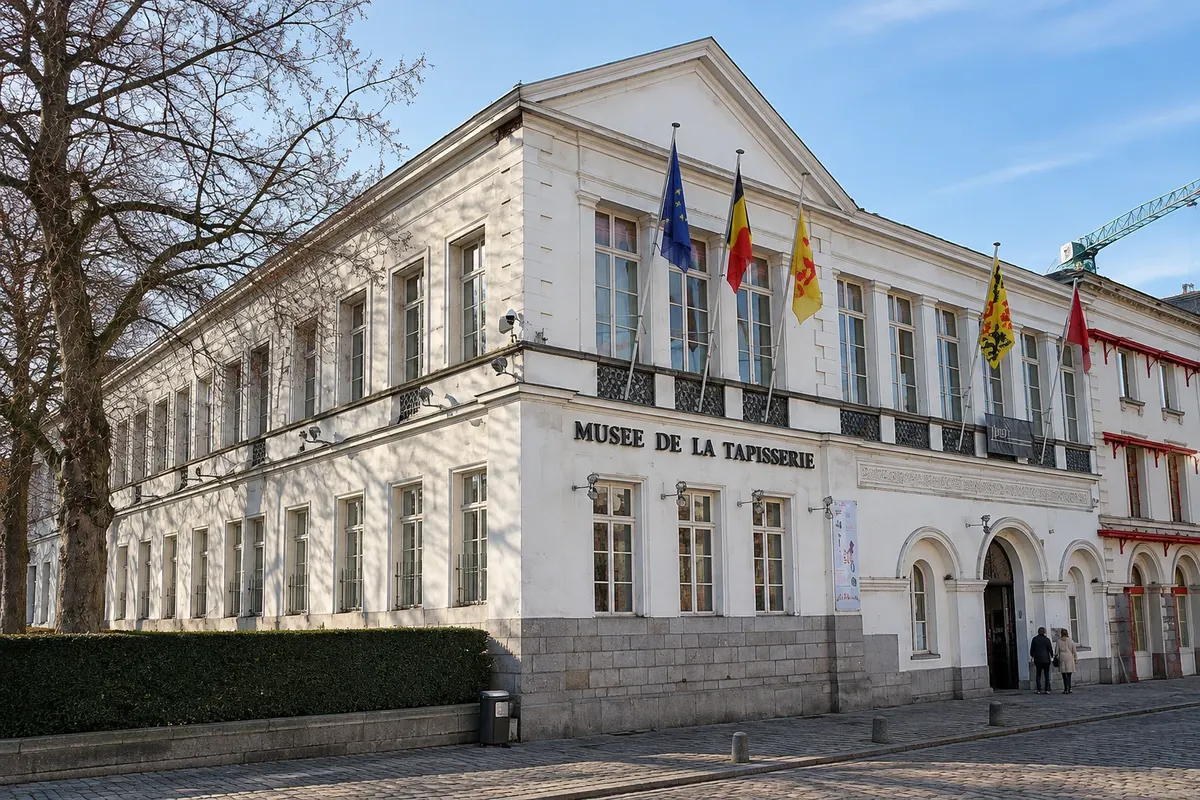
TAMAT, the tapestry and textile arts museum of Tournai, is housed in a neoclassical building on Place Reine Astrid, near the Grand-Place, and opened in 1990.
The permanent display has old tapestries from the 15th and 16th centuries and modern works by Dubrunfaut, Somville and Deltour from the Forces Murales group, which helped renew tapestry in the 20th century. The top floor shows works by contemporary artists using fabric.
The museum also has a restoration workshop and cares for the textile collection of the city, the province of Hainaut and the Fédération Wallonie‑Bruxelles.
Kraji na poti: TAMAT, Place Reine Astrid.
Vključuje: Separate admission fee; under‑18s do not pay outside school hours. Check the current schedule.
Nasvet: Closed on Mondays and at lunchtime; in winter, also on Sunday mornings. On the first Sunday of the month admission is free.
Najboljši čas za obisk: All year round, Tuesday through Sunday.
Pairi Daiza, in Brugelette
Odhod: Mons Car or train to Cambron-Casteau and 1.2 km on foot about 7 hours Ves dan easy (little walking)
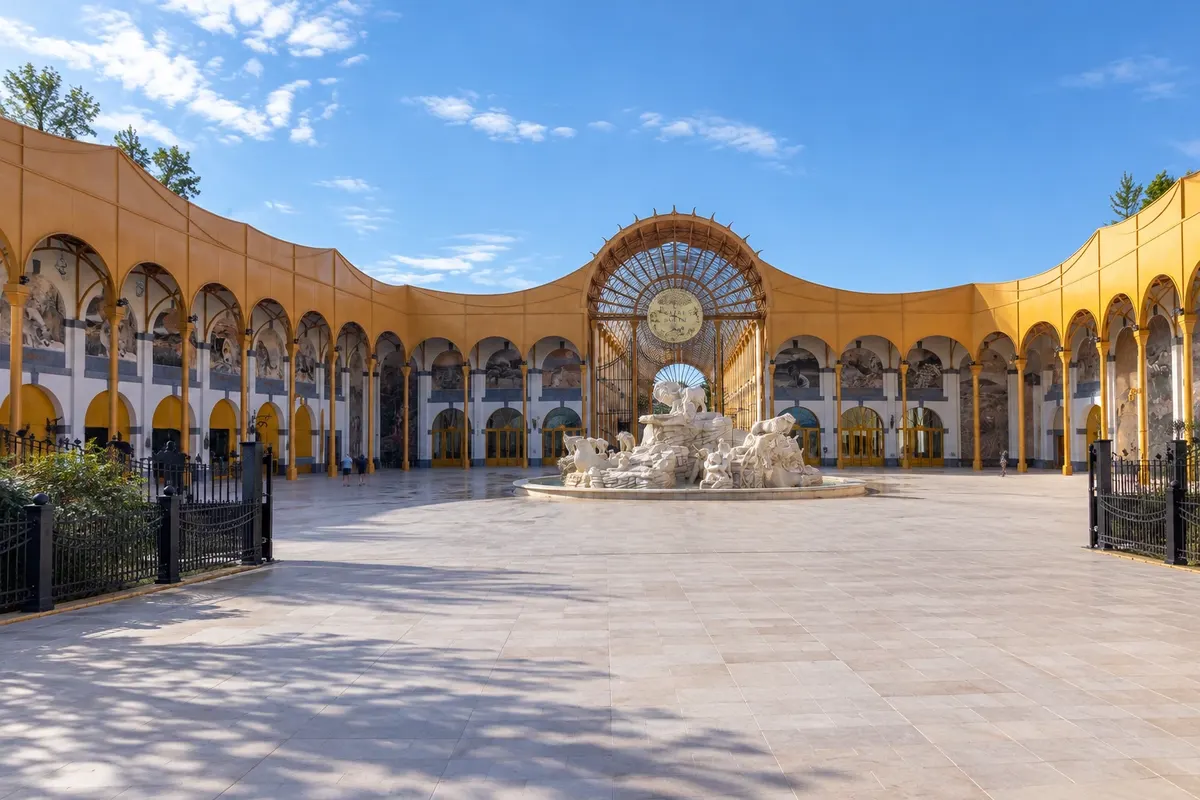
Pairi Daiza is a large zoological park and garden in Brugelette, between Mons and Ath. It covers about 80 hectares on the former estate of the Cistercian abbey of Cambron, enclosed by a wall of roughly 3 km.
The park is divided into ten themed “worlds”, with gardens and more than a thousand species of animals, which are not always on view.
It is a full‑day outing, aimed mainly at families with children and at people who enjoy gardens.
Kraji na poti: Pairi Daiza, Brugelette, Cambron-Casteau.
Vključuje: Paid admission purchased separately online. Activities and meals are charged extra. Check the current price table.
Nasvet: By train, the station is Cambron-Casteau, about 1.2 km from the entrance, roughly a 15–20 minute walk; at weekends there are hourly trains on the line linking Mons and Ath. If you buy the ticket online, SNCB gives a discount on the train fare. Wear comfortable shoes.
Najboljši čas za obisk: The park is open year‑round. From April to September, the long days allow more to be enjoyed; during Belgian school holidays the park becomes busy.


 Brazilija
 Antarktika
 Argentina
 Bolivija
 Čile
 Kolumbija
 Ekvator
 Gvajana
 Francoska Gvajana
 Falklandski otoki (Malvini)
 Paragvaj
 Peru
 Surinam
 Urugvaj
 Venezuela
 Nemčija
 Avstrija
 Hrvaška
 Danska
 Slovaška
 Slovenija
 Španija
 Finska
 Francija
 Grčija
 Nizozemska
 Madžarska
 Irska
 Islandija
 Italija
 Luksemburg
 Norveška
 Poljska
 Portugalska
 Združeno kraljestvo
 Češka
 Švedska
 Švica
 Turčija
 Bermudi
 Kanada
 Združene države Amerike
 Grenlandija
 Mehika
 Sveta Peter in Mihael
 Dominikanska republika
 Japonska
 Južnoafriška republika
 Egipt
 Avstralija
 Fidži
 Nova Zelandija
 Papua Nova Gvineja