Brussels

Brussels · Walloon Brabant · Belgija

Brussels

The capital of Belgium and seat of the European Union, with the Grand-Place, the Atomium and art museums, and the Waterloo battlefield a few kilometers to the south.

Brussels

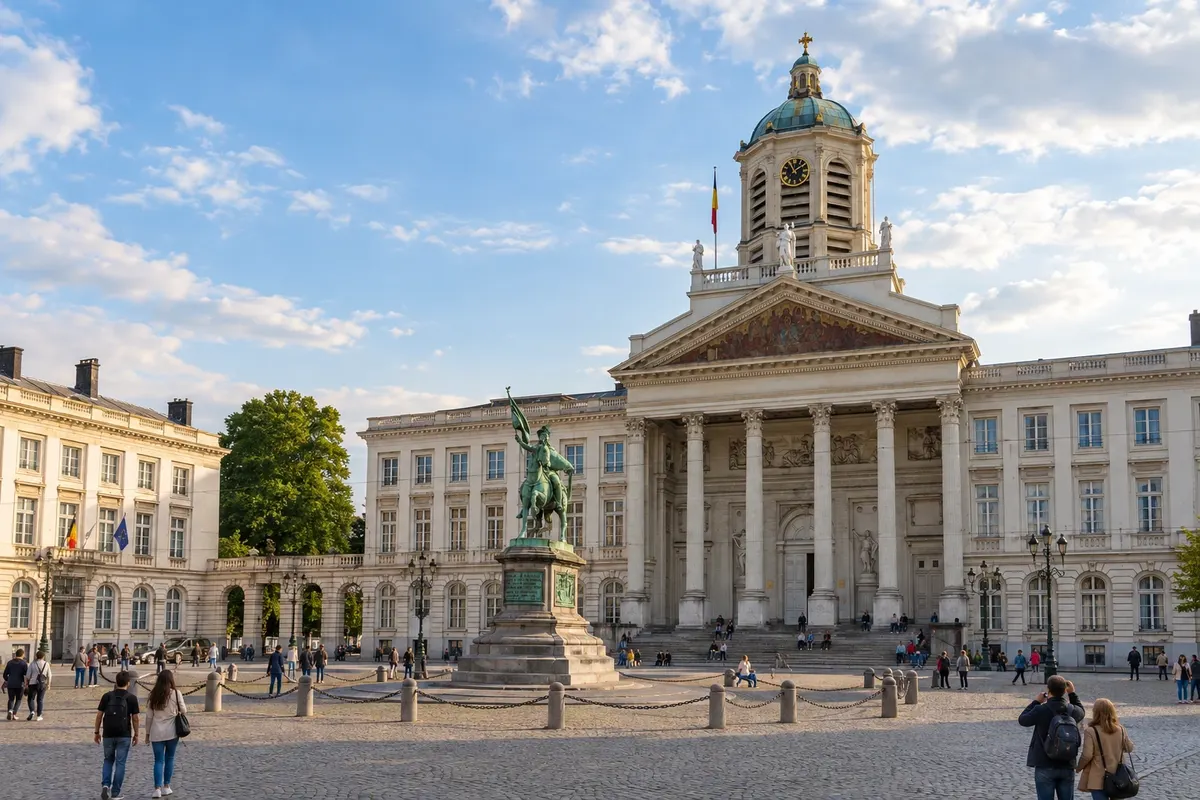
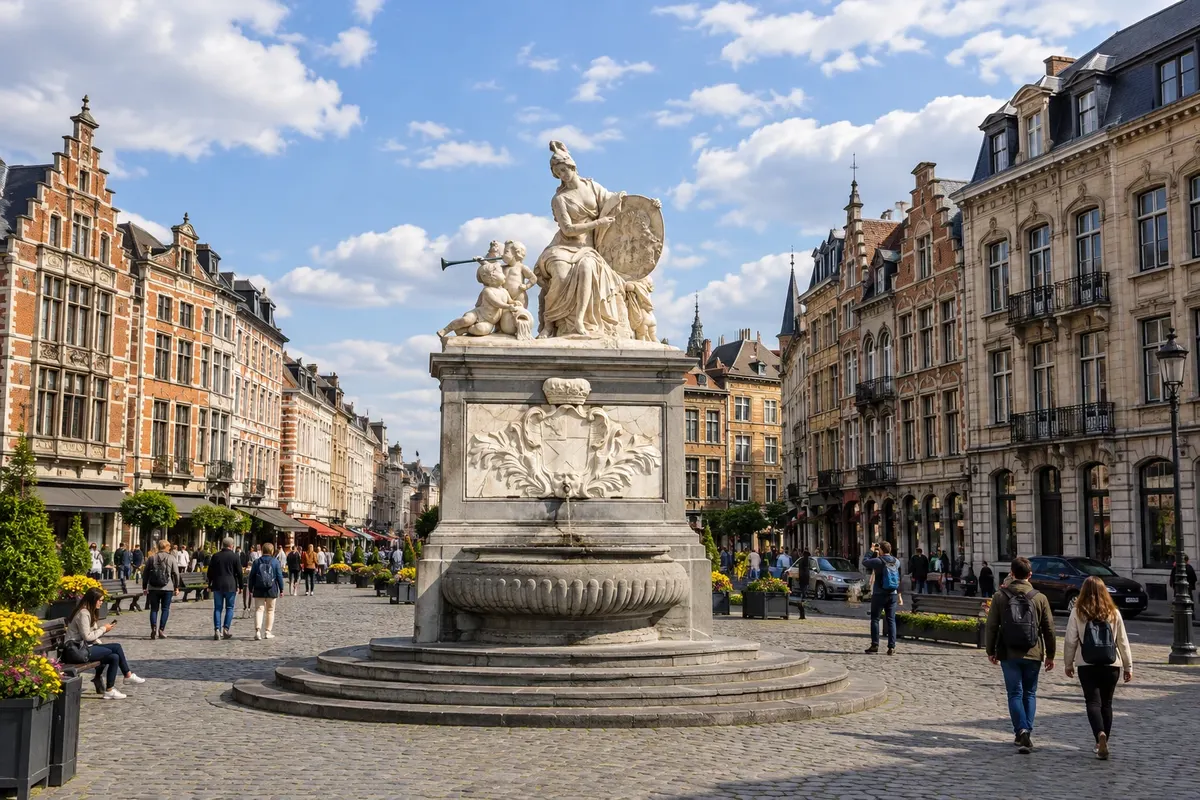
Na fotografiji: Place Royale de Bruxelas

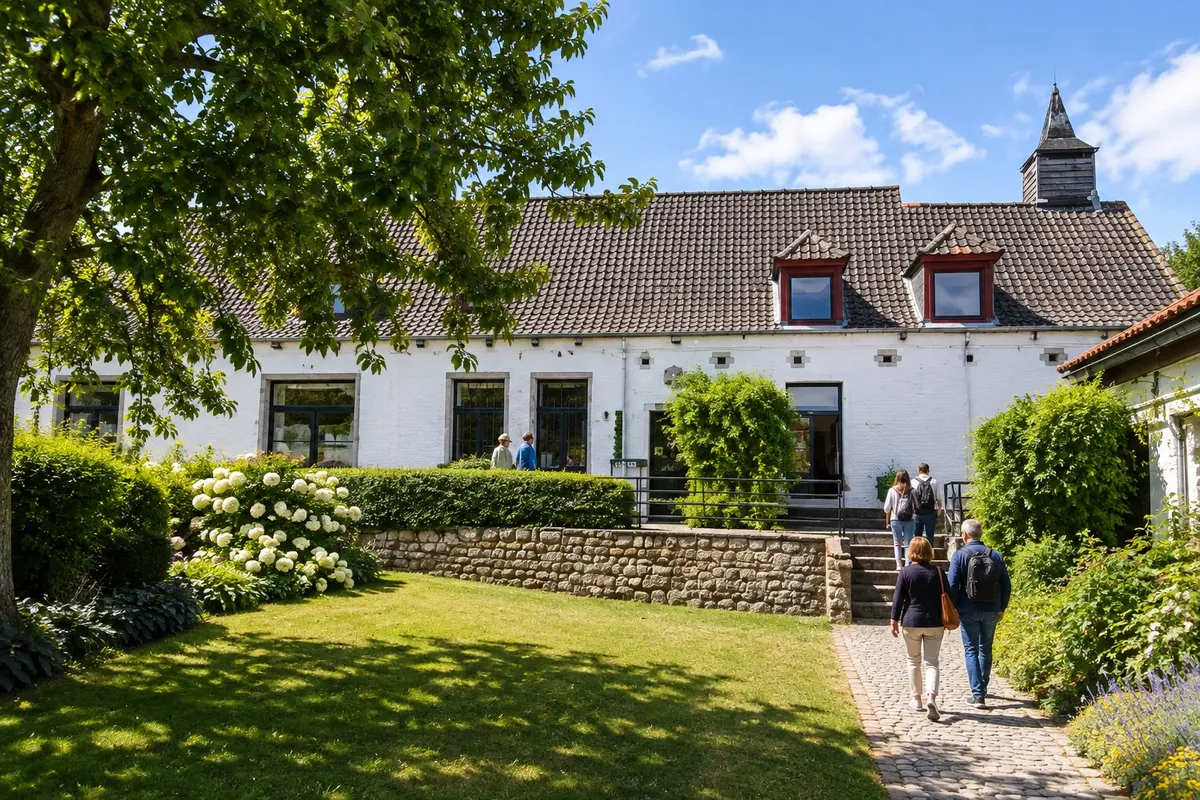
Illustrative images. The pictures in this guide are illustrations based on the real place, not photographs, and may differ from it.

Na voljo v trgovini Google Play Pošljite svoje fotografije

Spoznajte kraj

Pokrajina, ki jo doživite
v svojem ritmu.

Bruxelas is the capital of Belgium and host to the main institutions of the European Union. The city is officially bilingual: French and Flemish, the Dutch spoken in Belgium, are used, and street signs show both names. In practice, French dominates commerce and restaurants in the center, and English is widely spoken among European staff.

The old center revolves around the Grote Markt, the Grand-Place, surrounded by the Gothic town hall and the houses of the old guilds. A few blocks away are the Manneken Pis, the bronze statue that became a city symbol, and the Galeries Royales Saint-Hubert, 19th-century covered arcades with chocolate shops. On the upper side, the Mont des Arts leads to the Musées royaux des Beaux-Arts, home to the Museu Magritte, and the Cathédrale Saints-Michel-et-Gudule sits roughly between the two areas.

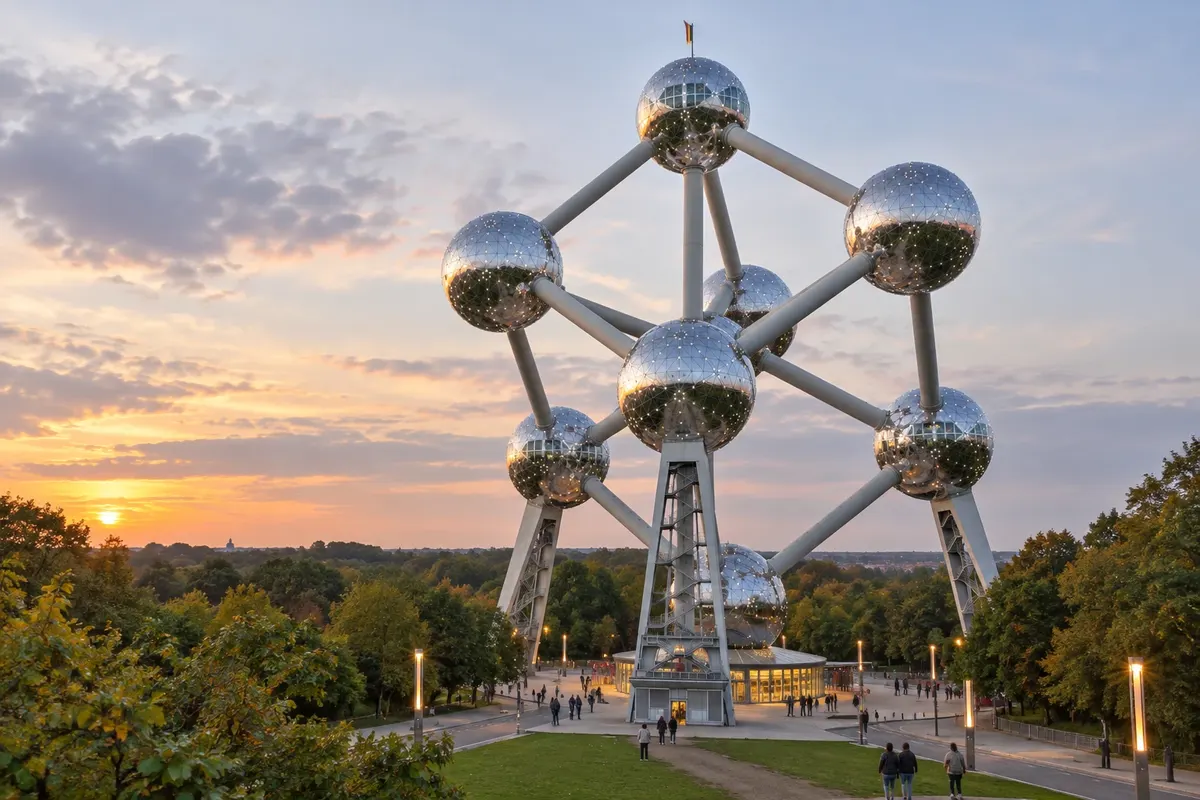
Outside the center are the Atomium, the nine-sphere structure built for the 1958 World Expo in the north of the city, and the Parc du Cinquantenaire, with its triumphal arch and museums, in the European quarter. Metro, tram and bus connect all of these within minutes.

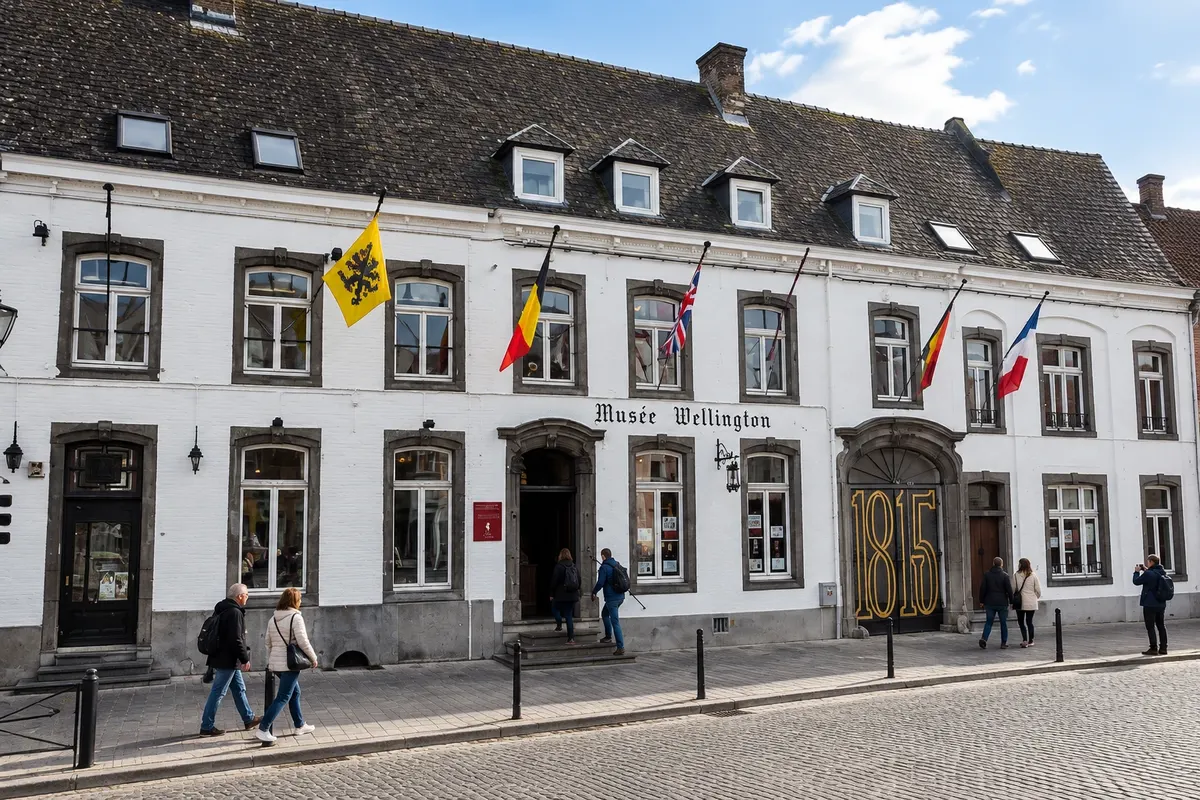
About 20 km to the south, already in Valônia where French is spoken, lies Waterloo. There, on 18 June 1815, Napoleon was defeated by Wellington's troops and the Prussians. The Musée Wellington occupies in the town center the old inn where the duke spent the night, and the battlefield includes the Mémorial 1815, the Butte du Lion and the Ferme d'Hougoumont. You can take a train and return to Bruxelas the same day.

This destination brings together 2 cities: Brussels, Waterloo.

Delite: WhatsApp
Delite svoja popotniška doživetja s fotografijami Pošljite fotografije vsakega kraja, ki ste ga obiskali. Največje število fotografij na kraj: 5.

Ena destinacija, več poti

Mesta na tej poti

Začnite v enem mestu ali v načrt poti vključite več mest.

Brussels – lega
WaterlooBruxelas

Obrisi: © NGI-IGN, AdminVector, CC BY 4.0. Priredba: Cidade Turismo.

Kako do tja:Brussels

✈ Brussels Airport (BRU), kraj: Zaventem· 12 km do cilja (Brussels)

Confirm before booking. From Brussels Airport, trains reach the center in under half an hour. High-speed trains from Eurostar, which absorbed the former Thalys, arrive at Bruxelles-Midi from Paris, London, Amsterdam and Köln.

Predlagana točka prihoda:Brussels

Praznovanja in dogodki

Praznovanja – vBrussels

Datumi se vsako leto spreminjajo. Pred potovanjem preverite letošnji datum.

Koledar praznovanj – in Belgija

Doživite kraj

Kaj početi – Brussels

Grand-Place
Brussels · Brussels · Trg

Grand-Place

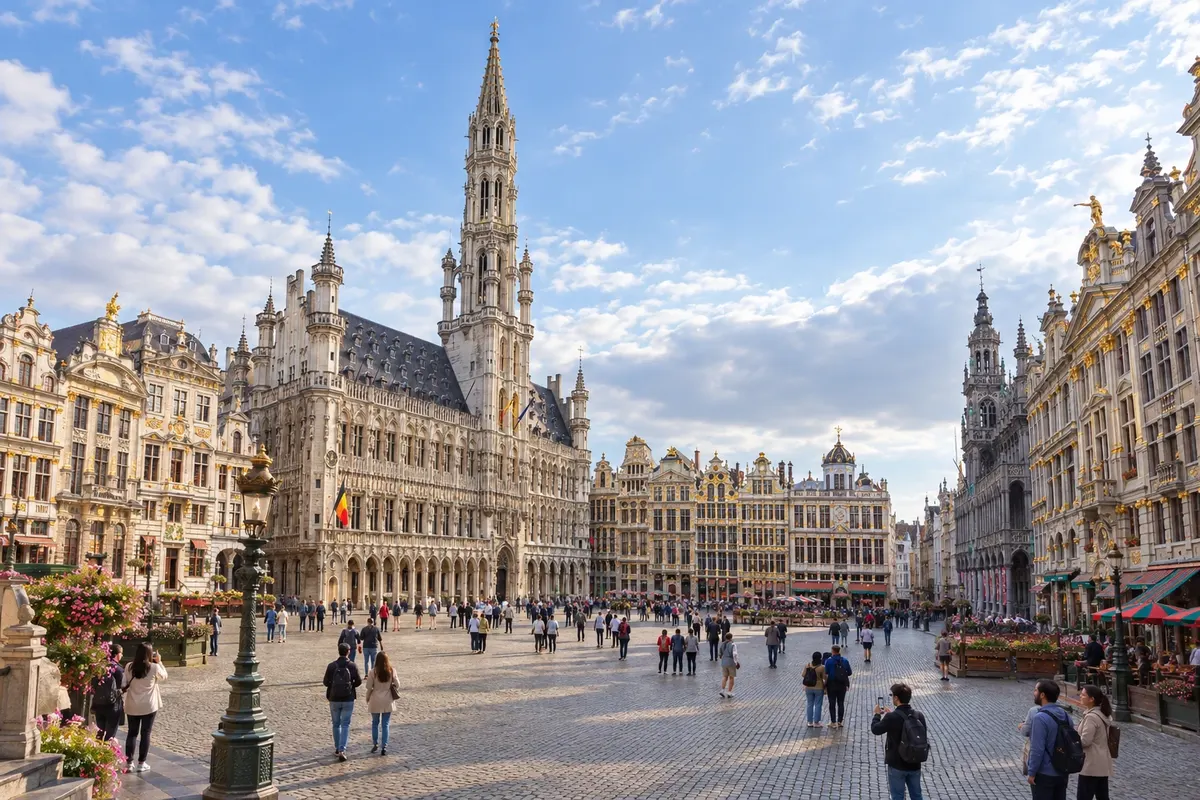
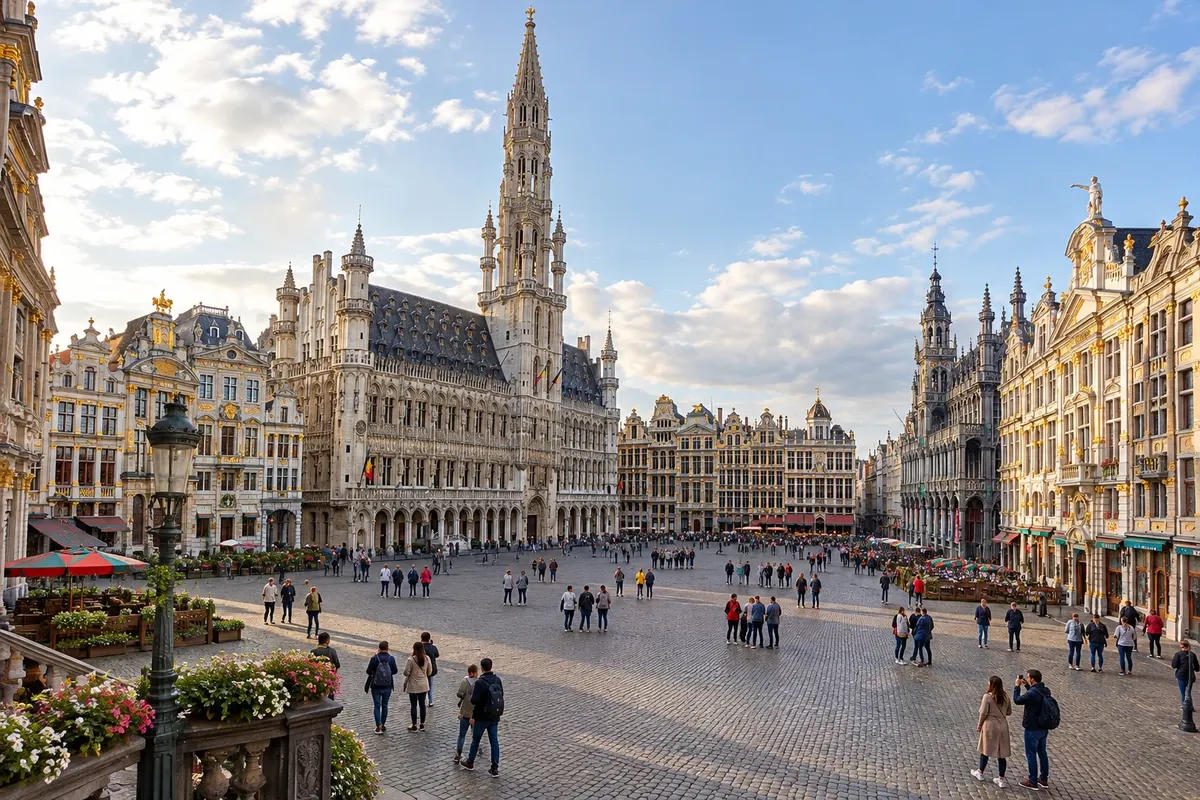
Bruxelas's central square, a UNESCO World Heritage site, with the Gothic town hall, the Maison du Roi and the gilded façades of the guild houses.

Wellington Museum
Waterloo · Walloon Brabant · Muzej

Wellington Museum

Museum in the former inn where the Duke of Wellington set up his headquarters and wrote the victory communiqué in June 1815, in the centre of Waterloo.

Manneken Pis
Brussels · Brussels · Monument

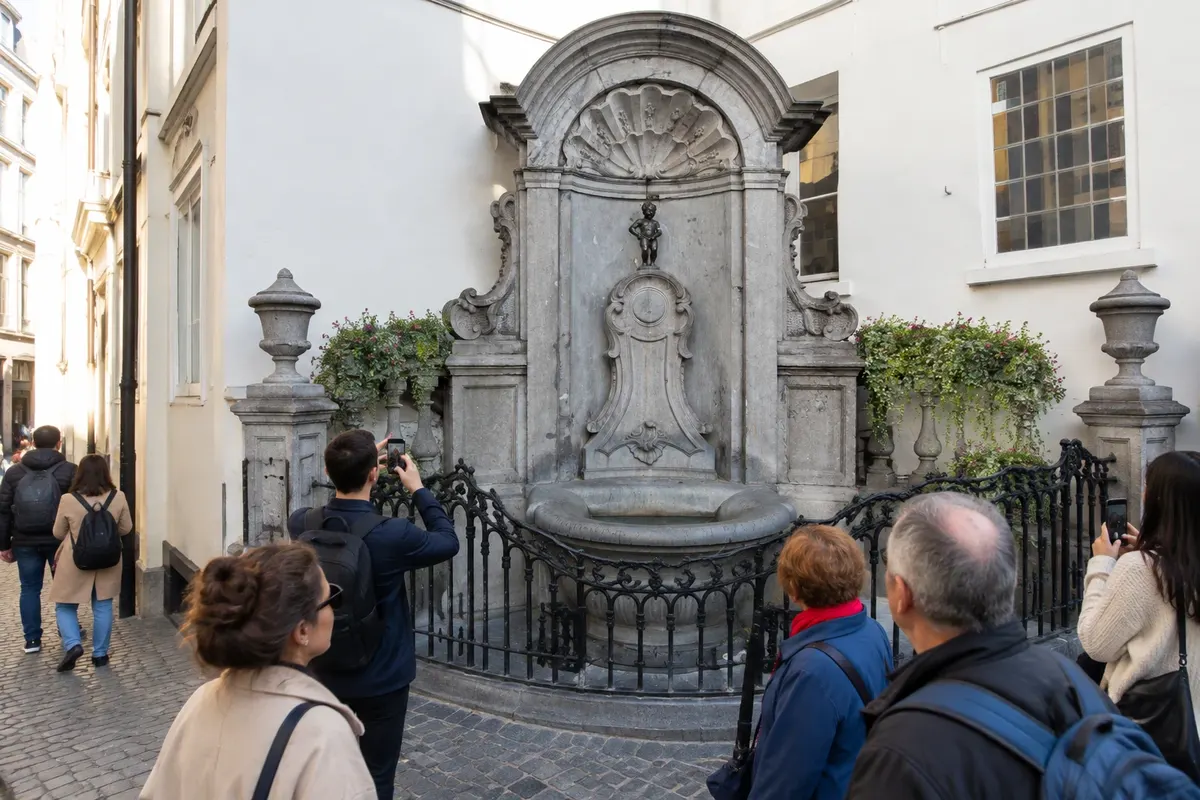
Manneken Pis

A small bronze statue of a boy urinating into a fountain, at a corner in the centre. It has a wardrobe of around a thousand costumes, displayed in a nearby museum.

1815 Memorial
Waterloo · Walloon Brabant · Muzej

1815 Memorial

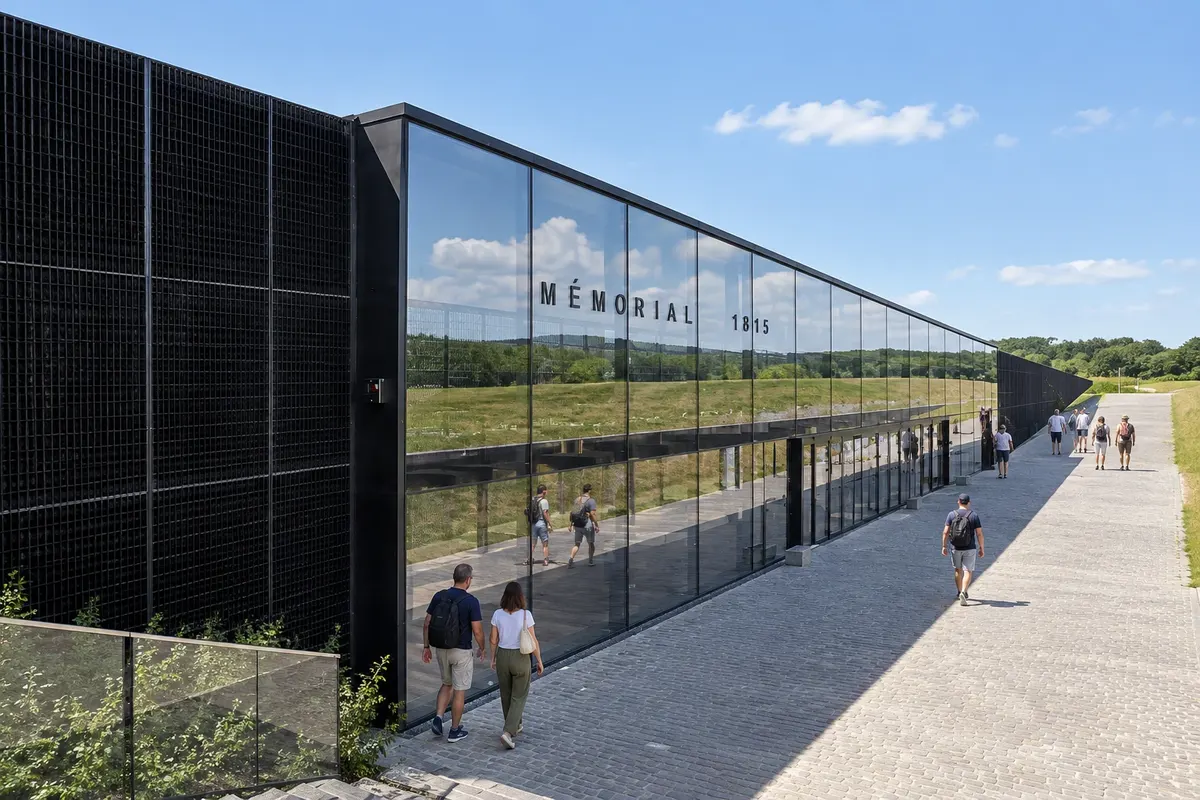
Museum on the Waterloo battlefield, at the foot of the Butte du Lion. It tells the story of the 1815 campaign with a 3D film, uniforms and animated maps, and provides access to the Panorama painted in 1912.

Brussels – prikaži dodatne kraje (18)
Butte du Lion
Waterloo · Walloon Brabant · Razgledišče

Butte du Lion

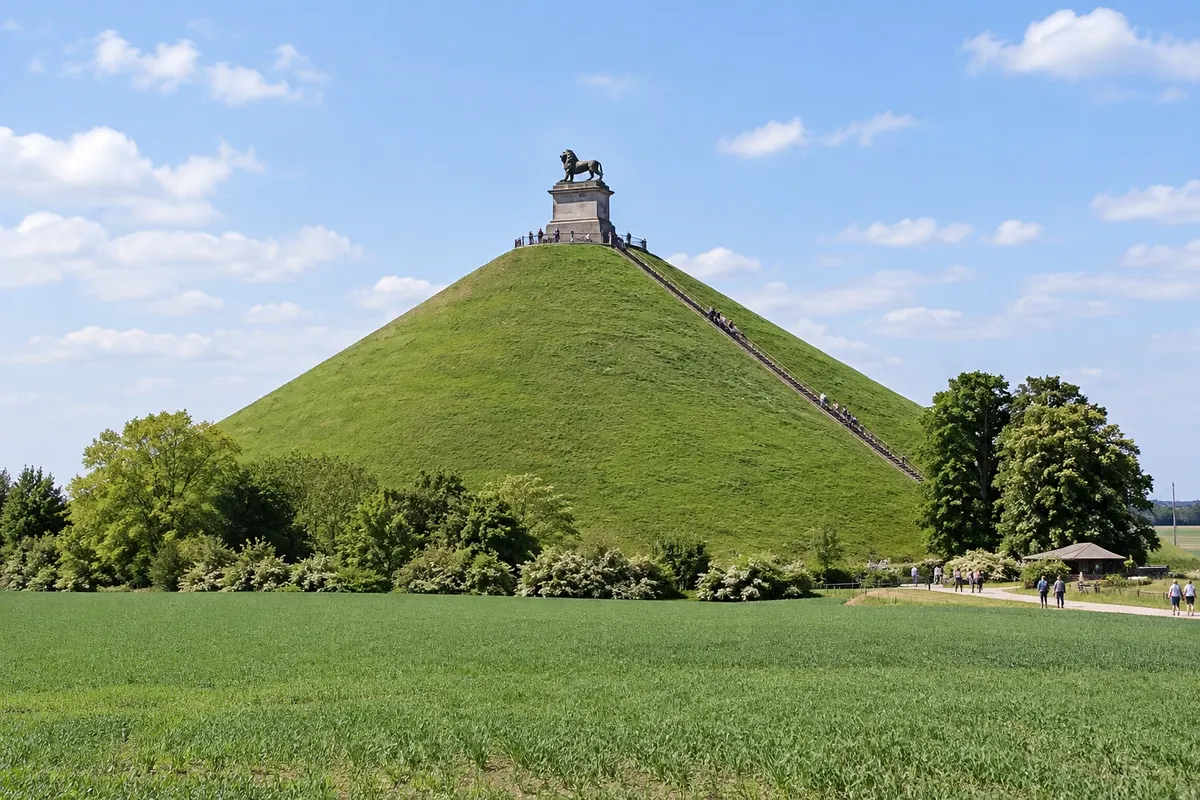
Artificial hill 43 metres high, with 226 steps, erected between 1823 and 1826 on the Waterloo battlefield. At the top, a cast-iron lion and a view over the whole battlefield.

Galeries Royales Saint-Hubert
Brussels · Brussels · Shopping arcade

Galeries Royales Saint-Hubert

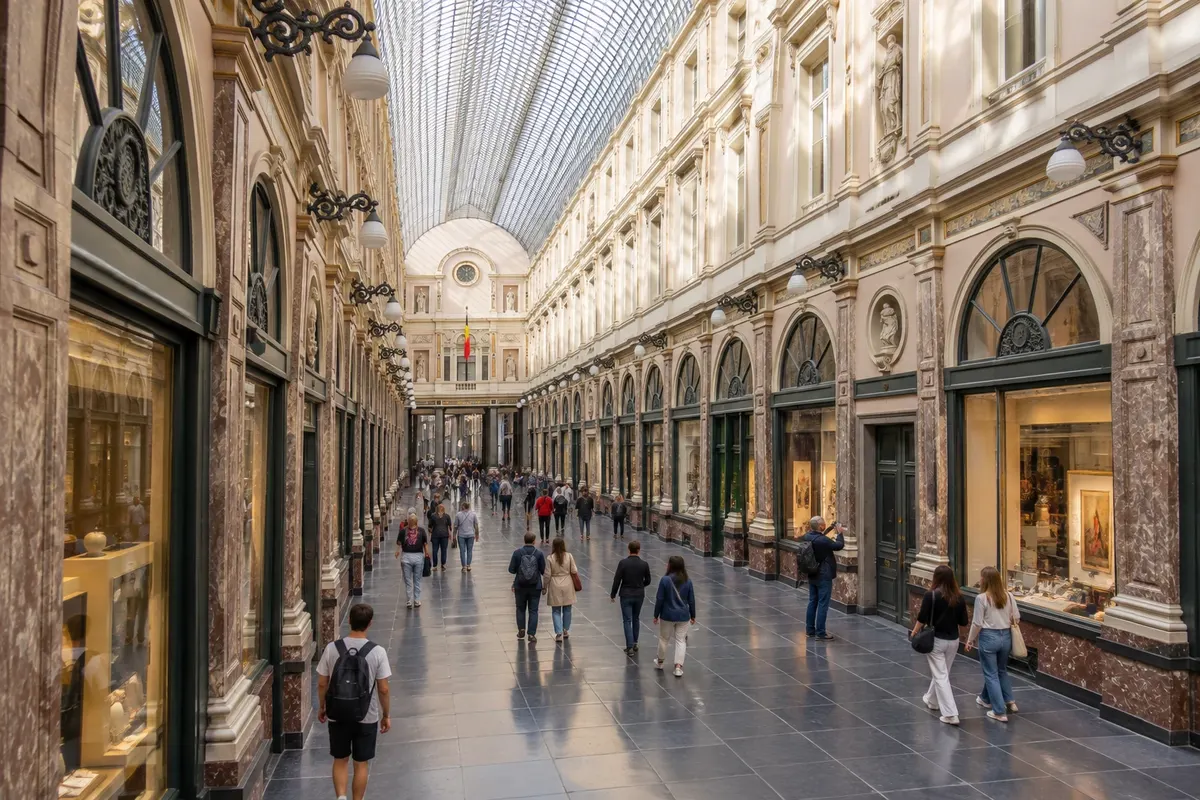
Passages covered by a glass roof, opened in 1847 next to the Grand-Place, with chocolatiers, bookstores, cafés, a theatre and a cinema.

Atomium
Brussels · Brussels · Monument

Atomium

A 102-metre structure built for the 1958 World's Fair, representing an iron crystal enlarged 165 billion times. It has exhibitions and a city view from the highest sphere.

Hougoumont Farm
Waterloo · Walloon Brabant · Monument

Hougoumont Farm

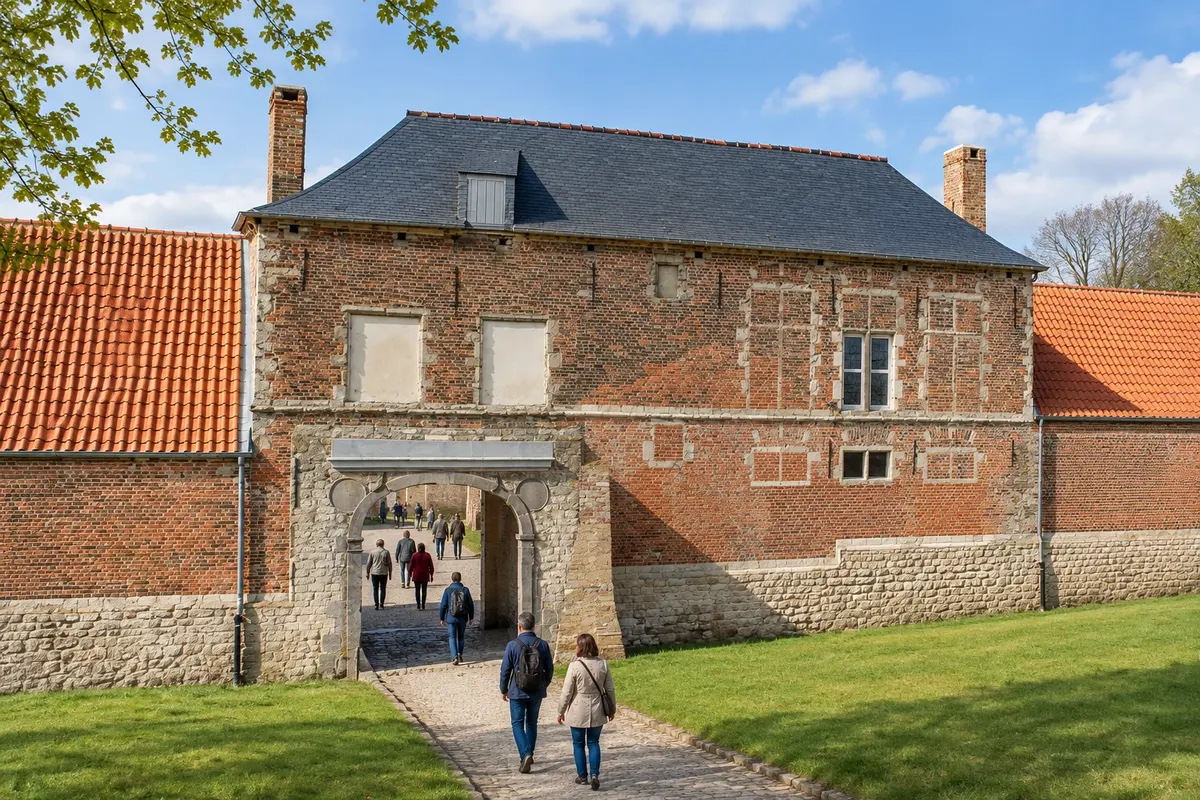
Fortified farm that the allies defended throughout the day of the Battle of Waterloo. Restored, it houses a museum with a multimedia show and a chapel that survived the fire.

Napoleon's Last Headquarters (Dernier Quartier Général de Napoléon)
Waterloo · Walloon Brabant · Muzej

Napoleon's Last Headquarters (Dernier Quartier Général de Napoléon)

Museum at the Ferme du Caillou in Vieux-Genappe, where Napoleon spent the night of 17–18 June 1815 and planned the Battle of Waterloo. It houses the emperor's campaign bed.

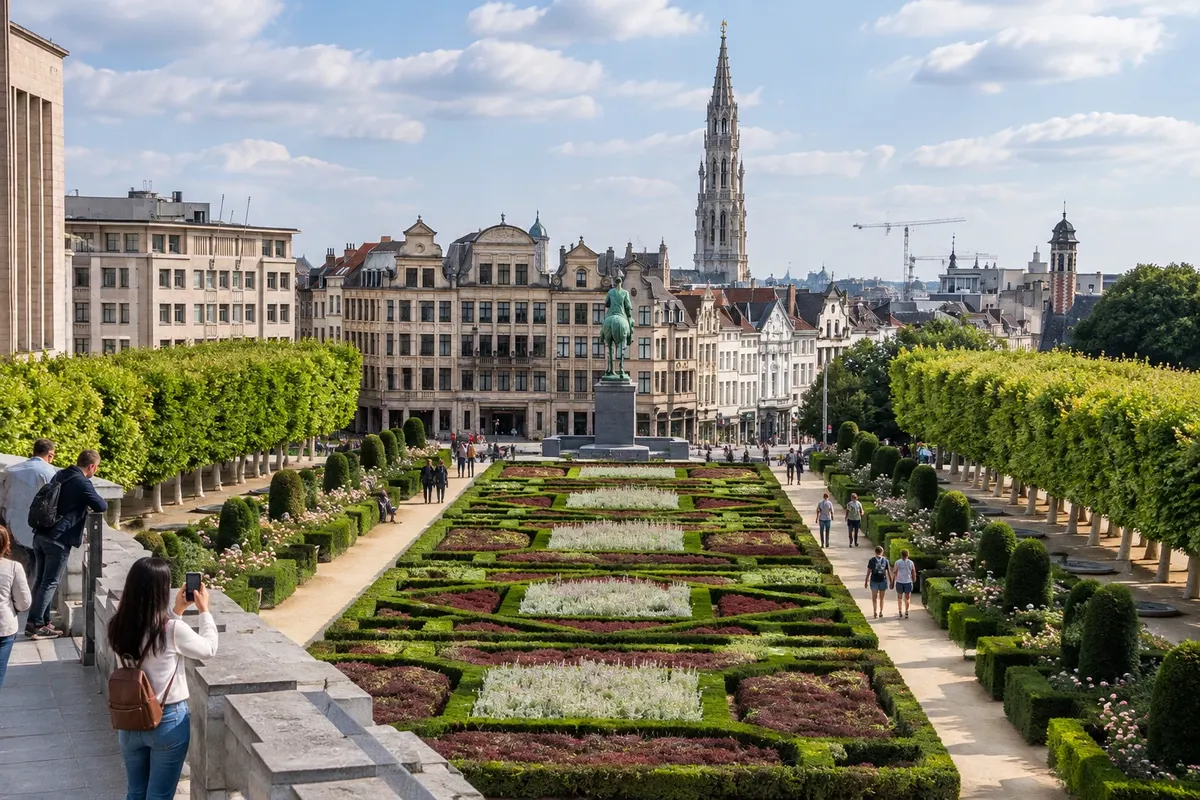
Mont des Arts
Brussels · Brussels · Razgledišče

Mont des Arts

Terraced garden between the lower town and the Place Royale, with a view of the town hall tower. It houses the Biblioteca Real and is next to the fine arts museums.

Ferme de Mont-Saint-Jean
Waterloo · Walloon Brabant · Muzej

Ferme de Mont-Saint-Jean

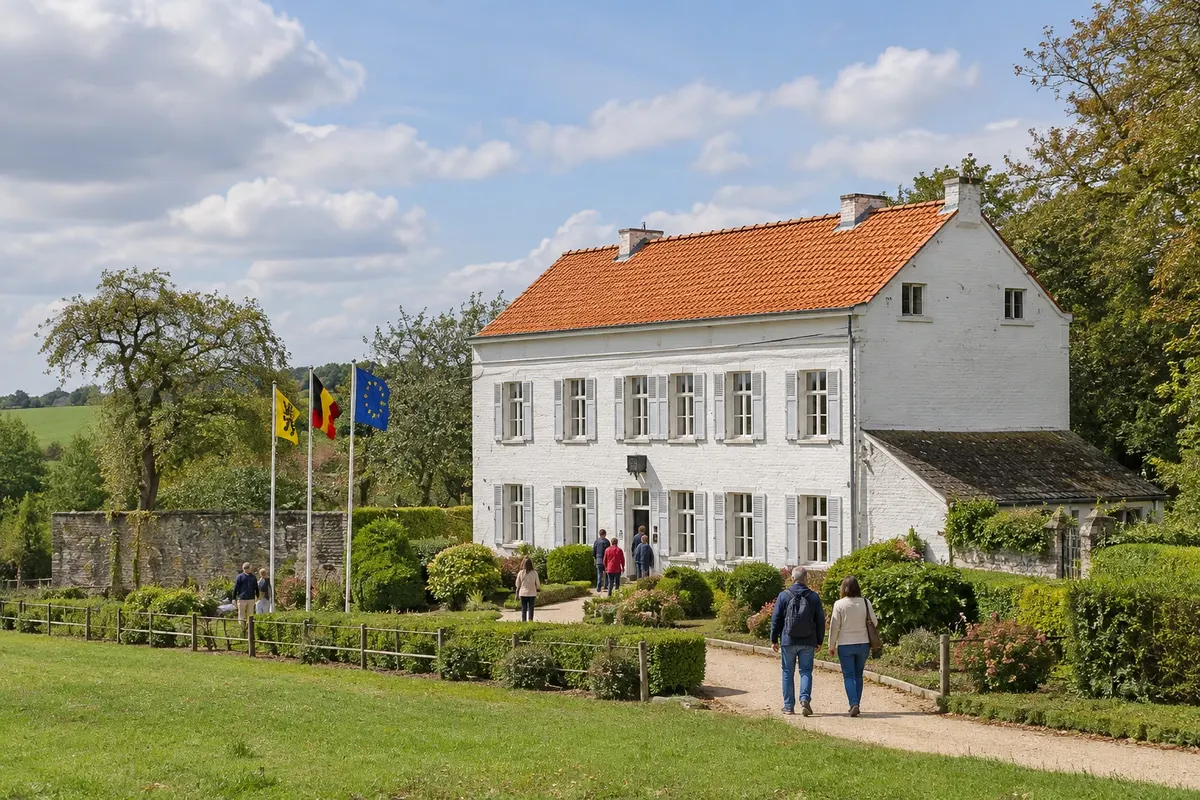
Farm that served as a British field hospital during the Battle of Waterloo, treating around 6,000 wounded. It features a museum on wartime surgery, a microbrewery and a distillery.

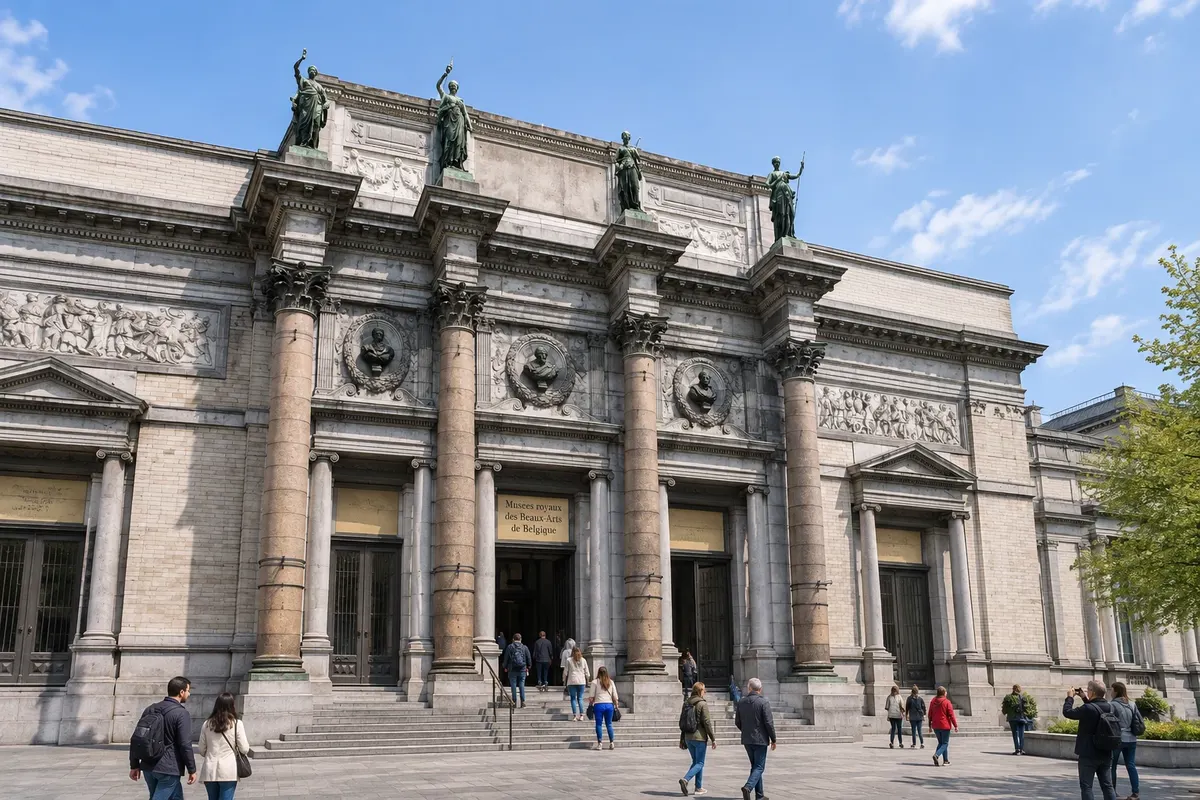
Royal Museums of Fine Arts of Belgium
Brussels · Brussels · Muzej

Royal Museums of Fine Arts of Belgium

A group of art museums near the Place Royale. It brings together the Museu Magritte, with about 200 works by the surrealist painter, and the Museu dos Mestres Antigos, featuring Bruegel, Rubens and Bosch.

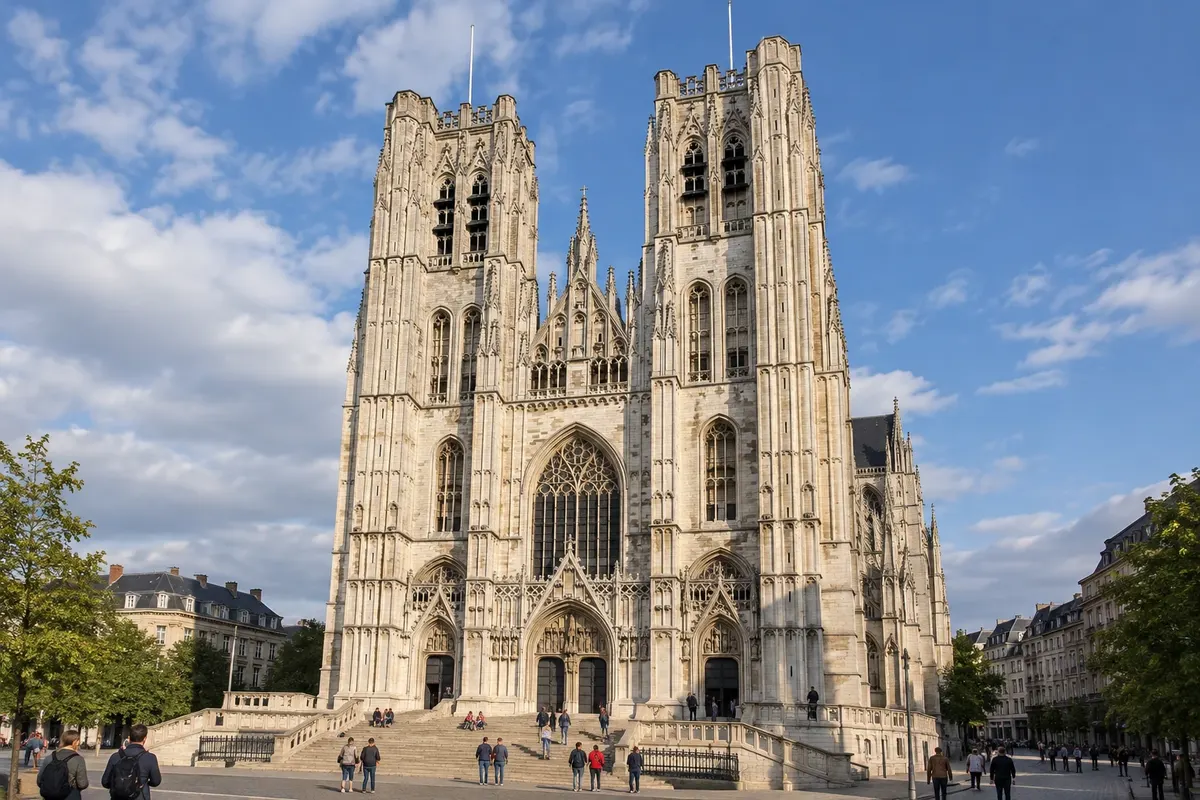
Cathedral of St. Michael and St. Gudula
Brussels · Brussels · Cerkev

Cathedral of St. Michael and St. Gudula

Gothic cathedral of Brussels, built between the 13th and 16th centuries, with two towers of about 64 metres and Renaissance stained glass. It hosts royal weddings and state ceremonies.

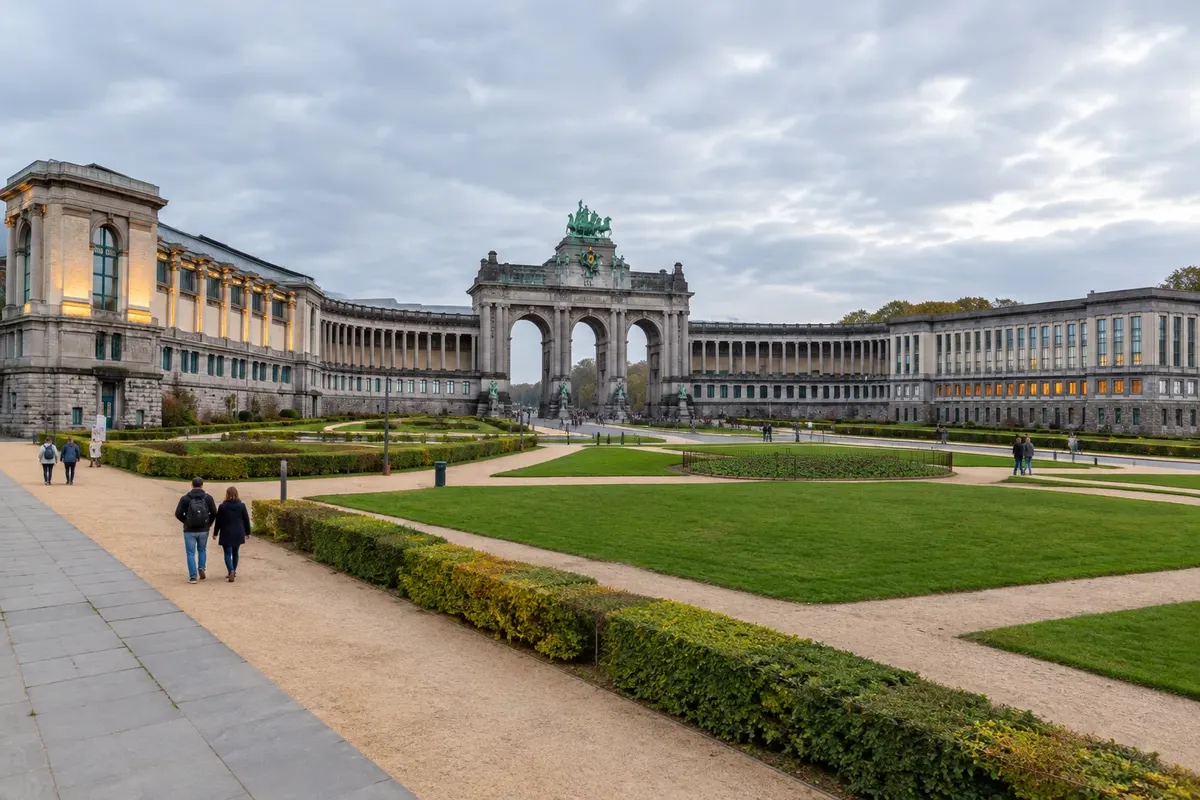
Parc du Cinquantenaire
Brussels · Brussels · Park

Parc du Cinquantenaire

European Quarter park with a 45-metre triumphal arch, built to commemorate the 50th anniversary of Belgian independence. It houses the Museu de Arte e História and Autoworld.

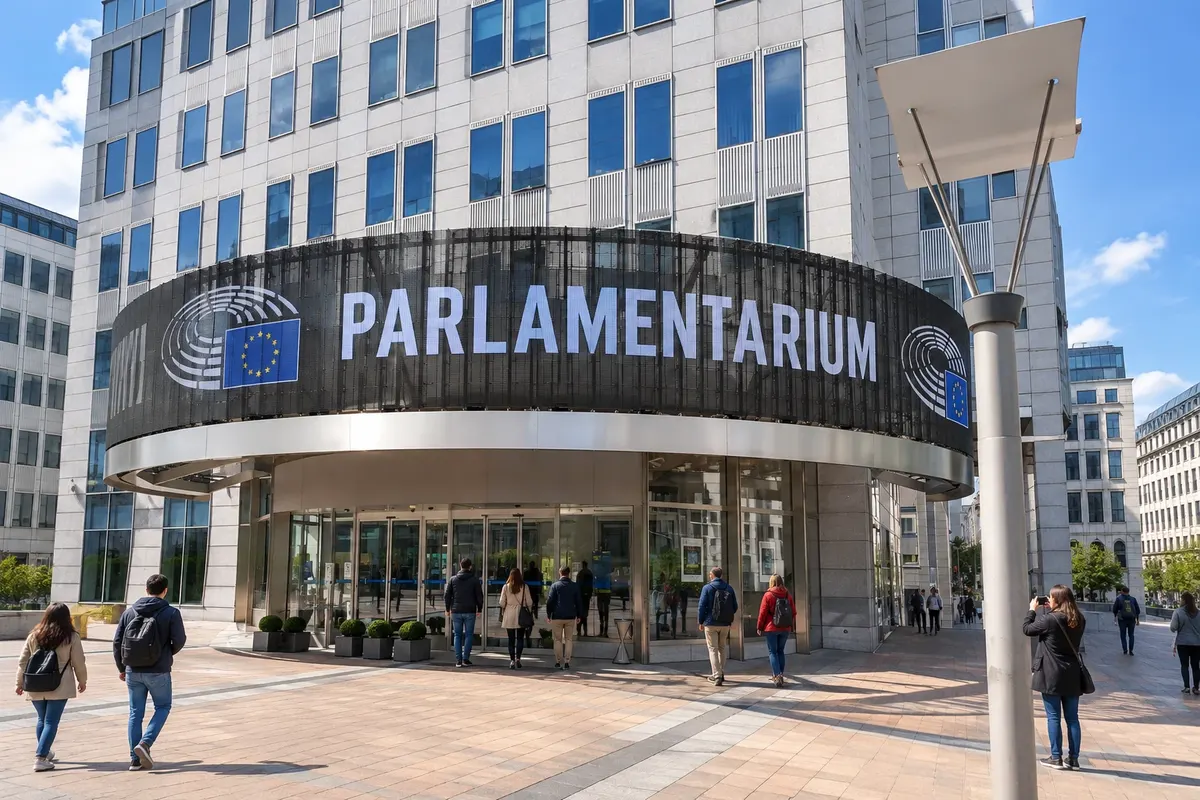
Parlamentarium
Brussels · Brussels · Muzej

Parlamentarium

Visitors' centre of the European Parliament, in the European Quarter. It explains with displays, films and a multimedia guide in 24 languages how the Parliament and the European Union work.

Grand Sablon (Place du Grand Sablon)
Brussels · Brussels · Trg

Grand Sablon (Place du Grand Sablon)

Square in the Sablon neighborhood, on the upper part, with antique shops, chocolatiers and cafés. At the top stands the Gothic church of Notre-Dame du Sablon and, behind it, the garden of Petit Sablon.

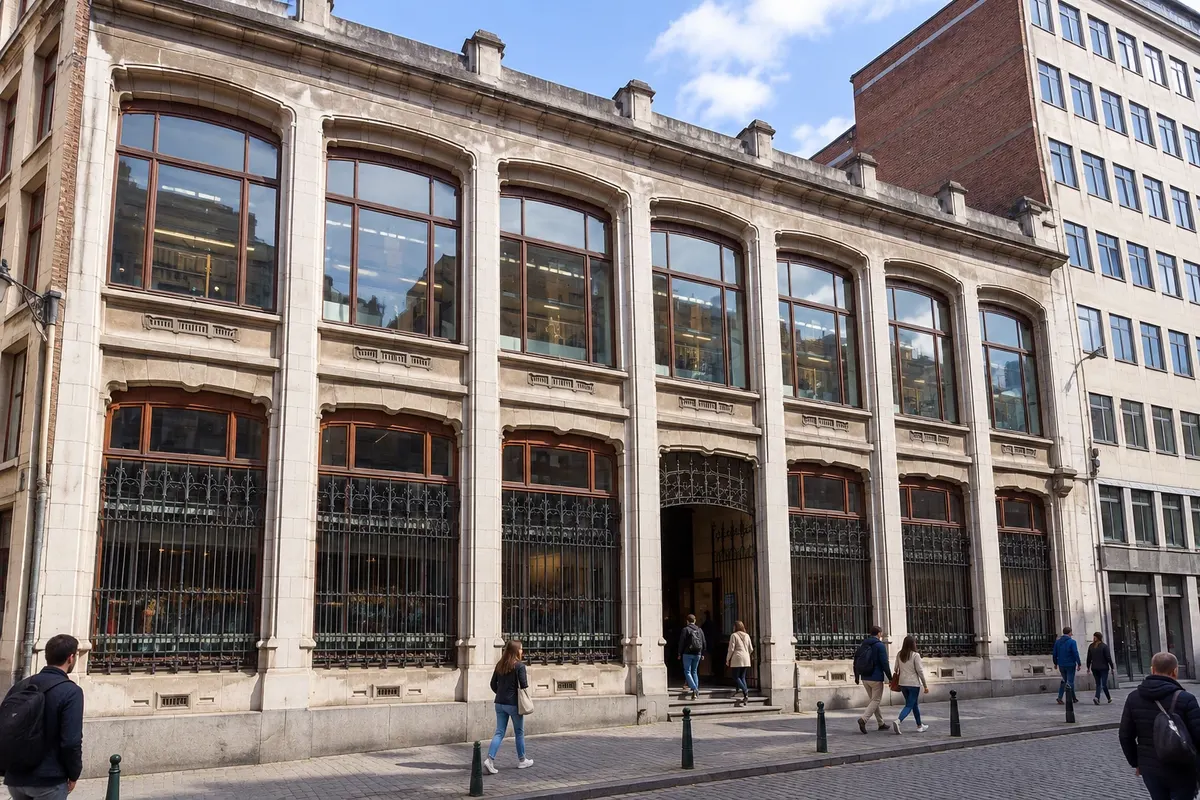
Belgian Comic Strip Center
Brussels · Brussels · Muzej

Belgian Comic Strip Center

Museum of Belgian comics, in a former Art Nouveau fabric shop designed by Victor Horta. It tells the story of the ninth art, from Tintin to the Smurfs, with original comic pages.

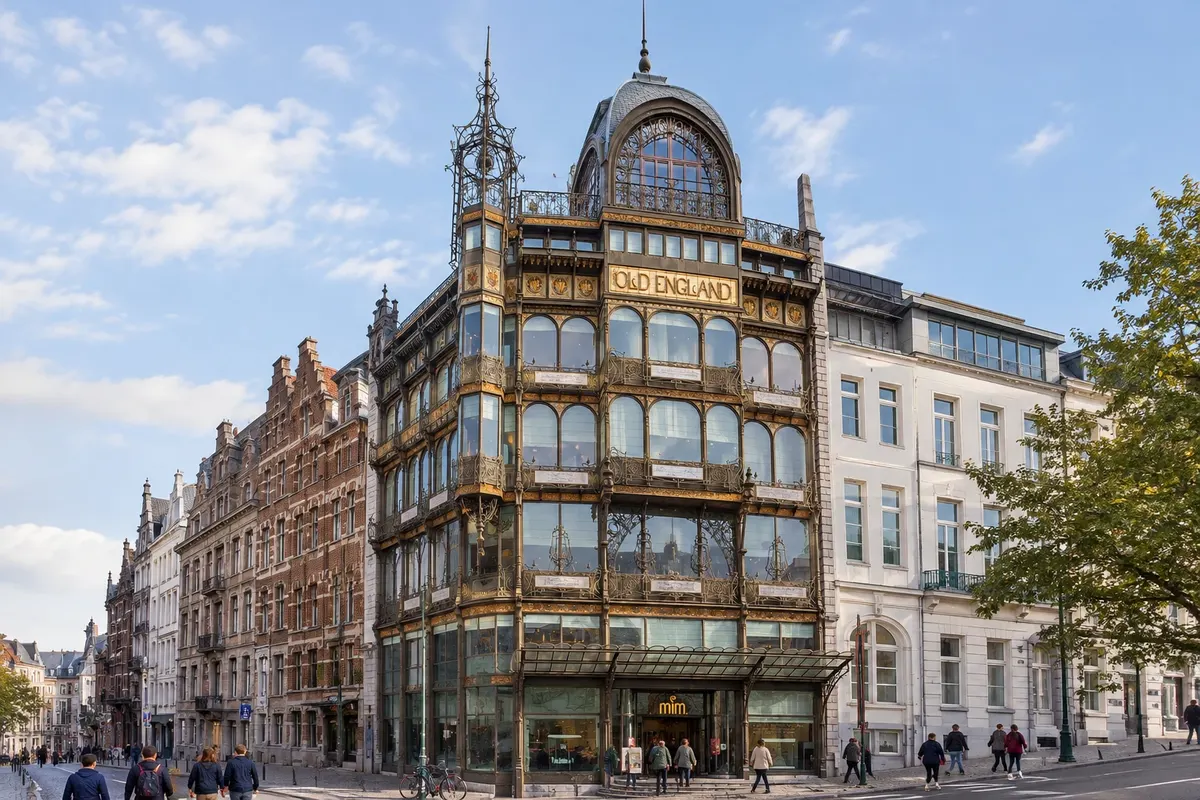
MIM - Musical Instruments Museum
Brussels · Brussels · Muzej

MIM - Musical Instruments Museum

Museum of musical instruments, housed in the Art Nouveau building of the former Old England department store, near Place Royale. It displays about 1,200 instruments, which visitors listen to with headphones in front of the display cases.

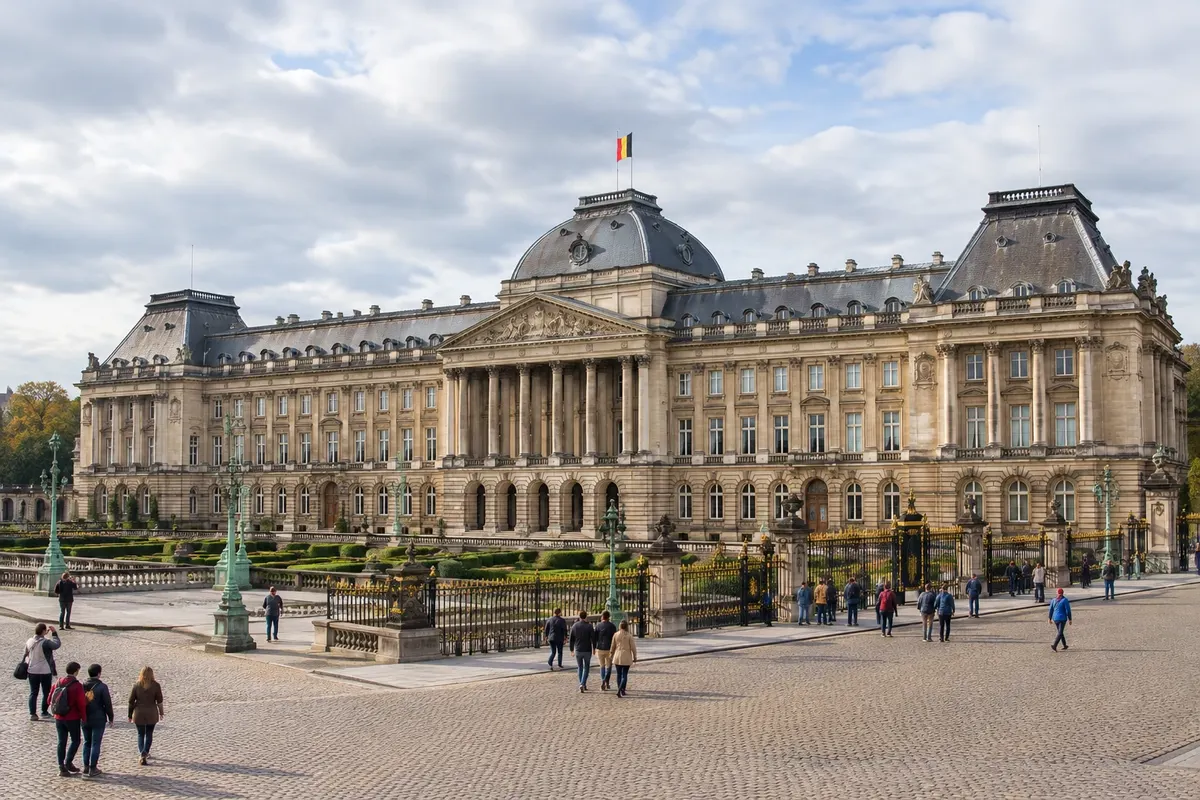
Royal Palace of Brussels (Palais Royal de Bruxelles)
Brussels · Brussels · Palace

Royal Palace of Brussels (Palais Royal de Bruxelles)

Official palace of the King of the Belgians, facing Parc de Bruxelles. It is open to the public only in summer, featuring the reception rooms and the ceiling of the Hall of Mirrors covered in beetle elytra.

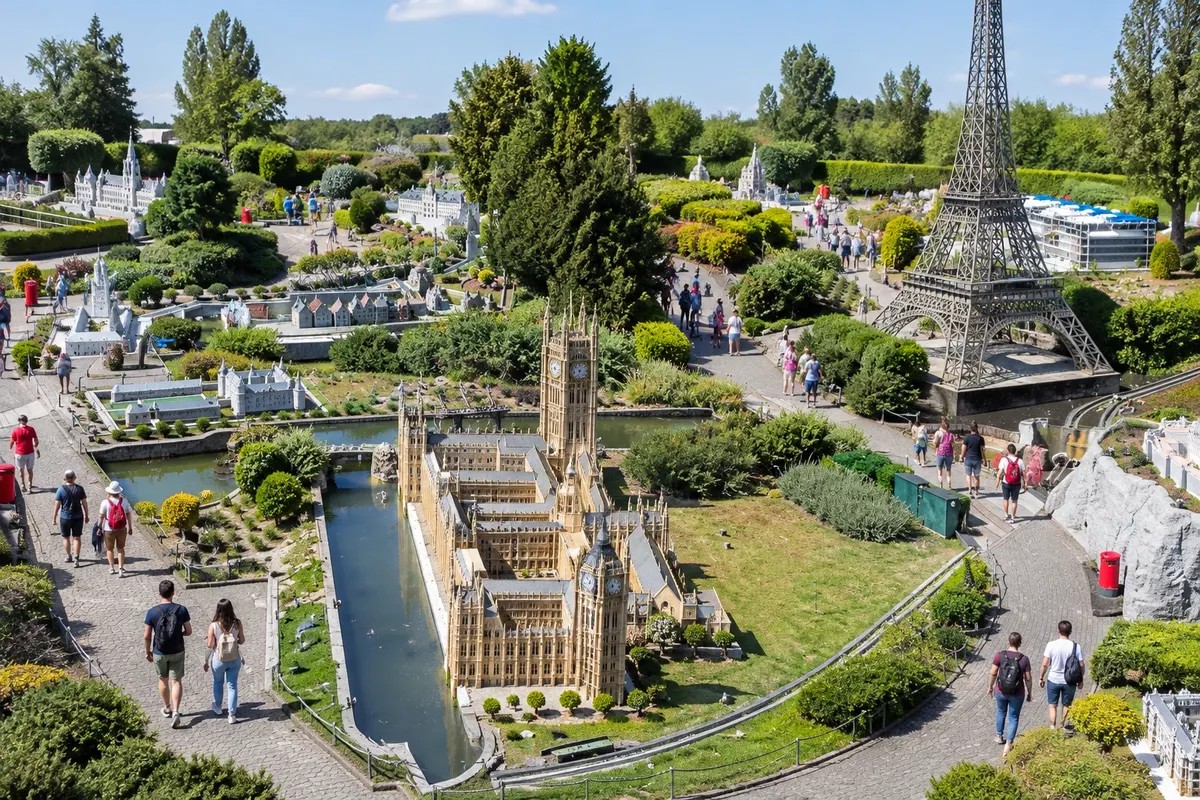
Mini-Europe
Brussels · Brussels · Theme park

Mini-Europe

A miniature park at the foot of the Atomium, featuring monuments from European countries at a 1:25 scale, such as the Eiffel Tower, Big Ben and the Grand-Place itself, plus animated scenes.

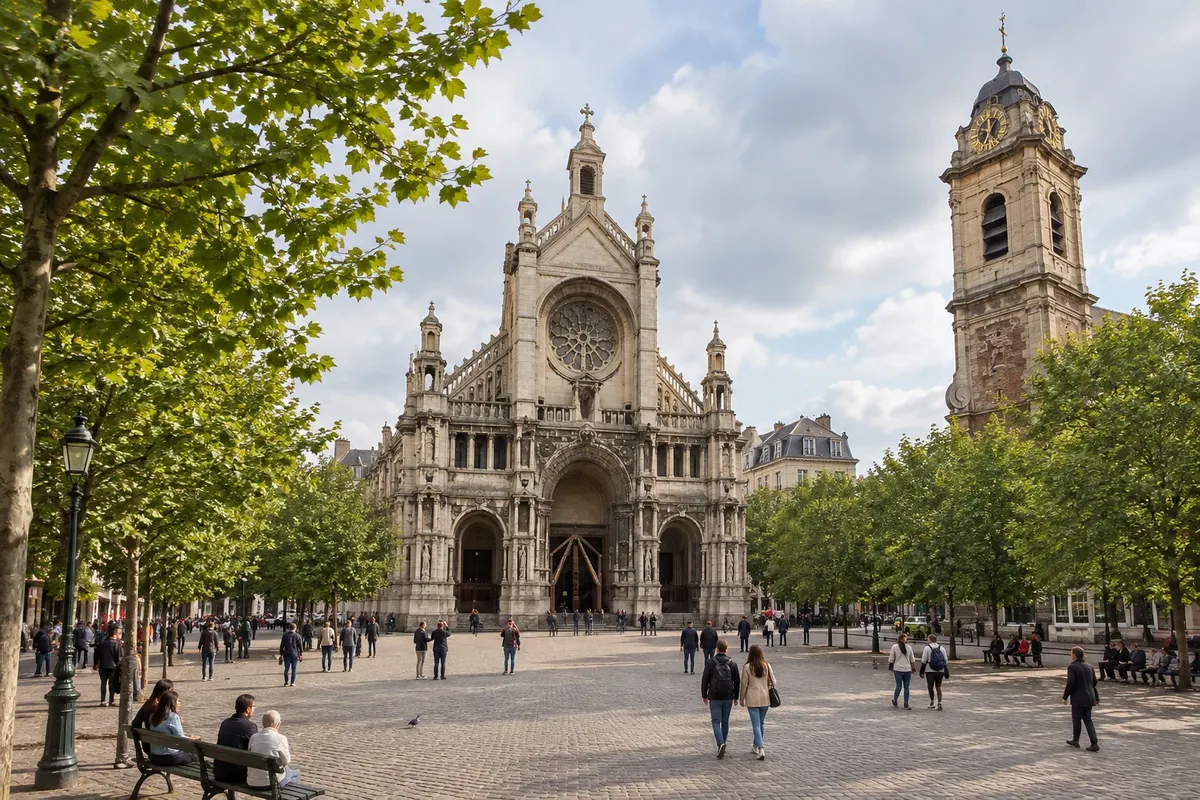
Place Sainte-Catherine
Brussels · Brussels · Neighborhood

Place Sainte-Catherine

Square and neighborhood of Brussels' old port, a few minutes from the Grand-Place. It includes the church of Sainte-Catherine, the Tour Noire and the fish and seafood restaurants of the former quays.

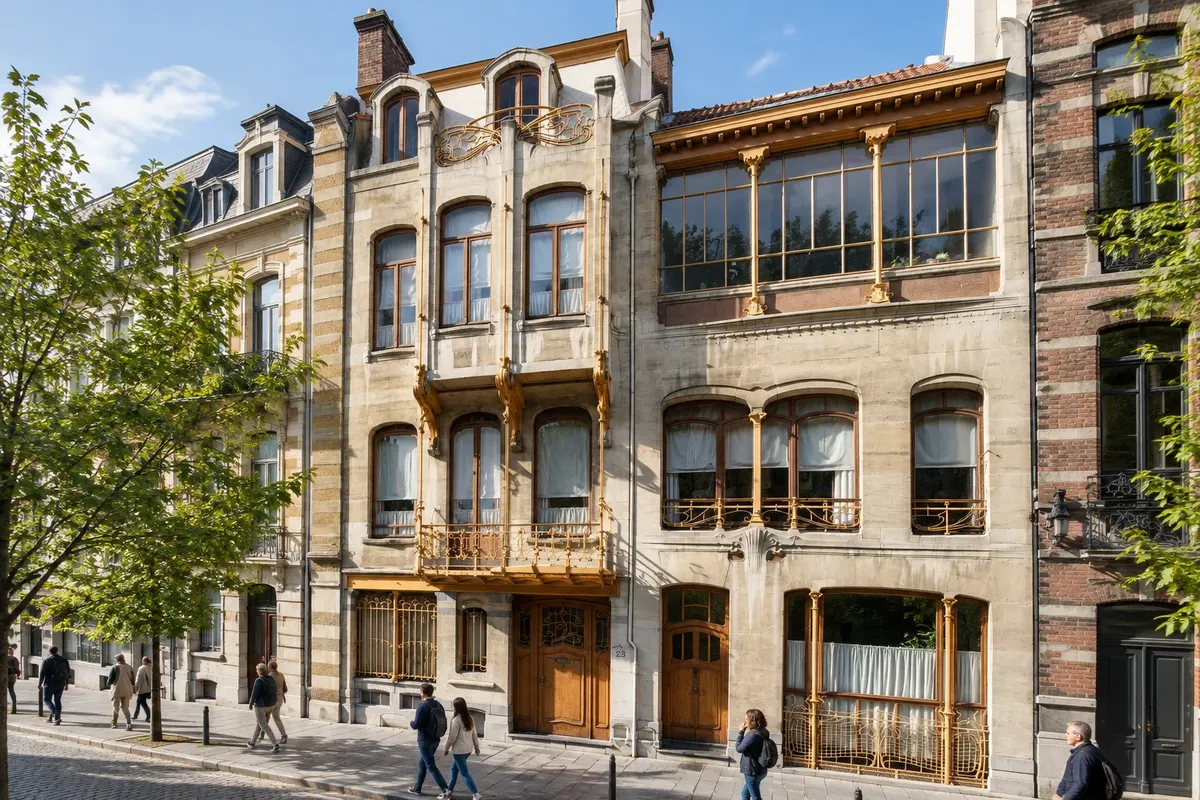
Horta Museum (Musée Horta)
Brussels · Brussels · Muzej

Horta Museum (Musée Horta)

House and studio of architect Victor Horta, in Saint-Gilles, built between 1898 and 1901. A UNESCO World Heritage Site, it shows Art Nouveau inside: iron staircase, stained glass, and the architect's furniture.

Kaj izbrati pred odhodom

Izleti – Brussels

Izhodišče, trajanje, potek, vključene storitve in okvirna cena vsakega izleta.

Grand-Place (Grote Markt) and Hôtel de Ville

Odhod: Central Brussels On foot, from Bruxelles-Central station Približno 2 uri Dopoldne Lahko

The Grand-Place (Grote Markt in Flemish) is Brussels’ central square and a UNESCO World Heritage site. On one side stands the Hôtel de Ville (city hall), in Gothic style, with the tower overlooking the square. On the other is the Maison du Roi (Broodhuis), which houses the Musée de la Ville de Bruxelles, where the original Manneken-Pis is kept. Around the square, the former guild houses were rebuilt at the end of the 17th century, with façades full of gilding and sculptures. The city hall can be visited inside with an audio guide, following a route through a monumental staircase and historic halls. On weekends there is a panoramic guided tour that goes through the Wedding Hall, the Gothic Hall, the balcony over the square and up the tower’s spiral staircase. It’s worth returning to the square at night, when the façades are illuminated.

Kraji na poti: Grand-Place, Hôtel de Ville de Bruxelles, Maison du Roi, Musée de la Ville de Bruxelles.

Vključuje: Walking around the square is free. The visit to the town hall and the city museum have admission fees, paid separately; the tower visit is guided and has its own ticket. Check the current price table.

Nasvet: The town hall’s video guide is available in Spanish, English and French, but not in Portuguese. The town hall is not open for visits every day: check the opening days beforehand. The climb to the tower requires good physical fitness.

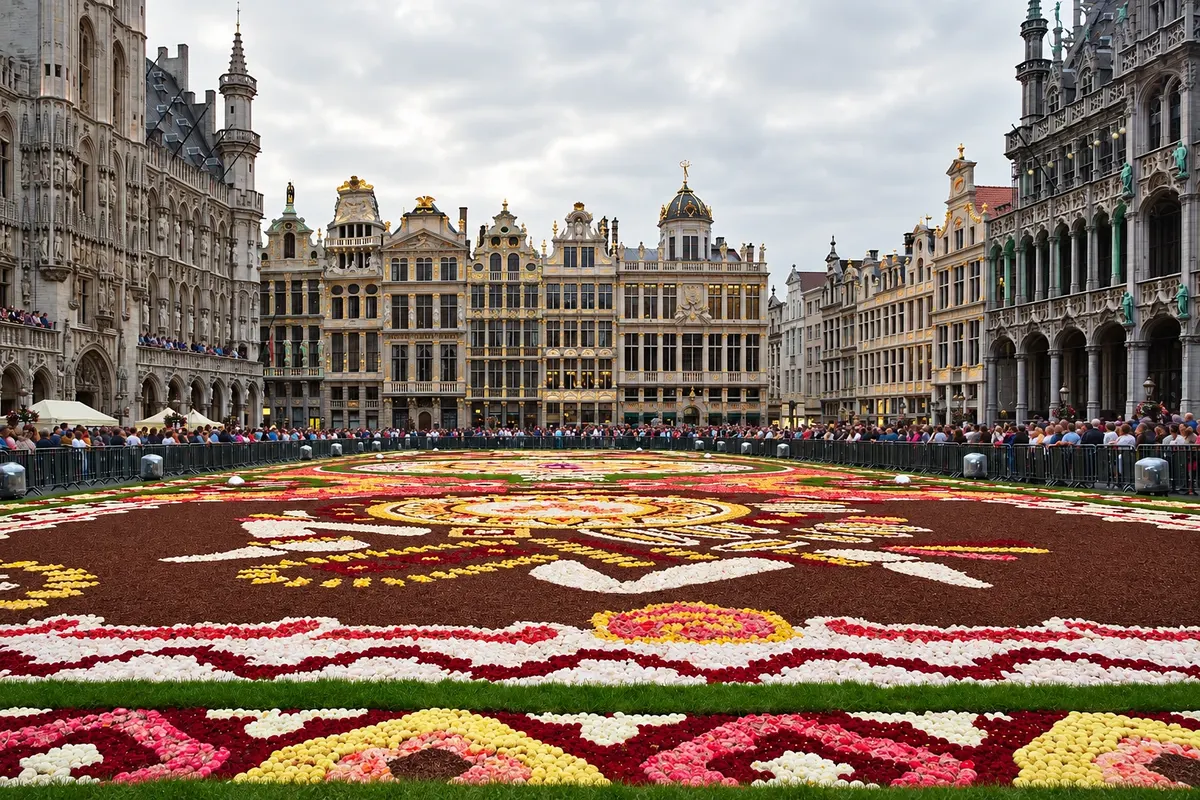
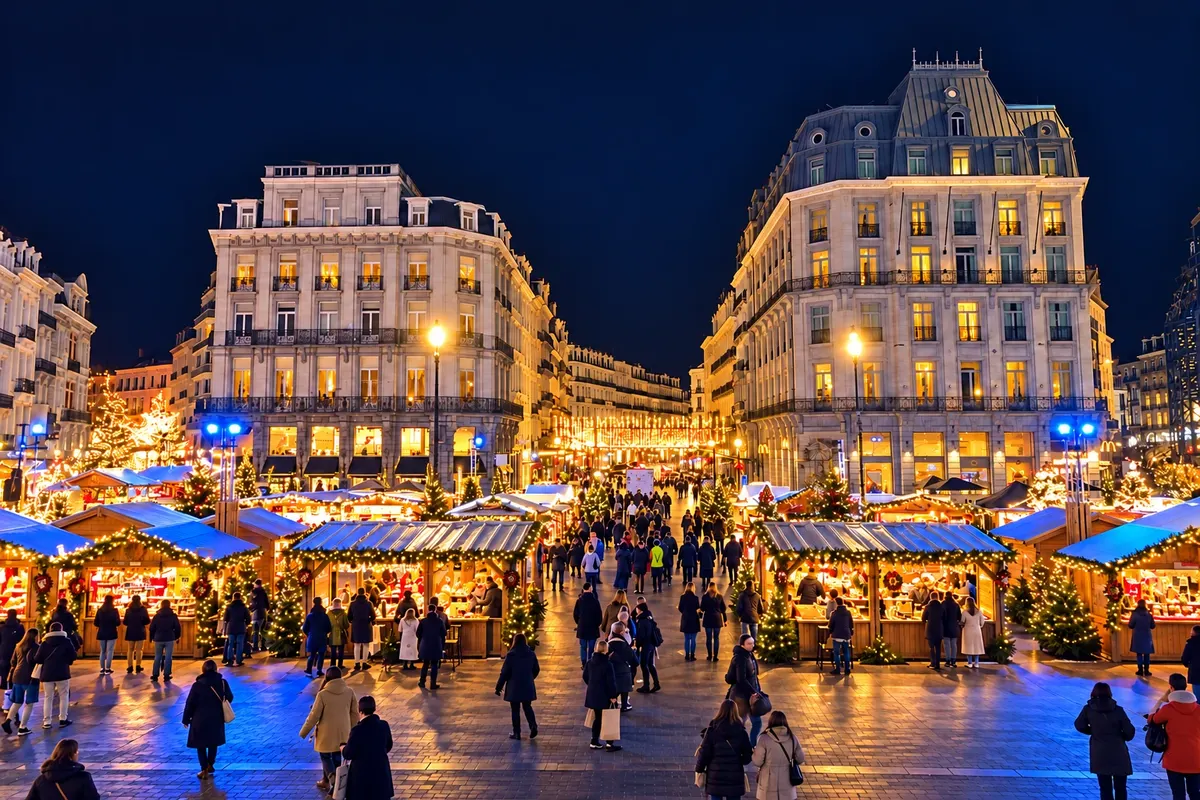
Najboljši čas za obisk: All year. In mid-August of even-numbered years, the square hosts the Flower Carpet; from late November to early January, the lights and the Christmas market.

Manneken-Pis, Jeanneke-Pis and Galeries Royales Saint-Hubert

Odhod: Grand-Place, Brussels Peš Približno 2 uri Popoldne Lahko

The Manneken-Pis is a few blocks from the Grand-Place. The bronze statuette of the boy who urinates in the fountain was made by Jérôme Duquesnoy in 1619; the piece on the corner is a copy, and the original is in the city museum. The boy has a wardrobe of around one thousand costumes, which come out onto the streets on special dates; some are displayed at the GardeRobe MannekenPis on Rue du Chêne. The Jeanneke-Pis, the “sister,” is a 50 cm statue from 1987, at the end of Impasse de la Fidélité, an alley near Rue des Bouchers. From there you reach the Galeries Royales Saint-Hubert, covered galleries with a glass roof opened in 1847 and consisting of the Galerie du Roi, the Galerie de la Reine and the Galerie des Princes. They house traditional chocolatiers, bookstores, cafés, a theater and a cinema.

Kraji na poti: Manneken-Pis, GardeRobe MannekenPis, Jeanneke-Pis, Galeries Royales Saint-Hubert, Galerie de la Reine.

Vključuje: The statues and the galleries are outdoors. The GardeRobe MannekenPis is included with the city museum ticket, which is paid separately. Check the current schedule/pricing table.

Nasvet: The Manneken-Pis is small and often attracts a crowd in front of it: arrive early to photograph it calmly. In the galleries, the city’s oldest chocolatiers have window displays worth stopping for even if you don’t buy anything.

Najboljši čas za obisk: All year. The covered galleries are a good option on rainy days, which are frequent from October to January.

Mont des Arts, Musées royaux des Beaux-Arts (Oldmasters and Magritte) and MIM

Odhod: Central Brussels On foot, from Bruxelles-Central station Približno 5 ur Ves dan easy (ascent via stairs and ramps)

Mont des Arts is the terraced garden that links the lower town around the Grand-Place with the upper town of the Royal Quarter. From the top you get a view of the center, with the town hall tower in the background. There you’ll find the KBR Museum of the Royal Library, with manuscripts from the time of the Dukes of Burgundy, and the Musées royaux des Beaux-Arts de Belgique. The Musée Oldmasters houses European painters from the 15th to the 18th centuries, with emphasis on the Flemish: Rogier van der Weyden, Pieter Bruegel, Jacob Jordaens and a room with more than twenty works by Rubens. Next door, the Musée Magritte brings together about 230 works and documents by the Belgian surrealist painter René Magritte. A few steps away, the MIM (Musical Instruments Museum) occupies the former Old England department store, with an art nouveau facade, about 1,200 instruments on display and a restaurant on the top floor with a view over the city.

Kraji na poti: Mont des Arts, KBR Museum, Musées royaux des Beaux-Arts de Belgique, Musée Oldmasters, Musée Magritte, MIM - Musée des Instruments de Musique.

Vključuje: Each museum has its own ticket, paid separately; there are combined tickets for the Musées royaux. Check the current schedule.

Nasvet: Like most museums in Brussels, these usually close on Mondays. Start with the Magritte, which tends to get crowded later, and leave the MIM for the end of the day. At several points in the MIM there is audio with the sound of the instruments.

Najboljši čas za obisk: All year; it’s a good plan for rainy, cold days, from November to March.

Royal Quarter: Place Royale, Palais Royal, Coudenberg and Parc de Bruxelles

Odhod: Mont des Arts, Brussels Peš Približno 3 ure Popoldne Lahko

At the top of the Mont des Arts is the Place Royale, with the statue of Godefroid de Bouillon and the church of Saint-Jacques-sur-Coudenberg, which resembles a Greco-Roman temple. The square was built over the ruins of the Palais du Coudenberg, where rulers such as Charles V lived until a fire destroyed it; the remains form an underground archaeological site with passageways and rooms that can be visited. Beside it, the BELvue museum tells the history of Belgium through themes such as democracy, migration and languages. The Palais Royal, where the king works and receives heads of state, opens to the public only in summer: inside you can see the Throne Room, with reliefs by Auguste Rodin, and the Hall of Mirrors, whose ceiling was covered by the artist Jan Fabre with about 1.5 million beetle wings. In front of the palace, the Parc de Bruxelles has avenues and fountains and ends at the Palais de la Nation, seat of the Belgian Parliament.

Kraji na poti: Place Royale, Saint-Jacques-sur-Coudenberg, Palais du Coudenberg, BELvue, Palais Royal de Bruxelles, Parc de Bruxelles, Palais de la Nation.

Vključuje: The square and park remain open. Coudenberg, BELvue and the summer visit to the palace require tickets, paid separately; the palace requires a reservation. Check the current schedule.

Nasvet: Bring a jacket for the Coudenberg, which is underground and cooler. On July 21, the national holiday, the neighborhood hosts a military parade and public celebrations and becomes very crowded.

Najboljši čas za obisk: The visit is worthwhile year-round. The visit to the Palais Royal usually takes place for a few weeks in the European summer, between July and September; check the dates for the year.

Cathédrale Saints-Michel-et-Gudule (Cathedral of St. Michael and St. Gudula)

Odhod: Central Brussels On foot, from Bruxelles-Central station Približno 1 uro Dopoldne Lahko

Brussels Cathedral is dedicated to Saint Michael and Saint Gudula, the city’s two patrons. It was built between the early 13th century and the late 15th century in the Brabantine Gothic style, the local version of medieval Gothic, and sits on a slope between the lower and upper town, a few minutes from Bruxelles-Central station. Inside, the stained-glass windows—among the oldest in the country—and the height of the bright nave stand out. The church has always had a political role: Charles V was proclaimed King of Spain there, and King Philippe married Mathilde there. The light-coloured two-towered façade faces visitors who climb the square’s stairway.

Kraji na poti: Cathédrale Saints-Michel-et-Gudule.

Vključuje: Entry to the nave is free; specific areas, when open, may require a separate paid ticket.

Nasvet: It is a functioning church: avoid service times and speak quietly. Combine the visit with Mont des Arts and the Grand-Place, which are nearby.

Najboljši čas za obisk: Vse leto.

Sablon: Grand Sablon, Petit Sablon, Notre-Dame du Sablon and chocolateries

Odhod: Central Brussels On foot or by tram (Petit Sablon stop) Približno 2 uri Popoldne Lahko

The Sablon (Zavel in Flemish) is the district of antique dealers and chocolatiers, between the Royal Quarter and the Marolles. On the Place du Grand Sablon you’ll find shops of Belgian chocolatiers such as Wittamer and Pierre Marcolini, cafés with sidewalk seating and antique galleries; on some days the square hosts an antiques market with silverware, ceramics, jewelry and paintings. The Église Notre-Dame du Sablon, in 15th-century Brabantine Gothic, began as the chapel of the guild of crossbowmen; a 14th-century statue of the Virgin gave rise to the Ommegang, a procession that still takes place every July. Across the street is the garden of the Square du Petit Sablon, and just behind it the Parc d'Egmont.

Kraji na poti: Place du Grand Sablon, Square du Petit Sablon, Église Notre-Dame du Sablon, Parc d'Egmont.

Vključuje: The walk through the neighborhood and the church have no admission. Chocolates and tastings are paid separately.

Nasvet: To see chocolate being made, look for chocolateries with open workshops to the public in the Sablon and Mont des Arts area. In summer, carry the chocolate in a thermal bag if you will travel the same day.

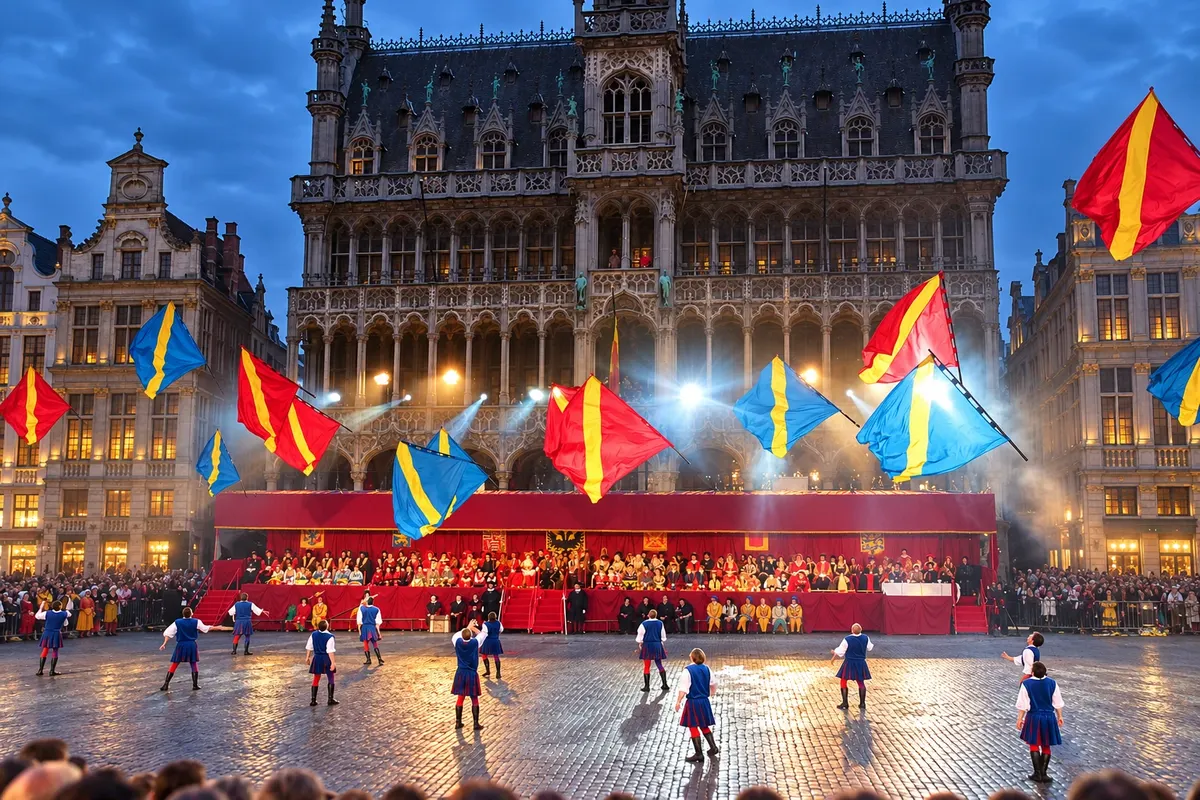
Najboljši čas za obisk: Year-round. In early July the Ommegang procession passes through the Sablon and the Grand Place.

Prikaži dodatne izlete (10)

Marolles and Place du Jeu de Balle flea market

Odhod: Sablon or Bruxelles-Midi station Peš Približno 3 ure Dopoldne Lahko

The Marolles (Marollen) are the oldest working-class neighborhood in the center, where you can still hear brusseleer, the Brussels dialect, alongside French, Flemish, Spanish and Arabic. The meeting point is Place du Jeu de Balle, where the flea market (Vieux Marché) sets up every day, from early morning until the start of the afternoon: dishes, records, clothes, furniture and antiques spread on the ground and on stalls. The parallel streets Rue Haute and Rue Blaes concentrate antique shops, secondhand stores and vintage decor shops. The neighborhood has murals on the comic route and a trail with murals inspired by Bruegel. On the upper side, a public elevator leads to Place Poelaert, with a view over the city and the Palais de Justice, an 1883 building designed by Joseph Poelaert, visible only from the outside.

Kraji na poti: Marolles, Place du Jeu de Balle, Rue Haute, Rue Blaes, Place Poelaert, Palais de Justice.

Vključuje: Walking around the neighborhood and the market is free; purchases are extra.

Nasvet: Arrive early: by late morning many good items have already been sold, and the market is taken down in the early afternoon. Weekends are busier. Haggling over price is part of the experience.

Najboljši čas za obisk: All year; from April to September the market has more stalls and the mornings are more pleasant.

Atomium and Mini-Europe (Heysel)

Odhod: Central Brussels Metro line 6 to Heysel station Približno 5 ur Ves dan Lahko

The Atomium was built for the 1958 World Expo and became a symbol of Brussels. The 102 m structure represents an iron crystal enlarged 165 billion times: nine spheres of 18 m diameter connected by tubes. Five of them are open to the public, featuring an exhibition about Expo 58 and temporary displays, and an elevator takes you to the top sphere with city views and a restaurant. Between the spheres, the route uses moving walkways inside the tubes. Next door, Mini-Europe brings together about 350 scale models at 1/25 of monuments from European Union countries, in a walking route of under two hours. The Design Museum Brussels, with a collection of plastic design, is in the same area, and the Parc de Laeken begins just beyond.

Kraji na poti: Atomium, Mini-Europe, Design Museum Brussels, Parc de Laeken.

Vključuje: Atomium, Mini-Europe and Design Museum have separate tickets, paid separately; combined tickets are available. Check the current table.

Nasvet: The Atomium and Mini-Europe are also open on Mondays, when many city museums are closed. Buy your Atomium ticket in advance to avoid queues. Check Mini-Europe’s winter schedule.

Najboljši čas za obisk: From April to September, when Mini-Europe, which is outdoors, is more pleasant. The Atomium is worth visiting year-round.

European Quarter: Parlamentarium, Maison de l'histoire européenne and Parc Léopold

Odhod: Trône metro station Metro and on foot Približno 4 ure Ves dan Lahko

Brussels hosts the main institutions of the European Union, concentrated in the European Quarter. The Parlamentarium is the European Parliament visitor centre: it explains how the European Union works, features a 360° cinema and a large interactive map on the floor, with content in 24 languages, including Portuguese. On some days you can attend plenary sessions. In Parc Léopold, housed in an art déco building, the Maison de l'histoire européenne tells the continent’s history starting from the myth of Europa, also in 24 languages. The walk continues to the Berlaymont, headquarters of the European Commission, at Rond-point Schuman, and can end at Parc du Cinquantenaire just beyond.

Kraji na poti: Parlamentarium, Parlement européen, Parc Léopold, Maison de l'histoire européenne, Berlaymont, Rond-point Schuman.

Vključuje: Parlamentarium and Maison de l'histoire européenne do not charge admission; online reservation is recommended.

Nasvet: The Parlamentarium is open on Mondays, when many museums are closed. There is security control at the entrance of institutional buildings: bring your passport.

Najboljši čas za obisk: Vse leto.

Parc du Cinquantenaire: Art & History Museum, Autoworld and arcades

Odhod: Central Brussels Metro to Merode or Schuman stations Približno 4 ure Popoldne Lahko

Parc du Cinquantenaire was created in 1880 to celebrate Belgium’s 50th anniversary. On the park’s axis stands the triumphal arch, with the arcades flanked by three museums. The Art & History Museum has a varied collection: flaked stones from prehistory, Egyptian mummies, medieval tapestries, Asian buddhas and Belgian Art Nouveau. Autoworld, the national automobile museum, displays more than 300 vehicles, from motorized carriages to sports cars. The War Heritage Institute (military museum) shows medieval armor, Napoleonic memorabilia and about a hundred aircraft and armored vehicles from the two world wars; the ticket includes access to the arch’s arcades, 45 m high, with a 360° view of the city.

Kraji na poti: Parc du Cinquantenaire, Arcade du Cinquantenaire, Art & History Museum, Autoworld, War Heritage Institute.

Vključuje: The park is open. Each museum has its own admission, paid separately. Check the current price list.

Nasvet: Autoworld is open on Mondays. If you have limited time, pick one museum and go up to the arcades late in the afternoon, with the low light over the city.

Najboljši čas za obisk: Year-round; from May to September the park is greener and fuller of people having picnics.

Art nouveau: Musée Horta, Saint-Gilles and Ixelles

Odhod: Central Brussels Tram and on foot Približno 4 ure Popoldne Lahko

Brussels is one of the capitals of Art Nouveau, a style from the late 19th and early 20th centuries characterized by curved lines inspired by plants, iron, glass and mosaics. The central figure is architect Victor Horta. The Musée Horta, in Saint-Gilles, occupies the house and studio he built for himself between 1898 and 1901, with a staircase, stained glass, furniture and light fittings designed by him; the house is part of Horta’s residences listed by UNESCO as World Heritage. In the streets of Saint-Gilles and Ixelles, near Avenue Louise, there are facades by Horta and by Ernest Blerot, as well as the Hôtel Tassel (1893) and the Hôtel Solvay, which open only on certain days and by reservation. The walk can end at the Parvis de Saint-Gilles, a square with cafés and brasseries around the church.

Kraji na poti: Musée Horta, Saint-Gilles, Parvis de Saint-Gilles, Ixelles, Avenue Louise, Hôtel Tassel, Hôtel Solvay.

Vključuje: The Musée Horta and the houses open to visitors require separate paid tickets and typically need reservations. Walking the streets is free.

Nasvet: Book the Musée Horta in advance: visits are timed and the museum is closed on Mondays. Photography inside the house is usually restricted.

Najboljši čas za obisk: All year; April through September is more pleasant for walking the streets.

Comics Route (Parcours BD) and Centre Belge de la Bande Dessinée

Odhod: Grand-Place, Brussels Peš Približno 4 ure Popoldne easy (about 5 km on foot)

Belgium is the land of Tintin, the Smurfs, Lucky Luke and Gaston Lagaffe, and Brussels pays tribute to comics (bande dessinée, or BD) on its walls: since 1991 more than 80 character murals have been painted on the city’s façades. The historic-centre section of the route is about 5 km and passes the Grand-Place, the Galeries Royales Saint-Hubert, the cathedral, Place des Martyrs and the Manneken-Pis, featuring murals of Tintin, the Smurfs and Gaston Lagaffe, among others. The Centre Belge de la Bande Dessinée (Comic Strip Museum) occupies a former fabric store designed by Victor Horta in 1906, in Art Nouveau style, and tells the story of the ninth art with permanent and temporary exhibitions, a library and a bookshop.

Kraji na poti: BD route, Belgian Comic Strip Center, Grand Place, Royal Galleries Saint-Hubert, Place des Martyrs.

Vključuje: The murals are on the street. The museum has admission, paid separately. Check the current price list.

Nasvet: Pick up a route map at tourist information points or use the online map on your phone. The museum is closed on Mondays, except in July and August. Street name plaques with character names are also part of the walk.

Najboljši čas za obisk: Year-round. In September the city hosts a comics festival.

Beer in Brussels: Belgian Beer World, Cantillon and Brussels Beer Project

Odhod: Central Brussels On foot, metro or tram Približno 4 ure Popoldne Lahko

Beer culture in Belgium is UNESCO intangible heritage, and Brussels has its own style: lambic, a spontaneous fermentation beer that is the base for gueuze and kriek (with cherry). In the old Stock Exchange building (Bourse), near the Grand-Place, the Belgian Beer World exhibition tells the story of Belgian beer and ends on a terrace with views over the centre. In Anderlecht, near Bruxelles-Midi station, Brasserie Cantillon has produced lambic, gueuze, faro and kriek since 1900 and also operates as the Musée Bruxellois de la Gueuze: the visit passes the vats and the cooling attic and ends with a tasting of three types. On Rue Antoine Dansaert, Brussels Beer Project has a bar, shop and brewery, with guided visits and tastings on certain days.

Kraji na poti: Belgian Beer World, Bourse de Bruxelles, Brasserie Cantillon, Musée Bruxellois de la Gueuze, Brussels Beer Project.

Vključuje: Each visit has an admission fee, paid separately, with tasting included. Check the current price table.

Nasvet: Cantillon is closed on Wednesdays, Sundays and public holidays; the self-guided visit does not require a reservation, and the guided tour on Saturdays does. Brussels Beer Project visits require a reservation. Drink in moderation and do not drive afterwards.

Najboljši čas za obisk: Vse leto.

Waterloo: Mémorial 1815, Butte du Lion and Panorama

Odhod: Brussels stations Train to Braine-l'Alleud and bus W Približno 5 ur Ves dan moderate (226 steps on the Butte du Lion)

South of Brussels, already in Wallonia, are the fields of the Battle of Waterloo, where Napoleon was defeated on June 18, 1815. The focus of a visit is the Mémorial 1815, an underground museum at the foot of the Butte du Lion, with uniforms, period objects and a 3D film on a 180° screen. The route continues to the Panorama, a circular painting from 1912 extending 110 m, accompanied by sound effects of the battle. The Butte du Lion is an artificial mound completed in 1826, topped by a lion: it is 226 steps up to a view of the entire battlefield. A little farther away is the Ferme d'Hougoumont, the farm where fighting took place, with a multimedia show and a shuttle bus connection. In the center of Waterloo is the Musée Wellington, dedicated to the British commander.

Kraji na poti: Mémorial 1815, Butte du Lion, Panorama de la Bataille, Ferme d'Hougoumont, Musée Wellington, Waterloo, Braine-l'Alleud.

Vključuje: The Mémorial 1815 requires admission, paid separately, which gives access to other points of the battlefield; the Musée Wellington has its own ticket. Check what each ticket includes and the current price list.

Nasvet: Fast trains from Brussels to Braine-l'Alleud take about 15 minutes; from there, the W bus takes a few minutes to Route de Nivelles stop, from which the Butte du Lion is already visible. Allow about two hours just for the memorial. On weekends there are artillery demonstrations and period encampments.

Najboljši čas za obisk: From April to October, with longer days for walking the field. In June, near the battle’s anniversary, there is a historical reenactment on one weekend.

Basilique de Koekelberg (Basilica of the Sacred Heart)

Odhod: Central Brussels Metro to Simonis station and on foot Približno 2 uri Popoldne Lahko

The Basilique nationale du Sacré-Cœur, known as Basilique de Koekelberg, sits atop a hill northwest of the center, at the end of Parc Élisabeth. Construction began in 1905 and was only completed in 1970; tradition says the idea came from King Leopold II after seeing the Sacré-Cœur in Paris. The result is an Art Deco church, 164 m long, 107 m wide and 93 m high. Besides the nave, the building houses museums, a theatre and other activities. From the top of the dome, the panorama looks out over Brussels.

Kraji na poti: Basilique nationale du Sacré-Cœur, Koekelberg, Parc Élisabeth.

Vključuje: Entry to the church is free; access to the viewpoint requires a ticket, paid separately.

Nasvet: Choose a day without rain to go up to the viewpoint. In the European winter, from late October to late March, the viewpoint closes earlier.

Najboljši čas za obisk: Year-round; on clear spring and summer days the view reaches farther.

Day trip to Brugge (Bruges) by train

Odhod: Brussels stations Direct train from SNCB/NMBS around 10 hours Ves dan easy (366 steps in the Belfort, optional)

Brugge (Bruges), in Flanders, has a medieval historic centre with canals that is a UNESCO World Heritage Site. Direct trains depart from Brussels stations and take on average about 1 hour. From Brugge station to the Markt, the central square, it is about a 20-minute walk or a few minutes by bus. The Markt is home to the Belfort, an 83 m tower with a carillon of 47 bells: 366 spiral steps, no elevator, up to the rooftop view. Next to it, the Burg square houses the city’s government buildings. The Rozenhoedkaai quay is the classic photo spot of the canals, and the Begijnhof, an old beguinage with white houses around a garden, lies near Minnewater lake. Canal boat rides take about half an hour, between Jan van Eyckplein and the Begijnhof.

Kraji na poti: Brugge, Markt, Belfort, Burg, Rozenhoedkaai, Begijnhof, Jan van Eyckplein.

Vključuje: Train fare, Belfort ascent and canal boat ride are paid separately. Check the current price table.

Nasvet: Leave Brussels early to arrive before the tour groups. Book a time slot for the Belfort, which limits the number of visitors. If you prefer Gent (Gante) to Brugge, it takes about 36 minutes by train from Brussels.

Najboljši čas za obisk: Boats usually operate from early March through mid-November. From April to September the days are longer.


Po dnevih

Brussels – načrt poti. Število dni: 3, 5in7

Predlogi za načrtovanje poti. Vrstni red dni prilagodite vremenu in razpoložljivosti izletov.

3 dni · Brussels in 3 days: historic center, museums and Atomium

ZaThose with little time who want to see the city's essentials on foot and by metro. · Izhodišče:Central Brussels, near the Grand-Place or Bruxelles-Central station
  1. Dan 1 · Arrival, Grand-Place and Manneken-Pis

    The flight from Brazil arrives after an entire night of travel and a connection in Europe. From Brussels Airport, the train takes about 20 minutes to Bruxelles-Central. Drop your bags and do just a light walk: Grand-Place (Grote Markt) and Hôtel de Ville, Manneken-Pis, Jeanneke-Pis and Galeries Royales Saint-Hubert. At night, return to the illuminated Grand-Place and go to bed early to adjust to the time difference.

  2. Dan 2 · Mont des Arts, museums and Royal Quarter

    In the morning, Cathédrale Saints-Michel-et-Gudule and a climb to the Mont des Arts. Reserve the late morning and early afternoon for the Musées royaux des Beaux-Arts, including the Musée Magritte and the Musée Oldmasters. In the late afternoon, walk through the Royal Quarter: Place Royale, Palais Royal (interior visits only in summer) and Parc de Bruxelles. Finish in the Sablon, among chocolate shops.

  3. Dan 3 · Marolles, Atomium and Mini-Europe

    Start early at the Place du Jeu de Balle flea market in the Marolles, then take the elevator up to Place Poelaert for a city view. After lunch, take metro line 6 to Heysel for the Atomium and Mini-Europe. If you have time, finish the day with a lambic beer in the center, unhurried.

5 dni · Brussels in 5 days: city, comics, European Quarter and Brugge
ZaSomeone who wants to get to know Brussels at a relaxed pace and take a return train trip to Brugge (Bruges). · Izhodišče:Central Brussels, near the Grand-Place or Bruxelles-Central station
  1. Dan 1 · Arrival and historic center

    After the flight with a connection, take the train from Brussels Airport to Bruxelles-Central. In the afternoon, take a light walk around the Grand-Place (Grote Markt) and Hôtel de Ville, Manneken-Pis, Jeanneke-Pis and Galeries Royales Saint-Hubert. Return to the square at night, with the facades lit up, and rest early.

  2. Dan 2 · Cathedral, Mont des Arts and Royal Quarter

    Morning at the Cathédrale Saints-Michel-et-Gudule and the Mont des Arts, with the Musées royaux des Beaux-Arts (Musée Magritte and Musée Oldmasters). In the afternoon, the Royal Quarter: Place Royale, the Coudenberg archaeological site, Palais Royal (interior visits only in summer) and Parc de Bruxelles. End the afternoon in the Sablon, with chocolate shops and the Église Notre-Dame du Sablon.

  3. Dan 3 · Marolles and comic route

    Early: the Place du Jeu de Balle flea market and the antique shops on Rue Haute and Rue Blaes in the Marolles. In the afternoon, follow the comic route (Parcours BD) through the center and visit the Centre Belge de la Bande Dessinée, housed in Victor Horta's Art Nouveau building. Note that the museum is closed on Mondays, except in July and August.

  4. Dan 4 · Day trip to Brugge (Bruges)

    Direct train from Brussels to Brugge, about 1 hour. Walk from the station to the Markt, climb the Belfort (book a time slot), see the Burg, the Rozenhoedkaai quay and the Begijnhof. From March to November, take the roughly half-hour boat tour along the canals. Return to Brussels in the early evening.

  5. Dan 5 · Atomium and European Quarter

    In the morning, take metro line 6 to Heysel for the Atomium and Mini-Europe. In the afternoon, the European Quarter: Parlamentarium, Parc Léopold and the House of European History, finishing at Parc du Cinquantenaire with views of the arcades. If your return flight is the next day, have your bag packed: the train takes about 20 minutes to the airport.

7 dni · Brussels in 7 days: full city, Art Nouveau, Waterloo and Brugge
ZaSomeone with a week who wants museums, neighborhoods, beer and two day trips outside the city by train. · Izhodišče:Central Brussels, near the Grand-Place or Bruxelles-Central station
  1. Dan 1 · Arrival and Grand-Place

    Flight from Brazil with a connection in another European city and train from Brussels Airport to Bruxelles-Central, about 20 minutes. Light walk around the Grand-Place (Grote Markt), Manneken-Pis, Jeanneke-Pis and Galeries Royales Saint-Hubert. Eat an early dinner and rest to adjust to the time difference.

  2. Dan 2 · Mont des Arts, museums and Royal Quarter

    Cathédrale Saints-Michel-et-Gudule in the morning and then the Musées royaux des Beaux-Arts, including Musée Magritte and Musée Oldmasters, on the Mont des Arts. Late afternoon, MIM, with a view from the terrace, and the Royal Quarter: Place Royale, Coudenberg, Palais Royal (interior visits only in summer) and Parc de Bruxelles.

  3. Dan 3 · Marolles, Sablon and Art Nouveau

    Early: the Place du Jeu de Balle flea market in the Marolles. Go up to the Sablon for the chocolate shops and the Église Notre-Dame du Sablon. In the afternoon, Art Nouveau: Musée Horta in Saint-Gilles (book ahead; closed on Mondays), then walk through the streets of Saint-Gilles and Ixelles to the Parvis de Saint-Gilles.

  4. Dan 4 · Waterloo

    Train from Brussels to Braine-l'Alleud, about 15 minutes, then bus W to the Butte du Lion. Visit the Mémorial 1815 and the Panorama, climb the 226 steps of the Butte du Lion and take the shuttle to the Ferme d'Hougoumont. On the way back, if time allows, stop at the Musée Wellington in central Waterloo.

  5. Dan 5 · Day trip to Brugge (Bruges)

    Direct train to Brugge, about 1 hour. Markt and Belfort (book a time slot), Burg, Rozenhoedkaai and Begijnhof. From March to November, take the canal boat tour. Return to Brussels in the early evening.

  6. Dan 6 · Atomium, Koekelberg and comics

    Morning at the Atomium and Mini-Europe in Heysel. In the afternoon, Basilique de Koekelberg and the panorama from the top of the dome. At the end of the day, the murals of the comic route (Parcours BD) in the center.

  7. Dan 7 · European Quarter, Cinquantenaire and beer

    Morning in the European Quarter: Parlamentarium, Parc Léopold and Maison de l'histoire européenne. Then Parc du Cinquantenaire, with Autoworld or the Art & History Museum and a view of the arcades. In the late afternoon, beer as culture: Belgian Beer World at the Bourse, or Brasserie Cantillon, which is closed on Wednesdays and Sundays.

Najboljši čas za obisk

Kdaj se odpraviti:Brussels po mesecih

From May to September the days are long and temperatures are usually mild, good for walking and visiting Waterloo. Winter, from December to February, is cold, damp and it gets dark early in the afternoon. Rain can occur any month: bring an umbrella and a light jacket even in summer.

The seasons shown are the most usual ones; nature doesn't always follow the calendar.

januar Veliko padavin

cold winter · short days

In Brussels average highs are around 6 °C and lows about 1 °C; it rains or drizzles on roughly 19 days of the month, and light frost or snow is possible. Days are short and it gets dark in the late afternoon. At the start of the month the Christmas market may still be running; afterwards the city is quieter, with good crowds at museums.

februar Zmerne padavine

cold and damp · Bright Festival

Still winter: average highs around 7 °C and lows near 2 °C, with light rain on many days. Days start to lengthen but remain short. Around mid-month the Bright Festival spreads light installations across the city at night. Bring a heavy coat, hat and waterproof footwear.

marec Zmerne padavine

konec zime · prvi cvetovi

Transition to spring: average highs around 11 °C and lows of 4 °C, with unstable weather and frequent drizzle. At the end of the month Belgium switches to daylight saving time and days get longer. Brugge boat tours resume at the start of the month. You will still need warm layers.

april Malo padavin

spring · driest month

The driest month of the year in Brussels, with about 47 mm of rain; average highs near 15 °C and lows of 6 °C. Parks in bloom and longer days. Easter brings more visitors to attractions.

maj Zmerne padavine

mild spring · Brussels Jazz Weekend

Average highs around 18 °C and lows of 9 °C, with long days and showers. A good month for walking the city and for day trips by train. The cultural season is busy, with the Brussels Jazz Weekend and arts festivals. Bring a light jacket and an umbrella.

junij Zmerne padavine

early summer · very long days

Summer begins in the Northern Hemisphere: average highs around 21 °C and lows of 12 °C. Days are the longest of the year and it stays light until very late. In Waterloo the historical re-enactment of the battle often takes place on a weekend during the month. Terraces are busy in the Sablon and on the Parvis de Saint-Gilles.

julij Zmerne padavine

summer · Ommegang and national day

Warmest month, with average highs around 23 °C and lows of 14 °C; heat waves can exceed 30 °C, and there are heavy showers. At the start of the month, the Ommegang procession fills the Grand-Place; on July 21 the national day features a parade and fireworks. The Palais Royal usually opens to the public in summer. European holidays: museums and trains are busier.

avgust Veliko padavin

rainy summer · Flower Carpet

Average highs around 23 °C and lows of 14 °C, but this is one of the rainier months, with heavy showers. In the middle of the month in even-numbered years, the Flower Carpet covers the Grand-Place; on August 9 the Meyboom festival plants a tree in the centre. It is still European holiday season, so the city is lively.

september Zmerne padavine

late summer · comic festival

Average highs around 20 °C and lows of 11 °C, with still-long days and fewer tourists than in summer. On one weekend of the month the city hosts a comic festival. A good month for Waterloo, Brugge and walks through the neighbourhoods.

oktober Zmerne padavine

autumn · colored leaves

Autumn in the Northern Hemisphere: average highs around 15 °C and lows of 8 °C, with rain on about 16 days. Parks with yellow and red leaves. At the end of the month daylight saving time ends and it gets dark much earlier. Pack a coat and an umbrella.

november Veliko padavin

rainy autumn · start of year-end festivities

Gray, damp month, with average highs around 10 °C and lows of 5 °C, and rain or drizzle on about 18 days. Days are short. At the end of the month Winter Wonders, the city centre Christmas market, begins, with the Grand-Place illuminated. Brugge boat tours stop around the middle of the month.

december Veliko padavin

winter · Christmas market

Winter begins in the Northern Hemisphere: average highs around 7 °C and lows of 2 °C, and it is the wettest month in Brussels. Days are the shortest of the year and it gets dark in the middle of the afternoon. Winter Wonders fills the centre with stalls, an ice rink and lights on the Grand-Place. Bring warm clothing and waterproof footwear.

Načrtujte pot

Kako do tja:Brussels

From the airport to the centre and other cities by train

The train station is located inside Brussels Airport, underground. SNCB/NMBS trains run about six times an hour to Brussels stations: Bruxelles-Nord in about 11 minutes, Bruxelles-Central in about 18 minutes and Bruxelles-Midi (Brussel-Zuid) in about 23 minutes; some continue to the European Quarter station. The return fare to and from the airport carries a surcharge, usually already included in the ticket. From the airport there are also direct trains to Leuven (Lovaina), Antwerpen (Antwerp), Gent (Ghent) and Brugge (Bruges). From Brussels stations, the train takes on average about 36 minutes to Gent and about 1 hour to Brugge, and fast trains to Braine-l'Alleud, next to the Waterloo battlefield, about 15 minutes.

By train from Paris, London, Amsterdam or Cologne

Brussels is less than two hours by train from Paris, London, Amsterdam and Köln, and it is common to combine the city with other European capitals. International trains arrive at Bruxelles-Midi (Brussel-Zuid). The Eurostar links Paris (Gare du Nord) to Brussels in about 1 hour 20 minutes, and London (St Pancras) to Brussels in under 2 hours, via the Channel Tunnel; it also connects Brussels to Amsterdam. From Germany, ICE trains run between Köln and Brussels. There are also TGV services to other French cities. Buy in advance: fares vary widely by date.

Z avtom

Brussels is ringed by the R0 beltway and is the junction for Belgian motorways. The E19 comes from Amsterdam and Antwerpen in the north and continues south toward Paris; the E40 links the city to Gent and Brugge to the west, and to Leuven, Liège and Köln to the east; the E411 goes to Namur and Luxembourg. The whole Brussels-Capital region is a Low Emission Zone (LEZ): cars with foreign plates, with few exceptions, must be registered before entering; ask the rental company. In the historic centre traffic is slow and parking is difficult: for visiting the city, public transport and train are more practical. If you drink, don’t drive.

How to get around Brussels

The centre is compact and you can do almost everything on foot, but the city has two levels: the lower town around the Grand-Place, and the upper town of the Royal Quarter and the Sablon, with slopes and stairways. The STIB/MIVB network has metro, tram and bus; you can pay each trip by tapping your contact credit or debit card, your phone or your watch on the validator at each boarding. Transfers within one hour do not incur a new fare, and there is a daily cap. For Heysel (Atomium and Mini-Europe), use metro line 6. Signs and street names appear in French and Flemish, the city’s two official languages.

Vstopnice in rezervacije

Most museums in Brussels are closed on Mondays; Atomium, Mini-Europe, Parlamentarium, Autoworld and Brasserie Cantillon are among those that open that day. Several tours require advance booking: Musée Horta, the summer visit to the Palais Royal and the climb up the Belfort in Brugge. Tickets are paid separately at each attraction; combined tickets exist for some. Check the current schedule.

Pred odhodom

Praktične informacije

Z nekaj načrtovanja boste imeli več časa za uživanje na poti.

Kdaj se odpraviti

From May to September the days are long and temperatures are usually mild, good for walking and visiting Waterloo. Winter, from December to February, is cold, damp and it gets dark early in the afternoon. Rain can occur any month: bring an umbrella and a light jacket even in summer.

The seasons shown are the most usual ones; nature doesn't always follow the calendar.

Koliko dni ostati

Two days cover the historic center, the museums of the Mont des Arts and the Atomium. With a third day you can add the Parc du Cinquantenaire and a half-day or full-day trip to Waterloo. Bruxelas also serves as a base for train day trips to Bruges, Ghent and Antwerp.

V katerem mestu prenočiti

For first-time visitors, the historic center between the Grand-Place, Bruxelles-Central station and the Bourse leaves almost everything within walking distance. The upper area, near the Mont des Arts and Place Royale, is quieter at night and close to the museums. The area around Bruxelles-Midi makes train arrivals from other countries convenient. The European quarter, near Schuman and the Parc du Cinquantenaire, is busy on weekdays and is a few metro stops from the center. Ixelles, to the south, is residential and full of restaurants.

Spoštujte kraj

Odnesite svoje odpadke, upoštevajte oznake in podprite lokalne ponudnike. V naravi upoštevajte navodila za obiskovalce.

Odgovori na vaša vprašanja

Pogosta vprašanja – Brussels

What language is spoken in Bruxelas?

Bruxelas is bilingual: French and Flemish, the Dutch spoken in Belgium, are official languages and appear together on signs, at stations and on menus. In day-to-day life in the center, French is the most commonly heard. English is well understood in shops, museums and stations.

How to get from the airport to the center of Bruxelas?

The train station is beneath the terminal at Brussels Airport. Trains run directly to Bruxelles-Nord, Bruxelles-Central and Bruxelles-Midi, with several departures per hour from early morning until around midnight. The trip to Bruxelles-Central takes under 20 minutes.

Can you visit Waterloo as a day trip from Bruxelas?

Yes. Trains depart from Bruxelas stations to Waterloo and to Braine-l'Alleud, the station closest to the battlefield, and the trip takes 15 to 30 minutes. From Braine-l'Alleud, bus W goes to the Butte du Lion area. Half a day is enough for the battlefield; a full day allows you to include the Musée Wellington.

Is Bruxelas expensive for eating out?

There are options for many budgets. The streets immediately around the Grand-Place concentrate tourist-oriented restaurants; walking a few blocks toward Sainte-Catherine or Ixelles the offering becomes more varied. Fries in a cone, waffles and chocolate are part of the local culture.

Poti – in Belgija

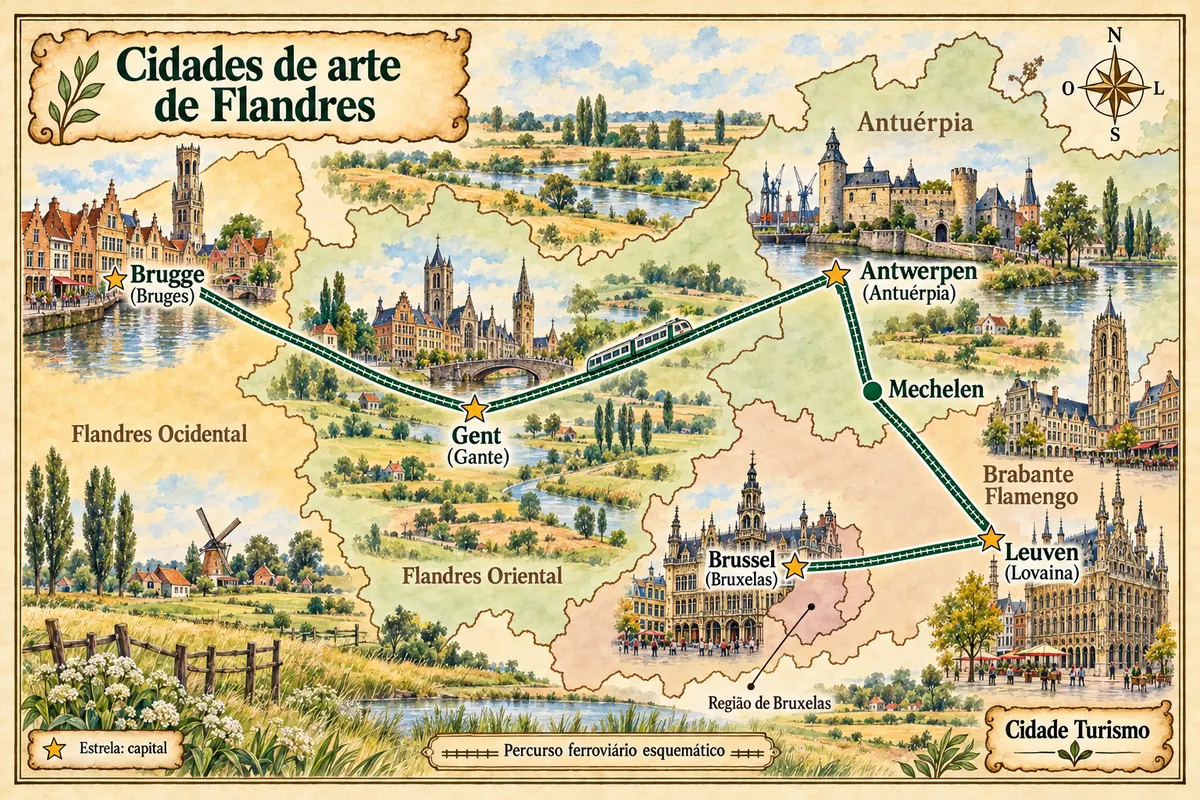
Brussels – na poti z imenom Flemish art cities

Six historic cities linked by train: Brussels, Leuven, Mechelen, Antwerp, Ghent and Bruges, with Flemish painting, cathedrals and medieval centres less than an hour apart.

Zemljevid je ilustrativen in ni v merilu. Dotaknite se mesta, da odprete njegovo stran.
Flemish art cities – ilustrirani zemljevid
Več o poti – Flemish art cities

Rotas entre países

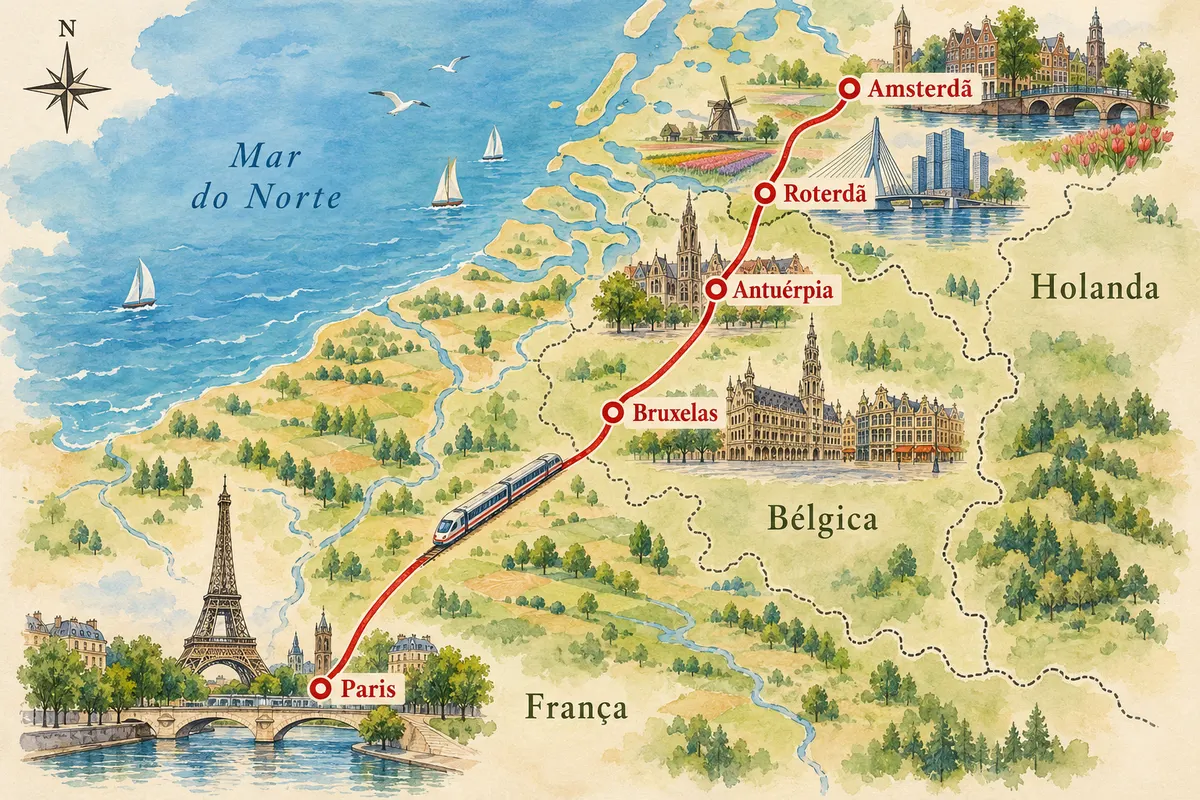
Brussels – na poti z imenom Eurostar Paris–Amsterdam

By train through the centers of Paris, Brussels, Antwerp, Rotterdam and Amsterdam: three countries in just over three hours, from central station to central station.

Zemljevid je ilustrativen in ni v merilu. Dotaknite se mesta, da odprete njegovo stran.
Eurostar Paris–Amsterdam – ilustrirani zemljevid
Več o poti – Eurostar Paris–Amsterdam

Rotas entre países

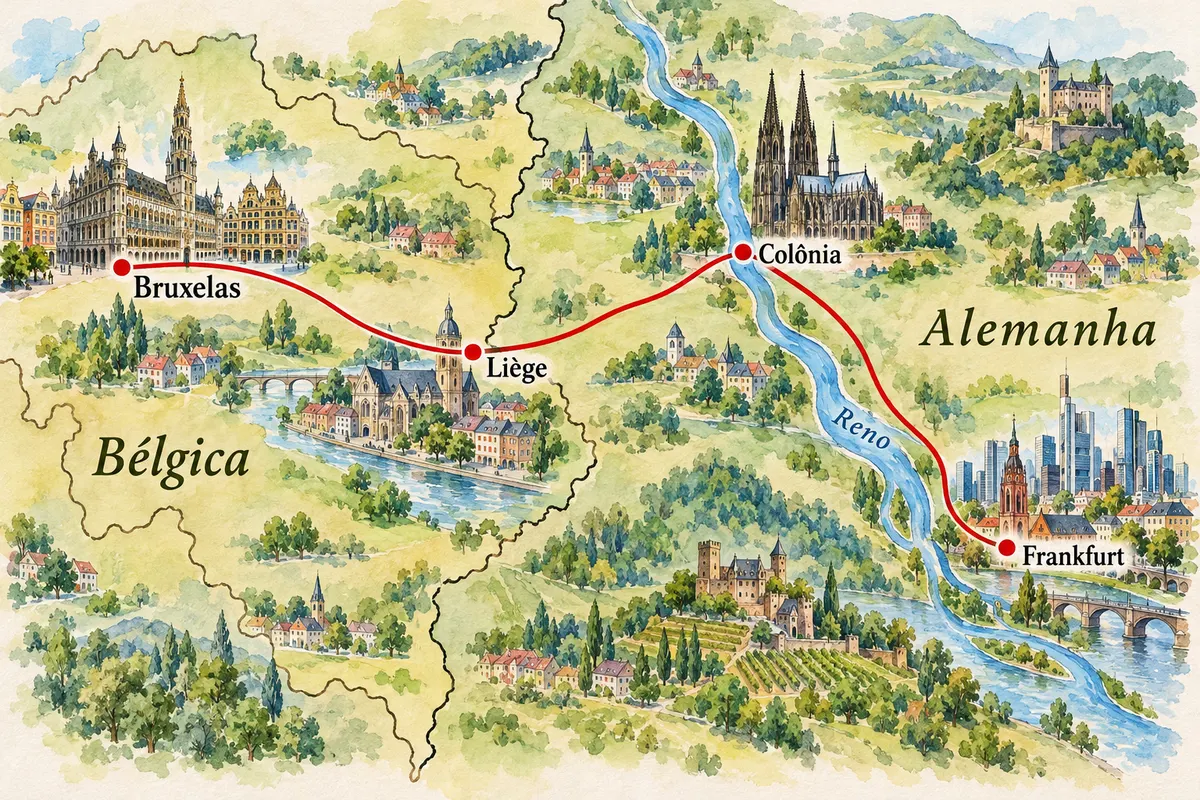
Brussels – na poti z imenom Brussels–Cologne–Frankfurt by train

By train from Belgium to Germany: Brussels, Liège, Cologne and Frankfurt in about three hours, from central station to central station.

Zemljevid je ilustrativen in ni v merilu. Dotaknite se mesta, da odprete njegovo stran.
Brussels–Cologne–Frankfurt by train – ilustrirani zemljevid
Več o poti – Brussels–Cologne–Frankfurt by train

Rotas entre países

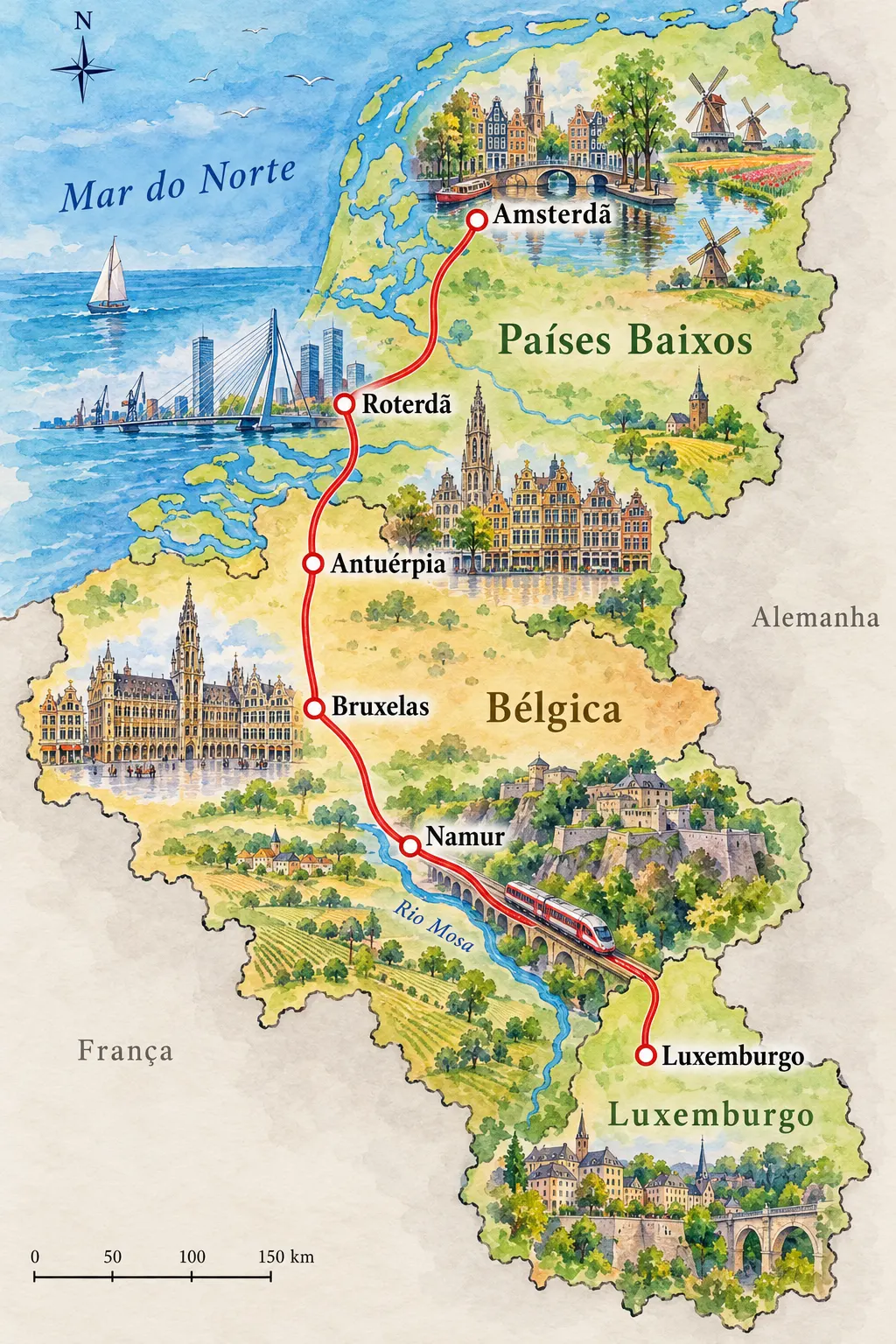
Brussels – na poti z imenom Benelux by train: Amsterdam–Brussels–Luxembourg

The three Benelux countries by train: from Amsterdam to Brussels in about two hours, and from Brussels to Luxembourg via the Ardennes, with Rotterdam, Antwerp and Namur along the way.

Zemljevid je ilustrativen in ni v merilu. Dotaknite se mesta, da odprete njegovo stran.
Benelux by train: Amsterdam–Brussels–Luxembourg – ilustrirani zemljevid
Več o poti – Benelux by train: Amsterdam–Brussels–Luxembourg

Rotas entre países

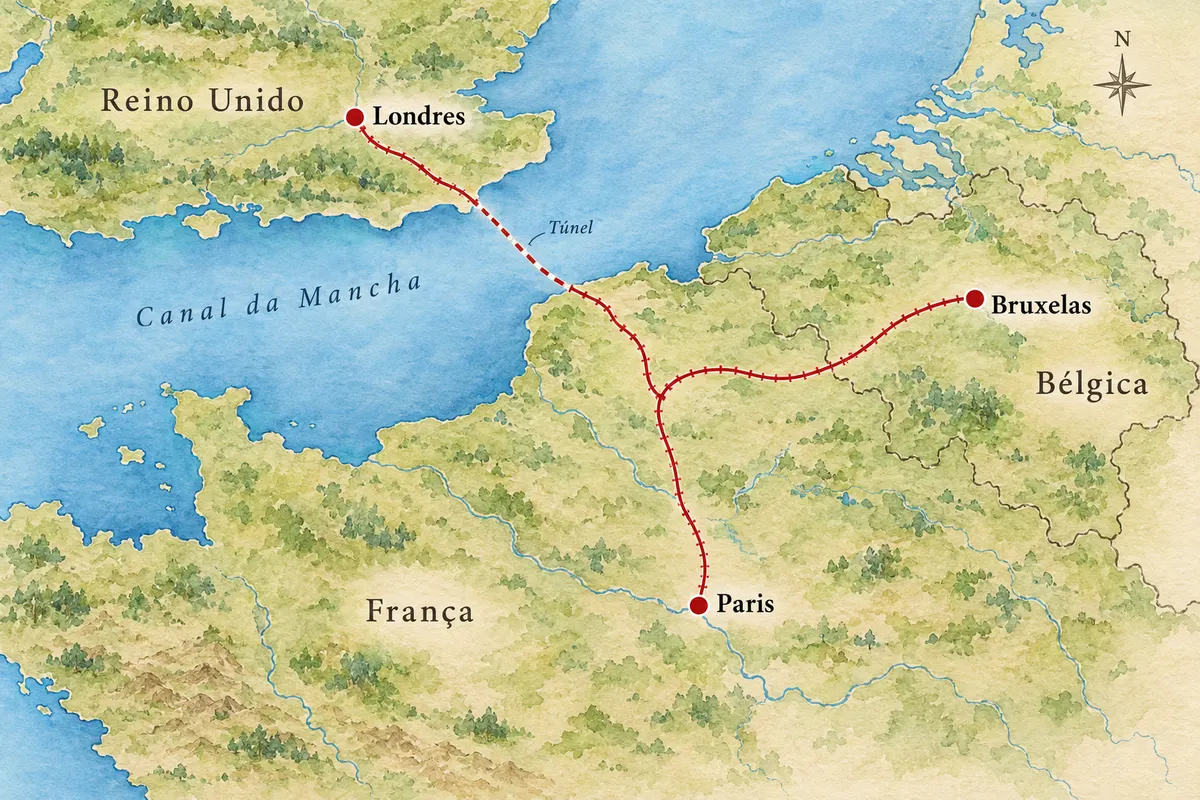
Brussels – na poti z imenom Eurostar: London, Paris and Brussels

By train under the English Channel: from St Pancras in central London to central Paris or Brussels in a little over two hours.

Zemljevid je ilustrativen in ni v merilu. Dotaknite se mesta, da odprete njegovo stran.
Eurostar: London, Paris and Brussels – ilustrirani zemljevid
Več o poti – Eurostar: London, Paris and Brussels
Odkrijte druge destinacije Iskanje po zvezni državi in mestu

Več kot vodnik