Ardennes

Luxembourg · Namur · Belgija

Ardennes

Hills covered in forest, rivers winding in tight bends, and three small stone towns: Durbuy, La Roche-en-Ardenne and Bouillon, in southeast Belgium.

Wallonia

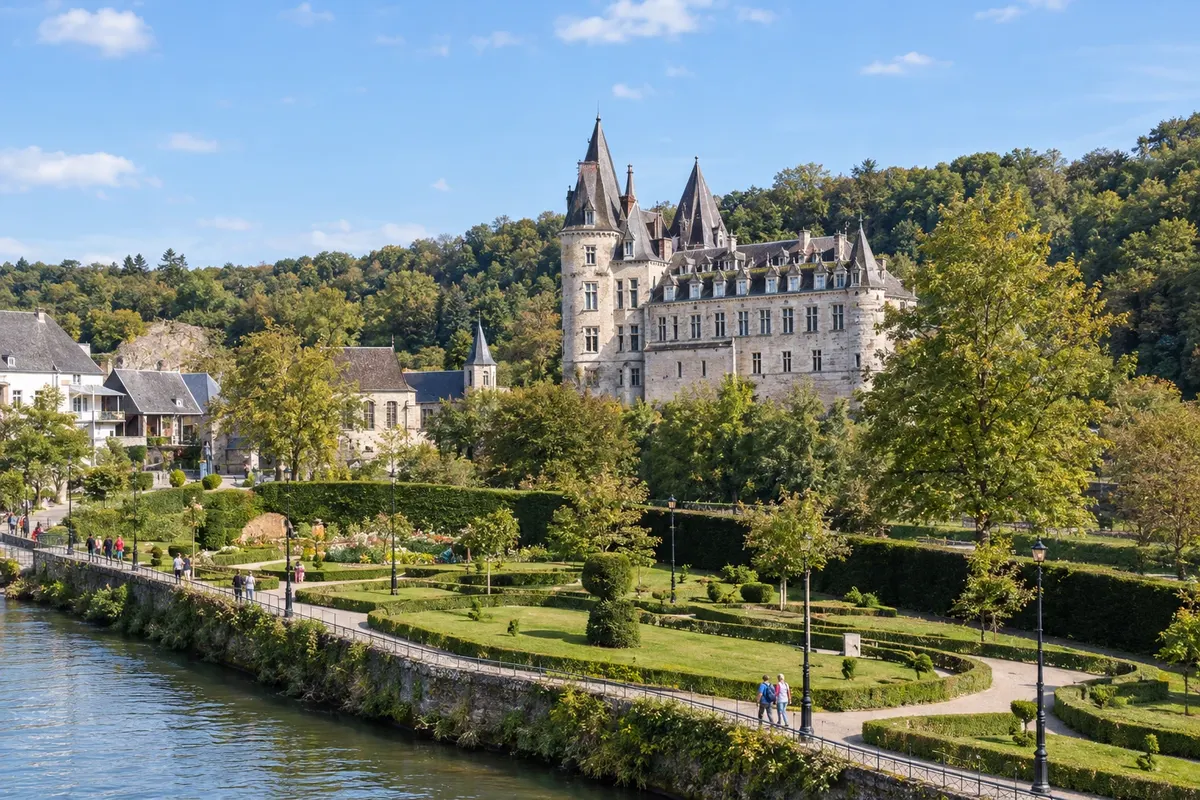
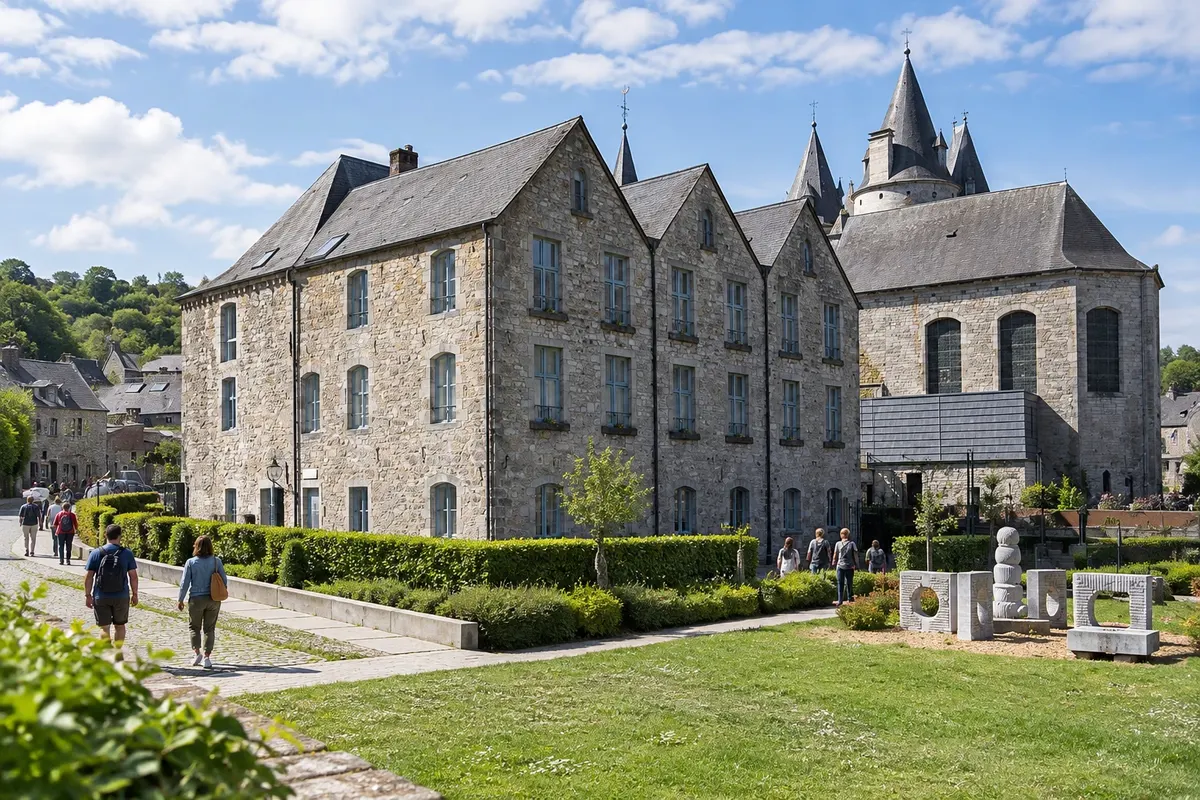
Na fotografiji: Chateau des Comtes d Ursel de Durbuy

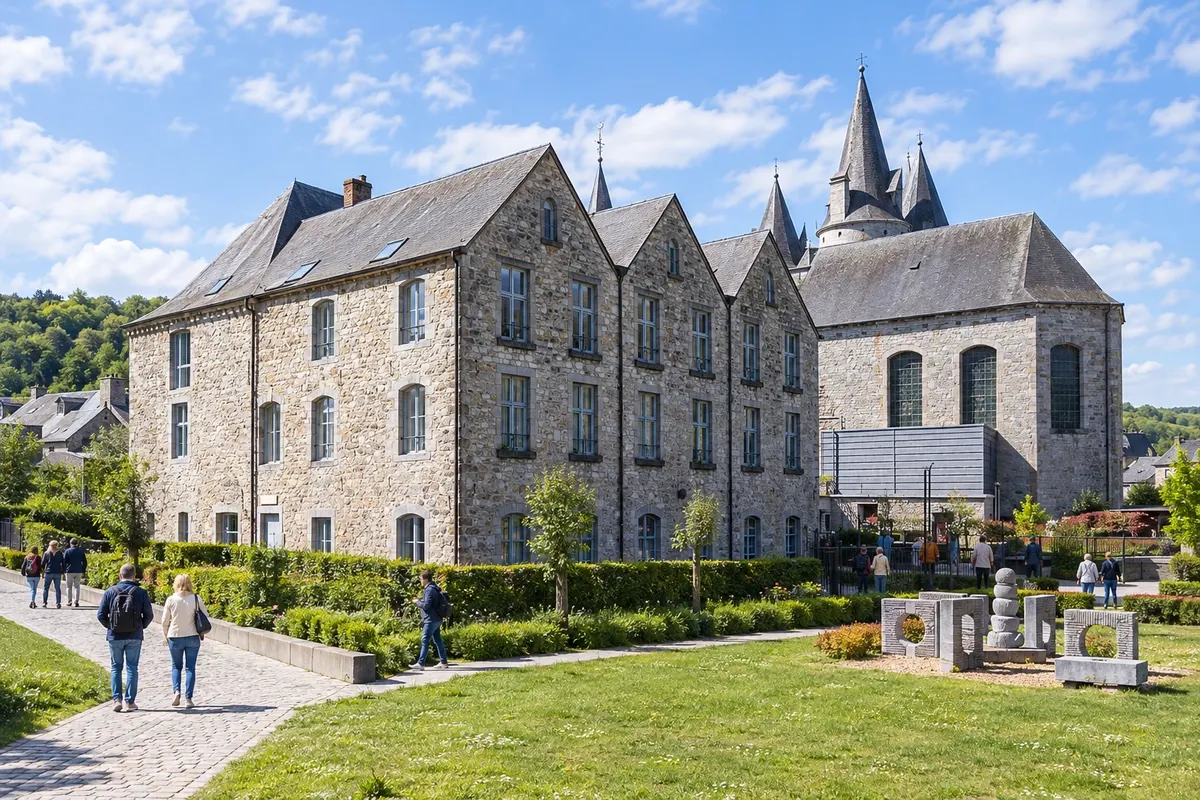
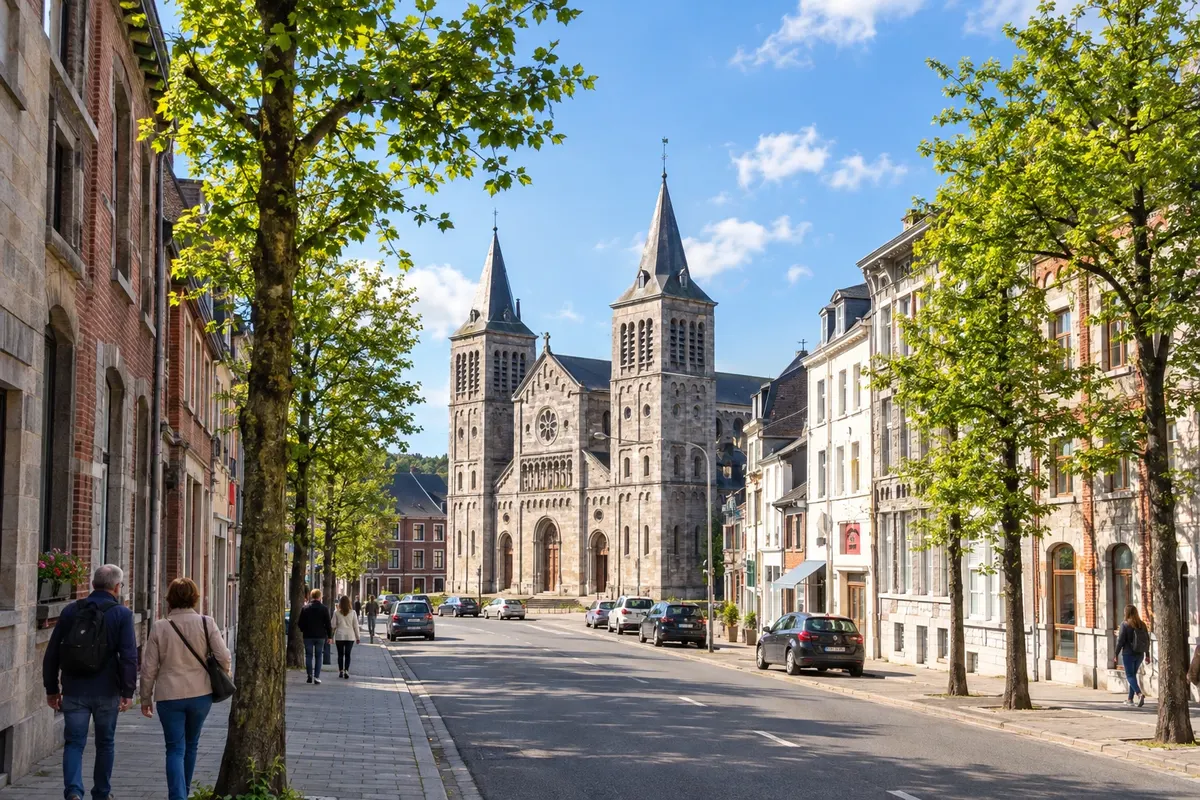
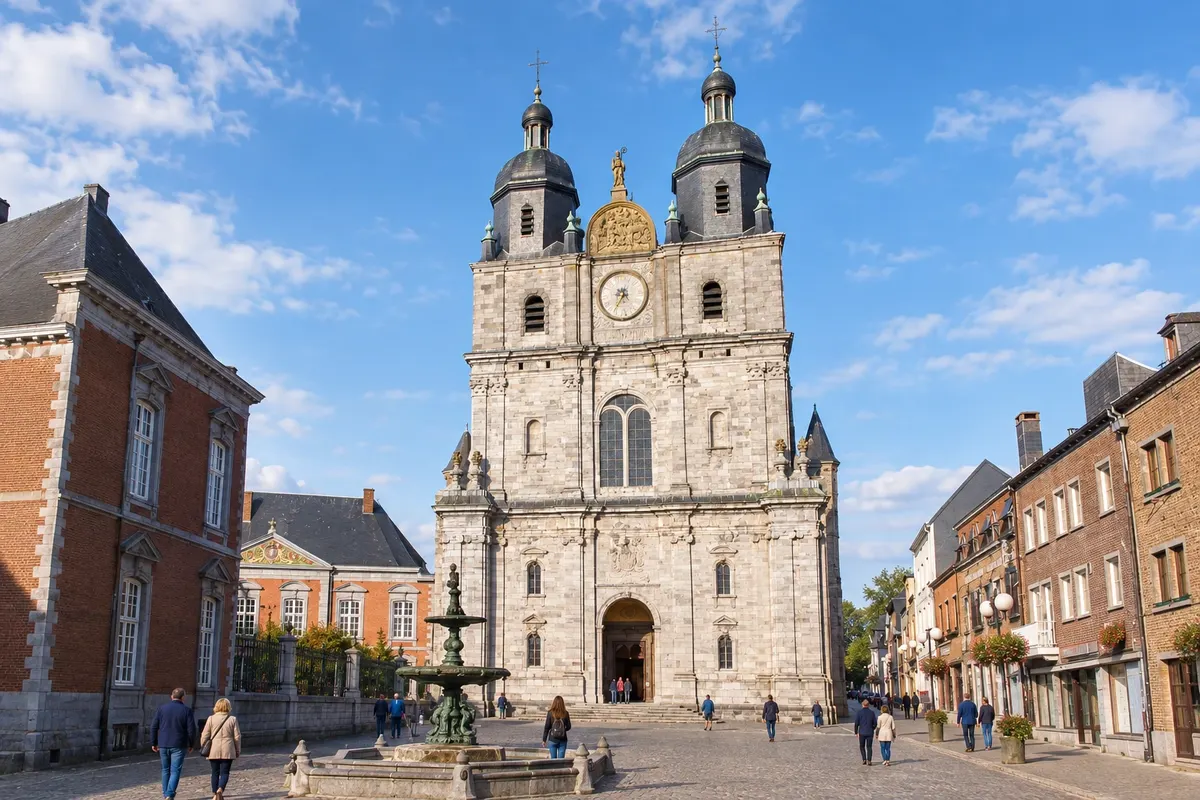
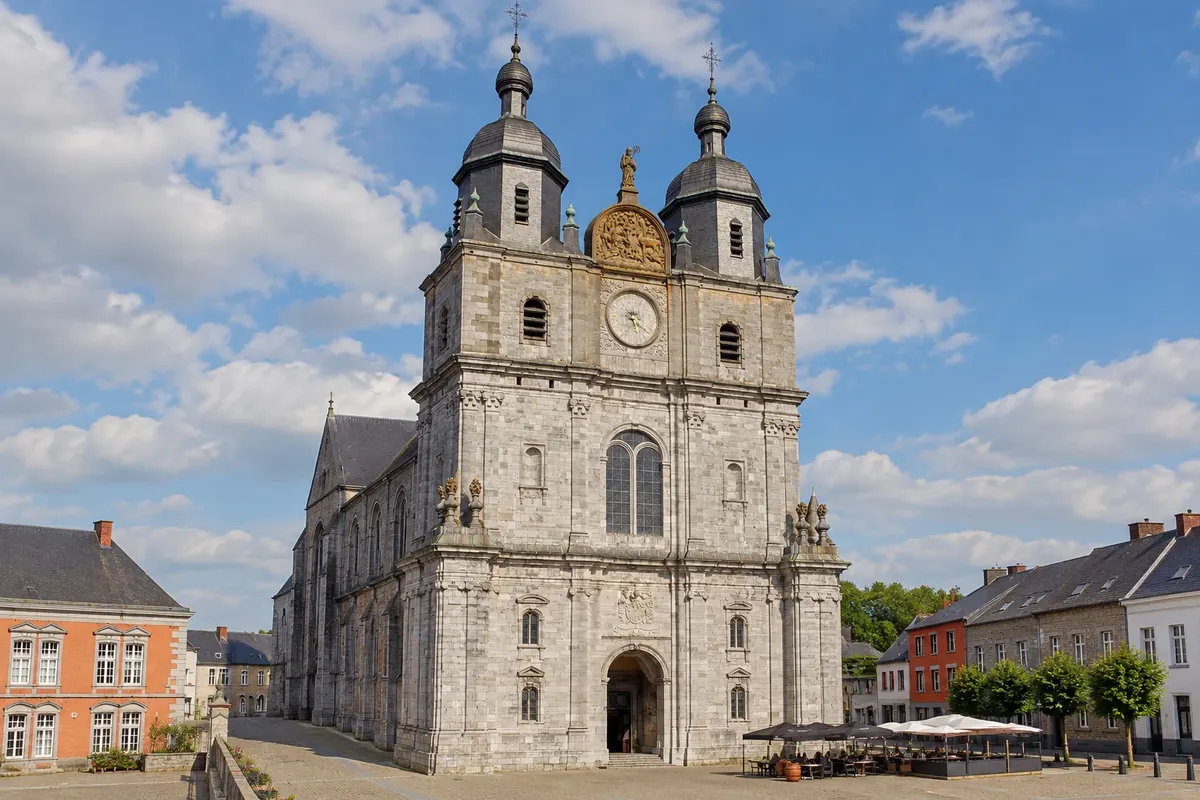
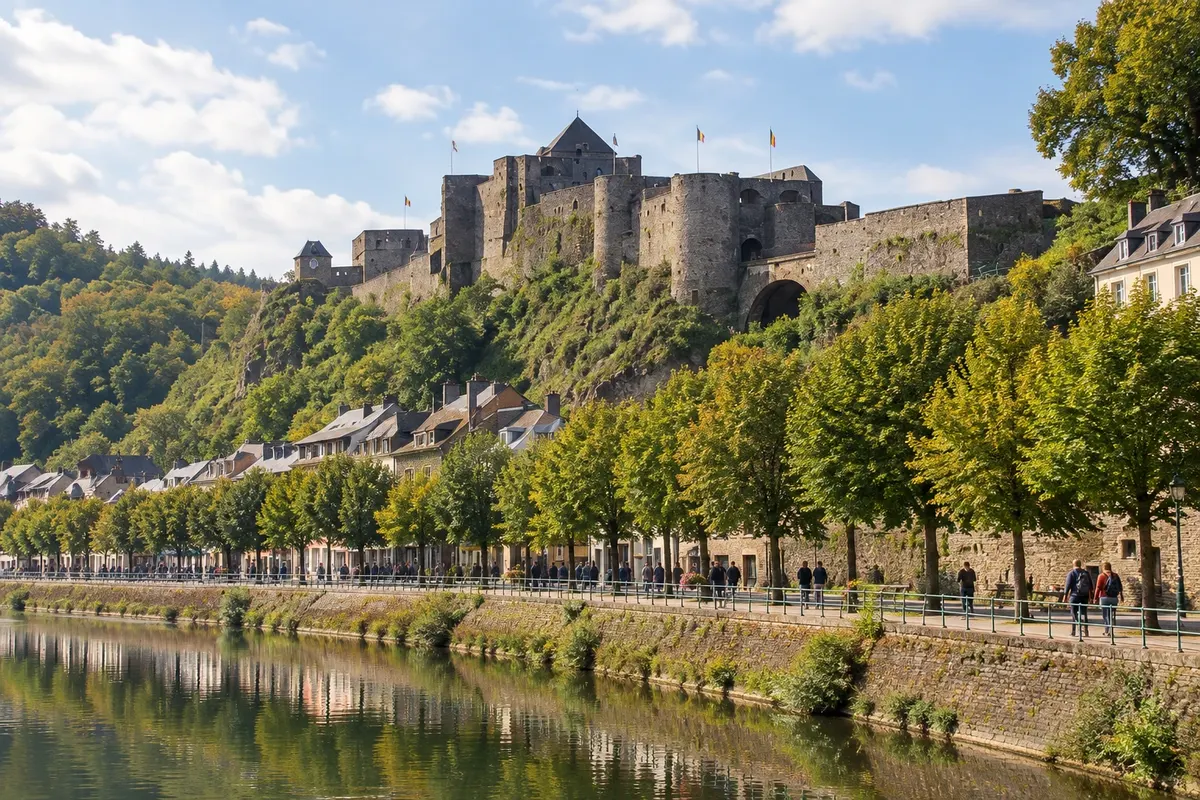
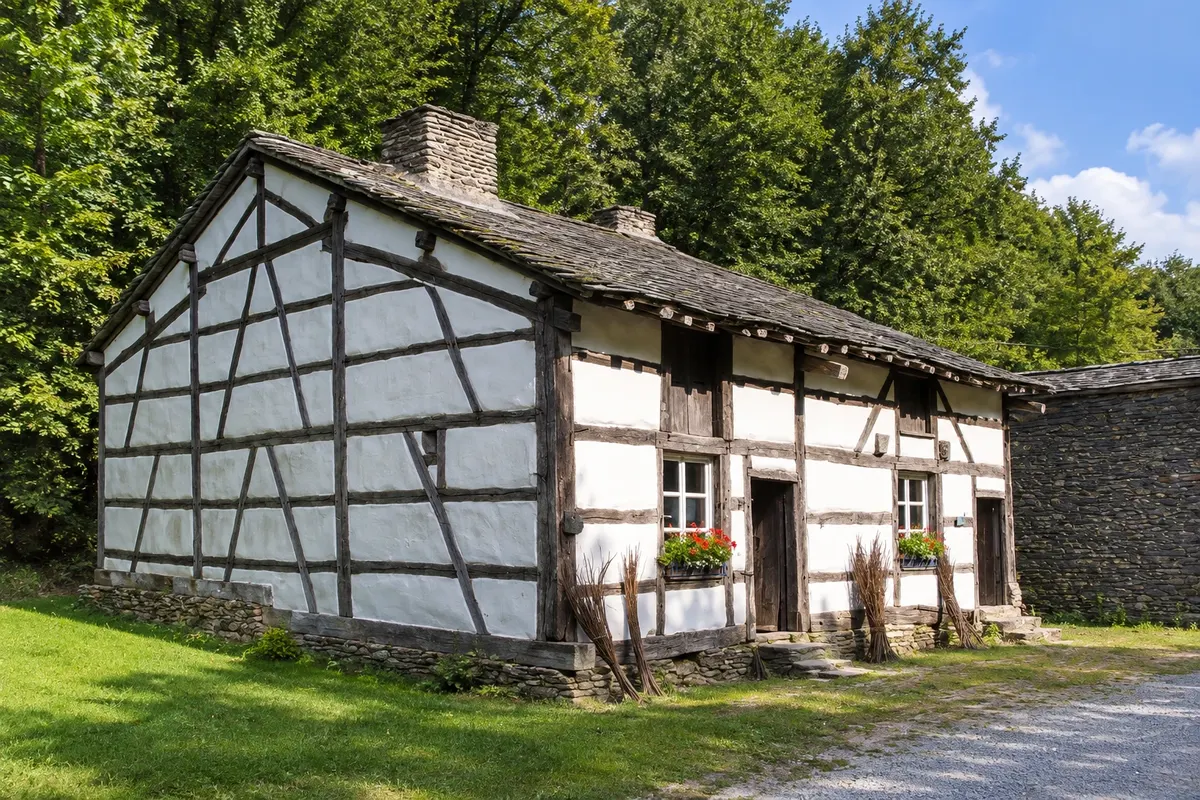
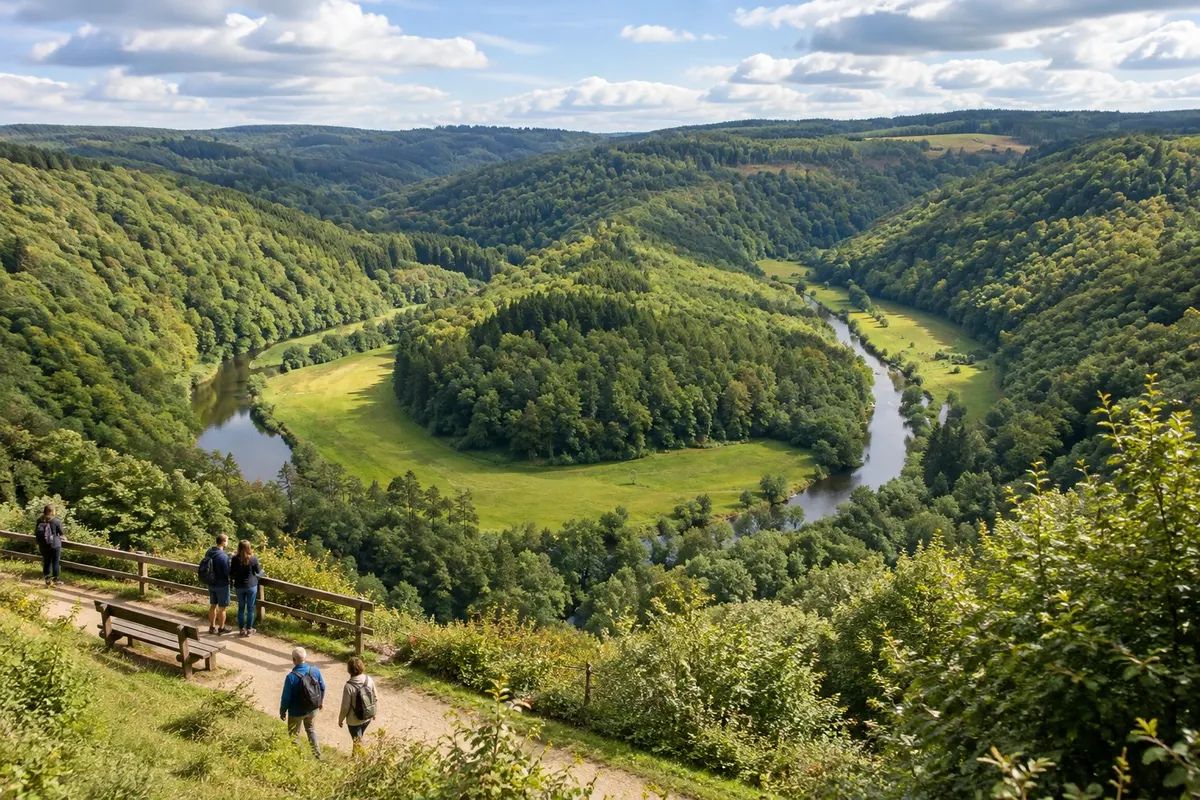
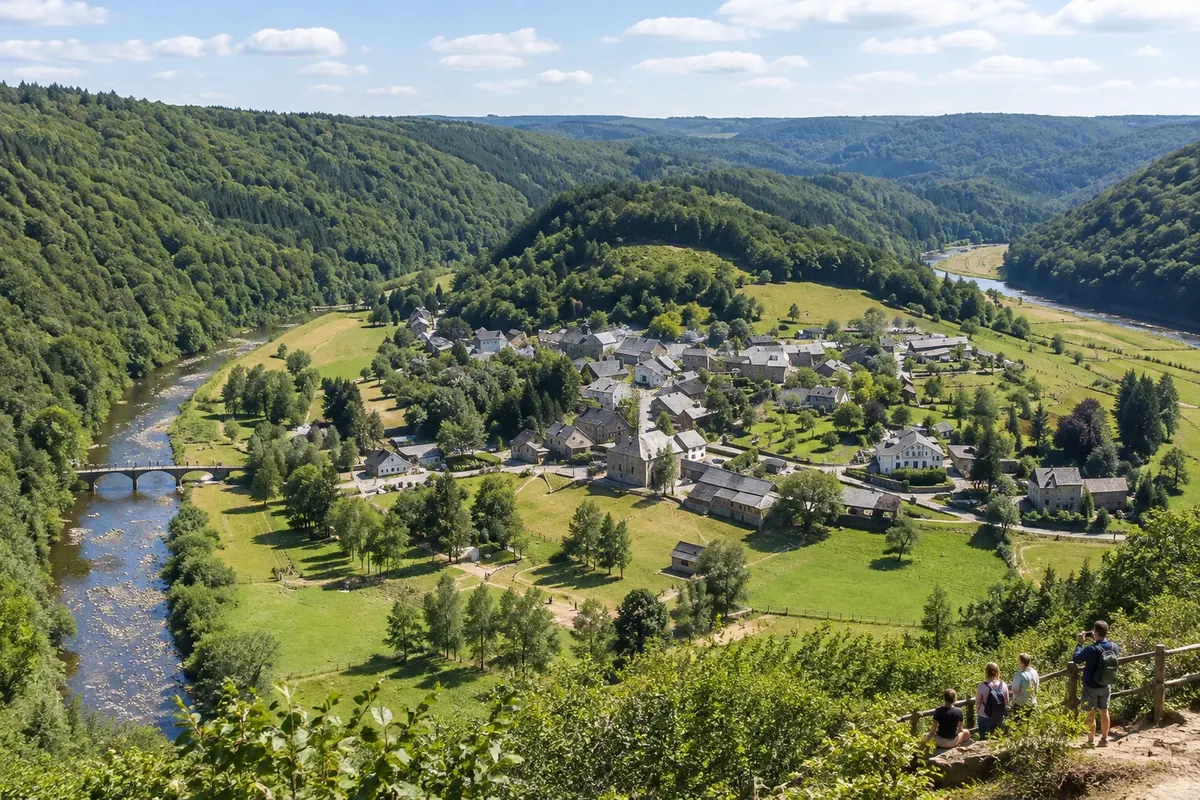
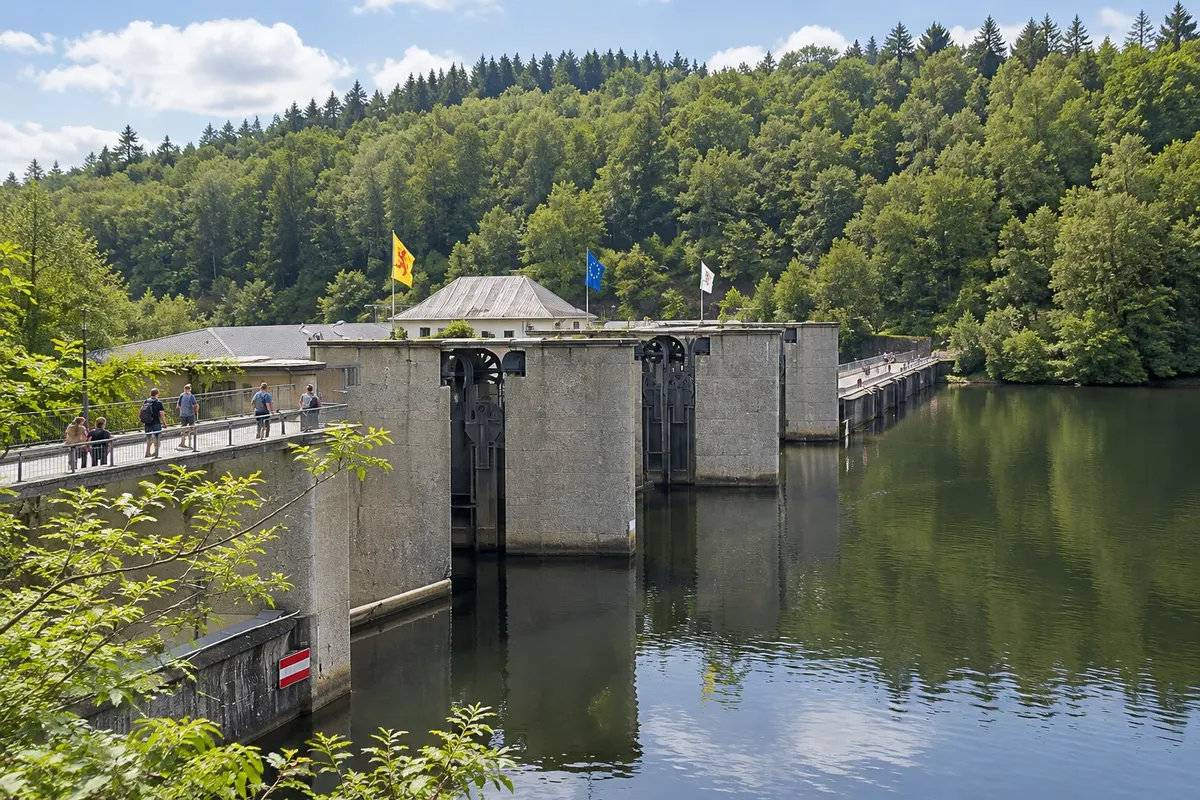
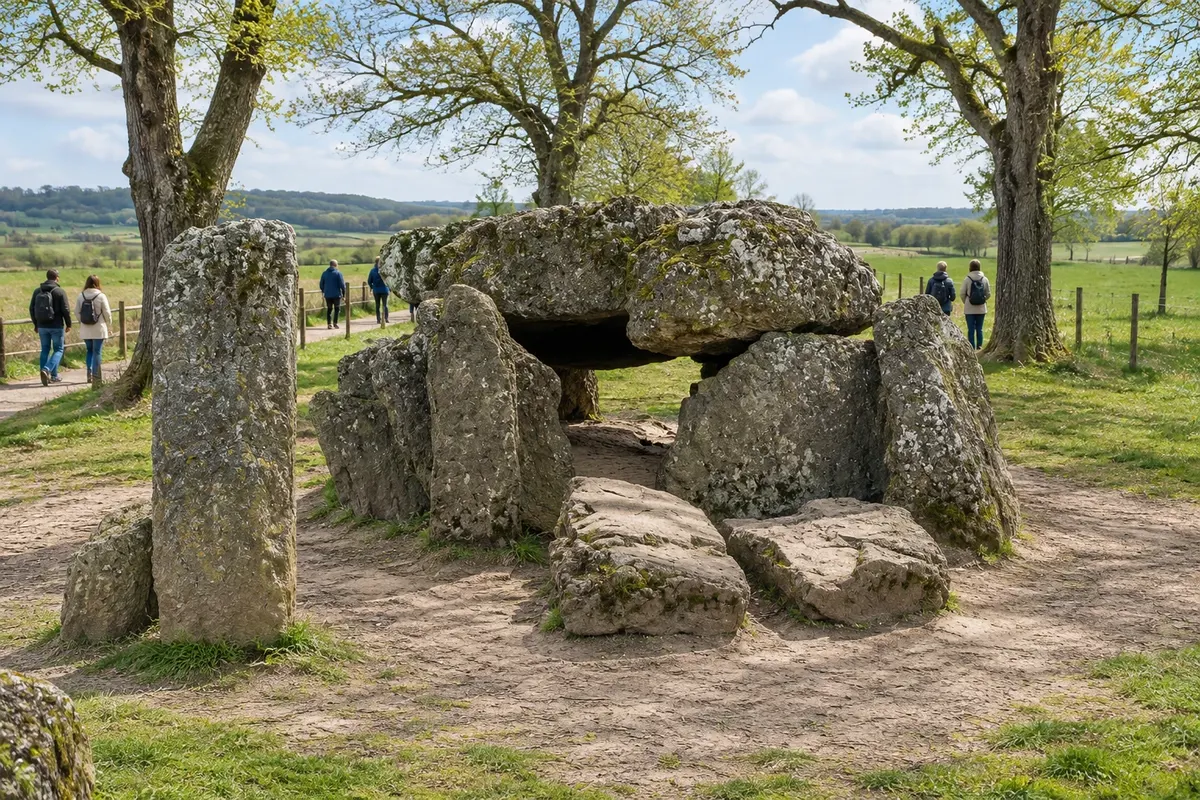
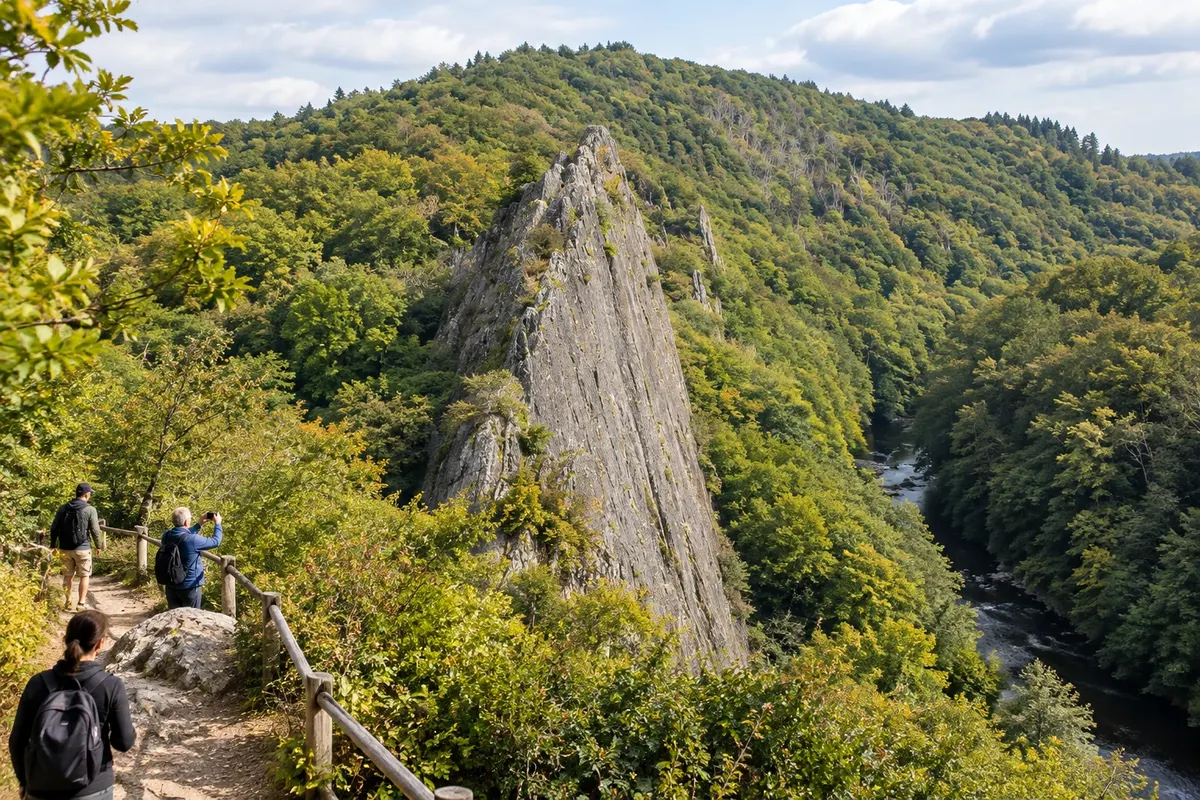
Illustrative images. The pictures in this guide are illustrations based on the real place, not photographs, and may differ from it.

Na voljo v trgovini Google Play Pošljite svoje fotografije

Spoznajte kraj

Pokrajina, ki jo doživite
v svojem ritmu.

The Ardennes are the hilly, forested region of southeast Belgium, in Wallonia, where French is spoken. The massif continues into northern Luxembourg (the Grand Duchy), into the French department of Ardennes and into the German Eifel. The Romans called this woodland Arduenna Silva. Fast rivers like the Ourthe and the Semois have carved deep valleys, and towns grew clinging to those water bends.

It has that name because it was part of the old Duchy of Luxembourg and remained with Belgium in 1839, while the rest became the neighboring country. The provincial capital is Arlon. No passport stamp or different currency: you are still in Belgium.

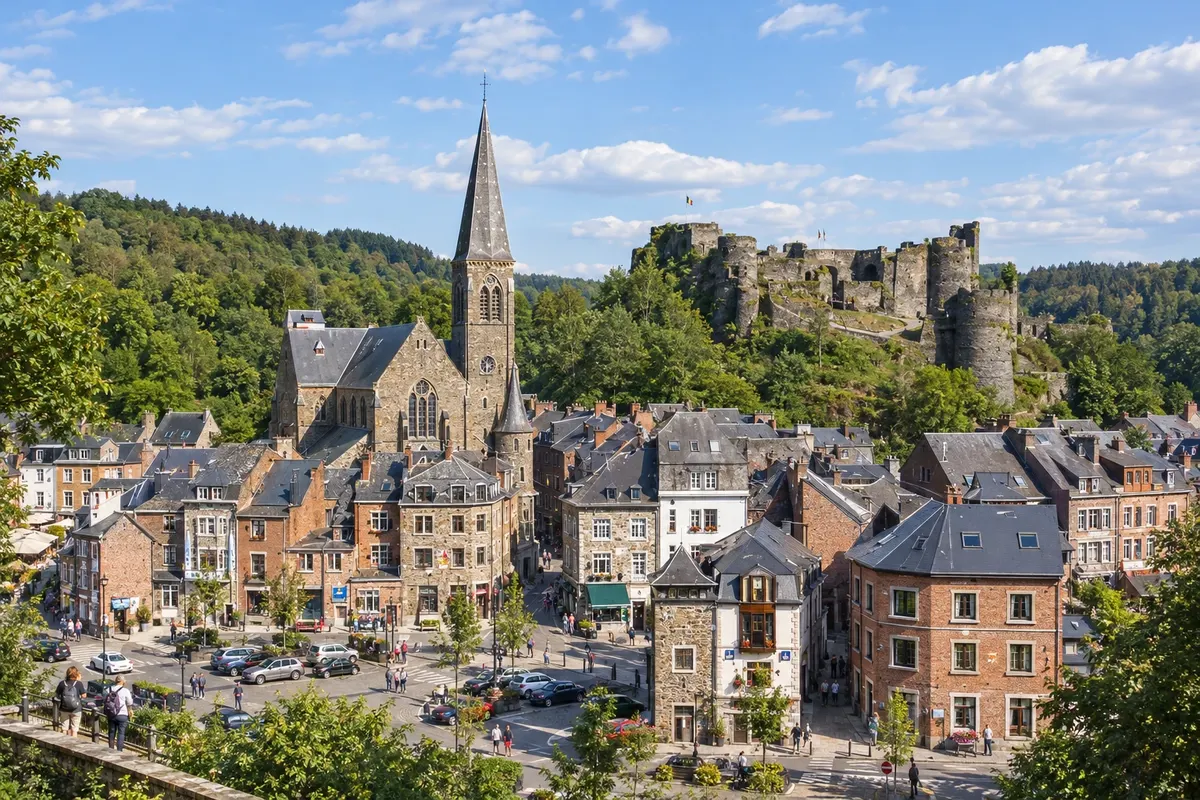
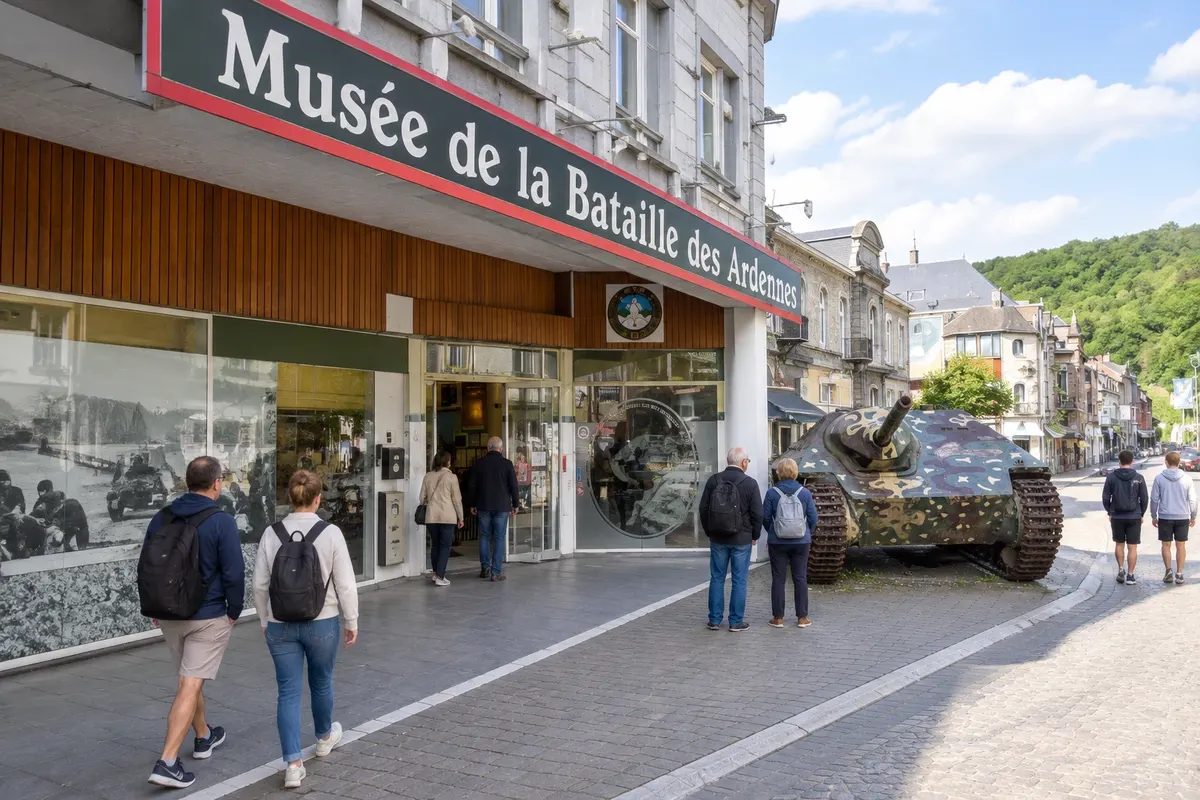
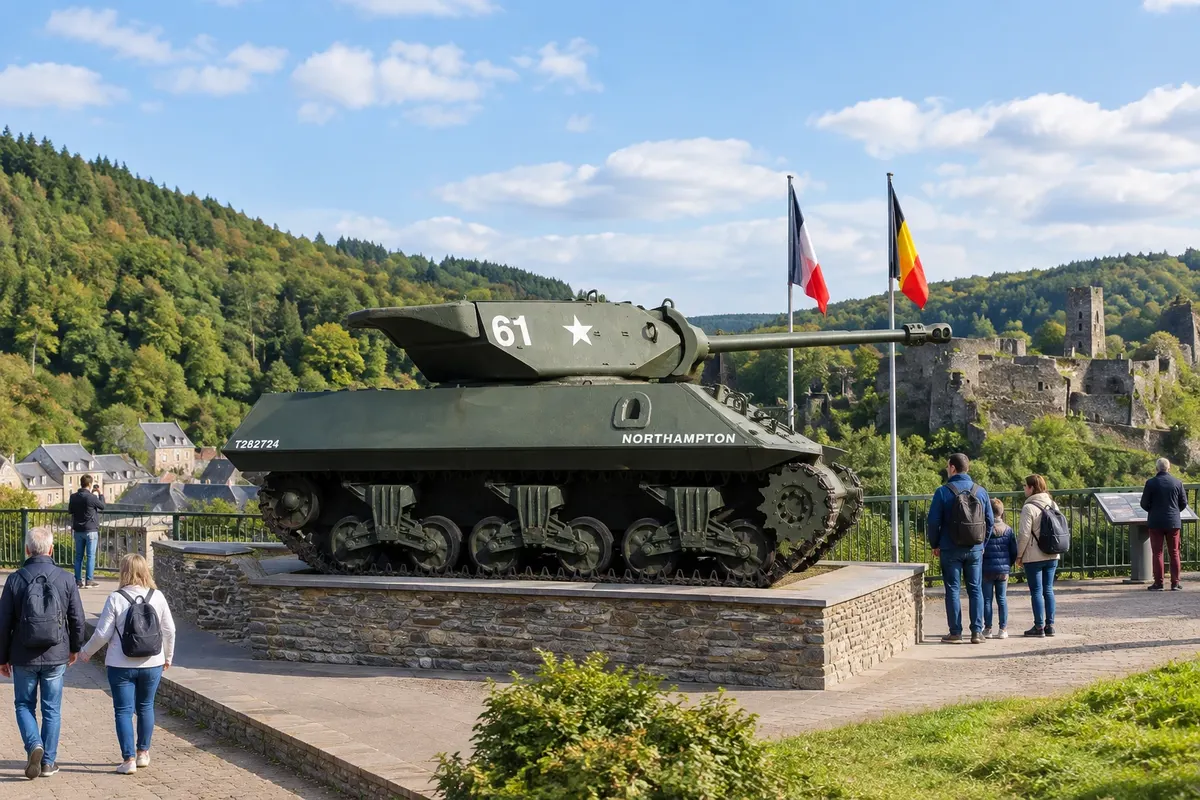
Durbuy grew inside a meander of the Ourthe, at the foot of the castle of the Counts d'Ursel. It has cobbled streets, the Parc des Topiaires with more than 250 boxwood figures, the Rocher de la Falize, the Halle aux Blés and, a few kilometres away, the Wéris dolmens. La Roche-en-Ardenne, further south, was devastated in the Battle of the Ardennes (winter 1944–45). Today it combines the Château féodal, the Musée de la Bataille des Ardennes, the British Achilles tank and the Deister viewpoint.

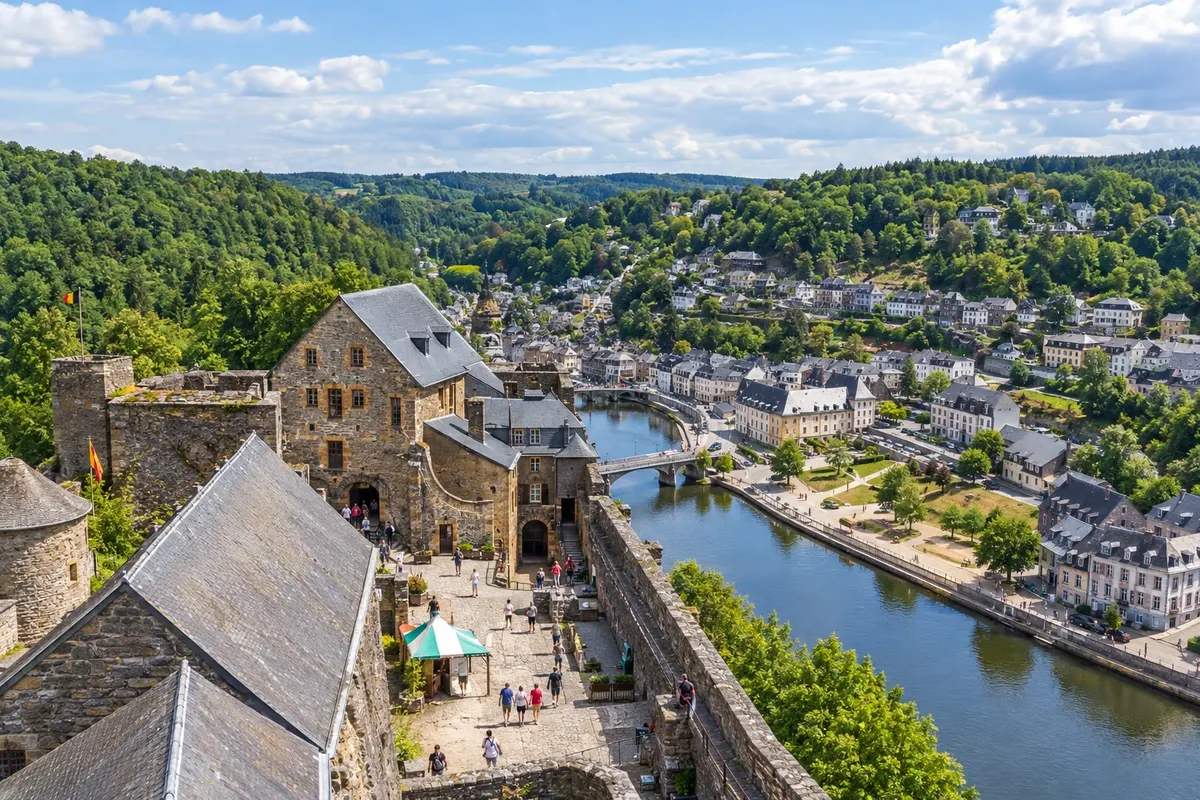
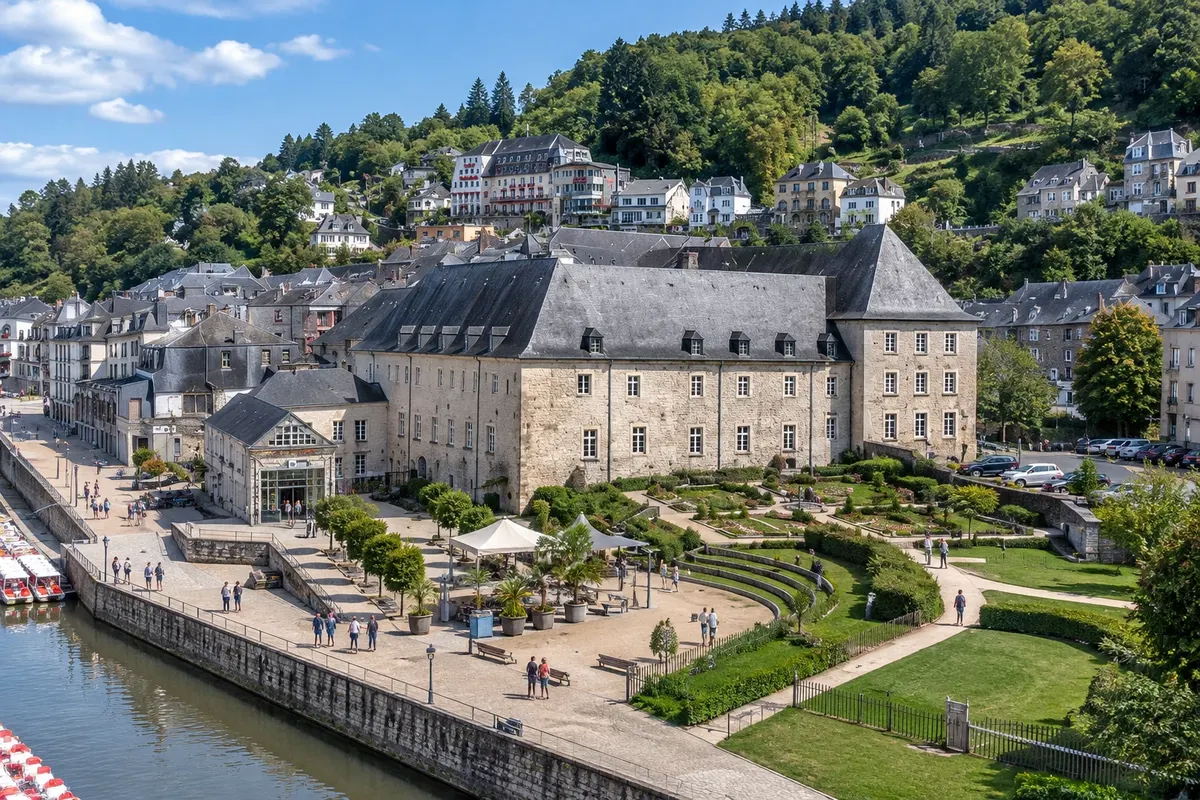
Bouillon, already close to France, sits on a bend of the Semois and is dominated by the Château de Bouillon, linked to Godfrey of Bouillon, leader of the First Crusade. The town also has the Musée ducal and the Bouillon Medieval Experience, and along the road to Botassart is the Tombeau du Géant viewpoint. Trains get you nearby but do not enter these towns, and a car makes things much easier.

This destination brings together 5 cities: Durbuy, La Roche-en-Ardenne, Bouillon, Rochefort, Saint-Hubert.

Delite: WhatsApp
Delite svoja popotniška doživetja s fotografijami Pošljite fotografije vsakega kraja, ki ste ga obiskali. Največje število fotografij na kraj: 5.

Ena destinacija, več poti

Mesta na tej poti

Začnite v enem mestu ali v načrt poti vključite več mest.

Ardennes – lega
DurbuyLa Roche-en-ArdenneBouillonRochefortSaint-Hubert

Obrisi: © NGI-IGN, AdminVector, CC BY 4.0. Priredba: Cidade Turismo.

Kako do tja:Ardennes

Check before you book. From Brussels the simplest route is to rent a car: Durbuy is about an hour and a half away. By train, get off at Barvaux, Marloie or Libramont and continue by bus or taxi.

Predlagana točka prihoda:Durbuy

Doživite kraj

Kaj početi – Ardennes

Basilique Saint-Hubert
Saint-Hubert · Luxembourg · Cerkev

Basilique Saint-Hubert

Former church of the Benedictine abbey of Saint-Hubert, with a 16th-century Gothic nave, Baroque façade with towers of about 60 metres, Romanesque crypt and choir stalls carved with scenes from the life of Saint Hubert. Beside it stands the 18th-century abbey palace.

Bouillon Castle
Bouillon · Luxembourg · Grad

Bouillon Castle

Medieval fortress on three rocky peaks above the Semois, associated with Godofredo de Bulhão and strengthened by Vauban. It has rooms carved into the rock, the Tour d'Autriche and falconry flights.

La Roche-en-Ardenne Castle
La Roche-en-Ardenne · Luxembourg · Grad

La Roche-en-Ardenne Castle

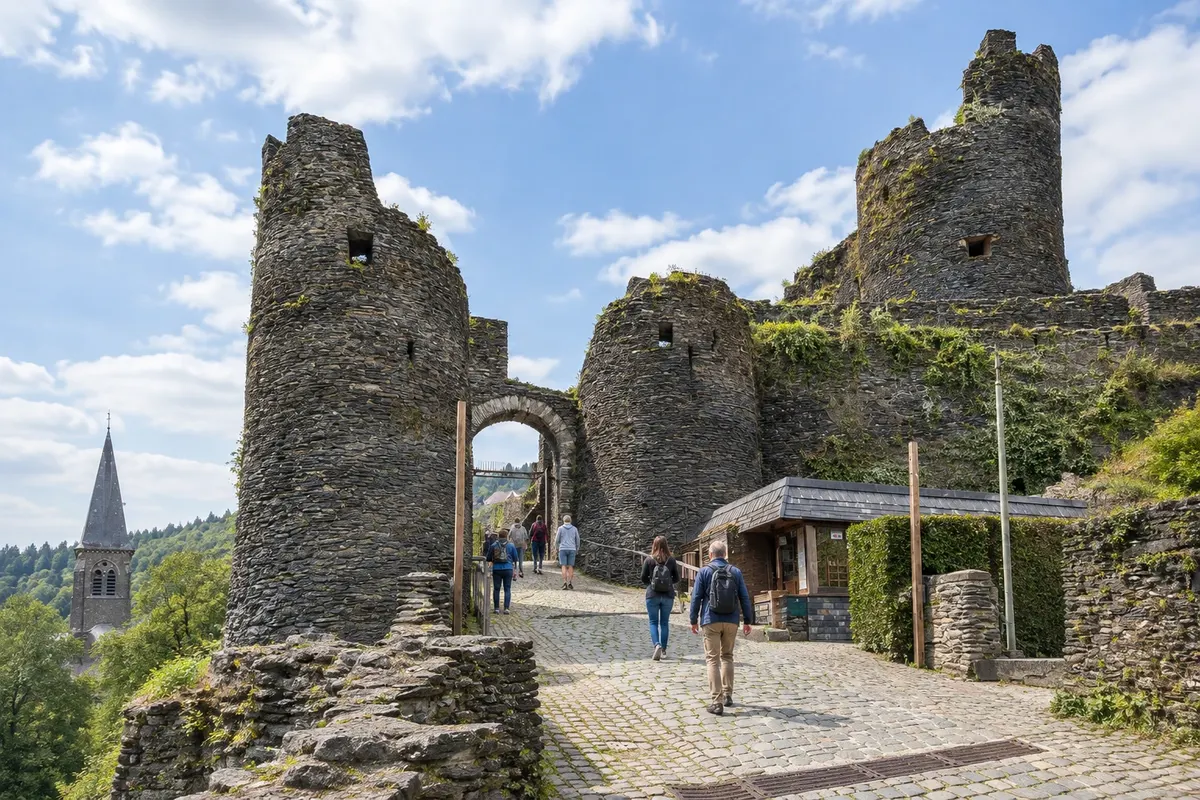
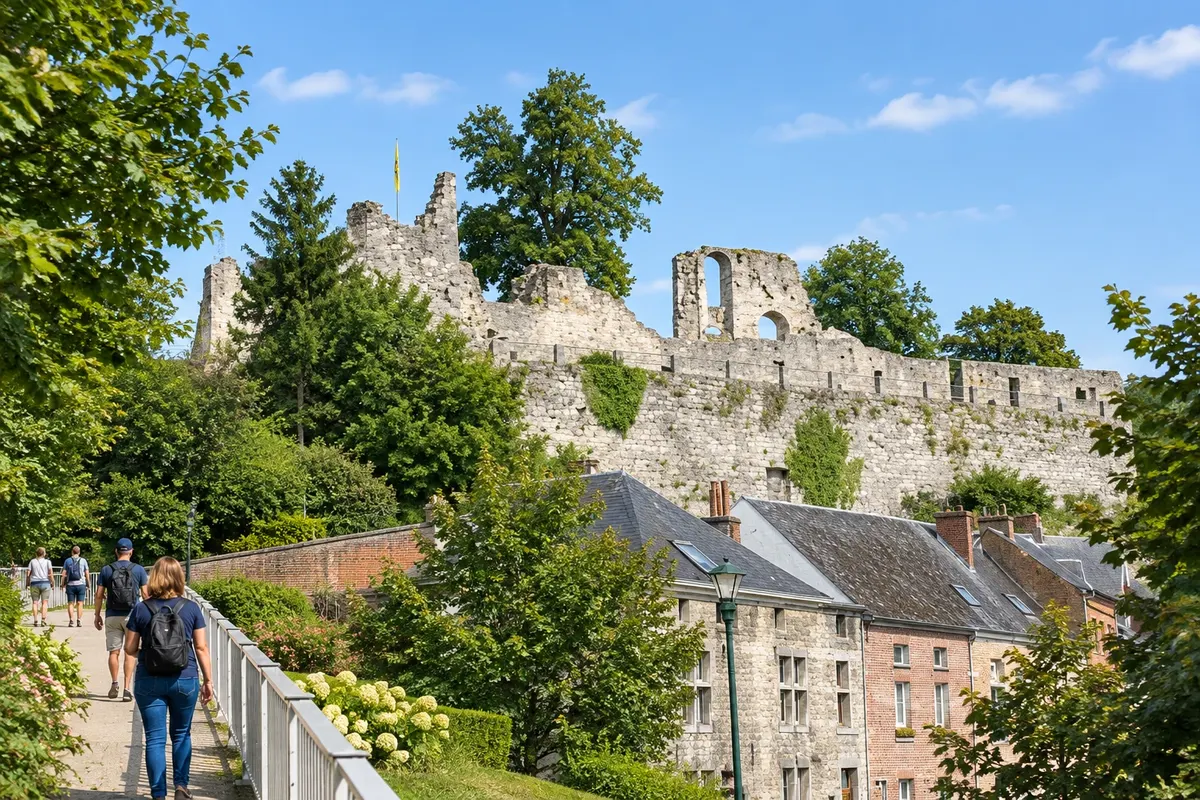
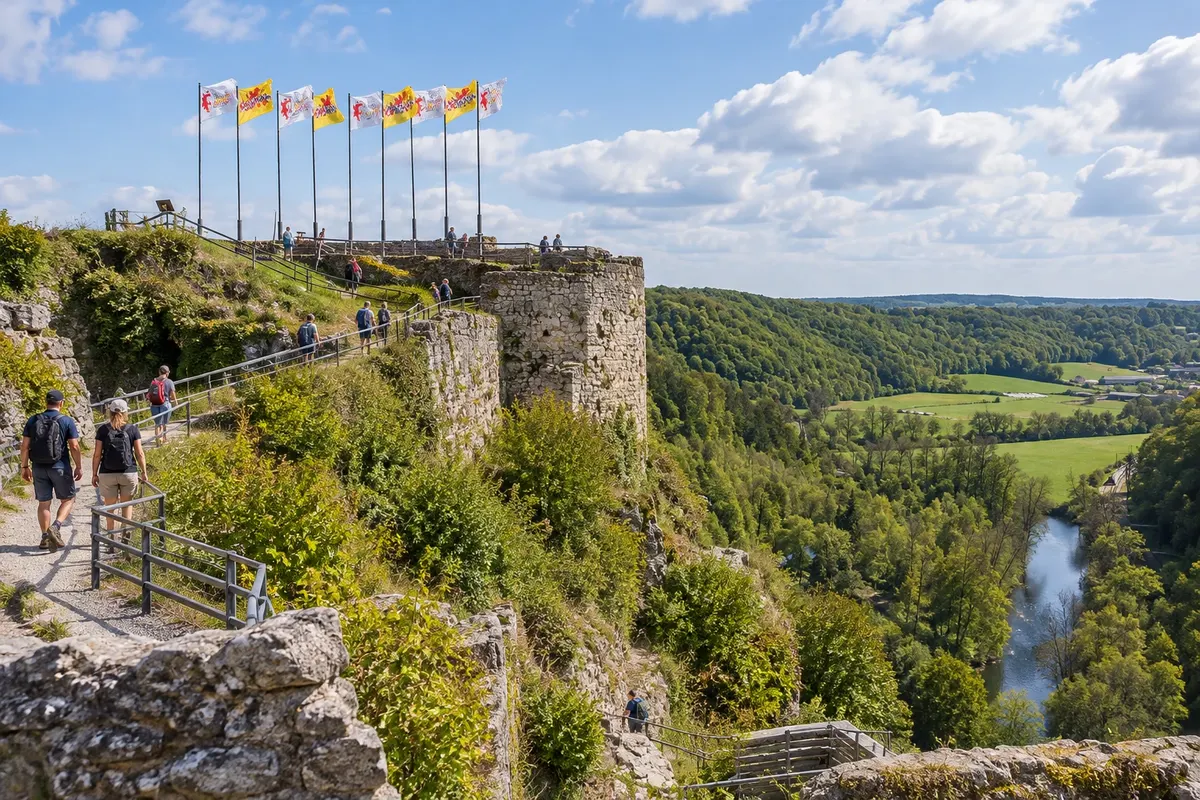
Ruins of a medieval castle on a rocky spur, between a bend of the Ourthe and the Deister hill. It has ramparts to walk, views over the town centre and the legend of the ghost of Countess Berthe.

Han-sur-Lesse Caves
Rochefort · Namur · Grotto

Han-sur-Lesse Caves

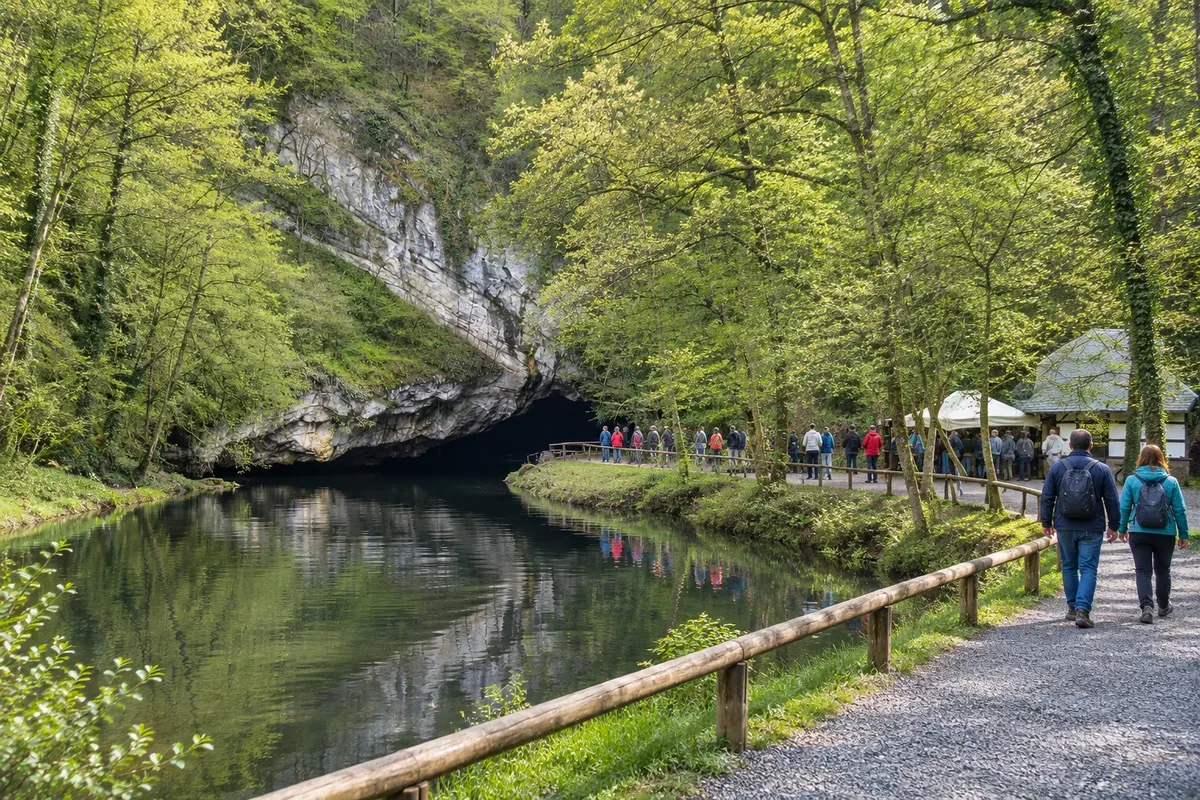
Cave formed by the river Lesse under a limestone hill in Han-sur-Lesse. Access is by an old tram that leaves the village, and the guided tour goes through rooms with stalactites, along the underground river and into the large Salle du Dôme.

Ardennes – prikaži dodatne kraje (23)
Old Town of Durbuy
Durbuy · Luxembourg · Neighborhood

Old Town of Durbuy

Old centre of Durbuy, with cobbled streets, limestone and half-timbered houses, the church Saint-Nicolas and the castle d'Ursel on the rock, all within a former bend of the Ourthe.

Bouillon Medieval Experience
Bouillon · Luxembourg · Muzej

Bouillon Medieval Experience

Multimedia route about Godofredo de Bulhão and the First Crusade, at the foot of the castle on the Quai des Saulx. Former Archéoscope Godefroid de Bouillon, with seven rooms and three projections.

Fourneau Saint-Michel
Saint-Hubert · Luxembourg · Muzej

Fourneau Saint-Michel

Estate about 8 km from Saint-Hubert, in a forest valley, with the abbey's old 1771 blast furnace and an open-air museum of Walloon rural houses brought from various places and reassembled on site.

Battle of the Bulge Museum
La Roche-en-Ardenne · Luxembourg · Muzej

Battle of the Bulge Museum

Musée de la Bataille des Ardennes, with over 2,000 square metres across four floors: about 120 uniformed mannequins, military vehicles, weapons, maps and a wing dedicated to the British troops.

Han-sur-Lesse Wildlife Park
Rochefort · Namur · Animal park

Han-sur-Lesse Wildlife Park

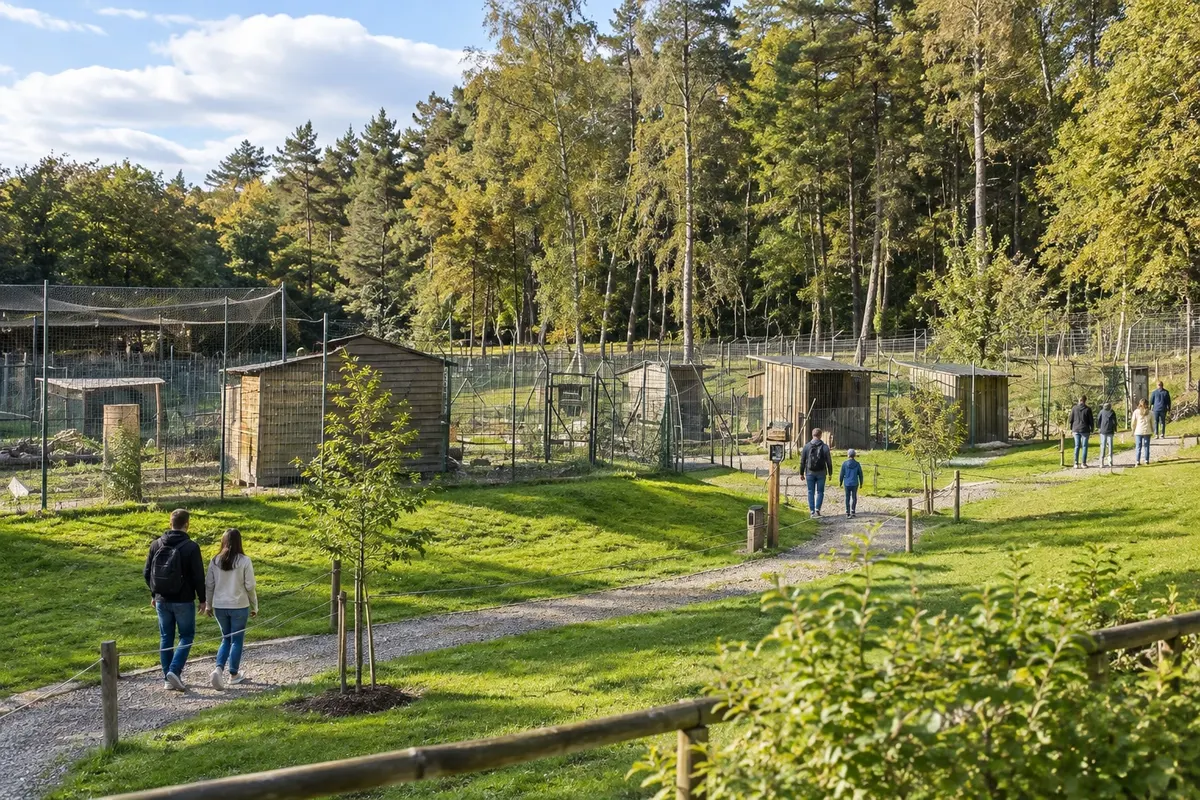
A 250-hectare park of woodland and fields cut by the Lesse, in Han-sur-Lesse, with animals of European wildlife: brown bear, wolf, European bison, lynx and wolverine. The visit is on foot along trails, or in a safari vehicle.

Parc des Topiaires
Durbuy · Luxembourg · Park

Parc des Topiaires

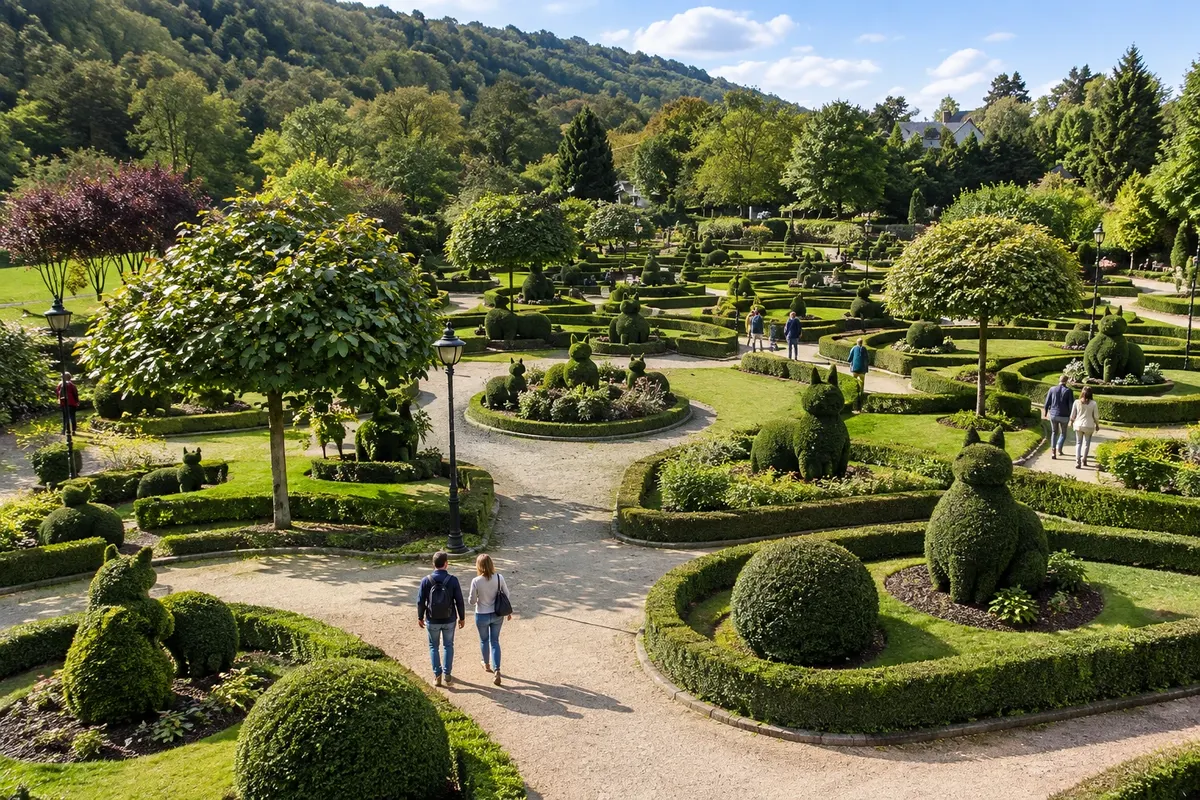
Garden of about 10,000 square meters on the left bank of the Ourthe, with more than 250 figures made from clipped boxwood: animals, characters and even a vegetal Manneken Pis.

Achilles M10 Tank
La Roche-en-Ardenne · Luxembourg · Monument

Achilles M10 Tank

British tank destroyer M10 Achilles, the first armoured vehicle to enter La Roche in the liberation of 11 January 1945. Restored, it is a monument to the 1st Northamptonshire Yeomanry regiment.

Château Comtal de Rochefort
Rochefort · Namur · Grad

Château Comtal de Rochefort

Ruins of the medieval castle that gave Rochefort its name, on a limestone promontory above the river Lomme. First mentioned in 1155, it was converted into a palace in the 17th century and dismantled after the French Revolution.

Ducal Museum
Bouillon · Luxembourg · Muzej

Ducal Museum

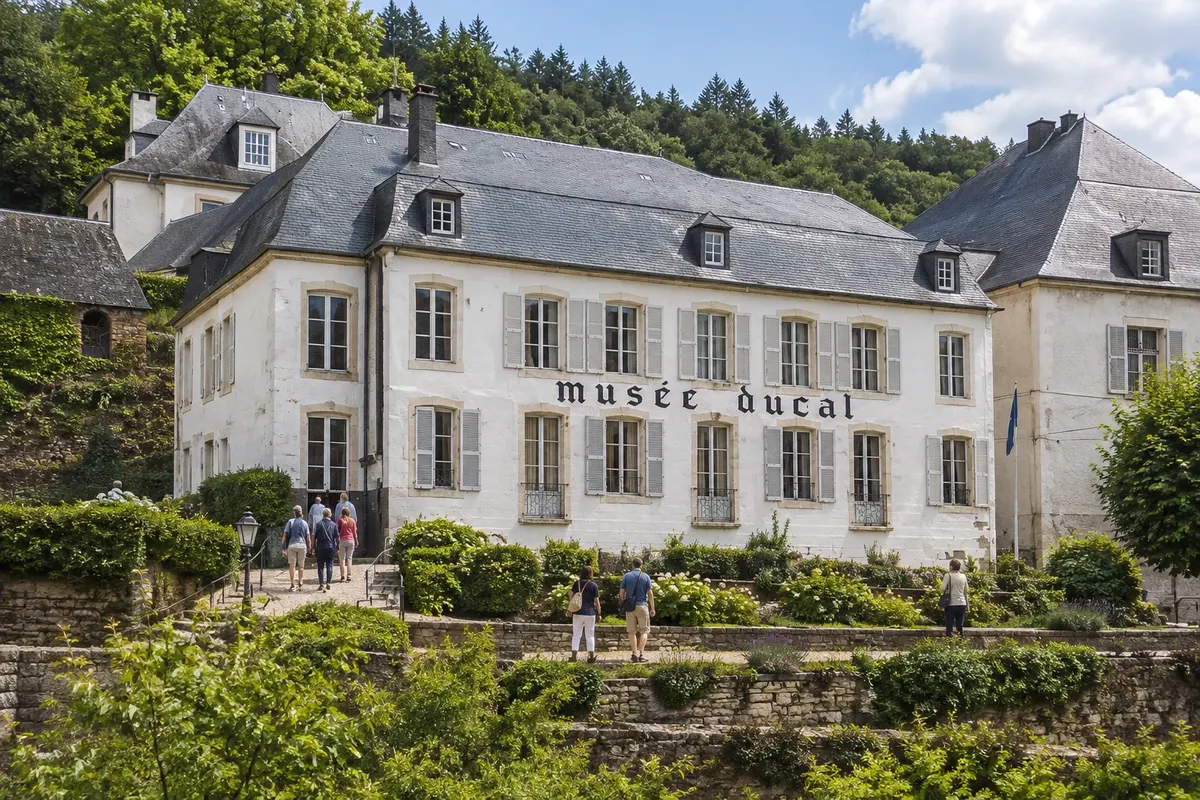
Museum in listed buildings from the 17th and 18th centuries with three sections: Godofredo de Bulhão and the Crusades, the life and trades of the Semois valley, and ironwork.

Parc à gibier de Saint-Hubert
Saint-Hubert · Luxembourg · Animal park

Parc à gibier de Saint-Hubert

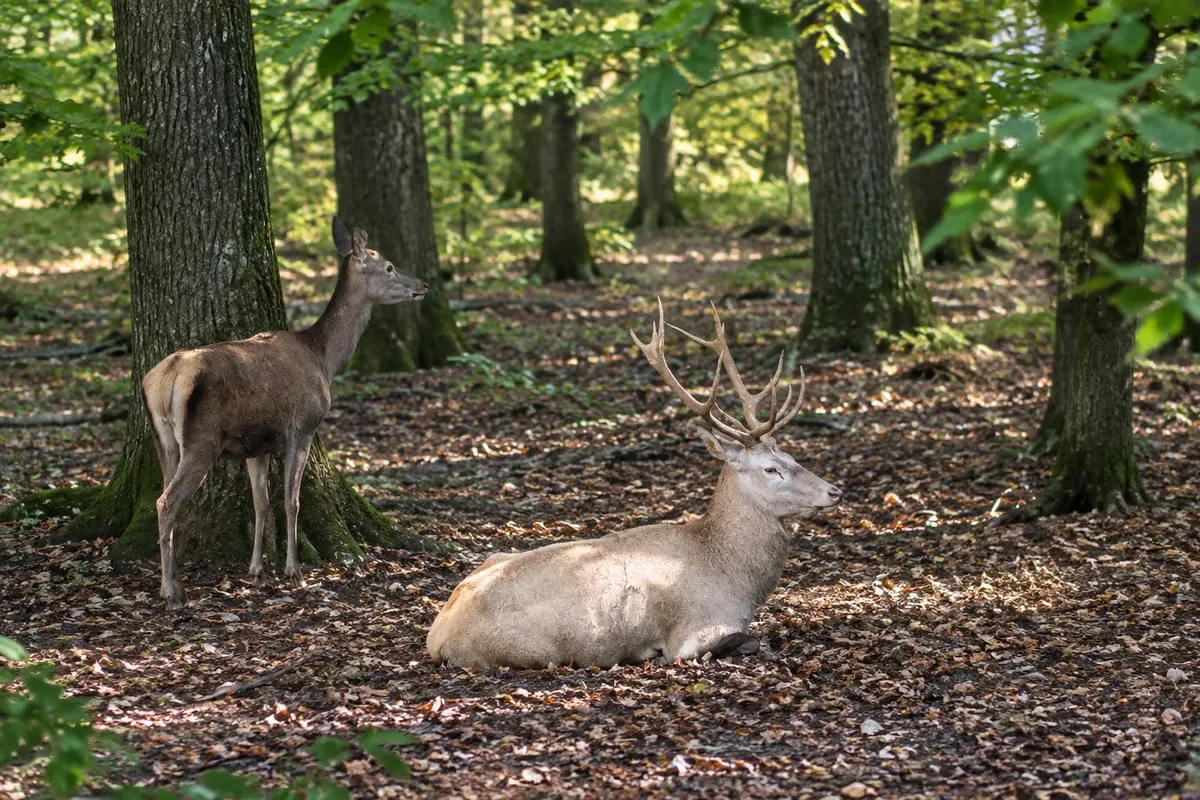
Seventeen-hectare park in the forest near Saint-Hubert, with about 200 Ardennes animals living semi-wild, such as deer, fallow deer, mouflons and wild boar, plus an aviary and trails.

Rocher de la Falize
Durbuy · Luxembourg · Razgledišče

Rocher de la Falize

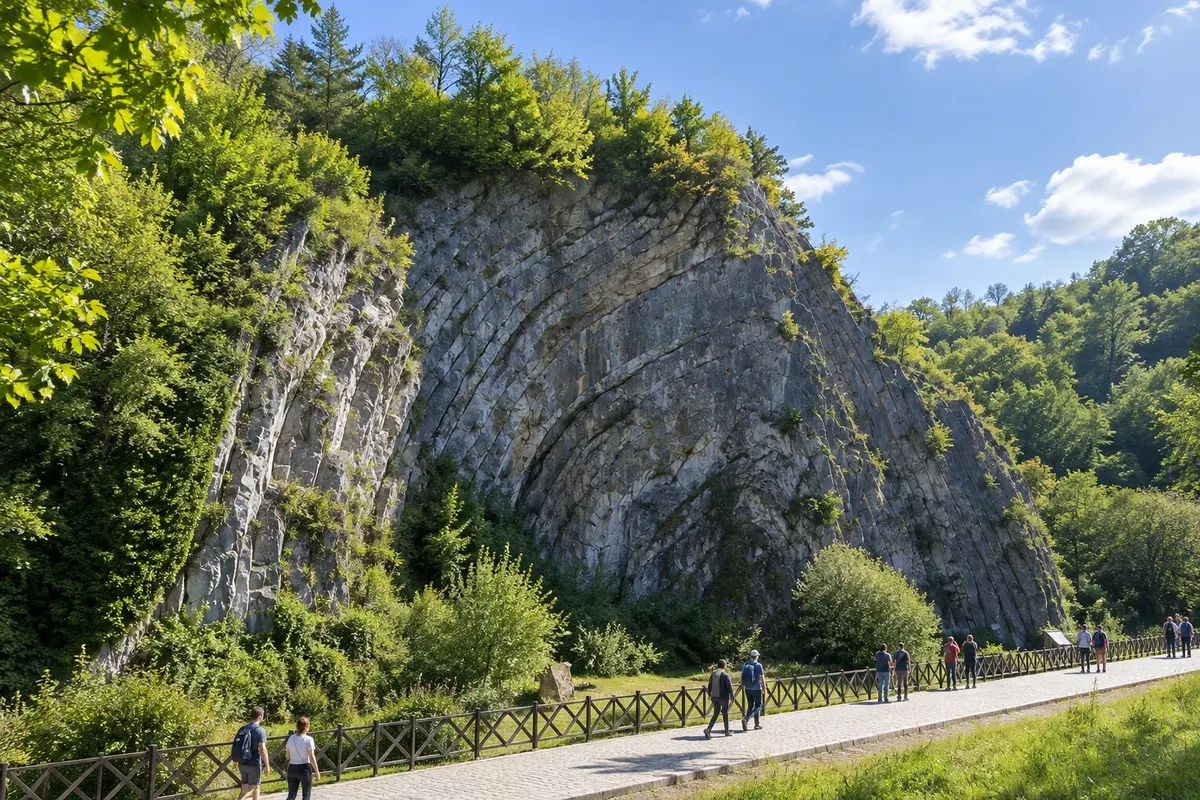
Limestone cliff bent into an arch shape, the anticlinal of Durbuy, first described in 1807. A path skirts the rock, just above the castle.

Belvedere du Deister
La Roche-en-Ardenne · Luxembourg · Razgledišče

Belvedere du Deister

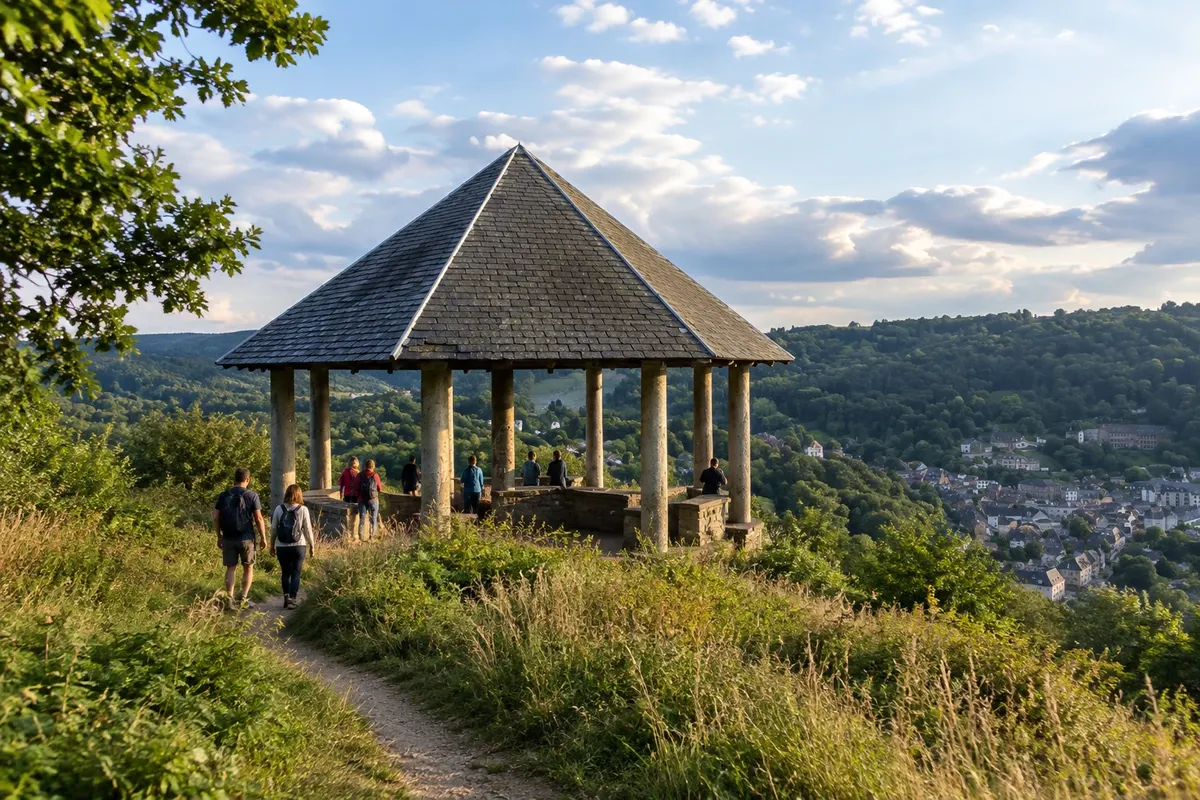
Viewpoint at the top of the Deister, the hill above La Roche. The climb on foot starts near the chapel Sainte-Marguerite and ends with views over the town, the castle and the bend of the Ourthe.

Halle aux Blés (Durbuy History and Art Museum)
Durbuy · Luxembourg · Muzej

Halle aux Blés (Durbuy History and Art Museum)

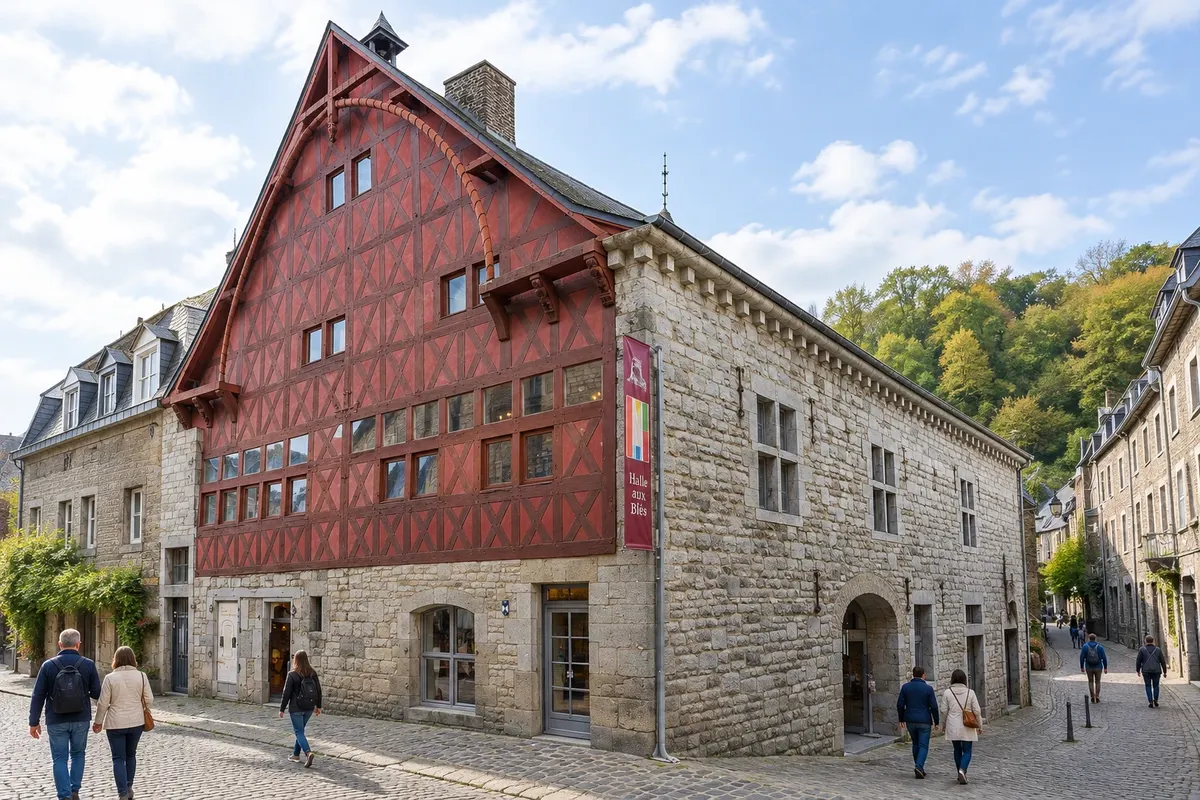
Former timber-framed grain market, mentioned since 1380 and retaining a 16th-century appearance. It houses the DHAM, the museum of Durbuy history and modern and contemporary art.

Malagne – Archaeopark of Rochefort
Rochefort · Namur · Arheološko najdišče

Malagne – Archaeopark of Rochefort

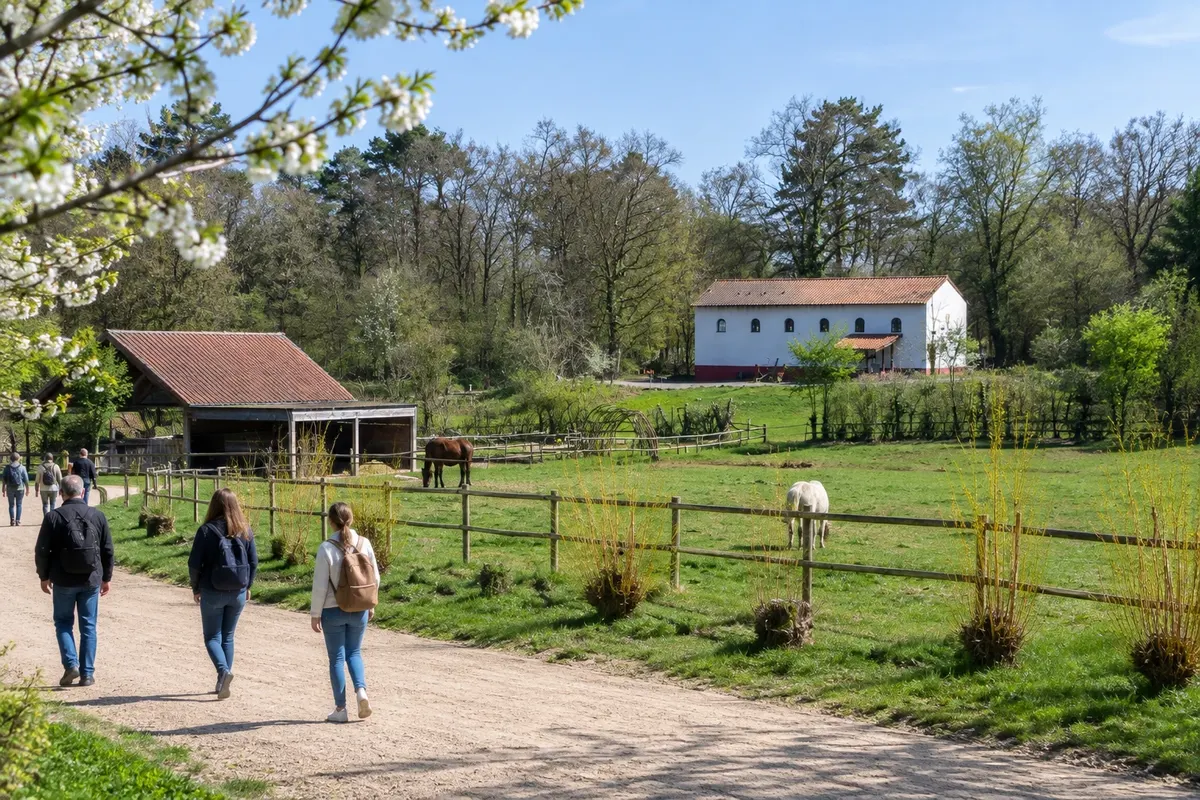
A 14-hectare archaeological park between Rochefort and Jemelle, over the remains of one of the largest Roman villas in northern Gaul, from the 1st century. It features reconstructions, gardens, heritage breeds of animals and workshops.

Tombeau du Géant (Giant's Tomb)
Bouillon · Luxembourg · Razgledišče

Tombeau du Géant (Giant's Tomb)

Viewpoint overlooking an almost complete loop of the Semois around a wooded hill, near Botassart. It is a landscape classified as exceptional heritage of Valônia.

Frahan
Bouillon · Luxembourg · Village

Frahan

Village of stone houses with slate roofs on a peninsula almost entirely encircled by a loop of the Semois, about ten kilometres from Bouillon. It has a church from 1843, old tobacco-drying sheds and ridge trails.

Lac et barrage de Nisramont
La Roche-en-Ardenne · Luxembourg · Jezero

Lac et barrage de Nisramont

An artificial lake of about four kilometres where the western Ourthe and the eastern Ourthe meet, southeast of La Roche. The 116-metre dam supplies water to the valley; around it there are trails, viewpoints and a picnic area.

Wéris Megaliths
Durbuy · Luxembourg · Arheološko najdišče

Wéris Megaliths

Group of prehistoric dolmens and menhirs spread over about 8 km around the village of Wéris, some 10 km from Durbuy, with the Maison des Mégalithes at the center.

Adventure Valley Durbuy
Durbuy · Luxembourg · Adventure park

Adventure Valley Durbuy

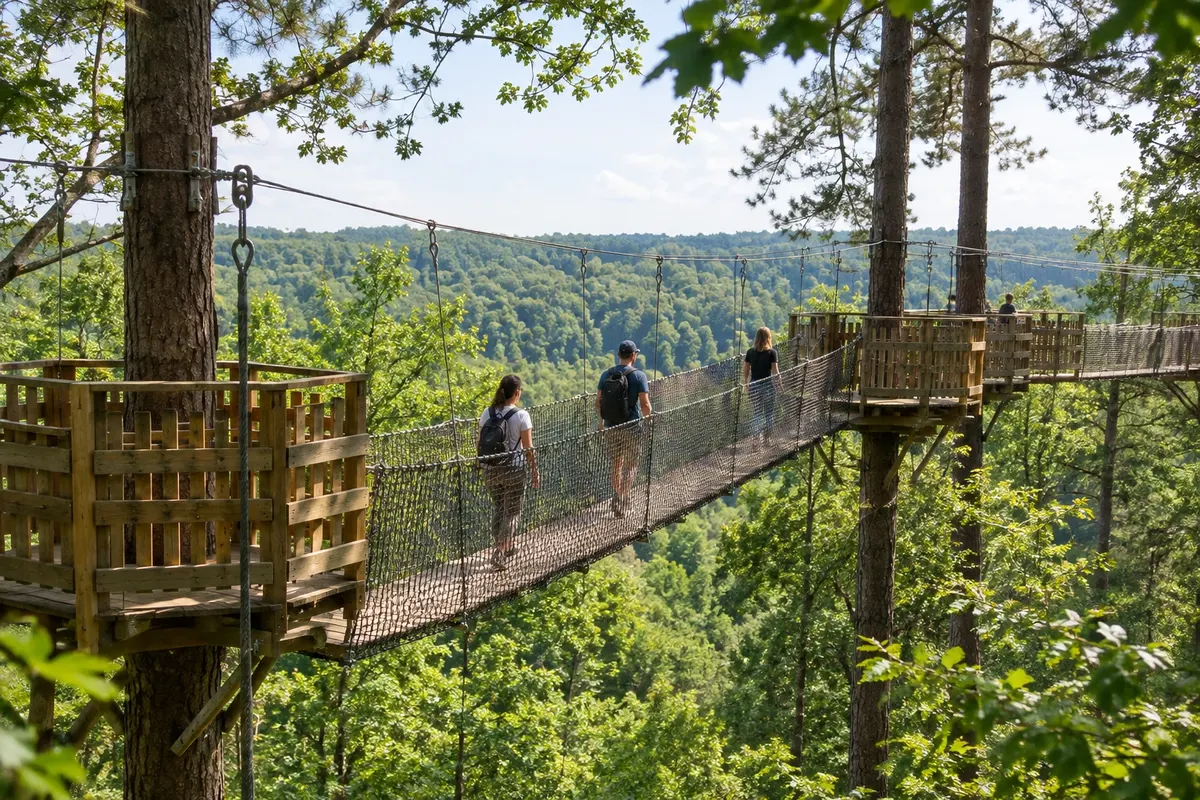
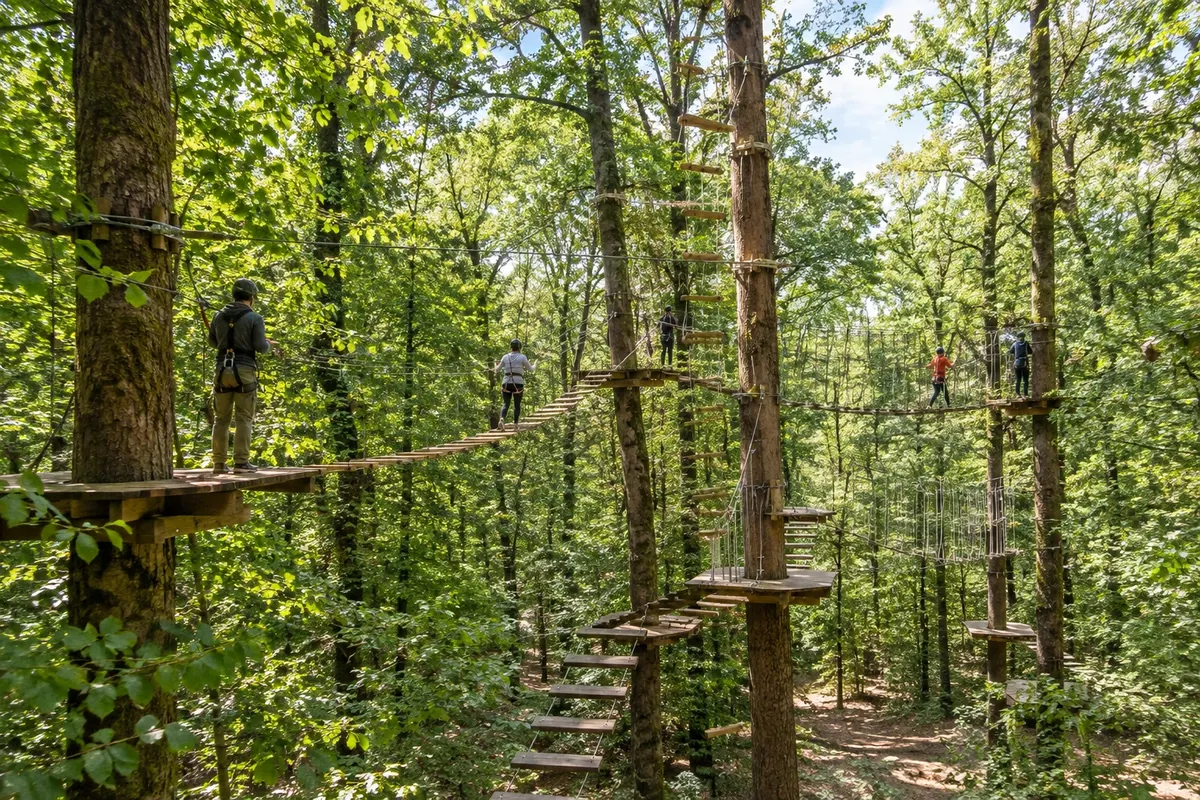
Adventure park south of Durbuy's center, in the forest by the Ourthe: ropes-course circuits, a 566-metre zip line, via ferrata, treetop walkway and indoor activities for rainy days.

Parc à Gibier de La Roche-en-Ardenne
La Roche-en-Ardenne · Luxembourg · Animal park

Parc à Gibier de La Roche-en-Ardenne

Ardennes animal park on the Deister plateau above La Roche. A forest trail passes enclosures with deer, wild boar, wolves, lynx, foxes and mouflon, and ends at a small farm.

Point de vue de Rochehaut
Bouillon · Luxembourg · Razgledišče

Point de vue de Rochehaut

Viewpoint on the edge of the Rochehaut plateau, at about 340 metres altitude, overlooking Frahan and the Semois loop. It is classified as exceptional heritage of Valônia and lies next to the village.

Château fort de Logne
Durbuy · Luxembourg · Grad

Château fort de Logne

Ruins of a fortress of the abbey of Stavelot on a rocky spur between the Ourthe and the Lembrée, near Vieuxville. It was destroyed in 1521 by the troops of Charles V; it has underground chambers, a 56-metre well and a nearby museum.

Le Hérou
La Roche-en-Ardenne · Luxembourg · Natural landscape

Le Hérou

Rock ridge about 1.5 kilometres long that crosses the Ourthe valley near Nadrin, southeast of La Roche. It is 80 to 90 metres high, forces the river to make tight bends, and has been a protected site since 1937.

Kaj izbrati pred odhodom

Izleti – Ardennes

Izhodišče, trajanje, potek, vključene storitve in okvirna cena vsakega izleta.

Grotte de Han: the cave of Han-sur-Lesse

Odhod: Han-sur-Lesse (Rochefort) Guided visit, with admission booked in advance about 1 hour 15 minutes to 2 hours Dopoldne moderate (from 367 to 510 steps)

Han-sur-Lesse is a village in the municipality of Rochefort, in the province of Namur, in Wallonia, the French-speaking part of Belgium. There the river Lesse disappears into a sinkhole, the Gouffre de Belvaux, flows under a limestone hill and re-emerges on the other side. It was the erosion by that river that opened the Grotte de Han, a network of galleries and chambers with stalactites, stalagmites and an underground river. Modern exploration began in 1771, but Bronze Age and Stone Age finds show the site was used long before. There are two guided visits. The Grotte Découverte covers about 1.6 km in roughly 1 hour 15 minutes, with 367 steps. The Grotte Traversée (Cave Journey) crosses the entire cave, about 2 km in roughly 2 hours, with 510 steps, and follows the underground river to the exit. Both include the Origin, a sound-and-light show in one of the large chambers. Tours are in French and Dutch; you can request another language from the guide.

Kraji na poti: Han-sur-Lesse, Domaine des Grottes de Han, Grotte de Han, Lesse.

Vključuje: Guided visit and the sound-and-light show. There is an admission ticket, purchased in advance at the online box office, with a set date. The PassHan bundles the cave and the Parc animalier, with visits on different days. Check the current timetable.

Nasvet: The temperature inside the cave stays around 9 °C year-round and the air is humid: bring a coat and closed shoes, even in summer. There is no toilet inside the cave, flash photography is prohibited and the visit is not accessible for wheelchairs or strollers. In the village there is no parking for the estate; use the municipal car parks.

Najboljši čas za obisk: All year round, with a calendar that changes by season: generally open every day from April to October and during school holidays, and fewer days in winter. Check the calendar before you go.

Parc animalier de Han: on foot and by Safari-bus

Odhod: Han-sur-Lesse (Rochefort) Hike on foot and guided safari bus about 1 hour 30 minutes to half a day Popoldne easy (4 km trail)

The Parc animalier is part of the Domaine des Grottes de Han and covers 250 hectares of woodland and fields around the cave hill. The park brings together species of European wildlife, including those referred to as the European Big Five: brown bear, wolf, European bison, lynx and wolverine. You may also see Przewalski’s horses, reindeer, aurochs, deer and Eurasian eagle-owls. The bears are located on the Colline aux Ours, an area of nearly 2 hectares. There are two ways to visit. On foot, a 4 km trail takes you at your own pace and ends at the Gouffre de Belvaux, where the Lesse goes underground. By safari bus, a driver-guide tours the park in about 1 hour 30 minutes and points out animals along the way. You can combine them: walk the trail and catch the safari bus at the Gouffre de Belvaux to finish the circuit. The animals live in large enclosures, and seeing a given species depends on the day.

Kraji na poti: Parc animalier de Han, Gouffre de Belvaux, Colline aux Ours, Han-sur-Lesse.

Vključuje: Hike on foot and the Safari-bus route, depending on the ticket chosen. There is a ticket, purchased in advance via the online ticket office; the PassHan bundles the park and the cave. Check the current table.

Nasvet: Allow half a day for the hike with the Safari-bus. Dogs are not allowed in the park, nor small ones. Bring binoculars and a raincoat: much of the route is outdoors. In autumn, the estate usually organises special visits during the rutting season, the deer mating call.

Najboljši čas za obisk: All year round, with a calendar that changes by season. From September to mid-October is the rutting season of the deer; in winter the Safari-bus timetable is shorter.

Durbuy: old town, Halle aux Blés and the Falize anticline

Odhod: Durbuy town centre Peš Približno 2 uri Dopoldne easy (cobblestone streets, short inclines)

Durbuy lies on the banks of the Ourthe River in the province of Luxembourg and was granted city status in 1331 by John, Count of Luxembourg and King of Bohemia. The old town fits into a short walk, with cobbled streets and well-preserved old houses. The Halle aux Blés, the former grain market, is a timber-framed building mentioned from 1380 and in its present form since the 1530s; it houses the DHAM, a museum of modern and contemporary art. The Château de Durbuy, belonging to the counts of Ursel, sits on a limestone outcrop by the Ourthe; it is a private residence and is seen from the outside. Across the river is the Rocher de la Falize, Durbuy’s anticline, a fold of limestone layers in an arch shape about 300 million years old. The Géobalade de Durbuy, from the Geopark Famenne-Ardenne, brings all this together in a 2.5 km loop of about 50 minutes: the Ourthe, the anticline, the castle, the old town and the Parc des Topiaires.

Kraji na poti: Durbuy, Halle aux Blés, Château de Durbuy, Rocher de la Falize, Ourthe.

Vključuje: Self-guided walk. The streets and the anticline are freely accessible; the DHAM charges admission. Check the current rate.

Nasvet: Arrive early on weekends and in summer: the old centre is small and gets crowded. Leave the car in the parking lots at the town entrance and explore on foot. Nearby, the dolmens and menhirs of Wéris, Neolithic monuments, make a good addition to the day.

Najboljši čas za obisk: All year. From April to October shops and cafés are open more days; in December the town usually puts up Christmas decorations.

Parc des Topiaires de Durbuy

Odhod: Durbuy town centre Peš Približno 1 uro Popoldne Lahko

The Parc des Topiaires sits on the banks of the Ourthe, a few minutes’ walk from Durbuy’s old town. Across roughly 10,000 m² it features more than 250 topiaries, figures sculpted in boxwood, with some in holly and yew: animals, characters and scenes. The shapes change with the seasons, and in summer the garden adds almost 40 flower beds. The park has three areas: the topiary art area, the Jardin du bien-être and the Herba Sana, an herbal garden with signs identifying each species. Panels explain the region’s fauna and flora, and there is a riddle game to do during the visit. Guided tours are also available.

Kraji na poti: Parc des Topiaires, Herba Sana, Ourthe.

Vključuje: Self-guided visit. There is an entrance fee, with a combined-ticket option; the park parking is charged separately. Check the current price list.

Nasvet: Combine with the walk through the old town and the anticlinal, which are on the same route as the Géobalade. With children, the riddle game helps explore the whole garden.

Najboljši čas za obisk: From mid-February until the end of autumn; it usually closes for part of the winter. In summer the garden has flower beds. Check the calendar.

Kayaking on the Ourthe from Durbuy or from La Roche-en-Ardenne

Odhod: Durbuy (Barvaux) or La Roche-en-Ardenne Rented kayak, with transport to the put-in point about 2 to 5 hours Ves dan easy to moderate, depending on the section

Descending the Ourthe by kayak is one of the summer activities in the Ardennes. rental companies take the group by van to the starting point, and the descent finishes at their base, or the other way around. In Durbuy, the family-friendly stretch between Durbuy and Bomal is about 8 km and takes 2 to 2.5 hours. There are also longer downstream sections that take a full day and depend on the water level. In La Roche-en-Ardenne, the long route starts at the Nisramont dam, where the Western and Eastern Ourthe meet, and descends to the town in 4 to 5 hours over about 18 km, with gentle rapids and the Hérou gorge along the way. For children and beginners, the short section departs from Maboge and arrives in La Roche.

Kraji na poti: Ourthe, Durbuy, Barvaux, Bomal, Nisramont, Maboge, La Roche-en-Ardenne.

Vključuje: Generally: kayak, paddle, life jacket, dry bag and return or outbound transport. There are several rental companies; book in advance, preferably online. Check the current table.

Nasvet: Knowing how to swim is recommended, especially for children; with small children, stay on stretches up to 9 km. Wear closed shoes and quick-dry clothing and keep your phone and documents in the dry bag. After heavy rain or in a dry summer, long stretches may close: confirm the day before.

Najboljši čas za obisk: The main season runs from April to September, with more activity in July and August. Outside that season, it depends on water levels and the rental company.

Château féodal de La Roche-en-Ardenne

Odhod: La Roche-en-Ardenne town centre On foot, with uphill Približno 45 minut Dopoldne moderate (ascent, uneven surface)

La Roche-en-Ardenne sits on a bend of the Ourthe, between forested hills. On a rocky spur in the middle of the town are the dark ruins of the Château féodal, built between the 11th and 13th centuries and used until the 18th century. From the top you can see the river, rooftops, and the slopes of the Deister. The visit follows walls, towers and ruined rooms, with panels about the castle’s history and the counts of La Roche. At certain times of year there is archery, workshops, falconry demonstrations, guided tours, and sound-and-light shows. According to legend, on some summer evenings at dusk and in good weather, the ghost of Countess Berthe de La Roche appears in the ruins where she died; the castle stages a show about her.

Kraji na poti: Château féodal de La Roche, La Roche-en-Ardenne, Ourthe.

Vključuje: Self-guided visit. There is an entrance fee; activities and performances may be charged separately. Check the current price list.

Nasvet: Wear shoes with firm soles: the climb and the surfaces of the ruins are uneven. With snow or ice, the castle may close. Falconry activities and performances take place only on certain dates; check the schedule beforehand.

Najboljši čas za obisk: Open year-round, with longer hours from April to October and shorter hours from November to March. Closed on Christmas, New Year’s Day, and the weekend of La Roche carnival.

Prikaži dodatne izlete (10)

La Roche-en-Ardenne and the Battle of the Bulge: museum, tanks and memorials

Odhod: La Roche-en-Ardenne town centre Peš Približno 2 uri Popoldne Lahko

In World War II, La Roche-en-Ardenne was caught in the middle of the Battle of the Bulge, the German offensive that began on December 16, 1944. German troops retook the town in December, bombings destroyed much of it and 116 residents were killed. The Allies reoccupied it in January 1945. The Musée de la Bataille des Ardennes occupies two floors in the town centre. Dioramas show American and German troops with their equipment, and one section covers the role of the British in the counter-offensive from January 3 to 16, 1945, which liberated villages on the left bank of the Ourthe. On the second floor are uniforms and items donated by veterans of the regiments that liberated the town. Around the town, two tanks serve as memorials: an American one in the Quai de l'Ourthe car park, in tribute to the U.S. 2nd and 3rd Armored Divisions, and a British one in tribute to the 1st Northamptonshire Armoured Regiment, which helped liberate the town in January 1945.

Kraji na poti: Musée de la Bataille des Ardennes, La Roche-en-Ardenne, Quai de l'Ourthe.

Vključuje: Self-guided visit. The museum charges an entrance fee; the tanks and memorials are in public space with free access. Check the current fee schedule.

Nasvet: This is a place of remembrance: visit with respect. Wheelchair access applies only to the ground floor of the museum. Opening days change throughout the year; check before you go.

Najboljši čas za obisk: All year. In December and January the region usually marks anniversaries of the battle.

La Roche viewpoints and trails: Deister, Nisramont and Hérou

Odhod: La Roche-en-Ardenne On foot and by car to the start of the trails Približno 4 ure Ves dan moderate (steep climbs)

The Belvédère du Deister is the classic viewpoint over La Roche. You reach it on foot via the waymarked routes No. 4 and 11, the Deister paths, by a route that climbs from the Sainte-Marguerite chapel; the ascent requires some effort. From the top you can see the town nestled in the bend of the Ourthe, with the castle ruins at its centre. Upstream, the Lac de Nisramont is the lake formed where the western and eastern Ourthe meet, with a dam 116 m long. Around the lake and on the slopes there are forest trails. Nearby, in Nadrin, in the municipality of Houffalize, lies Le Hérou, a rocky ridge almost 1,000 m long and over 80 m high, enclosed by the meanders of the Ourthe. It has been a protected landscape since 1937. From the viewpoint you can see the river bends, and several trails descend to the ridge and the water.

Kraji na poti: Belvédère du Deister, Lac de Nisramont, Le Hérou, Nadrin, Ourthe.

Vključuje: Self-guided outing. The viewpoints and trails are freely accessible.

Nasvet: The descents to Hérou are for those used to trails: wear boots and bring water. Ask for the map of waymarked walks at the Maison du Tourisme in La Roche. In winter, when snowy, there are cross-country ski tracks in Samrée, about 8 km away, with no guarantee of snow.

Najboljši čas za obisk: From April to October, with drier trails. In autumn the forest changes colour; in winter there may be mud, ice and snow.

Château fort de Bouillon, the castle of Godfrey of Bouillon

Odhod: Bouillon town centre On foot, with uphill Približno 2 uri Dopoldne moderate (stairs and uneven surface)

Bouillon sits on a bend of the Semois River in the south of the province of Luxembourg, near the border with France. The Château fort crowns a rocky ridge above the town and is mentioned in documents from 988. Godefroid de Bouillon (Godfrey of Bouillon) inherited the castle in 1082 and mortgaged it to the prince-bishop of Liège to fund his departure on the First Crusade in 1096. In the 17th century, Vauban, military engineer to Louis XIV, adapted the fortress for artillery, and much of its present appearance dates from him. The castle remained in military use until 1830. The visit passes through corridors and vaulted rooms carved into the rock, such as the Salle Godefroy, an old torture chamber and the Musée Scriptura, about the history of writing and schooling. From the Tour d'Autriche you can see all of Bouillon and the Semois bend. In the courtyard, the castle often stages falconry demonstrations, with eagles, falcons and owls flying free, several times a day during the season.

Kraji na poti: Château fort de Bouillon, Salle Godefroy, Tour d'Autriche, Semois, Bouillon.

Vključuje: Self-guided visit; the falconry demonstration is included on days it takes place. There is an admission fee; nighttime visits and special shows are charged separately. Check the current rate.

Nasvet: Wear closed shoes: there are stairs and dark, narrow passages. Check the schedule for falconry presentations and arrive early to the courtyard. During school holidays, the castle often runs torchlit night visits.

Najboljši čas za obisk: All year. The falconry season generally runs from the start of the European spring, in March, until November 11.

Bouillon Medieval Experience (Archéoscope Godefroid de Bouillon)

Odhod: Bouillon town centre Peš Približno 1 uro Popoldne Lahko

The former Archéoscope Godefroid de Bouillon, now called Bouillon Medieval Experience, is on Quai des Saulx, on the bank of the Semois, at the foot of the castle. It is a covered route of seven themed rooms and three large audiovisual shows, with reenactments and projections. Visitors follow a knight and his squire on their way to the Holy Land and learn the story of Godfrey of Bouillon and the First Crusade. It works well as an introduction before climbing to the castle, or as an activity on a rainy day.

Kraji na poti: Bouillon Medieval Experience, Quai des Saulx, Bouillon.

Vključuje: Self-guided visit. There is an admission ticket, and sometimes a combined ticket with the castle. Check the current table.

Nasvet: Visit this before the castle: the context helps you understand the fortress rooms. The shows use sound and light in dark rooms.

Najboljši čas za obisk: Most of the year, with hours that change by season. Check the calendar.

Semois viewpoints: Tombeau du Géant and Rochehaut

Odhod: Bouillon Own car, with short walks Približno 3 ure Popoldne easy; moderate on the trails

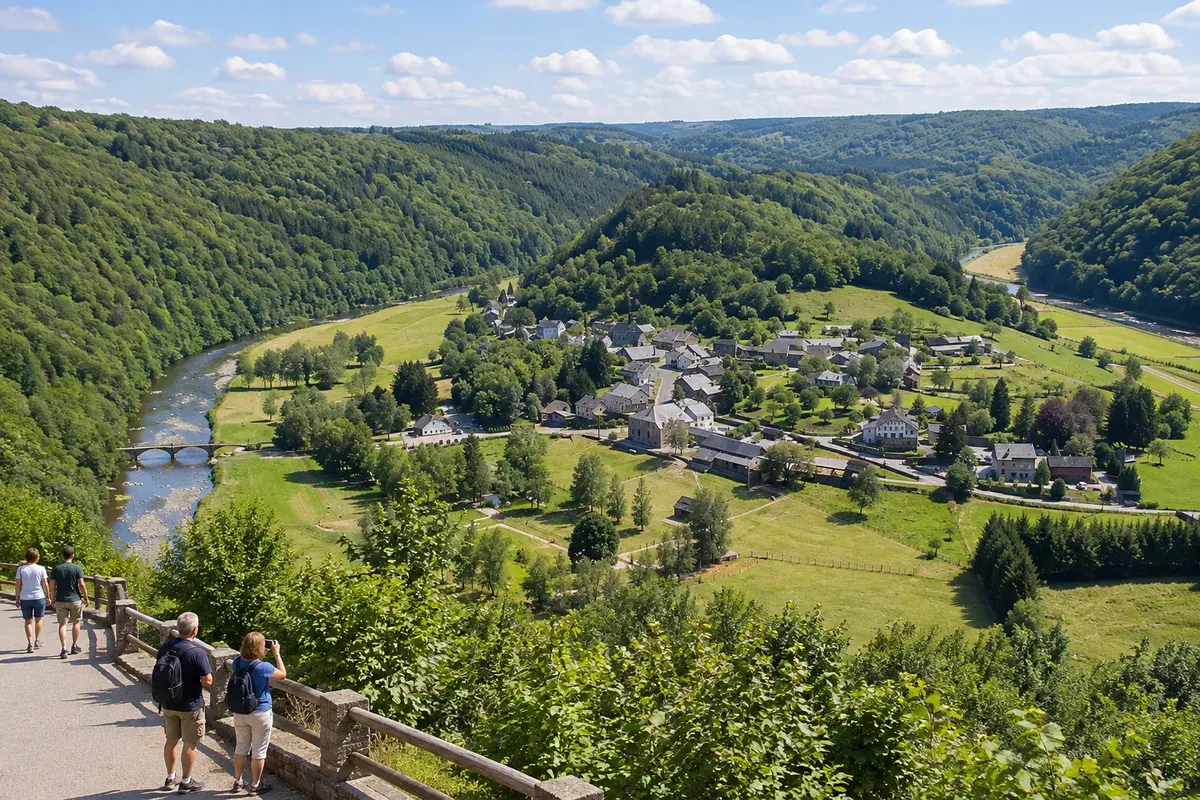
Around Bouillon, the Semois makes tight bends between forested hills, and two viewpoints show it from above. The Tombeau du Géant is in Botassart, a few kilometres from Bouillon. From there you can see a promontory covered in woodland almost entirely encircled by a bend of the river, with the Moulin du Rivage down below. According to legend, a Treveran giant jumped from the rock to avoid being taken by the Romans, and the hill looks like a tomb, hence the name. The site is an exceptional heritage of Wallonia. In Rochehaut, which is part of the municipality of Bouillon, a viewpoint stretches about 300 m along the road above the village of Frahan, on a bend of the Semois so tight it almost forms an island. You can see tobacco drying racks, a reminder of a crop that began in 1852 and lasted about a century, and opposite the rocky ridges of Frahan. Waymarked trails, including the GR 16, descend to the valley, and a footbridge links Rochehaut to Frahan.

Kraji na poti: Tombeau du Géant, Botassart, Rochehaut, Frahan, Semois.

Vključuje: Self-guided outing. The viewpoints have free access. Kayaking on the Semois is charged separately at rental operators in Bouillon.

Nasvet: Go by car: the viewpoints are on rural roads with limited public transport. In summer you can round out the day with a kayak trip on the Semois leaving from Bouillon; confirm the water level the day before.

Najboljši čas za obisk: All year. From April to October the trails are drier; in autumn the forest changes colour. Kayaking on the Semois usually operates from April until the end of October.

Rochefort: Grotte de Lorette, Château comtal and the Trappist abbey

Odhod: Rochefort center Peš Približno 3 ure Dopoldne moderate (more than 600 steps)

Rochefort is the main town of the Han-sur-Lesse region, in the Famenne, province of Namur. In the center is the Grotte de Lorette, a cave visited with a guide in about 1 hour. The descent, almost vertical, reaches about 60 m deep, with more than 600 steps in total. In the Salle du Sabbat, the large chamber near the underground river, a small balloon rises to the ceiling during a sound-and-light show and demonstrates the chamber’s height. Above the town are the ramparts of the Château comtal, a 12th-century castle that in the 17th century became a palace. Sold in 1811, it was used as a quarry and was dismantled; the walls and the tower foundations remain, with guided visits. Near the center, the Abbaye Notre-Dame de Saint-Rémy is a Trappist monastery since 1887, where the monks brew Rochefort beer. The abbey and the brewery do not receive visitors, to preserve monastic life; the masses are open, and the beer is available in the town’s cafés and shops.

Kraji na poti: Rochefort, Grotte de Lorette, Château comtal de Rochefort, Abbaye Notre-Dame de Saint-Rémy.

Vključuje: Guided tour in the Grotte de Lorette and visits to the Château comtal, with admission. The abbey is not open for visits. Check the current schedule.

Nasvet: At the Grotte de Lorette the air is cool and there are many steps: bring a jacket and wear closed shoes; the cave is not wheelchair accessible. Trappist beer is part of the local culture: try it in moderation, and don’t drive if you drink.

Najboljši čas za obisk: All year round, with opening days that change by season. Check the cave and castle calendar.

Basilique de Saint-Hubert

Odhod: Saint-Hubert center Peš Približno 1 uro Dopoldne Lahko

Saint-Hubert is a small town on the Ardennes plateau, surrounded by forest, and presents itself as the European capital of hunting and nature. The name comes from Saint Hubert, first bishop of Liège and patron of hunters. According to the legend, he was hunting on Good Friday when he saw a stag with a crucifix between its antlers and changed his life. His remains were moved in the 9th century to the town’s Benedictine abbey, which became a place of pilgrimage. The basilica, the former abbey church, was largely built between 1526 and 1564, after a fire, in Brabantine late Gothic (gótico flamígero), on Romanesque foundations. The Baroque façade, with two octagonal towers, dates from 1700–1702. It is over 80 m long and received the title of minor basilica in 1927. Inside, see the tomb of Saint Hubert, sculpted by Guillaume Geefs in 1847 at the request of King Leopold I, the 1733 oak choir with scenes from the lives of Saint Benedict and Saint Hubert, the 1685 organ and the Romanesque crypt.

Kraji na poti: Basilique Saint-Hubert, Place de l'Abbaye, Saint-Hubert.

Vključuje: Self-guided visit, no admission required. Guided tours, including attics and bell towers, are paid and by reservation.

Nasvet: Buy the explanatory leaflet at reception to follow the interior details. Combine it with Fourneau Saint-Michel, a few kilometers to the north. Try borquin and the Ardennes smoked sausages and cold cuts, regional specialties.

Najboljši čas za obisk: All year; from November to February it is open on fewer days. On November 3, the feast of Saint Hubert, there is a mass with blessing of bread and animals and a craft fair.

Fourneau Saint-Michel: iron museum and rural life museum

Odhod: Saint-Hubert private car Približno 4 ure Popoldne easy (long walk outdoors)

The provincial estate of Fourneau Saint-Michel lies in the forest, a few kilometers north of Saint-Hubert, on the banks of the Masblette stream. The starting point is the blast furnace ordered built in 1771 by Dom Nicolas Spirlet, the last abbot of Saint-Hubert, which operated until 1942. It still has the chimney, the foundry house and the coal shed. The Musée du Fer shows how iron was made before industrialization, with fireplace plates and tools for making nails. Next to it, the Musée de la Vie rurale en Wallonie is an open-air museum of more than 40 hectares. It gathers about 50 old buildings brought from various parts of Wallonia, such as farms, houses, a chapel, a small school, a print shop, bread ovens and a grocery, showing rural life in the 19th and 20th centuries.

Kraji na poti: Fourneau Saint-Michel, Musée du Fer, Musée de la Vie rurale en Wallonie, Masblette.

Vključuje: Self-guided visit, with texts in French, Dutch and English. There is an admission fee. Check the current timetable.

Nasvet: Allow half a day: the open-air museum is large and explored on foot along dirt paths. It is closed on Mondays, except in July, August and on public holidays. There is a bar serving regional food at the Musée du Fer.

Najboljši čas za obisk: From April to October, when it’s comfortable to walk outdoors. Check the calendar before going in winter.

Bastogne War Museum and Mardasson Memorial

Odhod: Bastogne Private car or train and bus Približno 3 ure Ves dan Lahko

Bastogne is in the northeast of the province of Luxembourg, on the Ardennes plateau. In the Battle of the Ardennes, the German offensive that began on December 16, 1944, the town was besieged from December 20 to 26. The U.S. 101st Airborne Division defended it, and on December 22 General Anthony McAuliffe replied “Nuts!” to the German demand for surrender. On December 26, a spearhead of the 4th Armored Division, part of Patton’s Third Army, reached the town. The Bastogne War Museum, on the Mardasson hill, tells the causes, events and consequences of World War II, focusing on the battle. The exhibition is chronological and follows four fictional characters, including an American paratrooper, a German soldier and Bastogne residents, whose stories cross in a cellar during the town’s bombardment; there are three immersive rooms. The visit, with audio guide, takes at least 2 hours. Next to it, the Mardasson Memorial, opened on July 16, 1950, is shaped like a five-pointed American star, about 12 m high, with the names of the 48 states at that time. In the crypt, with altars for Protestant, Catholic and Jewish services, there are mosaics by Fernand Léger.

Kraji na poti: Bastogne War Museum, Mardasson Memorial, Colline du Mardasson, Bastogne.

Vključuje: Museum visit with audio guide, admission required. The Mardasson Memorial has free access. Check the current schedule.

Nasvet: This is a place of memory: visit respectfully. Start with the museum and finish at the memorial. Allow a full day if you also want to see Bastogne town center.

Najboljši čas za obisk: All year. In December the town usually commemorates the anniversary of the siege, and winter helps imagine the conditions of the battle.

Redu, the book village, and the Euro Space Center

Odhod: Saint-Hubert or Rochefort Own car (E411 motorway, exit 24) Približno 5 ur Ves dan Lahko

Redu is a village in the municipality of Libin, in the province of Luxembourg, near the E411 motorway. Since 1984, inspired by Hay-on-Wye in Wales, it has focused on books: secondhand bookstores, booksellers and book artisans opened shops in the stone houses. It once had about 20 bookstores; today there are around a dozen. Throughout the year there are book festivals, a fair and a photography season. In the neighboring village of Transinne, next to exit 24 of the E411, is the Euro Space Center, a space-themed center designed for families. The day ticket gives access to simulators, a planetarium, a show, a Martian village and other activities about space travel. About 1 km from Redu there is also a satellite-tracking station of the European Space Agency.

Kraji na poti: Redu, Transinne, Euro Space Center, Libin.

Vključuje: Redu is explored on your own, with free access to the village. The Euro Space Center charges admission, with a discount for online purchase. Check the current price list.

Nasvet: In Redu, bookstore opening days vary: prefer weekends and school holidays and check in advance. With children, set aside most of the day for the Euro Space Center.

Najboljši čas za obisk: From April to October, with more shops open in Redu. Check the Euro Space Center calendar before you go.


Po dnevih

Ardennes – načrt poti. Število dni: 3, 5in7

Predlogi za načrtovanje poti. Vrstni red dni prilagodite vremenu in razpoložljivosti izletov.

3 dni · Ardennes in three days: Durbuy, Han-sur-Lesse and La Roche-en-Ardenne

ZaFor those with little time who want the essentials of the Ardennes: a medieval town, the Han cave and a castle above the Ourthe. · Izhodišče:Durbuy
  1. Dan 1 · Arrival and Durbuy old town

    Land at Brussels Airport and drive a rental car to Durbuy in about 1 hour 30 minutes. After resting, take a walk through Durbuy’s old town, the Halle aux Blés and the Falize anticline at an easy pace to overcome jet lag. If time allows, visit the Parc des Topiaires.

  2. Dan 2 · Grotte de Han and Parc animalier

    Go early to Han-sur-Lesse. In the morning, take the guided tour of the Grotte de Han, with tickets booked in advance. After lunch in the village, explore the Parc animalier de Han on foot and by Safari bus. At the end of the day, pass through Rochefort’s town centre before returning.

  3. Dan 3 · La Roche-en-Ardenne

    Continue to La Roche-en-Ardenne. Climb up to the Château féodal in the morning and, in the afternoon, visit the Musée de la Bataille des Ardennes and the tank memorials. If you have energy left, go up to the Belvédère du Deister before returning to Brussels, about 1 hour 30 minutes by car.

5 dni · Ardennes in five days: Ourthe, Han-sur-Lesse and Saint-Hubert
ZaFor those who want to combine small towns, a cave, nature and Second World War history, with time for kayaking and hikes. · Izhodišče:Durbuy (2 nights) and Rochefort (3 nights)
  1. Dan 1 · Arrival in Durbuy

    Land at Brussels Airport and drive to Durbuy. In the afternoon, stroll through Durbuy’s old town, including the Halle aux Blés and the Falize anticline, at a relaxed pace.

  2. Dan 2 · Topiaries and kayaking on the Ourthe

    In the morning, visit the Parc des Topiaires. In the afternoon, do the kayaking descent on the Ourthe between Durbuy and Bomal, from April to September. Out of season, swap kayaking for the dolmens of Wéris and Durbuy’s Géobalade.

  3. Dan 3 · La Roche-en-Ardenne

    Head to La Roche-en-Ardenne. Visit the Château féodal in the morning and the Musée de la Bataille des Ardennes in the early afternoon. Finish at the Belvédère du Deister and continue on to Rochefort.

  4. Dan 4 · Grotte de Han and Parc animalier

    Day in Han-sur-Lesse: the Grotte de Han in the morning, with ticket reserved, and the Parc animalier de Han in the afternoon, including the walk to the Gouffre de Belvaux and the return on the safari bus.

  5. Dan 5 · Rochefort and Saint-Hubert

    In the morning, visit the Grotte de Lorette and the walls of the Château comtal in Rochefort. Continue to Saint-Hubert and see the basilica. Return by car to Brussels via the E411.

7 dni · Ardennes in seven days: from the Ourthe to the Semois
ZaFor those who want to explore the whole region by car, from Durbuy to Bouillon, including Bastogne, museums and river viewpoints. · Izhodišče:Durbuy (2 nights), La Roche-en-Ardenne (2 nights) and Bouillon (2 nights)
  1. Dan 1 · Arrival in Durbuy

    Land at Brussels Airport and drive to Durbuy in about 1 hour 30 minutes. Walk through Durbuy’s old town and along the bank of the Ourthe at a leisurely pace to shake off the fatigue from the flight.

  2. Dan 2 · Durbuy: topiaries and kayaking

    In the morning, visit the Parc des Topiaires and do the Géobalade to the Falize anticline. In the afternoon, descend the Ourthe by kayak from April to September. In winter, replace it with the dolmens of Wéris.

  3. Dan 3 · La Roche-en-Ardenne

    Head to La Roche-en-Ardenne. Visit the Château féodal and, in the afternoon, the Musée de la Bataille des Ardennes and the tank memorials. In the late afternoon, go up to the Belvédère du Deister.

  4. Dan 4 · Bastogne and the Hérou

    Go to Bastogne for the Bastogne War Museum and the Mardasson Memorial, allowing at least 3 hours for both. On the way back, stop at Lac de Nisramont and the Hérou viewpoint for a short walk.

  5. Dan 5 · Grotte de Han and Parc animalier

    Head to Han-sur-Lesse. Do the Grotte de Han in the morning and the Parc animalier de Han in the afternoon, on foot and by safari bus. Book both in advance.

  6. Dan 6 · Saint-Hubert, Redu and Bouillon

    In the morning, visit the Basilique de Saint-Hubert. Stop at Redu, the book village, or at Fourneau Saint-Michel, depending on your interest. Continue to Bouillon and, late in the afternoon, view the Semois from the Tombeau du Géant and Rochehaut viewpoints.

  7. Dan 7 · Château fort de Bouillon and return

    Start with the Bouillon Medieval Experience and climb the Château fort de Bouillon, with a falconry demonstration in season. Return to Brussels, about a 2-hour drive via the E411.

Najboljši čas za obisk

Kdaj se odpraviti:Ardennes po mesecih

From May to September the days are long for hiking and kayaking, which typically runs from April to September depending on river levels. October paints the forests yellow and copper. Winter is cold, wet, nights fall early and there can be snow at higher elevations, though not guaranteed. July and August bring crowds to the towns.

The seasons shown are the most usual ones; nature doesn't always follow the calendar.

januar Veliko padavin

cold winter · possible snow on the plateau

In Saint-Hubert, on the plateau, average highs are around 4 °C and lows −1 °C, with rain or snow on about 15 days; in Rochefort, in the valley, highs are around 6 °C. Frost is common, and it may snow, without guarantee. It gets dark in the mid-afternoon, and several attractions close or have reduced opening days.

februar Zmerne padavine

late winter · attractions reopen

still winter: in Saint-Hubert, average highs near 5 °C and lows of −2 °C, with rain or snow on about 13 days; in Rochefort, highs around 7 °C. Days begin to lengthen but remain short. In mid-month, attractions such as Parc des Topiaires usually reopen. Trails with mud and ice call for boots.

marec Zmerne padavine

cool spring · falconry in Bouillon

start of the European spring: in Saint-Hubert, average highs near 9 °C and lows of 1 °C; in Rochefort, highs around 11 °C. It rains about 13 days, and many nights still see frost. The falconry season at Château fort de Bouillon usually begins. Daylight saving time starts at the end of the month.

april Malo padavin

spring · season begins

one of the least rainy months, with rain on about 10 days. In Saint-Hubert average highs are near 13 °C and lows 3 °C; in Rochefort, highs around 16 °C. Kayak season on the Ourthe begins and attractions move to daily openings. Days are already long.

maj Zmerne padavine

green forest · dry trails

full spring: in Saint-Hubert, average highs near 17 °C and lows of 7 °C; in Rochefort, highs around 19 °C. It rains on about 12 days. A good month for hiking, viewpoints and kayaking, with fewer people than in summer. There are public holiday long weekends in Belgium: book ahead for weekends.

junij Zmerne padavine

long days · river kayaking

start of the European summer: in Saint-Hubert, average highs near 20 °C and lows of 10 °C; in Rochefort, highs around 22 °C. It rains about 11 days. It gets dark quite late, and you can combine cave, castle and viewpoint in the same day.

julij Zmerne padavine

European summer · school holidays

hottest month: in Saint-Hubert, average highs near 22 °C and lows of 12 °C; in Rochefort, highs around 24 °C. It rains on about 11 days, often in showers. School holidays in Belgium and neighboring countries: Durbuy, Han-sur-Lesse and kayaking on the Ourthe get busy. Book tickets and kayaks in advance.

avgust Zmerne padavine

high season · rain showers

heat similar to July: in Saint-Hubert, average highs near 21 °C and lows of 12 °C, with about 98 mm of rain over roughly 12 days; in Rochefort, highs around 24 °C. High season continues, with attractions on extended hours. Nights on the plateau are cool: bring a jacket.

september Malo padavin

late summer · red deer rutting

one of the least rainy months, with rain on about 10 days. In Saint-Hubert, average highs near 18 °C and lows of 8 °C; in Rochefort, highs around 20 °C. With the end of the holidays there are fewer people. From mid-September to mid-October is the rutting season, when red deer are in rut, with guided outings to listen for the animals.

oktober Zmerne padavine

colorful autumn · golden forest

European autumn: in Saint-Hubert, average highs around 13 °C and lows around 6 °C; in Rochefort, highs around 15 °C. It rains on about 13 days. The forest changes color, and it is a popular time for hiking. Daylight saving time ends at the end of the month, and the days shorten quickly.

november Veliko padavin

Saint Hubert's Day · short days

Cold and wet: in Saint-Hubert, average highs around 8 °C and lows around 2 °C, with rain on about 15 days; in Rochefort, highs around 10 °C. On November 3, Saint-Hubert celebrates its patron with a mass and blessing of animals. Bouillon's falconry usually ends its season on November 11, and many attractions reduce their opening days.

december Veliko padavin

winter · Christmas lights

wettest month on the plateau: in Saint-Hubert, about 122 mm over roughly 17 days, with average highs near 4 °C and lows near 0 °C; in Rochefort, highs around 6 °C. It may snow, without guarantee, and roads can be icy. It gets dark in the mid-afternoon. Towns are decorated for Christmas, and the region commemorates the anniversary of the Battle of the Ardennes.

Načrtujte pot

Kako do tja:Ardennes

From Brussels and the airport by train

The train network in the Ardennes is limited. The main line is the SNCB/NMBS intercity train between Brussels and Luxembourg, which runs hourly via Namur, Ciney, Marloie, Rochefort-Jemelle and Libramont. From Brussels to Rochefort-Jemelle it is about 1 hour 30 minutes; to Libramont, around 2 hours. For Durbuy, the station is Barvaux, on the Ourthe line between Liège and Marloie/Rochefort-Jemelle, requiring a train change and generally more than 2 hours 30 minutes of travel. From Brussels Airport, take the train to the Brussels stations and change to the intercity; the ticket to leave the airport includes an extra fee, charged at purchase.

By train from Paris, London, Amsterdam or Cologne

The Eurostar comes from London, Paris and Amsterdam, and the ICE comes from Cologne, to Brussel-Zuid/Bruxelles-Midi, where you take the SNCB/NMBS train to the Ardennes. Those coming from Cologne can also disembark at Liège-Guillemins, from where the Ourthe line departs for Barvaux. From the Grand Duchy of Luxembourg, the same Luxembourg–Brussels intercity passes through Libramont and Rochefort-Jemelle. Compare timetables and connections before buying.

Z avtom

In the Ardennes a car is the most practical means: towns are small, distant from stations, and connected by roads through the forest. The E411 motorway leaves Brussels, passes Namur and continues south toward Arlon and Luxembourg; it has exits for Han-sur-Lesse and Rochefort (exit 23, Wellin), Redu and the Euro Space Center (exit 24, Transinne) and Libramont. The E25 links Liège to Bastogne and meets the E411 near Neufchâteau. From Brussels it is about 115 km to Durbuy, 125 km to La Roche-en-Ardenne, 110 km to Rochefort, 145 km to Bastogne and 150 km to Bouillon, a drive of roughly 1 hour 20 minutes to 2 hours. In winter there can be snow and ice on the plateau: rent the car with winter tires.

How to get around the Ardennes without a car

Without a car, travel is slower and requires planning. TEC buses depart from the stations: from Rochefort-Jemelle station, line 29 reaches Han-sur-Lesse in about 15 minutes; from Marloie, line 15 goes to La Roche-en-Ardenne; from Libramont, line 8 goes to Bouillon. From Brussels, counting train and bus, it takes about 3 hours to La Roche-en-Ardenne and Bastogne and almost 4 hours to Bouillon. Buses have few departures, especially on weekends: check schedules beforehand. Within each town, the center is walkable.

Vstopnice in rezervacije

The Grotte de Han and the Parc animalier require tickets purchased in advance with a booked date; the PassHan combines both. Castles, caves and museums, such as Château fort de Bouillon, Château féodal de La Roche, the Grotte de Lorette and the Bastogne War Museum, charge admission. The Basilique de Saint-Hubert, viewpoints, trails and the Mardasson Memorial have free access. In several towns, such as Han-sur-Lesse and Durbuy, parking is paid. Check the current fee table before going.

Pred odhodom

Praktične informacije

Z nekaj načrtovanja boste imeli več časa za uživanje na poti.

Kdaj se odpraviti

From May to September the days are long for hiking and kayaking, which typically runs from April to September depending on river levels. October paints the forests yellow and copper. Winter is cold, wet, nights fall early and there can be snow at higher elevations, though not guaranteed. July and August bring crowds to the towns.

The seasons shown are the most usual ones; nature doesn't always follow the calendar.

Koliko dni ostati

Three days allow one night in each town: Durbuy and Wéris on the first day, La Roche on the second and Bouillon on the third. With two days, pick two neighbouring towns, such as Durbuy and La Roche, about half an hour apart. Those who want to paddle on the Ourthe or the Semois and do long hikes should plan four or five days.

V katerem mestu prenočiti

In Durbuy the old centre within the former meander puts the cobbled streets, the Parc des Topiaires and the restaurants within walking distance; Barvaux-sur-Ourthe, about 4 km away, has more options and the train station. In La Roche-en-Ardenne, the area around the Place du Bronze and the Quai de l'Ourthe concentrates restaurants and sits below the castle. In Bouillon, the Semois quays facing the castle are the most practical choice. Country houses in the surrounding villages suit those travelling by car. In summer and on long weekends, book ahead.

Spoštujte kraj

Odnesite svoje odpadke, upoštevajte oznake in podprite lokalne ponudnike. V naravi upoštevajte navodila za obiskovalce.

Odgovori na vaša vprašanja

Pogosta vprašanja – Ardennes

Is the province of Luxembourg the country Luxembourg?

No. The province of Luxembourg is one of Belgium's ten provinces, in the southeast of the country, with Arlon as its capital. The Grand Duchy of Luxembourg is an independent neighbouring country. The two were part of the same duchy until the 1839 separation, which is why they share the name. Durbuy, La Roche-en-Ardenne and Bouillon are on the Belgian side.

What language is spoken in the Belgian Ardennes?

French. The three towns are in Wallonia, the southern half of Belgium, and signs, menus and tourist information are in French. In restaurants and attractions that get many Dutch and Flemish visitors there are usually texts in Dutch and in English as well.

Can you visit the Ardennes without a car?

Yes, with patience. Durbuy is about 4 km from Barvaux station. La Roche is served by buses from Marloie station, and Bouillon receives buses from Libramont. Buses are infrequent, especially on Sundays, and viewpoints and the Wéris dolmens lie outside the towns. With a car, all three can be seen in a few days.

What was the Battle of the Ardennes?

It was the German offensive launched in December 1944 through the Ardennes forests, aimed at reaching Antwerp and splitting the Allies. The Americans call the episode the Battle of the Bulge. La Roche-en-Ardenne was taken by the Germans and liberated in January 1945, after bombardments that destroyed much of the town.

Which town to choose if you have little time?

Durbuy is the most compact and is closer to Brussels and Liège: you can see the centre, the topiary park and the Halle aux Blés in an afternoon. La Roche appeals to those interested in World War II. Bouillon is the choice for anyone wanting a large medieval castle to explore inside.

Poti – in Belgija

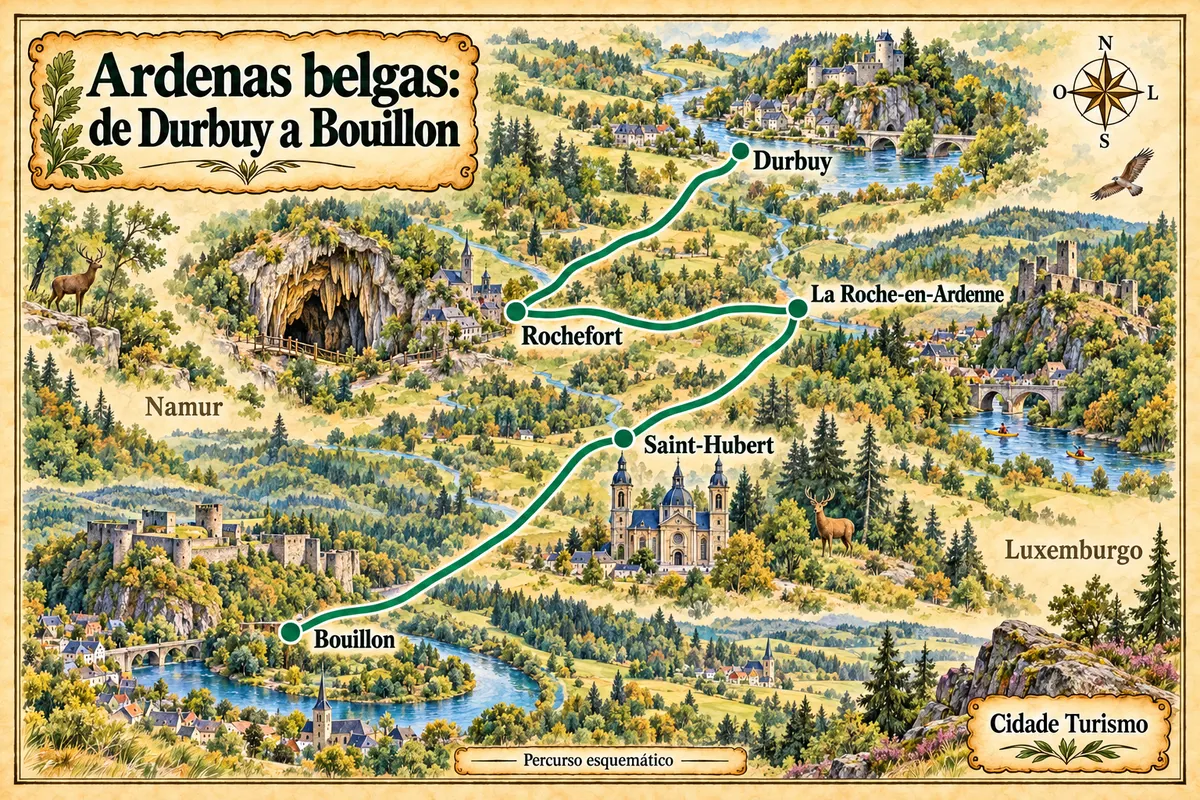
Ardennes – na poti z imenom Belgian Ardennes: from Durbuy to Bouillon

Five stops through the Belgian Ardennes, from the Ourthe valley to the Semois: Durbuy, the Han caves in Rochefort, La Roche‑en‑Ardenne, Saint‑Hubert and Bouillon Castle, linked by forest roads.

Zemljevid je ilustrativen in ni v merilu. Dotaknite se mesta, da odprete njegovo stran.
Belgian Ardennes: from Durbuy to Bouillon – ilustrirani zemljevid
Več o poti – Belgian Ardennes: from Durbuy to Bouillon
Odkrijte druge destinacije Iskanje po zvezni državi in mestu

Več kot vodnik