Leipzig

Saxony · Nemčija

Leipzig

The city of Bach and of the 1989 demonstrations in Saxônia: historic churches, memory museums, galleries in former factories and a fast train to Berlim and Dresden.

East

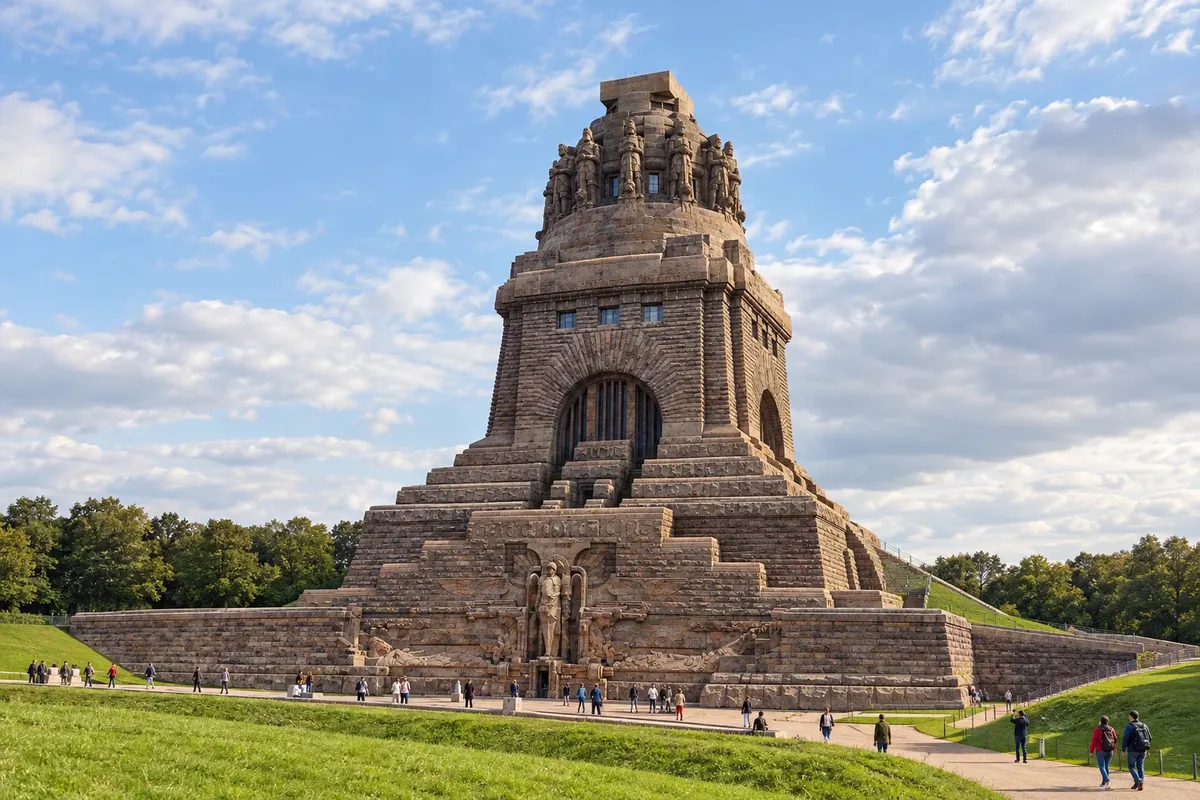
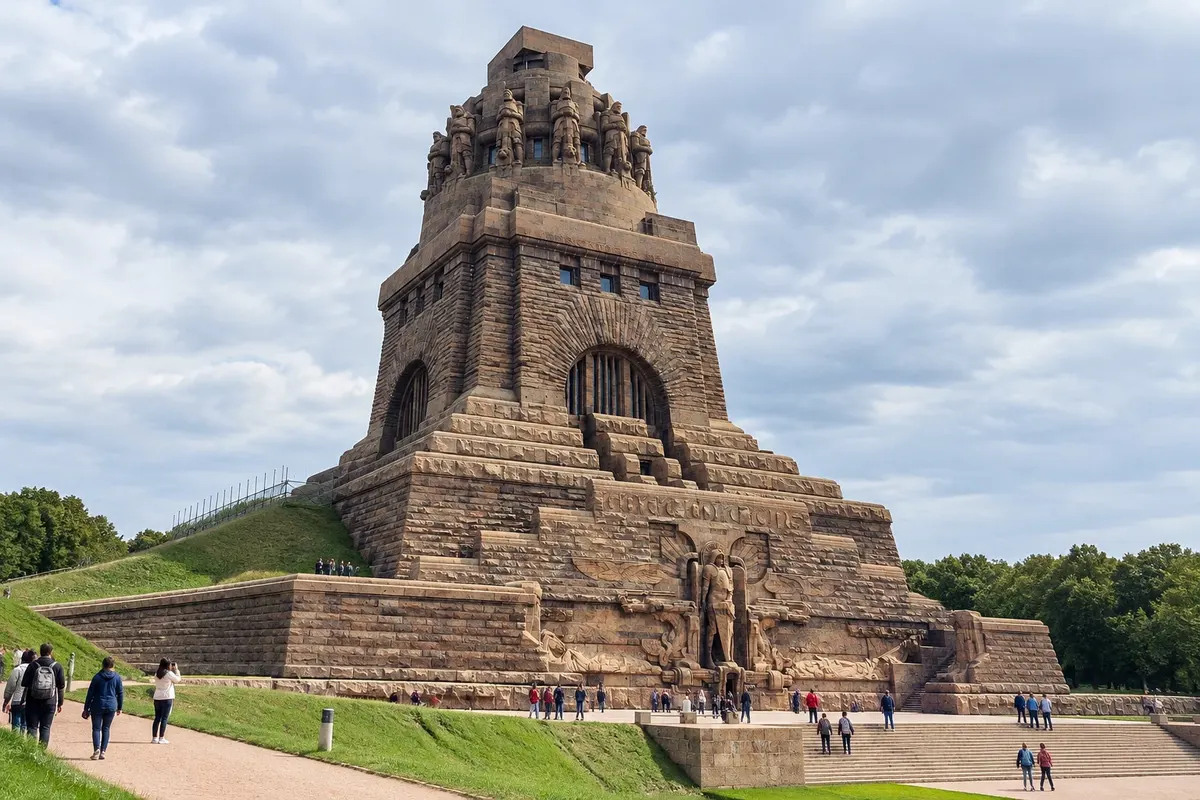
Na fotografiji: Völkerschlachtdenkmal, Leipzig

Illustrative images. The pictures in this guide are illustrations based on the real place, not photographs, and may differ from it.

Na voljo v trgovini Google Play Pošljite svoje fotografije

Spoznajte kraj

Pokrajina, ki jo doživite
v svojem ritmu.

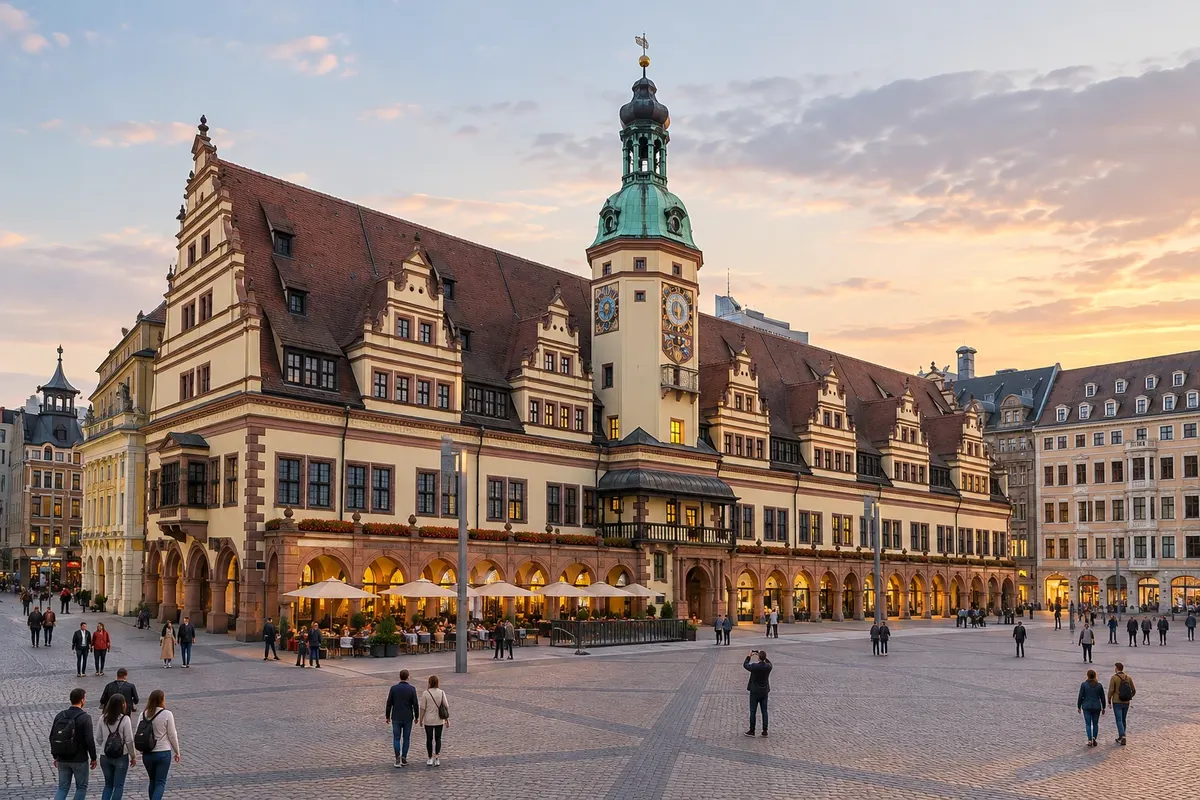
Leipzig is the largest city of Saxônia, in eastern Germany, and grew as a trade-fair and publishing center. The old town fits within a ring of avenues and is best explored on foot: the market square (Markt) with its Renaissance town hall, covered passages like the Mädlerpassage and the city’s two large churches.

Music is everywhere. Johann Sebastian Bach was cantor at the Thomaskirche for 27 years and is buried there; opposite it is the Bach-Museum. Felix Mendelssohn conducted the Gewandhaus orchestra and spent his last years in the house that is now the Mendelssohn-Haus. The Gewandhaus, on the Augustusplatz, remains one of the country’s most active concert halls.

Leipzig is also a place of memory for divided Germany. The peace prayers at the Nikolaikirche grew into the Monday demonstrations of 1989, which helped to topple the regime of the former East Germany. The Zeitgeschichtliches Forum and the Museum in der Runden Ecke, the former political police building, tell that story.

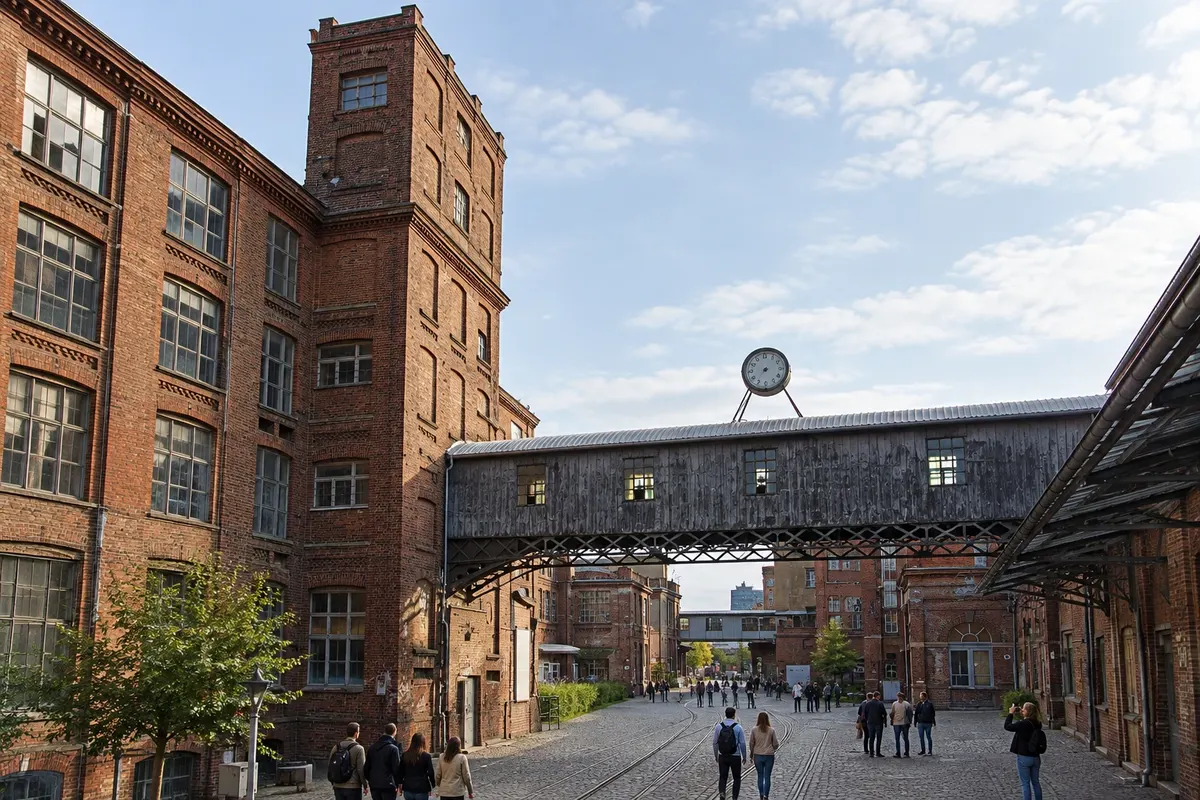
Outside the ring are the Völkerschlachtdenkmal, a 91-metre monument to the battle against Napoleon in 1813, Zoo Leipzig and the industrial neighborhoods to the west. In Plagwitz, old factories have become studios, bars and galleries, and the Spinnerei, a cotton mill, brings together artists of the so‑called New Leipzig School.

Delite: WhatsApp

Kje prenočiti

V vodniku še ni nastanitev – Leipzig.

Kje jesti

V vodniku še ni restavracij – Leipzig.

Poznate dobro možnost? Priporočite nam jo

Vaše potovanje

kako do tja · koliko dni · načrt poti · vprašanja

Delite svoja popotniška doživetja s fotografijami Pošljite fotografije vsakega kraja, ki ste ga obiskali. Največje število fotografij na kraj: 5.

Kako do tja:Leipzig

✈ Flughafen Leipzig/Halle (LEJ)· 20 km do cilja (Leipzig)

Check before buying. The most common option is to fly to Berlim or Frankfurt and continue by train: from Berlim it is about 1h15 by ICE; from Frankfurt, around 3 hours. Leipzig/Halle airport (LEJ) handles European flights and is about a 12‑minute S-Bahn ride from the central station.

Doživite kraj

Kaj početi – Leipzig

Thomaskirche (St. Thomas Church)
Leipzig · Saxony · Cerkev

Thomaskirche (St. Thomas Church)

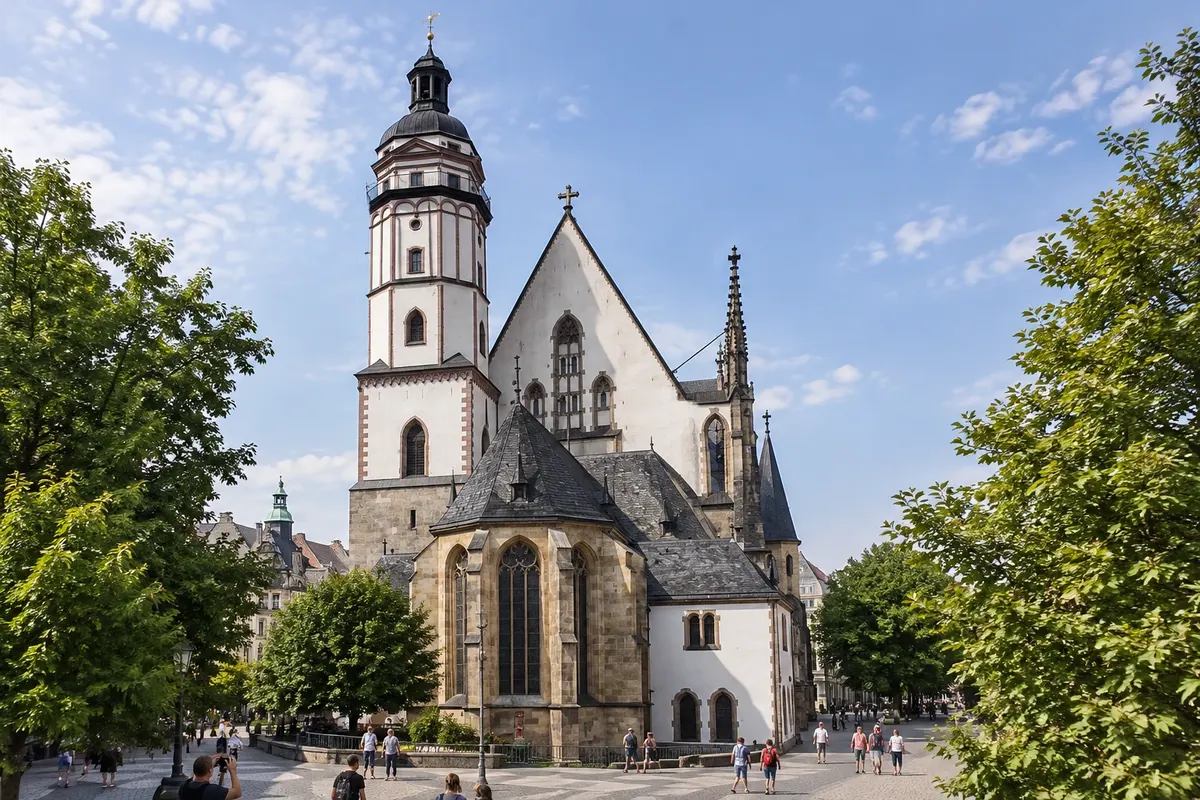
Gothic church where Johann Sebastian Bach was cantor from 1723 to 1750 and where his tomb is located. Home of the Thomanerchor, a boys' choir over 800 years old.

Bach Museum Leipzig
Leipzig · Saxony · Muzej

Bach Museum Leipzig

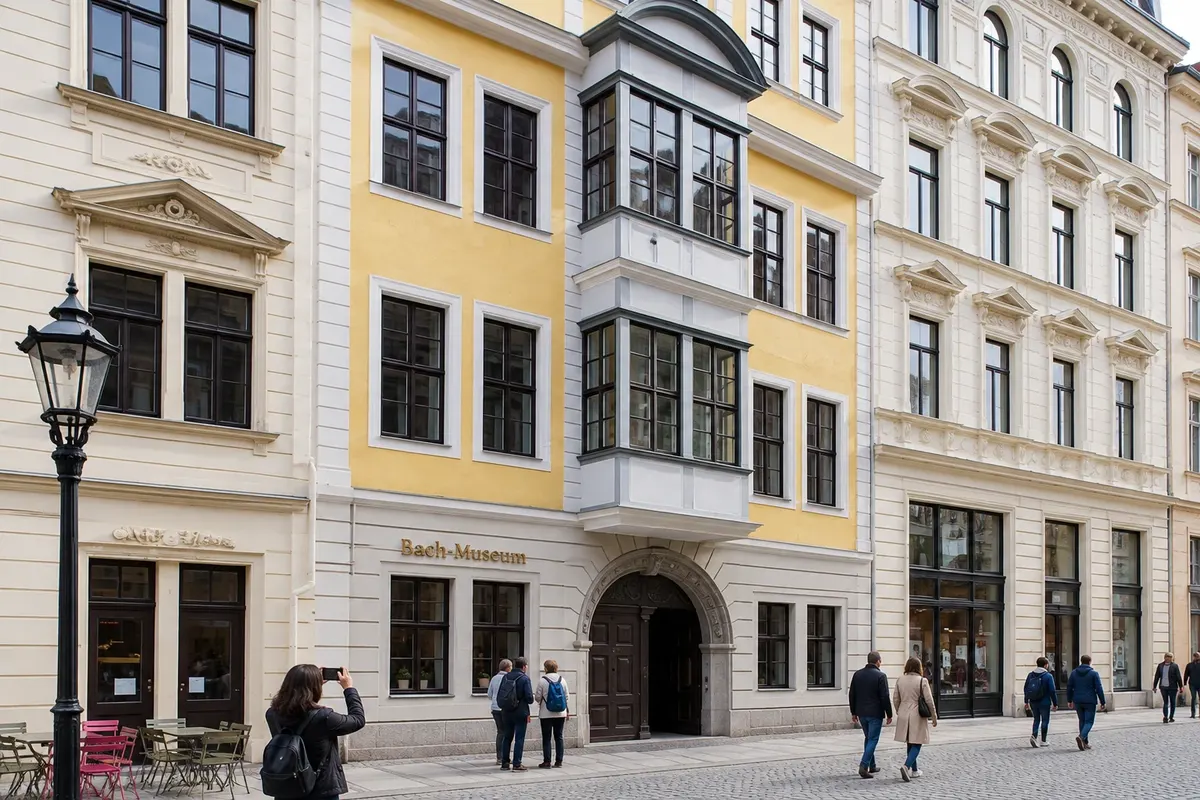
Museum about Johann Sebastian Bach in the Bosehaus, opposite the Thomaskirche, with original manuscripts, interactive rooms and the organ console that the composer examined.

Nikolaikirche (St. Nicholas Church)
Leipzig · Saxony · Cerkev

Nikolaikirche (St. Nicholas Church)

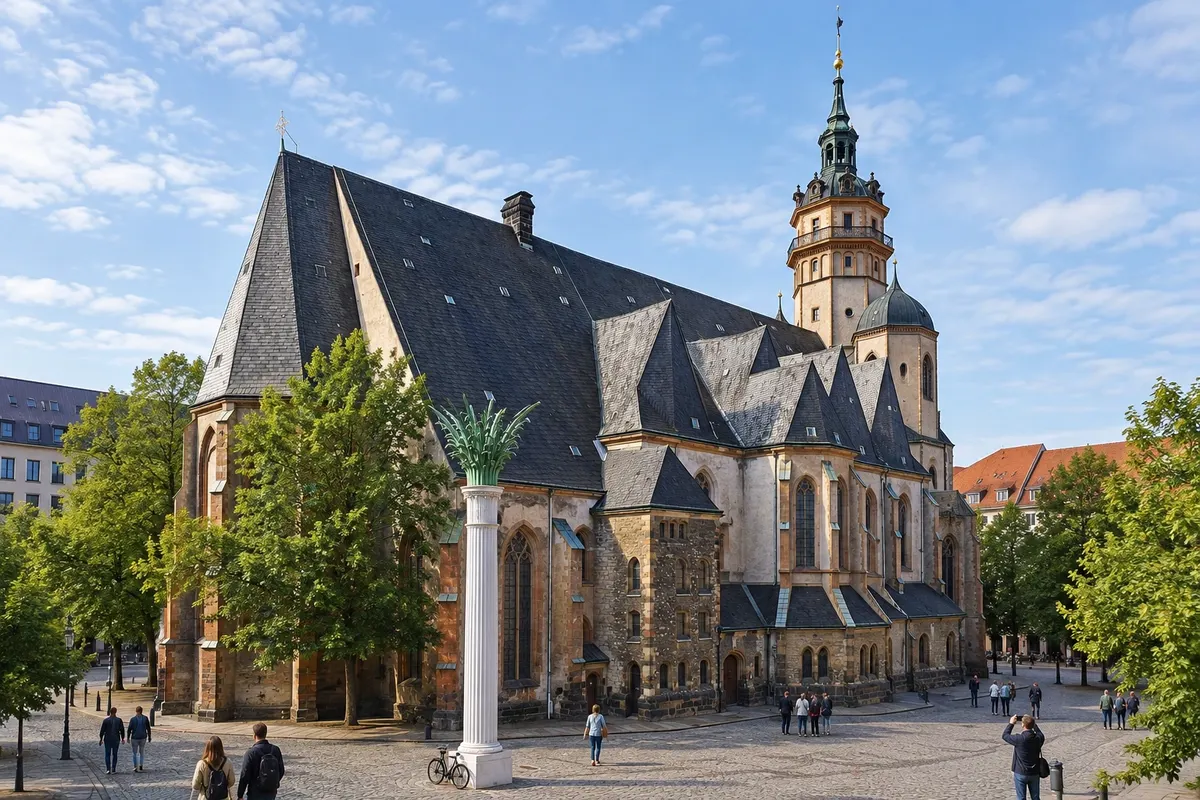
Church where the Monday prayers for peace grew into the 1989 demonstrations. The interior has white columns shaped like palm trees.

Altes Rathaus
Leipzig · Saxony · Muzej

Altes Rathaus

Renaissance town hall from 1556 that occupies an entire side of the market square (Markt) and houses the city history museum.

Leipzig – prikaži dodatne kraje (13)
Mädlerpassage
Leipzig · Saxony · Architecture

Mädlerpassage

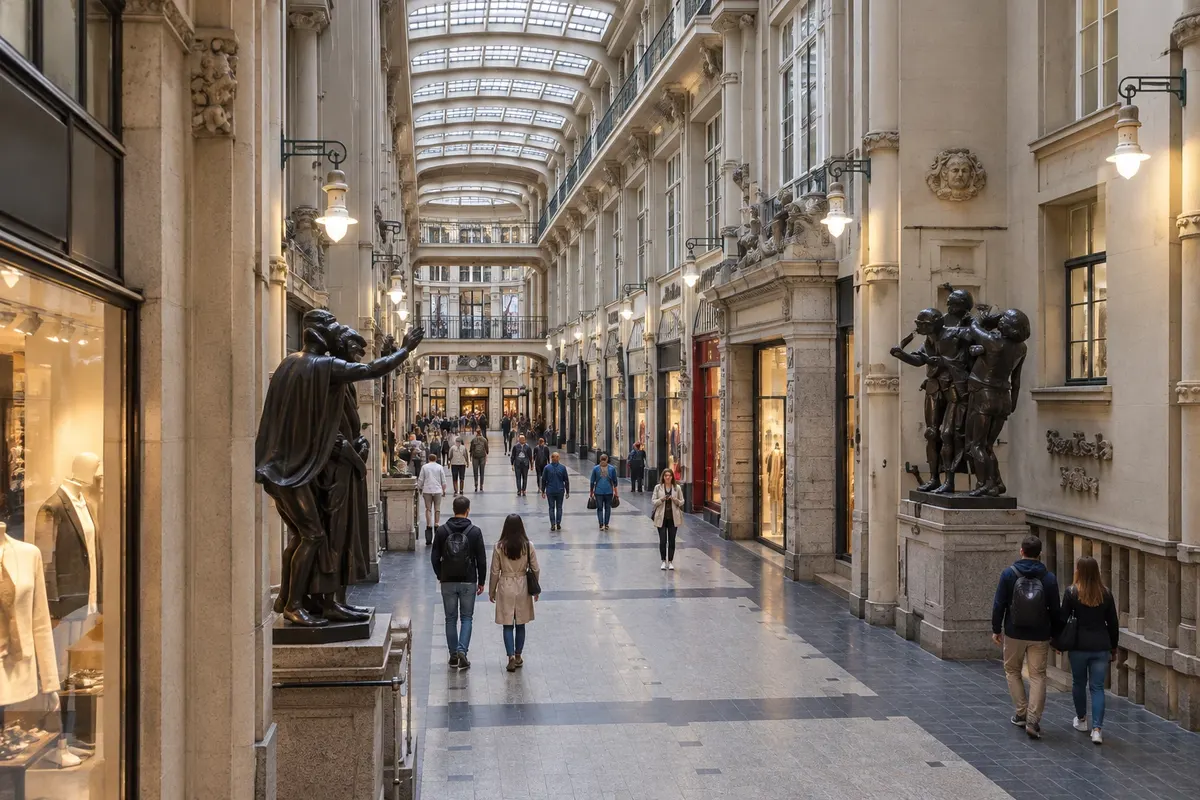
Covered shopping arcade from 1914, with the entrance to the Auerbachs Keller, the tavern of Goethe's Faust, and the bronze statues of Faust and Mephistopheles.

Zeitgeschichtliches Forum Leipzig
Leipzig · Saxony · Muzej

Zeitgeschichtliches Forum Leipzig

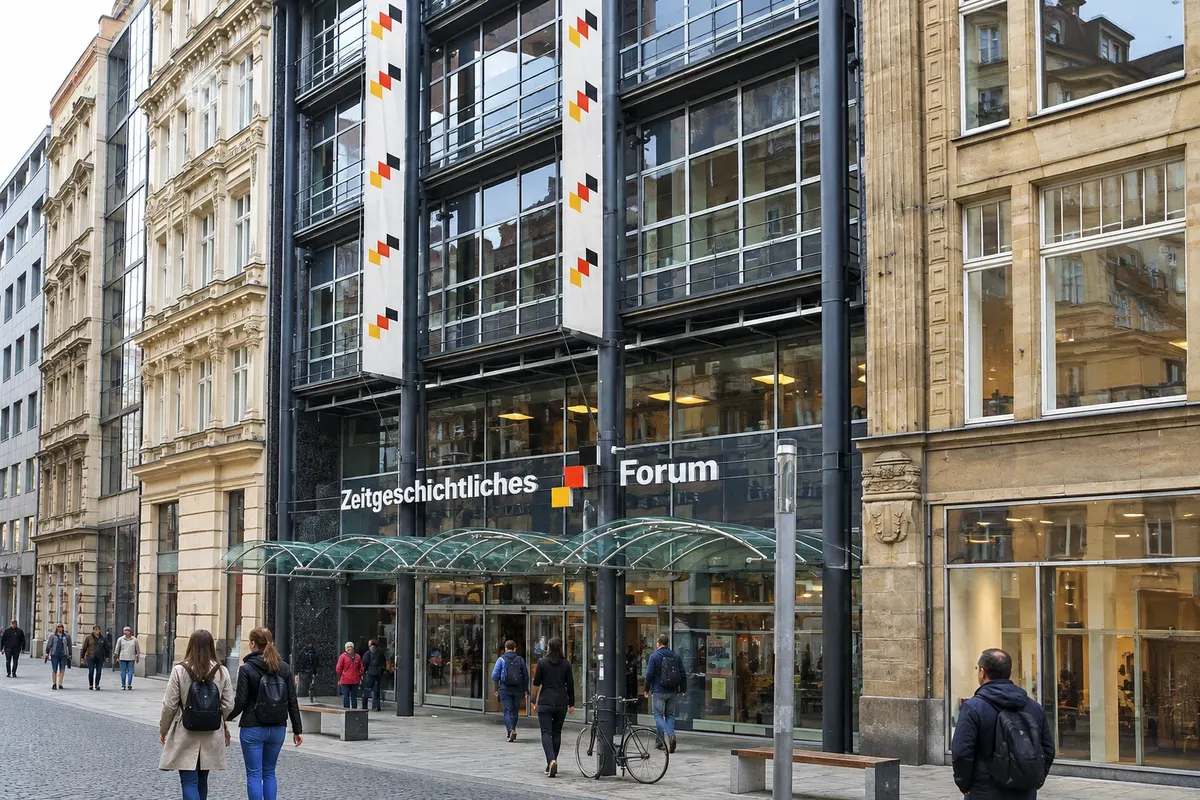
Museum about the division of Germany, everyday life in the former East Germany, opposition to the regime and the peaceful revolution of 1989. Admission is free.

Museum in der Runden Ecke
Leipzig · Saxony · Spominsko obeležje

Museum in der Runden Ecke

Memorial in the former building of East Germany's secret police (Stasi) in Leipzig, occupied by protesters in December 1989.

Völkerschlachtdenkmal
Leipzig · Saxony · Monument

Völkerschlachtdenkmal

91-metre monument to the Battle of the Nations of 1813 against Napoleon, with a crypt, an observation platform at the top, and the FORUM 1813 museum.

Museum der bildenden Künste Leipzig
Leipzig · Saxony · Muzej

Museum der bildenden Künste Leipzig

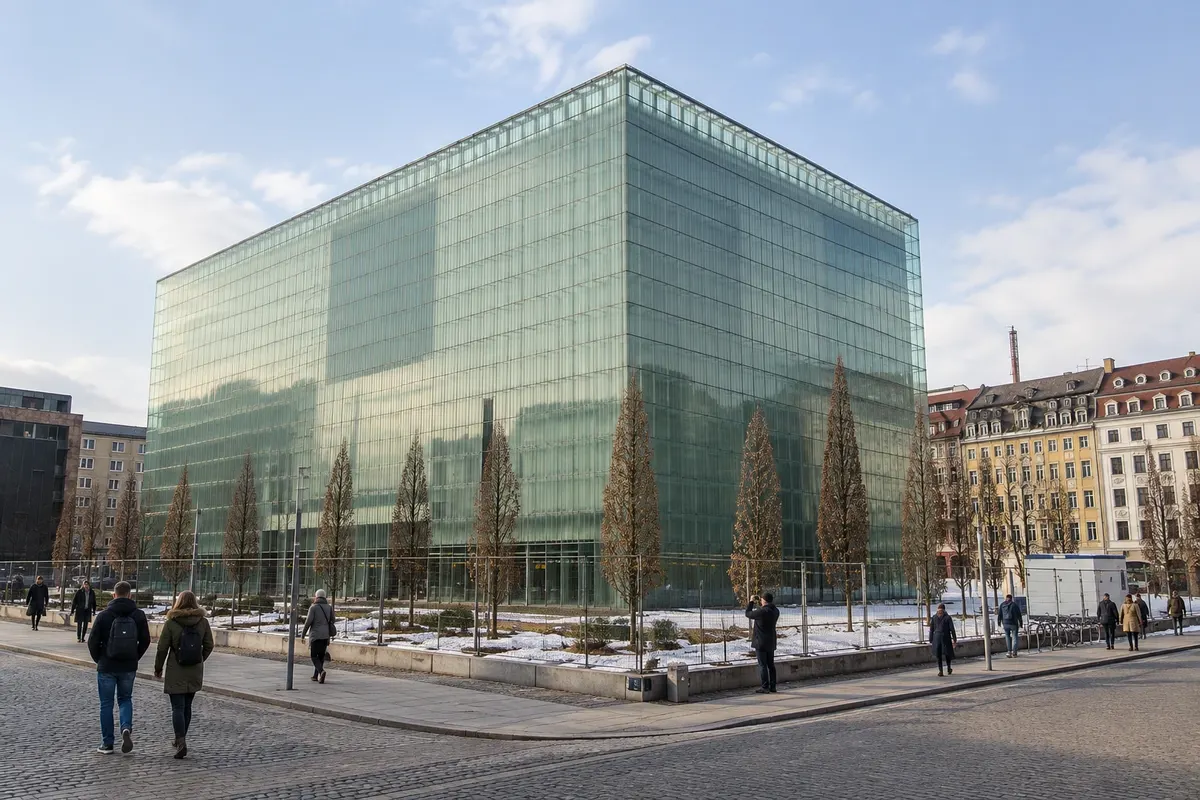
Museum of fine arts in a cube-shaped building in the centre, featuring Cranach, Frans Hals, Caspar David Friedrich, Max Klinger's Beethoven, and painters of the Leipzig School.

Gewandhaus zu Leipzig
Leipzig · Saxony · Architecture

Gewandhaus zu Leipzig

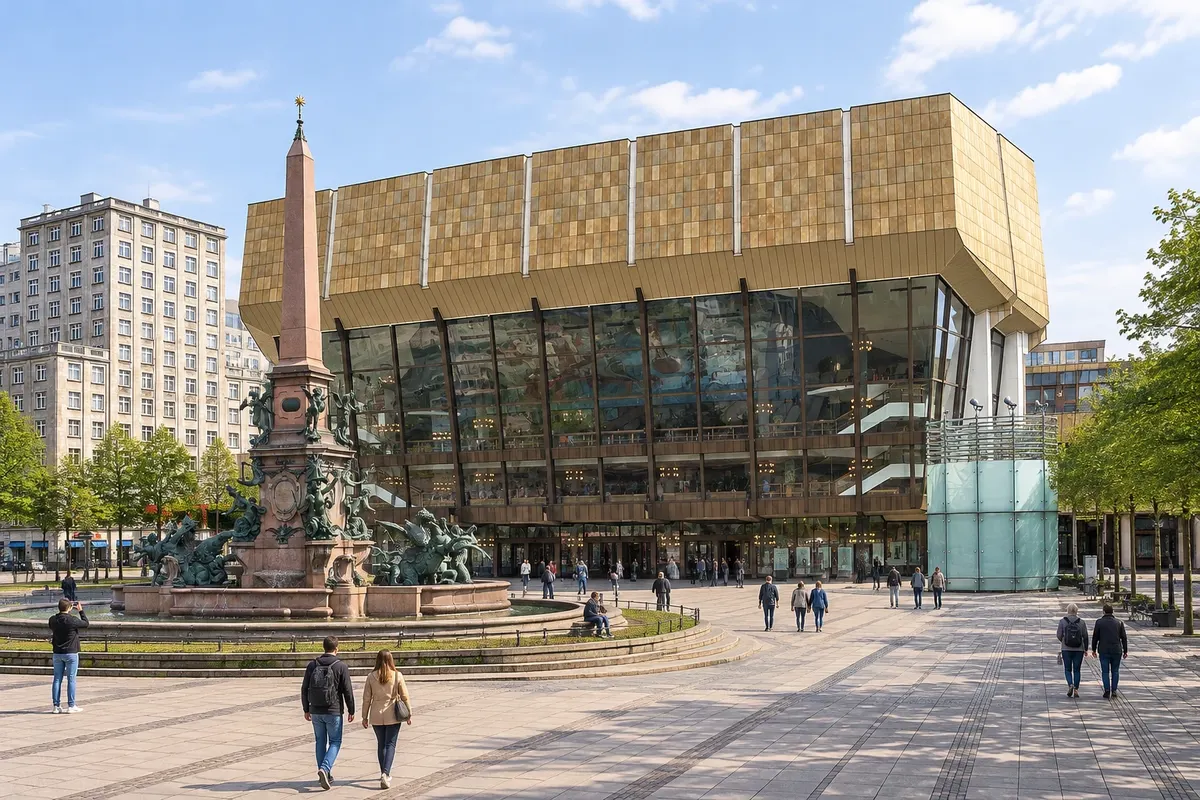
Concert hall on Augustusplatz, home of the Gewandhausorchester, one of the oldest orchestras in the world, with a 714 m² painted ceiling in the foyer.

Augustusplatz
Leipzig · Saxony · Trg

Augustusplatz

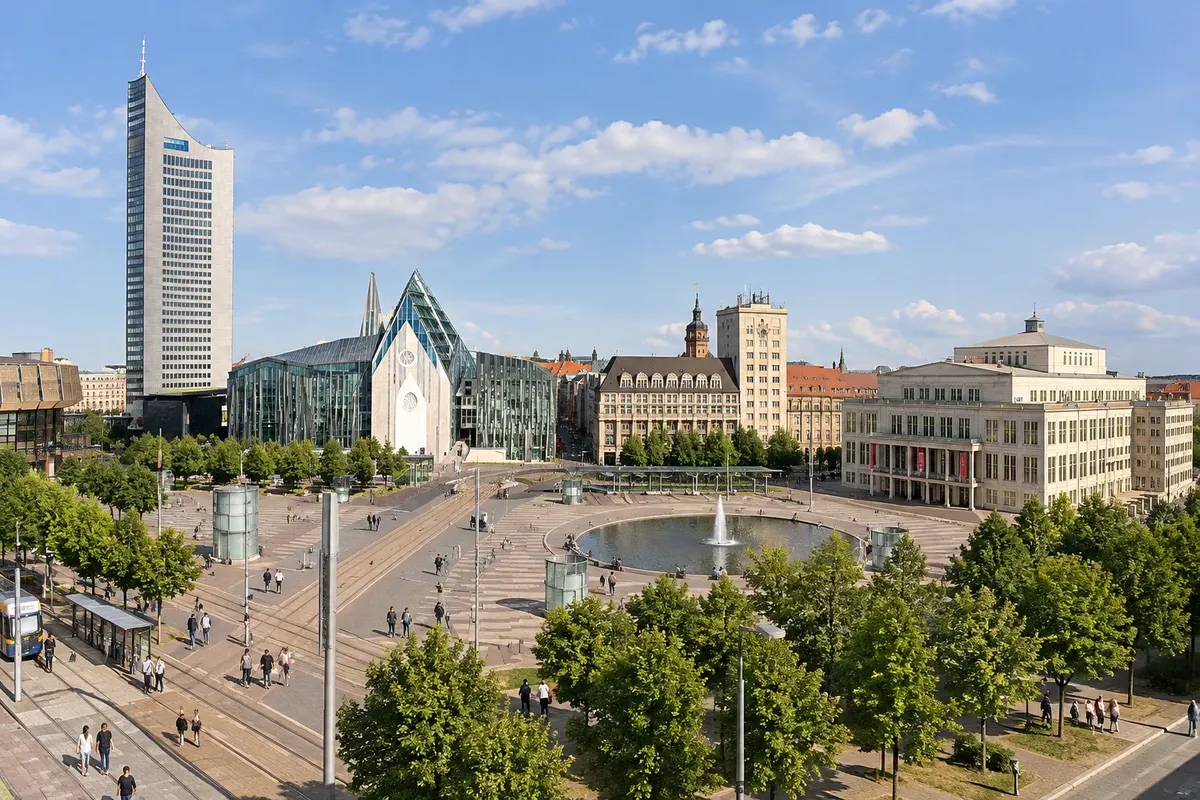
The largest square in the centre, with the opera, the Gewandhaus, the Paulinum of the university and the City-Hochhaus, whose viewing platform on the 31st floor offers panoramic views of the city.

Spinnerei (Leipziger Baumwollspinnerei)
Leipzig · Saxony · Architecture

Spinnerei (Leipziger Baumwollspinnerei)

Former cotton-spinning mill from 1884 in Lindenau, today a complex of galleries and studios with around a hundred artists, including Neo Rauch.

Leipzig Zoo
Leipzig · Saxony · Park

Leipzig Zoo

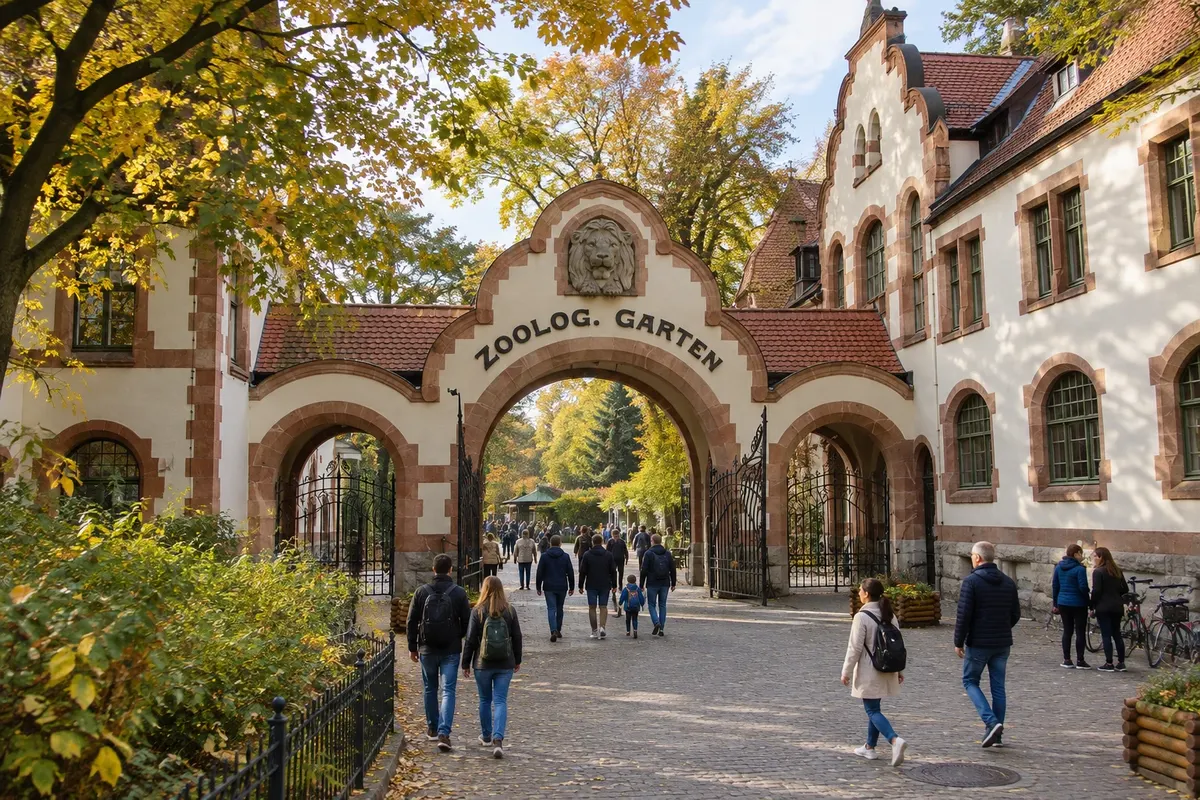
Zoo founded in 1878, next to the city centre, featuring Gondwanaland, a huge tropical greenhouse, and Pongoland, an area for great apes.

Plagwitz
Leipzig · Saxony · Zgodovinska mestna četrt

Plagwitz

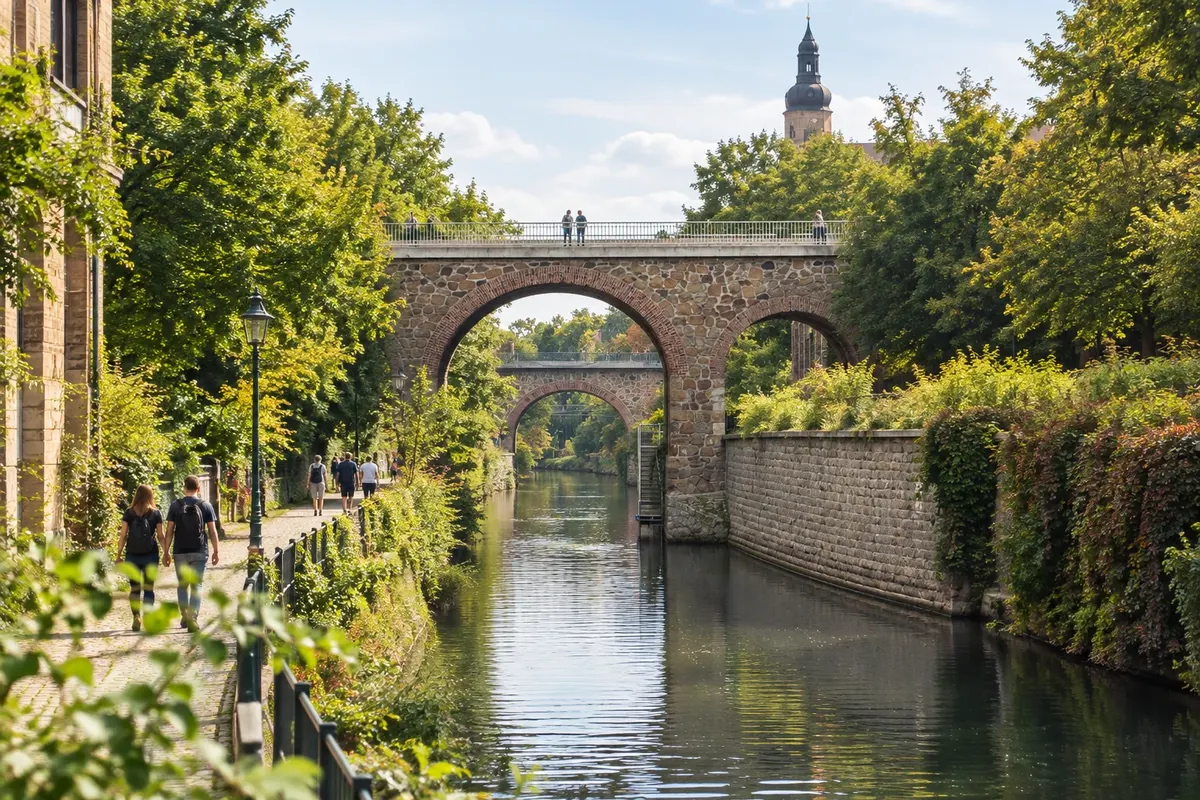
Former industrial neighborhood in the west of Leipzig, cut through by the Karl-Heine-Kanal, with brick factories converted into lofts, studios, bars and restaurants.

Mendelssohn House
Leipzig · Saxony · House-museum

Mendelssohn House

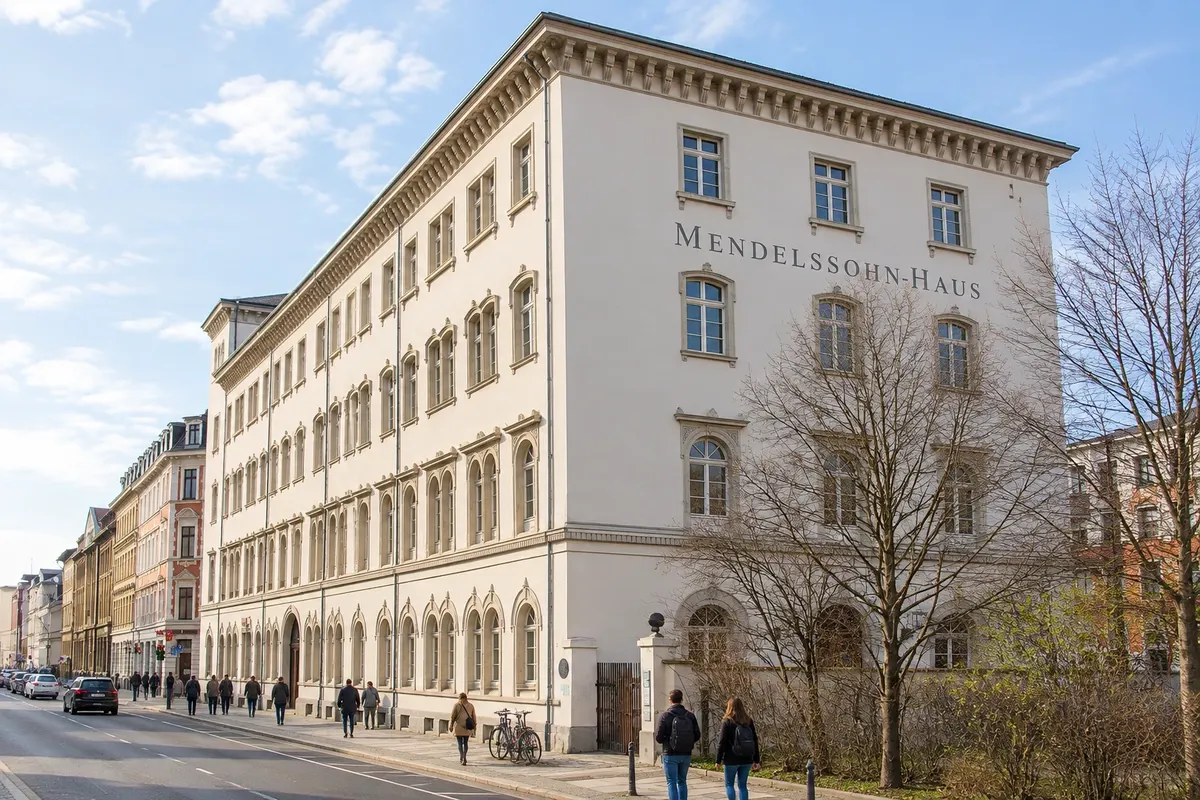
House where Felix Mendelssohn Bartholdy lived from 1845 until his death in 1847, with period furniture, manuscripts, the composer's watercolors and Sunday concerts.

Grassi Museum
Leipzig · Saxony · Muzej

Grassi Museum

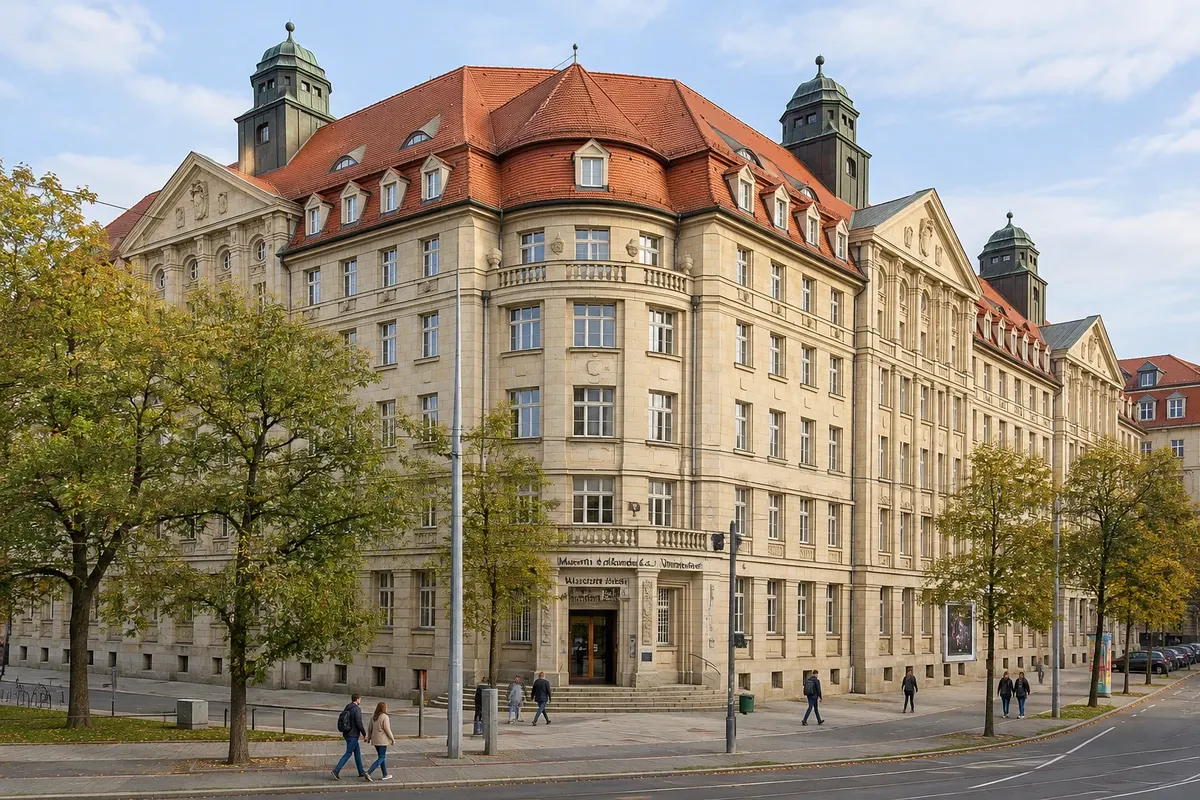
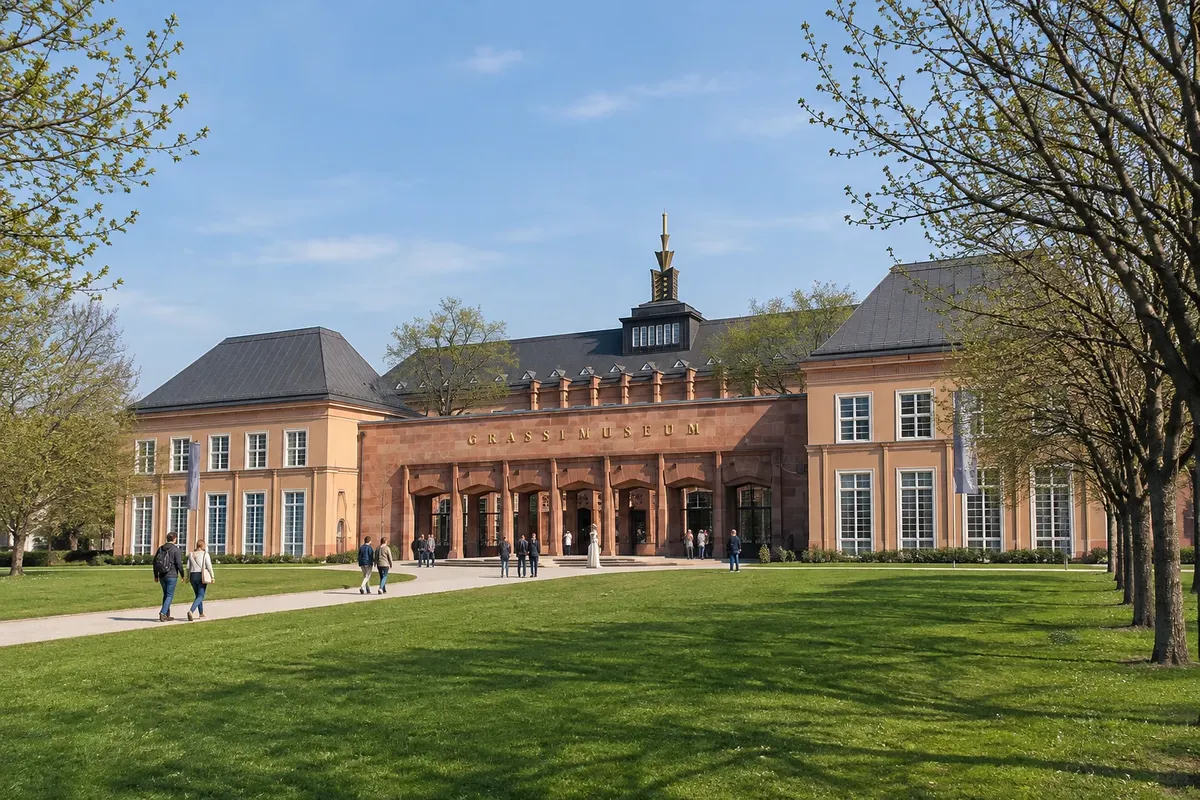
Art déco building from the 1920s on Johannisplatz that houses three museums: applied arts, ethnology and musical instruments.

Panometer Leipzig
Leipzig · Saxony · Muzej

Panometer Leipzig

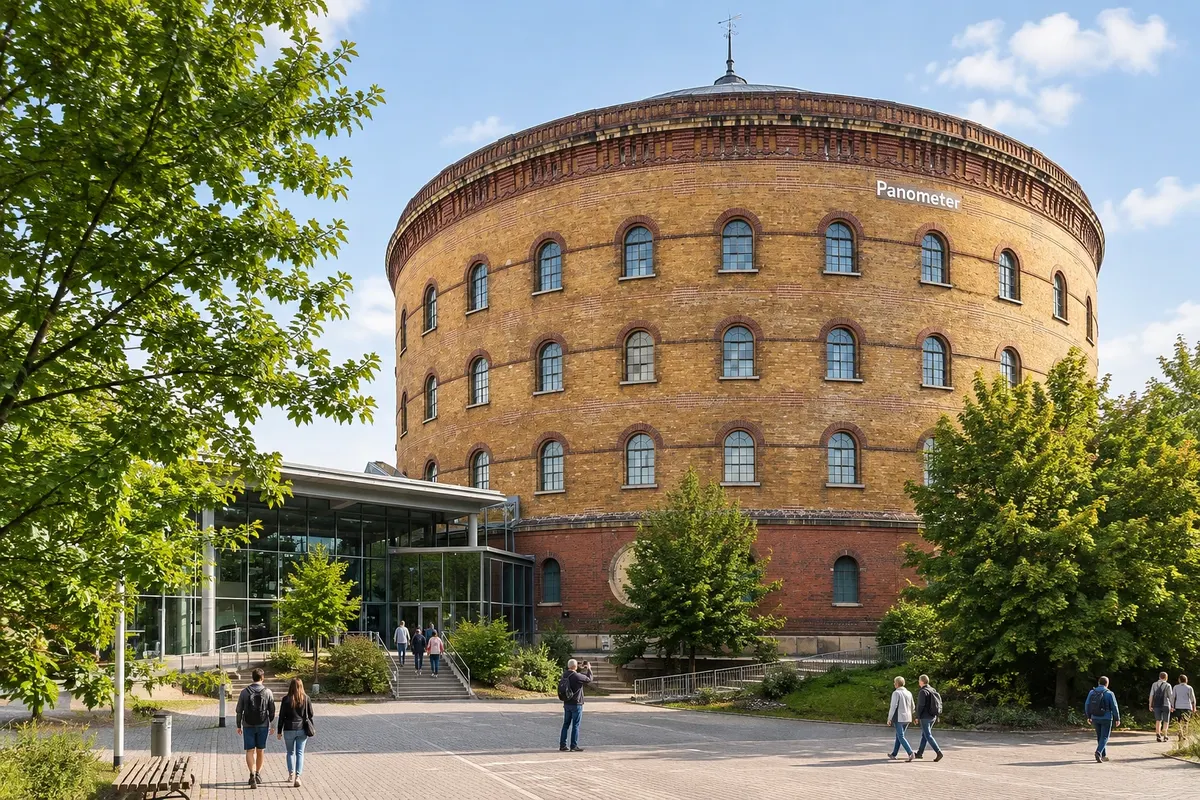
Former gasholder from 1910 that displays giant 360-degree panoramas by the artist Yadegar Asisi, viewed from a tower in the center of the building.

Kaj izbrati pred odhodom

Izleti – Leipzig

Izhodišče, trajanje, potek, vključene storitve in okvirna cena vsakega izleta.

Thomaskirche and Bach Museum: Bach’s church, his tomb and the Thomaner choir

Odhod: Thomaskirchhof, a 10-minute walk from Leipzig Hbf Walk, visit to the church and the museum Približno 3 ure Dopoldne ali pozno popoldne Lahko

The Thomaskirche (Church of St. Thomas) began as the church of a canonry founded in 1212 and is the Leipzig site most closely associated with Johann Sebastian Bach. He served as Thomaskantor, the church and school music director, from 1723 until his death in 1750, and wrote here much of the cantatas, the St. Matthew Passion and the Mass in B minor. Bach’s remains have been under a bronze slab at the high altar since 1950. In 1539 Martin Luther preached in this church when introducing the Reformation in Leipzig. The tower is 68 meters high. In front of the south door stands the statue of Bach, and in the courtyard is the church shop. The Thomanerchor, the boys’ choir that Bach conducted, remains based at the church: on Friday late afternoons and Saturday afternoons they usually sing motets, with tickets sold at the door shortly before the performance and no advance sales; when the choir is traveling, guest ensembles perform. On the other side of the courtyard, in the Bosehaus, a Baroque house of a merchant friend of the Bach family, is the Bach Museum. The exhibition displays original documents and objects, an interactive composition room, a virtual orchestra and a sound family tree of the musical family; the visit app includes a Portuguese version among its eleven languages. At the Altes Rathaus, a few steps away, is the portrait of Bach painted by Haussmann in 1746.

Kraji na poti: Thomaskirche, Bach Museum Leipzig.

Vključuje: Entry to the church nave is free. Guided tours, tower climbs and the choir motets require separate tickets, sold at the door. The Bach Museum charges admission; check the current price list. It is closed on Mondays except public holidays.

Nasvet: Arrive 45 minutes early for the Friday motet: a queue forms at the door and seating is unreserved. The church can close for rehearsals and recordings with little advance notice; if you find the door closed, visit the museum first and come back later. The Bach Museum offers free admission on the first Tuesday of the month.

Najboljši čas za obisk: All year. In June the Bachfest fills the church with concerts and the city with visitors; in December there are Christmas concerts. The choir usually takes a break during the summer holidays; check before you go.

Nikolaikirche and the peaceful revolution of 1989: the Monday prayers

Odhod: Nikolaikirchhof, an 8-minute walk from Leipzig Hbf Visit the church and walk around the square and the ring Približno uro in pol Popoldne Lahko

The Nikolaikirche (Church of St. Nicholas) began construction around 1165 in a Romanesque style and later grew as a Gothic church. Between 1784 and 1797 the architect Johann Carl Friedrich Dauthe redesigned the interior in a neoclassical style, with light columns ending in palm-leaf capitals, in shades of green, pink and white. The Ladegast organ, from 1862, now with 106 stops, is the largest church organ in Saxony. It was here that Bach premiered the St. John Passion on Good Friday 1724. The church entered recent German history through the prayers for peace (Friedensgebete), which began in September 1982 and grew into Monday gatherings of people seeking freedom of travel and opinion in the GDR. On Monday, October 9, 1989, after the prayer, about 70,000 people marched around the ring of the center, holding candles, without security forces intervening; a month later the Berlin Wall was opened. The prayers for peace continue every Monday in the late afternoon and are open to anyone who wishes to enter. On the square in front, the Nikolaisäule, a 1999 column crowned with palm leaves, repeats the motif of the interior columns and recalls the people who could not fit into the church in the autumn of 1989. From there, walk the ring (Ring) that encircles the old town, the route of the Monday marches.

Kraji na poti: Nikolaikirche.

Vključuje: Entrance to the church is free. The audio guide is paid separately. Visits are not possible during services, prayers and concerts; organ concerts have separate tickets.

Nasvet: To take part in the Monday prayer, arrive half an hour early: the pews fill up. Photography is not allowed during the prayer. Pair this visit with the Zeitgeschichtliches Forum, a few steps away on Grimmaische Straße, to understand what could be seen in the streets in 1989.

Najboljši čas za obisk: Open year-round. On October 9 the city usually holds the Lichtfest, the festival of lights at Augustusplatz and on the ring, commemorating 1989; check the program before you go.

Markt, Altes Rathaus and Mädlerpassage: Leipzig center on foot

Odhod: Markt (market square), a 10-minute walk from Leipzig Hbf Walk and visit to the city museum Približno 3 ure Dopoldne Lahko

The Markt is the central square of the Altstadt (old town) and its long side is occupied by the Altes Rathaus (old town hall), built in 1556 and 1557 by mayor and architect Hieronymus Lotter. The Renaissance building features arcades on the ground floor, stepped gables and a tower set off-center on the facade. Since 1909 it has housed the Stadtgeschichtliches Museum, the city history museum, with about 2,000 objects across two floors, the attic and the basement: models of Leipzig, the festival hall with portraits of the councilors, and the portrait of Bach painted by Elias Gottlob Haussmann in 1746. It was in this building that Bach signed the contract as Thomaskantor in 1723. Behind the town hall is the Naschmarkt, with the baroque Alte Börse (old stock exchange) and the statue of the student Goethe. From there you enter the Mädlerpassage, a covered arcade built between 1912 and 1914 by luggage maker Anton Mädler on the site of the Auerbachs Hof, featuring a rotunda and exits to Grimmaische Straße, the Neumarkt and Peterstraße. On the staircase that descends to the Auerbachs Keller, a wine cellar mentioned in records since 1438, are the sculptures of Faust with Mephistopheles and of the enchanted students, installed in 1913: Goethe, who studied in Leipzig from 1765 to 1768, frequented the place and used it in a scene of Faust. Leipzig has other arcades and trading courtyards from the fair era, such as Specks Hof and Barthels Hof, all a few minutes on foot.

Kraji na poti: Altes Rathaus, Mädlerpassage.

Vključuje: The permanent exhibition of the city museum is free; temporary exhibitions require a separate ticket. The Mädlerpassage and the courtyards are public passages. It is closed on Mondays, except public holidays.

Nasvet: Start in the morning, before the shops open, to see the square empty; on Tuesdays and Fridays there is usually a market at the Markt. Climb to the museum attic to see the wooden roof structure. Rub Faust’s foot on the stairs of the Auerbachs Keller, as students do.

Najboljši čas za obisk: All year. From late November to December 23 the Markt usually hosts Leipzig’s Christmas market, with a tradition dating from 1458; check the dates before you go.

Zeitgeschichtliches Forum Leipzig: dictatorship and democracy in Germany after 1945

Odhod: Grimmaische Straße 6, a 10-minute walk from Leipzig Hbf Museum visit Približno 2 uri Dopoldne ali popoldne Lahko

The Zeitgeschichtliches Forum Leipzig is the Haus der Geschichte federal foundation museum dedicated to German history after 1945, focusing on the GDR, the country’s division and reunification. It is on Grimmaische Straße, the pedestrian street that links the Markt to Augustusplatz, right along the route of the 1989 demonstrations. The permanent exhibition is called "Unsere Geschichte. Diktatur und Demokratie nach 1945" (Our history. Dictatorship and democracy after 1945) and, using everyday objects, photos, films and documents, traces the founding of the two German states, the uprising of June 17, 1953, the building of the Wall in 1961, daily life in the GDR with its Trabant cars, products and propaganda, Stasi surveillance, opposition in the churches and the peaceful revolution of 1989, up to the years after unification. There are texts in German and English and many video records of people who lived through that time. In front of the entrance stands the sculpture "Der Jahrhundertschritt" (The Century Step) by Wolfgang Mattheuer, 1984, a figure that simultaneously makes the Nazi salute and the raised communist fist. The museum also hosts temporary exhibitions about recent Germany.

Kraji na poti: Zeitgeschichtliches Forum Leipzig.

Vključuje: Admission to the museum and all exhibitions is free. Audio guide and guided tours may have separate terms; check at the desk. Closed on Mondays.

Nasvet: Reserve the morning of the second day: the exhibition is large and the English captions help those who do not read German. View the entrance sculpture from several angles. Then walk to the Runde Ecke, on the other side of the ring, to complete the theme.

Najboljši čas za obisk: All year; it is a good option for rainy or cold days, from November to March. In October, around the 9th, there is usually special programming about 1989.

Museum in der Runden Ecke: the Stasi headquarters in Leipzig

Odhod: Dittrichring 24, a 12-minute walk from Leipzig Hbf Museum visit with audio guide Približno uro in pol Dopoldne ali popoldne Lahko

The Runde Ecke (round corner) is the curved-front building on Dittrichring, on the western ring of the center, which from 1950 to 1989 housed the district administration of the Ministry for State Security, the Stasi, the GDR’s secret police. On the night of December 4, 1989, less than two months after the October 9 march, citizens of Leipzig occupied the building to prevent the destruction of the files. From that group the Bürgerkomitee Leipzig was formed, the association that still runs the museum today. The exhibition "Stasi – Macht und Banalität" (Stasi: power and banality) opened in August 1990 and occupies the original rooms, with the linoleum floor, padded doors and period furnishings: provisional detention cells, the disguise room with wigs and false beards, machines for opening and sealing letters, jars with scent samples of people under surveillance, hidden cameras in bags and buttons, and the machine that shredded documents. It becomes clear how the network of unofficial informants operated and how surveillance entered the lives of neighbors, colleagues and families. The audio guide, included in the admission, has English and Spanish versions among other languages. On Saturday afternoons there is a guided tour of the former Stasi complex, for an extra fee. In the surroundings, Dittrichring is part of the ring along which the Monday demonstrations passed.

Kraji na poti: Museum in der Runden Ecke.

Vključuje: Separate paid admission, with audio guide included; check the current price. The guided tour "Stasi intern," on Saturdays, requires a separate ticket. No reservation is necessary.

Nasvet: The opening hours have already appeared reduced on the museum website; confirm before you go. Rooms are small and the museum fills on weekends: prefer a weekday morning. The audio guide in Spanish helps those who do not read German.

Najboljši čas za obisk: Open year-round. On December 4 and October 9 there are usually commemorative events at the building and on the ring; check the schedule.

Völkerschlachtdenkmal: the Monument of the Battle of the Nations and the platform at 91 meters

Odhod: Leipzig Hbf, S-Bahn S1 or S4 to S Völkerschlachtdenkmal S-Bahn or tram 2 and 15, and ascent to the monument about 3 hours, including transport Dopoldne ali popoldne moderate (stairs to the top)

The Völkerschlachtdenkmal (Monument of the Battle of the Nations) stands in the southeast of Leipzig, amid the former battlefield of October 1813, when the armies of Prussia, Austria, Russia and Sweden defeated Napoleon. About half a million soldiers fought and there were more than 110,000 killed and wounded; it was the largest battle of the 19th century. The monument, made of concrete and porphyry granite, was inaugurated on October 18, 1913, on the centenary, near the site of Napoleon’s command post. It is 91 meters high and sits behind a long reflecting pool. Inside, the crypt and the Hall of Figures house guardian and warrior statues over 9 meters tall. Elevators take visitors to the gallery at 49 meters and to the exterior gallery at 58 meters; from there, 364 narrow spiral stairs lead up to the upper platform, with views over the whole city and the surrounding plain. In the adjacent building is the Forum 1813, a museum with weapons, uniforms, equipment and personal items from the battle and the Wars of Liberation, and a model of the battlefield.

Kraji na poti: Völkerschlachtdenkmal.

Vključuje: Separate paid admission for the monument and the Forum 1813, available as a combined ticket; check the current price list. Urban transport not included. Guided tours on Thursday afternoons have separate charges.

Nasvet: Go in the morning on a clear day: the view from the top reaches the chimneys and the lakes to the south. The final staircase is narrow and has two-way traffic; if you suffer from vertigo you can stay on the gallery at 58 meters. Bring water: there is no shade on the path by the reflecting pool.

Najboljši čas za obisk: All year round. From April to October opening hours are longer; from November to March it closes in the mid-afternoon. In October, around the 18th, historical reenactments of the battle usually take place; confirm the dates.

Prikaži dodatne izlete (8)

Museum der bildenden Künste: from Cranach to Max Klinger and the New Leipzig School

Odhod: Katharinenstraße 10, an 8-minute walk from Leipzig Hbf Museum visit about 2 hours and 30 minutes Dopoldne ali popoldne Lahko

The Museum der bildenden Künste (museum of fine arts), called the MdbK, originated from a citizens’ association in 1837 and opened to the public in 1848. It lost its building in the war and, since December 2004, has occupied a 34-meter-high glass-and-concrete cube on Sachsenplatz, two blocks from the Markt, designed by the firm Hufnagel Pütz Rafaelian. The collection holds about 3,500 paintings, 1,000 sculptures and 60,000 works on paper. The centerpiece of the sculpture collection is Max Klinger’s Beethoven, from 1902, in marble, bronze and colored stones, with the composer seated like a Greek god; an entire floor is devoted to Klinger and to Max Beckmann, who was born in Leipzig. Among the old masters are Lucas Cranach the Elder and 17th-century Dutch painters; from German Romanticism, Caspar David Friedrich. The contemporary section shows painters of the so-called New Leipzig School, such as Neo Rauch, who works at the Spinnerei. Floors open onto high internal terraces, and rooms alternate with glazed courtyards. There are temporary exhibitions throughout the year. On the square in front stands the Alte Nikolaischule, the school where Leibniz studied, with a small museum.

Kraji na poti: Museum der bildenden Künste Leipzig.

Vključuje: The permanent exhibition from the 15th to the 19th century is free; the ticket for temporary exhibitions and the modern art rooms is paid separately—check the current price list. Closed on Mondays.

Nasvet: On Wednesdays the museum opens only at noon and stays open into the evening: good for those who spent the day outside the city. Start with Klinger’s Beethoven and Beckmann’s floor if you have little time. The ground-floor café faces the courtyard.

Najboljši čas za obisk: All year; rain-day program. On the first Wednesday of the month exhibitions have reduced admission.

Augustusplatz and the Gewandhaus: the square of the opera house, the university and the orchestra

Odhod: Augustusplatz, an 8-minute walk from Leipzig Hbf Walk around the square and attend a concert or guided tour about 2 hours, plus the concert late afternoon and evening Lahko

Augustusplatz is the large square on the eastern edge of the old center, with the Oper Leipzig (opera house) on the north side, the Gewandhaus on the south side and, between them, the Paulinum and the Augusteum of Leipzig University, a 2017 building with a church-like façade that recalls the Paulinerkirche, the university church demolished by the GDR government in 1968. In the middle of the square are the Mendebrunnen, a fountain from 1886, and the entrance to the S-Bahn station. Next to the Gewandhaus rises the City-Hochhaus, a 1972 tower shaped like an open book, with a paid observation terrace at the top. The Gewandhaus is home to the Gewandhausorchester, an orchestra that grew out of bourgeois concerts started in 1743 in an inn and that had Felix Mendelssohn as conductor from 1835; the name comes from the first hall, of 1781, in the cloth merchants’ building. The current building, opened on October 8, 1981, was the only concert hall built in the GDR. The large hall has more than 1,900 seats around the stage and a Schuke organ from Potsdam with 92 stops and 6,638 pipes; the Mendelssohn Hall has about 500 seats. In the foyer, the sloping ceiling is covered by the painting "Gesang vom Leben" (Song of Life) by Sighard Gille, visible from the square through the glass façade at night. Guided tours of the building are held on designated days. On the sidewalk in front, the 1989 marches began and ended here; today the square hosts the Lichtfest on October 9.

Kraji na poti: Augustusplatz, Gewandhaus zu Leipzig.

Vključuje: The square is public. Concerts, guided tours of the Gewandhaus and the City-Hochhaus terrace are paid separately; check the schedule and the current price list.

Nasvet: Buy the concert ticket in advance from the orchestra’s website, especially on Thursdays and Fridays, subscription nights. Go up to the City-Hochhaus terrace before sunset to see the city lit up. To hear the organ with an easier entry option, check the season’s organ concerts.

Najboljši čas za obisk: September through June is the orchestra season. In July and August the Gewandhaus is often on holiday and the square hosts outdoor cinema and events; confirm the program.

Spinnerei: the former cotton spinning mill turned gallery and studio quarter

Odhod: Leipzig Hbf, tram 14 to S-Bahnhof Plagwitz, or S-Bahn S1 Tram or S-Bahn and walk among galleries about 3 hours, including transport Popoldne easy (uneven factory floors)

The Leipziger Baumwollspinnerei, founded in 1884 in the working-class district of Lindenau near Plagwitz, became the largest cotton spinning mill on the European continent: by 1907 it had 240,000 spindles and occupied about 10 hectares of brick halls, with workers’ housing, a nursery and gardens. Yarn production ended in 1993 after reunification. The empty buildings were gradually taken over by artists, and today the Spinnerei houses about 100 studios and more than ten galleries, including Eigen + Art, which brought the painters of the New Leipzig School to the world stage; Neo Rauch has a studio in the complex. Halle 14 is the non‑profit contemporary art centre, with exhibitions on several floors of an unrestored hall, and the archiv massiv tells the factory’s story with photos and machines. There is also a print workshop, artists’ shops, a cinema and a café. You can wander freely along the internal cobbled streets between the numbered buildings and enter the galleries that are open, usually Tuesday to Saturday in the afternoons. Three times a year, during the Rundgang, galleries open exhibitions at the same time and studios welcome the public; it is the busiest weekend of the year at the complex. 400 metres away is the Kunstkraftwerk, the former heating plant with immersive art projections.

Kraji na poti: Spinnerei.

Vključuje: Walking around the complex and entering most galleries is free. Halle 14, the Kunstkraftwerk and guided visits about the factory’s history require separate tickets; check the current price list. Urban transport not included.

Nasvet: Go Tuesday through Saturday in the afternoon: on Sundays and Mondays most galleries are closed. Check the Rundgang dates (usually in spring, early autumn and winter) if you want to see open studios. Combine it with the walk along the Karl-Heine-Kanal, a few minutes on foot.

Najboljši čas za obisk: All year, Tuesday through Saturday. Rundgang weekends, typically in April or May, September and January, have more exhibitions open; confirm the dates before you go.

Plagwitz and the Karl-Heine Canal: the industrial west neighborhood on foot or by boat

Odhod: Leipzig Hbf, tram 14 to Karl-Heine-Straße/Gießerstraße Walk through the neighborhood and along the canal; optional boat ride Približno 3 ure late afternoon and early evening Lahko

Plagwitz, in the west of Leipzig, was Germany’s first planned industrial district. The lawyer Carl Erdmann Heine (1819–1888), known as Karl Heine, drained the marshy land of the Weiße Elster between 1840 and 1880, opened a canal to link factories to the rivers and, in his plan, to the port of Hamburg, and brought the railway: the Plagwitz-Lindenau station, from 1873, is considered the first industrial station in Europe. The result is about 90 hectares of red-brick factories, chimneys and workers’ houses, now protected. Karl-Heine-Straße is the main street, with cafés, bars, small shops and the Westwerk, a former factory housing studios, offices and exhibitions. Running parallel is the Karl-Heine Canal, with a pedestrian and cycle path along the banks, iron bridges and, on a bend, the Stelzenhaus, a late 19th-century building on concrete pillars over the water. In season, sightseeing boats and rented kayaks run the canal from the Stadthafen, the small harbor near the centre, and continue along the rivers to Cospudener See, in the Leipziger Neuseenland, the group of more than twenty lakes that filled former open-cast lignite mines south of the city. The old freight yard of the station has become a park, with allotment gardens and a trail over the tracks. At night, Karl-Heine-Straße is one of Leipzig’s bar areas.

Kraji na poti: Plagwitz.

Vključuje: Free walk, no charge. Sightseeing boat rides and kayak rentals are paid separately in season; check the current price list. Urban transport not included.

Nasvet: Do the canal route in the late afternoon, when the light hits the brick facades, and finish at a café on Karl-Heine-Straße. The canal path is flat and good for bike rental. The boat trip to Cospudener See takes much of the day; to only see the canal, choose the short return.

Najboljši čas za obisk: From April to October, when boats and kayak rentals usually operate; confirm before you go. The neighborhood itself is pleasant year-round.

Zoo Leipzig: Gondwanaland, Pongoland and six animal worlds

Odhod: Leipzig Hbf, 15 minutes on foot or tram 12 to the Zoo Walk and visit to the zoo full day or half day morning and afternoon easy (little walking)

Zoo Leipzig opened on June 9, 1878, north of the city center, and occupies about 27 hectares divided into six themed worlds: Gründer-Garten (founders’ garden), with the carnivore house from 1901 and the aquarium; Asia; Gondwanaland; Pongoland; Africa and South America. Gondwanaland is a 1.65-hectare tropical hall with about 170 animal species and 500 plant species, heated year-round: you explore it on foot via canopy walkways or by boat on an internal river, among tapirs, giant otters, Komodo dragons and free-flying birds. Pongoland, opened in 2001, houses the four species of great apes—chimpanzees, gorillas, orangutans and bonobos—and operates alongside a research center of the Max Planck Institute for Evolutionary Anthropology. In Africa, the Kiwara savannah brings together giraffes, zebras and antelopes in an open area visible from a terrace. The zoo totals more than 600 species. Paths are long and there are playgrounds and restaurants. It is open every day of the year, with shorter hours in winter.

Kraji na poti: Zoo Leipzig.

Vključuje: Separate paid admission, with entry to all themed worlds included; check the current price table. The Gondwanaland boat may have its own charge. Urban transport not included.

Nasvet: Enter through the main opening and go straight to Gondwanaland, before the school groups arrive; leave Pongoland for the end of the morning, the monkeys’ feeding time. If you have little time, you can do Gondwanaland and Pongoland in half a day. In winter, Gondwanaland is the heated refuge.

Najboljši čas za obisk: All year round. From May to September the animals spend more time outdoors; from November to March opening hours are shorter, confirm before you go.

Mendelssohn-Haus: the house where Mendelssohn lived and the Effektorium

Odhod: Goldschmidtstraße 12, a 15-minute walk from Leipzig Hbf Museum visit and, on Sundays, concert Približno uro in pol Dopoldne Lahko

Felix Mendelssohn Bartholdy, conductor of the Gewandhausorchester and founder of the Leipzig conservatory, moved with his family at the end of the summer of 1845 to the first floor of a building then at Königstraße 5, today Goldschmidtstraße 12, behind the Gewandhaus. He died in Leipzig on November 4, 1847, at age 38. Of all the houses where he lived, this is the only one preserved. The building was saved from ruin by the International Mendelssohn Foundation, created in 1991 under the presidency of conductor Kurt Masur, and the museum opened in 1997. The apartment retains the Biedermeier style of the period, with family furniture, letters, scores and watercolors painted by the composer himself, who also drew. On the ground floor is the Effektorium, a room where the visitor conducts a virtual orchestra and choir, choosing instruments and tempo for Mendelssohn’s works. The second floor is dedicated to his sister, Fanny Hensel, composer and pianist. In the house’s music salon there is a concert every Sunday late morning, like the salons the family used to host. The backyard garden is a pocket of calm among the buildings. A few streets away is the Grieg-Begegnungsstätte, and on the other side of the center is the Schumann-Haus, home of Robert and Clara Schumann.

Kraji na poti: Mendelssohn-Haus.

Vključuje: Separate paid admission; check the current rates. Sunday concerts have their own tickets. Open every day.

Nasvet: Go on Sunday morning and combine the visit with the late-morning concert in the hall itself. Allow half an hour for the Effektorium: each work lasts a few minutes. In early November the Mendelssohn-Festtage recall the date of his death, with concerts at the Gewandhaus and at the house; check the dates.

Najboljši čas za obisk: All year. At the end of May the house usually opens the garden for a music weekend, and from late October to early November the Mendelssohn-Festtage take place; verify the dates.

Grassi Museum: applied arts, musical instruments and ethnology in an Art Déco building

Odhod: Johannisplatz, tram 4, 7, 12 or 15, a 15-minute walk from the Markt Museum visit Približno 3 ure Dopoldne ali popoldne Lahko

The Grassi is a complex of three museums on Johannisplatz, east of the city center, built between 1925 and 1929 with money left to the city by the merchant Franz Dominic Grassi. It was one of the few museum buildings erected in Germany during the Weimar Republic. The inner courtyards, the Pfeilerhalle (hall of pillars) from 1927 and the 18 glass windows designed by Josef Albers for the main staircase, reconstructed from photographs after the war, show Art Deco mixed with the New Objectivity. The Museum für Angewandte Kunst (applied arts) covers furniture, glass, porcelain, jewelry and design from Antiquity to the present, with Art Nouveau and Bauhaus rooms. The Museum für Musikinstrumente, of the University of Leipzig, has one of the largest collections of historical instruments in Europe, with harpsichords, early pianos and a sound laboratory where visitors can play. The Museum für Völkerkunde (ethnology) is undergoing reworking, with some rooms open on alternate days; the collection includes pieces from Africa, Asia, Oceania and the Americas, and the exhibition discusses the history of how they were collected. The complex borders the Alter Johannisfriedhof, a former cemetery turned park, which contains 19th-century tombstones.

Kraji na poti: Grassi Museum.

Vključuje: The permanent applied arts and ethnology exhibitions are free; the instrument museum and temporary exhibitions require a separate ticket, check the current price list. Closed Mondays.

Nasvet: Allow extra time for the applied arts collection, which is the largest of the three. On Wednesdays the Museum of Applied Arts is open late. Check on the day which rooms of the Ethnology Museum are open: they vary by weekday.

Najboljši čas za obisk: All year round, a good choice for rainy days. On the first Wednesday of the month the instrument museum waives its admission fee.

Panometer Leipzig: Yadegar Asisi’s 360-degree panorama inside a gasometer

Odhod: Leipzig Hbf, S-Bahn to Leipzig MDR and 15 minutes on foot S-Bahn or tram 9 and visit the panorama about 2 hours, including transport Dopoldne ali popoldne easy (stairs to the tower)

The Panometer is located in the south of Leipzig, inside Gasometer II, the city’s gas tank built in 1910 and listed as an industrial monument. Since 2003 the artist Yadegar Asisi, born in Vienna and raised in Leipzig, has used the brick cylinder to exhibit 360-degree panoramas 32 meters high and 110 meters in circumference, painted and digitally assembled on fabric. Visitors view the image from the floor or from a 15-meter tower in the center, climbing stairs, while a light-and-sound cycle of about 15 minutes simulates day and night. Before the panorama, an exhibition explains the theme with photos, objects and videos. Themes change every few years: past shows have included Everest, Leipzig in 1813 on the day of the Battle of the Nations, the Great Barrier Reef and the Amazon. The current panorama is “Antarktis,” an Antarctic coast with icebergs and glaciers above the water and marine life beneath the ice in the three lower meters; it is expected to remain at least until early 2028. The name Panometer combines panorama and gasometer; Asisi has others in Dresden, Berlin and Wittenberg. It is near the Völkerschlachtdenkmal, and both can be seen in the same day.

Kraji na poti: Panometer Leipzig.

Vključuje: Admission paid separately; check the current price list. Guided tours at fixed times, no extra charge. Urban transport not included.

Nasvet: Go in the early afternoon and stay for two light cycles: the panorama changes a lot between day and night. The tower only has stairs. Combine with the Völkerschlachtdenkmal: bus 70 connects the two in a few stops.

Najboljši čas za obisk: All year; the hall is covered and heated. Confirm which panorama is on display before you go, since the themes are rotated.


Po dnevih

Leipzig – načrt poti. Število dni: 2, 3in5

Predlogi za načrtovanje poti. Vrstni red dni prilagodite vremenu in razpoložljivosti izletov.

2 dni · Leipzig in 2 days: Bach, 1989 and the old town

ZaFor someone passing through Leipzig between Berlin and Dresden or Munich and wanting the essentials: Bach’s music, the history of 1989 and the city center on foot. · Izhodišče:Leipzig, old town or near the Hauptbahnhof
  1. Dan 1 · Arrival, Markt, Thomaskirche and Nikolaikirche

    If you come from Brazil on the overnight flight you arrive in the morning at Frankfurt and take the ICE directly from the airport station to Leipzig Hbf, about 3 hours; if you are already in Europe you arrive from Berlin in about 1 hour 15 minutes. Leave your bags and walk 10 minutes to the Markt: Altes Rathaus from the outside, Mädlerpassage and the staircase of Auerbachs Keller. In the afternoon, Thomaskirche with Bach’s tomb and, if it’s Friday, the choir’s motet in the late afternoon. Finish at Nikolaikirche, near closing time, and walk the ring. Sleep early because of jet lag.

  2. Dan 2 · Zeitgeschichtliches Forum, Runde Ecke and Völkerschlachtdenkmal

    In the morning, the Zeitgeschichtliches Forum on Grimmaische Straße to understand the GDR and 1989; then cross the ring to the Runde Ecke, the Stasi museum. Have lunch in the center and take S‑Bahn S1 or S4 to the Völkerschlachtdenkmal: climb the 364 steps to the platform at 91 meters and see the Forum 1813. If you have time and energy, the Panometer is a few bus stops away. In the evening, a concert at the Gewandhaus if available, or a walk around Augustusplatz lit up.

3 dni · Leipzig in 3 days: music, history and the creative west
ZaFirst trip to Leipzig, interested in classical music, the history of the GDR and the art scene of the Spinnerei. · Izhodišče:Leipzig, old town
  1. Dan 1 · Arrival and the old town on foot

    Arrival by train at Leipzig Hbf, the central station: from Frankfurt airport in about 3 hours by ICE, from Munich in about 3 hours 15 minutes, from Berlin in 1 hour 15 minutes. Easy day: Markt, Altes Rathaus with the portrait of Bach, Mädlerpassage and the inner courtyards. In the late afternoon, Thomaskirche and, if it’s Friday or Saturday, the Thomaner motet. Have dinner in the center and go to bed early.

  2. Dan 2 · 1989: Nikolaikirche, Zeitgeschichtliches Forum, Runde Ecke and Völkerschlachtdenkmal

    Morning at the Zeitgeschichtliches Forum and then Nikolaikirche with its palm columns and the column on the square. After lunch, the Runde Ecke with the audio guide of the former Stasi headquarters. Mid‑afternoon, S‑Bahn to the Völkerschlachtdenkmal, with a climb to the platform. If it’s Monday, return to Nikolaikirche in the late afternoon for the prayer for peace. In the evening, a concert at the Gewandhaus or Thomaskirche.

  3. Dan 3 · Bach Museum, Mendelssohn‑Haus, Spinnerei and Plagwitz

    In the morning, the Bach Museum in the Bosehaus and, a 15‑minute walk away, the Mendelssohn House with the Effektorium; on Sundays there is a late‑morning concert. Have lunch and take tram 14 or S‑Bahn S1 to Plagwitz: spend the afternoon at the Spinnerei among galleries and studios, and walk along the Karl‑Heine Canal to the Stelzenhaus. Finish on Karl‑Heine‑Straße with dinner in one of the neighborhood cafés. If you prefer museums, swap the Spinnerei for the Museum der bildenden Künste, open late on Wednesdays.

5 dni · Leipzig in 5 days: the city at a relaxed pace, museums, the zoo and a day trip
ZaIf you stay in Leipzig as a base for almost a week, you’ll want to see the museums at a relaxed pace, take children to the zoo and do a day trip by train. · Izhodišče:Leipzig, old town or Südvorstadt
  1. Dan 1 · Arrival, Markt and Thomaskirche

    Arrival from Brazil on the overnight flight to Frankfurt or Munich and train to Leipzig Hbf, arriving in the mid-afternoon. Short walk through the Markt, Altes Rathaus and Mädlerpassage, and visit to Thomaskirche before closing; if it’s Friday, the late-afternoon motet. Early dinner near the Thomaskirchhof.

  2. Dan 2 · The year 1989: Nikolaikirche, Zeitgeschichtliches Forum and Runde Ecke

    A full morning at the Zeitgeschichtliches Forum. Lunch on Grimmaische Straße and visit to Nikolaikirche, with the Nikolaisäule on the square. In the afternoon, the Runde Ecke and a walk along the ring where the Monday marches passed. At the end of the afternoon, go up to the City‑Hochhaus terrace at Augustusplatz and, in the evening, a concert at the Gewandhaus with tickets bought in advance.

  3. Dan 3 · Völkerschlachtdenkmal, Panometer and Grassi

    In the morning, S‑Bahn to the Völkerschlachtdenkmal: the platform at 91 meters and the Forum 1813. Bus 70 to the Panometer for Asisi’s panorama and a light cycle. In the afternoon, tram to Johannisplatz and the Grassi Museum, with applied arts and musical instruments; the Alter Johannisfriedhof next door is good for a rest. Dinner in Südvorstadt on Karl‑Liebknecht‑Straße.

  4. Dan 4 · Bach-Museum, Mendelssohn-Haus and the west: Spinnerei and Plagwitz

    In the morning, Bach-Museum and Mendelssohn-Haus, both within walking distance of the center. After lunch, tram 14 to Plagwitz: Spinnerei, Halle 14 and the galleries; walk along the Karl-Heine-Kanal and, in season, take a boat or kayak on the canal. Evening on Karl-Heine-Straße. Travelers with children swap the morning museums for Zoo Leipzig, with Gondwanaland and Pongoland.

  5. Dan 5 · Zoo Leipzig or excursion to Dresden

    Two routes: a full day at Zoo Leipzig, a 15-minute walk from the station, with Gondwanaland early and Pongoland late morning; or a return trip by train to Dresden, about 1 h 10 min by ICE from Leipzig Hbf, to see the Zwinger, the Frauenkirche and the Brühlsche Terrasse. Those leaving Leipzig the next day save the Museum der bildenden Künste for the last morning. In summer, another option is Cospudener See in the Leipziger Neuseenland, reachable by S-Bahn and bicycle.

Najboljši čas za obisk

Kdaj se odpraviti:Leipzig po mesecih

From May to September the days are long and the parks and canals fill up. The Bachfest usually takes place in June. In October the city commemorates the 1989 demonstrations with the Lichtfest. The Christmas market on the market square typically runs from late November until just before Christmas. From December to February it is cold and gets dark early.

The seasons shown are the most usual ones; nature doesn't always follow the calendar.

januar Malo padavin

winter · museums and concerts

At the DWD Leipzig/Halle station (airport, 131 m), average 1 °C and about 33 mm of precipitation, partly as snow, which rarely stays on the ground for many days. Days are short, with dusk in mid-afternoon. It’s a month for museums, churches and concerts: the Gewandhaus season is underway, and the zoo’s Gondwanaland is a heated refuge. The Völkerschlachtdenkmal closes earlier. Low activity after New Year; Spinnerei usually holds a Rundgang in January—check the date. Bring a heavy coat, beanie and gloves.

februar Malo padavin

winter · driest month

Winter and the driest month of the year in Leipzig/Halle (131 m): about 25 mm, with an average of 1.7 °C and nights below zero. Days are still short but getting longer. Programmes of museums and concert halls; the Panometer and Zeitgeschichtliches Forum are good full-day indoor options. In February there are usually winter school holidays in Germany, with more families at the zoo. Hotels and trains have low-season prices.

marec Malo padavin

late winter · Buchmesse

Late winter, beginning of spring at the end of the month. In Leipzig/Halle (131 m), average 4.9 °C and about 37 mm of rain; it can still freeze in the mornings. At the end of March the clocks move forward to European summer time. In March the city usually hosts the Leipziger Buchmesse, the book fair, with the Leipzig liest reading festival and a busy city—check dates and book ahead. Boats on the Karl-Heine-Kanal are not yet running. Bring a coat and raincover.

april Malo padavin

spring · trees in blossom

Spring. In Leipzig/Halle (131 m), average 9.6 °C and about 32 mm of rain, one of the driest months, but with rapidly changing days between sun and cold wind. The trees along the ring and in the parks bloom, and the Völkerschlachtdenkmal moves to extended hours from April to October. Boats and kayak rentals on the Karl-Heine-Kanal usually start their season. Easter, in March or April, brings public holidays and more visitors. A good month for walking around the center and Plagwitz.

maj Zmerne padavine

spring · Wave-Gotik-Treffen

Full spring. In Leipzig/Halle (131 m), average 14 °C and about 51 mm of rain, with the first warm afternoons. Tables spill onto the sidewalks at the Markt and Karl-Heine-Straße. On the Pentecost weekend, in May or June, Leipzig usually hosts Wave-Gotik-Treffen, a gothic music gathering that fills the city with visitors dressed in black—check the dates, as hotels sell out. At the end of the month Mendelssohn-Haus often opens its garden for a weekend of music. Holidays: May 1 and Ascension Day.

junij Zmerne padavine

summer · Bachfest

In Leipzig/Halle (131 m), average 17.3 °C and about 54 mm of rain, in showers. Very long days, with daylight late into the evening. In June the Bachfest Leipzig takes place, ten days of concerts at the Thomaskirche, the Nikolaikirche and the Gewandhaus, attracting visitors from around the world: buy tickets and accommodation months in advance and confirm the dates. The Stadtfest, a street festival in the city center, usually happens in late May or early June. The lakes of the Neuseenland open for swimming season.

julij Zmerne padavine

summer · wettest month

Summer and the rainiest month of the year in Leipzig/Halle (131 m): about 76 mm, in short, heavy summer showers, with an average of 19.6 °C and afternoons that can exceed 30 °C. School holidays in Saxony cover part of the month: the zoo and lakes get crowded. The Gewandhaus often closes for a summer break, and Augustusplatz hosts outdoor events. The Spinnerei and museums stay cool during the hottest hours. Bring sunscreen, a hat and a lightweight rain jacket.

avgust Zmerne padavine

summer · lakes and canal

Summer. In Leipzig/Halle (131 m), average 19.2 °C and about 64 mm of rain, still in late-afternoon showers. School holidays in Germany: a family month, with Cospudener See, the Karl-Heine Canal for kayaking and the zoo as full-day programs. Churches and the Thomanerchor typically take a summer break, with motets sung by guest ensembles; check before you go. The Gewandhaus season restarts at the end of the month or in September. Long, hot days and pleasant nights on Karl-Heine-Straße.

september Zmerne padavine

early autumn · Spinnerei Rundgang

End of summer and start of autumn. In Leipzig/Halle (131 m), average 14.8 °C and about 51 mm of rain, with cool mornings and still-warm afternoons; one of the most pleasant months for walking. The Gewandhaus Orchestra opens its season, and the Spinnerei usually holds its autumn Rundgang, with all galleries open the same weekend; confirm the dates. Leaves begin to change in Clara-Zetkin-Park and the Alter Johannisfriedhof. The canal boats continue to operate. Moderate activity.

oktober Malo padavin

autumn · Lichtfest on October 9

Autumn. In Leipzig/Halle (131 m), average 10 °C and about 35 mm of rain, with clear dry days and morning fog. On October 9 the city usually holds the Lichtfest, a festival of lights at Augustusplatz and the ring, in memory of the 1989 march, and around October 18 there are events at the Völkerschlachtdenkmal for the 1813 battle; check schedules. At the end of the month the clocks revert to standard time and the Völkerschlachtdenkmal switches to reduced hours in November. The Mendelssohn-Festtage usually start in the last days of October. Autumn colors are at their best in the parks and along the canal.

november Malo padavin

late autumn · start of the Christmas market

Late autumn, with winter approaching. In Leipzig/Halle (131 m), average 5.1 °C and about 40 mm of rain, with overcast skies and short days. The Mendelssohn-Festtage end on November 4, the composer's death date. Museum month: Grassi, MdbK, Zeitgeschichtliches Forum and Bach-Museum are all covered and close to each other. In the last days of November the Christmas market typically opens at the Markt and surrounding streets, with around 300 stalls; confirm the date. Bring a coat, scarf and closed shoes.

december Malo padavin

winter · Christmas market

Winter. In Leipzig/Halle (131 m), average 2 °C and about 34 mm of precipitation, sometimes snow. Leipzig’s Christmas market, with a tradition since 1458, typically occupies the Markt and nearby squares until December 23, with trumpet concerts from the Altes Rathaus balcony; check the dates. Thomaskirche holds Christmas concerts with the Thomanerchor, and tickets sell out in advance. Museums close on December 24 and 31, and Mendelssohn-Haus is open only until early afternoon on those days. Between Christmas and New Year the city is quiet; confirm opening hours for each place.

Načrtujte pot

Kako do tja:Leipzig

By train (Deutsche Bahn) from Berlin, Frankfurt, Munich and Dresden

Leipzig Hbf (Hauptbahnhof, the central station) is one of Deutsche Bahn’s major hubs and lies on the northern edge of the historic center, a 10-minute walk from the Markt. Opened in 1915, with a 298-meter façade and 23 platforms, it is the largest station in Europe by built area; the two entrance halls were originally for the Saxon and the Prussian railways. Inside is the Promenaden shopping center across three levels. Approximate ICE times: Berlin Hbf about 1 hour 15 minutes, direct, with hourly trains; Frankfurt (Main) Hbf or Frankfurt Airport long-distance station about 3 hours, direct; München Hbf (Munich) about 3 hours 15 minutes, direct, or slightly longer with a change; Dresden Hbf about 1 hour 10 minutes, direct, with frequent departures; Halle (Saale) about 30 minutes by S-Bahn or regional train. Erfurt and Weimar lie on the ICE route to Frankfurt. Buy long-distance tickets in advance on the DB website or app, with reserved seats; flexible fares are more expensive. For regional trains and local transport, the Deutschlandticket, a monthly pass, covers the whole country, and the Sachsen-Ticket covers one day of regional travel in Saxony, Saxony-Anhalt and Thuringia.

By car: motorways and distances

Leipzig sits at the crossroads of two motorways: the A 9, coming from Berlin to the north and continuing to Nürnberg (Nuremberg) and München (Munich) to the south, and the A 14, which links Dresden in the southeast with Halle and Magdeburg to the northwest; the A 38 completes the ring to the south. Approximate distances from the center: Berlin about 190 km via the A 9; Dresden about 120 km via the A 14; Halle about 40 km; Weimar about 120 km via the A 9 and A 4; Nuremberg about 280 km; Munich about 430 km; Frankfurt about 390 km via the A 4 and A 5. Leipzig’s historic center lies inside an environmental zone (Umweltzone): only cars with the green sticker may enter, which rental cars already carry. Inside the Ring, many streets are pedestrianized and parking is in paid garages; it’s more practical to leave the car at the hotel or a Park & Ride, such as the one at Völkerschlachtdenkmal, and travel by tram. In Germany you drive on the right, headlights must be on in rain, and motorways have no tolls for passenger cars; on unrestricted sections, keep to the right-hand lane.

How to get around Leipzig: on foot, by tram, S-Bahn and Leipzig Card

Leipzig’s old town fits inside the Ring of avenues that replaced the city walls: it’s a 10-minute walk from the central station to the Markt, and Thomaskirche, Nikolaikirche, Augustusplatz, Mädlerpassage and the central museums are just minutes apart. For the rest, the city has a large tram (Straßenbahn) network operated by LVB, with buses supplementing, and the S-Bahn Mitteldeutschland, whose S1–S6 lines run through the City-Tunnel opened in 2013 beneath the center, with stations at Hauptbahnhof, Markt, Wilhelm-Leuschner-Platz and Bayerischer Bahnhof. The Völkerschlachtdenkmal has its own S-Bahn stop (S1 and S4); Plagwitz and the Spinnerei are served by tram 14 and the S1; the zoo is a 15-minute walk from the station or reachable by tram 12; the Grassi by trams 4, 7, 12 and 15; the Panometer by S-Bahn to Leipzig MDR plus 15 minutes on foot, or by tram 9. The whole city is in tariff zone 110: there are single tickets, 24-hour tickets and the Leipzig Card (1, 2 or 3 days), which includes transport in zone 110 and discounts on museums, tours and boats; buy it at the tourist office, at LVB machines or in the app. The Deutschlandticket is also valid on trams, buses and S-Bahn. Paper tickets must be validated onboard. Rental bicycles are common, and the Karl-Heine Canal path and Clara-Zetkin-Park are flat.

Pred odhodom

Praktične informacije

Z nekaj načrtovanja boste imeli več časa za uživanje na poti.

Kdaj se odpraviti

From May to September the days are long and the parks and canals fill up. The Bachfest usually takes place in June. In October the city commemorates the 1989 demonstrations with the Lichtfest. The Christmas market on the market square typically runs from late November until just before Christmas. From December to February it is cold and gets dark early.

The seasons shown are the most usual ones; nature doesn't always follow the calendar.

Koliko dni ostati

One day covers the old town: Thomaskirche, Nikolaikirche, the market square and a museum. With two days you can add the Völkerschlachtdenkmal, the Museum der bildenden Künste and an afternoon in Plagwitz and the Spinnerei. Three days allow for a concert at the Gewandhaus, a visit to the Zoo or a day trip to Dresden.

V katerem mestu prenočiti

The centre within the ring (Zentrum) puts everything within walking distance and is close to Leipzig Hauptbahnhof, convenient for train arrivals and departures. To the south, the Südvorstadt, around Karl-Liebknecht-Straße, has bars and restaurants and direct trams to the centre. The Waldstraßenviertel, west of the centre, is a residential neighbourhood of late-19th-century buildings, near the Zoo and Rosental park. Plagwitz and Lindenau, a bit farther out, attract those who prefer the gallery and bar scene in former factories.

Spoštujte kraj

Odnesite svoje odpadke, upoštevajte oznake in podprite lokalne ponudnike. V naravi upoštevajte navodila za obiskovalce.

Odgovori na vaša vprašanja

Pogosta vprašanja – Leipzig

How many days to stay in Leipzig?

Two days allow you to see the old town, the museums about 1989, the Völkerschlachtdenkmal and the Plagwitz neighbourhood without rushing. With only one day, focus on the centre: Thomaskirche, Bach-Museum, Nikolaikirche, the market square and the Mädlerpassage.

Can you do a day trip from Berlim or from Dresden?

Yes. From Berlim the fast train takes about 1h15 and from Dresden a little over an hour, with several departures per day. On a day trip it’s best to stay in the old town, which can be explored on foot from the central station. To also see the Völkerschlachtdenkmal and Plagwitz, it’s worth spending a night.

Do I need a car in Leipzig?

No. The centre is walkable and trams, buses and the S-Bahn serve the neighbourhoods and the Völkerschlachtdenkmal. A ticket is valid across the network; validate it when the machine requests. The city has an environmental zone (Umweltzone) for cars, which requires a sticker on the windscreen.

What is the best time to go to Leipzig?

From May to September the days are long and the weather is milder; the Bachfest usually takes place in June. In winter, from December to February, it is cold and gets dark early, but the Christmas market on the market square typically runs from late November until just before Christmas.

Odkrijte druge destinacije Iskanje po zvezni državi in mestu

Več kot vodnik