Frankfurt and the Rhine Valley

Hesse · Rhineland-Palatinate · Nemčija

Frankfurt and the Rhine Valley

Frankfurt, the gateway to Germany, with a rebuilt old town and museums on the banks of the Main, and the Middle Rhine Valley, of castles and vineyards, just over an hour by train.

West

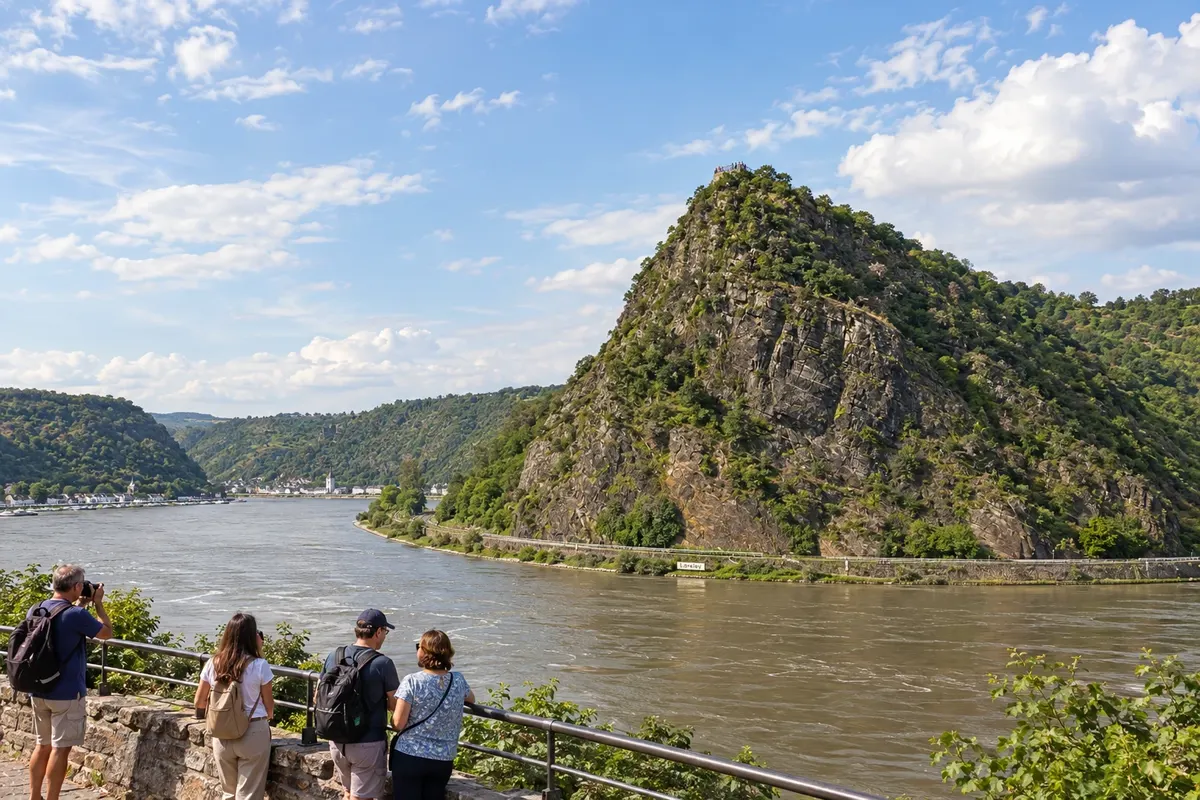
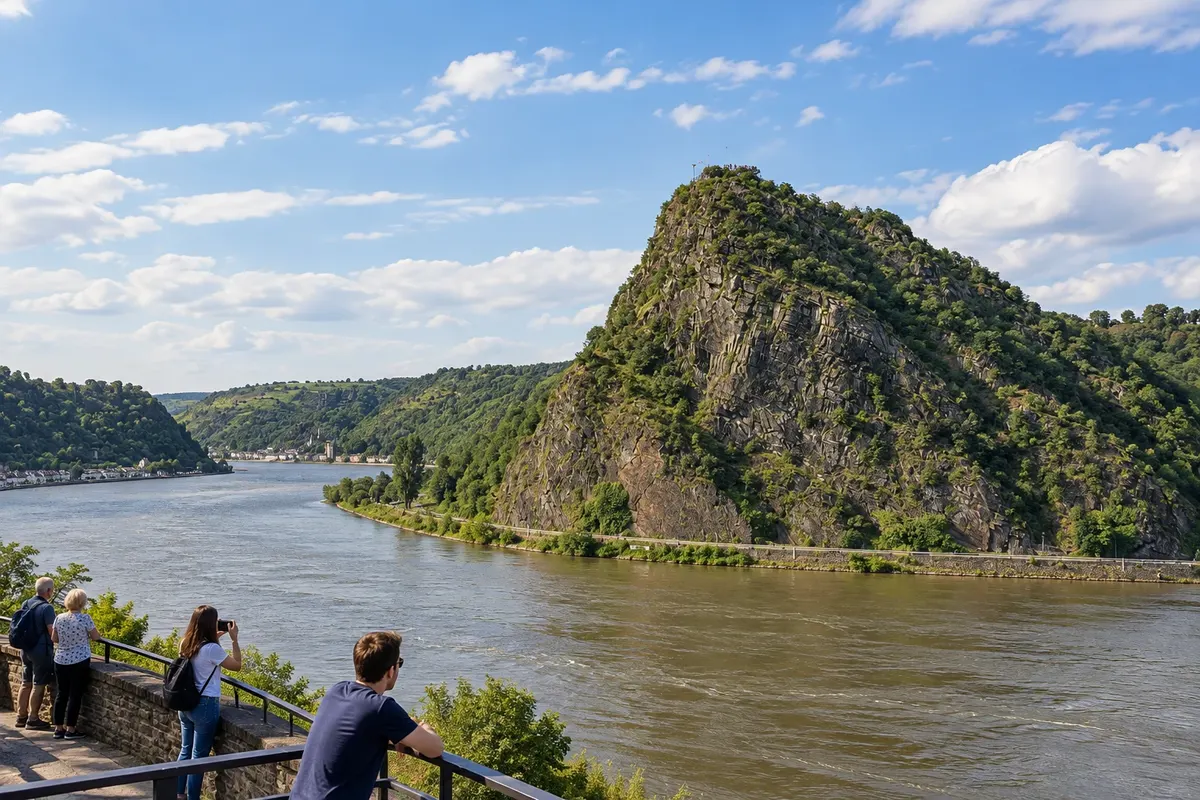
Na fotografiji: Loreley on the banks of the Rhine

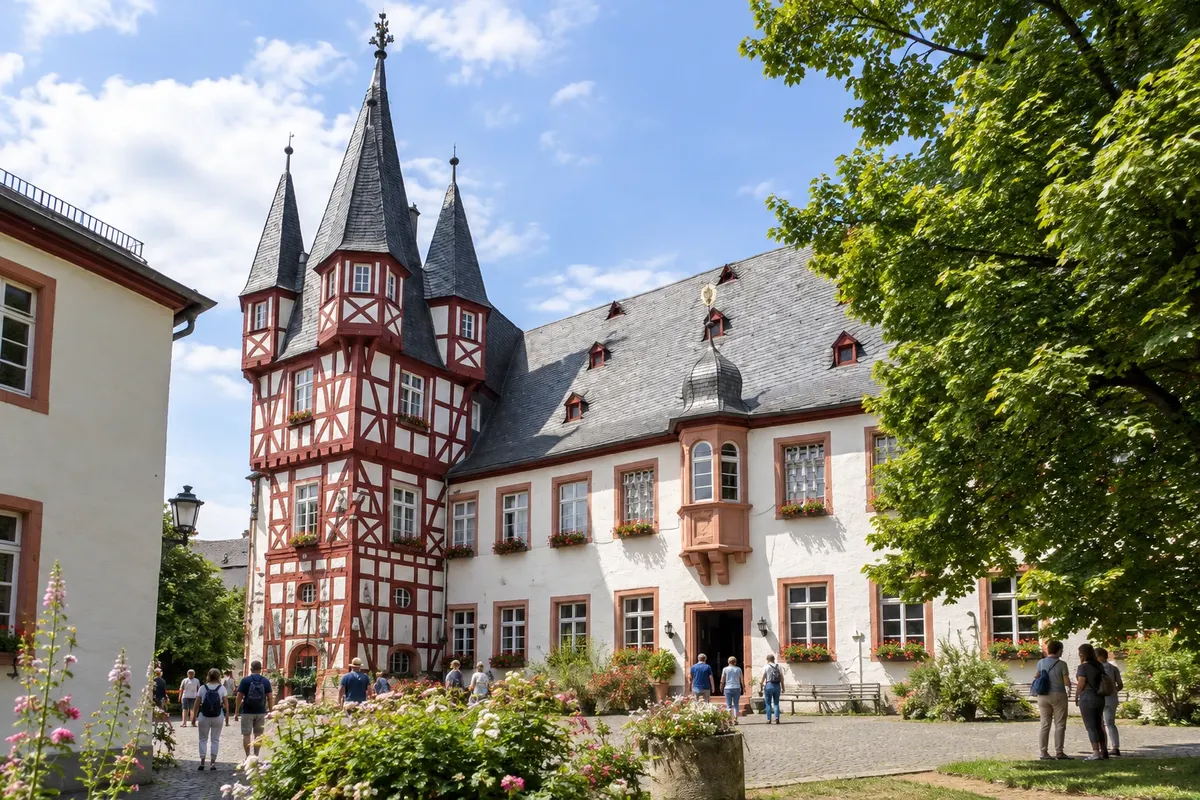
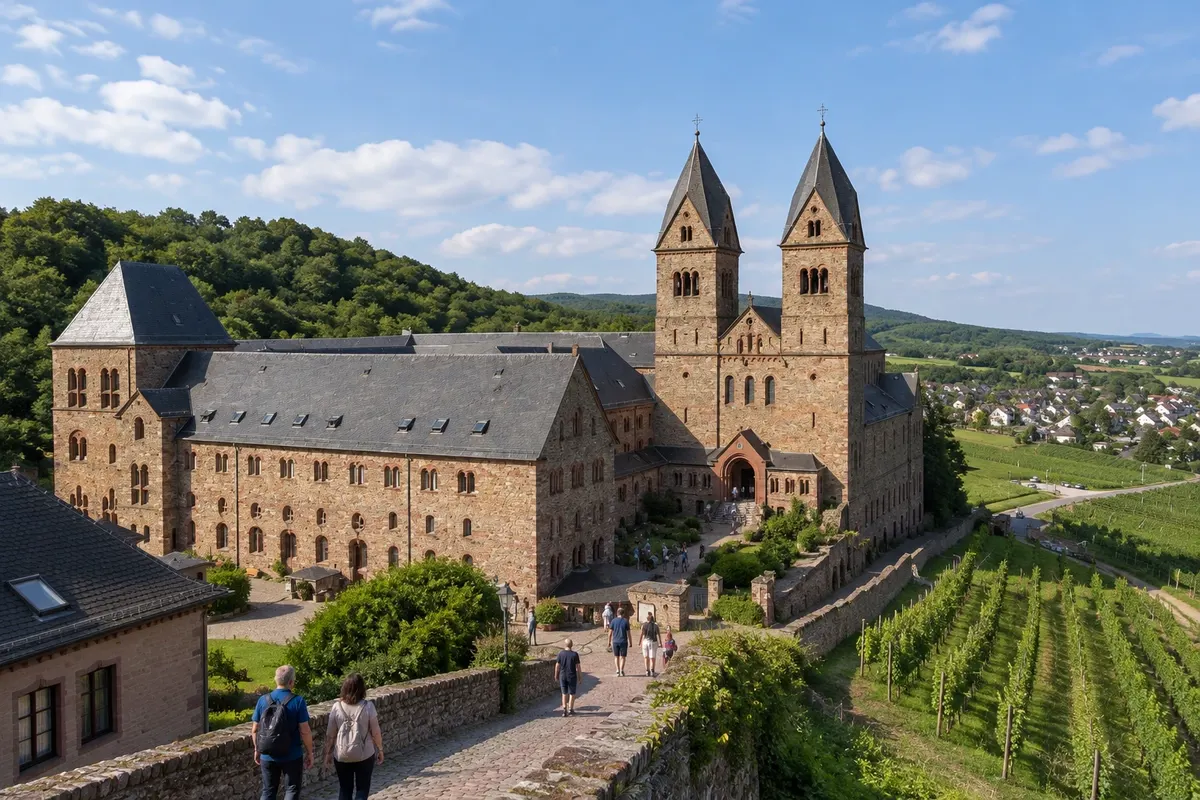
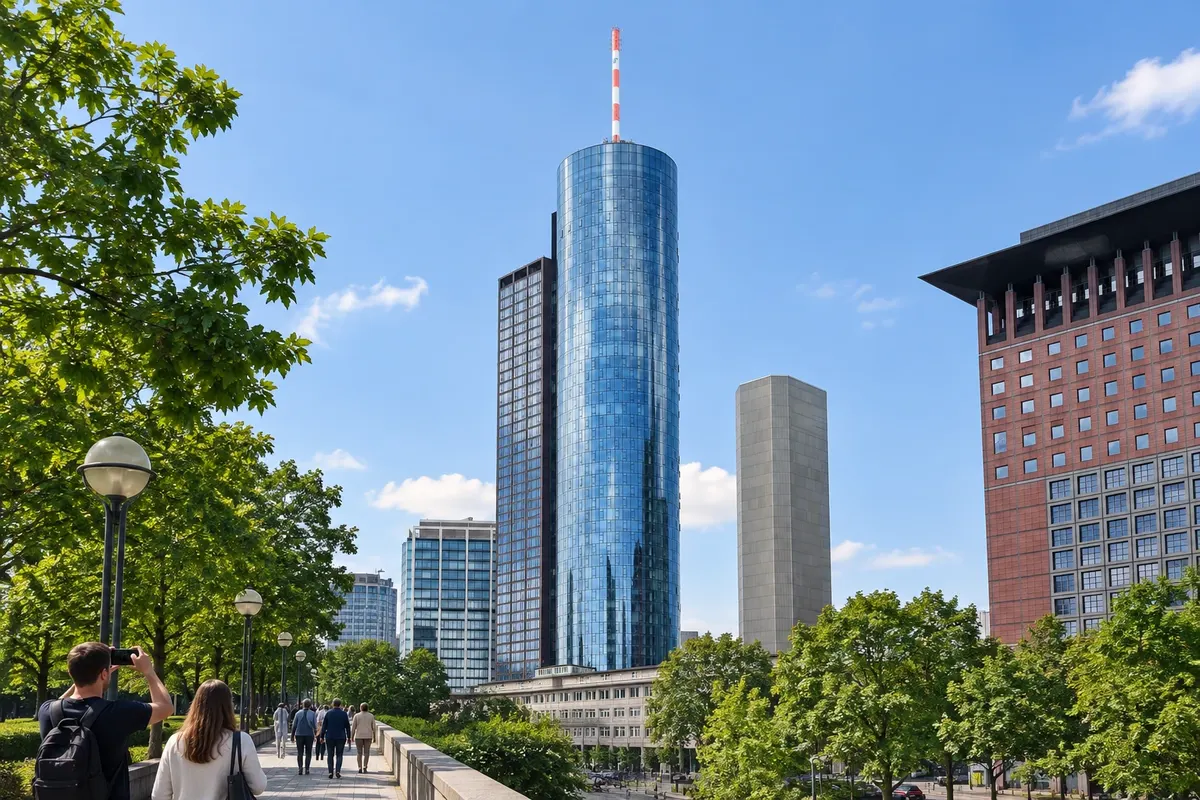
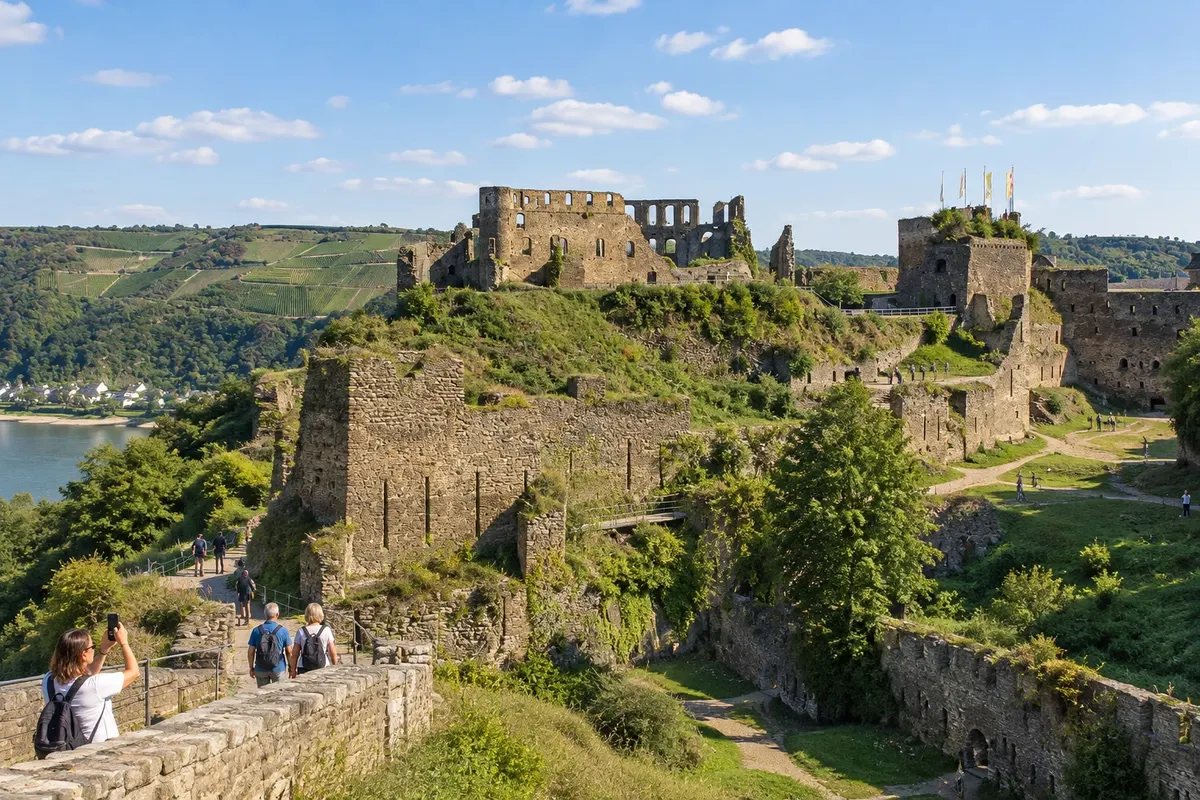
Illustrative images. The pictures in this guide are illustrations based on the real place, not photographs, and may differ from it.

Na voljo v trgovini Google Play Pošljite svoje fotografije

Spoznajte kraj

Pokrajina, ki jo doživite
v svojem ritmu.

The airport is one of the largest in Europe and has a long-distance train station inside the terminal, which makes the city a natural starting point for the rest of the country. Behind the skyscrapers of the financial district there is a historic center with Römerberg square, the cathedral where the emperors of the Holy Roman Empire were elected and crowned, and an Altstadt (old town) rebuilt house by house after the bombings of World War II.

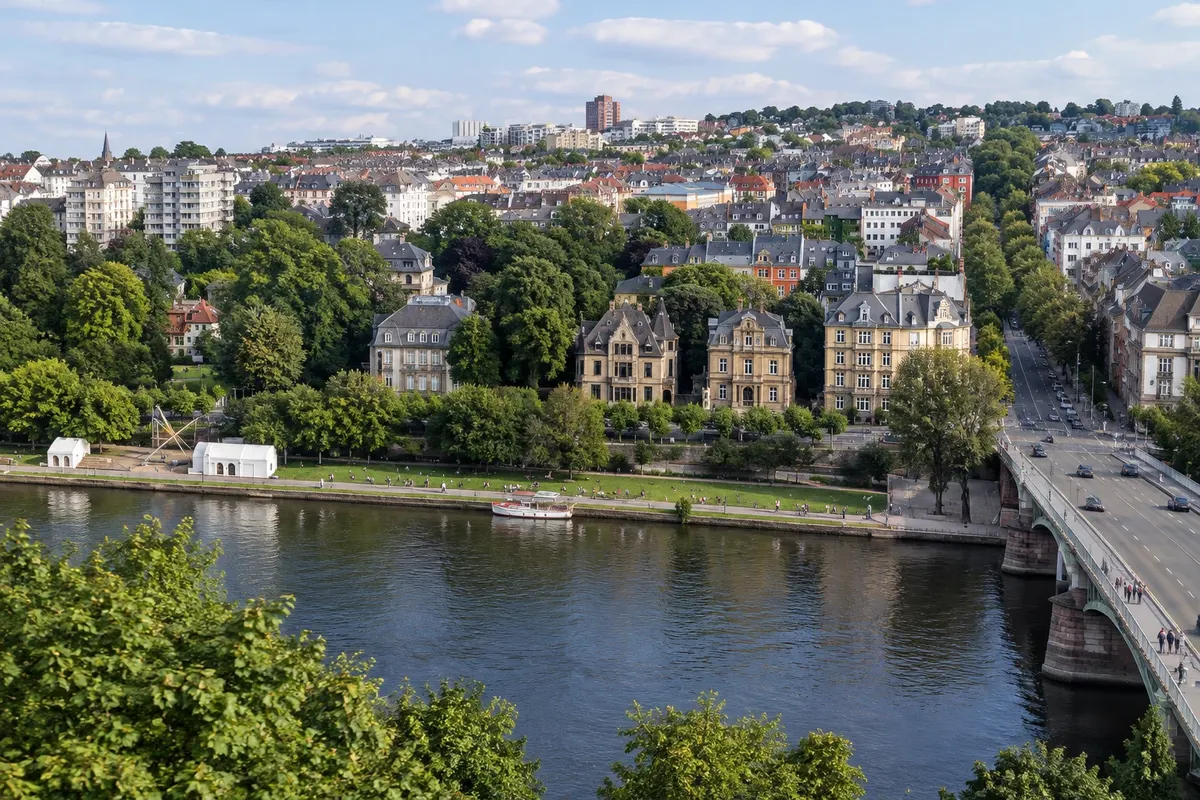
The city is divided between the two banks of the Main. On the north bank are the town hall, the cathedral, the Paulskirche and the house where Goethe was born. On the south bank, the Museumsufer brings museums side by side, including the Städel, and the Sachsenhausen neighborhood houses the Apfelwein taverns, the cider that is Frankfurt's typical drink.

To the west, the Rhine flows into the stretch called the Middle Rhine Valley, inscribed by UNESCO as a World Heritage Site in 2002. It's about 65 km between Bingen and Rüdesheim to the south and Koblenz to the north, with slopes covered in terraced vineyards, small towns on the water's edge and dozens of castles atop the hills. There are the Loreley rock, the Marksburg and the ruins of Rheinfels.

Rüdesheim am Rhein, in the state of Hesse, is the eastern gateway to the valley, with the Drosselgasse and the Niederwald monument above the vineyards. Bacharach, in the state of Rhineland-Palatinate, is a small walled town at the foot of Stahleck castle. Both are served by regional trains from Frankfurt, and sightseeing boats connect the valley towns in the season, which usually runs from April to October.

This destination brings together 3 cities: Frankfurt am Main, Bacharach, Rüdesheim am Rhein.

Delite: WhatsApp
Delite svoja popotniška doživetja s fotografijami Pošljite fotografije vsakega kraja, ki ste ga obiskali. Največje število fotografij na kraj: 5.

Ena destinacija, več poti

Mesta na tej poti

Začnite v enem mestu ali v načrt poti vključite več mest.

Frankfurt and the Rhine Valley – lega
BacharachRüdesheim am RheinFrankfurt

Obrisi: © BKG (2026), dl-de/by-2-0. Priredba: Cidade Turismo.

Kako do tja:Frankfurt and the Rhine Valley

✈ Flughafen Frankfurt am Main (FRA)· 12 km do cilja (Frankfurt am Main)

Confirm before buying. From Frankfurt Airport (FRA), the S-Bahn train reaches the central station in about 15 minutes. To Rüdesheim and Bacharach, continue by regional train from Frankfurt in just over an hour.

Predlagana točka prihoda:Frankfurt am Main

Doživite kraj

Kaj početi – Frankfurt and the Rhine Valley

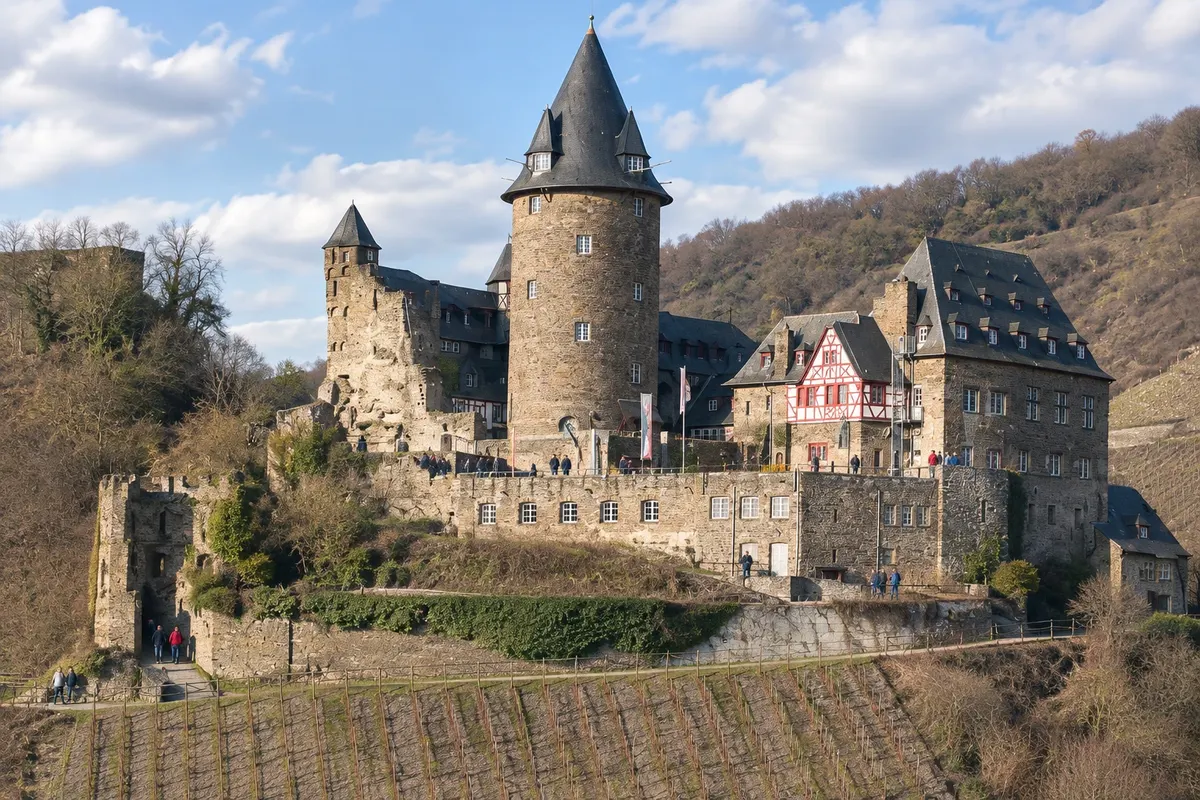
Stahleck Castle (Burg Stahleck)
Bacharach · Rhineland-Palatinate · Grad

Stahleck Castle (Burg Stahleck)

12th-century castle on the hill above Bacharach, rebuilt in the 20th century and used as a youth hostel. The terrace overlooks the Rhine.

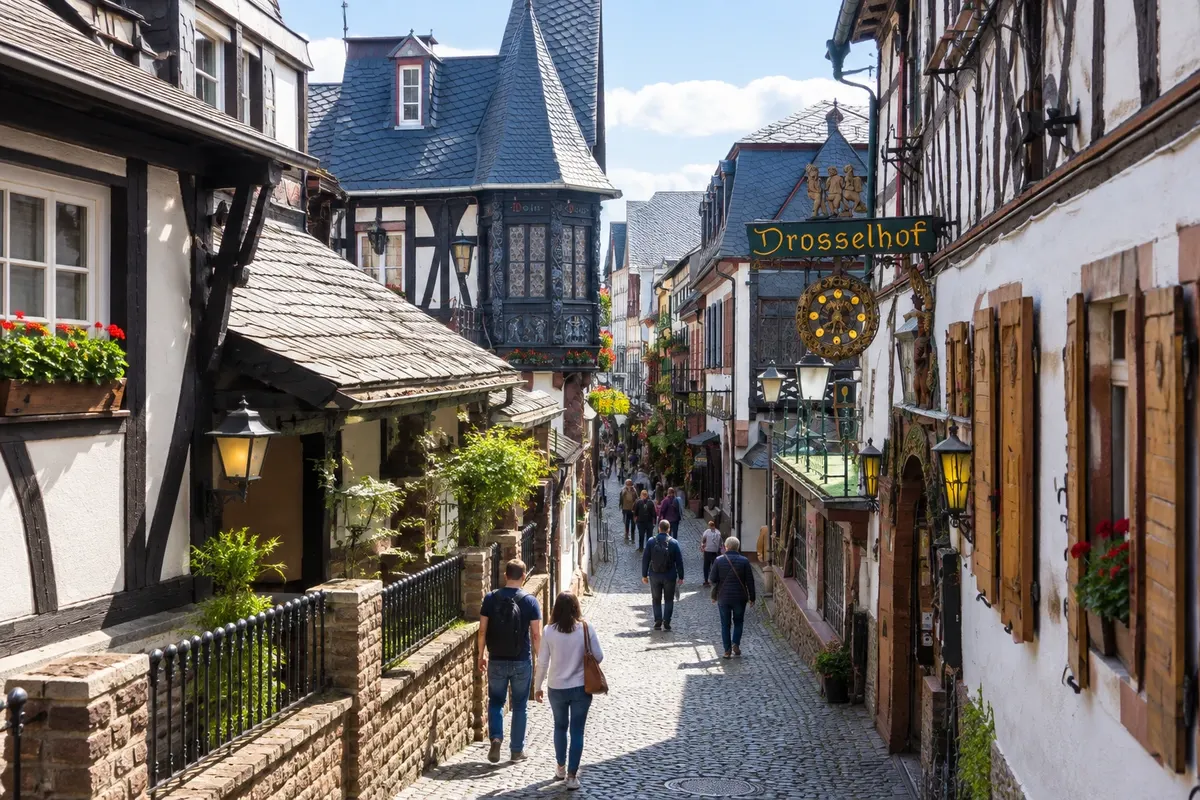
Drosselgasse
Rüdesheim am Rhein · Hesse · Street

Drosselgasse

Cobblestone alley about 2 metres wide and roughly 144 metres long, filled with wine taverns, live music and small shops, between the Rhine promenade and the Oberstraße.

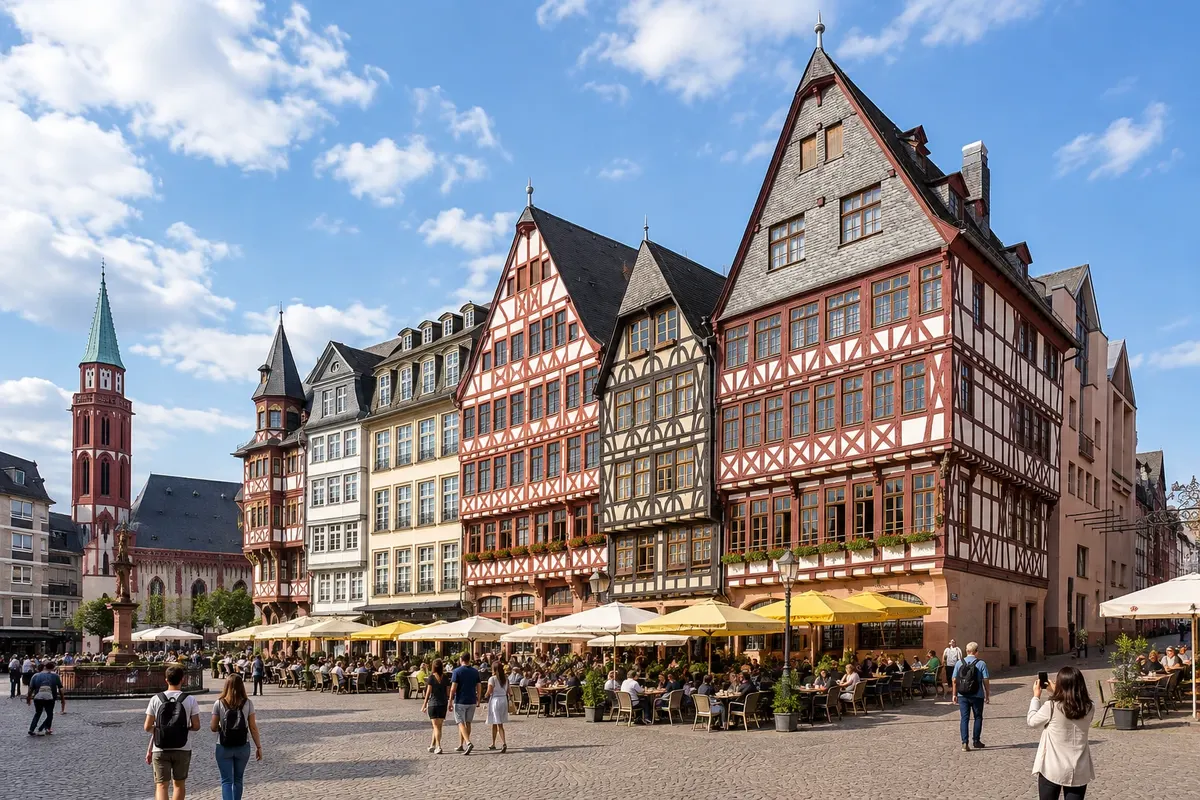
Römerberg
Frankfurt am Main · Hesse · Trg

Römerberg

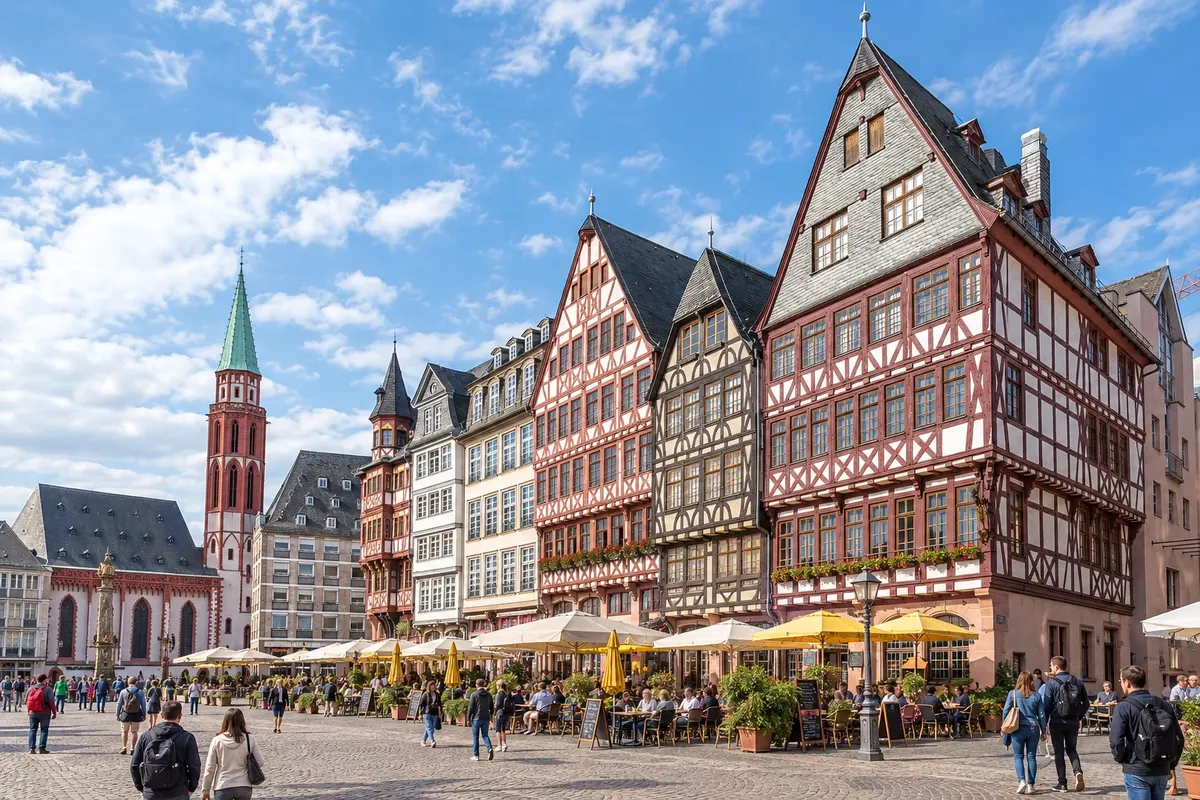
The town-hall square of Frankfurt, with the stepped-gable façade of the Römer, half-timbered houses on the east side and the Justice fountain in the middle.

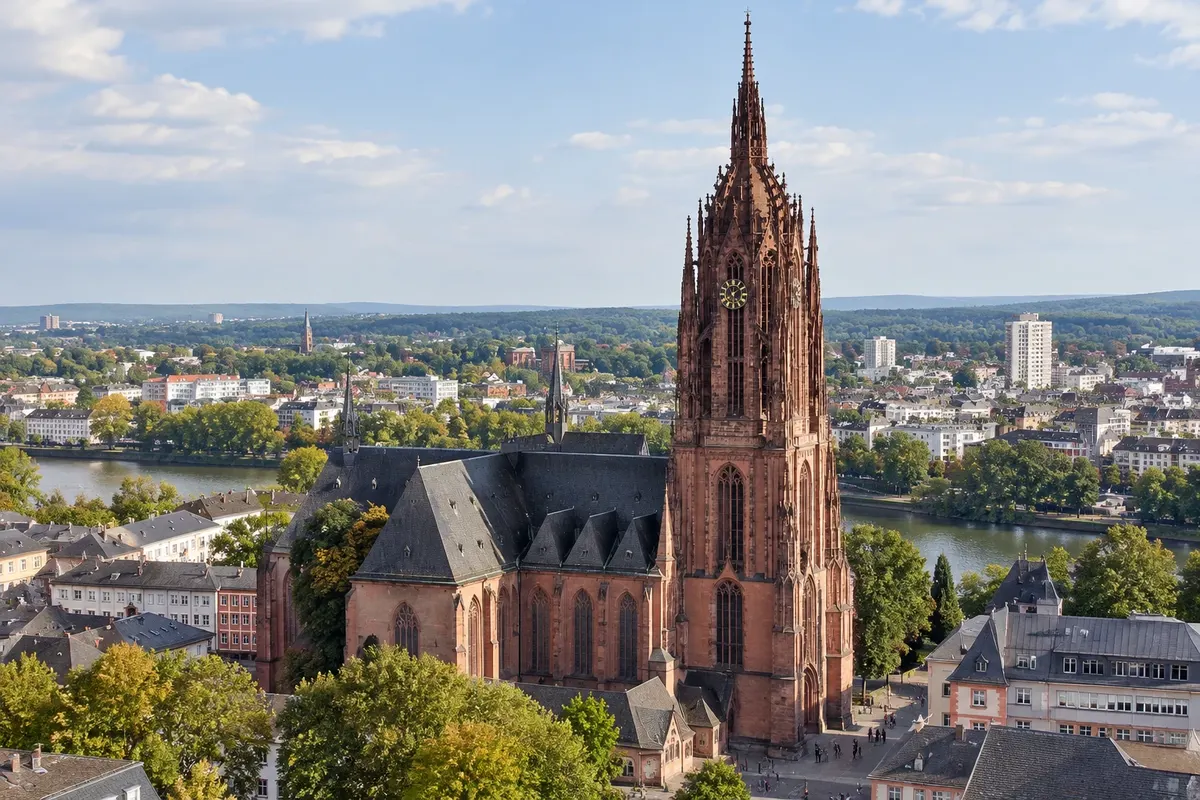
Frankfurt Cathedral (Kaiserdom St. Bartholomäus)
Frankfurt am Main · Hesse · Stolnica

Frankfurt Cathedral (Kaiserdom St. Bartholomäus)

Gothic church with a 95-meter tower where the kings of the Holy Roman Empire were elected and, between 1562 and 1792, crowned. The tower can be climbed on foot.

Frankfurt and the Rhine Valley – prikaži dodatne kraje (19)
Niederwald Monument
Rüdesheim am Rhein · Hesse · Monument

Niederwald Monument

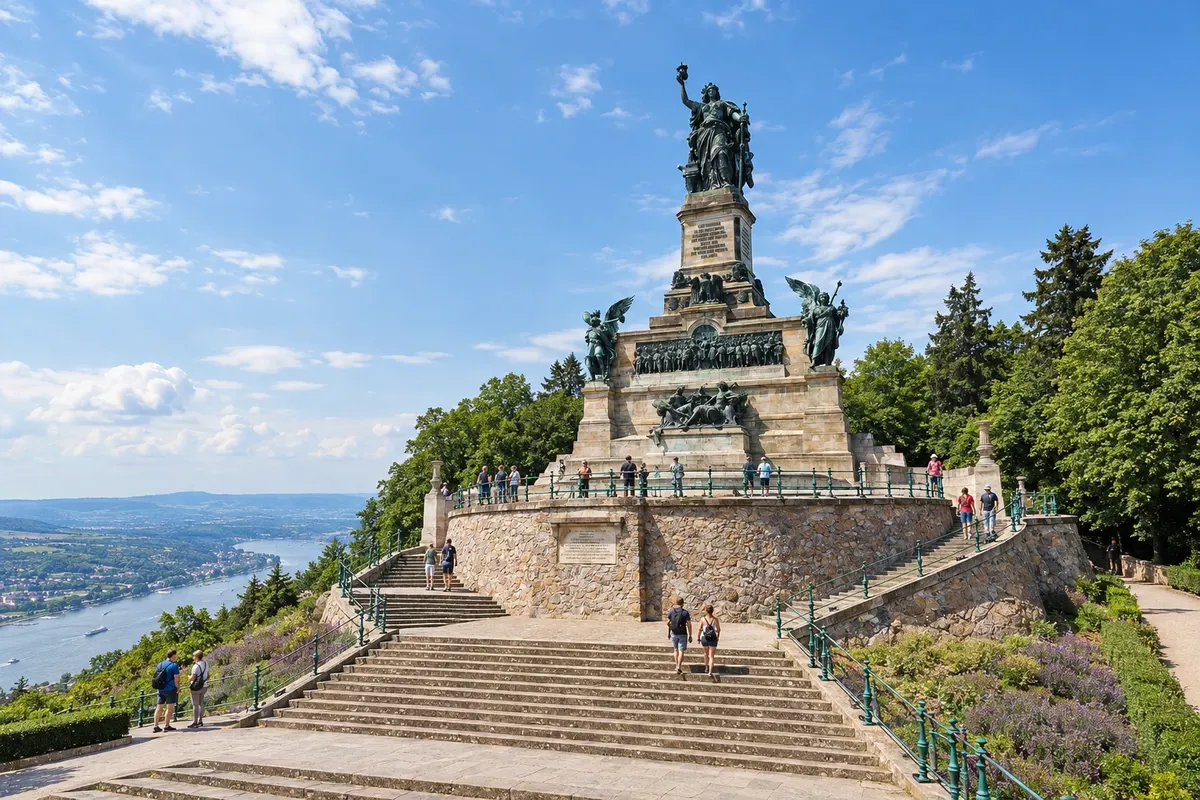
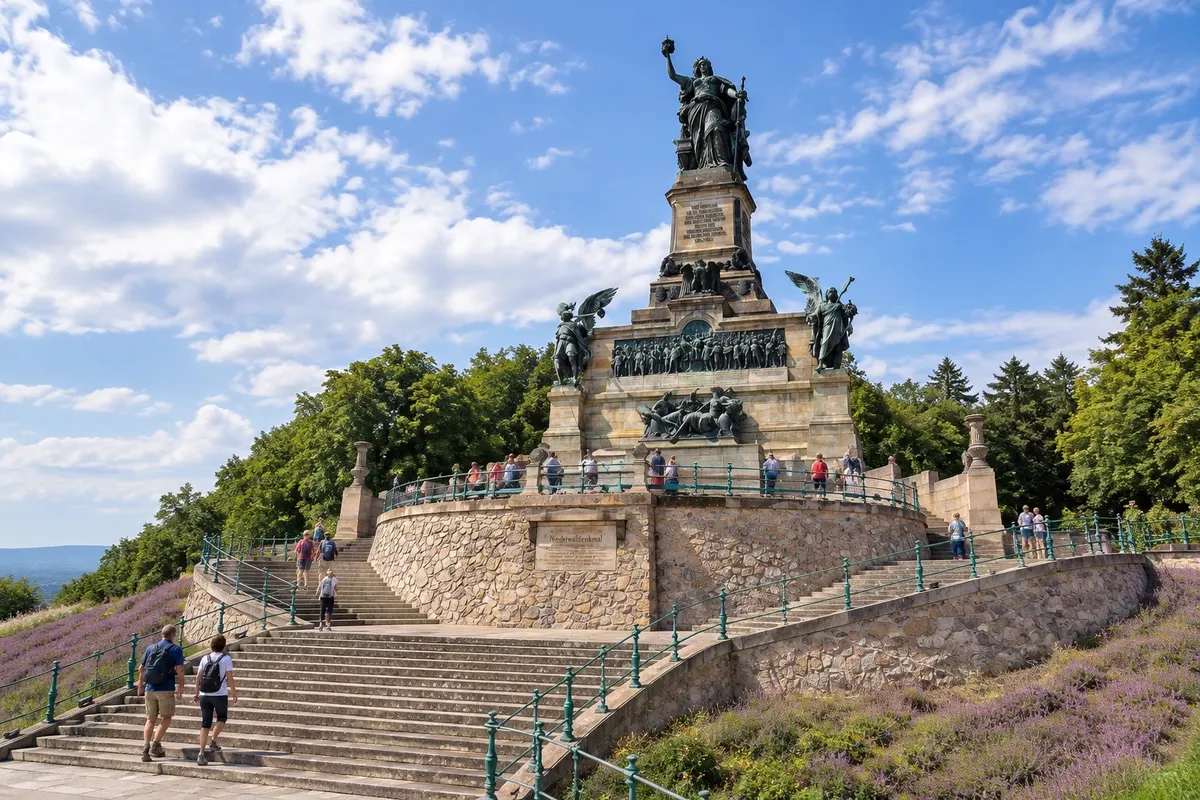
38-metre monument featuring the statue of Germania, erected between 1877 and 1883 on the hill above the vineyards, with views over the Rhine and Bingen. Reachable by cable car in season.

Wernerkapelle
Bacharach · Rhineland-Palatinate · Ruins

Wernerkapelle

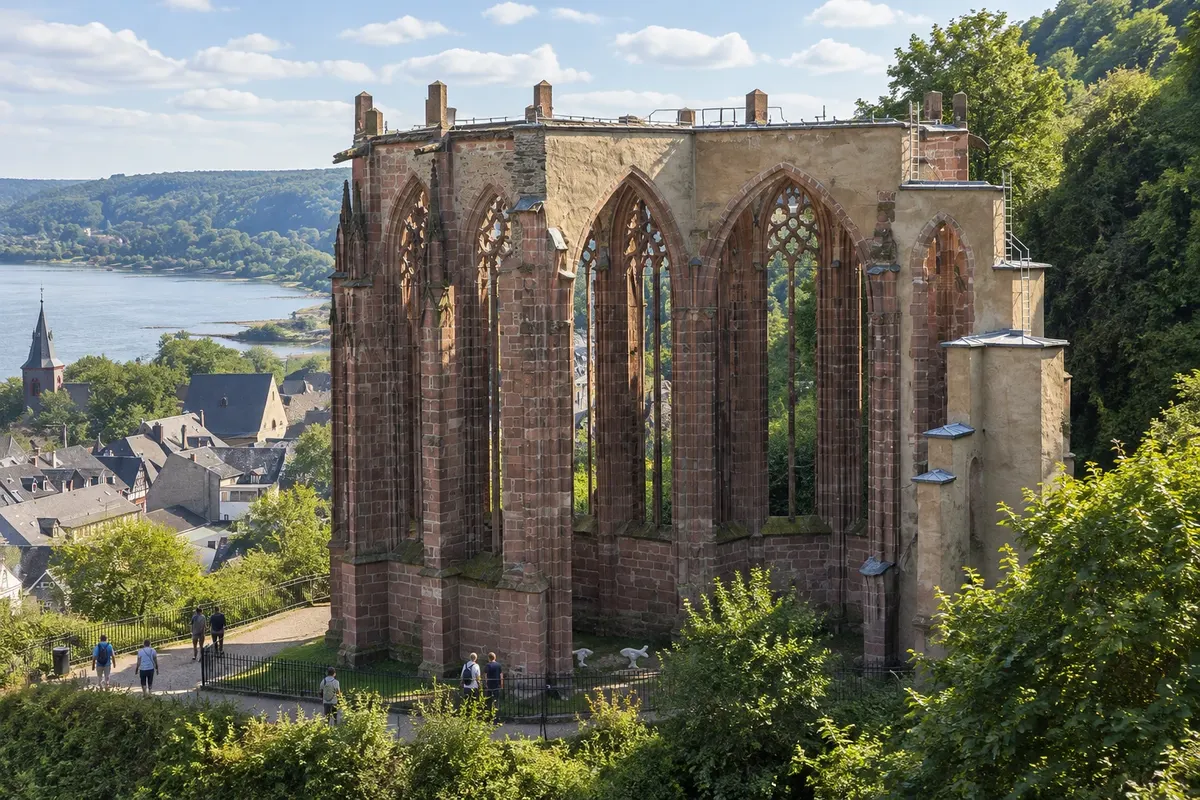
Gothic ruin of a roofless chapel, between the center of Bacharach and the castle, with a plaque that recalls the persecution of Jews linked to its history.

Bacharach Old Town (Altstadt Bacharach)
Bacharach · Rhineland-Palatinate · Zgodovinska mestna četrt

Bacharach Old Town (Altstadt Bacharach)

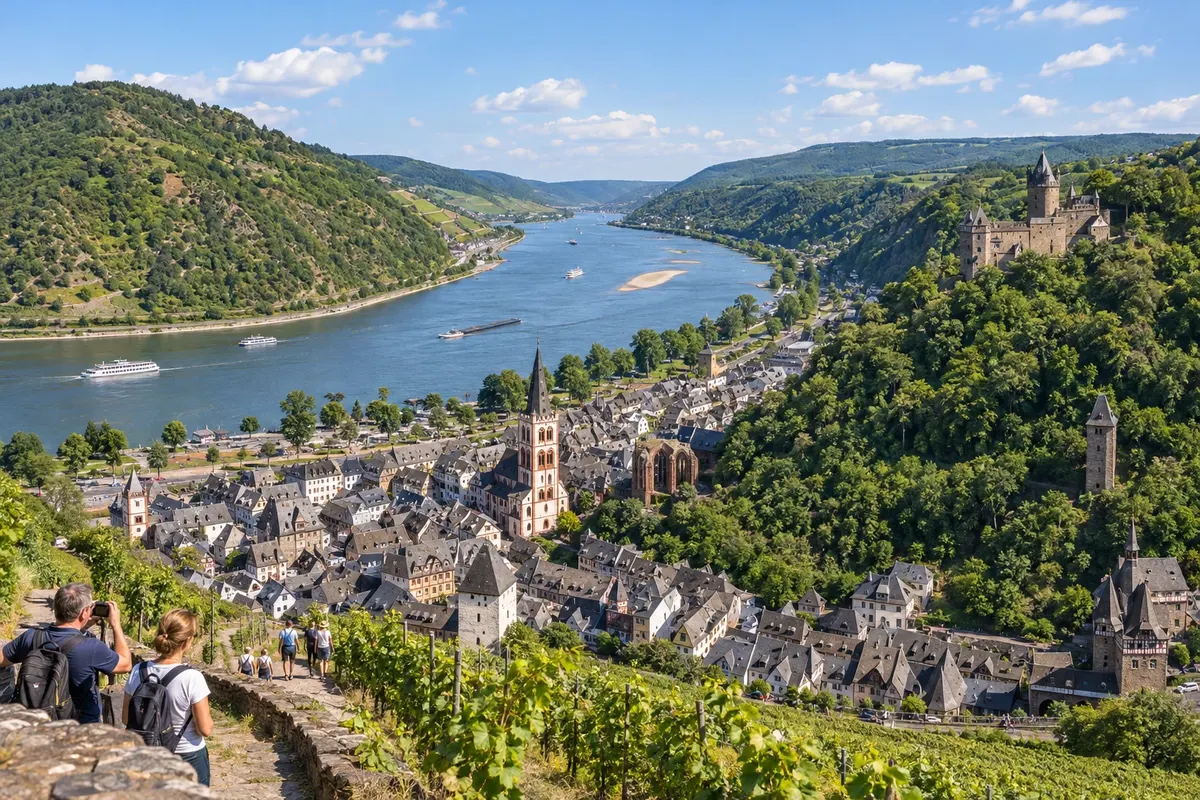
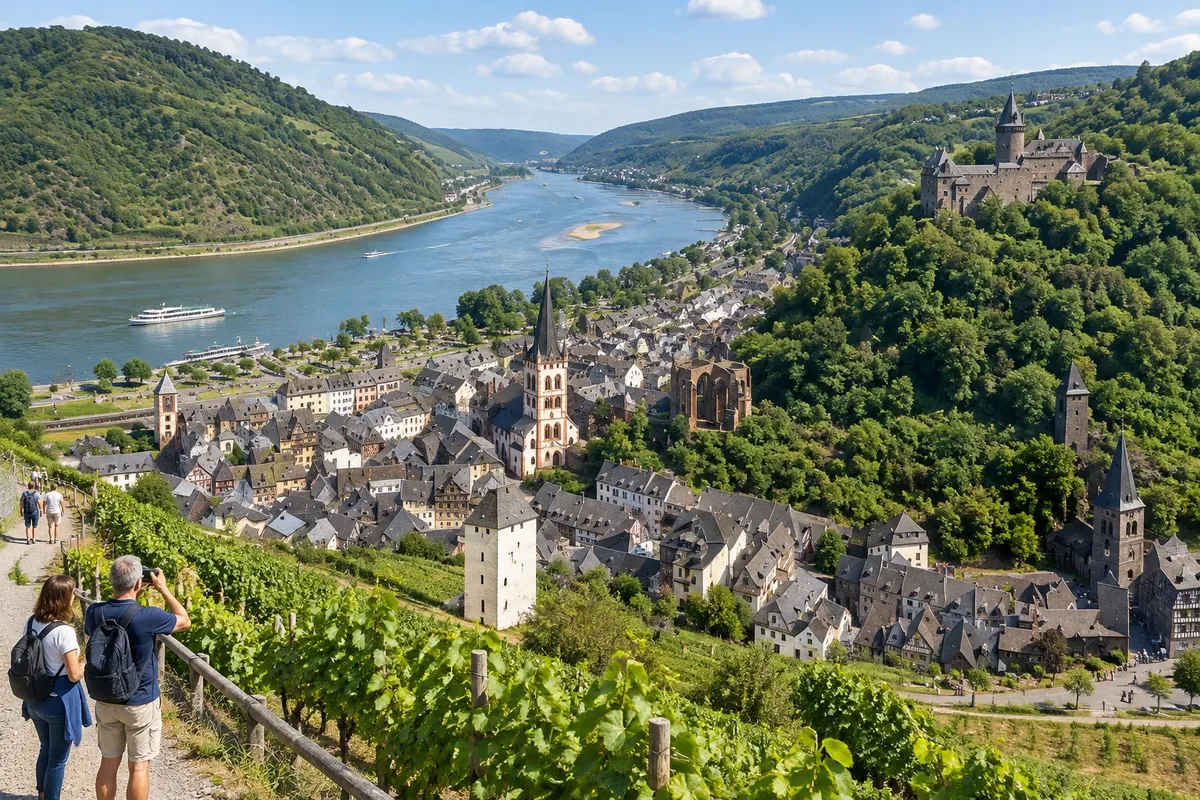
Walled old centre of Bacharach, with half-timbered houses, the church of St. Peter and the 14th-century wall with towers, between the Rhine and the vineyards.

New Frankfurt Old Town (Neue Frankfurter Altstadt)
Frankfurt am Main · Hesse · Zgodovinska mestna četrt

New Frankfurt Old Town (Neue Frankfurter Altstadt)

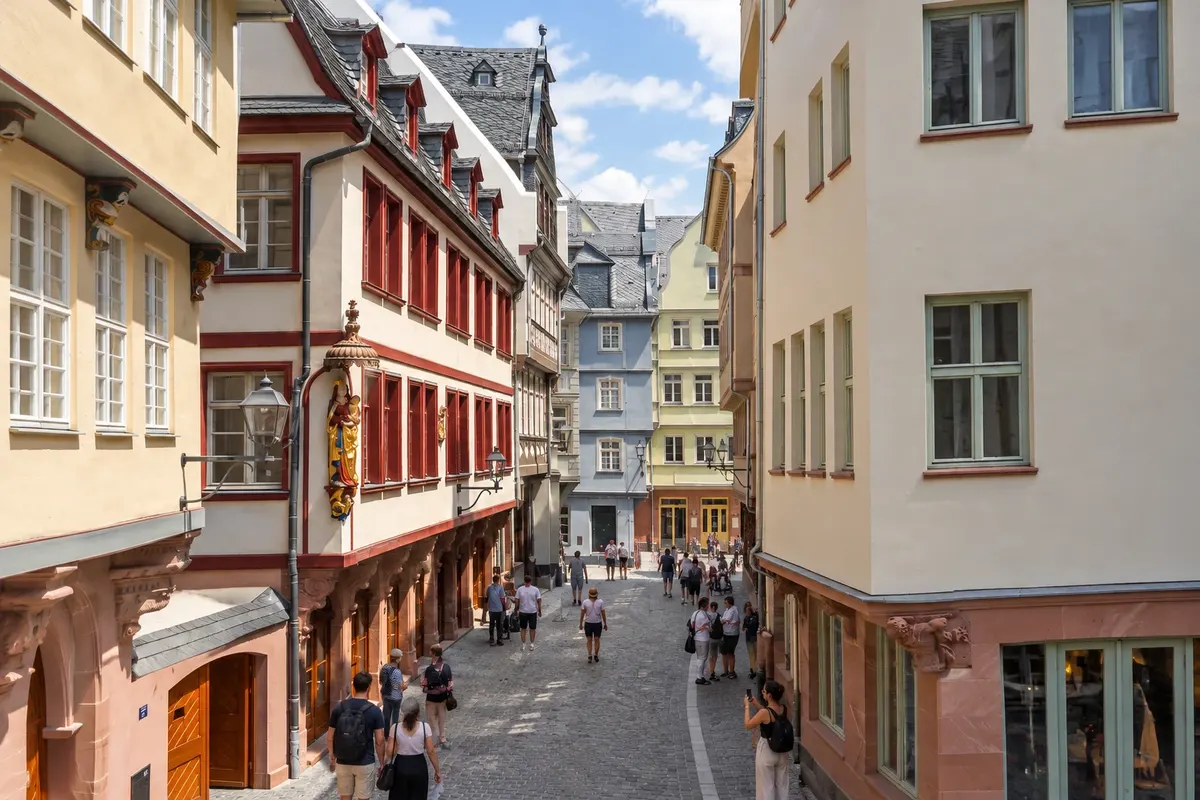
The core of the old town center, between the Römerberg and the cathedral, rebuilt between 2012 and 2018 with 35 buildings, some of them faithful copies of houses destroyed in 1944.

Siegfried's Mechanical Music Cabinet
Rüdesheim am Rhein · Hesse · Muzej

Siegfried's Mechanical Music Cabinet

Museum with more than 400 self-playing musical instruments, from music boxes to orchestrions, presented in a guided visit at the Brömserhof, a 15th-century manor house.

St. Hildegard Abbey
Rüdesheim am Rhein · Hesse · Samostan

St. Hildegard Abbey

Benedictine abbey of nuns above the vineyards of Eibingen, heir to the convents of Santa Hildegarda de Bingen, with a church painted in the Beuron style, a shop and a winery.

Loreley
Bacharach · Rhineland-Palatinate · Razgledišče

Loreley

132-metre slate rock on the right bank of the Rhine, at the narrowest and deepest stretch of the river, with a lookout at the top and the legend of the siren who lured boatmen.

Main Tower
Frankfurt am Main · Hesse · Razgledišče

Main Tower

200-meter skyscraper with a publicly accessible observation deck at the top, offering 360-degree views over the city center, the River Main and the other buildings of the financial district.

Rheinfels Castle (Burg Rheinfels)
Bacharach · Rhineland-Palatinate · Grad

Rheinfels Castle (Burg Rheinfels)

Ruin of the largest fortress-castle of the Middle Rhine, founded in 1245 above St. Goar, with underground galleries, a vaulted hall and a museum.

Museumsufer
Frankfurt am Main · Hesse · Muzej

Museumsufer

The south bank of the Main between the bridges Eiserner Steg and Friedensbrücke, with a row of museums in old mansions and new buildings, from the Städel to the Liebieghaus.

Marksburg
Bacharach · Rhineland-Palatinate · Grad

Marksburg

The only hill castle in the Middle Rhine that was never destroyed, from the 13th century, above Braubach. It can only be visited with a guide.

Städel Museum
Frankfurt am Main · Hesse · Muzej

Städel Museum

One of Germany's leading art museums, with around 3,100 paintings from the Middle Ages to contemporary art, on the Museumsufer.

Pfalzgrafenstein Castle
Bacharach · Rhineland-Palatinate · Grad

Pfalzgrafenstein Castle

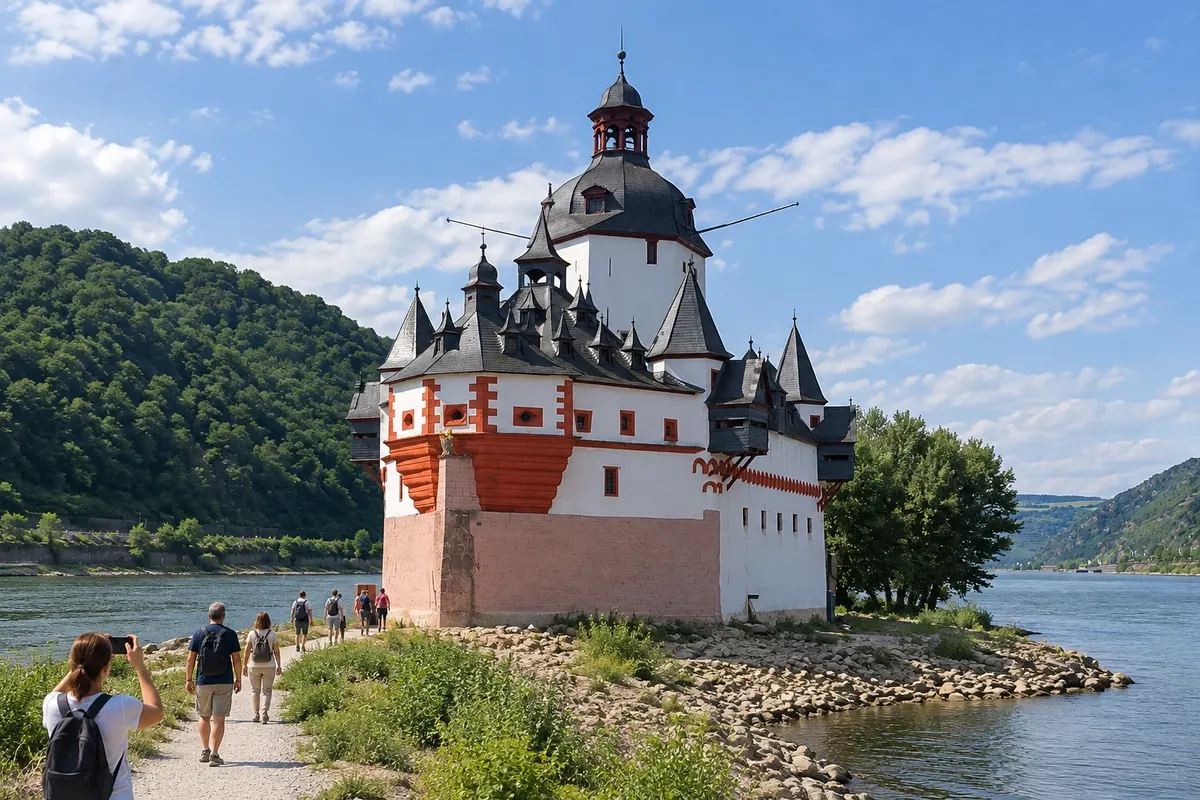
14th-century toll castle on a rocky island in the middle of the Rhine, opposite Kaub, shaped like a stone ship. It is reached by a small ferry.

Goethe House (Frankfurter Goethe-Haus)
Frankfurt am Main · Hesse · House-museum

Goethe House (Frankfurter Goethe-Haus)

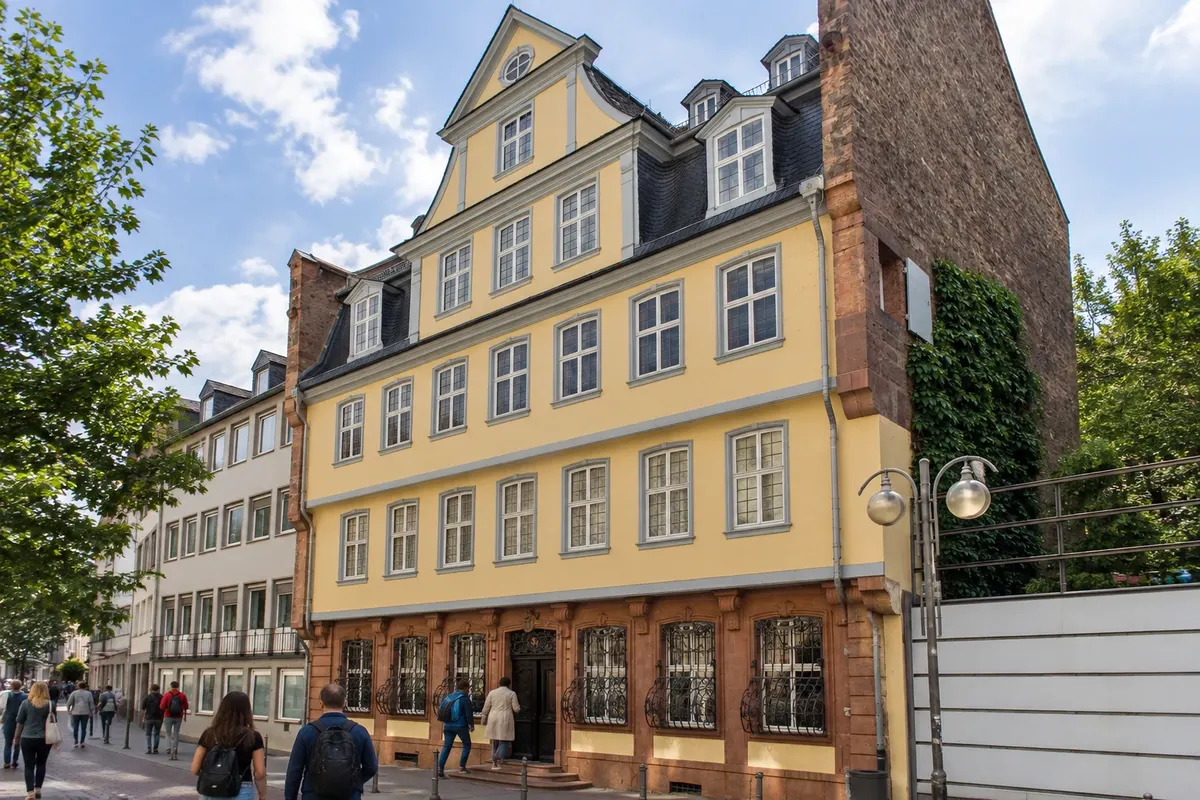
The house where Johann Wolfgang von Goethe was born in 1749, rebuilt after the war with the original furniture, next to the Deutsches Romantik-Museum.

Eiserner Steg
Frankfurt am Main · Hesse · Most

Eiserner Steg

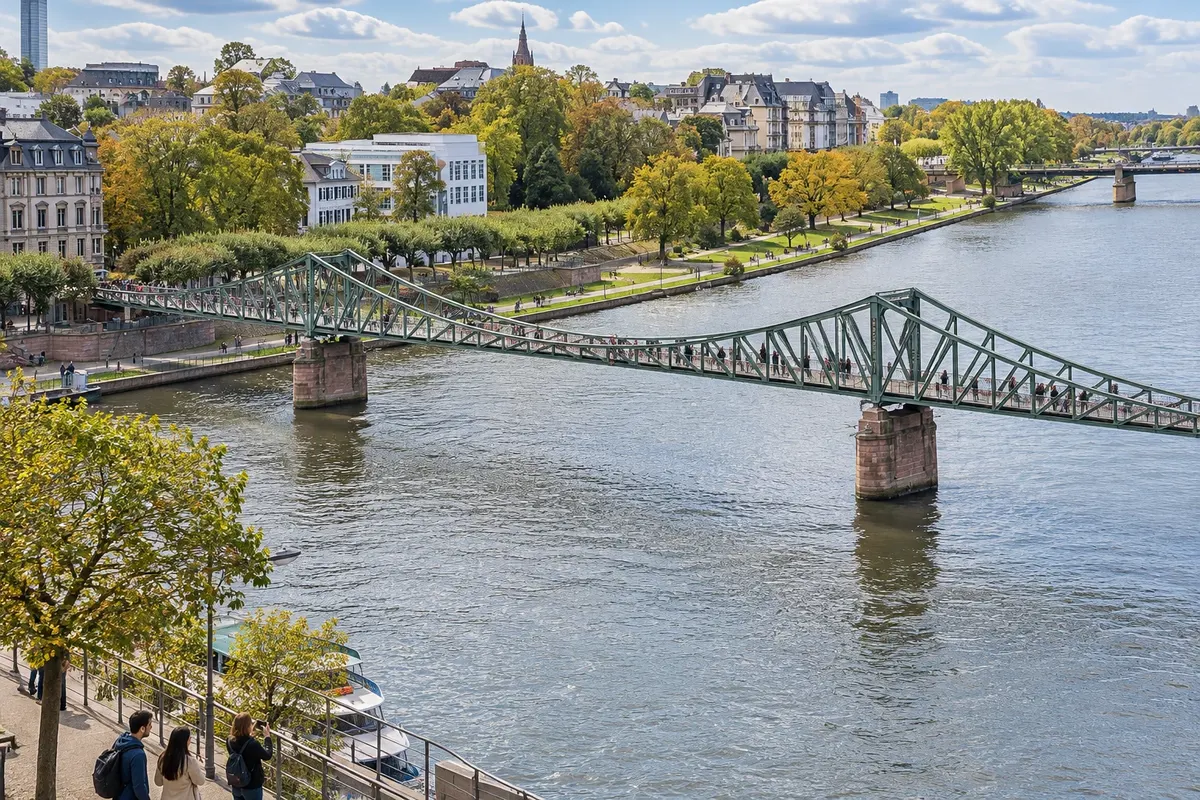
Iron pedestrian bridge over the Main, dating from 1868, which links the Römerberg to Sachsenhausen and offers the most famous view of Frankfurt's skyscrapers.

Sachsenhausen
Frankfurt am Main · Hesse · Zgodovinska mestna četrt

Sachsenhausen

Neighborhood on the south bank of the Main, known for its Apfelwein taverns, Frankfurt's cider, served in gray and blue ceramic jugs.

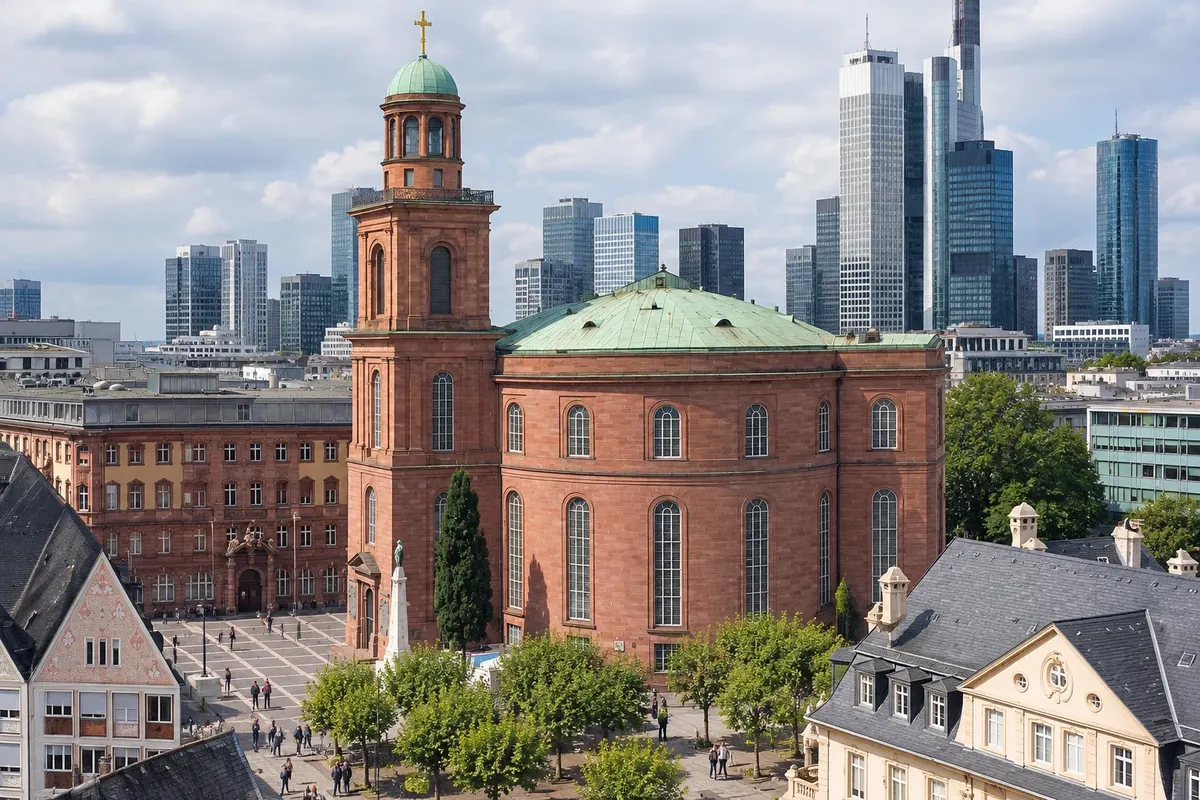
Paulskirche (St. Paul's Church)
Frankfurt am Main · Hesse · Spominsko obeležje

Paulskirche (St. Paul's Church)

Former round church where the first elected parliament for all of Germany met in 1848 and 1849. Today it is a memorial to democracy, with an exhibition about that history.

Kleinmarkthalle
Frankfurt am Main · Hesse · Tržnica

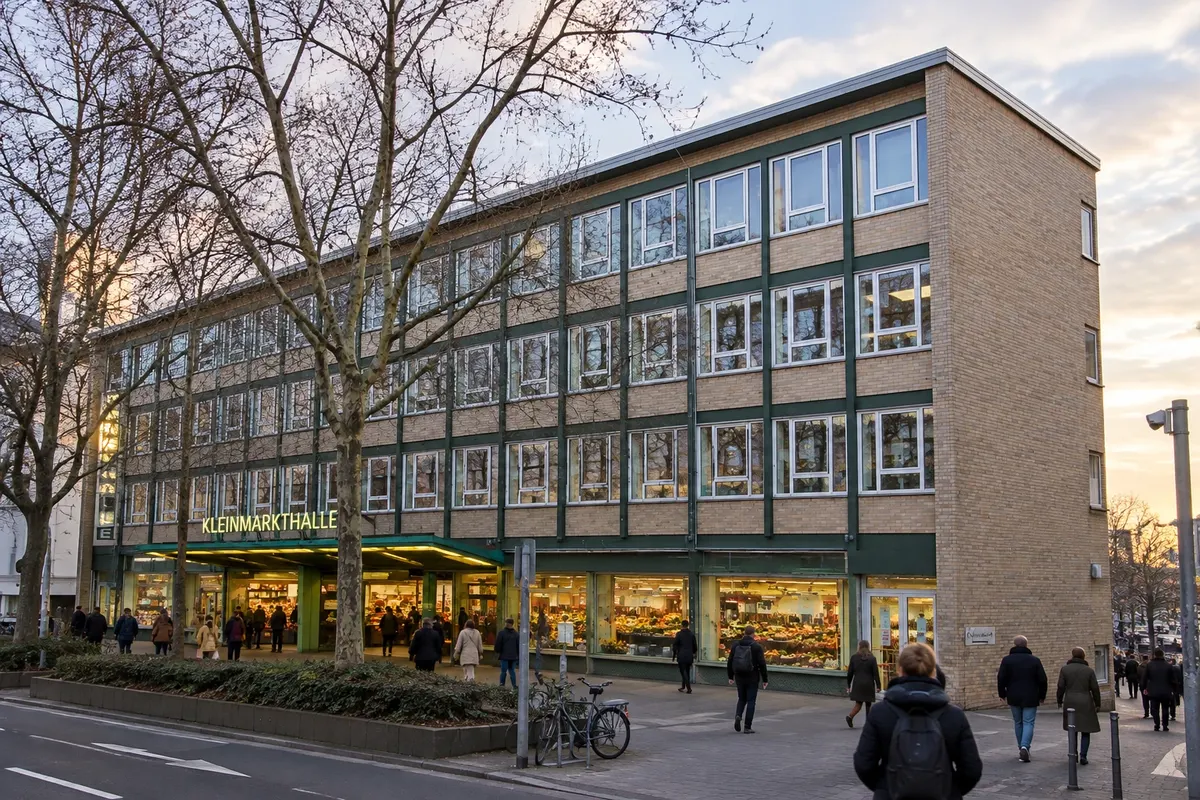
Kleinmarkthalle

Covered market from 1954 in central Frankfurt, with dozens of stalls selling fruit, cheeses, cold cuts, herbs for Grüne Soße and snacks.

Palmengarten
Frankfurt am Main · Hesse · Garden

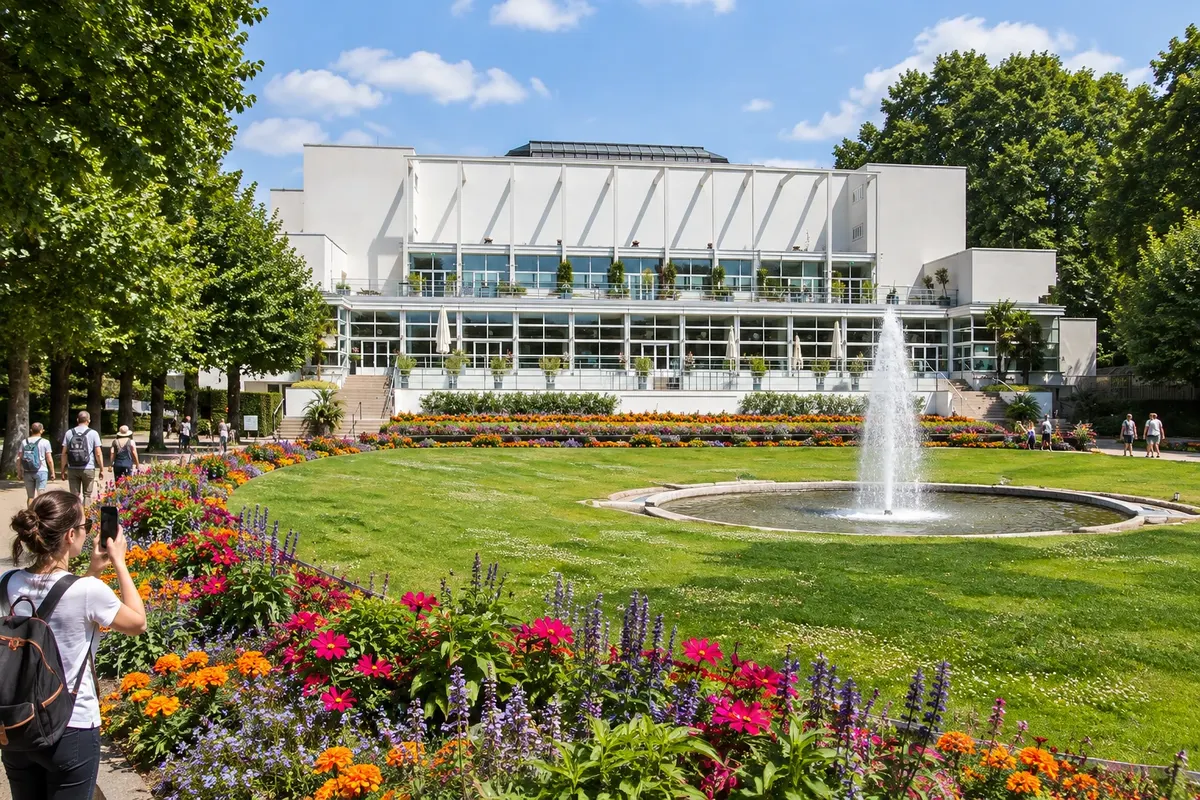
Palmengarten

A 22-hectare botanical garden opened in 1871 in the Westend district, with tropical plant greenhouses, outdoor themed areas and lakes.

Kaj izbrati pred odhodom

Izleti – Frankfurt and the Rhine Valley

Izhodišče, trajanje, potek, vključene storitve in okvirna cena vsakega izleta.

Frankfurt historic centre on foot: Römerberg, Neue Altstadt, Kaiserdom, Paulskirche and Eiserner Steg

Odhod: Römerberg (U-Bahn Dom/Römer station) Peš po starem mestnem jedru Približno 3 ure Dopoldne ali popoldne easy (flat; tower optional)

The Römerberg is the central square of Frankfurt’s Altstadt (old town). On one side is the Römer, a group of three gabled houses that has served as city hall since 1405; on the upper floor is the Kaisersaal, the coronation banquet hall, with portraits of the emperors. In the middle of the square stands the Fountain of Justice (Gerechtigkeitsbrunnen), there since 1543. The row of half-timbered houses on the east side was rebuilt between 1981 and 1983 after the square was destroyed in the 1944 bombings. Between the Römerberg and the cathedral is the Neue Frankfurter Altstadt, the block reconstructed between 2012 and 2018 on the site of a 1970s administrative building: 35 houses in total, 15 of them copies of those that existed before the war, such as the Haus zur Goldenen Waage. The Kaiserdom St. Bartholomäus (Imperial Cathedral of St. Bartholomew) was built in the 14th and 15th centuries on top of a church founded in 852; from 1356 emperors of the Holy Roman Empire were elected here and, from 1562 to 1792, ten of them were crowned in the cathedral. The tower, about 95 m high, has a platform at 66 m, reached by 328 steps, open on limited days and hours. A few steps away is the Paulskirche, where on May 18, 1848 the first elected German national assembly met; today it is a memorial and events space. Finish at the Eiserner Steg, the iron footbridge of 1869 over the River Main, which links the centre to the Sachsenhausen district and offers views of the skyline.

Kraji na poti: Römerberg, Neue Frankfurter Altstadt, Kaiserdom St. Bartholomäus, Paulskirche, Eiserner Steg.

Vključuje: Self-guided walk: squares, alleys and the footbridge are open and there is no entrance fee. The cathedral does not charge admission; the climb to the tower and the Dommuseum are paid separately. Paulskirche usually opens free of charge, but a renovation is planned: check whether it is open before you go.

Nasvet: Start early at the Römerberg, before the tour groups arrive. In the Neue Altstadt, notice the plaques that tell each house’s history. From the Eiserner Steg the view of the towers is best late in the afternoon, with the sun at your back. Wear comfortable shoes: the paving is stone.

Najboljši čas za obisk: All year. From May to September there are tables on the sidewalks of the Römerberg; from late November to December the square usually hosts the Christmas market—check the dates before you go.

Main Tower: the platform 200 m above the city

Odhod: Neue Mainzer Straße (S-Bahn Taunusanlage or U-Bahn Willy-Brandt-Platz) Elevator to the open observation platform Približno 1 uro late afternoon or evening Lahko

The Main Tower is the only office tower in Frankfurt with a public open platform. The building is 200 m to the roof and 240 m including the antenna, has 56 floors and was opened in January 2000. The elevator takes you to the outdoor platform, about 200 m up, from where you can see the Main River, the Römerberg and the cathedral just below, the banking district around it and, on clear days, the Taunus hills to the north. It’s the simplest way to understand why the city is called Mainhattan: the cluster of bank skyscrapers sits all around. One floor below there is a restaurant and a bar with a view. The platform operates year-round, Sunday to Thursday until early evening and later on Fridays and Saturdays; the last ascent is 45 minutes before closing. On days of strong wind or storm the platform closes for safety.

Kraji na poti: Main Tower.

Vključuje: Separate paid ticket, sold at the entrance or on the tower’s website; check the current price list. The restaurant and bar are paid separately and usually require reservations.

Nasvet: Go near sunset to see the city in daylight and then lit up, with a single ticket. On rainy days or in strong winds the platform may close: call or check the website before you go. Combine it with the walking tour of the center, which is 10 minutes away.

Najboljši čas za obisk: All year. From April to September the days are long and sunset occurs after 8:00 p.m.; in winter it gets dark early and the nighttime view comes sooner.

Museumsufer and Städel Museum: the riverbank of museums

Odhod: Schaumainkai, south bank of the Main (U-Bahn Schweizer Platz station) Walk along the riverbank and visit the Städel Pol dneva full day, if you visit more than one museum Lahko

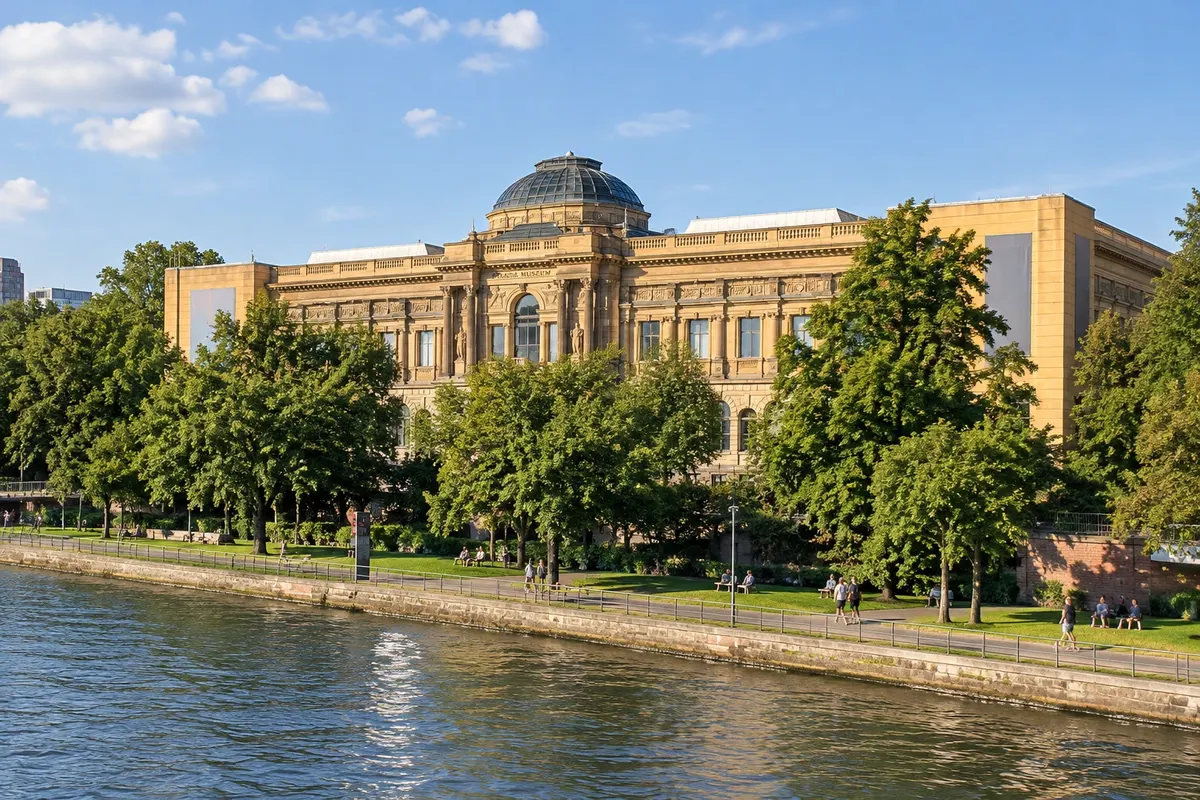
The Museumsufer is the riverbank of museums: a group of exhibition venues along the Main, most of them on the south bank along Schaumainkai in Sachsenhausen. The idea began in 1977 and, between 1980 and 1990, older museums were expanded and new ones opened, several in former riverside villas. Today 39 museums are part of the complex. The main one is the Städel Museum, founded in 1815 from the bequest of banker Johann Friedrich Städel: the collection includes about 3,100 paintings, 660 sculptures and more than 100,000 drawings and prints, covering seven centuries, from Cranach, Dürer, Botticelli, Rembrandt and Vermeer to Monet, Picasso, Beckmann and Richter. In 2012 the museum gained an underground wing for contemporary art beneath the garden lawn, almost doubling the exhibition area. On the same bank are the Liebieghaus (sculpture), the Deutsches Architekturmuseum, the Deutsches Filmmuseum and the Museum für Kommunikation, among others. On Saturdays Schaumainkai hosts a large flea market. The Städel is closed on Mondays; on Thursdays it stays open into the evening.

Kraji na poti: Museumsufer, Städel Museum.

Vključuje: Each museum has its own ticket, paid separately; there is a two-day combined ticket for the Museumsufer museums and an annual pass. The walk along the riverbank is free. Check the current schedule.

Nasvet: Choose at most two museums per day; the Städel alone requires two to three hours. On Thursdays the Städel stays open later and tends to be less crowded. In August the Museumsuferfest usually occupies both riverbanks with stages and stalls for three days: great for atmosphere, bad for a calm visit.

Najboljši čas za obisk: All year; a good plan for rainy days. In August the Museumsuferfest usually takes place on the riverbank; confirm dates.

Rüdesheim am Rhein: Drosselgasse and Siegfried’s Mechanical Music Museum

Odhod: Frankfurt (Main) Hauptbahnhof, RB10 train to Rüdesheim (Rhein) Regional train and walk through the old town about 4 hours, including the train Ves dan Lahko

Rüdesheim am Rhein lies on the western tip of the Rheingau, the Riesling vineyard region on the right bank of the Rhine, where the stretch of the Oberes Mittelrheintal (Upper Middle Rhine Valley) begins, a World Heritage Site since 2002. The town is small and walkable from the station, which sits on the river. The Drosselgasse is the best-known alley: 144 m long, paved with stone, with taverns, shops and live music in venues including the Drosselhof, dating from 1727. It is often full of tour groups at midday. On nearby streets such as Oberstraße there are half-timbered houses, the Klunkhardshof and two carillons that play throughout the day in the Steingasse. Oberstraße is also home to Siegfrieds Mechanisches Musikkabinett, housed in the Brömserhof, a 15th-century knight's manor: it is the museum of mechanical musical instruments opened in 1969 by Siegfried Wendel, with about 350 pieces, from music boxes to an orchestrion the size of a minibus. The visit is guided only, lasts about 45 minutes and the instruments play during the tour; the museum usually opens from March to December. Near the station is the Brömserburg, a 10th-century castle that houses the Rheingau Wine Museum.

Kraji na poti: Drosselgasse, Siegfrieds Mechanisches Musikkabinett.

Vključuje: The train journey is paid separately (the Deutschlandticket and RMV tickets are valid). The streets are open to pedestrians. Siegfried’s museum has a separate admission fee, with the guided visit included; check the current schedule.

Nasvet: Arrive in the morning, before the tour buses and boats. This walk pairs well with the cable car to the Niederwalddenkmal, which departs near Oberstraße, and fits into the same day. In the taverns the focus is on home and history, not on drinking; the Rheingau is wine country and the menus reflect that.

Najboljši čas za obisk: From April to October, with everything open; September and October are the harvest. In December the town usually has a Christmas market; many places close from January to February.

Niederwalddenkmal by cable car: Germania above the Rüdesheim vineyards

Odhod: Rüdesheim, cable car station on Oberstraße Cabin cable car over the vineyards and walk Približno 2 uri Dopoldne ali popoldne easy (optional downhill walk)

The Rüdesheim cable car, opened in 1954, rises in open two-person cabins over the vineyards to the top of the Niederwald, the hill behind town. Up there is the Niederwalddenkmal, a monument opened in 1883 to celebrate German unification of 1871: the statue of Germania, 12.5 m tall, stands atop a 38 m high structure, the work of sculptor Johannes Schilling. From the esplanade in front of the monument you can see the Rhine curving toward Bingen, the town on the opposite bank, and the vineyards falling down to the river. The Niederwald is an 18th-century forest park with paths, viewpoints and a small temple; you can walk along the ridge to Assmannshausen Castle and, in season, ride a chairlift down to that village and return by boat to Rüdesheim, on the so-called ring ticket. The cabin cable car usually runs from late March to early November, and in some years on the days of the Christmas market; for the rest of the winter it is stopped. Those who prefer can walk up through the vineyards in about 40 minutes.

Kraji na poti: Niederwalddenkmal.

Vključuje: The cable car fare is paid separately: one way, round trip or a ring ticket including the chairlift and the boat. The monument and park are open and free to enter. The Assmannshausen chairlift may be out of service; check in advance.

Nasvet: Take the cable car in the morning with light on the vineyards, and walk down the trail between the vines to see the river from another angle. In strong wind the cable car stops. In September and October the vineyards turn golden and the harvest is underway.

Najboljši čas za obisk: From late March to early November, when the cable car usually operates; confirm dates. September and October have the vineyard colors.

Middle Rhine boat: from Rüdesheim to St. Goar past castles and the Loreley

Odhod: Rüdesheim, KD pier on the riverbank Scheduled boat downstream, return by train about 1 h 40 by boat; full day with stops Ves dan Lahko

The 65 km stretch of the Rhine between Rüdesheim/Bingen and Koblenz is the Upper Middle Rhine Valley (Oberes Mittelrheintal), a UNESCO World Heritage Site since 2002: a narrow valley of slate slopes covered in vineyards, with about 40 castles on the heights and half‑timbered villages on the water’s edge. The classic way to see it is the KD scheduled boat, which goes downstream from Rüdesheim and Bingen and calls at Assmannshausen, Bacharach, Kaub, Oberwesel, St. Goar and St. Goarshausen before continuing to Boppard and Koblenz. Downriver, from Rüdesheim to St. Goarshausen, the trip takes about 1 h 40; upriver, on the return, about 3 hours. Along the route you pass the Mäuseturm (mouse tower) in Bingen, Reichenstein and Rheinstein castles, Burg Stahleck above Bacharach, Burg Pfalzgrafenstein in the middle of the river at Kaub, Schönburg in Oberwesel, the Loreley rock and Burg Rheinfels above St. Goar; each is announced over the speaker. The main season usually runs from April to mid‑October, with several departures per day; in winter there is a boat between Rüdesheim and St. Goarshausen only on confirmed days. In periods of very low or very high river level trips are cancelled.

Kraji na poti: Burg Stahleck, Burg Pfalzgrafenstein, Loreley, Burg Rheinfels.

Vključuje: Boat fare is paid separately, per leg or for a full day ticket, with disembarkation and re-boarding; check the current timetable. There are combined boat-and-train tickets. Food and drinks on board are extra.

Nasvet: Do only the downstream leg by boat and return by train: the upstream trip is slow. Sit on the right side of the boat outbound (right river bank) to face the Loreley. Disembark at Bacharach or St. Goar and take the next boat: the day ticket allows this. Check navigation notices before you go because of river level.

Najboljši čas za obisk: From April to mid‑October is the main boat season; confirm dates. September and October bring the grape harvest and autumn colors on the slopes.

Prikaži dodatne izlete (11)

Loreley: the rock, the plateau and the village of St. Goarshausen

Odhod: St. Goarshausen, station or ferry quay Walk or bus ride up to the plateau Približno 3 ure Dopoldne ali popoldne moderate on foot; easy by bus

The Loreley is a 132 m slate cliff on the right bank of the Rhine, just past St. Goarshausen, at the point where the river is narrowest and deepest. For centuries it was a difficult stretch for navigation because of reefs and currents, and from that came the legend of the maiden who, singing atop the rock, distracted boatmen; Clemens Brentano invented her in 1801 and Heinrich Heine made her famous in the 1824 poem, set to music by Friedrich Silcher in 1837. On the top there is a plateau with the cultural and landscape park opened in 2019, a visitor center with an exhibition about the valley and the legend, viewpoints over the river bend and Burg Katz, and the 1939 open-air amphitheater used for large shows. You can climb on foot from St. Goarshausen via a trail with stairs, which requires good fitness, or by bus from the station in season. At the tip of the harbor jetty below stands the Loreley statue, seen by all passing boats. St. Goarshausen is linked to St. Goar on the opposite bank by a ferry that crosses in a few minutes throughout the day.

Kraji na poti: Loreley.

Vključuje: The plateau, viewpoints and trail are open and there is no entrance fee. The visitor center exhibition is paid separately. The bus to the top and the ferry have separate fares.

Nasvet: Combine it with Burg Rheinfels on the opposite bank: St. Goar ferry, ascent to the Loreley and return. Bring water and hiking shoes for the walk up. The lookout at the tip of the plateau is the place to watch boats make the turn.

Najboljši čas za obisk: From April to October, with the visitor center and plateau bus operating; confirm in advance. In September there are often the Rhine in Flames fireworks in St. Goar and St. Goarshausen.

Bacharach on foot: old town, ramparts, Wernerkapelle and the climb to Burg Stahleck

Odhod: Bacharach, train station (left bank) Stroll through the village and climb up to the castle Približno 3 ure Dopoldne ali popoldne moderate (short uphill to the castle)

Bacharach is a village of about 1,500 residents on the left bank of the Rhine, 48 km south of Koblenz, which received town rights in 1356 and lived from the wine trade: barrels were transferred here and the wine came to be called Bacharacher. The town wall, started in 1344 and finished around 1400, is among the best preserved in Rhineland-Palatinate, with towers such as the Postenturm and the Marktturm; there is a walkway on top. Bacharach’s Altstadt is a group of half-timbered houses along the Oberstraße, including the Altes Haus from 1368 and the Peterskirche, an Evangelical church. Above the market stands the Wernerkapelle, a Gothic ruin of red sandstone with a cloverleaf plan, begun soon after 1287 and completed after 1426; it was destroyed in 1689 and today is a place of remembrance, with a 1996 plaque bearing a prayer by Pope John XXIII for reconciliation between Christians and Jews, because the legend of the boy Werner was used as a pretext for persecutions. From there a trail climbs in 15–20 minutes to Burg Stahleck, a late 11th‑century castle that was the seat of the Palatine County of the Rhine from 1142, blown up by French troops in 1689 and rebuilt between 1925 and 1927 as a youth hostel, which it still is. The courtyard is open and the south terrace looks over the valley toward Lorch and Burg Fürstenberg.

Kraji na poti: Altstadt Bacharach, Wernerkapelle, Burg Stahleck.

Vključuje: Streets, ramparts and the trail are open and there is no entrance fee. The courtyard of Burg Stahleck is open; the buildings are part of a youth hostel and are not open to visits. Wernerkapelle is visible from outside behind the railings. Guided tours of the village are charged separately.

Nasvet: Climb to the castle in the late afternoon, when the sun hits the far bank. Victor Hugo visited in the 19th century and wrote about the village; panels along the route quote his text. Bacharach makes a good base for those who want to sleep in the valley and see the castles by boat and by train.

Najboljši čas za obisk: From April to October, with boats operating and taverns open; in winter the village is very quiet. September and October bring the grape harvest and autumn colours.

Burg Rheinfels, in St. Goar: the largest fortress ruin of the Middle Rhine

Odhod: St. Goar, train station (left bank) Walk up on foot and self-guided or guided visit about 2 to 3 hours Dopoldne ali popoldne moderate (ascent of 15 to 20 min)

Burg Rheinfels towers above St. Goar on the left bank of the Rhine, almost opposite the Loreley. Count Diether V of Katzenelnbogen began building it in 1245 to collect tolls from passing ships; enlarged by the landgraves of Hesse, it became the largest fortress in the valley between Koblenz and Mainz and withstood sieges during the Thirty Years’ War and the Palatinate Succession War, when a French army of 28,000 men failed to take it. In 1797 revolutionary French troops dismantled it, and what remains is a maze of walls, courtyards, towers and underground galleries, owned by the town of St. Goar. The museum is in the old chapel, the only finished room of the original castle, and contains a model of the fortress before its destruction. The self-guided visit includes the ruins and the large vaulted wine cellar, built between 1587 and 1589, which holds 400 people and hosts concerts. The mine galleries, dug for defense, and the lower parts are only visited in guided groups with a flashlight, and are the highlight for those who like to explore. Part of the outer buildings has been converted into a hotel and restaurant. The castle is usually open daily from morning until late afternoon from mid-March to November, and may close on bad-weather days.

Kraji na poti: Burg Rheinfels.

Vključuje: Separate paid admission; check the current price list. The guided tour of the galleries has its own schedule and may have an additional cost. The walk up on foot is unrestricted; there is parking at the top.

Nasvet: Bring a flashlight or use your phone light in the galleries, and wear sturdy shoes: the floor is stone and there are dark sections. From the top you can see Burg Katz and the Loreley on the other side. Combine this with the ferry to St. Goarshausen and the trek up to the Loreley plateau on the same day.

Najboljši čas za obisk: From mid-March to November, when the castle is usually open every day; confirm before you go. On summer weekends there are more guided groups.

Marksburg, in Braubach: the medieval castle that was never destroyed

Odhod: Braubach, train station (right bank, RB10 line) Regional train, hike and guided tour about 3 hours, including the climb Dopoldne ali popoldne moderate (90 m climb; stairs)

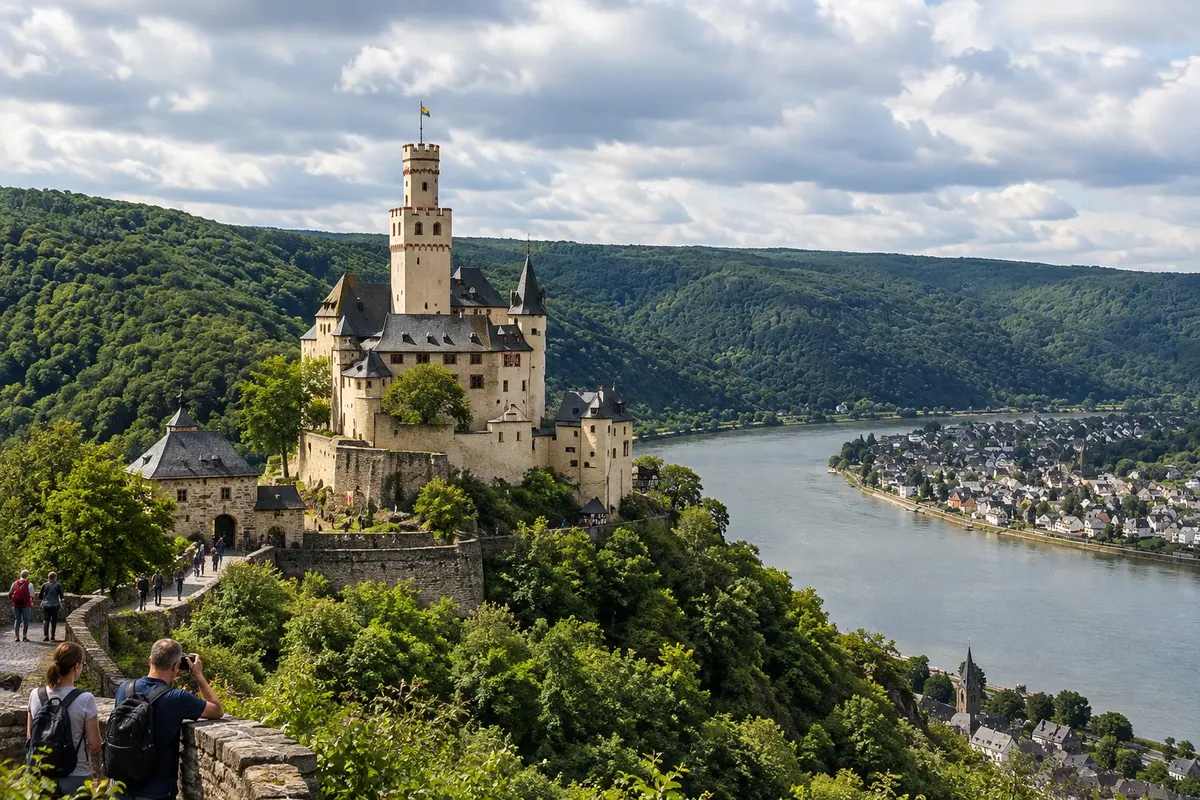
Marksburg sits above Braubach on the right bank of the Rhine, about 12 km upstream from Koblenz, atop a slate cone at 160 m. It is mentioned in documents from 1231 and is the only high medieval fortress in the Middle Rhine that was never destroyed, so it best shows what a lived-in castle looked like: roughly 40 castles were built between Bingen and Koblenz and almost all became ruins in the wars of the 17th and 18th centuries. In 1900 the German Castles Association bought the building for 1,000 gold marks and has been based there since 1931. Entry is only with a guided tour of about 50 minutes, which goes through the knights’ staircase carved into the rock, the cannon batteries, the kitchen, the chapel, the knights’ hall, the cellar, the medicinal herb garden and the armor collection. There are guided tours in English at fixed times. The castle is open every day of the year except December 24 and 25, with shorter hours in winter. From Braubach center the walk up takes about 20 minutes; there is also parking near the top.

Kraji na poti: Marksburg.

Vključuje: Separate paid ticket, with the guided tour included; sold at the castle shop. Check the current price list. Special visits with actors or by lantern require reservation.

Nasvet: Arrive close to the start of an English-language tour, which usually has fixed times in the morning and afternoon during summer. The castle has many stairs and narrow passages: it is not suitable for those with mobility difficulties. Combine it with Boppard on the opposite bank, or with the boat from St. Goar.

Najboljši čas za obisk: All year; from late March to early November there are more tours per day and in more languages. In winter tours run hourly and English tours are only on weekends.

Burg Pfalzgrafenstein, in Kaub: the ship-castle in the middle of the Rhine

Odhod: Kaub (ferry from Bacharach or RB10 train) Small ferry to the island Približno 1 uro in 30 minut Dopoldne ali popoldne easy (narrow stairs in the castle)

Burg Pfalzgrafenstein occupies a narrow island in the middle of the Rhine, opposite Kaub on the right bank, almost facing Bacharach. King Ludwig IV of Bavaria had the pentagonal tower built in 1326 and 1327 to collect tolls from boats, despite protests from bishops and the pope who were losing income; around 1340 the tower gained the six-sided curtain wall with watch turrets that gives it the look of a stone ship, with the bow facing the current. The tower is 36 m tall and has six floors. The castle withstood a 39-day siege in 1504 and was never destroyed; at the turn of 1813 to 1814 Blücher’s Prussian army crossed the Rhine here on a pontoon bridge during the campaign against Napoleon. It belongs to the state of Rhineland-Palatinate, and a small boat runs from Kaub to the island when the river level allows. Inside you can see the courtyards, wooden galleries, the cistern, the guardroom and the tower, with views over the vineyards and Burg Gutenfels above Kaub. The castle is usually open from mid-March to October, Thursday to Sunday, and in November only on weekends; it is closed in December and January.

Kraji na poti: Burg Pfalzgrafenstein.

Vključuje: Castle admission is paid separately and the ferry crossing separately; there is a combined ticket. Check the current timetable. In very low or very high river conditions the crossing is suspended.

Nasvet: Check the navigation notice before you go: access depends on Rhine level. From Bacharach the car-and-foot ferry crosses to Kaub in a few minutes. A good photo angle is from Kaub’s riverbank in the afternoon, or from the KD boat.

Najboljši čas za obisk: From mid‑March to October, Thursday to Sunday, when the castle is usually open; confirm before you go, including the river level.

Frankfurter Goethe-Haus and Deutsches Romantik-Museum

Odhod: Großer Hirschgraben (U-Bahn Willy-Brandt-Platz or Hauptwache station) Walking tour, guided visit included Približno 2 uri Dopoldne ali popoldne easy (stairs; no elevator in the house)

Johann Wolfgang von Goethe was born on August 28, 1749 in the family house on Großer Hirschgraben, a few minutes from the Römerberg, and there he wrote his early works, including the beginning of The Sorrows of Young Werther. The house has been a museum since 1863, when the Freies Deutsches Hochstift foundation bought it. It was destroyed in the bombing of March 22, 1944 and rebuilt between 1947 and 1951, with the original façade and layout: four floors and 18 rooms, furnished as in the 18th century, with the kitchen, the music room, the father’s library, the room where the poet wrote, the astronomical clock and the puppet theatre the grandmother gave the children. Next door, the Deutsches Romantik-Museum, opened in 2021, is the first museum dedicated to German Romanticism as a movement: manuscripts, paintings and objects by Novalis, Brentano, Eichendorff and the Schlegel brothers, with rooms that work with light and sound. One ticket gives access to both, and German guided tours of about 50 minutes are included in the afternoons from Tuesday to Sunday and also in the mornings at weekends. The museum is open every day, with late opening on Thursdays.

Kraji na poti: Frankfurter Goethe-Haus.

Vključuje: Separate paid ticket sold only at the ticket office; it covers the house and the Romanticism museum and includes the guided tour in German. Temporary exhibitions may have a combined ticket. Check the current schedule.

Nasvet: Pick up the English leaflet at the entrance and start with the house, from bottom to top; the Romanticism museum requires more time than it appears. The house has no elevator. Combine it with Paulskirche and the Römerberg, five minutes on foot.

Najboljši čas za obisk: All year, a good option for rainy days. On August 28, Goethe’s birthday, there is usually special programming.

Palmengarten: greenhouses and gardens in the Westend

Odhod: Siesmayerstraße (U-Bahn Westend) or Palmengartenstraße Walk through the garden and the greenhouses about 2 to 3 hours Dopoldne ali popoldne Lahko

The Palmengarten is Frankfurt’s botanical garden, opened on March 16, 1871 in the Westend neighborhood, designed by landscaper Heinrich Siesmayer, and covers 22 hectares between Siesmayerstraße and Palmengartenstraße. The centerpiece is the Palmenhaus, the palm greenhouse, from 1869, with subtropical palms, tree ferns, a waterfall and aquariums. The Tropicarium includes 14 glass houses divided between the humid tropics, with orchids, bromeliads and mangrove plants, and the dry tropics, with cacti and succulents; there is also the flower house, about 200 m², with flowering plants year-round, and a butterfly house. Outside the greenhouses there is a lake with rowboats in season, a rose garden, rock gardens, large lawns and a playground; concerts and temporary exhibitions take place throughout the year. The garden is open daily, from morning until early evening between March and October and until mid-afternoon from November to February, and the greenhouses close one hour after the ticket office. It’s the city spot for a rainy or cold day, because much of the visit is covered.

Kraji na poti: Palmengarten.

Vključuje: Admission is paid separately, sold at the entrance without reservation; there is a late-afternoon ticket on weekdays. Check the current schedule. Boat rides on the lake and guided tours are extra.

Nasvet: Enter via Siesmayerstraße, which is near Westend station, and leave the Tropicarium for last, when it has cooled down outside. From May to June the rose garden is in bloom; in winter the heated greenhouses are the main attraction and the garden closes earlier. Some houses may be closed for maintenance; check the notices at the entrance.

Najboljši čas za obisk: All year. From April to September the outdoor garden is at its best; from November to February the heated greenhouses are the focus and the garden closes earlier.

Sachsenhausen: the Apfelwein tavern quarter and the south bank of the Main

Odhod: Eiserner Steg, south side of the river Walk around the neighborhood about 2 to 3 hours late afternoon or evening Lahko

Sachsenhausen is the neighborhood on the south bank of the Main, founded in the 12th century as a bridgehead of Frankfurt and documented since 1193. Unlike the Altstadt, some of its old buildings survived the 1944 bombings, and it is home to Frankfurt’s most local tradition: Apfelwein, apple wine, called Ebbelwoi in the local dialect, served in gray-and-blue ceramic jugs (Bembel) and in faceted glass cups (Gerippte). Taverns that make their own Apfelwein hang a pine wreath on the door. In Alt-Sachsenhausen the alleys around Klappergasse and Große Rittergasse gather more than two dozen places, with long shared tables and regional dishes such as Handkäse mit Musik, cheese with onion and vinegar, and Grüne Soße, the green sauce of seven herbs; Schweizer Straße, farther south, has traditional houses like Zum Gemalten Haus and Wagner. The neighborhood also includes the Museumsufer, along the river, and viewpoints such as the Goetheturm and the Henninger Turm. You can walk from the center via the Eiserner Steg, the 1869 footbridge. A historic tram, the Ebbelwei-Express, runs a city circuit departing the neighborhood on weekends.

Kraji na poti: Sachsenhausen, Eiserner Steg.

Vključuje: Free walk through the neighborhood; drinks and food in the taverns are paid separately. The Ebbelwei-Express tram has its own ticket, paid separately, and runs on limited schedules; check before you go.

Nasvet: Go at the start of the evening, when the taverns fill with locals; at the shared tables it’s common to sit with strangers. The interest here is the house, the custom and the regional food. By day, combine the walk with the Museumsufer on the same bank.

Najboljši čas za obisk: All year round. From May to September the taverns’ courtyards and gardens are open; in winter life moves indoors to the wooden rooms.

Kleinmarkthalle: Frankfurt’s covered market

Odhod: Hasengasse (U-Bahn Hauptwache or Dom/Römer station) Walking visit to the market Približno 1 uro Dopoldne Lahko

The Kleinmarkthalle is the covered market in central Frankfurt, on Hasengasse, between the cathedral and the shopping street Zeil. The first municipal market, from 1879, was destroyed in the war; the current building, from 1954, was erected in eleven months 200 m from the original site and has about 1,500 m² on two levels, with 156 stalls and more than 60 traders. It sells everything: fruit and vegetables, meats and sausages, fish, cheeses, breads, flowers, spices and products from many parts of the world, with around 5,000 items. It’s the place to discover what the city eats: Grüne Soße, the green sauce made with seven herbs (parsley, chives, watercress, borage, salad burnet, sorrel and chervil), Handkäse, Frankfurter Würstchen and Apfelwein, as well as counter food for a standing lunch. The market is open Monday to Saturday, morning until late afternoon, and closed on Sundays and public holidays. Saturday mornings get crowded with locals doing their shopping.

Kraji na poti: Kleinmarkthalle.

Vključuje: Entrance is free; purchases and food are paid separately. The market is undergoing phased renovations and remains open during the work; confirm before you go.

Nasvet: Go on Saturday morning to see the market full, or on a weekday in the early afternoon to have a standing lunch at a counter. In spring, fresh Grüne Soße is everywhere; the sauce even has an annual festival in the city in May. It is five minutes from the Römerberg.

Najboljši čas za obisk: All year round, Monday through Saturday. From April to June is the season for the herbs used in Grüne Soße and for white asparagus.

Abtei St. Hildegard: the Benedictine abbey above the vineyards of Eibingen

Odhod: Rüdesheim, town centre (about a 30-minute walk or taxi) Walk among vineyards and visit to the church Približno 2 uri Dopoldne ali popoldne easy (gentle uphill walk through the vineyards)

Abtei St. Hildegard is a Benedictine nuns’ abbey high on the vineyards of Eibingen, a district of Rüdesheim, with views over the Rhine and Bingen. The light-stone neo-Romanesque building with two towers was built between 1900 and 1904 with funds from Prince Karl zu Löwenstein, and the first nuns arrived from Prague on 17 September 1904; the community continues the tradition of the convents founded by Hildegard von Bingen (1098–1179), abbess, composer, physician and mystic, who founded a convent in Eibingen in 1165. The abbey church was painted by monks of the Beuron art school, with gold-backed frescoes, and is open to visitors outside service times; the nuns’ chants can be heard at the hours of prayer. The sisters were expelled by the Gestapo in 1941 and returned in 1945. The community supports itself with wine from its own vineyards, art studios and a shop selling abbey products, open from March to December. Down below, in the parish church of Eibingen, is Hildegard’s reliquary, a pilgrimage site with a festival in September. The walking route from Rüdesheim crosses the vineyards and is part of the Hildegard trail.

Kraji na poti: Abtei St. Hildegard.

Vključuje: The church and grounds are open and there is no entrance fee; silence is requested. Guided tours of the church and tastings at the vinotheque are charged separately. The shop is closed from late December through February.

Nasvet: Go late in the morning and, in silence, attend the midday service when the nuns sing. Combine this with the parish church of Eibingen below, which houses the reliquary. If you have a car or an extra day, continue to Kloster Eberbach, a Cistercian monastery from 1136 about 15 km away, where The Name of the Rose was filmed.

Najboljši čas za obisk: From March to October, when the shop is open and the vineyards are green; in September the Hildegard festival usually takes place in Eibingen. The walking route is best in dry weather.

Along the Rhine by train: from Frankfurt to Rüdesheim and Bacharach via both banks

Odhod: Frankfurt (Main) Hauptbahnhof Regional trains along both banks, ferry between them about 8 hours, including trains and ferries Ves dan Lahko

Both banks of the Middle Rhine have a train line along the waterfront, and the regional trains are an attraction in themselves: the windows show the castles, vineyards and villages that the boat shows, in less time and in any season. On the right bank runs the RB10, from Frankfurt Hauptbahnhof via Wiesbaden, Eltville, Rüdesheim, Lorch, Kaub, St. Goarshausen and Braubach to Koblenz; hourly; from Frankfurt to Rüdesheim is about 1 h 10. On the left bank runs the RB26, the MittelrheinBahn, from Mainz via Bingen, Bacharach, Oberwesel, St. Goar and Boppard to Koblenz; from Frankfurt to Bacharach is about 1 h 30, with a change in Mainz. Ferries cross the river between Rüdesheim and Bingen, Bacharach and Kaub, and St. Goar and St. Goarshausen, so you can make a loop: go along one bank, cross by ferry and return via the other. A full day can start in Rüdesheim at the Drosselgasse, cross to Bingen by ferry, continue by train to Bacharach for the Altstadt and the town walls, and finish in St. Goar or St. Goarshausen, facing the Loreley, returning to Frankfurt via the right bank. During maintenance work on one of the lines, buses may replace the trains; check the day's route before you leave.

Kraji na poti: Drosselgasse, Altstadt Bacharach, Loreley.

Vključuje: Tickets paid separately; the Deutschlandticket, a monthly pass, is valid on all these regional trains and on local buses, and there are day tickets from RMV and Hessen. Ferries have their own fare. Sit on the river side.

Nasvet: Buy your ticket in the DB app before boarding and sit on the river side: on the RB10, on the left when heading to Koblenz; on the RB26, on the right. On summer weekends the trains fill with cyclists and hikers. In winter, when the boats stop running, this is the way to see the valley.

Najboljši čas za obisk: All year round. September and October show the colors of the vineyards; from April to October you can combine it with a stretch by boat.


Po dnevih

Frankfurt and the Rhine Valley – načrt poti. Število dni: 3, 5in7

Predlogi za načrtovanje poti. Vrstni red dni prilagodite vremenu in razpoložljivosti izletov.

3 dni · Frankfurt and the Rhine in 3 days: the city and one day of castles

ZaFirst trip, arriving from Brazil on the direct flight to Frankfurt, with little time and wanting to see the city and the Rhine valley on a day trip. · Izhodišče:Frankfurt, near the Hauptbahnhof or the Römerberg
  1. Dan 1 · Arrival, historic center and Eiserner Steg

    The overnight flight from São Paulo or Rio arrives in the morning at Frankfurt Airport. From the regional station beneath Terminal 1, the S-Bahn takes about 15 minutes to the Hauptbahnhof. Drop your bags and take an easy day to cope with jet lag: walk the historic center, including the Römerberg, the Neue Altstadt, the Kaiserdom and the Paulskirche, have a standing lunch at the Kleinmarkthalle and, in the late afternoon, cross the Eiserner Steg to Sachsenhausen for dinner in a tavern. Go to bed early.

  2. Dan 2 · Rüdesheim, Niederwalddenkmal and Rhine boat trip

    Leave the Hauptbahnhof early on the train to Rüdesheim, about 1 h 10. Ride the cable car up to the Niederwalddenkmal in the morning light, walk down through the vineyards and pass through the Drosselgasse before it gets busy. After lunch, take the KD boat downstream to St. Goar, about 1 h 30, passing Bacharach, Burg Pfalzgrafenstein and the Loreley. Return to Frankfurt by train via the left bank with a change in Mainz, or via the right bank from St. Goarshausen, crossing by ferry.

  3. Dan 3 · Museums, Goethe-Haus and Main Tower

    In the morning, the Städel Museum on the Museumsufer, or, if you prefer, the Palmengarten. After lunch, the Goethe-Haus with the Deutsches Romantik-Museum, five minutes from the Römerberg. Late afternoon, go up the Main Tower to see the city in daylight and later illuminated. If your return flight is at night, the train from the center to the airport takes about 15 minutes.

5 dni · Frankfurt and the Rhine Valley in 5 days: city, Rheingau and the Middle Rhine castles
ZaFor those who want two days in Frankfurt and to sleep in the Rhine valley to visit Rüdesheim, Bacharach, the Loreley and the castles without rushing. · Izhodišče:Frankfurt (2 nights) and Bacharach or Rüdesheim (3 nights)
  1. Dan 1 · Arrival and Frankfurt historic center

    Morning arrival on the direct flight from Brazil. Train from the airport to the center in about 15 minutes. Easy day: historic center on foot, with the Römerberg, Neue Altstadt, Kaiserdom and Paulskirche, lunch at the Kleinmarkthalle and late afternoon in Sachsenhausen crossing the Eiserner Steg. Go to bed early to adjust to jet lag.

  2. Dan 2 · Museumsufer, Goethe-Haus and Main Tower

    Morning at the Städel Museum on the Museumsufer, walking along the river's south bank. In the afternoon, the Goethe-Haus and the Deutsches Romantik-Museum. Late afternoon, the Main Tower observation deck for sunset over the city and skyscrapers. Dinner in the center.

  3. Dan 3 · Rüdesheim: Niederwalddenkmal, Drosselgasse and Abtei St. Hildegard

    Train from the Hauptbahnhof to Rüdesheim, about 1 h 10. In the morning, cable car to the Niederwalddenkmal and walk down through the vineyards. After lunch, the Drosselgasse and Siegfried’s mechanical music instrument museum. Late afternoon, walk through the vineyards to the Abtei St. Hildegard in Eibingen. Return to your base in the valley: Rüdesheim, or Bacharach, crossing by ferry from Bingen and continuing by train.

  4. Dan 4 · Middle Rhine boat trip, Loreley and Burg Rheinfels

    KD boat downstream from Rüdesheim or Bacharach to St. Goar, passing Burg Pfalzgrafenstein and the Loreley. In St. Goar, climb to Burg Rheinfels and visit the ruins and, if available, the guided tour of the galleries. Cross by ferry to St. Goarshausen and go up to the Loreley plateau to see the river bend from above. Return by train to your base via whichever bank suits you.

  5. Dan 5 · Bacharach, Burg Pfalzgrafenstein and return to Frankfurt

    Morning in Bacharach: Altstadt, walk along the town wall, Wernerkapelle and climb to Burg Stahleck. After lunch, ferry to Kaub and a small boat to Burg Pfalzgrafenstein, if the river level allows. Mid-afternoon, train back to Frankfurt with a change in Mainz, about 1 h 30, or direct to the airport, which has S‑Bahn and long-distance stations.

7 dni · Frankfurt and the Rhine Valley in 7 days: the whole city and the Rhine on both banks
ZaFor those with a week who want a relaxed stay in Frankfurt, to sleep in the Rhine valley and see all the guide’s castles by boat, train and on foot. · Izhodišče:Frankfurt (3 nights) and Bacharach (4 nights)
  1. Dan 1 · Arrival, Römerberg and Sachsenhausen

    Arrival in the morning on the direct flight from Brazil and train from the airport to the center in about 15 minutes. Easy day around the historic center: Römerberg, Neue Altstadt, Kaiserdom, Paulskirche and the Eiserner Steg. Early dinner in a tavern in Sachsenhausen and rest to recover from the time difference.

  2. Dan 2 · Museumsufer and Main Tower

    Morning and early afternoon on the Museumsufer: the Städel Museum and a second south-bank museum such as the Liebieghaus or the Deutsches Filmmuseum. Late afternoon on the Main Tower observation deck for sunset. At night, walk through the illuminated banking district.

  3. Dan 3 · Kleinmarkthalle, Goethe-Haus and Palmengarten

    Morning at the Kleinmarkthalle to see the busy market and eat standing up. Then the Goethe-Haus and the Deutsches Romantik-Museum. In the afternoon, the Palmengarten in Westend, with its greenhouses and the lake. Free evening in the center.

  4. Dan 4 · Rüdesheim: Drosselgasse, Niederwalddenkmal and Abtei St. Hildegard

    Train to Rüdesheim, about 1 h 10. Cable car to the Niederwalddenkmal in the morning, walk down through the vineyards, Drosselgasse and Siegfried’s museum after lunch and, late afternoon, the Abtei St. Hildegard in Eibingen. Continue to Bacharach, crossing by ferry from Bingen and taking the left-bank train, for four nights in the valley.

  5. Dan 5 · Bacharach, Burg Stahleck and Burg Pfalzgrafenstein

    Morning in Bacharach: Altstadt, the town walls, Wernerkapelle and the climb to Burg Stahleck, with the valley at your feet. In the afternoon, ferry to Kaub and a small boat to Burg Pfalzgrafenstein, if the river level allows. Late afternoon on the riverbank in Bacharach, watching the boats go by.

  6. Dan 6 · Boat to St. Goar, Burg Rheinfels and the Loreley

    KD boat from Bacharach downstream to St. Goar, passing Schönburg and the Loreley. Climb to Burg Rheinfels and visit the ruins and galleries. Ferry to St. Goarshausen and ascent to the Loreley plateau, on foot or by bus, to view the river bend. Return to Bacharach by train on the left bank, from St. Goar.

  7. Dan 7 · Marksburg in Braubach and return to Frankfurt

    Train on the left bank to Koblenz, or by ferry and RB10 on the right bank to Braubach, and climb to Marksburg for the guided tour of the castle that was never destroyed, preferably at an English-language time slot. After lunch, train back to Frankfurt: from Koblenz there are direct trains to the Hauptbahnhof and the airport in about 1 h 30 to 2 h. If your flight is the next morning, sleep near the Hauptbahnhof or at the airport.

Najboljši čas za obisk

Kdaj se odpraviti:Frankfurt and the Rhine Valley po mesecih

From May to September the days are long and Rhine boats run more frequently. September and October are the grape harvest season in the Rheingau and Middle Rhine vineyards. Christmas markets usually run from late November until near Christmas, in Frankfurt and in Rüdesheim. Winter, from December to February, is cold and has short days.

The seasons shown are the most usual ones; nature doesn't always follow the calendar.

januar Malo padavin

winter · boats stopped

At the DWD station Frankfurt/Main (airport, 100 m), average 2 °C and about 44 mm of rain; in Geisenheim (Rheingau, 111 m), 2.5 °C and 39 mm; in Koblenz-Horchheim (85 m), 3 °C and 43 mm. Short days, gray skies and morning frost; snow on the ground is rare on the plain. Regular Rhine boats do not run, the Rüdesheim cable car is idle and Burg Pfalzgrafenstein is closed; Marksburg and Burg Rheinfels open with reduced hours. Frankfurt is the program: museums, Palmengarten, Goethe-Haus, Main Tower. Low activity after New Year.

februar Malo padavin

winter · Rhine carnival

Winter and one of the driest months: Frankfurt/Main (100 m) has an average of 3 °C and about 39 mm; Geisenheim (111 m), 3 °C and 34 mm; Koblenz-Horchheim (85 m), 4 °C and 39 mm. Dry cold, with some sunny days. In February or early March the Rhenish carnival (Fastnacht) usually takes place, with parades in Mainz and Koblenz; check the dates. In the Rhine valley almost everything is closed; in Frankfurt the museums and the Palmengarten greenhouses are a refuge. Bring a heavy coat, hat and gloves.

marec Malo padavin

early spring · cable car returns

Frankfurt/Main (100 m) has an average of 7 °C and about 39 mm; Geisenheim (111 m), 7 °C and 36 mm; Koblenz-Horchheim (85 m), 7 °C and 41 mm. Mornings are still cold, but the days lengthen and the Palmengarten moves to summer hours. At the end of the month the Rüdesheim cable car and the Siegfried museum usually reopen, and Burg Pfalzgrafenstein again accepts visits Thursday to Sunday; scheduled boats are still waiting until April.

april Malo padavin

spring · boats on the Rhine

Spring, the driest month of the year in the Rheingau: Geisenheim (111 m) averages 11 °C and about 31 mm; Frankfurt/Main (100 m), 11 °C and 37 mm; Koblenz-Horchheim (85 m), 11 °C and 40 mm. Vineyards are budding and trees are blooming along the river. KD sightseeing boats’ main season usually starts in early April, and Burg Rheinfels reopens its museum at Easter; confirm the dates. Easter brings holidays and German visitors to the villages along the Rhine. It’s still too early for warm weather: pack a light coat and a rain jacket.

maj Zmerne padavine

spring · Grüne Soße

Full spring. Frankfurt/Main (100 m) averages 15 °C and about 60 mm, with late-afternoon showers; Geisenheim (111 m), 15 °C and 50 mm; Koblenz-Horchheim (85 m), 15 °C and 58 mm. Long days, everything green, the Palmengarten rose garden in bloom, and sidewalk tables in Sachsenhausen open. It’s the season for the herbs used in Grüne Soße, with a sauce festival in Frankfurt that usually takes place in May. Holidays on May 1, Ascension and Pentecost fill the Rhine valley with German visitors for long weekends.

junij Zmerne padavine

start of summer · longer days

Frankfurt/Main (100 m) averages 19 °C and about 55 mm; Geisenheim (111 m), 18 °C and 48 mm; Koblenz-Horchheim (85 m), 18 °C and 63 mm. These are the longest days of the year, with daylight after 9 p.m. and afternoons that can exceed 30 °C. All boats, cable cars and castles are open. Weekend wine festivals begin in the Rhine villages. High visitor numbers, but still before German school holidays, which in Hesse and Rhineland-Palatinate usually start at the end of the month or in July.

julij Zmerne padavine

summer · European holidays

Summer and the rainiest month in Frankfurt/Main (100 m): about 64 mm, in short thunderstorms, averaging 21 °C with warm afternoons; Geisenheim (111 m) has 20 °C and 58 mm; Koblenz-Horchheim (85 m), 20 °C and 69 mm. School holidays in Germany and high season: crowded boats, Drosselgasse packed at midday, queues at Marksburg. Visit castles early and save air-conditioned museums for the afternoon. In drought years the Rhine can fall and boats and the crossing to Pfalzgrafenstein may be suspended; check the notices.

avgust Zmerne padavine

summer · Museumsuferfest

Summer. Frankfurt/Main (100 m) averages 20 °C and about 61 mm; Geisenheim (111 m), 20 °C and 48 mm; Koblenz-Horchheim (85 m), 20 °C and 62 mm. Warm days and pleasant riverside nights. At the end of the month, the Museumsuferfest usually takes over both banks of the Main for three days, with stages, stalls and museums open late; confirm the dates. Rüdesheim holds a wine festival in August. High visitor numbers and hotels are busier in the valley. In drought years, check river-level notices before relying on boat services.

september Malo padavin

začetek jeseni · trgatev

Early autumn, with the valley at its best: Frankfurt/Main (100 m) averages 16 °C and about 48 mm; Geisenheim (111 m), 15 °C and 43 mm; Koblenz-Horchheim (85 m), 15 °C and 52 mm. Sunny days and cool nights, and the grape harvest underway in the Rheingau and Middle Rhine vineyards. In September the Rhein in Flammen (Rhine in Flames) usually takes place in St. Goar and Oberwesel, with fireworks and illuminated boats, and the Hildegard festival in Eibingen; confirm the dates. High visitor numbers on weekends, lower on weekdays after the holidays.

oktober Zmerne padavine

autumn · colors in the vineyards

Frankfurt/Main (100 m) has an average of 11 °C and about 50 mm; Geisenheim (111 m), 11 °C and 45 mm; Koblenz-Horchheim (85 m), 11 °C and 47 mm. The vineyards turn yellow and red and morning mist rises from the river. In Frankfurt, the Book Fair usually occupies the city in October, with hotels full. KD’s main boat season usually ends mid-month, and Burg Pfalzgrafenstein closes at the end of the month.

november Malo padavin

late autumn · Christmas markets at the end of the month

Late autumn, gray and wet, with fog in the valley. Frankfurt/Main (100 m) has an average of 6 °C and about 47 mm; Geisenheim (111 m), 6 °C and 43 mm; Koblenz-Horchheim (85 m), 7 °C and 47 mm. The Rüdesheim cable car closes at the start of the month, scheduled boats stop and Pfalzgrafenstein opens only on weekends. In the last week the Christmas markets usually open: at the Römerberg in Frankfurt, and the Nations market in Rüdesheim; check the dates. Plan for museums and greenhouses. Bring warm, waterproof clothing.

december Zmerne padavine

winter · Christmas market

Winter. Frankfurt/Main (100 m) has an average of 3 °C and about 55 mm; Geisenheim (111 m), 3 °C and 50 mm; Koblenz-Horchheim (85 m), 4 °C and 50 mm. Short days, night falling before 5 PM, with damp cold and occasional snow. The Römerberg Christmas market, held since 1393, usually runs until just before the 24th, and Rüdesheim’s market, with about 120 stalls, runs until near Christmas; on those days the Rüdesheim cable car sometimes operates again. Between December 24 and 26 almost everything closes. Marksburg closes only on the 24th and 25th. High activity at the markets, low in the valley.

Načrtujte pot

Kako do tja:Frankfurt and the Rhine Valley

By train (Deutsche Bahn) from Frankfurt to Rüdesheim and Bacharach

Regional trains are the way to go from Frankfurt to the Rhine valley. For Rüdesheim am Rhein on the right bank, RB10 departs Frankfurt (Main) Hauptbahnhof hourly, passes through Wiesbaden and arrives in about 1 h 10, continuing via Lorch, Kaub, St. Goarshausen and Braubach to Koblenz. For Bacharach on the left bank, take S-Bahn or a regional train from Hauptbahnhof to Mainz Hauptbahnhof (about 35–40 minutes) and change to RB26 (MittelrheinBahn), which runs via Bingen and reaches Bacharach in about 50 minutes; the total is about 1 h 30, and the same line continues to Oberwesel, St. Goar, Boppard and Koblenz. There are direct trains from Koblenz to Frankfurt in about 1 h 30 to 2 hours. When a section is under maintenance, DB provides replacement buses or recommends going via the other bank and crossing by ferry; check the day’s connection on the DB website or app. The Deutschlandticket, a monthly pass, is valid on all these regional trains and on urban transport, not on ICE; there are also RMV day tickets and the Hessenticket.

By car: motorways and the Rhine‑bank roads

A car is not necessary for this destination, but it helps if you want to visit vineyards and monasteries outside the villages. From Frankfurt to Rüdesheim it’s about 70 km via the A 66 to Wiesbaden and then the B 42, the right‑bank road that follows the valley to Koblenz; to Bacharach it’s about 100 km via the A 60 to Bingen and the B 9, the left‑bank road. Both roads run narrow between the river and the railway, with low speeds and villages along the way. There is no bridge between Mainz/Wiesbaden and Koblenz: crossings are by car ferries at Rüdesheim–Bingen, Lorch–Niederheimbach, Kaub–Bacharach (Engelsburg) and St. Goar–St. Goarshausen, which operate from morning to night. Frankfurt has an environmental zone (Umweltzone) in the center that requires the green sticker on the windshield; rental cars usually already have it. Parking in central Frankfurt and in the Rhine villages on summer weekends is difficult; castles have paid parking at the top.

How to get around Frankfurt: U-Bahn, S-Bahn, tram and Frankfurt Card

Frankfurt has U-Bahn (subway), S-Bahn (urban trains), trams and buses integrated in the RMV system, with a single ticket. The center is compact: it’s a 15‑minute walk from Römerberg to Hauptbahnhof, and Main Tower, Goethe House, Kleinmarkthalle and the Museumsufer are all within 20 minutes on foot from the square. The most useful stations are Hauptbahnhof, Hauptwache, Willy‑Brandt‑Platz, Dom/Römer and Schweizer Platz (Sachsenhausen); for Palmengarten, Westend or Bockenheimer Warte. Single tickets, day tickets and group day tickets are available from machines, the RMV app or the DB app; the airport is in its own zone. The Frankfurt Card, sold at tourist information on Römerberg and at Hauptbahnhof, combines transport for one or two days with discounts at museums, Main Tower and Palmengarten; the Deutschlandticket covers all urban transport. In the Rhine villages everything is done on foot, by ferry and by regional train; for hilltop castles, walk, take a local bus or a taxi.

Boats and ferries on the Rhine

Boats are part of local transport in the valley. KD (Köln-Düsseldorfer) scheduled boats run the Middle Rhine between Mainz, Rüdesheim, Bingen, Bacharach, Kaub, Oberwesel, St. Goar, St. Goarshausen, Boppard and Koblenz during the main season, which usually runs from early April to mid‑October, with several departures per day and tickets by leg or full‑day; in winter there is only one confirmed boat between Rüdesheim and St. Goarshausen on specific days. The Bingen‑Rüdesheimer company operates the passenger and car ferry between Bingen and Rüdesheim from morning to night, and also runs Rheingau cruises and trips to the Loreley. At St. Goar–St. Goarshausen and Bacharach–Kaub the car ferries carry pedestrians and cross in minutes. A small boat runs from Kaub to Burg Pfalzgrafenstein on open days. Everything depends on river level: in droughts and floods boats stop, and notices are posted on the operators’ websites.

Tickets and passes: museums, castles and cable car

None of the places in this guide charge an entrance fee for public areas: squares, villages, walls, trails, the Loreley plateau and Niederwald park are open. What you pay for separately are museums and castles: the Städel and the other Museumsufer museums, which offer a two-day combined ticket; the Goethe-Haus with the Romantik-Museum, sold only at the ticket office; the Palmengarten; the Main Tower; the Siegfried museum in Rüdesheim; the Marksburg, only with guided visits; Burg Rheinfels; and Burg Pfalzgrafenstein, which requires a boat crossing. Rüdesheim’s cable car and the boats have separate fares, with combined cable car, boat and train tickets. In all cases, check the current price list on the venue’s website before you go, because prices and opening days change year to year, and carry cash for ferries and small ticket offices in the valley.

Pred odhodom

Praktične informacije

Z nekaj načrtovanja boste imeli več časa za uživanje na poti.

Kdaj se odpraviti

From May to September the days are long and Rhine boats run more frequently. September and October are the grape harvest season in the Rheingau and Middle Rhine vineyards. Christmas markets usually run from late November until near Christmas, in Frankfurt and in Rüdesheim. Winter, from December to February, is cold and has short days.

The seasons shown are the most usual ones; nature doesn't always follow the calendar.

Koliko dni ostati

Allow two days for Frankfurt: one for the old town, the cathedral and the Main Tower, another for the museums on the south bank and Sachsenhausen. The Rhine Valley requires another two days: one for Rüdesheim and the Niederwald, another for Bacharach and the castles of the Loreley region. With four or five days in total you can see everything without rushing.

V katerem mestu prenočiti

In Frankfurt, the area around the central station (Hauptbahnhof) is convenient for those catching trains, and the Innenstadt, near the Hauptwache and Römerberg, makes everything walkable. Sachsenhausen, on the other side of the river, is close to the museums and the cider taverns. In the Rhine Valley, staying in Rüdesheim or Bacharach lets you see the towns empty at night and start early on the boats. In high season and during Frankfurt fairs, book in advance.

Spoštujte kraj

Odnesite svoje odpadke, upoštevajte oznake in podprite lokalne ponudnike. V naravi upoštevajte navodila za obiskovalce.

Odgovori na vaša vprašanja

Pogosta vprašanja – Frankfurt and the Rhine Valley

Can you visit the Rhine Valley on a day trip from Frankfurt?

Yes. Rüdesheim is just over an hour by regional train from Frankfurt central station, and Bacharach about an hour and a half, usually with a change in Mainz or Bingen. In one day you can see one of the towns at a leisurely pace and do a stretch by boat. To see both towns and the castles, it's best to spend one or two nights in the valley.

Do I need to rent a car?

No. Frankfurt has metro (U-Bahn), urban trains (S-Bahn) and trams, and central Frankfurt has an environmental zone (Umweltzone) that requires a sticker on the car. In the Rhine Valley, regional trains run along both banks and boats connect the towns in season. A car only helps to reach castles outside bus timetables, and note there is no bridge over the Rhine between Mainz and Koblenz: the crossing is by ferry (Fähre).

When is the best time for boats on the Rhine?

The season for regular boats on the Middle Rhine usually runs from April to October, with more departures in summer. In winter there are reduced services on some stretches. In periods of very low or very high river levels, boats may cancel trips: check on the day.

Rotas entre países

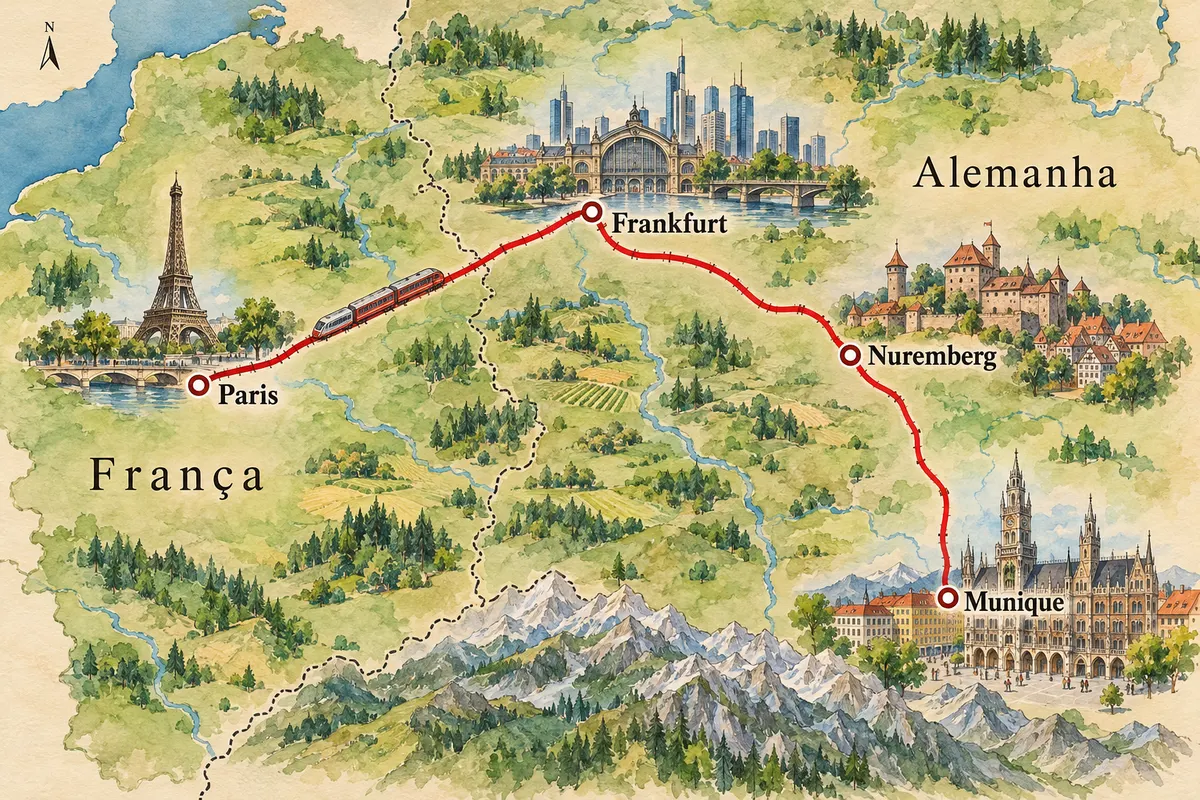
Frankfurt and the Rhine Valley – na poti z imenom Paris–Frankfurt–Munich by train

By train from Paris to Munich via Frankfurt and Nuremberg: TGV and ICE connect France with southern Germany from central station to central station.

Zemljevid je ilustrativen in ni v merilu. Dotaknite se mesta, da odprete njegovo stran.
Paris–Frankfurt–Munich by train – ilustrirani zemljevid
Več o poti – Paris–Frankfurt–Munich by train

Rotas entre países

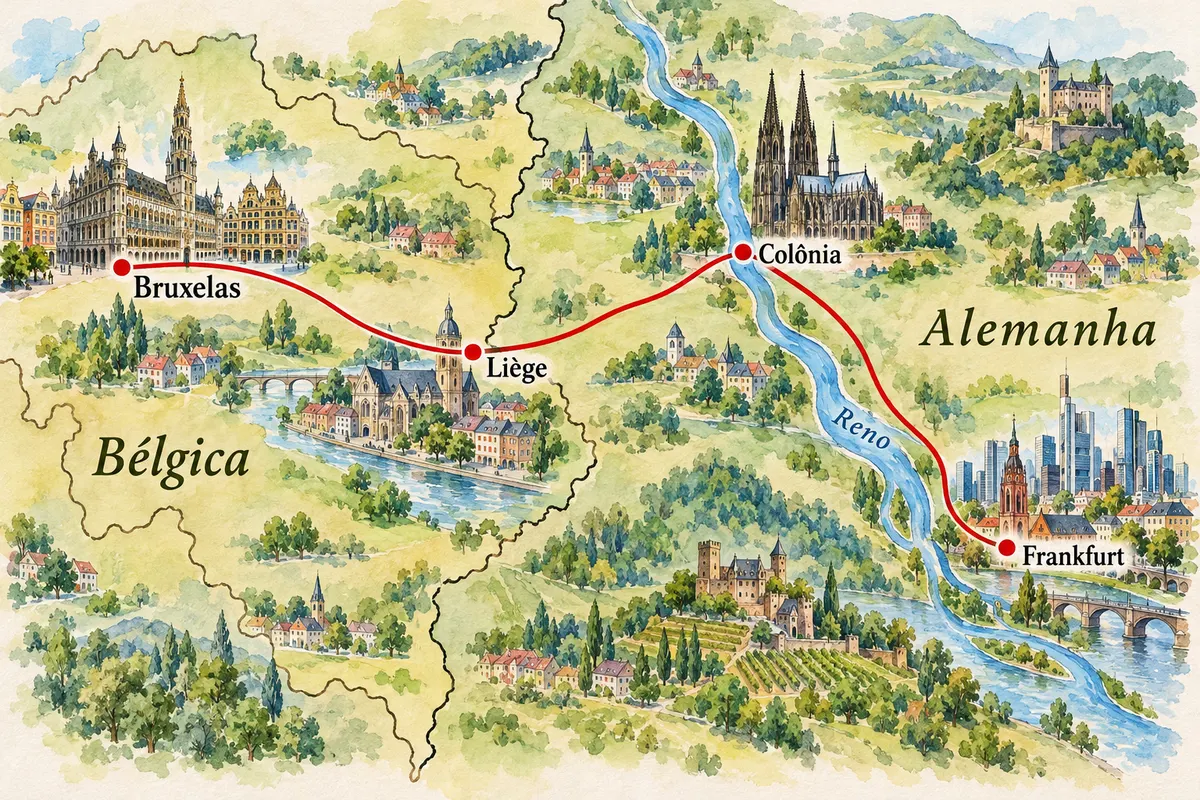
Frankfurt and the Rhine Valley – na poti z imenom Brussels–Cologne–Frankfurt by train

By train from Belgium to Germany: Brussels, Liège, Cologne and Frankfurt in about three hours, from central station to central station.

Zemljevid je ilustrativen in ni v merilu. Dotaknite se mesta, da odprete njegovo stran.
Brussels–Cologne–Frankfurt by train – ilustrirani zemljevid
Več o poti – Brussels–Cologne–Frankfurt by train
Odkrijte druge destinacije Iskanje po zvezni državi in mestu

Več kot vodnik