Rhine boat trip in Cologne
Odhod: KD quay in the Altstadt, next to the Frankenwerft (5 minutes on foot from the cathedral) Scheduled boat with onboard commentary Približno 1 uro Popoldne Lahko
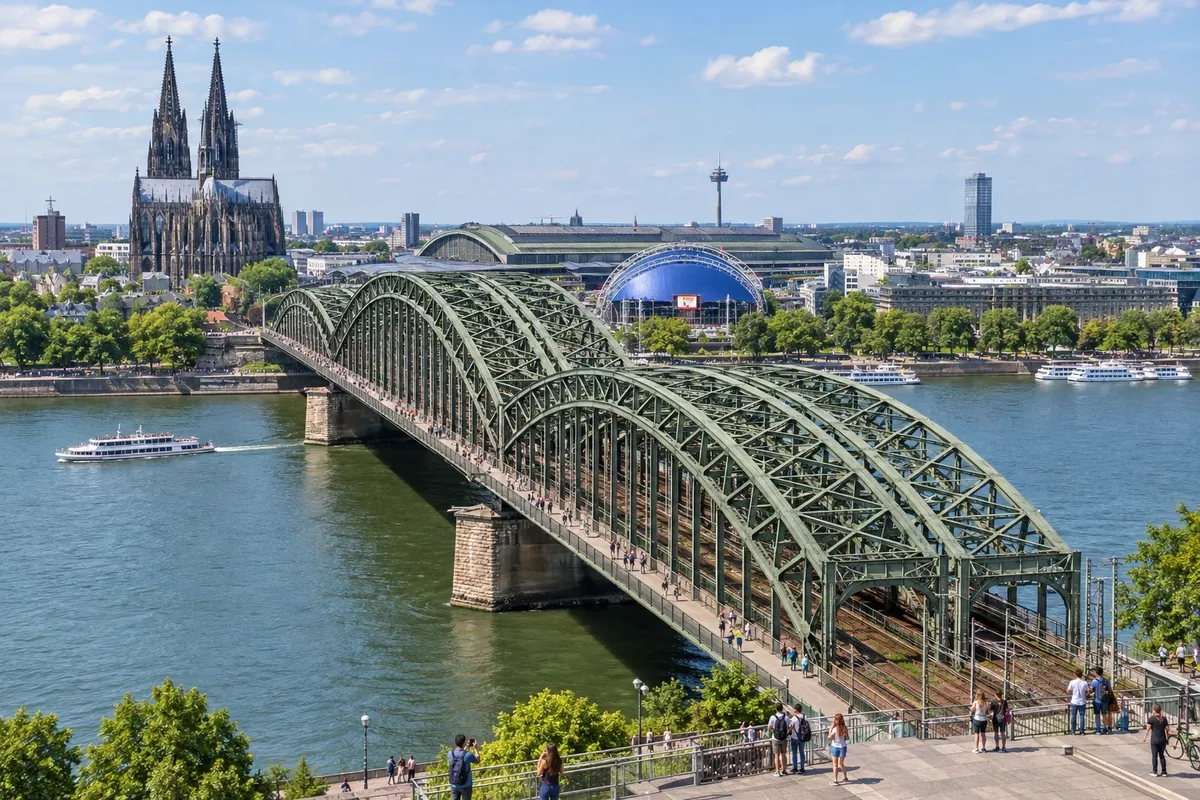
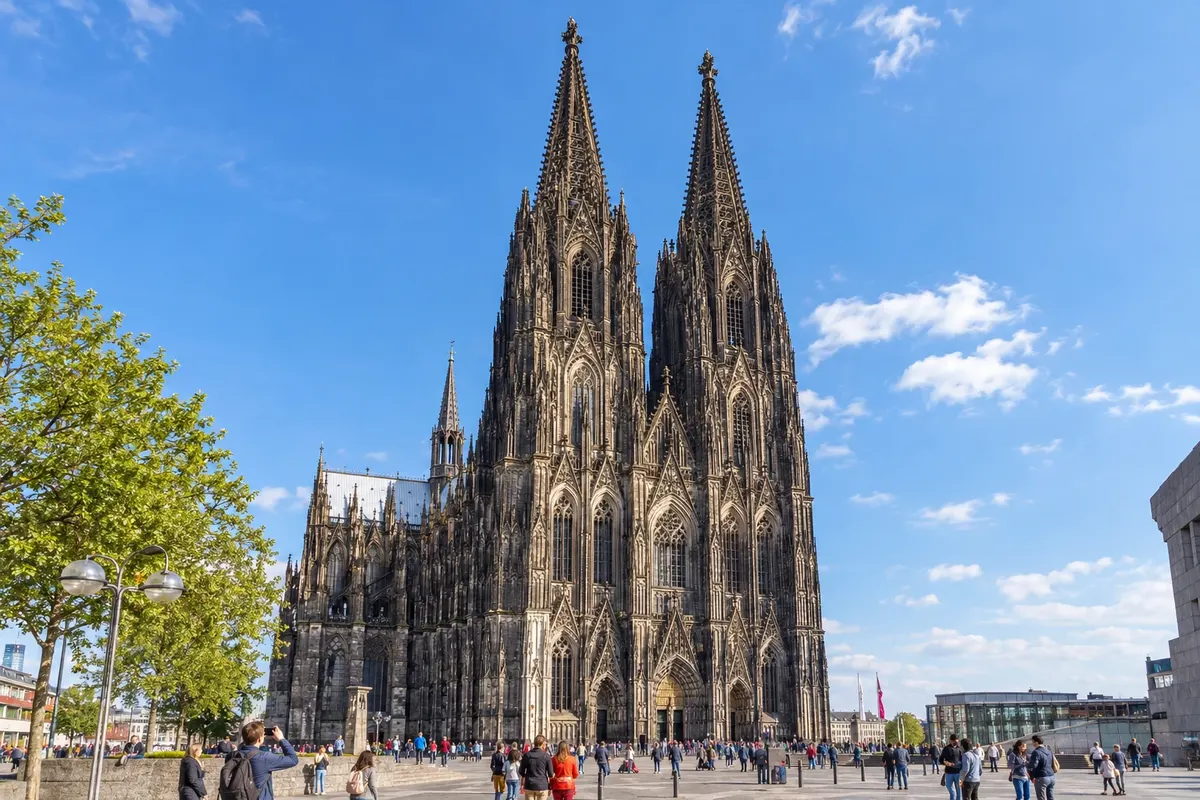
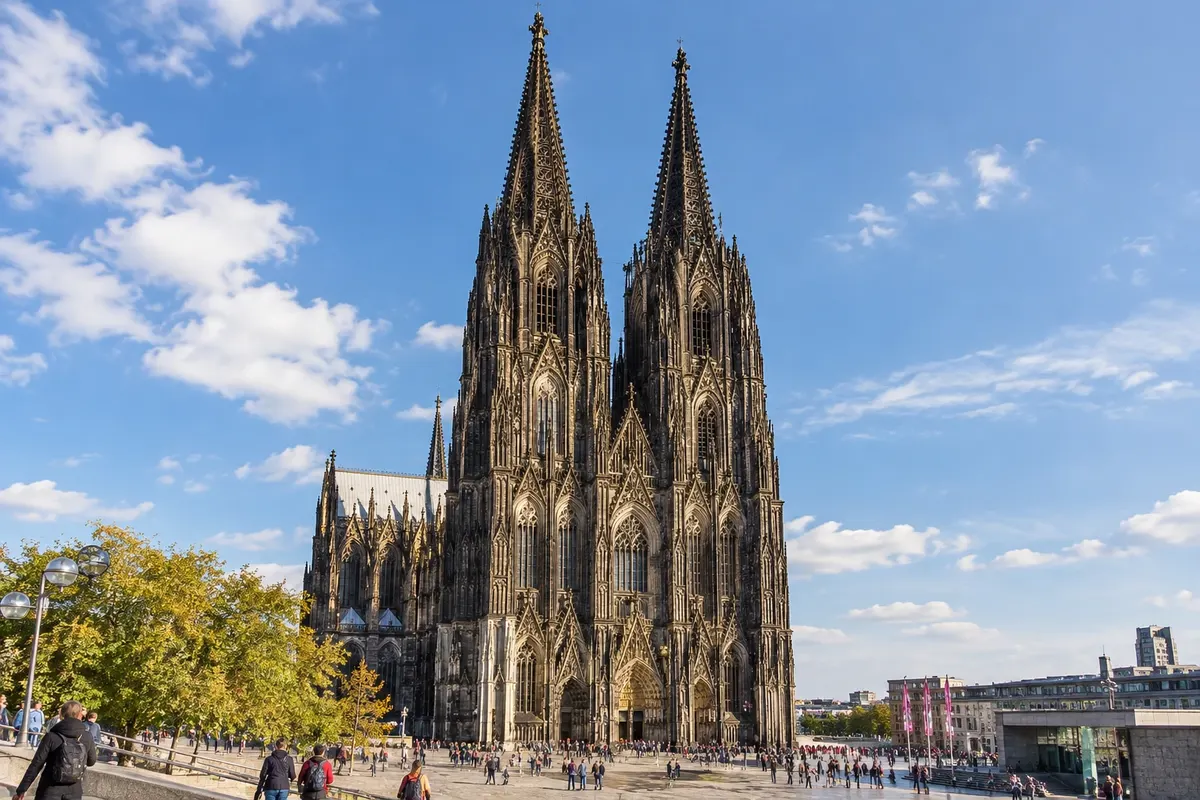
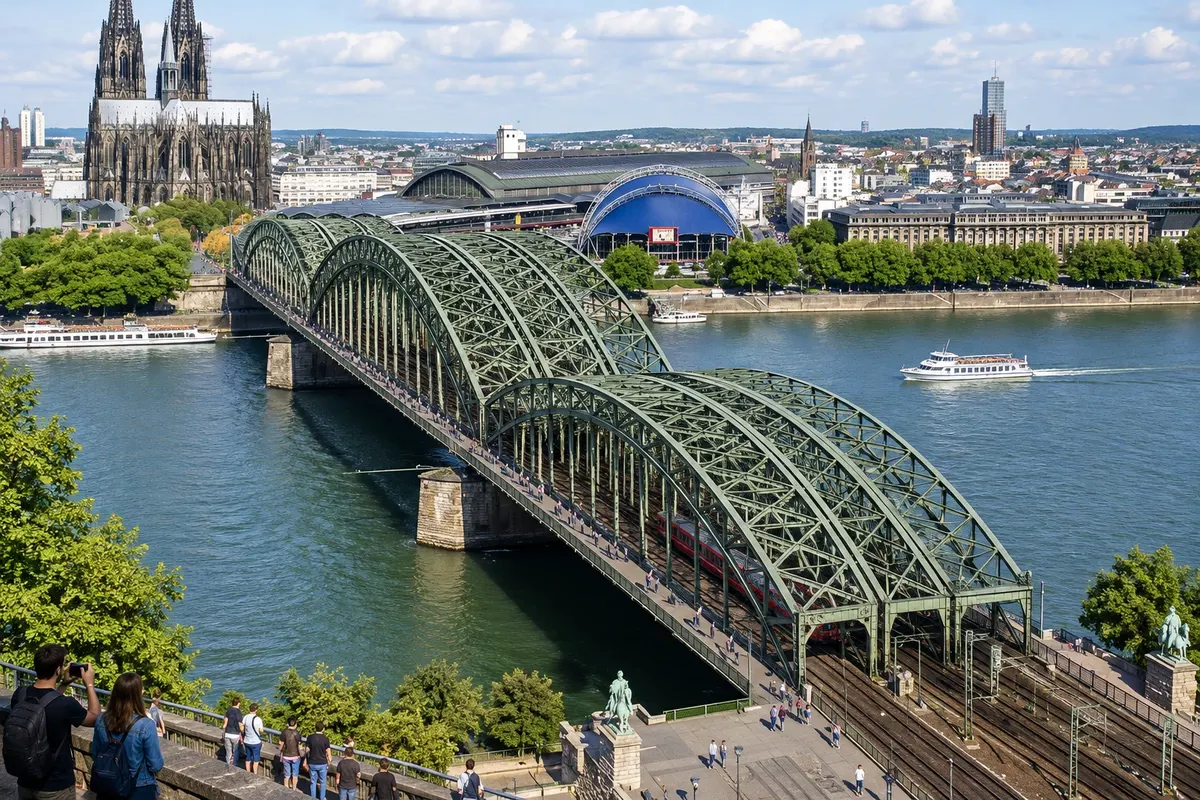
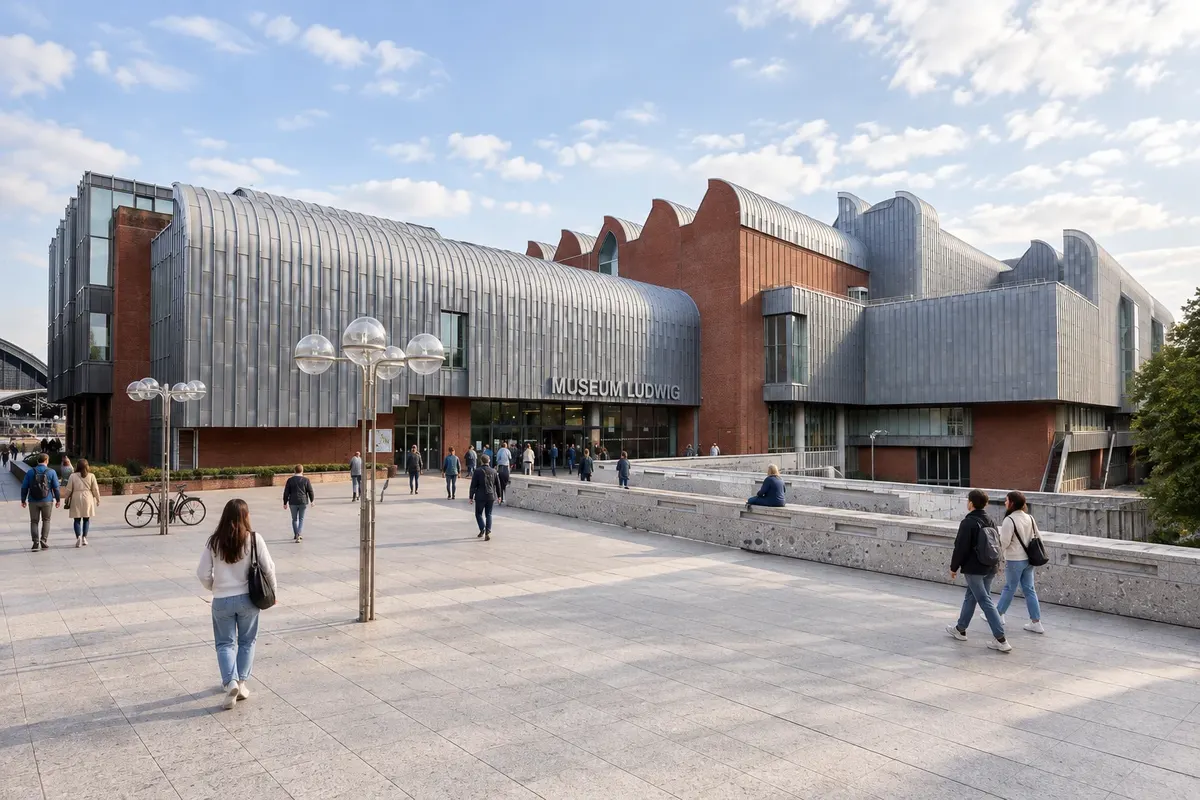
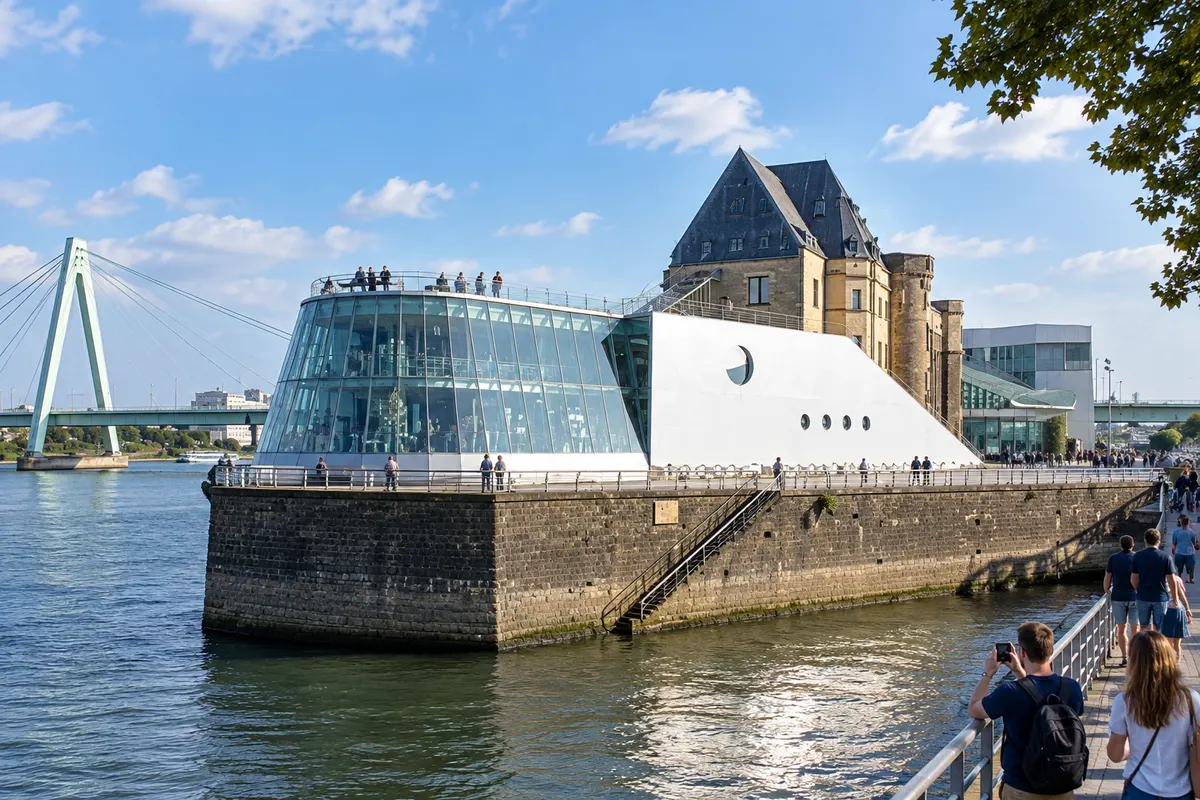
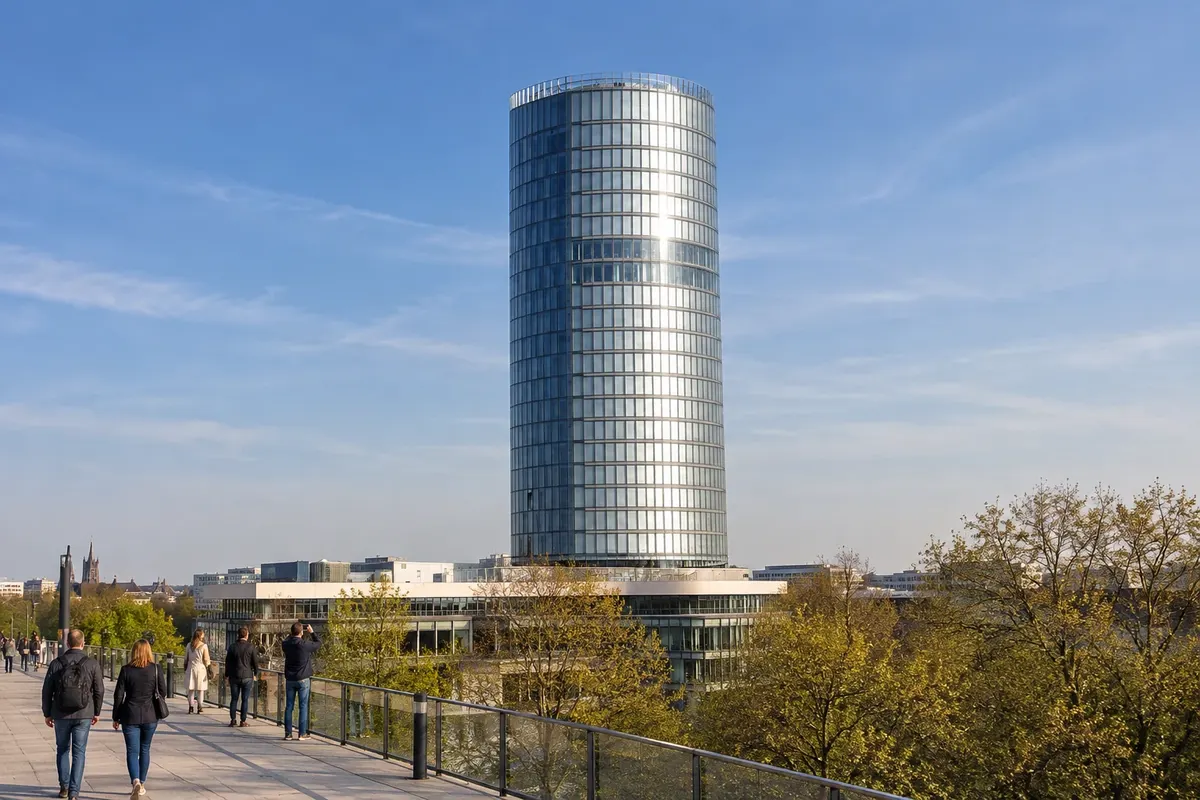
The panoramic circuit along the Rhein (Rhine) is the simplest way to see all of Köln (Cologne) at once. The Köln-Düsseldorfer ships, the navigation company founded in 1826, depart from the Altstadt quay at the Frankenwerft and run a circuit of about one hour: they go upstream past the Rheinauhafen and the Kranhäuser, turn and return downstream passing under the Deutzer Brücke and the Hohenzollernbrücke, with the cathedral, Groß St. Martin and the Museum Ludwig on one side and the KölnTriangle, the Rheinpark and the cable car on the other. The onboard commentary is in German and English, over loudspeaker, and covers the city’s 2,000 years since the Roman colony. The season usually runs from late March to late October, with up to six departures per day; at Advent there are some weekend sailings. The same company operates regular boats to Bonn and Königswinter, at the foot of the Siebengebirge, and in Düsseldorf the panoramic circuit departs from the Rheinuferpromenade quay, next to the Altstadt, also lasting about an hour. On days of high or very low water the boats may stop.
Kraji na poti: Hohenzollernbrücke, Kölner Dom.
Vključuje: Ticket paid separately, purchased at the quay or online; there is a discount with the KölnCard. Drinks and snacks onboard are paid separately. Schedules and routes change with the season and with the river level: check the current timetable.
Nasvet: Prefer the mid-afternoon departure, with the sun already low over the cathedral, and sit on the open deck on the left side outbound. Bring a jacket even in summer: the wind on the river is constant. On rainy days, the enclosed saloon has large windows.
Najboljši čas za obisk: From April to October in the regular season; June to August have the longest days. Outside the season there are only occasional departures, confirm before you go.
Düsseldorf Altstadt: Burgplatz, St. Lambertus and Marktplatz
Odhod: Heinrich-Heine-Allee (U-Bahn) or Düsseldorf Hauptbahnhof Peš po starem mestnem jedru about 2 to 3 hours late afternoon and early evening easy (flat terrain)
The Altstadt (old town) of Düsseldorf fits into about 0.5 km² between Heinrich-Heine-Allee, the Hofgarten park, the Rhine and the Carlstadt district. Within that area there are more than 260 bars, breweries and restaurants, which earned it the nickname "the longest bar in the world." The city beer is Altbier, dark and top-fermented, served in small glasses by waiters called Köbes in the traditional houses such as Uerige, Füchschen, Schumacher and Schlüssel; the visit is worth it for the atmosphere of the old establishments.
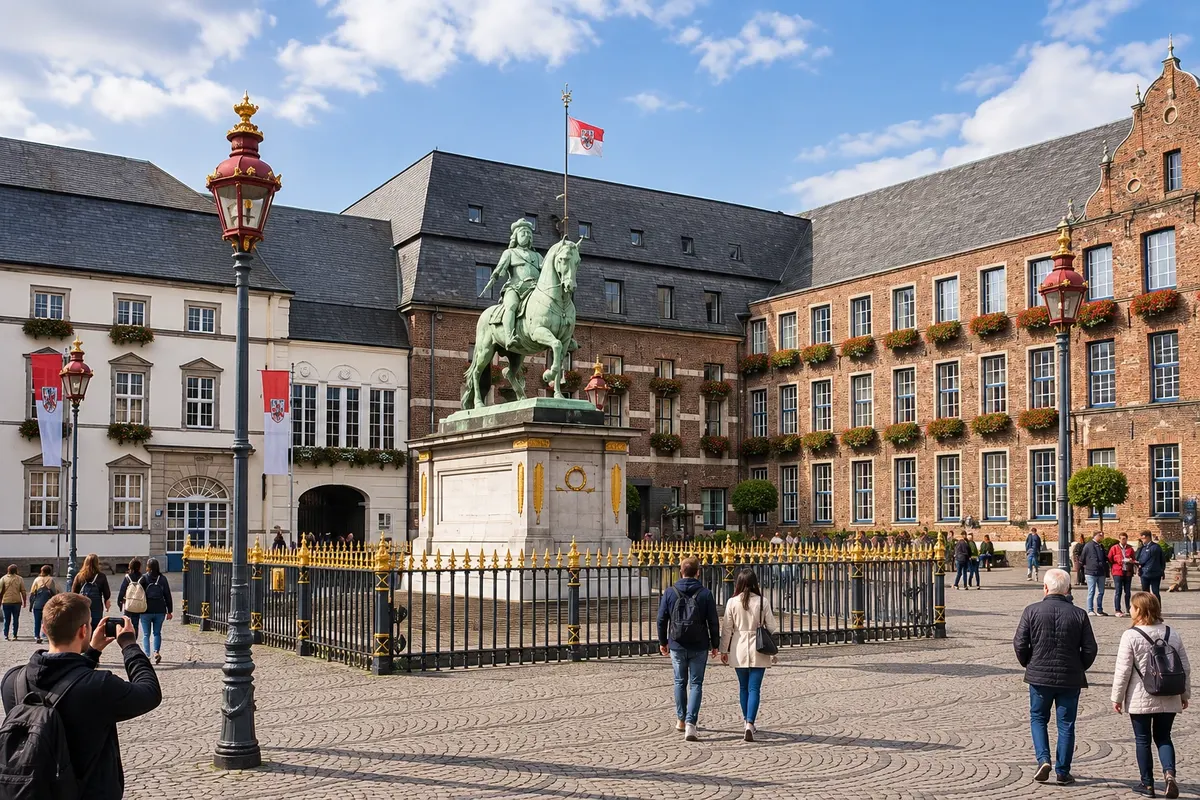
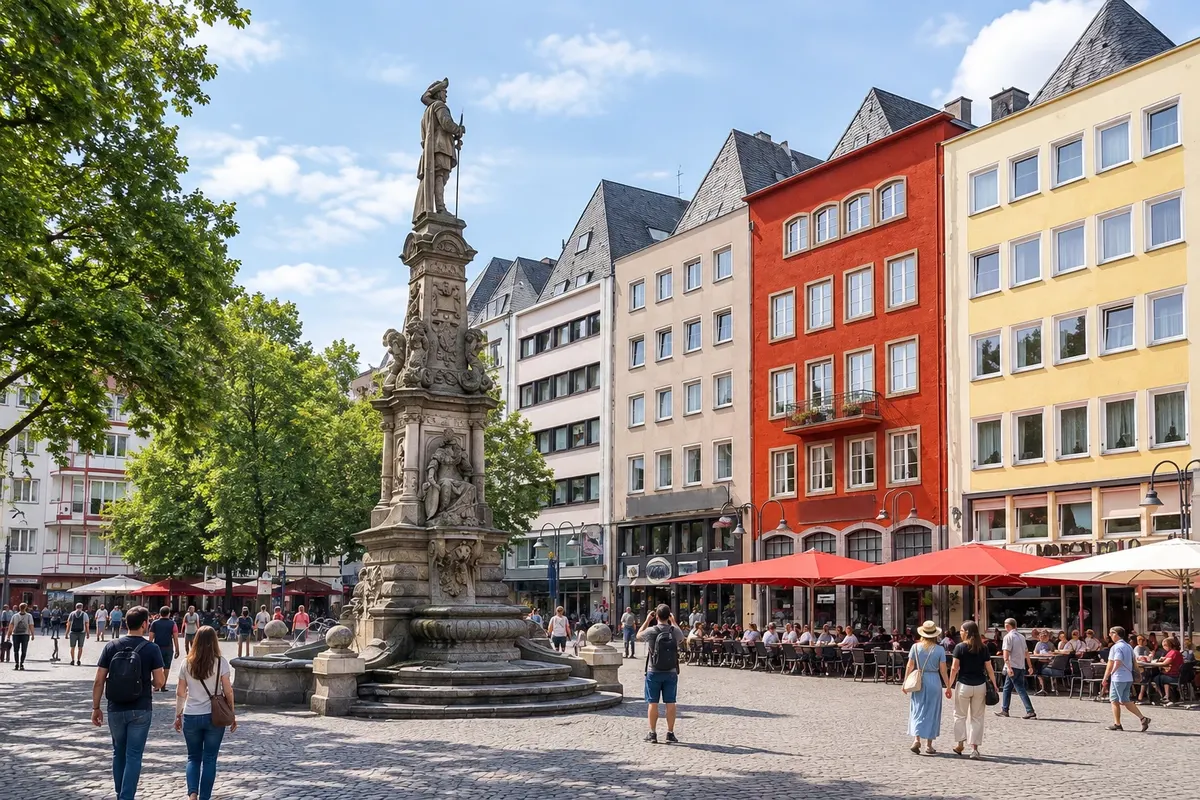
The neighborhood’s heart is the Burgplatz on the riverbank, where only the Schlossturm remains, the tower of the dukes’ castle burned in 1872, now a navigation museum. Next to it is St. Lambertus, a 14th-century church whose twisted tower of 1815 is a city landmark. On the Marktplatz stands the Rathaus (town hall) from 1570–1573 and the equestrian statue of the prince-elector Jan Wellem, cast in 1711. Flinger Straße and Bolkerstraße, where Heinrich Heine was born in 1797, are the shopping and bar streets. On the south side, Carlsplatz hosts the open-air fresh-produce market. On Friday and Saturday nights Bolkerstraße gets very crowded.
Kraji na poti: Altstadt.
Vključuje: Free walk; streets, squares and churches are open without charge outside Mass. The shipping museum in the Schlossturm, guided tours and purchases in the breweries are paid separately.
Nasvet: Arrive via Heinrich-Heine-Allee in the mid-afternoon, walk to Burgplatz and watch the sunset over the Rhine from the steps by the Schlossturm. Carlsplatz closes late afternoon and on Sundays. For a relaxed dinner, the breweries start filling up from 6:00 p.m.
Najboljši čas za obisk: All year. From May to September tables spill onto the streets; in December the Altstadt usually holds Christmas markets; during Carnival (February or March) the neighborhood becomes a street party, so check the dates.
Rheinuferpromenade: Düsseldorf’s Rhine bank on foot
Odhod: Burgplatz, in the Altstadt Walk along the riverbank Približno 1 uro in 30 minut late afternoon easy (flat terrain)
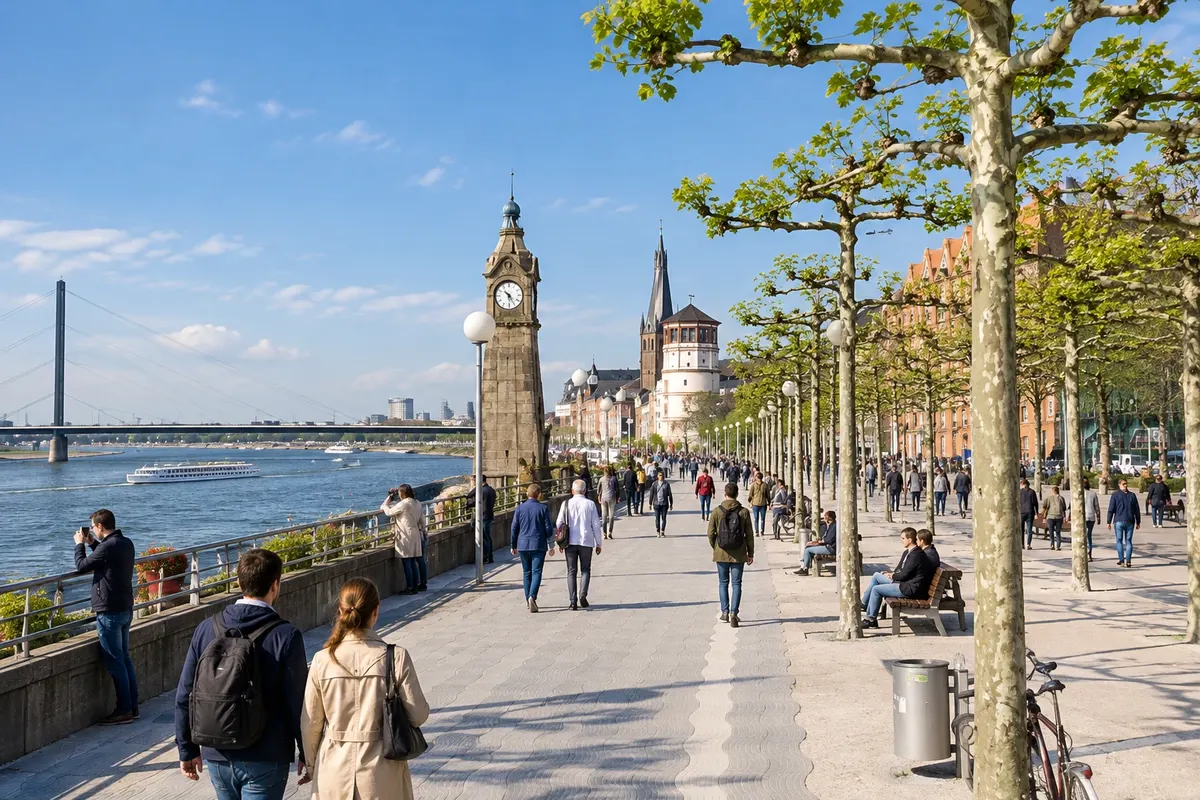
The Rheinuferpromenade is Düsseldorf’s promenade on the right bank of the Rhein (Rhine). Until the early 1990s there was a six-lane expressway there that separated the Altstadt from the river; the road was put underground in the Rheinufertunnel, a tunnel of about 2 km built from 1990 to 1993, and on top of it the landscape architects Fritschi, Stahl and Baum designed the promenade, with two continuous rows of plane trees and benches between them. Today it is the city’s walking area. It starts by the Oberkasseler Brücke and the Tonhalle, passes Burgplatz, with the wide steps that descend to the water, continues along the Kasematten, the old wall casemates converted into cafés with tables on the bank, and ends to the south at the Landtag, the state parliament, and the Rheinturm, with the MedienHafen just behind. Along the way you see cargo barges moving upriver, the pier for tour boats and, across the river, the Oberkassel neighbourhood. The whole walk is about 2 km on flat ground, and the lower level by the water is used by cyclists and runners.
Kraji na poti: Rheinuferpromenade, Altstadt.
Vključuje: Free walk, no charge. The Kasematten cafés, sightseeing boats at the quay and the Rheinturm ascent are charged separately.
Nasvet: Walk the route from north to south in the late afternoon: the sun sets over Oberkassel on the other side of the river, and you end at the foot of the Rheinturm to go up with the city lit. On high-water days the lower level is flooded; use the upper level.
Najboljši čas za obisk: From April to October, with the Kasematten tables on the street and the sun setting late. In winter (December to February) the wind on the river is strong; dress warmly.
Rheinturm and MedienHafen: the tower and Gehry’s buildings
Odhod: End of the Rheinuferpromenade (tram 706 or 709, Stadttor stop) Elevator and walk through the harbour Približno 2 uri late afternoon and evening Lahko
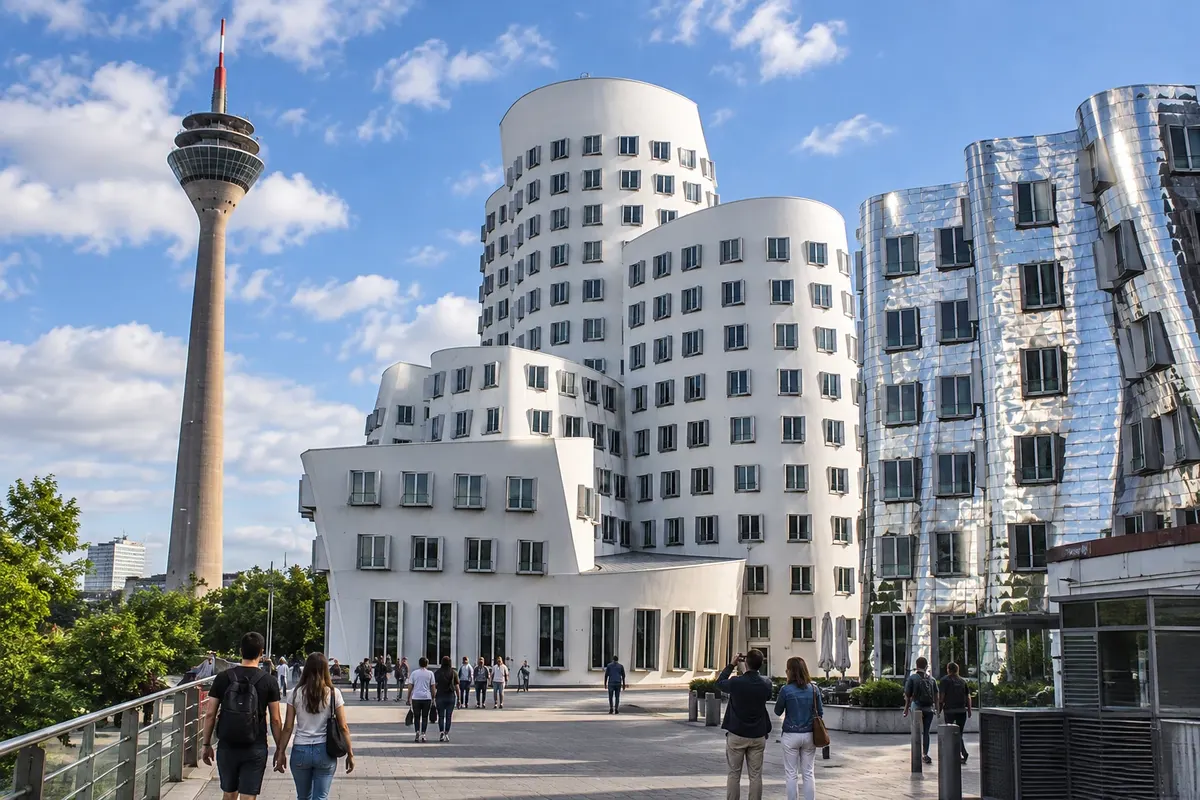
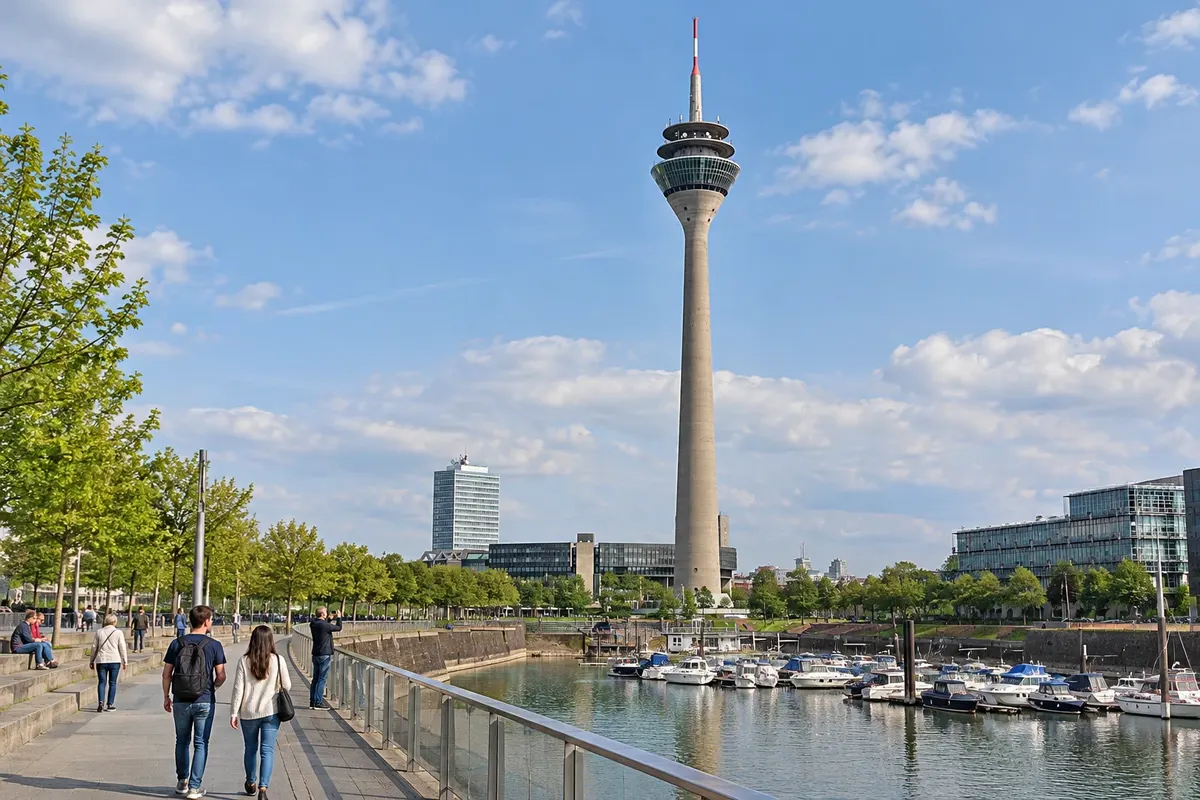
The Rheinturm is Düsseldorf’s telecommunications tower, built from 1979 to 1982 by architect Harald Deilmann on the banks of the Rhine, next to the Landtag. It is about 240 m tall overall; the observation deck is at 168 m, with a bar, and just above it at 172.5 m is the rotating restaurant that completes a full turn in 72 minutes. Two elevators rise in under a minute. From the top you can see the meandering river, the Altstadt, the Königsallee, the MedienHafen and, on a clear day, Cologne Cathedral in the distance. On the tower shaft is the Lichtzeitpegel, a 1981 light clock designed by Horst H. Baumann, read from top to bottom as hours, minutes and seconds. At the foot of the tower begins the MedienHafen, the former commercial harbour converted from the 1990s into a neighbourhood of agencies, studios and restaurants, now home to more than 700 companies. The most photographed ensemble is the Neuer Zollhof by Frank Gehry: three buildings with undulating façades, built from 1996 to 1998 and opened in 1999 — one white stucco, one red brick and one clad in stainless steel that reflects its neighbours. There are also buildings by David Chipperfield, Steven Holl and Claude Vasconi, and the Living Bridge walkway crosses the harbour basin. The tower platform is open every day until midnight.
Kraji na poti: Rheinturm, MedienHafen.
Vključuje: Entrance to the Rheinturm is paid separately; tickets are sold online and at the base. The rotating restaurant requires a reservation and charges separately. The walk through the MedienHafen is free; there are paid guided architecture tours run by Düsseldorf Tourismus.
Nasvet: Go up about half an hour before sunset to see the city by day and lit up in the same visit. Afterwards, descend and photograph Gehry’s buildings from the Living Bridge walkway when the harbour lights reflect on the stainless steel.
Najboljši čas za obisk: Open year-round; from November to February sunset is early and you can see the city lit up before dinner. Foggy days, common in autumn, reduce visibility: check visibility before you go up.
Königsallee and Kö-Bogen: the canal avenue
Odhod: Heinrich-Heine-Allee or Steinstraße/Königsallee metro station Walk about 1 to 2 hours Dopoldne ali popoldne easy (flat terrain)
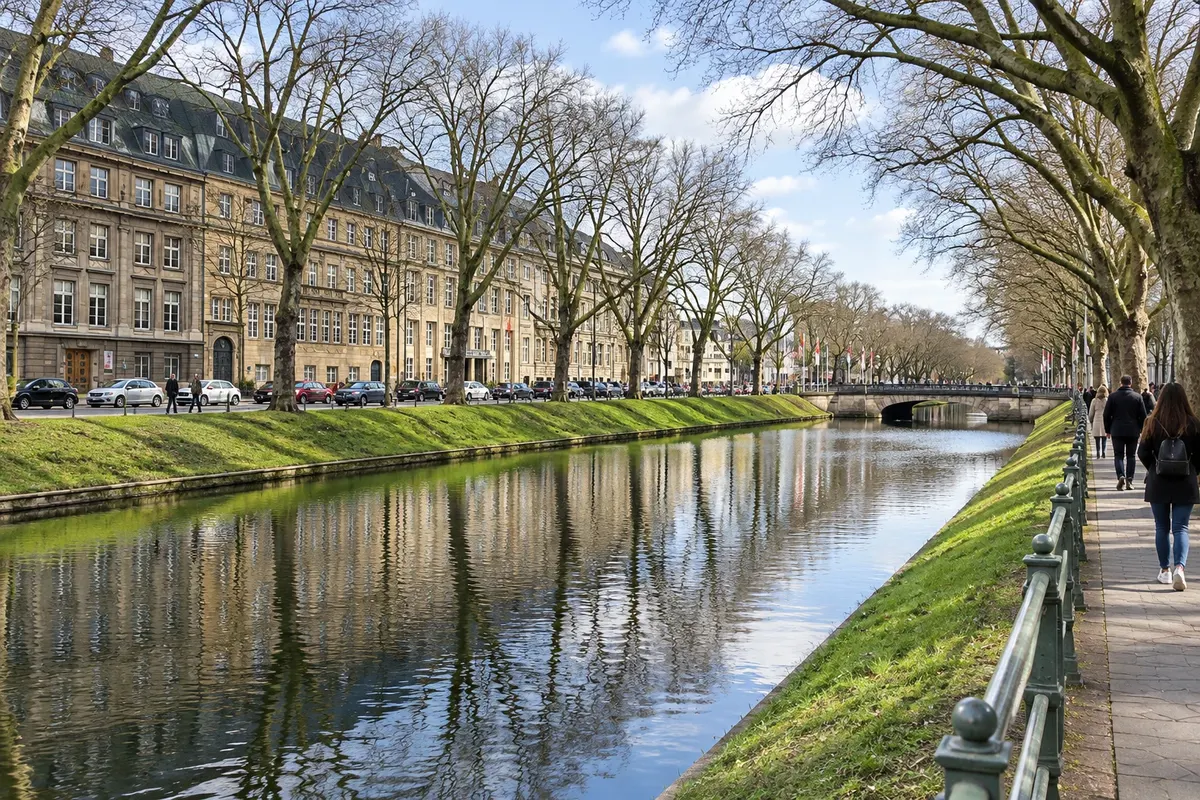
The Königsallee, which locals call the Kö, is the 1 km avenue running alongside a canal about 31 m wide fed by the Düssel River, opened between 1802 and 1804 on the site of the city wall moat. The chestnut trees planted along the banks gave the original name, Kastanienallee; in 1848, after a protest in which King Friedrich Wilhelm IV of Prussia was greeted with manure, the city renamed the street Königsallee as a gesture of reconciliation. The east side is the high-end shopping and jewelry street; the west side houses banks and cafés. At the northern end is the Tritonenbrunnen, a 1902 fountain with a triton struggling with a fish, and just beyond is the Kö-Bogen, an office and retail complex by Daniel Libeskind opened in 2014 with curved glass and light-stone façades; next to it, the Kö-Bogen II, from 2020, has façades and a roof covered by 8 km of living hornbeam hedges. From there you enter the Hofgarten, a 1769 park that reaches the Rhine and the Tonhalle. The Kö is a meeting point for Düsseldorf’s Japanese and Chinese communities, and the parallel street Immermannstraße, near the station, concentrates the city’s Japanese restaurants and markets.
Kraji na poti: Königsallee.
Vključuje: Self-guided walk; the avenue, the canal, the fountain and the Hofgarten are open with no entrance fee. Shops and cafés require purchases for on-site consumption.
Nasvet: Walk along the west side of the canal, in the shade of the chestnut trees, and return on the east side window-shopping. Combine it with the Altstadt, a five-minute walk away, and with Immermannstraße for a Japanese lunch. On Sundays the shops are closed, but the canal stroll is quieter.
Najboljši čas za obisk: From April to October, with the chestnut trees in leaf and outdoor tables; in December the avenue usually has Christmas lighting, check before you go.
K20 and K21: the state art collection in two buildings
Odhod: Grabbeplatz, in the Altstadt (K20); Ständehausstraße, south of the Kö (K21) On foot or by subway between the two buildings, self-guided visit about 3 to 4 hours for both morning and afternoon Lahko
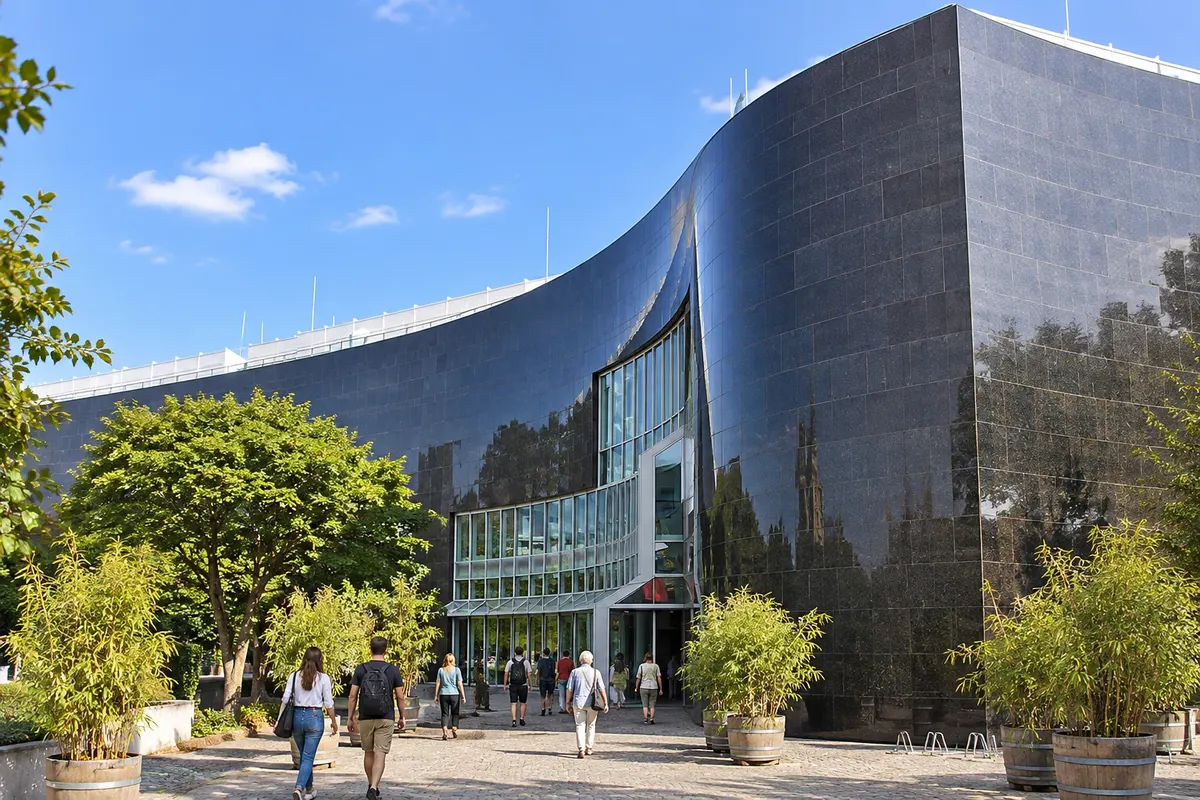
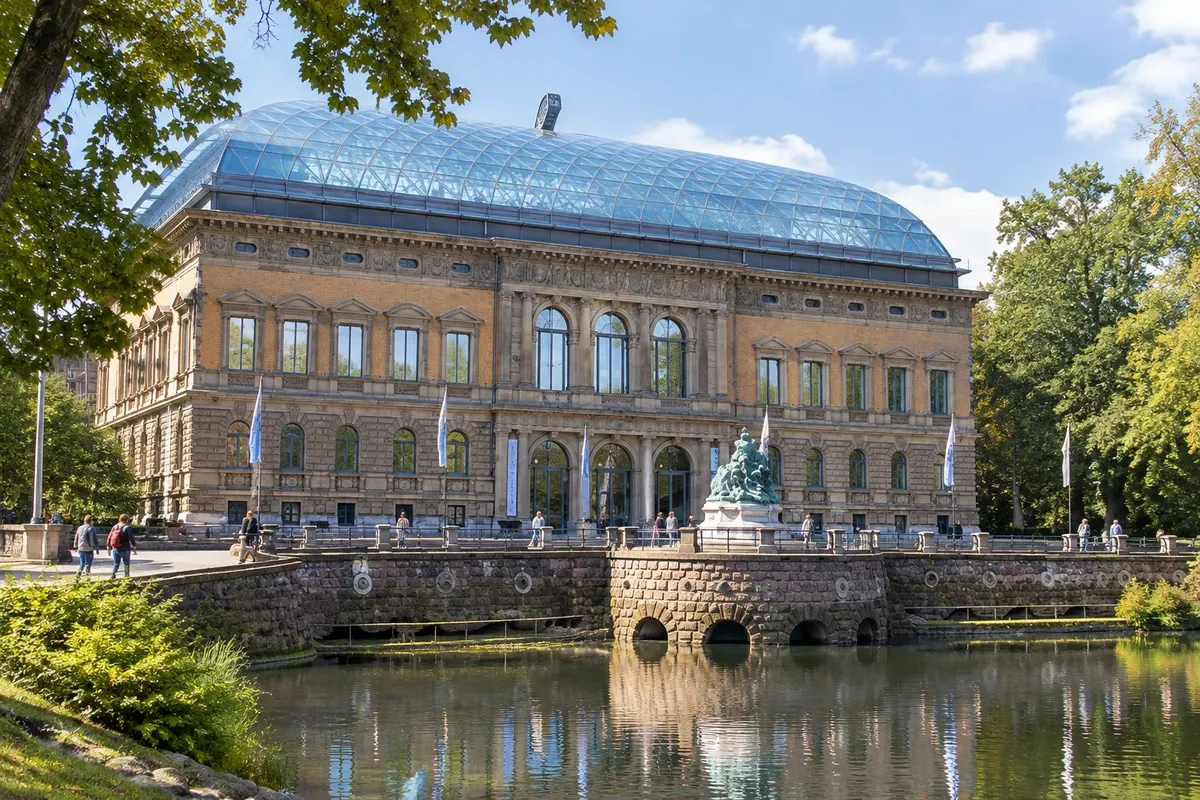
The Kunstsammlung Nordrhein-Westfalen, the state art collection, began in 1961 with the purchase of 88 works by Paul Klee, who taught at the Düsseldorf Academy from 1931 to 1933, and today occupies two buildings. The K20, on Grabbeplatz, opposite the Kunsthalle, is the building with a polished black granite façade, by the Danish firm Dissing+Weitling, opened in 1986: it houses 20th-century art, with Klee, Picasso, Matisse, Kandinsky, Mondrian, Ernst and Beuys, as well as American postwar art from Pollock to Warhol. The K21 is a 15-minute walk away, in the Ständehaus, the former state parliament, an 1880 building renovated in 2002 with a glass dome over the central courtyard: it is home to contemporary art, with installations, video and photography. Under the dome, about 25 m high, is Tomás Saraceno’s installation in orbit, a three-level steel web that visitors can walk on; entry to the web has weight and clothing rules and can be suspended. Both museums are open Tuesday through Sunday and closed on Mondays; on the first Wednesday of the month there is an open night with free admission from 18:00.
Kraji na poti: K20 Grabbeplatz, K21 Ständehaus.
Vključuje: Separate paid admission for each building, with a combined ticket for both; the ticket provides a discount for DüsseldorfCard holders. Entry to Saraceno’s web depends on schedule and capacity; check on the day.
Nasvet: Do K20 in the morning and K21 in the afternoon, with lunch in the Altstadt or on the Kö en route. For the in orbit installation, wear closed clothing and no loose items; small children are not admitted. Both close on Carnival days.
Najboljši čas za obisk: Open year-round; a good option for rainy days, which are more common from June to August and from November to January. Closed on Mondays, at Christmas and during Carnival; confirm before you go.
Cologne’s Romanesque churches: Groß St. Martin, St. Gereon and St. Maria im Kapitol
Odhod: Fischmarkt, in the Altstadt (Groß St. Martin) Walk through the center, with some tram sections Približno 3 ure Dopoldne ali popoldne easy (up to 1.5 km between churches)
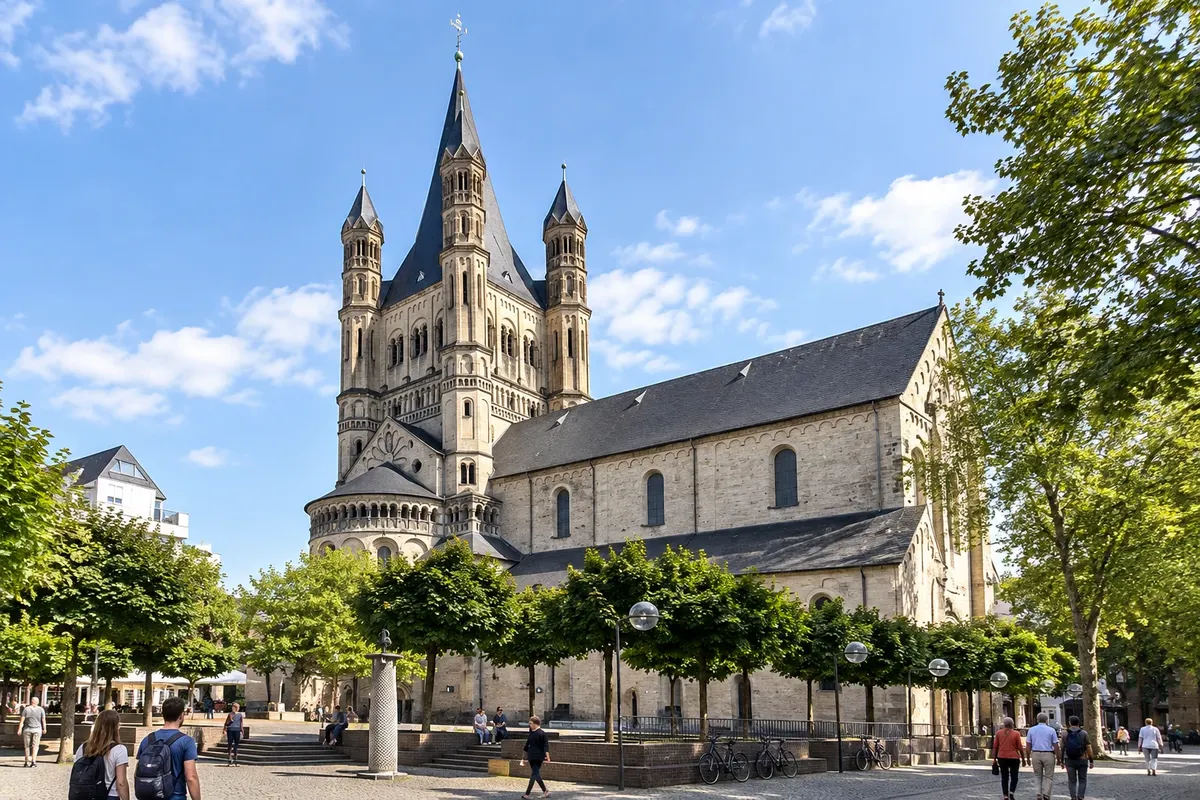
Besides the Gothic cathedral, Köln (Cologne) has twelve large Romanesque churches inside the medieval wall ring, built mainly between the 10th and 13th centuries, when the city was one of the largest in Europe. Almost all were destroyed in World War II and rebuilt by the 1980s. The circuit begins at Groß St. Martin in the Altstadt, erected between 1150 and 1250 over a 1st-century Roman pool and reopened in 1985, with the crossing tower dominating the riverbank. Ten minutes away is St. Maria im Kapitol, the largest of the group, consecrated in 1065 over the Roman Capitol temple, with a trefoil-shaped choir and carved wooden doors dating to about 1065. St. Gereon, to the north near Mediapark, is the most unusual: a decagon from 1219–1227 with a dome of about 34 m, built over a 4th-century Roman oval, with medieval floor mosaics in the crypt. The list is completed by St. Aposteln at Neumarkt; St. Pantaleon, with Ottonian work from the 10th century; St. Ursula, with the Goldene Kammer lined with bones; St. Andreas, St. Severin, St. Kunibert, St. Cäcilien, today the Schnütgen Museum of medieval art, St. Georg and St. Maria Lyskirchen on the south bank, with 13th-century frescoes. Choose three or four: each takes about half an hour.
Kraji na poti: Groß St. Martin.
Vključuje: Entry to the churches is free outside mass times; there are donation boxes. The Schnütgen Museum, in St. Cäcilien, and the Goldene Kammer of St. Ursula have separate tickets or suggested contributions; opening hours vary, check the current schedule.
Nasvet: Do Groß St. Martin, St. Maria im Kapitol and St. Gereon, which are located at different points of the center and show three distinct floor plans; the tram links the longer stretches. Avoid Sunday morning mass times. Bring a scarf for your shoulders: some churches require modest dress.
Najboljši čas za obisk: All year; inside the temperature does not change much. From May to September the churches stay open longer; in winter (December to February) some close at midday, so confirm before you go.
Rheinpark and the cable car over the Rhine
Odhod: Köln Messe/Deutz station (S-Bahn, one stop from the Hauptbahnhof) Park walk and cable car Približno 2 uri Popoldne easy (flat terrain)
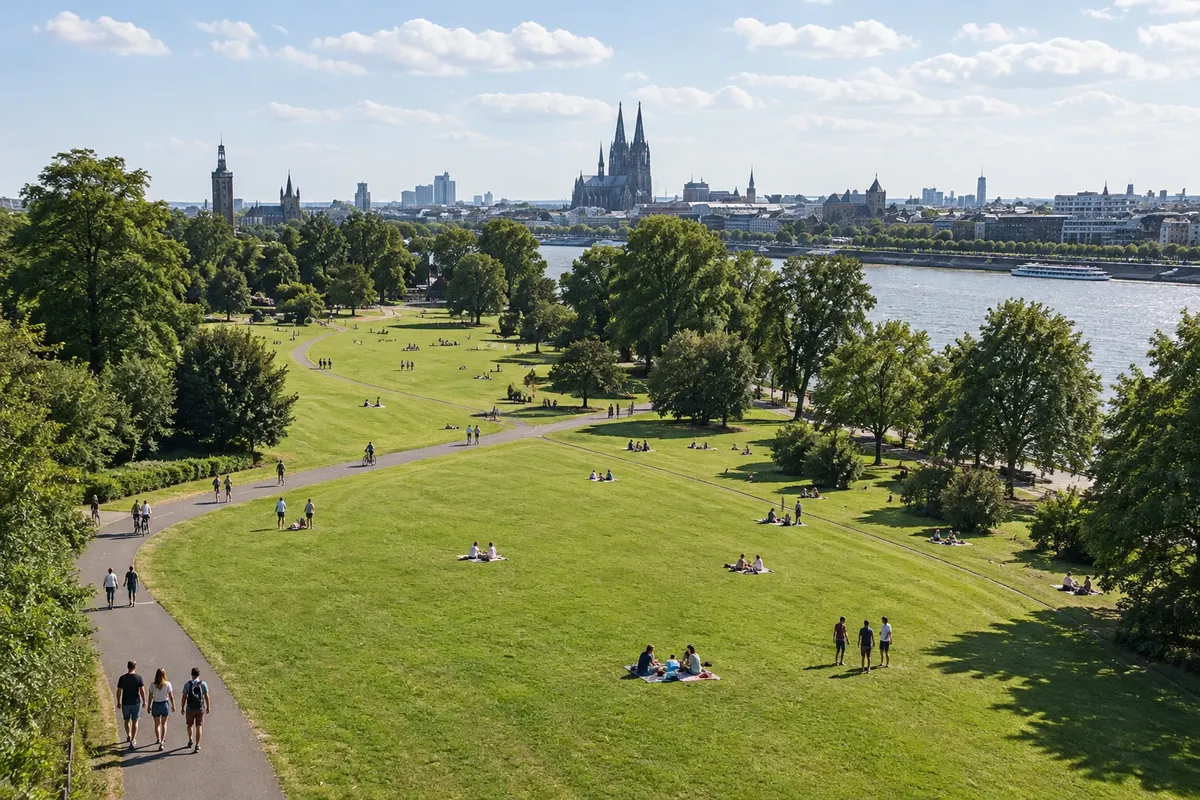
Rheinpark is the park on the right bank of the Rhein (Rhine), between the Deutz and Mülheim districts, opposite central Köln (Cologne). It was the main site of the Bundesgartenschau, the federal gardening show, in 1957 and hosted it again in 1971; those two shows left the wide lawns, fountains, sculptures and the Tanzbrunnen, an open‑air stage from 1957 with a tent roof by architect Frei Otto, used for summer concerts of up to 12,500 people. From the park you can see the cathedral and the Hohenzollernbrücke on the far side of the river, and the waterside path links Hohenzollernbrücke to the Rheinboulevard. At the northern tip is the Kölner Seilbahn station, the 1957 cable car that crosses the Rhine in four‑person cabins to the Zoo and the Flora botanical garden on the left bank, passing beside the Zoobrücke; the crossing takes a few minutes and gives a view of the river from above. The season typically runs from mid‑March to the end of October, operating during daytime; the cable car stops in winter. In Deutz, near the park exit, are the Lanxess Arena, the city's largest concert venue, and the Koelnmesse trade fair center.
Kraji na poti: Rheinpark.
Vključuje: Park is open with free entry. The cable car has its own fare, paid separately, with a discount for KölnCard holders; the Zoo and the Flora on the other side have separate admission (the Flora does not charge entry).
Nasvet: Cross by cable car in the Rheinpark–Zoo direction, with the cathedral on your left, and return by tram (line 18) to the Hauptbahnhof. Combine it with the KölnTriangle, a 15-minute walk through the park. On very windy days the cable car stops.
Najboljši čas za obisk: From April to October, when the cable car usually operates and the park is green; June to August feature concerts at the Tanzbrunnen. In winter the park is a short walk, without the cable car.
NS Documentation Centre (EL-DE-Haus): Cologne under Nazism
Odhod: Appellhofplatz (U-Bahn U, Appellhofplatz/Breite Straße station) On foot, self-guided visit or with an audioguide Približno 2 uri Dopoldne ali popoldne easy (there are stairs to the basement)
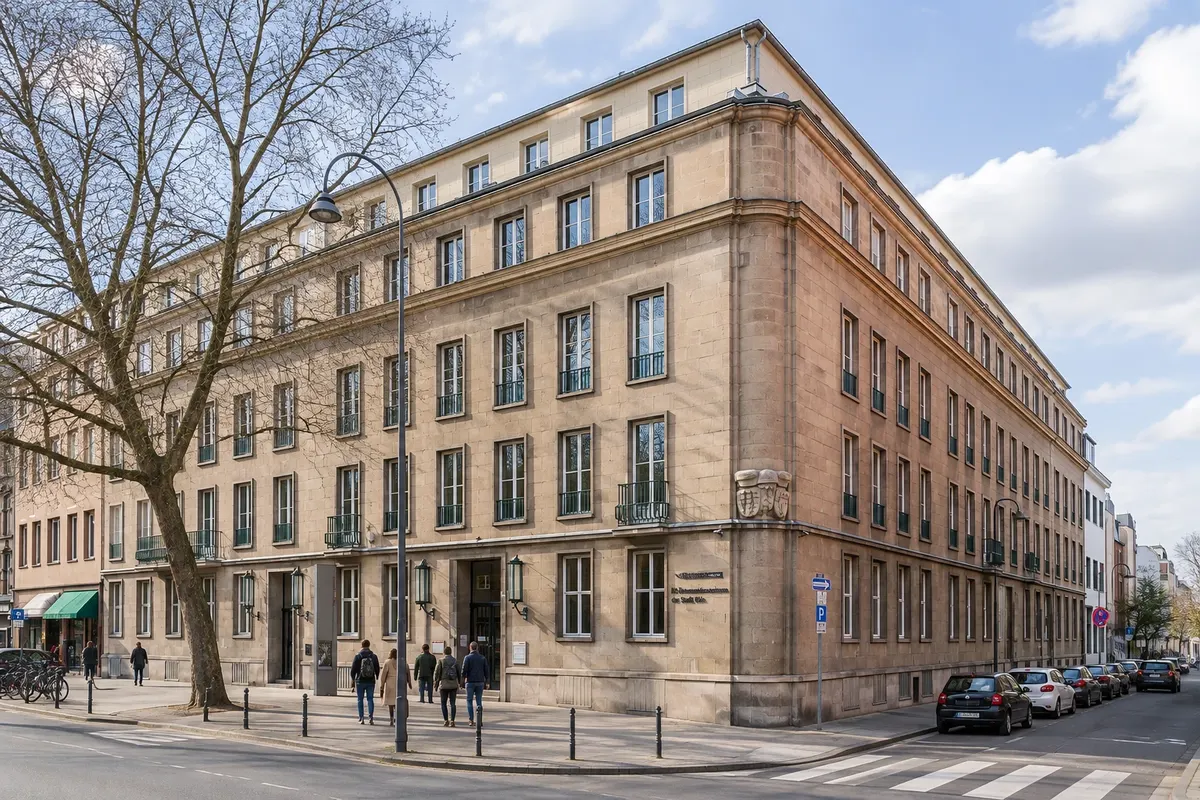
The NS-Dokumentationszentrum is the city of Köln’s documentation center on the National Socialist period, housed in the EL-DE-Haus, a 1935 building that bears the initials of jeweler Leopold Dahmen, who built it. From 1935 to 1945 the building was the Gestapo headquarters in Cologne. In the basement are the prison cells, preserved as they were: the walls bear about 1,800 inscriptions and drawings left by prisoners between 1943 and 1945, in various languages, now transcribed and translated on the audio guide. In the inner courtyard there was an execution site during the final months of the war. On the upper floors, the permanent exhibition Köln im Nationalsozialismus tells, with photos, documents and objects, how the city lived from 1933 to 1945: the seizure of power, the persecution of Jews, Roma and opponents, the bombings and the end of the war. It is the largest regional memorial of this kind in Germany and also has a library and a research center. The tone is informative; allow time for the cells, which require silence. Open Tuesday through Friday during the day and on weekends from midmorning; closed on Mondays.
Kraji na poti: NS-Dokumentationszentrum der Stadt Köln.
Vključuje: Separate paid admission, discounted for KölnCard holders; the English audioguide is included. Group guided tours are paid separately and must be booked.
Nasvet: Start in the basement cells with the audioguide and then go up to the main exhibition, which explains the context. It is not a visit for very young children. Museum Ludwig and the cathedral are a 10-minute walk away, allowing you to finish the day with a lighter activity.
Najboljši čas za obisk: All year; this is an indoor visit, good for rainy days, common from June to August and from November to January. It is closed on Mondays and on year-end public holidays—check before you go.
Kunstpalast: from Rubens to modern glass in the Ehrenhof
Odhod: Ehrenhof, north of the Hofgarten (tram to Tonhalle/Ehrenhof) On foot, self-guided visit Približno 2 uri Dopoldne ali popoldne Lahko
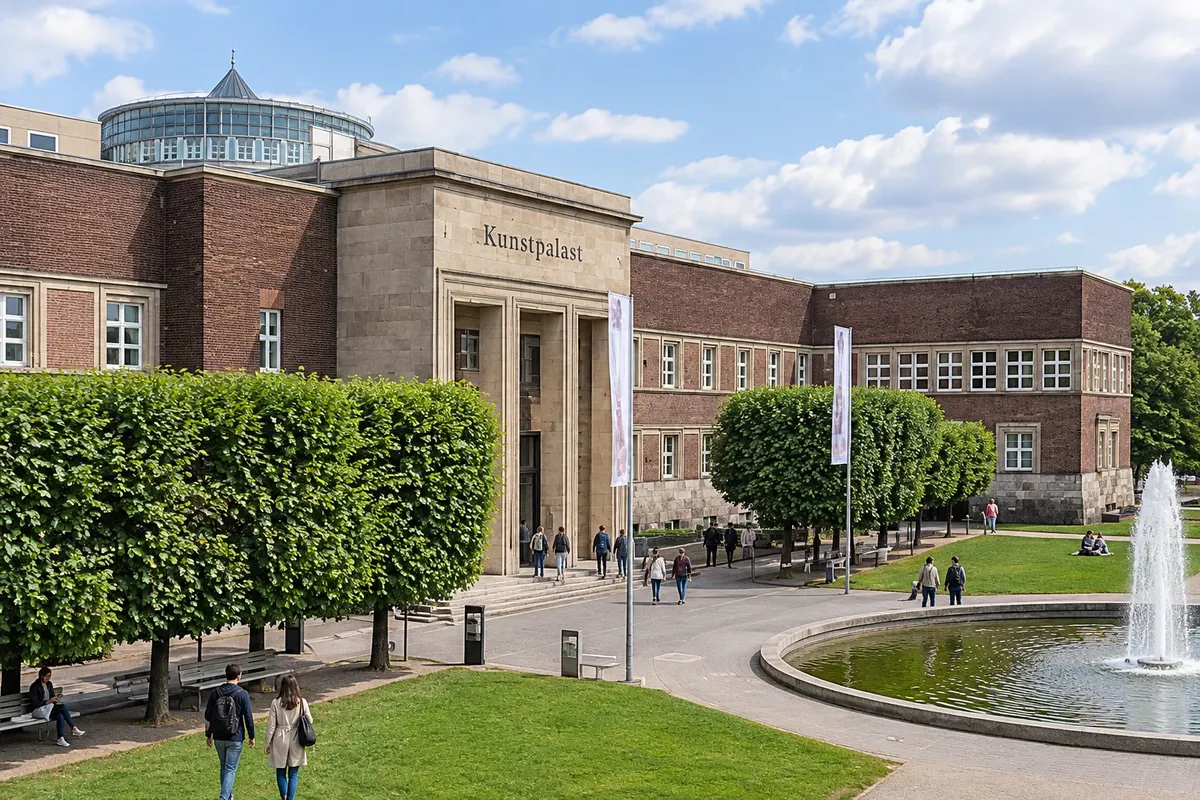
The Kunstpalast is Düsseldorf’s art museum, located in the Ehrenhof, the complex of dark-brick buildings constructed from 1925 to 1926 for the GeSoLei exhibition, between the Hofgarten and the Rhine, next to the Tonhalle, the former planetarium converted into a concert hall. The holdings span from the 11th century to the present and have three highlights: the old masters, including Rubens’s Assumption of the Virgin from around 1616, painted for the city’s Jesuit church, and works by Cranach, Brueghel and the Dutch masters; the 19th-century Düsseldorf school of painting, from Andreas Achenbach’s romantic landscapes to history paintings; and the Glasmuseum Hentrich, one of Europe’s largest glass collections, from Antiquity through Gallé and Tiffany’s Art Nouveau to contemporary design. There are also sculptures, prints, photography and 20th-century art, including Zero, the group founded in Düsseldorf in 1957. The museum was renovated and reopened with the collection reinstalled in chronological order, in rooms that mix paintings, objects and glass. It is open Tuesday to Sunday during the day, with late opening on Thursdays; closed on Mondays. The Robert-Schumann-Saal in the same building hosts concerts.
Kraji na poti: Kunstpalast.
Vključuje: Admission fee required for the collection, with a discount for DüsseldorfCard holders; under-18s are free. Temporary exhibitions may charge separately. Guided tours and audio guides incur separate fees.
Nasvet: Enter via the old collection and leave the glass for last: the Glasmuseum room is the part that most surprises first-time visitors. On Thursdays the museum stays open into the evening and is less crowded. Combine it with a walk through the Hofgarten to the Kö.
Najboljši čas za obisk: Open year-round; program moves indoors on rainy days. Closed on Mondays, at Christmas and during Carnival; check before you go.
Schloss Benrath: the pink palace and the park south of Düsseldorf
Odhod: Düsseldorf Hauptbahnhof (S-Bahn S6, RE1 or RE5 to Benrath) or U72 subway Commuter train or subway, then walk Približno pol dneva Dopoldne ali popoldne easy (flat terrain)
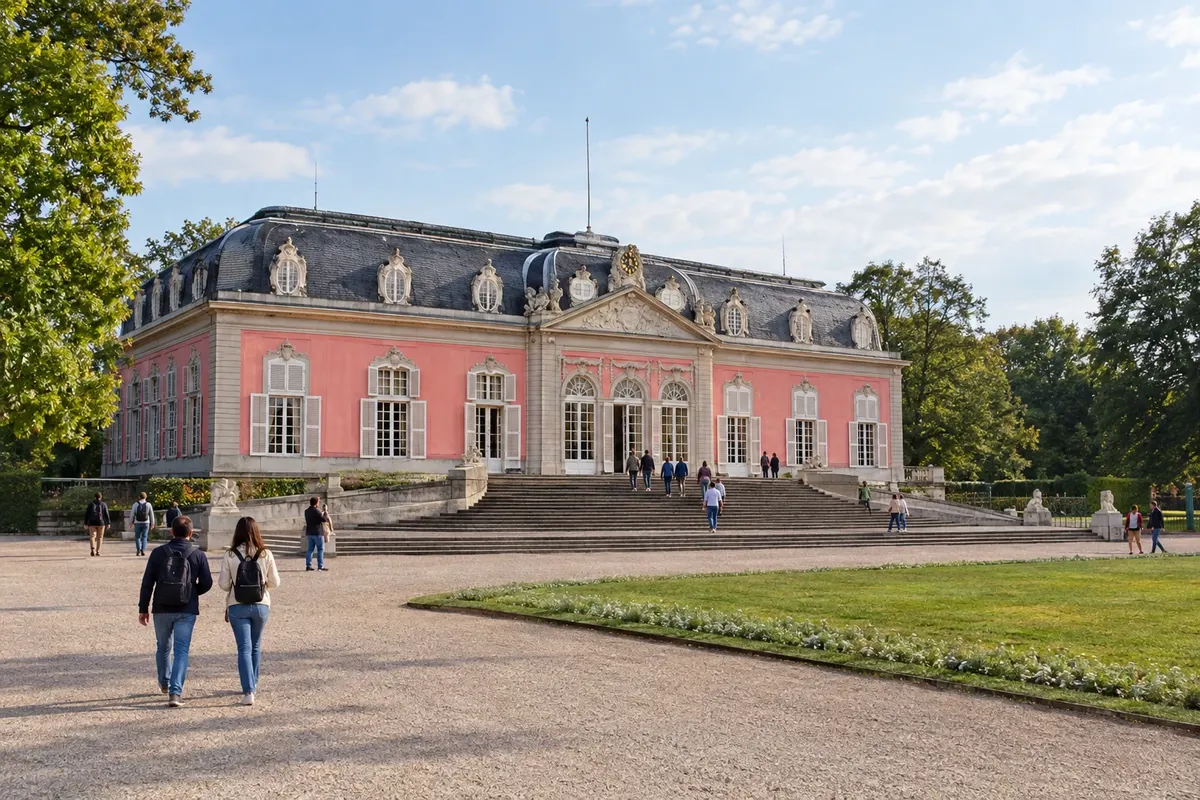
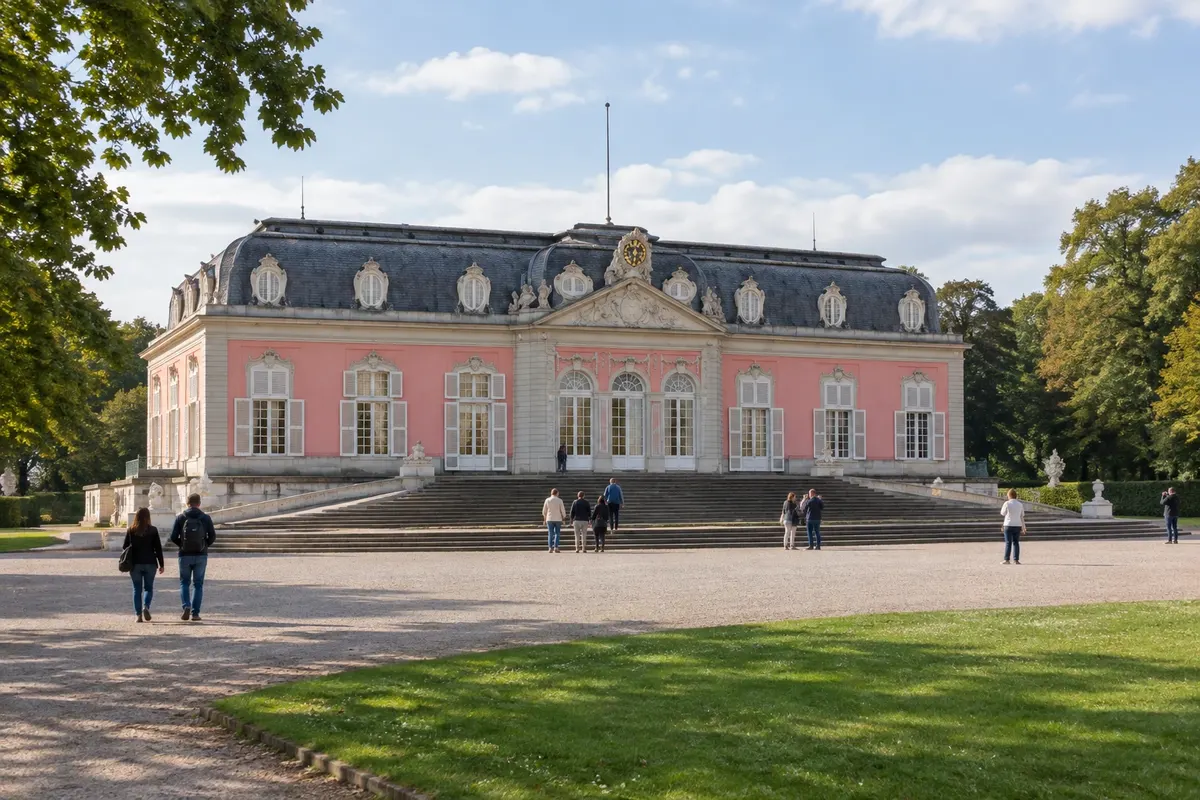
Schloss Benrath is the rococo summer palace built from 1755 to 1770 by the French architect Nicolas de Pigage for the Elector Prince Carl Theodor of the Palatinate and his wife, Elisabeth Auguste, in the Benrath district south of Düsseldorf. It is a maison de plaisance, a leisure and hunting house, not an official residence: the central block, painted pink, has only two visible storeys but conceals mezzanines and service corridors. On the outside there is a circular lake to the north and a long reflecting pool to the south; on the sides, two arched wings that housed the servants. The complex is a candidate for UNESCO World Heritage status. The central block, the Corps de Logis, is visited on a guided tour, with the state rooms, parquet floors and the elector’s and electress’s chambers. The east wing has housed, since 2002, the Museum für Europäische Gartenkunst, about the history of European gardens, and the west wing the Museum für Naturkunde, the natural history museum focused on the Rhine and the region. The park, with a baroque layout of diagonal avenues and an English woodland, is open year round with no charge. From Düsseldorf Hauptbahnhof, the S-Bahn S6 and the regional RE1 and RE5 reach Benrath station, about a 10-minute walk; the U72 subway stops at the door at Schloss Benrath. The museums are closed on Wednesdays and Thursdays.
Kraji na poti: Schloss Benrath.
Vključuje: Park open with no charge. The guided tour of the Corps de Logis and admission to the two museums are paid separately, with a combined ticket; the palace tour is timed and ticketed online. The palace café requires purchase.
Nasvet: Buy the guided tour online for the early afternoon and arrive earlier to walk through the park to the Rhine, about 15 minutes on foot. Check the day: the museums are not open on Wednesdays and Thursdays. With the Deutschlandticket, the train to Benrath is not an extra cost.
Najboljši čas za obisk: From April to October, with the park in bloom and the reflecting pools full; the programme of tours is more comprehensive in this season. In winter hours are reduced, confirm before you go.
Cologne Carnival: from November 11 to Rosenmontag
Odhod: Alter Markt and Heumarkt, in the Altstadt Street party and parades, on foot one day or the six days of street festivities Ves dan easy (lots of people standing)
Köln (Cologne) calls Carnival the fifth season of the year. The season usually opens on November 11 at 11:11 with celebrations at Heumarkt and Alter Markt, and continues with balls and comedy sessions in halls through the winter. The street carnival itself typically takes place between February and early March, during the six days that end on Ash Wednesday: it begins on Weiberfastnacht, the women’s Thursday, when Alter Markt fills with costumed people from the morning and women cut men’s ties; continues with neighborhood parades on Saturday and Sunday; and reaches its high point on Rosenmontag, the Monday, with the main parade through the city center, satirical floats, marching bands and walking groups that cross the city for hours and attract more than a million people to the streets. From the floats hundreds of tons of sweets, the Kamelle, and flowers are thrown. The shout is Kölle Alaaf. On the night from Tuesday to Wednesday the Nubbel, a straw effigy blamed for the excesses, is burned. Düsseldorf has its own Carnival, with the shout Helau and satirical floats by sculptor Jacques Tilly. On these days museums, the cathedral tower and many shops close, and regional trains are crowded.
Kraji na poti: Alter Markt.
Vključuje: The street parties and the Rosenmontag parade are free. Balls, sessions in halls and seats on stands along the parade are paid and sell out early. Costumes are part of the program.
Nasvet: If you want to see Carnival without the Altstadt crowds, watch the Rosenmontag parade on a section away from the center, arriving early, or attend the neighborhood parades on Sunday. Wear a costume, closed shoes and carry little cash. Book your return train in advance.
Najboljši čas za obisk: The season usually opens on November 11; the street days usually fall in February or early March, depending on Easter. Confirm the dates for each year before you go.


 Brazilija
 Antarktika
 Argentina
 Bolivija
 Čile
 Kolumbija
 Ekvator
 Gvajana
 Francoska Gvajana
 Falklandski otoki (Malvini)
 Paragvaj
 Peru
 Surinam
 Urugvaj
 Venezuela
 Avstrija
 Belgija
 Hrvaška
 Danska
 Slovaška
 Slovenija
 Španija
 Finska
 Francija
 Grčija
 Nizozemska
 Madžarska
 Irska
 Islandija
 Italija
 Luksemburg
 Norveška
 Poljska
 Portugalska
 Združeno kraljestvo
 Češka
 Švedska
 Švica
 Turčija
 Bermudi
 Kanada
 Združene države Amerike
 Grenlandija
 Mehika
 Sveta Peter in Mihael
 Dominikanska republika
 Japonska
 Južnoafriška republika
 Egipt
 Avstralija
 Fidži
 Nova Zelandija
 Papua Nova Gvineja