

Grad
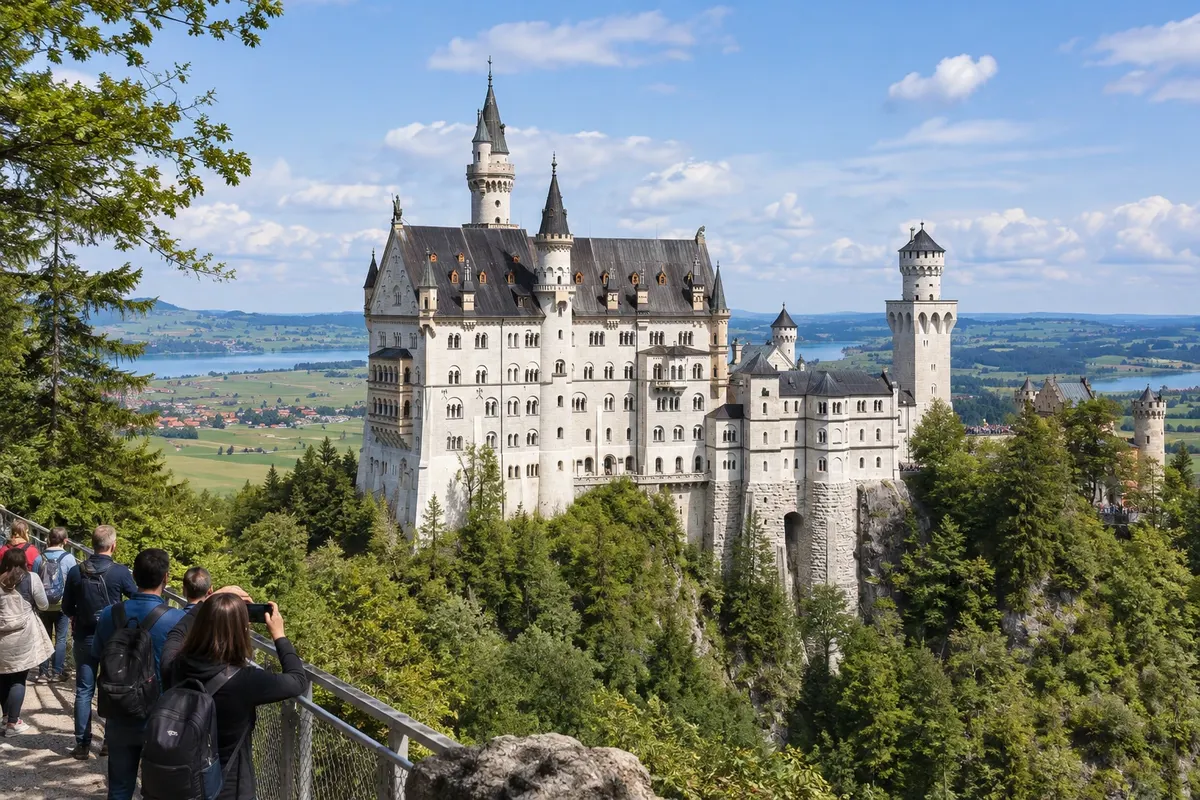
Neuschwanstein Castle
The castle that Ludwig II commissioned from 1869, built on a rock above the Pöllat gorge in Schwangau. It can only be visited inside on a guided tour at a pre-booked time.

 Išči
 Brazilija
 Antarktika
 Argentina
 Bolivija
 Čile
 Kolumbija
 Ekvator
 Gvajana
 Francoska Gvajana
 Falklandski otoki (Malvini)
 Paragvaj
 Peru
 Surinam
 Urugvaj
 VenezuelaNemčija
 Avstrija
 Belgija
 Hrvaška
 Danska
 Slovaška
 Slovenija
 Španija
 Finska
 Francija
 Grčija
 Nizozemska
 Madžarska
 Irska
 Islandija
 Italija
 Luksemburg
 Norveška
 Poljska
 Portugalska
 Združeno kraljestvo
 Češka
 Švedska
 Švica
 Turčija
 Bermudi
 Kanada
 Združene države Amerike
 Grenlandija
 Mehika
 Sveta Peter in Mihael
 Dominikanska republika
 JaponskaTurčija
 Južnoafriška republika
 Egipt
 Avstralija
 Fidži
 Nova Zelandija
 Papua Nova Gvineja
Baviera · Nemčija
Destinacija: Bavarian Castles and the Romantic Road.
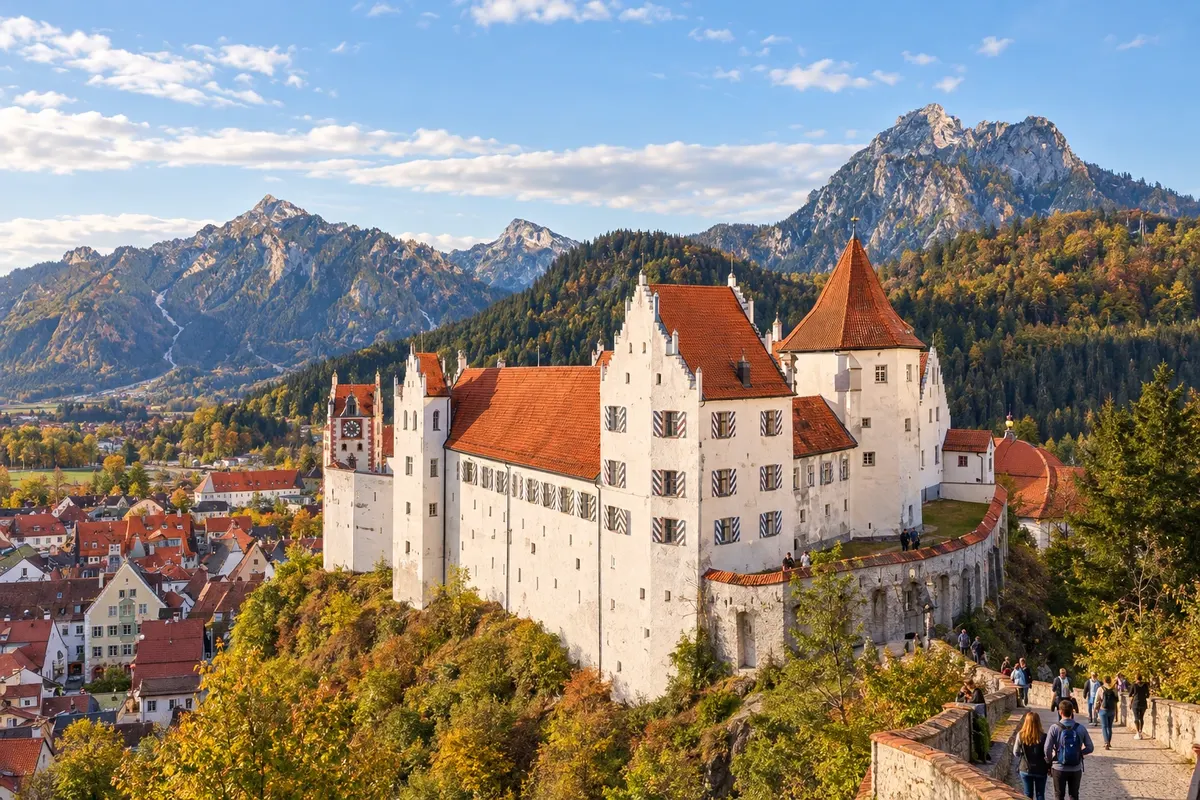
Na fotografiji: Hohes Schloss, Füssen
Illustrative images. The pictures in this guide are illustrations based on the real place, not photographs, and may differ from it.
Mesto
Füssen is the town at the end of the Romantic Road, between the Lech River and the Alps, a few kilometres from Austria. It is the gateway to Neuschwanstein and Hohenschwangau, which lie in the Hohenschwangau district in the neighbouring municipality of Schwangau. In the old town are the Hohes Schloss, the monastery of St. Mang with the city museum and, to the south, the Lechfall. Around the castles are the Alpsee, the Museum der bayerischen Könige and the Tegelberg cable car.
V vodniku še ni nastanitev – Füssen.
kako do tja · koliko dni · načrt poti · vprašanja
Doživite kraj
The castle that Ludwig II commissioned from 1869, built on a rock above the Pöllat gorge in Schwangau. It can only be visited inside on a guided tour at a pre-booked time.
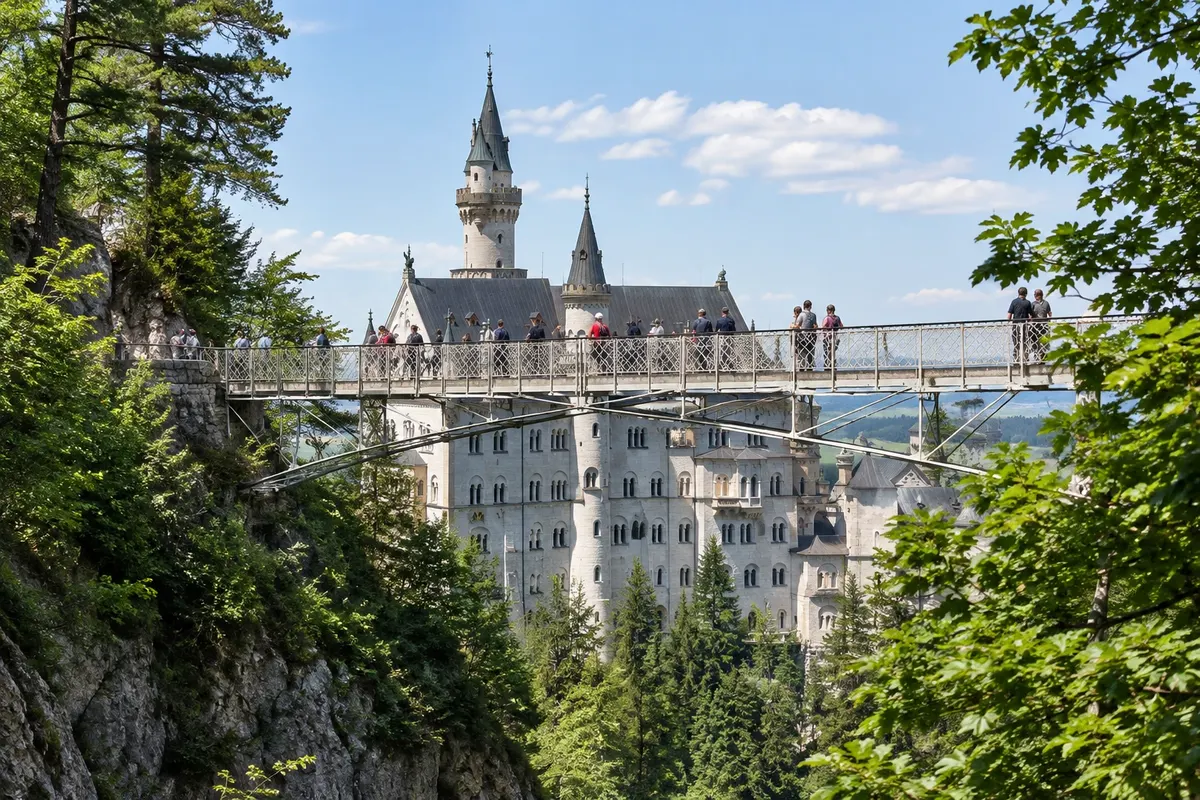
Iron bridge over the Pöllat gorge, offering the best-known view of Neuschwanstein. It usually closes in winter because of ice and snow.
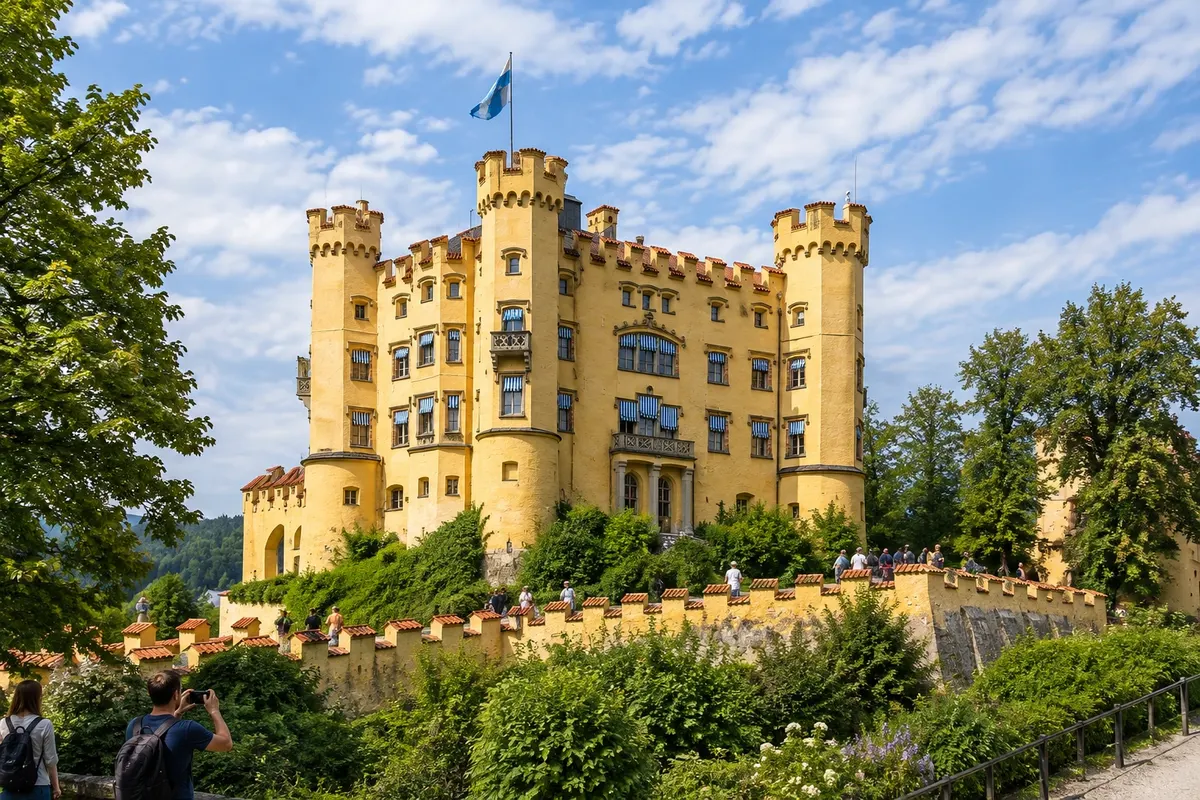
Yellow neo-Gothic castle opposite Neuschwanstein, the summer residence of the Bavarian royal family, where Ludwig II spent part of his childhood.
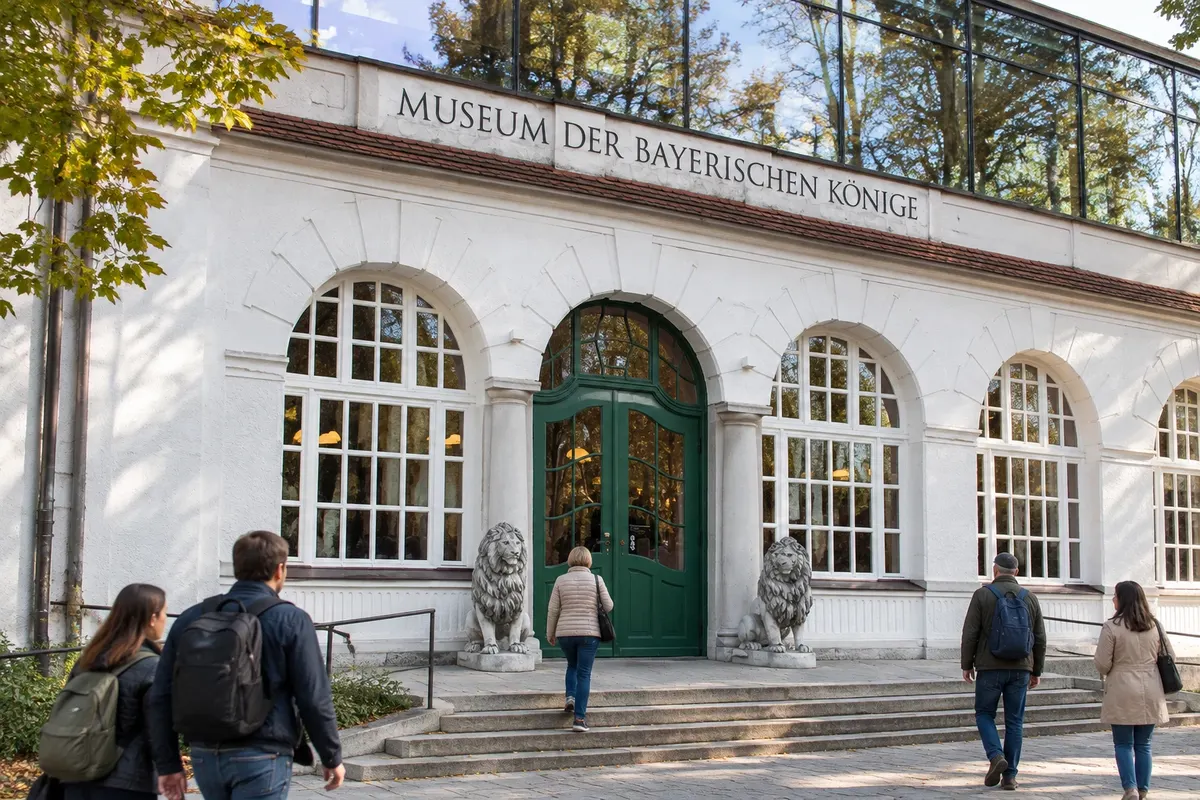
Museum on the shore of the Alpsee in Hohenschwangau about the Wittelsbach dynasty and the kings of Bavaria, with a focus on Maximilian II and Ludwig II.
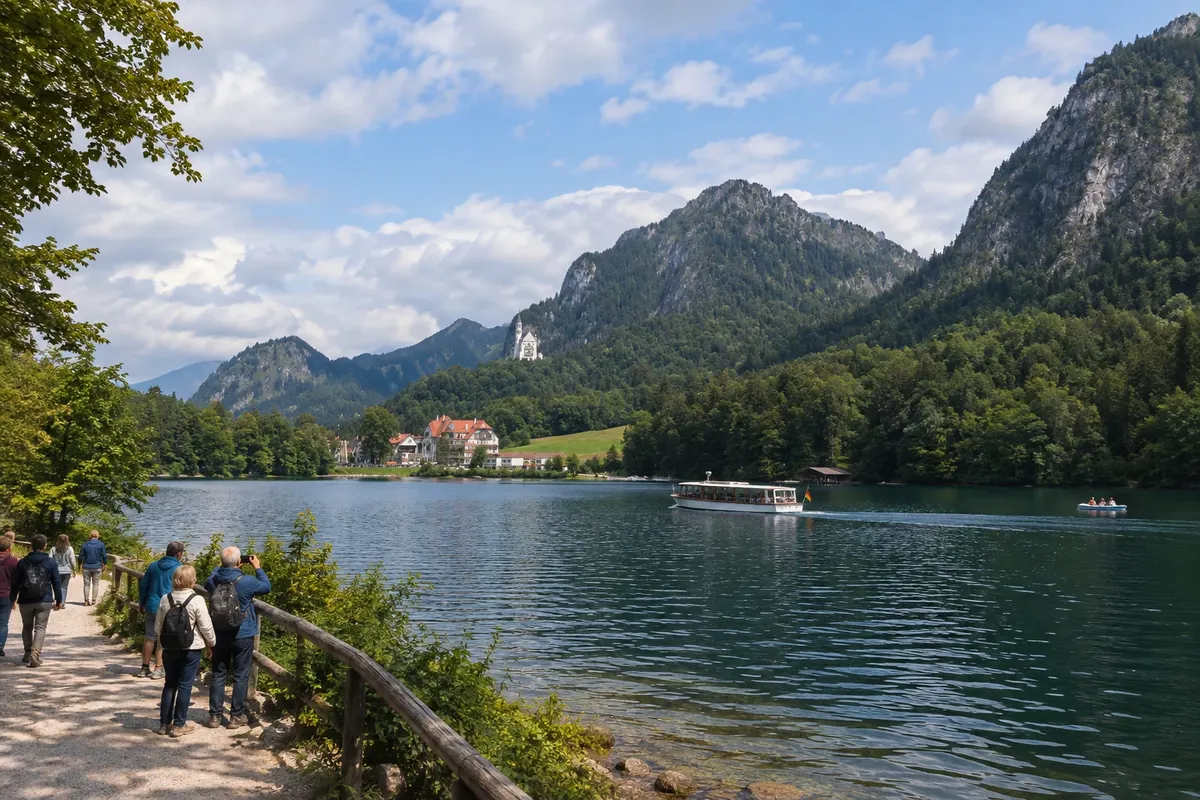
A clear-water lake at the foot of Hohenschwangau, surrounded by mountains, with a trail around it, a viewpoint and boat rentals in summer.
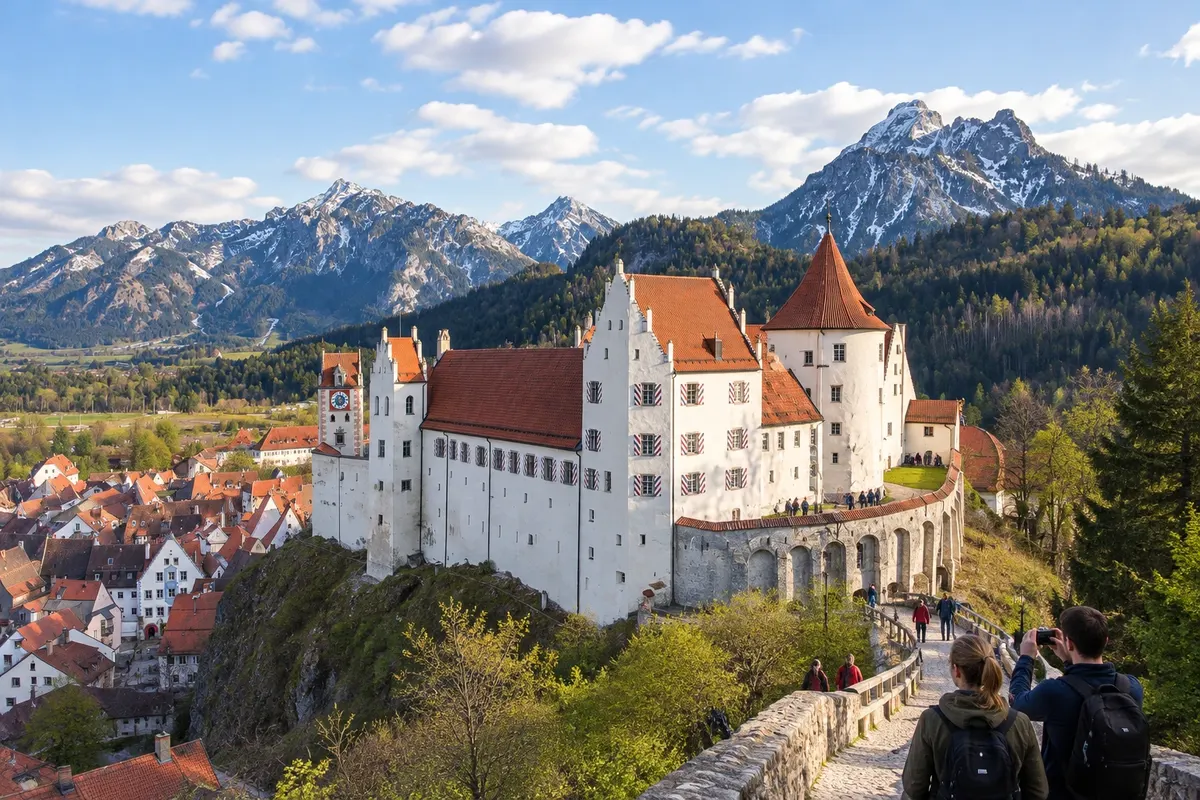
A Gothic castle of the prince-bishops of Augsburg overlooking the Altstadt of Füssen, featuring trompe-l'œil paintings in the courtyard and galleries of Gothic art from Swabia.
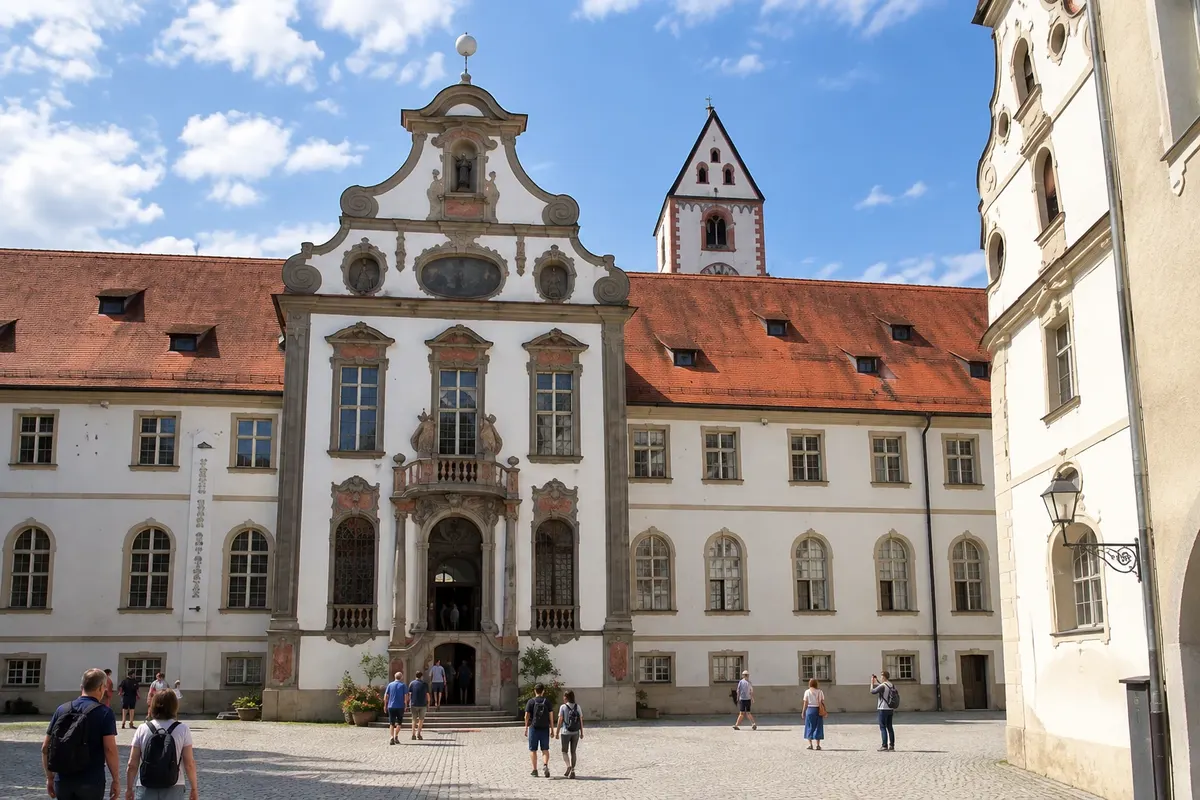
Museum in the former Baroque monastery of St. Mang, with Baroque halls, the collection of lutes and violins that made Füssen famous, and a Dance of Death from 1602.
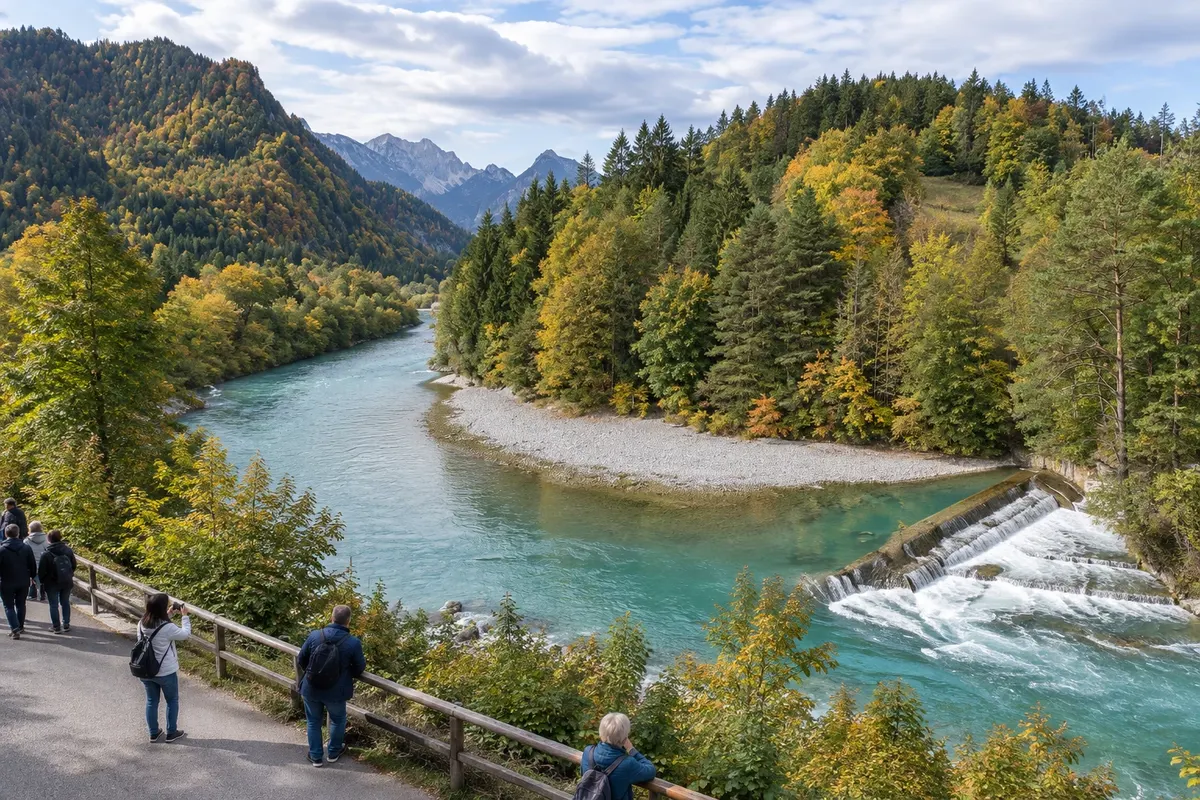
Waterfall of the Lech River where it exits a narrow gorge on the southern edge of Füssen, seen from a 1895 footbridge.
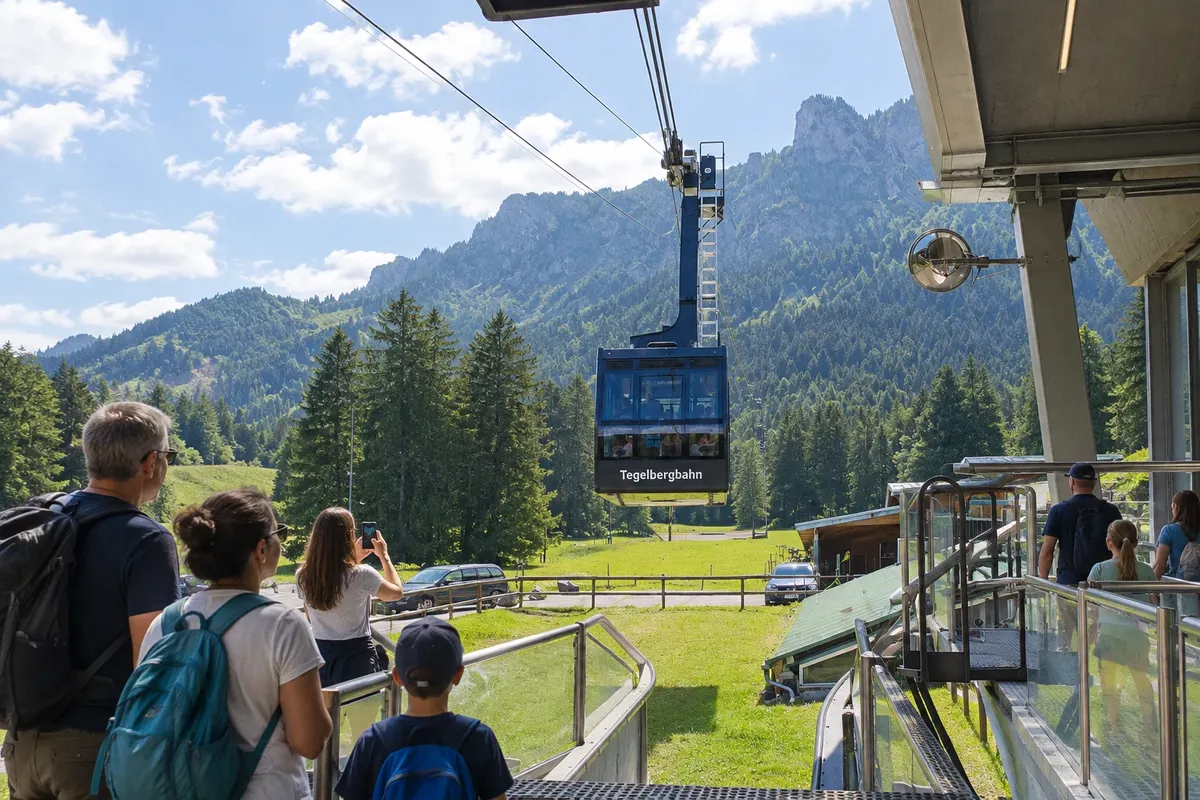
Schwangau cable car that climbs almost 900 meters to Tegelberg, with views of the Ammergau Alps, Mount Säuling and the lakes around the castles.
Pred odhodom
Füssen – Bavaria Destinacija Bavarian Castles and the Romantic Road približno 125 km stran (izhodišče: Munich)
Razdalje so približne. Pred potovanjem preverite lete in vozne rede avtobusov, vlakov ali ladij.
Check before booking. The most common route is to arrive in Munich and take a regional train to Füssen, about two hours, with no seat reservation. From the front of Füssen station buses 73 and 78 run to Hohenschwangau in about ten minutes. By car, Füssen is at the end of the A7 motorway.
One day is enough to see both castles. With two days you have time for Füssen's Altstadt, the Hohes Schloss, the Lechfall and the Alpsee. A third day allows you to go up Tegelberg or walk around the region's lakes.
From May to October, with long days, buses run more frequently to the Marienbrücke and there are boat services on the Alpsee. July and August are the busiest months. In winter, from December to February, it is cold, the Marienbrücke often closes and the cable car can stop for maintenance; on the plus side, there are fewer people at the castles.
The seasons shown are the most usual ones; nature doesn't always follow the calendar.
No. The regional train from Munich and the bus to Hohenschwangau are enough to visit the castles, and Füssen's Altstadt is walkable. A car helps to visit the villages and churches along the Romantic Road, such as the Wieskirche.
Predlog poti
Pot povezuje znamenitosti na tej strani. Za oglede boste imeli dovolj časa.
Arrive early in Hohenschwangau and pick up your ticket or confirm the online purchase. Walk or take the bus up to the Marienbrücke to see the castle from the side, then descend to the entrance for the timed guided tour of Neuschwanstein.
Have lunch in the village of Hohenschwangau and take the guided tour of the yellow castle where Ludwig II spent his childhood. Afterward, walk along the shore of the Alpsee to the Museum der bayerischen Könige.
Visit the Museum der bayerischen Könige, which covers the history of the Wittelsbachs and has windows overlooking the lake and the castles. Return to Füssen by bus.
Stroll along the Reichenstraße and the streets of the old town, with the Hohes Schloss lit up above, and dine at one of the Bavarian or Allgäu restaurants.
Dan 1
Start by taking the bus to the Marienbrücke and then descend to Neuschwanstein for the guided tour at the pre-booked time.
Visit Schloss Hohenschwangau and the Museum der bayerischen Könige by the Alpsee, using the gap between tour times to have lunch.
Walk a section of the trail around the Alpsee to the Pindarplatz viewpoint before taking the bus back to Füssen.
Have dinner in the Altstadt and wander the narrow streets around the Reichenstraße.
Dan 2
Go up to the Hohes Schloss to see the trompe-l'oeil paintings in the courtyard and the Gothic art galleries. Then descend to the former monastery of St. Mang for the city museum, which houses lutes and the Dance of Death.
Walk along the Lech to the Lechfall and cross the König-Max-Steg footbridge over the gorge. If you wish, continue along the lakes in the Faulenbach valley.
With clear weather, take the bus to the Tegelbergbahn and go up for views of the Alps and lakes. If it's raining, enjoy the cafés in the Altstadt.
Dine on regional dishes such as Kässpatzen, pasta with cheese and fried onions, typical of the Allgäu.
Check before you go. Opening hours and days change, and places may close for renovations, holidays or events. This itinerary is a suggestion from Cidade Turismo, not a commitment: plan yours by checking directly with each place you intend to visit.
Pred odhodom
They are in the Hohenschwangau district, which belongs to the neighbouring municipality of Schwangau, about four kilometres from Füssen centre. Buses 73 and 78 run the route from the train station in about ten minutes.
A day trip works, but the day is tight. Staying in Füssen lets you arrive early at the castles before the groups and explore the Altstadt, the Lechfall and the Alpsee at a more relaxed pace.
By regional train, in about two hours, with departures throughout the day; some services require a change en route. Regional trains do not offer seat reservations. Check times on the Deutsche Bahn app and validate your ticket when the machine requests it.
Yes. The border is a few kilometres from the centre, and the Alpsee is less than half a kilometre from it. Germany and Austria are both in the Schengen Area.
Most shops are closed on Sundays, as in the rest of Germany. Restaurants, cafés and souvenir shops near the castles usually remain open.
Več kot vodnik


