Bavarian Castles and the Romantic Road

Bavaria · Nemčija

Bavarian Castles and the Romantic Road

Neuschwanstein and Hohenschwangau at the foot of the Alps in Füssen, and the walled town of Rothenburg ob der Tauber: the two ends of the Romantic Road in southern Germany.

South

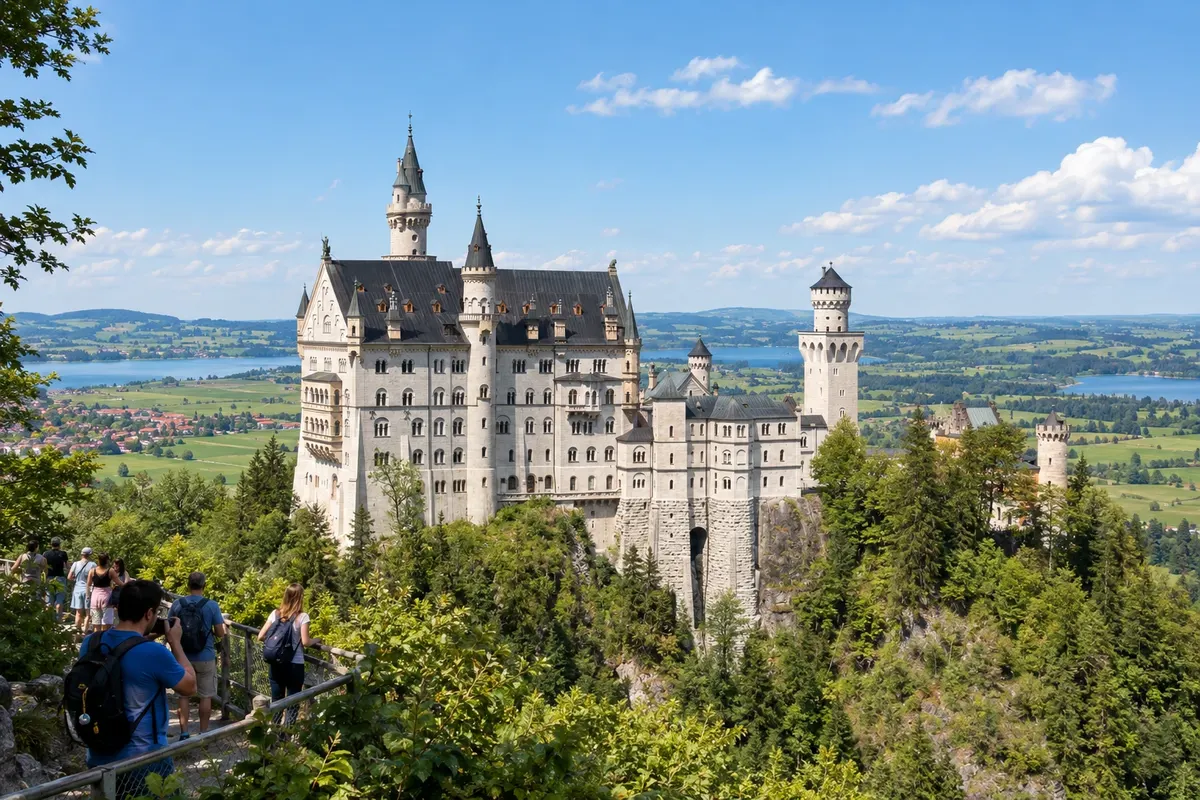
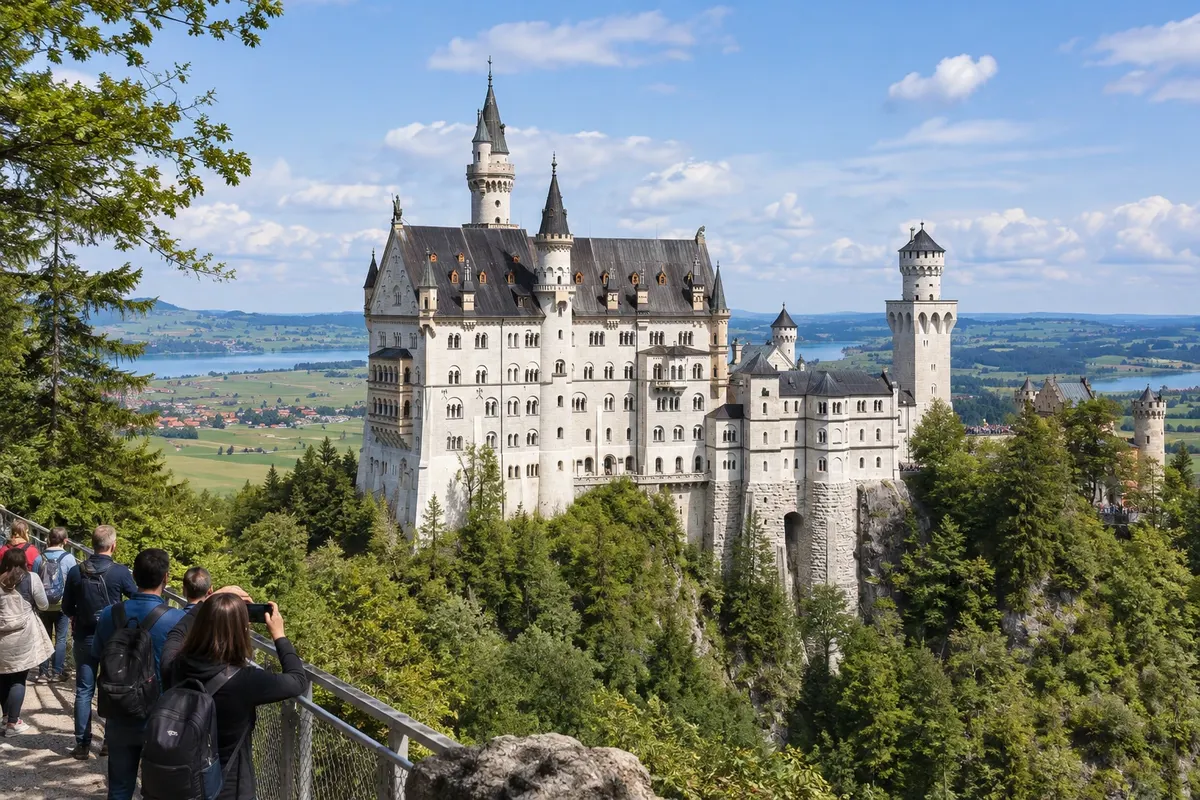
Na fotografiji: Schloss Neuschwanstein seen from the Marienbrücke

Illustrative images. The pictures in this guide are illustrations based on the real place, not photographs, and may differ from it.

Na voljo v trgovini Google Play Pošljite svoje fotografije

Spoznajte kraj

Pokrajina, ki jo doživite
v svojem ritmu.

The Romantische Straße, the Romantic Road, is a tourist route created in 1950 that links Würzburg, on the banks of the Main River, to Füssen at the foot of the Alps, near the Austrian border. It's about 410 kilometres through medieval towns, river valleys and the fields of Franconia and Swabia. It is not a single road: it's a signposted route with brown signs that uses various smaller roads and passes through Rothenburg ob der Tauber, Dinkelsbühl, Nördlingen, Augsburg and Landsberg am Lech before reaching the castles.

At the southern end is Füssen, a small town with an old centre (Altstadt) between the Lech River and the mountains. A few kilometres away, in the Hohenschwangau district, which belongs to the neighbouring municipality of Schwangau, are the two most visited castles in Bavaria: Schloss Hohenschwangau, where King Ludwig II spent part of his childhood, and Schloss Neuschwanstein, which he had built on a rock from 1869. Ludwig II's castles, including Neuschwanstein, are on the UNESCO World Heritage list.

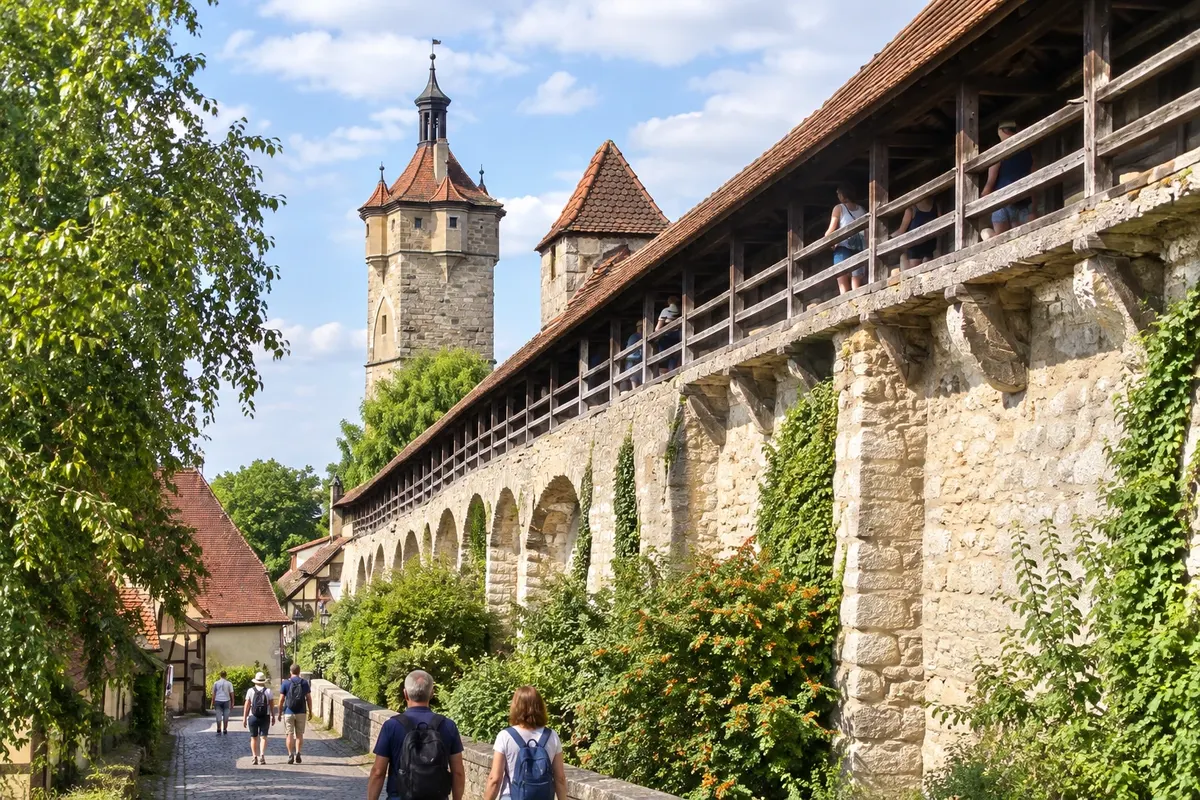
Further north, already in Franconia, Rothenburg ob der Tauber preserves its complete wall around the centre, with a covered walkway along the ramparts, towers, gates and streets of half-timbered houses. The town was a Free Imperial City from 1274 to 1803 and lost importance after the Thirty Years' War, which helped preserve its medieval layout.

Those who want to travel the entire Romantic Road, stopping in the smaller towns along the way, usually rent a car. The visit to Neuschwanstein only takes place as a guided tour with a timed ticket, and buying in advance is recommended.

This destination brings together 2 cities: Füssen, Rothenburg ob der Tauber.

Delite: WhatsApp
Delite svoja popotniška doživetja s fotografijami Pošljite fotografije vsakega kraja, ki ste ga obiskali. Največje število fotografij na kraj: 5.

Ena destinacija, več poti

Mesta na tej poti

Začnite v enem mestu ali v načrt poti vključite več mest.

Bavarian Castles and the Romantic Road – lega
Rothenburg ob der TauberFüssen

Obrisi: © BKG (2026), dl-de/by-2-0. Priredba: Cidade Turismo.

Kako do tja:Bavarian Castles and the Romantic Road

✈ Flughafen München Franz Josef Strauß (MUC)· 160 km do cilja (Füssen)

Confirm before booking. The most used airports are Munich (for Füssen) and Frankfurt (for Rothenburg). From Munich, the regional train reaches Füssen in about two hours. Rothenburg has its own rail branch, with a change at Steinach on the line coming from Würzburg.

Predlagana točka prihoda:Füssen

Doživite kraj

Kaj početi – Bavarian Castles and the Romantic Road

Market Square and Town Hall
Rothenburg ob der Tauber · Bavaria · Trg

Market Square and Town Hall

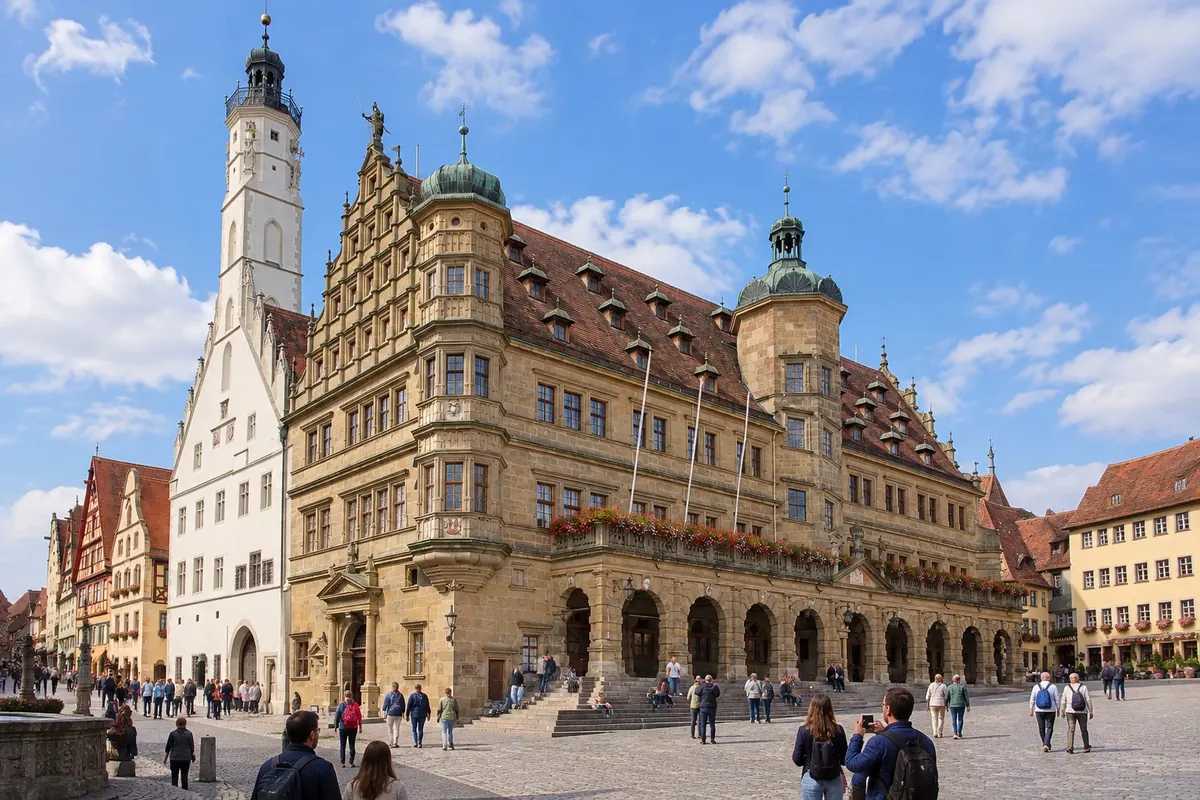
Rothenburg's central square, with the Gothic and Renaissance town hall, the tower with a 60-meter viewpoint, and the Ratstrinkstube clock that enacts the legend of the Meistertrunk.

Neuschwanstein Castle
Füssen · Bavaria · Grad

Neuschwanstein Castle

The castle that Ludwig II commissioned from 1869, built on a rock above the Pöllat gorge in Schwangau. It can only be visited inside on a guided tour at a pre-booked time.

Marienbrücke (Mary's Bridge)
Füssen · Bavaria · Most

Marienbrücke (Mary's Bridge)

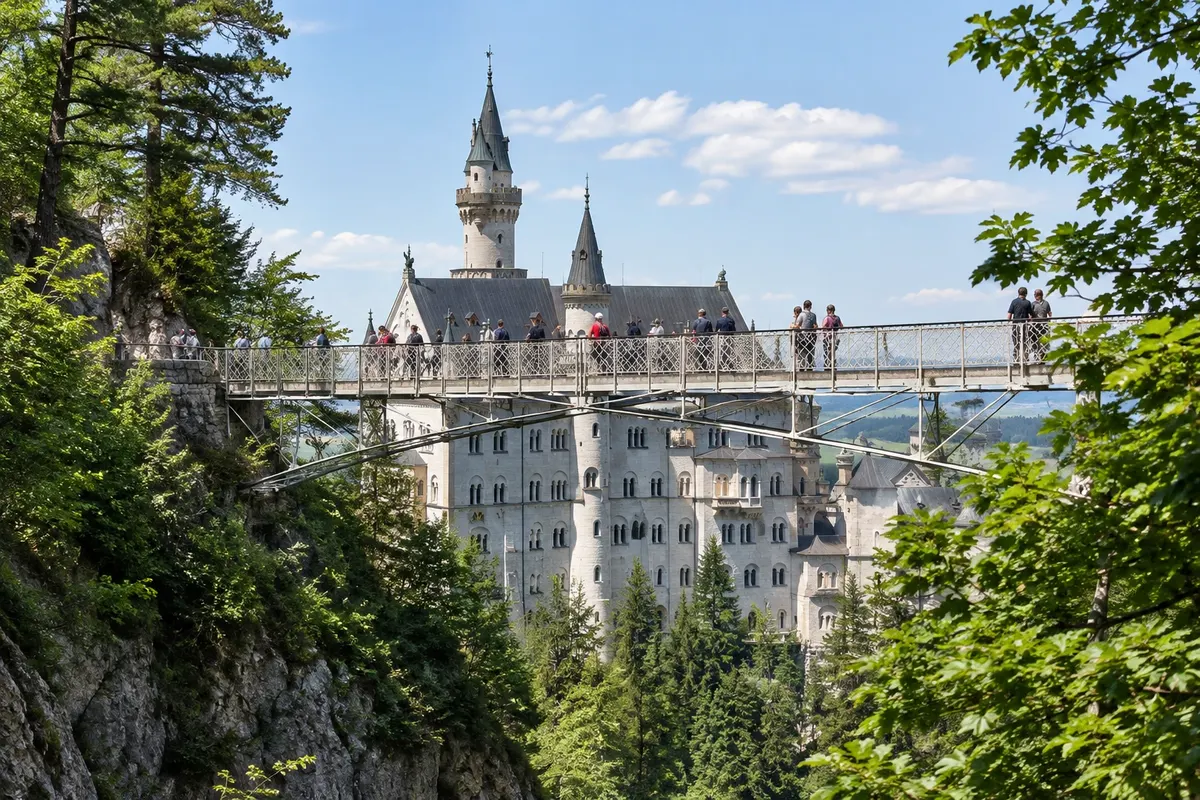
Iron bridge over the Pöllat gorge, offering the best-known view of Neuschwanstein. It usually closes in winter because of ice and snow.

Plönlein
Rothenburg ob der Tauber · Bavaria · Street

Plönlein

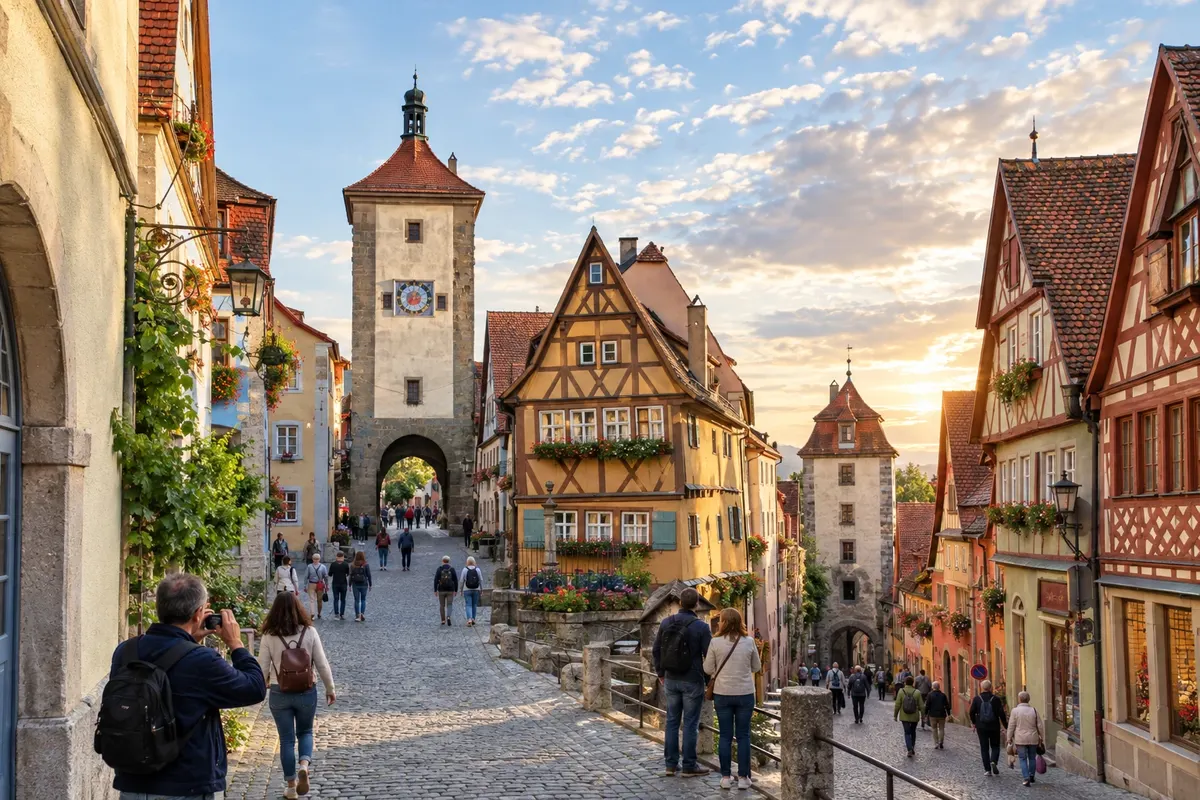
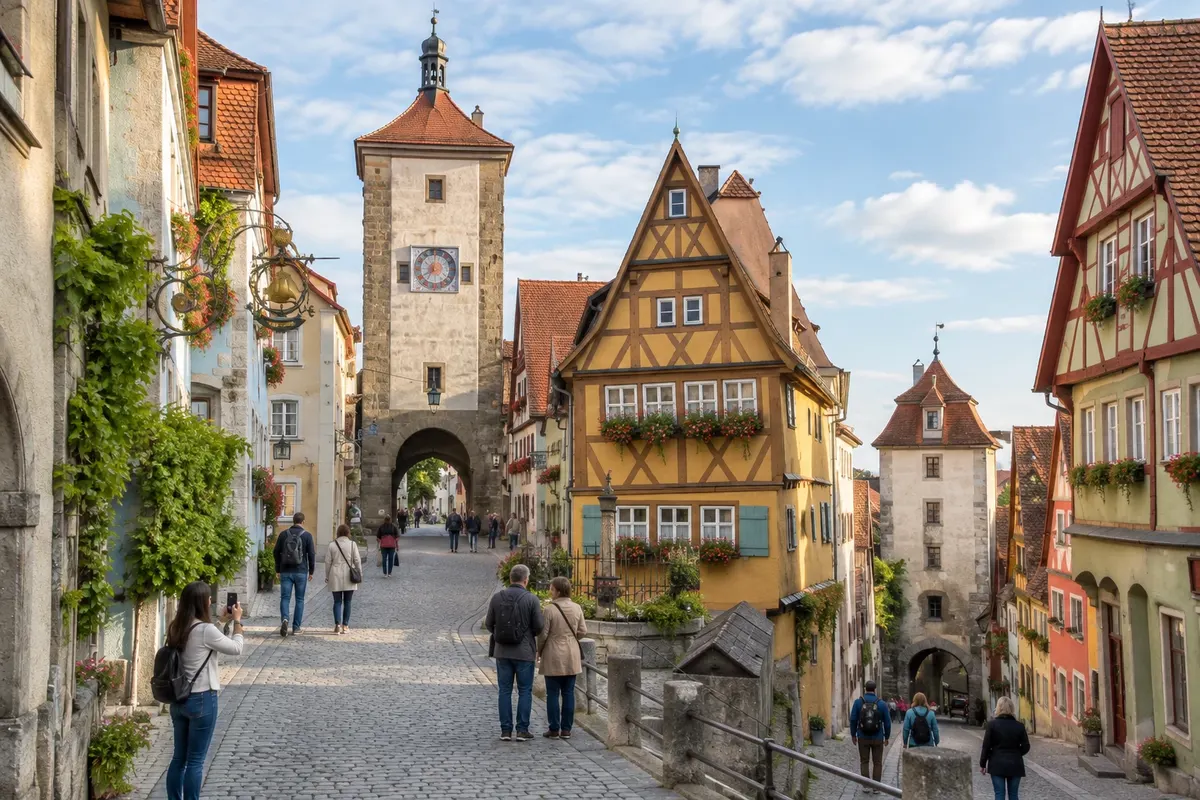
Small triangular square where the street splits in two, with half‑timbered houses and the Siebersturm and Kobolzeller Tor towers in the background: the most photographed scene in Rothenburg.

Bavarian Castles and the Romantic Road – prikaži dodatne kraje (12)
Hohenschwangau Castle
Füssen · Bavaria · Grad

Hohenschwangau Castle

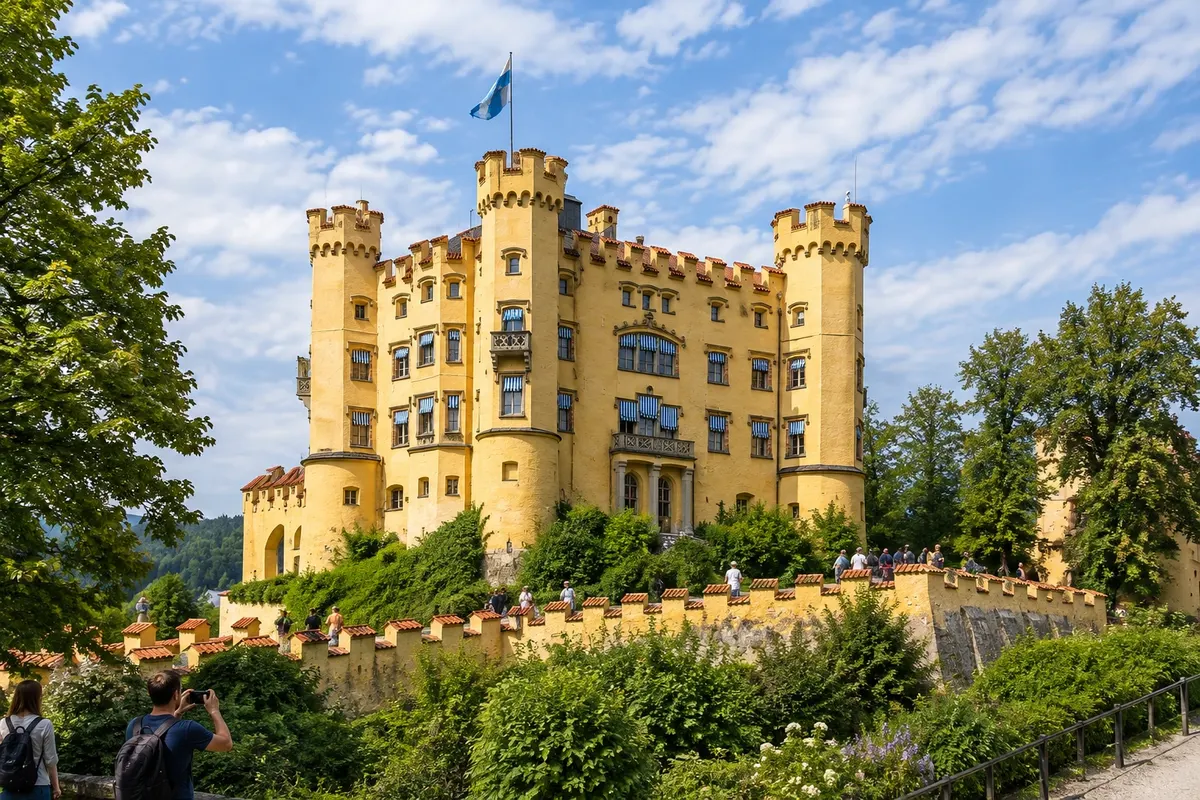
Yellow neo-Gothic castle opposite Neuschwanstein, the summer residence of the Bavarian royal family, where Ludwig II spent part of his childhood.

Rothenburg Town Walls
Rothenburg ob der Tauber · Bavaria · Obzidje

Rothenburg Town Walls

The medieval wall that still surrounds the entire town, with a covered walkway along the ramparts, towers and gates such as the Rödertor, the Klingentor and the Spitaltor.

Burggarten
Rothenburg ob der Tauber · Bavaria · Garden

Burggarten

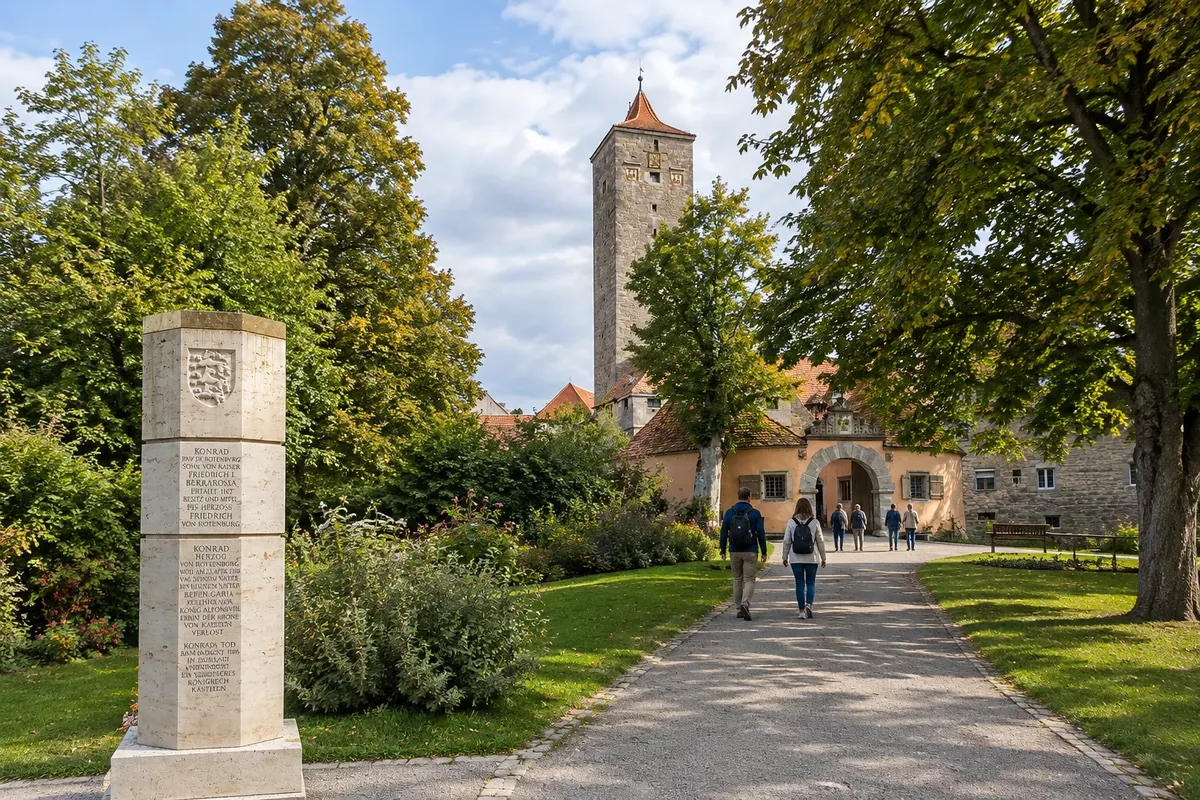
Garden on the site of the former imperial castle of the Staufer, on a promontory over the Tauber valley, with the chapel of São Brás and views of the wall and countryside.

Museum of the Bavarian Kings
Füssen · Bavaria · Muzej

Museum of the Bavarian Kings

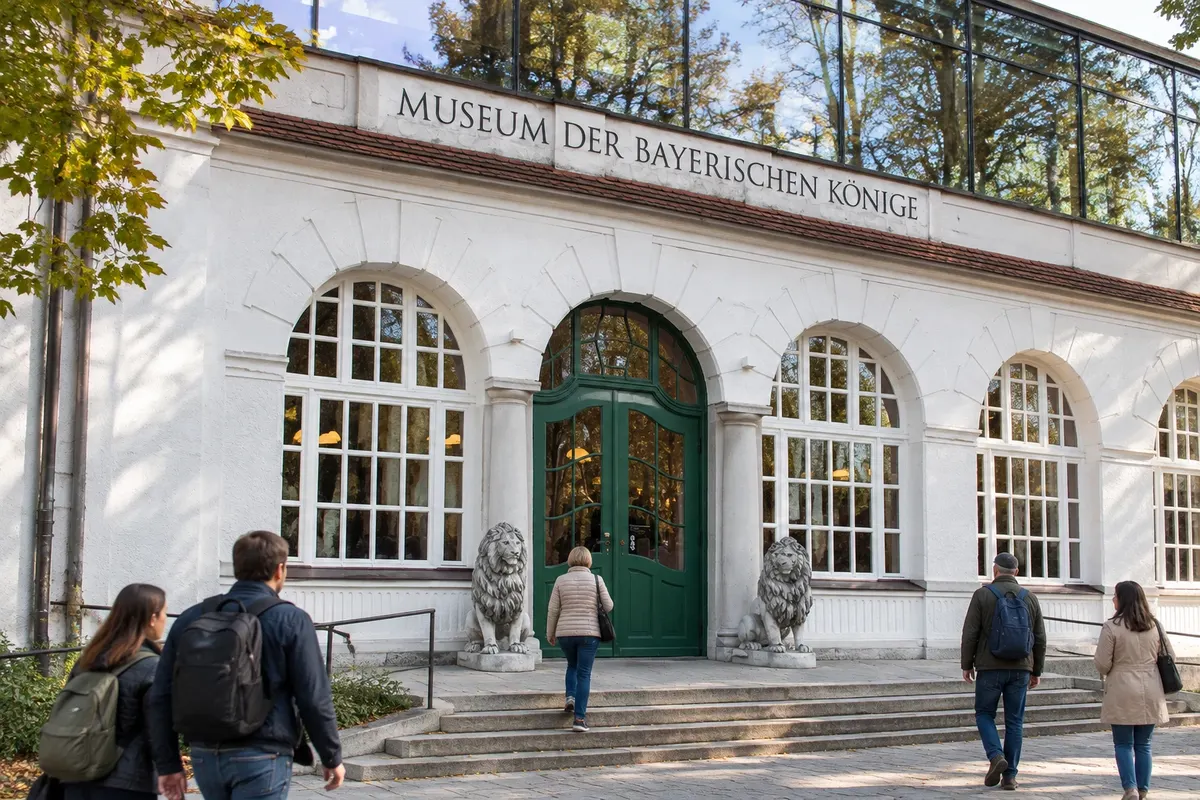
Museum on the shore of the Alpsee in Hohenschwangau about the Wittelsbach dynasty and the kings of Bavaria, with a focus on Maximilian II and Ludwig II.

Alpsee
Füssen · Bavaria · Jezero

Alpsee

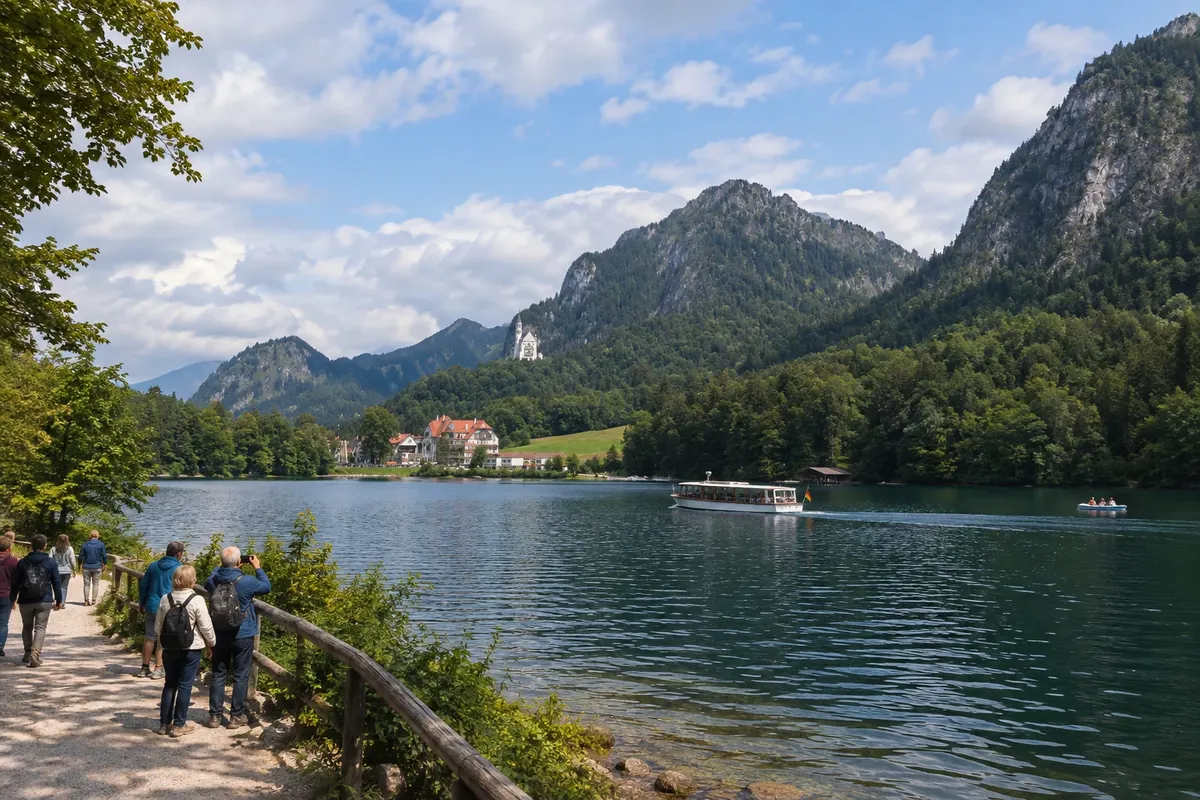
A clear-water lake at the foot of Hohenschwangau, surrounded by mountains, with a trail around it, a viewpoint and boat rentals in summer.

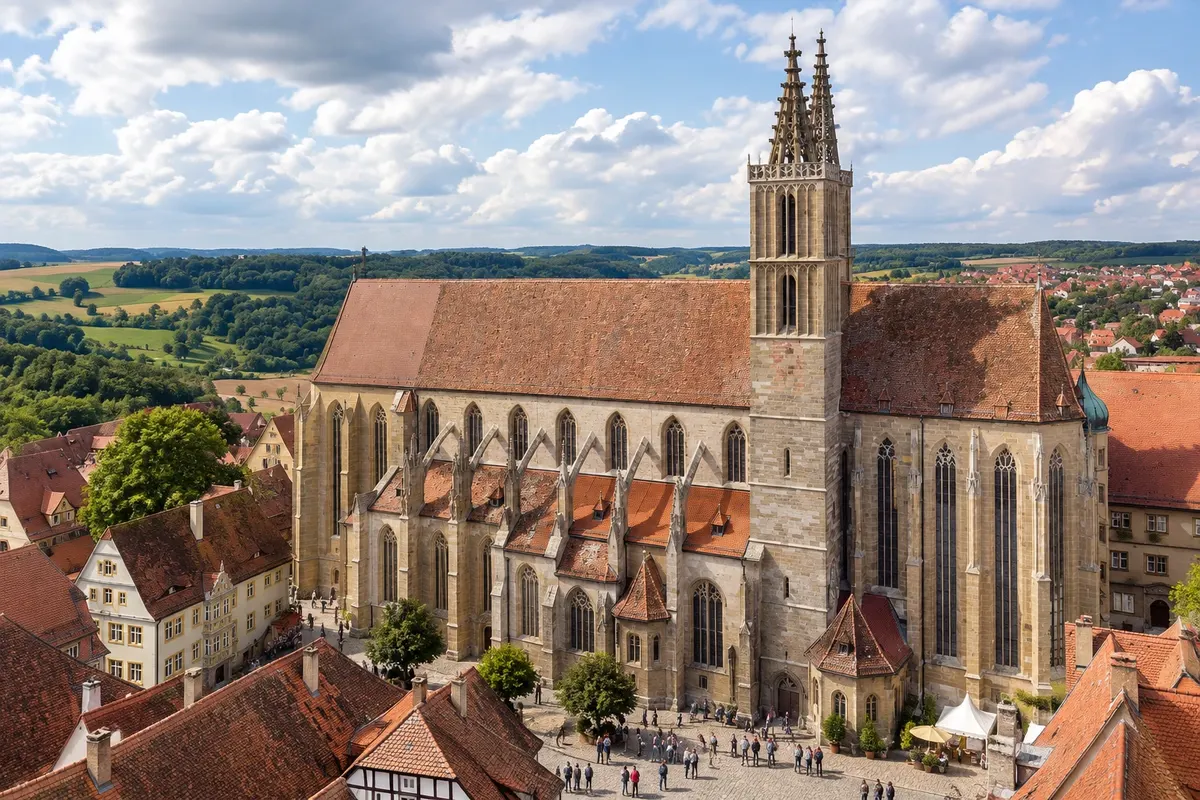
St. Jacob's Church (St.-Jakobs-Kirche)
Rothenburg ob der Tauber · Bavaria · Cerkev

St. Jacob's Church (St.-Jakobs-Kirche)

Main Gothic church of Rothenburg, with the Holy Blood altarpiece carved by Tilman Riemenschneider between 1500 and 1505.

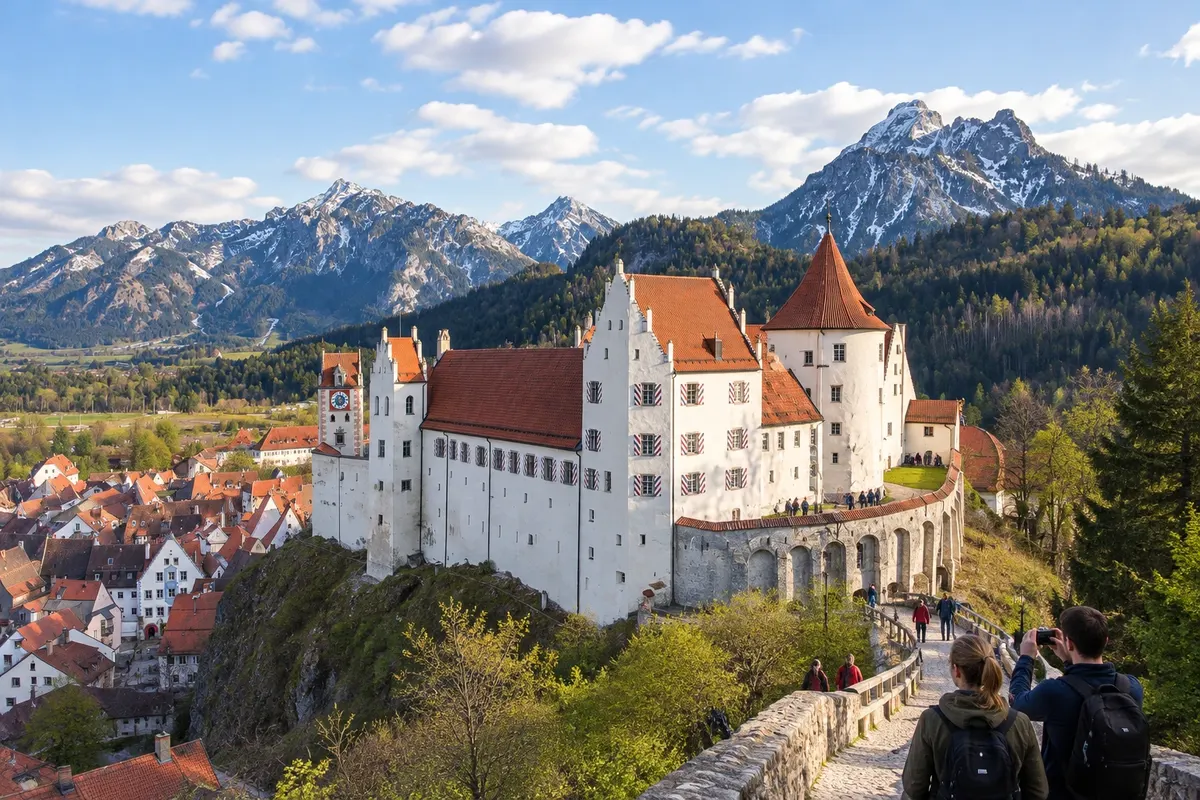
Hohes Schloss Füssen
Füssen · Bavaria · Grad

Hohes Schloss Füssen

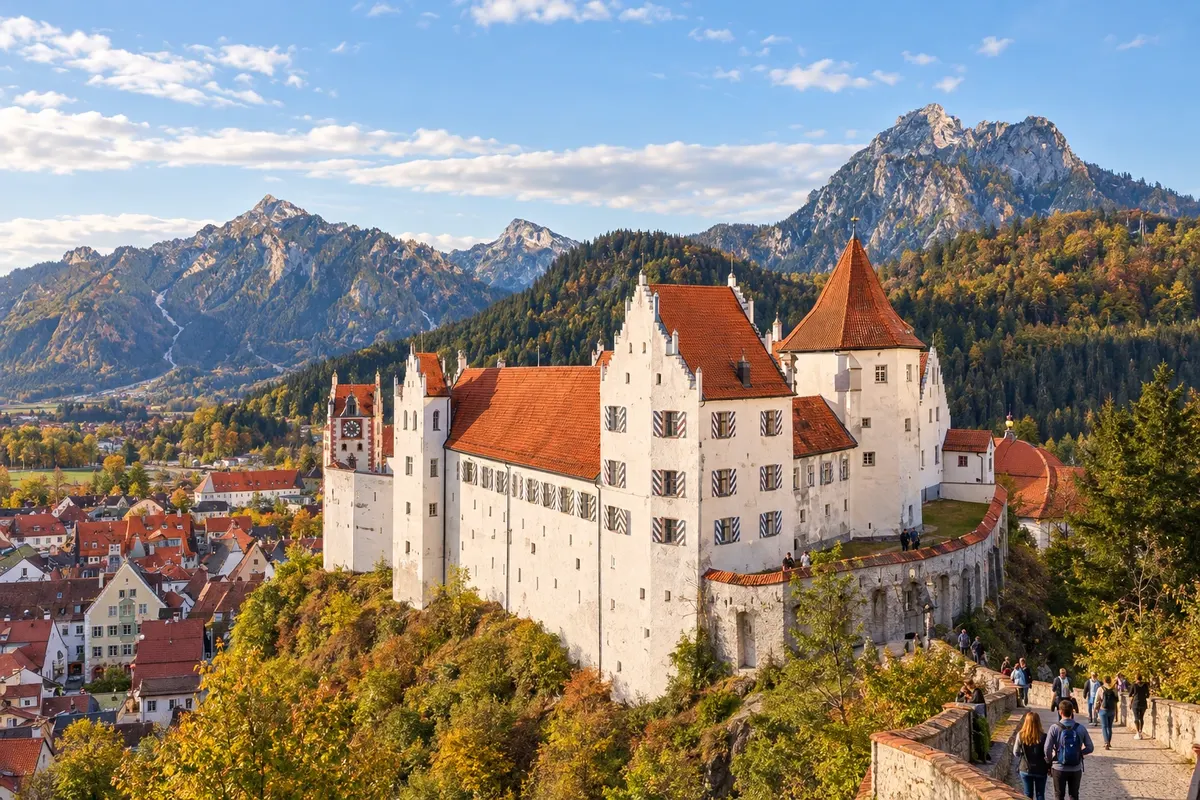
A Gothic castle of the prince-bishops of Augsburg overlooking the Altstadt of Füssen, featuring trompe-l'œil paintings in the courtyard and galleries of Gothic art from Swabia.

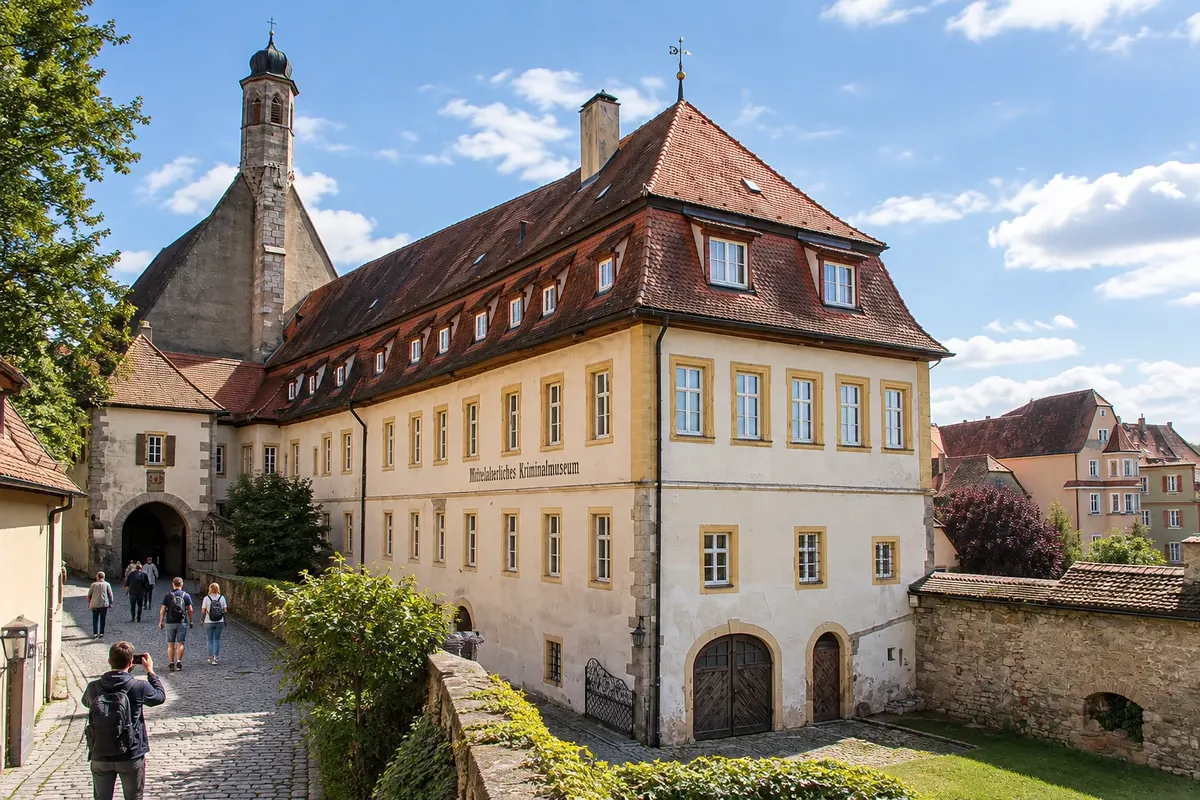
Medieval Crime Museum (Mittelalterliches Kriminalmuseum)
Rothenburg ob der Tauber · Bavaria · Muzej

Medieval Crime Museum (Mittelalterliches Kriminalmuseum)

Museum of the history of law and justice in Europe over a thousand years, with documents, public punishment objects and a section on the witch hunts.

Rothenburg ob der Tauber · Bavaria · Muzej

German Christmas Museum (Deutsches Weihnachtsmuseum)

Museum about the history of Christmas traditions in Germany, with antique tree decorations, nativity scenes and Advent calendars, inside the Käthe Wohlfahrt shop.

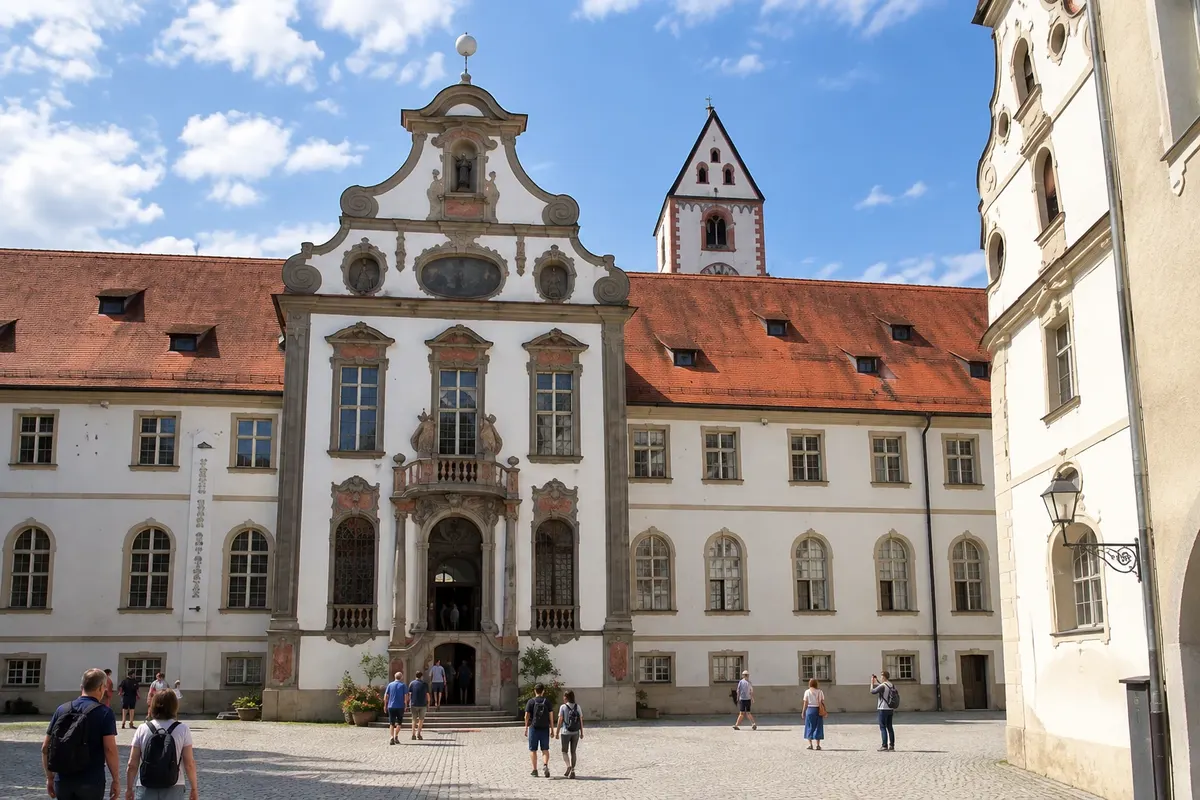
Museum of the City of Füssen (Museum der Stadt Füssen)
Füssen · Bavaria · Muzej

Museum of the City of Füssen (Museum der Stadt Füssen)

Museum in the former Baroque monastery of St. Mang, with Baroque halls, the collection of lutes and violins that made Füssen famous, and a Dance of Death from 1602.

Lechfall
Füssen · Bavaria · Slap

Lechfall

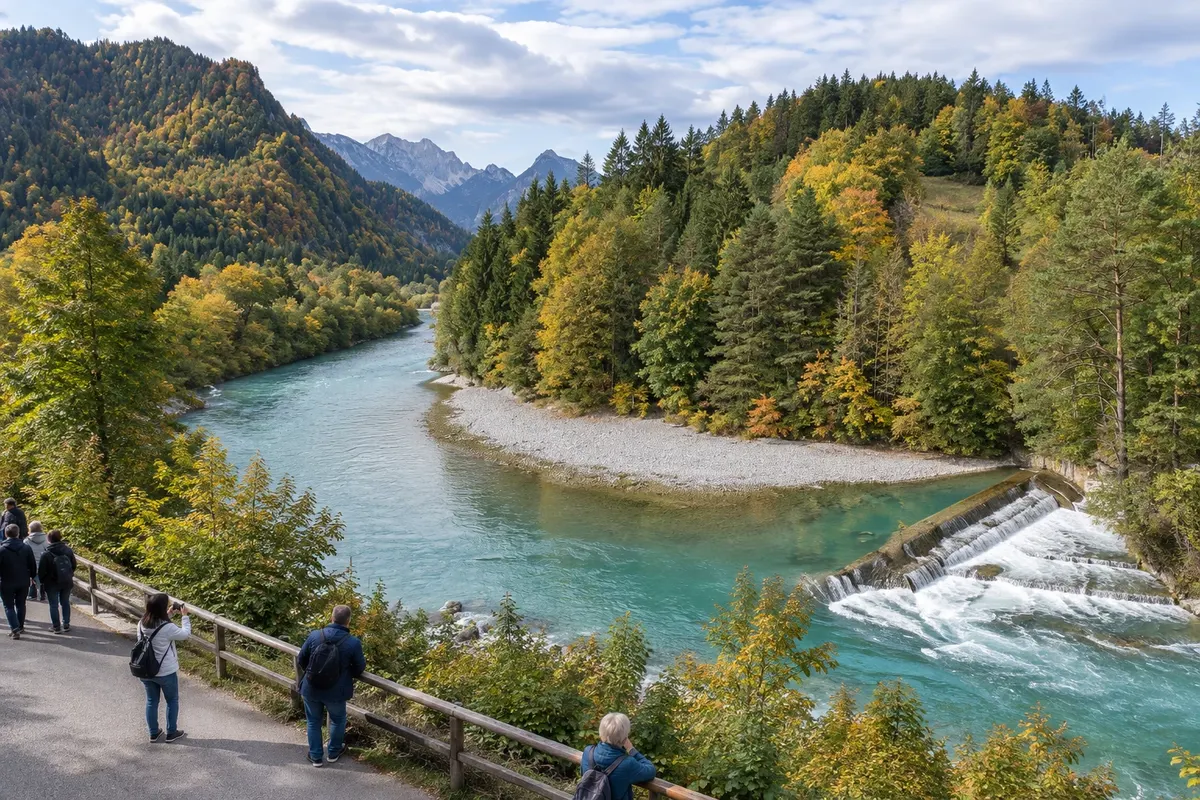
Waterfall of the Lech River where it exits a narrow gorge on the southern edge of Füssen, seen from a 1895 footbridge.

Tegelberg Cable Car (Tegelbergbahn)
Füssen · Bavaria · Cable car

Tegelberg Cable Car (Tegelbergbahn)

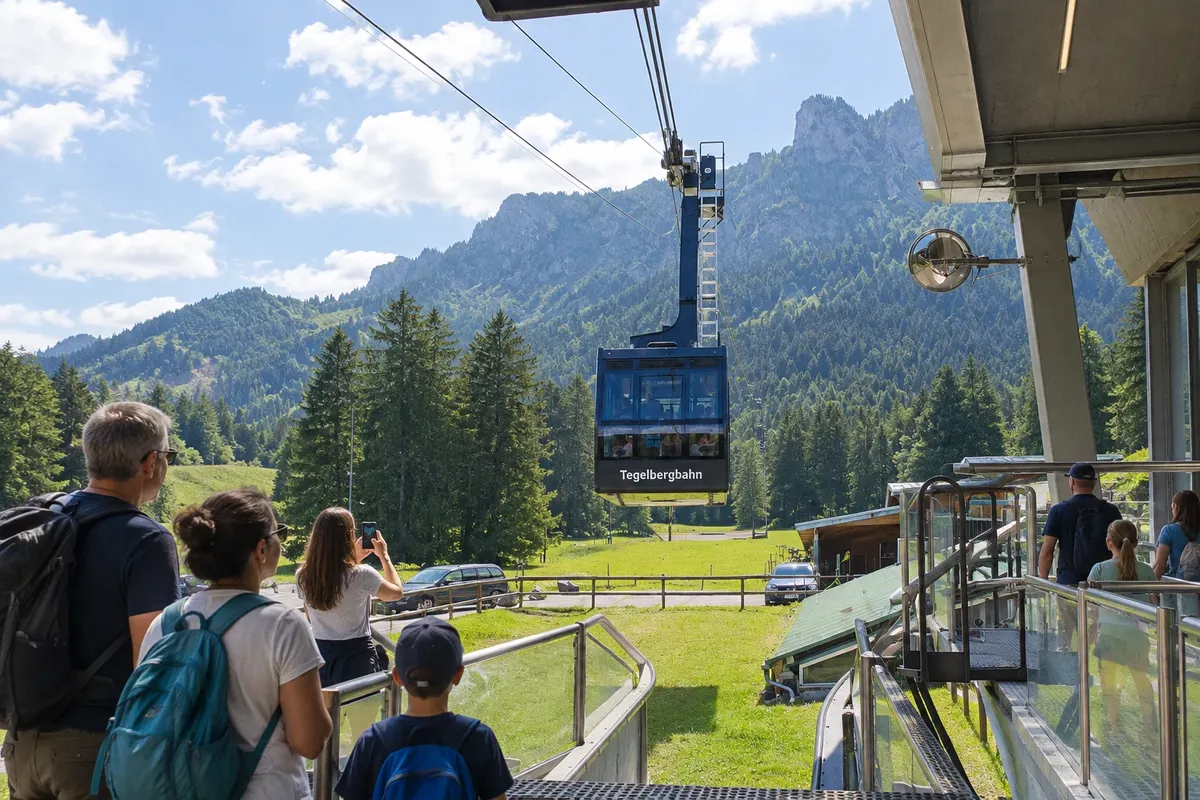
Schwangau cable car that climbs almost 900 meters to Tegelberg, with views of the Ammergau Alps, Mount Säuling and the lakes around the castles.

Kaj izbrati pred odhodom

Izleti – Bavarian Castles and the Romantic Road

Izhodišče, trajanje, potek, vključene storitve in okvirna cena vsakega izleta.

Schloss Neuschwanstein: the guided tour of Ludwig II’s castle

Odhod: Ticket Center Hohenschwangau (Alpseestraße) On foot (30–40 minute uphill), shuttle bus or carriage about 3 hours, including the climb and waiting Dopoldne ali popoldne moderate (uphill and around 300 steps)

Schloss (castle) Neuschwanstein was started in September 1869 by Ludwig II, King of Bavaria, on a rocky spur above the village of Hohenschwangau, near Füssen. The king largely treated the castle as a construction site: his rooms in the main palace were completed in 1884, and he died in June 1886 at Lake Starnberg before the work was finished. Seven weeks later, in August 1886, the castle was opened to the public and received its current name. The keep tower and the chapel were never built. Inside, the visit includes the Throne Hall, designed by the king himself, with a clad steel structure and no throne, and the Singers’ Hall, inspired by the rooms of Wartburg Castle. The wall paintings depict scenes from Germanic and Norse sagas that also inspired Wagner’s operas; there is an artificial grotto with colored electric lighting, created from 1880. The visit is only guided, in German or English, or with an audio guide in many languages, and lasts about 30 minutes; there are roughly 300 steps. Since 2025 the castle is a UNESCO World Heritage Site, together with Linderhof, Herrenchiemsee and the King’s House at Schachen. Around 1.4 million people visit each year; in summer, nearly 6,000 per day. Photography inside is not allowed.

Kraji na poti: Schloss Neuschwanstein.

Vključuje: Separate paid ticket with a timed entry, sold on the official site with a reservation fee or at the Ticket Center in Hohenschwangau, only for the same day and while availability lasts. Under-18s are free. The walk up is not charged; the shuttle bus and carriage are paid separately. Large backpacks and strollers are not allowed.

Nasvet: Reserve tickets online weeks in advance, especially from July to September, and arrive at the castle at least 1 h 30 before the printed time: the walk up takes 30–40 minutes. The castle is closed on December 24, 25 and 31 and on January 1. If you only want to see the exterior you do not need a ticket, but the inner courtyard requires one.

Najboljši čas za obisk: Opening hours are longer from April to October; there is heavier traffic from May to September. In winter, December to February, there are fewer visitors and snow often changes the scenery.

Marienbrücke: the bridge over the Pöllat gorge and the classic castle view

Odhod: P4 parking lot, in Hohenschwangau, by the Alpsee Shuttle bus uphill (when operating) and 5 min on foot, or 45 min on foot about 1 h 30, round trip early morning or late afternoon moderate (uphill; queue on the bridge)

The Marienbrücke is the footbridge that crosses the Pöllat gorge, about 90 meters above the gorge floor, just above Schloss Neuschwanstein. The first bridge, made of wood, was erected in the 1840s by Maximilian II, Ludwig II’s father, for his wife, Queen Marie, who liked to walk in the mountains; in 1866 Ludwig II had it replaced with an iron structure, and the name honors the queen. From there you get the frontal view of the castle with its towers and, beyond, the Forggensee valley and the lakes of Füssen. The bridge is about 15–20 minutes on foot from the castle, along an uphill path. The shortest access is the uphill shuttle bus, which departs from P4 parking in Hohenschwangau, without a fixed timetable, and stops about 5 minutes from the bridge; from there to the castle is roughly a 15-minute downhill walk. On foot, from P4 to the bridge is about 45 minutes uphill. Entry to the bridge is limited to around 200 people at a time, and there is usually a queue at the gate. In winter, with ice or snow, the footbridge is often closed for safety, without a fixed calendar; the bus also does not operate in snowy or icy conditions. The castle remains open when the bridge is closed.

Kraji na poti: Marienbrücke, Schloss Neuschwanstein.

Vključuje: Access to the bridge is free. The uphill shuttle bus is paid separately, in cash, and operates only in good weather according to demand; it does not run on December 24, 25 and 31, nor on January 1. The horse-drawn carriage goes to below the castle, not to the bridge.

Nasvet: Go early in the morning or late afternoon, when the queue is smaller; most people gather by the gate, and the middle of the bridge is usually emptier. Before going up, check the official site to see if the bridge is open that day. Combine it with the castle visit: go up to the bridge first and then walk down to the entrance with plenty of time for your ticket slot.

Najboljši čas za obisk: From April to October, when the bridge and bus usually operate without interruption; from December to March check before going, as ice and snow can close the footbridge.

Schloss Hohenschwangau: Ludwig II’s childhood castle

Odhod: Ticket Center Hohenschwangau (Alpseestraße) On foot (about a 20-minute uphill walk) or by carriage Približno 1 uro in 30 minut Dopoldne ali popoldne Lahko do zmerno zahtevno zaradi kratkega vzpona

Across the valley, opposite Neuschwanstein, stands Schloss Hohenschwangau, with yellow walls. The site appears in 12th-century documents as the castle of the knights of Schwangau and was partly destroyed in wars. In 1832 the future King Maximilian II bought the ruin, then called Schwanstein, and rebuilt it between 1833 and 1837 on the medieval remains, with Domenico Quaglio directing the work. It became the royal family’s summer and hunting residence: Maximilian married Marie of Prussia in 1842, and their son Ludwig II spent several weeks there each summer; it was the legend paintings on the walls that provided many of the ideas he later used at Neuschwanstein. The visit, guided only, lasts about 45 minutes and passes through rooms such as the Swan Knight’s Hall, the billiard room, the Berchta Room and the Oriental Room; there are more than 90 mural paintings, with furniture and decoration designed as a coherent ensemble. From the windows and the garden you can see the Alpsee and, above it, Neuschwanstein. Generally there is a shorter queue than at the neighbouring castle, and the visit helps to understand the other one.

Kraji na poti: Schloss Hohenschwangau.

Vključuje: Separate paid ticket with a timed entry, sold on the official website or at the Ticket Center. Guided tours in German or English include an audio guide in other languages, including Portuguese. The carriage ride up to the castle is paid separately; the garden and courtyard are free of charge.

Nasvet: Buy tickets for both castles together, with at least a 2-hour gap between the times, and do Hohenschwangau first, in the morning. The castle is closed on December 24, 25 and 31 and on January 1. The garden with the swan fountain is open without a ticket.

Najboljši čas za obisk: All year; opening hours are longer from April to October. In May and June the garden is usually in bloom.

Museum der bayerischen Könige: the Wittelsbach dynasty on the shore of the Alpsee

Odhod: Ticket Center Hohenschwangau (Alpseestraße) On foot, a few minutes to the shore of the Alpsee Približno 1 uro in 30 minut morning, afternoon or rainy day Lahko

The Museum der bayerischen Könige (Museum of the Kings of Bavaria) opened in September 2011 on the shore of the Alpsee, at the foot of the two castles, housed in the former Alpenrose hotel. It tells the story of the House of Wittelsbach, which ruled Bavaria for more than 700 years, from its beginnings to the present day, focusing on Maximilian II and Ludwig II: original objects, documents, works of art and multimedia stations. Among the items is Ludwig II’s mantle, made of blue-green velvet with ermine. There is also a room with views over the lake and the mountains. The visit is self-guided, at your own pace, and helps explain who the castle kings were, why Ludwig II built so much, and how the family persisted after the end of the monarchy in 1918. It is open every day and closed on December 24, 25 and 31 and on January 1. It’s a good complement for those with a ticket time only in the afternoon or for a rainy day, common in the region.

Kraji na poti: Museum der bayerischen Könige, Alpsee.

Vključuje: Separate paid admission, sold at the museum or at the Ticket Center; under-18s do not pay when accompanied. Guided tours are available in several languages, to be confirmed at the ticket office.

Nasvet: Schedule the museum between visits to the two castles or while you wait for your ticket time. Afterwards, walk around the Alpsee on the lakeside path. Allow 1 hour for the exhibition.

Najboljši čas za obisk: Open year-round; it’s a suitable program for rainy days, more common from May to August, and for winter.

Alpsee: the walk around the lake beneath the castles

Odhod: Hohenschwangau, next to the Museum der bayerischen Könige Circular walk along the shore Približno 1 uro in 30 minut Dopoldne ali popoldne easy (dirt trail, short climbs)

The Alpsee is the dark green lake nestled between mountains just below Schloss Hohenschwangau, considered one of the cleanest lakes in Bavaria. The circular path around the shore is about 5 km, with small climbs, and takes roughly 1 h 30 at a relaxed pace. It starts next to the Museum der bayerischen Könige, goes along the forest side with views of Hohenschwangau and, in some sections, of Neuschwanstein, and returns along the opposite shore. In summer there is a bathing area, the Alpseebad, which typically opens from May to October in good weather, and a boathouse that rents rowboats and pedal boats. Beside it is the Schwansee, a smaller lake within a 19th-century park. It’s a walk most visitors skip despite being next to the castles: the route gives the scale of the landscape Ludwig II saw from his window and is a good way to use time between two ticketed entry times.

Kraji na poti: Alpsee, Schloss Hohenschwangau.

Vključuje: Self-guided walk, free of charge. Swimming and boat rentals are paid separately, in season. There is no ticket office or guide.

Nasvet: Wear closed shoes: the path is dirt and rocky and becomes slippery after rain. In summer, bring swimwear. There is no snack stand on the route, only in the village.

Najboljši čas za obisk: From May to October for walking and swimming; in October the shoreline trees change color. In winter the path can have ice.

Tegelbergbahn: cable car to Tegelberg and walk down to Neuschwanstein

Odhod: Tegelbergbahn valley station, in Schwangau (Tegelbergstraße) Cable car; optional walk down of about 2 h 30 Pol dneva Dopoldne easy at the top; the walk down requires preparation

The Tegelbergbahn is the cabin cable car that rises from the valley station in Schwangau, at 840 m, to near the Tegelberghaus at about 1,707 m, on the mountain behind Neuschwanstein. Up there is a panoramic restaurant, outdoor tables, and views of the castles, the lakes Forggensee, Alpsee and Bannwaldsee, and the Allgäu plain. It is also a paragliding and hang-gliding center, with tandem flights offered on site. Trails start from the top: the Königsrunde, a circular route, and the ascent to Branderschrofen, at 1,879 m, about 45 minutes extra. Those with fitness can walk down to the castle: from the Tegelberghaus to Neuschwanstein, via the Marienbrücke, is about 1 h 45 of steep descent, and from the castle to the valley station another 45 minutes. At the base there is a summer toboggan run, which operates only in dry weather. The cable car usually stops for maintenance for several weeks in spring and late autumn; check before you go. In winter, when there is snow, a small ski area often operates.

Kraji na poti: Tegelbergbahn, Marienbrücke.

Vključuje: Cable car fare is paid separately, round trip or uphill only for those who walk down; the summer toboggan run is paid separately. Trails are open without a guide. There is a restaurant at the top.

Nasvet: Go in the morning, when the sky is clearer, and bring warm clothing: at the top it is several degrees colder than in the valley. Walking down to the castle requires sturdy boots and good knees; in rainy weather, return by cable car. Buses 73 and 78 stop near the valley station.

Najboljši čas za obisk: From May to October for the trails and the toboggan; June and September usually have the most stable days. There are maintenance closures in March and November.

Prikaži dodatne izlete (10)

Füssen on foot: Hohes Schloss, St. Mang monastery and Reichenstraße

Odhod: Füssen station (Bahnhof) Peš po starem mestnem jedru Približno 3 ure Popoldne easy (hill up to the castle)

Füssen is the town at the end of the Romantische Straße (Romantic Road), at about 800 m elevation, beside the Lech River and on the border with Austria. From the station to the Altstadt (old town) is a 10-minute walk. The main street, Reichenstraße, follows the line of the Via Claudia Augusta, the Roman road that connected Italy to the Danube, and features painted façades, shops and cafés. Above it stands the Hohes Schloss, the summer residence of the prince-bishops of Augsburg, one of the best-preserved late Gothic castle complexes in Swabia: the courtyard walls have trompe-l’œil paintings of windows and balconies that do not exist. Inside is a branch of the Bavarian State Painting Collections with Gothic art, and the municipal gallery; you can climb the gate tower and the wall for views over the town. Next door, the former Benedictine monastery of St. Mang houses the Museum der Stadt Füssen, with Baroque rooms, the monastery library and a collection of lutes and violins: in the 16th and 17th centuries Füssen was a European center for making these instruments. Both museums are open Tuesday–Sunday and have reduced hours in winter; they are closed on December 24, 25 and 31 and on January 1.

Kraji na poti: Hohes Schloss Füssen, Museum der Stadt Füssen.

Vključuje: Street and views are open. Admission to Hohes Schloss and the city museum is paid separately, with a combined ticket option; under-18s are free. Public guided tour of the castle on Saturdays from April to October is included with admission.

Nasvet: Leave Füssen for the afternoon of your arrival day or for the end of the day after visiting the castles: the town is small and the late-afternoon light catches the façade of the Hohes Schloss. In winter, check museum opening hours in advance, as they have limited hours.

Najboljši čas za obisk: Year-round. From May to September there are outdoor tables; in December there is usually a Christmas market in town.

Lechfall and König-Max-Steg: the Lech River waterfall

Odhod: Füssen Altstadt About a 20-minute walk along the Lech riverbank Približno 1 uro Dopoldne ali pozno popoldne Lahko

The Lech rises near Formarinsee, in Austria’s Vorarlberg, and runs 256 km to the Danube; soon after entering Germany, south of Füssen, it drops about 12 meters in five steps into a rocky gorge: this is the Lechfall. The gorge is natural, carved by the water of a glacial lake after the last ice age, but the stepped fall comes from a weir built at the end of the 18th century to generate power, which replaced the original cascade. Above it runs the König-Max-Steg, a 1895 footbridge with views of the gorge floor and the river upstream; on the adjacent rock is a bust of Maximilian II, Ludwig II’s father. The path leaves Füssen town center along the riverbank in 15–20 minutes and follows the Via Claudia Augusta; from there you can continue on the trail to Hohenschwangau, about 2 hours total via the Alpenrosenweg, with castle views. In late spring, with the thaw, the water flows with greater force; in summer the river turns light green. Upstream, the Lech forms the Forggensee, a reservoir from 1954 that is usually drained in winter.

Kraji na poti: Lechfall, Hohes Schloss Füssen.

Vključuje: Free walk, no charge. There is no ticket office or guide.

Nasvet: Go early in the morning, before the tour buses, or at the end of the day after returning from the castles. Continue the walk into Austria: the border is a few minutes on foot with no control. In heavy rain the footbridge becomes wet and slippery.

Najboljši čas za obisk: From May to July, with more water in the river; in October the surrounding woods change color. In winter access can be icy.

Romantische Straße: from Füssen to Rothenburg by car along the Romantic Road

Odhod: Füssen (southern terminus) or Rothenburg (northern point) Own or rental car; sightseeing bus on part of the route full day, or 2 days with stops Ves dan easy (signposted road)

The Romantische Straße (Romantic Road) is a tourist route created in 1950: 460 km and 29 towns between Würzburg in the Main valley and Füssen in the Alps. This guide covers the two southern and northern ends, Füssen and Rothenburg ob der Tauber, and the section between them is the trip itself. Leaving Füssen northwards, the road passes the Wieskirche, a rococo pilgrimage church amid the fields of Steingaden, a UNESCO World Heritage Site, open daily; then Schongau, Landsberg am Lech, Augsburg, a Roman-founded city with the Fuggerei, the social housing complex from 1521, and Donauwörth on the Danube. Next come Nördlingen, a round town inside a meteorite crater with an intact wall; Dinkelsbühl, with half-timbered houses and a walled town with towers; Feuchtwangen; and Rothenburg. The route is signed with brown Romantische Straße signs and follows ordinary roads, not autobahns, which explains the duration: including stops, it’s 6 to 8 hours of driving between the two ends. Without a car, the option is train with changes or the route’s sightseeing bus, which runs only in season, from May to September, on certain weekdays, and in some years covers only the section between Frankfurt, Würzburg and Rothenburg; check that year’s itinerary before relying on it.

Kraji na poti: Hohes Schloss Füssen, Marktplatz and Rathaus.

Vključuje: Public road, no toll. The route’s sightseeing bus has its own ticket, bookable via the route association’s website. Entrance fees for churches, museums and town walls on the way are paid separately, where charged.

Nasvet: Split it into 2 days, overnighting in Augsburg or Dinkelsbühl, so you don’t drive more than 4 hours per day. Start early from Füssen and stop at the Wieskirche before the excursion buses arrive. If you rent a car, check whether it has the environmental zone sticker (Umweltzone) to enter Augsburg.

Najboljši čas za obisk: From May to October, with long days and the route bus running. In December, towns along the way usually hold Christmas markets, but days are short.

Rothenburg ob der Tauber: Marktplatz, Rathaus and the tower climb

Odhod: Rothenburg ob der Tauber station (10 min walk to the Marktplatz) Walk through the center and climb the Rathaus tower Približno 2 uri Dopoldne moderate at the tower (narrow staircase)

Rothenburg ob der Tauber was a Free Imperial City, and the Marktplatz (market square) has been its centre since the Middle Ages. The Rathaus (town hall) has two parts: the rear, Gothic, built between 1250 and 1400, with the tower; and the front, Renaissance, from 1572 to 1578, with the arcade gallery around 1680. The tower is 60 metres high, and the viewing platform, at the top of a narrow staircase, shows the red roofs, the full town wall and the Tauber valley. The climb is open daily from April to October and only on weekends through much of the winter. On the square is the Ratstrinkstube, the old councillors’ tavern, now the tourist office: on the façade clock, figures enact the legend of the Meistertrunk every hour, from mid-morning until night. The story dates to 1631, in the Thirty Years’ War: the ex-mayor Nusch is said to have drunk a 3.25-litre mug of wine in one gulp to save the town from destruction. The legend is staged as a play in the Kaisersaal and in a procession with period costumes, usually held at Pentecost, in late May or June. From the Marktplatz run Herrngasse, Schmiedgasse and Obere Schmiedgasse, with half-timbered facades, which lead to the Burggarten, the Plönlein and St. Jakob’s Church.

Kraji na poti: Marktplatz und Rathaus, St.-Jakobs-Kirche.

Vključuje: Square and streets open. The climb to the Rathaus tower is paid separately at the entrance and has seasonal hours; the Historiengewölbe, with the cellar prison, is another ticket. The tourist office at the Ratstrinkstube provides maps and the town wall leaflet.

Nasvet: Climb the tower early in the morning, before the day-trip buses arrive; the staircase is narrow and climbs in small groups. Stay until late afternoon: when the tours leave the town empties and that’s when it’s most worthwhile.

Najboljši čas za obisk: All year. From May to October activity is high; in December the Reiterlesmarkt Christmas market is held on the square; January and February are the quietest months.

Stadtmauer: the circuit along Rothenburg’s wall via the towers path

Odhod: Rödertor or Klingentor, wall gates Walk along the covered wall passage about 1 h 30 to 2 hours Dopoldne ali pozno popoldne easy (stairs and narrow passage)

Rothenburg’s medieval wall stands nearly intact and fully encircles the old town in about 4 km, with 42 towers and gates. Much of the covered walkway is open to the public, and the Turmweg (towers path), marked with signs, follows the ring in about 1 h 15 of continuous walking, or longer with stops. The passage is narrow, wooden, with a low ceiling in places and stairs in the towers; through the loopholes you can see the courtyards, the roofs and, outside, the Tauber valley. The main gates are Rödertor to the east, whose Röderturm is the only tower with a platform open to visitors; Klingentor to the north, which served as a water tank; Galgentor; Spitaltor to the south, with a figure-eight bastion; and Burgtor to the west, the oldest and tallest gate, from the 12th century. In the northeast section, the Kummereck, the most fortified part, even has an underground listening gallery. To the south, the path descends to Kobolzeller Tor, from about 1360, and Siebersturm, from about 1385, the two towers that form the Plönlein, the half-timbered corner with a fountain that appears in almost every photo of the town. Plaques on the wall stones bear the names of donors from several countries who paid for the reconstruction after the 1945 bombings.

Kraji na poti: Stadtmauer Rothenburg, Plönlein.

Vključuje: Access to the wall passage is free and open all day. The climb to Röderturm is charged separately in season. Turmweg leaflet available at the tourist office in Marktplatz.

Nasvet: Do the section from Rödertor to Spitaltor in the late afternoon, with low light on the roofs, and finish at the Plönlein. Tall people need to duck their heads in the towers. With rain or ice the wood becomes slippery; it is not a place for a baby stroller.

Najboljši čas za obisk: All year round. From April to October there are leaves in the courtyards; in winter, from December to February, there are fewer people and the roofs may have snow.

Burggarten and Tauber Valley: the garden of the former imperial castle

Odhod: Marktplatz, along the Herrngasse to the Burgtor Short walk; optional descent to the valley about 1 hour; 3 hours including the valley late afternoon easy in the garden; uphill on the valley return

At the western edge of the old town, passing through the Burgtor—the oldest gate in the wall—you reach the Burggarten, a garden on a rocky spur above the Tauber Valley. The castle that gave the town its origin once stood here: in 1142 the Hohenstaufen built an imperial castle on the site, and King Conrad III expanded it. An earthquake in 1356 destroyed the complex, and residents were allowed to use the stones for building in the town; only the Blasiuskapelle, the chapel, was rebuilt between 1383 and 1390, and today it is a memorial to the dead of both world wars. A stele in the garden commemorates the pogrom of 1298, in which about 500 Jews of the town were killed. From the parapet you can see the Tauber River, the vineyard-covered hills and the southern side of the wall with the Kobolzeller Tor and the Plönlein; it is the town’s spot for sunset. Those who want to walk descend the trail to the Doppelbrücke, a two-level bridge over the Tauber, about a 5-minute steep walk from the center, and continue along the valley, used by cyclists and hikers; the return is uphill.

Kraji na poti: Burggarten, Plönlein.

Vključuje: Garden and valley open, free of charge. There is no ticket office. The chapel opens at specific times; check with the tourist office.

Nasvet: Go to the Burggarten an hour before sunset and return via the Herrngasse when the shops close. For the valley, wear sturdy-soled shoes: the descent is dirt and stones. Combine it with the Plönlein, 10 minutes from the gate.

Najboljši čas za obisk: From April to October, with the valley green and long evenings; in October the vineyards change color. In winter the garden remains open, but the descent to the valley can be icy.

St.-Jakobs-Kirche: the Holy Blood altar by Tilman Riemenschneider

Odhod: Marktplatz (2 min on foot, via Kirchgasse) Self-guided visit or with audio guide Približno 1 uro Dopoldne ali popoldne Lahko

St.-Jakobs-Kirche (St. James’s Church) is Rothenburg’s main church, Gothic, built between 1311 and 1485, and Lutheran since the Reformation, nearly 500 years ago. It lay on the pilgrimage route to Santiago de Compostela, and pilgrims came because of the relic: a drop of Christ’s blood kept in a rock-crystal capsule inside a cross dated to around 1270. To house it, the town council commissioned an altar in 1499 from sculptor Tilman Riemenschneider of Würzburg, which he delivered in 1505: the Heilig-Blut-Altar (Holy Blood altar), 9.7 m high, carved in linden wood without paint. The central scene is the Last Supper, with the apostles’ figures between 116 and 134 cm; Christ is not at the center, and Judas, with the purse, occupies the prominent place, which already surprised viewers in the 16th century. The altar stands on the west gallery, one floor above the nave. In the east choir is the Twelve Apostles altar by Friedrich Herlin, which includes the oldest known depiction of the town’s Marktplatz on one of its panels. The church has reduced hours from November to March and commonly hosts organ concerts throughout the year.

Kraji na poti: St.-Jakobs-Kirche, Marktplatz und Rathaus.

Vključuje: Separate paid admission is required to visit the church outside of services; there is an audio guide and guided tours. During services there is no tourist visitation.

Nasvet: First go up to the west gallery, where Riemenschneider’s altar is, and view the Last Supper up close from the side: the sculptor left the window light behind the scene. Allow half an hour just for the altar and half an hour for the rest.

Najboljši čas za obisk: All year. From April to October the hours are longer; in December there are Advent concerts.

Mittelalterliches Kriminalmuseum: the history of justice and punishment

Odhod: Marktplatz (3 min on foot, via Burggasse) Self-guided visit about 1 h 30 to 2 hours afternoon or rainy day easy (stairs between floors)

The Mittelalterliches Kriminalmuseum (Medieval Museum of Criminal Justice) occupies the former commandery of the Order of Saint John, dating from 1396, on Burggasse, and is considered Germany’s leading museum of legal history. It covers about 3,000 m² over several floors, presenting the history of law, trials and punishments from the late Middle Ages to the 19th century. There are instruments of torture and execution such as the wheel, the nail-studded chair and the executioner’s sword; shame masks used publicly by those who spoke too much or fought; the chastity belt; documents and engravings about witch trials, including a section on Luther and the witches, and on the relationship between Church, Empire and law. There is also a section on animals in legal history. The labels explain the context of each punishment rather than merely displaying the object. The museum is open every day of the year, with shorter hours from November to March. It’s the right program for a rainy afternoon.

Kraji na poti: Mittelalterliches Kriminalmuseum.

Vključuje: Separate paid admission at the entrance; under-18s have a reduced rate, check the current table. Self-guided visit, no guide.

Nasvet: Go mid-afternoon, after the walk along the ramparts, and allow at least 1 h 30: the interpretive signs are lengthy. With small children, consider that some rooms depict punishments explicitly.

Najboljši čas za obisk: Open year-round; hours are longer from April to October. Good for rainy or cold days, from November to March.

Deutsches Weihnachtsmuseum: the history of German Christmas year-round

Odhod: Marktplatz (1 min on foot, on Herrngasse) Self-guided visit Približno 1 uro Popoldne Lahko

The Deutsches Weihnachtsmuseum (German Christmas Museum) opened in 2000 on the upper floor of the Käthe Wohlfahrt Christmas shop at Herrngasse 1, just steps from the Marktplatz. In more than 250 m² it shows how the celebration developed in Germany from the 19th century onward: the Christmas tree and the old tree stands; the blown-glass ornaments from Lauscha in Thuringia, where the glass baubles used worldwide originated; and a collection of about 150 figures of Santa Claus and the Weihnachtsmann from various periods and materials. The ground-floor shop, called Weihnachtsdorf (Christmas village), is open year-round. The museum is open daily from April through December 23 and has reduced hours during the rest of winter and on holidays; it is closed on Good Friday.

Kraji na poti: Deutsches Weihnachtsmuseum.

Vključuje: Museum admission charged separately, at the shop; the shop on the ground floor does not require an entry fee. Self-guided visit, with texts in German and English.

Nasvet: Go in the late afternoon, when the tour groups have left. For shopping, consider suitcase weight: glass ornaments can break; the shop wraps purchases, but check baggage rules. In December, combine it with the Reiterlesmarkt on the square.

Najboljši čas za obisk: All year; from November until December 23 the museum is paired with the town’s Christmas market. From January to March check opening days.

The night watchman’s (Nachtwächter) tour through the streets of Rothenburg

Odhod: Marktplatz, in front of the Rathaus Guided group walk, in English or German Približno 1 uro night easy (stone paving)

Every night during the season, a man in a black cloak, hat, lantern and halberd appears at the Marktplatz, in front of the Rathaus, and leads the group through the dark streets of the old town: this is the Nachtwächter (night watchman) tour, Rothenburg’s most famous guided walk. The watchman was one of the least respected trades in the medieval town: he earned little, walked the empty streets at night and blew a horn to warn of fires. The guide, in character, tells about the town’s life in the Middle Ages and during the Thirty Years’ War, the plague, the legend of the Meistertrunk and what happened to the town in 1945, with humor and without scares. The roughly 1-hour route goes along the Herrngasse, past the Burgtor, by the Plönlein and along the wall, with stops for the stories. The English tour departs early in the evening, and the German one later; the season usually runs from mid-March or April until the end of December, with no tour on December 24; check dates and languages before you go. No reservation is required: just be in the square at the time and pay the watchman at the end. In winter there are snowy nights, when the tour takes on a different atmosphere.

Kraji na poti: Marktplatz and Rathaus, Plönlein.

Vključuje: Paid walk arranged directly with the guide, cash payment at the end; small children usually do not pay, check on site. No reservation. Offered in English and German at different times.

Nasvet: Arrive 10 minutes early and stay close to the guide so you can hear well: groups are large in summer months. Bring a jacket even in July, as nights cool down. Have dinner before or after depending on the language chosen: the English night watch tour finishes early in the evening.

Najboljši čas za obisk: From April to October, when the full season and milder evenings run; in December it pairs well with the Christmas market. Check whether tours run from January to March.


Po dnevih

Bavarian Castles and the Romantic Road – načrt poti. Število dni: 2, 3in5

Predlogi za načrtovanje poti. Vrstni red dni prilagodite vremenu in razpoložljivosti izletov.

2 dni · Bavarian castles in 2 days: Neuschwanstein, Hohenschwangau and Füssen

ZaFor travelers arriving from Brazil via Munich who want only Ludwig II’s castles, with one night in Füssen or Schwangau before heading to another city. · Izhodišče:Füssen, near the station, or the village of Hohenschwangau
  1. Dan 1 · Arrival via Munich, train to Fussen and afternoon in the old town

    The overnight flight from Brazil arrives in the morning in Munich (München). From the airport, the S-Bahn S1 or S8 takes about 40 minutes to the Hauptbahnhof (central station); from there, the regional train to Fussen takes about 2 hours, usually with a change at Buchloe or Kaufbeuren. Drop your bags and keep the day easy to cope with the time difference: walk around Fussen, including Reichenstraße, the Hohes Schloss and the St. Mang monastery, and, if possible, the Lechfall in the late afternoon. Check on your phone whether the Marienbrücke will be open tomorrow and whether you have the castles’ tickets. Go to bed early.

  2. Dan 2 · Hohenschwangau in the morning, Neuschwanstein and Marienbrücke in the afternoon

    Take bus 73 or 78 from Fussen station to Hohenschwangau, about 10 minutes. Do Schloss Hohenschwangau first, with a morning time slot, and then visit the Museum der bayerischen Könige or walk around the Alpsee while you wait. Early afternoon, go up on foot or by bus to the Marienbrücke, view the castle from the bridge and walk down to Neuschwanstein’s entrance with plenty of time for your scheduled slot. Return by bus to Fussen and in the evening take the train to Munich or stay another night to continue the next day by car along the Romantic Road.

3 dni · Füssen and the castles in 3 days, with the Tegelberg and the Lechfall
ZaFor those who want both castles without rushing, a mountain-and-lake day and time for Füssen, arriving via Munich. · Izhodišče:Füssen, near the station, or Schwangau
  1. Dan 1 · Arrival via Munich and afternoon in Fussen

    The overnight flight arrives in the morning in Munich (München). From the Hauptbahnhof, the regional train takes about 2 hours to Fussen; the Bayern-Ticket covers the journey and local buses, from 9:00 on weekdays. Drop your bags and focus just on the old town: Reichenstraße, the Hohes Schloss with its illusionistic courtyard paintings, and the Museum der Stadt Füssen in the St. Mang monastery. In the late afternoon, walk to the Lechfall along the riverbank and return to have an early dinner.

  2. Dan 2 · The two castles and the Marienbrücke

    Bus 73 or 78 to Hohenschwangau. In the morning, visit Schloss Hohenschwangau with a 45-minute guided tour; in the interval, see the Museum der bayerischen Könige on the shore of the Alpsee. Have lunch in the village. In the afternoon, go up to the Marienbrücke if it’s open and take the guided tour of Schloss Neuschwanstein at the scheduled time. Walk down—about 30 minutes to the village—and return by bus to Fussen.

  3. Dan 3 · Tegelbergbahn, Alpsee and return to Munich

    In the morning, take the bus to the valley station of the Tegelbergbahn and ride the cable car up the Tegelberg: views of the castles and the lakes, coffee at the top and, if you’re fit, the walk down to Neuschwanstein via the Marienbrücke in about 2 h 30. If you prefer an easier option, descend by cable car and walk the circuit around the Alpsee, about 1 h 30. In the late afternoon, take the train from Fussen to Munich, about 2 hours, or stay an extra night to continue along the Romantic Road.

5 dni · Castles and the Romantic Road in 5 days: from Fussen to Rothenburg ob der Tauber
ZaWho arrives via Munich and leaves via Frankfurt, and wants to combine Ludwig II’s castles, the road between the Alps and Franconia, and the walled town of Rothenburg. · Izhodišče:Two nights in Füssen or Schwangau and two in Rothenburg ob der Tauber, inside the city wall
  1. Dan 1 · Arrival via Munich, train to Fussen and the Lechfall

    The overnight flight arrives in the morning in Munich (München). Take the S-Bahn to the Hauptbahnhof and the regional train to Fussen, about 2 hours. In the afternoon, explore Fussen’s old town, with the Hohes Schloss and the St. Mang monastery, and walk to the Lechfall along the Lech riverbank. Check the castles’ tickets for the next day and go to bed early because of the time difference.

  2. Dan 2 · Hohenschwangau, Neuschwanstein and Marienbrücke

    Bus 73 or 78 to Hohenschwangau. In the morning, Schloss Hohenschwangau and the Museum der bayerischen Könige. In the afternoon, the Marienbrücke and the guided tour of Schloss Neuschwanstein at the scheduled time. If you have time, walk around the Alpsee before returning to Fussen. For the next day, pick up your rental car in Fussen or have the train booked.

  3. Dan 3 · Romantic Road by car: Wieskirche, Augsburg, Nördlingen and Dinkelsbühl

    Leave Füssen early via the Romantische Straße: the Wieskirche, a rococo church in the fields of Steingaden; Augsburg, with the Fuggerei; Nördlingen, the round town in the crater; and Dinkelsbühl, with its wall and half-timbered houses. Arrive in Rothenburg ob der Tauber late afternoon and return the car if applicable. Without a car, the train from Füssen to Rothenburg takes the whole day, with changes in Munich or Augsburg and in Steinach; in season, the route’s bus may cover part of the way, to be confirmed. At night, join the night watchman’s round starting from the Marktplatz.

  4. Dan 4 · All of Rothenburg: tower, wall, St. Jakob and museums

    In the morning, visit the Marktplatz and climb the Rathaus tower before the tours, and see St. Jakob’s Church with Riemenschneider’s altar. After lunch, walk along the Stadtmauer via the Turmweg, ending at the Plönlein, and visit the Mittelalterliches Kriminalmuseum or the Deutsches Weihnachtsmuseum. In the late afternoon, go to the Burggarten to view the Tauber valley in the low light, then have dinner inside the wall.

  5. Dan 5 · Tauber valley in the morning and train to Frankfurt

    If you have time in the morning, walk down from the Burggarten to the Doppelbrücke and cover a stretch of the Tauber valley, or visit any museums you missed. Then take the train from Rothenburg to Steinach, change to Würzburg and an ICE to Frankfurt: about 2 h 30 to 3 hours total, arriving directly at the long-distance station at the airport (Frankfurt Flughafen Fernbahnhof) for the night flight to Brazil. Those traveling via Munich do the reverse route, about 2 h 30 to 3 hours with transfers.

Najboljši čas za obisk

Kdaj se odpraviti:Bavarian Castles and the Romantic Road po mesecih

From May to October the days are long, regional buses and cable cars run more frequently and the lakes are open for boat trips. July and August see the most visitors. In winter, from December to February, it is cold and the days are short; the Marienbrücke often closes due to ice and snow. In Rothenburg, the Christmas market usually runs from late November until around Christmas.

The seasons shown are the most usual ones; nature doesn't always follow the calendar.

januar Zmerne padavine

winter · snow at the castles

In Kaufbeuren (716 m), the Allgäu station used as the temperature reference for Füssen and Schwangau, the average is -1 °C; the nearby Füssen-Weißensee station (790 m) records about 82 mm of rain or snow in the month. In Rothenburg ob der Tauber (415 m), average 1 °C and 54 mm. Neuschwanstein operates on winter hours, shorter opening times, and the Marienbrücke is often closed due to ice and snow; the Tegelbergbahn runs with snow on the track. Rothenburg is empty after New Year’s, with museums on reduced hours. Short days and low skies.

februar Zmerne padavine

winter · Fasching

Winter, the driest month at Füssen-Weißensee (790 m), with about 74 mm, often still as snow; the average in Kaufbeuren (716 m), the region’s temperature reference, is -1 °C. In Rothenburg (415 m), 1 °C and 46 mm, its driest month of the year. The castles run on winter hours, and the Marienbrücke remains dependent on ice conditions. In February Fasching, the Bavarian carnival, usually takes place with parades in small towns. Low activity in Füssen; in Rothenburg, the Rathaus tower opens only on weekends.

marec Veliko padavin

late winter · thaw

Late winter. In Kaufbeuren (716 m), the temperature reference for Füssen, the average rises to 3 °C; Füssen-Weißensee (790 m) records about 91 mm, with snow turning to rain over the month. In Rothenburg (415 m), 5 °C and 51 mm. There is still snow in the Alps’ high areas, and the Tegelbergbahn often stops a few days for maintenance. At the end of March the castles switch to summer hours, longer openings, and the night watchman’s season in Rothenburg usually begins. Still few people: it’s a good month to see Neuschwanstein without queues.

april Zmerne padavine

spring · Easter

Average 7 °C in Kaufbeuren (716 m), the reference station for Füssen and Schwangau, and about 83 mm in Füssen-Weißensee (790 m); in Rothenburg (415 m), 9 °C and 40 mm, its driest month. The castles are already on summer hours, the Marienbrücke usually reopens and Rothenburg’s Christmas museum returns to full hours. Easter usually falls in April and brings holidays and German travel; book castle tickets in advance. In the Alps, snow remains high on the Tegelberg.

maj Veliko padavin

spring · Pentecost

full spring, Pentecost Snowmelt fills the Lech and the Lechfall. Average 12 °C in Kaufbeuren (716 m), a temperature reference for Füssen, and about 140 mm of rain in Füssen-Weißensee (790 m), with afternoon showers. In Rothenburg (415 m), 13 °C and 64 mm. The Tegelbergbahn returns to summer schedule, the Alpseebad usually opens and the Romantic Road bus starts its season. At Pentecost, in late May or June, Rothenburg often stages the Meistertrunk, with a historical costume parade and the town gets busy; book accommodation early.

junij Veliko padavin

early summer · long days

Average 15 °C in Kaufbeuren (716 m), the station used as reference for Füssen and Schwangau, and about 156 mm of rain in Füssen-Weißensee (790 m): it’s the rainy season in the Alps, with clear mornings and afternoon storms. In Rothenburg (415 m), 17 °C and 61 mm. Days remain long, allowing castles in the morning and Alpsee or Tegelberg in the afternoon. June is a month of school groups and tour buses at both sites; Neuschwanstein tickets need to be booked in advance.

julij Veliko padavin

summer · high season

summer. Average 17 °C in Kaufbeuren (716 m), a temperature reference for Füssen and Schwangau, with highs over 25 °C on sunny days, and about 160 mm of rain in Füssen-Weißensee (790 m), typically in heavy showers. In Rothenburg (415 m), 19 °C and 67 mm. Bavaria’s school holidays usually begin late in the month, and Neuschwanstein receives around 6,000 visitors per day: buy tickets online weeks ahead and expect buses 73 and 78 to be crowded. The Alpsee is a relief from the heat; the night watchman’s tour in Rothenburg gathers large groups.

avgust Veliko padavin

summer · school holidays

summer, the busiest month for the castles Average 17 °C in Kaufbeuren (716 m), the reference station for Füssen, and the year’s rainfall peak in Füssen-Weißensee (790 m): about 174 mm, in short afternoon storms. In Rothenburg (415 m), 18 °C and 62 mm. School holidays in Bavaria and much of Europe mean Neuschwanstein, the Marienbrücke and the buses get crowded during the day; go early or late afternoon. August 15 is a public holiday in Bavaria (Assumption). Tegelberg and Alpsee are good options for hot days.

september Veliko padavin

early autumn · stable days

Average 12 °C in Kaufbeuren (716 m), a temperature reference for Füssen, and rainfall drops to about 120 mm in Füssen-Weißensee (790 m), still high for the area but with more clear days than in summer. In Rothenburg (415 m), 14 °C and 51 mm. Bavaria’s school holidays end mid-month and visitor numbers at the castles gradually fall. In Rothenburg, the Reichsstadt-Festtage, with fireworks and parades, usually takes place in early September. The Romantic Road bus season typically ends late in the month.

oktober Zmerne padavine

Jesen · barve gozdov

Autumn. Average 8 °C in Kaufbeuren (716 m), the reference station for Füssen and Schwangau, and about 91 mm in Füssen-Weißensee (790 m). In Rothenburg (415 m), 9 °C and 58 mm. The forests around the castles and the vineyards of the Tauber valley change color through the month. In mid-October the castles switch to winter hours, shorter opening times, and the Alpseebad closes. Holiday on October 3, German Unity Day. Moderate crowds, good for photographers who want fewer people.

november Zmerne padavine

late autumn · cable car maintenance

Late autumn, with the first snow days in the Alps. Average 3 °C in Kaufbeuren (716 m), the temperature reference for Füssen, and about 80 mm in Füssen-Weißensee (790 m). In Rothenburg (415 m), 4 °C and 54 mm, with morning fog. The Tegelbergbahn often stops for several weeks for maintenance; museums in Füssen and Rothenburg run reduced hours, and the Rathaus tower opens only on weekends. At the end of the month the Reiterlesmarkt, Rothenburg’s Christmas market, usually opens on the Marktplatz. It is the quietest month of the year at the castles.

december Zmerne padavine

winter · Christmas markets

Winter, with short days and snowy nights. Average 0 °C in Kaufbeuren (716 m), the reference station for Füssen and Schwangau, and about 88 mm in Füssen-Weißensee (790 m). In Rothenburg (415 m), 1 °C and 63 mm. The castles, the kings’ museum and Füssen’s museums close on December 24, 25 and 31 and on January 1; the Marienbrücke is often closed with ice. In Rothenburg, the Reiterlesmarkt usually runs until near Christmas, with the town lit up, and the Christmas museum is in full season. Bring a heavy coat, hat and footwear with ice-appropriate soles.

Načrtujte pot

Kako do tja:Bavarian Castles and the Romantic Road

By train to Füssen from Munich and Frankfurt

Füssen is the terminus of a regional line from Munich Hauptbahnhof (München). The trip takes about 2 hours on regional trains operated by Bayerische Regiobahn or DB, hourly: there are some direct trains but most require a change in Buchloe or Kaufbeuren, usually on the same platform. For this route the Bayern-Ticket is worthwhile for groups: it covers regional trains and almost all Bavarian buses for a day, for up to 5 people, valid from 9:00 on weekdays and from early morning on weekends, and it includes buses 73 and 78 to Hohenschwangau. The Deutschlandticket, a monthly pass for regional and local transport nationwide, is also valid at any time. From Frankfurt the journey takes about 4–5 hours, with ICE to Munich or Augsburg and a regional train to Füssen. From Augsburg there are direct regional trains to Füssen in just under 2 hours. Buses to the castles leave from in front of Füssen station shortly after trains arrive.

By train to Rothenburg ob der Tauber from Frankfurt, Würzburg and Munich

Rothenburg ob der Tauber sits at the end of a short branch line from Steinach (bei Rothenburg) on the Würzburg–Ansbach route; the regional train between Steinach and Rothenburg takes about 15 minutes and waits for connections. From Frankfurt the trip takes roughly 2 h 30 to 3 hours: ICE to Würzburg in just over 1 hour, regional train to Steinach and change to the branch. From Würzburg about 1 hour, changing at Steinach. From Munich (München) about 2 h 30 to 3 hours, on regional trains with changes in Treuchtlingen or Ansbach and Steinach; the Bayern-Ticket covers the whole journey. From Nürnberg (Nuremberg) about 1 h 10, with changes in Ansbach and Steinach. Rothenburg station is a 10-minute walk from the Rödertor and the Marktplatz. Check DB timetables: the branch has periods with no trains in early evening and at weekends.

Between Füssen and Rothenburg: train, Romantic Road bus or car

There is no direct train between the two ends of this guide. By train the trip takes about 5 to 6 hours, with changes in Munich (München) or Augsburg, then Treuchtlingen or Ansbach and Steinach; with the Bayern-Ticket it is a full day on regional trains. The Romantic Road Coach tourist bus links towns on the route in season, from May to September, on fixed days of the week; in recent years it only covered the northern section, between Frankfurt, Würzburg and Rothenburg, without reaching Füssen or Munich, so check that year’s route before relying on it. By car, along the signposted Romantische Straße it is about 300 km on ordinary roads, taking 6 to 8 hours including stops, or less via the A 7 autobahn, which runs parallel to the route and ends in Füssen. Renting a car in Füssen and returning it in Rothenburg, or in Würzburg, is usually possible with an one‑way fee; compare options beforehand.

How to get around Füssen, Hohenschwangau and Rothenburg

In Füssen everything is walkable: the station, old town and the Lechfall are all within 20 minutes of each other. For the castles, buses 73 and 78 leave Füssen station to the castle stop in Hohenschwangau, about 4 km away, in 10 minutes; from July to September they get full, and some travelers prefer the 2-hour walk along the Alpenrosenweg or a taxi. Guests staying in Füssen or Schwangau receive a guest card that includes regional buses and trains. In Hohenschwangau the Ticket Center, the museum, the Alpsee and the approaches to both castles are a few minutes apart; to Neuschwanstein there is an uphill bus, horse-drawn carriage and a 30–40 minute walk. Rothenburg ob der Tauber is done on foot: the old town is under 1 km end to end, with cobbles and short hills; the station is a 10-minute walk from the center. For day trips, the Bayern-Ticket covers regional buses and trains in Bavaria for a day; the Deutschlandticket, a monthly pass, is valid nationwide.

Castle tickets: scheduled time and reservation

Visits to Neuschwanstein and Hohenschwangau are guided only, with limited numbers per group and the time printed on the ticket. Tickets are paid separately and sold on the official website of the Hohenschwangau Ticket Center, with a reservation fee, or at the Ticket Center counter on Alpseestraße, only for the same day while availability lasts; in summer these sell out early. Book online weeks in advance, especially July through September and on holidays. The Ticket Center is open from early morning until mid‑afternoon. Allow at least 1 h 30 between collecting your ticket and entering Neuschwanstein because of the uphill walk; if you miss your time slot you lose the visit. Under‑18s do not pay but still require a ticket. The museums in Füssen, the Museum of the Kings and the museums in Rothenburg sell tickets at the door; only the town wall, the Burggarten and the streets are free. Check each attraction’s current price list before you go.

Pred odhodom

Praktične informacije

Z nekaj načrtovanja boste imeli več časa za uživanje na poti.

Kdaj se odpraviti

From May to October the days are long, regional buses and cable cars run more frequently and the lakes are open for boat trips. July and August see the most visitors. In winter, from December to February, it is cold and the days are short; the Marienbrücke often closes due to ice and snow. In Rothenburg, the Christmas market usually runs from late November until around Christmas.

The seasons shown are the most usual ones; nature doesn't always follow the calendar.

Koliko dni ostati

A full day is enough for Neuschwanstein and Hohenschwangau if you arrive early. Staying one or two nights in Füssen allows you to add Hohes Schloss, the Lechfall, the Alpsee and the Tegelberg cable car. Rothenburg needs a day, and one night there lets you see the empty streets after the tour groups leave. To drive the Romantic Road from Würzburg to Füssen, allow four to six days.

V katerem mestu prenočiti

In Füssen, the Altstadt and the streets near the train station put everything within walking distance and close to the bus to the castles. If you want to wake up near Neuschwanstein you can stay in Hohenschwangau or Schwangau, villages with guesthouses and small hotels but little nightlife. In Rothenburg, it's best to stay inside the wall, near the Marktplatz or Herrngasse; outside the walls, near the station, there are options for those arriving by car. Munich is a good base for day trips to Füssen.

Spoštujte kraj

Odnesite svoje odpadke, upoštevajte oznake in podprite lokalne ponudnike. V naravi upoštevajte navodila za obiskovalce.

Odgovori na vaša vprašanja

Pogosta vprašanja – Bavarian Castles and the Romantic Road

Can you visit Neuschwanstein on a day trip from Munich?

Yes. The regional train from Munich to Füssen takes about two hours, and buses run from Füssen station to Hohenschwangau, where the ticket office and the start of the climb to the castles are located, in about ten minutes. Buy the Neuschwanstein ticket in advance for a time that allows you to arrive: the official recommendation is to be in Hohenschwangau one-and-a-half to two hours before the tour time. The day is full but doable.

What is the Romantic Road and do I need a car to do it?

It is a tourist route of about 410 kilometres between Würzburg and Füssen, signposted with brown signs, that links medieval towns, monasteries and landscapes of southern Germany. To stop in the smaller towns along the way, like Dinkelsbühl and Nördlingen, a car gives more freedom. The two most visited endpoints, Rothenburg and Füssen, are well served by regional trains and can be visited without driving.

How many days should I reserve for the castles and Rothenburg?

At least three: one for Neuschwanstein and Hohenschwangau, one for Füssen and its surroundings, and one for Rothenburg. The two towns are about 250 kilometres apart and by train the journey involves several changes and takes most of a morning. Many people include Rothenburg on the route between Frankfurt and Munich.

What is the best time to see the castles?

From May to October, when the days are longer and buses to the Marienbrücke and boat trips on the Alpsee operate. Summer is the busiest season. In winter the castle remains open for guided tours, but the Marienbrücke often closes because of ice, and the landscape may be snowy or simply grey: it's unpredictable.

Do I need to buy the Neuschwanstein ticket in advance?

It's the safest option. The castle can only be visited on a guided tour with a timed ticket, and places are limited. Remaining tickets are sold at the Hohenschwangau ticket office only for the same day and can sell out in the morning during busy months. Viewing the castle from the outside does not require a ticket.

Odkrijte druge destinacije Iskanje po zvezni državi in mestu

Več kot vodnik