Bremer Marktplatz
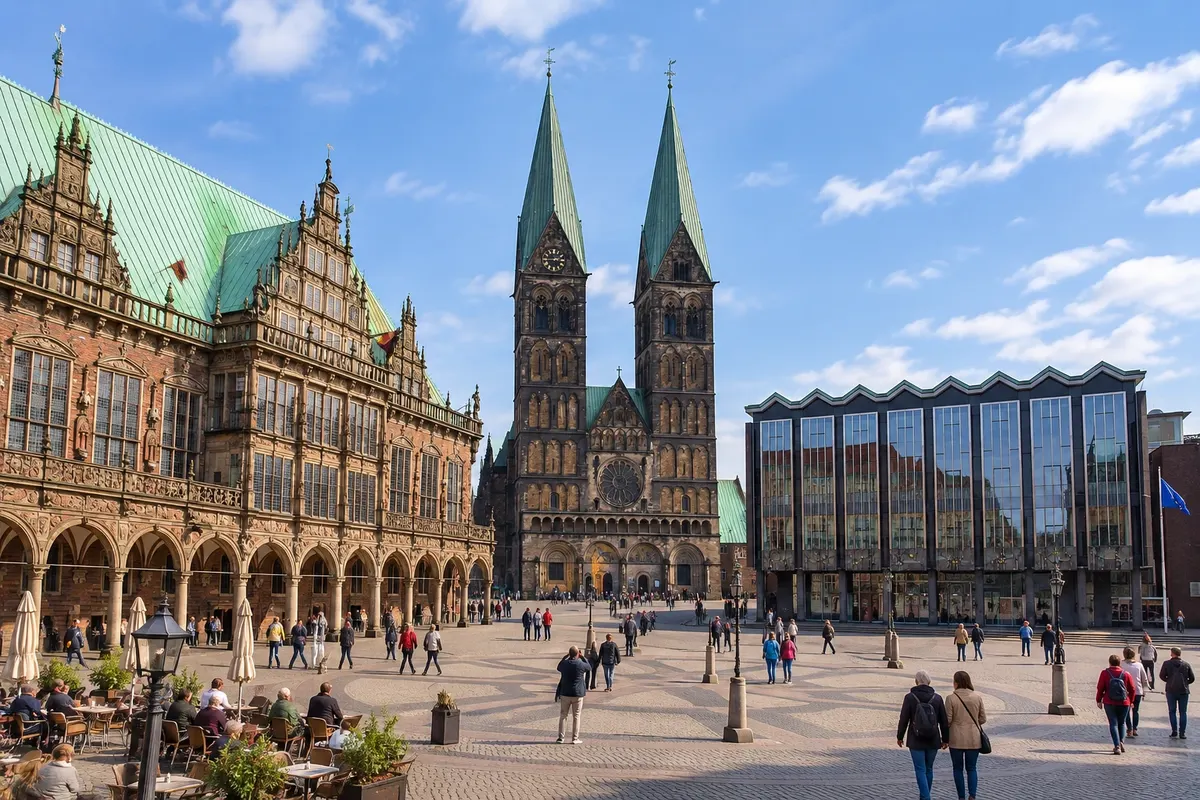
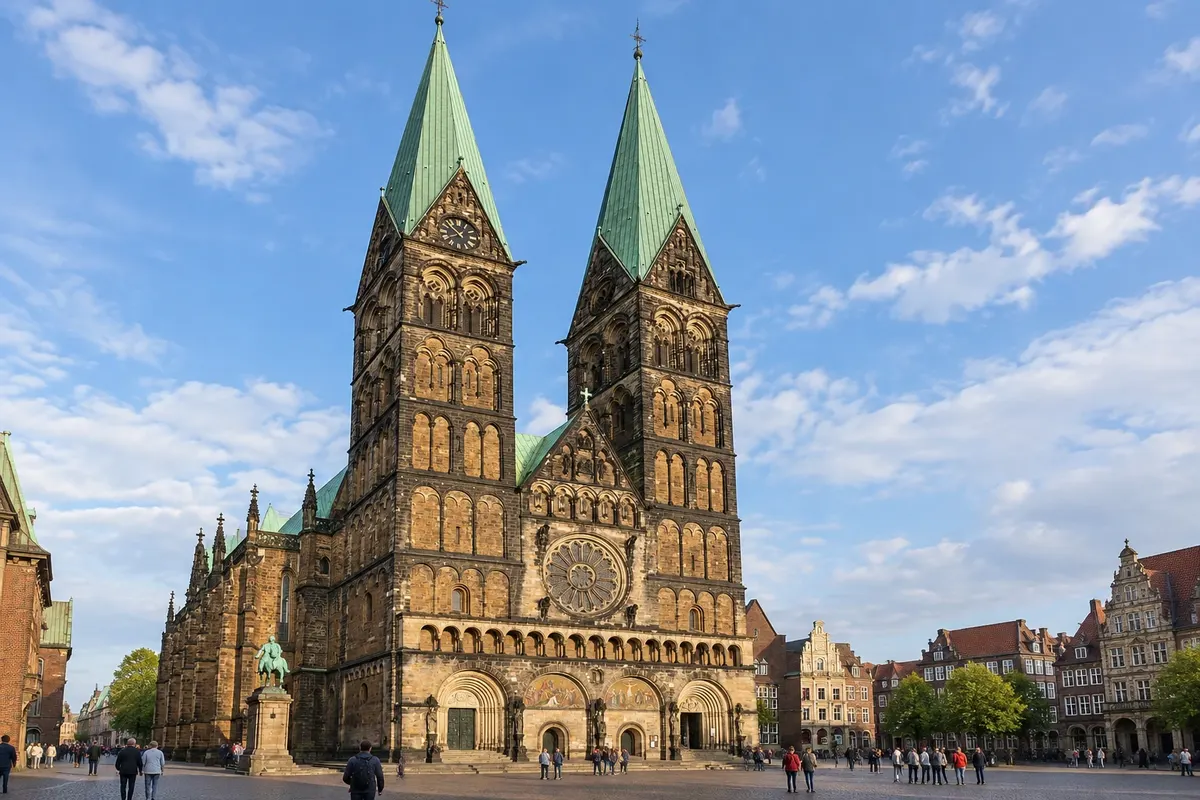
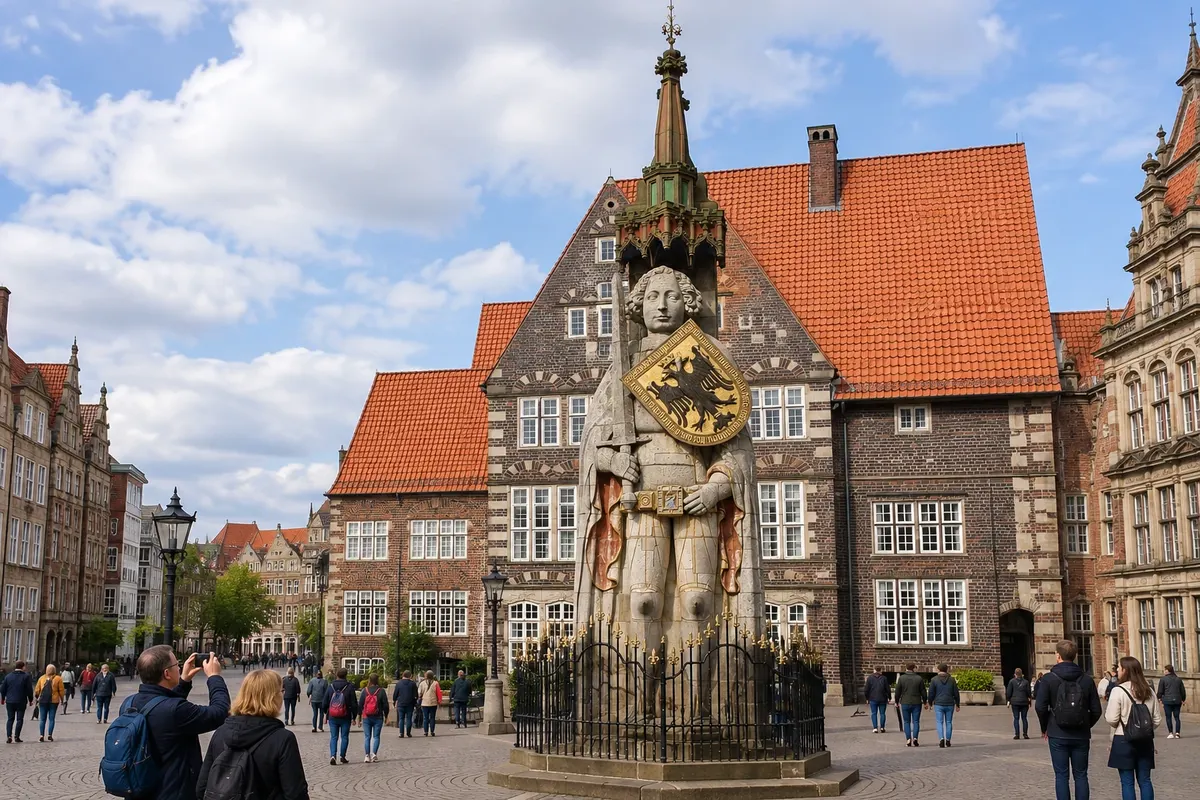
Bremen's market square, surrounded by the town hall, the cathedral, the state parliament and the merchants' house (Schütting). In the centre, the stone Roland; at the corner of the town hall, the Músicos de Bremen.
Antarktika
Bremen · Nemčija
Hanseatic city on the banks of the Weser River, with the town hall and the Roland inscribed on the UNESCO World Heritage List, the statue of the Músicos de Bremen and the emigrant port in Bremerhaven.
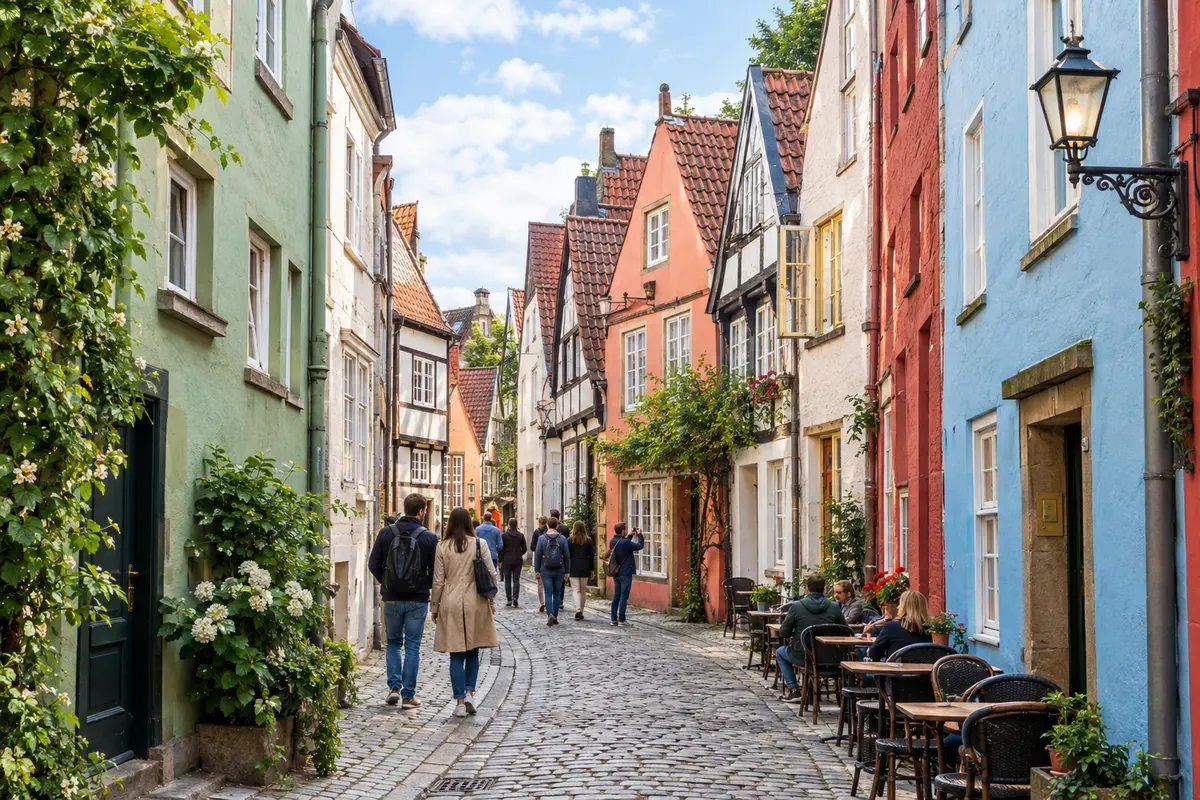
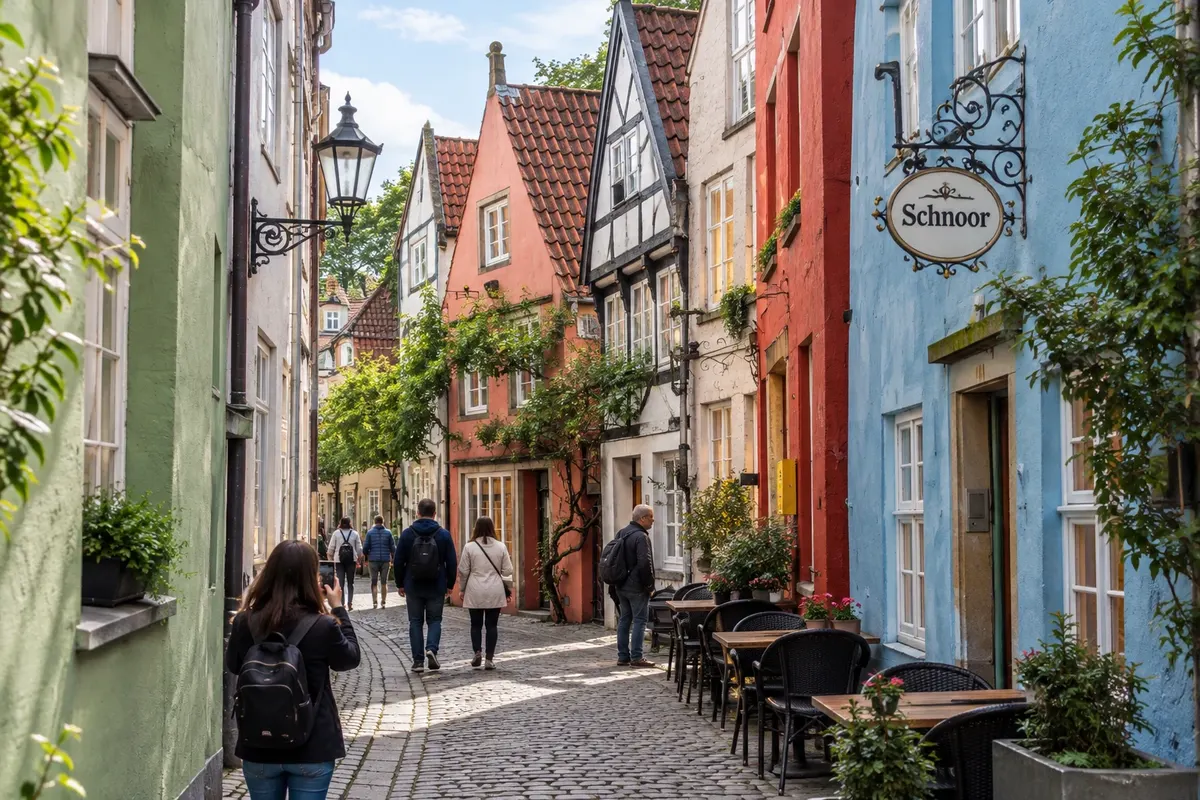
Na fotografiji: Schnoor, Bremen
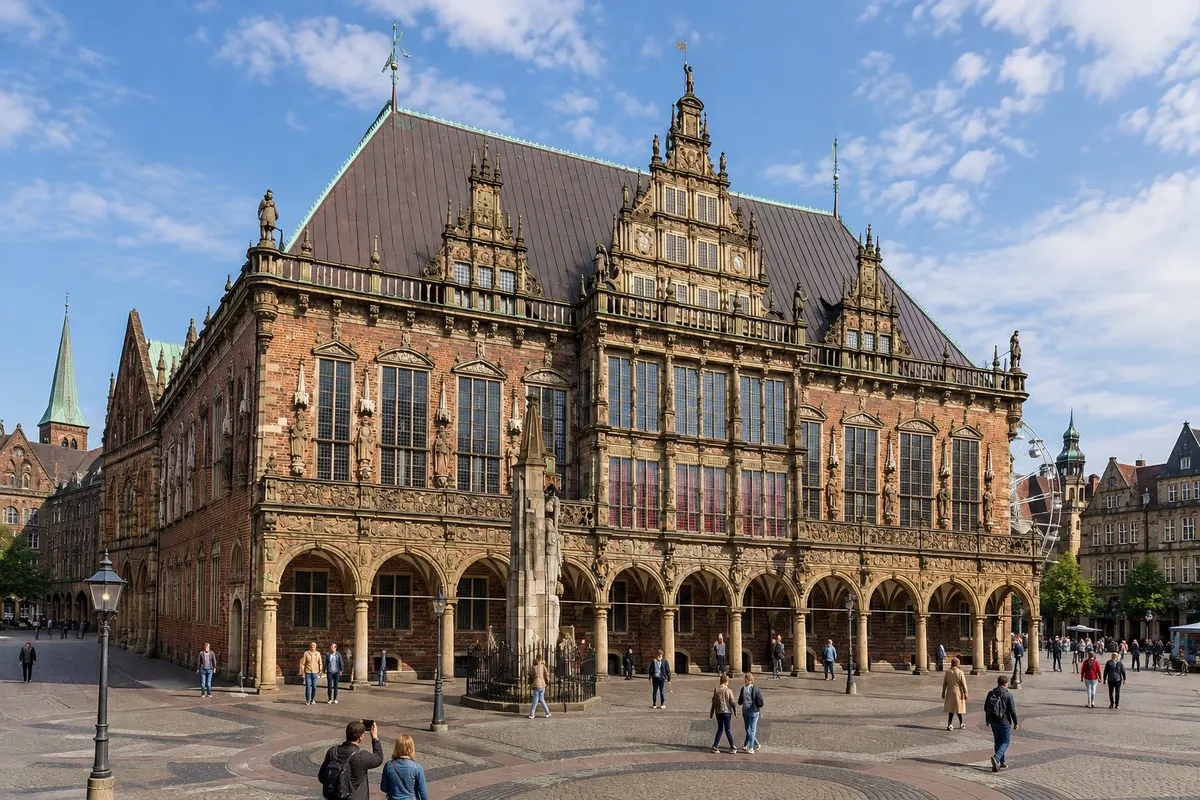
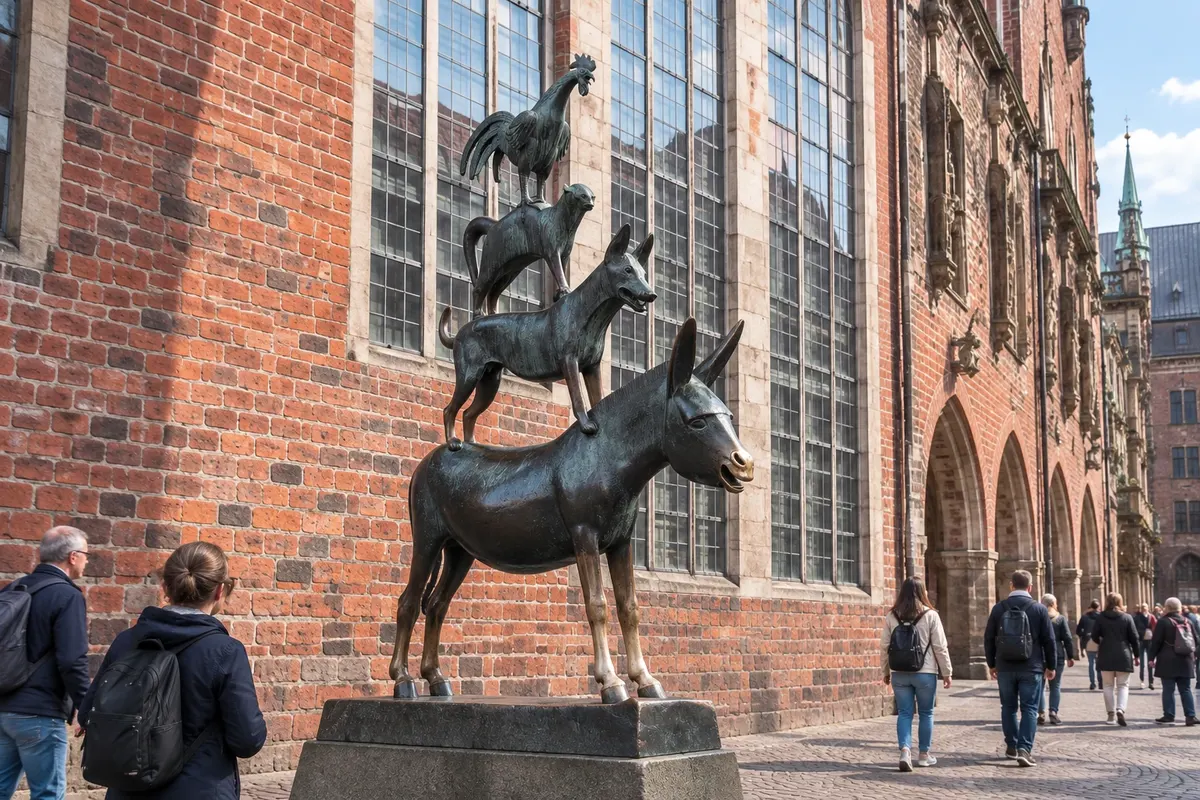
Illustrative images. The pictures in this guide are illustrations based on the real place, not photographs, and may differ from it.
Spoznajte kraj
Bremen is in northwestern Germany, on the banks of the Weser River, about an hour by train from Hamburg. It is one of the country's city-states: together with Bremerhaven on the coast, it forms the state of the Free Hanseatic City of Bremen. The maritime trading tradition of the Hanseatic League shows in the façades, in converted warehouses and in the local pride in the word "hanseatic".
The center is compact and best explored on foot. On the Marktplatz, the market square, are the town hall (Rathaus), built between 1405 and 1410 with a Renaissance façade from the early 17th century, and the stone Roland statue from 1404. Both were declared a World Heritage Site by UNESCO in 2004. Beside the town hall is the bronze sculpture of the Músicos de Bremen: the donkey, the dog, the cat and the rooster from the Brothers Grimm tale.
A few steps away are St. Peter's Cathedral (St. Petri Dom), with a climbable tower and a crypt where naturally mummified bodies can be seen; the Böttcherstraße, a brick street rebuilt in the 1920s with art museums; the Schnoor, a neighborhood of narrow lanes and old houses; and the Schlachte, a former quay turned promenade with bars and restaurants along the Weser.
For those who want more, there are art and world-culture museums, a science center near the university and a park that encircles the center in place of the old city walls. About 35 minutes by train, Bremerhaven holds two museums worth a day trip: the Haus der Auswanderer (Casa do Emigrante), about those who left Europe for the Americas from the city's port, and the Klimahaus, a journey through the world's climate zones.
V vodniku še ni nastanitev – Bremen.
kako do tja · koliko dni · načrt poti · vprašanja
✈ Flughafen Bremen (BRE)· 5 km do cilja (Bremen)
Check before booking. Bremen Airport (BRE) is a few kilometers from the center and has a tram to the central station. Many people arrive via Hamburg or Frankfurt and continue by train: from Hamburg it's about an hour; from Frankfurt, close to four hours.
Doživite kraj
Bremen's market square, surrounded by the town hall, the cathedral, the state parliament and the merchants' house (Schütting). In the centre, the stone Roland; at the corner of the town hall, the Músicos de Bremen.
Gothic town hall built between 1405 and 1410, with a Renaissance façade from the early 17th century. A UNESCO World Heritage Site together with the Roland, it has a grand hall with ship models, the art nouveau Güldenkammer and the Ratskeller wine cellar.
Bronze sculpture by Gerhard Marcks from 1953, featuring the donkey, dog, cat and rooster from the Brothers Grimm tale stacked on top of each other. It stands at the left side of the town hall and is the city's most popular symbol.
Lutheran Cathedral of São Pedro, next to the Marktplatz, with two towers, Romanesque crypts, a museum, an observation deck in the south tower and the Bleikeller, a cellar where naturally mummified bodies are displayed.
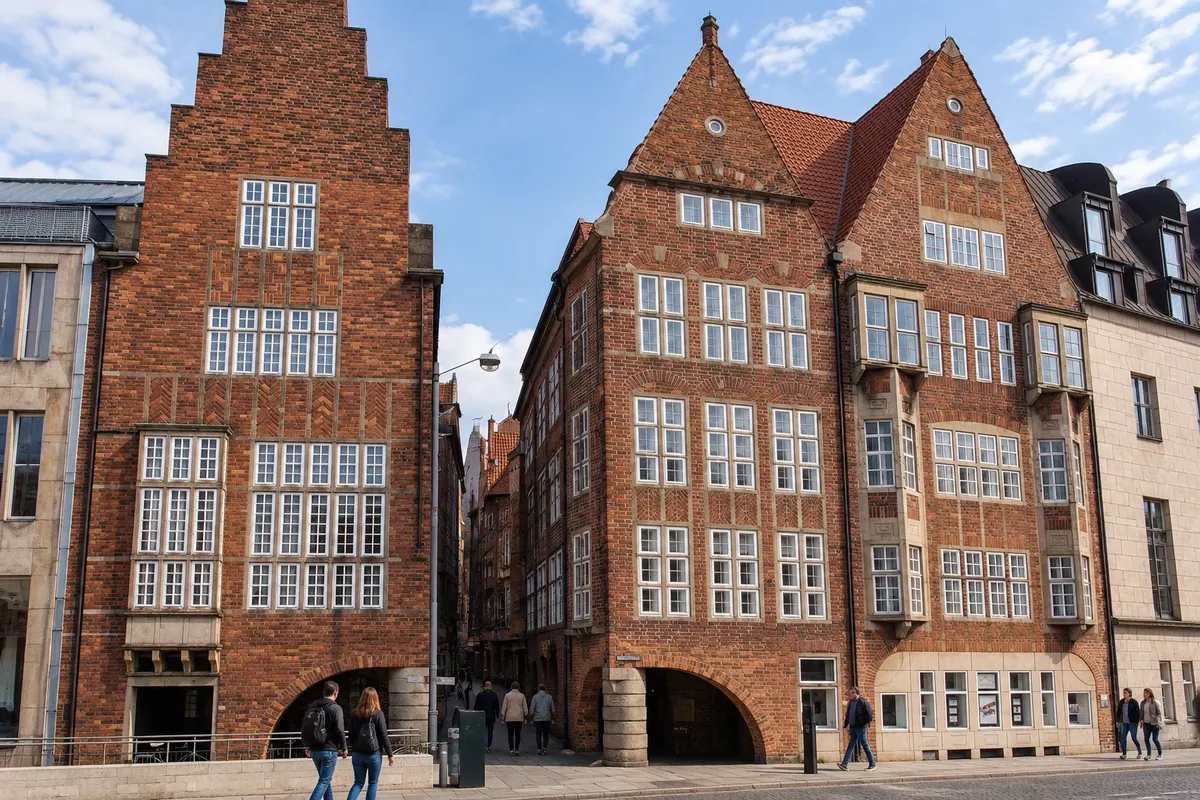
A 108-metre street between the Marktplatz and the Weser, rebuilt between 1922 and 1931 by coffee merchant Ludwig Roselius, featuring expressionist brick architecture, a porcelain bell carillon and two art museums.
The oldest neighborhood of Bremen, between the cathedral and the Weser, with about 120 low houses, most of them listed, in narrow alleyways where fishermen, boatmen and craftsmen once lived. Today it houses studios, craft shops and cafés.
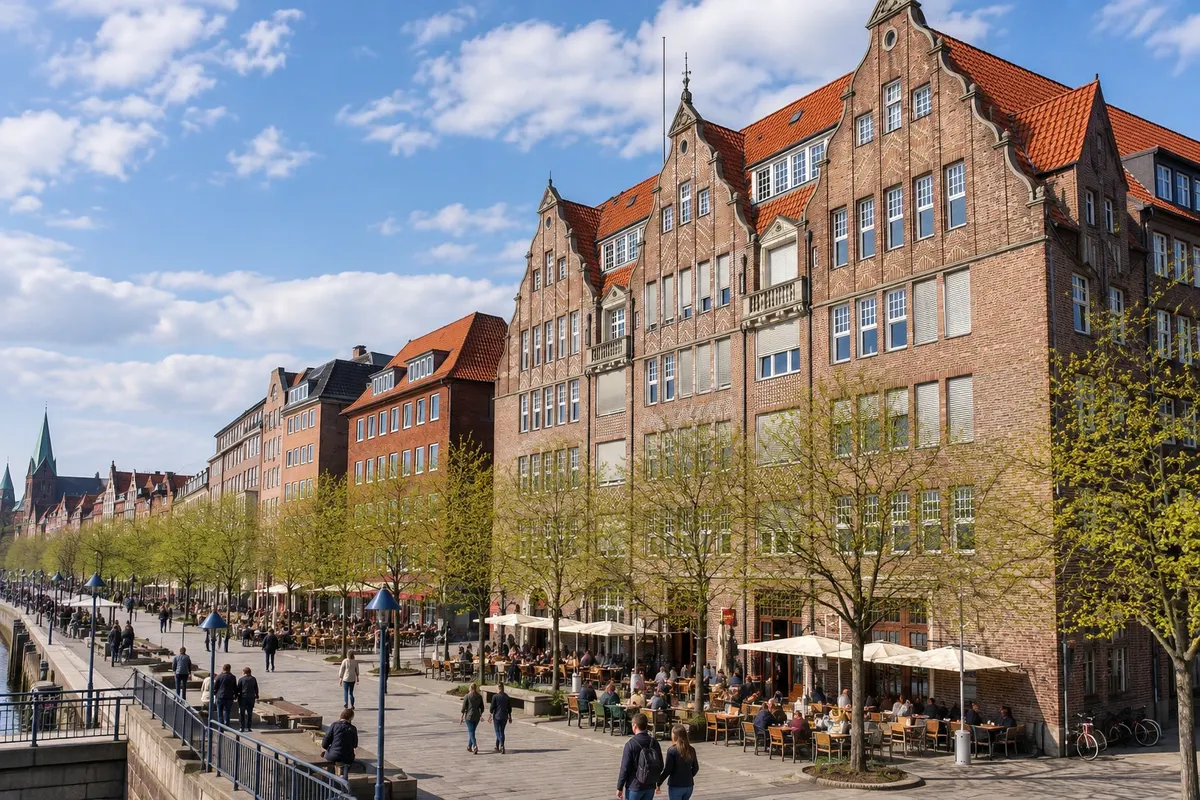
Former quay of Bremen’s port on the right bank of the Weser, transformed into a two-level promenade with restaurants, breweries and bars in old warehouses, moored sailing ships and departures for boat tours.
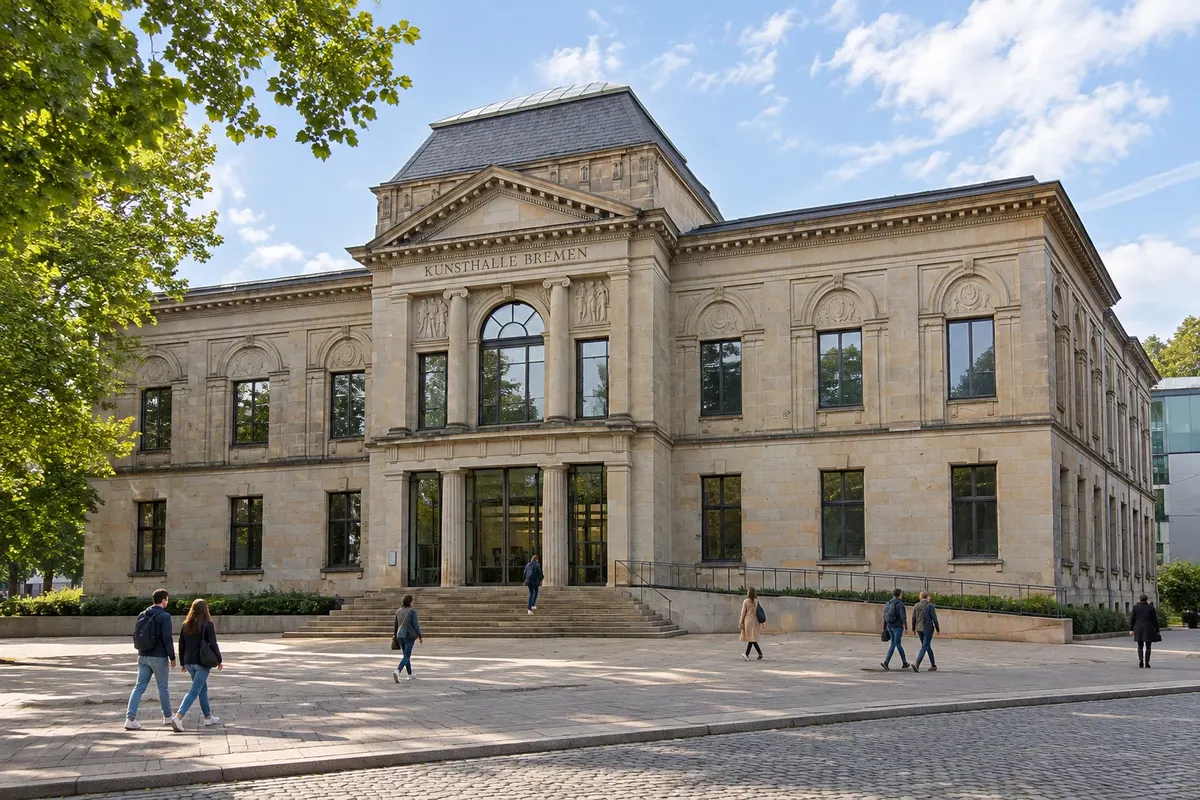
Art museum run by a citizens' association founded in 1823, with European painting from the Middle Ages to the present, works by Monet, Van Gogh and Paula Modersohn‑Becker, and a large prints and drawings collection.
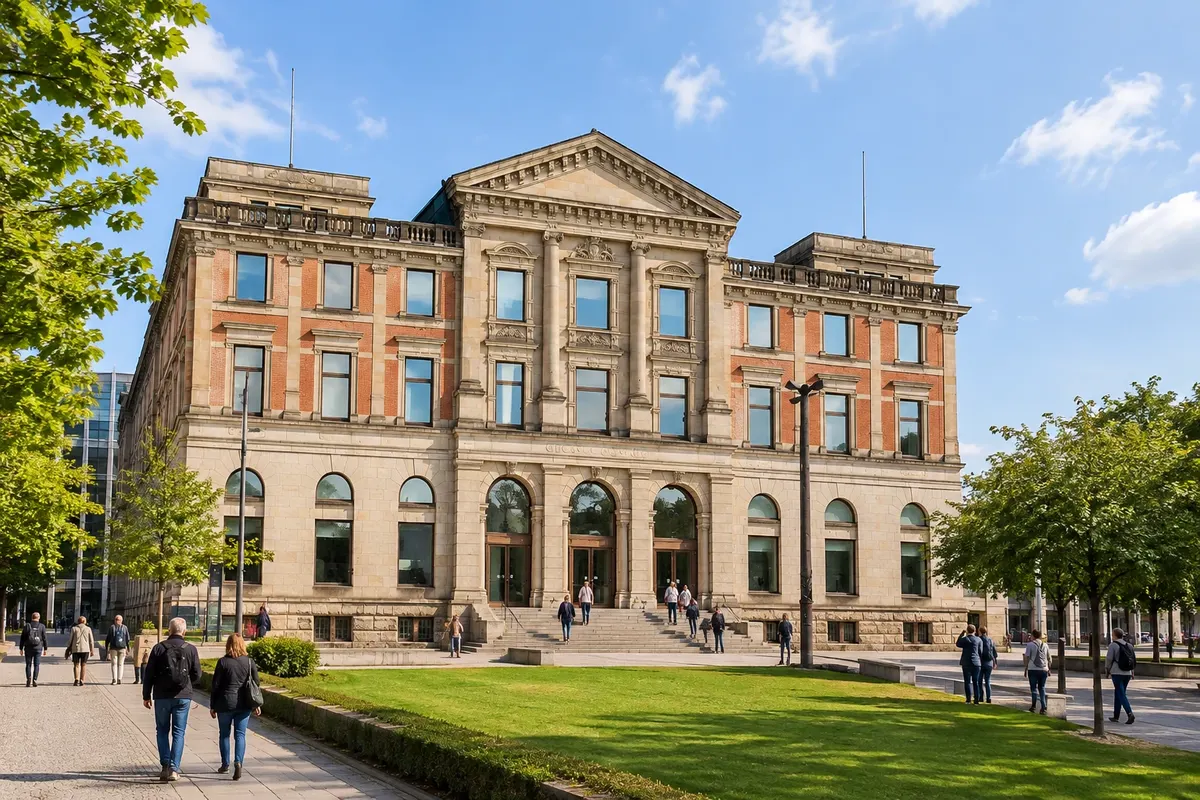
Museum of world cultures, nature and trade, located next to the central station since 1896, with exhibitions on Asia, Africa, the Americas and the Pacific islands, and a visitable storage holding thousands of objects.
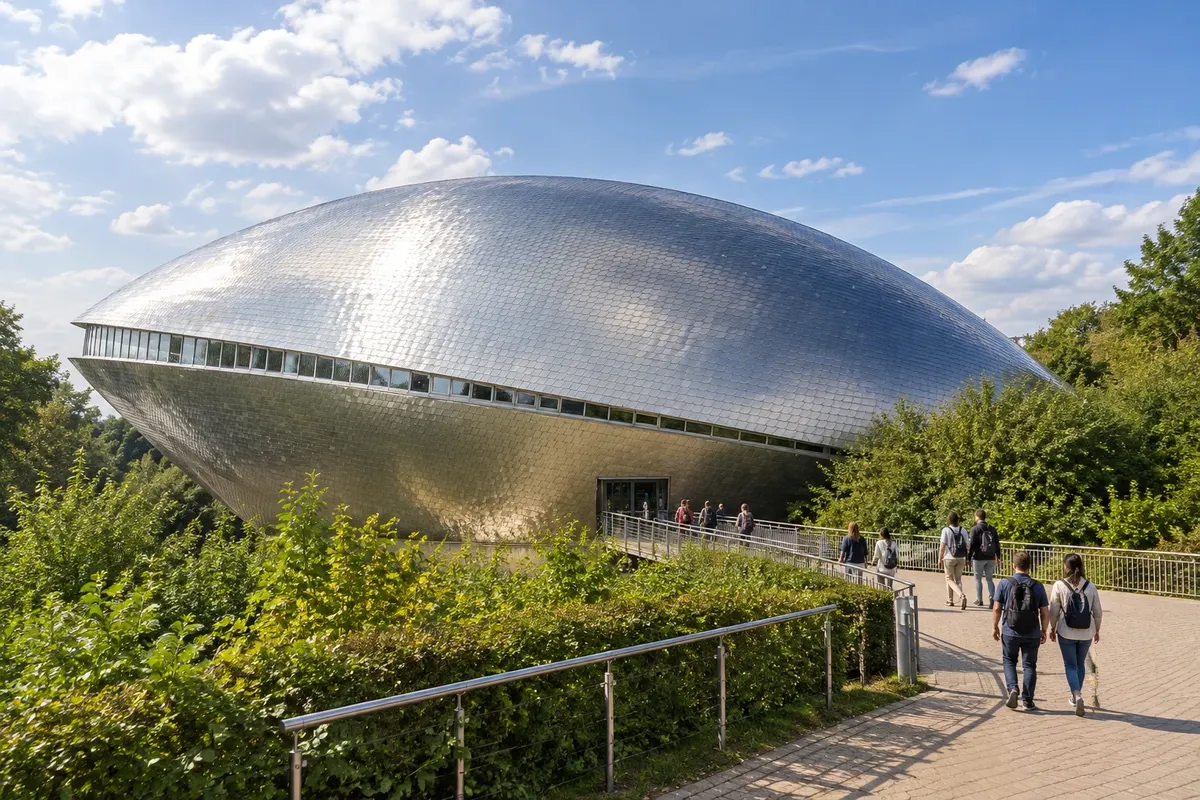
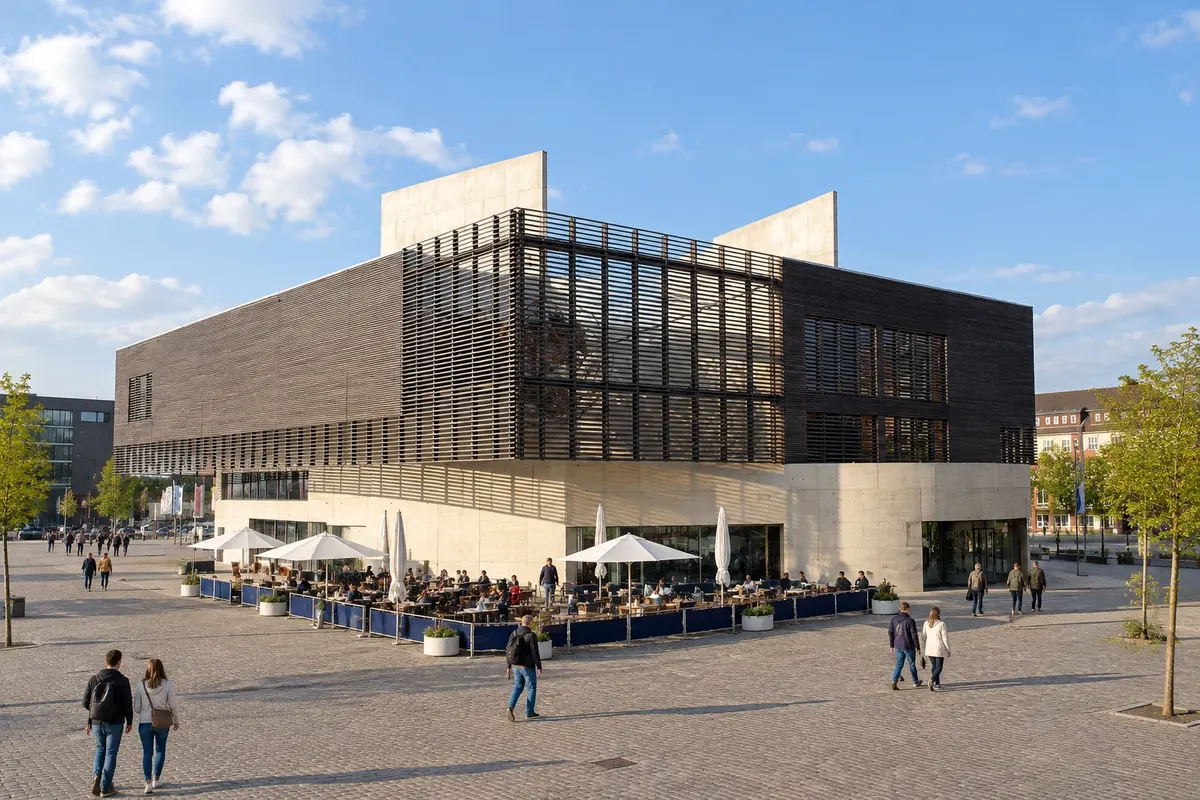
Interactive science centre near the university, in a silver building shaped like a whale or a shell, with more than 300 experiments on technology, the human body and nature, and an outdoor area with a tower.
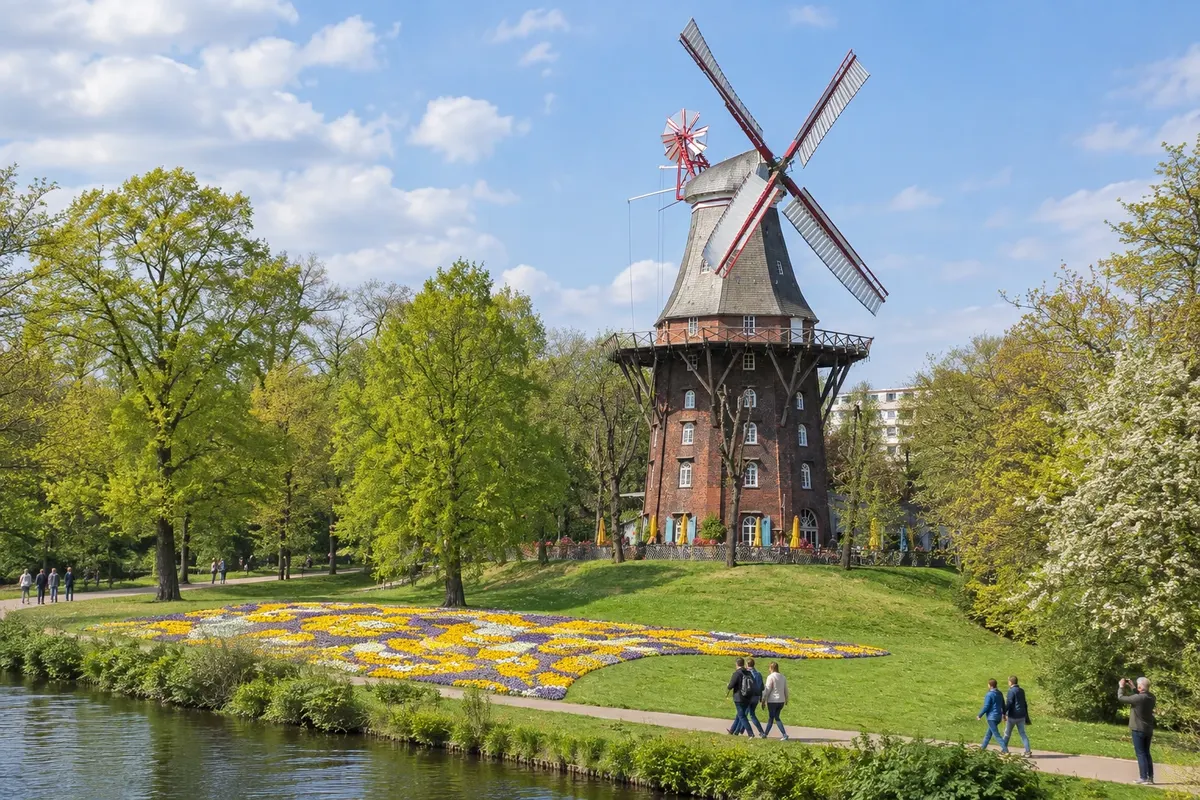
Park laid out in a zigzag that skirts the Altstadt in place of the former fortifications, transformed into an English landscape garden from 1802, featuring the old moat, the windmill Mühle am Wall and the Kunsthalle.
Museum in Bremerhaven about European emigration to the Americas and immigration to Germany, told through real family stories in reconstructed rooms such as quays, ships and lodgings. Awarded European Museum of the Year in 2007.
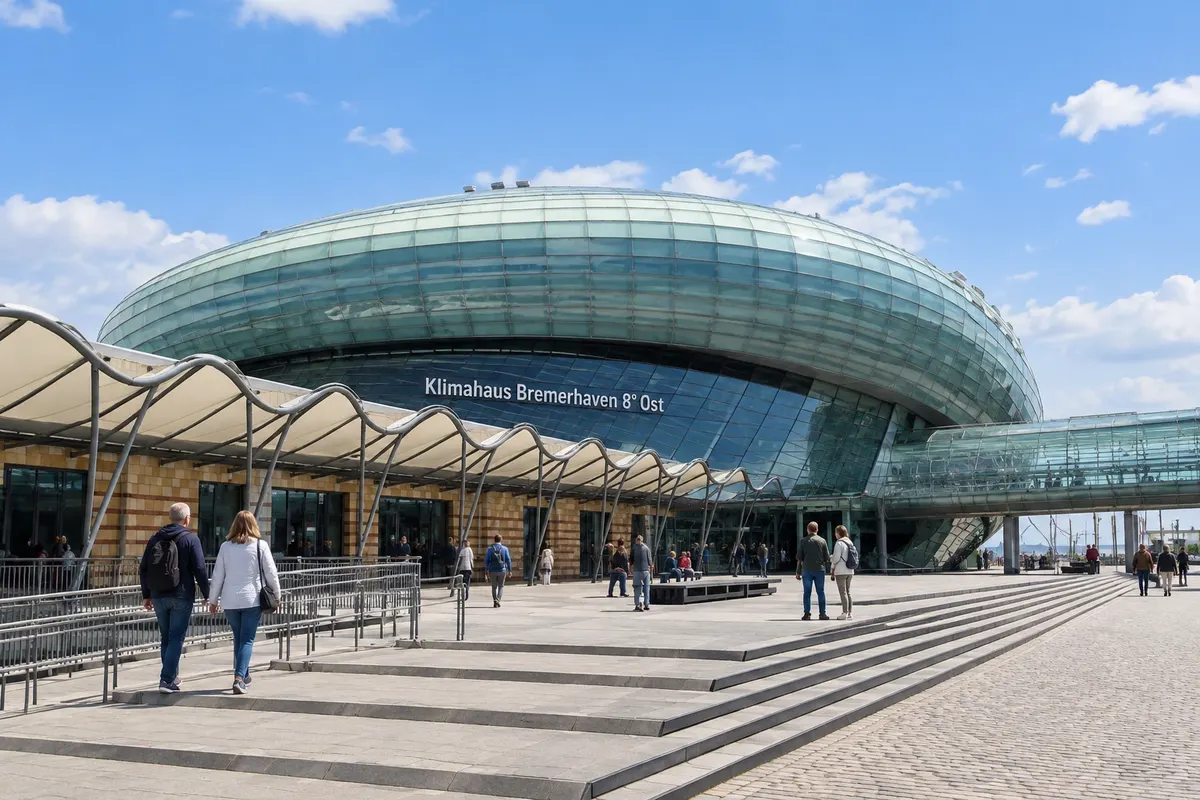
Climate science center in Bremerhaven, in a building shaped like a ship's hull, featuring a journey along the 8° East meridian that passes through nine places on five continents, reproducing the temperature and humidity of each.
Stone statue from 1404 in the Marktplatz, symbol of the city's freedoms. At 5.47 meters, not counting the pedestal and baldachin, it is the largest free-standing statue of the German Middle Ages and a UNESCO World Heritage Site.
Kaj izbrati pred odhodom
Izhodišče, trajanje, potek, vključene storitve in okvirna cena vsakega izleta.
The Marktplatz (market square) in Bremen is about a 10-minute walk from the Hauptbahnhof (central station) and contains what made the city a UNESCO World Heritage Site in 2004: the Rathaus (town hall) and the Roland. The Gothic Rathaus was built shortly after 1404, when Bremen was already part of the Hanseatic League; in 1612 it received the light-stone façade in the style called Weser Renaissance, designed by sculptor Lüder von Bentheim, with arcades on the ground floor and a pediment full of figures. Beside it, the Neues Rathaus (new town hall) dates from 1909–1913. In front of the façade stands the Roland, a stone statue from 1404 about 5.5 meters high, sword raised and eyes turned toward the cathedral: it represents the city’s freedom and market rights. On the other side of the square is the Schütting, the former merchants’ house from 1537, and in the middle of the square a mosaic with the Hanseatic cross. In the west corner of the Rathaus, half hidden, is the bronze sculpture of the Bremer Stadtmusikanten (Bremen Town Musicians) by Gerhard Marcks from 1953: donkey, dog, cat and rooster stacked, from the Brothers Grimm tale. Under the Rathaus, the Ratskeller stores German wines since the early 15th century and operates as a restaurant. The walk ends at the Liebfrauenkirche, a 13th-century church next to the square.
Kraji na poti: Bremer Marktplatz, Bremer Rathaus, Bremer Roland, Bremer Stadtmusikanten.
Vključuje: The square, the Roland, the Rathaus façade, the Stadtmusikanten sculpture and the Liebfrauenkirche are open and have no admission fee. The interior of the Rathaus can only be seen on a guided tour, with a separate paid ticket sold at the Tourist-Information on Böttcherstraße. The Ratskeller is a restaurant and requires payment for food and drink.
Nasvet: Arrive before 10 a.m. to photograph the Roland without people in front and to touch the donkey’s paws of the Stadtmusikanten before a queue forms: local tradition says to hold the two front paws with both hands. On days when the Senate is in session the Rathaus is closed to visitors. On Saturday afternoons the square usually has a market and street music.
Najboljši čas za obisk: All year. From April to October there are tables on the square’s sidewalks; from late November to December 23 the Christmas market usually occupies the Marktplatz. Confirm dates before you go.
The interior of Bremen’s Rathaus is only visited in groups with a guide, because the building still serves as the seat of the city-state government. The tour goes up to the Obere Rathaushalle, the upper hall about 41 meters long, 15 meters wide and 8 meters high, with four ship models hanging from the ceiling, wood carvings and the Renaissance spiral staircase. In one corner of the hall is the Güldenkammer (golden chamber), a small room decorated in 1905 by the painter Heinrich Vogeler, from Worpswede, with red and gold leather wallpaper: it is one of the few complete Art Nouveau interiors remaining in Germany. The guide explains how the city was governed by Hanseatic League merchants and why the Roland was placed in front of the façade. English tours usually run once a day (afternoons Monday–Saturday and at noon on Sunday); there are more times in German. When the Senate receives guests or is in session, the visit is suspended without prior notice: confirm on the day.
Kraji na poti: Bremer Rathaus, Bremer Marktplatz.
Vključuje: Admission paid separately, sold at the Tourist-Information on Böttcherstraße or online; includes a guide and entry to the Obere Rathaushalle and the Güldenkammer. There is no self-guided visit. Closed groups can request extra time slots in other languages.
Nasvet: Buy the ticket early in the morning for the afternoon English tour, because the group size is limited. There is no visit on Saturday mornings or on holidays with official receptions. Photography is allowed without flash. Combine the visit with a walk through the Marktplatz, which is right outside.
Najboljši čas za obisk: All year, in any weather, since it is an indoor tour. In July and August and in December groups fill up more quickly.
St. Petri Dom (Cathedral of St. Peter) dominates the east side of the Marktplatz with two towers of about 89 m. The history begins in 789, when Bishop Willehad erected a wooden church on the site; the stone cathedral dates from 805, and the oldest parts visible today are the two 11th-century crypts. The brick Gothic vaults are 13th century and the current appearance comes from the major restoration of 1888–1901. Since 1638 it has been a Lutheran church. Inside, see the 13th-century bronze baptismal font in the west crypt, the carved choir stalls and the organs. The south tower can be climbed by a stone spiral stair, offering views over the Marktplatz, the Weser and the roofs of the Schnoor. In the adjacent courtyard is the Bleikeller (lead cellar), where eight naturally mummified bodies are displayed in coffins with glass lids; it has been visited for more than 300 years. The Dom-Museum, in a side chapel, shows finds from the excavations and liturgical objects. The tower and the Bleikeller usually close in winter, from late December until the end of March: check before you go.
Kraji na poti: St. Petri Dom Bremen.
Vključuje: Entrance to the cathedral is free outside services. The climb to the tower and the Bleikeller require separate paid tickets, each with its own ticket office; the Dom-Museum has separate admission. There are no visits on Sunday mornings during services.
Nasvet: Climb the tower in mid-morning, when the light hits the Marktplatz, and leave the Bleikeller for later: it stays cold even in summer. The Cathedral is closed on May 1, October 3, and December 24, 25 and 31. For very young children, the Bleikeller can be intimidating.
Najboljši čas za obisk: The tower and the Bleikeller generally open from April to December; the cathedral is open year-round. In December there are Advent concerts.
Böttcherstraße is only about 108 meters long and links the Marktplatz to the Weser, but it is an entire work of art. Between 1922 and 1931 the coffee merchant Ludwig Roselius, inventor of the decaffeinated HAG coffee, bought the medieval coopers’ alley and rebuilt it with sculptor and architect Bernhard Hoetger in expressionist brick: undulating façades, reliefs, bronze portals and inner courtyards. At the entrance, the gilded relief of the Lichtbringer (bringer of light) from 1936 marks the portal. At the Haus des Glockenspiels, 30 Meissen porcelain bells play on the façade while ten wooden panels turn showing navigators, from Columbus to Lindbergh: from April to December, on the hour from noon to 6:00 PM; from January to March, three times a day. On the same street are the Paula Modersohn-Becker Museum, opened in 1927 as the world’s first museum dedicated to a woman painter, and the Ludwig Roselius Museum, in a 1588 house with medieval art. The Haus Atlantis, with its blue-and-white spiral staircase, is now part of a hotel, but the staircase can be seen. At the end of the street are craft shops, a candy shop and the Tourist-Information.
Kraji na poti: Böttcherstraße.
Vključuje: The street, courtyards and the Glockenspiel are open and entry is free. The Paula Modersohn-Becker and Ludwig Roselius museums have separate paid admission, with a combined ticket. Glass and goldsmith workshops operate as shops.
Nasvet: Arrive 10 minutes before the hour and wait in the courtyard in front of the Haus des Glockenspiels; the chime lasts only a few minutes. From January to March there are only three chimes a day (noon, 3:00 PM and 6:00 PM). The street is narrow and fills up on Saturday afternoons; early in the morning you can view the reliefs calmly.
Najboljši čas za obisk: Year-round. From April to December the Glockenspiel rings on the hour; in December the street is decorated with Christmas lights.
The Schnoor is Bremen’s old quarter, documented since the 13th century and with the oldest buildings from the 14th century. There are 111 small houses, more than a hundred of them listed, lined up in lanes so narrow that in some stretches you can touch both walls with your outstretched arms; the Katzengang is one of the tightest. The name comes from an old word for cord: fishermen from the river, ropemakers and craftsmen lived here, and the houses sit side by side like beads on a string. Today it is car-free, with studios, galleries, souvenir shops, cafés and restaurants serving northern German food such as labskaus, Knipp and red cabbage with Pinkel in winter. In the middle of the quarter is the Bremer Geschichtenhaus, where actors tell the city’s story, the Packhaustheater and a tiny house used for weddings. The Birgittine convent, the only one in the city, and what remains of the Franciscan church of St. Johann complete the walk. Many shops open on Sundays from April to December.
Kraji na poti: Schnoor.
Vključuje: Free wander through the lanes; there is no entrance fee. The Bremer Geschichtenhaus has a separate admission charge, with a German-language performance. Cafés, shops and the candy factory (Bremer Bonbon Manufaktur) offer paid workshops separately.
Nasvet: Come in the late afternoon, when the shop lights come on and tour groups have left, and have dinner there. Saturday evenings in summer and December the alleys get very crowded; early in the morning you can photograph them empty, but shops generally open around 10:00 or 11:00.
Najboljši čas za obisk: All year. From April to December some shops are open on Sundays; in December the neighborhood is decorated for Christmas.
The Schlachte is the riverside of the Weser in the old town, on the east bank, just below the Marktplatz. The name appears in a document from 1250 and comes from the wooden piles that supported the bank; it was the city’s port from the 13th century until the river silted up and the railway reached Bremerhaven in the 19th century. The original quay was about 450 meters long; today you can walk roughly two kilometers along the bank. The waterfront was redesigned for Expo 2000, with the old warehouses turned into restaurants, bars and beer gardens that typically open from the first Sunday in March until the end of September. Moored there are replicas of the Hanseatic cogs Friedrich and Roland von Bremen and, nearby, the sailing ship Alexander von Humboldt, now a hotel and restaurant. Line boats on the Weser depart from the Martinianleger: the harbor round trip, 75 or 105 minutes, passes the Überseestadt (former overseas port) and the industrial terminals; there are also crossings to Vegesack and, on some days of the season, to Bremerhaven, Oldenburg and Verden. On the opposite bank, in the Neustadt, is the brewery founded in 1873, which runs guided visits of about 3 hours by reservation through the tourist office (minimum age 16 years).
Kraji na poti: Schlachte, Böttcherstraße.
Vključuje: Free walk along the riverside, no charge. The boat trip has a separate fare, sold at the Martinianleger kiosk or online; check the current fares and the season. The brewery visit is charged separately and requires a reservation; the visit is the activity, not a tasting.
Nasvet: Take the 75-minute boat in the mid-afternoon and return on foot along the waterfront to finish the afternoon in the beer gardens. From November to March boat frequency drops and the street bars close; the Sielwall ferry operates on a reduced schedule. From November 23 to December 23 the Schlachte usually hosts the Schlachte‑Zauber, a Christmas market with wooden stalls and street performers.
Najboljši čas za obisk: From April to September, with boats on a full schedule and tables along the waterfront. In December, because of the Christmas market on the bank. Confirm the boats’ season before you go.
The Kunsthalle is on Am Wall, on the edge of the Wallanlagen park, between the center and the Ostertor neighborhood. It is an association museum: the Kunstverein in Bremen was founded in 1823 by 34 merchants, opened the building in 1849 and still maintains it today with public support. The collection covers European painting from the 14th century to the present. The strength is the 19th century and early 20th: Delacroix, Monet, Manet, Cézanne and Van Gogh alongside Germans Max Liebermann, Lovis Corinth and Max Beckmann; and the Worpswede artists’ colony, with a large group of works by Paula Modersohn-Becker, in addition to her museum on Böttcherstraße. The Kupferstichkabinett (print cabinet) holds about 220,000 sheets from the 15th to the 20th century and appears in rotating exhibitions. Between 2009 and 2011 the 1960s and 1980s wings were demolished and replaced by two new blocks, which gave the museum rooms for contemporary art and video, such as the permanent installation by Pipilotti Rist. The museum is closed on Mondays; on Tuesdays it stays open until 9 p.m.
Kraji na poti: Kunsthalle Bremen, Bremer Wallanlagen.
Vključuje: Paid admission separately, including entry to the permanent collection and temporary exhibitions; check the current price table. Digital guides online in several languages (bring headphones). There is a café and bookshop. Large bags are stored in the cloakroom.
Nasvet: Go on Tuesday evening, when the museum is open until 9 p.m. and less busy. Start on the 19th-century floor and leave the new wings for last. Afterwards, exit onto the Am Wall and walk along the Wallanlagen to the windmill. During exhibition changes some rooms may be closed: check before you go.
Najboljši čas za obisk: All year round; a good option for rainy days, which are common from June to August and from November to January. Closed December 24.
The Übersee-Museum (overseas museum) occupies an 1896 building on Bahnhofsplatz, the central station square, to the left when you exit the concourse. It began as a municipal museum of natural history, ethnology and trade, the idea of zoologist Hugo Schauinsland, who wanted to show the world under one roof, and today holds about 1.2 million objects. The permanent exhibitions are organized by continent: Asia, with a Japanese garden; Africa; the Americas; and the Pacific, in a room called The Blue Continent, with canoes, masks and life on atolls. One section explains how Bremen and its merchants connected with these regions, addressing the tensions of the colonial period directly, and there is an exhibition about what moves the world (trade, migration and climate). The Schaumagazin, in the neighbouring building, lets you see the collection stored on the shelves. The museum is closed on Mondays; Tuesday to Friday it opens at 9:00, good for those arriving early by train.
Kraji na poti: Übersee-Museum Bremen.
Vključuje: Separate paid admission, covering the permanent galleries and temporary exhibitions; check the current pricing. There is an audio guide in English and German and a café. The Schaumagazin is included with the same ticket.
Nasvet: Fit the museum visit into your arrival or departure day, because it is two minutes from the platform and has left-luggage facilities. With children, start with the Pacific and Asia, the most scenographic rooms. On rainy winter days the museum fills with school groups in the morning; afternoons are quieter.
Najboljši čas za obisk: Year-round. During German school holidays (summer and December) opening hours change: check before you go.
The Universum is Bremen’s science center, opened in 2000 next to the university in the city’s north. The building by architect Thomas Klumpp resembles a whale or a shell and is covered with 40,000 stainless-steel scales. Inside, about 250 hands-on experiments occupy 4,000 square meters divided into three themes: technology, the human being and nature. There is an earthquake simulator, stations about the body, perception and the brain, and in-depth areas with longer explanations. A cube beside it houses temporary exhibitions, many produced with German research centers. Outside, a 5,000-square-meter park has roughly 25 movement-related points, including the Turm der Lüfte, a 27-meter tower with views of the university, a bungee-jump platform with up to 4 meters of elastic, and a darkroom. Thirty-minute science shows run every day. It’s Bremen’s family attraction, with texts in German and English.
Kraji na poti: Universum Bremen.
Vključuje: Admission paid separately, covering the permanent exhibition, temporary exhibitions and the outdoor park; there is a family ticket. Check the current price list. The science shows are included. Restaurant and shop on site.
Nasvet: On weekends and during school holidays the entrance gets crowded from 11:00 onward: arrive at opening or after 14:00. Reserve the outdoor park for dry days, from April to October. Allow at least 3 hours; with children from about 6 years old, it can take a full day.
Najboljši čas za obisk: All year; the outdoor park is more rewarding from April to October. In rainy months, it’s the city’s indoor family activity.
The Wallanlagen are the crescent-shaped green strip that surrounds the old center, from one point of the Weser to another. It was the city's wall with bastions and a moat; from 1802 the defenses were dismantled and gardener Isaak Altmann transformed them into a promenade with lakes, bridges and lawns, keeping the old moat (Stadtgraben) as a reflecting waterway. The well-known spot is the Mühle am Wall, a windmill from 1898 beside the Herdentor, which operated until 1947 and today houses a café; opposite are flower beds changed each season. You can continue along Am Wall to the Kunsthalle and the theatre. On the other side of the station, across the Bürgerweide, the Bürgerpark begins, started in 1866 and designed by Wilhelm Benque: together with the Stadtwald to the north, they comprise 202 hectares of English-style park maintained to this day almost entirely with donations from residents, through the park association. It has lakes with rowboats and pedal boats to rent, animal enclosures, a Meierei (former dairy) with a restaurant, bowling greens and running trails.
Kraji na poti: Bremer Wallanlagen.
Vključuje: Both parks are open and entrance is free. Boat rentals in the Bürgerpark are paid separately, generally from April to October. Mill café and the Meierei restaurant require payment for food/drink. Park guided tours in German on some days.
Nasvet: Do the Wallanlagen early in the morning, with the mill reflected in the moat, and the Bürgerpark at late afternoon on a sunny day. The Bürgerpark is next to the Bürgerweide, where in October the Freimarkt usually sets up its rides: the area is fenced off and noisy on those days.
Najboljši čas za obisk: From April to October, with flowerbeds in bloom and boats on the lake. In May and June the rhododendrons and lindens are at their peak; in autumn the leaves change color.
Bremerhaven, the port city in the state of Bremen, lies about 60 km downstream at the mouth of the Weser, and regional trains take 35 to 50 minutes. The Deutsches Auswandererhaus (German Emigration Center), opened in 2005 at the Neuer Hafen, the 1852 port, tells that story as a parcours. On entry visitors receive a chip card linked to a real person who emigrated; the card triggers audio and screens along the route. Next comes the Norddeutscher Lloyd company waiting room in 1870, the quay with the luggage, the bunks of a 1850s ship, a cabin from 1880 and another from the 1920s, arrival at Ellis Island and the Grand Central Terminal concourse in New York. A second building, from 2012, reverses the perspective and covers 300 years of immigration to Germany. In 2007 the museum received the European Museum of the Year award. There is a passenger-list database for those researching ancestors. Texts in German and English; audio guide in other languages.
Kraji na poti: Deutsches Auswandererhaus.
Vključuje: Separate paid admission, with chip card, covering both buildings and temporary exhibitions; check the current price list. Database research is included on the day of the visit. Speisesaal restaurant on site. Train fare not included; the Deutschlandticket is valid on regional trains.
Nasvet: Arrive at opening, at 10:00 AM, to do the route without queues in the cabins, and pair it with the Klimahaus in the afternoon, which is a 10-minute walk away. If you have family who emigrated via the port you can bring names and dates for the search. On days of track work there may be buses replacing the train: check the day before.
Najboljši čas za obisk: Year-round, as it is an indoor visit. Bremerhaven gets strong sea winds: from November to March bring a heavy coat for the walking section along the port.
The Klimahaus Bremerhaven 8° East is located in the Havenwelten, the museum quarter by Bremerhaven’s new harbor, a few minutes on foot from the Deutsches Auswandererhaus. Opened in 2009, it is a museum about climate and weather housed in a glass building shaped like a ship’s hull, with 11,500 square meters. The idea is to follow the 8 degrees east meridian, Bremerhaven’s meridian, making a trip around the globe: the journey begins on a mountain farm in Isenthal, Switzerland, crosses Sardinia, the Sahel in Niger and the rainforest of Cameroon, reaches the ice of Antarctica, a reef beach in Samoa and a village in Alaska, and returns via the island of Langeneß in the North Sea back to Bremerhaven. At each station temperature and humidity really change: it is hot and humid in the forest and cold on the ice; there are aquaria with reef fish and reconstructed houses. Other areas deal with weather extremes, future outlooks and a climate decision laboratory. The complete visit takes an afternoon. Texts in German and English. Closed January 1 and December 24, 25 and 31.
Kraji na poti: Klimahaus Bremerhaven 8° East, Deutsches Auswandererhaus.
Vključuje: Paid admission separately, covering all areas; buying online in advance usually offers a discount. Check the current price table. Restaurant and shop in the building. Nearby are the Deutsches Schifffahrtsmuseum (maritime museum), the Zoo am Meer and the observation deck of the Sail City building, each with its own ticket.
Nasvet: Bring a light layer you can put on and take off: the Antarctic room is below zero and the Cameroon room exceeds 30 °C. Do the Auswandererhaus in the morning and the Klimahaus in the afternoon, and return to Bremen early in the evening. During school holidays the entrance line grows after 11 a.m.
Najboljši čas za obisk: All year round, since it is covered; together with the Auswandererhaus it makes a full-day program in Bremerhaven. From April to October you can end the day on the harbor promenade, with wind.

Po dnevih
Predlogi za načrtovanje poti. Vrstni red dni prilagodite vremenu in razpoložljivosti izletov.
The overnight flight from Brazil arrives in the morning at Frankfurt or Munich; from Frankfurt, the ICE departs from the airport’s own station and takes 3 h 50 to 4 h 20 to Bremen Hauptbahnhof. Arriving in the early afternoon, drop your bags and walk along Bahnhofstraße to the Marktplatz: Rathaus, Roland and the Stadtmusikanten. Enter Böttcherstraße in time for a chime of the Glockenspiel, before 6 p.m., and go down to the Schlachte to dine on the Weser waterfront. Sleep early: the time difference is 4 or 5 hours.
Buy the guided-tour ticket for the Rathaus early at the Tourist-Information and, while you wait for the time, climb St. Petri Dom’s tower and see the Bleikeller. After the visit, have lunch in the Schnoor and lose yourself in the narrow streets. In the afternoon, take the 75-minute harbor boat from Martinianleger, or, if it rains, swap that for the Kunsthalle Bremen, a 10-minute walk along Am Wall. Finish at the Wallanlagen, with the windmill, on the way back to the station.
Morning arrival in Frankfurt or Munich on the overnight flight and ICE train to Bremen Hauptbahnhof, arriving in the early afternoon. Take a light day: Marktplatz with the Rathaus, Roland and the Stadtmusikanten, the Liebfrauenkirche and Böttcherstraße with the Glockenspiel. Have dinner on the Schlachte, on the Weser’s edge, and walk back along Böttcherstraße lit up.
In the morning, guided tour of the Rathaus (buy the ticket early at the Tourist-Information) and St. Petri Dom with tower and Bleikeller. Lunch in the Schnoor and return through the alleyways. In the afternoon, Kunsthalle Bremen, with Worpswede and the impressionists, and a walk through the Wallanlagen to the Mühle am Wall. If the day is dry, swap the Kunsthalle for the 75-minute boat on the Weser and leave the museum for Tuesday evening, when it stays open until 9 p.m.
Regional train from Bremen Hauptbahnhof to Bremerhaven, 35 to 50 minutes. In the morning, the Deutsches Auswandererhaus, with the emigrant’s route from the quay to the Grand Central; lunch in the Havenwelten and, in the afternoon, the Klimahaus Bremerhaven 8° Ost, a round-the-world trip along the meridian. Return to Bremen in the early evening. If you have the Übersee-Museum on your list you can fit it in the next morning before the departing train, as it’s on the station square.
Overnight flight from Brazil arriving in the morning at Frankfurt or Munich and ICE to Bremen Hauptbahnhof, arriving in the early afternoon. Drop your bags and walk to the Marktplatz: Rathaus, Roland, Stadtmusikanten and the Liebfrauenkirche. Late afternoon in Böttcherstraße with the Glockenspiel, and dinner on the Schlachte on the Weser waterfront.
Guided tour of the Rathaus in the morning and St. Petri Dom with the south tower and the Bleikeller. Lunch and afternoon in the Schnoor, with the Bremer Geschichtenhaus for those who understand German. At the end of the afternoon, take the 75- or 105-minute harbor boat from Martinianleger on the Schlachte, with the Überseestadt seen from the water.
Regional train to Bremerhaven, 35 to 50 minutes. Morning at the Deutsches Auswandererhaus, lunch in the Havenwelten and afternoon at the Klimahaus Bremerhaven 8° Ost. If time allows, the Deutsches Schifffahrtsmuseum and the Sail City viewing platform are next door. Return to Bremen in the early evening.
Start at 9 a.m. at the Übersee-Museum on the station square. Then Kunsthalle Bremen and a walk through the Wallanlagen to the Mühle am Wall. In the afternoon, Bürgerpark, with a boat on the lake if the weather is good; with children, swap Bürgerpark for Universum Bremen, tram 6, and reserve the whole afternoon.
The ICE from Bremen Hauptbahnhof to Hamburg Hauptbahnhof takes about 1 hour, with trains every hour or more frequently. In Hamburg you can see the Speicherstadt, the Elbphilharmonie plaza and the port by boat and return at night. If you prefer to stay, you can do the Universum Bremen or the brewery tour, with a reservation, and finish at the Schlachte. The next day, the train to Frankfurt Airport departs from the Hauptbahnhof; the Übersee-Museum is on the square for a visit before boarding.
Najboljši čas za obisk
From May to September the days are long and the Schlachte fills with outdoor tables. Winter, from December to February, is cold, wet and with short days. The Christmas market (Weihnachtsmarkt) usually takes over the Marktplatz and the Schlachte from late November until close to Christmas, and the Freimarkt, a popular fair, typically takes place in the second half of October.
The seasons shown are the most usual ones; nature doesn't always follow the calendar.
winter · short days
At the DWD station at Bremen Airport (4 m), average 2 °C and about 58 mm of rain in the month, often as drizzle with wind; snow falls on a few days and does not stick. The sun rises after 8:00 AM and sets before 5:00 PM. The Dom tower and the Bleikeller are often closed; Kunsthalle, Übersee-Museum, Universum and Bremerhaven are the program. Weser boats have few departures. Low activity after New Year; bring a waterproof coat, hat and gloves.
winter · driest month
Winter. At Bremen Airport (4 m), average 3 °C and about 44 mm of rain, the driest month of the year, but with cold wind from the North Sea. Days are still short and the sky gray most of the time. The Glockenspiel on the Böttcherstraße plays only three times a day until March. It's museum season and the Rathaus guided tour is typically without a queue. Hotels are quieter, except during business fair weeks.
late winter · waterfront reopens
Late winter, start of spring. At Bremen Airport (4 m), average 5 °C and about 46 mm of rain. The beer-garden-style terraces on the Schlachte usually open on the first Sunday in March, still with blankets on the chairs. The first bulbs bloom in the Wallanlagen. Low activity—good if you want the center empty.
spring · Easter
Spring, the driest month after February. At Bremen Airport (4 m), average 9 °C and about 40 mm of rain, with sunny days alternating with cold winds. The Glockenspiel returns to hourly chimes, Weser boats resume full schedules and the Bürgerpark rents boats again. Easter brings public holidays and increased activity in the Schnoor, with shops open on Sundays from this month. Bring a coat: wind can feel wintry.
spring · rhododendrons
Full spring. At Bremen Airport (4 m), average 13 °C and about 50 mm of rain, in short showers. It’s the month of the Rhododendronpark and the flower beds in the Bürgerpark and Wallanlagen, and the tables on the Schlachte fill up in the late afternoons. Holidays on May 1, Ascension and sometimes Pentecost bring Germans traveling and crowded trains on the long weekends. Days are already light past 9:00 PM.
early summer · long days
At Bremen Airport (4 m), average 16 °C and about 62 mm of rain, with late-afternoon showers. The sun sets after 10:00 PM and the Weser waterfront is lively late into the evening. Good time for the boat to Vegesack and the outdoor park at the Universum. In Bremerhaven there is a steady wind even when it’s sunny. High activity, with school groups in the museums in the mornings.
summer · school holidays
Summer. At Bremen Airport (4 m), average about 18 °C and roughly 75 mm of rain; the wettest month of the year, with quick storms between moderately warm days. German school holidays generally begin in July and the Schnoor, Böttcherstraße and the Universum get crowded. Days of 25 °C occur; 30 °C days are rare. Book the Rathaus visit for the morning and save the Kunsthalle for rainy afternoons. Hotels are more expensive on weekends.
summer · boats on the Weser
Summer. At Bremen Airport (4 m), average about 18 °C and around 69 mm of rain, similar to July. Busy season for boats on the Weser, including some full-day trips to Bremerhaven; the Schlachte beer gardens are packed on clear evenings. At the end of the month northern school holidays finish and crowds drop slightly. Bring a light rain jacket: showers can arrive without warning.
early autumn · mild weather
At Bremen Airport (4 m), average about 14 °C and roughly 58 mm of rain, with clear, stable days more common than in summer. It’s a good month for outdoor activities: Marktplatz, Schnoor, Wallanlagen and the harbor boat trip. The Schlachte beer gardens usually close at the end of the month. Moderate crowds and hotels easier to find than in August; during fair weeks the city fills up.
autumn · Freimarkt
Autumn. At Bremen Airport (4 m), average 10 °C and about 57 mm of rain, with the leaves in the Wallanlagen and Bürgerpark changing color. In the second half of the month the Freimarkt usually takes place, a popular fair recorded since 1035, with 17 days of rides and stalls on the Bürgerweide behind the station, a Kleiner Freimarkt at the Marktplatz and a parade on the second Saturday: the city fills up and hotels rise in price. Public holiday on October 3, with the Dom closed.
autumn · Christmas market starts
Late autumn. At Bremen Airport (4 m), average 6 °C and about 51 mm of rain, with gray, windy days. Weser boats reduce departures and the Sielwall ferry operates only on some weekends. The Christmas market at the Marktplatz and the Schlachte-Zauber on the waterfront usually open around November 23 and run until December 23: confirm the dates. Until then, low activity and quiet museums.
winter · Christmas market
At Bremen Airport (4 m), average 3 °C and about 60 mm of rain, sometimes wet snow. The sun sets at about 4:00 PM. The Christmas market at the Marktplatz, between the Rathaus and the Stadtmusikanten, and the Schlachte-Zauber, with wooden stalls on the waterfront, usually run until December 23. The Dom tower and the Bleikeller close after that date, and museums close on December 24. Between Christmas and New Year the center is quiet and several museums open with reduced hours.
Načrtujte pot
Bremen Airport (Flughafen Bremen, BRE) is about 3.5 km south of the center, on the left bank of the Weser, and is one of the closest airports to a city center in Germany. Tram line 6 (Straßenbahn) departs from the terminal door every 6–10 minutes and reaches the center (Domsheide stop, next to Marktplatz) in about 11 minutes and Hauptbahnhof in about 16 minutes; the same line continues to the university and the Universum. The ticket is the BSAG local transport ticket, bought at the stop machine or in the app, and the Deutschlandticket is valid. A taxi takes about 15 minutes to the center. If you arrive via Hamburg (HAM), take S-Bahn S1 to Hamburg Hauptbahnhof (about 25 minutes) and from there the ICE to Bremen in around 1 hour.
Bremen Hauptbahnhof (central station) is on the northern edge of the center, a 10-minute walk from Marktplatz, and serves ICE, IC and regional trains. Approximate Deutsche Bahn times: from Frankfurt (Hauptbahnhof or Flughafen Fernbahnhof), direct ICE about 4 h 20, or 3 h 50 with a change in Hannover, roughly 7 direct trains per day; from Hamburg Hauptbahnhof, direct ICE about 1 hour, with trains all day; from Hannover Hauptbahnhof, about 1 hour; from Berlin Hauptbahnhof, around 3 hours, usually with a change in Hannover; from Munich (München Hauptbahnhof), 5 h 30 to 6 hours with a change in Hannover or Frankfurt. Long-distance tickets are cheaper if bought in advance and with a reserved seat. The Deutschlandticket, a monthly pass, is valid on regional trains (RE, RB, S-Bahn) and local transport nationwide, but not on ICE and IC: with it, Hamburg is about 1 h 30 by regional train, and Bremerhaven and Oldenburg under 1 hour. The Niedersachsen-Ticket (Lower Saxony day ticket) also covers Bremen and Hamburg on regional trains for one day.
Bremen’s historic center fits into a walk: from Hauptbahnhof to Marktplatz is 10 minutes, and the cathedral, Böttcherstraße, Schnoor, Schlachte and Kunsthalle are less than 10 minutes from each other, on flat terrain and largely car-free. For the Universum, the airport, Überseestadt and neighborhoods, the BSAG network has trams (Straßenbahn) and buses; central stops are Hauptbahnhof and Domsheide. Single tickets, day tickets and group tickets are sold at stop machines and in the app; the Deutschlandticket is valid on everything. On the Weser, the Sielwall ferry links Ostertor to Neustadt from March to November, and the boats from the Martinianleger do the harbor circuit. Bremerhaven, the state’s port city, is 35–50 minutes by regional train (RE or RS) from Hauptbahnhof, with one or two trains per hour; in the Havenwelten the museums are about a 20-minute walk from Bremerhaven station or a few bus stops away. Rental bikes and bike lanes cover the whole city, which is flat.
Bremen does not charge entry for parks, squares or the waterfront: Marktplatz, Wallanlagen, Bürgerpark, Schnoor, Böttcherstraße and Schlachte are open access. There is little that requires planning. The guided Rathaus tour has small groups and fixed times, and tickets are bought at the Tourist Information on Böttcherstraße or online; on Senate session days tours do not run. The cathedral tower and the Bleikeller sell tickets on site and usually close in winter. Kunsthalle, Übersee-Museum and Universum sell at the door and online, and all close on Mondays, except Universum in some periods—check current opening hours. In Bremerhaven, Klimahaus and Deutsches Auswandererhaus offer online discounts for advance purchase, and queues grow in late morning during school holidays. The brewery visit requires reservation through the tourist center days in advance and has a minimum age of 16. Weser boats depart without reservation in season, but long trips to Bremerhaven or Vegesack run on set days—check the timetable. For Freimarkt in October and Christmas markets in December, book your hotel months ahead.
Pred odhodom
Z nekaj načrtovanja boste imeli več časa za uživanje na poti.
From May to September the days are long and the Schlachte fills with outdoor tables. Winter, from December to February, is cold, wet and with short days. The Christmas market (Weihnachtsmarkt) usually takes over the Marktplatz and the Schlachte from late November until close to Christmas, and the Freimarkt, a popular fair, typically takes place in the second half of October.
The seasons shown are the most usual ones; nature doesn't always follow the calendar.
A full day covers the historic center: Marktplatz, town hall, Roland, Músicos de Bremen, the cathedral, Böttcherstraße, Schnoor and Schlachte. With two days you can include Bremen's museums or take the train day trip to Bremerhaven for the Casa do Emigrante and the Klimahaus. Three days allow for both without haste.
The Altstadt, the old town between the Marktplatz and the Weser, puts the town hall, the cathedral, the Böttcherstraße and the Schlachte within walking distance. The Schnoor and the surrounding streets are quieter at night. The area around the central station (Bahnhofsvorstadt) is practical for those arriving and departing by train and is about a ten-minute walk from the square. The Viertel, in the Ostertor and Steintor districts to the east, has bars, cafés and nightlife and is connected to the center by tram. The Überseestadt, a former port area under redevelopment, is a newer riverside option.
Odnesite svoje odpadke, upoštevajte oznake in podprite lokalne ponudnike. V naravi upoštevajte navodila za obiskovalce.
Odgovori na vaša vprašanja
One day is enough for the historic center, which is small and walkable. Two days allow a relaxed visit to the Kunsthalle, the Übersee-Museum or the Universum, or a trip to Bremerhaven, about 35 minutes by train, for the Casa do Emigrante and the Klimahaus. With three days you can fit it all in.
Yes. Trains between Hamburg Hauptbahnhof and Bremen Hauptbahnhof run frequently throughout the day and take about an hour. From Bremen central station to the Marktplatz it’s roughly a ten-minute walk or a few tram stops. You can cover the historic center itinerary in a day and return in the evening.
No. The center is walkable, and trams and buses on the local network connect the station, the airport, the Viertel and the Universum. Bremerhaven is also reachable by regional train. Drivers should be aware that Bremen has an environmental zone (Umweltzone) in the center that requires the green sticker on the windshield, and that parking near the Altstadt is expensive and difficult.
Več kot vodnik