Arena di Verona and Piazza Bra
Odhod: Piazza Bra (15 min on foot from Porta Nuova station) Amphitheatre visit and walk Približno 2 uri Dopoldne easy (steps on the stands)
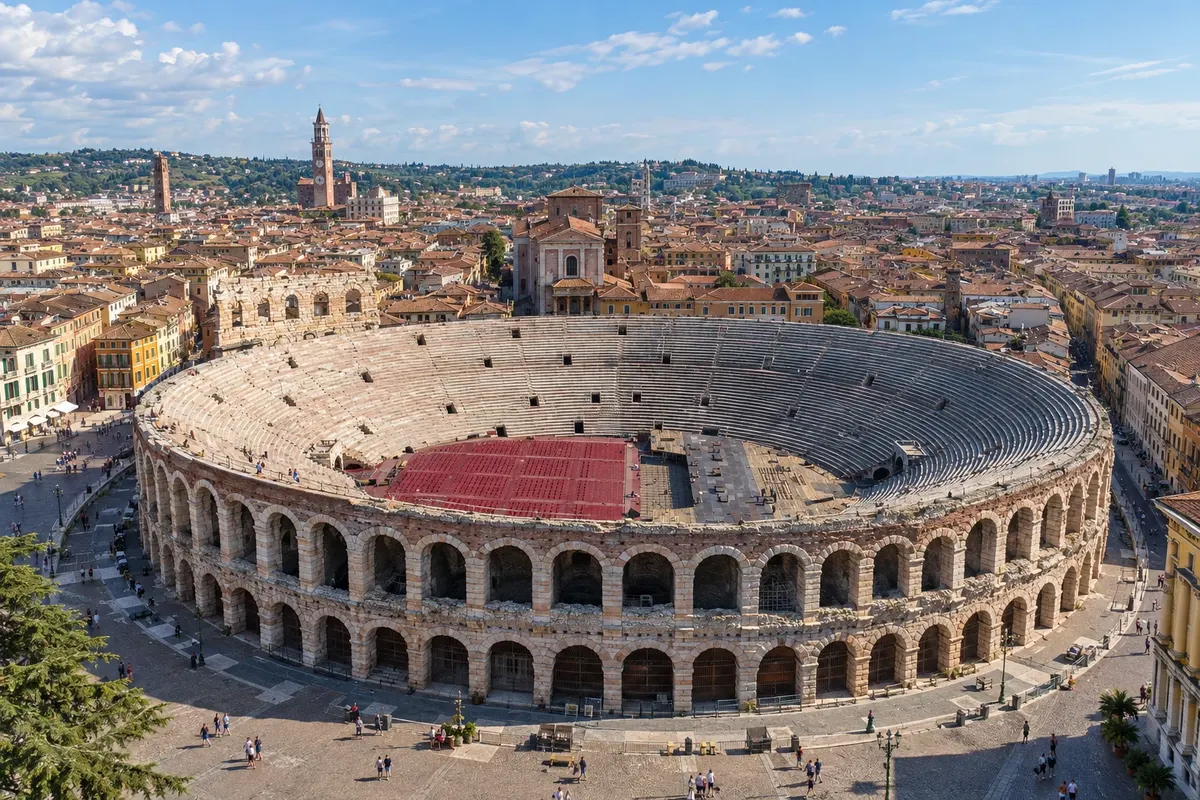
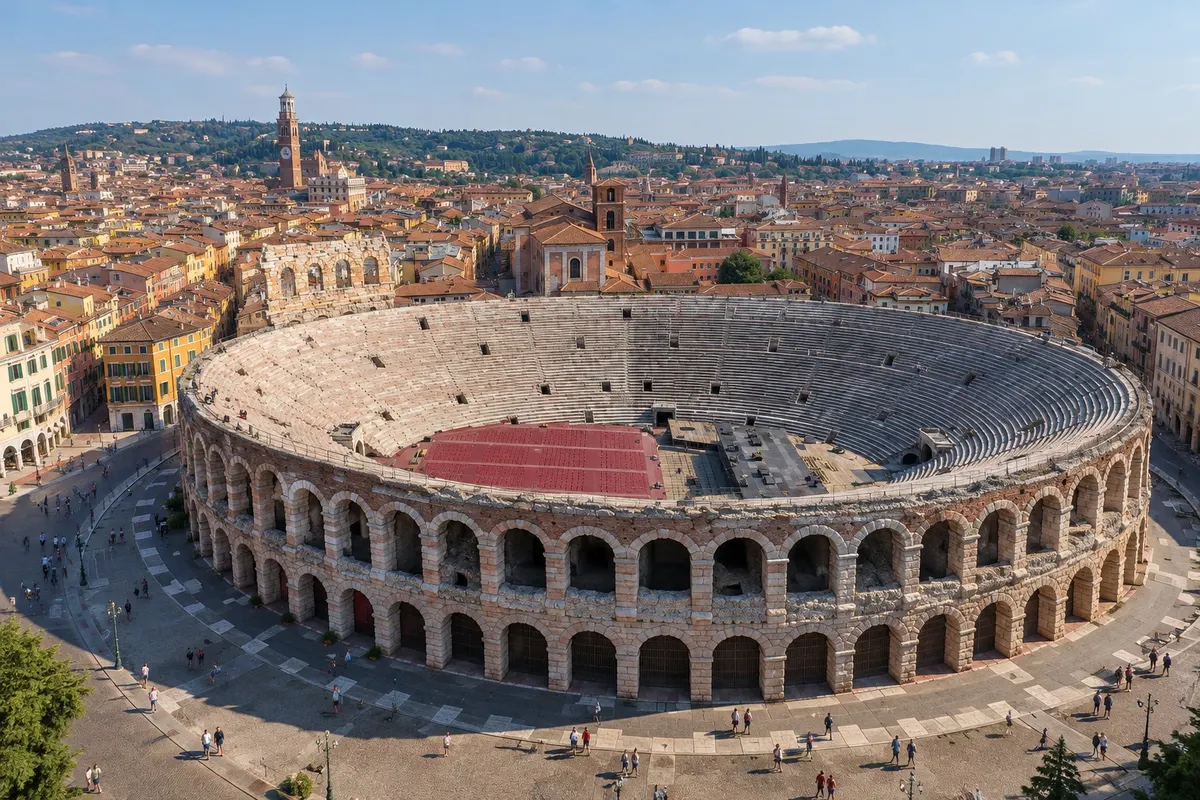
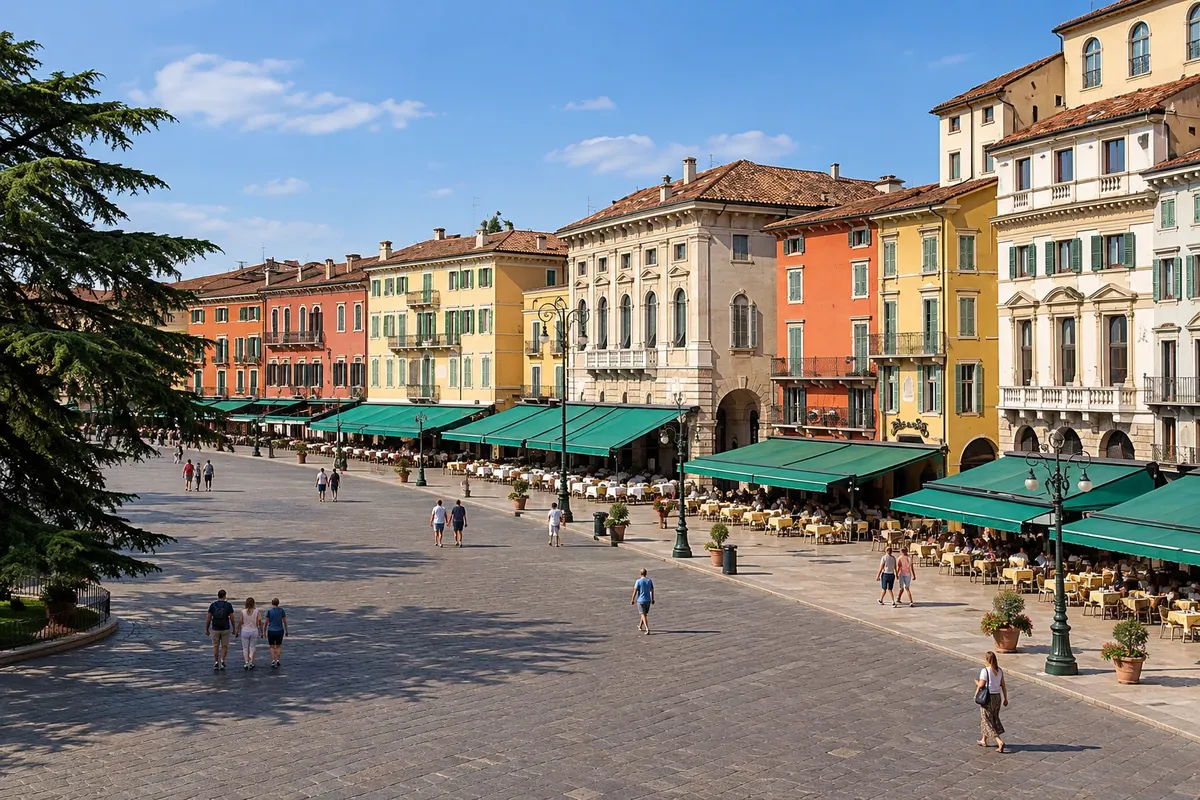
The Arena di Verona, the Roman amphitheatre from year 30, is the third largest in Italy and the best preserved, with 44 stone tiers originally for 30,000 spectators; it lost the outer ring in an earthquake in 1117 (the "ala", the section of four arches, remains), but the stands and the arena are intact. Since 1913, with Verdi’s Aida, it hosts the Summer Opera Festival, the largest open-air opera festival in the world, with about 15,000 people per night from June to September; during the day you can visit the interior and climb the high steps, with Piazza Bra below. The square, Verona’s largest, features the Liston, the pink marble promenade of cafés, the Palazzo Barbieri (city hall), the Gran Guardia and gardens; at Christmas the Arena’s metal star crosses the square. The pedestrian Via Mazzini links the Bra to Piazza delle Erbe.
Kraji na poti: Arena di Verona, Piazza Bra.
Vključuje: Separate paid ticket for the daytime visit (box office on site or online; the Verona Card includes it); festival performances have their own tickets on the Fondazione Arena website. Square is free.
Nasvet: For the opera, buy in advance on the official website; the places on the stone steps (gradinata), with unreserved seating, are the cheapest and require arriving early with a cushion; bring a jacket and insect repellent. Daytime visits close on performance evenings.
Najboljši čas za obisk: Year-round for visits; the opera festival runs June to September.
Casa di Giulietta, Piazza delle Erbe, Torre dei Lamberti and Piazza dei Signori
Odhod: Via Cappello, Verona Walk through the center with a climb up the tower Približno 3 ure Dopoldne ali popoldne moderate (368 steps or elevator)
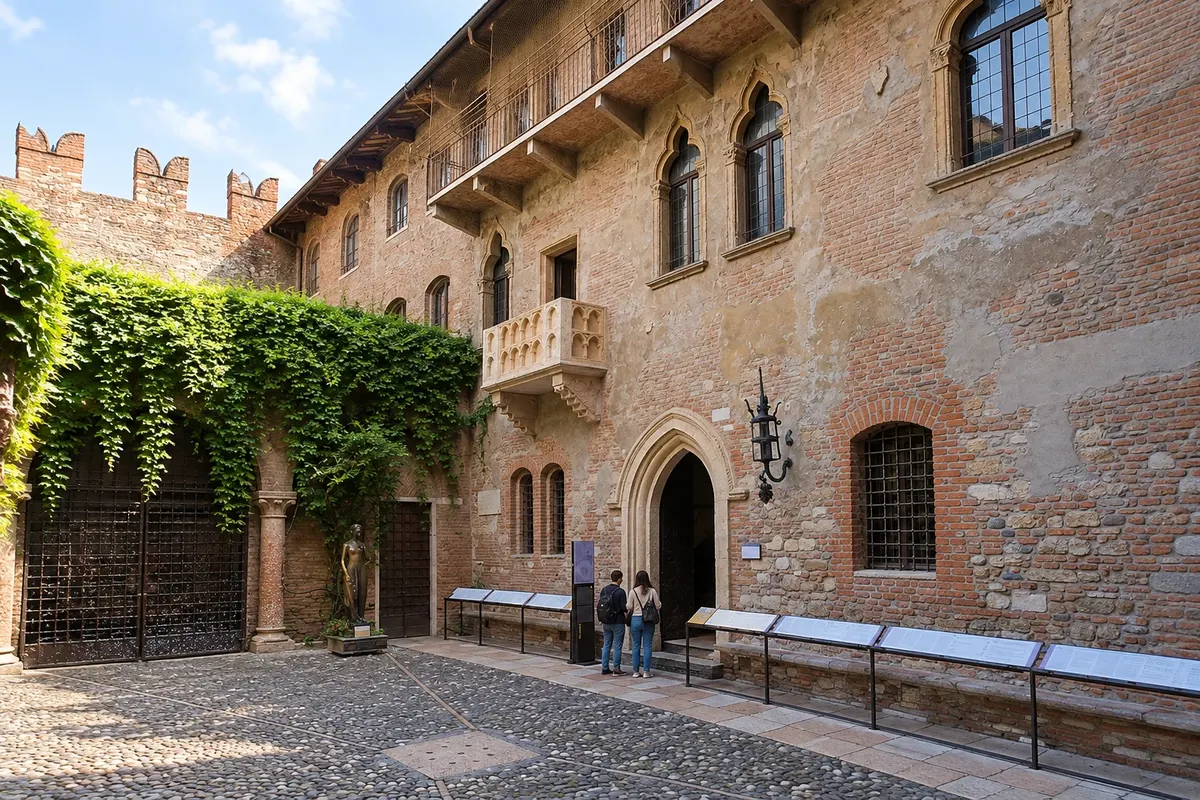
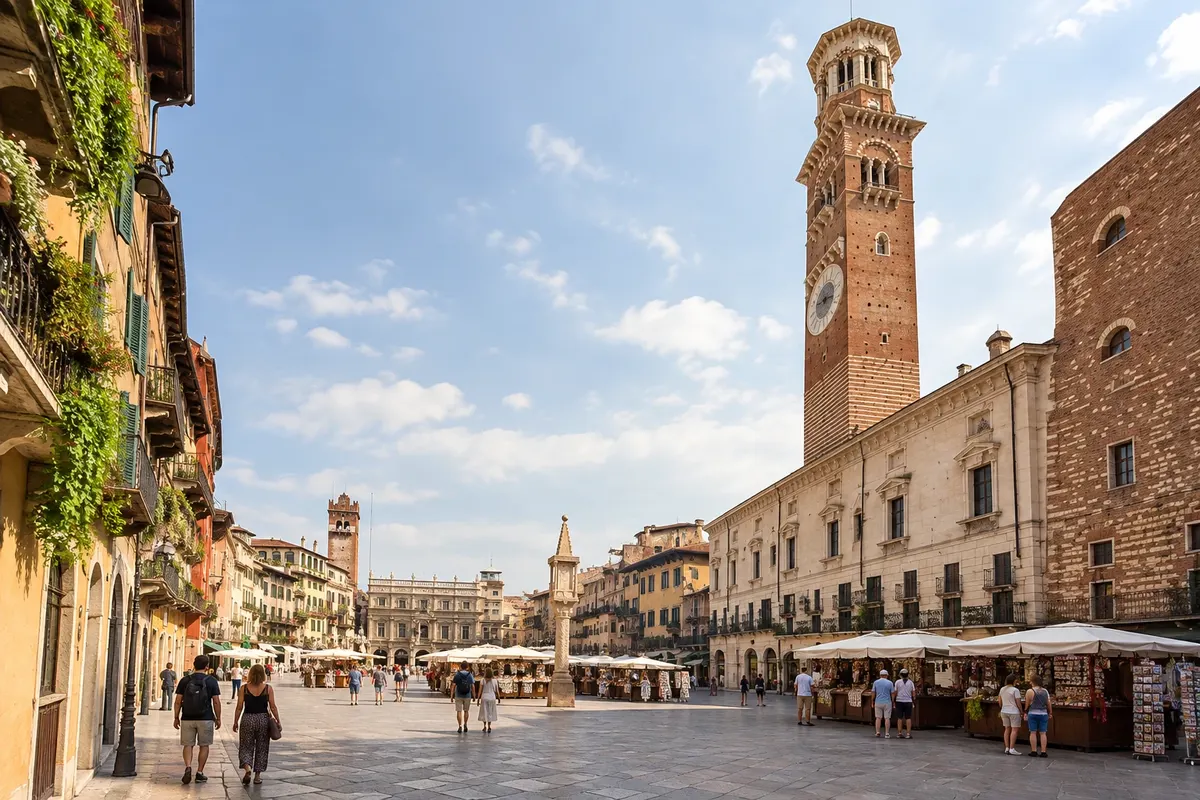
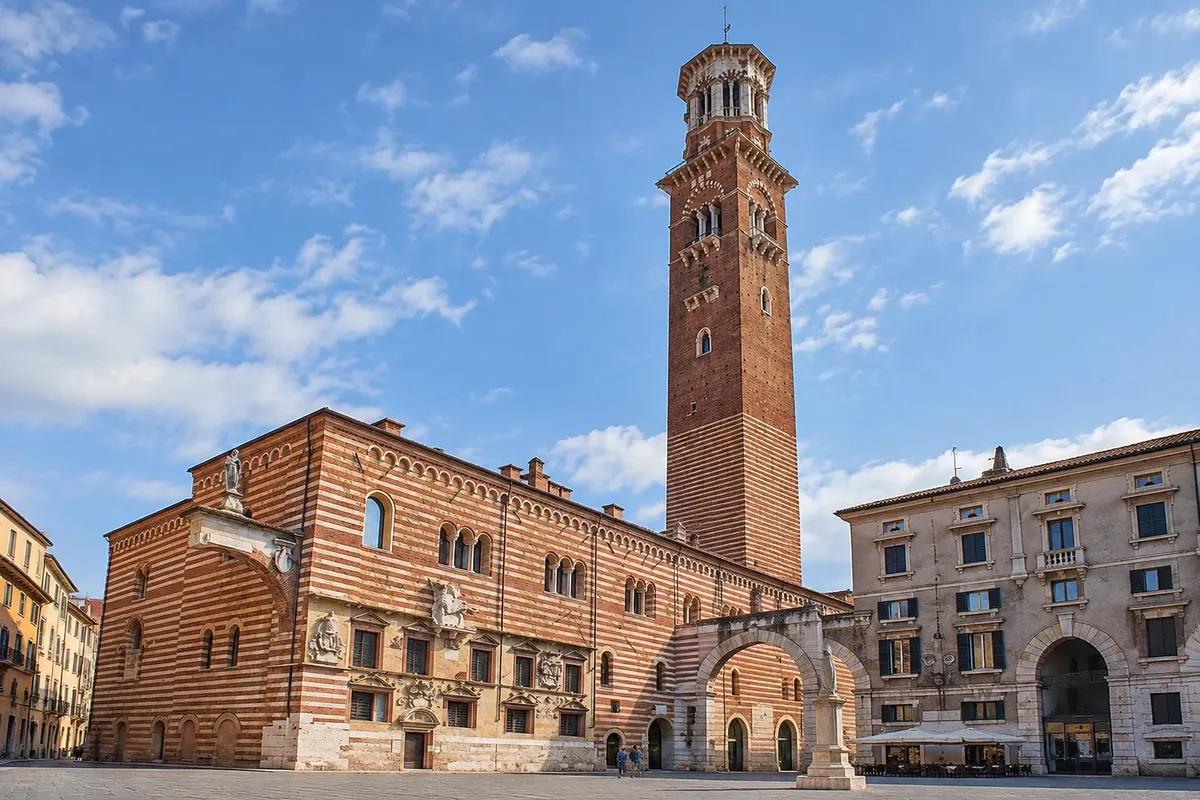
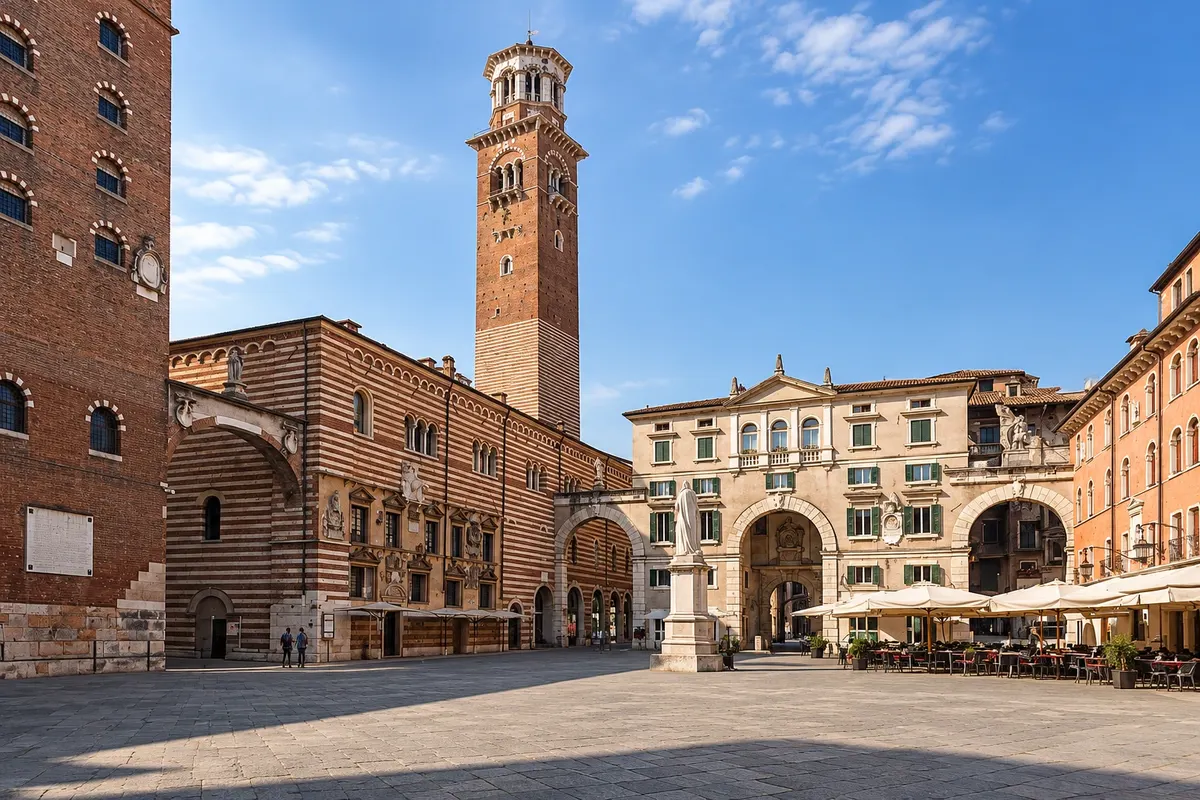
Casa di Giulietta is the 13th-century Gothic house that the city identified in the 1930s with Shakespeare’s Capulet family, with the balcony added at the same time and a bronze statue of Juliet in the courtyard whose right breast is touched for luck; the courtyard is free and crowded, the house is a museum. Piazza delle Erbe, the Roman forum, is the market with the Madonna Verona fountain from 1368, the column of St. Mark and the painted façades of the Case Mazzanti; Torre dei Lamberti, 84 m high, begun in 1172, is climbed by stairs or elevator for views over the squares and the hills. The Arco della Costa, with a whale rib hung from it, leads to Piazza dei Signori, the power square, with the statue of Dante, exiled in Verona, the Loggia del Consiglio and the Palazzo del Capitano; beside them are the Arche Scaligere, the Gothic tombs of the Della Scala, the city’s rulers, with knights on top.
Kraji na poti: Casa di Giulietta, Piazza delle Erbe, Torre dei Lamberti, Piazza dei Signori.
Vključuje: Juliet’s courtyard free of charge; house-museum with admission; Torre dei Lamberti with admission (combined ticket with the Galleria d'Arte Moderna); squares free of charge.
Nasvet: Go to Juliet’s courtyard before 9:00 or after 19:00 to avoid competing for the balcony; the house-museum is dispensable. Climb the tower at late afternoon. Piazza delle Erbe has stalls by day and bars at night.
Najboljši čas za obisk: All year; in December Piazza dei Signori hosts the Christmas market.
Castelvecchio, Ponte Scaligero and the Basilica di San Zeno
Odhod: Corso Castelvecchio, Verona Museum and riverside walk Približno 3 ure Popoldne Lahko
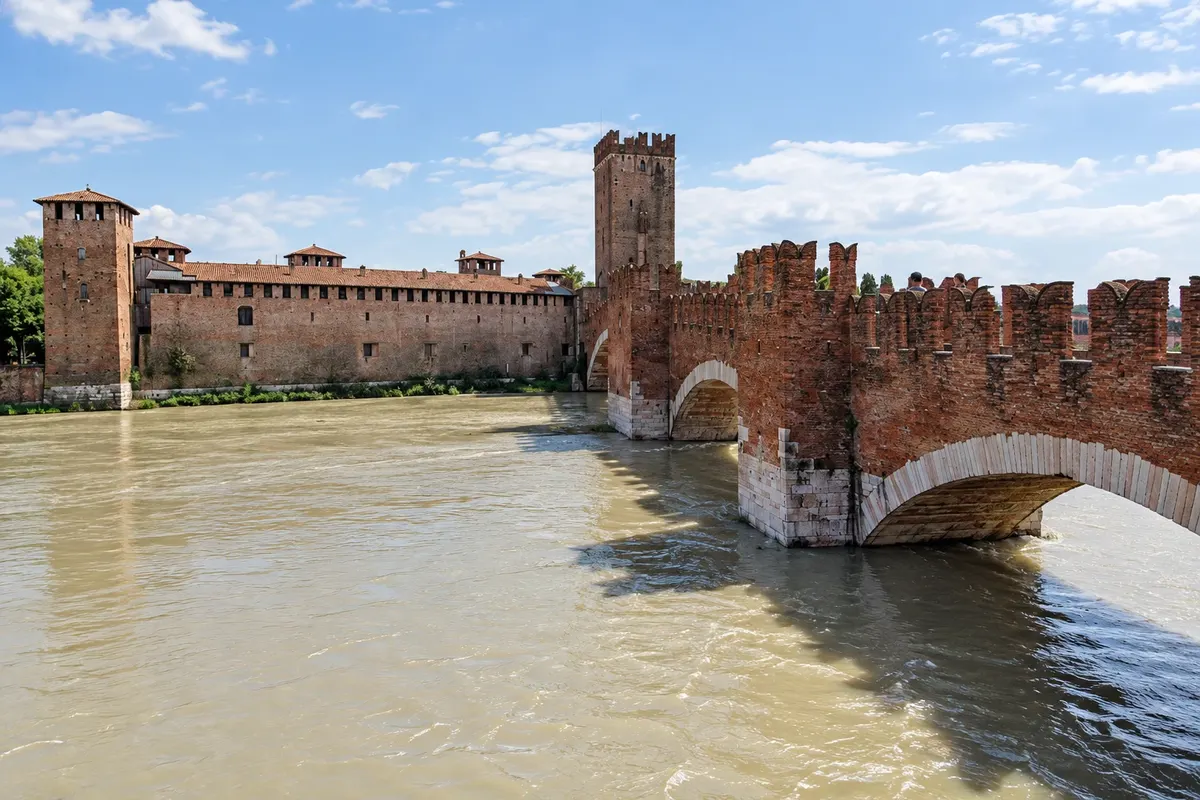
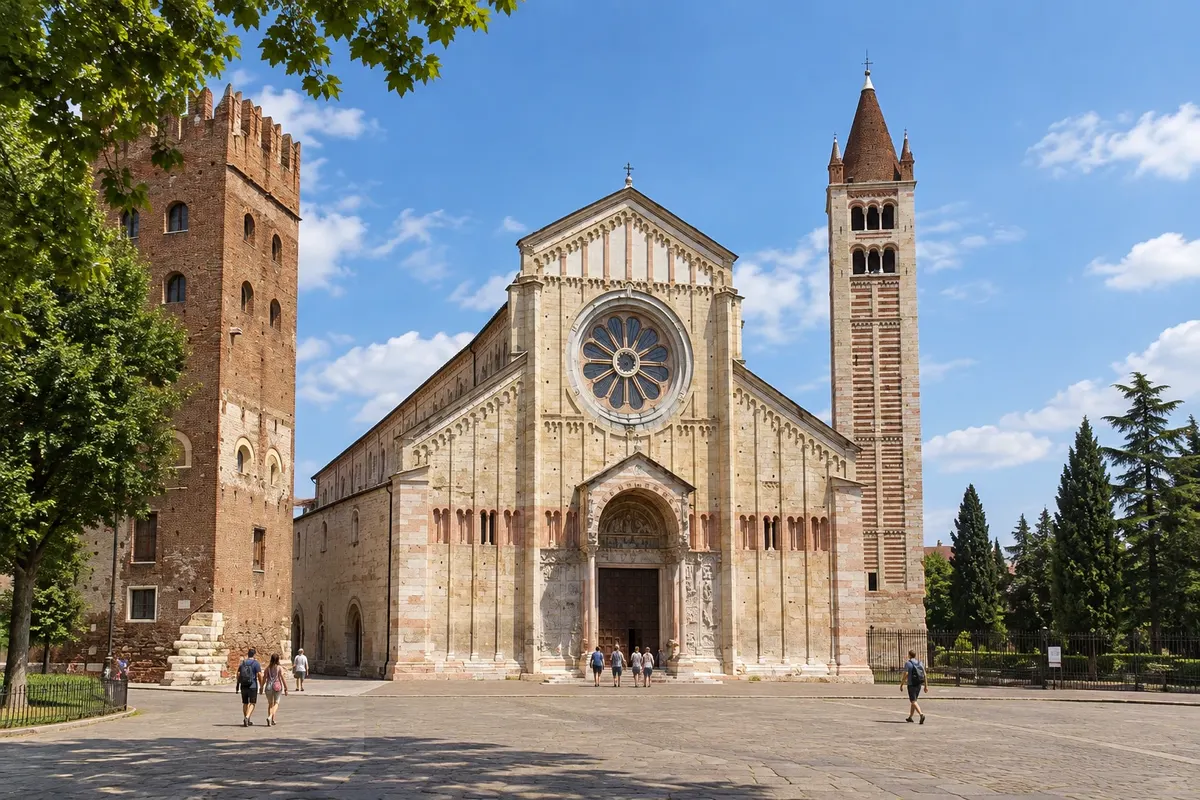
The Museo di Castelvecchio occupies the brick castle of the Della Scala, from 1354 to 1376, on the banks of the Adige, restored by Carlo Scarpa between 1958 and 1974 in one of the most studied museography projects of the 20th century: medieval sculpture, Pisanello, Mantegna, Bellini, Veronese and the equestrian statue of Cangrande I, suspended on a concrete pedestal. The Ponte Scaligero, the castle’s fortified bridge, from 1355, was blown up in 1945 and rebuilt with the original stones; it crosses the river with its battlements. From there, a 15-minute walk along the bank leads to the Basilica di San Zeno, Romanesque, dating from 1120 to 1138, with the Wheel of Fortune rose window, the 48 bronze panels on the doors from the 11th and 12th centuries depicting biblical scenes, the crypt with 49 columns where the body of the patron saint lies, and Mantegna’s triptych on the altar; tradition says Romeo and Juliet were married in the crypt. The cloister has Romanesque and Gothic arches.
Kraji na poti: Museo di Castelvecchio, Basilica di San Zeno.
Vključuje: Castelvecchio with separate paid admission (Verona Card includes it); San Zeno with a small admission fee (combined churches ticket for Verona).
Nasvet: Allow two hours for Castelvecchio and take time to see Scarpa’s layout. Buy the combined ticket for the four churches (San Zeno, Duomo, Sant'Anastasia, San Fermo) at the first one you visit.
Najboljši čas za obisk: Vse leto.
Duomo, Sant'Anastasia, Ponte Pietra and the Roman Theatre
Odhod: Piazza Duomo, Verona Walk through the northern old town and the river Približno 3 ure Dopoldne Lahko
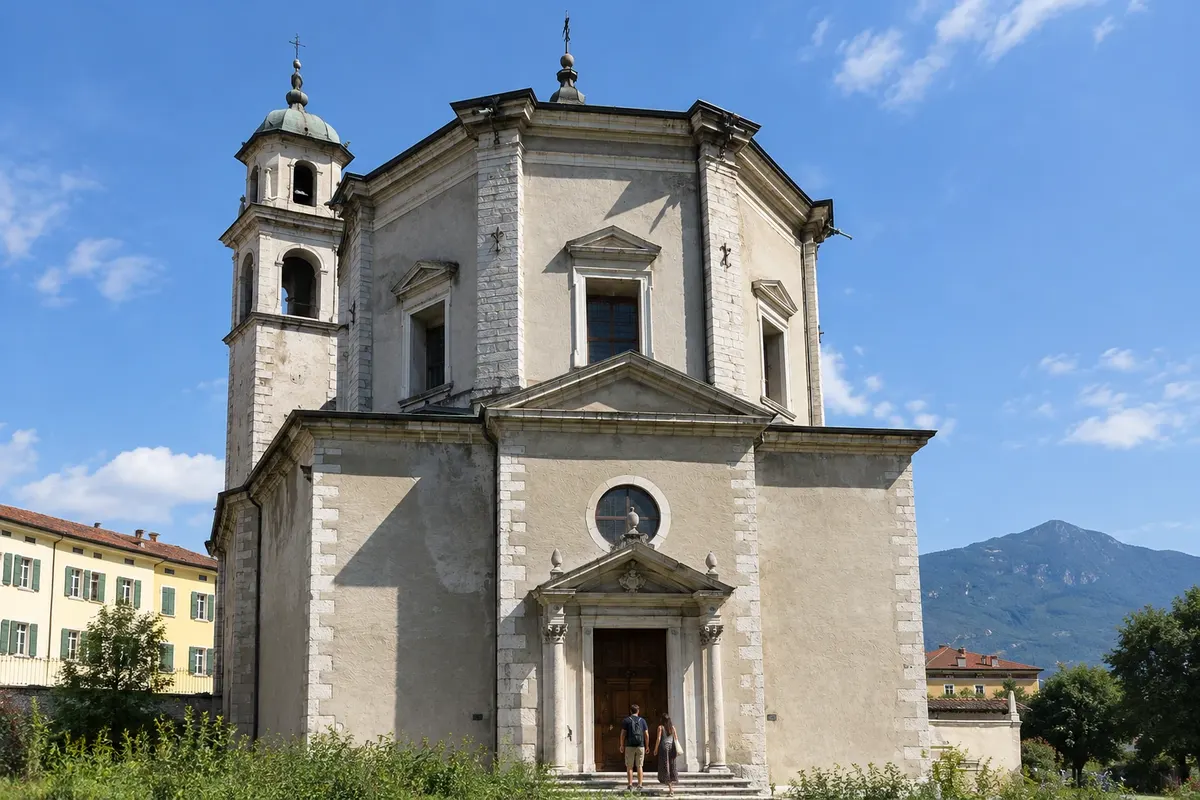
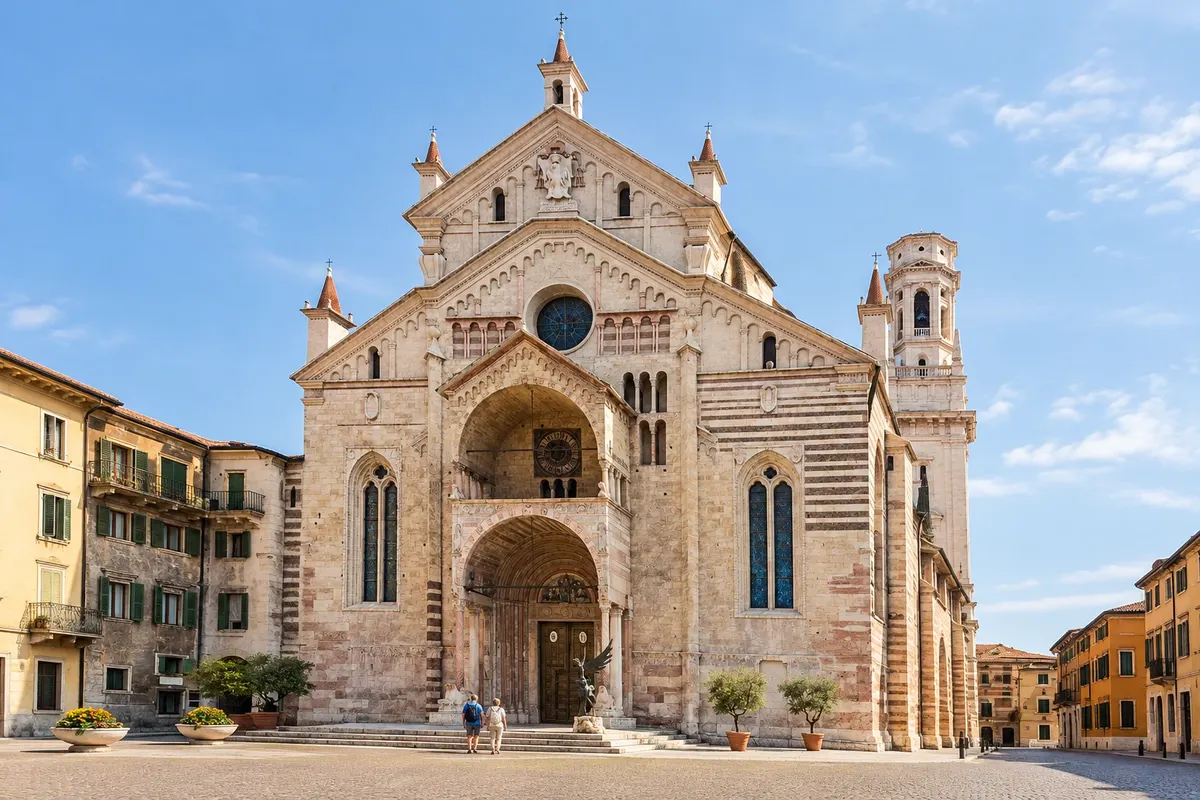
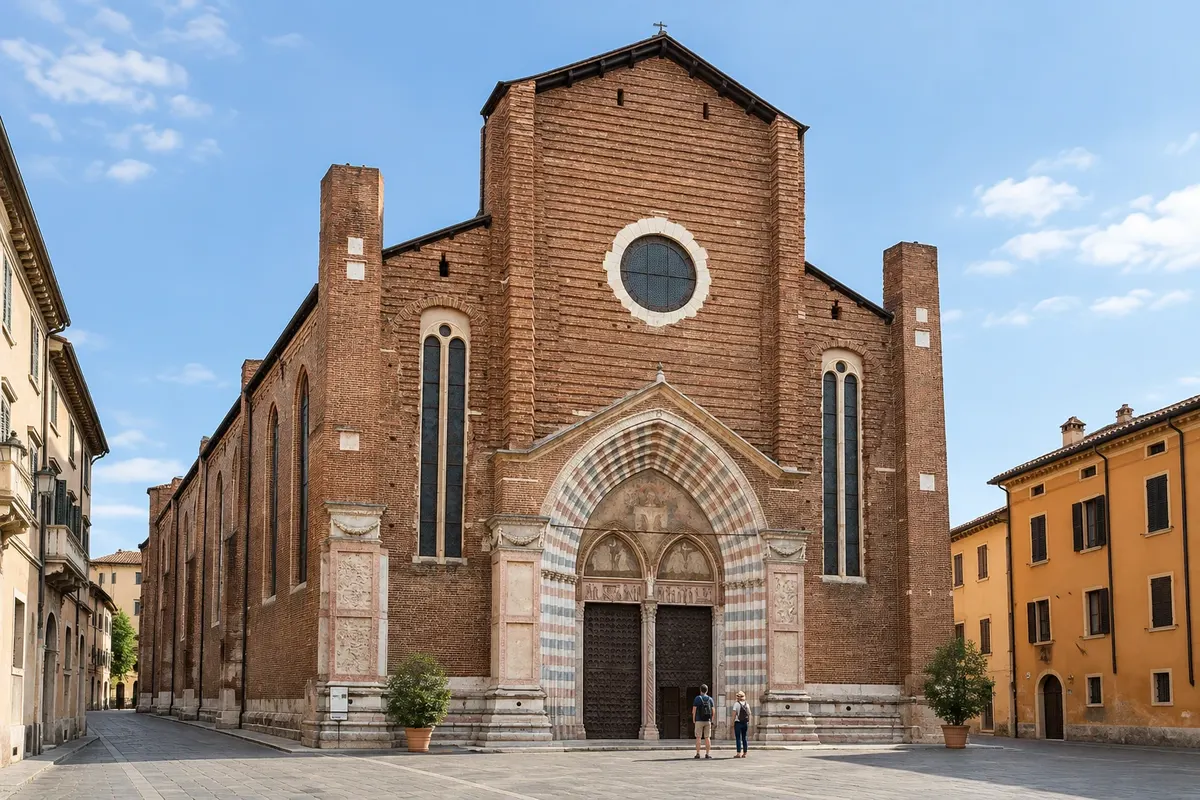
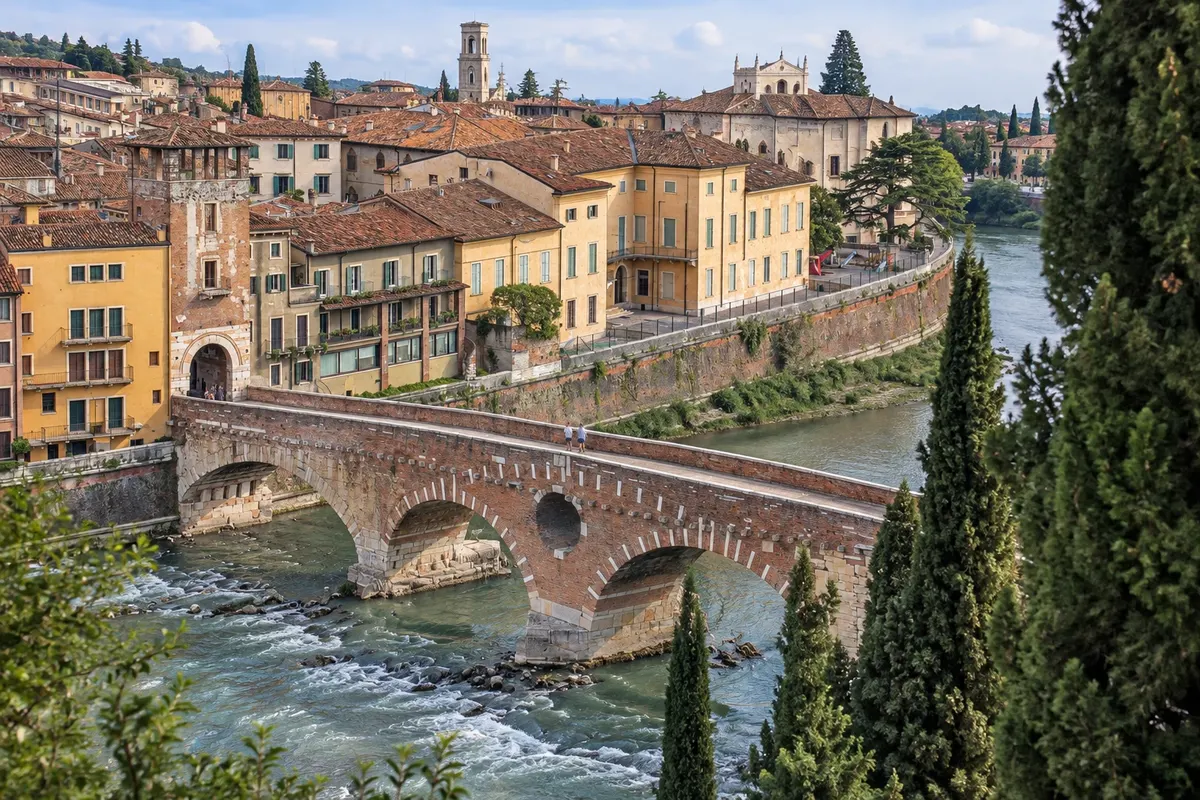
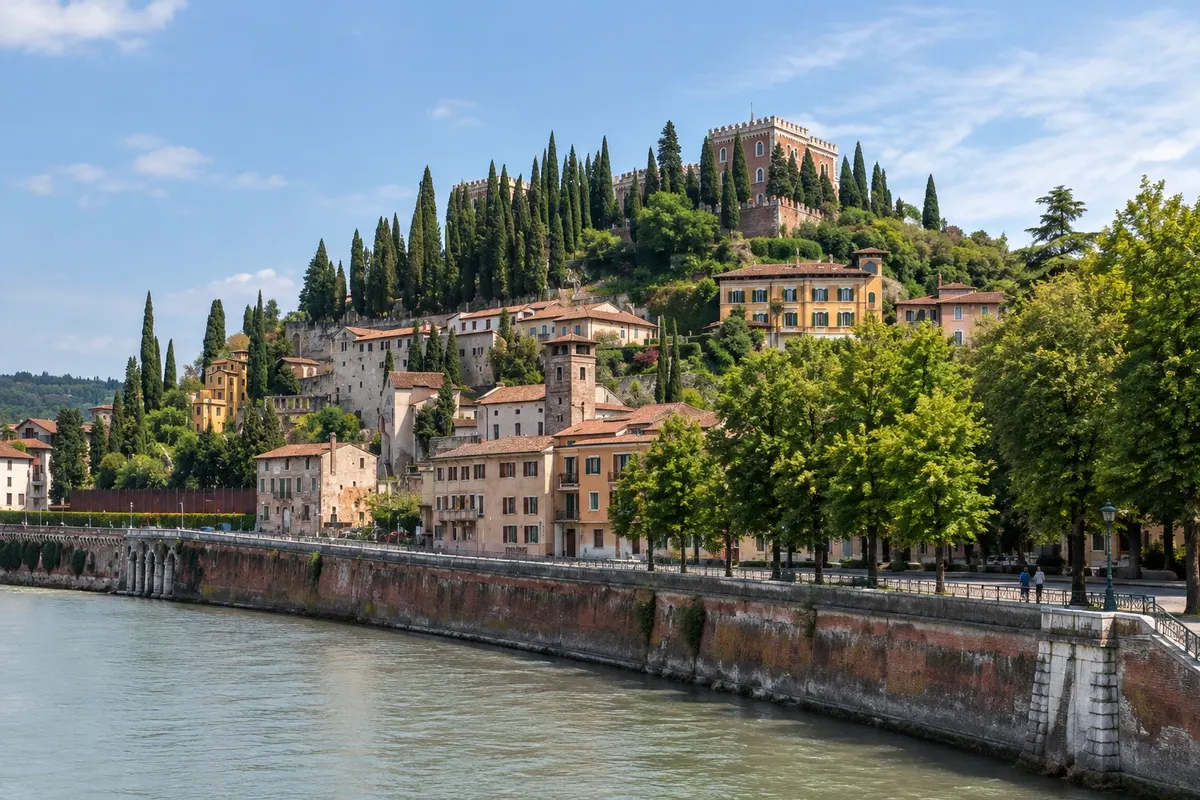
The Duomo di Verona, Romanesque from 1187 with a Gothic façade, houses Titian’s Assumption, the baptistery of San Giovanni in Fonte with the marble font from 1200, and the Basilica of Sant'Elena with 4th-century mosaics. The Basilica di Santa Anastasia, the city’s largest church, Gothic, built from 1290 to 1481, features the “gobbi,” two hunched figures that support the holy water basins, and Pisanello’s 1435 fresco of Saint George and the princess. The Ponte Pietra, the Roman bridge from the 1st century BC, rebuilt after 1945, crosses the Adige toward the Roman Theatre and Museo Archeologico, the 1st-century BC theatre excavated on the San Pietro hill, with stands reused in summer for the theatre and jazz festival, and the museum in the former convent above, with mosaics and statues; from there the funicular or the stairway climb to Castel San Pietro, offering the view of Verona with the river bending in an S.
Kraji na poti: Duomo di Verona, Basilica di Santa Anastasia, Ponte Pietra, Roman Theatre and Museo Archeologico.
Vključuje: Duomo and Sant'Anastasia with the combined churches ticket; Roman Theatre and museum with admission (Verona Card includes); Ponte Pietra free of charge.
Nasvet: Do Ponte Pietra and Castel San Pietro at the end of the day, with the low light over the city; in the morning, visit the churches. The Roman Theatre summer festival has tickets on the Estate Teatrale Veronese website.
Najboljši čas za obisk: All year; from June to September, performances at the Roman Theatre.
Castel San Pietro and Giardino Giusti: the two views of Verona
Odhod: Ponte Pietra (funicular) and Via Giardino Giusti Viewpoint and garden Približno 2 uri in pol late afternoon moderate (stairway or funicular)
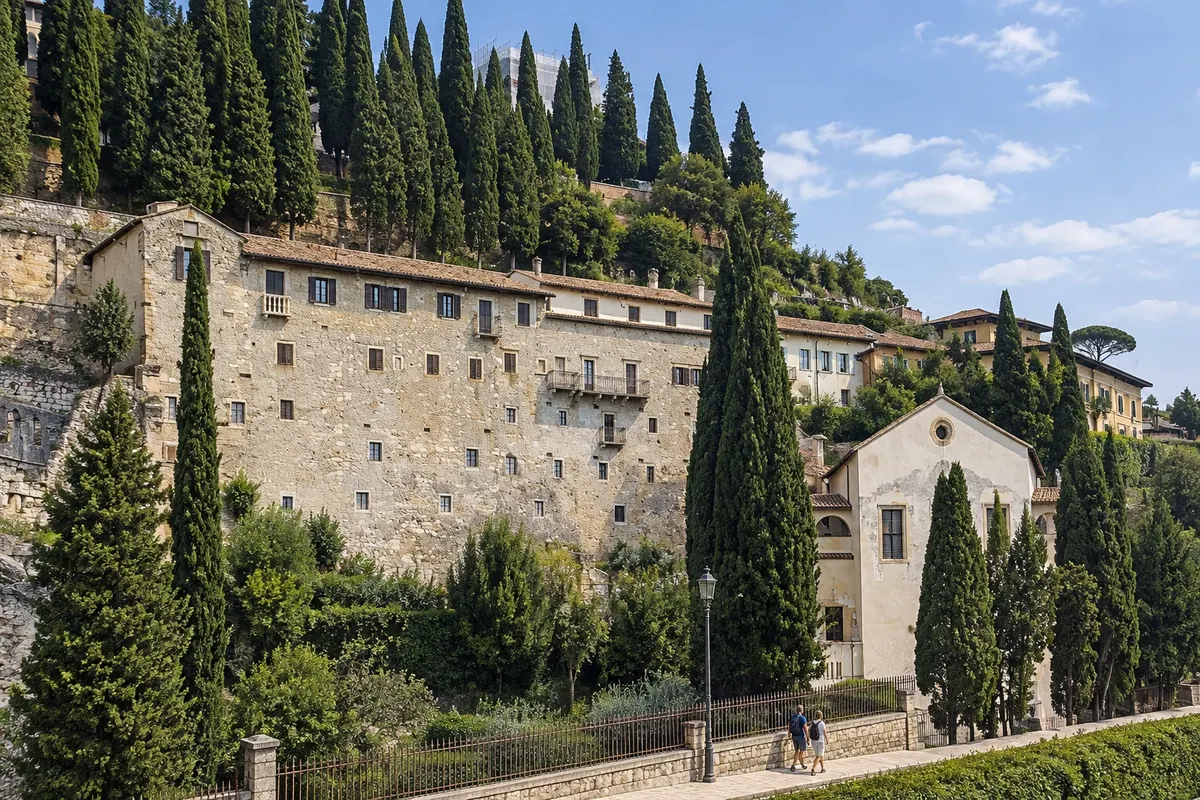
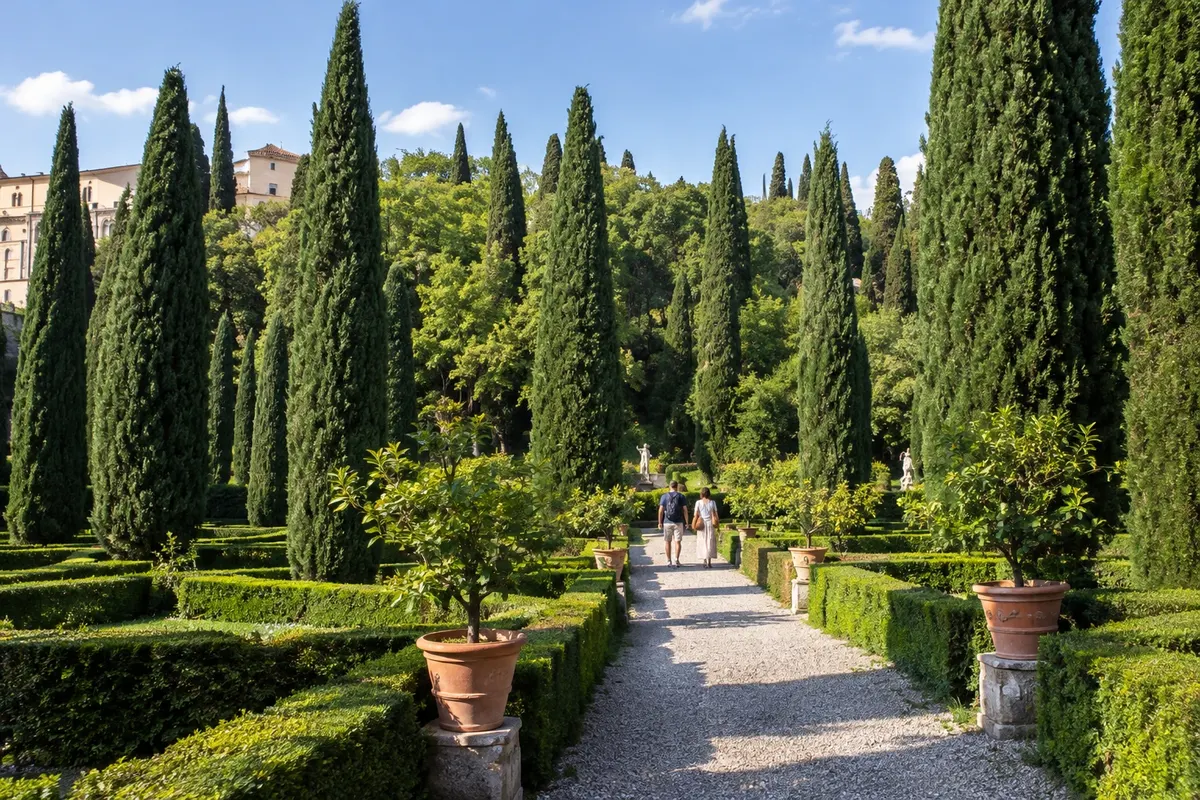
Castel San Pietro is the terrace high on the hill across the river, on the site of the castle and the Austrian fortress of 1854, offering the full view of Verona: the Adige curving, the towers, the Arena in the background and the hills; you reach it by the 2017 funicular, a 1-minute ride next to the Roman Theatre, or by a 10-minute staircase. Nearby is Giardino Giusti, from 1570, the Giusti family’s Renaissance garden, protected and open to visitors, with the cypress tunnel Goethe described, the boxwood maze, statues, grottoes and the stone “mascarone” at the top of the stairway, from which you see the city from another angle; Mozart and Goethe visited. Between them lies the Veronetta district, the university side and the cheaper bank of the river, with trattorias.
Kraji na poti: Castel San Pietro, Giardino Giusti, Ponte Pietra.
Vključuje: Castel San Pietro free of charge; funicular paid separately; Giardino Giusti with admission.
Nasvet: Go up to Castel San Pietro half an hour before sunset; the terrace fills up but is spacious. Giardino Giusti closes at dusk: visit it first.
Najboljši čas za obisk: All year; in spring the garden is at its best.
Sirmione: Castello Scaligero, Grotte di Catullo and the thermal baths
Odhod: Sirmione (bus from Desenzano or ferry; car only up to the entrance) Village on the peninsula and Roman site Približno 4 ure Dopoldne ali pozno popoldne Lahko
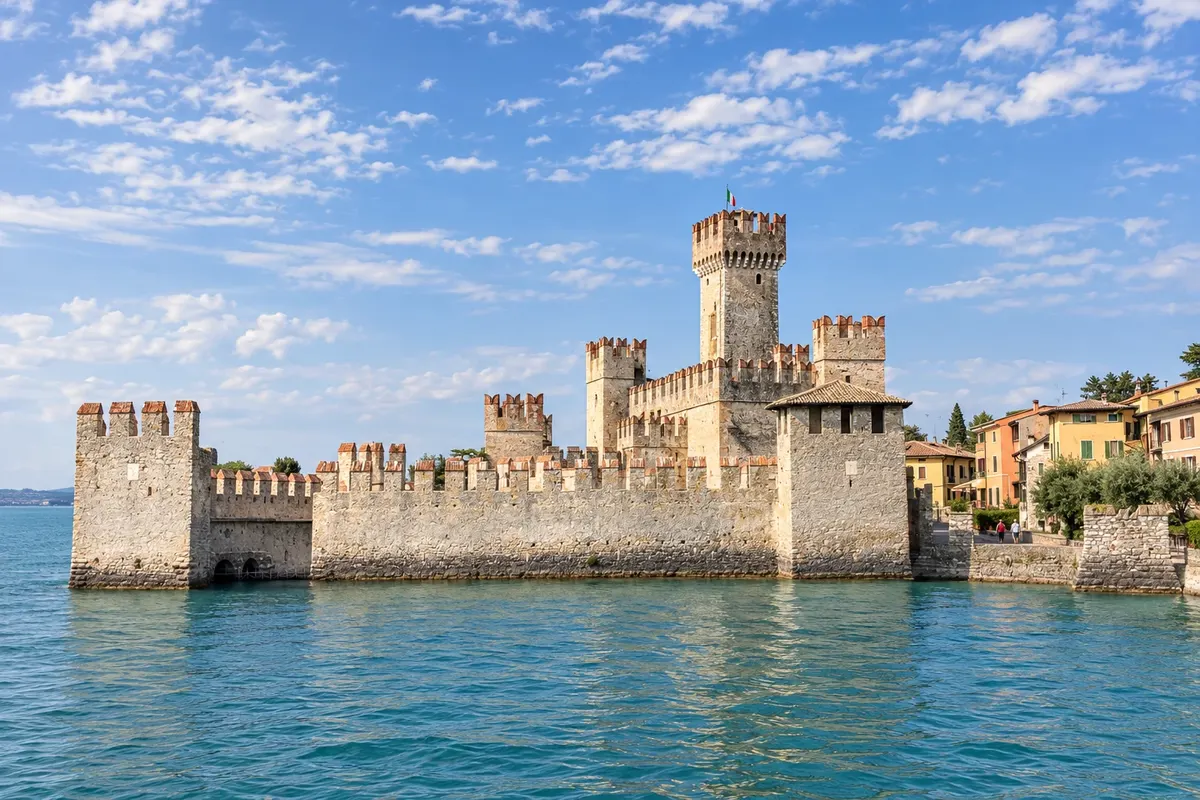
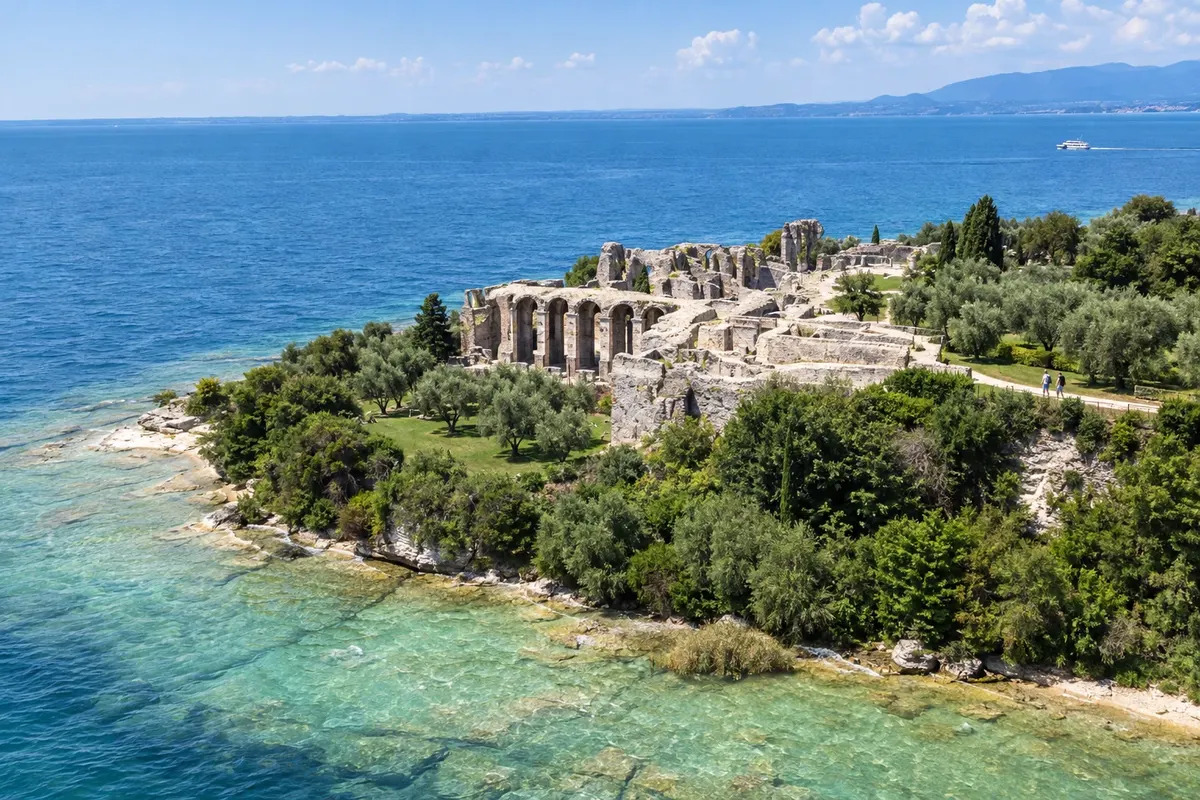
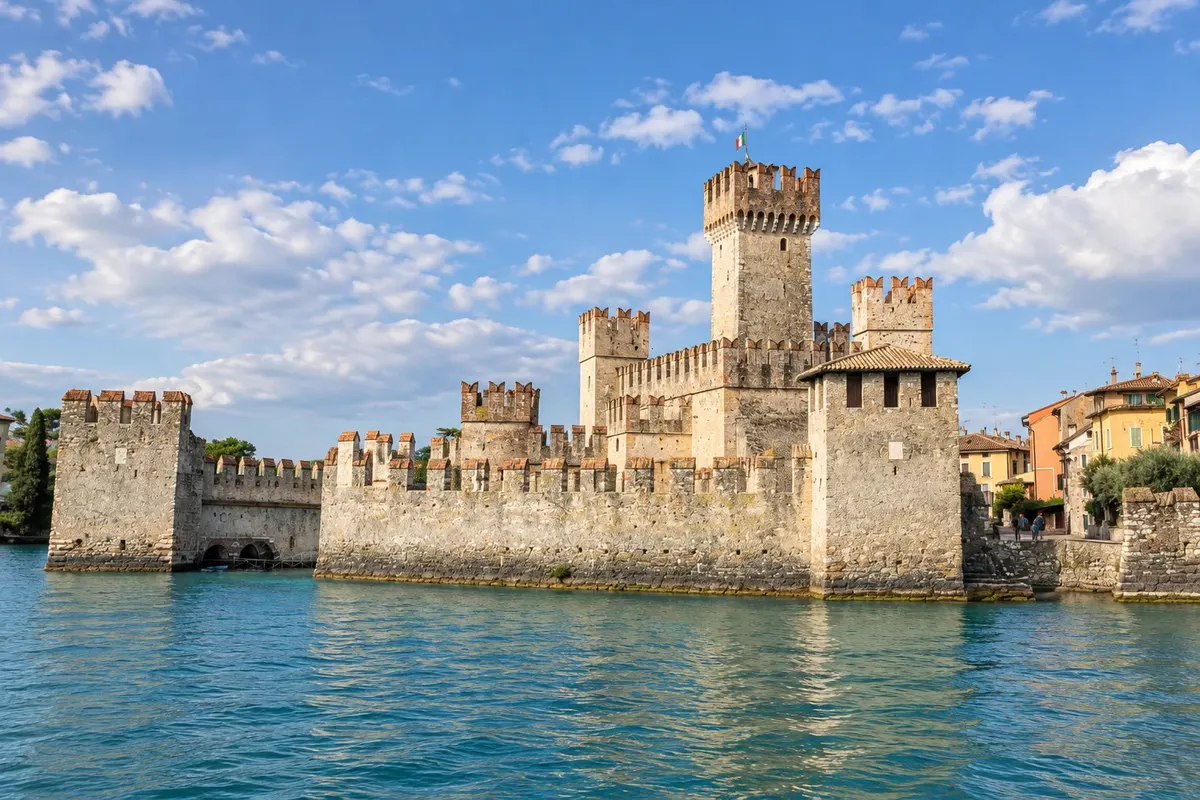
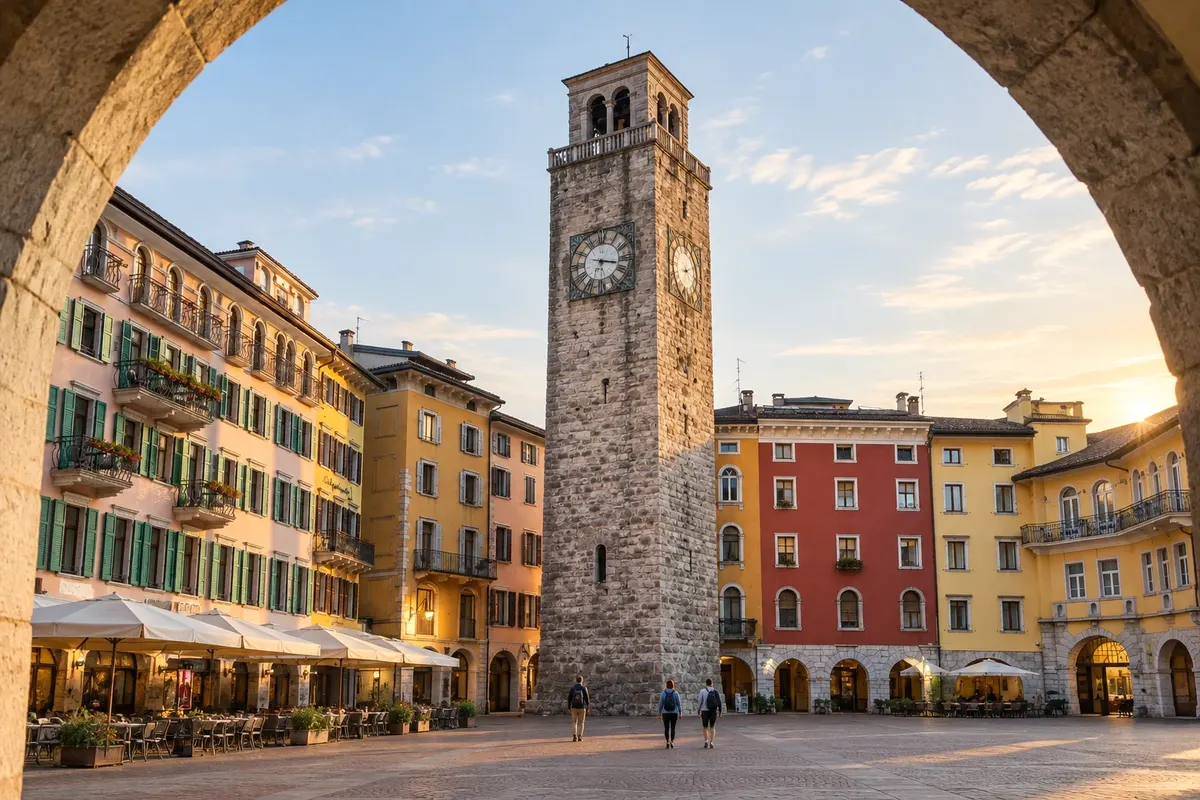
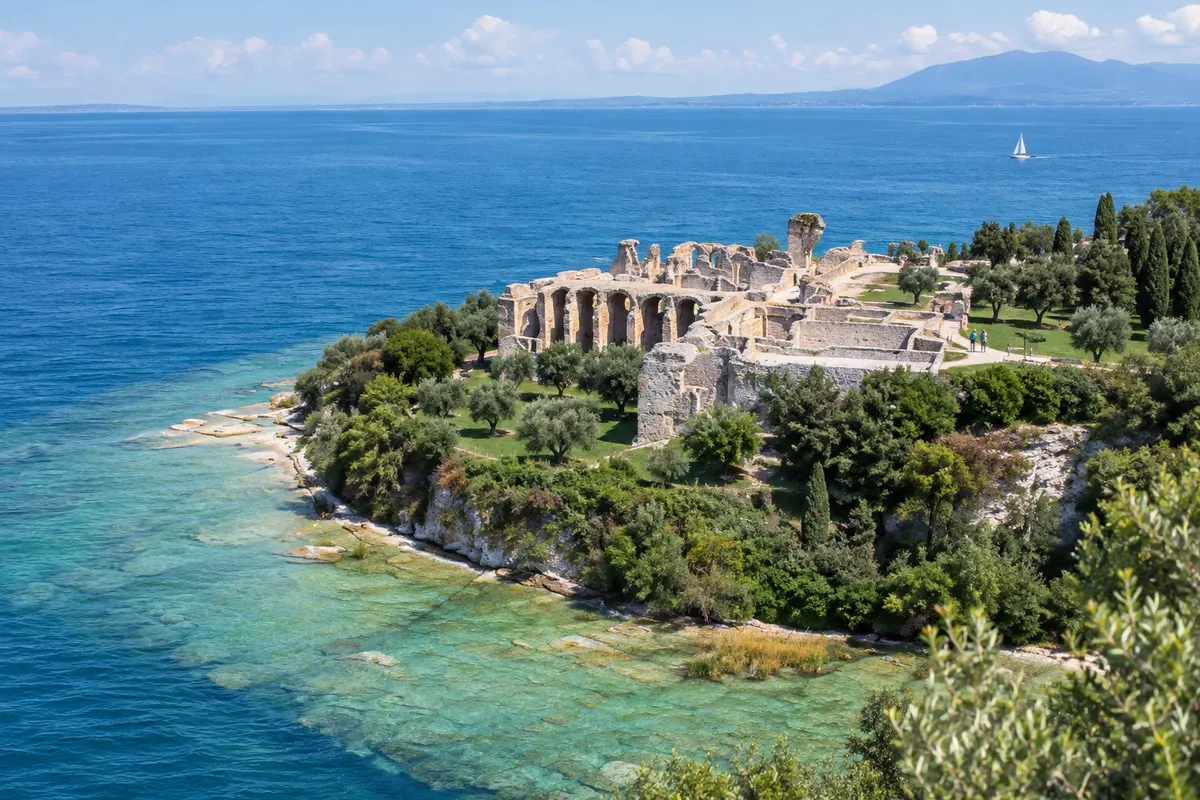
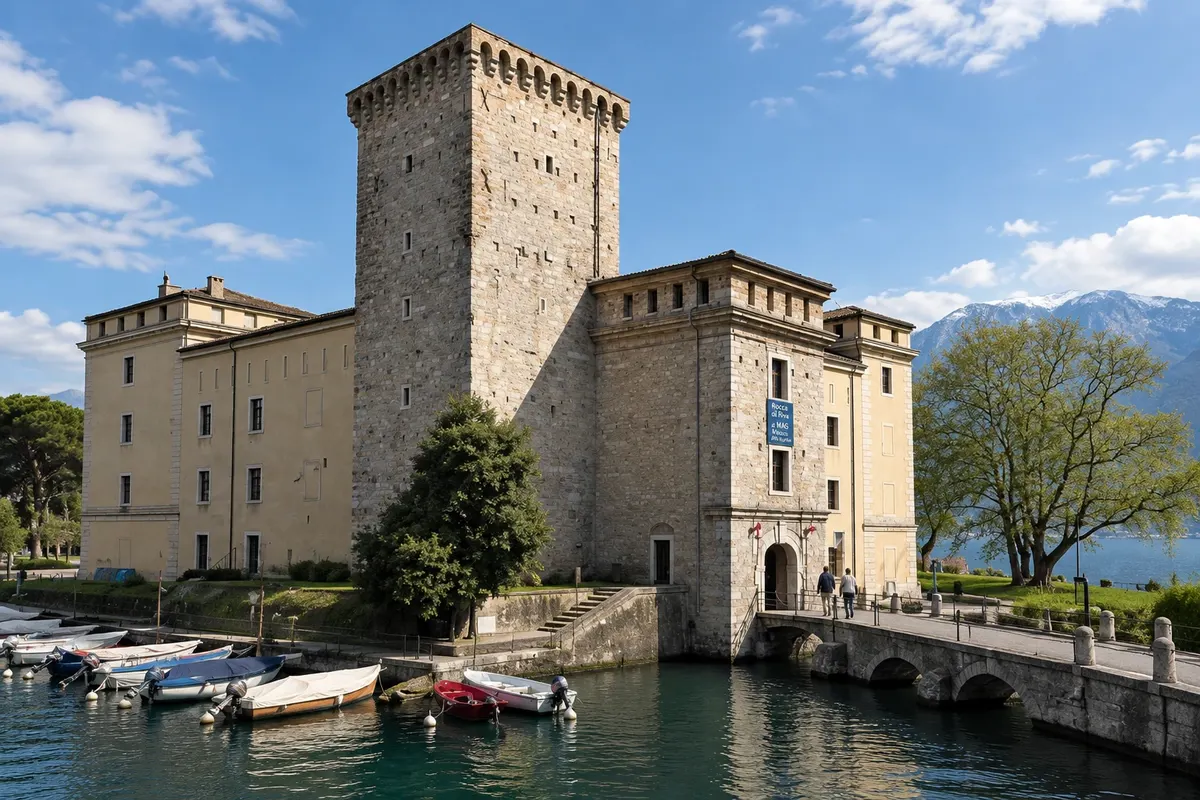
Sirmione is the 4 km peninsula that juts into the Lago di Garda from the south, with the medieval village at the tip, surrounded by water and closed to cars from the entrance. The Castello Scaligero di Sirmione, from 1277, with battlements, the fortified harbor (the only preserved medieval dock) and the 47 m tower offering lake views, guards the drawbridge that leads into the village. The Grotte di Catullo, at the tip, are the largest Roman villa in northern Italy, from the 1st century, on terraces above the lake, traditionally attributed to the poet Catullus, born in Verona, with the olive grove and the museum; it is a 20-minute walk via the shopping streets or reachable by tourist train. The Chiesa di San Pietro in Mavino, from the 8th century, at the highest point, has frescoes and a bell tower. The thermal baths of Sirmione, with sulfurous water at 69 °C, include the Aquaria spa park, with pools over the lake; Jamaica Beach, the stone slabs at the foot of the Grotte, is the lake bathing spot.
Kraji na poti: Castello Scaligero di Sirmione, Grotte di Catullo, Chiesa di San Pietro in Mavino.
Vključuje: Castle and Grotte di Catullo with separate paid tickets (state sites free on the first Sunday of the month); church free of charge; thermal baths paid separately.
Nasvet: Go before 10:00 or after 17:00; at midday in summer the village is crowded. Leave the car in the entrance parking lot and enter on foot. The ferry from Desenzano, Peschiera or Garda is the most scenic arrival.
Najboljši čas za obisk: From April to October; July and August are crowded; in winter the village is quiet and the thermal baths operate.


 Brazilija
 Antarktika
 Argentina
 Bolivija
 Čile
 Kolumbija
 Ekvator
 Gvajana
 Francoska Gvajana
 Falklandski otoki (Malvini)
 Paragvaj
 Peru
 Surinam
 Urugvaj
 Venezuela
 Nemčija
 Avstrija
 Belgija
 Hrvaška
 Danska
 Slovaška
 Slovenija
 Španija
 Finska
 Francija
 Grčija
 Nizozemska
 Madžarska
 Irska
 Islandija
 Luksemburg
 Norveška
 Poljska
 Portugalska
 Združeno kraljestvo
 Češka
 Švedska
 Švica
 Turčija
 Bermudi
 Kanada
 Združene države Amerike
 Grenlandija
 Mehika
 Sveta Peter in Mihael
 Dominikanska republika
 Japonska
 Južnoafriška republika
 Egipt
 Avstralija
 Fidži
 Nova Zelandija
 Papua Nova Gvineja